18: The Patient With an Ostomy

Objectives
1. List the indications for ostomy surgery to divert urine or feces.
2. Describe nursing actions/interventions to prepare the patient for ostomy surgery.
3. Explain the types of procedures used for fecal diversion.
4. Assist in developing a nursing plan of care for the patient with each of the following types of fecal diversion: ileostomy, continent ileostomy, ileoanal reservoir, and colostomy.
5. Explain the types of procedures used for urinary diversion.
6. Assist in developing a nursing plan of care for the patient with each of the following types of urinary diversion: incontinent (ileal conduit), continent (internal reservoir), and orthotopic neobladder.
7. Discuss content to be included in teaching patients to learn to live with ostomies.
Key Terms
colonic or sigmoid conduit
colostomy    (kŏ-LŎS-tō-mē)
ileal conduit
ileostomy    (ĭ-lē-ŎS-tō-mē)
neobladder
nephrostomy    (nĕ-FRŎS-tō-mē)
ostomy    (ŎS-tō-mē)
reanastomosis
stoma    (STŌ-mă)
ureterostomy    (yŭ-rĕ-tĕr-ŎS-tō-mē)
vesicostomy    (vĕ-sĭ-KŎS-tō-mē)
Ostomy is the term used to describe an artificial opening into a body cavity. The site of the opening on the skin is called a stoma. An ostomy in the digestive tract may be a gastrostomy, jejunostomy, duodenostomy, ileostomy, or colostomy. The gastrostomy is an opening through the abdominal wall into the stomach that is used for long-term tube feedings. Duodenostomies and jejunostomies are openings through which tubes are also placed for feeding or drainage. Ileostomies and colostomies are created to drain fecal matter from the intestines. Examples of stomas in the urinary tract are the ureterostomy, ileal or colonic conduit, vesicostomy, and continent internal reservoir. Ostomies of the urinary tract drain urine from the kidney, ureters, or bladder. Ostomies are sometimes described as a means of urinary or fecal diversion. The term ostomate refers to a person who has an ostomy. However, many people prefer to be thought of as individuals with ostomies rather than as ostomates. This chapter describes the care of patients with ostomies created to divert urine or feces.

Indications and Preparation for Ostomy Surgery

Ostomy surgery is done for a number of reasons. A temporary ostomy may be indicated after surgery or trauma or when severe inflammation or infection exists. The ostomy bypasses the affected portion of the bowel or urinary tract, giving it time to heal. Permanent ostomies are usually necessitated by cancer of the bladder or colon or severe inflammatory bowel disease. Pouches are external appliances that are used with most ostomies to collect drainage. Whether ostomies are temporary or permanent, patients require considerable assistance as well as educational and psychologic support while learning to manage them.
Ideally the patient is prepared for the ostomy before surgery. The physician informs the patient of the need or possible need for the ostomy, what it is, and whether it will be temporary or permanent. Sometimes the procedure is done in emergency situations, as when treating acute bowel obstruction, perforation, or trauma. In these situations, the ostomy may come as a great shock to the patient.
The exact placement of the stoma is very important. The WOC nurse often consults with the surgeon regarding the ideal site. Two factors must be considered: (1) secure pouch placement and (2) ease of self-care. To provide a good seal, the site must not be too close to the umbilicus, bony prominences, scars, folds, or creases. If the pouch does not fit smoothly around the stoma, liquid stool or urine may leak around or beneath it. The stoma is placed below the waistline if possible. If it can be placed within the margins of the rectus muscle, the muscle will help to prevent peristomal hernias. Ideally, the stoma must also be placed where it can be seen and touched by the patient. A patient cannot learn to care for a stoma that is located where it cannot be viewed or reached.

Nursing Care of the Patient Having Ostomy Surgery

General preoperative nursing care is discussed in detail in Chapter 17. This section emphasizes only those aspects that are unique to the patient with an ostomy.

Focused Assessment

Patient Problems, Goals, and Outcome Criteria: Ostomy Surgery: Preoperative Phase
The patient problems and goals that require particular attention are as follows.
Patient Problems, Goals, and Outcome Criteria: Ostomy Surgery: Preoperative Phase
Patient Problems Goals and Outcome Criteria
Anxiety and grieving related to perceived threat to self-image, anticipated changes in body appearance and function
Reduced anxiety: patient states anxiety is reduced; relaxed manner
Grieving: verbalizes reality of impending loss
Inadequate knowledge of what to expect after surgery in relation to the stoma related to lack of exposure to information Patient understands postoperative routines and procedures in relation to ostomy surgery: patient correctly describes what to expect before and after surgery

Interventions

Anxiety and Grieving

Be accepting of the patient’s anxiety and try to help the patient identify exactly what their concerns are. Some patients may be concerned about appearance and others about how their jobs or family lives might be disrupted. The anticipated loss of normal function and change in self-image triggers the grief response. Encourage patients to talk and use coping strategies that have been effective in the past. In addition, inform them about support groups and psychologic counseling that may be helpful at this time. Because moderate or severe anxiety interferes with learning, try to reduce anxiety before teaching.

Inadequate Knowledge

Basic aspects of ostomy care should be taught before surgery. The patient’s responses and questions guide you as to how much detail is appropriate. However, preoperative teaching requires repetition and reinforcement after surgery.
In addition to the WOC nurse, an important resource is a volunteer from an organization such as the American Cancer Society or the United Ostomy Associations of America (UOAA). Volunteers are people with ostomies who have been trained to counsel other patients about adjustment to their ostomies. Their personal experiences in everyday ostomy management can make them very effective role models. Another good reason for using these volunteers is that the patient has a chance to meet a person who is living fully with an ostomy. When a patient is referred to an ostomy group (with the patient’s permission, of course), the organization tries to send a volunteer who is similar in age, gender, occupation, and type of ostomy.

Fecal Diversion

Depending on the way an ostomy is constructed, it is described as an end (single-barreled) stoma, a double-barreled stoma, or a loop stoma (Fig. 18.1). An end stoma is constructed from the proximal end of the resected portion of bowel. The distal bowel may be removed or closed and left in place inside the abdomen (Hartmann pouch) (Fig. 18.2). If left in place, it is possible for the ends of the bowel to be reconnected, a procedure called reanastomosis. A double-barreled stoma has two stomas but they are no longer attached (i.e., the bowel is completely divided). The proximal stoma, which is continuous with the upper intestinal tract, drains fecal matter. The distal stoma is nonfunctional; it is referred to as a mucus fistula. A loop stoma is created by bringing a loop of bowel to the abdominal surface and opening it so that fecal matter can drain. The posterior wall of the bowel remains connected so that the loop stoma has two openings: one to the proximal bowel and one to the distal bowel (Fig. 18.3). Both loop and double-barreled ostomies are usually temporary.

Table 18.1

Comparison of Ileostomy and Colostomy
Colostomy
Characteristic Ileostomy Ascending Transverse Sigmoid
Stool consistency Liquid to semiliquid Semiliquid Semiliquid to semiformed Formed
Fluid requirement Increased Increased Possibly increased No change
Bowel regulation No No No Yes (if there is a history of a regular bowel pattern)
Pouch and skin barriers Yes Yes Yes Dependent on regulation
Irrigation No No No Possibly every 24–48 hours (if patient meets criteria)
Indications for surgery Ulcerative colitis, Crohn disease, diseased or injured colon, familial polyposis, trauma, cancer Perforating diverticulum in lower colon, trauma, rectovaginal fistula, inoperable tumors of colon, rectum, or pelvis Same as for ascending Cancer of the rectum or rectosigmoid area, perforating diverticulum, trauma

image

From Lewis SM, Bucher L, Heitkemper MM, Harding MM: Medical-surgical nursing: assessment and management of clinical problems, ed 10, St. Louis, 2017, Elsevier.

image
Fig. 18.1  Types of fecal stoma construction: Single-barreled (end) locations vary. Double-barreled stomas may be adjacent or several inches apart. Loop ostomies are temporary or palliative. From Black JM, Hawks JH: Medical-surgical nursing: clinical management for positive outcomes, ed 8, St. Louis, 2009, Saunders-Elsevier.

Three diagrams show the location of the stoma in the large intestine. The first diagram, labeled single-barrel, shows a circular structure in the mid-part of the descending colon, and it is not followed by a rectum further. The second diagram, labeled double-barrel, shows two circular structures in the mid part of the transverse colon. The third diagram, labeled loop, shows a structure with two extensions on both ends placed in the mid-part of the transverse colon.

Before fecal diversion, a low-fiber diet may be prescribed for several days. This would require the patient to avoid consuming whole grains and most fruits and vegetables. Antibiotics that are not absorbed but pass through the intestinal tract may be given to reduce the bacterial flora in the intestines. Cathartics and laxatives are usually ordered to empty the digestive tract. Clearing feces and reducing the bacteria in the bowel aims to lower the risk of bacterial contamination of the abdominal cavity when the bowel is opened surgically.
image
Fig. 18.2  Sigmoid colostomy. Distal bowel is oversewn and left in place to create a Hartmann pouch. From Lewis SM, Bucher L, Heitkemper MM, Harding MM: Medical-surgical nursing: assessment and management of clinical problems, ed 10, St. Louis, 2017, Elsevier.

A diagram shows the sigmoid colostomy. It shows a large intestine with a descending colon, with the end region separated from the rectum. The colon ends in a circular shaped structure representing sigmoid colostomy, and the end of the rectum facing the colon is labeled Hartman’s pouch.

Ileostomy
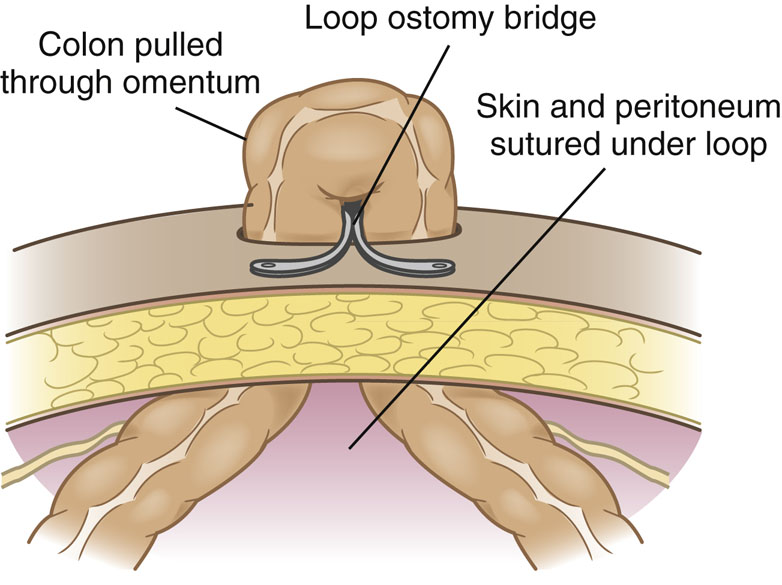
An ileostomy is an opening in the ileum. The ileum is the distal portion of the small intestine that empties into the large intestine. An ileostomy is necessary when the entire colon must be bypassed or removed. Conditions that require colon bypass include congenital defects, cancer, inflammatory bowel disease, bowel trauma, and familial conditions such as multiple polyposis. Multiple polyposis is characterized by the presence of many polyps in the colon. Because these polyps often become malignant, removal of the colon may be recommended.
A diagram shows the loop colostomy. The colon is pulled through the omentum and it is connected to the loop ostomy bridge. Under this loop, skin and peritoneum are sutured.
Fig. 18.3  Loop colostomy. From Lewis SM, Bucher L, Heitkemper MM, Harding MM: Medical-surgical nursing: assessment and management of clinical problems, ed 10, St. Louis, 2017, Elsevier.

Procedure

A surgical incision is made in the abdomen and a loop or the end of the ileum is brought out through a second abdominal incision. The edges of the loop or the end of the ileal segment are everted and sutured to the abdominal skin to create a stoma. Loops may be supported with a device such as a rod or bridge instead of being sutured to the skin.
The physician applies a disposable pouch or a fluffy dressing to absorb drainage in the operating room. The pouch collects fecal drainage to keep it from contaminating the surgical incision and to protect surrounding skin. The incontinent ileostomy frequently or intermittently drains liquid to pasty stool, so the patient will always have to wear a pouch. The stool output may be as high as 2000 mL per day initially. The small bowel gradually adapts, and the output will decrease and thicken over time.
The first continent ileostomy, created in 1975, was the Kock pouch (Fig. 18.4), which creates a reservoir for the liquid stool so that it can be drained from a stoma at intervals with a tube. The Barnett continent intestinal reservoir is a modification of the Kock procedure. A number of variations on the Kock pouch have since been developed, including the ileal pouch anal anastomosis (IPAA) (Fig. 18.5). This essentially creates a new rectum from the terminal ileum. This procedure allows for nearly normal bowel evacuation. This type of surgery involves several different versions of reconstructed bowel, which are named after the letters they resemble, including J, S, W, or H pouches. The patient may have a temporary loop ileostomy while the pouch heals. Laparoscopic procedures are relatively new but promise a more rapid postoperative recovery, lower infection risk, and better cosmetic outcome.
image
Fig. 18.4  Continent ileostomy (Kock pouch). The pouch to hold fecal matter is created from a loop of ileum folded back on itself. From Black JM, Hawks JH: Medical-surgical nursing: clinical management for positive outcomes, ed 8, St. Louis, 2009, Saunders-Elsevier.

Two diagrams, labeled A and B, show a continent ileostomy. (A) shows a diagram of the ileum with its lumens sutured. It shows labels for fascia above the ileum, distal ileum formed into a nipple valve, fold sutured to hold the valve in place, intussusception of the ileum to form a nipple valve, loop opened, lumens of terminal ileum that are sutured together, loop of terminal ileum sutured together, and suture needle and thread on the loop. (B) shows a diagram of the sutured ileum forming a pouch. It shows labels for nipple valve or stoma sutured to the skin layers, stoma sutured flush with skin, pouch sutured to the abdominal wall, and knock pouch in which edges are joined to form a pouch. The fascia is above the ileum.

image
Fig. 18.5  Creation of an ileoanal reservoir. Stage 1: The colon is removed, a temporary loop ileostomy is created, and an ileoanal reservoir is formed. The reservoir may be J-shaped or S-shaped, depending on the technique used. Stage 2: After the reservoir heals (usually several months), the temporary loop ileostomy is reversed and stool drains into the reservoir for storage until it is eliminated through the rectum. From Ignatavicius DD, Workman ML: Medical-surgical nursing: patient-centered collaborative care, ed 7, St. Louis, 2013, Saunders.

Two diagrams depict the creation of an ileoanal reservoir in two stages. Stage 1: After removal of the colon, a temporary loop ileostomy is created and an ileo anal reservoir is formed. The reservoir is created in an S-shaped reservoir (using three loops of ileum) or a J-shaped reservoir (suturing a portion of ileum to the rectal cuff, with an upward loop). The diagram shows the label for the loop ileostomy and the S-shaped reservoir. The enlarged view of the diagram shows a J-shaped reservoir. Stage 2: After the reservoir has had time to heal-usually several months- the temporary loop ileostomy is reversed and stool is allowed to drain into the reservoir. The diagram shows the label for loop ileostomy reversed.

icon Pharmacology Capsule
Ileostomy patients are usually not given timed-release capsules or enteric-coated tablets because they are likely to be eliminated before they can dissolve or be absorbed.

Postoperative Nursing Care of the Patient With an Ileostomy

The immediate postoperative care of the patient with an ileostomy is like that of most other patients having abdominal surgery. The patient may have a nasogastric tube attached to low intermittent suction. Intravenous fluids are ordered for several days, after which oral intake is gradually increased.
General care of the surgical patient is discussed in Chapter 17. This section emphasizes only the special needs of the ileostomy patient beyond the immediate recovery period.

Focused Assessment

Health History
After surgery, document significant symptoms such as pain, anorexia, nausea, vomiting, weakness, thirst, and muscle cramps in the review of systems. The functional assessment reveals how the patient is reacting to the surgery and how they think it will affect usual functioning. In addition, determine what stressors the patient perceives, as well as their usual coping strategies and sources of support. Finally, determine the patient’s understanding of ileostomy care and lifestyle implications.
Physical examination
Begin the physical examination with observation of the patient’s general status: level of consciousness, orientation, posture, and expression. Take vital signs and weight and compare them with preoperative findings. Inspect the skin color, and palpate for warmth and turgor; inspect oral tissues for moisture. Observe respiratory effort and auscultate breath sounds. In addition, examine the abdomen for distention and bowel sounds.
Inspect the stoma for color and bleeding. A new stoma created from a segment of bowel should be beefy red. When healed it should be rose red, somewhat darker than the color of the oral mucosa. A very pale, bluish, or black stoma has impaired circulation and must be reported to the RN or physician immediately. Prompt surgical intervention may be needed to restore circulation and prevent tissue necrosis.
Record urine appearance and volume. Palpate extremities for warmth and peripheral pulses. It is important to observe for neuromuscular symptoms such as trembling, twitching, or cramping, which may indicate electrolyte imbalances.

Patient Problems, Goals, and Outcome Criteria: Ileostomy
The patient problems and goals common to most postoperative patients (pain, potential for airway obstruction, potential for infection, inadequate circulation, and urinary retention) are discussed in Chapter 17. Additional diagnoses specific to the ileostomy patient in the immediate postoperative phase are as follows.
Patient Problems, Goals, and Outcome Criteria: Ileostomy
Patient Problems Goals and Outcome Criteria
Potential for fluid volume deficit (dehydration) related to nothing by mouth (NPO) status, nasogastric suction, passage of liquid stool Normal fluid balance: pulse and blood pressure consistent with patient norms, moist mucous membranes, urine output approximately equal to fluid intake, absence of neuromuscular symptoms.
Potential for inadequate tissue perfusion of stoma Effective stoma perfusion: stoma is beefy red.
Potential for disrupted skin tissue integrity related to adhesive, fecal drainage, leaking appliance Normal skin integrity: skin intact with minimal redness around stoma.
Altered body image related to presence of stoma, altered body function, loss of fecal continence Adjustment to change in body image: patient makes positive statements about ability to adapt, learns and takes over ostomy care.
Potential for impaired sexual function related to altered body structure and function or reactions to those changes Fulfilling sexual expression: patient reports making adaptations as necessary for satisfying sexual expression.
Inability to manage self-care related to lack of knowledge of ostomy management, failure to accept ostomy, lack of resources for proper care Patient effectively manages ostomy: patient accepts responsibility for self-care, demonstrates proper care of ostomy, obtains necessary supplies.
Potential for injury related to obstruction of the ileum Absence of injury: ostomy remains patent, drainage is continuous or frequent.

Interventions

Potential for fluid volume deficit
The loss of fluids and electrolytes through nasogastric suction and the passage of liquid stool can lead to deficient fluid volume and electrolyte imbalances. Administer intravenous fluids as ordered, with careful monitoring of hydration status. Maintain accurate intake and output records including urine, gastric contents, and fecal drainage. Monitor serum electrolytes closely and watch for signs and symptoms of imbalances: changes in mental status (confusion, anxiety), changes in neuromuscular status (twitching, trembling, weakness), poor tissue turgor, edema, and dry mucous membranes.
When the patient resumes oral intake, advise a daily fluid intake of 2 to 3 L. During hot weather or illness, additional fluids may be required. It is best to consume a variety of fluids, rather than plain water, to obtain electrolytes. The loss of bicarbonate in ileostomy drainage can result in metabolic acidosis. To prevent this, the physician may order bicarbonate replacement.
Potential for inadequate tissue perfusion of stoma
Potential for disrupted skin tissue integrity
Check the pouch hourly at first to detect leakage. When the pouch is emptied or changed, try to keep fecal matter from contaminating the primary incision. Digestive enzymes present in the liquid stool are especially harmful to the abdominal tissue. Cleanse the skin around the stoma gently but thoroughly. Maintaining skin integrity is an ongoing problem for the patient with an intestinal ostomy. The presence of fecal matter on the skin provides a medium for bacterial, fungal, and yeast infections. In addition, the materials used to hold the pouch securely can cause traumatic injuries and allergic responses.
A protective barrier must be maintained to prevent skin breakdown. A pouch is used to collect fecal drainage. A good pouch is one that protects the skin, contains wastes and gas, is odor proof, permits freedom of movement, provides security for the patient, and is not noticeable. Many kinds of pouches are available, but their features are basically the same. Some type of adhesive is needed to secure the pouch around the stoma. The pouch has an opening at the bottom that allows for emptying and rinsing. Some have gas filters that allow gas to escape while minimizing odor. Disposable pouches are used primarily, but reusable pouches are still available. The WOC nurse is a good resource person to help the patient find the right appliance.
Periodically (about every 3 to 7 days) remove the appliance for thorough cleansing of the skin surrounding the stoma. Gently peel the skin barrier (wafer) off the skin. Rough handling and frequent changes contribute to skin breakdown. Commercial adhesive removers are available if needed. After removing the skin barrier, clean the stoma and the area around it with water. If soap is used, it should be nonoily and must be rinsed off thoroughly. Then pat or fan the skin dry. The patient may be surprised to find that the stoma itself has no sensation, although the surrounding skin may be tender.
A protective barrier may be applied before the pouch can be replaced. Skin sealants that come in the form of gels, wipes, sprays, liquids, and roll-ons may be applied to the skin. Sealants protect the skin; they do not hold the pouch in place. Next, products that improve the seal may be applied. Commonly used products include powders, pastes, wafers, rings, or strips. If the skin around the stoma is broken, ostomy powder may be applied followed by a special coating material or hydrocolloid dressing. Dust away excess powder before the wafer is applied. Wafers and rings may be precut or may require cutting or stretching to fit around the stoma. The opening should be no more than image inch larger than the stoma because a larger opening permits more fecal matter to come in contact with the skin. If a paste, barrier ring, or strip is used, apply it around the stoma or on the cut edge of the wafer. Place the wafer over the stoma and press down. Some pouching systems have the pouch preattached to the wafer (one piece); other systems consist of a wafer that is placed around the stoma and a separate pouch that attaches to the wafer (two-piece). Some patients have an uneven skin surface around the stoma, making it difficult to create a seal. In that case, a caulking material such as barrier strips or rings can be applied around the stoma to create a smooth surface. Clamp or close the pouch tail after it is securely placed. Initially, the pouch opening will probably need to be custom cut. As the stoma heals and shrinks, precut appliances may work well. Custom-cut pouches can be ordered for stomas of unusual size or shape. Patients whose barriers quickly erode and those with very flush or retracted stomas can obtain special barriers to maintain good fit. Once the stoma and surgical incision heal, some patients will prefer to cleanse the peristomal skin in the shower.
Altered body image
Establishment of bowel control is an important developmental task of childhood. The patient who has an ileostomy is no longer able to control the passage of fecal matter and must learn to manage bowel elimination in a new way. This can be very distressing to the adult who fears spillage and exposure.
Inability to control odor associated with passage of gas through the stoma is another concern for the patient with an intestinal ostomy. The characteristic odor of stool is generally considered unpleasant. Because the ostomy patient may have fecal matter draining intermittently, the source of odor is almost always present.
Good hygiene also helps to control odor. Most pouches today are odor proof and disposable. Any reusable collection pouches should be washed with soap and water. Rinsing with a vinegar solution neutralizes odors that cling to the pouch. Commercial pouch deodorizers are available as well.
Potential for impaired sexual function
One area that often worries patients with an ostomy is sexuality. Encourage patients to ask questions about how the ostomy might affect sexual function or behavior. Patients may feel unattractive or fear rejection by their partner. Some men have erectile dysfunction or disruption of ejaculation, especially if they have had nerve damage associated with perineal surgery. Women may experience vaginal dryness and discomfort during intercourse. The surgeon and the WOC nurse counsel these men about options, which may include penile implants. Affected women are counseled to try vaginal lubricants. Other patients have problems because of psychologic factors, which may improve with counseling or medications prescribed by the health care practitioner.
Some practical suggestions may help the patient to resume sexual activity. The pouch should be emptied and taped down before sexual intercourse. Pouch covers and specialized undergarments are available to conceal the appliance and its contents. The partner wearing the pouch should experiment with positions that are most comfortable. Female patients should know that ostomy surgery does not interfere with pregnancy or delivery.
Inability to manage self-care
After surgery, some teaching should be included every time stoma care is done. At first, you may simply tell the patient what is being done and why. Then encourage the patient to take over more and more of the procedure. Ask the patient to demonstrate and practice as much as possible before discharge.

icon Patient Teaching
After Ostomy Surgery
The staff nurse, WOC nurse, or both must help the patient to plan for discharge. General topics to include in the teaching plan after ostomy surgery are outlined below. Specifics must be individualized to the patient and the surgical procedure.
Other helpful points include the following:
  1. • You can bathe or shower with the appliance in place because the pouch and the seal are waterproof.
  2. • Wear regular clothing but avoid direct pressure over the stoma.
  3. • Learn to recognize foods that cause excess gas or odor so that these can be avoided.
  4. • Maintain a fluid intake of at least 2000 mL daily unless contraindicated.
  5. • Avoid heavy lifting and strenuous activities at first; usually no restrictions are made after approximately 3 months; ask your physician about specific activities and contact sports.
  6. • Adaptations for sexual activity can include concealing the pouch and experimenting with positions.
  7. • Contact your physician or the WOC nurse if you observe skin breakdown, prolapse (bulging out) of the stoma, or obstruction (output absent or markedly decreased).
  8. • Resources for information about living with an ostomy include the American Cancer Society (www.cancer.org), United Ostomy Associations of America (www.ostomy.org), Crohn’s and Colitis Foundation of America (www.ccfa.org), Wound Ostomy and Continence Nurses Society (www.wocn.org), and home health agencies.
  9. • Ostomy surgery does not interfere with traveling. Tips on traveling include the following:
  10. • Take adequate supplies.
  11. • If flying, keep the supplies in a hand-carried bag. This could prevent problems if luggage is lost or delayed.
  12. • Include sealable plastic bags to dispose of used supplies.
  13. • Exercise caution with new foods that may cause diarrhea or gas.
  14. • If visiting a country where drinking the water is not advised, do not irrigate a colostomy with the water. Use only water that is safe for drinking.
Potential for injury

icon Put On Your Thinking Cap!
Locate a resource in the area where you live that provides information for people with an ostomy. Share this with classmates.

Continent (Pouch) Ileostomy

The continent ileostomy has an internal pouch created from a loop of ileum for storing fecal matter. The advantage of this type of ileostomy is that the patient does not have continuous drainage and so does not have to wear a pouch.
Not all patients are candidates for the continent ileostomy. The patient must be capable of draining the pouch with a catheter, and the ileum must be sufficient for the valve to be constructed. People with ulcerative colitis are candidates for the continent ileostomy but patients with Crohn disease are usually not eligible.

Procedure

Postoperative Nursing Care of the Patient With a Continent Ileostomy

In general, postoperative nursing care is like that described for the patient with an ileostomy. This section provides information on additional nursing measures that are specific to the patient with a continent ileostomy.

Focused Assessment

Postoperative assessment of the patient who has a continent ileostomy is essentially the same as that of the patient with an ileostomy. When the patient has a continent ileostomy, it is especially important to assess for continuous drainage because obstruction of the catheter may occur. Absence of drainage or patient complaints of a feeling of fullness in the pouch suggests obstruction. The drainage from the catheter is bloody at first and then brownish.

Patient Problems, Goals, and Outcome Criteria: Continent Ileostomy
The patient problems, goals, and outcome criteria in addition to those previously listed are as follows.
Patient Problems, Goals, and Outcome Criteria: Continent Ileostomy
Patient Problems Goals and Outcome Criteria
Potential for injury related to obstruction of the pouch drainage Absence of injury: patient’s pouch drains readily
Inability to perform (stoma) self-care related to lack of knowledge of technique for draining pouch and caring for stoma and pouch Patient understands pouch and stoma care: patient demonstrates proper pouch drainage and stoma care

Interventions

Potential for injury
In the initial postoperative period, the patient is given only intravenous fluids, then sips of water until gas and liquid stool pass through the catheter. The catheter is removed after 2 to 3 weeks, which allows the pouch to heal and peristalsis to resume. At first, the pouch can hold only 70 to 100 mL of fluid. Later it can hold as much as 500 mL. Initially the patient is taught to drain the pouch every 2 hours during the day by inserting the catheter through the stoma/bowel. At night, the catheter can be placed to gravity drainage. During the next few weeks to months, the interval between catheterizations is gradually lengthened as the pouch capacity increases. Eventually the patient will need to drain the pouch only 2 to 4 times a day. As the patient’s body adapts to the ileostomy, the drainage gradually becomes thicker and the color of normal stool.
Inability to perform (stoma) self-care
Key points in draining the continent ileostomy are as follows:
See the Health Promotion box and the Dietary Considerations box for a review of special considerations for the patient with a continent ileostomy.

Ileal Pouch Anal Anastomosis

An IPAA is somewhat like the continent pouch ileostomy except that fecal matter is stored and then eliminated through a surgically constructed rectum. It is an alternative to an ostomy, and information about it is included in this chapter because the patient will have a temporary ileostomy and the nursing care is similar to that of the ostomy patient.

Procedure

Complications

The major complications of the IPAA are (1) small bowel obstruction, (2) leaking of suture lines leading to peritonitis, and (3) inflammation of the reservoir.
Obstruction
Scar tissue or strictures may cause obstruction. Signs and symptoms of small bowel obstruction are abdominal distention, nausea, and vomiting, decreased bowel sounds, and a change in bowel pattern.
Peritonitis
If fecal matter leaks through the suture lines of the reservoir into the abdominal cavity, abscesses or peritonitis can develop. Signs and symptoms are increased pulse, respirations, and temperature; rigid abdomen and abdominal pain; and elevated white blood cell count.
Inflammation
Inflammation of the ileal reservoir (pouchitis) may be manifested by abdominal cramping, bloody diarrhea, urgency, and pain.

Postoperative Nursing Care of the Patient With an Ileal Pouch Anal Anastomosis

Focused Assessment

The nursing assessment after surgery to create an ileoanal reservoir is the same as for the patient with an ileostomy. In addition, assess for rectal drainage and condition of the perianal skin.

Patient Problems, Goals, and Outcome Criteria: Ileal Pouch Anal Anastomosis
In addition to the patient problems, goals and outcomes for the patient with an ileostomy, the following problems may occur with an IPAA.
Patient Problems, Goals, and Outcome Criteria: Ileal Pouch Anal Anastomosis
Patient Problems Goals and Outcome Criteria
Potential for disrupted skin tissue integrity related to frequent passage of liquid stool through the rectum Healthy skin: intact skin without excessive redness around the anus and the perianal area
Bowel incontinence related to inability to control passage of frequent liquid stools Control of bowel elimination: decreasing number of incontinent episodes
Potential for injury related to possible small bowel obstruction, leaking of reservoir suture line, inflammation of reservoir Absence of signs and symptoms of obstruction, suture leakage, or reservoir inflammation: no fever, abdominal pain or distention, or bloody stools

Interventions

Potential for disrupted skin tissue integrity
After the first surgical procedure, the patient’s skin around the ileostomy stoma and in the perianal area needs special care (see the Cultural Considerations box). Ileostomy care is discussed earlier in this chapter. Until the reservoir is well healed, liquid discharge may be expelled without warning. Thorough, gentle cleansing and protective creams help to prevent skin breakdown.
Bowel incontinence
Initially the patient may have as many as 20 stools a day. After 1 week, the number decreases to 8 to 10 daily. By 6 months the frequency is usually only approximately 4 to 6 a day. Nighttime control may continue to be a problem. Perineal pads or incontinence briefs may be needed to prevent soiling of clothing.
The patient must learn to strengthen the perineal muscles to restore control of fecal elimination. A recommended exercise is to tighten the anus, count to 10, and relax. This should be repeated five to six times, four times daily. In addition, drugs can be prescribed to decrease the frequency of stools and to make them less watery.
No absolute dietary restrictions exist. Advise patients to avoid fatty foods at first. The patient learns through trial and error how their body handles specific foods. Caffeine and fresh fruits and vegetables tend to cause loose, frequent stools. Pasta, boiled rice, and low-fat cheese tend to produce thicker stools.
Potential for injury
Be alert for signs and symptoms of bowel obstruction (abdominal distention, pain, no stool passage), peritonitis (pain, fever), and inflammation (pain, bloody stools), which should be reported to the physician. If obstruction occurs, the patient is given intravenous fluids and kept NPO. A nasogastric tube is inserted to decompress the bowel. If the obstruction is caused by adhesions (scar tissue), surgery may be necessary to release the restriction.
Sometimes a stricture or narrowing develops at the site where the ileum is joined to the rectum. This is most likely to happen in the fourth week after surgery. The physician may be able to stretch the tissue manually and relieve the obstruction. If an abscess or peritonitis develops, the infection is treated with antibiotic drugs. Intravenous fluids are ordered. Surgery may be necessary to drain abscesses and repair the leaking suture line.
If the inner lining of the reservoir becomes inflamed or infected, the physician may do a proctoscopic examination to identify the cause. The condition may be treated with metronidazole (Flagyl) and steroids given orally.

Colostomy

A colostomy is an opening in the colon through which fecal matter is eliminated. The location of the colostomy affects the characteristics of the fecal drainage; the closer to the rectum it is, the more formed the stool.

Procedure

A colostomy is performed by bringing a loop or an end of the intestine through the abdominal wall and creating a stoma for the passage of fecal matter. The location of the stoma depends on the portion of the intestine removed. Colostomies are classified by location in the colon. Therefore, a patient may have an ascending, transverse, descending, or sigmoid colostomy (Fig. 18.6) (see Table 18.1). An ascending colostomy passes relatively liquid material. The drainage from a transverse colostomy is liquid to semisolid. A descending or sigmoid colostomy passes softly formed stool. The colostomy begins to function on the third to fifth postoperative day.
image
Fig. 18.6  Types of ostomies. From Lewis SM, Bucher L, Heitkemper MM, Harding MM: Medical-surgical nursing: assessment and management of clinical problems, ed 10, St. Louis, 2017, Elsevier.

Five diagrams show different types of ostomies. 1. Ileostomy: the ostomy is done on the ileum in the abdomen. 2. Ascending colostomy: the ostomy is done on the ascending colon on the right side of the abdomen. 3. Descending colostomy: the ostomy is done the descending colon on the left side of the abdomen. 4. Sigmoid colostomy single-barreled: the ostomy is done on the sigmoid colon on the left side of the abdomen. 5. Transverse colostomy double-barreled: the ostomy is done on the transverse colon, forming a proximal and a distal loop.

A colostomy may be temporary or permanent. A temporary colostomy is done to allow healing of the intestine after surgery, trauma, or in certain disease states. Because the intestine below the colostomy is intact, the temporary colostomy may have two stomas. The stoma that drains fecal matter from the intestine is the proximal stoma. The distal stoma opens into the portion of the colon connected to the rectum. This is called a double-barreled colostomy. Sometimes the opening of the distal portion is brought through another location on the abdominal wall, creating a fistula through which mucus drains. If there is more than one stoma, the patient record should clarify which is the functional stoma that drains feces. An end colostomy with a Hartmann pouch for the distal segment is now more common than the double-barreled colostomy. A Hartmann pouch is created by closing the distal bowel and leaving it in place (see Fig. 18.2). The patient with a Hartmann pouch passes mucus through the rectum. In a total abdominal colectomy with ileorectal anastomosis (TAC-IRA), the pouch stores fecal matter to be eliminated through the anus. When it is necessary to remove a large part of the colon or the rectum, a permanent colostomy is made. If the colostomy is created in two stages, the patient returns from the first procedure with a loop of intestine protruding from an abdominal wound. The loop is held in place by a rod or a bridge (see Fig. 18.3). Later, the surgeon cuts the loop to create the stoma.
The main long-term complications of colostomy are prolapse and stenosis. A prolapsed stoma protrudes farther out than usual. It is caused by increased abdominal pressure, as can occur with coughing or sneezing. Other contributing factors might include an abdominal opening that is too large or a poorly attached stoma. Stenosis is the narrowing of the abdominal opening around the base of the stoma. If severe, stenosis blocks the passage of feces. Additional complications are associated with poor blood supply to the stoma, leading to necrosis and peristomal hernia. Peristomal hernia can limit bowel function, causing constipation, strangulation of the bowel, and poor results from colostomy irrigation.

Postoperative Nursing Care of the Patient With a Colostomy

Focused Assessment

The postoperative care of the patient with a colostomy is essentially the same as that for the patient with an ileostomy.

Patient Problems, Goals, and Outcome Criteria: Colostomy
In addition to the patient problems and goals already identified, the following may also apply to the patient with a colostomy.
Patient Problems, Goals, and Outcome Criteria: Colostomy
Patient Problem Goals and Outcome Criteria
Inability to manage colostomy care related to lack of knowledge of self-care and irrigation procedure (if ordered), lack of confidence, lack of resources, failure to accept ostomy Patient manages colostomy effectively: patient accepts responsibility for self-care, patient demonstrates ostomy care and irrigation (if ordered) correctly; uses resources as needed, obtains necessary supplies.
Potential for injury related to prolapse or stenosis Absence of injury: no signs of prolapse, no protrusion of stoma; patent stoma with lumen of adequate diameter: regular elimination of feces through stoma.

Interventions

icon Nursing Care PlanPatient With a Colostomy
Focused Assessment
Health History
A 47-year-old Asian American had a bowel resection and permanent colostomy in the descending colon to remove a malignant tumor. He is 3 days postsurgery. He has been receiving intravenous morphine by patient-controlled analgesia and reports adequate pain control. He has had no nausea or vomiting but has a nasogastric tube attached to low suction. He is allowed nothing by mouth (NPO) and is receiving intravenous fluids at 150 mL/h. He participates in turning, coughing, deep breathing, and using incentive spirometry every 2 hours. He has discussed his fear of cancer with the nurse, stating that his mother died of stomach cancer.
Physical Examination
Vital signs: blood pressure 118/64 mm Hg, pulse 92 beats per minute, respiration 20 breaths per minute, temperature 100° F (38° C) measured orally. Height 5’5”, weight 140 lb. The patient is alert and oriented. His skin is warm and dry with good turgor. Oral mucous membranes are moist. Breath sounds are clear to auscultation. The abdomen is soft and bowel sounds are present in all four quadrants. The stoma is beefy red and edematous. A temporary drainage device is in place, and the collection pouch has approximately 100 mL of greenish-brown liquid stool. Extremities are warm with palpable peripheral pulses. No muscle twitching or cramps are noted.

Patient Problems Goals and Outcome Criteria Interventions
Potential for fluid volume deficit related to NPO status, nasogastric suction, passage of liquid stool Patient will maintain normal fluid balance, as evidenced by pulse and blood pressure consistent with patient’s baseline, moist mucous membranes, and approximately equal fluid intake and output. Monitor for signs of hypovolemia: tachycardia, hypotension, decreasing urine output, and dry mucous membranes. Keep accurate intake and output (i.e., urine, liquid stool, gastric fluid) records. Monitor for signs of electrolyte imbalances: confusion, anxiety, twitching, trembling, muscle weakness, and cardiac dysrhythmias. Give intravenous fluids as ordered, monitoring rate of flow carefully.
Potential for disrupted skin integrity related to stoma adhesive, fecal drainage Skin at the base of the stoma will be intact and free of redness. Check pouch hourly to detect leakage. When pouch is emptied, prevent fecal matter from contaminating the incision. When changing the appliance, gently remove adhesive. Cleanse skin around stoma with soap and water, rinse, and pat dry. Apply a protective skin barrier before replacing the pouch. Make the opening of the skin barrier not more than image larger than the stoma. Report rash or skin breakdown.
Altered body image related to presence of stoma, altered body function Patient will adapt to colostomy as evidenced by self-care and ability to resume normal activities. Provide an opportunity for the patient to share his thoughts about colostomy. Identify specific concerns such as activity limitations, stoma care, odor control, and effect on sexuality. Provide information. Be accepting of the patient’s feelings. Encourage him to attend to grooming and appearance. Offer to have a volunteer from the American Cancer Society or United Ostomy Associations of America visit him. Advise the patient that services are available from a WOC nurse, a mental health counselor, and a spiritual counselor if he desires.
Inability to manage (colostomy) self-care related to complexity of ostomy care, lack of knowledge, lack of resources, failure to accept ostomy Patient will manage ostomy care effectively: patient demonstrates proper ostomy care, uses available resources, and resumes valued activities with adaptations as needed. During stoma care in early postoperative period, tell the patient what is being done and why. When the patient begins to watch the procedure, gradually encourage him to participate and then to take over care. Recognize the patient’s need to grieve and that the patient may use denial as a coping mechanism. Develop a teaching plan that includes skin care, pouches, diet fluids, irrigation if appropriate, activity, sexuality, complications, tips on traveling, and resources.

image

Critical Thinking Questions
Inability to manage (colostomy) self care
People with a descending colostomy may be taught to irrigate it every day or two to maintain regular, controlled elimination. Many patients have regular bowel movements without irrigation. Others are unlikely to establish controlled elimination and may find the procedure not worth the trouble. Patients who have liquid stools do not benefit from irrigation because they drain fecal matter continuously. Irrigation is unlikely to establish control if the patient has diarrhea when under stress, has had radiotherapy, has a poor prognosis, or has a history of inflammatory bowel disease. The surgeon and WOC nurse will decide whether irrigation is appropriate in individual cases.
Irrigation can cause complications. The tube used to introduce irrigating fluid can perforate the bowel. A perforated bowel permits fecal matter to flow into the abdominal cavity, causing peritonitis, a very serious infection. The risk of perforation can be reduced greatly by using a cone-tipped catheter. Other complications are caused by the type, amount, or temperature of the solution used. Plain tap water may cause fluid and electrolyte imbalances if used repeatedly or in large amounts. If too much solution is used or if it is too cold, the patient may experience cramping, nausea, and dizziness. Inform the physician if weakness occurs after irrigation even after the amount and temperature of the solution are adjusted.
If irrigations are indicated, you or the WOC nurse may perform them initially. However, the goal is for the patient or significant other to learn to do the procedure, so an explanation of the process must be provided.
The following are key points to remember when irrigating a colostomy:
Potential for injury
Be alert for indications of colostomy complications. Although a prolapsed stoma may look frightening, it is not usually serious. No reason exists for immediate action if it continues to drain feces. It can usually be gently put back in place by the surgeon or WOC nurse. If the prolapse is severe or causes fecal obstruction, surgical repair is indicated.
Inform the physician if the ostomy is not draining properly. The surgeon may be able to dilate the stoma and enlarge the opening. If dilation is not successful, surgery may be needed.

Urinary Diversion

image
Fig. 18.7  Methods of urinary diversion. From Lewis SM, Bucher L, Heitkemper MM, Harding MM: Medical-surgical nursing: assessment and management of clinical problems, ed 10, St. Louis, 2017, Elsevier.

Four diagrams, labeled A through D, show methods of urinary division. (A) Ileal segment anastomosed to sigmoid colon: Isolated ileal segment with ureters implanted in posterior portion of segment. (B) Isolated ileal segment with ureters implanted in posterior portion of segment. The diagram shows the label for the protruding abdominal stoma at the end of ileal segment. (C) It shows two diagrams. The first diagram shows left ureter anastomosed to right ureters and cutaneous ureterostomy on abdomen. The second diagram shows cutaneous ureterostomy on abdomen. (D) Bilateral nephrostomy tubes inserted into renal pelvis; catheters exit through an incision on each flank, or there may be just one kidney. The diagram shows catheter inserted into the kidney anchored with a tape on the pelvic area which is connected to a drainage tube. It shows a label for a stab wound on skin below the kidney.

Urinary diversion may be temporary or permanent. Permanent urinary diversion is necessary when the bladder is congenitally absent or removed because of malignancy or trauma or when extensive pelvic malignancy obstructs urine flow. Temporary diversion may be used when obstruction to urine flow occurs, as might be caused by a urinary calculus, or to permit healing of the ureters or bladder.
Preparation of the patient for ostomy surgery is discussed at the beginning of this chapter. Postoperative care after each type of diversion is discussed separately.

Ileal Conduit

The ileal conduit is the most common type of urinary diversion. Other names for the ileal conduit are urostomy, ureteroileostomy, ureteroileocutaneous anastomosis, ileal loop, and Bricker procedure.

Procedure

The ileal conduit is a urinary drainage system made out of a portion of small intestine. A 6- to 8-inch segment of ileum is first removed. The remaining ends of the ileum are then anastomosed (stitched) to restore bowel function. The ureters are cut from the bladder and attached to the ileal segment at an angle to prevent reflux. One end of the ileal segment is sutured closed. The other end of the ileal segment is brought through an abdominal incision and sutured to create a stoma for urine drainage. A similar procedure that uses a segment of large intestine is called a colonic or sigmoid conduit. The stoma of an ileal or colonic conduit is bright red because it is intestinal mucosa.
image
Fig. 18.8  Creation of a continent Kock urinary pouch with ureters implanted and stoma with nipple valve. From Lewis SM, Bucher L, Heitkemper MM, Harding MM. Medical-surgical nursing: assessment and management of clinical problems, ed 10, St. Louis, 2017, Elsevier.

A diagram shows the creation of a stoma joined to a urinary pouch in the pelvic area. The ureters from both the kidneys are connected to the ends of the pouch, which shows the label for implantation of ureters.

Complications

During the postoperative period, the patient is at risk for a number of complications. Complications related to the surgical procedure include leakage of the anastomosed ureters and intestinal segments, ureteral obstruction, and separation of the stoma from surrounding skin.
Other problems include wound infection, necrosis of the stoma, and paralytic ileus. The stoma may become necrotic if the blood supply in the resected segment is inadequate. If the stoma turns gray or black, circulation is impaired; the physician should be notified at once.
Complications that may occur in the later postoperative period are infection, crystal formation, and calculi (stones). The patient may also have problems with the stoma, including retraction, prolapse, or hernia.

Postoperative Nursing Care of the Patient With an Ileal Conduit

Nursing care of the patient who has an ileal conduit is essentially the same as that for the patient with an ileostomy. Box 18.1 summarizes the nursing assessment data after ostomy surgery. A few special points should be made about the ileal conduit. This patient will have a nasogastric tube attached to suction to prevent abdominal distention and stress on the resected portion of the ileum while it heals. The patient is NPO and is given intravenous fluids until bowel sounds return. A temporary ileus (absence of bowel activity) is expected after bowel resection. Ureteral catheters or stents to drain urine may be seen in the new stoma postoperatively. If stents are present, output is monitored because obstruction can occur (Fig. 18.9). Mucus is normally present in drainage from an ileal conduit because it is produced by the lining of the bowel segment. The pouch should be emptied when it is one-third to one-half full. The pouch should be attached to a bedside drainage collection device during the night because the output may exceed the pouch capacity.
Urostomy stoma with stents in intestine. A nasogastric tube is fixed in the Urostomy stoma.
Fig. 18.9  Urostomy stoma with stents in place. Courtesy Jane Fellows.

Patient Problems, Goals, and Outcome Criteria: Ileal Conduit
In addition to the common problems and goals for postoperative patients (see Chapter 17), the following diagnoses may apply to the patient who has an ileal conduit/urostomy.
Patient Problems, Goals, and Outcome Criteria: Ileal Conduit
Patient Problems Goals and Outcome Criteria
Potential for disrupted skin integrity related to contact of urine with skin Normal skin around stoma: healed stoma base without redness or edema
Potential for infection related to contamination of stoma Absence of infection: no fever or foul urine odor
Potential for injury related to obstruction of urine flow Unobstructed urine flow: urine output approximately equal to fluid intake
Altered body image related to presence of stoma, altered body function Adjustment in body image: patient acknowledges stoma, shows increasing interest in self-care, resumes previous sexual activity.
Inability to perform ostomy care related to lack of knowledge to manage complex therapeutic regimen Patient assumes self-care of ostomy: patient demonstrates proper techniques of ostomy care and describes self-care with an ostomy.

Interventions

Potential for disrupted skin integrity
After an ileal conduit, the patient’s urostomy pouch is usually attached to a bedside collection device to prevent pouch overfilling and leakage. Once the patient is ambulatory, the bedside collection device is only used during the night. A variety of pouches are available (Fig. 18.10). Some have antireflux valves to prevent the flow of urine back into the stoma. A skin barrier product can be used around the stoma for protection. Karaya products are used for intestinal ostomies but not for urinary drainage because urine breaks down the product. Belts can be worn with some appliances to hold them in place. Some pouches can be connected to a leg bag for urine collection.
image
Fig. 18.10  Urostomy pouching system with adapter to connect pouch to bedside drainage bag. Courtesy Hollister Inc., Libertyville, IL.

An urostomy pouching system. It shows a bag or a pouch with a ring-like structure on one end and connected to a tube on the other hand. A square-shaped plate with a hole inside a circular structure is shown on the left of the pouch.

The pouch is changed every 3 to 4 days or when it leaks, because frequent changes are irritating to the surrounding skin. When it is changed, gently remove any adhesive, and take care not to dislodge stents, which are usually sutured to the peristomal skin. A gauze pad, tampon, or tissue may be placed at the opening of the stoma to absorb urine. Pouch changes are usually done in the morning when urine production is lowest, but if the patient is still receiving continuous intravenous fluids, output will be increased. Steps in the application of a urinary pouch are illustrated in Fig. 18.11. Wash the peristomal area with water and pat dry. If soap is used, it should be nonoily and rinsed off thoroughly. If crystals are present, a gauze pad saturated in a dilute vinegar solution can be used to dissolve them. Urinary stoma problems are summarized in Table 18.2.
Potential for infection
The stoma serves as a portal for pathogens to enter the urinary tract, causing infection. Urinary tract infections can have serious consequences, including kidney damage and septicemia. Pouch care is treated as a clean, rather than sterile, procedure because the stoma is not sterile. However, you must still take care to avoid introducing organisms to the area.
Yeast infections that sometimes develop around the stoma are characterized by a skin rash surrounding the stoma. These are usually treated with antifungal powder applied to the peristomal skin and sealed with a skin barrier spray/wipe, then covered with the wafer.
Potential for injury
If urine does not flow readily, an obstruction is possible. Minimal urine output postoperatively should be approximately 800 mL in 24 hours. If output decreases significantly, notify the RN or surgeon immediately.
Altered body image
image
Fig. 18.11  Procedure for applying pouch. (A) Gather supplies: pouch, ostomy belt, skin barrier, stoma template, gauze pads, pouch clamp or rubber band, safety pin, and clean gloves. Wash hands and put on gloves. (B) After removing the old pouch and cleaning the area around the stoma, place a gauze square over the stoma to absorb the drainage. (C) Use a stoma template to measure the size of the stoma and then cut an opening the same size as the stoma into the skin barrier and adhesive. (D) Remove the backing from the adhesive of the new pouch. (E) Place the opening in the new pouch over the stoma and gently press into place with the pouch drain pointed toward the floor. (F) Connect the drain to the tubing or close the drain if appropriate. Secure the tubing to sheets or according to agency policy. From Black JM, Hawks JH: Medical-surgical nursing: clinical management for positive outcomes, ed 8, St. Louis, 2009, Saunders-Elsevier.

Six diagrams, labeled A through F, show the procedure for applying pouch. (A) shows the Urostomy pouch. (B) shows the hand is placing a gauze square over the stoma. (C) shows the hand is measuring the size of the stoma. (D) shows the hands are removing the backing from the new pouch. (E) shows the hands are placing the new pouch into the stoma. (F) shows the hands are connecting the drain into the tubing.

Table 18.2

Problems Associated With Urinary Stomas
Problem Cause Assessment and Intervention
Stomal laceration Pouch opening too small Enlarge pouch opening.
Pouch not positioned correctly Reposition pouch.
Monitor healing.
Peristomal laceration Improperly fitting pouch Evaluate the pouch fit with the patient in sitting, lying, and standing positions. Check the fit of the belt.
Improper pouch removal technique Consider the need for adhesive removers and/or specialized pouching systems.
Bleeding Trauma
Apply a cool cloth.
Cleanse gently.
Crystal formation Urinary tract infection, stasis
Treat the infection and acidify the urine. Apply a vinegar compress to the stoma during dressing change. Use equal parts water and white vinegar.
Put 1–2 oz of vinegar solution in the pouch for 20 minutes twice a day, then rinse.
Use a vinyl or plastic pouch rather than a rubber one.
Stenosis Scar formation Dilation performed by or under direction of physician.
Table Continued

image

Problem Cause Assessment and Intervention
Skin irritation Skin barrier or wafer too small Adjust the size of the skin barrier or wafer to cover skin around the stoma.
Leaking appliance
Check the belt. If it is too tight, the seal can break.
Replace the appliance as needed (PRN).
Hair follicle inflammation
Use topical antimicrobial powder and skin barrier powder.
Cover any lesions with nonstick dressing and with a barrier before applying the pouching system.
Use adhesive remover; remove sealants gently. After the skin returns to normal, shave or cut any hair around the stoma.
Perspiration under pouch
Dry the skin well.
Apply a protective barrier.
Apply powder to skin under pouch.
Use a soft pouch cover.
Allergy to pouching products Spot test other brands to find one that does not cause irritation.
Candida (“yeast”) infection
Dry well.
Apply antifungal powder as ordered.
Hernia/prolapse Muscle weakness Condition requires surgical repair.
Increased intraabdominal pressure
Wartlike lesions Excessive peristomal wetness
Reduce pouch opening size or acquire custom-cut system to reduce moisture on the skin.
Condition may require debridement by a physician.
Odor Urinary tract infection Treat infection.
Appliance soiled or leaking
Check the seal; change the appliance.
Provide deodorant tablets PRN.

image

Patients with ostomies commonly experience grief in response to the loss of normal function and perceived disfigurement. This may be exhibited as denial, shock, anger, bargaining, or depression. Chapter 19 offers guidance for dealing with the patient who is grieving.
The change in body image may affect the patient’s sexuality. Provide opportunities for patients with an ostomy to ask questions or discuss how the ostomy might affect sexual function or behavior. Patients may feel unattractive or fear rejection by their partners. People who have had radical perineal surgeries may have physical barriers to sexual performance; other patients have problems because of psychologic factors.
The same practical suggestions identified for the patient with an intestinal ostomy may be useful to the patient with a urinary ostomy. The pouch should be emptied before sexual intercourse. Pouch covers are available to conceal the appliance and its contents. The partner wearing the pouch should experiment with positions that are most comfortable. Female patients should know that ostomy surgery does not interfere with pregnancy or delivery.
Inability to perform self-care (stoma)
Many aspects of teaching the patient with a urostomy are the same as those identified for the patient with an ileostomy. The topics to include in the teaching plan are ostomy care, pouches, diet, fluids, activity, sexuality, complications, and resources. See the teaching plan in the section on Ileostomy.
From the early postoperative period, try to help the patient learn independent ostomy care. At first, patient teaching may take place each time stoma care is done by simply telling the patient what is being done and why. Encourage the patient to participate and gradually assume more responsibility for the care. Practice builds confidence and provides the patient with the opportunity to identify problems while help is available.
Some people adapt more readily to the stoma than others. You must be sensitive to the patient’s feelings and encourage the patient in a kind way. A volunteer from the American Cancer Society or the UOAA can be especially helpful as a role model for the patient with a new ostomy. With the patient’s and the physician’s approval, the agency can be contacted about sending a volunteer to visit the patient.
The nurse, WOC nurse, or both must help the patient to plan for discharge. Provide written care instructions. The patient needs a list of supplies and places where they can be purchased. In addition, send some temporary supplies home with the patient. Finally, give the patient information (and referrals as needed) regarding resources such as home health care and community organizations.
Patients with an ostomy who enjoy traveling are encouraged to continue to do so. When traveling, patients are advised to take adequate supplies, including sealable plastic bags to dispose of used materials. If the patient is flying, their supplies should be kept in a hand-carried bag to avoid problems if luggage is lost or delayed. On a long flight, a leg bag attached to the pouch may be beneficial in case the patient must remain seated because of turbulence.

Continent Internal Reservoirs

All of the methods of urinary diversion already discussed permit urine to flow steadily through a stoma. Newer procedures allow for the storage and controlled drainage of urine. Examples of these, called continent internal reservoirs, are the Kock, Mainz, Indiana, and Florida pouches (see Fig. 18.8). The orthotopic neobladder eliminates the need for a stoma. The neobladder is an internal urinary reservoir constructed using a resected segment of the ileum that is attached to the urethra and the ureters. Urine drains into the reservoir and is eliminated through the urethra instead of a stoma. The neobladder is used more often in men than in women. Continence varies with the neobladder, so an artificial urinary sphincter is sometimes implanted. Another option for patients who cannot achieve continence with the neobladder is intermittent self-catheterization. Even though the procedure is well received by patients, some surgeons are reluctant to spare the urethra with bladder cancer, fearing the urethra could be a site for recurrent cancer.
The Kock pouch is constructed with a segment of ileum. The ureters are implanted in one side of the ileum segment. A nipple valve is constructed from the other side and attached to the skin, where a stoma is created. The valve prevents urine from flowing from the reservoir (see Fig. 18.8). A catheter is used to drain the reservoir at 4- to 6-hour intervals. Other types of pouches are constructed from different parts of the bowel. The Indiana pouch is constructed of a tapered ileal segment and plicated (pleated) ileocecal valve. This reservoir is larger than that of the Kock pouch. The Indiana pouch is also drained with a catheter every 4 to 6 hours. The Indiana pouch and similar structures have largely replaced the Kock pouch because the Kock pouch requires a more complex surgical procedure and has more complications that require additional surgery.

Complications

Complications of the continent pouches are incontinence, difficult catheterization, and urinary reflux leading to pyelonephritis, obstruction, and bacteriuria.

Postoperative Nursing Care of the Patient With a Continent Urinary Diversion

Box 18.1 summarized the general postoperative assessment of the patient having ostomy surgery. Some additional data unique to the continent pouches are added here. Immediately after surgery, the patient may have a drain to remove fluid from the operative site and a clear tube in place for continuous urine drainage. Irrigations may be ordered to remove clots and mucus. When the tube is removed, the pouch may be drained every 2 to 3 hours at first. Later, the patient may need to drain the pouch only every 4 to 6 hours during the day and once during the night. If the pouch functions properly, the patient does not have to wear an external appliance. A small gauze dressing may be placed over the stoma to absorb mucus drainage. Advise the patient to wear a medical alert bracelet that identifies the presence of a continent device that needs intubation to drain.

Cutaneous Ureterostomy

A cutaneous ureterostomy is created when one or both ureters are brought out through an opening in the abdomen or flank. Often the two ureters are joined surgically so that only one stoma is needed. In some situations, a stoma is created from each ureter.
A ureterostomy stoma is much smaller than an intestinal stoma. Immediately after surgery the urinary stoma is pink, but it quickly fades to a lighter color. Because no reservoir exists to hold it, urine drains from the stoma continuously. A pouch is needed to collect the urine and protect the skin.

Complications

Complications experienced by patients with a cutaneous ureterostomy include stenosis and urinary tract infections. Stenosis is a narrowing of the opening that interferes with the flow of urine. If the obstruction is not relieved, urine backs up in the kidney. The kidney may become swollen with urine, a condition called hydronephrosis, which leads to serious kidney damage. The kidneys can also be damaged by urinary tract infections.

Postoperative Nursing Care of the Patient With a Cutaneous Ureterostomy

Nursing assessment and care of the patient with a ureterostomy is essentially the same as for the patient with an ileostomy and urostomy. (See Box 18.1 for a summary of general assessment data.) A few special points should be made about the ureterostomy.
In the postoperative period, the review of systems should include questions about the presence of flank or abdominal pain, fatigue, malaise, and chills.

Ureterosigmoidostomy and Ureteroileosigmoidostomy

Ureterosigmoidostomy and ureteroileosigmoidostomy are not done as often now as in the past. However, you may care for patients who have had these diversions for some time and have adapted well to them. In a ureterosigmoidostomy, the ureters are implanted into the sigmoid colon. Urine drains into the colon and is eliminated through the rectum. In a ureteroileosigmoidostomy, a segment of the ileum is anastomosed to the sigmoid and the ureters are implanted into that part of the ileum. Neither procedure provides continence and both procedures present problems with kidney infections and urinary calculi (stones). Additional complications are caused by the colon’s absorption of electrolytes from the urine. Patients are at risk for deficits in potassium and bicarbonate and for excesses in sodium, chloride, and hydrogen. These imbalances may lead to metabolic acidosis.

Vesicostomy

A vesicostomy is an opening into the urinary bladder. Several types exist. Some are drained continuously through what is commonly called a suprapubic catheter; others have a surgically constructed nipple valve and are catheterized at intervals.

Nephrostomy