CHAPTER 16
LARYNX
Overview and Topographic Anatomy
Cartilages
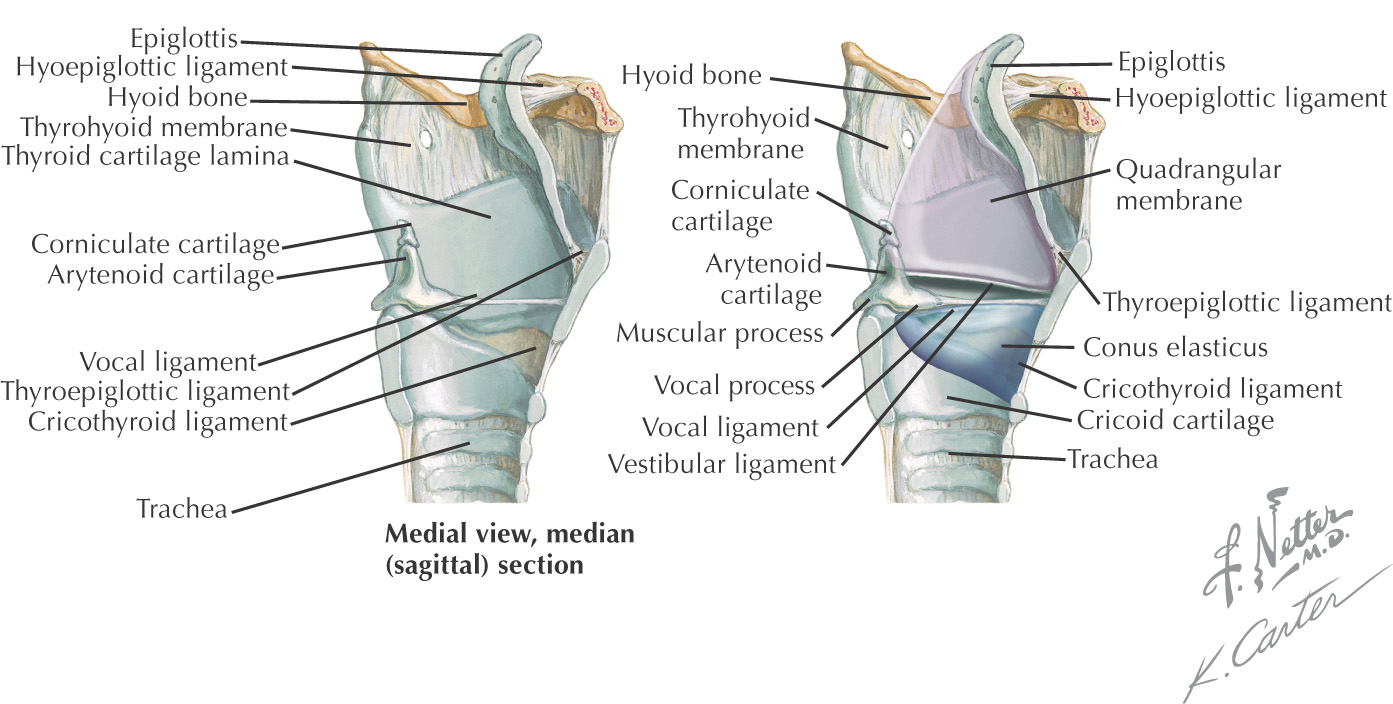
Membranes and Ligaments
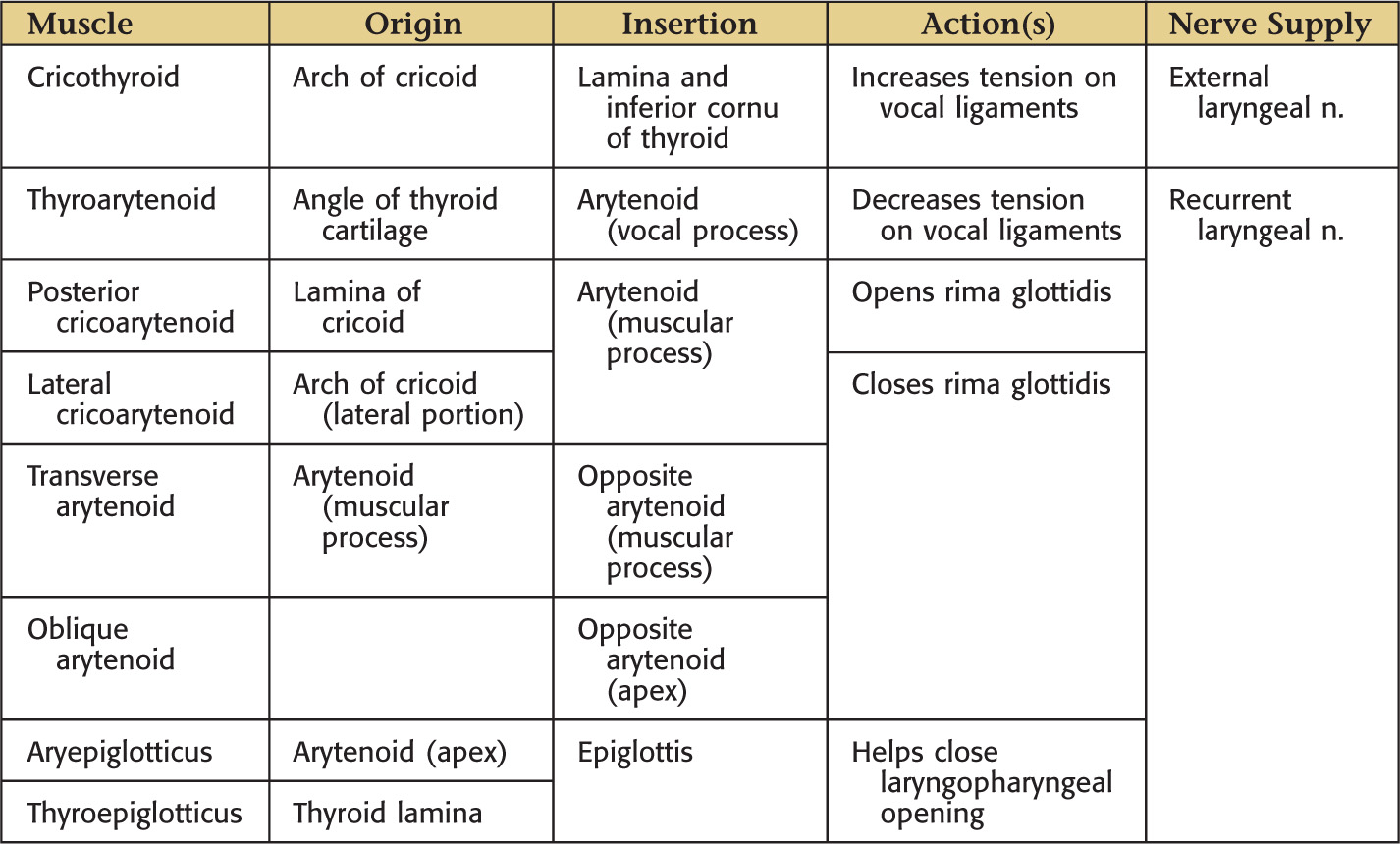
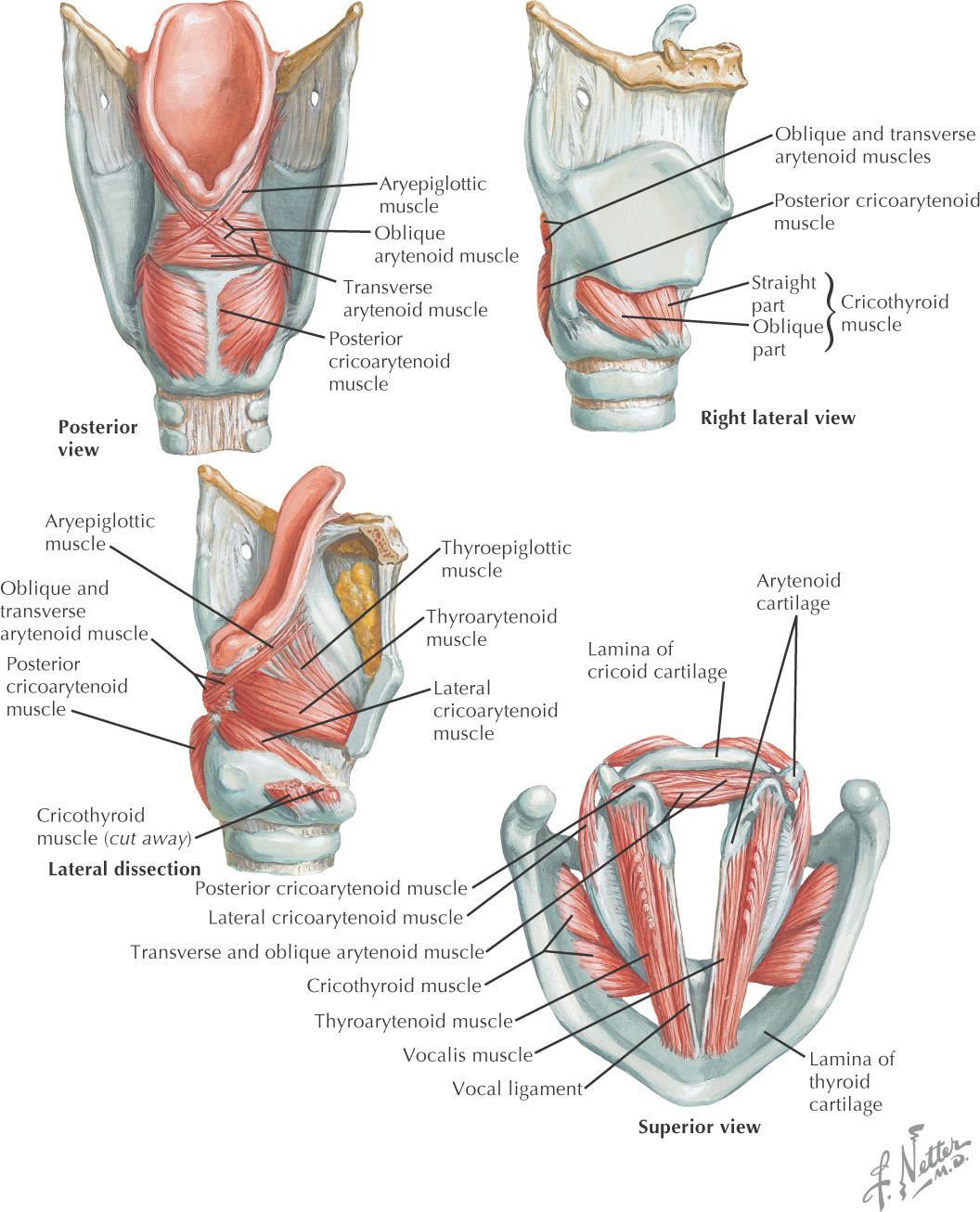
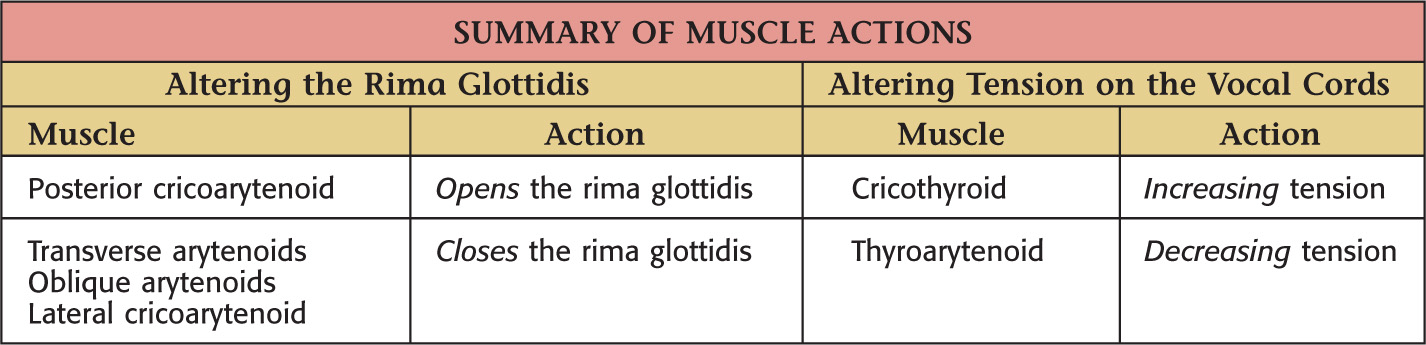
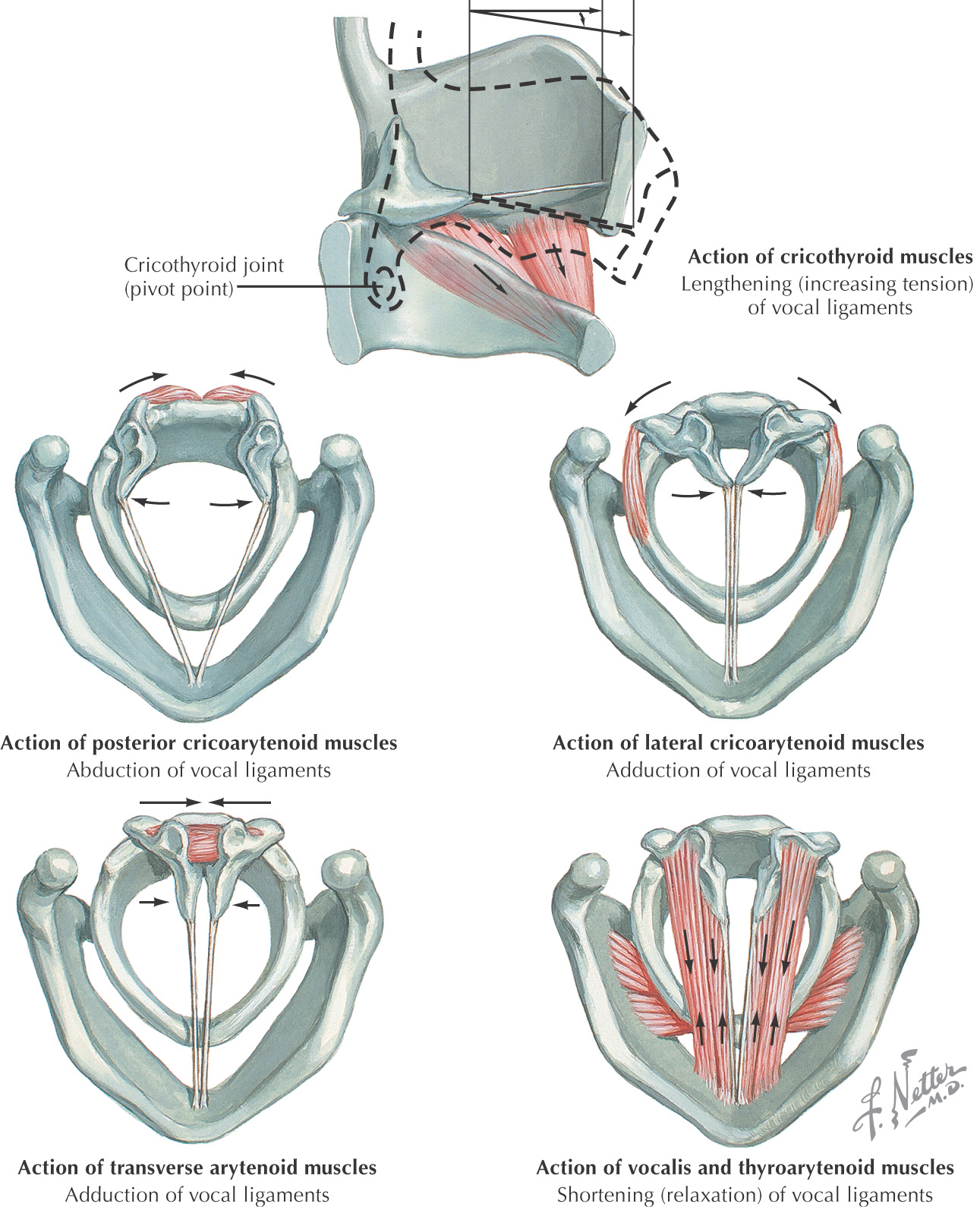
Muscles
Vascular Supply
Nerve Supply
Clinical Correlates
Questions
Overview and Topographic Anatomy
GENERAL INFORMATION
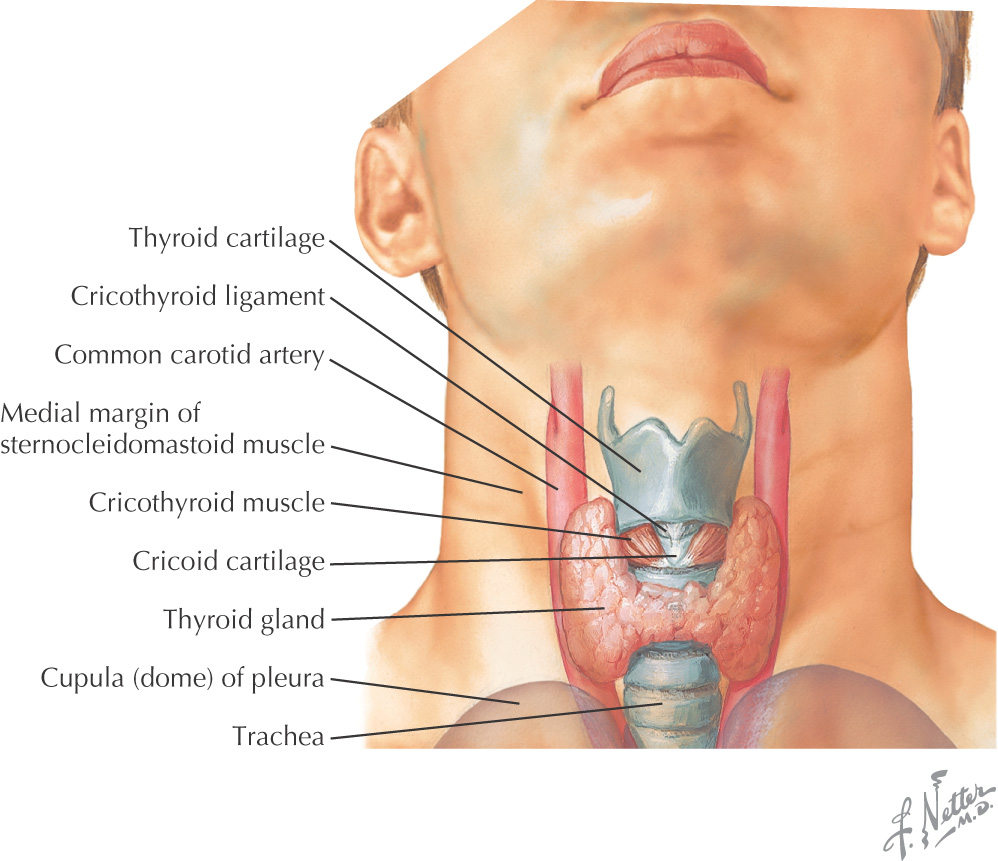
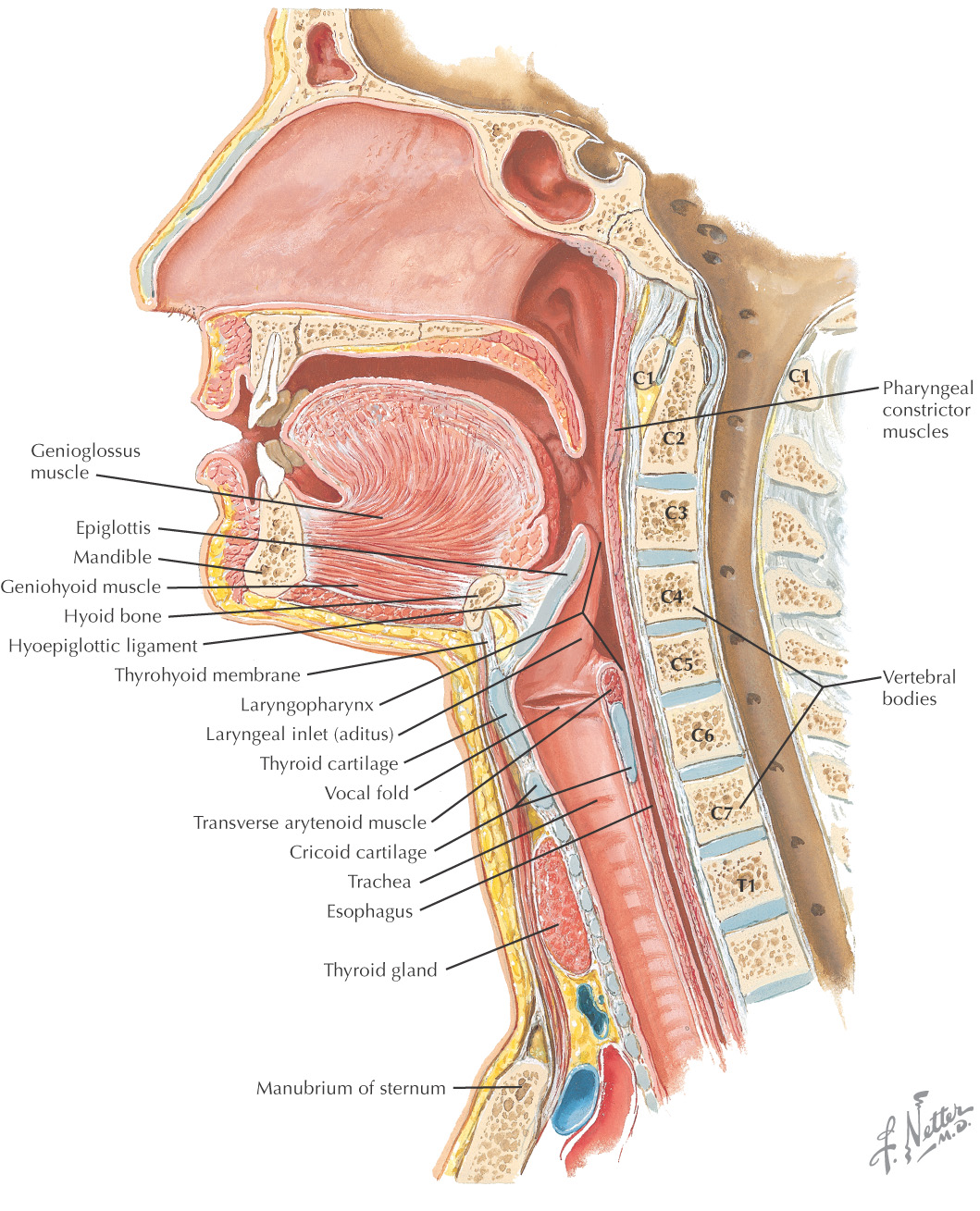
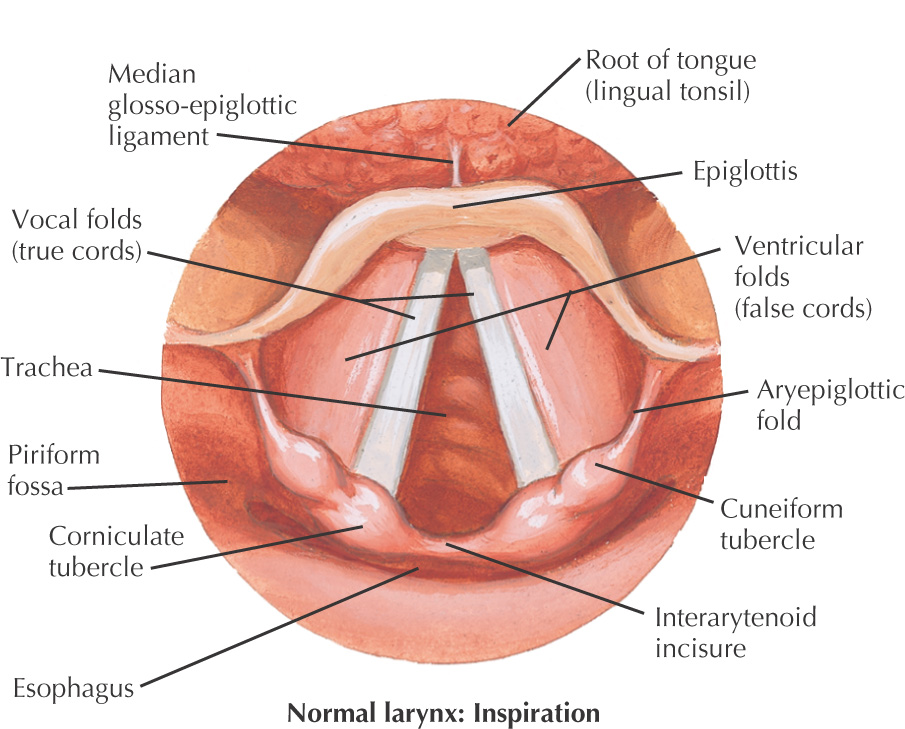
Larynx: connection between the pharynx and the trachea
Prevents foreign bodies from entering the airways
Designed for the production of sound (phonation)
Shorter in women and children
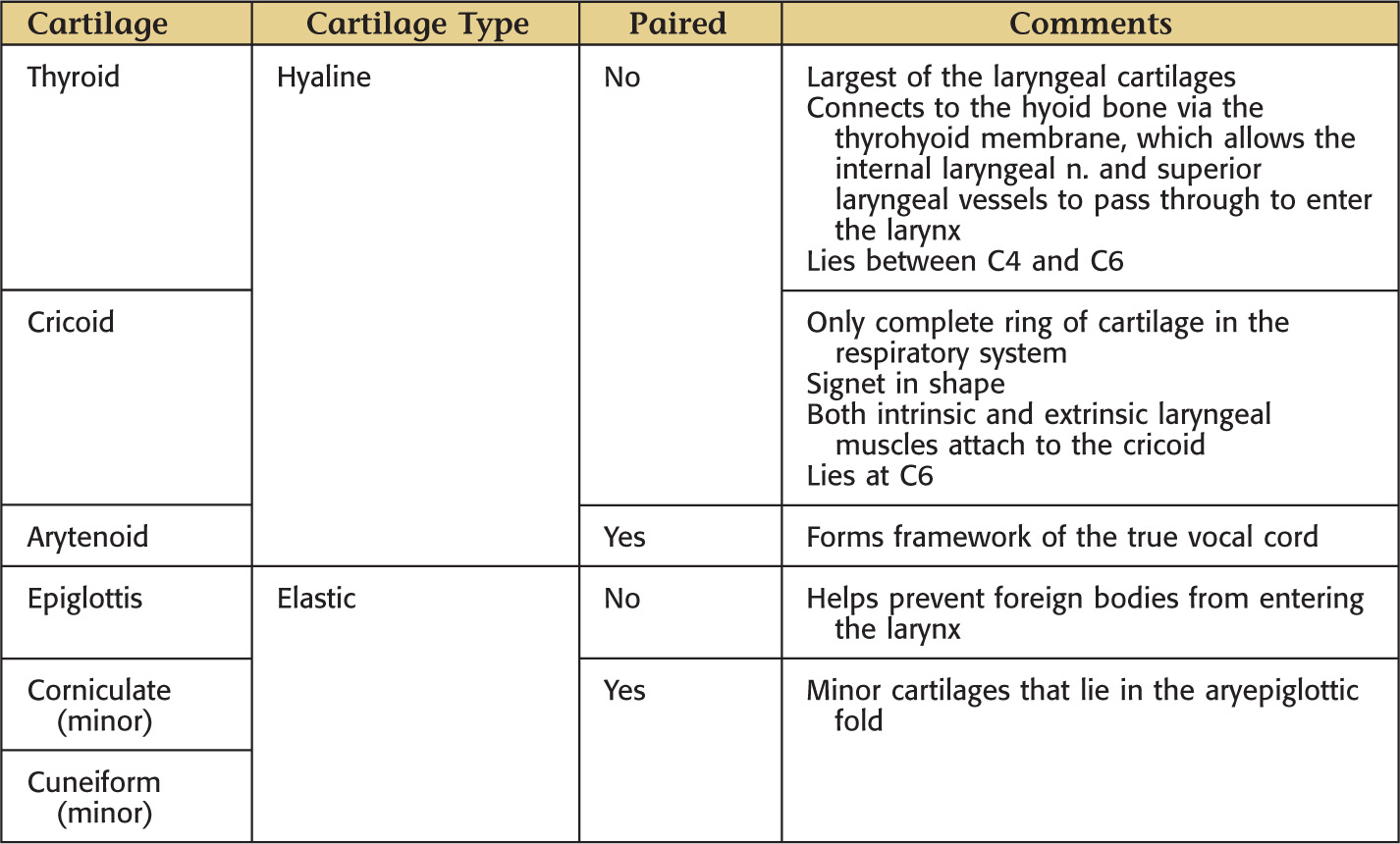
Formed by 9 cartilages: 3 paired and 3 unpaired
Located in the midline opposite the 3rd to the 6th cervical vertebrae
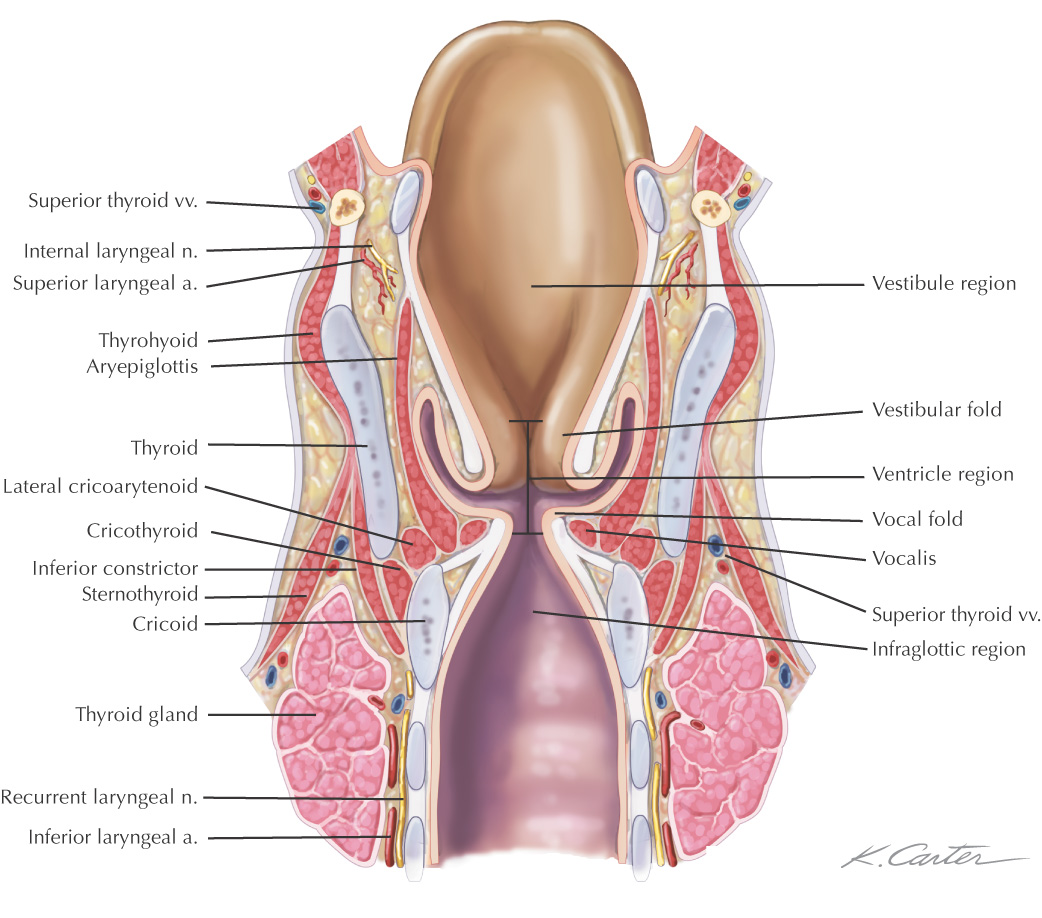
Regions of the larynx:
• Vestibule
• Ventricle
• Infraglottic
Relations of the Larynx
• Anterolateral—infrahyoid muscles, platysma
• Lateral—lobes of the thyroid gland, carotid sheath
• Posterior—it forms the anterior wall of the laryngopharynx
• Superior—base of tongue and vallecula
• Inferior—trachea
Cartilages
GENERAL INFORMATION
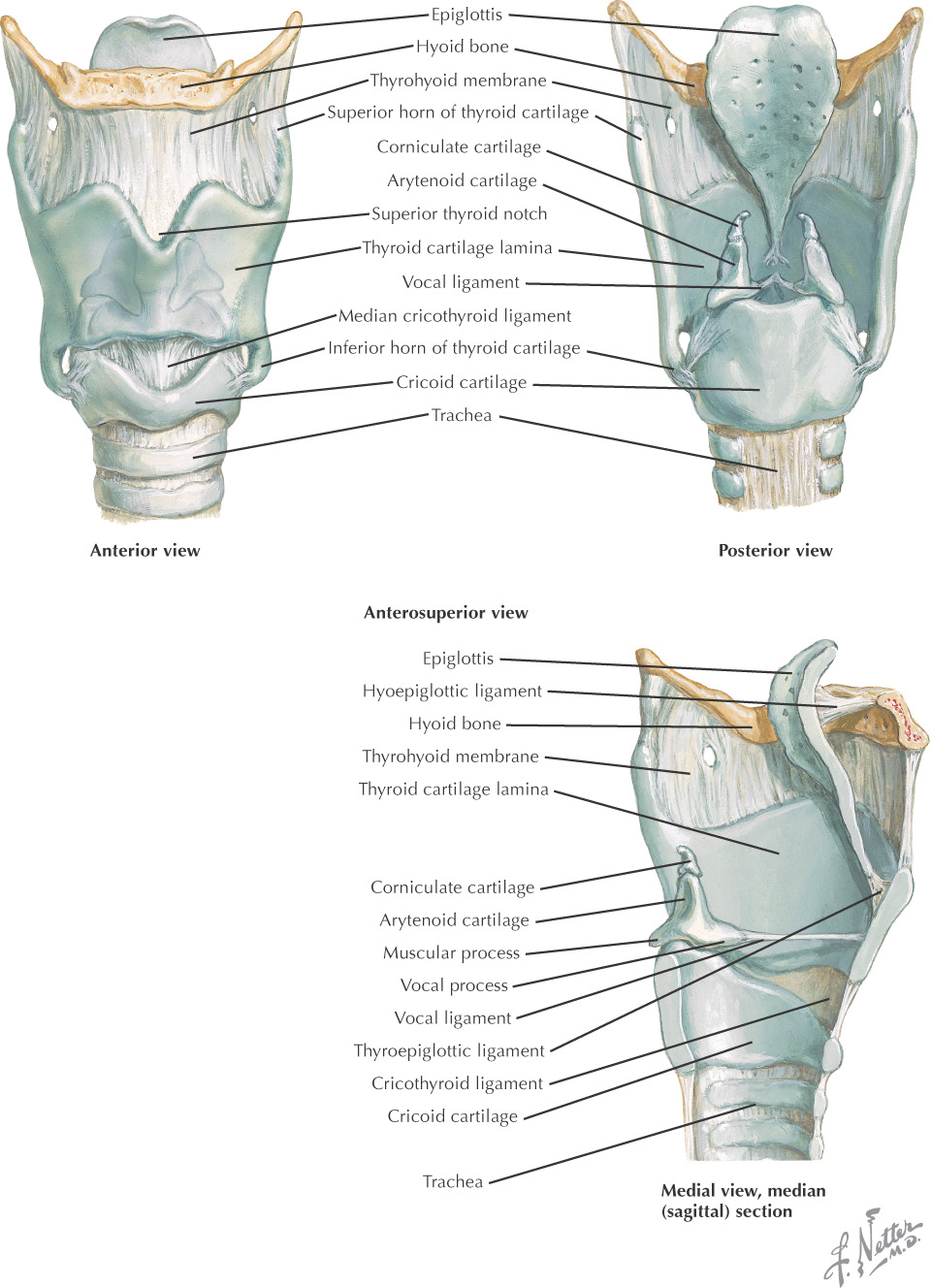
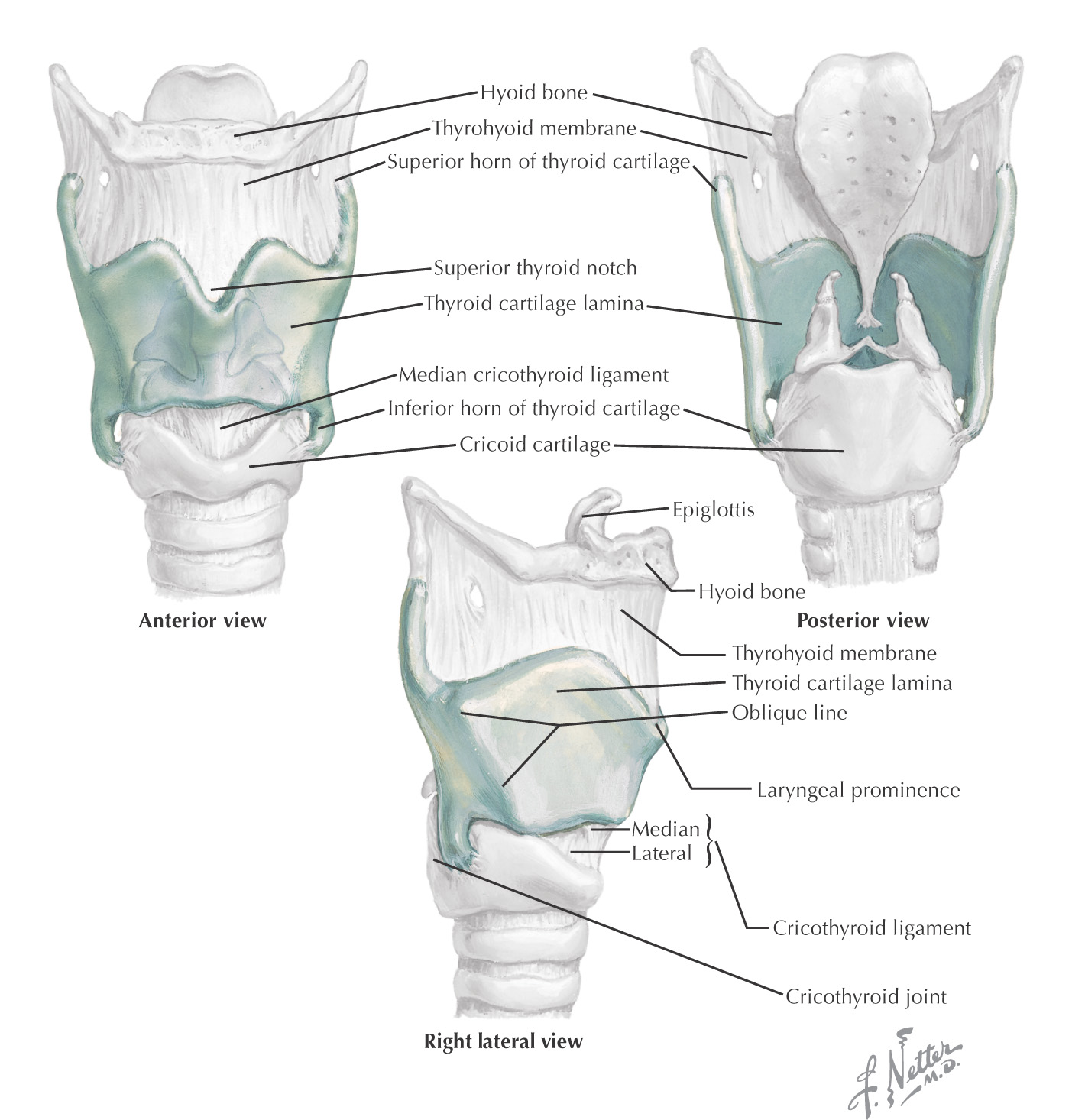
THYROID CARTILAGE
Anatomic Feature |
Comments |
2 lateral laminae |
2 plates that meet at an acute angle in the anterior midline |
Laryngeal prominence |
Also known as the Adam’s apple
Formed by the fusion of the 2 lateral lamina
Larger in males than in females |
Thyroid notch |
Superior portion of the laryngeal prominence, which forms a V shape |
Superior tubercle |
Superior border of the oblique line |
Oblique line |
Attachment for sternothyroid, thyrohyoid, and inferior constrictor mm. (extrinsic muscles of the larynx) |
Inferior tubercle |
Inferior border of the oblique line |
Superior horn |
Provides lateralmost attachment for the thyrohyoid membrane |
Inferior horn |
Articulates with the cricoid to form the cricothyroid joint |
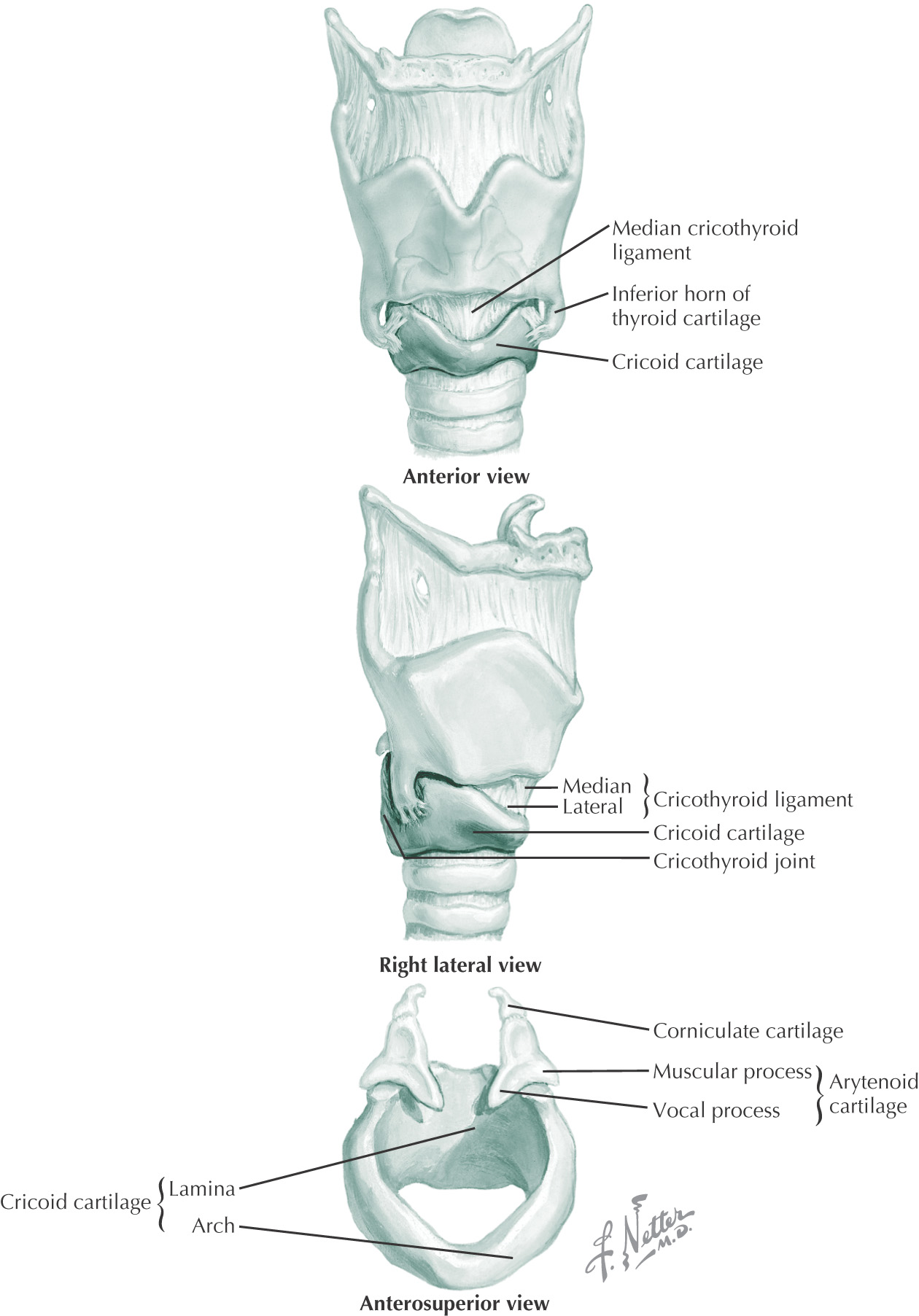
CRICOID CARTILAGE
Anatomic Feature |
Comments |
Arch (anteriorly) |
1cm long
Narrow |
Lamina (posteriorly) |
2 to 3cm long |
Superior border (on the lamina) |
Articulates with the arytenoid cartilage to form the cricoarytenoid joint |
Inferior border (on the lamina) |
Articulates with the inferior cornu of the thyroid cartilage to form the cricothyroid joint |
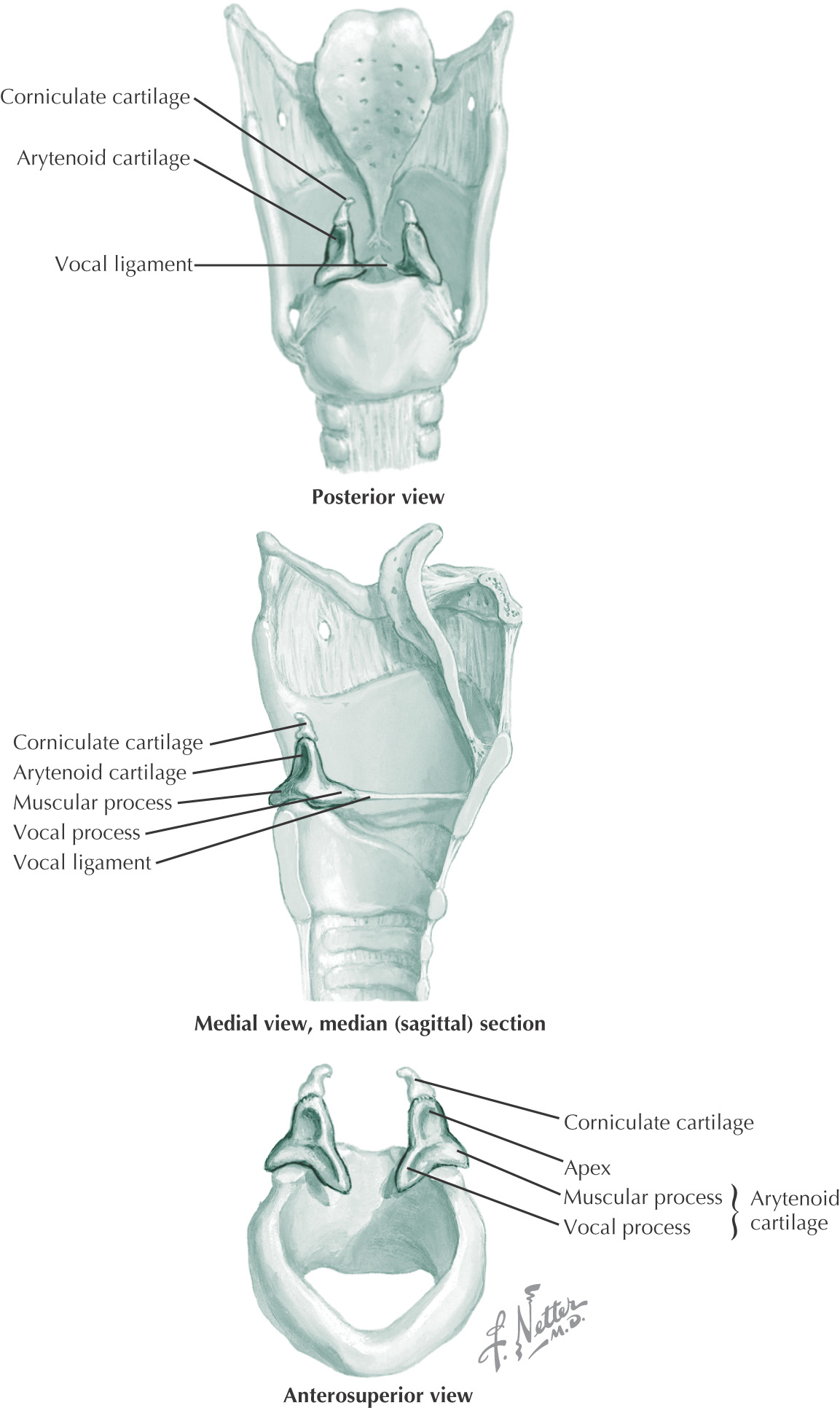
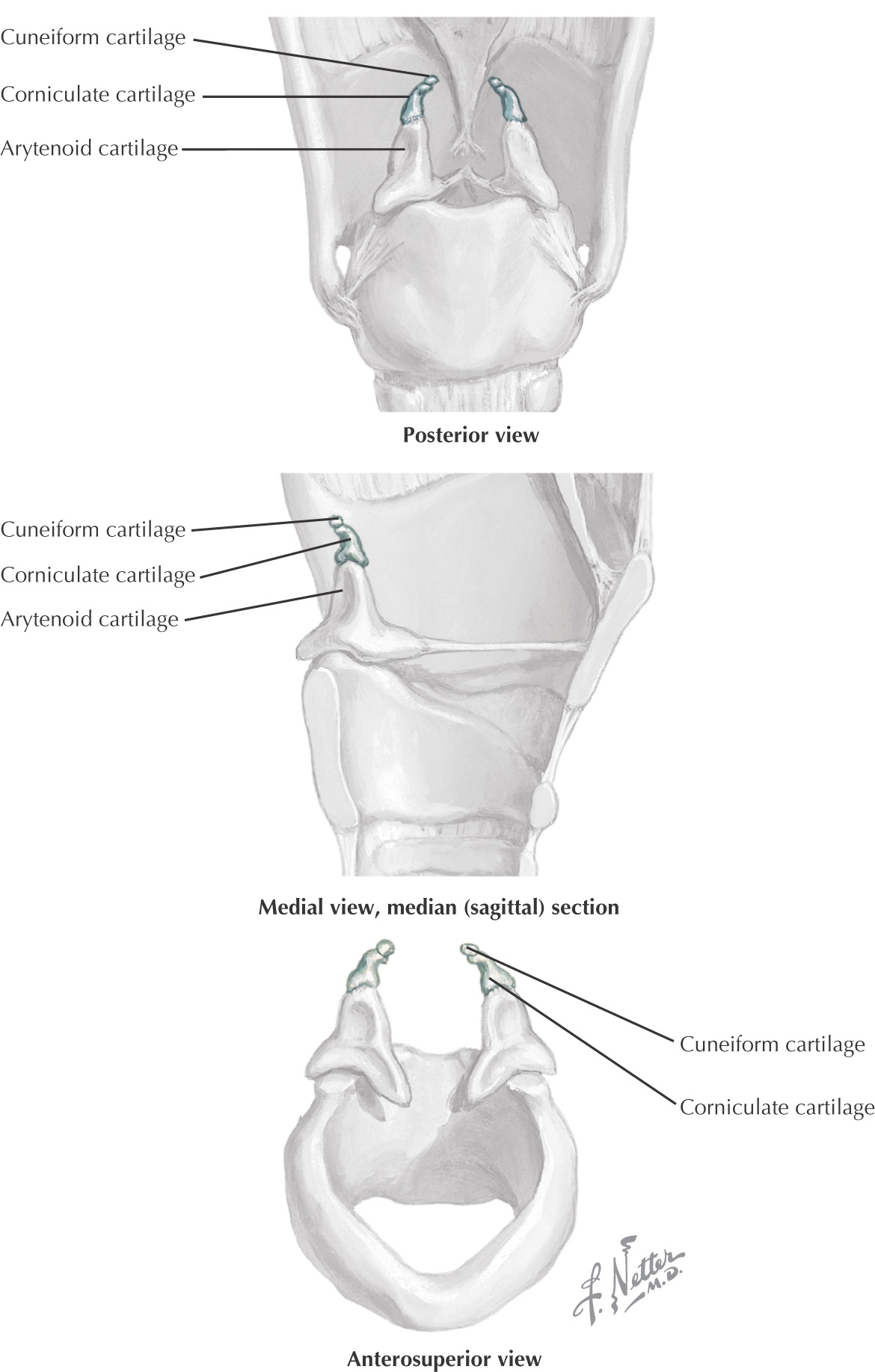
ARYTENOID CARTILAGE
Anatomic Feature |
Comments |
3 processes:
• Muscular (lateral)
• Vocal (anterior)
• Apex (superior) |
Base articulates with cricoid to form the cricoarytenoid joint
Vocal process gives rise to true vocal cord |
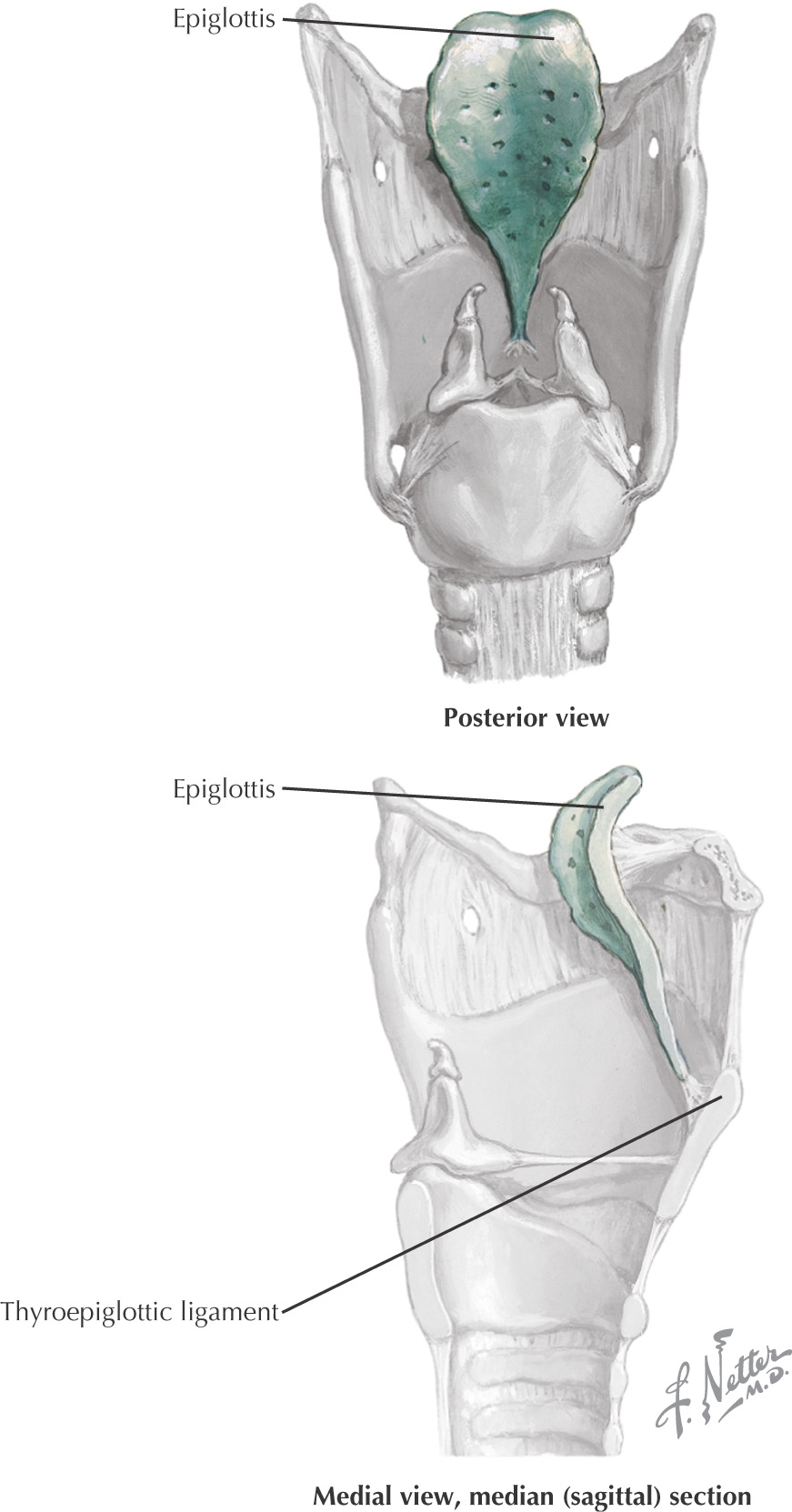
EPIGLOTTIS
Anatomic Feature |
Comments |
Epiglottic tubercle |
Pear-shaped |
MINOR CARTILAGES
Cartilage |
Comments |
Corniculate |
Lies on the apex of the arytenoid cartilage
Helps support the aryepiglottic fold |
Cuneiform |
Lies superior to the corniculate cartilage
Helps support the aryepiglottic fold |
Membranes and Ligaments
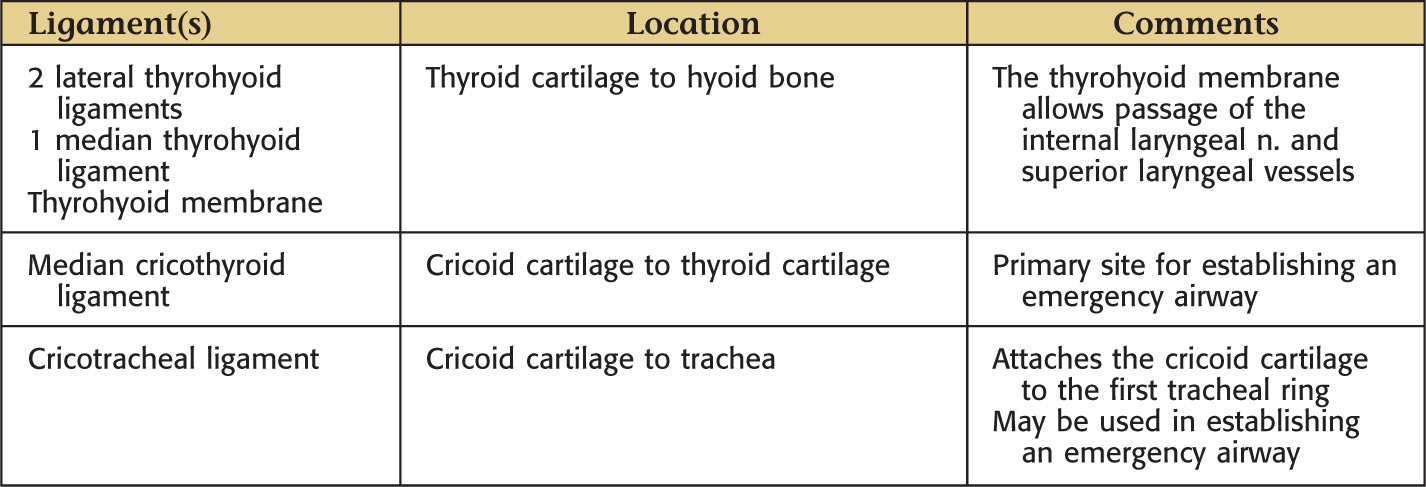
MAJOR EXTRINSIC LIGAMENTS
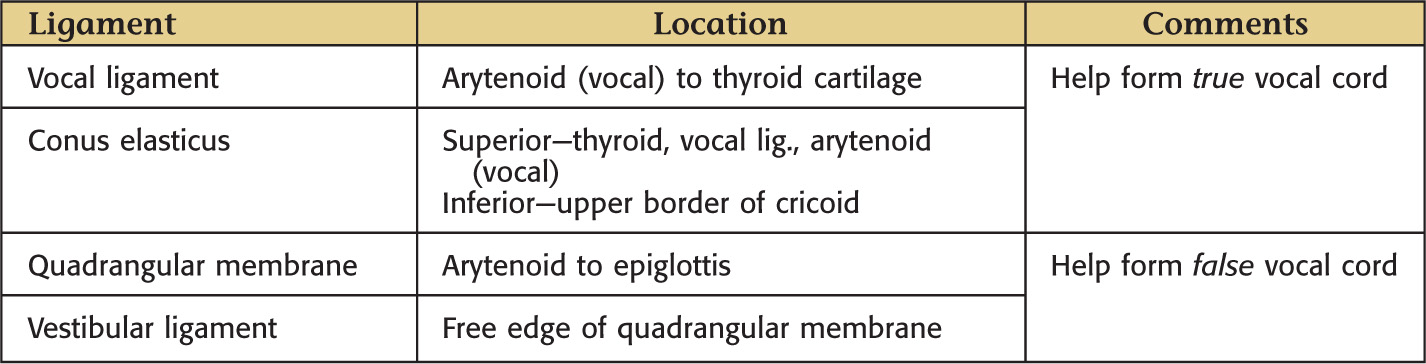
MAJOR INTRINSIC LIGAMENTS
Muscles
OVERVIEW
Vascular Supply
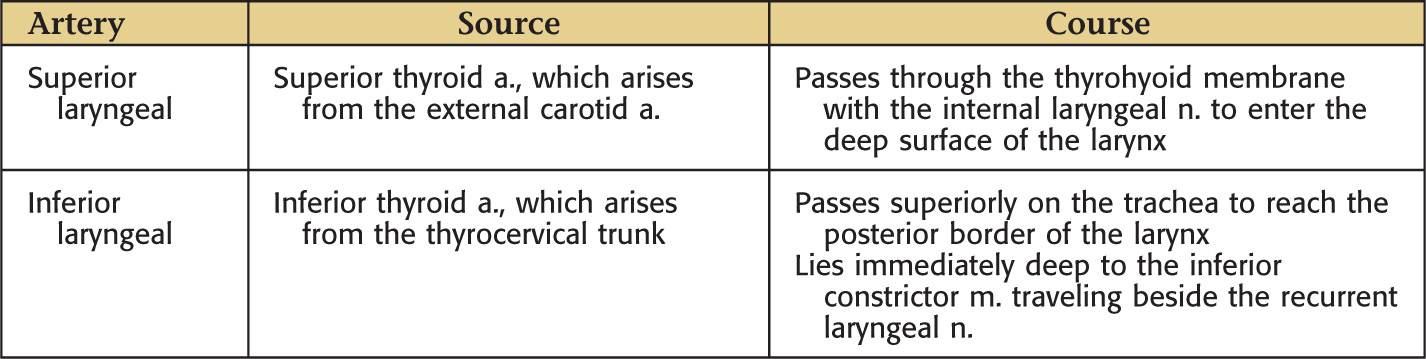
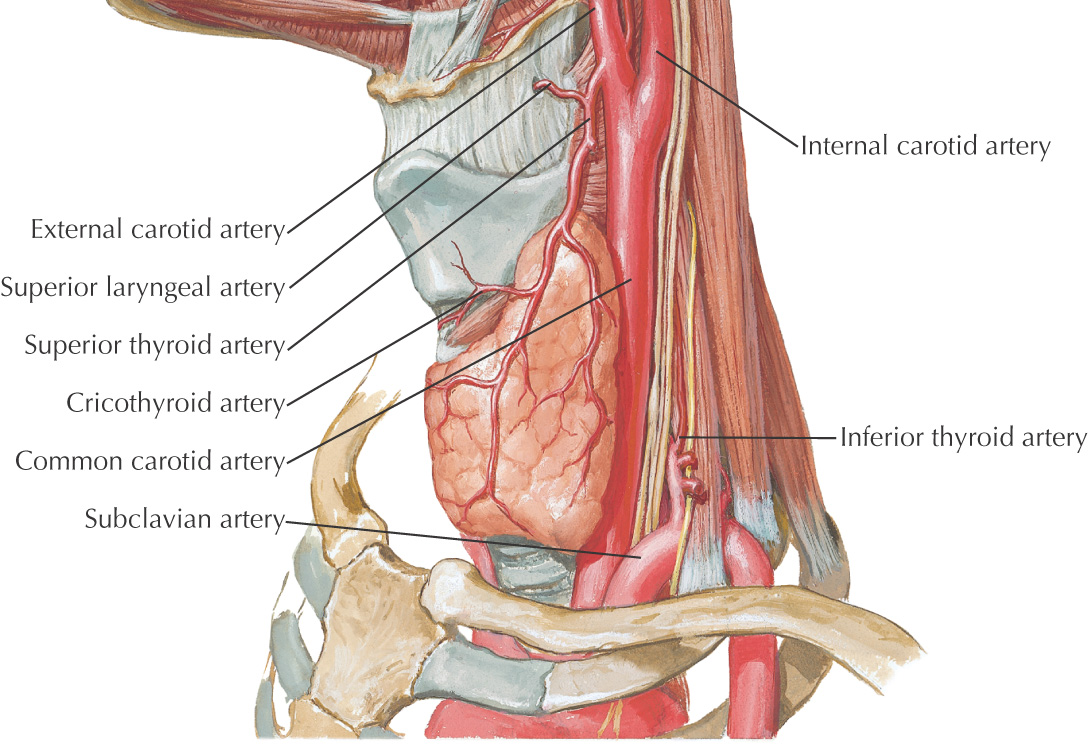
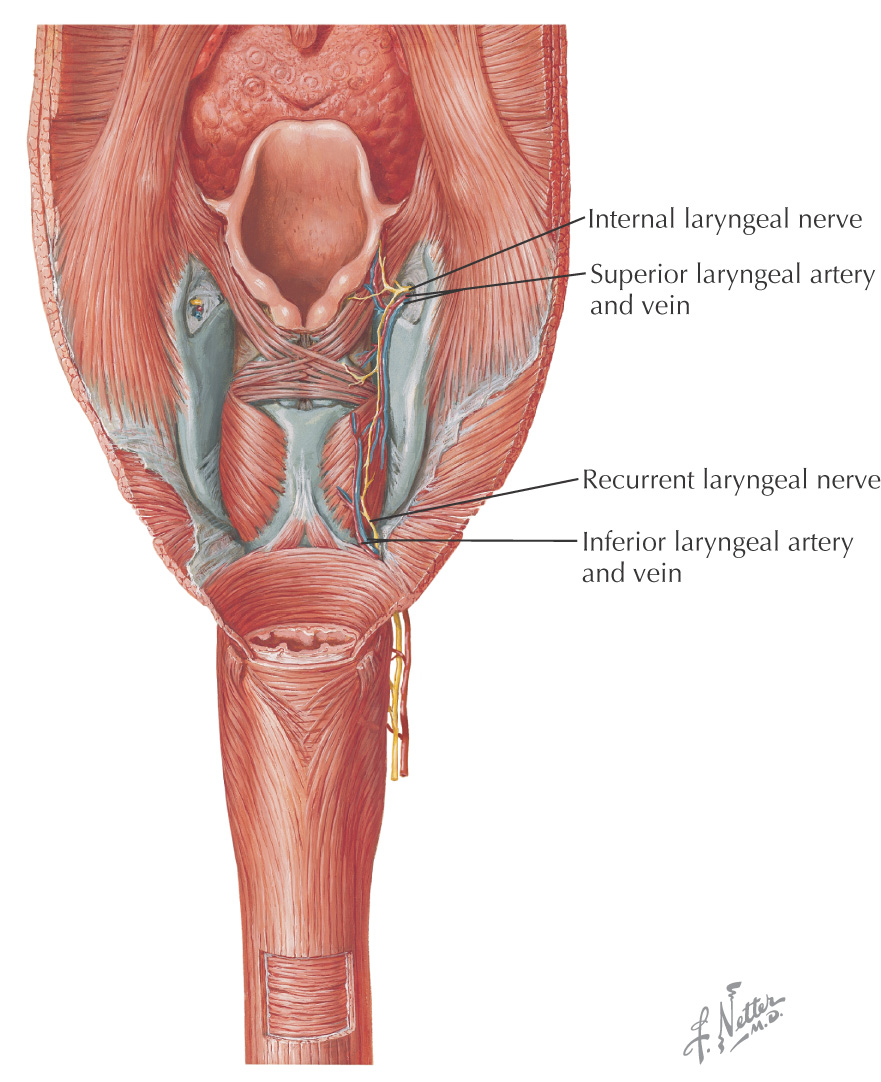
ARTERIAL SUPPLY
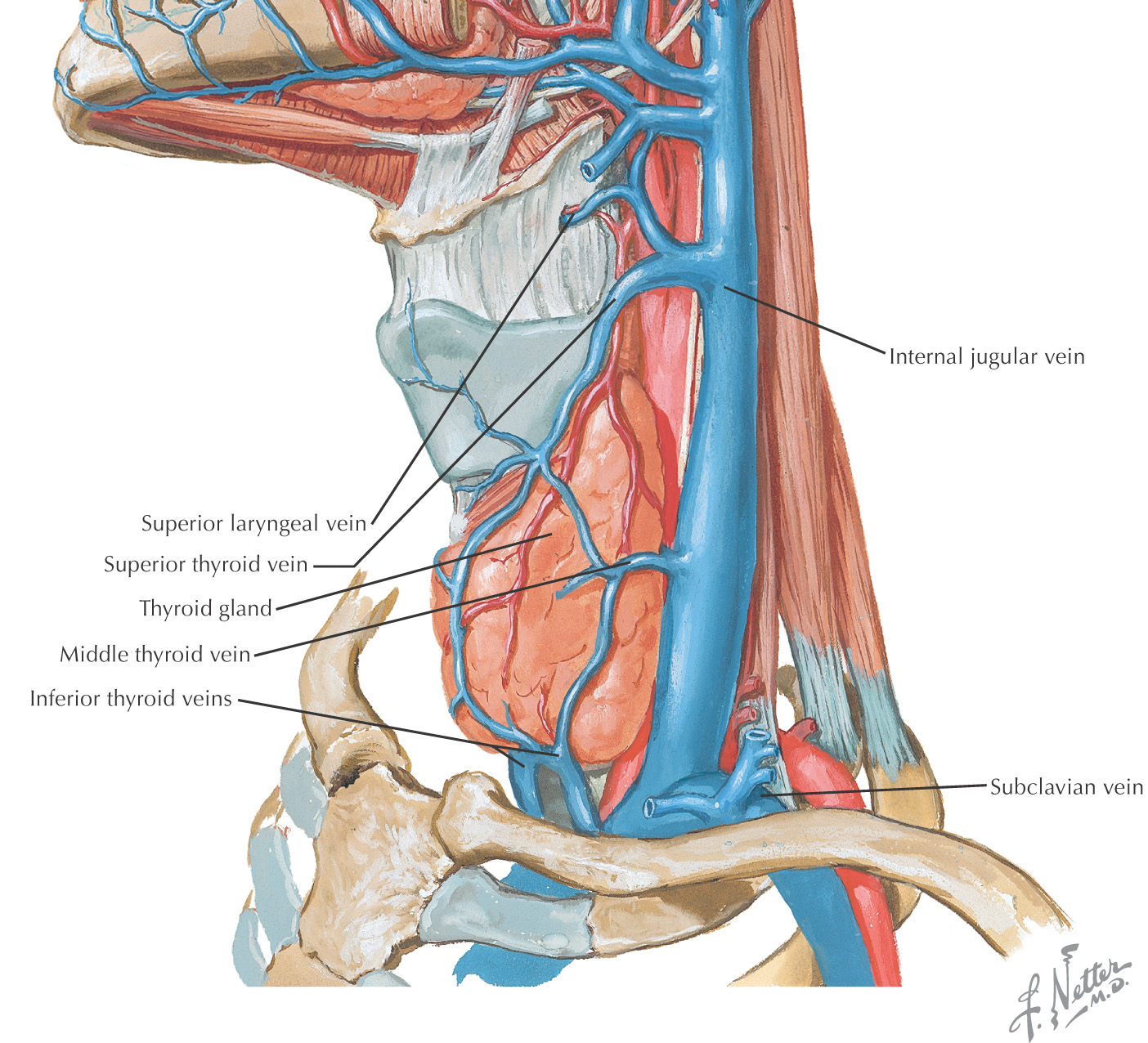
VENOUS DRAINAGE
Vein |
Course |
Superior laryngeal |
Begins in the deep surface of the superior part of the larynx
Passes with the superior laryngeal a. and the internal laryngeal n.
Passes through the thyrohyoid membrane to lie on the superficial surface of the larynx
Drains into the superior thyroid v., which drains into the internal jugular v. |
Inferior laryngeal |
Arises within the deep surface of the inferior part of the larynx
Passes with the inferior laryngeal a. and the recurrent laryngeal n.
Passes inferiorly deep to the inferior constrictor to exit the larynx
Drains into the inferior thyroid v., which drains into the brachiocephalic vv. |
Nerve Supply
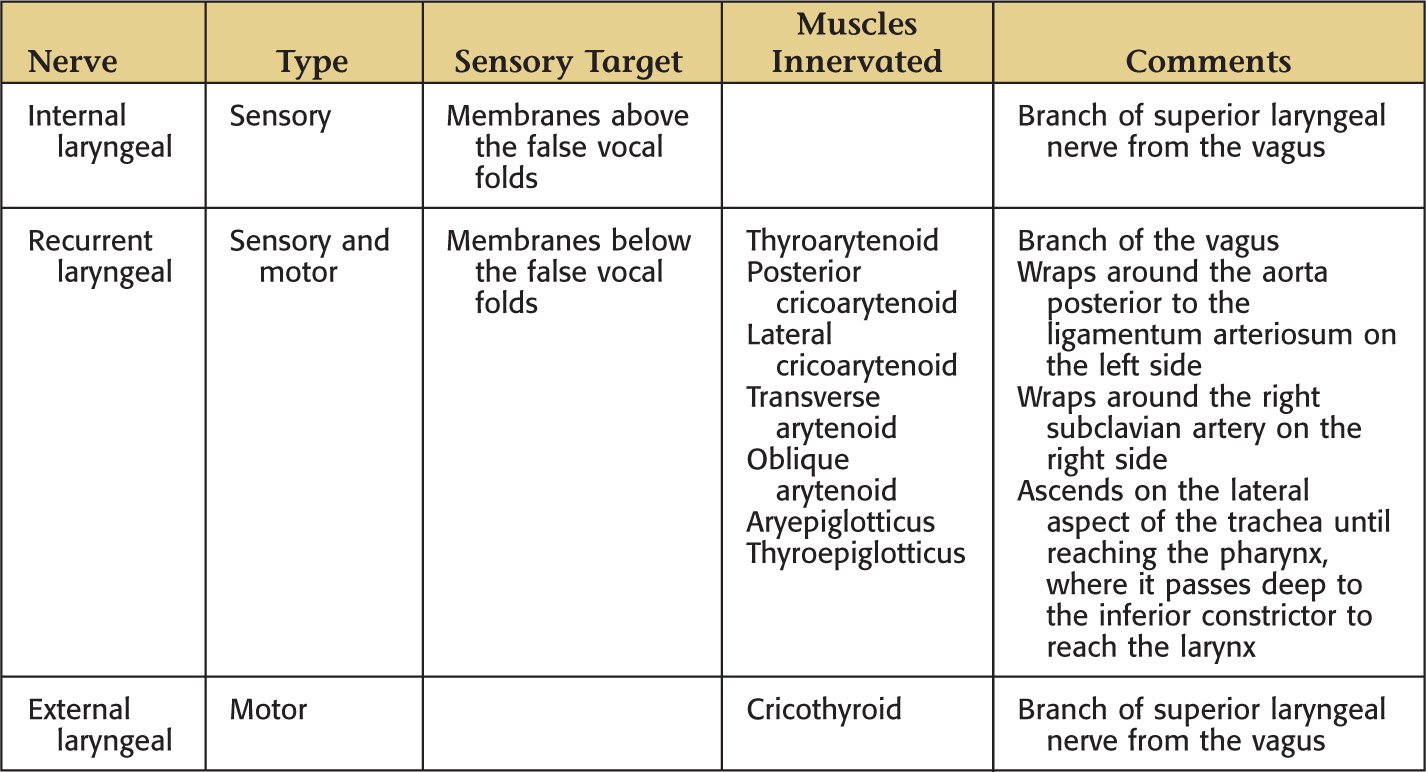
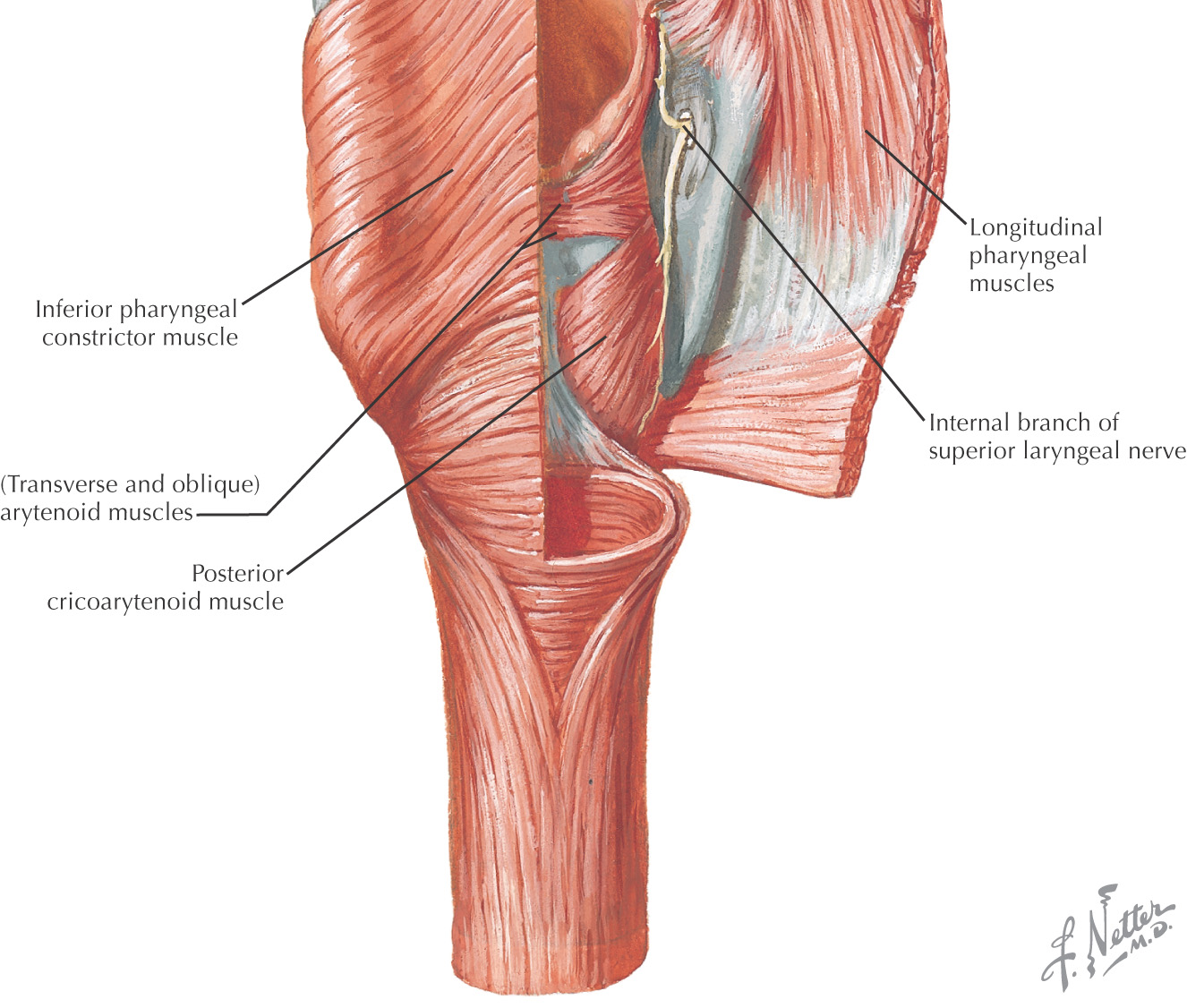
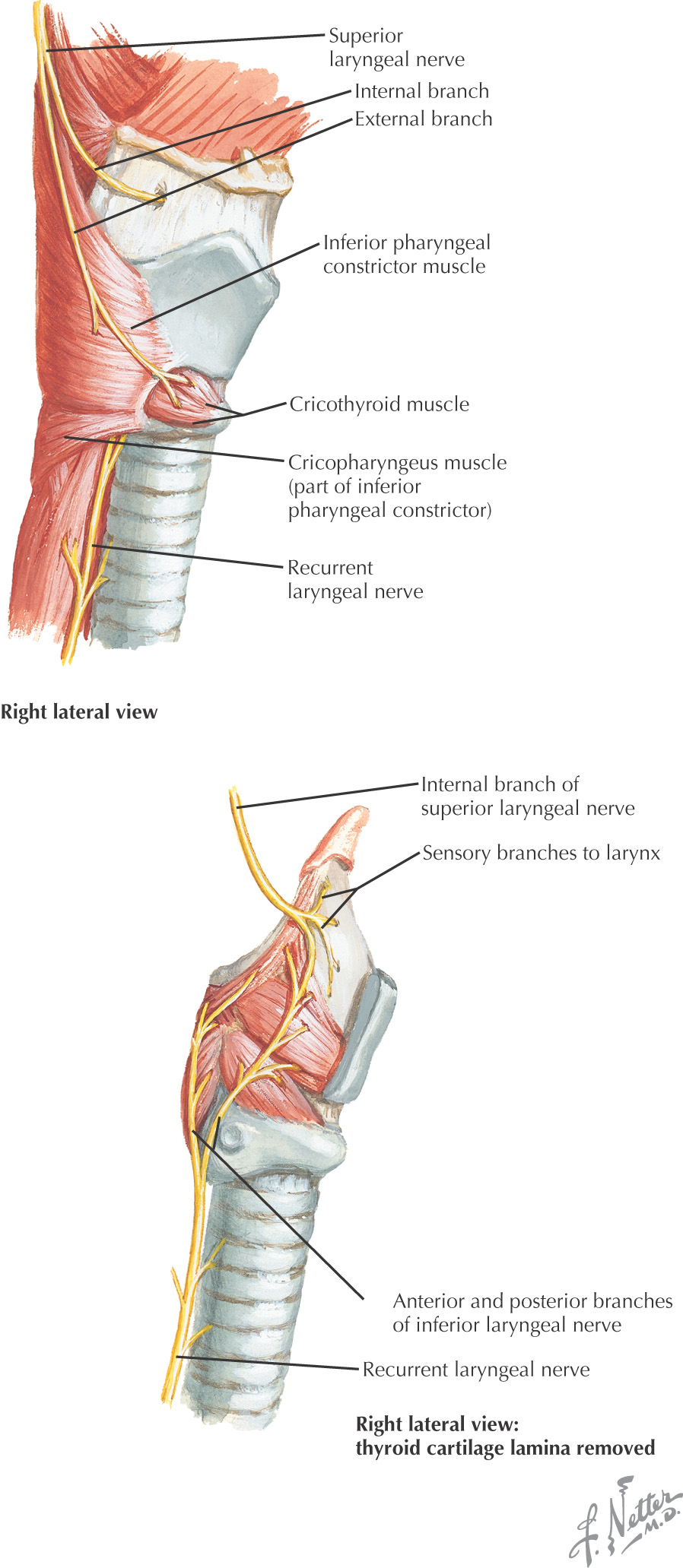
MOTOR AND SENSORY BRANCHES FROM THE VAGUS NERVE
Clinical Correlate
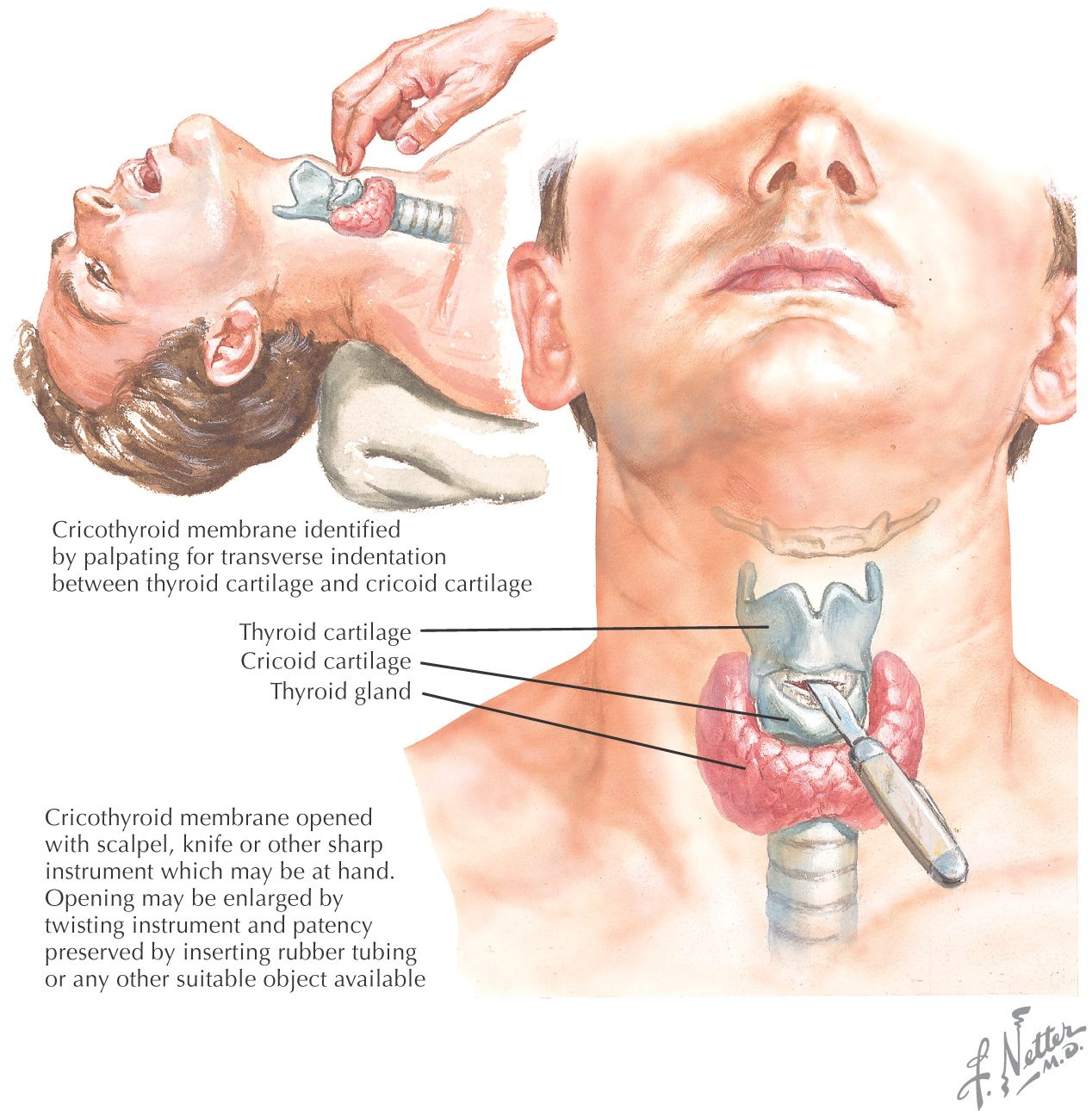
EMERGENCY AIRWAY: CRICOTHYROTOMY
Cricothyrotomy: a procedure for establishing an emergency airway when other methods are unsuitable
Once the anatomy of the larynx is identified, the procedure can be performed with 2 incisions:
• Incision through the skin
• Incision through the cricothyroid membrane
The correct location for the incision is easiest to find by identifying the thyroid notch on the thyroid cartilage
By sliding the examining finger in an inferior direction, the groove between the thyroid and cricoid cartilages can be located
A 3-cm vertical incision is made through the skin, and the thyrohyoid membrane is located
A small midline incision is made, and a tracheostomy tube is inserted to establish an airway
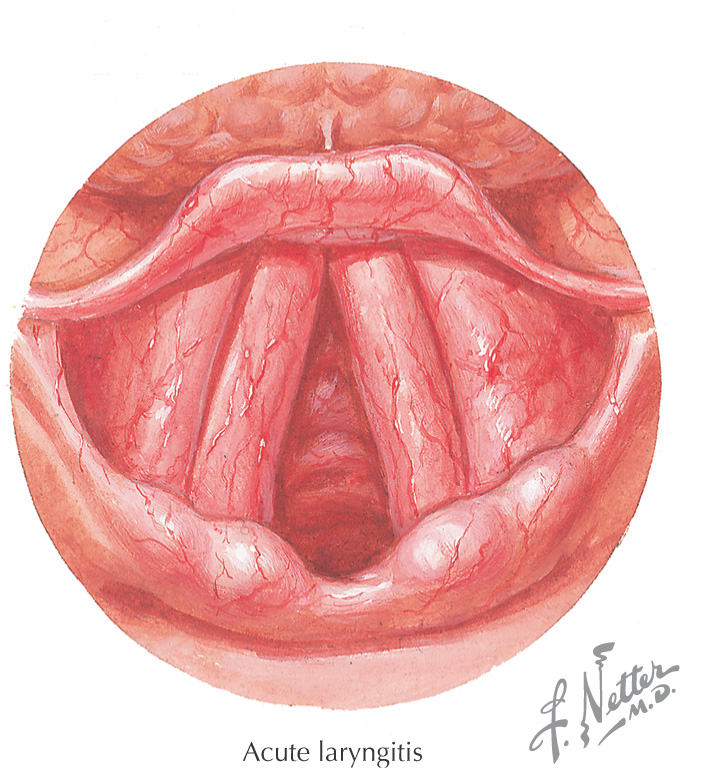
LARYNGITIS
Laryngitis: an inflammation of the vocal cords in the larynx that typically does not persist longer than 7 days
Characterized by a weak and hoarse voice, sore throat, and cough
Most common cause is a viral infection, although it may be caused by a bacterial infection
Can also be caused by excessive yelling (such as cheering at a sporting event) and smoking
Because most cases of laryngitis are viral in nature, antibiotics generally are not used as treatment