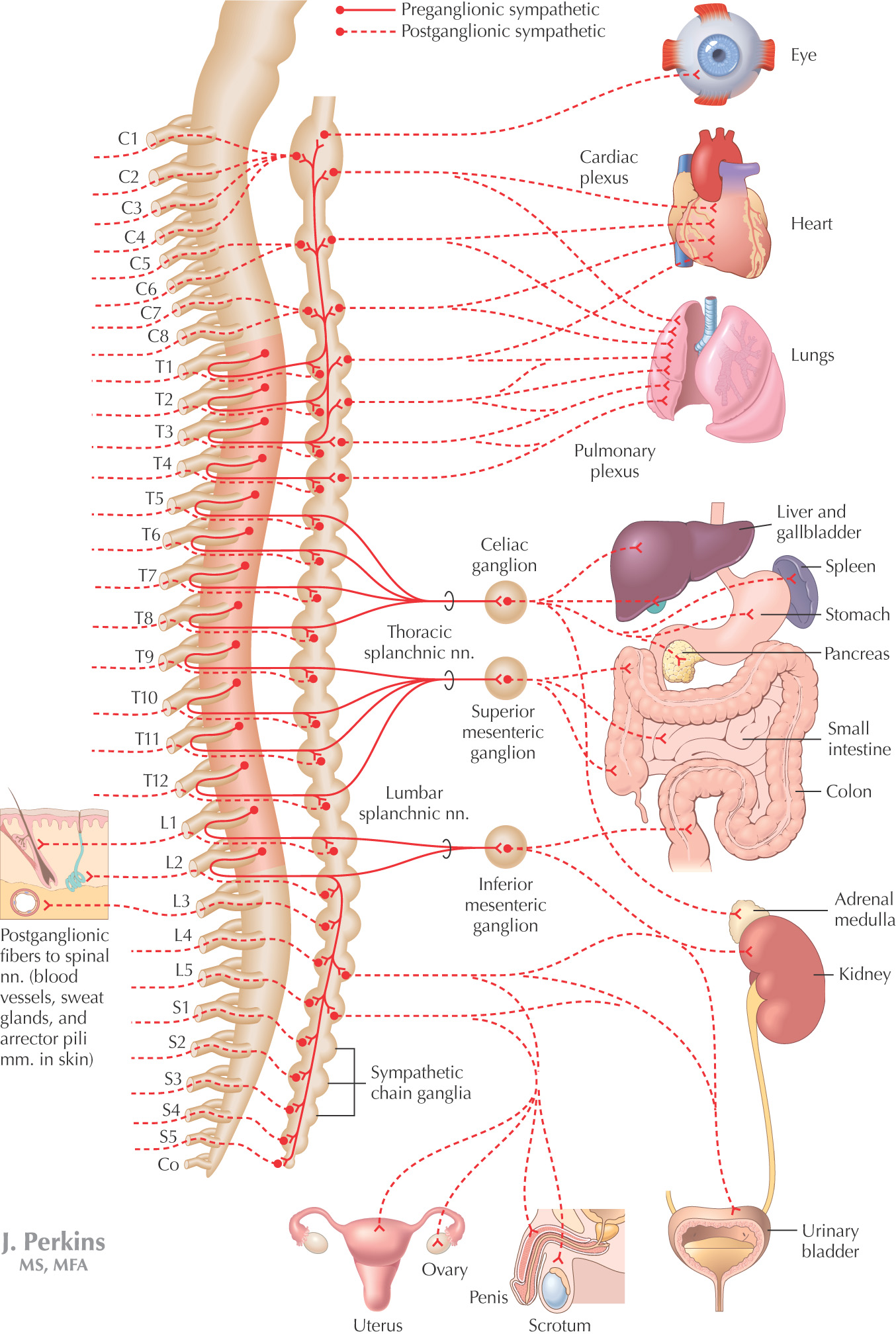
Overview of the Autonomic Nervous System
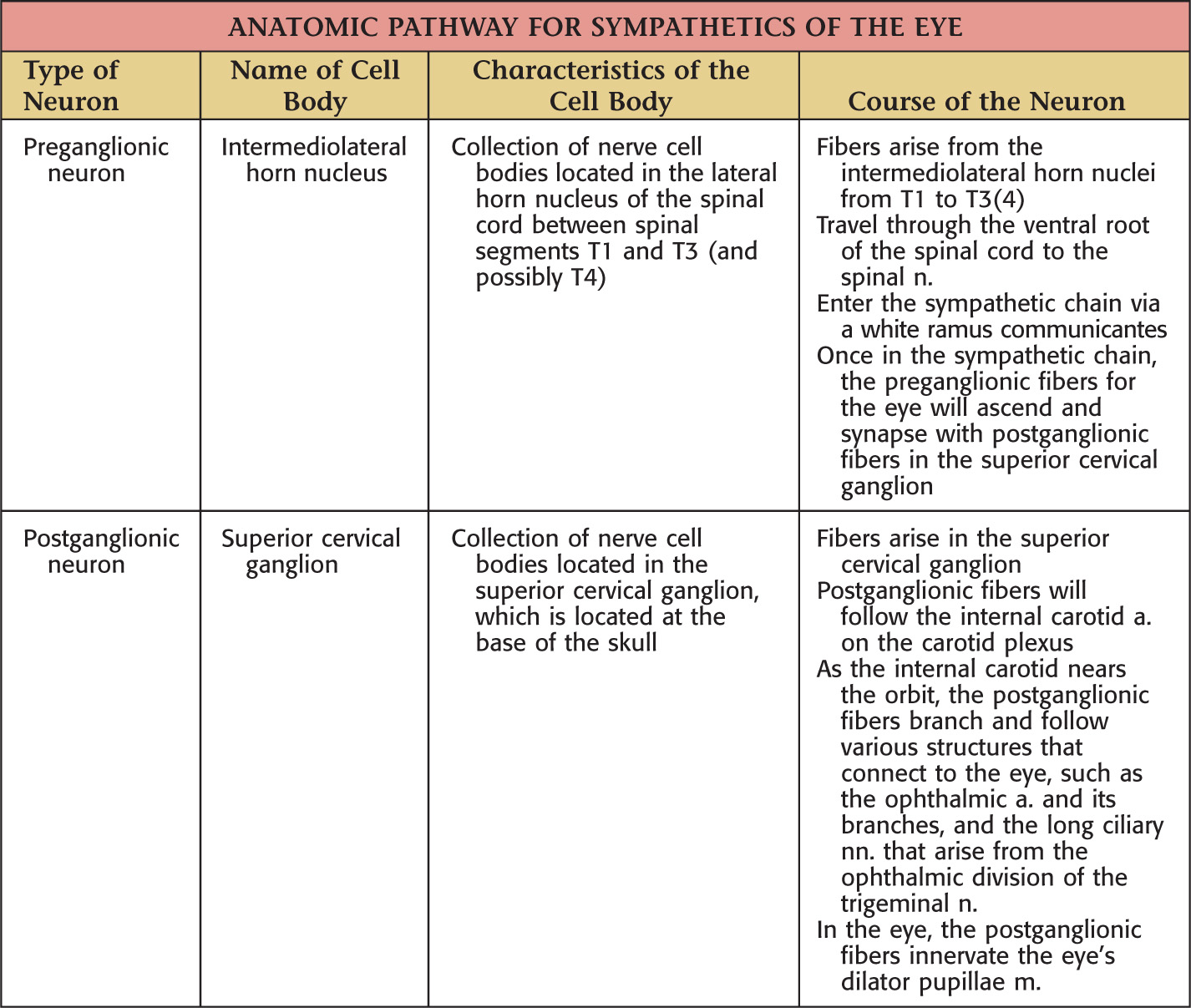
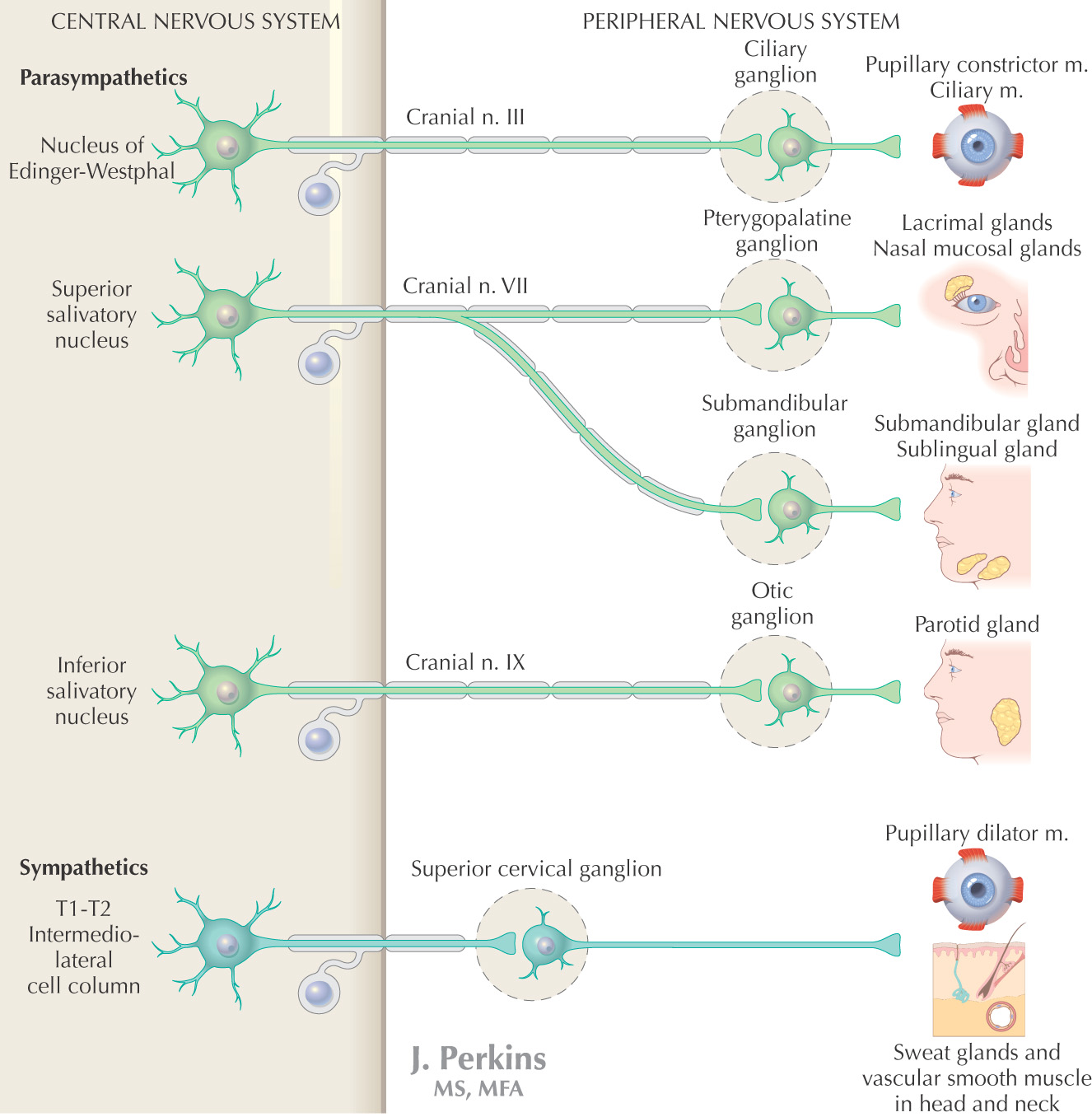
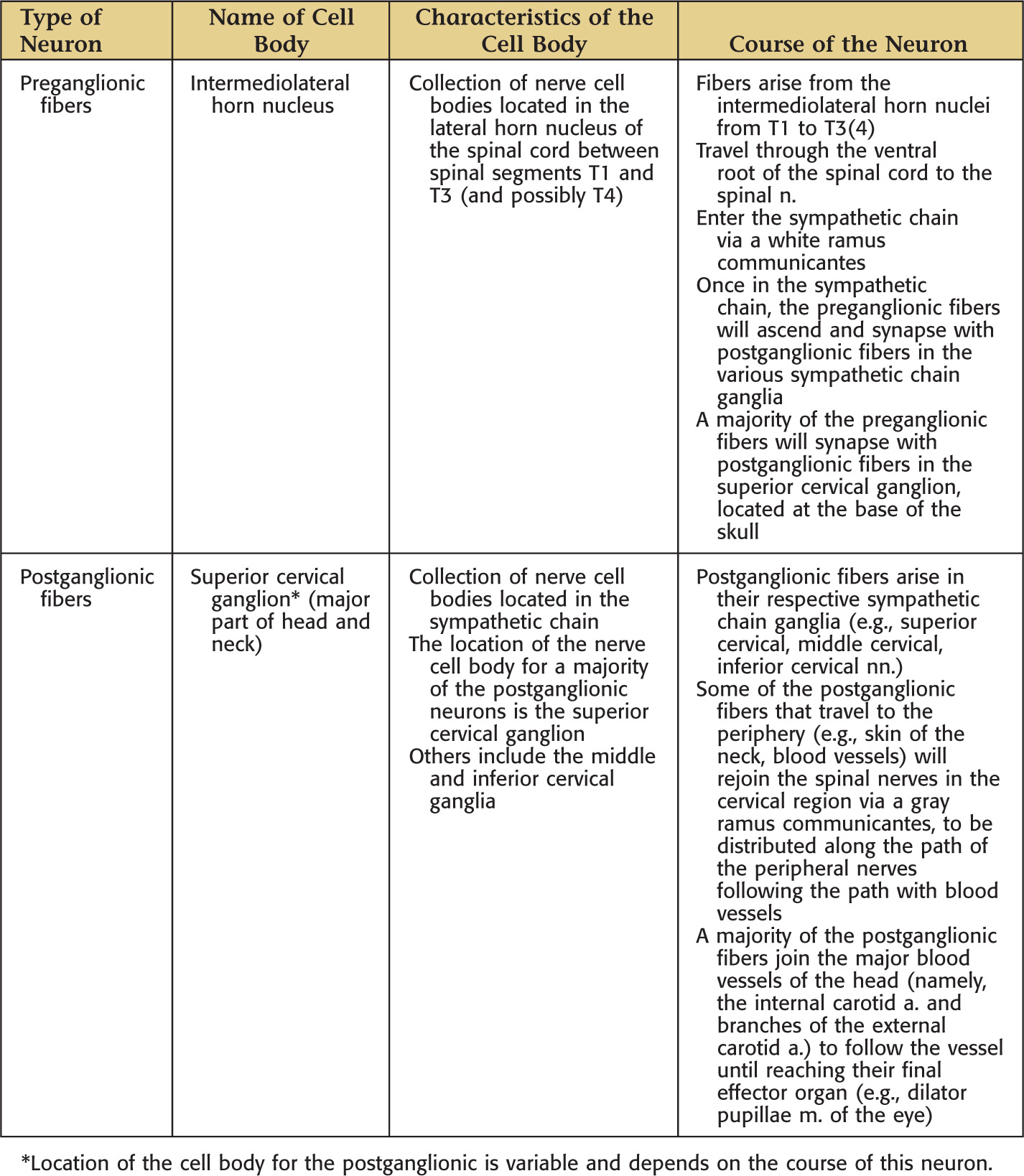
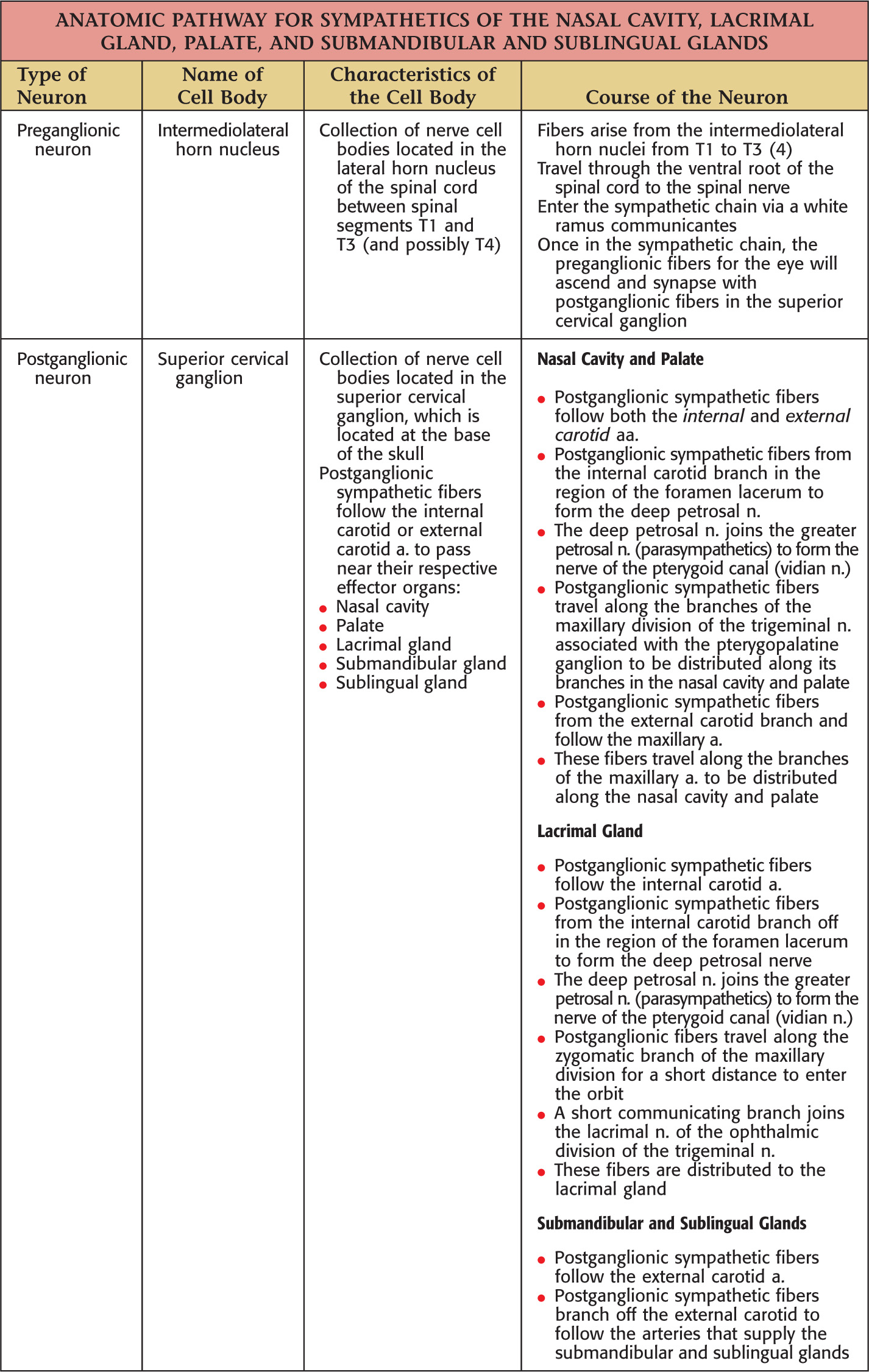
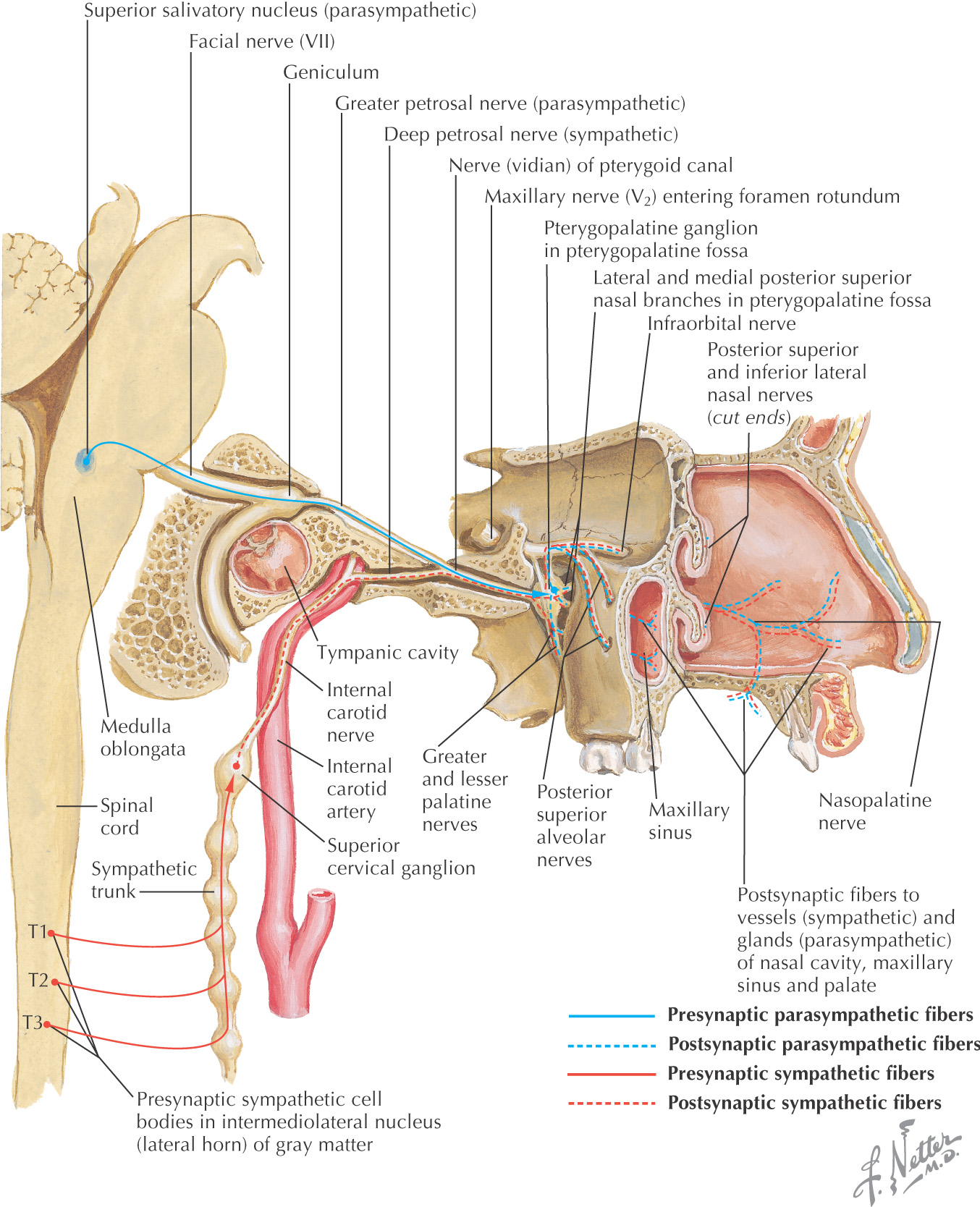
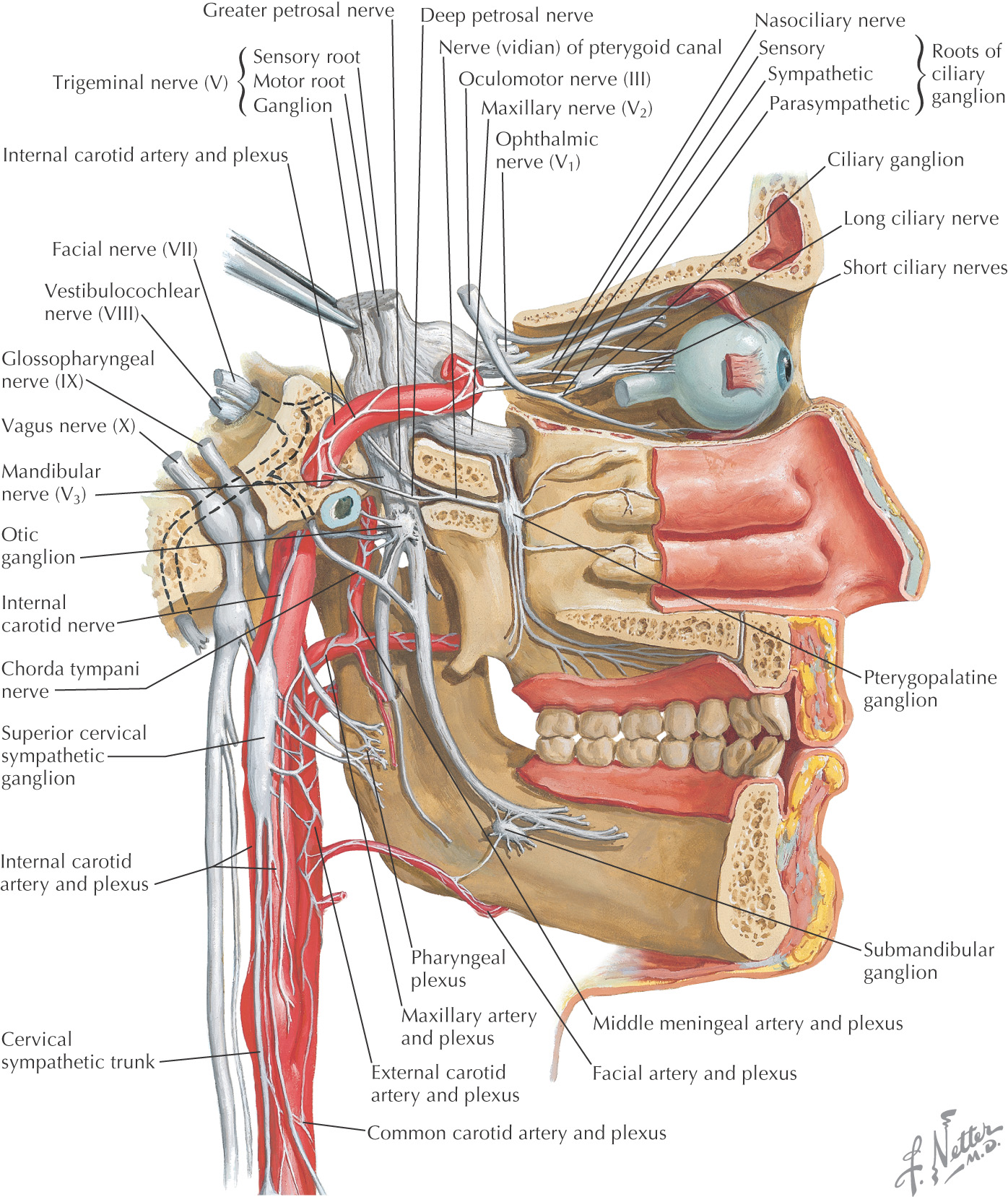
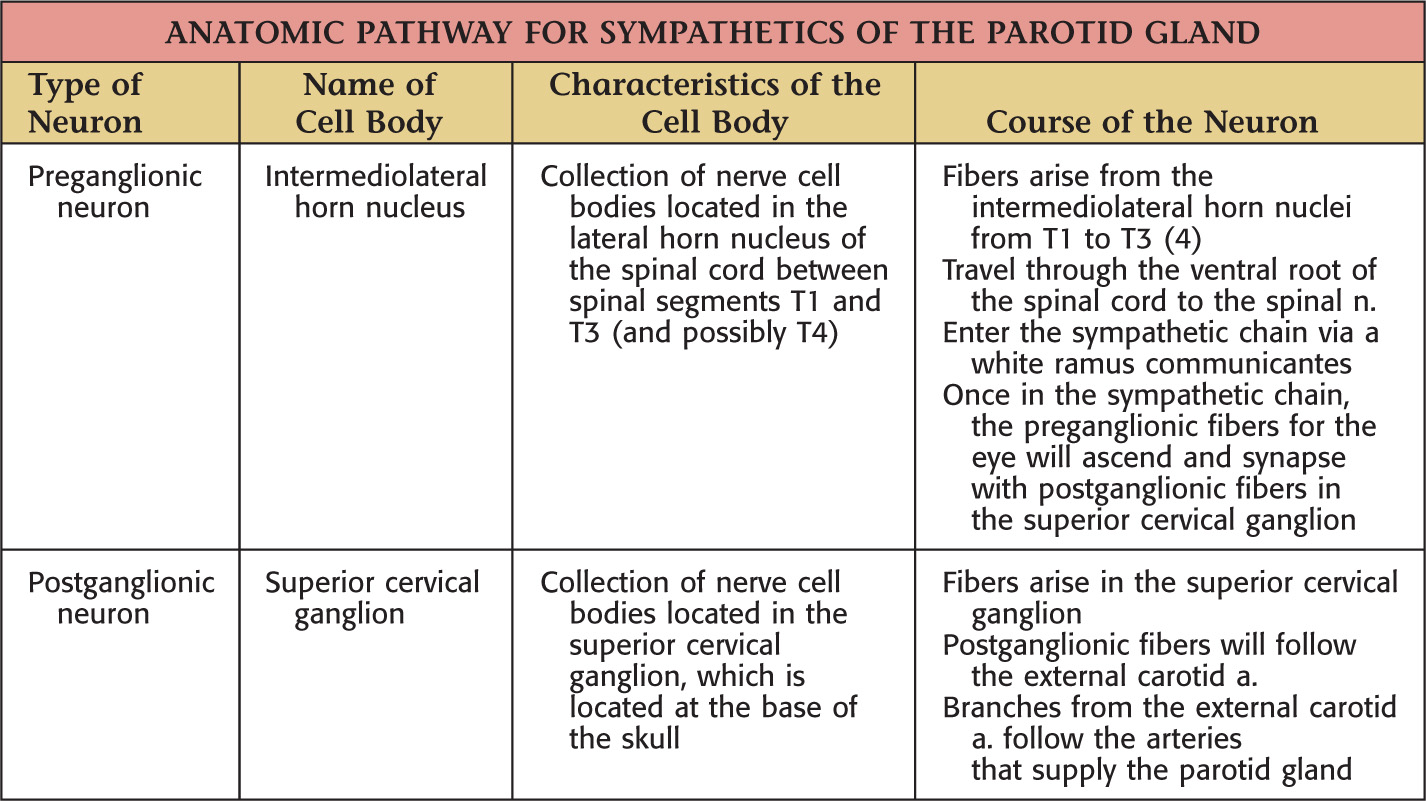
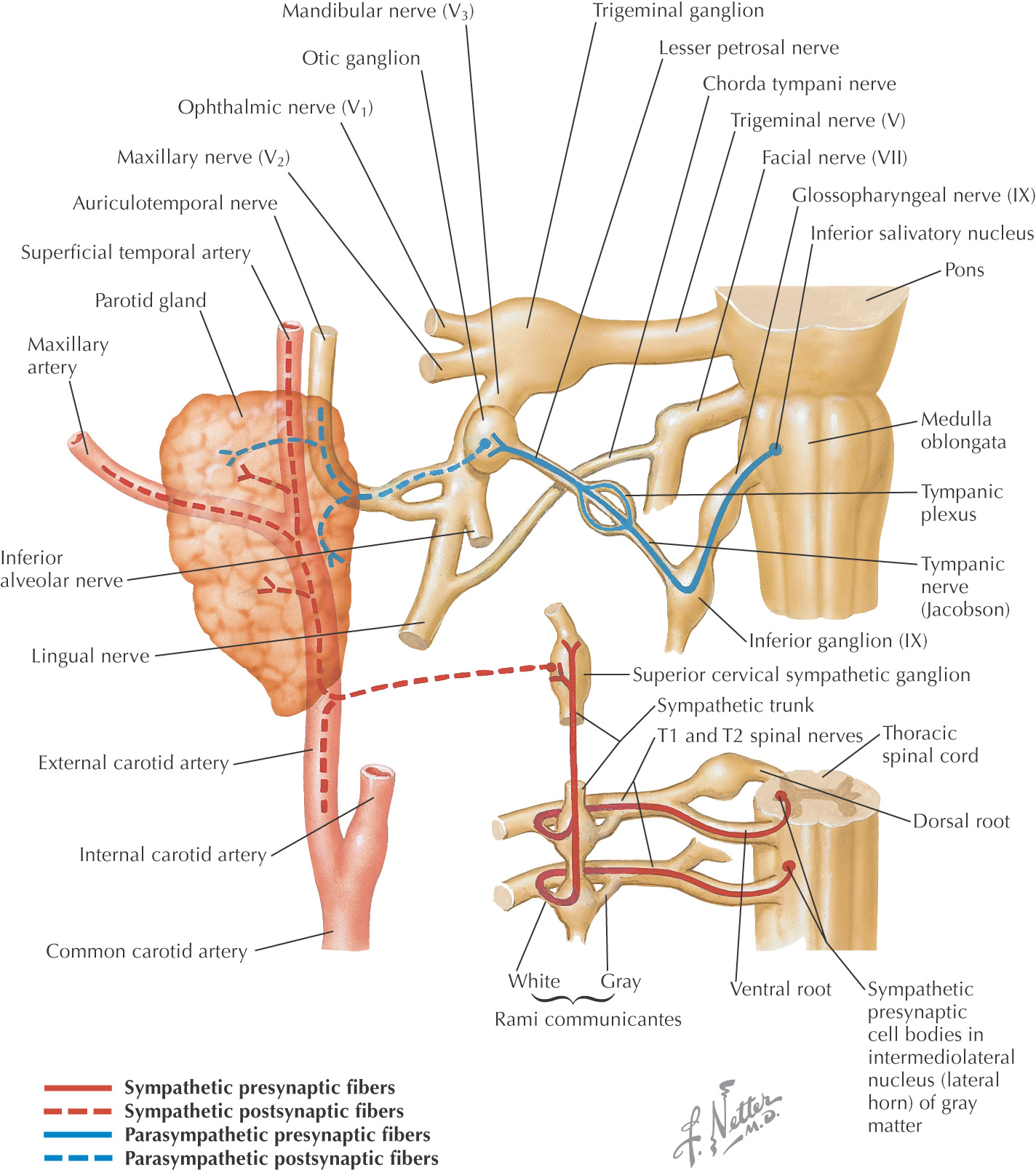
Sympathetics of the Head and Neck
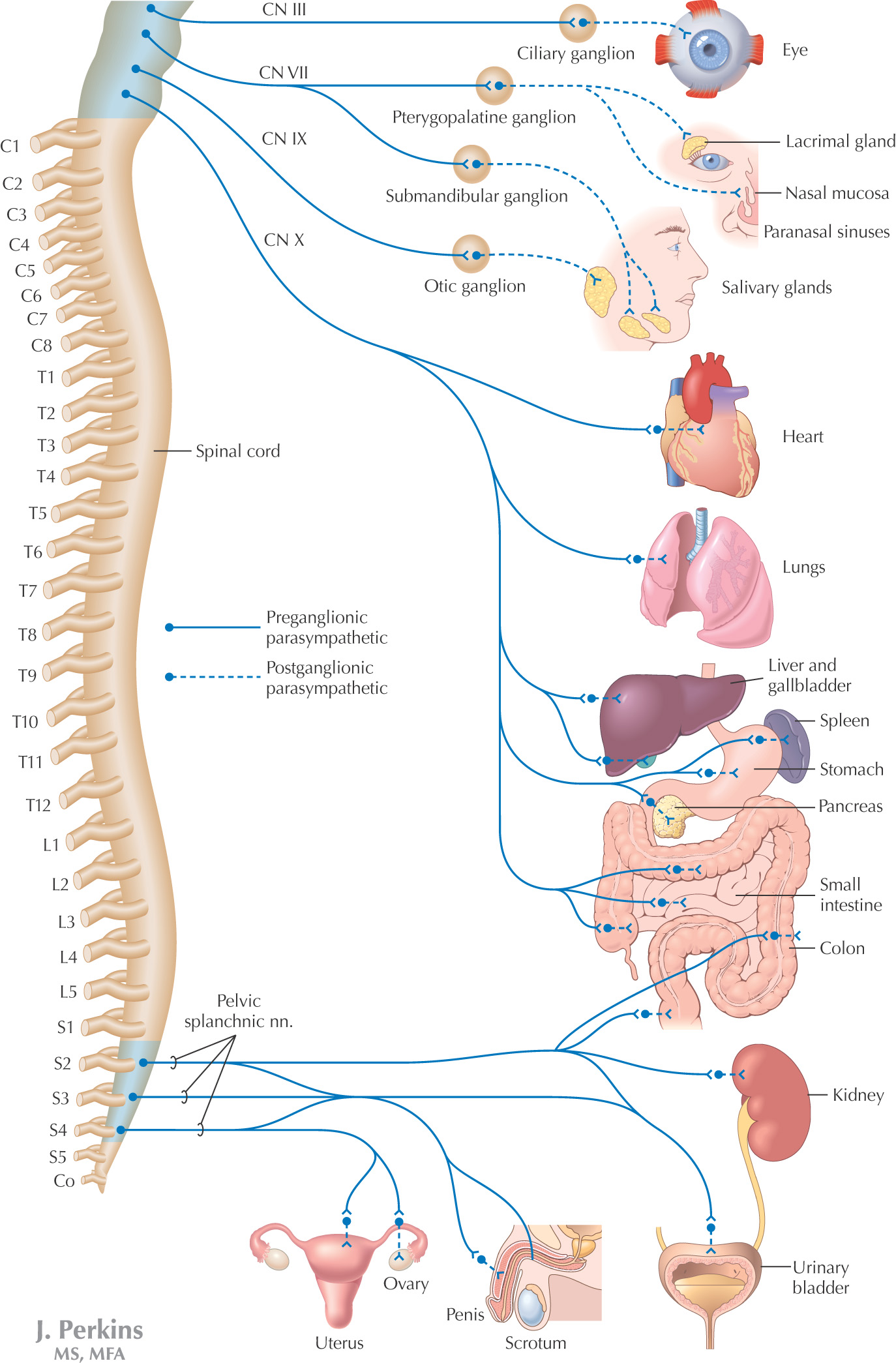
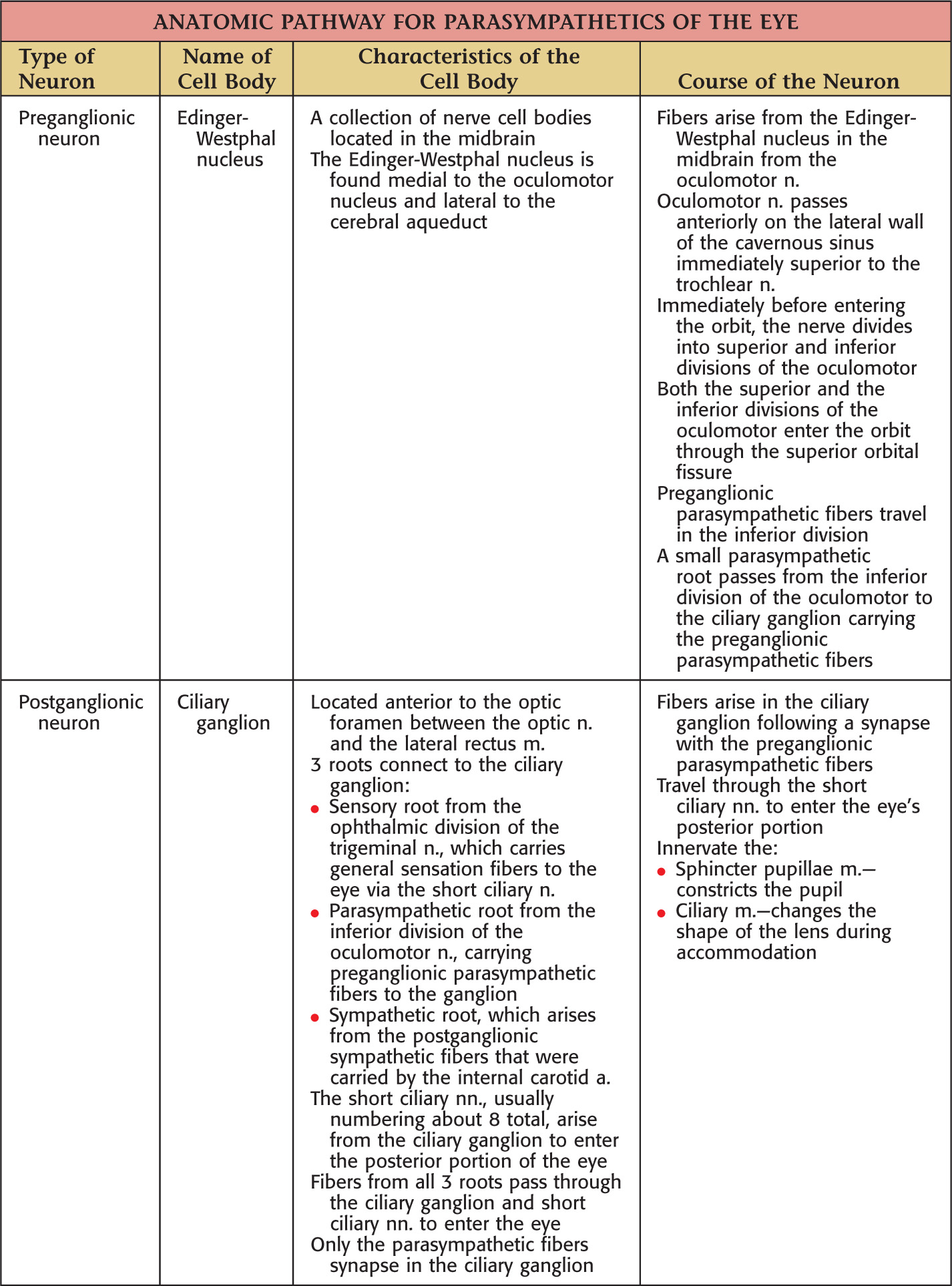
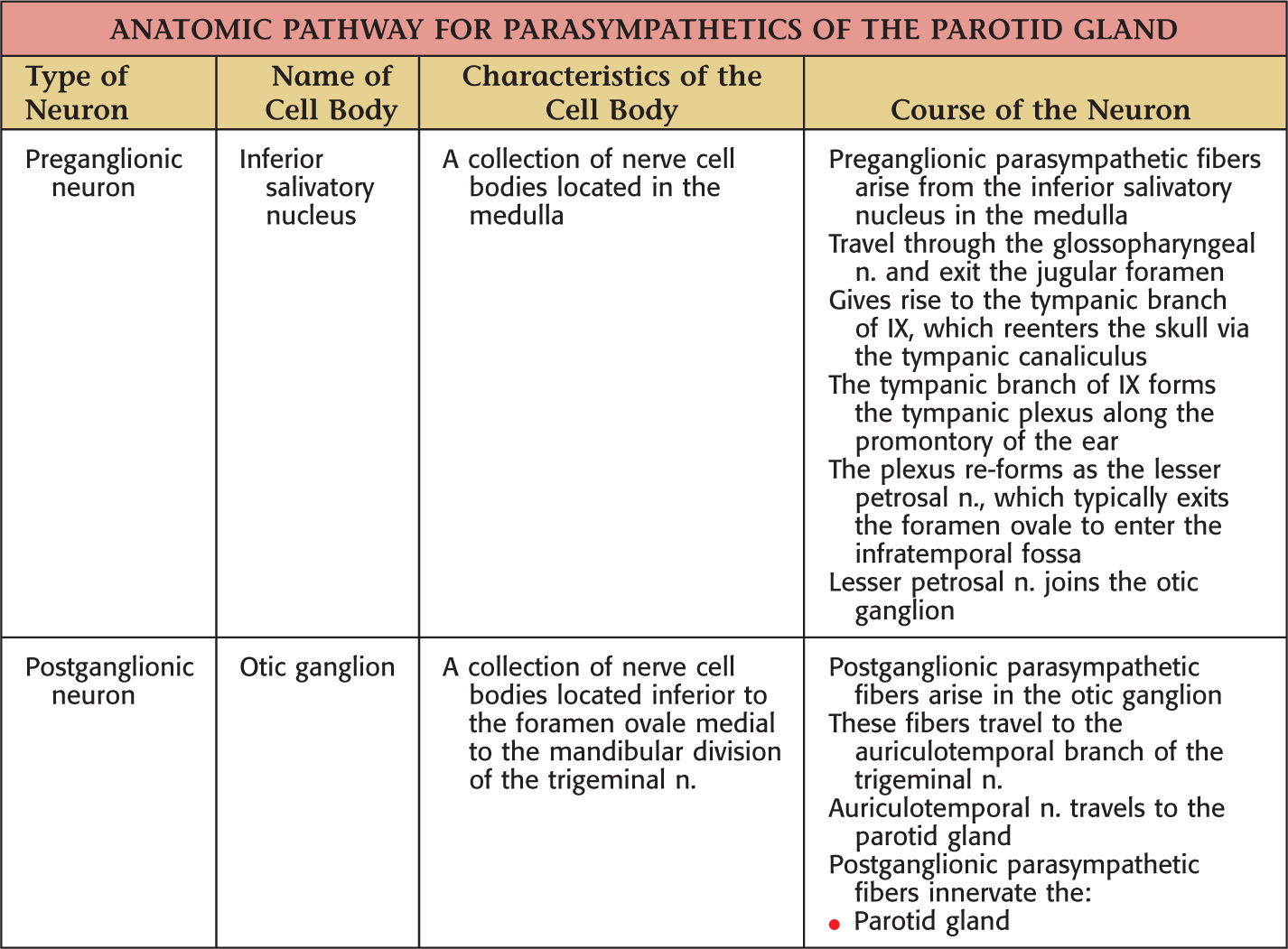
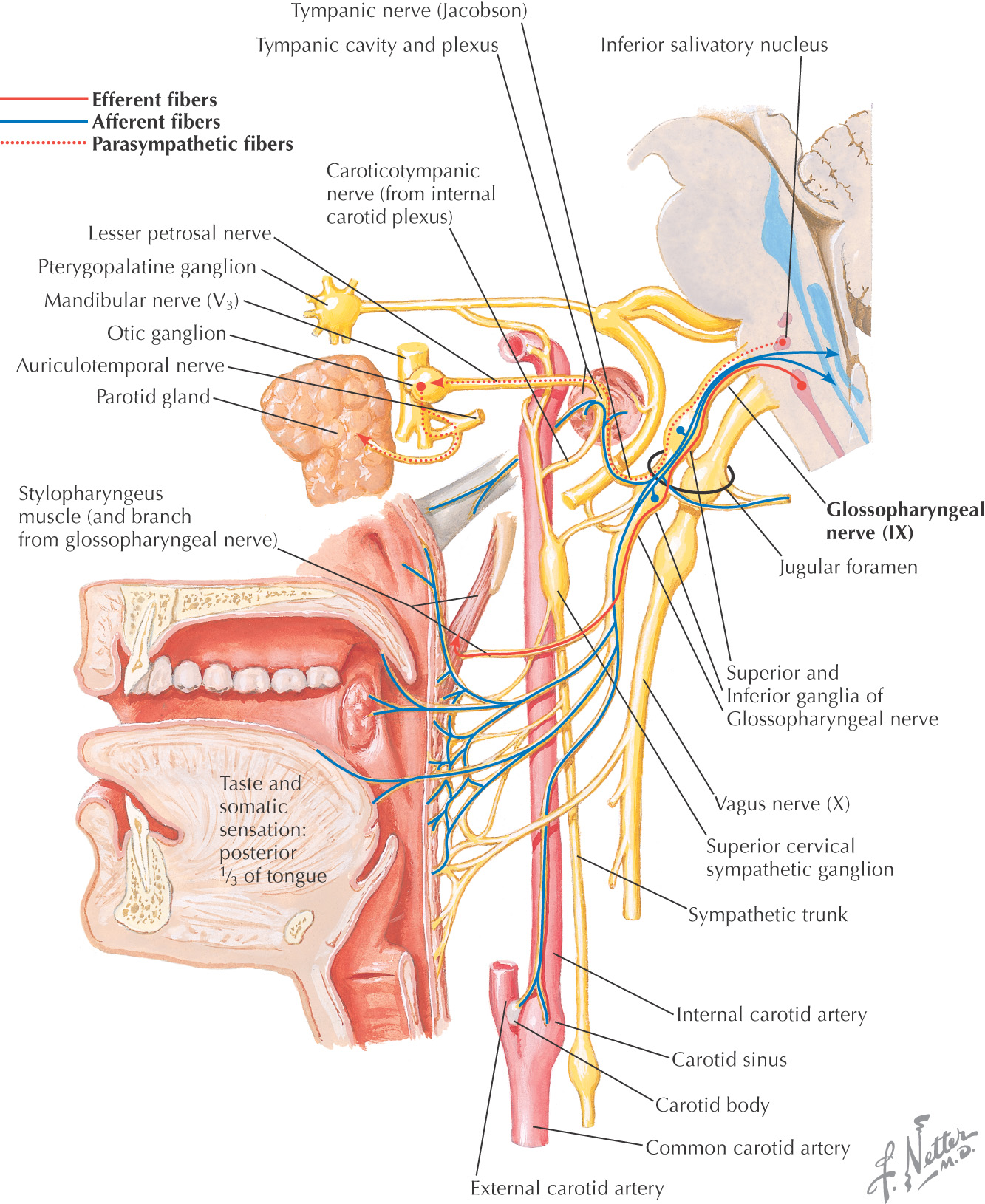
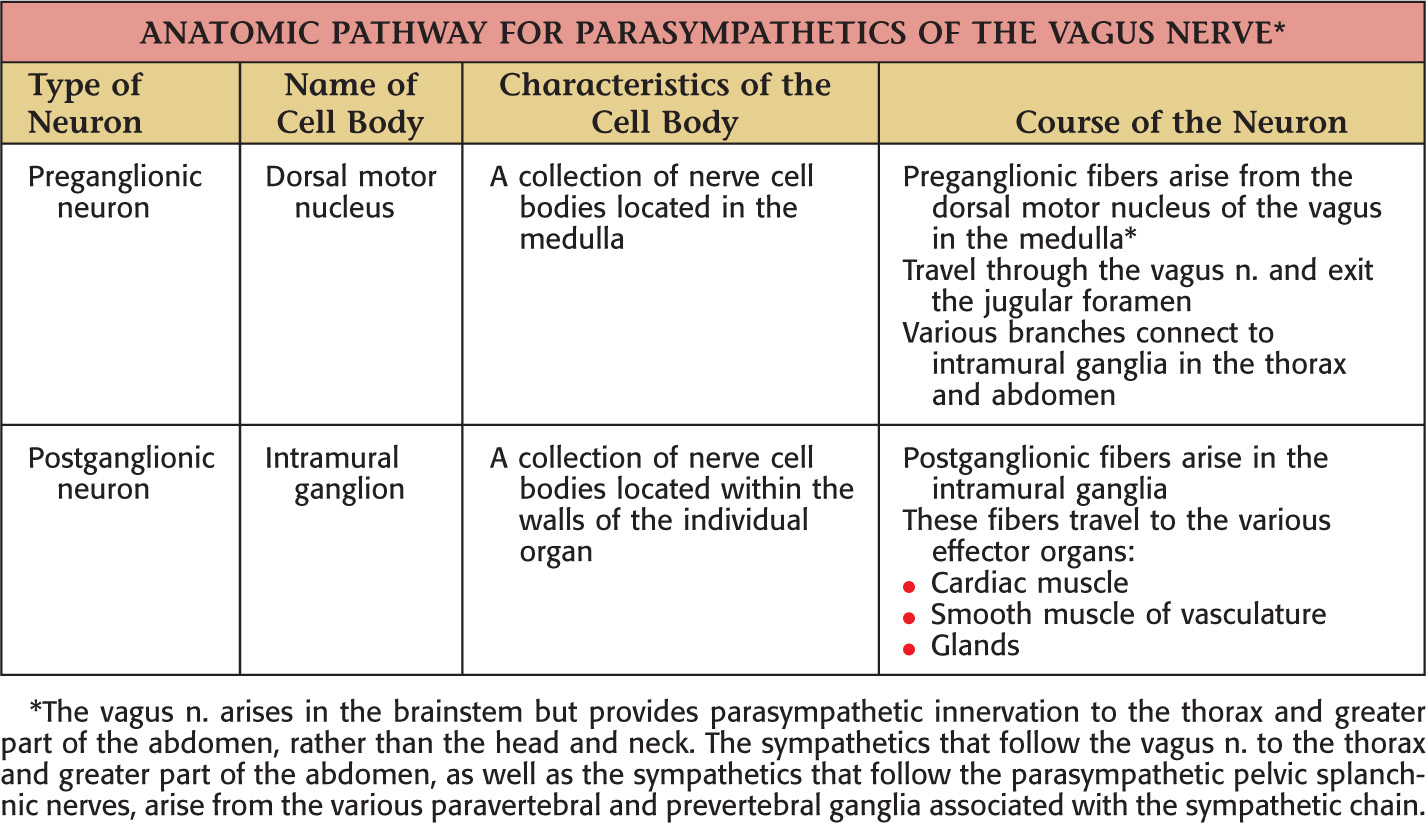
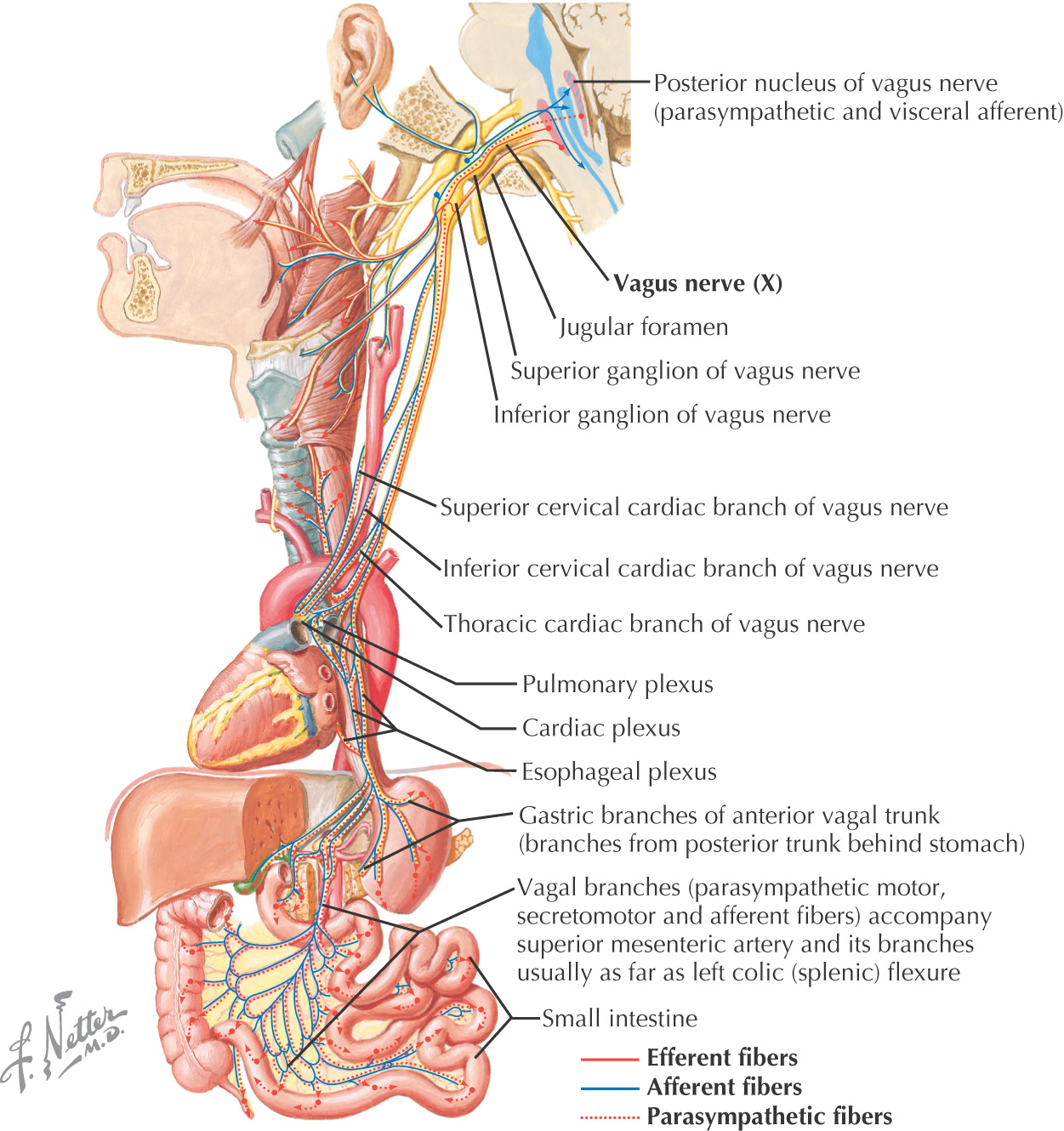
Parasympathetic Pathways of the Head and Neck
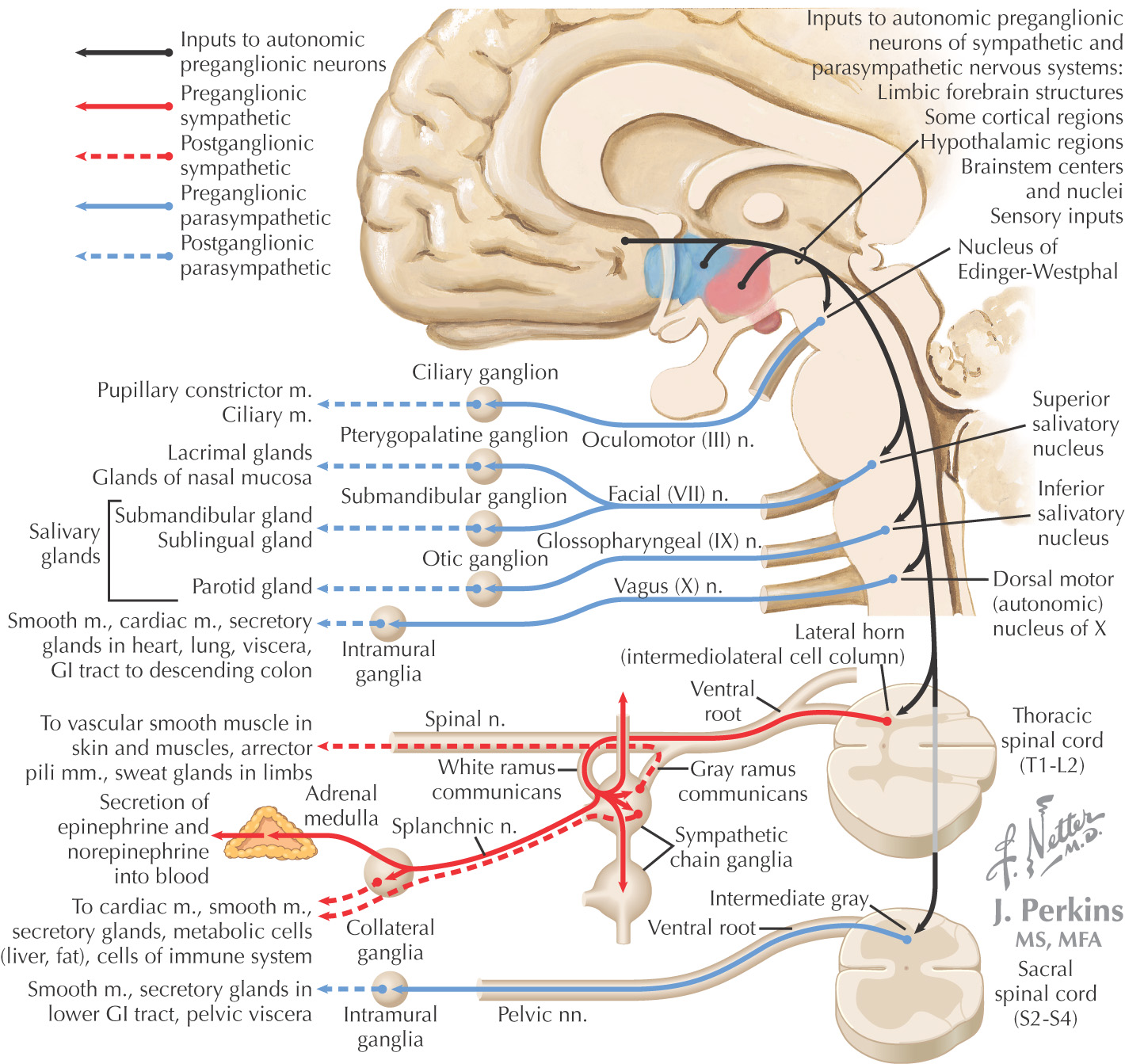
The autonomic nervous system (ANS) has control over the function of many organ systems and tissues
Provides innervation to:
Also provides innervation to the organs of the immune system and metabolic organs (mainly through the sympathetics)
The hypothalamus exerts control over the ANS and helps the body maintain homeostasis
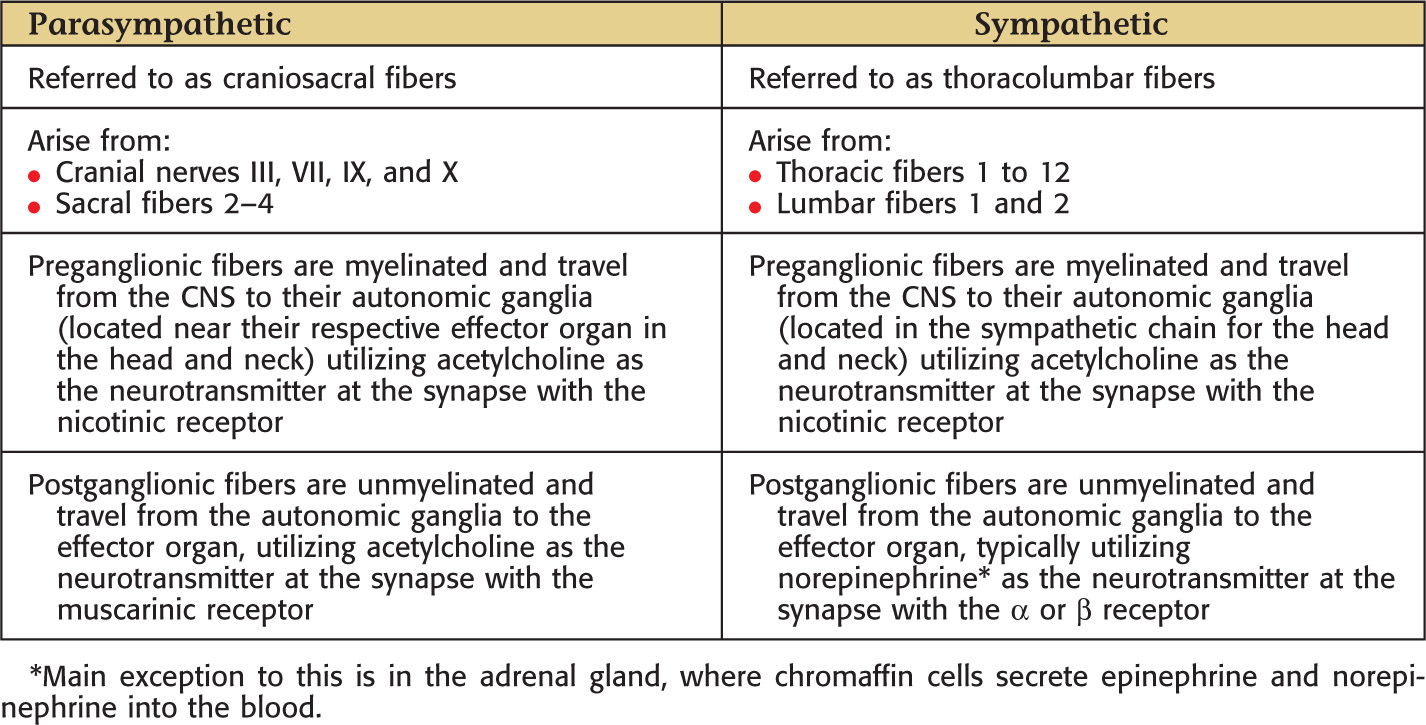
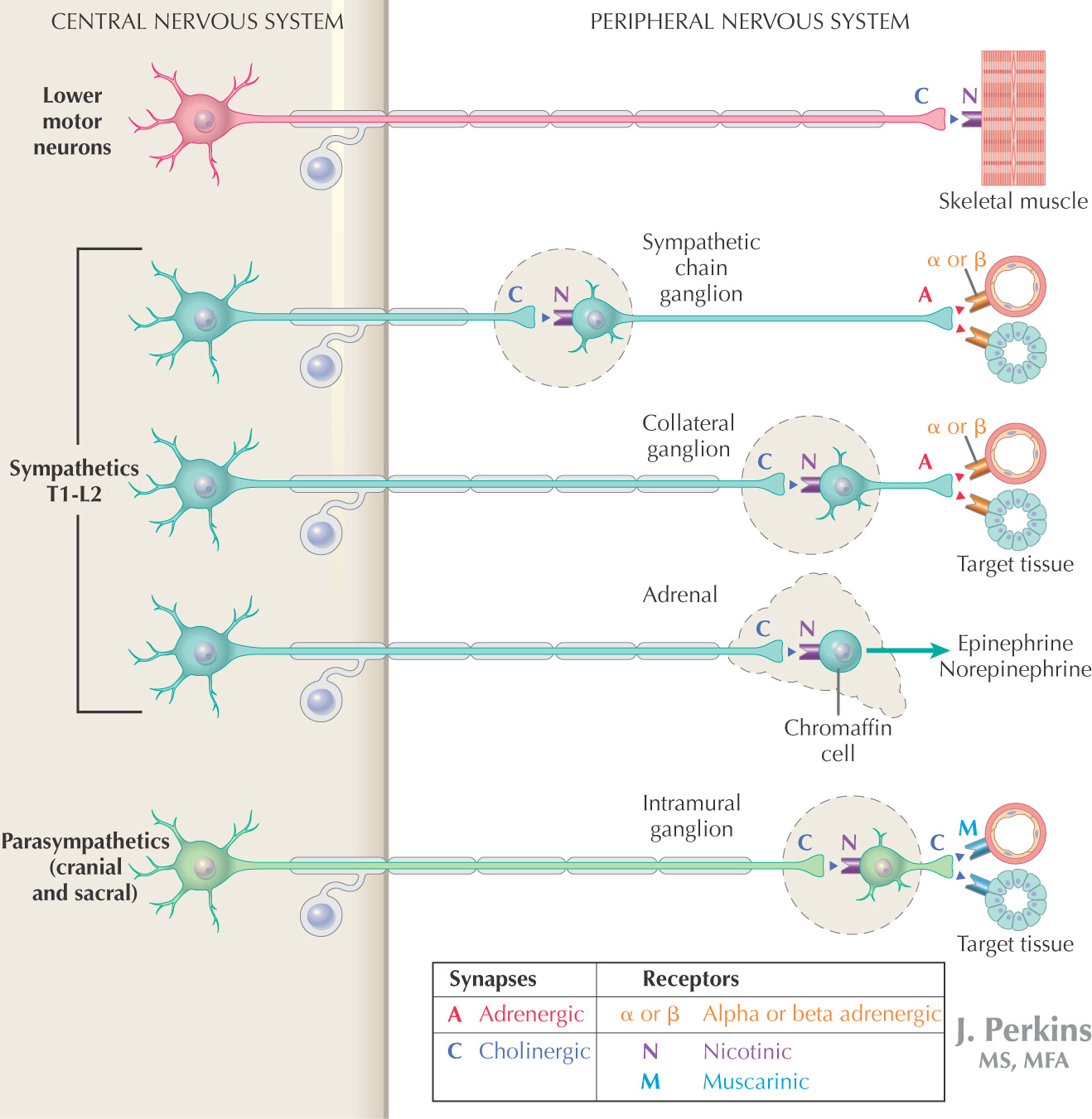
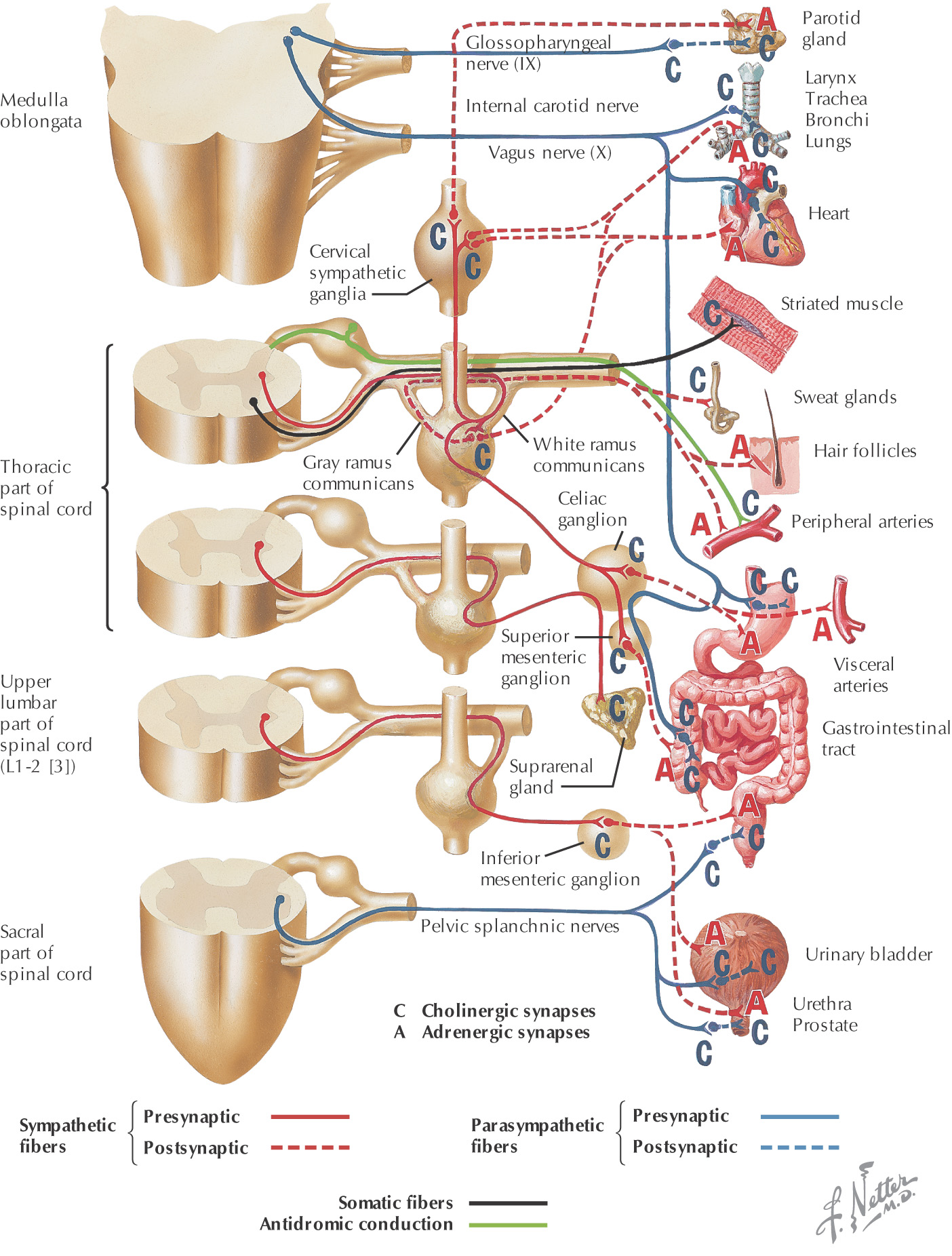
The ANS uses a 2-neuron chain system:
• Preganglionic neurons–the cell bodies are located in the central nervous system (CNS) (i.e., the brain and spinal cord), and their myelinated axons pass out to the autonomic ganglia
• Postganglionic neurons–the cell bodies are located in the autonomic ganglia, which are outside of the CNS, and their unmyelinated axons travel to the effector organ
The ANS is divided into 2 parts:
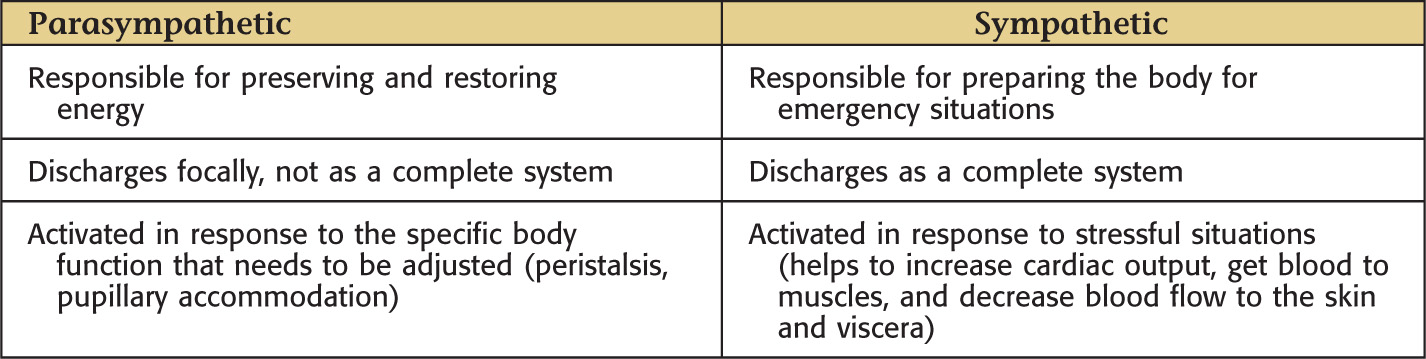
• Parasympathetic–the portion responsible for preserving and restoring energy
• Sympathetic–the portion responsible for preparing the body for emergency situations
Organs typically receive dual innervation, which has an antagonistic action, although there are some notable exceptions, such as the arrector pili muscles (which are sympathetic only) and the male sexual response (erection is parasympathetic, ejaculation is sympathetic)
Acetylcholine and norepinephrine are the 2 major neurotransmitters used in synapses of the ANS
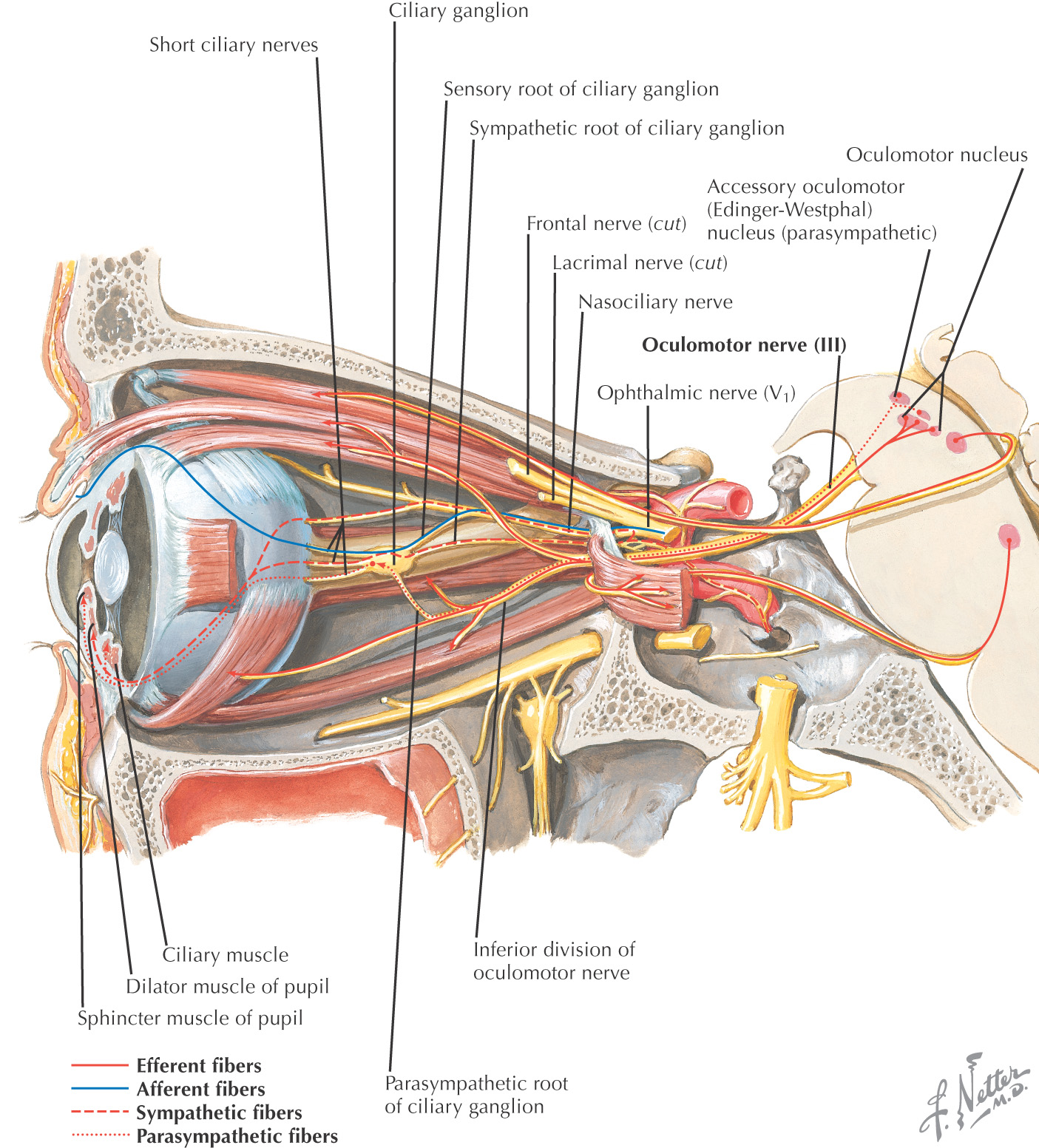
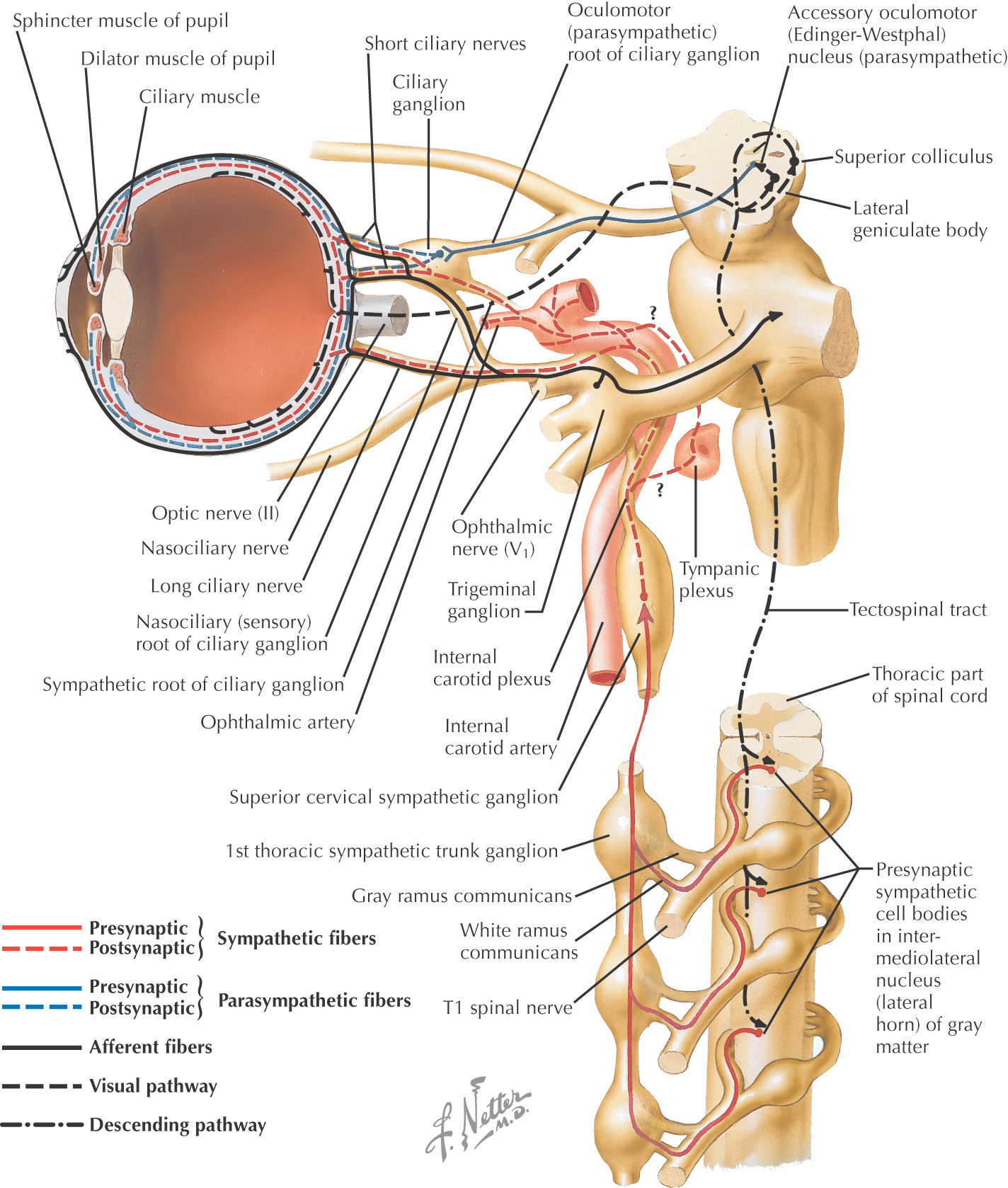
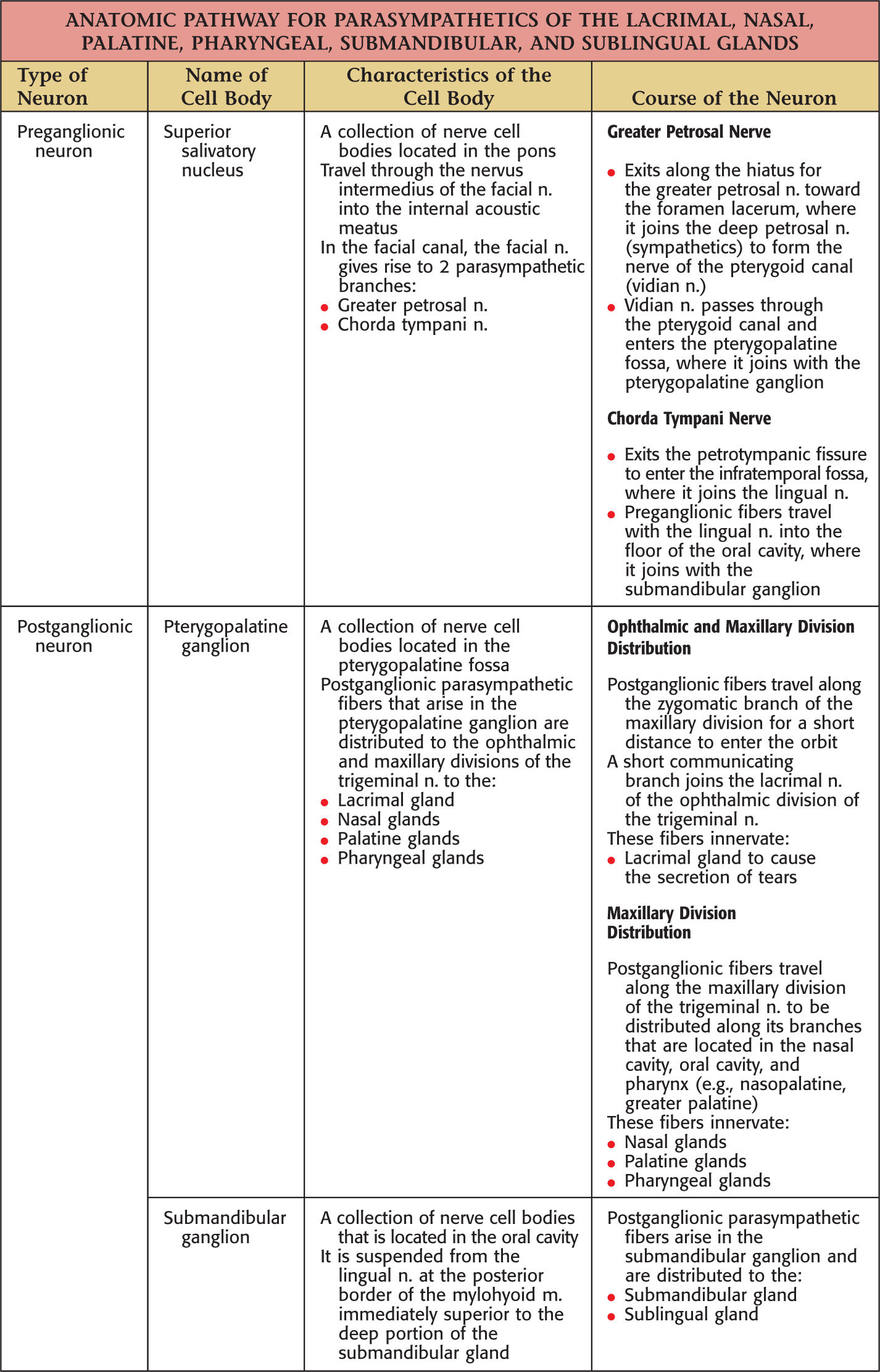
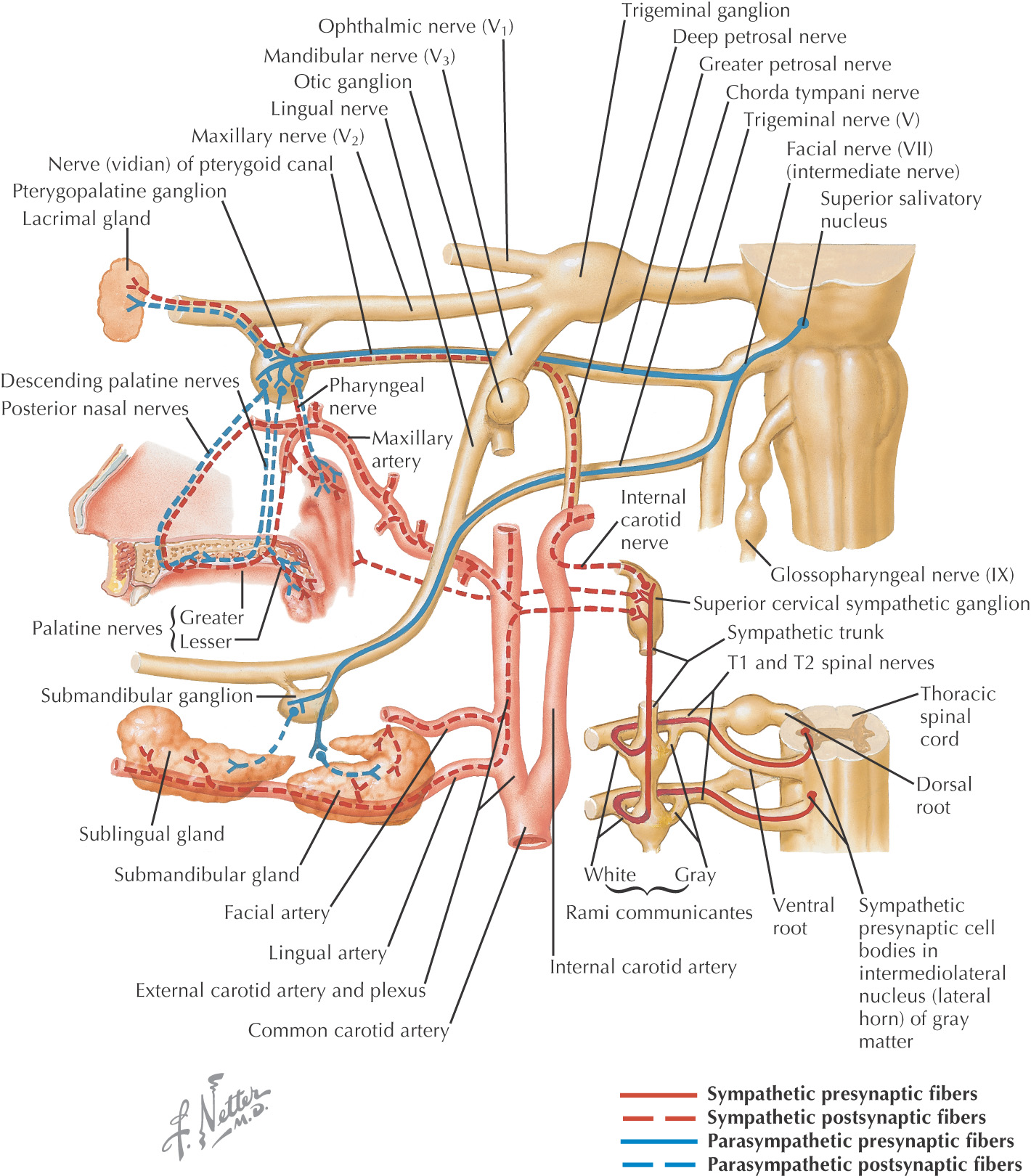
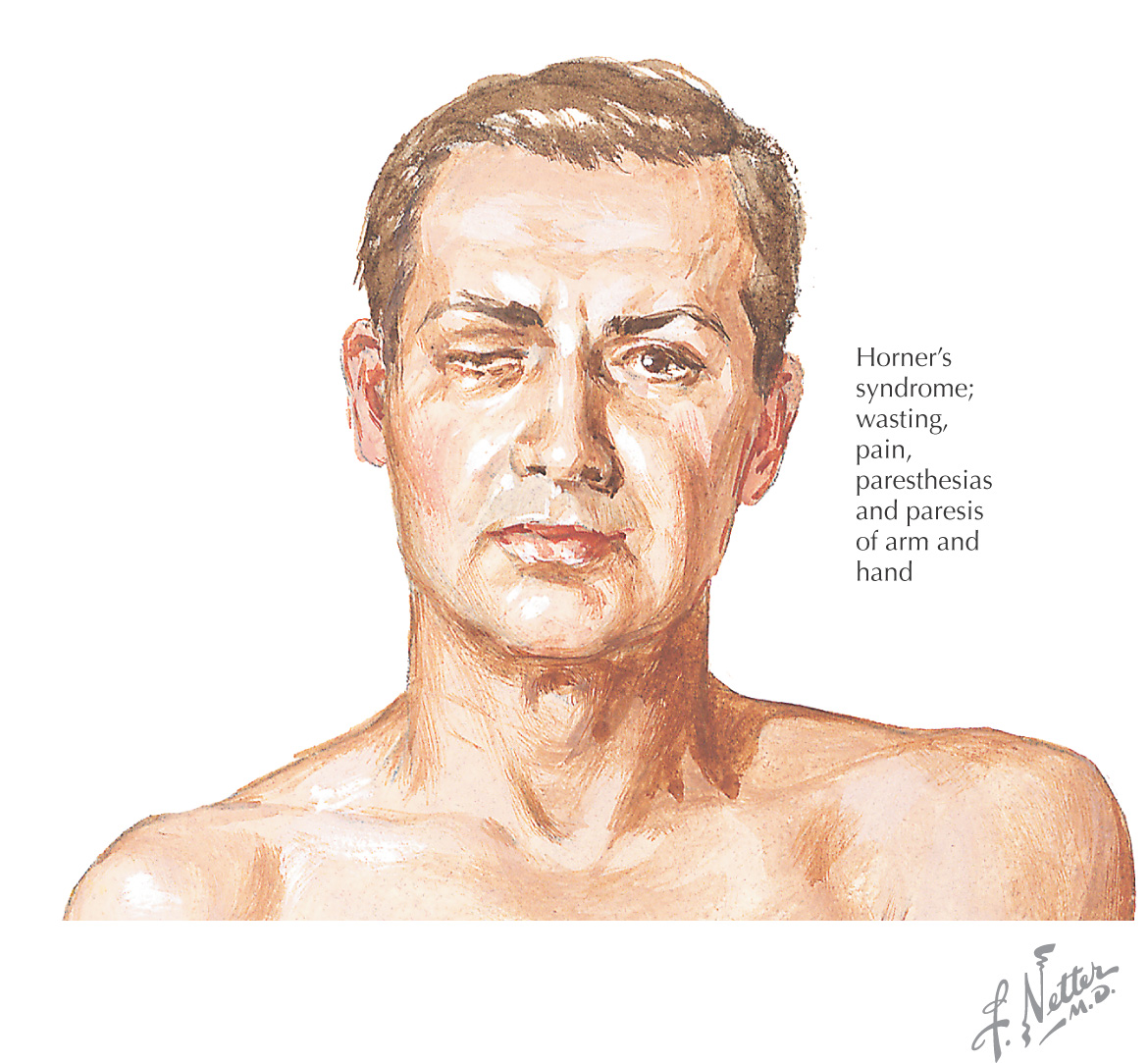
Results from injury or undue stimulus to the sympathetic nerves of the head and neck
Causes may include:
Pharmacologic tests can help localize which part of the sympathetic pathway has been affected
Treatment depends on the cause (e.g., removal of a tumor)
Clinical manifestations include:
• Miosis (constriction of pupil)
• Anhidrosis (decreased sweating)