2 Chemistry of essential oils
Introduction
For the optimum practice of aromatherapy it is desirable to have at least a basic understanding of the chemistry of the essential oils so as to select their use in a safer, more effective way – not randomly or indiscriminately. Such understanding reveals that while isolated chemicals have certain effects, there is no simple relationship between the effects of isolated components and the effects of the synergistic totality of the complete oil. These complex relationships are little understood because hundreds, even thousands, of different chemical compounds are involved, and many of them are unidentified. Until such time as more is discovered about the interaction of the plant chemicals within the human body, suffice it to say that knowledge of the basic composition of each oil contributes to the overall knowledge of aromatherapists, thereby promoting confidence and aiding selection of the oils to be used. Adams and Taylor (2010) write that ‘based on the wealth of existing chemical and biological data on the constituents of essential oils and similar data on essential oils themselves, it is possible to validate a constituent based safety evaluation of an essential oil. Fundamentally it is the interaction between one or more molecules in the natural product and macromolecules (proteins, enzymes, etc.) that yield the biological response’. In order to reap the benefits of essential oils it is not essential to know chemistry, but some understanding of their composition will enable more effective use, and often a little knowledge of chemistry will enable aromatherapists to respond to health professionals with a technical background who will inevitably pose questions.
The list of the physiological and pharmacological properties of aromatic molecules encompasses almost all the organs and all the functions of the organism, from skin conditions to psychological disturbances. Chemists have identified more than 3000 different molecules found in essential oils, and new ones are continually being discovered. Fortunately, these molecules are gathered in main groups, with a general relationship between the chemical function and the pharmacological activities. Although we use whole essential oils and not isolated molecules, it is necessary to undertake the study not only of the classes of molecules but also of a few important individual molecules and possible actions.
Essential oil components
It is not the intention to give a lesson in organic chemistry in this book, but a brief explanation of the building blocks which go to make up essential oils will be helpful to the therapist. Carbon, hydrogen and oxygen are essential to life itself, and these three atoms are contained in every essential oil. They combine naturally in countless numbers of ways to make up terpenic and terpenoid compounds such as hydrocarbons, alcohols, aldehydes, ketones, acids, phenols, esters, coumarins and furanocoumarins. The name terpene here conveys the meaning of a compound made up entirely of carbon and hydrogen atoms, and the name terpenoid means a molecule which includes the oxygen atom in addition.
Terpene compounds
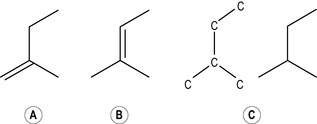
All terpenes are hydrocarbons that consist only of carbon and hydrogen atoms, and they are almost always easily recognizable from their name: all end in -ene. Terpenes, so named by Kekulé because of their occurrence in turpentine oil (Kubecka 2010), are hydrocarbons arranged in a chain, which can be either straight, perhaps with branches, or cyclic. Within the plant, the starting point for the terpenes is acetyl coenzyme A (acetyl coA) from which is formed six-carbon mevalonic acid. This is then modified to the five-carbon unit commonly known as the isoprene unit (Fig. 2.1), which occurs in two unsaturated forms: IPP (isopentenyl pyrophosphate) (Fig. 2.1a) and DMAPP (dimethylallyl pyrophosphate) (Fig. 2.1b). This isoprene unit comprised of five carbon atoms does not exist on its own but is the basic building block for terpenes and is shown diagrammatically as a saturated chain (Fig. 2.1c) for the sake of simplicity, as used later in the book, but it must be borne in mind that it is in fact unsaturated.
Monoterpenes
Two isoprene units joined together head to tail form the basis of all monoterpenes (therefore monoterpene hydrocarbons have 10 carbon atoms arranged in a chain) (Fig. 2.2a). Sometimes a chain can, as it were, loop round on itself (Fig. 2.2b) and give the appearance of a ring, although it is still a 10-carbon chain. When this looping occurs, the terpene is said to be monocyclic, because one circle has been created, and therefore the complete description is monocyclic monoterpene. More than one circle can arise in a chain, so that it is possible to have bicyclic and tricyclic monoterpenes. If they do not form a circle at all (i.e. if they form a straight chain) they are said to be acyclic (as in Fig. 2.2a). Not enough is yet understood about the pharmacological effects of these compounds in essential oils in order to know how these variations in structure may modify the effect. Further complexity arises when double bonds are added (by oxidation) or subtracted (by reduction).
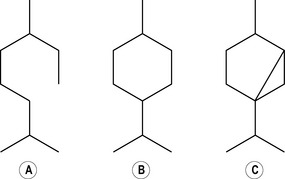
Figure 2.2 • Monoterpenes: two isoprene units join to form a monoterpene. (A) An acyclic monoterpene; (B) a monocyclic monoterpene; (C) a bicyclic monoterpene (thujane).
Monoterpenes constitute the most commonly occurring kind of terpene in plant volatile oils and are formed, as stated above, from two isoprene units and so contain 10 carbon atoms; sesquiterpenes are formed from three isoprene units and have 15 carbon atoms; and diterpenes are made up of four isoprene units with 20 carbon atoms. Molecules larger than this do not occur in essential oils because the molecular weight exceeds the limit imposed by the distillation process.
Generally speaking, terpenes are the least active, albeit the most numerous, of all components which occur to a lesser or greater (usually) degree in all in essential oils, and they tend to be regarded by some as being merely inert fillers. While it is true that the effects of terpenes on the human system are not very great, that is not to say that specific molecules do not have their uses, and a few examples are given below.
Effects of monoterpenes
They are all slightly antiseptic, bactericidal, and may also be analgesic, expectorant and stimulating (Franchomme & Pénoël 2001 pp. 239-244, Roulier 1990 p. 51), and they may also play an important part in the quenching effect mentioned earlier, thus making fragrance quality oils which have had the terpenes partially or totally removed (deterpenated oils) unsuitable for aromatherapeutic purposes.
The limonene found in citrus oils quenches the skin-irritant properties of the citrals, as can readily be seen by the fact that deterpenized lemon oil is four or five times as irritant to the skin as whole lemon oil; others are recently thought to be possible antitumour agents, some stimulate the circulation, etc., and it is undeniable that pine oils, with their rich content of terpenes, are good as air antiseptics, etc.; moreover pine oils appear to have a hormone-like effect on the suprarenal glands. The aromatic monoterpene p-cymene occurs in numerous essential oils and is known to be analgesic on the skin. The essential oil of Cupressus sempervirens, which may be up to 70% monoterpenes, is an anti-inflammatory agent by immunomodulating action (Franchomme & Pénoël 2001 p. 243).
Sesquiterpenes
Three isoprene units provide the basic structure for the larger molecules known as sesquiterpenes (sesquiterpene hydrocarbons have 15 carbon atoms) (Fig. 2.3).
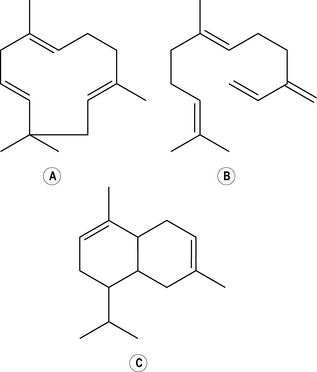
Figure 2.3 • Sesquiterpenes: three isoprene units join to form a sesquiterpene. (A) An acyclic sesquiterpene (α-humulene); (B) a monocyclic sesquiterpene (trans-β-farnesene); (C) a bicyclic sesquiterpene (α-cadinene).
As well as the antiseptic and bactericidal properties mentioned above, the sesquiterpenes as a class are said to be anti-inflammatory, calming, and slight hypotensors; some are analgesic (e.g. germacrene) and/or spasmolytic.
Diterpenes
Four isoprene units joined together are called diterpenes (diterpenic hydrocarbons have 20 carbon atoms) (Fig. 2.4), and are not often met with in steam-distilled oils because they are almost too heavy to come over in the distillation process – only a very few manage it.
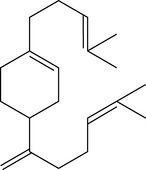
Figure 2.4 • Diterpenes: four isoprene units join to form a diterpene. This figure shows a monocyclic diterpene (α-camphorene).
Diterpenes are believed to have the further properties of being expectorant and purgative, and some are antifungal and antiviral.
Terpenes have a reputation for causing skin irritation (perhaps this is unjust, as so many oils are adulterated with turpentine, polyethylene glycol, white spirit, isolated terpenes etc., and not everyone is as careful as they should be when procuring their essential oils), but if irritation does occur then application of a fixed oil brings swift relief.
Terpenoids
When hydrocarbons – molecules consisting of only carbon and hydrogen – have oxygen added they are described as being terpenoid. With the addition of various oxygen-containing active groups to a compound, numerous alcohols, ketones, aldehydes and esters are formed and the effects produced in aromatherapy use are much more evident.
Nomenclature
The naming of molecules for a precise definition can be difficult, and here the terms used above may be used for a full description, i.e. the type of chain, the kind of terpene or the term ‘aromatic’ (ring based) should be included when describing a particular chemical constituent of an essential oil. Here are some examples:
Therapeutic effects
In the chemical ‘families’ discussed below, some of the general therapeutic properties attributed to each of the families are based on a theory (set out in detail in Franchomme & Pénoël 2001 pp. 107–131) which associates certain properties with the esters, alcohols, etc., taking into account the electronegative/-positive nature of the molecules coupled with their polar/apolar properties. Although this information is a useful general guide to the probable properties of the chemical families discussed, the information given does not hold true for each and every compound (e.g. alcohols are given the familial characteristic of being stimulating, but the alcohol linalool shows as a sedative – see Table 4.9 – when tested on mice, although the results obtained in animal testing do not necessarily extrapolate directly to humans). In any case, aromatherapists do not use isolated compounds but whole essential oils, and although it is both important and interesting to study the effects of single compounds, it is worth repeating the statement made above that there is not necessarily any simple direct relationship between the therapeutic effect of any one constituent and that of the whole essential oil.
Alcohols
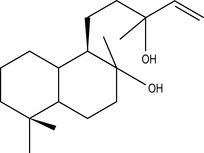
When a hydroxyl group (or hydroxyl radical as it is sometimes called) consisting of one oxygen atom and one hydrogen atom ( OH) joins on to one of the carbons in a chain by displacing one of the hydrogen molecules, an alcohol (Figs 2.5, 2.6, 2.7) is formed: a monoterpenic alcohol, sesquiterpenic alcohol or diterpenic alcohol, depending on whether the chain to which it attaches itself has two, three or four isoprene units. The name of the alcohol so formed always ends in -ol, e.g. geraniol. There are alternative names which are in current use for these alcohols: monoterpenic alcohol is also called monoterpenol, sesquiterpenic alcohol is known also as sesquiterpenol and diterpenic alcohol as diterpenol and also diol.
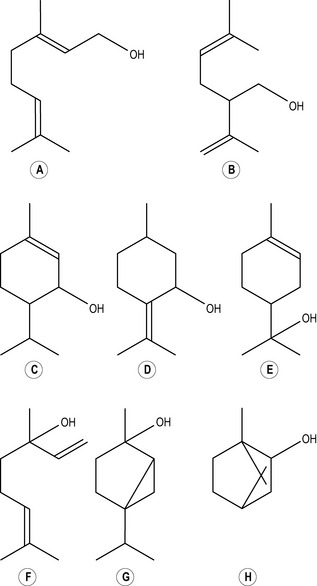
Figure 2.5 • Alcohols – monoterpenols (10 C). (A) An acyclic monoterpenol (geraniol); (B) an acyclic monoterpenol (lavandulol); (C) a monocyclic monoterpenol (piperitol); (D) a monocyclic monoterpenol (pulegol); (E) a monocyclic monoterpenol (α-terpineol); (F) an acyclic monoterpenol (linalool); (G) a bicyclic monoterpenol (thujanol-4); (H) a bicyclic monoterpenol (borneol).
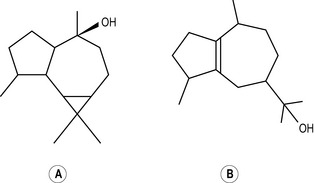
Figure 2.6 • Alcohols – sesquiterpenols (15 C). (A) A bicyclic sesquiterpenol (viridiflorol); (B) a bicyclic sesquiterpenol (guaiol).
Effects of alcohols
Alcohols as a group are anti-infectious, strongly bactericidal, and antiviral as well as being stimulating to the immune system; they are generally non-toxic in use and do not cause skin irritation (Roulier 1990 p. 53). The thujanol-4 molecule is a liver stimulant, as is menthol. Some of the heavier alcohols appear to have a balancing effect on the hormonal system, e.g. the diterpenic alcohol sclareol in Salvia sclarea [clary], as does the sesquiterpenic alcohol viridiflorol in Melaleuca viridiflora [niaouli]: borneol is given as a cholagogue and analgesic, cedrol is phlebotonic and spathulenol is fungicidal – as is sclareol (Beckstrom-Sternberg & Duke 1996 pp. 384, 416, Franchomme & Pénoël 2001 pp. 133, 135).
The aromatic ring
The second building block for the volatile molecules found in distilled plant oils occurs when six carbon atoms join together in the form of a ring, which is not formed from isoprene units, giving a completely different structure from that of the terpenes. Energy transference across the aromatic ring is much greater (due to conjugation) than in the terpenes, making them much more reactive, therefore the effects of aromatic compounds on the body can be quite remarkable, making care in use essential. Note that the term ‘ring’ is reserved for this six-carbon unit C6H6, which has three names in common use:
1. Aromatic ring, because many of the substances based on it are pleasant smelling.
2. Benzene ring, because the basic ring of six carbon atoms and six hydrogen atoms is known as benzene.
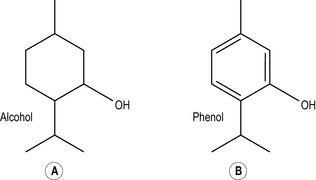
As seen above, when the hydroxyl group OH is attached to a chain it is an alcohol (Fig. 2.8a); but when the same group is attached to a benzene ring (see below) it is a phenol (Fig. 2.8b). Thus both aliphatic and aromatic aldehydes, ketones and organic acids (involving both chain and ring building blocks) are to be found occurring naturally in essential oils.
Phenols – the other alcohols
When the hydroxyl group attaches itself to a carbon in an aromatic (also phenyl also benzene) ring, the resulting molecule is known as a phenol (Fig. 2.9), which may also be termed an aromatic alcohol, and has strong effects. Phenols also have names which end in ‘-ol’, e.g. carvacrol; to discriminate between the two classes it is necessary to learn the names of the most important members in each group.
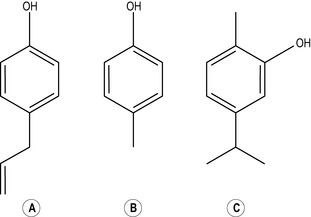
Phenols, like alcohols, are antiseptic and bactericidal and because they stimulate both the nervous system (making them effective against depressive illness) and the immune system, they activate the body’s own healing process. However, because the OH is attached to a ring rather than to a chain molecule, aromatic phenols, unlike the aliphatic alcohols, can be toxic to the liver and irritant to the skin if used in substantial amounts or for too long a time (Roulier 1990 pp. 51–52). ‘Some oils – for example, thyme and origanum – owe their value in the pharmaceutical field almost entirely to the antiseptic and germicidal properties of their phenolic content’ (Guenther 1949). Eugenol is an effective antispasmodic (Franchomme & Pénoël 2001 p. 134).
Valnet (1980 p. 67) states that phenols have the property of attaching themselves to the amino acids which cause the destruction action of numerous microbial germs or their secretions, as well as tissual waste in wounds, burns and skin conditions. The resulting products (amino-phenols) are well known for their antiseptic action: alcohols behave in a similar fashion, producing amino-alcohols.
Methyl ethers
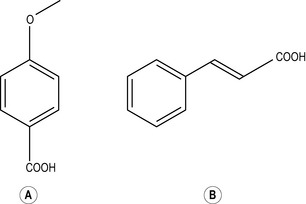
These generally are more complicated structures than the phenols: precursors (phenylalanine, tyrosine, cinnamic acid) of these molecules act to form compounds that include a six-carbon benzene ring attached to a short (three-carbon) chain. Even though this type of molecule occurs much less frequently in essential oils than do terpenes, they can have a great impact on the aroma, flavour and therapeutic effect. They have various forms of name, as seen in the following examples: safrole, methyl chavicol, eugenol methyl ether and asarone (which may cause confusion owing to the similarity to the ketone name ending); other examples are estragole in tarragon oil, cinnamaldehyde in cinnamon bark oil, anethole (Fig. 2.10a) in aniseed oil and apiole (Fig. 2.10b) in fennel seed oil.
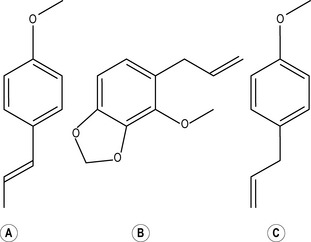
Some occur in two forms, as in trans-anethole and cis-anethole, the latter being the more toxic of the two (Witty 1993 personal communication).
Effects
These molecules have powerful effects on the body and essential oils containing them should always be used with great care. Several of them are amphetamine-like and may be neurotoxic if present in large amounts in an essential oil; thus such oils should be used only in the short term and in low concentration. Whereas the phenols are aggressive to the skin and mucous surfaces, in the phenyl methyl ethers it seems that the methylation of the phenol function negates this aggressive aspect and these compounds are well tolerated on the skin. They are, as a class, strong antispasmodics: anethole (para-anol methyl ether) is oestrogen-like (see also Hormone-like, Ch. 4 p. 96) and β-asarone (asarol trimethyl ether) is sedative; safrole relieves pain and myristicin has anaesthetic and hallucinogenic properties (Beckstrom-Sternberg & Duke 1996 p. 406).
Ethers rarely, if ever, occur alone in essential oils, but their relationship to phenyl methyl ethers is close, and their antidepressant, antispasmodic and sedative properties echo those of the phenolic ethers, as do those of esters (see below) (Roulier 1990 p. 53).
Aldehydes
An aldehyde is formed when the carbonyl radical ( O) together with a hydrogen atom (H) attaches itself to one of the carbon atoms in the basic structure, forming a CHO group (Fig. 2.11). It is easy to recognize an aldehyde from its name, as it either ends in -al, e.g. citral, or the name aldehyde is stated, as in cinnamic aldehyde (may be shortened to cinnamal). Benzaldehyde is one of the three constituents of vitamin B17. They usually have powerful aromas, making them important to the perfumer, and are very reactive, which means that they must be used with care in aromatherapy.
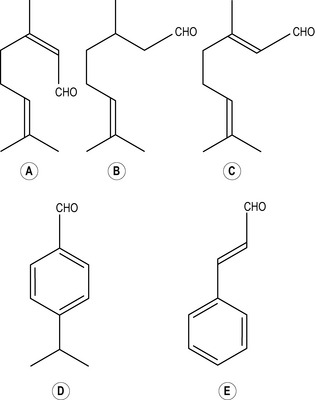
Figure 2.11 • Aldehydes. (A) An acyclic monoterpenal (neral); (B) an acyclic monoterpenal (citronellal); (C) an acyclic monoterpenal (geranial); (D) an aromatic aldehyde (cuminal); (E) an aromatic aldehyde (cinnamal).
Effects
The beneficial properties of aldehydes are that they are antiviral, anti-inflammatory, calming to the nervous system, hypotensive, vasodilatory, air antiseptic and antipyretic; their negative properties – when used incorrectly or ill advisedly – include skin irritation and skin sensitivity (Franchomme & Pénoël 2001 pp. 231-236, Roulier 1990 p. 53). Aldehydes, with their lemon-like aroma, are reputed to calm the tension that follows nicotine withdrawal in those who are giving up smoking. Cinnamaldehyde is a general tonic and stimulates peristalsis and uterine contractions; cuminal, on the other hand, is sedative and calming.
Ketones
When the carbonyl group (O) attaches itself (without a hydrogen atom this time) to a carbon on a chain structure, an aliphatic ketone (Fig. 2.12) is formed; aromatic ketones hardly ever occur in essential oils. The ketone names normally end in -one, but look out for false friends such as asarone, mentioned above, which is a phenolic ether and not a ketone.
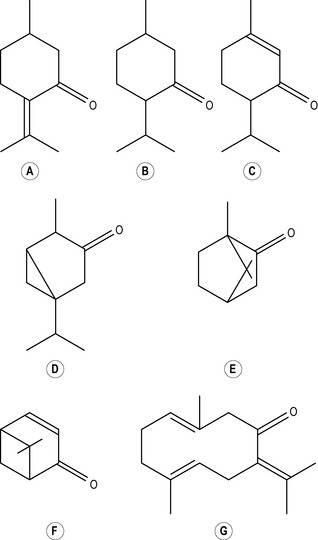
Figure 2.12 • Ketones. (A) A monocyclic monoterpenone (pulegone); (B) a monocyclic monoterpenone (menthone); (C) a monocyclic monoterpenone (piperitone); (D) a bicyclic monoterpenone (thujone); (E) a bicyclic monoterpenone (camphor); (F) a bicyclic monoterpenone (verbenone); (G) a monocyclic sesquiterpenone (germacrone).
As with all molecules, the ketone molecules are not flat, two-dimensional structures but occupy space in three dimensions. This means that changes in molecular spatial shape can take place. Hence differently shaped molecules made up of the same atoms do occur and their seemingly insignificant differences can alter the effect that these molecules have on the body. For example, (−)-carvone and (+)-carvone are two examples, one being less toxic than the other. Opdyke (1973, 1978) suggests that α-thujone and β-thujone may have differing effects on the body, but research along these lines is yet to be carried out.
Effects
Generally speaking, ketones are cicatrizant, lipolytic, mucolytic and sedative; some are also analgesic, anticoagulant, anti-inflammatory, digestive, expectorant or stimulant. They need to be used with care, particularly by pregnant women (Franchomme & Pénoël 2001 p. 212, Roulier 1990 p. 53).
Organic acids and esters
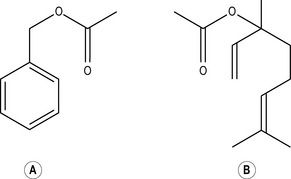
Unlike the above there is no active radical group whose presence creates an ester. This type of compound is formed by the joining together of an organic acid (Fig. 2.13) with an alcohol, the formula being:

It has been suggested that this chemical reaction may be capable, in vivo, of flowing the other way too, which could result in interchanges from acids to esters and back again. Perhaps this is why esters (Fig. 2.14) are useful for normalizing some emotional and bodily conditions which are out of balance. To recognize an ester from its name is not difficult: it usually ends with -ate, e.g. linalyl acetate, or else the word ester is included.
Effects
Esters generally are believed to be antifungal, anti-inflammatory, antispasmodic, cicatrizant and both calming and tonic (adaptogenic), especially to the nervous system (Buchbauer, Jirovetz & Jäger 1992, Buchbauer et al. 1993). Like alcohols, they are gentle in action, and being free from toxicity they are ‘user friendly’. The exception is methyl salicylate, which comprises over 90% of both wintergreen oil and birch oil (neither of which is used in the current British style of aromatherapy).
Oxides
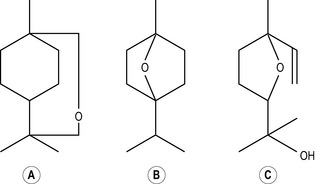
The only oxide (Fig. 2.15) known well in aromatherapy is 1,8-cineole, which is otherwise known as eucalyptol; it may also be regarded as a bicyclic ether (Buchbauer 1993).
Lactones
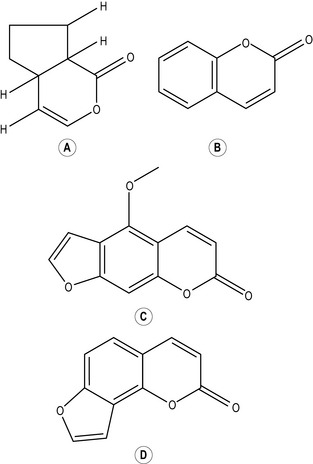
Important members of this family occurring in essences are the coumarins and their derivatives (Fig. 2.16). They occur only in the expressed oils and some absolutes, e.g. jasmine, because the molecular weight is too great to allow distillation. They are sometimes called circular esters because the ester group is incorporated in the structure.
Effects
Lactones are reputed to be mucolytic, expectorant and temperature reducing, their negative aspects being skin sensitization and phototoxicity (Franchomme & Pénoël 2001 p. 222). Lactones are neurotoxic when ingested and some oils containing lactones are toxic on the skin, but the risk is slight as there is usually a very low content of lactones in an essential oil.
Coumarins
Coumarins, which number probably almost 1000, are present only in very low concentration in essential oils, but their presence has an undoubted effect.
Effects
Coumarins are anticoagulant hypotensors; they are uplifting and yet at the same time sedative (Buchbauer, Jirovetz & Jäger 1992, Franchomme & Pénoël 2001 p. 225). Lavender is known for its sedative properties and this is partly due to the synergistic presence of coumarins, albeit very low; unfortunately, the coumarins appear only after longer distillation than is usually commercially viable, so unless the lavender has been distilled especially for aromatherapy then the full sedative potential is not realized.
Furanocoumarins are known mainly for their phototoxicity, and oils containing these should not be used immediately prior to sunbathing (or using sunbeds) owing to their ability to increase the sensitivity of the skin to the sun, the main culprits in aromatherapy being psoralen and bergapten, found in the citrus essences. Some are antiviral and antifungal.
There are too many individual essential oil components (several thousand) to name here, but knowledge of the different chemical families will aid recognition of new constituents if they are encountered in a listing from a gas chromatography report (see below).
Stereochemistry
The word ‘stereo’ comes from the Greek meaning solid, and here refers to the spatial arrangement of atoms within a molecule. The same kind and number of atoms in different molecules can occupy different relative positions, giving the molecules variations in shape which have an influence – perhaps slight, perhaps significant – on the chemical activity.
Isomers
In essential oils many compounds share the same molecular formula and thus are made up of precisely the same number and kind of atoms, but occupy different spatial arrangements: these are known as isomers. For example, many monoterpene hydrocarbons are made up of 10 carbon atoms and 16 hydrogen atoms, having the same molecular formula C10H16, but many different structures are made from these same atoms, each having differing properties. The difference between these structural isomers may lead to slight or great variations in characteristics.
Optical isomers
Some molecules are able to rotate plane-polarized light and are classed as either dextrorotatory or laevorotatory, indicating their capability to rotate light in a particular direction. Molecules that divert the light to the right are known as dextrorotatory, written as (+)-, and molecules that turn the light to the left are known as laevorotatory, written as (−)-.
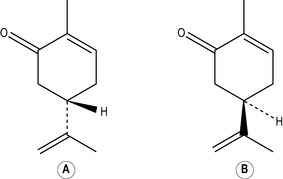
Carvone, a ketone, is one such molecule and exists in two forms, (−)-carvone (Fig. 2.17a) being present in spearmint, where it has the aroma of spearmint, and (+)-carvone (Fig. 2.17b) in caraway, where it has the aroma of caraway, showing that quite a small change in the spatial arrangement of atoms within the molecules can have a significant effect on the perceived aroma; Craker (1990) says that the stereochemical form of the molecule will determine the odour and flavour attributes of the oil.
Menthol, C10H20O, is also optically active but only the (−) form is found in nature, particularly in peppermint oils.
These optical isomers, sometimes called ‘mirror molecules’, are mirror images of each other, rather like a pair of hands which appear to be the same but in fact are different (gloves cannot be exchanged) and this is known as chirality (from the Greek word for hand). The majority of both mono and sesquiterpenic compounds in any given essential oil are to be found in one stereochemical form. A mixture of dextrorotatory and laevorotatory forms of a molecule is termed racemic.
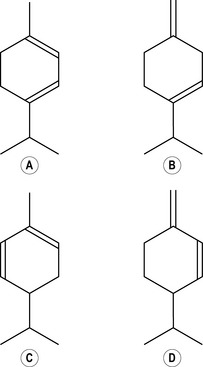
The terpene pinene occurs in two slightly different forms (distinguished nominally by the Greek letters α and β), with only a change in the position of the double bond (Fig. 2.18).
Geometric isomers
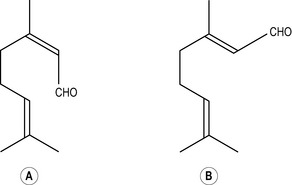
The aldehydes geranial and neral are very similar in structure and are said to be geometric isomers (Fig. 2.19). The prefixes cis- and trans- are used to describe the positioning of groups on either side of a double bond. Neral is a cis- isomer and geranial a trans- isomer, and because they often occur together and it is difficult to discriminate between the two during analysis, the mixture of these two isomers is called citral.
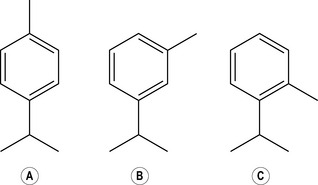
The aromatic terpene cymene is an example of a molecule that has three isomers, para-, meta- and ortho-, respectively, denoting the positions of side groups attached to the benzene ring (Fig. 2.20).
Functional isomers
Both molecules shown here have the same molecular formula, C2H6O, but because of their arrangement have different functional groups. One is an ether and the other is an alcohol, and so they have quite different characteristics despite being composed of the same atoms.

Because the different physical structures of isomers can give widely different physical properties such as boiling point, relative density etc., it is probable that the structural shape of the molecules also has an influence on therapeutic properties, as was the case with the drug thalidomide (see also Hormonal, Ch. 4 p. 96).
Chemical variability
It is important to recognize that, because of the variability of both climate and soil, no natural chemical will be present in any essential oil in exactly the same proportion at each distillation. Further variations are produced according to the time the plant is harvested. For instance, sage plants cut early in the season contain a much lower percentage of ketones than do those harvested late (Lamy 1985). Constituents can vary sometimes from 20% to 70% in a genuine oil, and suppliers must have obtained an oil from a specific plant grown in the right place and harvested at the right time to ensure the correct proportion of whatever component is required. If this is not the case then the oils may have been adulterated before they reach the buyer, unless bought from source. Even a gas–liquid chromatograph carried out by an independent authority cannot always be relied upon completely. More than one test is needed when checking the purity of an oil, and not all distributors are able to afford such an expensive procedure as this for each batch. A certificate showing that an oil is of a required standard is no guarantee unless it refers specifically to the batch currently being traded.
Testing oils for quality
Gas chromatography (GC)
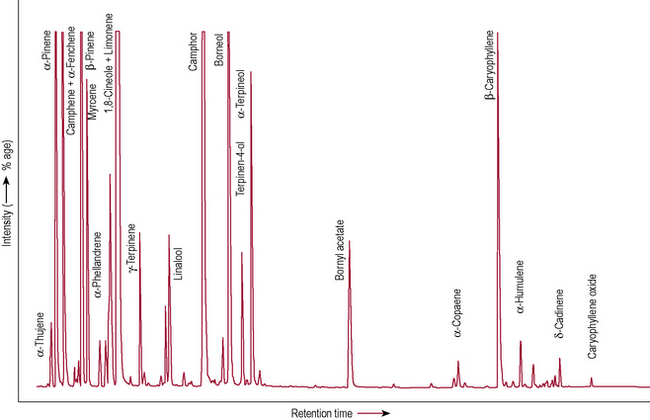
This is sometimes called gas–liquid chromatography (GLC). The gas chromatograph consists of a coiled, temperature-controlled, tubular column into which a minute amount (say 1 μL) of essential oil is injected and volatilized. It then passes through the column, which may be 10–50 m long and contains a liquid phase and a gas phase. At the other end is a flame ionization detector and a pen recorder, which plots a trace (Fig. 2.21) of each component of the essential oil as it exits the column. The smaller, lighter molecules have the shortest retention time and appear after the shortest time, and so are recorded first on the trace. These are followed by successively larger molecules, the heaviest having the longest retention time and being recorded last. From the resulting trace the percentage of each constituent present in the oil being tested can be calculated. As the reading will always differ for each batch of any one essential oil, a trace for each named essential oil is retained as a standard, to which all future batches are compared. It can be seen that this test is comparative rather than absolute, and although the GC does not directly identify the constituents present, this can be done by comparing the results obtained with known standards.
Mass spectrometry
The GC is a valuable test but is not the only one. At the forefront of modern technology is the gas chromatography–mass spectrometry (GC-MS), a more expensive process that is capable of analysing and identifying the individual components of essential oils. The mass spectrometer is interfaced to the gas chromatograph apparatus described above, and as the molecules emerge from the GC column they are bombarded with high-energy electrons, which fragment them. There is a characteristic fragmentation pattern for each molecule, and for identification it is compared by computer with patterns held in a library. Using this technique it is possible to identify each component in a complex mixture such as an essential oil.
Optical rotation
Some molecules are optically active and have the capacity to rotate plane-polarized light; the sense and degree of rotation are measured by an instrument called a polarimeter, and the angle through which the light is rotated is an important physical characteristic by which an essential oil may be recognized.
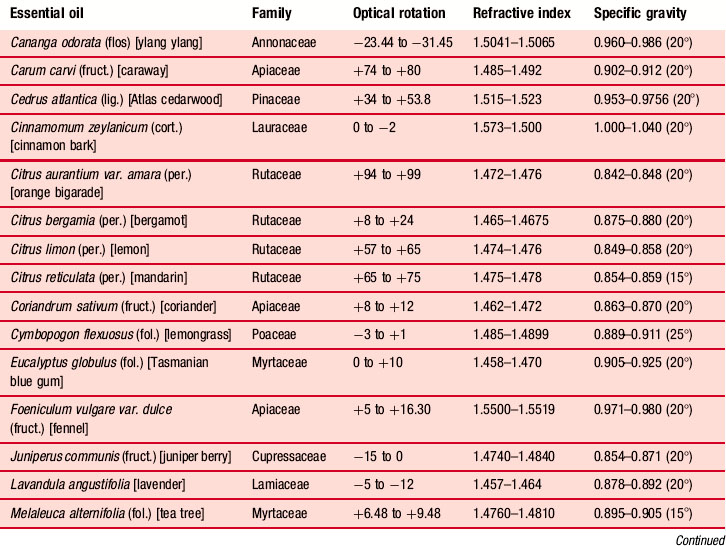
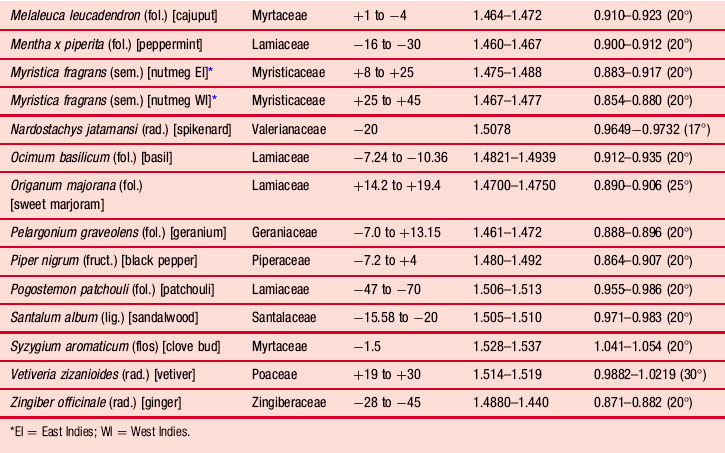
The optical rotation of a whole essential oil is dependent on the mix of molecules within it, and this results in the oils being what is termed ‘optically active’, with the ability to bend plane-polarized light. When plane-polarized light is passed through a sample of the essential oil the direction and degree of rotation, as measured by a polarimeter, is an indication as to whether or not an essential oil has been adulterated. Table 2.1 gives some physical characteristics of essential oils by which their quality may be judged.
Refractive index
When light passes through a liquid it is refracted, and this refraction is easily measured to give consistent figures for a particular oil. This refractive index (Table 2.1) is quite consistent for a given oil and is another aid in verifying the authenticity of that oil.
Essential oils also undergo other checks on their physical characteristics, which must be within the accepted tolerances for the given oil. These checks include specific gravity, solubility in alcohol, colour, ester content and so on.
Infrared test
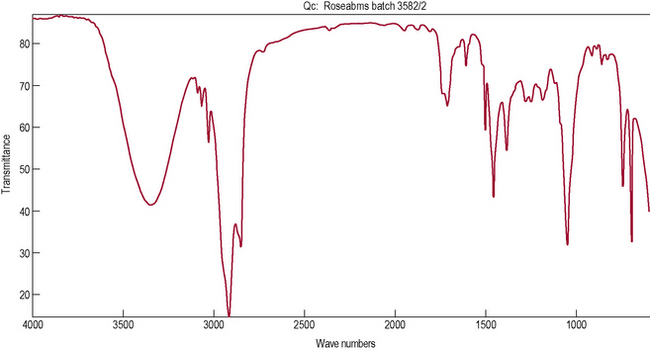
When electromagnetic radiation in the infrared region is passed through a sample of essential oil, the spectrum produced (Fig. 2.22) is a fingerprint from which the level of some of the components can be estimated. Some forms of adulteration can readily be seen by this method, depending to some extent on the skill and knowledge of the person who has carried out the adulteration.
The nose
In addition to all this, possibly the finest tool for some purposes is a well-trained ‘nose’ (an expert perfumer, perhaps 20 years in the training) who can make an organoleptic assessment of the oil. The trained nose can identify the presence of certain molecules at extremely low levels that would be almost impossible for a mechanical device, although ‘sniffing’ technology is available (but expensive).
The distillation process
Distilling as we know it today can involve efficient cooling systems, electronic control gear to regulate the temperature and pressure of the process, energy-saving steam generators and so on. Some thousands of years ago, to obtain the essential oil, the plant material, (for example cedarwood pieces, was placed with water in a clay vessel with a lid made of woollen fibres. The vessel was heated over a wood fire, and as the volatile molecules from the water and the cedarwood escaped they were trapped in the wool. Later they were squeezed out by hand, and the aromatic water and essential oil, being of different densities, separated and so could be collected. Over the centuries methods of distillation gradually improved, and 4th century Chinese and 10th century Islamic scientists developed methods of obtaining the distillate. Since then, apart from minor improvements, distillation has remained very much the same in principle up to the present day. The availability of modern materials and resources, such as stainless steel and electricity, has permitted much greater control over the whole process, and there is a dramatic increase in the quality of the essential oils produced today compared with that in former times. Oils produced in previous centuries, and even during the middle of the last century, cannot be compared with some of the very high-quality products we have available for aromatherapy today (assuming they are not adulterated after distillation).
Rectification
Some essential oils are put through a rectification process; rectification means to put right, and this process is carried out to clean up an essential oil which has been contaminated with undesirable volatile plant products produced by careless distillation procedures. These undesirable products may be due to the decomposition of plant constituents, and although they occur mainly in the water, giving a smell which is rather ‘off’, they can also appear in the essential oil itself as, for example, unwanted aldehydes or bad-smelling sulphur compounds. Sometimes a dark colour appears in the oil due to non-volatiles such as plant dust, and rectification separates out any such material. Rectified essential oils are not normally suitable for aromatherapy use.
Fractional distillation
This is a process which separates the volatile oil into its various fractions having different boiling points. This process is usually carried out under vacuum to keep temperatures involved low and hence prevent degradation of the essential oil; it is a dry distillation: this means that no water or steam is used. Fractionated essential oils are not normally suitable for aromatherapy use.
Percolation, hydrodiffusion
This method of extraction is like usual distillation but upside down! – in that the steam enters the alembic from the top and percolates down through the plant material. This has been used on a small scale and, when successful, excellent oils are produced at a much lower cost, because the time of extraction is only a few minutes, saving man-hours and fuel. There is a drawback in that sometimes an inseparable emulsion is produced which cannot be used, and so this method of extraction has not been widely adopted.
Carbon dioxide
This is a solvent extraction method using supercritical CO2, by which a wider range of molecules can be extracted from the plant material than is possible by distillation. CO2 is injected into a stainless steel tank containing the plant material, and under pressure the CO2 liquefies and acts as a solvent, extracting molecules from the plant; the CO2 later returns to a gaseous state and unlike other solvents is easily and completely removed. The process is a selective method of extraction without distillation, yielding chemicals which are pure and stable; the solvent, CO2, is colourless, odourless and tasteless The whole process is performed without heat, which means that molecules are not degraded, thereby producing a material which is new, and there is no doubt that CO2-extracted oils will be of use to aromatherapists in the future. The oils produced by this method contain a different molecular mix, and until more is known about their particular therapeutic and possible toxic effects, aromatherapists may be best advised for the time being to use only steam-distilled essential oils and expressed essences. These have been proved to be therapeutically effective by traditional use over time and by research.
Complexity of essential oils
During the 19th century the first analyses were carried out on essential oils and attempts made to isolate and identify the various components, some of the terpenes, alcohols and aldehydes being among the first to be named. This was followed by successful attempts to synthesize the individual components; for example, eugenol found naturally in clove bud oil, was synthesized in 1822 (Valnet 1980 p. 28).
The complexity of essential oils should be borne in mind when referring to the therapeutic qualities of a given oil; it helps to explain why one oil (lavender) can be listed as being at the same time ‘analgesic, anticonvulsive, antidepressant, antimicrobial, antirheumatic, antiseptic, antispasmodic, antitoxic, carminative, cholagogic, choleretic, cicatrizant, cordial, cytophylactic, deodorant, diuretic, emmenagogic, hypotensive, insecticidal, nervine, parasiticidal, rubefacient, sedative, stimulant, sudorific, tonic, vermifuge, vulnerary’. This staggering array of properties (Lawless 1992) perhaps overstates the case, but demonstrates what the author describes as the ‘shotgun’ holistic approach, which sprays all sorts of benefits (wanted side effects), in contrast to the ‘single synthetic bullet’ symptomatic approach aimed at a particular site, mostly with unwanted side effects.
This complexity underlines the fact that only genuine essential oils should be used therapeutically, even though there is natural variation in the oils. It needs to be emphasized that for perfectly valid reasons the fragrance industry requires essential oils which are standardized by one means or another, and that most (if not all) essential oils in the general marketplace may have synthetic or natural additions or fractions removed. As well as these already-mentioned cautions, it is also true that some oils are not obtained from natural plants at all, for stainless steel plants do play their part! These laboratory creations are known as reconstructed oils (RCO) and lack many tiny and as yet unidentified components which could well be important to the overall effect of the natural oil.
Summary
The requirements of the food and perfume industries differ dramatically from those of aromatherapy. Essential oils are very complex by nature, and careful selection and extensive testing are needed to obtain oils of therapeutic quality. When altered in any way, essential oils will probably not be of a quality suitable for aromatherapy, since the synergy of the natural mix of components in the whole oil will have been destroyed. It goes without saying that they should be obtained only from a reliable and knowledgeable source. The therapist must have at least a basic knowledge of the chemistry of the molecules found in essential oils to:
Adams T.B., Taylor S.V. Safety evaluation of essential oils: a constituent-based approach. In: Başer K.H.C., Buchbauer G., editors. Handbook of essential oils: science, technology and applications. Boca Raton: CRC Press; 2010:185-208.
Beckstrom-Sternberg S., Duke J.A. CRC handbook of medicinal mints. Boca Raton: CRC Press; 1996.
Buchbauer G. Biological effects of fragrances and essential oils. Perfumer & Flavorist. 1993;18:22.
Buchbauer G., Jirovetz L., Jäger W. Passiflora and lime blossoms: motility effects after inhalation of the essential oils and some of the main constituents in animal experiments. Archiva Pharmaceutica (Weinheim). 1992;325:247-248.
Buchbauer G., Jirovetz L., Jäger W., Plank C., Dietrich H. Fragrance compounds and essential oils with sedative effects upon inhalation. J. Pharm. Sci.. 1993;82(6):660-664.
Craker L.E. Herbs and volatile oils. Herb, Spice and Medicinal Digest. 1990;8(4):1-5.
Franchomme P., Pénoël D. L ‘aromathérapie exactement. Limoges: Jollois; 2001.
Guenther E. The essential oils. New York: Van Nostrand; 1949:499. vol. 2
Kubecka K.H. History and sources of essential oil research. In: Başer K.H.C., Buchbauer G., editors. Handbook of essential oils:science, technology and applications. Boca Raton: CRC Press, 2010.
Lamy J. De la culture à la distillerie: quelques facteurs influant sur la composition des huiles essentielles. Valence: Chambre d’Agriculture de la Drôme; 1985:5.
Lawless J. The encyclopaedia of essential oils. Shaftesbury: Element; 1992:118.
Opdyke D.L.J. Monographs on fragrance raw materials: laevo-carvone. Food and cosmetics toxicology. Oxford: Pergamon Press; 1973:1057. vol. 11
Opdyke D.L.J. Monographs on fragrance raw materials: dextro-carvone. Food and cosmetics toxicology. Oxford: Pergamon Press; 1978:673. vol. 16
Roulier G. Les huiles essentielles pour votre santé. St-Jean-de-Braye: Dangles; 1990.
Valnet J. The practice of aromatherapy. Saffron Walden: Daniel; 1980.