Dynamic fascial release – manual and tool assisted vibrational therapies
Introduction
In this chapter, fascia will be considered to represent the dissectible anatomic component, and also the continuum of mesodermally derived connective tissue. Combined with the neural system, this becomes a functional neuromyofascial syncytium in which the connective tissue component serves the role of form integrity, force distribution, and reactivity. The continuously connected universal distribution of connective tissue from the intracellular microtubules to the epidermis has been described elsewhere (Chen & Ingber 2007). Structurally, it reflects a fractal hierarchy in which each level is distinctively functional. The recent identification of alpha smooth muscle actin in fascia (Schleip et al. 2006) reinforces the concept of reactivity.
Historically, vibration had been used in light therapy, music and tone therapies, homeopathy, and radionics, as well as conventional radiation therapy (Abrams 1922; Kruser 1937; Vithoulkas 1980). This chapter focuses on therapies using vibration in the range of 1–100 Hz. It will provide a conceptual and historic framework to this topic, then describe in some detail one manual and one machine-assisted form of vibratory release with which the author is most intimately familiar. The author works and teaches in the context of osteopathic medicine and the manual approaches associated with that discipline.
History of manual and mechanical work involving fascia
The literature of early American manual medicine includes these words from Andrew Still, founder of osteopathy:
The fascia proves itself to be the probable matrix of life and death. When harmonious in normal action, health is good; when perverted, disease results.
Wernham, a student of J.M. Littlejohn (who introduced osteopathic education to England), attests that rhythm was part of osteopathy since its inception (Wernham 2003). This expresses itself in his popularized General Osteopathic Treatment (GOT) and in derived Harmonic Technique (Lederman 1997; Hartman 2001). Both serve as general treatments. In the United States, T.J. Ruddy used patient-activated rhythmic motions to induce localized relaxation. This became the basis for Mitchell's Muscle Energy Technique and Vibratory Isolytic Technique (Mitchell 1998). These conceptualizations targeted specific local somatic dysfunctions.
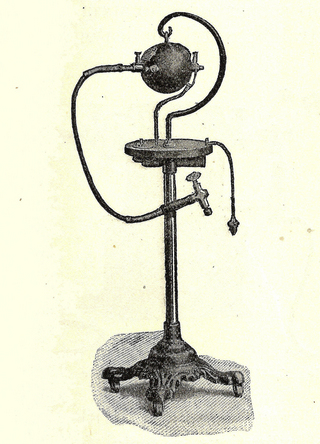
The machine age, the late nineteenth century, produced debate regarding the use of manually and mechanically applied vibration, and its relevance to physiologic wellness. A perspective from that time can be obtained by comparing the work of A. Snow M.D. (Snow 1912) and articles in the Journal of Osteopathy from the same period contesting this approach (Bower 1904; Sullivan 1904) see Fig. 7.13.1. Robert Fulford reintroduced mechanical vibration into the context of osteopathic bodywork in the 1950s, using a percussion vibrator treatment (Comeaux 2002). Facilitated Oscillatory Release emerged from this as a manual application of oscillation with specific localized intent (Comeaux 2008). Manual vibration is also used in Trager work and the Vibromuscular Harmonization Technique of Roddick and Frere's Methode Rhythmique de Harmonization.
In the area of sports fitness training, whole-body mechanical vibration has emerged as a popular means of improving muscle tone and increasing lean body mass, using a variety of vibrating platforms. Manufacturers generally cite the effectiveness through generalized muscle contraction involving tonic vibratory reflex. Obviously, there are a variety of issues in selecting this therapy (Cardinale & Wakeling 2005), including variation in effect with different training schedules, inconsistent demonstration of strength/power with use of vibration, as well as lack of clarity as to optimal amplitude to engage natural dampening in the musculature. Additionally, tonic vibratory reflex involves an observed physiologic set of responses that are not easily characterized; in other words, various researchers have described different aspects of the phenomenon with varied results, reflecting that the processes are not yet completely understood. Tonic vibratory reflex is discussed later in this chapter in the context of the population coding model of neuromuscular coordination.
A contemporary list of proposed physiological mechanisms for the effectiveness of vibration is summarized in Table 7.13.1.
Table 7.13.1
Contemporary hypothetical explanations of effectiveness of vibration
| Hypothetical mechanism | Rationale and reference |
| Cumulative creep through successive cyclic loading of collagen fibers | Mechanical characteristics of collagen and the dynamic reciprocal functional and metabolic role in repetitive motion with muscle (Solomonow 2009) |
| Resetting alpha-gamma coordination in muscle activation changing tension patterns distributed by fascia | An extension of the muscle energy model (Mitchell 1998) |
| Phase coherence of quantum state of fascia as a tensegrity matrix | Application of the tensegrity structural model to the fascial organization of biologic systems. The fibrin matrix distributes force underlying structure and function (Chen & Ingber 2007).Fibrous network as a communication grid for coordinating encoded information within the fascial network; involves quantum vibrational energetic phase coherence (harmonics) for health (Ho 2008) |
| Entrainment of endogenous physiologic oscillators | Population coding model of neurobiologic function underlying recurrent activity (including depolariazation/repolarization cycle of neurons), rhythm of coherent depolarization of cells depicts a functional state. Phasic state changes entrain changes in rhythmic function of a population, resulting in functional change (Windhorst 1996; Zedka 1997; Farmer 1998) |
| Application of tonic vibratory reflex | Another route to altering tone through muscle spindle reflexes (Comeaux 2008) |
| Metaphysical | Descriptions using the term ‘energy’ as the term ‘ether’ was used in the twentieth century await empiric correlation (Comeaux 2002) |
Hebb's hypothesis, harmonic function and oscillation
Fascia either directly or indirectly participates in the balance of tensions coordinated by the neural system. Population coding is a concept which complements the system of coordinative reflexes traditionally viewed as a primary means of neural coordination.
Population coding is a concept derived from Hebb's attempts in neurophysiology to reconcile the spatial limitation with the extensive functions of the brain (Spatz 1996). He proposed an encoding process, since the skull could not contain enough space for task-dedicated tissue. In essence, it emphasizes that neuronal coordination involves patterns of rhythmic activity, not just dedicated cells and pathways. Individual neurons could participate synchronously in several operations. Functionality would result from phasic relationships and patterns of depolarization in addition to sheer connectivity. Despite limitations to the theory, the theme of rhythmic depolarization is a defensible model of neural coordination applicable on a peripheral as well as central level. Neural coordination is rhythmic and the controlling feature is phase synchrony across and between cell populations.
Both reflex and voluntary movements have been shown to demonstrate periodic rather than constant depolarization. Gross voluntary motion, muscle tone, and posture (including the cerebellar component) are composites of cyclic depolarization rather than a linear process (Windhorst 1996; Zedka & Prochazka 1997; Farmer 1998). This is similar to the experience of appreciating a constant object on a video screen which actually represents a signal refreshed at a rate of 24 cycles per second. Muscle tone, with its adaptive tendon and epimesial/perimesial (connective tissue) tension, is a function of rhythmic activity. This tension from postural movement has a reciprocal relationship with fascial tension. The applicable point to bodywork is that neuromuscular activity, both afferent and efferent, is rhythmic. Physical tone of structural tissue, including that occurring after trauma or strain, is determined by states of phasic depolarization.
Rhythmic reflexes – Tonic Vibratory Reflex (TVR) and related effects
Tonic Vibratory Reflex (TVR) is a complex phenomenon that was originally described by Hagbarth. It involves the contraction of muscle in response to vibration in the range 0–100 Hz (Hagbarth & Eklund 1966). Martin and Park note a frequency-dependent excitation–contraction coupling leading to muscle fatigue (Martin & Park 1997). Many others show altered performance, notably undershoot or underextension of blinded voluntary movement, a kinesthetic illusion (Cody et al. 1990). Changes in muscle spindle activity betray involvement of discoordination of gamma-alpha motor neuron coordination controlling muscle tone (Burke et al. 1976; Vallbo & Al-Falahe 1990). In composite, these effects describe TVR as a discoordination of proprioception. But proprioception is a coordination of vestibular, ocular, cerebellar, cortical and alpha-gamma reflex effects. As a result, tonic vibratory reflex involves a complex of interactions. Curiously, locally applied vibrations cause reflexively coordinated movements of other body parts (Rossi et al. 1985; Zedka & Prochazka 1997; Han & Lennerstrand 1999). Additionally, spino-cerebellar disease or degeneration diminishes this effect (Abbruzzese et al. 1982).
TVR application
Nevertheless, the application of rhythmic afferent input can have intriguing effects. A most dramatic application of the principles described under TVR occurs in the work of microneurographic pioneer, Giseler Schalow (Schalow & Blank 1996). Beginning with work in open spinal surgical fields in partially cord-transected patients in hopes of reestablishing bladder control, Schalow developed a means of identifying pools of homologous nerve types. He demonstrated that there was a distinctive difference in patterns of phasic synchrony in the firing of homologous muscles of the lower extremity between his patients and normal controls.
In application, Schalow was able to show patient recovery of spontaneous movement and limited gait by suspending them in harness over a springboard. Initially, they were raised and lowered passively to simulate bouncing. Progressively, their limbs would reflexively respond. During this protocol, it was observed that the natural phasic character of rhythmic depolarization of neuromuscular firing gradually returned to postural muscles and the patients began spontaneous gait-associated movements. This activity involved progressive challenge of the patient to initiate synergistic contraction of the limb muscles. However, since it also involved externally applied rhythmic pressure to the limbs, possibly it entrained, by rhythmic afferent input, the natural protogenic pattern involved in gait.
Extrapolation to other clinical applications
This rhythmic application of afferent input shows transfer value, particularly in the specific application of the PVT and manual oscillation, and possibly to the use of vibratory platforms.
Although these neuroreflexive relationships pertain to the special connective tissue identified as striated muscle, the recent identification of adaptive actin fibers in fascial tissue makes this line of thought worth pursuing (Schleip et al. 2006). Empiric use of the procedures and devices described next underscores this relevance.
The percussion vibrator
Although it operates in the same frequency range as TVR, Robert Fulford conceptualized the application of oscillatory force in a different way. Considering matter, including the body, as fundamentally an expression of vibrating energy, he saw somatic dysfunction, the result of trauma and strain underlying complaints of pain, as a dysrhythmia. He referred to the residual tension in fascia as an ‘energy sink,’ or drain, by which the natural vibratory capacity of tissue was restrained from healthy resonance. The kinetic energy of injury was retained in the tissues. Modeling his thought from that of Walter Russell and Randolph Stone (Stone 1986), he considered the fascia to be a medium of transmutation of thought (another form of vibration) to action, in a biophysiologic as well as figurative sense. Treatment was then aimed at revitalizing, reenergizing tissue through positive thoughts, amplified by the percussion vibrator. He did so in both routine general protocols and specific individualized applications (Comeaux 2002).
In the general technique, vibration is applied over bony prominences (to maximally disseminate vibratory force through the fascial matrix) in a pattern from feet to shoulders. See Figs. 7.13.2 and 7.13.3. The organization was derived according to a conception of the distribution of the body's energy field, as described by Stone, as well as from experience working with residual birth trauma, even in adult patients. Specific, focal treatment could be applied anywhere that a decrease in vital resonance was detected. This lack of resonance relied on refined palpation to complement the more conventional parameters for defining dysfunction.
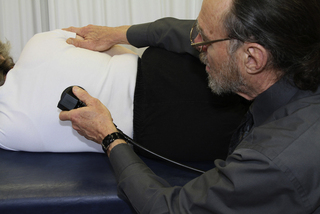
Fig. 7.13.2 • Percussion vibrator, spinal application.
Applicator may be advanced over each segment both to diagnose and treat.
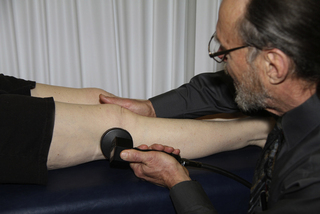
Fig. 7.13.3 • Percussion vibrator, application in a limb.
May be applied over bony prominence or directly over tissue you intend to release.
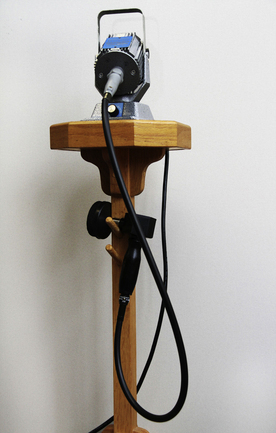
Fulford used a Foredom model percussor. More recently, the author has used a device introduced in the chiropractic community, namely the Vibracussor, considered to be an improvement, despite inaccuracies perceived in the technical descriptions in the accompanying manual. See Figs. 7.13.4 and 7.13.5.
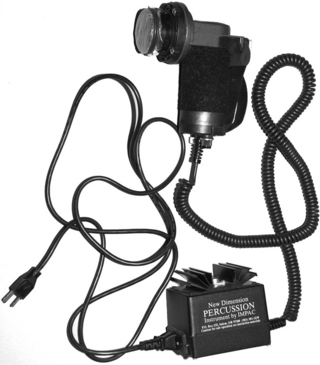
Facilitated Oscillatory Release (FOR)
Attempting to bridge the American style of specific osteopathic diagnosis, vibratory motion, and physiology, the author discovered for himself the advantage of oscillation to enhance release. Originally, FOR was not conceptualized as being a free-standing method but rather as an enhancement whenever working against a myofascial barrier to free motion (Comeaux 2008). However, oscillation can be used as a minor component or a major component in engaging a patient's pattern of connective tissue tension. Again, it is envisioned that fascia, and other connective tissue including association with muscle tone, function as a continuum.
A reorientation to the basic concepts of wave physics is helpful in this context (Table 7.13.2).
Table 7.13.2
Basic wave mechanics – definitions
| Wave | the rhythmic conveyance of energy through a medium |
| Incident wave | a wave arriving at the interface of two media |
| Reflected wave | some of the energy may be reflected back into the original medium |
| Transmitted wave | some of the energy may be conveyed through the second medium |
| Dampening | the attenuation of the energy of a wave due to friction or other interference with wave transmission |
| Constructive interference | two waves have displacement in the same direction and their energy is additive |
| Destructive interference | two waves have displacement in opposed directions and their energy is competitively diminished |
| Standing wave | the recurrent incident wave and the reflected wave are additive and in a harmonious steady state |
In a spinal treatment, the patient may be placed prone. The practitioner stands facing the side of the patient and initiates a rhythmic standing wave by using the patient's pelvis, rocked from side to side, in a pattern allowing tissue to rebound naturally after each half cycle. The practitioner's other hand would be used successively to monitor the response of each vertebral segment to the induced motion. Once acquiring a feel for the anticipated response, it is possible to infer dampening, or dysfunction, at segments which show lesser response than expected.
One option during treatment involves exaggeration of the rhythm, with intent to apply constructive interference with extra energy in phase with the original rhythmic pattern. It is also possible to add energy in the form of an impulse, out of phase with the standing wave, to induce change. The amount of force can be varied from gentle suggestion to the other extreme of confronting the myofascial or articular barrier to free rotational movement of the segment in question to encourage release directly.
As indicated above, FOR is not intended to be a system of protocols but as permission to integrate oscillatory or manual vibration as a corrective force anywhere that a restriction is sensed in the body's fascial or connective tissue network.
In an osteopathic context, the author favors muscle energy (postisometric relaxation) technique and direct myofascial technique, anatomically extrapolated according to need; but oscillation can be integrated into the spectrum of techniques, from thrust through cranial and other subtle techniques. Let me explain.
In the former, direct methods, where the barrier to free motion is approached with the intent of increasing range of motion, gross oscillation may increase efficiency and expedite release. The force may be modified using whatever leverage seems practical. Respiratory cooperation in the form of a relaxed expiration complements the oscillation. The two combined allow for more finessing of the approach to the restrictive barrier and therefore more control with less force in accomplishing the release. In indirect methods, in which force is applied away from the area of restricted motion, oscillation in the form of a mere flutter of the supported parts may advance and expedite the release sought. Similar tactics may be applied to sutural or membranous release in the cranium, and in other subtle techniques, if these are part of the reader's practice privilege.
In either case, the oscillation induces a sense of relaxation in the patient and reduces excessive tone that may have been retained in the fascial network. The decoupling of afferent and efferent input associated with TVR, described above, may also play a role here in relieving the inappropriate muscle hypertonia associated with some symptomatic complaints.
Regardless of the underlying physiologic impact, rhythmic motion seems natural as a way of dealing with a rhythmically functioning system. Although for convenience patients are assessed on an examination table, this is not their natural state, yet palpating while running, walking or dancing would be difficult. The rhythmic oscillation of the spine as in the spinal treatment described above seems more authentic in engaging the human rhythmically functioning neuromyofascial network (Comeaux 2008).
Other mechanical devices
A number of vibrating platforms have been used for treatment or general fitness. Stated purposes include enhancing muscle tone and mass and therefore increasing strength, citing the involvement of tonic vibratory reflex, in place of resistance training (Cardinale & Lim 2003; Delecluse et al. 2003). As noted above, TVR is an intervention with complex results. The excitation–contraction uncoupling that occurs increases the rate of fatigue as well as the derecruitment of fibers, thereby requiring the remaining fibers to work harder. If effort is maintained in the form of standing, subjects are obliged to use their postural, antigravity muscles for support. The engaged fibers are therefore receiving resistance training by another method. They are selectively used to ensure body posture in their compromised state. In essence, this is resistance training, only under conditions in which the gross muscle is operating in a state of disorganization.
Deep oscillation
A further technology, marketed as Hivamat 200 and easily available, claims to create fascial change by applying an intermittent electrostatic charge to the collagen matrix, which creates cyclic movement in the deep tissues, leading to mechanical pumping and the redistribution of fluids. This is marketed as an adjunct to surgical or other wound healing, sports medicine and respiratory diseases (Seffinger 2009). Reference data are limited but outcome studies are available (Jahr et al. 2008; Aliyev 2009).
References
Abbruzzese G., Abbruzzese M., Ratto S., et al. Contribution of tonic vibration reflex to the evaluation and diagnosis of cerebellar disorder. J. Neurol. Neurosurg. Psychiatry. 1982;45:526–530.
Abrams A. New concepts in diagnosis and treatment – physico-clinical medicine. San Francisco: Physico-clinical Co; 1922.
Date of Electronic Publication: 2009 Mar 20Aliyev R. Clinical effect of the therapy method deep oscillation in treatment of sports injuries. Sportverletz. Sportschaden. 2009;23(1):31–34.
(Kirksvill) OctBower R. Adjuncts in osteopathy. J. Osteopath.. 1904:365.
Burke D., Harbarth K., Lofsdedt L., et al. The responses of human muscle spindle endings to vibration during isometric contraction. J. Physiol.. 1976;261:695–711.
Cardinale M., Lim J. Activity of vastus lateralis muscle during whole-body vibrations of different frequencies. J. Strength Cond. Res.. 2003;17(3):621–624.
Cardinale M., Wakeling J. Whole body vibration exercise: are vibrations good for you. Br. J. Sports Med.. 2005;39:585–589.
Chen C., Ingber D. Tensegrity and mechanoregulation: from skeleton to cytoskeleton. In: Findley T., Schleip R., eds. Fascial research. Munchen: Urban and Fischer; 2007:20.
Cody F., Schwartz M., Smith G. Proprioceptive guidance of human voluntary wrist movements studied using muscle vibration. J. Physiol.. 1990;427:455–470.
Comeaux Z. Robert Fulford DO and the Philosopher Physician. Seattle WA: Eastland Press; 2002.
Comeaux Z. Harmonic healing – a guide to facilitated oscillatory release and other rhythmic myofascial techniques. Berkeley, CA: North Atlantic Press; 2008.
Delecluse C., Roelants M., Verschueren S. Strength increase after whole body vibration compared to resistance training. Med. Sci. Sports Exerc.. 2003;35:1033–1041.
Farmer S. Rhythmicity, synchronization and binding in human and primate motor systems. J. Physiol.. 1998;509(1):3–14.
Hagbarth K., Eklund G. Motor effects of vibratory stimulus in man. Granit R., ed. Nobel Symposium 1, Muscle Afferents and Motor Control, Stockholm. 1966:177–186.
Han Y., Lennerstrand G. Eye position changes induced by neck muscle vibration in strabismic subjects. Graefes Arch. Clin. Exp. Ophthalmol.. 1999;237:21–28.
Hartman L. Handbook of osteopathic technique, third ed. Cheltenham, UK: Nelson Thorne Ltd; 2001.
Ho M. The Rainbow and the worm, third ed. Singapore: World Scientific Publishing Company; 2008.
Jahr S., Schoppe B., Reisshauer A. Effect of treatment with low-intensity and extreme low-frequency electrostatic fields (deep oscillation) on breast tissue and pain in patients with secondary breast lymphoedema. J. Rehabil. Med.. 2008;40(8):645–650.
Kruser F. Light therapy. New York, NY: P B Hoeber, Inc.; 1937.
Lederman E. Harmonic technique. Edinburgh: Churchill Livingston; 1997.
Martin B., Park H. Analysis of the tonic vibration reflex: influence of vibration variables on motor unit synchronization and fatigue. Eur. J. Appl. Physiol.. 1997;75:504–511.
Mitchell F. The muscle energy manual. Lansing MI: MET Press; 1998;vol. 2.
Rossi A., Rossi B., Santarcangelo E. Influences of neck muscle vibration on lower limb extensor muscle. Man Arch Italiennes de Biol. 1985;123:241–253.
Schalow G., Blank Y. Electromyographic identification of spinal oscillator patterns and recoupling in a patient with incomplete spinal lesion: oscillator formation as a method of improving motor activities. Gen. Physiol. Biophys. 1996;15(10):121–220.
Schleip R., Klinger W., Lehman-Horn F. Active fascial contractility: fascia may be able to contract in a smooth muscle-like manner and thereby influence musculoskeletal dynamics. Med. Hypotheses. 2006;66:66–71.
Seffinger M. Supplementing manual therapy for lymphedema. JAOA. 2009;109(4):214–215.
Snow A. Mechanical vibration: its physiologic application in therapeutics. New York, NY: The Scientific Authors' Publishing Co.; 1912.
Solomonow M. Ligaments: a source of musculoskeletal disorders. J. Bodyw. Mov. Ther.. 2009;13(2):136–154.
Spatz H. Hebb's concept of synaptic plasticity and neuronal cell assemblies. Behav. Brain Res.. 1996;78:3–7.
Still A. The philosophy and mechanical principles of osteopathy. Kansas City, MO: Hudson-Kimberly Publishing Co.; 1902. pp. 117
Stone R. Polarity therapy, vols I and II. Sabistopol, CA: CRCS Publishing; 1986.
Sullivan J. Vibrators. JO, May. 1904. 201–203
Vallbo A., Al-Falahe N. Human muscle spindle response in a motor learning task. J. Physiol.. 1990;421:553–568.
Vithoulkas G. The science of homeopathy. New York, NY: Grove/Atlantic Press; 1980.
Wernham J. Rhythm in osteopathy. Maidstone, Kent: By author; 2003.
Windhorst U. The spinal cord and its brain: representations and models To what extent do forebr mechanisms appear at the brainstem spinal cord levels? Prog. Neurobiol.. 1996;49:381–414.
Zedka M., Prochazka A. Phasic activity in the human erector spinae during repetitive hand movements. J. Physiol.. 1997;504(3):727–734.
Farmer S. Rhythmicity, synchronization and binding in human and primate motor systems. J. Physiol.. 1998;509(1):3–14.
(accessed 10.15.09)Roddick J. http://vibromuscularharmonization.com