16 Developing learning resources
Chapter contents
Causality and context
267A typology of learning resources
268
Type A: Information and knowledge resources
268Type B: Environments that contain or provide the context for educational activities
270Type C: Tools that act on the world or on other resources or artifacts
271Type D: Simulations of artifacts, places or people
272Implications for practice
280
Glossary
Affordances The things an artifact can or might be perceived to do irrespective of whether it was intended to serve those purposes.
Agency The extent to which an individual has control over their situation. Simulation involves more learner agency than a lecture does.
Blended learning environment A learning environment combining physical and embodied resources with electronic and online resources.
Chunking The reductionist principle of breaking a large or complex body of information into simpler, hopefully more digestible, parts.
Communication system Any networked set of tools that supports communication between multiple individuals. This can include text messaging, email, discussion boards, as well as more esoteric forms such as Twitter.
Copyright The legal right to control how any material or tangible idea is reproduced and who benefits from such reproduction.
Creative Commons A licensing model for content that defines conditions of use somewhere between full copyright and public domain.
Expertise reversal When an educational intervention reduces or inhibits learning rather than enhancing or enriching it.
Granularity The amount of detail or specificity (or the lack thereof) in a system, artifact, or process.
Haptic device A machine that simulates the touch and force feedback of physical objects.
Hardware Any physical device or infrastructure that supports or is controlled by software.
Immersion The extent to which an individual is focused on a particular task in terms of how unaware they are of other events in their environment.
In silico A Latinism indicating the existence of something running in software, intended to be equivalent in concept to in vivo and in vitro descriptions in the biomedical sciences.
Knowledgebase Any organised and structured body of knowledge. For instance a textbook, a library or a reference resource like Wikipedia or Medpedia.
Learning resource Any kind of artifact or tool designed, built, or employed for the purpose of supporting teaching, learning, or assessment and used by learners, teachers, or other participants in support of educational activities.
Lifecycle The various stages in the development, use, and disposal of an artifact or process.
Narrative Account of the world told from a human perspective containing temporal sequence, personality, motive, causality, and consequence.
Picture Archiving and Communication System (PACS) PACS is mostly used for managing imaging resources such as X-rays, MRIs, CTs, angiograms, and ultrasound recordings.
Palimpsest Originally a medieval document written on animal skin where a text was scraped off and another added in its place. Used in technical terms to reflect the presence of earlier and related forms on the design and use of tools and systems.
Part task trainer Any physical simulation or training device that is designed for a particular skill and may represent a section of a human body in lesser or greater fidelity. Examples include individual plastic arms used for venepuncture training and suture pads.
Personal learning environment A more or less integrated set of software tools assembled by a learner for their own use in their educational activities.
Podcast A compound term of ‘broadcast’ and iPod (representative of a music player) and used to denote syndicated audio files available over the web.
PowerPoint A near-ubiquitous computer-based slide and presentation tool from Microsoft.
Requirements Structured exposition of the required functions and behaviours of a system (physical and/or computer-based) used as the basis for constructing or adapting the system to meet the requirements
Sequencing The ordering, connectivity, and interdependence of different aspects of a common process or system.
Serious gaming The use of games or aspects of games for purposes other than entertainment; typically education, assessment, and training.
Software Any code or content running on a computer system – software is in part defined as that which runs on hardware.
Standards and specifications In technical terms, a specification is a recommendation, whereas a standard is a mandated set of rules. Both establish one or more shared patterns for organising activities and information.
Synchronous At the same time (as opposed to asynchronous). Participation in a live concert is synchronous; viewing a recording of the concert is asynchronous.
Syndicated content Any material created by one party and placed at a single location for multiple subscribing parties to access and use. Examples include news feeds, podcasts, and vodcasts.
Total cost of ownership (TCO) An economic model that considers all costs, both hidden and overt, associated with employing a technology, system or other intervention. TCO includes the costs associated with training, staffing, and facilities, as well as costs associated with disposal and replacement.
Virtual learning environment An integrated software system, typically web-based, made up of multiple and discrete course or program containers providing content, communication, assessment and tracking.
Virtual patient An interactive computer simulation of a real-life clinical scenario for the purpose of medical education, or assessment.
Virtual world Any software and hardware combination that allows its users to work or interact in a space through an avatar and that approximates to the real world. Also called a synthetic world.
Vodcast A variant on the term ‘podcast’ that involves video rather than audio.
Wetware A term for humans (and other animals) involved in a system that also involves software and or hardware components. The use of the term emphasises the integration and interaction of the person as a system component.
Outline
This chapter is concerned with the variety of resources that can be used in medical education, the ways in which they can be used, and any implications for practice. This chapter will start with some definitions and a typology of learning resources, it will then review many of the key underlying concepts in resource provision and use and consider learning resource lifecycles and the economics of their use. The chapter concludes with a review of some of the emerging factors that impact on the kinds of resources we may use in the future and their implications for practitioners in the years to come.
Scope
There are examples of learning resources in medical education going as far back as Persian, Egyptian, Greek, and Roman times (Loechel, 1960). Indeed, the use of artifacts and tools to support and enhance learning is one of the defining aspects of ‘education’. Because so many kinds of learning resources are used in contemporary medical education, let us define the term ‘learning resource’:
A learning resource is any kind of artifact or tool designed, built or employed for the purpose of supporting teaching, learning or assessment and used by learners, teachers or any other participants in one or more educational undertaking.
To further clarify the concept, it is helpful to consider borderline examples. For instance, an integrated curriculum that employs many learning resources may itself be considered a learning resource, because learners and teachers use the curriculum as an artifact through which they can contextualise their past, current, and future activities. Similarly, assessment items may or may not be considered learning resources, depending on the context in which they are used. An exam question may be considered a learning resource when it is used as a group problem in a classroom setting. The same question would not be regarded as a learning resource if it were used for purely summative assessment purposes. Clearly, the context of use defines (or redefines) a learning resource as much as any of its intrinsic properties.
Causality and context
The use of a learning resource is never causal. Simply making learning resources available to learners will not guarantee any kind of result. At best we can consider a probabilistic model of learning affected or catalysed by the use of a learning resource. Not only does this reflect the reality of learning but it also helps us understand the importance of design (that is, design of the resource itself and/or design of the activity context in which it is used). Essentially, a learning activity should be designed to effect its intended learning objectives for as high a percentage of its target learners as also demonstrates importance of context, typically in the form of an educational activity with associated learning objectives and target learners.
Clearly, almost anything can, in the right context, be used as a learning resource. A resource becomes a learning resource when it is incorporated into some kind of educational activity. Educational intent is therefore the defining factor that in turn is typically expressed in terms of learning objectives. While the design and application of learning objectives is a much wider topic than can be adequately covered in this chapter, the use of objectives is an important step in using any resource for learning.
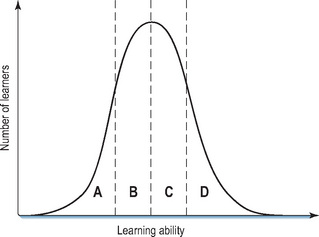
The next consideration is who the intended learners are supposed to be. One way of answering this question is to view any group of learners as being made up of, say, quartiles, ordered on the basis of their learning abilities (with regard to specific topics). The top quartile (that typically uses every opportunity afforded to them and always excel), the bottom quartile (that often fails to use the opportunities afforded to them and always struggles), and lower and higher middle quartiles – see Figure 16.1. It is rare that resources would be targeted only at the higher quartiles (C and D in Figure 16.1) as they need little additional help to do well; most learning resources are typically targeted at the lower two quartiles (A and B). This model may of course not reflect a global assessment of learners’ abilities; it is simply a means of identifying (for instance from exam performance) what topics and concepts are particularly problematic for learners. Resources and the activities that employ them can therefore be more readily targeted at addressing the less tractable or accessible parts of the curriculum. For example, preclinical topics such as partial pressures or statistics often prove particularly challenging to learners. Additional information or activities can always be provided for the brighter or more industrious learners so as to create a more inclusive range of experiences. A key consideration with this model is whether the goal is to reduce the difference between the top and bottom quartiles (such as additional support, remediation) or to highlight these differences more clearly (such as in formative or summative assessment).
Context clearly has a determining impact on the efficacy of any learning resource including the abilities of the instructor using a resource or how well aligned it is to the curriculum. In part, this reflects the probabilistic relationship between exposure to educational interventions and learning taking place, but it also highlights the importance of teachers (and their support staff) having sufficient facility and understanding of how to use resources as well as there being good alignment between any such use and the wider curriculum context.
A typology of learning resources
Having established a conceptual space for thinking about learning resources, the next step is to consider a more focused typology of learning resources in medical education.
Type A: Information and knowledge resources
These are typically text-based materials such as books, articles, and websites supported with diagrams, illustrations, photographs, audio, video, or animations. Notable forms in medical education include:
•
Textbooks: systematically organised, canonical, and relatively context-free texts on single domains or topics intended for learners (rather than for an expert or lay audience). The material is typically structured so as to support a learning process. The format is largely text-based with diagrams, illustrations, and other more visual material supporting the text. Traditionally, programmes or courses identify a few key textbooks that are referenced. Other non-key texts are referenced but less often. Health care subjects (and in particular medicine) also make significant use of key reference materials including clinical handbooks (such as the
Oxford Handbook series), pharmacopoeia (such as the
British National Formulary), and expert opinion-based resources (such as UpToDate).
•
Study guides and materials: specific to a course or subject context. Study guides are descriptive resources that are about both the organisation of a learning context as well as supporting learning itself (although this varies between institutions and cultures). Study materials on the other hand are issued in support of a particular activity and typically mix instructions to learners and tutors with course content. Study materials can take a number of different forms including lecture notes, problem-based learning (PBL) cases, and activity briefings such as for a simulated patient (SP) session. Typically, tutors or course organisers create their own study guides and materials, although some limited use is made of third-party resources.
•
Presentations: typically take the form of lecture slides and notes, which are either computer based, such as PowerPoint, or older forms, such as overhead projector materials or 35 mm slides. Although PowerPoint has been around for several decades, it is only recently that it has become the
de facto format for giving presentations. At present, preparing to give a lecture or talk is primarily about writing a PowerPoint presentation, while the talk itself is framed by the data projector’s glare and the susurration of its fan.
Once created, the next issue is how to make presentations available to learners. In addition to projection in a live lecture, presentations may also be webcast or recorded for subsequent viewing and review. Many teachers just give their learners the slide deck but should it be before the event, during the event, or after the event? Opinions vary, especially given the ways this is seen as affecting attendance and attention at lectures. Learning resource issues do not end with giving the presentation; they can also involve the provision of slides in other formats such as handouts. One other consideration regards how much sense a slide deck makes outside the context in which it was given. There are many who consider themselves adept at e-teaching, because they place their slides online even though they have little or no idea whether doing so is useful or effective, particularly in the absence of a presenter to create meaning around their presentation.
•
Syndicated content: serially published resources that are streamed or downloaded from a common point to subscribing client systems. There are several common forms:
–
Feeds are primarily text and image based and they underpin the world’s news websites, blogs, and other online information providers. The main uses of feeds in medical education are to keep abreast of new developments, to follow educational blogs, and to receive news and updates on a course (if they are provided in a feed format).
–
Audio-only
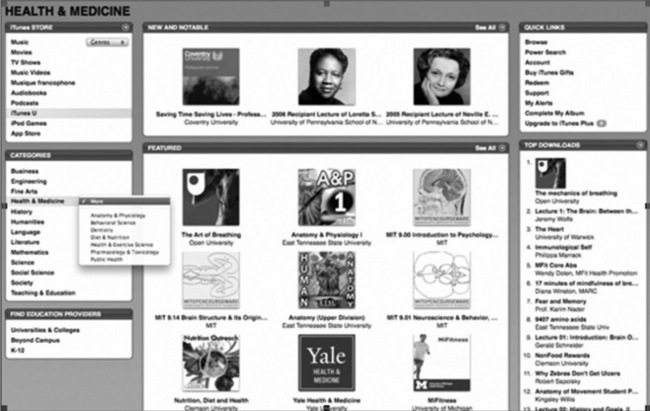
podcasts are perhaps the most widely used syndicated materials in medical education with a great many institutions now publishing their lectures in a podcast format. Subscribing to a podcast means that each time a new edition is put online, it is flagged as such to subscribers and they can then download the file for listening as and when they want. The proliferation of music players (such as the iPod) has made this particularly well aligned to contemporary learner lifestyles. For instance, Apple’s iTunes platform has a whole section dedicated to iTunesU (see
Figure 16.2) including a great many health care education offerings, all of which are free and open to use. Vodcasts are essentially the same as podcasts except they use video rather than audio. While podcasts are like serial on-demand radio broadcasts, vodcasts are more like on-demand television.
•
Primary sources: typically research papers are a key part of educational activity designs such as PBL and the development of skills in evidence-based medicine (EBM). Sources may also include ‘grey’ literature such as government reports, strategy papers, and other non-peer reviewed materials. The role of the institutional library is key in using primary sources both in terms of developing literature searching and appraisal skills and in terms of ensuring technical access to sources both online and physical.
•
Knowledgebases: aggregate websites, wikis, and databases of resources and information such as clinical guidelines. Wikipedia is perhaps the best known and most used online knowledgebase and in many ways the most contentious. Wikipedia can be more comprehensive and up to date than more traditional sources by making all of its information open to public editing and alteration. Some celebrate the ‘wisdom of crowds’, while others bemoan the ‘cult of the amateur’ in this approach (
Keen, 2007). Increasingly limited specialist community knowledgebases such as Medpedia (
http://www.medpedia.com) are emerging, which limit edit access to acknowledged subject specialists as a way of harnessing the power of collaborative and dynamic publishing while retaining significant editorial control.
•
Instructional software: this was, at least for a while, the main focus of the educational technology movement. Computer-assisted learning packages (CALs) proliferated with CD-ROM (and more recently DVD-ROM) or web-based instructional multimedia titles proliferated in the 1990s and early 2000s covering a great many subjects. While many of these titles still exist (such as the A.D.A.M., PathCAL and CLIVE series), the economics of creating these packages means that they largely serve the niche markets that are able to sustain them. One of the predominant areas that make use of instructional software is continuing medical education (CME) with substantial instructional multimedia offerings from providers such as BMJ Learning. Software resources do not have to be whole compiled packages; it is increasingly common for smaller components and individual files to be made available as reusable learning objects, including games, puzzles, and videoclips.
As a whole, type A resources tend to be passive (no change in state in response to a user’s input) or at best active (responding to input but not changing), but low in interactivity (changing in dynamic ways). The dominant instructional model is therefore primarily one of knowledge transfer or just-in-time reference.
Type B: Environments that contain or provide the context for educational activities
Type B resources include systems, activity designs, and workflows. Key type B designs in medical education include:
•
Virtual learning environments (VLEs, also called learning management systems – LMS): integrated software systems, typically web-based, made up of multiple and discrete course or programme containers providing content, communication, and other activities such as assessment and tracking. VLE systems have tended to take the form of large commercial systems such as Blackboard or Desire2Learn, open sources such as Moodle or Sakai, more specialised tools such as LAMS or Janison or any number of locally developed systems. Most off-the-shelf VLEs are based on multiple course containers, each of which has a range of tools that can be configured by the tutor, with the boundaries between course instances being particularly strong, thereby limiting access to the current members of a course instance and thereby excluding the extended programme community. Locally developed systems, on the other hand, tend to follow tightly integrated single programme approaches that reflect the culture and dynamics of the cultures that built them. Because courses run many times, VLEs need to be able to track and isolate different instances of the same course as well as manage access and permissions to materials and tools in the different course containers. They also need to be able to track individuals and groups regarding what they do, and when they do it. This panoptic quality is one of the defining aspects of a VLE and strangely one of its less well-considered properties, although there is growing concern as to the extent and use of tracking and monitoring in educational technologies (
Land and Bayne, 2005). VLEs can be learning resources at three levels: as a resource in their own right, as a context and container for resources, and as an environment within which resources can be developed.
•
Personal learning environments: a more recent phenomenon where web-based collaboration and management tools are adapted for learners to create their own personal or shared spaces. Typically built around generic platforms (such as Facebook, Google, Flickr, YouTube), these personal learning environments shift the focus away from institutional systems and tend to intertwine social and educational activities and identities. The longer-term effects of such activity taking place beyond institutional oversight and control has yet to be fully understood.
•
Portfolios: these involve the management of collections of materials, reflections, or other items that are intended to represent a learner over time, typically although not always based on their progress towards one or more educational or professional objectives. Paper-based portfolios are being superseded by online systems that may combine functions of blogs, repositories, and assessment tools. This is both their strength and their weakness; there are all sorts of portfolio designs and models, many of which are incompatible. For instance, there are significant differences between systems that are about demonstrating the ‘best of me’ and ‘all of me’, between learner and tutor control, between formative and summative assessment (or no assessment at all), between submitted items being fixed or editable, or between periodic or open-ended events and submissions. As with many new technologies, language and shared understanding have yet to catch up with the possible and actual practices using such systems.
•
Communication systems: systems such as email, instant messaging, and texting are still the main way for learners to communicate amongst themselves (other than Facebook). However, audio and video conferencing systems underpin any learning environment where learners and tutors are not permanently collocated. These range from room-based videoconferencing (requiring dedicated equipment and rooms) to desktop or web conferencing using systems such as Connect, Illuminate or Wimba or simple voice or video tools such as Skype.
•
Assessment systems: are increasingly being used in medical education. Although these are not primarily used as learning resources, they can be configured to provide banks of formative and self-assessment tests and quizzes as resources for learning. The other main application of assessment in providing learning resources is in adaptive hypermedia. These are systems that adapt their content and activities in response to learner requirements. For instance, activities may get increasingly difficult for a successful learner, while a less able one may receive more help and mentoring.
•
Gaming: the term ‘serious gaming’ follows the commercial success and social impact of computer games and platforms. Educational games can take all sorts of forms, following common patterns such as card or board games, TV gameshows, or video games. Virtual worlds such as Second Life appear very gamelike but differ from games, particularly because they have no fixed purpose (you either bring purpose in with you or create it within the world for others) (
Castronova, 2005). Although the concept of a ‘game’ has overtones of juvenilia or distraction from more serious matters, there is a growing body of evidence for its efficacy and ability to engage both learners and their teachers in highly effective (and often enjoyable) ways (
Aldrich, 2005).
•
Physical spaces: places such as classrooms, laboratories, and libraries can also be considered to be type B learning resources. It is interesting that at a time when online modalities make up more and more of the education environment, face-to-face learning and the creative use of physical space are also undergoing a renaissance.
•
Social and cultural resources: the communities in which learners are working (such as in electives or clinical placements) can also be valuable learning resources. This is particularly the case when considering the many professions that interact with medicine and when learning about minority and socially distinct communities. For example, the author’s own institution, Northern Ontario School of Medicine, makes significant use of its communities as resources for its learners placed across the million square kilometers of the northern province (see
http://www.nosm.ca).
Type C: Tools that act on the world or on other resources or artifacts
Not only can type C artifacts be considered resources in their own right but also they are notable in being able to be used to generate other learning resources. Type C resources can be grouped into two basic categories:
•
Software: such as personal information management applications (calendars, contacts), word processors, databases, and spreadsheets can also be learning resources, both as tools that allow learners to manage and manipulate information and as the subject of learning when teaching them how to use these tools. This is also the case for more specialised applications such as bibliographic and citation tools.
•
Hardware: there are a great many devices that can be used as learning resources, including computers (desktops, laptops, notebooks), PDAs and smartphones, smartboards, cameras, microphones, projectors, and audience response systems (‘clickers’).
Although type C resources can be found in almost every part of health care education, these are major topics in their own right and we will not be expanding on this particular area in this chapter.
Type D: Simulations of artifacts, places or people
Simulation bridges the knowledge and affective and psychomotor aspects of learner development while providing a safe and controlled environment whose primary purpose is to support the learning process rather than patient care. Simulation can therefore be seen as an essential step between didactic learning and bedside practice – the amount of simulation used at the start of a learning episode and how much remains in practice depend on the needs of the subject, the profession, and the learners involved (Issenberg, 2006).
The other side of simulation is virtuality – the representation of real-world processes or equivalents in software (or, as it is increasingly described, in silico). Virtuality would seem to be a modern phenomenon, arising primarily from the multimedia, simulation, and gaming capabilities of computers and associated devices (Box 16.1). However, the unreal, the simulated, and the intangible are not new in medical education. We can more properly consider embodied physical resources with mechanical properties and non-embodied virtual resources with properties arising from software abstractions. Even the most virtual resource requires some embodiment, not least because we as users are intrinsically embodied. Whether this is in the form of user interfaces, controllers or input and output devices such as cameras, monitors, and printers, or more esoteric forms such as goggles or haptic devices, the virtual and the physical are intrinsically connected. New technologies such as electronic paper, wearable computers, and sophisticated mobile devices are blurring this divide even more.
Box 16.1 Virtual patients
A virtual patient is ‘an interactive computer simulation of real-life clinical scenarios for the purpose of medical training, education, or assessment’ (Ellaway et al, 2006b). There are lots of virtual patient designs such as linear (the path is predefined), schema (moving through a linear set of explorations), branching (making choices, developing strategies, and exploring consequences), and world (spatial control and social interactions). Learners may take different roles (physician, patient); designs may be for exploration, experience, and formative or summative assessment, and may involve plain text narratives or complex multimedia.
There are three dominant themes in virtual patient design: narrative, simulation, and gaming. Narrative is critical to the way virtual patients allow learners to explore different roles and motives, which evolve over time. Simulation is important because of the essential basis in real-world problems and settings. Gaming reflects the ways that virtual patients allow learners to try different strategies to solve the case within a well-defined set of rules.
New virtual patient designs and applications are being developed all the time with a growing number of tools (free and commercial) to help teachers build or adapt virtual patients – see www.virtualpatients.eu for more information and examples.
Although simulators have much in common with other types of resources, they have many distinct and essential qualities:
•
Simulation is dependent on consensual pretence and illusion; learners know and even depend on knowing that simulation is not real. It is more precise therefore to call this dissimulation than simulation, the intent of the latter being to truly deceive (
Baudrillard, 1994).
•
There is a fundamental alignment to and reflection of the practice domain in simulation. This can include appearance, sound, touch, symbols and language, procedures, and social norms.
•
Simulation supports the phenomenon of the psychosocial moratorium; that is, through dissimulation relative to their everyday life it allows learners to step out of their existing identities to explore and develop new identities (for instance, as health care professionals).
Type D resources include:
•
Mannequins: whole-body human models that allow learners to treat and otherwise interact with them and respond appropriately.
•
Part task trainers: these may range from simple suturing pads through disembodied arms for phlebotomy training to video-driven laparoscopic simulators.
•
Informatics trainers: these are versions of systems used in health care, such as electronic health records and picture archiving and communication system (PACS).
•
Equipment simulators: such as anaesthetics machines.
•
Wetware: humans (and other animals) can also be used as learning resources, in particular real patients in bedside teaching or SPs in more controlled simulation settings.
Key concepts
The list of different types and forms of learning resources given in the last section is far from exhaustive. Exploring each of these areas could consume many volumes, so, for the purposes of this chapter, we will consider a number of key and common concepts and themes that unite them and point to ongoing innovation and development in this area:
•
Diversity of application: teaching, learning, and assessment resources differ from one another; they are used by individuals and groups undertaking different roles to support different kinds of actions and processes. For instance, while a learning resource may be selected or exclusively used by a learner, a teaching resource is designed to be used by a teacher working with one or more learners. The processes and instructional models used in learning resources and in teaching resources can therefore differ quite considerably (
Ellaway, 2009a).
•
Diversity of method: there are many educational models and approaches, such as knowledge transfer, sequencing, chunking, scaffolding, schema building, testing, and practice, that can be (and are) applied to learning resources. All artifacts embody the perspectives, values, and worldviews of the people who created them, and it is not particularly hard to recognise behaviourist, constructivist, pedagogical (youth), andragogical (adult), and even heutagogical (self-directed) models that are intrinsic to a resource or the activity in which it is used. Recognising and making explicit the intrinsic philosophies in learning resource design allows for better selection and evaluation of resources and minimises tacit coercion towards predefined educational practices.
•
Fluidity of medium: the binary distinction between electronic and paper forms is fading and the ‘blended learning environment’ is rapidly becoming the norm. Although they are used in all sorts of combinations, different media have particular boundaries, both paper-based forms and digital forms such as text, image, audio, animation, video, and 3D. For instance, search is almost entirely limited to text and a scan or photograph of text may appear the same as real text but behave quite differently. While multimedia as a topic is almost entirely about visuals and audio, there are other less common modalities that work with other senses such as touch (haptics). Boundaries are being continually challenged and blurred through the use of multimodal and multimedia mashups (
ad hoc combinations of different modes and media) to create new tools and services.
•
Affordances: a resource does not just do what it is supposed to do; it usually does or enables a range of other actions and perspectives. The things that a resource can do or might do are called its ‘affordances’. For instance, the affordances of a textbook include providing authoritative factual information, representing the preemptive choices of what its authors think as important (and by omission unimportant), costing money, and being fixed in time and place. The affordances of a PowerPoint presentation, on the other hand, include presenting ideas sequentially, combining text, images, videos and animations, packaging all these as a single file, and being able to run them as a presentation. They also include enforcing sequentiality, controlling pacing based on what can be put on a slide, strong templating, and handling the financial burden of acquiring the software and updates. Considering the affordances of a resource not only helps us to identify the ways in which learners may use or misuse a resource but also allows for a fuller evaluation of their efficacy and impact.
•
Cognitive affordances: frame the learning relationship between the resource and the learner. Resources may be passive (the resource stays the same, irrespective of what the user does – such as a paper PBL case), active (the resource responds to input but does not change – such as a multimedia package), or interactive (the resource changes in dynamic ways – such as a mannequin or SP). Interestingly, while books may seem fairly passive, they afford written annotations and many learners seek out secondhand textbooks with good annotations from their previous owners. Two other related and possibly even more critical cognitive affordances are agency (how much direct control the learner has over the learning experience – for instance, a game has a lot more agency than a book) and immersion (how much the internal reality of a resource dominates a learner’s attention relative to other foci of attention – for instance, narratives are typically more immersive than a scientific report).
•
Instructional design: has developed out of behaviourist philosophies of education and is predicated on two principles – (a) there are objectively good ways of design learning experiences and (b) these can be codified as a set of rules and guidelines for practitioners. One of the main themes in instructional design is the concept of ‘cognitive load’, a model of instructional design that considers a resource or activity to impose three kinds of load on the learner (
Sweller, 1988):
–
Intrinsic – the load caused by the inherent difficulty of what is being taught
–
Germane – the load caused by the method of instruction and the form of learning
–
Extraneous – the load caused by anything that is not intrinsic or germane
Simply put, cognitive load theory suggests that any resource or activity design can be enhanced by removing all extraneous load (unnecessary graphics, details, and inappropriate media choices – such as trying to describe a square using only words rather than just showing an image) and adjusting germane load to best suit the learners’ abilities. Intrinsic load cannot be changed, but it can be ameliorated by creating subsets of a complex topic and then carefully re-integrating them to achieve understanding of the larger topic. Other cognitive phenomena include scaffolding (providing lots of support at first but then removing assistance as the learner develops mastery) and expertise reversal (learning is stalled or even driven down by using resources that are too easy) (Kalyuga et al, 2003).
•
Ethics: learning resource design, use, and support involves a number of ethical dimensions, particularly where learning resources change the balance of equity in a learning environment. For instance, learners are increasingly expected to buy computers and pay for their own printing where previously the equivalent resources would have been provided for free by their educational institution. There are also ethical concerns over accessibility, and not just for those with a physical or cognitive disability; it is a professional responsibility for teachers to make their work as accessible to their learners as possible. Although this may seem obvious, there are regrettably few teachers who make the effort to check their work for understandability and ease of use. The last major ethical concern is with respect to access. Not everyone will have the same level of access to resources (whether they are physical or online). This is a particular concern for institutions running programmes across multiple sites (a growing number worldwide), particularly where equivalence of opportunity is an accreditation requirement. Taking a lowest common denominator approach is not necessarily the most educationally effective way of responding to such challenges. Powerful learning resources do not have to be complex, just effective.
•
Creativity: although technical skills (both electronic and traditional) are important for the effective use of learning resources, the role of instructor and learner creativity remains an essential part of creating or reusing learning materials (
Ellaway et al, 2005). This may involve creativity in terms of new materials or new kinds of materials, new uses of existing materials, or completely new approaches that challenge previous practice and thinking. A particularly good example of such innovation is how artifacts from the arts (such as novels, poems, paintings, music, and movies) can be used in medical education (
Powley and Higson, 2005).
Lifecycle
Learning resources clearly come from somewhere; they exist somewhere while they are being used and they eventually go somewhere else once their time is done. We can consider a lifecycle model as following a number of stages:
•
Identify needs and requirements: first of all an educational need, problem, or opportunity is identified and then formalised by developing a set of requirements for the proposed learning resource. These requirements should state the learning objectives, level of learner, possible strategies, and contextual considerations, and set out the material to be covered.
•
Review existing options: although there is always a temptation to create something anew, the next step should be to evaluate whether there is any existing (and readily available) resource that can meet the identified requirements. This may go one of three ways:
–
If there is a resource that meets the requirements, then the resource can be acquired, possibly involving buying, borrowing, or taking a copy of the existing material. This inevitably means entering into some relationship with the resource’s originators or owners, usually expressed as a licence or as a set of terms and conditions. It is important that there is some agreement as to what each party can and cannot do, and what their responsibilities are.
–
If the requirements are similar to what an existing resource can provide, then it may make more sense to repurpose or customise it to meet the identified needs. This depends on such adaptation being possible technically (whether the resource be changed at all), legally (within the terms of the licence or other conditions of use), and practically (within the resources – time, skills, cost – available). See economics section on reusable learning objects (RLOs).
–
If there is nothing that can directly meet the identified requirements, then the resource must be created. In order to do this, the requirements are transformed into one or more outline designs that may involve storyboarding or some other structured representation. The resource is then constructed along the lines of the design. Construction should involve testing and evaluation to make sure that it matches the identified needs and satisfies its users.
•
Deployment: once the resource exists, it then needs to be deployed for teachers and learners to use. Deployment may involve a number of different steps and levels. For instance, we have already identified curriculum integration as a critical success factor. Another important consideration is to what extent the resource is core or an augmentation to a core set of activities. Returning to the earlier model of cohort quartiles, the top quartile will probably use a learning resource even if it is non-core, while the lower quartile may very well not – clearly not a good outcome if the lower quartile is the target group! There are also more practical issues such as how the resource is to be accessed. For instance, the resource may be placed into the programme or course VLE or made available through the library or as a set of physical course materials. No matter what way it is published, it should be easy to find and discover. One of the advantages of using online material is that it can be linked and cross-linked to and from anywhere. Framing is an important consideration in constructing the utility of a learning resource. Although it includes the extent and form of curriculum integration, framing also reflects the ways in which the teacher presents and discusses the resource and the opinions and ratings of other learners. This social construction or reconstruction of a resource is often overlooked but can make all the difference in its uptake.
•
Evaluation: once a resource is being used, it should be evaluated and improvements or changes made, based on the results of the evaluation. There are several key dimensions:
–
Decide what it is that is being evaluated; although most evaluations concentrate on educational effectiveness, there are other key factors such as alignment, economics (return on investment, total cost of ownership, TCO), hidden curricula factors, and displacement or diffusion of effort.
–
Educational effectiveness should be considered as one important factor among many others, particularly as the over all benefits and drawbacks arising from using a resource may not be identified if only the educational dimensions are considered.
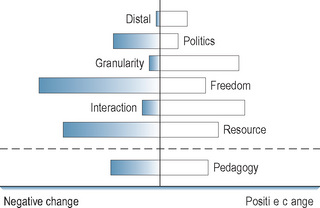
Figure 16.3 illustrates a framework based on seven factors that can change as a result of an educational intervention (
Ellaway, 2009b). These are pedagogy (educational effectiveness) and resources (cost, time, skill required), interaction (communication, understanding), freedom (individuality, autonomy), granularity (detail, diversity), politics (power, control), and distal (external perspectives). Each factor can involve both positive and negative impact. An intervention may have an equally positive and negative impact on pedagogy but other factors may be more or less advantageous, which changes the overall effectiveness or utility (see
Figure 16.3). Evaluation data can be used to improve the resource itself, to change the activities in which it is used, the way it is presented or to rethink the learning objectives and the wider educational context of use.
•
Sustainability: over time any resource gradually becomes a legacy item representing older and possibly redundant practices or knowledge. Sustaining it may involve a wide range of tasks and responsibilities:
–
Technical sustainability has been a particular challenge for electronic materials, as continually changing computer technologies prevent older materials running on newer machines. Compared with books, which may be tens or even hundreds of years old and still useful, many electronic resources do not remain technically viable much past 10 years and often a lot less than that. The adoption of technical interoperability standards is intended to help address this problem but the lifetimes of digital media (CD/DVD-ROM, tape, disc) are also quite short. One result has been that learning resources have in effect become more ephemeral, with their original substance relocated to the activities in which they are used.
–
Medical knowledge is constantly in flux. Any learning resource that contains factual knowledge will almost inevitably become increasingly out of date as the knowledgebase advances (although anatomy and other less dynamic disciplines are less prone to this issue). Sustaining the factual accuracy of learning materials may involve purchasing a newer edition of a resource, changing the resource directly, or adding addenda highlighting the changes.
–
The educational model may also go out of date. Educational practice involves a mix of evidence-based practices and social and cultural constructs that change over time. Furthermore, different teachers often have different takes on what is taught and how it is taught; the resources used by one teacher may therefore be rejected by the successor. While some materials may have little intrinsic activity built into them (textbooks), others will have a strong internal activity model (such as simulations and games). Changing the educational model can be complicated, although the use of new technical specifications (like IMS Learning Design) that provide an abstract but explicit model of an instructional activity and tools that implement it (such as LAMS –
http://www.lamsfoundation.org) make it possibly less challenging.
–
Terms of use may also change over time. For instance, access to third-party resources may be granted on a lease rather than ownership basis, ownership may change and in doing so change the rights of users, permissions may be withdrawn, and even the legal status of an organisation or its teachers and learners may change.
•
Sooner or later a resource will become unwanted or unusable. This raises issues around whether it is to be archived or disposed of and how the environment will work in its absence.
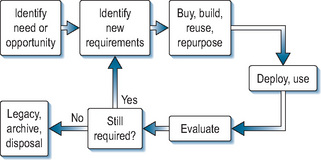
The whole learning resource lifecycle can be considered as a single cyclic model (see Figure 16.4).
Unfortunately, but perhaps predictably, real life rarely conforms to such a rational and planned model as we have set out here. Resources can be created out of curiosity, and requirements and purposeful design may be omitted in favour of trial and error and there may be no evaluation, sustainability, or disposability model in place. This somewhat ad hoc approach is now increasingly challenged by evidence-based practice. The principles set out in Table 16.1, although basic in nature, establish an empirical basis for learning resource design and set a standard for future practice and development.
Table 16.1 Colvin Clark and Mayer’s evidence-based principles for designing and using learning resources ordered by effect size (multimedia has the highest effect, redundancy the lowest) (Clark and Mayer, 2008)
| Principle |
Description |
| Multimedia |
Use words and graphics rather than words alone |
| Coherence |
Additional interesting material can disrupt learning |
| Personalisation |
Use conversational style and narrative guidance |
| Pretraining |
Make sure that learners are trained and prepared to use the material |
| Contiguity |
Integrate words and graphics |
| Segmenting |
Manage complexity by breaking a lesson into parts |
| Modality |
Present words as audio narration rather than text |
| Redundancy |
Explain visuals with words in audio or text but not both |
Lifecycle also involves contextual, cognitive, cultural, and educational dimensions. Some additional factors for consideration include:
•
Alignment: resources are designed; they represent the preemptive choices and philosophies of those that design them. Their subsequent users (teachers and learners) may or may not be sympathetic to these imposed forms, which may in turn be more or less aligned to a programme’s model or philosophy. Resources with more of an activity component tend to be more susceptible to these kinds of problems although style, language, and selection of content can also be problematic. Wherever possible, resources should either be designed as close as possible to the context of use or be built so as to be easily adapted and realigned to different contexts of use.
•
Roles: ‘designer’ is just one of the many roles involved in creating and using learning resources. Others include end users (teachers, learners), meta-professionals (learning technologists and instructional designers), editors, evaluators, librarians, publishers, and so on. Each role involves different perspectives and responsibilities and this reemphasises the subjectivity and cultural construction of significance and value of learning resources. It is also important to note the considerable variance in role, status, and authority between institutions and cultures; what happens in one context may be organised very differently in another.
•
Palimpsests: new resources typically follow older patterns, not least because including familiar elements makes the less familiar aspects more accessible. Something truly and completely new can be quite inaccessible and incomprehensible without familiar clues, metaphors, and models to work with. Less useful forms can get incorporated at the same time as more useful older patterns are employed. For instance, using a page metaphor in a learning object may help orient a learner to the way material is presented but it can also impose (materially or in the learner’s mind) linearity, typographic constraint, and a passive relationship to the material being presented.
•
Aggregation: learning resources may be used quite independently of each other or in clusters or collections. Simpler resources are often grouped (such as image banks) with descriptive metadata supporting user discrimination between them. Inter-resource relationships may be asynchronous (interoperability – sharing the same formats and wrappers for interchange or exchange) or synchronous (integrated – sharing data or some other runtime aspect).
•
Making as learning: the educational benefits of learning resources do not just arise from their use; they can also be gained through their creation. Not only do the learners have to undertake the research to support the design but also they need to consider the best way to present the material and support the desired learning outcomes. This is in part related to the ‘knows’, ‘knows how’, ‘shows how’, and ‘does’ model of developing clinical competence (
Miller, 1990) with resource authoring being a strong bridge between ‘knows how’ and ‘shows how’.
Economics
A learning resource clearly represents an investment of time and money, not just to create it but also to sustain it over time. Although economic factors are often played down in favour of cognitive and professional factors in the literature, real-world practice is determined as much by what is fiscally possible as by what is desirable.
As an illustration of why this is a critical topic, let us consider the many initiatives during the 1990s to create courseware as a response to the new opportunities in teaching and learning afforded by increasingly cheap and ubiquitous personal computers in the learning environment. A huge commitment was made to creating materials individually, institutionally, and even at national and international levels. A reflection of Mao’s doctrine of ‘let a hundred flowers blossom’ dominated; certainly capacity was built, knowledge gained, and the field advanced. However, almost all of these resources are now lost to technological and cultural change. The investment might have been worth it in terms of developing practice in using educational multimedia, but that is almost all that remains. An equivalent investment in paper-based resources would have left a far more permanent legacy in terms of extant learning resources.
A TCO model allows us to consider both direct and indirect costs at every stage of the resource lifecycle (as outlined in the previous section), the key dimension being those costs not immediately associated with the resource but still essential to its creation, deployment, and operation. An outline of such costs is given in Table 16.2.
Table 16.2 A total cost of ownership (TCO) model for learning resources
| Lifecycle |
Direct costs |
Indirect costs |
| Requirements |
Time spent (salaries, diversion) |
Acquiring skills in requirements gathering and analysis |
| Buy |
Cost of purchase or licence |
Finance and contracts support |
| Build |
Salaries of developers, time taken to develop |
Training, accommodation, support for developers |
| Adapt |
Cost of purchase or licence, salaries of developers, time taken to develop |
Finance and contracts support, training, accommodation, support for developers |
| Deploy |
Time, resource-specific infrastructure (systems, servers, buildings), training, documentation |
Client hardware, power, context infrastructure (network, power, support, security), orientation, and framing |
| Evaluate |
Time spent (salaries, diversion), costs of upgrading, adapting or changing |
Impact on educational context (method, course, programme) of information and change |
| Sustain |
Depreciation (based on lifetime and replacement costs), time spent making changes and maintaining resource |
Warranty and maintenance, context infrastructure (network, power, support, security), costs associated with resource failure |
| Dispose |
Replacement and migration costs, disposal or archiving investment |
Archivists and systems |
A greater part of the costs associated with any intervention or technology are indirect and often go unnoticed; for instance, one model estimated that only 23% of the cost of technology is the technology itself; 21% is direct labour and 56% indirect labour (Kaestner, 2008). Although this model was developed in the context of primary and secondary schools, the importance of TCO is clearly shown; unless all costs are evaluated, the true value and impact of any resource or intervention can not be fully understood or appreciated.
There are a number of developments and initiatives that are looking to address issues of cost and flexibility in educational resources:
•
The idea of ‘reusable learning objects’ was developed in part as a response to the high rate of technical attrition and in part as a way to get better return on investment for educational materials. It was also framed by the Internet model of discrete but combined and discoverable content (text, images, etc.). Although there are many definitions for RLOs (some very broad, others very narrow), perhaps the simplest is that an RLO is ‘any digital resource that can be reused to support learning’ (
Wiley, 2000, p 7). Reusable learning objects offer a granular approach with each object addressing a single discrete topic or learning objective, a focus on education and instruction and the ability to function meaningfully in different contexts of use. There are now a great many published RLOs in repositories such as MedEdPortal, HeAL, and JorumOpen but their utility and uptake has been less than might have been expected, partly through teacher inertia and partly because there are more pressing problems in education than providing content.
•
Educational technology standards and specifications are increasingly important in assuring longevity, reusability, and efficiency in production and sustainability of all educational systems and resources (see
Box 16.2). Groups like the IEEE, IMS Global, ADL, and MedBiquitous have all published common reference models for institutions and manufacturers to make their products interoperable with each other. This allows materials to be moved laterally from different systems or longitudinally from predecessor to successor systems. Standards and specifications can also represent a collaborative expert model of what might in business circles be called ‘best practice’ and can thereby simplify and extend the learning environment for the learner and teacher (even though their implementation may be problematic for the developers) (
Smothers et al, 2008).
Box 16.2 Cornucopia?
There is a common misconception that whatever material you want or need can be found online. However, things online are only what someone has put there; there is no systematic programme to ensure that the web represents all human knowledge. In fact not only are there many gaps but also much of the material is contradictory, subjective, and in many cases incorrect and even dangerous. So what learning resources are ‘out there’?
There are several specialised health care education collections like MedEdPortal, HeAL, and CHEC-CESC and there are many resources in media collections like Flickr (images) and YouTube (videos) that are appropriate or even targeted at educational use. Many of these sites allow for the creation of dedicated channels such as those for Clinical Skills Online or Pocketsnips. Other image sources include Wikimedia Commons, Public Health Image Library, and MedPedia. Of particular note is the Open Courseware movement where whole institutions post their learning materials online for free use and reuse. So far only a few medical schools (such as Tufts) have followed this route. One of the main advances of Open Courseware is a clear demonstration of the benefits of making materials widely available, while the real value is still based on presence and participation in a programme of study.
Resources may also be tools. There are many free tools available online, many of which are open source (this means that they can be freely adapted as well as reused). Notable open source educational tools include Moodle, Sakai, Joomla, LAMS, and OpenLabyrinth.
Remember to make sure that you check the terms of use before downloading and using any resource.
The other side of economics is to do with liabilities, rights, and licences. A learning resource is not a neutral artifact; it informs and guides learners in ways that may or may not be correct or even safe. It is usual practice therefore to include some kind of declaration regarding liability (who is responsible) and warranty (what happens when there is a problem). These are important concerns even if the resource is never going to be used outside the context in which it was created.
As soon as something is created, intellectual property (IP) comes into play. Unless otherwise contracted, the rights of a substantial innovation belong to the individual(s) who created it. However, the things employees create during or as part of their contracted work typically belong to the organisation they work for. Intellectual property is a concept larger than copyright but in the area of learning resources copyright is by far the main concern and this is complicated by there being no common model for defining rights for educational resource creation and use.
There is a continuum between full copyright and public domain: the former meaning that all rights are reserved and permission must be given to make legal use of a resource, the latter waiving rights altogether and allowing for any kind of use without requiring any kind of permissions from their authors. Creative Commons is one of a number of licensing models that sits between copyright and public domain, reserving some rights and giving others away. Creative Commons is particularly noteworthy both because it is particularly focused on content (as opposed to software for instance) and because it has proved very popular with individuals and institutions alike and has been translated into many different legal jurisdictions worldwide. A Creative Commons licence can be applied to a resource by its author(s) to specify to subsequent users whether:
•
the authors must be identified as such with the work (attribution)
•
changes, extractions, and incorporations can be made (derivatives)
•
commercial use can be made of the resource or its derivatives
•
the same conditions pertaining to the original are passed on to any derivatives (share alike)
By clearly stating the terms of its use, a resource can be safely published and reused. Without any such declaration the assumption must be one of full copyright and no use can be made without permission from its owners. There are some circumstances where limited reuse and copying are allowed, such as in libraries or under the terms of fair use agreements. But even this should be undertaken with care and consideration, not just for the copyright owners but also as an exemplar to the learners. Far too many teachers use copyrighted materials without permissions and this sends inappropriate messages to learners about what they can and should do with other people’s intellectual property.
The other main legal concern regarding learning resources, particularly in health care, is around confidentiality and privacy, primarily (but not exclusively) on behalf of patients. Health care institutions typically have consent policies and processes for recordings (images, videos, etc.) of patients while they are in a condition of care. However, if the terms of consent are not passed on with the resource, then subsequent uses may break the terms of consent, creating legal as well as professional liabilities for all concerned. It is good practice to make sure that any material that identifies patients is anonymised as far as possible (without losing utility) and properly consented with the terms of that consent appended or otherwise attached to the resource to ensure that subsequent use follows the wishes of the patient involved (Ellaway et al, 2006a).
Future developments
All future-gazing is doomed to ridicule and often what seemed like the future turned out to be the present in disguise. However, we can fairly safely predict that the Internet will continue to grow and change and research will improve our understanding and use of learning materials. At the same time, innovation and social, political, and cultural change will continue to confuse and distract faster than we can build sound evidence-based practice to manage this change. Cost will continue to be a major driver but new advances will change the economic distribution and the focus of where these costs fall. Institutional boundaries will be challenged as learners and faculty become increasingly nomadic within the broader infosphere and in such a world the idea of a learning resource may be altogether transformed and diversified. Of course it will be interesting to see whether any of this comes to pass.
Implications for practice
There is clearly more to designing and using learning resources than preparing handouts and slides. New technologies provide an ever-growing repertoire of tools and designs for learning and we are still coming up with new and innovative forms. This diversity presents significant challenges to teachers in keeping up with new developments and in deciding how and whether they should incorporate them into their practice. This chapter has set out the need for critical reflection on and discourse about the nature, application, and effects of learning resources on learners, teachers, institutions, and professions. If this chapter has introduced more complexity to your work, I apologise, but I hope you have also developed a greater appreciation of how to handle that complexity and make it work for rather than against you.
References
Aldrich C. Learning by doing. San Francisco, CA: Pfeiffer, 2005.
Baudrillard J. Simulacra and simulation. Ann Arbor, MI: University of Michigan Press, 1994.
Castronova E. Synthetic worlds: the business and culture of online games. Chicago, IL: University of Chicago Press, 2005.
Clark R.C., Nguyen F., Sweller J., et al. Efficiency in learning. San Francisco, CA: Pfeiffer, 2006.
Ellaway R.H. e-Learning and e-teaching. In: Dent J.A., Harden R.M., editors. A practical guide for medical teachers. Edinburgh, UK: Churchill Livingstone; 2009:229-237.
Ellaway R.H. eMedical teacher: optics on assessment. Med Teach. 2009;31(6):571-573.
Ellaway R., Dewhurst D., Quentin M., et al. ACETS: assemble, catalogue, exemplify, test and share (Internet). 2005. Available from http://www.acets.ac.uk/resources/acetspub.pdf Accessed November 25, 2009
Ellaway R., Cameron H., Ross M., et al. Clinical recordings for academic non-clinical settings: CHERRI Project Report (Internet). 2006. Available from http://www.cherri.mvm.ed.ac.uk/cherri.pdf Accessed November 25, 2009
Ellaway R., Candler C., Greene P., et al. An architectural model for MedBiquitous virtual patients. Baltimore, MD: MedBiquitous, 2006.
Issenberg S.B. The scope of simulation-based healthcare education, Simulation in Healthcare. The Journal of the Society for Simulation in Healthcare. 2006;1(4):203-208.
Kaestner R. A holistic view of the total cost of technology. School Business Affairs. 2008;74(10):21-22.
Kalyuga S., Ayres P., Chandler P., et al. The expertise reversal effect. Educ Psychol. 2003;38(1):23-31.
Keen A. The cult of the amateur. London, UK: Nicholas Brealey Publishing, 2007.
Land R., Bayne S. Screen or monitor? Surveillance and disciplinary power in online learning environments. In: Land R., Bayne S., editors. Education in cyberspace. London, UK: Routledge Falmer, 2005.
Loechel W.E. The history of medical illustration. Bull Med Libr Assoc. 1960;48(2):168-171.
Miller G. The assessment of clinical skills/competence/performance. Acad Med. 1990;65:563-567.
Powley E., Higson R. The arts in medical education: a practical guide. Abingdon, UK: Radcliffe, 2005.
Smothers V., Greene P., Ellaway R., et al. Sharing innovation: the case for technology standards in health professions education. Med Teach. 2008;30(2):150-154.
Sweller J. Cognitive load during problem solving: effects on learning. Cogn Sci. 1988;12(2):257-285.
Wiley D.A. The instructional use of learning objects (Internet). 2000. Available from http://www.reusability.org Accessed November 25, 2009
Further reading
Clark R.C., Mayer R.E. e-Learning and the science of instruction. San Francisco, CA: Pfeiffer, 2008.
Ellaway R., Masters K. AMEE Guide 32: e-learning in medical education. Med Teach. 2008;30(5):455-489.
Horton W. e-Learning by design. San Francisco, CA: Pfeiffer, 2006.
Mayer R.E., editor. The Cambridge handbook of multimedia learning. New York: Cambridge University Press, 2005.