Chapter 21 Colostrum Substitutes and Milk Replacers
In recent years research in the area of colostrum substitutes and milk replacers has focused on improving the quality of these products so that calf performance can be enhanced and rearing costs can be minimized. The goals of the dairy calf feeding program are to achieve optimum growth rates, develop a strong immune system, minimize health disorders, stimulate and optimize ruminal development, and control the cost of feeding the preweaning calf.
CALVES
Digestive Physiology of the Preruminant Calf
The gastrointestinal physiology of the newborn calf is poorly developed, and the calf is unable to digest a variety of feedstuffs normally fed to ruminant animals. The gastrointestinal tract of newborn calves undergoes maturation during the first 3 weeks of life and continues to grow and mature for an extended period of time. Because the young calf is technically a monogastric, the diet must be easily digestible and consist of predominately high-quality, human-grade feedstuffs.
The size and proportion of the calf stomach compartments change dramatically during the first few weeks of life and are affected by diet.1 At birth the reticulorumen makes up approximately 30% of the stomach capacity, although it is nonfunctional. The omasum at birth makes up 10%, and the true stomach or abomasum makes up 60%. The abomasum is the only truly functional part of the four stomach compartments in the newborn. By 4 weeks of age, the reticulorumen makes up slightly more than half the total, the omasum remains about the same at 12%, and the true stomach makes up approximately 36%. By 16 weeks of age the reticulorumen makes up more than two thirds of the total stomach tissue weight. The omasum still makes up about the same proportion (18%). At this point the abomasum makes up only 15%. It has actually grown in size, but relative to the other compartments, it has become less important. The reticulorumen is now the predominant stomach system, having grown in size and in functionality.
In the ruminant animal the enzymes produced by ruminal microorganisms are largely responsible for the breakdown of simple and complex carbohydrates as well as fiber. However, at birth the rumen is nonfunctional, with little tissue development and no microbial population. In the absence of a rumen microbial population, the calf depends on digestive enzymes released primarily from the abomasum, pancreas, and small intestine for the digestion of fats, carbohydrates, and protein. Consequently, preruminant calves cannot efficiently digest complex carbohydrates and fiber.
In the young calf, liquids can bypass the rumen and flow directly to the abomasum through the esophageal groove. The esophageal groove forms when muscular folds from the reticulorumen come together, stimulated by sights and sounds calves associate with feeding and a reflexive response to swallowing. Any liquid (milk or water) consumed while the calf is excited by the anticipation of feeding bypasses the rumen and enters the abomasum. On the other hand, when the calf drinks in response to thirst, liquid enters the rumen instead of the abomasum. The esophageal groove forms whether calves are fed from a nipple bottle or from an open pail.2 Closure of the esophageal groove also may be stimulated by drenching calves with sodium bicarbonate, which may be useful in administering pharmaceuticals to the abomasum directly. Riek3 demonstrated that a dose of 60 mL of a 10% sodium bicarbonate solution stimulated closure of the esophageal groove in 93% of calves tested.
During the first feeding of colostrum, the esophageal groove closes, and colostrum passes directly into the abomasum.4 The liquid forms a clot as a result of the action of chymosin, pepsin, and hydrochloric acid. Chymosin, also known as rennin, is the enzyme that specifically binds with the casein protein of colostrum or milk. This clotting action causes the casein and fat in colostrum to form a curd or hard lump. This lump of fat and protein will be digested slowly and emptied into the small intestine over the next 12 to 18 hours. The stomach and small intestine produce limited amounts of enzymes in the first 48 hours of life. Curd formation allows the digestive tract, which has limited digestive capacity, to slowly yet efficiently digest the nutrients fed and to totally assimilate them, thus preventing digestive scours caused by delivery of undigested nutrients to the large intestine. The second feeding of colostrum or transition milk adds to the already formed curd in the stomach. This system allows the calf to receive a steady supply of nutrients over the first 24 to 48 hours of life as long as it is fed casein-containing liquids.5
The fraction of the colostrum that does not form a curd is whey. Whey is passed to the small intestine for digestion and absorption. Whey is composed of water, minerals, lactose, and a variety of proteins. Immunoglobulins are one of the important protein groups in whey obtained from colostrum. Immunoglobulins from ruminants generally have the same features as other mammalian immunoglobulins. Established classes of immunoglobulins are immunoglobulins G1 (IgG1), G2 (IgG2), M (IgM), and A (IgA); all are secreted at high concentrations into colostrum. Immunoglobulins pass out of the abomasum to the small intestine within 10 minutes after feeding, allowing them to be quickly absorbed into the bloodstream of the calf. The rapid absorption of these essential immunoglobulins is critical because no placental transfer of immunoglobulins from the dam occurs.
Digestion of carbohydrates by the newborn calf is relatively poor; the exception is lactose, or milk sugar. Calves younger than one month of age are limited in their ability to use starch, maltose, sucrose, or dextrin because they lack sufficient quantities of the necessary digestive enzymes. By three weeks of age, there is a marked improvement in the ability of the calf to digest starch. After this period there is also an increased ability to digest vegetable proteins.
Within a few days of birth the rumen begins to develop a microbial population. The number and types of bacteria that develop are a function of the type of feeds the calf eats. When the calf eats dry feed, the esophageal groove does not function and the feed enters the rumen. Inoculation of the rumen with microorganisms is by way of the environment, hair coat, bedding, and feeds eaten. The types of ruminal microbes that proliferate are those that best digest and use the feedstuffs being consumed. In addition to feed, ruminal microbes require water in order to grow properly and to digest feedstuffs. If water is not provided to the calf in early life, ruminal microbial growth will be limited. The neural stimulus that forms the esophageal groove does not generally function when water is fed separately from milk or milk replacer feeding. Therefore, much of the water that a calf drinks enters the rumen and is available to support growth of ruminal microbes.
Colostrum Substitutes
The first few weeks of life are critical to the growth and long-term performance of a dairy calf; however, during this period active antibody production does not occur to any extent in the bovine neonate. After birth the calf normally receives colostrum for a first feeding—and in many farm situations, for several feedings up to 3 days of age. From the perspective of the newborn calf, colostrum quality is determined primarily by IgG content and by cleanliness, or the absence of pathogenic bacteria. Cows produce colostrum with a wide range of IgG, and studies of bacteria in colostrum show that keeping colostrum clean between harvest and feeding the calf can be difficult on many farms.6,7 In addition to consistency and convenience, colostrum substitutes offer a method of breaking disease transmission cycles for Johne’s disease and other infections that may be transmitted through colostrum and milk.
In the United States, colostrum products that contain immunoglobulins are regulated by the U.S. Department of Agriculture (USDA) Center for Veterinary Biologics. Two classes of colostrum substitute are recognized: supplement products that are unable to raise the blood concentration of IgG above 10 mg/mL and typically contain less than 100 g of IgG per dose, and colostrum replacer products that are able to raise serum IgG concentration above 10 mg/mL and contain at least 100 g of IgG per dose plus fat, protein, vitamins, and minerals needed by the newborn calf. When choosing colostrum substitutes consider both the IgG concentration of the product and the absorption efficiency of ingredients.
The primary sources of IgG in colostrum substitutes are dried colostrum, whey, or blood serum. The ingredients of the product and methods using in processing these ingredients can affect the ability of the product to provide absorbable IgG to calves. Apparent efficiency of IgG absorption (AEA) is used to compare the proportion of IgG absorbed to the amount fed. Supplement and replacer products based on bovine serum have an AEA similar to maternal colostrum (20% to 35%). Products based on colostrum or whey have a variable AEA, ranging from 5% to 25%, with an average of approximately 15%.
Colostrum supplements can be used to increase the amount of IgG fed to calves when only low- or medium-quality colostrum is available.8 However, supplements cannot replace high-quality colostrum.9 When a supplement is added to low-quality colostrum, the IgG is often absorbed poorly, and antibody absorption is reduced compared with high-quality maternal colostrum. Colostrum replacer contains more immunoglobulin than supplement products and provides more antibodies than poor- or moderate-quality colostrum. In research trials, calves fed colostrum replacer have performed as well as calves fed maternal colostrum with no differences in IgG levels, efficiency of IgG absorption, incidence of scours, or growth rates.10,11
Also note that feeding large quantities in a single feeding can reduce absorption efficiency. Therefore it is more beneficial to feed colostrum or a substitute with a higher IgG concentration than to try to feed more of a low IgG solution (by increasing the amount of powder or volume fed). Adding a second or third feeding of low IgG colostrum also is preferred to increasing the volume fed in a single feeding.
Some colostrum supplements include Escherichia coli antibody. This can be misleading, causing producers to believe that if they feed this product, it will protect their calves from E. coli as well as provide successful passive transfer. These products are designed to provide antibodies specific for E. coli, but because of the many different strains of E. coli present in different areas of the country and on different farms, these antibodies likely offer little protection.
Colostrum substitutes should be fed according to the manufacturer’s instructions; some products are mixed with water and fed in an extra feeding, others are added to colostrum, and the number of feedings recommended may vary.
High-quality maternal colostrum is still the “gold standard” for feeding newborn calves. However, colostrum supplement and replacer products can be valuable tools to increase calf immunity when colostrum supplies are limited or disease eradication is desired. Colostrum supplements can be used to increase the amount of IgG fed to calves when no source of high-quality colostrum is available; however, supplements cannot replace high-quality colostrum. On the other hand, colostrum replacer contains greater levels of IgG and other nutrients and provides an effective, convenient method of providing passive immunity to calves when maternal colostrum is not available.
Milk Replacer Quality and Formulation for the Dairy Calf
The period of time between colostrum feeding and the beginning of solid food consumption is highly dependent on the management of the individual dairy farm. Often the calf consumes a liquid-only diet for the first 2 weeks of life. Despite dry feeds (grains) being offered, very little, if any, are consumed for the first 7 to 10 days. Therefore the liquid feeding portion of the rearing program is very important to the health and initial growth of the calf.
More than 60% of the dairy calves in the United States are fed milk replacers for most or all of their liquid feeding period.12 The dairy calf is typically fed a milk replacer for 6 to 8 weeks, at which point it is weaned. Calves can be weaned at any age from 3 weeks on, depending on the health and management of the animal. It is recommended that calves be weaned by 6 weeks of age, with a goal for most of the calves, most of the year, being 4 to 5 weeks of age at weaning. The United States national average in 2002 was 8.4 weeks13; however, many progressive farms regularly and successfully wean all calves at 4 to 5 weeks.
Convenience and economics are the two major factors that have driven the increase in use of milk replacers. Feeding milk replacer is often more convenient than feeding whole milk or pasteurized waste milk because calves are generally housed in different areas on the farm than the milking cows, and the transport of saleable or waste milk is difficult. This issue becomes more pronounced with larger farms. Often, supplying transition milk from the dam to the calf up to the time the milk is saleable is all that is possible from a labor and management standpoint. Milk replacer powder is easily stored and can be mixed in exact quantities to provide milk for each feeding. Another benefit of milk replacers is the ability to limit the spread of diseases, such as Johne’s, that can be transmitted through milk.
Milk replacers can be manufactured with a variety of ingredients and levels of nutrients to match the management requirements of a wide variety of farms. Various additives that cannot be easily used in whole milk or waste milk feeding systems can be supplied in milk replacers to improve the nutrition and health of the calf.
One major reason for the use of milk replacers is the cost savings over the alternative of using whole milk. Savings are realized because milk replacers are composed primarily of byproducts of the cheese industry. Casein removed for dried skim milk production, and casein and fat removed for cheese production, carry much of the original value of the whole milk. The whey that remains is less valuable, and although demand for it in the world market is growing, it still commands a much lower price than skim milk. The trend for increased use of milk replacers will likely remain as long as the price differential between milk and milk replacers exists.
PROTEIN
The composition and quality of a milk replacer influence the growth, health, and overall performance of the calf. Composition and nutrient levels vary greatly among products. Protein sources are the most expensive ingredients in milk replacer. As a result, manufacturers continually seek less expensive ingredients. The source of milk replacer protein changes in response to ingredient cost and may include a variety of milk and nonmilk proteins. Milk replacers used in the United States are typically composed of whey and whey protein concentrate compounds. Dried whey contains 12% crude protein, mainly lactalbumin, and 74% lactose. Delactosed whey has higher protein content (20% to 26%) because some of the lactose in whey is removed. Whey protein concentrate is produced by ultrafiltration of liquid whey to remove lactose and other soluble components and contains approximately 34% crude protein. Skim milk is rarely used in appreciable amounts in the United States because of the high cost. This is often not the case in other countries, depending on the agricultural economics situation. However, as new technologies continue to increase the value of whey proteins for use in human foods, skim milk is occasionally substituted for whey in the United States. Dried skim milk contains approximately 34% protein. Casein (85% protein) may also be used in milk replacer (sometimes listed on the label as dried milk protein or sodium caseinate).
The amino acids provided by various sources of protein differ in composition and in bioavailability. Availability depends on the method and conditions of processing and can vary greatly between feeds and processors. Milk proteins are typically more digestible (92% to 98%) and contain a more favorable profile of amino acids than nonmilk proteins. Compared with milk proteins, vegetable proteins (85% to 94% digestible) often contain more crude protein, but their amino acid content is not as desirable. Some soy-based milk replacer contains added lysine and methionine to improve the amino acid profile. Most soy isolates or concentrates used today are highly digestible to the young calf. Egg protein contains a favorable profile of amino acid acids, and most products are highly digestible. Manufacturers use available data to best fortify the product in an economical manner. Some evidence suggests that the amino acid composition of whey is actually more correct for meeting the calf’s requirements for optimum growth than the amino acid composition of skim milk. In either case, research trials using skim milk or whey protein have proven both to be completely satisfactory in meeting the needs of the newborn calf for growth.14
Vegetable proteins in milk replacer are primarily of soy origin, but wheat and potato proteins also may be used. The soy proteins include soy protein isolates, soy protein concentrates, and chemically treated soy flours. Soy flour (50% protein) is obtained by grinding defatted soy flakes that have been heated to remove trypsin inhibitor or washed in aqueous ethanol to remove glycinin and β-conglycinin. These modifications improve digestibility and reduce allergic reactions. Soy protein concentrate (67% protein) is produced by washing defatted soy flakes with aqueous alcohol to remove the soluble carbohydrates. Isolated soy protein (85% protein) is produced by washing defatted soy flakes in alkali followed by acid precipitation and alkali resolubilization of the extracted protein. Wheat gluten (modified wheat protein) is derived from wheat flour by wet processing or milling and contains 80% protein. Milk replacers with 33% of total protein or without wheat gluten have resulted in comparable calf gains.15 Modified potato protein is not common in the United States but is used in other countries. This protein is separated from water used to isolate potato starch and dried (80% protein).
Animal proteins, including plasma and eggs, also are used to replace some of the whey protein concentrate in milk replacers. Many of the amino acids in these ingredients are at very high levels compared with milk proteins. Animal plasma is a concentrated protein source obtained by removing red and white blood cells from fresh, whole blood. The resulting plasma is dried and contains 78% protein. Egg protein may be provided from spray-dried whole egg or a combination of whole egg and egg albumin. Whole egg contains high fat levels and 54% protein.
Bovine or porcine plasma products can be used successfully as partial replacements for milk proteins.10 In addition to supplying a highly digestible source of protein, plasma proteins also supply a source of immunoglobulins that may have a beneficial effect in the calf’s intestinal lumen. Morbidity and mortality were reduced in calves fed whey-based milk replacer containing bovine or porcine plasma compared with calves fed milk replacer based solely on whey.16,17 There is limited dairy calf research on egg proteins, and it appears that the processing of the egg protein can have a dramatic impact on the outcome. Average daily gain and feed efficiency are generally somewhat lower for calves fed egg protein, particularly in the preweaning period.18 The performance and cost of these plasma and egg products has been intermediate to all-milk replacers and soy-based replacers.
Historically the rennet coagulation test and crude fiber content were used to evaluate milk replacer quality. These are no longer valid methods to evaluate quality, as the rennet coagulation test merely identifies the presence of casein in the milk replacer. A soft clot indicates that more than 15% of the protein is casein, a firm clot means that more than 50% of the protein is casein. However, most modern milk replacers are based on whey protein, which does not clot when mixed with rennet. Whey protein has been fully researched and is an excellent source of protein for calves; at least one study showed that whey protein was better than skim milk protein. Therefore failure to form a clot does not indicate poor protein quality in milk replacer; it does show that casein is not present. Milk replacers containing plant proteins are often higher in protein content to counteract their lower digestibility relative to milk proteins. Most soy protein isolates or concentrates used today are highly digestible to the young calf. Unmodified wheat or soy flours, potato protein, meat solubles, and fish proteins are among the least desirable ingredients in a dairy calf milk replacer. Milk protein contains no fiber, and in the past, crude fiber levels above 0.2% were considered evidence of a plant protein source. However, highly processed soy protein can contain little to no fiber and other nonmilk sources such as plasma and egg contain no fiber. Also, it is very difficult to accurately detect crude fiber at the low levels found in milk replacer.
The ingredients listed on the milk replacer tag should be listed in descending order of predominance as specified by the U.S. Food and Drug Administration (FDA) regulation 21CFR501.4. However, many states use a Uniform State Feed Bill that does not specify the need to list ingredients in order of predominance. In these states most companies do list ingredients in order of predominance to facilitate comparison of products. It is important to read and understand the ingredients in a milk replacer in order to compare and evaluate products. Some soy protein compounds and other highly processed ingredients are patented, and labels may bear the registered name and not the generic protein name (such as soy isolate or concentrate).
ENERGY
Energy in milk replacers is derived primarily from lactose and fat. The effects of milk replacer energy content are not always clear in practical applications because of interactions with environmental temperature, energy derived from dry calf starter, stage of ruminal development, and differences in metabolic efficiency of fat- and carbohydrate-derived energy. The thermal neutral zone for a young calf ranges from 10° C to 25° C. During periods of extreme stress, which include cold temperatures for calves housed outside, the energy intake of the calf should be increased to account for increased maintenance energy needs. This can be accomplished by increasing the amount of replacer fed daily by 30% to 50%, increasing grain consumption, or increasing the fat content of the replacer. Fats added to calf milk replacers are mainly edible animal fats, with some use of vegetable fats such as palm oil or refined coconut oil (digestibility 92% to 96%). The animal fats used can be lard or white grease (digestibility 88% to 96%).19 It is important to note that when dry matter intake from milk is increased, it will substitute potential dry matter intake from grain. The long-term effects of this will be decreased grain intake and delayed ruminal development.
ADDITIVES
One obvious reason to use milk replacers is that nutrient fortification and additives for the promotion of growth and health can be incorporated without extra steps. This includes extra vitamins and minerals along with various other additives. All macrominerals and microminerals are supplemented in milk replacer, as are vitamins A, D, and E and the B vitamins needed by preruminant calves.
The most common additives found in milk replacers today are lasalocid and decoquinate, for the prevention of coccidiosis, and oxytetracycline and neomycin, which aid in the prevention of bacterial scours. Milk-fed dairy calves often respond favorably to oral antibiotics with increased weight gains and improved feed efficiency, but often the level of antibiotics fed is less than what is required to effectively decrease scours. Antibiotics must not be used as a substitute for good management. In addition, continued public concern about the use of antibiotics in animal feed makes it likely that this option may be discontinued in the future. Feeding antibiotics in milk replacer requires a withdrawal period before slaughter, and bull calves intended for sale must not be fed medicated milk replacer.
A number of alternatives to antibiotics, such as probiotics (also called direct-fed microbials), yeast, oligosaccharides, and functional proteins, are now available in milk replacer. Many of these products have not been thoroughly researched, and results of research so far have been variable. Probiotics are live cultures of naturally occurring microorganisms. The most common probiotic ingredients are lactic acid-producing bacteria. In theory, probiotics can improve dry matter intake, weight gain, feed efficiency, and disease resistance. Research so far suggests a modest improvement in average daily gain and feed efficiency when probiotics are fed to young calves. It seems that probiotics would be most beneficial when calves are stressed and normal bacteria populations are disrupted. Keep in mind that probiotics are living organisms; follow the instructions for storage, and use products before their expiration dates. In addition, probiotic additives should not be used with medicated milk replacer because the antibiotics may kill the probiotic organisms.
Another category of additives is the prebiotics, which are structural carbohydrates that cannot be digested by ruminants but are excellent nutrient sources for beneficial bacteria in the calf’s digestive tract. Examples include resistant starches, polysaccharides, pectins, and gums. The mode of action varies for different types of prebiotics. Prebiotics that are becoming more common in calf feeds are fructooligosaccharides (FOS) and mannanoligosaccharides (MOS), which are complex sugars isolated from the cell wall of yeast. Some pathogens, including E. coli and Salmonella, will readily and preferentially bind to these indigestible compounds rather than the intestinal wall. Once they bind, the bacteria cannot detach themselves, so they are passed out of the body with other undigested feedstuffs. In addition, beneficial bacteria in the intestine may use these oligosaccharides. Research has shown that these compounds are beneficial in reducing the severity of scours.20 One study showed that calves fed a product containing the FOS allicin (an extract of garlic) and probiotic cultures and calves fed antibiotic had similar fecal scores.21 However, no calves in this study were fed control milk replacer (with no additive), so it is impossible to determine if fecal scores were improved compared with calves that were not treated. Another group of researchers compared calves fed galactosyl-lactose (an oligosaccharide derived from whey), antibiotic, or no additive. In this study calves fed galactosyl-lactose or antibiotics were similar and tended to have more normal fecal scores and fewer days scouring than control calves.22 In addition, calves fed galactosyl-lactose gained more weight than control calves. Although results so far are promising, peer-reviewed research into oligosaccharides is scarce at this time, and additional research is needed to support growth promotion claims.
Yeast is another common direct-fed microbial. Saccharomyces cerevisiae is the most frequently used yeast species and may be fed live or dead. Yeast cells are rich sources of protein, nucleotides, and B vitamins. They also stimulate beneficial bacteria and ruminal fermentation and assist in fiber digestion. A review of microbial additives concluded that adding yeast cultures to calf diets could result in no change or a modest improvement in feed intake, weight gain, and feed efficiency.23 Performance depends on the specific conditions of each situation. However, yeast cultures do tend to increase microbial growth in the rumen, which may have benefits in promoting ruminal development. One study reported that adding live yeast to milk replacer fed to calves with failure of passive transfer resulted in fewer days with scours than in control calves.24
A final type of antibiotic alternative is a group of proteins known as functional proteins, which can cause a physiologic response in the body. Some are able to survive the ruminal environment intact; others are released during digestion. The most well known of the functional proteins are the immunoglobulins. Research has shown that immunoglobulins from the blood are recycled into the intestine.25 This means that providing immunoglobulins in colostrum or injecting immunoglobulins into the blood can help to boost immunity in calves. Both of these methods have been researched and found effective. In addition, plasma protein fed in milk replacer may provide antibodies that enhance the immune system locally in the intestine. Research with plasma protein seems to indicate that calves under stress benefit from these additional antibodies, whereas healthy, nonstressed calves usually do not benefit.
Enhanced Milk Replacer Feeding Systems
Many companies now offer high-protein, low-fat milk replacers (protein greater than 24% and fat less than 20%) that provide additional protein for increased growth. It is important to pay close attention to the feeding instructions for these milk replacers. Young growing ruminants will respond favorably to increasing amounts of dietary protein if additional energy and other nutrients are also provided. However, the efficiency of using this additional protein is reduced as levels increase. Calves must be fed more than in conventional programs, and the amount fed to each calf may need to be adjusted as the calf grows. To make these feeding programs cost-effective, the increased cost of high-protein milk replacer and the extra cost to feed more dry matter must be offset by long-term improvements in growth or decreased overall heifer production costs, possibly including reduced age at first calving. Thus far, research does not support long-term improvements in health or performance resulting from enhanced feeding during the preweaning period.26 Typically, changes to the calf feeding program alone cannot achieve these long-term cost-reduction goals. Changes in the feeding and management of older calves and heifers must occur as well and will far outweigh any small changes in the preweaned calf feeding program. Calves also must be managed more carefully when feeding for higher rates of gain, as they may be more susceptible to nutritional scours, especially when milk replacer is fed at greater than 12.5% solids and water availability is limited. Grain intake often is reduced in early life with higher rates of milk replacer feeding, thereby limiting ruminal development. Often this feeding strategy results in restricted growth after weaning and produces calves that are similar in size to conventionally fed calves by 4 to 6 months of age, thereby eliminating any advantage in early growth.
Summary
It is noteworthy that much of the current research related to milk replacers is done by individual manufacturers, with less done in the public domain. This means that much of the peer-reviewed journal research is dated and often may not account for modern feed manufacturing technology. Recommended ranges of nutrients as shown in Table 21-1 are broad in many cases to account for some of these differences and to account for variety of protein sources and energy content in milk replacer products. Many farms want high rates of growth in their young calves and need milk replacers with marginally increased nutrient density, whereas others want only economy. The milk replacer industry has a variety of products to meet the needs of these various customers. As with most purchased items, quality is related to price.
Table 21-1 Nutrient Recommendations for Dairy Calf Milk Replacers from the National Research Council29*
| Nutrient | Recommended Concentration |
|---|---|
| Crude protein | 18-24 |
| Fat | 10-22 |
| Calcium | 1 |
| Phosphorus | 0.7 |
| Potassium | 0.65 |
| Magnesium | 0.07 |
| Sodium | 0.40 |
| Chloride | 0.25 |
| Sulfur | 0.29 |
| Iron (ppm) | 100 |
| Cobalt (ppm) | 0.11 |
| Copper (ppm) | 10 |
| Manganese (ppm) | 40 |
| Zinc (ppm) | 40 |
| Iodine (ppm) | 0.50 |
| Selenium (ppm) | 0.30 |
| Vitamin A (IU/lb) | 25,000-35,000 |
| Vitamin D (IU/lb) | 5000-7500 |
| Vitamin E (IU/lb) | 50-125 |
* Percentage of dry matter unless otherwise indicated.
Although milk replacers are important in the dairy feed industry today, keep in mind that many studies show that only 24% of growth before weaning can be accounted for by the energy provided in milk replacer. Calf starter makes up the remaining 76% of the energy for body weight gain in the first 2 months of life. It is important to note that overfeeding milk replacer, either in amount or concentration, will primarily replace dry matter intake that would normally come from grain. This will slow ruminal development and be less economical for the producer. In addition, scours, which cause the greatest amount of calf mortality and morbidity preweaning,27 are greatly diminished postweaning. This occurs regardless of age at weaning and is more closely related to ruminal development and diet than age.
FOALS
The use of a milk replacer for foals becomes necessary when the mare has an inadequate milk supply or when the foal is orphaned at an early age. Milk replacers for foals should contain 18% to 22% crude protein, 12% to 16% crude fat, and 10% to 11% total solids. They should be highly digestible, easily reconstituted, and palatable.
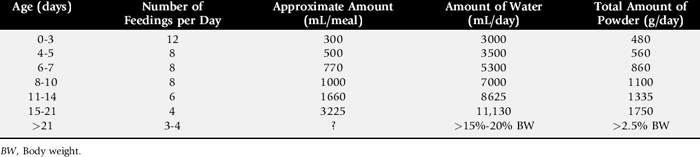
Orphan foals should be fed milk replacer from 1 day of age (after receiving colostrum within 24 hours of birth) to a minimum of 1 month of age.28 General guidelines for feeding foal milk replacers can be found inTable 21-2. Feeding less often than recommended may reduce growth rate as a consequence of inadequate milk replacer intake. It is important that foals receive the recommended amount of milk replacer powder daily so that starvation from underfeeding or diarrhea from overfeeding is avoided.
Table 21-2 Typical Feeding Recommendations for Foal Milk Replacers28
LAMBS AND KIDS
Milk replacers for lambs and kids are generally used to raise multiples or orphans but are used by dairy operations as well. Most principles discussed in the section on calves apply to lambs and kids. Milk replacers for lambs usually contain 21% to 24% crude protein and 24% to 30% crude fat. The lactose level in lamb milk replacers should not exceed 25%, as higher levels may result in abomasal bloat and diarrhea. Milk replacers for lambs are generally fed cold ad libitum from automatic nipple feeders. Lambs fed warm milk replacer a limited number of times during the day drink too much at each feeding and may develop abomasal bloat.
Creep feed can be offered to lambs after 1 week of age. It should contain 17% to 20% crude protein, be highly digestible, and be fed fresh daily. The introduction of creep feed at an early age helps the lamb develop a fully functional rumen by 35 to 40 days of age.
1 Church DC. Digestive physiology and nutrition of ruminants. vol. 1. Corvallis: Oregon State University; 1969.
2 Orskov ER. Reflex closure of the oesophageal groove and its potential application in ruminant nutrition. S Afr J Anim Sci. 1972;2:169.
3 Riek RF. The influence of sodium salts on the closure of the esophageal groove in calves. Aust Vet J. 1954;30:29.
4 Cruywagen CW, Brisson GJ, Meissner HH. Casein curd-forming ability and abomasal retention of milk replacer components in young calves. J Dairy Sci. 1990;73:1578.
5 Longenbach JI, Heinrichs AJ. A review of the importance and physiological role of curd formation in the abomasum of young calves. Anim Feed Sci Technol. 1998;73:85.
6 Fecteau G, Baillargeon P, Higgins R, et al. Bacterial contamination of colostrum fed to newborn calves in Québec dairy herds. Can Vet J. 2002;43:523.
7 Kehoe SI, Jayarao BM, Straley BA, et al. Effects of management techniques and farm status on bacterial contamination of colostrums. J Dairy Sci. 2006;89(suppl 1):214. (abstract)
8 Garry FB, Adams R, Cattell MB, et al. Comparison of passive immunoglobulin transfer to dairy calves fed colostrum or commercially available colostral-supplement products. J Am Vet Med Assoc. 1996;208:107.
9 Arthington JD, Cattell MB, Quigley JDIII, et al. Passive immunoglobulin transfer in newborn calves fed colostrum or spray-dried serum protein alone or as a supplement to colostrum of varying quality. J Dairy Sci. 2000;83:2834.
10 Jones CM, James RE, Quigley JDIII, et al. Influence of pooled colostrum or colostrum replacement on IgG and evaluation of animal plasma in milk replacer. J Dairy Sci. 2004;87:1806.
11 Quigley JDIII, Kost CJ, Wolfe TM. Absorption of protein and IgG in calves fed a colostrum supplement or replacer. J Dairy Sci. 2002;85:1243.
12 Heinrichs AJ, Wells SJ, Losinger WC. A study of the use of milk replacers for dairy calves in the United States. J Dairy Sci. 1995;78:2831.
13 U.S. Department of Agriculture (USDA). Dairy 2002 part I: reference of dairy health and management in the United States, Fort Collins, Colo, 2002, USDA, APHIS, VS, CEAH. National Animal Health Monitoring System, 2002.
14 Lammers BP, Heinrichs AJ, Aydin A. The effect of whey protein concentrate or dried skim milk in milk replacer on calf performance and blood metabolites. J Dairy Sci. 1998;81:1940.
15 Terui H, Morrill JL, Higgins JJ. Evaluation of wheat gluten in milk replacers and calf starters. J Dairy Sci. 1996;79:1261.
16 Quigley JDIII, Wolfe TM. Effects of spray-dried animal plasma in calf milk replacer on health and growth of dairy calves. J Dairy Sci. 2003;86:586.
17 Quigley JDIII, Kost CJ, Wolfe TA. Effects of spray-dried animal plasma in milk replacers or additives containing serum and oligosaccharides on growth and health of calves. J Dairy Sci. 2002;85:413.
18 Santoro HM, Erickson PS, Whitehouse NL, et al. Evaluation of a colostrum supplement, with or without trypsin inhibitor, and an egg protein milk replacer for dairy calves. J Dairy Sci. 2004;87:1739.
19 Davis CL, Drackley JK. The development, nutrition, and management of the young calf. Ames: Iowa State University Press, 1998.
20 Heinrichs AJ, Jones CM, Heinrichs BS. Effects of mannan oligosaccharide or antibiotics in neonatal diets on health and growth of dairy calves. J Dairy Sci. 2003;86:4064.
21 Donovan DC, Franklin ST, Chase CCL, et al. Growth and health of Holstein calves fed milk replacers supplemented with antibiotics or EnteroGuard. J Dairy Sci. 2002;85:947.
22 Quigley JDIII, Drewry JJ, Murray LM, et al. Body weight gain, feed efficiency, and fecal scores of dairy calves in response to galactosyl-lactose or antibiotics in milk replacers. J Dairy Sci. 1997;80:1751.
23 Yoon IK, Stern MD. Influence of direct-fed microbials on ruminal microbial fermentation and performance of ruminants (a review). Asian-Aust J Anim Sci. 1995;8:533.
24 Galvão KN, Santos JEP, Coscioni A, et al. Effect of feeding live yeast products to calves with failure of passive transfer on performance and patterns of antibiotic resistance in fecal. Escherichia coli, Reprod Nutr Dev. 2005;45:427.
25 Besser TE, McGuire TC, Gay CC. The transfer of serum IgG1 antibody into the gastrointestinal tract in newborn calves. Vet Immunol Immunopathol. 1987;17:51.
26 Davis Rinker L, VandeHaar MJ, Wolf C, et al. Effects of an intensified compared to a moderate feeding program during the preweaning phase on long-term growth, age at calving, and first lactation milk production. J Dairy Sci. 2006;89(suppl 1):438. (abstract)
27 Heinrichs AJ, Wells SJ, Hurd HS, et al. The national dairy heifer evaluation project: a profile of heifer management practices in the United States. J Dairy Sci. 1994;77:1548.
28 Cymbaluk N. Managing orphan foals and early weaned foals. In Proceedings of the Alberta Horse Breeders and Owners Conference. Red Deer: Horse Industry Association of Alberta; 1994.
29 National Research Council. Nutrient requirements of dairy cattle, ed 7 rev. Washington, DC: National Academies of Science, 2001.