Page 74 

17 Hypothermia

Hypothermia is a condition in which an animal’s core body temperature falls below the normal physiological range for that species (approximately less than 37.5°C in dogs and cats). This may occur as a result of decreased heat production, increased heat loss or thermoregulatory dysfunction. Some causes of hypothermia are listed in Box 17.1.

BOX 17.1 Causes of hypothermia

Inadequate thermoregulation – young puppies and kittens
Prolonged general anaesthesia, especially with open cavity surgery
Exposure to cold environment
Immersion in cold water
Trauma
Systemic disease (e.g. hypothyroidism, uraemia)

Hypothermia is common in emergency patients and may have a variety of adverse effects. The severity of these adverse effects is likely to be correlated with the severity of hypothermia and they are summarized in Box 17.2. Peripheral vasoconstriction occurs and some animals show a cold diuresis. Hypothermia is particularly common in puppies and kittens, toy canine breeds, geriatric animals, cachectic animals and cats in general.

BOX 17.2 Potential adverse effects of hypothermia

Cardiovascular system: initial tachycardia then bradycardia, hypotension, dysrhythmias
Respiratory system: reduced respiratory rate and depth (hypoxaemia, tissue hypoxia; pulmonary tissue injury)
Neurological system: depressed mentation (mild through to coma)
Acid–base abnormalities: respiratory and/or metabolic acidosis
Coagulation abnormalities
Cold-induced gastrointestinal, renal and hepatic dysfunction

Management

Clinical Tip

Hypothermic animals that present with hypovolaemia should not be actively warmed until volume resuscitation is underway. This is because warming will lead to cutaneous vasodilation that may exacerbate hypotension. Hypovolaemic cats in particular are often hypothermic. Preventing further heat loss (e.g. by wrapping in a blanket) is however appropriate.
Animals that present with hypothermia as a result of cardiac dysfunction typically should not be warmed because the same concerns apply as for hypovolaemic patients. An increase in temperature in these cases may be supportive of a positive response to appropriate treatment of the heart disease.
Although hypothermia is especially common in young animals, feeding is not recommended until temperature has been improved.

Management of hypothermia centres on intravenous fluid therapy and rewarming prior to addressing the primary disorder as appropriate. Appropriate warming measures depend on the severity and duration of hypothermia as well as the primary disorder. Passive external rewarming (i.e. wrapping the animal in blankets and allowing him/her to generate his/her own heat) is likely to be all that is required for mildly hypothermic patients (36.0–37°C). Active external rewarming is indicated for animals with moderate to severe hypothermia (32.0–36.0°C) and measures include the use of a forced-air warming blanket (e.g. Bair Hugger®, Arizant UK), an incubator, or warm blankets. If a forced-air warming product is not available, the patient can be covered with a blanket and a hair dryer used to blow hot air under the blanket.

  Page 75 

Active internal or core rewarming may be required in animals with severe (less than 32°C) hypothermia. This typically takes the form of warm (not hot) intravenous fluids but occasionally more aggressive intervention in the form of pleural or peritoneal lavage may be required. Administering warmed humidified air or oxygen may also help with rewarming. Hypothermia-induced bradycardia is nonresponsive to atropine but will resolve as rewarming progresses.

Clinical Tip
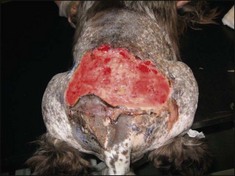
Warmed intravenous fluid bags or gloves filled with warm water can be placed next to the patient. However, in order to avoid potentially severe thermal injury, it is extremely important to ensure that these are not too hot and that some insulation is provided between the patient and the bag or glove (Figure 17.1).
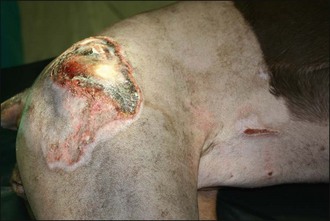
Caution is also essential when using heat pads and heat lamps to avoid iatrogenic burn injuries that can have disastrous consequences (Figure 17.2).
image

Figure 17.1 Severe cutaneous thermal injury in a dog as a result of a hot intravenous fluid bag being placed in direct contact with the skin.

(Photograph courtesy of Arthur House)

image

Figure 17.2 Severe burn injury in a dog from a heat pad.

(Photograph courtesy of Stephen Baines)