Preface
The ninth edition of Wheeler’s Dental Anatomy, Physiology, and Occlusion celebrates the life and many accomplishments of one of the finest dental educators that I have known, Professor Doctor Major McKinley Ash. Although Dr. Ash was not able to see this newest printing, his contributions to this ninth edition as well as to editions six through eight will continue to improve dental education and practice for many years to come. I have been one of his many students for the entirety of my career and I greatly miss his advice. In his memory, I will attempt to pick up the baton and continue the fine tradition of the Wheeler text.
The continuity of subject matter and the basic information found in the previous editions have been retained to reflect the many years that this book has served as a resource in the field of dental anatomy; however, this ninth edition contains some exciting new features. Of particular note is the colorization of several black and white illustrations and photos. Often, the original photograph remains for a sense of history but is combined with a color-enhanced view of the tooth being studied and a simplified line drawing of the view to highlight the primary characteristics of tooth contour and the primary anatomical features.
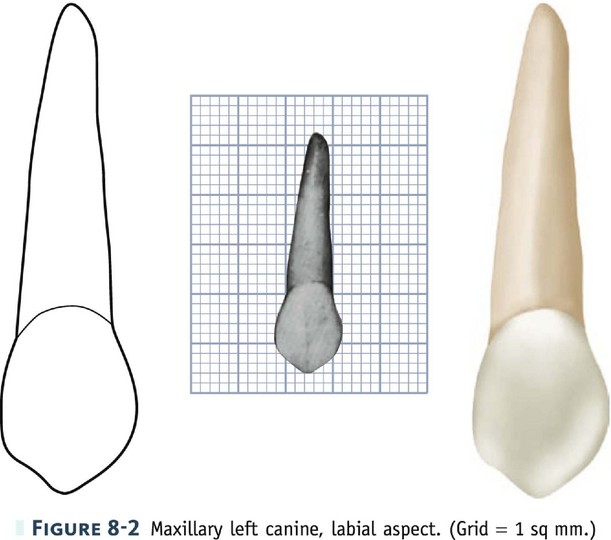
The section on Forensic Odontology has been expanded and updated to reflect growth and interest in this emerging science. As in the previous edition, the summary charts found in the appendix provide a useful tool for examination preparation. This information has been expanded to include NEW! flash cards, located at the back of the book, and is intended to be used as a quick study guide when a precious few moments become available in a student’s busy schedule.
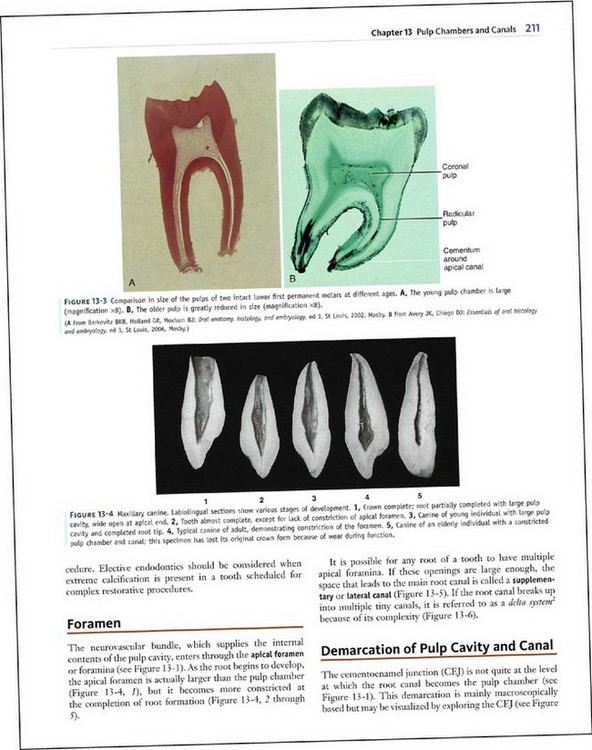
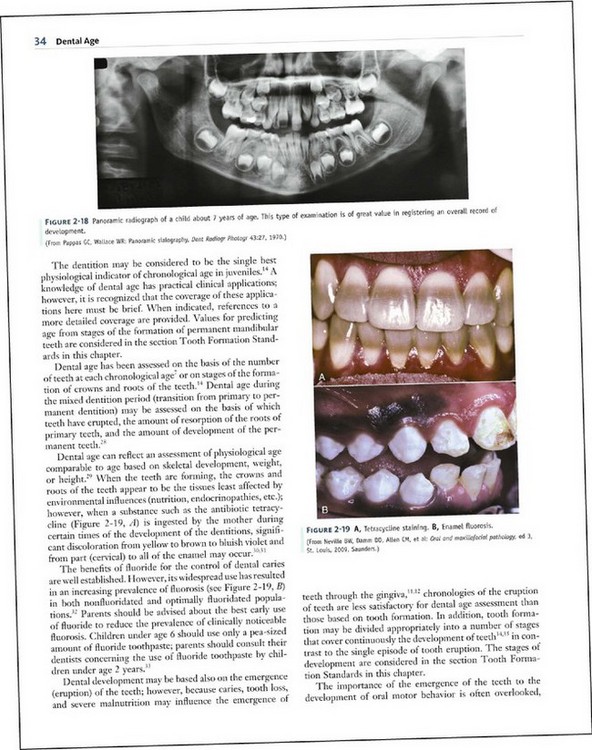
Evolve
We are very excited about the inclusion of the NEW! Evolve “helpsite.” Faculty and students should feel free to use as much of this material as is helpful for their courses. For the instructor, we’ll have all of the figures from the book in electronic form, a collection of 300 test questions, and a PowerPoint lecture intended as an aid to develop new teaching materials or to further enhance course curricula. For the student, we’ll have the same flash cards that appear in the book, only in electronic form, labeling exercises, and animations. Visit the Evolve website at http://evolve.elsevier.com/Nelson/dentalanatomy/.
DVD-ROM
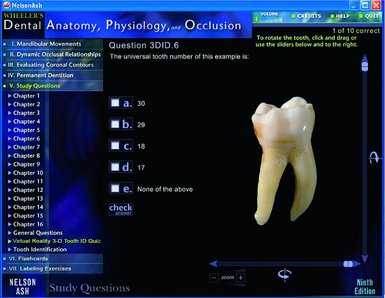
Introduced in the eighth edition, the accompanying DVD-ROM in this ninth edition has been expanded in several areas to include new content, including 3-D animations and a virtual reality tooth identification quiz. The additional material includes patterns of mandibular movement and the resulting occlusal contacts that occur when the subject demonstrates maximum intercuspation of the teeth when the temporomandibular joints are positioned in centric relation.
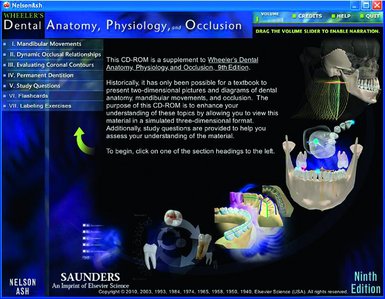
The tooth identification quiz is considered a “rite of passage” in many dental school curricula, and with the increasing difficulty encountered in collecting real tooth specimens for study, a virtual reality experience in tooth identification may help refine the skills required to examine a tooth and make a correct identification based on the student’s knowledge of the type trait criteria. In this section the student will view a Quick Time Virtual Reality movie of the tooth that allows inspection from multiple directions until a positive identification is realized.
Icons
 Throughout the book you will notice DVD-ROM icons in the text margin. When the DVD-ROM icon is shown, the reader can access the appropriate portion of the DVD-ROM identified to view the material that the text presents in a simulated 3-D and interactive format.
True to previous editions, specific and general references have been provided for further study. Through these references the reader may realize the rich history of contributions from many disciplines. In this regard, the terminology used in the sections on Occlusion have been updated to reflect both the terms used in the present day and the terminology necessary to understand the historical development and foundational research of the field.
Once again every attempt has been made to consider what is important for the student and practitioner to know and what may be of use to those from other scientific fields.