A suggested method for a rapid screening physical examination
To all students of medicine who listen, look, touch and reflect: may they hear, see, feel and comprehend.
Begin by positioning the appropriately undressed patient in bed. Use this opportunity to make a spot diagnosis if this is possible. Look particularly for any of the diagnostic facies or body habituses. Decide also whether the patient looks ill or well. Note if there is any dyspnoea or other distress. Take the blood pressure. Repeat the measurement a few minutes later if the first reading is high.
| CNS | central (and peripheral) nervous system |
| CVS | cardiovascular system |
| EN DO | endocrine system |
| GIT | gastrointestinal system |
| HAEM | haematological system |
| INF | infectious diseases |
| RENAL | renal system |
| RESP | respiratory system |
| RHEUM | rheumatological system |
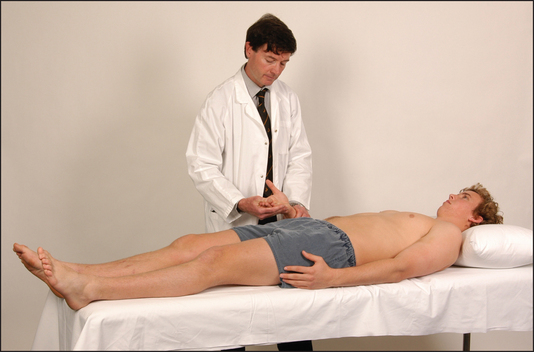
Figure A1 The detailed examination of most of the body systems begins with the hands of the patient (Courtesy of Glenn McCulloch)
Hands and arms
Begin by picking up the patient’s right hand and examine the nails for clubbing (RESP, CVS, GIT) and for the stigmata of infective endocarditis (CVS) or chronic liver disease (GIT). The nail changes suggesting chronic renal disease or iron deficiency must also be spotted (RENAL, HAEM). Note any evidence of arthropathy (RHEUM). Examine the other hand.
Take the patient’s pulse, and note the rate and regularity or irregularity (CVS). While this is being done the arms can be inspected for bruising or scratch marks (GIT, HAEM, RENAL). Determine the state of hydration (GIT, RENAL, CVS). Go on and examine for axillary lymphadenopathy (HAEM).
Face
Look at the eyes for jaundice (GIT, HAEM) or exophthalmos (ENDO). Look at the face for evidence of a vasculitic rash (RHEUM). Inspect the mouth for mucosal ulcers (RHEUM, GIT, HAEM, INF) and the tongue for glossitis (nutritional deficiencies) or cyanosis (RESP, CVS).
Front of the neck
Feel the carotid pulses and at 45° pay careful attention to the state of the jugular venous pressure (CVS). Feel gently for the position of the trachea (RESP). Then palpate the supraclavicular lymph nodes (HAEM, GIT).
Chest
Examine the front of the chest for scars and deformity. Note any spider naevi (GIT) or hair loss (GIT, ENDO). Palpate the chest wall and auscultate the heart (CVS). Then percuss and auscultate the chest (RESP) and examine the breasts.
Back of the chest and neck
Sit the patient up and lean him or her forward. After inspection, test chest expansion of the upper and lower lobes of the lungs. Percuss and auscultate the back of the chest (RESP). Feel for cervical lymphadenopathy (RESP, GIT, HAEM). Then examine formally for a goitre from behind (ENDO). Test for sacral oedema (CVS, RENAL).
Abdomen
Lay the patient flat on one pillow. Inspect the abdomen from the side and then palpate for organomegaly and other abdominal masses. Percuss for shifting dullness if this is appropriate and auscultate over the abdomen. Palpate for inguinal lymphadenopathy and hernias, and in men palpate the testes (GIT, RENAL).
Legs
Look for peripheral oedema (CVS, RENAL) and leg ulcers (HAEM, RHEUM, CVS, CNS). Feel all the peripheral pulses (CVS).
Neurological examination
Find out if the patient is right- or left-handed.
Begin with examination of the higher centres and cranial nerves. Test orientation and note any speech defect. Ask about any noticed problem with the sense of smell (I). Then examine the visual acuity, visual fields, the fundi (II), the pupils and eye movements (III, IV, VI). Screen for the other cranial nerves by testing pain sensation over the face (V), the strength of upper and lower facial muscles (VII), whispered voice hearing (VIII), the palatal movement (‘Ah’) (IX, X), poking out the tongue (XII) and rotation of the head (XI).
Next look for wasting and fasciculation in the upper limbs. Test tone, power (shoulders, elbows, wrists and fingers) and the biceps, triceps and brachioradialis reflexes. Assess finger–nose movements. Then test pinprick sensation on the tip of the shoulder, outer and inner forearms and on the median, ulnar and radial areas of the hands.
Go to the lower limbs. Test gait fully: ask the patient to walk away several paces, turn around rapidly and walk back. Then test heel–toe walking (cerebellum), ability to stand on the toes (S1) and heels (L4, L5) and squatting (proximal muscles). Finally look for Romberg’s sign (posterior columns). Next, test hip and knee flexion and extension, and dorsiflexion and plantar flexion of the feet in bed. Then do knee, ankle and plantar reflexes and heel–shin tests. Test pinprick sensation on the middle third of the thighs, both sides of the tibia, the dorsum of the feet, the little toes, on the buttocks and three levels on the trunk on both sides.
Completing the examination
Thorough physical examination always requires a rectal and pelvic examination, analysis of the patient’s urine, a temperature reading and measurement of height and weight and calculation of the BMI.
Particular details of the examination will be altered depending on what is found. An important guide to the areas where examination should be particularly directed, apart from the history, is the general inspection. A minute spent standing back to inspect the patient before the detailed examination begins is never wasted.