Population-Based Public Health Nursing Practice
The Intervention Wheel
Objectives
After reading this chapter, the student should be able to do the following:
1. Identify the components of the Intervention Wheel.
2. Describe the assumptions underlying the Intervention Wheel.
3. Define the wedges and interventions of the Intervention Wheel.
4. Differentiate among three levels of practice (community, systems, and individual/family).
Key Terms
advocacy, p. 205
case finding, p. 197
case management, p. 197
coalition building, p. 197
collaboration, p. 197
community, p. 190
community-level practice, p. 191
community organizing, p. 205
consultation, p. 197
counseling, p. 197
delegated functions, p. 197
determinants of health, p. 190
disease and other health event investigation, p. 197
health teaching, p. 197
individual-level practice, p. 191
intermediate goals, p. 210
interventions, p. 191
levels of practice, p. 188
outcome health status indicators, p. 210
outreach, p. 197
policy development, p. 205
policy enforcement, p. 205
population, p. 189
population of interest, p. 189
population at risk, p. 189
prevention, p. 190
primary prevention, p. 191
public health nursing, p. 188
referral and follow-up, p. 197
screening, p. 197
secondary prevention, p. 191
social marketing, p. 205
surveillance, p. 197
systems-level practice, p. 191
tertiary prevention, p. 190
wedges, p. 191
—See Glossary for definitions
 Linda Olson Keller, DNP, CPH, APHN-BC, RN, FAAN
Linda Olson Keller is a Clinical Associate Professor at the University of Minnesota School of Nursing. Her research focuses on evidence-based public health nursing practice and the infrastructure of the public health nursing workforce. She spent 20 years of her career in the Office of Public Health Practice at the Minnesota Department of Health. Dr. Olson Keller is certified in Public Health, board certified as an Advanced Public Health Nurse, and is a Fellow of the American Academy of Nursing. She is a frequent national speaker and consultant on public health leadership and practice.
 Sue Strohschein, MS, RN/PHN, APRN, BC
Sue Strohschein’s public health nursing career spans more than 40 years and includes practice in both local and state health departments in Minnesota. She was a generalized public health nurse consultant for the Minnesota Department of Health for 25 years. Since 2008 she has been with the University of Minnesota School of Nursing as a senior research fellow.
 Website
In these times of change, the public health system is constantly challenged to keep focused on the health of populations. The Intervention Wheel is a conceptual framework that has proved to be a useful model in defining population-based practice and explaining how it contributes to improving population health.
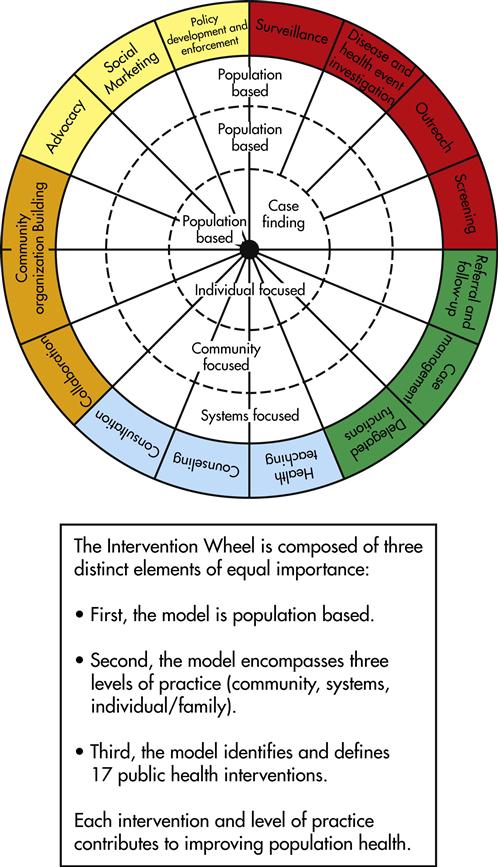
The Intervention Wheel provides a graphic illustration of population-based public health practice (Keller et al, 1998, 2004a,b). It was previously introduced as the Public Health Intervention Model and was known nationally as the “Minnesota Model”; it is now often simply referred to as the “Wheel.” The Wheel depicts how public health improves population health through interventions with communities, the individuals and families that comprise communities, and the systems that impact the health of communities (Figure 9-1). The Wheel was derived from the practice of public health nurses (PHNs) and intended to support their work. It gives PHNs a means to describe the full scope and breadth of their practice.
This chapter applies the Intervention Wheel framework to public health nursing practice. However, it is important to note that other public health members of the interprofessional team such as nutritionists, health educators, planners, physicians, and epidemiologists also use these interventions.
The Intervention Wheel Origins and Evolution
The original version of the Wheel resulted from a grounded theory process carried out by PHN consultants at the Minnesota Department of Health in the mid-1990s. This was a period of relentless change and considerable uncertainty for Minnesota’s public health nursing community. Debates about health care reform and its impact on the role of local public health departments created confusion about the contributions of public health nursing to population-level health improvement. In response to the uncertainty, the consultant group presented a series of workshops across the state highlighting the core functions of public health nursing practice (see Chapter 1 for a description of these core functions). A workshop activity required participants to describe the actions they undertook to carry out their work. The consultant group analyzed 200 practice scenarios developed at the workshops that ranged from home care and school health to home visiting and correctional health. In the final analysis, 17 actions common to the work of PHNs regardless of their practice setting were identified. The analysis also demonstrated that most of these interventions were implemented at three levels: (1) with individuals, either singly or in groups, and with families, (2) with communities as a whole, and (3) with systems that impact the health of communities. A wheel-shaped graphic was developed to illustrate the set of interventions and the levels of practice (see Figure 9-1).
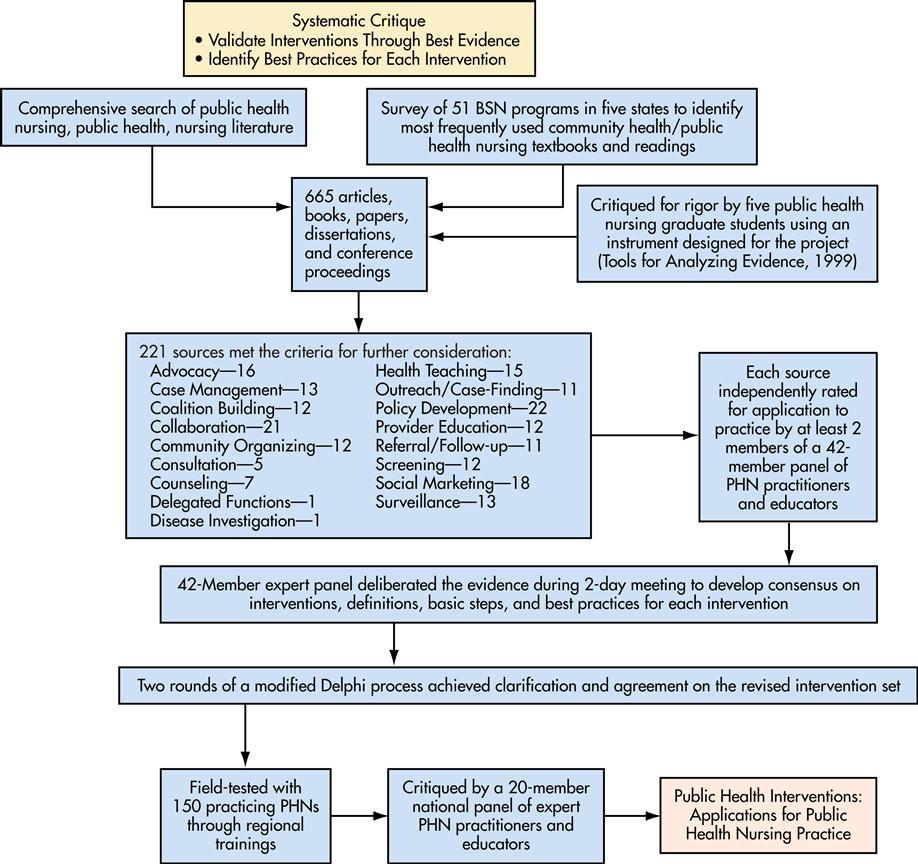
The interventions were subjected to an extensive review of supporting evidence in the literature through a grant from the federal Division of Nursing awarded to the Minnesota Department of Health in the 1990s. In 1999 the PHN consultant group at the Minnesota Department of Health designed and implemented a systematic process identifying more than 600 items from supporting evidence in the literature. These items were rated for their quality and relevancy by a group of graduate nursing students. The resulting subset of 221 items was further analyzed by two expert panels. One panel was composed of public health nursing educators and expert practitioners from five states (Iowa, Minnesota, North Dakota, South Dakota, and Wisconsin). The other panel was a similarly composed national panel. The result was a slightly modified set of 17 interventions. Figure 9-2 graphically illustrates the systematic critique. Each intervention was defined at multiple levels of practice; each was accompanied by a set of basic steps for applying the framework and recommendations for best practices.
Adoption of the model was rapid and worldwide. Since its first publication in 1998, the Intervention Wheel has been incorporated into the public/community health coursework of numerous undergraduate and graduate curricula. The Wheel serves as a model for practice in many state and local health departments and has been presented in Mexico, Norway, Poland, Hungary, Namibia, Kazakhstan, and Japan. It has served as an organizing framework for inquiry for topics ranging from doctoral dissertations (Sheridan, 2005) to the epidemiology of the lowly head louse (Monsen and Keller, 2002). The Wheel’s strength comes from the common language it affords PHNs to discuss their work (Keller et al, 1998).
Assumptions Underlying the Intervention Wheel
As with all conceptual frameworks and models, assumptions are made that help to explain the model or framework. The Intervention Wheel framework is based on 10 assumptions.
Assumption 1: Defining Public Health Nursing Practice
Public health nursing is defined as the practice of promoting and protecting the health of populations using knowledge from nursing, social, and public health sciences (APHA, 1996). The title “public health nurse” designates a registered nurse with educational preparation in both public health and nursing. The primary focus of public health nursing is to promote health and prevent disease for entire population groups. This is done by working with individuals, families, communities, and/or systems.
Assumption 2: Public Health Nursing Practice Focuses on Populations
The focus on populations as opposed to individuals is a key characteristic that differentiates public health nursing from other areas of nursing practice. A population is a collection of individuals who have one or more personal or environmental characteristics in common (Williams and Highriter, 1978). Populations may be understood as two categories. A population at risk is a population with a common identified risk factor or risk exposure that poses a threat to health. For example, all adults who are overweight and hypertensive constitute a population at risk for cardiovascular disease. All underimmunized or unimmunized children are a population at risk for contracting vaccine-preventable diseases. A population of interest is a population that is essentially healthy but that could improve factors that promote or protect health. For instance, healthy adolescents are a population of interest that could benefit from social competency training. All first-time parents of newborns are a population of interest that could benefit from a public health nursing home visit. Populations are not limited to only individuals who seek services or individuals who are poor or otherwise vulnerable.
Assumption 3: Public Health Nursing Practice Considers the Determinants of Health
Health inequities are defined as health status inequalities that society deems to be avoidable or unnecessary (Kawachi, Subramanian, and Alemeida-Filho, 2002). Significant health disparities related to race, gender, age, and socioeconomic status exist within the United States. The Health, United States, 2009 Chartbook (CDC, 2009) provides the following examples:
• In 2006, the U.S. rate of infant deaths per 1000 live births was 6.7. At least 29 other developed countries had lower infant mortality rates; the lowest was Hong Kong with 1.8 (Table 22, p 184).
• Between 2003 and 2005, the U.S. neonatal mortality rate per 1000 live births for all races was 4.6; across races and ethnicities the rates varied. For infants born to white women the rate was 3.7; for Black and African-American women, 9.2; for Hispanic or Latina women, 3.9; for American Indian or Alaskan Native, 4.3; for Asian or Pacific Islanders, 3.3 (Table 21, pp 182-183).
• In 2005 life expectancy at birth for men in the United States was 74.9 years; Hong Kong had greatest life expectancy with 77.8 years. For U.S. women, the life expectancy at birth in 2005 was 79.9; Japan ranked first with 85.5 (Table 23, p 187).
What are the factors driving these differences? Factors that influence health status across the life cycle are known as the determinants of health. They include: income, education, employment, social support, biology and genetics, physical environment, housing, transportation, and personal health practices.
Resolving health inequities and addressing the determinants of health are key distinguishing characteristics of public health nursing. In a recent interpretive qualitative study of PHNs’ practice in Nova Scotia, researchers found that PHNs routinely implemented “ecosocial surveillance functions” that focused on monitoring changes in social determinants of health. The researchers observed that PHNs “…monitored both bottom-up changes in individual, family, and community determinants of health, and top-down vertical changes or policy directives in the larger system” (Meagher-Stewart et al, 2009, p 557).
DID YOU KNOW?
The practice of Lillian Wald, public health nursing’s progenitor, offers plenty of examples of understanding determinants of health. Besides the services of PHNs, her Henry Street Settlement House offered numerous social programs, including drama and theater productions, vocational training for boys and girls, three kindergartens, summer camps for children, two large scholarship funds, study rooms staffed with people to help children with their homework, playgrounds for children, a neighborhood library, and classes in carpentry, sewing, art, diction, music, and dance. The photo below shows the settlement house’s backyard playground.

From Jewish Women’s Archive: This day in history, March 10, 1893, Resource information for backyard of a Henry Street branch. Available at http://www.jwa.org/archive/jsp/gresInfo.jsp?resID=297. Accessed December 11, 2010.
Assumption 4: Public Health Nursing Practice is Guided by Priorities Identified Through an Assessment of Community Health
In the context of the Intervention Wheel, a community is defined as “a social network of interacting individuals, usually concentrated in a defined territory” (Johnston et al, 2000).
Assessing the health status of the populations that comprise the community requires ongoing collection and analysis of relevant quantitative and qualitative data. Community assessment includes a comprehensive assessment of the determinants of health. Data analysis identifies deviations from expected or acceptable rates of disease, injury, death, or disability as well as risk and protective factors. Community assessment generally results in a lengthy list of community problems and issues. However, communities rarely possess sufficient resources to address the entire list. This gap between needs and resources necessitates a systematic priority-setting process. Although data analysis provides direction for priority setting, the community’s beliefs, attitudes, and opinions as well as the community’s readiness for change must be assessed (Keller et al, 2002). PHNs, with their extensive knowledge about the communities in which they work, provide important information and insights during the priority-setting process.
Assumption 5: Public Health Nursing Practice Emphasizes Prevention
Prevention is “anticipatory action taken to prevent the occurrence of an event or to minimize its effect after it has occurred” (Turnock, 2009, p 516). Prevention is customarily described as a continuum moving from primary to tertiary prevention (Leavell and Clark, 1965; Novick and Mays, 2001; Turnock, 2009). The Levels of Prevention box provides definitions and examples of the levels of prevention.
A hallmark of public health nursing practice is a focus on health promotion and disease prevention, emphasizing primary prevention whenever possible. Although not every event is preventable, every event has a preventable component.
Assumption 6: Public Health Nurses Intervene at All Levels of Practice
To improve population health, the work of PHNs is often carried out sequentially and/or simultaneously at three levels of prevention (see Figure 9-2).
Community-level practice changes community norms, community attitudes, community awareness, community practices, and community behaviors. It is directed toward entire populations within the community or occasionally toward populations at risk or populations of interest. An example of community-level practice is a social marketing campaign to promote a community norm that serving alcohol to under-aged youth at high school graduation parties is unacceptable. This is a community-level primary prevention strategy.
Systems-level practice changes organizations, policies, laws, and power structures within communities. The focus is on the systems that impact health, not directly on individuals and communities. Conducting compliance checks to ensure that bars and liquor stores do not serve minors or sell to individuals who supply alcohol to minors is an example of a systems-level secondary prevention strategy practice.
 LEVELS OF PREVENTION
Examples of Interventions Applied to Definition of Prevention
Primary Prevention
Primary prevention promotes health and protects against threats to health. It keeps problems from occurring in the first place. It promotes resiliency and protective factors or reduces susceptibility and exposure to risk factors. Primary prevention is implemented before a problem develops. It targets essentially well populations. Immunizing against a vaccine-preventable disease is an example of reducing susceptibility; building developmental assets in young persons to promote health is an example of promoting resiliency and protective factors.
Secondary Prevention
Secondary prevention detects and treats problems in their early stages. It keeps problems from causing serious or long-term effects or from affecting others. It identifies risk or hazards and modifies, removes, or treats them before a problem becomes more serious. Secondary prevention is implemented after a problem has begun, but before signs and symptoms appear. It targets populations that have risk factors in common. Programs that screen populations for hypertension, obesity, hyperglycemia, hypercholesterolemia, and other chronic disease risk factors are examples of secondary prevention.
Tertiary Prevention
Tertiary prevention limits further negative effects from a problem. It keeps existing problems from getting worse. It alleviates the effects of disease and injury and restores individuals to their optimal level of functioning. Tertiary prevention is implemented after a disease or injury has occurred. It targets populations who have experienced disease or injury. Provision of directly observed therapy (DOT) to clients with active tuberculosis to ensure compliance with a medication regimen is an example of tertiary prevention.
From Keller LO, Strohschein S, Lia-Hoagberg B, Schaffer M: Population-based public health nursing interventions: a model from practice, Public Health Nurs 15:311-320, 1998.
Individual-level practice changes knowledge, attitudes, beliefs, practices, and behaviors of individuals. This practice level is directed at individuals, alone or as part of a family, class, or group. Even though families, classes, and groups are comprised of more than one individual, the focus is still on individual change. Teaching effective refusal skills to groups of adolescents is an example of individual secondary prevention strategy level of practice.
Assumption 7: Public Health Nursing Practice Uses the Nursing Process at All Levels of Practice
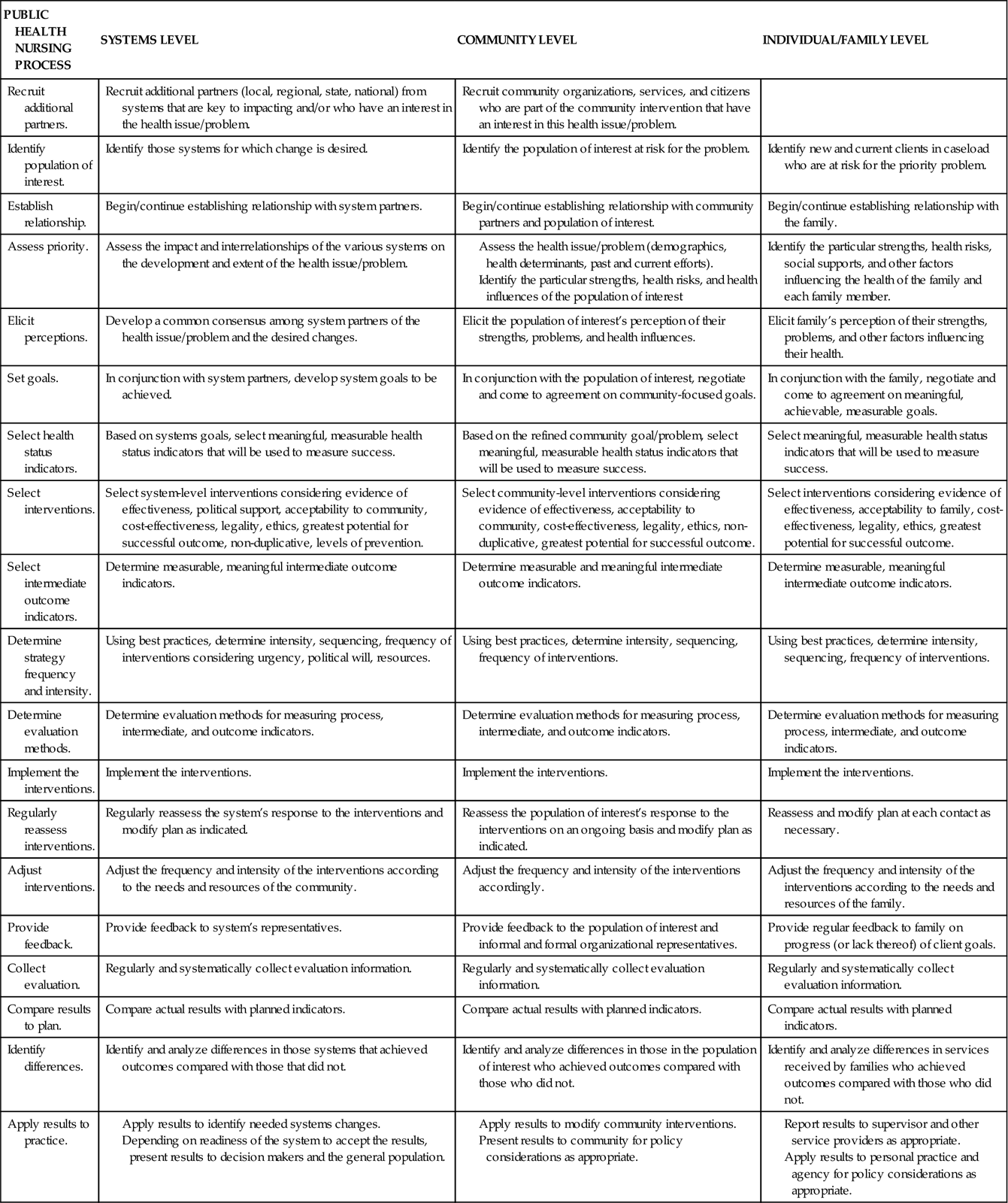
Although the components of the nursing process (assessment, diagnosis, planning, implementation, and evaluation) are integral to all nursing practice, PHNs must customize the process to the three levels of practice. Table 9-1 outlines the nursing process at the community, systems, and individual/family levels of practice.
TABLE 9-1
Assumption 8: Public Health Nursing Practice Uses a Common Set of Interventions Regardless of Practice Setting
Interventions are “actions taken on behalf of communities, systems, individuals, and families to improve or protect health status” (ANA, 2010). The Intervention Wheel encompasses 17 interventions: surveillance, disease and other health investigation, outreach, screening, case finding, referral and follow-up, case management, delegated functions, health teaching, consultation, counseling, collaboration, coalition building, community organizing, advocacy, social marketing, and policy development and enforcement.
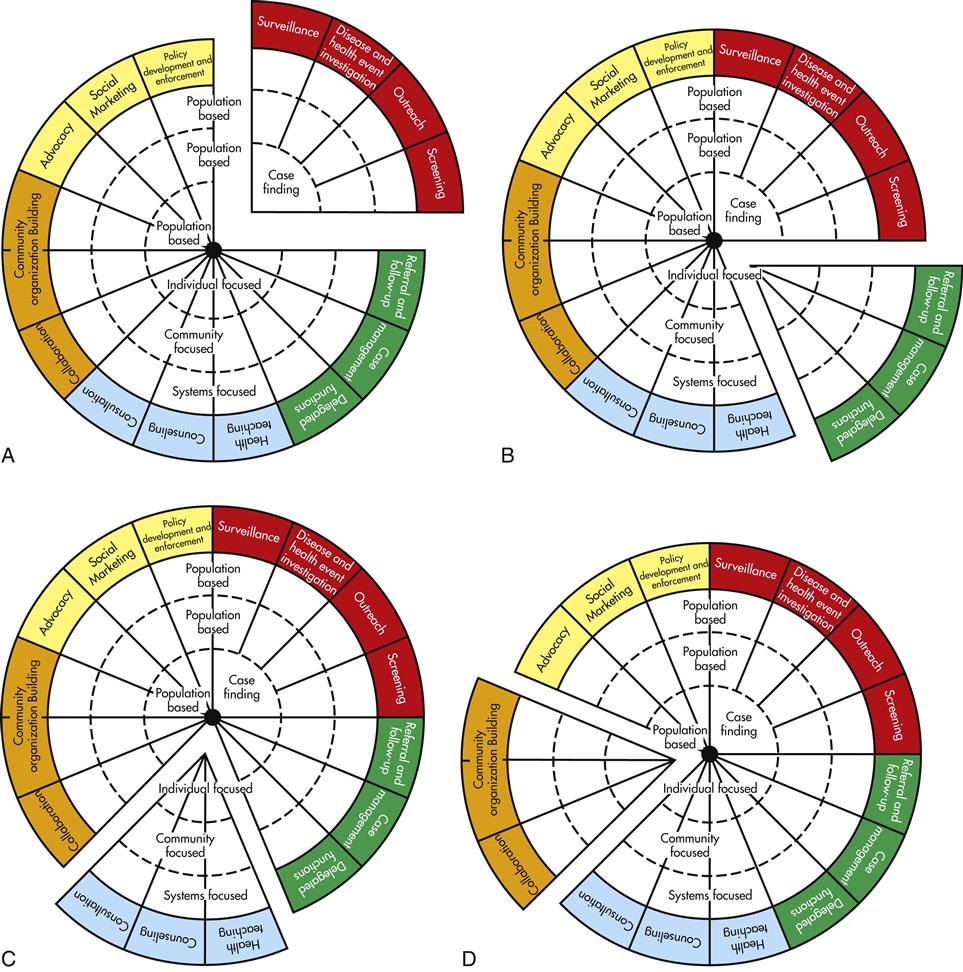
The interventions are grouped with related interventions; these wedges are color coordinated to make them more recognizable (Figure 9-3, A). For instance, the five interventions in the red wedge are frequently implemented in conjunction with one another. Surveillance is often paired with disease and health event investigation, even though either can be implemented independently. Screening frequently follows either surveillance or disease and health event investigation and is often preceded by outreach activities in order to maximize the number of those at risk who actually get screened. Most often, screening leads to case finding, but this intervention can also be carried out independently. The green wedge consists of referral and follow-up, case management, and delegated functions—three interventions that, in practice, are often implemented together (Figure 9-3, B). Similarly, health teaching, counseling, and consultation—the blue wedge—are more similar than they are different; health teaching and counseling are especially often paired (Figure 9-3, C). The interventions in the orange wedge—collaboration, coalition building, and community organizing—although distinct, are grouped together because they are all types of collective action and are most often carried out at systems or community levels of practice (Figure 9-3, D). Similarly, advocacy, social marketing, and policy development and enforcement—the yellow wedge—are often interrelated when implemented (Figure 9-3, E). In fact, advocacy is often viewed as a precursor to policy development; social marketing is seen by some as a method of carrying out advocacy.
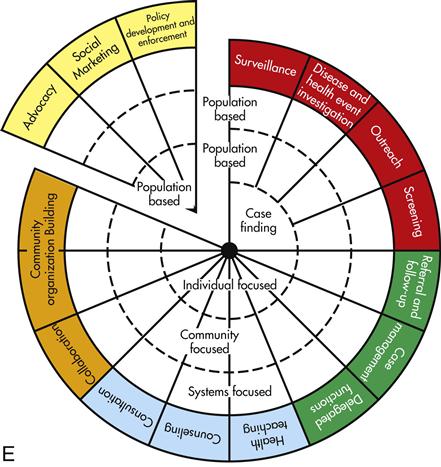
The interventions on the right side of the Wheel (i.e., the red, green, and blue wedges) are most commonly used by PHNs who focus their work more on individuals, families, classes, and groups and to a lesser extent on work with systems and communities. The orange and yellow wedges, on the other hand, are more commonly used by PHNs who focus their work on effecting systems and communities. However, a PHN may use any or all of the interventions.
Assumption 9: Public Health Nursing Practice Contributes to the Achievement of the 10 Essential Services
Implementing the interventions ultimately contributes to the achievement of the 10 essential public health services (see Chapter 1). The 10 essential public health services describe what the public health system does to protect and promote the health of the public. Interventions are the means through which public health practitioners implement the 10 essential services. Interventions are the how of public health practice (Public Health Functions Steering Committee, 1995).
Assumption 10: Public Health Nursing Practice is Grounded in a Set of Values and Beliefs
The Cornerstones of Public Health Nursing (Box 9-1) were developed as a companion document to the Intervention Wheel. The Wheel defines the “what and how” of public health nursing practice; the Cornerstones define the “why.” The Cornerstones synthesize foundational values and beliefs from both public health and nursing. They inspire, guide, direct, and challenge public health nursing practice (Keller, Strohschein, and Schaffer, 2010).
Using the Intervention Wheel in Public Health Nursing Practice
The Wheel is a conceptual model. It was conceived as a common language or catalog of general actions used by PHNs across all practice settings. When those actions are placed within the context of a set of associated assumptions or relations among concepts, the Intervention Wheel serves as a conceptual model for public health nursing practice (Fawcett, 2005). It creates a structure for identifying and documenting interventions performed by PHNs and captures the nature of their work. The Intervention Wheel provides a framework, a way of thinking about public health nursing practice. The Public Health Nursing: Scope and Standards of Practice includes the Intervention Wheel as one of several public health nursing frameworks used in practice today (ANA, 2007).
Components of the Model
As depicted in Figure 9-1, the model has three components: a population basis, three levels of practice, and 17 interventions.
Component 1: The Model Is Population Based
The upper portion of the Intervention Wheel clearly illustrates that all levels of practice (community, systems, and individual/family) are population based. Public health nursing practice is population focused. It identifies populations of interest or populations at risk through an assessment of community health status and an assignment of priorities.
The population of Sherburne County (Minnesota) increased almost 175% in 25 years (Minnesota Departments of Education, Health, Human Services, and Public Safety, 2007). The numerous new housing developments characterized urban sprawl, which has been implicated in the current obesity epidemic in both children and adults (Dunton et al, 2009; Renalds, Smith, and Hale, 2010). The local health department staff was concerned about the prevalence of obesity in its population. Data from the Community Health Status Indicators’ website showed that 24.1% of the population’s adults were considered obese (USDHHS, 2010). A 2007 state student health survey documented that 25% of ninth-grade girls and 20% of ninth-grade boys in the county were overweight or obese. In this same age group, 76% of girls and 80% of boys reported they were active less than 30 minutes daily. It was clear that Sherburne County had an obesity problem (Minnesota Departments of Education, Health, Human Services, and Public Safety, 2007).
Reversing this trend required reducing barriers to exercise. Health department staff recognized the impact of urban sprawl on their built environment (Renalds, Smith, and Hale, 2010), or the “human-made space in which people live, work and recreate on a day-to-day basis” (Roof and Oleru, 2008). One of the first factors they considered was the walkability of their communities, or extent to which planned transportation networks and public spaces accommodate walking and other forms of physical exercise. Walkability includes: (1) continuous and well-maintained sidewalks, (2) easy access, path directness, and street network connectivity, (3) crossing safety, (4) absence of heavy and high-speed traffic, (5) pedestrian buffering from traffic, (6) land-use density and diversity, (7) street trees and landscaping, (8) visual interest and sense of place, and (9) security (Lo, 2009).
With these data, the public health staff engaged community members to determine the next steps to improve their community walkability. The department asked undergraduate nursing students who were in their public health nursing clinical program to design, implement, and evaluate a walkability project. The students walked over 100 miles and rated the walkability of three different Sherburne County communities. The students analyzed the results and presented recommendations for improvements to the city councils of the three communities. The findings were used by two of the three communities to secure funding for improvements to their community’s walkability (Zoller, 2010).
Component 2: The Model Encompasses Three Levels of Practice
Public health nursing practice intervenes with communities, the individuals and families that comprise communities, and the systems that impact the health of communities. Interventions at each level of practice contribute to the overall goal of improving population health. The work of PHNs is accomplished at all levels. No one level of practice is more important than another; in fact, many public health priorities are addressed simultaneously at all three levels.
One public health priority that almost every PHN will encounter is the potential for the occurrence of vaccine-preventable disease because of delayed or missing immunizations. A recent task analysis of 60 PHNs from 29 states revealed that 93% of all PHNs participated in immunization activities (Keller, 2008). This held true regardless of the PHN’s work setting (e.g., home, clinic, school, correctional facility, childcare center) or the population focus (e.g., maternal-child health, elderly chronic disease management, refugee health, disease prevention and control). Vaccine-preventable diseases, or diseases that may be prevented through recommended immunizations, include diphtheria, pertussis, tetanus, polio, mumps, measles, rubella, hepatitis A, hepatitis B, varicella, meningitis, Haemophilus influenzae type b (Hib), pneumococcal pneumonia, rotavirus, human papillomavirus (HPV), herpes zoster, and seasonal influenza (CDC, 2010b).
This section illustrates strategies for reducing the occurrence of vaccine-preventable diseases at all three levels of practice. These are only selected examples of strategies to improve immunization rates; it is not an inclusive list.
Community Level of Practice
The goal of community-level practice is to increase the knowledge and attitude of the entire community about the importance of immunization and the consequences of not being immunized. These strategies will lead to an increase in the percentage of people who obtain recommended immunizations for themselves and their children.
At the community level, PHNs work with health educators on public awareness campaigns. They perform outreach at schools, senior centers, county fairs, community festivals, and neighborhood laundromats.
PHNs conduct or coordinate audits of immunization records of all children in schools and childcare centers to identify children who are under-immunized. The PHNs refer them to their medical providers or administer the immunizations through health department clinics.
When a confirmed case of a vaccine-preventable disease occurs, PHNs work with epidemiologists to identify and locate everyone exposed to the index case. PHNs assess the immunization status of people who were exposed and ensure appropriate treatment.
In the event of an outbreak in the community, all PHNs have a role and ethical responsibility to take part in mass dispensing clinics. Mass dispensing clinics disperse immunizations or medications to specific populations at risk. For example, clinics may be held in response to an epidemic of mumps, a case of hepatitis A attributable to a foodborne exposure in a restaurant, or an influenza pandemic in the general population.
Systems Level of Practice
The goal of systems-level practice is to change the laws, policies, and practices that influence immunization rates, such as promoting population-based immunization registries and improving clinic and provider practices.
PHNs work with schools, clinics, health plans, and parents to develop population-based immunization registries. Registries, known officially by the Centers for Disease Control and Prevention (CDC) as “Immunization Information Systems,” combine immunization information from different sources into a single electronic record. A registry provides official immunization records for schools, day-care centers, health departments, and clinics. Registries track immunizations and remind families when an immunization is due or has been missed.
PHNs conduct audits of records in clinics that participate in the federal vaccine program. PHNs ascertain if a clinic is following recommended immunization standards for vaccine handling and storage, documentation, and adherence to best practices. PHNs also provide feedback and guidance to clinicians and office staff for quality improvement.
PHNs also work with health care providers in the community to ensure that providers accurately report vaccine-preventable diseases as legally required by state statute.
Individual/Family Level of Practice
The goal of individual/family-level strategies is to identify individuals who are not appropriately immunized, identify the barriers to immunization, and ensure that the individual’s immunizations are brought up to date.
At the individual level of practice, PHNs conduct health department immunization clinics. Unlike mass dispensing clinics, immunization clinics are generally available to anyone who needs an immunization and do not target a specific population. These clinics often provide an important service to individuals without access to affordable health care.
PHNs use the registry to identify children with delayed or missing immunizations. They contact families by phone or through a home visit. The PHNs assess for barriers and consult with the family to develop a plan to obtain immunizations either through a medical clinic or from a health department clinic. The PHN follows up at a later date to ensure that the child was actually immunized.
PHNs routinely assess the immunization status for clients in all public health programs, such as well-child clinics, family planning clinics, maternal-child health home visits, or case management of elderly and disabled populations, and they ensure that immunizations are up to date.
Component 3: The Model Identifies and Defines 17 Public Health Interventions
The Intervention Wheel encompasses 17 interventions: surveillance, disease and other health investigation, outreach, screening, case finding, referral and follow-up, case management, delegated functions, health teaching, consultation, counseling, collaboration, coalition building, community organizing, advocacy, social marketing, and policy development and enforcement.
All interventions, except case finding, coalition building, and community organizing, are applicable at all three levels of practice. Community organizing and coalition building cannot occur at the individual level. Case finding is the individual level of surveillance, disease and other health event investigation, outreach, and screening. Altogether, a PHN selects from among 43 different intervention-level actions.
Table 9-2 provides examples of the intervention at the three levels of practice for each of the 17 interventions.
• Surveillance describes and monitors health events through ongoing and systematic collection, analysis, and interpretation of health data for the purpose of planning, implementing, and evaluating public health interventions (adapted from Mortality and Morbidity Weekly Review, 2001).
• Disease and other health event investigation systematically gathers and analyzes data regarding threats to the health of populations, ascertains the source of the threat, identifies cases and others at risk, and determines control measures.
• Outreach locates populations of interest or populations at risk and provides information about the nature of the concern, what can be done about it, and how services can be obtained.
• Screening identifies individuals with unrecognized health risk factors or asymptomatic disease conditions in populations (Box 9-2).
• Case finding locates individuals and families with identified risk factors and connects them with resources.
• Referral and follow-up assists individuals, families, groups, organizations, and/or communities to identify and access necessary resources in order to prevent or resolve problems or concerns.
• Case management optimizes self-care capabilities of individuals and families and the capacity of systems and communities to coordinate and provide services.
• Delegated functions are direct care tasks a registered professional nurse carries out under the authority of a health care practitioner as allowed by law. Delegated functions also include any direct care tasks a registered professional nurse entrusts to other appropriate personnel to perform.
• Health teaching communicates facts, ideas, and skills that change knowledge, attitudes, values, beliefs, behaviors, and practices of individuals, families, systems, and/or communities (Box 9-3).
• Counseling establishes an interpersonal relationship with a community, system, family, or individual intended to increase or enhance their capacity for self-care and coping. Counseling engages the community, system, family, or individual at an emotional level.
• Consultation seeks information and generates optional solutions to perceived problems or issues through interactive problem solving with a community, system, family, or individual. The community, system, family, or individual selects and acts on the option best meeting the circumstances.
• Collaboration commits two or more persons or organizations to achieve a common goal through enhancing the capacity of one or more of the members to promote and protect health (Freshman et al, 2010; Henneman et al, 1995).
• Coalition building promotes and develops alliances among organizations or constituencies for a common purpose. It builds linkages, solves problems, and/or enhances local leadership to address health concerns.
• Community organizing helps community groups to identify common problems or goals, mobilize resources, and develop and implement strategies for reaching the goals they collectively have set (Brown, 2007; Minkler, 1997).
• Advocacy pleads someone’s cause or acts on someone’s behalf, with a focus on developing the capacity of the community, system, individual, or family to plead their own cause or act on their own behalf.
• Social marketing uses commercial marketing principles and technologies for programs designed to influence the knowledge, attitudes, values, beliefs, behaviors, and practices of the population of interest.
• Policy development places health issues on decision-makers’ agendas, acquires a plan of resolution, and determines needed resources. Policy development results in laws, rules, regulations, ordinances, and policies.
• Policy enforcement compels others to comply with the laws, rules, regulations, ordinances, and policies created in conjunction with policy development.
BOX 9-3
Health teaching communicates facts, ideas, and skills that change knowledge, attitudes, values, beliefs, behaviors, practices, and skills of individuals, families, systems, and/or communities.
• Knowledge is familiarity, awareness, or understanding gained through experience or study.
• Attitude is a relatively constant feeling, predisposition, or set of beliefs directed toward an object, person, or situation, usually in judgment of something as good or bad, positive or negative.
• Value is a core guide to action.
• Belief is a statement or sense, declared or implied, intellectually and/or emotionally accepted as true by a person or group.
• Behavior is an action that has a specific frequency, duration, and purpose, whether conscious or unconscious.
• Practice is the act or process of doing something or the habitual or customary performance of an action.
• Skill is proficiency, facility, or dexterity that is acquired or developed through training or experience.
TABLE 9-2
EXAMPLES OF 17 INTERVENTIONS AT THREE LEVELS OF PRACTICE


In addition to the definition and examples, each intervention has basic steps for implementation at each of the three levels (i.e., community, systems, and individual/family) as well as a listing of best practices for each intervention. The basic steps are intended as a guide for the novice public health nurse or the experienced public health nurse wishing to review his/her effectiveness. Box 9-4 describes the basic steps of the counseling intervention.
The best practices are provided as a resource for PHNs seeking excellence in implementing the interventions. They were constructed by a panel of expert public health nursing educators and practitioners after a thorough analysis of the literature. Many practices of public health nursing are either not researched or, if they are researched, not published. The process used to develop this model considered this limitation and met the challenge with the use of expert practitioners and educators. The best practices are a combination of research and other evidence from the literature and/or the collective wisdom of experts. Box 9-5 outlines an example of a set of best practices for the intervention of referral and follow-up, some supported by evidence and others supported by practice expertise.
Adoption of the Intervention Wheel In Practice, Education, And Management
The speed at which the Intervention Wheel was adopted may be attributed to the balance between its practice base and its evidence-based support. The Intervention Wheel has led to numerous innovations in practice and education since it was first published in 1998 (Keller et al, 2004a). Further dissemination of the model has occurred through the hundreds of graduate and undergraduate schools of nursing that use the Intervention Wheel as a framework for teaching public health nursing.
The Intervention Wheel has been widely adopted as a framework for public health nursing practice:
• In 2007, the American Nurses Association officially recognized the Intervention Wheel as a framework in the Public Health Nursing Scope and Standards of Practice (ANA, 2007).
• The Los Angeles County Department of Health Services used the Intervention Wheel in their initiative to re-invigorate public health nursing practice—orientation, practice standards, documentation, recruitment, and retention—for their 500 public health nurse generalists and specialists (LACDHS, 2002; Avilla and Smith, 2003; Smith and Bazini-Barakat, 2003).
• The Massachusetts Association of Public Health Nurses used the Intervention Wheel as the framework for their state “Leadership Guide and Resource Manual” (Massachusetts Association of Public Health Nurses, 2009).
• PHNs in the Shiprock Service Unit of the Indian Health Service use the Wheel in their practice and adapted it to reflect the Navajo culture. The Navajo Intervention Wheel (Figure 9-4) is presented as a Navajo basket and uses the traditional colors of the Navajo nation.
• From 2001 to 2005, the Intervention Wheel served as the framework for a Division of Nursing grant that successfully brought together education and practice communities to collaboratively redesign the public health nursing student’s clinical experience. Several of these collaboratives remain viable and active.
• PHN consultants at the Wisconsin Department of Health used the Intervention Wheel to differentiate levels of nursing practice in local health departments related to educational preparation and to outline the role of the associate degree and diploma nurse in public health. (Although the baccalaureate degree is the accepted standard for entry to public health nursing practice, shortages of baccalaureate prepared nurses sometimes result in health departments employing associate degree and diploma nurses.)
• PHNs at the St. Paul-Ramsey County (MN) Department of Health used the Intervention Wheel to illustrate the activities of their refugee health program. Their display (Figure 9-5) identified the most common interventions implemented with the refugee population and illustrated each intervention with a photograph.

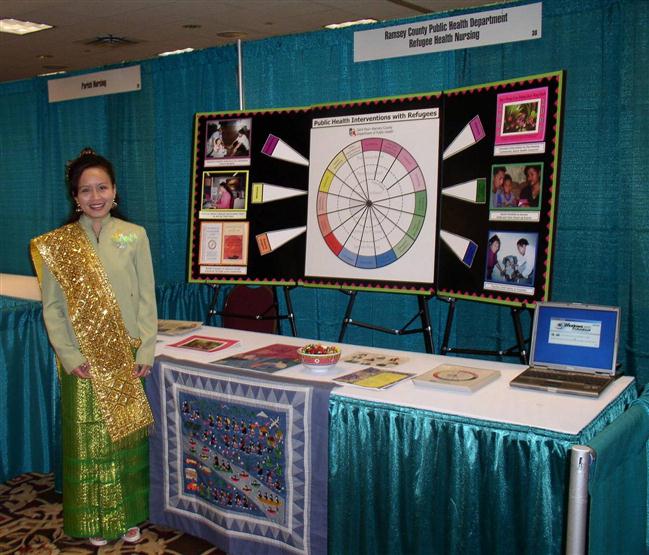
The Wheel provides a meaningful frame of reference and common language for staff to communicate about the nature of their work and is used in orientation programs in several states.
• The Alaskan Public Health Nurse Leadership Academy uses the Intervention Wheel to familiarize new staff with population-based practice (http://www.hss.state.ak.us/dph/nursing/PFDs/Troshynski-Academy.pdf).
• Several universities have developed online applications of the Intervention Wheel, including the Virginia Commonwealth University (http://www.people.vcu.edu/~elmiles/interventions/) and the University of Minnesota School of Public Health (http://www.sph.umn.edu/ce/tools/wheel.asp).
The concepts of the model have also been used internationally. The Intervention Wheel was used in public health nursing projects in New Zealand and Ireland. The Institute of Primary Health & Ambulatory Care in the Townsville Health Service District, Queensland Health in Australia used the Intervention Wheel to develop a set of competencies (http://www.health.qld.gov.au/townsville/Clinicians/default.asp).
The significance of the contributions of the Intervention Wheel has been recognized by the nursing community. The authors of the Intervention Wheel received Sigma Theta Tau International and National Pinnacle Awards for Research Dissemination and a Creative Achievement Award from the American Public Health Association, Section of Public Health Nursing.
Healthy People 2020
The objectives chosen to be highlighted in this chapter show how many of the interventions from the Wheel are applied in the Healthy People 2020 document. It further indicates how appropriate these interventions are to improving the health of individuals, populations, and communities, thus improving the health of the nation.
 HEALTHY PEOPLE 2020
Healthy People 2020 identifies action steps for 38 health priorities that the United States must take in order to achieve better population health by the year 2020. The 500 recommended objectives offer numerous opportunities for public health nurses to contribute though implementing interventions at any or all of the levels. Here are a few examples:
• AH-8: Adolescent Health Objective: Increase the proportion of adolescents who have a wellness check-up in the past 12 months. PHNs who provide well-child screening services in school settings or local health departments will need well-designed outreach interventions to convince teens that even healthy kids can benefit from check-ups. This will require consulting with parents and groups of teens themselves to identify what “benefits” would attract them and incorporating them into the outreach design. PHNs will also need to collaborate with other health care providers in the community to ensure that diagnostic and treatment services are available for teens who require additional services.
• DH-7: Disability and Secondary Conditions Objective: Reduce the proportion of older adults with disabilities who use inappropriate medications. The case management that PHNs provide to elderly or disabled populations in their communities includes an assessment of clients’ medications to ensure compliance with the regimen prescribed by health care providers under delegated functions.
• ECBP-10: Education and Community-Based Programs Objective: Increase the number of community-based organizations, providing population-based primary prevention services in the following areas: injury, violence, mental illness, tobacco use, substance abuse, unintended pregnancy, chronic disease programs, nutrition, and physical activity. PHNs may convene coalitions to address an issue or serve as facilitators or participants of coalitions already organized. For instance, PHNs with expertise in substance use prevention might offer health teaching and consultation to a coalition organized to find ways to reduce substance use during pregnancy. It could also mean the establishment of a new screening and referral system among providers to identify early pregnant women and their partners struggling with drug or alcohol use and link with resources for treatment.
• EH-8.1: Environmental Health Objective: Eliminate elevated blood lead levels in children. PHNs providing services to families with young children assess (surveillance) the living conditions for lead. Housing constructed prior to 1978, the year lead-based paint for residential use was banned, is particularly suspect. Depending on the community’s housing and lead-abatement codes, PHNs may provide health teaching and counseling to the families regarding the dangers of lead exposure to small children or provide advocacy on their behalf with housing authorities.
• MICH-18: Maternal Infant and Child Health Objective: Decrease postpartum relapse of smoking among women who quit smoking during pregnancy. A recent systematic review of the literature on effective strategies to prevent postpartum smoking relapse concluded that PHNs would more likely be effective in assisting new mothers to resist returning to smoking and exposing their child to second-hand smoke if they: (1) consistently used the U.S. Preventive Services Task Forces “5 A’s” when counseling with smokers, (2) tailored health teaching regarding the dangers of second-hand smoke to the client’s specific situation, (3) empowered the mother and family members to adopt a smoke-free home smoking policy, and (4) advocated for the importance of partners also quitting (Ashford et al, 2009).
From Ashford K, Hahn E, Hall L, et al: Postpartum smoking relapse and secondhand smoke, Public Health Rep 124:515-526, 2009.
Applying the Nursing Process in Public Health Nursing Practice
PHNs use the nursing process at all levels of practice. PHNs must customize the components of the nursing process (assessment, diagnosis, planning, implementation, evaluation) to the three levels of practice. See Table 9-2 for an outline of the nursing process at the community, systems, and individual/family levels of practice.
Applying The Process at the Individual/Family Level
Community Assessment
During a health department’s community assessment process, information on the health status of children was obtained from the following:
• Staff public health nurses who worked with families in clinics, schools, and homes
• Community partners who worked with families, including health care providers, mental health workers, social workers, and school personnel
• Preschool screening program data on the number of young children with developmental delays and problems for the past 5 years
• Data from the county social services department on the number of substantiated child maltreatment and neglect cases for the past 5 years
PHNs participated in the community meeting that prioritized the long list of issues identified in the community assessment. One of the top community priorities that emerged was the following: Decreasing numbers of children at risk for delayed development, injury, and disease because of inadequate parenting by parents experiencing mental health problems.
The community health plan developed a goal to decrease the number of children with delayed development, injury, and disease attributable to inadequate parenting. The local health department, with the support of community partners, decided they would address this priority through a home visiting strategy. Home visiting enhances a child’s environment and increases the capacity of parents to behave appropriately. Although parental mental health problems are a major source of stress for children, this vulnerability can be tempered through support from others and a caring environment.
Home visiting to families is an example of practice at the individual level because the interventions are delivered to families with the goal of changing parental knowledge, attitudes, practices, and behaviors.
Public Health Nursing Process: Assessment of a Family
A PHN received a referral on Tyler, age 3. He was the only child of Ashley, a 19-year-old single mother with severe depression. Ashley lived in an old rented house in the small town where she grew up. She had a boyfriend who was not Tyler’s biological father. Ashley survived on limited public assistance and occasional help from her mom.
The PHN assessed the resilience, assets, and protective factors as well as the problems, deficits, and health risks of this family. The PHN also tried to elicit Ashley’s perception of her situation, which was difficult because of her depressed state. This step is important because often a client’s perception of their problems or strengths may not align with the PHN’s professional assessment.
All public health nursing practice is relationship based, regardless of level of practice. An established trust relationship increases the likelihood of a successful outcome. One of the PHN’s main priorities was to establish a trusting relationship with Ashley. This was difficult because Ashley was seldom out of bed when the PHN arrived, but the PHN persisted and eventually developed the relationship.
Public Health Nursing Process: Diagnosis
• Diagnosis: Increased risk for delayed development, injury, and disease because of inadequate parenting by a primary parent experiencing depression
• Population at risk: Young children who are being parented by a primary parent who is experiencing mental health problems
• Prevention level: Secondary prevention, because the families have an identified risk
Public Health Nursing Process: Planning (Including Selection of Interventions)
Based on the assessment of this family, the PHN negotiated with Ashley to establish meaningful, measurable, achievable intermediate goals. In families experiencing mental illness (actually, in most families), behavior change occurs in very small steps. For this family, client goals included the following outcomes:
• Ashley will get out of bed at least 3 days in the week.
• Tyler will be dressed when the PHN arrives.
• Tyler will get to the bus on time 3 days in a row.
• The clutter will be cleaned off the steps.
• Ashley will call to make a doctor’s appointment for Tyler’s well-child check.
• Ashley will use “time outs” instead of spanking.
• Ashley will read a story to Tyler twice a week. (Intermediate indicators at the individual level of practice are changes in an individual’s knowledge, attitudes, motivation, beliefs, values, skills, practices, and behavior that lead to desired changes in health status.)
The PHN also selected meaningful, measurable outcome health status indicators to measure the impact of the interventions on population health. Examples include no signs or reports of child maltreatment; child regularly attends preschool; child receives well-child examinations according to recommended schedule; child’s immunizations are up to date; the family seeks medical care for acute illness as needed and does not seek medical care inappropriately; and child falls within normal limits on developmental tests.
The PHN selected the interventions, which included collaboration, case management, health teaching, delegated functions, and referral and follow-up. In selecting these interventions, the PHN considered evidence of effectiveness, political support, acceptability to the family, cost-effectiveness, legality, ethics, greatest potential for successful outcome, and level of prevention.
Public Health Nursing Process: Implementation
The PHN determined the sequence and frequency of her home visits based on her assessment of each family. Some families received home visits once a week, some twice a week, and others twice a month. The PHN visited this family weekly in the beginning and then spaced the home visits farther apart. She used the following interventions.
Collaboration
The PHN identified and involved as many alternative caregivers in Tyler’s care as possible, including Tyler’s biological father, aunt and uncle, and grandparents as well as Ashley’s boyfriend.
Case Management
The PHN arranged childcare services and coordinated transportation for Tyler to spend significant portions of his day outside of the home.
Health Teaching
The PHN provided information on child growth and development, nutrition, immunizations, safety, medical and dental care, and discipline to Ashley and the alternative caregivers.
Delegated Functions (Public Health Nurse to Paraprofessional)
The PHN placed a family health aide in the home to provide role modeling for Ashley. As part of this intervention, the PHN monitored and supervised the aide.
Referral and Follow-up
Based on the assessment, the PHN referred Ashley to community resources and services that included early childhood services, legal aid, food stamps, mental health counselors, and transportation.
Public Health Nursing Process: Evaluation
The PHN reassessed and modified her plan at each home visit. She provided regular feedback to Ashley and the other caregivers on their progress. The PHN documented her results and compared them with the selected indicators. After 6 months of home visits, Ashley got out of bed most days of the week but rarely got dressed. Ashley was more successful in getting Tyler to the bus and to preschool. The family health aide helped Ashley clean the clutter off the steps. Ashley scheduled a doctor’s appointment for Tyler’s well-child visit but failed to get him to the appointment. Ashley was successful in learning to substitute “time outs” for spanking, with the help of the family aide. Tyler exhibited no signs of child maltreatment. He attended preschool regularly. Tyler was still behind on his immunizations because of the missed appointment. All of Tyler’s developmental tests were within normal limits.
The PHN reported her results to her supervisor during their regular supervisory meetings. The PHN also talked with other PHNs who worked with similar families about common issues and best practices, and applied what she had learned to her practice.
Applying the Public Health Nursing Process at the Community Level of Practice Scenario
Note: At the community level of practice, the community assessment, program planning, and evaluation process is the public health nursing process.
Community Assessment (Public Health Nursing Process: Assessment)
Childhood obesity is a rapidly growing community problem. An increasing number of children ages 2 to 11 are considered overweight, as defined by a body mass index (BMI) at or above the 95th percentile (based on CDC Growth Charts; Ogden 2010). The 2007-2008 National Health and Nutrition Examination Survey data estimated that 10% of boys and 10.7% of girls aged 2 to 5 were overweight in the United States. Among children aged 6 to 11 years, the percentages were 21.2% for boys and 18% for girls (Dakota County, 2010). Childhood obesity and hyperplasia of adipose cells are linked to obesity later in life.
A health department recognized the well-established association between overweight and obesity in childhood and the development of both continuing overweight/obesity as adults and a host of chronic diseases (CDC, 2010a). In response, the public health nursing director of a health department convened a childhood obesity prevention summit. Over 80 participants representing area health care providers, schools, child care, and governmental and community-based health organizations met for an entire day to discuss the problem and frame solutions.
Community Diagnosis (Public Health Nursing Process: Diagnosis)
The percentage of children aged 2 to 11 who are overweight or obese is unacceptable and threatens the future health status of the community.
Community Action Plan: Public Health Nursing Process: Planning (Including Selection of Interventions)
At the conclusion of the summit, each organization represented committed to promoting healthy eating and physical activity habits for all residents, with an emphasis on parents of young children. The health department recognized that substantial portion of a child’s caloric intake occurs at child care.
Based on its assessment of the community, the health department initiated a 24-week evidence-based program that promotes the consumption of fruits and vegetables by young children through intervention with licensed home childcare providers. “LANA the Iguana” (Learning About Nutrition Through Activities) encourages eating eight targeted fruits and vegetables: broccoli, sweet red pepper, cherry tomatoes, apricots, sugar snap peas, kiwi, sweet potatoes, and strawberries (Figure 9-6). These fruits and vegetables were featured in activities throughout the program related to menu changes, classroom activities, and family involvement.

Menu Changes
Home childcare providers increased opportunities for children to eat more fruits and vegetables by serving the targeted fruits and vegetables on the menu, alternating four for one week and four the next. Fruits and vegetables were served as the morning and afternoon snack every day.
Classroom Activities
Home childcare providers increased children’s preference for and knowledge of fruits and vegetables by featuring one of the targeted fruits and vegetables each week throughout the program. During that week, the featured fruit or vegetable was the focus of tasting and cooking activities as well as the topic of stories and games.
Family Involvement
Home childcare providers gave families information about the program and activities to do at home. These included quick and easy kid-tested recipes and take-home fruit/vegetable tasting kits.
The PHNs selected their interventions, which included consultation, health teaching, social marketing, collaboration, and surveillance. In selecting these interventions, the PHNs considered evidence of effectiveness, acceptability to community, cost-effectiveness, legality, ethics, and greatest potential for successful outcome.
Community Implementation Plan (Public Health Nursing Process: Implementation)
1. Social marketing: LANA the Iguana was a social marketing program. It incorporated a range of age-appropriate social marketing techniques including iguana puppets and storybooks, recipe cards and activities. The PHNs promoted retention by providing home childcare providers with incentives, including two grocery store gift cards and plastic fruit/vegetable toys for the children. They worked with librarians to place LANA the Iguana kits (comprised of iguana puppets, activities, and storybooks) in the local library for parents to check out. PHNs also donned the LANA the Iguana costume to implement the curriculum directly to children as well as train the home childcare providers and parents.
2. Health teaching: The PHNs trained the home childcare providers on the LANA curriculum to ensure fidelity to the program.
3. Consultation: The public health nurses consulted with home childcare providers about the program on a regular and ongoing basis.
4. Collaboration: PHNs collaborated with health educators to develop and distribute LANA materials, including a curriculum guide, recipe books, storybooks, parent newsletters, and LANA the Iguana puppets. They also collaborated with public health nursing students to collect program evaluation data.
5. Surveillance: The PHNs collected data on the consumption of fruits and vegetables in the home childcare setting.
Community Evaluation (Public Health Nursing Process: Evaluation)
Follow-up surveys with the county’s 75 licensed home childcare providers, who served about 500 children, found that 67% of children were more or much more likely to eat fruits and 78% were more likely to eat vegetables; 92% of children were more likely to try new foods; and 76% of providers offered fruits and vegetables more often at snack time (Dakota County, 2010). Establishing healthy eating habits among young children will lead to reduced levels of obesity.
Applying the Public Health Nursing Process to a Systems Level of Practice Scenario
Health departments conduct assessments of community health status, a core function of public health, on an ongoing basis. The identification of some community problems emerges out of practice, rather than through a formal community assessment. This scenario is such an example.
Public Health Nursing Process: Assessment
For several years, PHNs had been very concerned about the poor living conditions in an apartment complex in which many of their clients lived. The walls were moldy, the carpet was unclean and deteriorated, and closet doors had fallen off their runners and struck children living in the apartment. The PHNs were suspect of the required cash payments that the manager required for repairs, extra security deposits, and increased rent after the birth of a baby.
Many of the tenants were undocumented Latinos and tried not to create problems. Most could not speak or read English well, and often signed lease agreements without taking note of damage or existing problems in the apartment and were therefore blamed for them. In addition, the manager blamed the tenants for the mold on the walls, implying that their cooking created too much humidity. Citing these “problems,” the manager often gave bad references for the tenants, which made it difficult for them to move.
Over the years, the PHNs had diligently worked with their clients to correct these problems, but with little success. When the PHNs met with the manager to discuss the issues, he became angry. As a result, the manager had the PHNs’ cars towed whenever he saw them in the parking lot. The PHNs also had sought help from city officials, but the officials had no legal recourse to remedy the situation.
Finally, several events occurred that spurred the PHNs to action. One of the PHNs found a non-functioning smoke detector in an apartment during a home safety check. The family reported that the apartment manager had dismantled the smoke detector and left it that way. At the same time, another PHN was working with a family that was trying to move to a new, safer, cleaner apartment. The family had found a new apartment but could not move because the manager gave them a bad (although false) reference. The family no longer had a lease, but the manager said they could not move. The PHNs realized that there were many complex legal issues related to the living conditions of their clients.
Public Health Nursing Process: Diagnosis
Public Health Nursing Process: Planning (Including Selection of Interventions)
At the systems level of practice, the goal is to change policies, laws, and structures. The PHNs’ goals were to enforce the tenants’ legal rights and improve the living conditions in the apartment complex. Their plan was to seek advice from a housing advocate service and connect their clients with legal counsel. Before they could pursue this plan, the PHNs consulted with their supervisor. Their supervisor supported their decision but also had to clear the plan with the health department director and the city manager.
The PHNs selected their interventions, which included consultation, referral and follow-up, advocacy, policy development, and surveillance. In selecting these interventions, the PHNs considered evidence of effectiveness, political support, acceptability to the family, cost-effectiveness, legality, ethics, greatest potential for a successful outcome, non-duplication, and level of prevention.
Public Health Nursing Process: Implementation
The PHNs worked with the tenants and the housing advocacy service to implement the following interventions.
Consultation
The PHNs consulted with attorneys at a housing advocate service.
Referral and Follow-up
The attorneys informed the PHNs that they needed to hear directly from the tenants in order to proceed. The PHNs set up a meeting time between the tenants and the attorneys from the housing advocate service.
Advocacy
The PHNs arranged for their public health interpreter to go door to door with an advocate from the housing service to invite tenants to the meeting. They also arranged for the interpreter to attend the meeting to interpret each family’s concerns. The PHNs strongly encouraged all of the tenants to attend.
Policy Development
The public health nurses worked with the attorneys from the housing advocate service to develop the meeting agenda.
Surveillance
The PHNs continued to conduct ongoing monitoring of living conditions in the apartment complex.
Public Health Nursing Process: Evaluation
Many of the tenants attended the meeting. As a result of the meeting, the attorney chose to have the rent paid to the court and put in escrow until a legal determination could be made. During this process the apartment owner became aware of these issues and dismissed the manager, who was discovered to have been acting fraudulently. A new manager was employed who worked to improve the living conditions of the apartments.
 LINKING TEXT CONTENT TO PRACTICE
The discussions of the application of the nursing process to a variety of clients on pages 208–213 and Tables 9-1 and 9-2 provide numerous examples of how the content in this chapter are applied in practice. Please review these for examples of how you may apply this model in your practice.