Introduction to the Quantitative Research Process
After completing this chapter, you should be able to:
1. Define terms relevant to the quantitative research process: basic research, applied research, rigor, and control.
2. Compare and contrast the problem-solving process, nursing process, and research process.
3. Identify the steps of the quantitative research process in descriptive, correlational, quasi-experimental, and experimental published studies.
5. Conduct an initial critical appraisal of a research report.
 Study Tools
Be sure to visit http:/elsevier.com/evolve/Burns/understanding for additional examples and self-tests. Also, a review of this chapter’s concepts and practice exercises can be found in Chapter 2 of the Study Guide for Understanding Nursing Research: Building an Evidence-Based Practice, 5th edition.
What do you think of when you hear the word research? Frequently, the idea of experimentation comes to mind. Typical features of an experiment include randomizing subjects into groups, collecting data, and conducting statistical analyses. You may think of researchers conducting an experiment to determine the effectiveness of an intervention, such as determining the effectiveness of a walking exercise program on body mass index (BMI) of patients with type 2 diabetes. These ideas are associated with quantitative research. Quantitative research includes specific steps that are detailed in research reports. Reading and critically appraising quantitative studies require learning new terms, understanding the steps of the quantitative research process, and applying a variety of analytical skills.
This chapter provides an introduction to quantitative research to promote the development of expertise in reading quantitative research reports. Relevant terms are defined, and the problem-solving and nursing processes are presented to provide a background for understanding the quantitative research process. The steps of the quantitative research process are introduced, and a descriptive correlational study is presented as an example to promote understanding of the process. Also included are a discussion of the critical thinking skills needed for reading research reports and guidelines for conducting an initial critical appraisal of these reports. The chapter concludes with the identification of the steps of the research process from published quasi-experimental and experimental studies with an initial critical appraisal of these studies.
What Is Quantitative Research?
Quantitative research is a formal, objective, rigorous, systematic process for generating numerical information about the world. Quantitative research is conducted to describe new situations, events, or concepts; examine relationships among variables; and determine the effectiveness of treatments in the world. Some examples are:
1. Describing the spread of swine flu and its potential influence on global health (descriptive study)
2. Examining the relationships among the variables—minutes watching television per week, minutes playing video games per week, and BMI of a school age child (correlational study)
3. Determining the effectiveness of calcium with vitamin D3 on the bone density of patients (quasi-experimental study)
The classic experimental designs to test the effectiveness of treatments were originated by Sir Ronald Fisher (1935). He is noted for adding structure to the steps of the quantitative research process with such ideas as the hypothesis, research design, and statistical analysis. Fisher’s studies provided the groundwork for what is now known as experimental research.
Throughout the years, a number of other quantitative approaches have been developed. Campbell and Stanley (1963) developed quasi-experimental approaches to study the effects of treatments under less controlled conditions. Karl Pearson (Porter, 2004) developed statistical approaches for examining relationships between variables, which increased the conduct of correlational research. The fields of sociology, education, and psychology are noted for their development and expansion of strategies for conducting descriptive research. A broad range of quantitative research approaches is needed to develop the empirical knowledge essential for evidence-based nursing practice (Brown, 2009; Craig & Smyth, 2007). This section introduces you to the different types of quantitative research and provides definitions of terms relevant to the quantitative research process.
Types of Quantitative Research
Four types of quantitative research are included in this textbook:
The type of quantitative research conducted is influenced by the current knowledge of a research problem. When little knowledge is available, descriptive studies often are conducted. As the knowledge level increases, correlational, quasi-experimental, and experimental studies are conducted.
Descriptive Research
Descriptive research is the exploration and description of phenomena in real-life situations. It provides an accurate account of characteristics of particular individuals, situations, or groups (Kerlinger & Lee, 2000). Descriptive studies are usually conducted with large numbers of subjects, in natural settings, with no manipulation of the situation in anyway. Through descriptive studies, researchers discover new meaning, describe what exists, determine the frequency with which something occurs, and categorize information. The outcomes of descriptive research include the description of concepts, identification of possible relationships between concepts, and development of hypotheses that provide a basis for future quantitative research.
Correlational Research
Correlational research involves the systematic investigation of relationships between or among variables. To do this, the researcher measures the selected variables in a sample and then uses correlational statistics to determine the relationships among the variables. Using correlational analysis, the researcher is able to determine the degree or strength and type (positive or negative) of a relationship between two variables. The strength of a relationship varies, ranging from −1 (perfect negative correlation) to +1 (perfect positive correlation), with 0 indicating no relationship (Grove, 2007).
The positive relationship indicates that the variables vary together; that is, both variables either increase or decrease together. For example, research has shown that the more people smoke, the more lung damage they experience. The negative relationship indicates that the variables vary in opposite directions; thus, as one variable increases, the other will decrease (Grove, 2007). As an example, research has shown that an increase in the number of smoking pack-years (number of years smoked times the number of packs smoked per day) is correlated with a decrease in life span. The primary intent of correlational studies is to explain the nature of relationships in the real world, not to determine cause and effect (Porter, 2004). However, the relationships identified with correlational studies are the means for generating hypotheses to guide quasi-experimental and experimental studies that do focus on examining cause-and-effect relationships.
Quasi-experimental Research
The purpose of quasi-experimental research is to examine causal relationships or determine the effect of one variable on another. Thus, these studies involve implementing a treatment and examining the effects of this treatment using selected methods of measurement (Cook & Campbell, 1979). In nursing research, a treatment is an intervention implemented by researchers to improve the outcomes of clinical practice. For example, a treatment of a swimming exercise program might be implemented to improve the balance and muscle strength of elderly women. Quasi-experimental studies differ from experimental studies by the level of control achieved by the researcher. Quasi-experimental studies usually lack a certain amount of control over the manipulation of the treatment, management of the setting, and/or selection of the subjects. When studying human behavior, especially in clinical settings, researchers frequently are unable to randomly select the subjects or manipulate or control certain variables related to the subjects or the setting. Thus, nurse researchers conduct more quasi-experimental studies than experimental studies.
Experimental Research
Experimental research is an objective, systematic, highly controlled investigation for the purpose of predicting and controlling phenomena in nursing practice. In an experimental study, causality between the independent and the dependent variables is examined under highly controlled conditions (Kerlinger & Lee, 2000). Experimental research is the most powerful quantitative method because of the rigorous control of variables. The three main characteristics of experimental studies are: (1) controlled manipulation of at least one treatment variable (independent variable); (2) exposure of some of the subjects to the treatment (experimental group), and no exposure of the remaining subjects (control group); and (3) random assignment of subjects to either the control or experimental group. Random selection of subjects and the conduct of the study in a laboratory or research facility strengthen control in an experimental study. The degree of control achieved in experimental studies varies according to the population studied, the variables examined, and the environment of the study.
Defining Terms Relevant to Quantitative Research
Understanding quantitative research requires comprehension of the following important terms: basic research, applied research, rigor, and control. These terms are defined in the following sections with examples provided from published studies.
Basic Research
Basic research (or pure research) is scientific investigation that involves the pursuit of “knowledge for knowledge’s sake” or for the pleasure of learning and finding truth (Miller & Salkind, 2002). Basic scientific investigation seeks new knowledge about health phenomena with the hope of establishing general principles. The purpose of basic research is to generate and refine theory; thus, the findings frequently are not directly useful in practice (Wysocki, 1983). Basic nursing research focused on physiological or pathological variables might include laboratory investigations in animals or humans to develop principles regarding physiological functioning or pathologic processes or the effects of treatments on physiological and pathological functioning. These studies might focus on increasing understanding of oxygenation, perfusion, fluid and electrolyte balance, acid-base status, eating and sleeping patterns, and comfort status, as well as pathophysiology of the immune system (Bond & Heitkemper, 1987).
You might conduct an initial critical appraisal of quantitative studies and identify if basic or applied research was conducted. Yamakage, Iwasaki, Jeong, Satoh, and Namiki (2009) conducted basic research to examine the safe use of selective drugs in animals with airway hyperreactivity. This study is introduced and then critically appraised using the following questions.
 Research Example Basic Research
Yamakage and colleagues (2009) examined the effect of propranolol (Inderal) versus esmolol (Brevibloc) and Landiolol on guinea pigs with asthma induced by ovalbumin (primary protein in chicken eggs). Beta-blockers, such as Inderal, have established benefits to control tachycardia, tachyarrhythmia, and hypertension in patients perioperatively and in intensive care units (ICUs). “However, beta-blockers are contraindicated in patients with airway hyperreactivity, such as patients with asthma and/or chronic obstructive pulmonary disease (COPD), because of its concomitant beta-2 blocking effect, which causes bronchoconstriction” (Yamakage et al., 2009, p. 48). However, the two ultra-short-acting beta-1 selective adrenergic antagonist esmolol (Brevibloc) and Landiolol (a new drug used mainly in Japan) are hypothesized to be better pharmacological agents to use to control tachycardia and tachyarrhythmia in patients who have asthma and/or COPD in perioperative and ICU settings.
Yamakage et al. (2009) conducted an experimental study of the effects of Inderal, Brevibloc, and Landiolol on guinea pigs with induced asthma. This is an experimental study since treatments were implemented in a highly controlled laboratory setting with animals. This is basic research since the focus was on understanding the effects of drug treatments on physiological responses of pulmonary resistance and dynamic lung compliance in animals (guinea pigs). Thus, the focus was on the generation of knowledge for knowledge sake without direct application to clinical practice.
 Implications for Practice
Yamakage and colleagues (2009) found that both Brevibloc and the new drug Landiolol were safer drugs than Inderal to use in the guinea pigs with induced asthma. Basic research such as this usually precedes or is the basis for applied research with patients. Thus, applied research is needed to determine the effectiveness and safety of both Brevibloc and Landiolol in the management of tachycardia and tachyarrhythmia of patients with asthma and/or COPD in perioperative and ICU settings.
Applied Research
Applied research (or practical research) is scientific investigation conducted to generate knowledge that will directly influence or improve clinical practice. The purpose of applied research is to solve problems, make decisions, or predict or control outcomes in real-life practice situations. The findings from applied studies also can be invaluable to policy makers as a basis for making changes to address health and social problems (Miller & Salkind, 2002). Many of the studies conducted in nursing are applied because researchers have chosen to focus on clinical problems and the testing of nursing interventions to improve patient outcomes. Applied research also is used to test theory and validate its usefulness in clinical practice. Researchers often examine the new knowledge discovered through basic research for usefulness in practice by applied research, making these approaches complementary (Wysocki, 1983). An example of applied research is on the next page.
Research Example Applied Research
Lacey, Finkelstein, and Thygeson (2008) conducted an applied study to determine the effect of positioning, supine versus sitting, on the fear children experience during immunizations. The researchers noted from their review of the literature that “low rates of immunizations have been attributed to the parental fear of not wanting to see their child cry. … We hypothesized that a child sitting up when receiving an injection would feel more in control and be less fearful than when lying down. … They [child subjects] were randomly assigned to one of two groups, where Group 1 was placed in the supine position and Group 2 in the sitting position prior to immunizations” (Lacey et al., 2008, pp. 195-196). Thus, the position (supine or sitting) was the treatment or independent variable and fear (as measured by crying time, Child Medical Fear Scale [CMFS], and Fearmometer) and pain (as measured by the FACES scale) were the outcome or dependent variables.
Lacey and colleagues (2008) conducted a quasi-experimental study that examined the effects of the treatment positioning (supine versus sitting up) on the outcomes fear and pain children experienced during immunizations. This is a quasi-experimental study since it was conducted with a convenience sample of children in a clinic setting. Thus, this study lacked the control of setting and subject selection that is usually present in an experimental study. Lacey et al. (2008) chose to conduct an applied study to generate knowledge that could directly influence or improve practice. These researchers noted the problem of low immunization rates related to children’s fear of injections and tested the effectiveness of an intervention to reduce that fear.
Lacey and colleagues’ (2008, p. 198) “study provides evidence that children are significantly less fearful of an immunization injection when they are sitting up as compared to when they are lying down [supine]. A smaller percentage of the children cried prior to the injection, and crying time postinjection was significantly less for children who were sitting up.” However, the researchers did not find significant differences between the sitting and supine positions for immunization injections with the CMFS, Fearmometer, or FACES scales. In addition, the nurses expressed safety concerns about giving immunizations to children in the sitting position due to the possibility of the parent, child, or nurse being accidently stuck by a needle during the injections. Based on the study findings related to crying time, the researchers recommended that health professionals consider giving immunization injections to children in the sitting position. Parents and health professionals were encouraged to be supportive of children during immunizations by providing them more control and comfort to decrease their fears. We recommend that this study be repeated with a larger sample and different measurement methods other than scales before the findings are used in practice. These applied study findings, combined with the findings of additional studies in this area, have the potential to generate important knowledge for the delivery of evidence-based care to children during their immunization injections.
Rigor in Quantitative Research
Rigor is the striving for excellence in research, and it requires discipline, adherence to detail, and strict accuracy. A rigorously conducted quantitative study has precise measuring tools, a representative sample, and a tightly controlled study design. Critically appraising the rigor of a study involves examining the reasoning and precision used in conducting the study. Logical reasoning, including deductive and inductive reasoning, is essential to the development of quantitative studies. The research process includes specific steps that are developed with meticulous detail and are logically linked. These steps, such as design, measurement, sample, data collection, and statistical analysis, need to be examined for weaknesses and errors.
Another aspect of rigor is precision, which encompasses accuracy, detail, and order. Precision is evident in the concise statement of the research purpose and detailed development of the study design. But the most explicit example of precision is the measurement or quantification of the study variables. For example, a researcher might use a cardiac monitor to measure and record the heart rate of subjects during an exercise program, rather than palpating a radial pulse for 30 seconds and recording it on a data collection sheet. In the Lacey et al. (2008) study, the child’s crying time might be a more objective and precise measure of fear than paper and pencil scales like the CMFS and Fearmometer completed by the children.
Control in Quantitative Research
Control involves the imposing of rules by the researcher to decrease the possibility of error, thereby increasing the probability that the study’s findings are an accurate reflection of reality. The rules used to achieve control in research are referred to as design. Thus, quantitative research includes various degrees of control, ranging from uncontrolled to highly controlled, depending on the type of study (Table 2–1). Descriptive and correlational studies often are designed with little or no researcher control because subjects are examined as they exist in their natural setting, such as home, work, school, or a health clinic. Quasi-experimental studies focus on determining the effectiveness of a treatment (independent variable) in producing a desired outcome (dependent variable) in a partially controlled setting. Thus, these studies are conducted with more control in the selection of subjects, implementation of the treatment, and measurement of the dependent variables. However, experimental studies are the most highly controlled type of quantitative research conducted to examine the effect of treatments on dependent variables. Experimental studies often are conducted on subjects in experimental units in healthcare agencies or on animals in laboratory settings (see Table 2–1).
Table 2–1
Control in Quantitative Research
| Type of Quantitative Research | Researcher Control Treatment and Extraneous Variables | Research Setting |
| Descriptive | No treatment | Natural or partially controlled setting |
| Correlational | No treatment | Natural or partially controlled setting |
| Quasi-experimental | Controlled treatment and extraneous variables | Partially controlled setting |
| Experimental | Highly controlled treatment and extraneous variables | Laboratory or research unit |
Extraneous Variables
Through control, the researcher can reduce the influence of extraneous variables. Extraneous variables exist in all studies and can interfere with obtaining a clear understanding of the relationships among the study variables. For example, if a study focused on the effect of relaxation therapy on perception of incisional pain, the researchers would have to control the extraneous variables (such as type of surgical incision and time, amount, and type of pain medication administered following surgery) to prevent their influence on the patient’s perception of pain. Selecting only patients with abdominal incisions who are hospitalized and intravenously receiving only one type of pain medication after surgery would control some of these extraneous variables. In critically appraising quantitative studies, try to determine if the study was designed to decrease the influence of extraneous variables through the selection of subjects (sampling) and the research setting. Controlling extraneous variables enables the researcher to more accurately determine the effect of an independent or treatment variable on a dependent or outcome variable.
Sampling
Sampling is a process of selecting subjects who are representative of the population being studied. Random sampling usually provides a sample that is representative of a population because each member of the population is selected independently and has an equal chance or probability of being included in the study. In quantitative research, both random and nonrandom samples are used. Descriptive studies often are conducted with nonrandom or nonprobability samples, in which the subjects are selected on the basis of convenience. Correlation and quasi-experimental studies include either nonrandom or random sampling methods, but having a randomly selected sample strengthens highly controlled experimental studies. A randomly selected sample is very difficult to obtain in nursing research, so quantitative studies often are conducted with convenience samples. To increase the control and rigor of a study and decrease the potential for bias (slanting of findings away from what is true or accurate), the subjects who are part of a convenience sample often are randomly assigned to the treatment group or the control (no treatment) group in quasi-experimental and experimental studies. Lacey and colleagues’ (2008) study was strengthen by the random assignment of the children to either the sitting or supine position for their immunization injections.
Research Settings
The setting is the location in which a study is conducted. There are three common settings for conducting research: Natural, partially controlled, and highly controlled (see Table 2–1). A natural setting, or field setting, is an uncontrolled, real-life situation or environment (Miller & Salkind, 2002). Conducting a study in a natural setting means that the researcher does not manipulate or change the environment for the study. Descriptive and correlational studies often are conducted in natural settings. A partially controlled setting is an environment that the researcher has manipulated or modified in some way. An increasing number of nursing studies are occurring in partially controlled settings. Lacey and colleagues (2008) conducted their study in a general pediatric clinic within a Midwest hospital. This partially controlled setting was selected to limit the effects of extraneous variables on the study outcomes. Children in one group were sitting for their immunization injections and children in the other group were supine. The exam rooms were similar for both groups and included the parent and a health professional to limit the impact of the environment on the child’s fear.
A highly controlled setting is an artificially constructed environment developed for the sole purpose of conducting research. Laboratories, research or experimental centers, and test units in hospitals or other healthcare agencies are highly controlled settings in which experimental studies often are conducted. This type of setting reduces the influence of extraneous variables, which enables the researcher to examine accurately the effect of one variable on another. Yamakage et al. (2009) conducted their study with guinea pigs in a laboratory setting. This setting is highly controlled by the researchers, which results in limited effects by extraneous variables in the environment. Using animals in a study ensures that the subjects are similar for the treatment and control groups, which limits the effects of extraneous variables in the sampling process.
Problem-Solving and Nursing Processes: Basis for Understanding the Quantitative Research Process
Research is a process, and it is similar in some ways to other processes. Therefore, the background acquired early in nursing education in problem solving and the nursing process also is useful in research. A process includes a purpose, a series of actions, and a goal. The purpose provides direction for the implementation of a series of actions to achieve an identified goal. The specific steps of the process can be revised and reimplemented in order to reach the endpoint or goal. Table 2–2 presents the problem-solving process, nursing process, and research process. Relating the research process to problem solving and the nursing process may be helpful in understanding the steps of the quantitative research process.
Table 2–2
Comparison of the Problem-Solving Process, Nursing Process, and Research Process
| Problem-Solving Process | Nursing Process | Research Process |
| Data Collection | Assessment | Knowledge of Nursing World |
| Problem Definition | Nursing Diagnosis | Problem and Purpose Identification |
| Plan | Plan | Methodology |
| Implementation | Implementation | Implementation |
| Evaluation and Revision | Evaluation and Modification | Outcomes, Communication, and Synthesis of Study Findings to Promote Evidence-Based Nursing Practice |
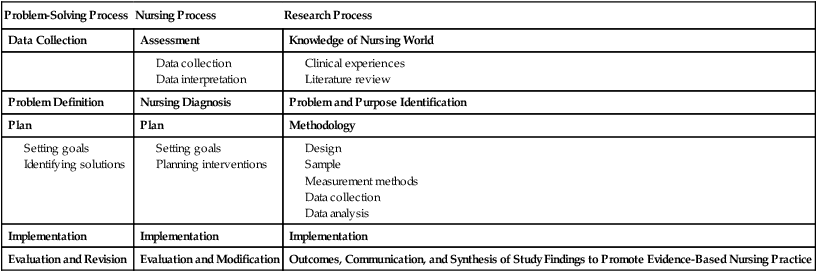
Comparing Problem Solving with the Nursing Process
The problem-solving process involves the systematic identification of a problem, determination of goals related to the problem, identification of possible approaches to achieve those goals (planning), implementation of selected approaches, and evaluation of goal achievement. Problem solving frequently is used in daily activities and nursing practice. For example, you use problem solving when you select your clothing, decide where to live, or turn a patient with a fractured hip.
The nursing process is a subset of the problem-solving process. The steps of the nursing process are assessment, diagnosis, planning, implementation, evaluation, and modification (see Table 2–2). Assessment involves the collection and interpretation of data for the development of nursing diagnoses. These diagnoses guide the remaining steps of the nursing process, just as the step of identifying the problem, directs the remaining steps of the problem-solving process. The planning step in the nursing process is the same as in the problem-solving process. Both processes involve implementation (putting the plan into action) and evaluation (determining the effectiveness of the process). If the process is ineffective, the nurse reviews all steps and revises (modifies) as necessary. The nurse implements the process until the problems/diagnoses are resolved and the identified goals are achieved.
Comparing the Nursing Process with the Research Process
The nursing process and research process have important similarities and differences. The two processes are similar because they both involve abstract, critical thinking and complex reasoning (Wilkinson, 2006). These processes help to identify new information, discover relationships, and make predictions about phenomena. In both processes, information is gathered, observations are made, problems are identified, plans are developed (methodology), and actions are taken (data collection and analysis). Both processes are reviewed for effectiveness and efficiency; the nursing process is evaluated, and outcomes are determined in the research process (see Table 2–2). Implementing the two processes expands and refines the user’s knowledge. With this growth in knowledge and critical thinking, the user is able to implement increasingly complex nursing processes and studies.
The research and nursing processes also have definite differences. Knowledge of the nursing process will assist you in understanding the research process. However, the research process is more complex than the nursing process. It requires an understanding of a unique language and involves the rigorous application of a variety of research methods (Burns, 1989; Burns & Grove, 2009). The research process also has a broader focus than that of the nursing process, in which the nurse focuses on a specific patient and family. During the research process, the researcher focuses on large groups of individuals, such as a population of patients with hypertension. In addition, researchers must be knowledgeable about the world of nursing to identify problems that require study. This knowledge comes from clinical and other personal experiences and by conducting a review of the literature.
The theoretical underpinnings of the research process are much stronger than those of the nursing process. All steps of the research process are logically linked to each other, as well as to the theoretical foundations of the study. The conduct of research requires greater precision, rigor, and control than are needed in implementation of the nursing process. The outcomes from research frequently are shared with a large number of nurses and other healthcare professionals through presentations and publications. In addition, the outcomes from several studies can be synthesized to provide sound evidence for nursing practice (Brown, 2009; Melnyk & Fineout-Overholt, 2005; Whittemore, 2005).
Identifying the Steps of the Quantitative Research Process
The quantitative research process involves conceptualizing a research project, planning and implementing that project, and communicating the findings. Figure 2–1 identifies the steps of the quantitative research process that usually are included in a research report. This figure indicates the logical flow of the process as one step builds progressively on another. The steps of the quantitative research process are briefly reviewed here; Chapters 4 to 11 discuss them in detail. The descriptive correlational study conducted by Hulme and Grove (1994) on the symptoms of female survivors of child sexual abuse is used as an example to introduce the steps of the quantitative research process.

Research Problem and Purpose
A research problem is an area of concern in which there is a gap in the knowledge base needed for nursing practice. The problem statement in a study usually identifies an area of concern for a particular population that requires investigation. Research is then conducted to generate essential knowledge that addresses the practice concern, with the ultimate goal of providing an evidence-based practice in nursing (Brown, 2009; Craig & Smyth, 2007). The research problem is usually broad and could provide the basis for several studies. The research purpose is generated from the problem and identifies the specific goal of the study. The goal of a study might be to identify, describe, or explain a situation; predict a solution to a situation; or control a situation to produce positive outcomes in practice. The purpose includes the variables, population, and often the setting for the study. Chapter 5 presents a detailed discussion of the research problem and purpose.
Research Example Problem and Purpose
Hulme and Grove (1994) conducted an initial study of female adult survivors of child sexual abuse and identified the following problem and purpose for their study. Hulme (2000; Hulme & Agrawal, 2004) continues to conduct studies in this significant problem area of adult survivors of child abuse.
“The actual prevalence of child sexual abuse is unknown but is thought to be high. Bagley and King (1990) were able to generalize from compiled research that at least 20% of all women in the samples surveyed had been victims of serious sexual abuse involving unwanted or coerced sexual contact up to the age of 17 years. Evidence indicates that the prevalence is greater for women born after 1960 than before (Bagley, 1990).
The impact of child sexual abuse on the lives of the girl victims and the women they become has only lately received the attention it deserves … the knowledge generated from research and theory has slowly forced the recognition of the long-term effects of child sexual abuse on both the survivors and society as a whole … Brown and Garrison (1990) developed the Adult Survivors of Incest (ASI) Questionnaire to identify the patterns of symptoms and the factors contributing to the severity of these symptoms in survivors of childhood sexual abuse. This tool requires additional testing to determine its usefulness in identifying symptoms and contributing factors of adult survivors of incest and other types of child sexual abuse.” (Hulme & Grove, 1994, pp. 519-520)
Thus, the purpose of this study was twofold: “(a) to describe the patterns of physical and psychosocial symptoms in female sexual abuse survivors using the ASI Questionnaire, and (b) to examine relationships among the symptoms and identified contributing factors.” (Hulme & Grove, 1994, p. 520)
Literature Review
Researchers conduct a literature review to generate a picture of what is known and not known about a particular problem and to document why a study needs to be conducted. Relevant literature includes only those sources that are pertinent to or highly important in providing the in-depth knowledge needed to study a selected problem. Often the literature review section concludes with a summary paragraph that indicates the current knowledge of a problem area and identifies the additional research that is needed to generate essential evidence for practice (research problem). Chapter 6
Hulme and Grove’s (1994) review of the literature covered relevant theories and studies related to child sexual abuse and its contributing factors and long-term effects.
Theorists indicated that … the act of child sexual abuse can be explained as an abuse of power by a trusted parent figure, usually male, on a dependent child, violating the child’s body, mind, and spirit. The family, which normally functions to nurture and protect the child from harm, is viewed as not fulfilling this function, leaving the child to feel further betrayed and powerless. Acceptance of the immediate psychological trauma of child sexual abuse has given impetus for acknowledging the long-term effects.
Studies of both nonclinical and clinical populations have lent support to these theoretical developments. When compared with control groups consisting of women who had not been sexually abused as children, survivors of child sexual abuse consistently have higher incidence of depression and lower self-esteem. Other psychosocial long-term effects encountered include suicidal plans, anxiety, distorted body image, decreased sexual satisfaction, poor general social adjustment, lower positive affect, negative personality characteristics, and feeling different from significant others. … The physical long-term effects suggested by research include gastrointestinal problems such as ulcers, spastic colitis, irritable bowel syndrome, and chronic abdominal pain; gynecological disorders; chronic headache; obesity; and increased lifetime surgeries.
Studies of contributing factors that may affect the traumatic impact of child sexual abuse are less in number and less conclusive than those identifying long-term effects. However, poor family functioning, increased age difference between the victim and perpetrator, threat or use of force or violence, multiple abusers, parent or primary caretaker as perpetrator, prolonged or intrusive abuse, and strong emotional bond to the perpetrator with betrayal of trust may all contribute to the increased severity of the long-term effects. (pp. 521-522)
describes the process for reviewing the literature.
Study Framework
A framework is the abstract, theoretical basis for a study that enables the researcher to link the findings to nursing’s body of knowledge. In quantitative research, the framework is a testable theory that has been developed in nursing or another discipline, such as psychology, physiology, pathology, or sociology. A theory consists of an integrated set of defined concepts and relational statements that present a view of a phenomenon and can be used to describe, explain, predict, or control the phenomenon. Researchers test the relational statements of the theory, not the theory itself, through research. A study framework can be expressed as a map or a diagram of the relationships that provide the basis for a study, or the framework can be presented in narrative format. Chapter 7 provides you with a background for understanding and critically appraising study frameworks.
The framework for Hulme and Grove’s (1994) study is Browne and Finkelhor’s (1986) theory of Traumagenic Dynamics in the Impact of Child Sexual Abuse. Over the years, Finkelhor (2008) continued to expand his theory of the impact of child victimization. Hulme and Grove (1994) developed a map of Browne and Finkelhor’s (1986) concepts and relationships and it is presented as follows.
As shown in the illustration below child sexual abuse is at the center of the adult survivor’s existence. Arising from the abuse are four trauma-causing dynamics: traumatic sexualization, betrayal, powerlessness, and stigmatization. These traumagenic dynamics lead to behavioral manifestations and collectively indicate a history of child sexual abuse. The behavioral manifestations were operationalized as physical and psychosocial symptoms for the purposes of this study. Penetrating the core of the adult survivors are the contributing factors, including the characteristics of the child sexual abuse and other factors occurring later in the survivor’s life, that affect the severity of behavioral manifestations (Follette, Alexander, & Follette, 1991). The contributing factors examined in this study were age when the abuse began, duration of the abuse, and other victimizations. Other victimizations included past or present physical and emotional abuse, rape, control by others, and prostitution. (Hulme & Grove, 1994, pp. 522-523)

Research Objectives, Questions, and Hypotheses
Investigators formulate research objectives, questions, or hypotheses to bridge the gap between the more abstractly stated research problem and purpose and the study design and plan for data collection and analysis. Objectives, questions, and hypotheses are narrower in focus than the purpose and often specify only one or two research variables. They also identify the relationship between the variables, and indicate the population to be studied. Some descriptive studies include only a research purpose, whereas others include a purpose and either objectives or questions to direct the study. Some correlational studies include a purpose and specific questions or hypotheses. Quasi-experimental and experimental studies need to include hypotheses to direct the conduct of the studies and the interpretation of findings. Chapter 5 provides guidelines for critically appraising the objectives, questions, and hypotheses in research reports.
Hulme and Grove (1994) developed the following research questions to direct their study:
1. What patterns of physical and psychosocial symptoms are present in women 18 to 40 years of age who have experienced child sexual abuse?
2. Are there relationships among the number of physical and psychosocial symptoms, the age when the abuse began, the duration of abuse, and [the] number of other victimizations? (p. 523)
Study Variables
The research purpose and the objectives, questions, or hypotheses identify the variables to be examined in a study. Variables are concepts at various levels of abstraction that are measured, manipulated, or controlled in a study. More concrete concepts, such as temperature, weight, or blood pressure are referred to as variables in a study. The more abstract concepts such as creativity, empathy, or social support sometimes are referred to as research concepts.
Researchers operationalize the variables or concepts in a study by identifying conceptual and operational definitions. A conceptual definition provides a variable or concept with theoretical meaning (Burns & Grove, 2009), and it either comes from a theorist’s definition of the concept or is developed through concept analysis. The conceptual definitions of variables provide a link from selected concepts in the study framework to the study variables. Researchers develop an operational definition so that the variable can be measured or manipulated in a study. The knowledge gained from studying the variable will increase understanding of the theoretical concept from the study framework that the variable represents. Chapter 5
Hulme and Grove (1994) provided conceptual and operational definitions of the study variables—physical and psychosocial symptoms, age when the abuse began, duration of abuse, and victimizations—identified in their purpose and/or research questions. Only the definitions for physical symptoms and victimizations are presented as examples.
Physical symptoms are behavioral manifestations that result directly from the traumagenic dynamics of child sexual abuse (Browne & Finkelhor, 1986).
Experiences of any of multiple forms of abuse and betrayal, including past and present physical and emotional abuse, rape, control by others, and prostitution in an adult survivor of child abuse (Browne & Finkelhor, 1986).
provides a more extensive discussion of variables.
Assumptions
Assumptions are statements that are taken for granted or are considered true, even though they have not been scientifically tested. Assumptions often are embedded (unrecognized) in thinking and behavior, and uncovering these assumptions requires introspection and a strong knowledge base in a research area. Sources of assumptions are universally accepted truths (e.g., “all humans are rational beings”), theories, previous research, and nursing practice. Two common assumptions in nursing research are: “People want to assume control of their health” and Health is a priority for most people” (Williams, 1980, p. 48).
In studies, assumptions are embedded in the philosophical base of the framework, study design, and interpretation of findings. Theories and research instruments are developed on the basis of assumptions that may or may not be recognized by the researcher. These assumptions influence the development and implementation of the research process. Thus, the recognition of assumptions by the researcher is a strength, not a weakness. Assumptions influence the logic of the study, and their recognition leads to more rigorous study development (Burns & Grove, 2009).
Hulme and Grove (1994) did not identify assumptions for their study, but the following assumptions seem to provide a basis for this study: (1) the child victim bears no responsibility for the sexual contact; (2) survivors can remember and are willing to report their past child sexual abuse; and (3) behavioral manifestations (physical and psychological symptoms) indicate altered health and functioning.
Limitations
Limitations are restrictions in a study that may decrease the credibility and generalizability of the findings. Generalization is the extension of the implications of the research findings from the sample studied to a larger population. For example, the findings from studying a sample of adult female survivors of child sexual abuse might be extended to a population of women who have survived child sexual abuse. The two types of limitations are theoretical and methodological. Theoretical limitations restrict the abstract generalization of the findings and are reflected in the study framework and the conceptual and operational definitions of the variables. Theoretical limitations might include (1) a concept that lacks clarity of definition in the theory used to develop the study framework; (2) the unclear relationships among some concepts in the theorist’s work; (3) a study variable that lacks a clear link to a concept in the framework; and (4) an objective, question, or hypothesis that lacks a clear link to a relationship (or proposition) expressed in the study framework.
Methodological limitations can limit the credibility of the findings and restrict the population to which the findings can be generalized. Methodological limitations result from such factors as unrepresentative sample, weak design, single setting, limited control over treatment implementation, measurement instruments with limited reliability and validity, limited control over data collection, and improper use of statistical analyses.
Hulme and Grove (1994) identified the following methodological limitation.
… [T]his study has limited generalizability due to the relatively small nonprobability sample … (p. 528). Additional replications drawing from various social classes and age groups are needed to improve the generalizability of Brown and Garrison’s (1990) findings and establish reliability and validity of their tool. (p. 529)
Research Design
Research design is a blueprint for the conduct of a study that maximizes control over factors that could interfere with the study’s desired outcome. The type of design directs the selection of a population, procedures for sampling, methods of measurement, and plans for data collection and analysis. The choice of research design depends on what is known and not known about the research problem, the researcher’s expertise, the purpose of the study, and the intent to generalize the findings.
Sometimes the design of a study indicates that a pilot study was conducted. A pilot study is a smaller version of a proposed study, and researchers frequently conduct these to refine the methodology. Researchers might conduct pilot studies in a manner similar to that for the proposed study, using similar subjects, the same setting, the same treatment, and the same data collection and analysis techniques. Prescott and Soeken (1989), however, believe a pilot study can be conducted to develop and refine any of the steps in the research process. The reasons for conducting pilot studies are to:
1. Determine whether the proposed study is feasible. (For example, are the subjects available? Does the researcher have the time and money to do the study?)
2. Develop or refine a research treatment.
3. Develop a protocol for the implementation of a treatment.
4. Identify problems with the design.
5. Determine whether the sample is representative of the population or whether the sampling technique is effective. Hertzog (2008) provided sample size guidelines for pilot studies.
6. Examine the reliability and validity of the research instruments.
7. Develop or refine data collection instruments.
8. Refine the data collection and analysis plans.
10. Give the researcher experience with the subjects, setting, methodology, and methods of measurement.
11. Implement data analysis techniques.
12. Convince funding organizations that the research team is knowledgeable and competent to implement the study (Prescott & Soeken, 1989; van Teijlingen & Hundley, 2001).
Thus, conducting a pilot study is usually beneficial to strengthen the major study design. When critically appraising a study, note if a pilot study was conducted and how did the pilot study contribute to the conduct of the current study.
Designs have been developed to meet unique research needs as they emerge; thus, a variety of descriptive, correlational, quasi-experimental, and experimental designs have been generated over time. In descriptive and correlational studies, no treatment is administered, so the purposes of these study designs include improving the precision of measurement, describing what exists, and clarifying relationships that provide a basis for quasi-experimental and experimental studies. Quasi-experimental and experimental study designs usually involve treatment and control groups, and focus on achieving high levels of control as well as precision in measurement. A study’s design usually is in the methodology section of a research report.
Hulme and Grove (1994) used a descriptive correlational design to direct their study. The diagram of the design, presented in the illustration below, indicates the variables described and the relationships examined. The findings generated from correlational research provide a basis for generating hypotheses for testing in future research.

Population and Sample
The population is all elements (individuals, objects, or substances) that meet certain criteria for inclusion in a study (Kerlinger & Lee, 2000). A sample is a subset of the population that is selected for a particular study, and the members of a sample are the subjects or participants. In many quantitative studies, the members of the study are referred to as subjects but the term participants is used to describe the individuals studied in qualitative research. Sampling defines the process of selecting a group of people, events, behaviors, or other elements with which to conduct a study. Chapter 9 provides you a background for critically appraising populations and samples in research reports.
The following excerpt identifies the sampling method, setting, sample size, population, sample criteria, and sample characteristics for the study conducted by Hulme and Grove (1994).
The convenience sample [sampling method] was obtained by advertising for subjects at three state universities in the southwest [setting]. Despite the sensitive nature of the study, 22 [sample size] usable interviews were obtained. The sample included women between the ages of 18 and 39 years ( = 28 years, SD = 6.5 years) [sample characteristics] who were identified as survivors of child sexual abuse [population] [sample criteria]. The majority of these women were white (91%) and students (82%). A little more than half (54%) were single, seven (32%) were divorced, and three (14%) were married. Most (64%) had no children. A small percentage (14%) was on some form of public assistance and only 14% had been arrested. Although 27% of the subjects had step family members, the parents of 14 subjects (64%) were still married. Half the fathers were working class or self-employed; the rest were professionals. Mothers were either working class or self-employed (50%), homemakers (27%), or professionals (11%). Most subjects (95%) had siblings, and 36% knew or suspected their siblings also had been abused [sample characteristics]. (pp. 523-524)
Methods of Measurement
Measurement is the process of assigning “numbers to objects (or events or situations) in accord with some rule” (Kaplan, 1964, p. 177). A component of measurement is instrumentation, which is the application of specific rules to the development of a measurement device or instrument. An instrument is selected to measure a specific variable in a study. The numerical data generated with an instrument may be at the nominal, ordinal, interval, or ratio level of measurement. The level of measurement, with nominal being the lowest form of measurement and ratio being the highest, determines the type of statistical analysis that can be performed on the data (Grove, 2007). Chapter 10 introduces you to the concept of measurement, describes different types of measurement methods, and provides you direction to critically appraise measurement techniques in studies.
Hulme and Grove (1994) used the ASI Questionnaire to measure their study variables.
The ASI Questionnaire contains 10 sections: demographics; family origin; educational history, occupational history and public assistance; legal history; characteristics of the child sexual abuse (duration, perpetrator, pregnancy, type, and threats); past and present other victimizations; past and present physical symptoms; past and present psychosocial symptoms; and relationship with own children. Each section is followed by a response set that includes space for ‘other’. Content validity was established by Brown and Garrison (1990) using an in-depth review of 132 clinical records. … For this descriptive correlational study … content validity of the tool was examined by asking an open-ended question: “Is there additional information you would like to share?” (p. 524)
Data Collection
Data collection is the precise, systematic gathering of information relevant to the research purpose or the specific objectives, questions, or hypotheses of a study. To collect data, the researcher must obtain permission from the setting or agency where the study will be conducted. Researchers must also obtain consent from all research subjects to indicate their willingness to participate in the study. Frequently, the researcher asks the subject to sign a consent form, which describes the study, promises the subject confidentiality, and indicates that the subject can withdraw from the study at any time. The research report should document permission from an agency to conduct a study and consent from the subject to participate in the study (see Chapter 4).
During data collection, investigators will use a variety of techniques for measuring study variables, such as observation, interview, questionnaires, or scales. In an increasing number of studies, nurses are measuring physiological variables with high-technology equipment. Researchers collect and systematically record data on each subject, organizing the data in a way that facilitates computer entry. Data collection is usually described in the “Methodology” section of a research report under the subheading of “Procedures.”
Hulme and Grove (1994) identified the following procedure for data collection.
Although the tool can be self-reporting, it was administered by personal interview to allow for elaboration of ‘other’ responses. The interviews lasted about one hour and were conducted in a private room provided by The University of Texas at Arlington. Each interview started with a discussion of the study benefits and risks and included signing a consent form. Risks included possible painful memories, anger, and sadness during the interview as well as emotional and physical discomfort after the interview. Sources of public and private counseling were provided to assist subjects with any difficulties experienced related to the study. (pp. 524-525)
Data Analysis
Data analysis reduces, organizes, and gives meaning to the data. Analysis techniques conducted in quantitative research include descriptive and inferential analyses (see Chapter 11) and some sophisticated, advanced analyses. Investigators base their choice of analysis techniques primarily on the research objectives, questions, or hypotheses, and the level of measurement achieved by the research instruments. You can find the data analysis process in the “Results” section of the research report; this section usually is organized by the research objectives, questions, or hypotheses.
Hulme and Grove (1994) used frequencies, percents, means, standard deviations, and Pearson correlations to address their research questions.
The first research question focused on patterns of physical and psychosocial symptoms. Six physical symptoms occurred in 50% or more of the subjects: insomnia, sexual dysfunction, overeating, drug abuse, severe headache, and two or more major surgeries. … Eleven psychosocial symptoms occurred in 75% or more of the subjects: depression, guilt, low self-esteem, inability to trust others, mood swings, suicidal thoughts, difficulty in relationships, confusion, flashbacks of the abuse, extreme anger, and memory lapse. … Self-injurious behavior was reported by eight subjects (33%). (pp. 527-528)
The second research question focused on the relationships among the number of physical and psychosocial symptoms and three contributing factors (age abuse began, duration of abuse, and other victimizations). There were five significant correlations among study variables: physical symptoms with other victimizations (r = 0.59, p = 0.002), physical symptoms with psychosocial symptoms (r = 0.56, p = 0.003), age abuse began with duration of abuse (r = −0.50, p = 0.009), psychosocial symptoms with other victimizations (r = 0.40, p = 0.033), and duration of abuse with psychosocial symptoms (r = 0.40, p = 0.034). (p. 528)
Research Outcomes
The results obtained from data analyses require interpretation to be meaningful. Interpretation of research outcomes involves examining the results from data analysis, exploring the significance of the findings, forming conclusions, generalizing the findings, considering the implications for nursing, and suggesting further studies. You can find the research outcomes in the “Discussion” section of a research report.
Hulme and Grove (1994) provided the following discussion of their findings, with implications for nursing and suggestions for further study.
While this study may have limited generalizability due to the relatively small nonprobability sample, the findings do support previous research. … In addition, the findings support Browne and Finkelhor’s (1986) framework that a wide range of behavioral manifestations (physical and psychosocial symptoms) comprise the long-term effects of child sexual abuse. (p. 528)
Brown and Garrison’s (1990) ASI Questionnaire was effective in identifying patterns of physical and psychosocial symptoms in women with a history of child sexual abuse. … As data on the behavioral manifestations (physical and psychosocial symptoms) and the effect of each of the contributing factors accumulate, hypotheses need to be formulated to further test Browne and Finkelhor’s (1986) framework explaining the long-term effects of child sexual abuse. … With additional research, the ASI Questionnaire might be adapted for use in clinical situations. This questionnaire might facilitate identification and delivery of appropriate treatment to female survivors of child sexual abuse in clinical settings. (pp. 529-530)
Reading Research Reports
Understanding the steps of the research process and learning new terms related to those steps will assist you in reading research reports. A research report summarizes the major elements of a study and identifies the contributions of that study to nursing knowledge. Research reports are presented at professional meetings and conferences and are published in journals and books. These reports often are overwhelming to nursing students and new graduates. Maybe you have had difficulty locating research articles or understanding the content of these articles. Research reports usually are written to communicate with other researchers, not with clinicians. Thus, the style of the report often is technical, and the report sometimes is filled with jargon, which is very confusing to students and practicing nurses. We would like to help you overcome some of these barriers and assist you in understanding the research literature by (1) identifying sources that publish research reports, (2) describing the content of a research report, and (3) providing tips for reading the research literature.
Sources of Research Reports
The most common sources for nursing research reports are professional journals. Research reports are the major focus of several nursing research journals: Advances in Nursing Science, Applied Nursing Research, Biological Research for Nursing, Clinical Nursing Research: An International Journal, Journal of Nursing Scholarship, International Journal of Nursing Studies, Nursing Research, Nursing Science Quarterly, Qualitative Health Research, Qualitative Nursing Research, Research in Nursing & Health, Scholarly Inquiry for Nursing Practice: An International Journal, and Western Journal of Nursing Research. Two journals in particular, Applied Nursing Research and Clinical Nursing Research, focus on communicating research findings to practicing nurses. Thus, these journals usually include less detail on the framework, methodology, and the statistical results of a study and more on discussion of the findings and the implications for practice. Worldviews on Evidence-Based Nursing is a journal published in 2004 that focuses on innovative ideas for using evidence to improve patient care globally.
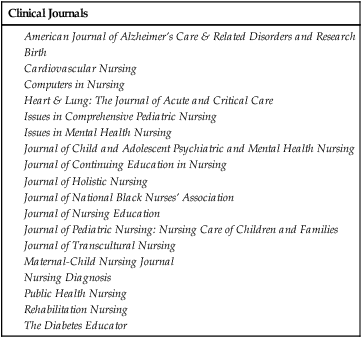
Many of the nursing clinical specialty journals also place a high priority on publishing research findings. Table 2–3 identifies the clinical journals in which research reports constitute a major portion of the journal content. More than 100 nursing journals are published in the United States, and most of them include research articles.
Table 2–3
Clinical Journals That Focus on Research Articles
Some research reports, such as those for complex qualitative studies, are lengthy and might be published as books or as chapters in books. Research reports of master’s degree candidates are presented as theses. Doctoral candidates produce dissertations summarizing their research projects. Before publication, many research reports are presented at local, national, and international nursing and healthcare conferences. Often, brochures for conferences will indicate whether research reports are part of the program. The findings from many studies are now communicated through the Internet as journals are placed online, and selected websites include the most current healthcare research.
Content of Research Reports
At this point, you may be overwhelmed by the seeming complexity of a research report. You will find it easier to read and comprehend these reports if you understand each of the component parts. A research report often includes six parts: (1) “Abstract,” (2) “Introduction,” (3) “Methods,” (4) “Results,” (5) “Discussion,” and (6) “References.” These parts are described in this section, and the study by Twiss, Waltman, Berg, Ott, Gross, and Lindsey (2009) that examined the effects of an exercise intervention on the muscle strength and balance of breast cancer survivors with bone loss is presented as an example.
Abstract
The report usually begins with an abstract, which is a clear, concise summary of a study (Burns & Grove, 2009; Crosby, 1990). Abstracts range from 100 to 250 words and usually include the study purpose, design, setting, sample size, major results, and conclusions. Researchers hope their abstracts will concisely convey the findings from their study and capture your attention so that you will read the entire report.
Usually, four major content sections of a research report follow the abstract: “Introduction,” “Methods,” “Results,” and “Discussion.” Table 2–4 outlines the content covered in each of these sections. It is also briefly discussed in the following sections.

Twiss and colleagues (2009) developed the following clear, comprehensive abstract, which conveys the critical information about their quasi-experimental study and also includes the study’s clinical relevance. However, the abstract might be considered a little long at 325 words.
(a) to determine if 110 postmenopausal breast cancer survivors (BCS) with bone loss who participated in 24 months of strength and weight training (ST) exercises had improved muscle strength and balance and had fewer falls compared to BCS who did not exercise; and (b) to describe type and frequency of ST exercises; adverse effects of exercises; and participants’ adherence to exercise at home, at fitness centers, and at 36-month follow-up.
Findings reported are from a federally funded multi-component intervention study of 223 postmenopausal BCS with either osteopenia or osteoporosis who were randomly assigned to an exercise (n = 110) or comparison (n = 113) groups.
Time points for testing outcomes were baseline, 6, 12, and 24 months into intervention. Muscle strength was tested using Biodex Velocity Spectrum Evaluation, and dynamic balance using Timed Backward Tandem Walk. Adherence to exercises was measured using self-report of number of prescribed sessions attended and participants’ reports of falls.
Mean adherence over 24 months was 69.4%. Using generalized estimating equation (GEE) analyses, compared to participants not exercising, participants who exercised for 24 months had significantly improve hip flexion (p = 0.011), hip extension (p = 0.0006), knee flexion (p < 0.0001), knee extension (p = 0.0018), wrist flexion (p = 0.031), and balance (p = 0.010). Gains in muscle strength were 9.5% and 28.5% for hip flexion and extension, 50.0% and 19.4% for wrist flexion and extension, and 21.1% and 11.6% for knee flexion and extension. Balance improved by 39.4%. Women who exercised had fewer falls, but difference in number of falls between the two groups was not significant.
Many postmenopausal BCS with bone loss can adhere to a 24 month ST exercise intervention, and exercises can result in meaningful gains in muscle strength and balance.
More studies are needed for examining relationships between muscle strength and balance in postmenopausal BCS with bone loss and their incidence of falls and fractures (Twiss et al., 2009, p. 20).
Introduction
The Introduction section of a research report identifies the nature and scope of the problem being investigated and provides a case for the conduct of the study. You should be able to clearly identify the significance of conducting the study to generate knowledge for nursing practice. Twiss and colleagues’ (2009) study was significant because an estimated 182,460 women in the United States are diagnosed with breast cancer each year and these women are at risk for osteoporosis because of their cancer therapies. An exercise intervention could be an effective way to increase these women’s muscle strength and balance and decrease their falls. The purpose of this study was clearly stated in the abstract.
Depending on the type of research report, the literature review and the framework may be separate sections or part of the introduction. The literature review documents the current knowledge of the problem investigated and includes the sources that were used to develop the study and interpret the findings. For example, Twiss et al. (2009) summarized the literature in a Background section that included research in the areas of ST exercises, adherence to exercise, adverse effects of exercise, muscle strength, balance, and falls. A research report also needs to include a framework, but only about half of the published studies identify one. Twiss et al. (2009) did not identify a framework for their study. The inclusion of a physiological framework that focused on the impact of exercise on the physiological function of the musculoskeletal system would have strengthened this study. The relationships in the framework provide a basis for the formulation of hypotheses to be tested in quasi-experimental and experimental studies.
Investigators often end the introduction by identifying the objectives, questions, or hypotheses that they used to direct the study. However, the Twiss et al. (2009) study lacked a framework and no hypotheses were developed to direct this quasi-experimental study.
Methods
The Methods section of a research report describes how the study was conducted and usually includes the study design, treatment (if appropriate), sample, setting, methods of measurement, and data collection process. This section of the report needs to be presented in enough detail so that the reader can critically appraise the adequacy of the study methods to produce reliable findings (Tornquist, Funk, Champagne, & Wiese, 1993).
Twiss et al. (2009) provided extensive coverage of their study methodology. The design was clearly identified as a multisite, randomized controlled trial. They also included the subsection Sample, which described the population, sampling method, sample criteria, sample size, and attrition and reasons for withdrawing from the study. Institutional approval for the conduct of this study and consent of the participants and their physicians were also discussed in this subsection. A subsection Setting was included that clearly indicated the sites where the study was conducted.
ST Exercises was another subsection and provided a detailed description of the exercise intervention and how it was implemented in this study. A protocol for the intervention was also included in a table in the article. Measures was another subsection of the study methodology that detailed the quality of the measurement methods used to measure the dependent variables of muscle strength, balance, falls, adherence to the exercise sessions, and any adverse effects from the exercise. The measurements used in this study were identified previously in the study abstract. The Methods section concluded with a subsection Statistical Analysis that detailed the analysis techniques used to analyze the study data.
Results
The Results section presents the outcomes of the statistical tests used to analyze the study data and the significance of these outcomes. The research purpose or objectives, questions, and hypotheses formulated for the study are used to organize this section. Researchers identify the statistical analyses conducted to address the purpose or each objective, question, or hypothesis, and present the specific results obtained from the analyses in tables, figures, or narrative of the report (Burns & Grove, 2009). Focusing more on the summary of the study results and their significance than on the statistical results can help to reduce the confusion that may be caused by the numbers.
Twiss and colleagues’ (2009) had a Findings section that might have been more clearly identified as “Results.” This section began with a description of the sample and the sample characteristics were presented in a table. The study results were organized by the study variables of adverse effects of exercises, adherence to exercises, muscle strength and balance, and falls. As indicated in the abstract, the study results were significant for all study variables except falls.
Discussion
The Discussion section ties together the other sections of the research report and gives them meaning. This section includes the major findings, limitations of the study, conclusions drawn from the findings, implications of the findings for nursing, and recommendations for further research.
Twiss et al. (2009) discussed their findings in detail, and compared and contrasted them with the findings of previous research. They also included a separate section in the study, Limitations, which included the following: participants were not obtaining sufficient vitamin D, stronger intervention fidelity was needed, self-report of adherence often results in an overestimation of true levels of adherence, a lack of test-retest reliability for the investigator-developed instruments used in the study, and the small number of minority women who completed the study were not representative of this Midwestern state.
The Discussion section also included a subsection Conclusions that presented the implications for practice and identified the future studies needed. The conclusions drawn from a research project can be useful in at least three different ways. First, you can use the intervention or treatment tested in a study with patients to improve their care and promote a positive health outcome. Second, reading research reports might change your view of a patient’s situation or give you greater insight into the situation. Last, studies heighten your awareness of the problems experienced by patients and assist you in assessing and working toward solutions for these problems. Twiss and colleagues (2009) also provided a Clinical Resources section that included websites with research evidence about osteoporosis, breast cancer, and BCS support that would be useful for your practice.
References
A References section that includes all sources cited in the research report follows the Discussion section. The reference list includes the studies, theories, and methodology resources that provide a basis for the conduct of the study. These sources provide an opportunity to read about the research problem in greater depth. We strongly encourage you to read the Twiss et al. (2009) article to identify the sections of a research report and to examine the content in each of these sections. These researchers detailed a rigorously conducted quasi-experimental study, provided findings that are supportive of previous research, and identified conclusions that provide sound evidence to direct the care of patients who are breast cancer survivors with bone loss.
Tips for Reading Research Reports
When you start reading research reports, you may be overwhelmed by the new terms and complex information presented. We hope that you will not be discouraged but will see the challenge of examining new knowledge generated through research. You probably will need to read the report slowly two or three times. You can also use the glossary at the end of this book to review the definitions of unfamiliar terms. We recommend that you read the abstract first and then the Discussion section of the report. This approach will enable you to determine the relevance of the findings to you personally and to your practice. Initially, your focus should be on research reports you believe can provide relevant knowledge for your practice.
Reading a research report requires the use of a variety of critical thinking skills, such as skimming, comprehending, and analyzing, to facilitate an understanding of the study (Wilkinson, 2006). Skimming a research report involves quickly reviewing the source to gain a broad overview of the content. Try this approach: First, familiarize yourself with the title and check the author’s name. Next, scan the Abstract or Introduction and the Discussion section. Knowing the findings of the study will provide you with a standard for evaluating the rest of the article (Tornquist et al., 1993). Then read the major headings and perhaps one or two sentences under each heading. Finally, reexamine the conclusions and implications for practice from the study. Skimming enables you to make a preliminary judgment about the value of a source and a determination about reading the report in depth.
Comprehending a research report requires that the entire study be read carefully. During this reading, focus on understanding major concepts and the logical flow of ideas within the study. You may wish to highlight information about the researchers, such as their education, their current positions, and any funding they received for the study. As you read the study, steps of the research process also might be highlighted. Record any notes in the margin so that you can easily identify the problem, purpose, framework, major variables, study design, treatment, sample, measurement methods, data collection process, analysis techniques, results, and study outcomes. Also record any creative ideas or questions you have in the margin of the report.
We encourage you to highlight the parts of the article that you do not understand and ask your instructor or other nurse researchers for clarification. Your greatest difficulty in reading the research report probably will be in understanding the statistical analyses. Information in Chapter 11 should help you comprehend the analyses. Basically, you must identify the particular statistics used, the results from each statistical analysis, and the meaning of the results. Statistical analyses describe variables, examine relationships among variables, or determine differences among groups. The study purpose or specific objectives, questions, or hypotheses indicate whether the focus is on description, relationships, or differences. Therefore, you need to link each analysis technique to its results and then to the study purpose or objectives, questions, or hypotheses presented in the study.
The final reading skill, analyzing a research report, involves determining the value of the report’s content. Break the content of the report into parts, and examine the parts in depth for accuracy, completeness, uniqueness of information, and organization. Note whether the steps of the research process build logically on each other or whether steps are missing or incomplete. Examine the discussion section of the report to determine whether the researchers have provided a critical argument for using the study findings in practice. Using the skills of skimming, comprehending, and analyzing while reading research reports will increase your comfort with studies, allow you to become an informed consumer of research, and expand your knowledge for making changes in practice. These skills for reading research reports are essential for conducting a comprehensive critical appraisal of a study. Chapter 12 focuses on the guidelines for critically appraising quantitative and qualitative studies.
Practice Reading Quasi-experimental and Experimental Studies
Knowing the parts of the research report—introduction, methods, results, and discussion—provides a basis for reading research reports of quantitative studies. You can apply the critical thinking skills of skimming, comprehending, and analyzing to your reading of the example quasi-experimental and experimental studies provided here. Being able to read research reports and identify the steps of the research process should enable you to conduct an initial critical appraisal of a report. Throughout this book you’ll find boxes, entitled Critical Appraisal Guidelines, which provide questions you will want to consider in your critical appraisal of various research elements. This chapter concludes with critical appraisals of both a quasi-experimental study and an experimental study.
 INITIAL CRITICAL APPRAISAL GUIDELINES
Quantitative Research
The following questions are important in conducting an initial critical appraisal of a quantitative research report.
1. What type of quantitative study was conducted: descriptive, correlational, quasi-experimental, or experimental?
2. Can you identify the following sections in the research report: Introduction, Methods, Results, and Discussion as identified in Table 2–4?
3. Were the steps of the study clearly identified? Figure 2–1 identifies the steps of the quantitative research process.
Quasi-experimental Study
The purpose of quasi-experimental research is to examine cause-and-effect relationships among selected independent and dependent variables. Researchers conduct quasi-experimental studies in nursing to determine the effects of nursing interventions or treatments (independent variables) on patient outcomes (dependent variables) (Cook & Campbell, 1979). Artinian et al. (2007) conducted a quasi-experimental study to determine the effects of nurse-managed telemonitoring (TM) on the blood pressure (BP) of African Americans. The steps for this study are described here and illustrated with extracts from the study.
Research Example Quasi-experimental Study
Steps of the Research Process in a Quasi-experimental Study
Nearly one in three, or approximately 65 million adults in the United States have hypertension, defined as (a) having systolic blood pressure (SBP) of 140 mm Hg or higher or diastolic blood pressure (DBP) of at least 90 mm Hg or higher, (b) taking antihypertensive medication, or (c) being told at least twice by a physician or other health professional about having high blood pressure (BP) (American Heart Association [AHA], 2004; AHA Statistics Committee & Stroke Statistics Subcommittee [AHASC], 2006; Fields et al., 2004). … Estimated direct and indirect costs associated with hypertension total $63.5 billion (AHA, 2004). … The crisis of high BP (HBP) is particularly apparent among African Americans; their prevalence of HBP is among the highest in the world … Unless healthcare professionals can improve care for individuals with hypertension, approximately two thirds of the population will continue to have uncontrolled BP and face other major health risks (Chobanian et al., 2003). … There is a need to test alternative treatment strategies. (Artinian et al., 2007, pp. 312-313)
The purpose of this randomized controlled trial with urban African Americans was to compare usual care (UC) only with BP telemonitoring (TM) plus UC to determine which leads to greater reduction in BP from baseline over 12 months of follow-up, with assessments at 3, 6, and 12 months postbaseline. (Artinian et al., 2007, p. 313)
The literature review for this study included relevant, current studies that summarized what is known about the impact of TM on BP. The sources were current and ranged in publication dates from 1998 to 2005, with the majority of the studies published in the last 5 years. The study was accepted for publication on May 31, 2007 and published in the September/October 2007 issue of Nursing Research. Artinian et al. (2007, p. 314) summarized the current knowledge about the effect of TM on BP by stating, “Although promising, the effects of TM on BP have been tested in small, sometimes nonrandomized, samples, with one study suggesting that patients may not always adhere to measuring their BP at home. The influence of TM on BP control warrants further study.”
Artinian et al. (2007) developed a model that identified the theoretical basis for their study. The model is presented in Figure 2–2 and indicates that “Nurse-managed TM is an innovative strategy that may offer hope to hypertensive African Americans who have difficulty accessing care for frequent BP checks … In other words, TM may lead to a reduction in opportunity costs or barriers for obtaining follow-up care by minimizing the contextual risk factors that interfere with frequent healthcare visits. … Combined with information about how to control hypertension, TM may both help individuals gain conscious control over their HBP and contribute to feelings of confidence for carrying out hypertension self-care actions. … Home TM appeared to contribute to individuals’ increased personal control and self-responsibility for managing their BP, which ultimately led to improved BP control (Artinian et al., 2004; Artinian, Washington, & Templin, 2001).” (Artinian et al., 2007, pp. 313-314). The framework for this study was based on tentative theory that was develop from the findings of previous research by Artinian et al. (2001; 2004) and other investigators. This framework provides a basis for interpreting the study findings and giving them meaning.

H1: Individuals who participate in UC plus nurse-managed TM will have a greater reduction in BP from baseline at 3-, 6-, and 12-month follow-up than would individuals who receive UC only. (Artinian et al., 2007, p. 317)
The independent variable was TM Program and the dependent variables were SBP and DBP. Only the TM Program and SBP are defined with conceptual and operational definitions. The conceptual definitions are derived from the study framework and the operational definitions are often found in the methods section under measurement methods and intervention headings.
Independent Variable: TM Program
TM program is an innovative strategy that may offer hope to hypertensive African Americans to reduce their opportunity costs and barriers for obtaining follow-up care for BP management (Artinian et al., 2007).
TM “refers to individuals self-monitoring their BP at home, then transmitting the BP readings over existing telephone lines using a toll-free number” (Artinian et al., 2007, p. 313). The readings were reviewed by the care providers with immediate feedback provided to the patients about their treatment plan.
SBP is an indication of the patient’s blood pressure control and ultimately the management of his or her hypertension.
The outcome of SBP was measured with the electronic BP monitor (Omron HEM-737 Intellisense, Omron Health Care, Inc., Bannockburn, IL) (Artinian et al., 2007).
“A randomized, two-group, experimental, longitudinal design was used. The treatment group received nurse-managed TM and the control group received enhanced UC. Data were collected at baseline and 3-, 6-, and 12-month follow-ups” (Artinian et al., 2007, p. 314).
“African Americans with hypertension [population] were recruited through free BP screenings offered at community centers, thrift stores, drug stores, and grocery stores located on the east side of Detroit” [natural settings] (Artinian et al., 2007, p. 315). The sample criteria for including and excluding subjects from the study were detailed and provided a means of identifying patients with hypertension. The sample size was 387 (194 in the TM group and 193 in the UC group) with a 13% attrition or loss of subjects over the 12-month study. The subjects’ recruitment and participation in the study are detailed in a figure in the article (see Artinian et al., 2007, p. 316).
Artinian et al. (2007) detailed the nurse-managed TM intervention on pages 315-316 of their research article. LifeLink Monitoring, Inc. (Bearsville, NY) was used to provide the TM services for this study. The researchers also describe the enhanced UC (usual care) that was received by both the experimental and control groups.
The BP was measured with the electronic Omron BP monitor “after a 5-minute rest period; at least two BPs were measured, and the average of all was used for analyses. Participants wore unrestrictive clothing and sat next to the interviewer’s table, their feet on the floor; their back supported; and their arm abducted, slightly flexed, and supported at heart level by the smooth, firm surface of a table” (Artinian et al., 2007, pp. 316-317).
“Most of the data were collected during 2-hour structured face-to-face interviews and brief physical exams, which were conducted by trained interviewers in a private room at one of the project-affiliated neighborhood community centers. Mailed postcards provided interview appointment reminders 1 week before the scheduled interview; telephone call reminders were made the evening before the interview. … Participants were compensated $25.00 after the completion of each interview” (Artinian et al., 2007, p. 316). The study was approved by the Wayne State University Human Investigation Committee and all participants signed consent forms indicating their willingness to be subjects in the study.
“The hypothesis was supported partially by the data. Overall, the TM intervention group had a greater reduction in SBP (13.0 mm Hg) than the UC group did (7.5 mm Hg; t = −2.09, p = .04) from baseline to the 12-month follow-up. Although the TM intervention group had a greater reduction in the DBP (6.3 mm Hg) compared with the UC group (4.1 mm Hg), the differences were not statistically significant (t = −1.56, p = .12)” (Artinian et al., 2007, pp. 317-318).
“The nurse-managed TM group experienced both clinically and statistically significant reductions in SBP (13.0 mm Hg) and clinically significant reductions in DBP (6.3 mm Hg) over a 12-month monitoring period [study conclusions]. … The BP reductions achieved here are important results, which, if maintained over time, could improve care and outcomes significantly for urban African Americans with hypertension. … This may mean that an individual could avoid starting a drug regimen or may achieve BP control using a one-drug regimen rather than a two-drug regimen and thus be at risk for fewer medication side effects [implications of the findings for nursing practice]. … Future research needs to determine if this intervention effect maintained over time leads to reducing the number of complications associated with uncontrolled BP and if it leads to reducing the number of drugs necessary to achieve BP control” (Artinian et al., 2007, pp. 320-321).
Artinian and colleagues (2007) presented a clear, concise, and comprehensive report of their quasi-experimental study of the effect of TM on BP in urban African Americans. Artinian et al. also clearly organized their research article using the four major sections: introduction, methods, results, and discussion. Each section clearly detailed the steps of the quantitative research process and no steps of the research process were omitted.
Experimental Study
The purpose of experimental research is to examine cause-and-effect relationships between independent and dependent variables under highly controlled conditions. The planning and implementation of experimental studies are highly controlled by the researcher, and often these studies are conducted in a laboratory setting on animals or objects. Few nursing studies are “purely” experimental. Lee, Lin, Chao, Lin, Harn, and Chen (2007) conducted an experimental study of the effects of high-density lipoprotein (HDL) on organ damage in rats with sepsis. We encourage you to read this study, identify the sections of the research report, determine the steps of the quantitative research process, and then compare your findings with those presented in this section.
Research Example Experimental Study
Steps of the Research Process in an Experimental Study
Sepsis from gram-negative bacteria produces a systemic inflammatory reaction that is overwhelming and life threatening, in part, due to the bacterial release of endotoxins. Endotoxemia is associated with the progressive release of proinflammatory mediators that aggravate multiple organ dysfunctions. Despite enormous investments in intensive care, septic shock has been associated with mortality rates ranging from 20% to 46%). … HDL and low-density lipoprotein cholesterol (LDL) are two major components in the lipoprotein family. There is evidence that plasma cholesterol levels, especially HDL, are lower in patients with sepsis, particularly in non-survivors (Giovannini, Chiarla, & Greco, 2003). … No evidence was available indicating whether an increase in HDL or LDL before endotoxemia can prevent organ damage in gram-negative sepsis. (Lee et al., 2007, pp. 250-251)
This laboratory study “was designed using an animal model to mimic people who had a high HDL level and to test HDL effects on preventing organ damage in endotoxemia” (Lee et al., 2007, p. 250).
The literature review included current sources, based on the publication of the study in 2007, with publication dates that ranged from 1999 to 2005. This article was accepted for publication in November 2006 and published in June of 2007. The literature review included mainly studies focused on therapeutic interventions to reduce sepsis and prevent organ damage in endotoxemia. The researchers also covered studies that described the anti-inflammatory effects of HDL in sepsis and the link of HDL levels in patients with sepsis, particularly the non-survivors.
Lee et al. (2007) did not identify a framework for their study but the study seemed to be based on the physiology of HDL and the pathology of sepsis and organ damage in endotoxemia, which were presented in the literature review. The framework provides relationships that guide the development of study hypotheses for experimental studies (Burns & Grove, 2009). No hypotheses were identified to direct the conduct of this experimental study.
Endotoxemia was induced by an infusion of lipopolysaccharide (LPS) of Klebsiella pneumoniae. The two independent (treatment) variables were infusion of HDL and LDL into the rats’ femoral arteries. The dependent (outcome) variables were plasma levels of tumor necrosis factor alpha (TNF-α), white blood cells (WBCs), and platelets. Other dependent variables include parameters “typically used to evaluate the clinical status of multiple organ functions, such as AST [aspartate aminotransferase] and ALT [alanine aminotransferase] for hepatic function, BUN [blood urea nitrogen] and Cr [creatine] for renal, LDL [lactate dehydrogenase] and CPK [creatine phosphokinase] for cardiac function and possibly other organ functions, and amylase for pancreatic function” (Lee et al., 2007, p. 252). Conceptual and operational definitions are provided for HDL and BUN only as examples.
Conceptual Definition of HDL is a lipoprotein cholesterol with an anti-inflammatory effect in sepsis.
Operational Definition of HDL is intravenous (IV) infusion of 1 mg of HDL in 1 mL of sterile physiological saline solution (PSS) into the femoral arteries of rats.
Conceptual Definition of BUN is the blood urea nitrogen plasma level that is reflective of organ damage to the kidney.
Operational Definition of BUN plasma level was “measured with an autoanalyzer (Vitros 750, Johnson-Johnson Co., New Brunswick, NJ)” (Lee et al., 2007, p. 252).
Lee and colleagues (2007) clearly described the approval of their study by the University Committee for Animal Use and Care. The sample included 32 rats that were purchased from the National Laboratory Animal Center. The animals were housed in the University Animal Center where the environment was highly controlled. “Room temperature was kept at 22 ± 1° C with a 12-hour light/dark cycle. Food and water were provided” (setting) (Lee et al., p. 251). The rats’ preparation for the study and their IV exposure to LPS to induce endotoxemia were described in detail.
Lee et al. (2007) described in depth the experimental design used to conduct their study. The design included four groups of eight rats each: (1) the PSS or control group that received PSS only, (2) the LPS grouped received LPS only, (3) the HDL group received 1 mg of HDL in 1 mL PSS before the LPS administration, and (4) the LDL group received 1 mg of LDL in 1 mL PSS before the LPS administration.
Lee et al. (2007) provided detailed descriptions of the measurement of the dependent variables. “The amount of TNF-α in the plasma (100L) was diluted (1:2) and measured using Quantikine M ELISA kits (R & D Systems, Minneapolis, MN)” (p. 251). The “WBCs and platelets (Sysmex K-1000, NY) were measured by immediate centrifugation of the blood at 12,000 rpm for 5 minutes” (p. 252). The plasma levels of “AST, ALT, BUN, Cr, LDH, CPK, and amylase were measured with autoanalyzer (Vitros 750, Johnson-Johnson Co., New Brunswick, NJ)” (p. 252). In addition, “animals were sacrificed by decapitation at the end of the experiment. The liver, the heart, and the lung were excised and stored immediately in 10% formaldehyde. The tissues were subsequently embedded in paraffin, sectioned using microtome (5 m), stained with hematoxylin and eosin (H&E) and microscopically examined” (Lee et al., 2007, p. 252).
Detailed results are presented for the four groups of rats for all dependent variables (TNF-α, WBCs, platelets, AST, ALT, BUN, Cr, LDH, CPK, and amylase). The results were presented in complex line figures, tables, and narrative. The results indicated that HDL had a significant effect in preventing organ damage in endotoxemia. The researchers also presented pictures of the liver, heart, and lung tissues for the four groups (LPS, LDL, HDL, and PSS). “In the heart and lung, inflammatory changes were found in the LPS group. … LDL worsened these pathological changes but HDL improved them” (Lee et al., p. 258).
Lee et al. (2007) discussed their research findings and linked them to previous research. They concluded “HDL pretreatment alleviated organ dysfunction and injury due to endotoxemia. … In contrast, LDL induced cardiovascular impairment and organ deterioration. Our study provides evidence of HDL alleviation of endotoxemia and a potential effect of HDL for the prevention and treatment of endotoxemia” (Lee et al., 2007, p. 259). This basic research provides a basis for conducting applied research to determine the impact of HDL levels on patients’ organ damage with endotoxemia.
Lee and colleagues (2007) presented a complex, comprehensive report of their experimental study of the effects of HDL on organ damage in endotoxemia. These researchers also clearly organized their article using the four major sections: introduction, methods, results, and discussion. Each section clearly detailed many of the steps of the quantitative research process. However, the study does lack a framework and hypotheses to direct its implementation. In addition, the study would have been strengthened by a discussion of the study limitations, an expansion of the implications for practice, and the need for future research.
Key Concepts
• Quantitative research is the traditional research approach in nursing and includes descriptive, correlational, quasi-experimental, and experimental types of research.
• Basic, or pure, research is a scientific investigation that involves the pursuit of “knowledge for knowledge’s sake,” or for the pleasure of learning and finding truth.
• Applied, or practical, research is a scientific investigation conducted to generate knowledge that will directly influence or improve clinical practice.
• Conducting quantitative research requires rigor and control.
• A comparison of the problem-solving process, the nursing process, and the research process shows the similarities and differences in these processes and provides a basis for understanding the research process.
• The quantitative research process involves conceptualizing a research project, planning and implementing that project, and communicating the findings. The following steps of the quantitative research process are briefly introduced in this chapter.
• The research problem is an area of concern in which there is a gap in the knowledge needed for nursing practice. The research purpose is generated from the problem and identifies the specific goal or aim of the study.
• The review of relevant literature is conducted to generate a picture of what is known and unknown about a particular topic and provides a rationale for why the study needs to be conducted.
• The study framework is the theoretical basis for a study that guides the development of the study and enables the researcher to link the findings to nursing’s body of knowledge.
• Research objectives, questions, or hypotheses are formulated to bridge the gap between the more abstractly stated research problem and purpose and the study design and plan for data collection and analysis.
• Study variables are concepts, at various levels of abstraction that are measured, manipulated, or controlled in a study.
• Assumptions are statements that are taken for granted or are considered true even though they have not been scientifically tested.
• Limitations are theoretical or methodological restrictions in a study that may decrease the generalizability of the findings.
• Research design is a blueprint for conducting a study that maximizes control over factors that could interfere with the study’s desired outcomes.
• The population is all of the elements that meet certain criteria for inclusion in a study. A sample is a subset of the population that is selected for a particular study; the members of a sample are the subjects.
• Measurement is the process of assigning numerical values to objects, events, or situations in accord with some rule. Methods of measurement are identified to measure each of the variables in a study.
• The data collection process involves the precise, systematic gathering of information relevant to the research purpose or the objectives, questions, or hypotheses of a study.
• Data analyses are conducted to reduce, organize, and give meaning to the data and to address the research purpose and/or objectives, questions, and hypotheses.
• Research outcomes include the conclusions or findings, generalization of findings, implications for nursing, and suggestions for further research.
• The content of a research report includes six parts: abstract, introduction, methods, results, discussion, and references.
• Reading research reports involves skimming, comprehending, and analyzing the report.
• The guidelines for conducting an initial critical appraisal of a quantitative study are provided.