Over-the-Counter (OTC) Medications
Joshua J. Neumiller
Objectives
Upon completing this chapter, you should be able to do the following:
1. Describe the most common conditions treated with over-the-counter (OTC) products.
2. Recognize OTC drugs used to treat the conditions discussed in this chapter.
3. Describe the U.S. Food and Drug Administration's regulations concerning the manufacture of OTC products.
4. Write the generic and trade names for the OTC drugs discussed in this chapter.
5. Recognize common dosage forms and safety considerations for the OTC products discussed in this chapter.
Terms and Definitions
Common Select Over-the-Counter (OTC) Medications
| Trade Name | Generic Name | Pronunciation |
| Fever/Pain Product | ||
| Tylenol | acetaminophen (APAP) | (a-seet-a-min-oh-fen) |
| Fever/Pain/Inflammation Products | ||
| Ecotrin | aspirin (ASA) | (as-pir-in) |
| Motrin, Advil | ibuprofen (IBU) | (eye-bue-proe-fen) |
| Aleve | naproxen | (na-prox-en) |
| Sleep Aids | ||
| Benadryl | diphenhydramine | (dye-fen-hye-dra-meen) |
| Unisom | doxylamine | (dox-il-a-meen) |
| Circadin | melatonin | (meh-lah-toe-nin) |
| Cold/Cough Products | ||
| Robitussin | guaifenesin | (gwye-fen-e-sin |
| Benadryl | diphenhydramine | (dye-fen-hye-dra-meen) |
| Sudafed* | pseudoephedrine | (soo-doe-e-fed-rin) |
| Nasal Product | ||
| Neo-Synephrine | phenylephrine | (feh-nill-eh-frin) |
| Sore Throat Product | ||
| Chloraseptic | benzocaine | (ben-zoe-kane) |
| Stomach Products | ||
| Pepcid AC | famotidine | (fam-oh-ti-deen) |
| Prilosec OTC | omeprazole | (oh-mep-ra-zole) |
| Zantac 150, Zantac 75 | ranitidine | (ra-ni-ti-deen) |
| Tums | calcium carbonate | (kal-see-um kar-bo-nate) |
| Prevacid 24HR | lansoprazole | (lan-soe-pra-zol) |
| Intestinal Products | ||
| Metamucil | psyllium | (sil-ee-um) |
| Imodium AD | loperamide | (loe-per-a-mide) |
| Senokot | senna | (seh-nah) |
| Dulcolax | bisacodyl | (bis-ak-oh-dil) |
| Miscellaneous Products | ||
| Compound W | salicylic acid | (sal-i-sil-ik a-sid) |
| Monistat | miconazole | (my-caw-nah-zole) |
| Cortizone-10 | hydrocortisone | (hye-droe-kor-ti-sone) |
If you walk into your corner drugstore, you will see the massive number of over-the-counter (OTC) medications available for purchase (Figure 27-1). No prescriptions are necessary for the purchase of OTC products, and customers are not required to obtain advice from the pharmacy staff about the appropriate use of OTC products. Just as certain food staples are kept on hand in the kitchen, so have certain OTC medications become common staples of home medicine cabinets. For example, a basic shopping list might include items such as flour, sugar, eggs, acetaminophen (Tylenol), cough syrup, and ibuprofen (Motrin).

Since the mid-1980s, the number of OTC drugs available to consumers has increased sharply. The following statistics from the Consumer Healthcare Products Association provide useful data on the use and sale of OTC items, the reduction in health care costs possible from the use of OTC drugs, and the future of OTC medications.
• Since 1976, 106 ingredients, dosages, or indications have been switched from prescription to OTC status.
• Ninety-three percent of U.S. adults prefer to treat their minor ailments with OTC medicines before seeking professional care.
• Forty percent of adults in the United States have avoided taking sick days from work because they used an OTC medicine.
• Using OTC medications to treat common upper respiratory infections saves the U.S. health care system and economy $4.75 billion each year.
• Most Americans (92%) believe that OTC medicines are entirely safe and effective.
In this chapter common conditions treated with OTC medications are explored, as are the most common OTC products used to treat those conditions. Common dosage forms are discussed, and an overview of the regulations established by the U.S. Food and Drug Administration (FDA) pertaining to OTC products is presented.
Although federal law requires that pharmacists counsel Medicaid patients receiving new prescriptions and individual states have additional counseling requirements, OTC medications do not fall under these categories, unless a prescription is written for the OTC item. However, in patient counseling, it is important that the pharmacist ask about OTC medication use because many of these agents can interact with both prescription medications and certain medical conditions. The ability to buy drugs off the shelf can translate into substantial savings for consumers, which is only one of many reasons individuals use OTC products. Consumers also use OTC products for the following reasons.
• They want to save money, and OTC medications generally are less expensive than prescription drugs. The individual also saves money by avoiding physicians' appointments, which involve the cost of the office visit and missed time at work.
• Consumers want to be involved in their own treatment, and OTC medications give them this capability.
• OTC medications are more easily obtainable than prescriptions because they do not require a prescription, and stores that carry OTC medications usually have longer business hours than traditional pharmacies.
However, when patients decide to treat themselves by purchasing an OTC medication, important factors should be taken into account. First, there is a wide variety of drugs from which to choose; therefore, correctly identifying the cause of the symptom or problem is the first step. If the self-diagnosis is wrong, the OTC medication may mask an important underlying condition. For example, if a person with diarrhea purchases an antidiarrheal medication, the diarrhea may stop for a short time, but the underlying cause could be something more serious that may require diagnosis and treatment by a physician. For this reason, it is important to educate consumers on the need to follow the instructions on OTC products, including the appropriate duration of treatment with OTC medicines.
Many OTC medications list specific age groups that should not take the medication. Parents should consult with their child's pediatrician before giving any OTC medication to a child, especially one younger than 4 years. In addition to these considerations, children with colds may develop ear infections and other conditions that warrant seeing a pediatrician for appropriate prescription treatment. The following are some important considerations that consumers should address before buying and using OTC medications.
• Various OTC medications have identical ingredients; however, consumers often purchase a more expensive name brand, not realizing that they are obtaining the same medication as the less expensive generic form.
• Manufacturers may swap “like ingredients.” The label shows the ingredient change or reformulation. Consumers often overlook this if they do not read labels carefully. Consequently, consumers may be unaware that they are using a formulation different from what they used previously.
• A person who is on a special diet, has allergies, has diabetes, or is taking other medications that may interact with OTC drugs should use caution in selecting an OTC product.
• Extra care should be taken when purchasing OTC medications for infants or young children; consumers should know and follow guidelines related to the safety of agents based on the child's age. This includes topical agents.
• When trying a new agent, individuals should watch carefully for any adverse reactions that may occur. They should seek advice from their pharmacist or physician if they experience anything out of the ordinary while taking an OTC product.
• Many if not most OTC and prescription medications cannot be taken if a woman is pregnant or nursing. Those who are pregnant or breast-feeding should always seek professional advice before taking an OTC product.
Food and Drug Administration Regulations
Similar to prescription medications, OTC drugs are regulated by the FDA. However, FDA regulations pertaining to OTC products are quite different from those for prescription products. Although the FDA requires that all new drugs undergo a new drug application (NDA) process before approval, drugs deemed “generally recognized as safe and effective (GRASE)” are exempted from this regulation. Historically, many drug products were available as OTC products before the NDA process. To efficiently handle the OTC products already available, the FDA implemented the OTC monograph system so that classes of OTC products could be reviewed by expert panels for designation as GRASE. Because more than 300,000 OTC products are marketed, the FDA reviews the active ingredients and labeling requirements of drug classes instead of individual drug products. The resulting OTC drug monographs are published in the Federal Register and outline acceptable ingredients, doses, formulations, and labeling. For products that are not covered by an OTC monograph because of their active ingredient or ingredients and labeling requirements, approval via the traditional NDA system is necessary. New products that conform to a final OTC monograph can be marketed without further FDA review.
How a Prescription Drug Becomes an Over-the-Counter Drug
An “Rx to OTC switch” takes place through one of two processes: (1) under the OTC drug review or (2) through submission of additional information by the manufacturer to the original product NDA. One of the FDA's main considerations is whether enough information is available to prove that the medication can be safely taken without a health care provider's prescription and oversight of treatment. Another factor considered is evidence that the product's labeling can be read, understood, and followed by the consumer without the guidance of a health care provider. The amount of research done before a new OTC drug is released is extensive. The FDA must approve all new drugs entering the marketplace and has strict guidelines (as discussed in Chapter 2). The same standards of safety and effectiveness placed on legend drugs (those requiring a prescription) are used to approve OTC drugs. To meet the criteria for designation as an OTC product, drug companies must perform comprehensive studies on the drug's labeling to determine whether consumers can easily and safely take the medication in question. In addition, if a prospective OTC drug has a lower dosage than a prescription dose, studies must be conducted to evaluate the effectiveness of the drug at the lower dosage. If the agent meets all the criteria, it is approved as an OTC medication. If the agent has been approved already as a prescription drug and the manufacturer wants it to be offered also as an OTC drug, it does not require further testing. Many drugs sold OTC are also marketed as legend drugs. The difference often is the strength of the drug and in some cases the indications for use. For instance, ibuprofen is available OTC in 200 mg tablets for the relief of fever or mild pain or inflammation; however, if 400, 600, or 800 mg is needed, a prescription is required. Notable agents recently making the Rx to OTC switch include nonsedating antihistamines for the treatment of seasonal allergies (e.g., Zyrtec, Allegra), proton pump inhibitors for the treatment of GERD (Prilosec OTC and Prevacid 24HR), and polyethylene glycol (MiraLax) for the management of constipation.
Common Conditions Treated with OTC Drugs
As stated previously, thousands of OTC medications are available, considering the brands, generic versions, combinations, various strengths, and dosage forms. Table 27-1 lists some of the most common OTC medications, the symptoms they treat, and the most popular routes of administration. As new medications enter the market as OTC drugs, consumers can choose even more routes of administration.
TABLE 27-1
Common Categories of OTC Products
| Type of Drug | Symptom Treated | Route of Administration |
| Analgesics | Pain | Oral, topical, rectal |
| Antiinflammatories | Inflammation/arthritis pain | Oral, topical |
| Antipyretics | Fever | Oral, rectal |
| Antihistamines | Allergies | Oral, intranasal |
| Decongestants | Congestion | Oral, intranasal |
| Headache products | Pain | Oral |
| Sleep aids | Insomnia | Oral |
| Expectorants | Productive cough | Oral |
| Cough suppressants | Dry cough | Oral |
| Sore throat products | Pain | Oral |
| Sunscreens | Sunburn prophylaxis | Topical |
| Sunburn products | Pain/inflammation | Topical |
| Antacids | Indigestion | Oral |
| Antidiarrheals | Diarrhea | Oral, rectal |
| Laxatives | Constipation | Oral, rectal |
| Acne products | Pimples | Topical |
| Antibiotics | Topical infection treatment/prophylaxis | Topical |
| Antifungals | Dry, flaking skin and pain caused by fungus | Topical |
| Cold sore preparations | Painful canker sores | Topical |
| Wart removal products | Wart growth | Topical |
OTC Pain Relievers and Antipyretics
Analgesic and antipyretic agents help reduce or relieve pain (analgesic) and fever (antipyretic). Aspirin (acetylsalicylic acid [ASA]) has the added benefit of being an antiinflammatory agent when used at sufficient doses. As noted in Chapter 18, aspirin also decreases the clotting ability of platelets and is used extensively for primary and secondary prevention of heart attack and stroke.
 Tech Note!
Reye's syndrome is a rare condition that can affect children and teenagers who have an active case of certain viral illnesses (e.g., chickenpox or influenza) and take products containing aspirin. The symptoms include vomiting, lethargy, delirium, and coma. Permanent brain damage can occur, and the condition can be fatal. Although the fatality rate is less than 20%, it is safer to prevent the possibility of such adverse effects by instructing these patients or their caregivers to avoid using aspirin and aspirin-containing products (aspirin can often be a “hidden” component of OTC products).
Other OTC pain relievers are widely used for the treatment of arthritis, headaches, and miscellaneous aches and pains. Nonsteroidal antiinflammatory drugs (NSAIDs), such as ibuprofen and naproxen, are staples of most medicine cabinets in the United States and are effective analgesics, antipyretics, and antiinflammatory agents. Acetaminophen (Tylenol) is another widely used OTC product that acts as both an analgesic and antipyretic. Table 27-2 lists select OTC products for the treatment of pain and fever.
Tech Note!
A potential and common side effect of NSAIDs is an increase in blood pressure. For patients reporting a recent increase in their blood pressure, it is always a good idea to ask them about the use of OTC NSAIDs to determine whether the change could be related to the use of these products.
Tech Note!
Acetaminophen is a common component of many OTC products such as Tylenol, combination cough and cold preparations, and prescription pain relievers. Patients may not realize that many of the products they take contain acetaminophen; this puts them at risk for liver toxicity if they take too much on a daily basis.
TABLE 27-2
Select OTC Pain Medications
| Medication Class | Generic Name | Trade Name | Common Adult Oral Dose |
| Salicylate | aspirin | Bayer Aspirin, Ecotrin | |
| Analgesic | acetaminophen | Tylenol | • 325-650 mg PO or PR every 4-6 hr as needed; not to exceed 1 g/dose or 3 g/day or 3000 mg/day* |
| Nonsteroidal Antiinflammatory Drugs (NSAIDs) | ibuprofen | Advil | |
| naproxen | Aleve |

OTC Allergy Treatments
A variety of OTC products is available for the treatment of allergy symptoms (Table 27-3). These products can contain several agents, such as decongestants, antihistamines, and analgesics. (See Chapter 19 for a detailed discussion of decongestants, antihistamines, and expectorants for the treatment of allergies.) Briefly, decongestants are indicated for stuffiness and congestion of the nasal passages and sinuses. Because they cause vasoconstriction, decongestants open these passages and allow the release of mucus to reduce congestion. Antihistamines are used to minimize symptoms of pruritus (itching), hives, sneezing, and itchy, runny eyes; they block histamine (H1-receptors), which causes allergic reactions. Many different types of these agents are available OTC. First-generation agents include diphenhydramine (Benadryl) and chlorpheniramine (Chlor-Trimeton). Cetirizine (Zyrtec) is considered a weakly-sedating antihistamine because it causes slightly less drowsiness than first-generation agents. Loratadine (Claritin) does not typically cause drowsiness. OTC antihistamines normally are effective for mild allergic symptoms, but people with severe allergies may require prescription medications.
TABLE 27-3
Select OTC Products for the Treatment of Allergy Symptoms
| Medication Class | Generic Name | Trade Name | Common Adult Oral Dose |
| Antihistamines: Oral Nonsedating* | cetirizine HCl | Zyrtec | |
| fexofenadine | Allegra | ||
| loratadine | Claritin | ||
| Antihistamines: Oral Sedating | chlorpheniramine | Chlor-Trimeton | |
| diphenhydramine | Benadryl | ||
| Decongestant: Oral | phenylephrine | Medi-Phenyl | |
| Decongestants: Nasal† | oxymetazoline | Afrin | |
| phenylephrine | Neo-Synephrine | ||
| Mast Cell Stabilizer: Nasal | cromolyn sodium | Nasalcrom | |
| Antihistamine/Mast Cell Stabilizer: Ophthalmic | ketotifen | Zaditor | |
| Antihistamine/Decongestant: Ophthalmic | naphazoline | Clear Eyes | |
| tetrahydrozoline | Visine |
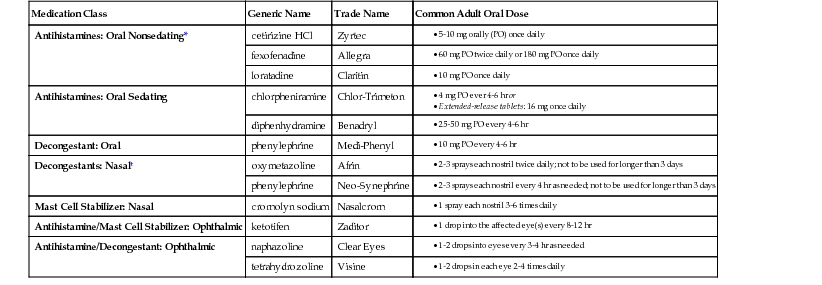
OTC Products for the Treatment of Cough and Cold Symptoms
The cold and flu section is one of the largest areas of the pharmacy. Many manufacturers offer the same types of ingredients in different proportions and combinations (Table 27-4). For congested coughs, expectorants can help expectorate phlegm. For dry coughs that do not produce phlegm, an antitussive agent commonly is used to reduce the coughing.
TABLE 27-4
Select OTC Products for the Treatment of Cough and Cold Symptoms*
| Medication Class | Generic Name | Trade Name | Common Adult Oral Dose |
| Antipyretic (Fever) and Analgesics | acetaminophen | Tylenol | • 325-650 mg orally (PO) or rectally (PR) every 4-6 hr as needed; not to exceed 1 g/dose or 3 g/day† |
| ibuprofen | Advil | ||
| Cough Suppressant (antitussive) | dextromethorphan | Delsym | |
| Expectorant | guaifenesin | Mucinex | |
| Systemic Decongestant | phenylephrine | Medi-Phenyl | |
| Local Anesthetics | benzocaine, menthol | Chloraseptic Sore Throat Lozenges | |
| pectin | Halls Lozenges | ||
| phenol | Chloraseptic Spray | ||
| benzocaine, glycerin | Cepacol Dual Relief Spray | ||
| Antihistamine: Sedating | diphenhydramine | Benadryl |
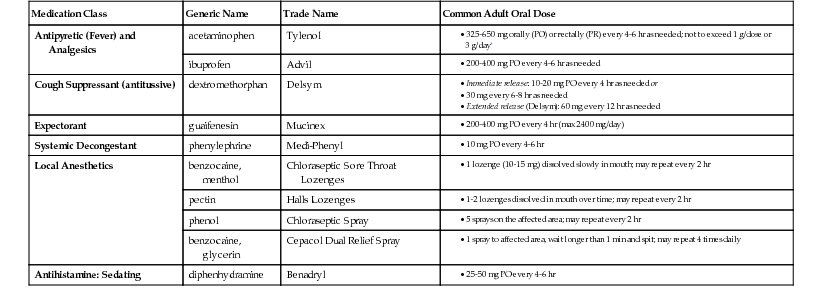
Sore, scratchy, and dry throats usually arise from a cold or flu. They can be treated with many different agents available as OTC medications. If a sore throat continues without relief for more than a couple of days and is accompanied by a productive cough, the person should see a physician so that infection can be ruled out. A sore throat can be a symptom of a streptococcal bacterial infection, also known as strep throat. Strep throat is managed with prescription antibiotics. In addition to taking antibiotics, the patient may relieve throat pain with various OTC syrups, sprays, and analgesics. The components typically used in these products include menthol, alcohol, and topical anesthetics, such as benzocaine.
OTC Products for Insomnia
Many people suffer from insomnia. Many OTC medications contain an antihistamine to treat insomnia (e.g., diphenhydramine, doxylamine) (Table 27-5). Some OTC combination products also contain acetaminophen or magnesium salicylate to assist with nighttime pain relief if the insomnia is thought to be pain related. OTC sleep aids are intended to be used for transient insomnia and not for chronic use. Melatonin is a nutraceutical widely used for sleep problems. It is an endogenous hormone secreted by the pineal gland that plays a role in the regulation of circadian rhythms.
TABLE 27-5
Select OTC Products for the Treatment of Insomnia*
| Medication Class | Generic Name | Trade Name | Common Adult Oral Dose |
| Hormone/Nutritional Supplement | melatonin | Bio-Melatonin, Circadin | |
| Histamine Antagonist (First Generation)/Ethanolamine Derivatives | doxylamine | Unisom Sleep-Tabs | |
| diphenhydramine | Benadryl, Sleep-Eze, Tylenol PM |

Although a prescription is not needed for an OTC sleep aid, it is still a good idea for people to discuss the use of these products with their pharmacist, physician, or other health care provider. OTC sleep aids generally are intended to be used for no longer than 2 weeks; therefore, people experiencing prolonged difficulties with sleep should seek evaluation by a physician. It is also important to stress the importance of nonpharmacological approaches that may help treat insomnia, such as sleeping on a regular schedule, avoiding caffeine and daytime naps, exercising, and managing stress.
Tech Note!
Diphenhydramine is renowned for causing next-day drowsiness, often accompanied by confusion, particularly in older adults. Diphenhydramine use also has been associated with an increased risk of falls in older individuals, so it should be used with caution in these patients.
Gastroesophageal Reflux Disease and Indigestion
Several classes of OTC medications are available to treat indigestion and gastroesophageal reflux disease (GERD) (Table 27-6). Histamine-2 antagonists (H2-antagonists) are used to reduce acid secretion to help diminish symptoms of heartburn and/or acid reflux. Proton pump inhibitors (PPIs) also work to decrease acid secretion, and antacid agents can be used to increase the pH level in the stomach, which ultimately helps reduce heartburn. (See Chapter 20 to review the mechanisms of action of these medication classes.)
Tech Note!
Chronic heartburn symptoms may be due to an ulcer caused by Helicobacter pylori, a bacterium associated with gastric ulcers that can cause the symptoms of heartburn. If the problem persists for longer than 2 weeks, the person should seek medical evaluation for an ulcer.
TABLE 27-6
Select OTC Products for Treatment of Gastroesophageal Reflux Disease and Indigestion
| Generic Name | Trade Name | Common Dosage Range |
| Antacids | ||
| Neutralize existing stomach acid | ||
| sodium bicarbonate | Alka-Seltzer | |
| calcium carbonate | Tums | |
| magnesium hydroxide | Milk of Magnesia | |
| H2-Blockers | ||
| Block the action of histamine that causes secretion of stomach acid | ||
| ranitidine | Zantac 150 | |
| cimetidine | Tagamet HB | |
| famotidine | Pepcid AC | |
| Proton Pump Inhibitors | ||
| Inactivate the acid pumps throughout cells in the stomach | ||
| omeprazole | Prilosec OTC | |
| lansoprazole | Prevacid 24HR | |
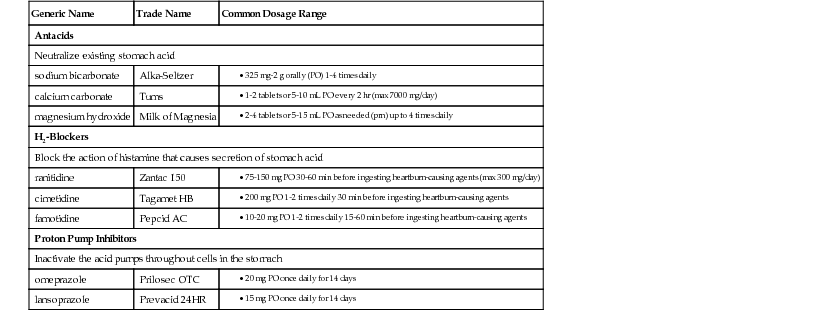
Antacids generally are reserved for short-term relief of heartburn, whereas PPIs and H2-receptor antagonists can be used for maintenance therapy with a prescription. Occasional side effects associated with antacid use can include constipation, diarrhea, and stomach cramps. Drug-drug interactions are possible with antacid products. For example, antacids containing calcium (e.g., Tums) may reduce the absorption and effectiveness of certain antibiotics, such as tetracycline and quinolone antibiotics. Antacids can also affect the absorption of levothyroxine, a thyroid hormone. Antacids, PPIs, and H2-receptor antagonists can also interact with drugs that require a highly acidic environment for proper absorption. As noted previously with OTC analgesics, it is important to question patients about their use of OTC products for the treatment of heartburn because of the potential for drug interactions with these products.
Tech Note!
Because calcium absorption is acid dependent, long-term use of a PPI has been linked to an increased risk of bone fracture due to decreased calcium absorption.
OTC Agents for Other Gastrointestinal Conditions
Table 27-7 presents remedies for intestinal discomfort and pain resulting from constipation, diarrhea, or gas (flatulence). Laxatives and stool softeners are commonly purchased OTC. (See Chapter 20 for a review of the treatment of constipation and diarrhea.) For the treatment of gas, simethicone (Gas-X) is the most commonly used agent. Beano, which contains the enzyme alpha-galactosidase, can be taken along with foods that contain gas-producing carbohydrates. Beano neutralizes the production of gas, which is created as a by-product of bacteria that live in the intestines as foods are digested.
Tech Note!
Psyllium is the only agent that can be used for both constipation and diarrhea because it works as a bulk-forming agent. Therefore, psyllium is often referred to as a “bowel stabilizer” and can be useful for people with diarrhea and those who cycle between episodes of diarrhea and constipation.
TABLE 27-7
Select OTC Products for Treatment of Gastrointestinal Conditions Such as Constipation and Diarrhea
| Medication Class | Generic Name | Trade Name | Common Dose Range | Onset |
| Fiber/Bulk Laxative | psyllium | Metamucil | 12-72 hr | |
| Stool Softener | docusate sodium | Colace | 12-72 hr | |
| Hyperosmolar Agent | sorbitol | Neosorb | 1-2 days | |
| Stimulants | bisacodyl | Dulcolax | 6 hr | |
| senna | Senokot | 6-12 hr | ||
| Saline Laxatives | magnesium citrate | Citroma | 0.5-3 hr | |
| magnesium hydroxide | Milk of Magnesia | 0.5-6 hr | ||
| Lubricant Laxative | mineral oil | Kondremul | 6-8 hr | |
| Suppositories | glycerin | Sani-Supp | 15-60 min | |
| bisacodyl | Dulcolax | 15-60 min | ||
| Enemas | sodium phosphate | Fleet | 5-15 min | |
| mineral oil | Fleet Mineral Oil Enema | 6-8 hr | ||
| Antidiarrheals | loperamide | Imodium | 1 hr | |
| bismuth subsalicylate | Pepto-Bismol | 1 hr |
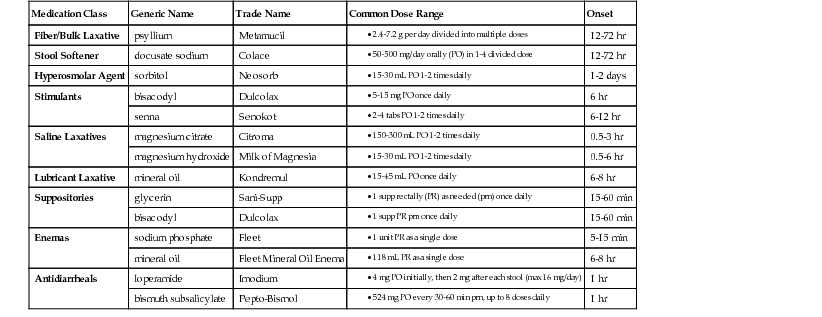
Miscellaneous OTC Products for Skin-Related Conditions
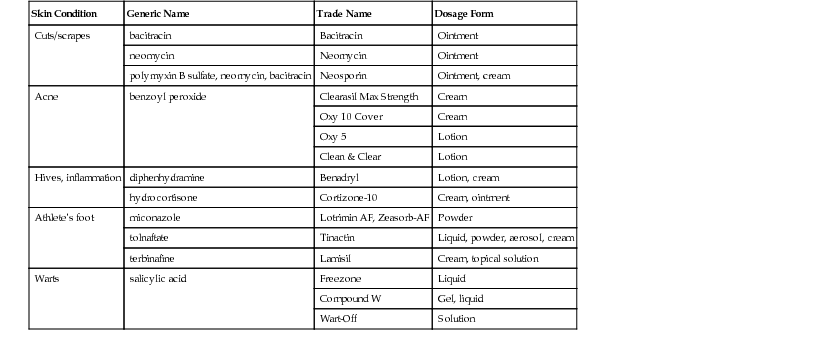
Several OTC agents are available to treat a variety of skin conditions (Table 27-8). Minor cuts and scrapes can be treated with topical antiinfective agents, such as Neosporin. Acne, common among teenagers, is treated primarily with benzoyl peroxide. Hives can occur as an allergic reaction and are commonly treated with antihistamines or topical hydrocortisone products. Athlete's foot and jock itch are fungal conditions that can be treated with several types of nonprescription topical antifungals, which are readily available OTC in a variety of dosage forms. Common warts can be treated effectively with salicylic acid and other topical agents.
TABLE 27-8
Select Miscellaneous Topical OTC Products Used to Treat a Variety of Skin Conditions
| Skin Condition | Generic Name | Trade Name | Dosage Form |
| Cuts/scrapes | bacitracin | Bacitracin | Ointment |
| neomycin | Neomycin | Ointment | |
| polymyxin B sulfate, neomycin, bacitracin | Neosporin | Ointment, cream | |
| Acne | benzoyl peroxide | Clearasil Max Strength | Cream |
| Oxy 10 Cover | Cream | ||
| Oxy 5 | Lotion | ||
| Clean & Clear | Lotion | ||
| Hives, inflammation | diphenhydramine | Benadryl | Lotion, cream |
| hydrocortisone | Cortizone-10 | Cream, ointment | |
| Athlete's foot | miconazole | Lotrimin AF, Zeasorb-AF | Powder |
| tolnaftate | Tinactin | Liquid, powder, aerosol, cream | |
| terbinafine | Lamisil | Cream, topical solution | |
| Warts | salicylic acid | Freezone | Liquid |
| Compound W | Gel, liquid | ||
| Wart-Off | Solution |
Considerations for Special Populations
As the population ages and lives longer, the number of older adults purchasing OTC medications increases. Compared with legend drugs, more OTC drugs are available in different dosage forms, strengths, and combinations. Some older adults buy OTC medications because they lack or have inadequate insurance coverage, and they may choose the wrong medication. Often an appropriate medication is not available in OTC form. It is important for pharmacists to question all customers with a new prescription about their OTC drug and herbal use, but this is particularly important for older adults because of the number of products they often use. In some instances OTC and herbal products can interact with prescription medications (e.g., OTC NSAIDs interact with warfarin, increasing the risk of bleeding). It is important to explain to people that just because a product is available OTC does not mean it is 100% safe for everybody.
Another group of people at particular risk for receiving an inappropriate medication, the wrong dose, or the wrong drug product are infants and young children. Most products are dosed based on the age and weight of the child. However, because a parent does not need a prescription to obtain these medications, they have been used in excess many times. Problems have arisen from parents having difficulty measuring the proper dose of medicine for their child and from blatant misuse of the product. For example, diphenhydramine is often given inappropriately to help children sleep rather than for its intended purpose. In response to concerns about inappropriate use of OTC cough and cold products in children, the FDA has recommended that these products not be used to treat infants and children under 2 years of age because of serious and potentially life-threatening side effects. For use of these products in children over age 2, the FDA has established several recommendations for parents to follow.
• Check the “active ingredients” section of the Drug Facts label to make sure the product contains ingredients that treat the symptoms the child is experiencing.
• If giving more than one OTC cough and cold medicine to a child, be very careful not to duplicate the types of drugs used.
• Carefully follow the directions on the Drug Facts label.
• Use only the measuring spoons or cups that come with the medicine or those made especially for measuring drugs.
• Choose OTC cough and cold medicines with childproof safety caps, when available, and store the medicines out of reach of children.
• Understand that OTC cough and cold medicines are intended only to treat the child's symptoms.
• Do not use OTC cough and cold medicines to sedate a child or to make children sleepy.
• If any questions arise about using cough or cold medicines in children age 2 or older, call a physician, pharmacist, or other health care professional.
Restricted OTC Products
Certain drugs are kept behind the counter in the United States to regulate access to these products (Table 27-9). Although they are referred to as behind-the-counter drugs, they do not belong to a specific OTC “class” of drugs under FDA rules, unlike in other countries such as England and Canada. Also, under the 2005 Combat Methamphetamine Epidemic Act (see Chapter 2), any products containing pseudoephedrine must be kept behind the pharmacy counter, and information about individuals purchasing pseudoephedrine products must be logged and maintained.
TABLE 27-9
Current Medications Available Behind the Counter in the United States
| Brand Name | Generic Name | Conditions |
| Sudafed | pseudoephedrine | Log book containing purchaser's name, address, identification, and signature; date and time of sale; and name and quantity of product sold to be maintained for at least 2 years Limited amount may be purchased for 1-day and 1-month intervals |
 Do You Remember These Key Points?
• The most common conditions treated with OTC products
• Brand and generic names of common OTC drugs used to treat the conditions discussed in this chapter
• Regulations concerning the manufacture of OTC products as established by the FDA
• Common dosage forms and safety considerations for the OTC products discussed in this chapter