Complementary and Alternative Therapies in Maternity and Pediatric Nursing
1 Define each key term listed.
2 Define complementary and alternative medicine (CAM) therapy.
3 Identify the role of the nurse in CAM therapy.
4 Describe the involvement of the federal government in CAM therapy.
5 Discuss the integration of CAM therapy into nursing practice.
6 Discuss the impact on nursing care of patients who use CAM therapy.
7 State five types of CAM therapy in common use.
8 State three herbal products contraindicated in pregnancy.
9 State three herbal products commonly used in pediatrics.
10 State popular herbs used during menopause.
11 Discuss the use of hyperbaric oxygen therapy in the care of carbon monoxide poisoning and necrotic ulcers.
12 State three herbs that should be discontinued 2 weeks before surgery.
13 State the use of meridians, dermatomes, and reflexology lines in CAM therapy.
 , p. 764)
 , p. 764)
 , p. 763)
 , p. 764)
 http://evolve.elsevier.com/Leifer
Complementary and Alternative Therapies
Complementary therapy refers to nontraditional (non-Western medical) therapy that is used with traditional or conventional (Western medical) therapy. An example would be the treatment of hypertension with medication plus relaxation or biofeedback techniques. Alternative therapy refers to unconventional or nontraditional therapy that replaces conventional or traditional therapy. Complementary and alternative medicine (CAM) therapies are also known as integrative therapy, integrative healing, and holistic healing. Although CAM therapy is used throughout the lifespan, this chapter focuses only on the common gynecological, obstetric, and pediatric practices.
Pediatric Use
The status of CAM research was reviewed by the Task Force on Complementary and Alternative Medicine. Their findings, published in a 2000 report, indicate that research is limited because of variations in content of CAM products and the fact that results of evidence-based research is usually published in foreign language journals and not easily accessible to U.S. pediatricians (Kemper, 2008). However, many CAM therapies are utilized effectively and integrated with traditional Western medicine. For example, the ketogenic diet has proven effective in some seizure disorders and chiropractic care for children is common practice, although evidence-based research and randomized controlled trials on both are lacking. Meditation, guided imagery, and biofeedback have been useful in managing pain control, anxiety, sleep disorders, asthma, and many other conditions. Acupuncture has been successful in the treatment of some headaches in children, and many pediatricians and gastroenterologists now recommend probiotics.
The National Center for Complementary and Alternative Medicine awarded the University of Arizona a 5-year grant to study pediatric CAM practices, and in 2004 an Integrative Pediatric Council was formed to compile evidence based practices in pediatrics. In 2007, Duke University Medical School designed a “living laboratory” to study effective use of CAM therapies. More comprehensive integration of CAM practices may be on the horizon.
The Nurse’s Role
Many CAM therapies are based on accepted theories such as the gate control theory of pain relief (see Chapter 7). Nurses have used complementary therapies such as imagery, journaling, therapeutic touch, humor, and support groups and therefore have an integral role in the development and assessment of CAM therapy. A large proportion of people worldwide use some sort of CAM therapy for adults and children, with complementary therapy readily accepted in Europe (Corrigan & Alfers, 2007). Knowledge concerning CAM therapy expands knowledge about health care practices used in many cultures. Cultural competence is sensitivity to and respect for practices and philosophies different from one’s own; the awareness and understanding of CAM therapy can enhance the cultural competence of nurses.
 Cultural Considerations
The focus of health care has changed, moving from the patient in the hospital to the patient in the home. The hospital setting is somewhat of a controlled environment, but nursing care in the home brings new challenges. As nurses enter this health care environment within the community, they will no longer be surrounded by familiar equipment, practices, and support personnel. Instead they will encounter some alternative health care practices involving patients who want increasing control over their health problems, need to be a part of the decision making process, and want to incorporate cultural beliefs and traditions into their care. In addition to accepting treatment prescribed by a traditional health care provider, the patient may also be consulting other healing authorities such as holistic practitioners, naturopaths, and nutritional consultants (Figure 34-1). Food therapy, vitamin and mineral supplements, herbal therapy, and acupressure are common forms of alternative therapies practiced in many homes.
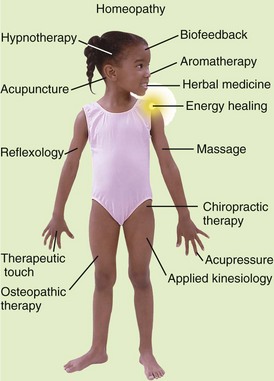
The greater acceptance of CAM therapies by the layperson and the inclusion of CAM therapies in medical curricula and practice has resulted in the need for nurses to understand CAM therapy, how it can be used, and how it may interact with or enhance traditional medical or nursing care (Table 34-1). It is important to note that not all alternative therapists are licensed, not all alternative medicines are regulated, and much of the practice is not based on research or the scientific process.
Table 34-1
Herbs That Should Be Discontinued Two Weeks Before Surgery
| HERB | SIDE EFFECTS | PROBLEM DURING SURGERY |
| Echinacea | Unpleasant taste sensation, potential liver toxicity | May potentiate barbiturate toxicity |
| Garlic | Increased bleeding time, hypotension | Increased risk of intraoperative hemodynamic instability |
| Ginger | Increased bleeding time | Increased risk of intraoperative hemodynamic instability |
| Gingko biloba | Platelet dysfunction | Increased intraoperative and postoperative bleeding tendencies; may decrease effectiveness of intravenous barbiturates |
| St. John’s wort | Dry mouth, dizziness, constipation, nausea | Increases risk of bleeding and increases metabolism of select medications, including altering effects of anesthetic agents |
| Ginseng | Hypertension, insomnia, headache, vomiting, epistaxis, prolonged bleeding time, hypoglycemia | Increased risk of intraoperative hemodynamic instability |
| Kava kava | Characteristic scaling of the skin | Increases level of sedation; can lead to coma; interacts with other drugs and can cause liver failure |
| Feverfew | Mouth ulcers, gastrointestinal irritability, headache | Increased risk of intraoperative hemodynamic instability |
| Ephedra (ma huang) | Hypertension, tachycardia, stroke, dysrhythmias | May interact with volatile anesthetic agents (e.g., halothane) to cause fatal cardiac dysrhythmias; profound intraoperative hypotension |
Note: The nurse must also be alert to the effects of CAM therapy on traditional medical or nursing care.
Many pharmacists sell herbal medications, but few have continuing education concerning herbal products. This may mean they have knowledge of the use of herbal medications but at the same time need increased understanding of possible adverse interactions and side effects for the individual patient.
Box 34-1 lists some cautions concerning the use of CAM therapy. CAM therapy is not currently viewed as part of routine health care, which is evidenced by the lack of health insurance coverage for that type of health care; however, some CAM practices have filtered into accepted nursing practice (e.g., massage, imagery, and aromatherapy). It is likely that nurses today and in the future will encounter CAM therapy as part of the health care delivery system. Therefore it is essential that nurses understand basic underlying philosophies and beliefs concerning CAM interventions. The nurse’s role is not to promote the acceptance of CAM therapy but to recognize and respect its use in patients and to use critical thinking skills to determine interactions with traditional therapy. Healing is best achieved with the patient as a partner and by giving consideration to the cultural and environmental influences that affect the overall health and wellness of the patient and family. When documenting a patient’s health history, questions should be asked concerning the family’s use of CAM therapies.
Federal Regulations
There are more than 1800 identified CAM therapies practiced in the United States. The practices are not standardized, and often there is a lack of research-based evidence concerning their mechanism of action, effectiveness, or safety. In 1938 the Federal Food, Drug and Cosmetic Act required all drugs, including herbs, to be safe before sale. In 1962 the Kefauver-Harris Drug Amendment required proof to the U.S. Food and Drug Administration (FDA) of drug effectiveness before placing agents on the market for sale. Manufacturers of herbal products declared their products to be “dietary supplements” and therefore not subject to this law. In 1976 the Proxmire amendment prevented the FDA from regulating supplement potency. In 1994 the Dietary Supplement Health and Education Act defined the term dietary supplement and prohibited claims of medicinal value. There have been requests by many health groups for closer regulation of dosages, warnings, and contraindications for dietary supplements, but the FDA has not yet regulated the herbal industry. For this reason, many dietary supplements and herbal remedies vary in their strengths and ingredients.
In 1992 the National Institutes of Health (NIH) created the Office of Alternative Medicine to evaluate the various CAM therapies. It has since been renamed the National Center for Complementary and Alternative Medicine (NCCAM). This Center serves as a public clearinghouse and resource for research concerning CAM therapies. There are 11 university- or medical center-affiliated research facilities for alternative medicine in the United States today. The more popular herbs and oils have been the first to be researched in centers such as the University of California, Los Angeles (UCLA), and the University of Chicago.
In 1994 the Dietary Supplement Health and Education Act (DSHEA) required regulations in the marketing of dietary supplements that include plant extracts, vitamins, minerals, and herbs that are available to consumers without a prescription. Claims on labels must reveal they are not FDA approved.
In 1999 the NIH directed the NCCAM to work together with the Office of Dietary Supplements in research programs concerning the safety and efficacy of alternate medications. A journal, The Scientific Review of Alternative Medicine, is an example of publications dedicated to evaluating CAM therapies based on review of medical studies.
Common Alternative Health Care Practices
An underlying premise of alternative healing techniques is that the symptoms are the result of a problem in the body that may not be related to the specific symptom manifested. The body is thought to have a self-healing ability that can be aided by spinal or energy manipulation. Soft-tissue massage is thought to bolster the immune response. Fascia pressure, stretching, and manipulation, known as Rolfing, are thought to improve muscle and bone function. “Cao-gio,” or coin-rubbing, is a form of skin manipulation thought to help bring the body into healthy alignment (Figure 34-2). Neuromuscular massage helps to relieve muscle tension and trigger points of pain and generally improves circulation. Perineal massage during pregnancy and before delivery may prevent the need for an episiotomy during delivery, thereby reducing perineal trauma. Effleurage is a form of massage used during labor (see Figure 7-3).
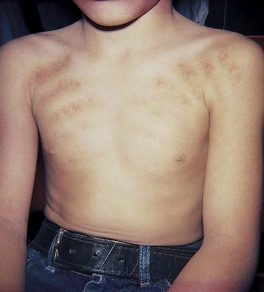
FIGURE 34-2 “Cao-gio” (coin-rubbing) is a form of fascial manipulation believed to bring the body in alignment with gravity. It is a form of CAM therapy that can easily be mistaken for child abuse because of the lingering marks on the skin after treatment.
Massage therapy is often used for children with asthma, arthritis, and eating disorders. Gentle touch massage therapy has had positive effects on premature infants. Massage and manipulative therapy is contraindicated in patients with cancer, osteoporosis, localized infection, and cardiac and circulatory disorders because of the increase it causes in blood flow to affected areas. Children with Down syndrome are particularly prone to cervical spine anomalies and may be injured by manual manipulative therapy. Children who have a history of sexual abuse do not usually respond favorably to touch therapy.
Osteopathy
Osteopaths combine manipulative therapy with traditional (allopathic) medicine. Pressure point therapy is based on the theory that certain areas of the body are connected to specific identified pressure points such as the feet, the hands, and the ears. It is believed that channels conduct vital energy through the body. The osteopath can guide a woman with previous back problems to select a birthing position that will not aggravate the problem. Many osteopaths currently practice in the mainstream of Western medicine.
Energy Healing
Energy healing involves the belief that an electromagnetic flow emerges from the therapist’s hands and can funnel energy into the patient. Some believe that repatterning a patient’s own energy field can aid in healing. The body, mind, spirit, and emotions are usually involved in this type of therapy.
A wristband that uses transcutaneous electrical nerve stimulation (TENS) can prevent nausea and vomiting during chemotherapy (Figure 34-3). TENS, shen, reiki, and the use of magnets are other forms of energy therapy. Magnets should not be used over the abdominal area during pregnancy.
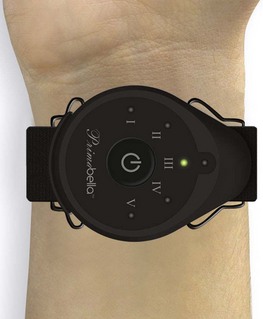
FIGURE 34-3 PrimaBella is a noninvasive transdermal device cleared by the FDA for treatment of pregnancy-induced nausea and vomiting (morning sickness). The device is applied to the ventral side of the wrist, where the median nerve is closest to the surface of the skin. It emits a programmed pulse that stimulates the nerve to create electrical signals that travel to the central nervous system to restore normal gastric rhythm. (Photo courtesy Neurowave Medical Technologies.)
Light therapy or sunlight is an ancient form of healing therapy. Light therapy is used in the treatment of jaundiced newborn infants (hyperbilirubinemia, see Chapter 13) and is also used in treating persons with seasonal affective disorder.
Reflexology
Reflexology deals with reflex points in the hands and feet that are thought to correspond to every organ or part of the body. The foot or hand represents a map of the entire body linked by energy pathways (Figure 34-4). Massaging these reflex points can relieve specific problems.
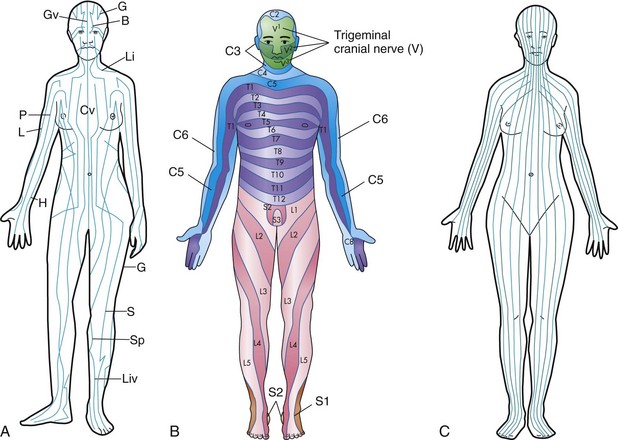
FIGURE 34-4 A, Meridians. Acupuncture is based on the belief that the correct flow of energy through meridians (invisible tracks running through the body) controls the health of all vital organs. Stimulating any of the 12 meridians with heat, electricity, needles, or pressure can affect corresponding parts of the body. B, Dermatomes. The areas of the skin innervated by the dorsal roots of the spinal cord are called dermatomes. Obstructing one dermatome line can anesthetize that segment of the skin and adjacent structures (although some dermatome lines from adjacent dorsal roots of the spine can overlap). C, Reflexology lines. Reflexology lines divide the body into 10 zones of longitudinal lines. Blockage of the lines is thought to obstruct vital energy pathways. Stimulating the area around the ankle bone can affect the uterus and pelvic organs and relieve pain during labor.
Acupuncture and Acupressure
Acupuncture is an ancient Chinese practice that works on the principle that the body has complex meridians that are pathways to specific organs or parts of the body. These meridians surface at specific locations called acupuncture points. It is at these 150 points on the 12 meridian sites that positive or negative energy can be realigned through stimulation. “Chi” energy is thought to regulate proper body function, and acupuncture or acupressure is applied to restore a balance of chi energy. In acupuncture, hair-thin needles are applied to specific meridians and may stimulate nerve cells to release endorphins.
Acupressure uses finger pressure and massage on the meridian sites (see Figure 34-4) rather than needles. Acupuncture and acupressure have achieved popularity in the Western world and can be used during pregnancy to control nausea, backache, and pain. Acupressure wristbands are available for use to prevent nausea and vomiting during travel or pregnancy. These techniques have also been useful for minor postpartum problems such as constipation. Acupoints to avoid during pregnancy include the bottom of the foot, the inner lower leg, the base of the thumb, and most areas over the abdomen, because pressure here may result in negative outcomes such as premature labor. Shiatsu is a finger pressure used with an emphasis on preventing disease rather than treating symptoms. Pressure is applied to achieve a level of sensation between pain and pleasure in the individual.
Homeopathy
Homeopathy accounts for approximately 25% of pediatric visits to alternative health practitioners. Homeopathy uses plants, herbs, and earth minerals that are thought to stimulate the body’s immune system to deal with specific health problems. The homeopathic philosophy involves the belief that disease is an energy imbalance and that prescribed remedies assist the body to reestablish correct balance. Homeopathic remedies are taken sublingually and should not be combined with caffeine, alcohol, or traditional Western medications. Some homeopathic medicines are alcohol based, and some contain mercury or arsenic bases that can cause toxicity or allergic responses in children. Only one remedy is administered at a time, and minimum dosage is the principle of most practitioners.
Ayurveda
Ayurveda is an ancient Hindu healing regimen that deals with the biological rhythms of nature and can include music, herbs, massage, aromatherapy, and a diet tailored to the specific body type.
Aromatherapy
Aromatherapy is an ancient practice that involves concentrated fluid or the essence of specific herbs that are combined with steams or baths to inhale or bathe the skin. Essential oils are concentrated and, if undiluted, are usually used in 2- to 5-drop doses. Often a few drops of the herbal oil are added to soaps or regular lotions immediately before use. Concentrated oils are volatile and must be freshly prepared and stored properly. Some essential oils are contraindicated for use during pregnancy because of the effect on the mother or fetus; these include anise, juniper, thyme, wintergreen, nutmeg, pennyroyal, and mugwort. Aromatherapy under the supervision of a trained aromatherapist with oils such as jasmine, citrus, clary sage, lavender, and peppermint has been useful during labor and delivery to relieve anxiety, reduce nausea, and improve the general feeling of well-being.
 Nursing Tip
Hypnotherapy
In hypnotherapy, the patient enters a hypnotic state of induced sleep. Under the guidance of the practitioner, specific and potentially long-lasting suggestions are given to the patient. Smoking cessation and pain control have been successfully achieved using this method. Some patients resist the trance state and are not candidates for hypnotherapy.
Hydrotherapy
Hydrotherapy is the therapeutic use of water to promote relaxation. It is often used during labor in the form of showers (see Box 7-1). In some independent birthing centers, delivery is accomplished under water under the direction of certified nurse midwives (CNMs).
Guided Imagery
Guided imagery is based on the ancient Greek belief that the mind can influence the body. Asking the patient to focus on a specific image can result in the reduction of stress and increased performance. This technique is most often combined with breathing and relaxation techniques to manage the discomforts of labor (see Box 7-1).
Biofeedback
Biofeedback is a type of relaxation therapy that enables the patient to recognize tension in the muscles via responses on an electronic machine and visual electromyography responses. The process is also used by traditional health care providers for drug addiction and chronic pain control.
Chiropractic Care
Chiropractic care deals with the relationship between the spinal column and the nervous system and involves nerve energy thought responsible for restoring and maintaining health. During pregnancy, circulating hormones such as relaxin increase the mobility of joint capsules and pelvic joint structures that affect the musculoskeletal system. Vigorous manipulation should be avoided between the twelfth and sixteenth weeks of pregnancy to avoid stimulating a miscarriage or premature labor.
Most chiropractors also use massage, diet, nutritional, and enzyme therapy for a more comprehensive approach. Chiropractors offer well-child care by preventive manipulation.
Herbal Remedies
The World Health Organization (WHO) reports that herbal remedies are often used worldwide and are the first-line treatment for most children in developing countries. Herbal medicine has been used for thousands of years in many countries. Herbs are powerful nutritional agents, and most are safe to ingest. Occasionally an allergic type of reaction is encountered, possibly because of differences in processing or storing of the product. Herbal products are sold in stores, but the processes of growth, processing, storage, and prescription are not regulated the way they are for traditional drugs. However, there are general guidelines for their use, including dosages and the recommendation that herbal mixtures are preferred to single-herb products.
Many current medications are related to herbal remedies. Digitalis originates from foxglove, opiates originate from poppy flowers, and quinine originates from the cinchona trees. However, some herbs, such as ephedra, can be fatal to children. Herbal remedies consumed during pregnancy can reach the fetus. Breastfeeding mothers who use herbal remedies can pass the substance to their nursing infants. Home-grown herbs, such as chamomile used for tea, can be contaminated with botulism. Taking time to elicit an accurate history from parents may reveal their practice of using herbal remedies for the family.
Herbal capsules are about 4 times stronger than herbal teas, and herbal extracts are about 4 to 8 times stronger than capsules. Most extracts should not be taken for longer than 6 consecutive days. Herbal tinctures contain a high amount of alcohol and are not often recommended. Herbal baths are relaxing and soothing, and herbal salves, oils, compresses, and poultices use the skin as the body’s organ of ingestion. Most practitioners emphasize that herbal dosage is determined by body weight and that megadoses can be harmful.
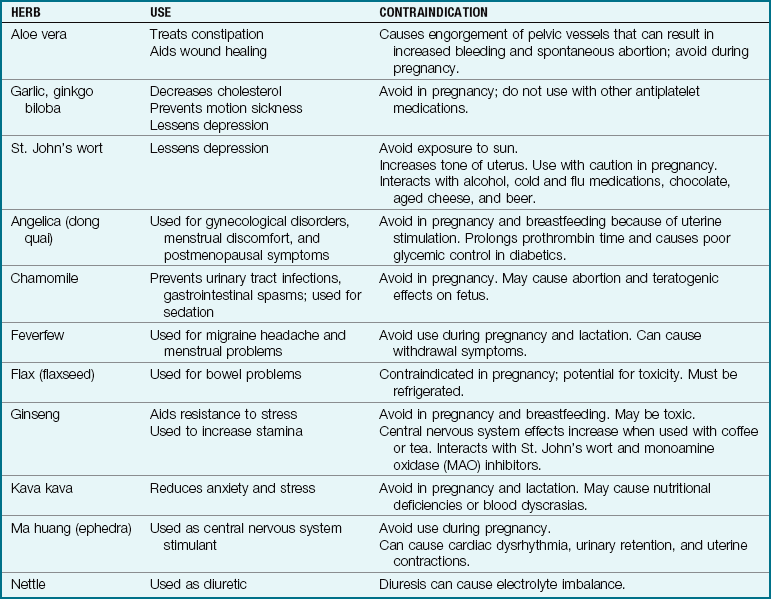
Herbs and Obstetrics: CAM therapy for obstetrics helps some women feel a sense of control over their well-being. Because many women view CAM therapy and herbal remedies as “natural remedies,” they may not be aware of the possible dangers to themselves or their growing fetus. The patient may have been using herbal products before becoming pregnant, and the question of whether or not to continue during pregnancy, labor, and delivery must be discussed with the health care provider. Table 34-2 lists commonly used herbs that are contraindicated for use during pregnancy.
Table 34-2
Common Herbs Contraindicated in Pregnancy and Lactation
Data from Hadley, S., & Petry, J. (1999). Medicinal herbs: A primer for primary care. Hospital Practice 34(6), 105-106, 109-112, 115-116; and Spencer, J., & Jacobs, J. (2003). Complementary and alternative medicine: An evidence-based approach (2nd ed.). St. Louis: Mosby. PDR for herbal medicines. (2010). Montvale, NJ: Medical Economics; Rakel D. (2007). Philosophy of integrative medicine, 2nd ed. Philadelphia: Saunders.
In general, herbs that promote menstruation are contraindicated for use in pregnancy (Box 34-2). It should be remembered that tannic acid and bran decrease the absorption of iron from foods, and therefore tea with meals should be avoided during pregnancy when blood volume increases and hemoglobin levels may fall into the anemic zone. The use of herbal products for neonates is contraindicated unless carefully monitored by a licensed herbalist and neonatologist. The ingestion of high levels of vitamin C by a breastfeeding mother can result in colic in the newborn infant.
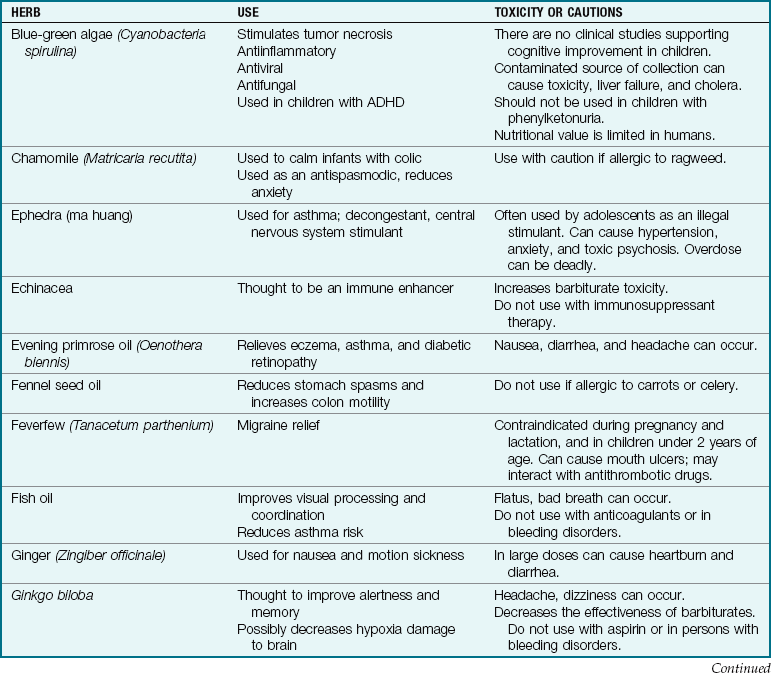
Herbs and Pediatrics: The use of CAM therapy has increased for children with various chronic diseases. Chiropractic, biofeedback, homeopathy, and herbal-food supplements are popular treatments for children. Parents sometimes prefer “natural remedies” such as herbs to prescription medicines for their children diagnosed with attention deficit hyperactivity disorder (ADHD). Herbal treatments focus on improving cognition, producing sedation, or alleviating anxiety. These herbs are obtained without a prescription, and their use is often not supported by scientific studies concerning effectiveness or safety. Some herbs are contained in flavored tea sold in the supermarket. Parents often do not discuss CAM therapy used with their children unless directly asked by the nurse or health care provider. Table 34-3 reviews herbs commonly used for children, and the Online Resources section at the end of this chapter lists several websites to help parents find reliable information.
Table 34-3
Herbs Commonly Used in Pediatrics
ADHD, Attention deficit hyperactivity disorder; MAOIs, monamine oxidase inhibitors.
Data from PDR for herbal medicines (2010). Montvale, NJ: Medical Economics; and Gardiner, P., & Kemper, K. (2005). For GI complaints: Which herbs and supplements spell relief? Contemporary Pediatrics, 22(8): 50-55; Reddy, P., & Devi, S. (2007). Herbal therapy for children with ADHD and depression. Internet Journal of Alternative Medicine 4(1).
Herbs and Menopause: Menopause is a stage of health within the health-illness continuum in a woman’s life. It is not approached as a disease or illness but rather as a unique stage of life and as a normal, healthy process. The physiological alterations that occur as a woman reaches and enters menopause result in minor discomforts such as hot flashes, night sweats, and insomnia. Traditionally, hormone replacement therapy (HRT) has been the most popular approach to managing menopausal symptoms. Recently, more “natural” paths of management have developed:
• Exercise, such as weight-bearing or water aerobic exercise programs
• Relaxation techniques, including breathing, biofeedback, and hypnosis
• A low-fat, high-fiber and soy diet
• Herbs (Table 34-4)
Table 34-4
Popular Herbs Used in Menopause
| HERB | USES AND CONTRAINDICATIONS |
| Black cohosh (Cimicifuga racemosa) | Diminishes hot flashes by reducing luteinizing hormone (LH); reduces joint pain, hot flashes, and other menopausal discomforts |
| Sage (Salvia officinalis) | Contains phytosterols and bioflavonoids; effective for night sweats and hot flashes and has been used to dry lactating breasts |
| Dong quai (Angelica sinensis) | Contains phytoestrogens; contraindicated for use in presence of midcycle spotting and fibroids |
| Chasteberry (Vitex agnus-castus) | Reduces hot flashes and dizziness caused by high levels of follicle-stimulating hormone (FSH); balances hormonal fluctuations when combined with other herbs |
| Motherwort (Leonurus cardiaca) | Relieves hot flashes and moodiness; reduces anxiety and insomnia |
Data from PDR for herbal medicines. (2010). Montvale, NJ: Medical Economics; Rakel D. (2007). Philosophy of integrative medicine (2nd ed.). Philadelphia: Saunders.
Hyperbaric Oxygen Therapy
Hyperbaric oxygen therapy (HBOT) uses an airtight enclosure to provide compressed air or oxygen under increased pressure. HBOT is used to revive children with carbon monoxide poisoning, to aid wound healing, and to treat the diving syndrome known as decompression illness. Many hospitals currently use hyperbaric oxygen therapy as a standard treatment for wound healing and other specific problems. HBOT is also used as CAM therapy in private centers. HBOT is contraindicated during pregnancy, because the increased oxygen saturation can cause the ductus arteriosus to close, resulting in fetal death. Research concerning the use and effects of HBOT is ongoing.
Sauna/Heat Therapy
Overheating the body has long been used to speed up metabolism and inhibit the replication of viruses and bacteria. The sweating that results from the sauna is thought to help eliminate body waste. Patients should monitor their pulse during treatment. Some medical conditions can inhibit the ability to perspire, and heat can adversely affect the cardiac status of some patients. Therefore medical guidance should be sought before using this type of therapy. Sauna/heat therapy is contraindicated during pregnancy.
Get Ready for the NCLEX® Examination!
Key Points
• To promote positive outcomes, nurses must be well informed about the use and validity of complementary and alternative medicine (CAM) practices and understand the potential interactions with prescribed medications and treatments.
• Complementary therapies are treatments used in conjunction with traditional medicine.
• Alternative therapies are treatments that replace traditional medical therapy.
• The National Center for Complementary and Alternative Medicine, part of the National Institutes of Health, was created to conduct and review research concerning the efficacy and dangers of CAM therapy.
• Many herbal preparations do not have research-based data to guide determination of safe dosage and use.
• Many CAM therapies are utilized effectively and integrated with traditional Western medicine.
• Some CAM therapies, such as guided imagery, massage, and therapeutic touch, have been used successfully by nurses for many years.
• It is likely that nurses today and in the future will encounter some form of CAM therapy as part of the health care delivery system.
• Transcutaneous electrical nerve stimulation (TENS) is a form of energy therapy used to prevent nausea in labor, after surgery, and during chemotherapy.
• Nurses must use critical thinking skills to determine the interactions between CAM therapy and traditional prescribed treatments.
• Coin-rubbing is a type of CAM therapy that can be mistaken for child abuse because of lingering skin marks after treatment.
• Meridians are invisible (imaginary) lines running through the body that are thought to control the health of vital organs. Stimulation of any of the 150 pressure points on the 14 meridian sites is the basis of acupressure and acupuncture.
• Dermatomes are areas of the skin that are innervated by the dorsal roots of the spinal cord and affect specific segments of the skin and adjacent structures. These areas are manipulated by chiropractors.
• Reflexology lines divide the body into 10 zones of longitudinal lines. Blockage is thought to obstruct energy pathways; this is the basic concept of reflexology.
• As part of routine history data collection, nurses should ask all patients if they use a form of CAM therapy; this information should be recorded on the chart.
Additional Learning Resources
 Go to your Study Guide for additional learning activities to help you master this chapter content.
Go to your Evolve website (http://evolve.elsevier.com/Leifer) for the following FREE learning resources:
• Answer Guidelines for Critical Thinking Questions
• Answers and Rationales for Review Questions for the NCLEX® Examination
• Glossary with English and Spanish pronunciations
• Interactive Review Questions for the NCLEX® Examination
• Patient Teaching Plans in English and Spanish
 Online Resources
• Attention deficit hyperactivity disorder: www.adhd.org
• Herbs and supplements: www.nlm.nih.gov/medlineplus/druginfo/herb_All.html
• National Center for Complementary and Alternative Medicine: www.nccam.nih.gov
• USDA National Agriculture Library, Dietary Supplements: http://fnic.nal.usda.gov/nal_display/index.php?info_center=4&tax_level=2&tax_subject=274&topic_id=1331
• What Is CAM?: http://nccam.nih.gov/health/whatiscam/
Review Questions for the NCLEX® Examination
1. The nurse should communicate to parents that herbal medicines sold over the counter:
2. are effective substitutes for traditional medication.
3. can interact with prescribed medications and produce adverse effects.
2. What instruction would a nurse give a patient who is using an herbal product?
1. Take high doses of single herb to maximize effectiveness.
2. Depend on the label for claims of benefits of use.
3. Buy the least expensive brand of the product.
4. Inform the health care provider of all herbal products used.
3. A patient in the prenatal clinic asks the nurse about the use of alternative or complementary therapies during her pregnancy. What would be the most appropriate response of the nurse?
1. Discussing CAM therapy is not within the scope of practice of the licensed practical or vocational nurse (LVN/LPN).
2. All CAM therapies should be stopped during pregnancy, labor, and delivery.
3. Many complementary therapy techniques are taught in prenatal classes; some forms of alternative therapies may be contraindicated during pregnancy, labor, and delivery.
4. Only those herbs approved by the FDA should be used during pregnancy, labor, or delivery.
4. What is the branch of the federal government that conducts research concerning the safety and efficacy of specific CAM therapies?
1. Department of Health and Human Services
2. National Center for Complementary and Alternative Medicine (NCCAM)
5. The role of the nurse in CAM therapy is to:
1. encourage the use of CAM therapy in maternity and pediatric patients.
2. discourage the use of CAM therapy in maternity and pediatric patients.
3. discuss the impact or interaction of the CAM therapy with prescribed therapy.
4. provide a resource of certified CAM therapists for maternity and pediatric patients.