1 The genesis of essential oils
Introduction
Aromatherapy is the use of essential oils, all of which are derived from plants. Anyone wishing to practise aromatherapy must gain as full an understanding of the plants concerned as possible, so that the oils can be used knowledgeably to their best effect. This chapter enables the practitioner to do this, looking beyond the oil in the glass bottle to the plant from which it was extracted, its growing environment and the family to which it belongs.
Botany for aromatherapists
What has botany to do with aromatherapy?
Everyone knows the quotation from Shakespeare’s Romeo and Juliet: ‘What’s in a name? That which we call a rose by any other name would smell as sweet.’
What’s in a name? The answer when dealing with essential oils is – everything!
To be an effective aromatherapist it is crucial to a good outcome that aromatherapeutic-quality essential oils pertinent to the particular client be employed, and to be able to do this the therapist must be able to discriminate between therapeutic-quality oils and those produced for other industries, which is the overwhelming bulk of essential oils produced. To be able to select such oils is not possible unless the therapist has a basic knowledge of some aspects of botany, and in particular the nomenclature used.
That botany is a useful study is plain; because it is in vain that we know betony is good for headaches, or selfheal for wounds unless we can distinguish betony and self-heal from one another.
John Hill, The Family Herbal (1808)
Taxonomy
In the early 18th century the identification of plants was in a chaotic state, for example John Tradescant brought spiderwort to England from North America and – including his own name after the fashion of the time – named it Phalangum Ephenerum Virginianum Johannis Tradescanti.
There was an obvious need for better naming of plants: names that were accurate, unambiguous, concise and part of a universally acknowledged and accepted system.
Then along came the Swedish naturalist Carl von Linné or Linnaeus (1707–1778) and changed everything. He devised the binomial system and applied it universally, making the precise nominal identification of plants possible (the spiderworts mentioned above are now known as Tradescantia andersoniana, a simple binomial title which is recognized the world over). Binomial means a two-name system; millions of people are differentiated by a family name and an individual personal name; in similar fashion plant names are made up of a generic name and an individual specific descriptive name. Binomials are written in italics and may be followed by the name (perhaps abbreviated) of one or more persons, e.g. Panax quinquefolius L: the L stands for Linnaeus, the author of this name for American ginseng. Sometimes there is a double citation (a second botanist) and this means that the plant has been reclassified, the original author being put first, in parentheses; although not essential, this does give an abbreviated bibliographical reference. Over the years the Linnaean system of classifying organisms in groups according to their similarities has been subject to much modification but is still at the core of the international taxonomic system used today.
What is taxonomy? It is a study devoted to producing a system of classification of organisms which best reflects the totality of their similarities and differences. The word taxonomy comes from two Greek words (taxis – arrangement and nomia – method). Major taxonomic groups of the plant kingdom include categories as follows, and several subgroups:
In aromatherapy it is sufficient for identification purposes to know:
• The family that the plant belongs to (all family names end in -aceae).
• The genus: generic names are based on structural characteristics and are always written in italics with an initial capital letter and can be used alone.
• The species: these are adjectival, describing the genus, and are never written with a capital letter, even when it is after a person, e.g. smithii: the whole word is in lower-case italics and cannot be used by itself.
Lavender must therefore be referred to by the genus name Lavandula and the descriptive adjective angustifolia to identify the particular plant (and its essential oil).
However, there are further divisions below this level, such as:
• Subspecies: often denotes a geographic variation of a species.
• Variety: indicates a rank between subspecies and forma. They are named by adding ‘var.’ in Roman font and the italicized variety name, e.g. Citrus aurantium var. amara. The label ‘var.’ is used to indicate a major subdivision of a species, or a variant of horticultural origin or importance (although these are now labelled cultivar). Many names of horticultural origin reflect the historical use of the variety rank.
• Forma: denotes trivial differences.
• Cultivar: indicates a cultivated variety, and a rank known only in horticultural cultivation. These names are non-Latinized and in living languages (usually the name of, or chosen by, the originator, in the following case Monsieur Maillette). They are not italicized, and appear within quotation marks, e.g. Lavandula angustifolia ‘Maillette’.
• Chemotype: indicates visually identical plants but having different, perhaps significantly so, chemical components, resulting in different therapeutic properties. Chemotypes occur naturally in plants grown in the wild, some species throwing up many chemical variations; they can be propagated by cuttings for cultivation and they are named by the abbreviation ‘ct.’ followed by the chemical constituent, e.g. Thymus vulgaris ct. thujanol-4, T. vulgaris ct. geraniol, T. vulgaris ct. carvacrol, etc. Chemotypes are plants that look the same from the outside, but have different chemical constituents inside. (By contrast, phenotypes are plants that look different on the outside but are chemically similar inside.)
• Hybrid: indicates natural or artificially produced crosses between species. The name contains ‘x’ (in Roman font) which means the plant is a hybrid produced by sexual crossing, e.g. Mentha x piperita, which is a cross between Mentha aquatica and Mentha spicata.
When procuring and prescribing essential oils therapists must take care to identify precisely the plants from which they are derived, and this means giving not only the generic and specific names but also specifying, where necessary, the chemotype, variety, etc.
Note on pronunciation: aromatherapists are sometimes worried about how to pronounce the Latinized names, but there are no strict rules and almost anything goes! The same names are used throughout the world, but there is a wide variation in pronunciation from country to country, and indeed by individuals within a country.
The genesis of essential oils
Plants are capable of transforming the electromagnetic rays from the sun into energetic substances including a major group of compounds, the terpenes. According to Harborne (1988) more than 1000 monoterpenes and possibly 3000 sesquiterpenes have so far been identified. The phenylpropenes constitute another much smaller but significant group: they always consist of a 3-carbon side chain having a double bond attached to an aromatic ring. In essential oils most of the components belong either to the terpene group, based on the mevalonic acid pathway, or to the phenylpropene group, formed through the shikimic acid pathway.
Synthesis of volatile oils
Photosynthesis is the process by which green plants use the electromagnetic energy of sunlight, absorbed by the chlorophyll in the plant, to drive a series of chemical reactions leading to the formation of carbohydrates. The plant takes up water and minerals from the soil through its roots and carbon dioxide from the air, mainly through its leaves. This whole process is called photosynthesis, and because it is essential to the life of the plant it is termed primary metabolism. All animals, including humans, depend on this photosynthesis because it is the method by which the basic food, sugar, is created.
During the complex reactions of the first, light reaction stage of photosynthesis, light energy is used to split water (H2O) into oxygen (O2), protons (hydrogen ions H+) and electrons; the oxidation of water gives rise to free oxygen, a waste product for the plant. In the second, dark reaction stage, no light is required and the protons and electrons are used to reduce carbon dioxide, which enters the plant through the stomata, to carbohydrates in the form of simple sugars, providing food for the plant’s growth. A complex series of chemical changes occurs, which can be represented by the equation

(in this example the formation of glucose).
Simple sugars that provide energy for the plant are stored as starch; glucose is released from starch as and when energy is required.
The elements in sugar (carbon, hydrogen and oxygen) are the same as those in essential oils, but differently grouped, and hundreds of chemicals are produced by the decomposition/glycolysis of sugars with aid of enzymes: enzymes are highly specific and assist in only one particular reaction (as they do in humans). Mevalonic acid goes through phosphorylization, decarboxylation and dehydration to become five-carbon isoprene units, which are the basic building blocks for the terpenes found in essential oils (Fig. 1.1). The phenols are arrived at via a different route – the shikimic acid pathway.
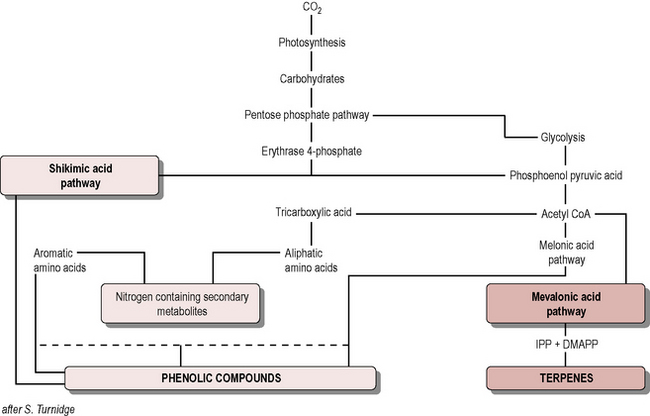
Chemicals produced by plants that do not have an obvious value to the producer plant are known as secondary metabolites; the array of secondary metabolites, which of course includes volatile oils, is enormous (Waterman 1993 p. 31). Secondary metabolism products include alkaloids, bitters, glycosides, gums, mucilages, saponins, steroids, tannins and essential oils, which are not necessary for the vital functions of the plant (see Fig. 1.1), and of these secondary metabolites the essential oils have the greatest commercial significance, being used in many industries (Verlet 1993). Volatile oil secondary metabolites vary widely in chemical structure and their purpose and function in the plant is little understood.
With genetic techniques, it is now possible to intervene in these pathways and change both the quality and the quantity of essential oils – a prospect which brings new dimensions into the natural balance (Svoboda 2003).
Why does a plant contain essential oil?
Before seeing how an essential oil comes into being, it is worth reflecting on what value essential oils have for plants. This has been debated for many years and there is as yet no definitive answer. However, conjecture on the subject has thrown up many possible reasons:
• To prevent attack by herbivores: both mono- and sesquiterpenes are involved in various ways, such as acting as insect hormones to interfere with the development of the feeding insects, or having a straightforward repellent action. Essential oils and other secondary metabolites can render plant tissue bitter and unpalatable.
• To prevent attack from insects: it has been shown that the number of oil glands in a plant increases when it is under attack by insects (Carlton 1990, Carlton, Gray & Waterman 1992).
• To prevent attack by bacteria, fungi and other microorganisms: there is ample proof available from studies done in vitro on the antifungal and bactericidal properties of herb volatile oils (see section on aromatograms in Ch. 4).
• To aid pollination by attracting bees and other insects such as moths and bats (Harborne 1988).
• To help in the healing of wounds inflicted on the plant itself.
• To act as an energy reserve.
• To help survival in difficult growth conditions: for instance by the production of allelopathic compounds, such as 1,8-cineole and camphor, which are freely given off from the plant and find their way to the soil, where they prevent other plants from growing (Deans & Waterman 1993).
• To prevent dehydration and afford some degree of protection in hot dry climates by surrounding the plant with a haze of volatile oil, thus helping to prevent water loss from its foliage. Leaves with a dense covering of glandular hairs can help trap the water molecules that evaporate through the stomata. One of the oldest plants in the world, the leaves of which can be as much as 10% oil by weight, is the eucalyptus. Living root stock of this plant has been found dating back thousands of years to the Ice Age (Dr Mike Crisp, Australian National Botanic Gardens, unpublished information 1986). The free oil vapour emanating from other ancient plants, e.g. pine trees, can be smelt easily when walking in pine forests on a sunny day.
Whatever else essential oils may do, they do give the plant its aroma and flavour and often have a significant physiological effect on people.
Secretory structures
Essential oils and their mixtures with resins and gums are commonly found in special secretory structures. Secretory structures in plants are divided into two main types: those occurring on the plant surfaces, which usually secrete substances directly to the outside of the plant (exogenous secretion), and those which occur within the plant body and secrete substances into specialized intercellular spaces (endogenous secretion) (Svoboda 2003).
Essential oils are synthesized and stored in different sites; they may be found in the leaves, seeds, petals, roots, bark, etc. Sometimes different oils occur in more than one site in a plant; for example, two different oils are produced by the cinnamon tree (bark, leaf), and three different oils by the orange tree (leaf, blossom, peel). The type of secretory structure is a characteristic of a plant family and it is possible to place secretory structures into the following categories:
• Cavities, sacs, oil reservoirs (schizolysigenous)
 Essential oils obtained from flowers such as roses are usually not secreted by glandular hairs, but by the actual epidermal cells of the petals. The amount of essential oil in flowers (Rose, Acacia, Jasminum sp.) is very low, usually between 0.02 and 0.08% (v/w). Such as horse chestnut, alder, poplar, cherry, and buckthorn, secrete sticky substances (mucilages); similar tissues also occur on the stipules and the edges of their young leaves (Svoboda 2003).
Chemical variation within species
Chemotype is a term applied to plants of the same genus and species which have the same external appearance but differ, sometimes considerably, in their internal chemical composition. These chemotypes usually occur naturally in plants growing in the wild, and can result partly from cross-pollination. The place and manner of a plant’s growing will also promote internal changes: many essential-oil-bearing plants, e.g. rosemary and thyme, are prone to this kind of change owing to genetic and environmental factors. They become resistant to local pests and diseases and have adapted to make the best use of the soil and other surrounding conditions. Such plants are termed ‘landrace’, and strains which yield specified chemical constituents are sought and selected for propagation by cloning: that is to say, cuttings are taken and then cultivated to produce the specific oils required. Included in this category are the thymes and lavenders flourishing wild on the sunny dry hills of Provence, which are extensively cloned and then grown commercially.
Thyme chemotypes
The thyme plant is particularly prolific in spontaneously producing strains bearing essential oils of different compositions. Some of these are described below:
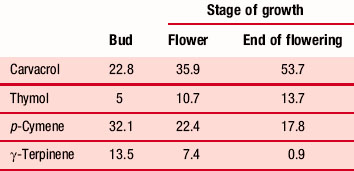
• Thymus vulgaris ct. thymol. The thymol-bearing thyme is strongly antiseptic and aggressive to the skin owing to the presence of the phenol thymol. Cut in the spring, the essential oil contains 30% thymol (Fig. 1.2) plus para-cymene (also written p-cymene), a monoterpene hydrocarbon. When the same plant is cut in the autumn the essential oil may be found on analysis to contain 60–70% thymol and less p-cymene (Table 1.1).
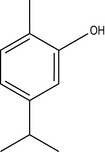
• Thymus vulgaris ct. carvacrol. This variant behaves in the same way as the thymol chemotype of thyme, but the phenol involved is carvacrol (Fig. 1.3). In the spring the essential oil contains 30% carvacrol, which increases to 60–80% in the autumn (Table 1.1).
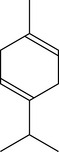
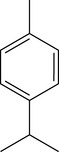
• The thymol and carvacrol chemotypes do not flourish at high altitudes but are cultivated in the valleys. Both of these phenolic chemotypes are often, although inaccurately, referred to as red thymes (because the now obsolete iron still imparted a red colour to the oil) and they are major anti-infective agents with a wide range of action (Belaiche 1979). For the thyme chemotypes, the harvesting time is crucial in order to obtain the required composition of an essential oil, as the internal chemistry of the plant changes with the seasons (see also Fig. 1.11). Concerning the thymol and carvacrol chemotypes, p-cymene is the precursor of both thymol and carvacrol (Table 1.2); at the beginning of the season, in the spring, the plants contain γ-terpinene (Fig. 1.4) and p-cymene (Fig. 1.5), but as the season progresses these precursors are transformed into either carvacrol or thymol, so that plants harvested in the autumn yield essential oils containing phenols. Proven by aromatogram, the bacteriostatic effect is useful in avoiding the long-term use of antibiotics, thereby minimizing serious problems: thyme oil, having both bactericidal and bacteriostatic properties, is in effect a complete antibiotic (Scimeca & Tétau 2009 p. 14).
• The alcohol-containing chemotypes below are commonly referred to as yellow or sweet thymes. These chemotypes do not have the aggressive effects of the red thymes (thymol and carvacrol) and can be used safely on Pénoël Pénoël children, sensitive skins and mucous surfaces (Roulier 1990 p. 305).
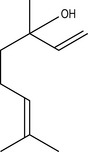
• Thymus vulgaris ct. linalool. The linalool-bearing thyme has a herbaceous smell and (like the thujanol and terpineol thymes) is grown at high altitudes. It contains the alcohol linalool (Fig. 1.6) and the ester linalyl acetate, therefore the essential oil from the linalool thyme is gentle in action. This chemotype is antibacterial, fungicidal (e.g. against Candida albicans), viricidal, parasiticidal and vermifugal, as well as neurotonic and uterotonic (Franchomme & Pénoël 2001 p. 403).
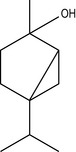
• Thymus vulgaris ct. thujanol-4. In contrast to all the other chemotypes of thyme, the thujanol-4 type does not show seasonal variation in the constitution of the essential oil, but is the same all year round, with a content of 50% of the alcohol trans-thujanol-4 (Fig. 1.7), 15% approximately of terpinen-4-ol and 15% approximately of cis-myrcenol-8. It is found only in the wild because it has so far resisted all attempts to cultivate it – cloning has not yet been successful, except on a very small scale. It has a floral smell. The oil is anti-infectious, bactericidal (against Chlamydia) and a powerful viricide. It stimulates the immune system (by augmenting IgA) and the circulation. It is described as neurotonic, balancing to the nervous system, hormone-like and antidiabetic (Franchomme & Pénoël 2001 p. 432). According to Roulier (1990 p. 305) this oil is a notable hepatic regenerator and is non-irritant.
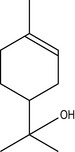
• Thymus vulgaris ct. α–terpineol. The oil from this chemotype contains the ester terpenyl acetate (more so in the spring) and the alcohol α-terpineol (Fig. 1.8) (80–90% free and esterified). The smell is slightly peppery.
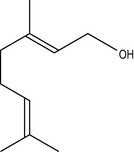
• Thymus vulgaris ct. geraniol. The geraniol thyme grows at high altitude and the oil contains the ester geranyl acetate and the alcohol geraniol (80–90% in free and esterified forms) (Fig. 1.9); again there is a seasonal variation: the thyme chemotype which produces geraniol in the autumn contains geranyl acetate in the spring and geraniol in the autumn (see Table 1.1). This thyme is very assertive, and when grown in a field of mixed thymes it gradually comes to predominate. It has a lemony smell. (It is interesting to note that the wild Thymus serpyllum [creeping thyme] which is found everywhere in the hills, also has a somewhat lemony smell because the geraniol chemotype is dominant and is gradually taking over.) The properties are antiviral, antifungal and antibacterial, also uterotonic, neurotonic and cardiotonic (Franchomme & Pénoël 2001 p. 431). Other Thymus vulgaris chemotypes also exist. The cineole-bearing plant has 80–90% 1,8-cineole. According to Franchomme and Pénoël (2001 p. 431), the p-cymene chemotype is analgesic when applied to the skin, a notable anti-infectious agent and useful for rheumatism and arthritis.
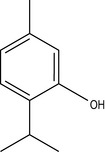
Table 1.1 Thymus vulgaris chemotypes – variation with season
| Chemotype | Spring | Autumn |
|---|---|---|
| Thymol | γ-Terpinene + p-cymene | Thymol |
| Carvacrol | γ-Terpinene + p-cymene | Carvacrol |
| Geraniol | Geranyl acetate | Geraniol |
Altitude and light
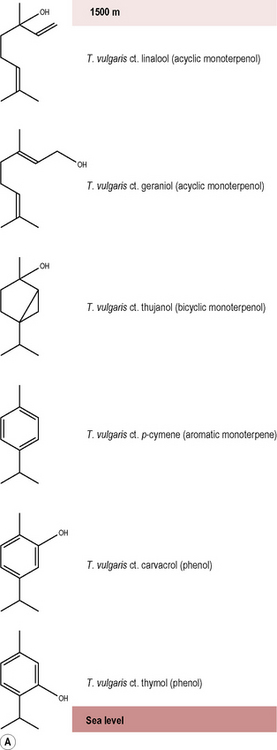
The lower the altitude at which the thyme plant is grown, the more pronounced are the following effects:
• The essential oil becomes more aggressive – more phenolic and antiseptic.
• The colour of the essential oil also changes, from a light straw to a deeper hue.
• The structure of the main component molecule changes from an open chain to a monocyclic chain to an aromatic ring base.
These effects are due in part to the quality of light available to the plant. At high altitudes (above 1000 metres) there is a relatively high amount of free ultraviolet, whereas at low altitudes there is less ultraviolet and a proportional increase in the more penetrating infrared frequencies. The plant responds to the quality of light falling on it (and to other growing conditions) and produces different chemicals accordingly (see Fig. 1.11). Another influencing factor is the latitude of the country of origin. The further north the plant grows, the more phenols are produced – for instance Thymus vulgaris grown in Finland produces up to 89% phenol (von Schantz et al. 1987).
More changes may be expected in oil-bearing plants in the future because of chlorofluorocarbon damage to the ozone layer. Higher levels of ultraviolet radiation are expected to reach the surface of the earth, and research carried out to test the possible effects of this on plant growth suggests that alpine species will be least affected by increased ultraviolet radiation. These tests involved Aquilegia canadensis and A. caerulea. The first normally grows at low altitude and showed less growth during the test, but the second (alpine) plant was not affected in this way: it even grew extra leaves (Gates 1991).
Rosemary chemotypes
Rosemary has three main chemotypes, all of which are used in aromatherapy:
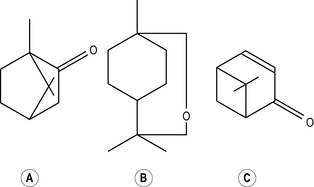
• Rosmarinus officinalis ct. camphor (camphor 30%) (Fig. 1.10a) with the properties: mucolytic, cholagogic, diuretic, circulatory decongestant/stimulant (vein), emmenagogic (non-hormonal), muscle relaxant.
• Rosmarinus officinalis ct. cineole (1,8-cineole 40–55%) (Fig. 1.10b) whose properties are anticatarrhal, mucolytic, expectorant, fungicidal (e.g. Candida albicans), bactericidal (Staphylococcus aureus and S. alba).
• Rosmarinus officinalis ct. verbenone (Fig. 1.10c) (verbenone 15–40%, α-pinene 15–35%). It is anticatarrhal, expectorant, mucolytic (Roulier 1990 p. 298), antispasmodic, cicatrizant and an endocrine system regulator (Franchomme & Pénoël 2001 p. 431).
In this book the camphor and cineole chemotypes are classed together as having similar effects because more often than not rosemary oil contains similar quantities of cineole and camphor.
Other chemotypes
Some further examples of the many other plants with different chemotype forms are:
• Artemisia dracunculus [tarragon] ct. estragole, ct. sabinene (Tucker & Maciarello 1987).
• Ocimum basilicum [basil] ct. linalool, ct. estragole, ct. eugenol (Sobti et al. 1978).
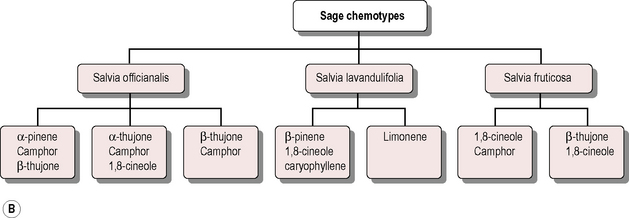
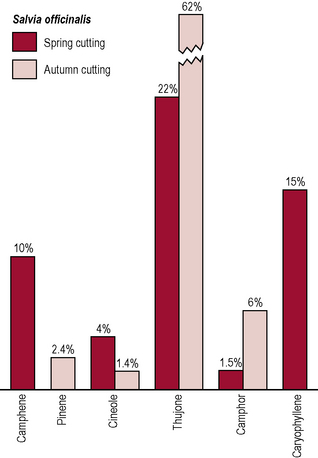
• Salvia officinalis [sage] ct. thujone, ct. cineole (there is also a thujone-free chemotype) (Tegel 1984, Tucker & Maciarello 1990).
• Valeriana officinalis [valerian] ct. valeranone, ct. valeranal, ct. cryptofuranol (Bos, van Putten & Hendricks 1986).
• Melissa officinalis [lemon balm] ct. citral, ct. citronellal (Lawrence 1989).
See also Figs 1.11a and 1.11b
Lavender
Three lavenders are described below:
• Lavandula angustifolia contains mainly alcohols and esters. It is a calming oil recommended to ?induce sleep. However, an overdose has the opposite effect – another pointer to the importance of using these potent oils correctly. It has been recommended for respiratory ailments, asthma, spasmodic cough (whooping cough), influenza, bronchitis, tuberculosis and pneumonia (Valnet 1980) on account of its anti-inflammatory properties.
• Lavandula latifolia [spike lavender] (syn. L. spica) is a much bigger plant, with larger florets than true lavender. It contains very few esters and is slightly lower in alcohol content also, containing instead about 30% of the oxide 1,8-cineole and about 15% of the ketone camphor. It is an efficient expectorant and is also indicated for severe burns (Franchomme & Pénoël 2001 p. 392) because it is well tolerated on all parts of the skin surface. It is especially useful in chest and throat infections, whether for children or for adults (Roulier 1990 p. 276).
• Lavandula stoechas contains about 75% ketones, of which almost two-thirds are fenchone. It shares some properties with the previous two, being anticatarrhal, anti-inflammatory and cicatrizant. This plant, sometimes known as Spanish lavender, sometimes as French lavender, is believed to be the one used by the Romans in their baths which gave rise to the name lavender, but has never been cultivated commercially (Meunier 1985). It is not easily available, which is perhaps fortunate because it is sometimes confused with true lavender (L. angustifolia) which is almost free of ketones. The effects of L. stoechas can be found in many other, safer oils.
Clones of lavender and lavandin
True lavender grown from seed is properly called Lavandula angustifolia Miller (syn. L. officinalis, L. vera). When grown from seed it is described as ‘population’. Many cultivated lavender plants are cloned, i.e. not grown from seed but grown from cuttings selected from the hardiest, healthiest, most colourful and biggest plants with a high yield of good-quality oil, the name of probably the most popular clone nearest to true lavender being L. angustifolia ‘Maillette’.
Unlike population plants, which being grown from seed are much richer in their array of constituents, clones contain only the constituents found in the source plant, and this lack of complexity of composition renders them more liable to disease. For aromatherapy purposes the volatile oil is of a lesser quality, although perhaps the oil from cloned plants is of a more consistent quality from year to year.
Lavandins
Lavandin is the natural hybrid between L. angustifolia Miller and L. latifolia Medicus. The resulting plant has been given many taxonomical classifications, such as Lavandula x burnatii ‘Briq.’, Lavandula spica–latifolia ‘Albert’, Lavandula x hortensis ‘Hy’, Lavandula x leptostachya ‘Pau’, etc. All these are in common use along with other names – Duraffourd (1982 p. 77) calls it Lavandula fragrans. This confused state of affairs prompted Tucker (1981) to research the situation and he reported that the correct name for lavandin is Lavandula x intermedia ‘Emeric’ ex ‘Loiseleur’, which covers all the lavandin cultivars, and Lavandula x intermedia is the name used in this book. The ‘x’ in the names above indicates that the plant is a hybrid or cross-pollinated plant and should not be mistaken for a variety of true lavender. Lavandin plants occur naturally, but cultivators have attempted for many years to find a plant that combines the oil yield of L. latifolia with the aromatic quality of L. angustifolia. As a result hundreds of lavandins have been created, many with little or no benefit, and there are numerous cultivars currently grown, including L. x intermedia ‘Abrialis’, L. x intermedia ‘Super’, L. x intermedia ‘Grosso’ and L. x intermedia ‘Reydovan’. Although the Abrialis clone is deteriorating after long use, other cultivars are now producing large quantities of lavandin oil. All cultivated lavandin plants are grown from cuttings – they are all clones.
When lavandin is used, especially in clinical trials, it is imperative to specify the particular clone. The two clones of lavandin most used in aromatherapy are:
• L. x intermedia ‘Reydovan’: principally antibacterial, antifungal and antiviral, it is also a nerve tonic and expectorant.
• L. x intermedia ‘Super’ (sometimes known under other names): this is calming, sedative and anti-inflammatory. It seems to display many of the properties of true lavender and it is widely produced. It was this oil which was used by Buckle (1993) along with true lavender in tests on cardiac patients; the oil from this cultivar of lavandin was found to be more effective than oil of lavender in this instance.
Human factors in plant change
It is not only nature that brings about changes in the chemicals produced in a plant: farmers have an influence too. The use of chemicals in the form of artificial fertilizers influences some of the plant’s secondary metabolites, but has little effect on the essential oils. These are composed in the main of carbon, hydrogen and oxygen, whereas fertilizers are made up of nitrogen, phosphates and potassium. However, as fertilizers cause an increase in plant growth, there may be an overall gain in the yield of essential oil.
Herbicides, pesticides and heavy metals are absorbed by the plant, and the more pesticides are absorbed, the more they appear as residue. A safe level of residue may be regarded as 2 mg (per) 1 kg of dry material. Some safe herbicides are decomposed in the plant, but still add to the residue levels. In Europe, toxic pesticides are prohibited, but unfortunately they are still manufactured and sent to developing countries (Wabner 1993). Although heavy metals do not pass over in the steam distillation process many herbicide and pesticide molecules are similar in size to volatile oil molecules and can end up in essential oils, although it is not clear how many are taken into distilled oil. Toxic residues are easily transferred to expressed oils, absolutes and vegetable oils, which makes it necessary to know the source and the manner of growing of such oils before using them therapeutically.
Wabner (1993) concludes that ‘aromatherapy is much safer than eating’ because ‘no clear-cut correlation has been established between pesticide residues in oils and detrimental effects on the human organism’ and ‘essential oils are used in much smaller quantities and much less frequently than food products’. This article emphasizes the fact that health professionals should purchase their oils for therapeutic use from a trusted supplier, who knows where to procure high-quality, pesticide-free, unadulterated essential oils and fixed vegetable oils, especially the latter, as they normally make up 95% or more of any blend for use on the skin.
Yield of essential oils
Many factors affect the yield, in terms of both quantity and quality, of an essential oil. Some are under the control of the farmer, e.g. time of harvest, chemicals used and plant selection, and others are more or less beyond control, e.g. available light, altitude, temperature and rain (although drought can be remedied by use of a watering system).
Essential oils are not spread equally throughout all parts of the plant, and the quantity of essential oil varies throughout the growing season to such a degree that the time of harvesting, even to the time of day, can have a critical effect on the quantity and quality of the essential oil derived (Fig. 1.12).
The farmer may have to face the fact that the time of maximum yield of essential oil may not coincide with the quality required. This is especially so when the oils are intended for therapeutic use, when compromise on quantity against quality cannot be accepted.
Plant families which produce essential oils
Plants are divided into families, and it is generally recognized that familial therapeutic characteristics may be ascribed to many of the individual plants in a particular family, e.g. the beneficial influence on the digestive system of the citrus oils, or the warming action of oils from the ginger family. There can also be toxic familial effects, as with the Solanaceae and Apiaceae. Several hundred plant essential oils have been identified worldwide. Many are not commercially available, either because the yield of distilled oil is so small that the cost is prohibitive (as in the case of lime blossom oil) or because there is no commercial demand for them. Between 40 and 60 essential oils are normally used by the professional aromatherapist, and most suppliers offer in the region of 70–80. These oils generally belong to just a few of the many plant families, and the families dealt with below include the majority of plants harvested for the production of essential oils.
In the text below, the common names have been used, since to name each species or variety is not necessary when giving general familial characteristics. The botanical name will be used when talking about a specific essential oil. Where only one oil from a family is used in aromatherapy, no family characteristics will be given, only the therapeutic properties of that individual oil. Where there are several oils in a family, only the family properties will be given. The list is not comprehensive – the main purpose in this book is to make health professionals aware of the principal beneficial essential oils. Specific individual properties, indications and composition of about 100 essential oils can be found in Appendix A (see CD-ROM).
Reference sources for the properties and effects of the essential oils mentioned below are as follows: Bardeau (1976), Bernadet (1983), Duraffourd (1982), Franchomme & Pénoël (2001), Lautié & Passebecq (1984), Mailhebiau (1989), Roulier (1990), Willem 2002, Scimeca & Tétau 2009. Other references are mentioned individually.
Angiospermae
Because they bear seeds, all the plants used to obtain essential oils belong to the Spermatophyta subdivision. The vast majority also belong to the class Angiospermae, or flowering plants.
Anonaceae
This family consists of only one species, Cananga odorata, with two varieties, of which ylang ylang is one (C. odorata forma genuina). Distillation is carried out in several stages, and the resulting oils (superior, extra and grades one, two and three) each have a slightly different make-up and aroma and consequently a variation in effect. It is not easy to procure the complete oil, which would be preferable for the holistic aspect of aromatherapy (Price 2000). C. odorata is anti-inflammatory, antispasmodic, hypotensive, sedative and a tonic to the pancreas.
Apiaceae
Examples include aniseed, caraway, coriander, dill and fennel. In this family the oils are usually extracted from the seeds, which are renowned for their digestive properties. They have been used in digestive and aperitif drinks and consumed for centuries with bread, and as an accompaniment to cheeses such as Munster. Apiaceae therapeutic qualities are aromatic, carminative, stimulating, tonic and warming when grown naturally in dry regions. It should be noted that this family is also known as the hemlocks. If grown in the shade or humid regions a narcotic principle can develop (particularly so for green anise), and many of the oils in this family are neurotoxic because of the presence of particular ketones or phenolic ethers.
Asteraceae
Examples include Calendula officinalis (only available macerated in a fixed oil), the chamomiles, tagetes and tarragon. The essential oils from plants in the Asteraceae are taken from the flower heads. In the case of calendula they are macerated in a fixed oil – not distilled, so the fixed oil also contains larger non-volatile plant molecules, including some coloured molecules. Two of the main characteristics of essential oils in this family are their anti-inflammatory and antiseptic actions on the skin and digestive tract, notably oils from the chamomiles. Many toxic oils come from this family, e.g. the artemisias, which contain a high percentage of ketones or phenolic ethers. Tagetes glandulifera also contains a ketone (tagetone) at 50% and should be used with caution.
Burseraceae
Examples include frankincense (olibanum) and myrrh. These two are available as distilled oils and as resinoids, but the distilled oils are required for therapeutic use. The family has cicatrizant properties, indicating their use for scar tissue, ulcers and wounds. They are also expectorant, and useful in catarrhal conditions. Boswellia carteri [frankincense] is also indicated in the treatment of depression, immune system deficiency and perhaps cancer (Franchomme & Pénoël 2001 p. 356).
Cupressaceae and Pinaceae
Examples include cypress, juniper (Cupressaceae), pine and cedar (Abietaceae). The chief common characteristics of essential oils derived from plants in these two families of the conifer order are their good general hygienic qualities, particularly in the air and on the skin. Cedar, cypress and juniper also have specific individual properties for urinary tract infections, the circulatory system and scalp maladies (Rouvière & Meyer 1983 p. 7). Thuja belongs to the Pinaceae, but is not used in aromatherapy because of its toxic high ketone content. These two families are noted for their beneficial effects on the respiratory system.
Geraniaceae
The oil utilized from this small family comes from one or two species belonging to the genus Pelargonium. The essential oil of Pelargonium graveolens [geranium] has anti-inflammatory, astringent, cicatrizant and haemostatic properties and is antidiabetic (Valnet 1980 p. 133).
Gymnospermae
The Gymnospermae display their seeds directly, rather than hiding them within a structure of petals. The important oil-bearing plants of this class belong to the order Coniferae (cone-bearing plants).
Lamiaceae
This is by far the biggest family from which essential oils are gained; examples include basil, clary, hyssop, lavandin, lavender, marjoram, melissa, origanum, patchouli, peppermint, rosemary, sage, savory and thyme. Of all the families in the plant kingdom none offers a greater array of healing aromatic plants than the Lamiaceae. These plants are strongly aromatic owing to the volatile essence stored in special glandular trichomes, which are found principally on the leaves. In general the Lamiaceae produce both relaxing and stimulating essential oils, which bring vigour and energy to the whole body (or sometimes to just one system in particular, e.g. the respiratory system). They have remarkable antiseptic and antispasmodic properties and some are also emmenagogic and sudorific. Oils derived from the Lamiaceae are generally safe, with one or two possible exceptions such as Salvia officinalis [sage] and Hyssopus officinalis [hyssop], both of which contain ketones (thujone and pinocamphone, respectively) and could theoretically be neurotoxic in overdose. Ingestion of large quantities of these two oils can lead to serious disorders, as pointed out by the Centre Anti-poisons de Marseille (Rouvière & Meyer 1983 p. 6).
Many of the plants in this family have been in constant culinary use for thousands of years, not only to add flavour but for their preservative and health-giving properties as well. The use and ingestion of herbs and their essential oils in small doses over such a long period of time proves their fundamental safety.
Lauraceae
Examples include cinnamon and camphor. Members of this family generally have a pleasant aroma, sometimes strong and penetrating, a warm pungency, and are sometimes bitter. All the oils are considered to be uplifting in their effects (Rouvière & Meyer 1983 p. 7). However, the majority of the family are highly toxic (e.g. cassia, laurel and sassafras), and they will not be recommended in this book because similar therapeutic properties can be found in other, safer oils. Even when they are not actually dangerous, these oils all need expertise and extra care in use.
Myrtaceae
Examples include cajuput, eucalyptus, niaouli, clove and tea tree. The essential oils from this family are contained in cells in the body of the leaf. They are powerful antiseptics (especially to the respiratory system) as well as being antiviral, astringent, stimulant and tonic.
It is advisable to use them with caution as they can be irritant. This is particularly so of clove and adulterated niaouli. It is worth mentioning that the latter oil is adulterated more often than not and will not have the desired therapeutic effect unless effort has been made to obtain a genuine oil. Rectified Eucalyptus globulus [Tasmanian blue gum] is irritant because the natural balance has been destroyed. It can be identified because the rectification process renders it clear, and unfortunately very little of the eucalyptus oil harvest escapes this fate.
Oleaceae
Jasminum officinale is a well-loved oil, but a steam-–distilled essential oil does not exist and the absolute is subject to the most deplorable adulteration. ‘A large number of synthetic materials, some of them chemically related to the jasmones…are of great help… to reproduce the much wanted jasmine effect at a much lower cost.… Jasmine absolute is frequently adulterated. Its high cost seems to tempt certain suppliers and producers beyond their moral resistance’ (Arctander 1960 pp. 310–311). This makes jasmine absolute unsuitable for use on the skin, and if it is to be used therapeutically at all (it is sometimes used as a relaxant on account of its aroma) then only the finest quality should be procured. Jasmine extracts are not used by the authors.
Piperaceae
Examples include black pepper and cubeb. Piper nigrum is the more used of the two oils and possesses analgesic, anticatarrhal, expectorant, stimulant and tonic properties.
Poaceae
Examples include citronella, lemongrass, palmarosa and vetiver. Most of this family have anti-inflammatory and tonic properties, Vetivera zizanioides [vetiver] also being stimulating to the immune system (Franchomme & Pénoël 2001 p. 433). Oils from this family, together with lemon and/or grapefruit oil, are used to make cheap ‘melissa’ oil.
Rosaceae
The only essential oil utilized from this family is rose otto, whose aroma is less sweet than the absolute oil obtained by solvent extraction. Strictly speaking, only the distilled oil should be used by health professionals (see comments on J. officinale above, which also apply to rose otto). Rose otto has astringent, antihaemorrhagic, cicatrizant, hormonal and neurotonic properties.
Rutaceae
Citrus oils are derived from three different sites in the plant. These are:
• Peel: bergamot, grapefruit, lemon, mandarin and orange; to obtain citrus peel oils for aromatherapy the rinds are not distilled, but mechanically expressed. They are therefore not strictly essential oils and are more properly described as essences. They contain large molecules which would not come over in distillation, including colour and waxes, and the latter can precipitate if the oils are stored incorrectly or kept for a long time; the waxes do no harm and may be removed by filtration. Citrus essences are especially susceptible to oxidation and the precious active aldehydes may degrade into acids; to help prevent this nitrogen gas is used to displace the air as the oil is decanted. For small bottles, the air can be displaced with tiny glass beads as the level of the oil goes down with use. Expressed oils from the citrus family have a refreshing aroma and are antiseptic, stimulating and tonic, having significant effects on the whole of the digestive tract. This is especially true of bergamot and bitter orange, which are stomach antispasmodics. These two are also sedative to the nervous system.
• Leaf: petitgrain essential oils, mainly from the bitter orange, but occasionally from other citrus trees. Petitgrain bigarade from the bitter orange tree (bigarade means ‘bitter’) is indicated for infected acne.
• Flower: neroli, mainly from the bitter orange tree for therapeutic purposes: neroli bigarade is indicated for varicose veins and haemorrhoids, and is also a hypotensor. (NB neroli is expensive; beware of cheaper substitutes.)
Both leaf and flower oils from Citrus aurantium [orange] are obtained by distillation and their aroma is sweeter and more floral than that of the peel oils. The best leaf and flower oils are obtained from the bitter orange, C. aurantium var. amara: both of these oils are effective on the nervous system, relieving irritability and promoting sleep (Mailhebiau 1989 pp. 269–270).
Styracaceae
The only extracts from this family which are of interest to aromatherapists are the resinoids from Styrax tonkinensis and S. benzoin (both have the common name benzoin). This resinoid is anticatarrhal and expectorant. It is also cicatrizant, promoting healing on cracked and dry skin. Care should be taken when purchasing this oil: some sources abroad still use benzene as a solvent (forbidden in Europe), and a high proportion of benzene may remain in the final product.
Valerianaceae
Examples include valerian and spikenard. The general family effects are calming and sedative, and they are helpful in the reduction of varicose veins and haemorrhoids. The true oil is very difficult to obtain.
Verbenaceae
Aloysia triphylla (= Lippia citriodora) [lemon verbena] is rarely obtainable; like jasmine it is frequently grossly adulterated, and Thymus hiemalis is often sold in its place as Spanish verbena (Arctander 1960 pp. 648–649).
Summary
Traditionally, plants have been the main source of materials to maintain health and prevent ill health, and it is only comparatively recently that they have been replaced by synthetics. The study of plant structure and function should not be regarded simply as an interesting but inessential requirement for aromatherapy. The more knowledgeable therapists are about the exact botanical derivation of the oils used, the more effective they can be in practice.
Arctander S. Perfume and flavour materials of natural origin. New Jersey: Elizabeth, 1960. Published by the author
Bardeau F. La médecine aromatique. Paris: Laffont, 1976.
Belaiche P. Traité de phytothérapie et d’aromathérapie. Paris: Maloine; 1979;1:93.
Bernadet M. La phyto–aromathérapie pratique. St–Jean–de–Braye: Dangles, 1983.
Bos R., van Putten F.M.S., Hendriks H. Variations in the essential oil content and composition in individual plants obtained after breeding experiments with a Valeriana officinalis strain. In: Brunke E.J., editor. Progress in essential oil research. Hamburg: W de Gruyter; 1986:223-230.
Buckle J. Does it matter which lavender essential oil is used? Nurs. Times. 1993;89(20):32-35.
Carlton R.R. An investigation into the rapidly induced responses of Myrica gale to insect herbivory. University of Strathclyde, 1990. Unpublished PhD Thesis
Carlton R.R., Gray A.I., Waterman P.G. The antifungal activity of the leaf gland oil of sweet gale (Myrica gale). Chemecology. 1992;3:55-59.
Deans S.G., Waterman P.G. Biological activity of volatile oils. In: Hay R.K.M., Waterman P.G., editors. Volatile oil crops. Harlow: Longman; 1993:100-101.
Duraffourd P. En forme tous les jours. Périgny: La Vie Claire, 1982.
Franchomme P., Pénoël D. L’aromathérapie exactement, third ed. Limoges: Jollois, 2001.
Franz C., Novak J. Sources of essential oils. In: Başer K.H.C, Buchbauer G, editors. Handbook of essential oils: science, technology and applications. Boca Raton,: CRC Press, 2010. p. 43
Gates P. Gardening in tomorrow’s world. Gardener’s World. 1991(July):4.
Harborne J.B. Introduction to ecological biochemistry. London: Academic Press, 1988.
Hill J. The family herbal. Brightly & Kinnersley, 1808.
Lautié R., Passebecq A. Aromatherapy. Wellingborough: Thorsons, 1984.
Lawrence B.M. Progress in essential oils. Perfumer and Flavorist. 1989;14(3):71.
Mailhebiau P. La nouvelle aromathérapie. Toulouse: Vie Nouvelle, 1989.
Meunier C. Lavandes et lavandins. Aixen–Provence: Edisud, 1985.
Price S. The aromatherapy workbook. London: Thorsons, 2000;119-120.
Roulier G. Les huiles essentielles pour votre santé. St–Jean–de–Braye: Dangles, 1990.
Rouvière A., Meyer M.C. La santé par les huiles essentielles. Paris: M A Editions, 1983.
Scimeca D., Tétau M. Votre santé par les huiles essentielles. Monaco: Alpen Editions, 2009.
Sobti S.N., Pushpangadan P., Thapa R.K., Aggarwal S.G., Vashist V.N., Atal C.K. Chemical and genetic investigations in essential oils of some Ocimum species, their F1 hybrids and synthesised allopolyploids. Lloydia. 1978;41:50-55.
Svoboda K. Secrets of plant life. Essence. 2003;2(2):6-11. Autumn
Tegel C. Morphologische und chemische Variabilität sowie Anbau und Verwendung von Salvia sp (Salbei). Technical University of Munich, 1984. Unpublished MSc Thesis
Tucker A.O. The correct name of lavandin and its cultivars (Labiatae). Baileya. 1981;21:131-133.
Tucker A.O., Maciarello M.J. Plant identification. In: Simon J.E., Grant L., editors. Proceedings of the first national herb growing and marketing conference. West Lafayette: Purdue University Press; 1987:341-372.
Tucker A.O., Maciarello M.J. Essential oils of cultivars of Dalmatian sage (Salvia officinalis L). Journal of Essential Oil Research. 1990;2:139-144.
Valnet J. The practice of aromatherapy. Saffron Walden: Daniel, 1980.
Verlet N. Commercial aspects. In: Hay R.K.M., Waterman P.G., editors. Volatile oil crops. Harlow: Longman; 1993:144. Ch. 8
von Schantz M., Holm Y., Hiltunen R., Galambosi B. Arznei– und Gewürzpflanzenversuche zum Anbau in Finnland. Dtsch. Apoth. Ztg.. 1987;127:2543-2548.
Wabner D. Purity and pesticides. Int. J. Aromather.. 1993;5(2):27-29.
Waterman P.G. The chemistry of volatile oils. In: Hay R.K.M., Waterman P.G., editors. Volatile oil crops; their biology, biochemistry and production. Harlow: Longman Scientific, 1993.
Willem J.P. Les huiles essentielle: médicine de l’avenir. Paris: Dauphin, 2002.
Bailey L.H. How plants get their names. New York: Dover, 1963.
Foster S. Latin binomials: learning to live with the system. Well–Being. 1979;48(Dec):41-42.
Foster S., editor. Herbs of commerce. Austin: American Herbal Products Association, 1992.
Foster S. Herbal renaissance. Salt Lake City International Code of Botanical Nomenclature: Gibbs Smith, 1993.
Jeffrey C. Biological nomenclature. New York: Crane Russack, 1977.
Stern W.T. Botanical Latin. Newton Abbot: David & Charles, 1983.
Tippo O., Stern W.L. Humanistic botany. New York: Norton, 1977.