chapter 11 Working with Families and Caregivers of Elders
1. Define the role of the certified occupational therapy assistant (COTA) in family and caregiver training.
2. Understand role changes within family systems at the onset of debilitating conditions in elders.
3. Discuss communication strategies that maximize comprehension during elder, family, and caregiver education.
4. Identify stressors that affect quality of care, ability to cope, and emotional responses in the elder-caregiver relationship.
5. Identify techniques to minimize caregiver stress.
6. Define and identify signs of elder abuse and neglect, and discuss reporting requirements.
social support system, family, caregivers, education, role changes, stress, community, resources, abuse, neglect
Barbara woke up startled by the noise in the other room. She rose quickly, draped her robe over her shoulders and hurriedly walked out of the room, trying not to wake her husband. She had an anxious feeling that her mother may have fallen again. She had not had a full night’s sleep for over 3 months since Dottie moved in with them. After having a stroke, Dottie had been at a nursing home for rehabilitation, and the therapists had concluded she could no longer live on her own. Dottie became very depressed, and each time Barbara visited she tearfully pleaded with her, “Please don’t put me away at an old folks home, I couldn’t bear it.” Barbara felt quite distressed. As the mother of three children and a full-time grade-school teacher, she was already very busy but felt guilty about even contemplating an assisted living facility for her mother. She knew her mother could not afford to move to such a facility. Barbara spoke with her two brothers who lived out of state and both promised to help with the costs if Barbara took their mother in. Barbara consulted with her family and they all agreed to bring Dottie home to live with them. “We can set her up in the dining room. I can make some temporary walls,” offered Mike, Barbara’s husband. “Yes, that will let Grandma be close to the kitchen and family room,” added Sandy, the youngest daughter, now a sophomore in high school and captain of the cheerleading squad. “I can drive her to therapy twice a week,” volunteered Jimmy, a senior in high school and star quarterback of the football team. “I can come home on the weekends if needed,” added Patty, a freshman living in the college dorm in a town close by. A case manager helped Barbara get in contact with an agency that provided a caregiver for part of the day while Barbara was at work. Physical and occupational therapies were scheduled after a home evaluation. Barbara was relieved—it seemed everything was going to work out.
Early one morning about 2 weeks after Dottie moved in, the phone rang while Barbara was getting ready to leave for work. “I am sorry, I’m not going to be able to come today—my child is sick” said the attendant. The agency did not have a replacement. Barbara turned to her husband, who said, “I’ll drop the kids off at school—you let your work know you can’t come in today. I’ll make arrangements to stay home tomorrow if necessary.” Barbara called her school to ask that a substitute teacher be called in. She had a few paid vacation days left and although she was planning some special activities with her students, there would be no harm in waiting a day. “This will give me and mother an opportunity to sort through and organize all the old photos,” said Barbara as the rest of the family left for the day.
After helping Dottie with her breakfast, bath, and getting dressed, Barbara pulled out the boxes of old pictures and spread them on the kitchen table. Dottie picked up one of a young woman at her wedding, and said, “This is when you got married—you looked beautiful.” Barbara took the picture and responded, “That’s not me, Mom—that’s you and Daddy!” After looking at several other photos, Barbara realized Dottie was quite confused about who the people in the photos were. “That’s your son Peter, and this is your other son John,” Barbara pointed out, adding, “Do you remember the names of their wives?” “Of course I do,” responded Dottie. Barbara pushed, “What are their names?” Dottie looked blank for a little, and then responded, “Why are you asking me all these questions? You know their names.” She stood up and walked to the family room and sat down on the sofa. Throughout the day, Barbara noticed other signs of confusion. By the end of the afternoon, Dottie seemed very tired and asked help to get to bed. By the time the rest of the family got home, Dottie was asleep in her converted room and remained there for the rest of the evening.
That night, as Barbara was getting ready to go to bed, she heard a crashing sound in the other room. She ran to the dining room and found Dottie sitting on the floor by the bed, Barbara called for Mike’s help and together they were able to return Dottie to her bed. Although she did not seem to be in any pain, Dottie appeared dazed and did not seem to recognize Barbara, calling her by a different name. Mike and Barbara decided it would be wise to call Dottie’s doctor, who recommended Dottie be taken to an emergency room right away so she could be evaluated.
At the hospital it was determined that there were no fractures, but that Dottie had experienced another small stroke. Once again, Dottie was transferred to a nursing home so she could receive intensive rehabilitation for a few days. Although the therapists noticed a little more confusion as compared to the previous rehabilitation course, they thought Dottie could return home with the same previous arrangements. Confusion was much more noticeable when Dottie returned home. She often could not find her way around the house and seemed unable to complete small tasks without constant verbal direction. She often would get up out of the chair and wander around the house without an apparent planned destination. The attendant reported that several times Dottie had attempted to leave the house during the day.
Barbara was very worried, but the doctor assured her there was not much else that could be done for Dottie except to structure her environment so that Dottie could have some routines and so her safety could be maximized. Another home evaluation was done and a registered occupational therapist (OTR)/COTA team worked with the family to remove tripping hazards and set up Dottie’s room so she could find everything she needed in plain sight. Once Dottie returned, it was clear she could not be left alone in the house for any period of time, so the family sat down to work out a schedule so that someone was in the home at all times in the evening. Because of the heavy sports involvement of the children, it soon became apparent that they would not be able to watch Dottie very often. Therefore, it fell on Barbara and Mike to be home each evening. This meant that only one parent could be present at the children’s frequent events. Barbara felt it necessary to resign as president of the high school’s booster club and later also to take a break from her book club and other regular activities so that she could stay at home with her mother.
As the weeks went by, Dottie fell twice more in the middle of the night as she tried to get up to use the restroom. It seemed to Barbara and Mike that Dottie was getting more and more confused as each day passed. In the middle of the night she would accept only Barbara’s help, so Barbara began setting her alarm at 2:00 a.m. to help her mother to the bathroom and get her back to bed. Barbara would then try to sleep for a couple of hours before it was time to get up and get the family ready for the day. During some mornings Dottie would become anxious as Barbara said goodbye and the attendant reported it would take a couple of hours before Dottie could focus on her self-care and other daily routines. Barbara began wondering whether they would be able to leave Dottie in someone else’s care so they could take their annual family vacation in a couple of weeks. She felt guilty that she wanted a break.
More than 50 million people provide care for a chronically ill, disabled, or aged family member or friend during any given year.1 The term caregiver refers to anyone who provides assistance to someone else who is in some degree incapacitated and needs help. Informal caregiver and family caregiver are terms that refer to unpaid individuals such as family members, friends, and neighbors who provide care. These individuals can be primary or secondary caregivers, full-time or part-time, and can live with the person being cared for or live separately. Formal caregivers are volunteers or paid care providers associated with a service system.2
Families are the major provider of long-term care, but research has shown that caregiving exacts a heavy emotional, physical, and financial toll.3 Many caregivers who work and provide care experience conflicts between these responsibilities. Twenty-two percent of caregivers are assisting two individuals, whereas 8% are caring for three or more.2 Almost half of all caregivers are over age 50, making them more vulnerable to a decline in their own health, and one-third describe their own health as fair to poor.1
To provide optimal care, COTAs must consider the many factors that influence an elder’s occupational performance. When planning intervention, the OTR/COTA team consider not only client factors and performance skills, but also the contexts and environments that may affect the elder’s occupational performance potential.4 Social support systems such as spouse and family can significantly affect the outcome of occupational therapy (OT) intervention.5 COTAs must be able to interact with elders and their social support systems, especially the family, and treat elders and their families as units of care.
Roles for Certified Occupational Therapy Assistants
For COTAs to define their roles in facilitating family interaction, they must first understand the family caregiver’s role. Family members are not necessarily inherently skilled at caregiving. Frequently this role is unfamiliar and possibly unwanted. Caregivers must do more than simply keep elders safe and clean and ensure that their daily physical needs are met. They must also help elders maintain socialization and a sense of dignity. These tasks can be overwhelming for a family member who has little or no experience with debilitating and chronic illness. Ensuring that caregivers and elders work together effectively is crucial.6 COTAs should act as facilitators, educators, and resource personnel.
Development of elders’ and caregivers’ skills is achieved through selected activities with graded successes facilitated by COTAs. Activities that include family members and caregivers should be introduced as early as possible in the OT program to minimize dependence on COTAs. Facilitating interdependence between elders and their families and caregivers will ease the transition from one level of care to the next.
Effective elder, family, and caregiver education is a central component of care.7 Knowledge is empowering and encourages elders, family members, and caregivers to be responsible. Activities selected during the early stages of intervention need not be complex. They may include directions on positioning, simple passive range-of-motion exercises, and communication strategies. As early as possible, it is important that the relationships between elders, family members, and caregivers not focus solely on the elder’s functional limitations but on remaining skills, interests, and goals. Helping family members accept functional changes as part of a normal process rather than as a catastrophic decline can encourage preservation of relationships.8,9 More training can follow as discharge planning progresses and the role of the caregiver becomes more clearly defined.10
Elder, family, and caregiver education is often required for all areas of occupation as described in the Occupational Therapy Practice Framework (see Chapter 7).4 It is most effective to continually help elders, family members, and caregivers to consider OT intervention strategies focused on performance skills (such as sensory, motor, cognitive, or communication skills) in the context of meaningful occupations. Changes needed in the elders’ or family routines and habits are more easily accomplished when they are consistent with their values, beliefs, and spirituality. Therefore, it is essential for the OTR/COTA team to have a good grasp of the elder’s current preferences, past occupational participation, and future goals. COTAs may help elders, family members, and caregivers understand the physician’s diagnosis and prognosis of the medical condition and its functional implications. Insight regarding the specific physical, cognitive, and psychosocial impairments will aid caregivers in providing safe and appropriate assistance. Sometimes understanding the reasons for doing a certain task is more important than demonstrating proficiency in its performance.11 For example, understanding principles of wrist protection that can be applied to every situation is more important for caregivers than correctly supervising the elder’s use of radial wrist deviation to open a door each and every time. To maximize the effectiveness of the education, COTAs need to develop communication strategies (Box 11-1).
BOX 11-1 Considerations for Effective Communication
 Initially, make frequent, brief contacts to develop the relationship. This will familiarize the elder, family members, and caregivers with COTAs and their purpose.
Manage the environment in which communication occurs. Minimize distractions and interruptions.
Use responsive listening techniques. Maintain good eye contact, intermittently acknowledge statements made, and use body language that allows all parties to listen and respond. Be an active listener.
Use common terminology that nonmedical individuals understand. If a common term is available, use it. For example, use shoulder blade for scapula. Otherwise, define and explain concepts in simple terms.
Always respect client confidentiality. If able, secure permission from clients before discussing details with others.
Use open-ended questions to encourage self-expression. Be comfortable with brief silences.
Organize your ideas and avoid skipping between subjects. Focus on one topic at a time, and clarify what you do not understand.
Provide education that will enable elders and their families to make informed choices. Do not offer advice or your personal opinion. Always acknowledge the right of choice.
Communicate with respect and warmth. Be supportive. Respond to feedback when given.
COTAs also act as resources for elders, family members, and caregivers. Depending on facility role delineation, COTAs may provide information about community and support services, as well as medical equipment vendors, paid caregivers, and respite programs. In collaboration with OTRs, COTAs may also serve as liaisons with other services. (Some resources are listed in the Appendix.)
COTAs can learn much about elders’, family members’, and caregivers’ values, desires, and insights through frequent and close interaction. Elders may be unable to express themselves for many reasons. Some limitations may be premorbid, whereas others, such as aphasia, may result from illness. COTAs may act as advocates for elders, helping meet needs that might otherwise go unacknowledged. COTAs may also act as advocates for family members and caregivers.
Like elders, families and caregivers may have needs that become evident only after close and frequent interaction. Because each individual’s ability to provide caregiving differs, the OTR/COTA team must consider everyone’s abilities when planning for facility discharge and family training.
All members of the treatment team, including COTAs, must educate elders, family members, and caregivers about the team’s treatment recommendations. Recommendations may include plans for discharge, supervision, follow-up treatment, and home/community programs, all of which must be clearly documented. When elders, families, and caregivers choose not to follow the team’s recommendation, it is crucial to document all responses and actions to serve as a legal record if anyone is harmed. The more elders, family members, and caregivers are included in the formulation of plans, the more likely they are to comply with home programs and other discharge recommendations.10
Role Changes in the Family
Greater therapeutic outcomes are achieved when intervention does not focus solely on elders but also includes families and caregivers.12 This is especially important when family lifestyle changes are required because of elders’ functional declines.13
Ideally, elders will consult family members when caregiving needs become evident. However, many variables affect a family system’s abilities to meet the elder’s needs. Some of these variables may include the treatment setting itself, cognitive deficits, psychological issues, the prior quality of family relationships, cultural and social influences, geographic distance, scheduling conflicts, financial resources, and advanced directives. COTAs must take all of these factors into consideration during collaborative planning.10,14
COTAs must consider role changes that occur for both elders and family during the course of an illness. OT should be designed around elders’ and family members’ skill levels. From that foundation, COTAs can facilitate adjustment to disability. With the onset of illness or disability, elders may feel a loss of independence, which can mean a major change in their sense of control and their role within the family.15
Role changes also occur within the family unit during an elder’s illnesses.16 Spouses may feel a deep sense of loss of a partner and may resent being solely responsible for previously shared tasks. In addition to a sense of loss, children must deal with the role reversal of being a parent to their own parent. Elders’ disabilities and needs for caregiving may come at a time in children’s lives when, for the first time, they find themselves free of family responsibilities and are planning for their own retirement. Family members are usually unprepared for the sudden changes that may occur with acute illnesses.17
Roles within the family unit tend to be adjusted and adapted to gradually when elders have chronic or degenerative diseases.18 However, as the functional impairments accumulate into a major disability with significant activity limitations, modifications in roles are required.19 Not knowing the length of the illness is often a source of added frustration. In addition, chronic conditions may involve long-term adaptations that demand a greater degree of self-care and responsibility on the part of elders and caregivers.20
Caregiver Stresses
An entire generation is moving into the caregiving role for their aging parents.1,7 These caregivers are changing their lives to assist their parents through the illness process. In addition to grieving for their parent, these caregivers may also be experiencing a loss of their own independence, privacy, financial security, safety, and comfort within their own homes. These losses may leave caregivers ultimately feeling guilty about their inadequacies or angry toward the debilitated elder.8
Life changes for caregivers and their families. This changing process may be gradual, beginning with the elder experiencing mild confusion and only requiring assistance with bills. The change also may be sudden and immediate, with the elder surviving a stroke and needing total physical care. The care required may be temporary or permanent with no hope for rehabilitation. No matter what the situation, this change of life is stressful for everyone involved.13
Advice from physicians, nurses, and therapists and attempts at self-education about an unfamiliar illness also can add stress. The need to learn the language of health care workers can be stressful, especially for caregivers for whom English is a second language or caregivers who are functionally illiterate.
Stress also may be increased by family members who offer suggestions for caring for elders. When decisions are made by several relatives but one family member or caregiver is responsible for following through with the group’s decisions, the caregiver can easily become overwhelmed and feel resentful.
Elders who need caregiving may require various levels of assistance, and their conditions may change frequently. At times little assistance may be needed, but there may be long periods when much more assistance is required (Figure 11-1). Other family members may not understand the fluctuating assistance levels, and their perceptions of the work required to maintain the elder at home may not be accurate.12,21
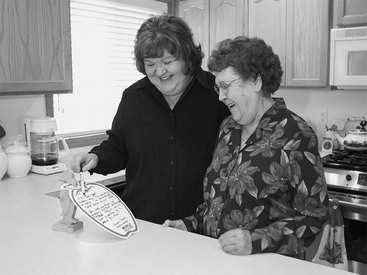
FIGURE 11-1 Caregiving may require various levels of assistance. This 90-year-old elder needs only a reminder to function in her environment while her daughter is at work.
Family members may not understand their own emotions or those of the primary caregiver. Family members may deny feelings of guilt, frustration, anger, or grief. They also may be in denial about the level of care required and may not be ready to assist. Family members who are unable to understand their own emotions or the illness and needs of the elder may become angry with the caregiver for not allowing the elder more independence.16 They may be resentful and suspicious of the caregiver’s motives or intentions, which can devastate caregivers and reduce the level of care they are willing to provide.
The demands and constraints of caregiving can become overwhelming. Caregivers may feel isolated and believe that they must be the sole providers of care. They may think they have no time for friends or support systems. Responsibilities can quickly become burdens, and caregivers may feel that they are not providing the needed assistance and are failing in their responsibilities to the elder.22 Caregivers may refuse assistance from others because they feel the home is not clean enough for others to visit, or they believe they are the only ones who can properly care for the elder. Caregivers may forget that the level of care they now provide is the result of months of practice and learning through trial and error. COTAs must become adept at identifying signs of caregiver stress to ensure that the elder’s needs are being met (Box 11-2).
BOX 11-2
Signs of Caregiver Stress
Too much stress can be damaging to both the caregiver and the elder. The following stress indicators experienced frequently or simultaneously can lead to more serious health problems.
The caregiver may deny the disease and its effect on the person who has been diagnosed: “I know Mom’s going to get better.”
The caregiver may express anger that no effective treatments or cures currently exist for chronic conditions such as Alzheimer’s disease* and that people do not understand what’s going on: “If he asks me that question one more time, I’ll scream.”
The caregiver may withdraw socially from friends and activities that once brought pleasure: “I don’t care about getting together with the neighbors anymore.”
The caregiver may express anxiety about facing another day and what the future holds: “What happens when he needs more care than I can provide?”
The caregiver may experience depression, which eventually breaks the spirit and affects coping ability: “I don’t care anymore.”
The caregiver may be exhausted, which makes it nearly impossible to complete necessary tasks: “I’m too tired for this.”
The caregiver may experience sleeplessness caused by worrying: “What if she wanders out of the house or falls and hurts herself?”
The caregiver may express irritability, which may lead to moodiness and trigger negative responses and reactions: “Leave me alone!”
Lack of concentration on the part of the caregiver makes it difficult to perform familiar tasks: “I was so busy, I forgot we had an appointment.”
The caregiver experiences mental and physical health problems: “I can’t remember the last time I felt good.”
Adapted from the Alzheimer’s Association. (1995). Ten signs of caregiver stress. Chicago: Alzheimer’s Association.
* For more information on Alzheimer’s disease and services provided by the Alzheimer’s Association, call 1-800-272-3900.
Family Resources
COTAs should continually assess the family’s needs and resources and offer the best referrals possible, keeping in mind that family members may feel isolated and disconnected or may be reluctant to ask for assistance. It may first be necessary to assist family members in identifying their needs and willingness to accept assistance. The suggestion that they read a book about caregivers or attend a caregiver support group may be met with resistance. However, COTAs must provide support and guidance while family members go through the process of realizing their own needs. When family members are ready to ask for assistance, COTAs must be ready with reliable resources and referrals. Successful experiences encourage families to use available community resources. COTAs must help family members and caregivers understand that caring for themselves and accepting help will ultimately help them care for the elder. Caring for themselves and accepting help may also make it possible to offer care at home for a longer period (Box 11-3; Figure 11-2).
BOX 11-3
Ways to Reduce Caregiver Stress
Get a diagnosis as early as possible.
Symptoms may appear gradually, and if a person seems physically healthy, it is easy to ignore unusual behavior or attribute it to something else. See a physician when warning signs are present. Some dementia symptoms are treatable. Once you know what you are dealing with, you will be able to better manage the present and plan for the future.
Know what resources are available.
For your own well-being and that of the person for whom you are caring, become familiar with care resources available in your community. Adult day care, in-home assistance, visiting nurses, and Meals on Wheels are just some of the community services that can help.
As the disease progresses, different caregiving skills and capabilities are necessary. Care techniques and suggestions can help you better understand and cope with many of the challenging behavior and personality changes.
Trying to do everything by yourself will leave you exhausted. The support of family, friends, and community resources can be an enormous help. If assistance is not offered, ask for it. If you have difficulty asking for assistance, have someone close to you advocate for you. If stress becomes overwhelming, do not be afraid to seek professional help. Support group meetings and help lines are also good sources of comfort and reassurance.
Caregivers frequently devote themselves totally to those they care for and, in the process, neglect their own needs. Pay attention to yourself. Watch your diet, exercise, and get plenty of rest. Use respite services to take time off for shopping, a movie, or an uninterrupted visit with a friend. Those close to you, including the one for whom you are caring, want you to take care of yourself.
Stress can cause physical problems (blurred vision, stomach irritation, high blood pressure) and changes in behavior (irritability, lack of concentration, loss of appetite). Note your symptoms. Use relaxation techniques that work for you, and consult a physician.
Elders change and so do their needs. They often require care beyond what you can provide at home. A thorough investigation of available care options should make transitions easier, as will support and assistance from those who care about you and your loved one.
Do legal and financial planning.
Consult an attorney and discuss issues related to durable power of attorney, living wills and trusts, future medical care, housing, and other key considerations. Planning now will alleviate stress later. If possible and appropriate, involve the elder and other family members in planning activities and decisions.
The care you provide does make a difference. Neither you nor the elder can control many of the circumstances and behaviors that will occur. Give yourself permission to grieve for the losses you experience, but also focus on the positive moments as they occur and enjoy your good memories.
Give yourself credit, not guilt.
You are only human. Occasionally, you may lose patience and at times be unable to provide all of the care the way you would like. Remember, you are doing the best you can, so give yourself credit. Being a devoted caregiver is not something to feel guilty about. Your loved one needs you, and you are there. That is something to be proud of.
For more information on Alzheimer’s disease and services provided by the Alzheimer’s Association, call 1-800-272-3900.
Adapted from the Alzheimer’s Association. (1995). Ten signs of caregiver stress. Chicago: Alzheimer’s Association.
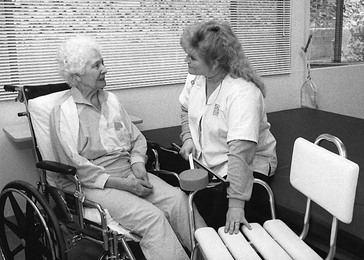
FIGURE 11-2 Careful discharge planning can help elders and caregivers feel less overwhelmed with changes.
Many community and national resources are available for families and caregivers. Support groups, publications, videos, and resources can be found in virtually every large community. In rural areas, organizations may be contacted by phone, in writing, or through computer technology. (An extensive resource and referral list is included in the Appendix.)
Recognizing Signs and Reporting Elder Abuse or Neglect
Unfortunately, abuse and neglect of elders do occur.23 Between 1 and 2 million Americans age 65 and older have been injured, exploited, or otherwise mistreated by someone on whom they depended for care or protection.24 Estimates of the frequency of elder abuse range from 2% to 10%.25 All professionals working with elders must be informed of their responsibilities and prepare themselves to act on the elder’s behalf if suspicion of abuse or neglect arises. Federal definitions of elder abuse have been included in the Older Americans Act since 1987. Each state also has its own definition of elder abuse through legislation on adult protective services. COTAs should contact their state’s ombudsman or Adult Protective Services Office for more detailed and specific guidelines. Only general definitions and guidelines are presented in this chapter. Elders have a right to direct their own care, refuse care, and receive protection from being taken advantage of or hurt by others.
The National Center on Elder Abuse (NCEA) of the U.S. Administration on Aging has identified and defined seven types of elder abuse.26 Physical abuse is nonaccidental use of physical force that results in bodily injury, pain, or impairment. This may include acts of violence such as striking, shoving, shaking, slapping, kicking, pinching, and burning. Inappropriate use of drugs and physical restraints, force-feeding, and physical punishment of any kind also are considered physical abuse. Sexual abuse is nonconsensual sexual contact of any kind with an elder. It includes unwanted touching, all types of sexual assault or battery, coerced nudity, and sexually explicit photographing. Emotional or psychological abuse is willful infliction of mental or emotional anguish by threat, humiliation, or other verbal or nonverbal abusive conduct. This may include things such as verbal assaults, insults, threats, intimidation, humiliation, and harassment. The NCEA also includes treatment of elders like infants and isolating them from family and friends or from their regular activities as emotional/psychological abuse. Neglect is the willful or nonwillful failure by caregivers to fulfill their obligations or duties as caretakers. Abandonment is the desertion of elders by the people who have assumed responsibility for providing care for them. Financial or material exploitation is an unauthorized use of an elder’s funds, property, or resources. This may include such things as cashing an elder’s checks without permission, forging an elder’s signature, misusing or stealing an older person’s money or possessions, coercing or deceiving an elder into signing any document and the improper use of conservatorship, guardianship, or power of attorney. Finally, self-abuse and neglect are behaviors of elders directed at themselves that threaten their own health or safety, such as refusing to eat or drink, or provide oneself with adequate clothing, shelter, personal hygiene, or medications.
Abuse may occur in the home or community setting, as well as in residential care, skilled nursing facilities (SNFs), or day health programs. In an effort to protect elders, every health care provider must be aware of signs and indicators of abuse. Indicators of abuse have been outlined in many documents available through agencies on aging (Table 11-1).27
TABLE 11-1 Signs and Symptoms of Abuse
Adapted from National Center on Elder Abuse. (2007). Major types of elder abuse. Washington, DC: U.S. Administration on Aging.
Many states have enacted mandatory reporting laws that require professionals who regularly work with elders, including health workers such as COTAs, law enforcement personnel, and human service personnel, to report suspected abuse. State and local agencies designated to receive and investigate reports and provide referral services to victims, families, and elders at risk for abuse include the Adult Protective Services Agency, long-term care ombudsman programs, law enforcement or local social service agencies, area agencies on aging, aging service providers, and aging advocacy groups. If elder abuse is suspected, these agencies can assist COTAs.
COTAs must report physical abuse if they witness an incident that reasonably appears to be physical abuse; find a physical injury of a suspicious nature, location, or repetition; or listen to an incident related by an elder or dependent adult. An immediate telephone call followed by a written report is often required. This report should include identifying information about the person filing the report, the victim, and the caregiver. In addition, the incident and condition of the victim and any other information leading the reporter to suspect abuse must be included. Although many facilities have designated personnel to carry out reporting, it is each individual’s duty to report suspected abuse. Failure to report is a legally punishable misdemeanor in states with mandatory reporting laws. Further, COTAs have an ethical responsibility to demonstrate a concern for the safety and well-being of the recipients of their services,28 and failure to do so may result in disciplinary action by a professional organization of which the COTA is a member.29
The COTA’s responsibility does not end with this report. Connecting the elder and/or the family with community resources to help cope with trauma, address conflicts, and so on. Referral should be done in a way that is acceptable to the elder. Many churches, community centers, and organizations such as the Area Agency on Aging can assist in locating resources to support elders to continue living safely in their communities. The Appendix of this text contains a listing of organizations that provide such resources.
Case Study
After the last fall, Barbara called Dottie’s physician and got a referral for home-based occupational therapy services. Paul, the OTR, called Barbara to set up the initial visit. “I am sorry; I can’t miss another day of work. Can’t you come on Saturday?” asked Barbara. After Paul explained that the agency provided services on weekdays only, Barbara responded, “OK, I give up. I am too tired to argue. But it will have to be first thing in the morning—I can’t miss a whole day of work.” Paul made arrangements for Diana, a recently hired COTA, to join him during the home visit because she would be picking up the case if they determined services were indeed needed.
On the designated date, Paul and Diana arrived at the home, and Dottie’s attendant opened the door. “I am sorry, I wasn’t told anyone would be coming today,” said the attendant. “I will have to call Miss Barbara.” Within an hour, Barbara arrived at the house and apologized for her delay. “I am very sorry, I completely forgot about this appointment.”
While they waited for Barbara, Paul and Diana sat in the living room with Dottie and began the initial interview. “Dottie, please tell us how it came about that a call for occupational therapy services was made? What has been going on?” asked Paul. Dottie responded, “I do not know. I have been doing fine—I can handle everything I need to do.” Clarice, the attendant, reminded Dottie, “Don’t forget you fell a few times, Dottie. Tell them about that.” Dottie at first seemed confused, but then offered, “Oh, yes, I fell getting out of bed because someone had left things on the floor and I tripped. But that was just an accident. It’s not going to happen again.” Paul asked Dottie to describe her typical day, which she did in large strokes. “I get up and try to help with breakfast before the kids leave. Then I take a shower and get dressed and then watch my morning TV shows. Sometimes I go to visit friends. Then I cook lunch and start with cleaning the house. My daughter is too busy, you know, and she brought me to live here so I could help her. They are all so busy all the time.” Paul and Diana noticed that Clarice, who was sitting behind Dottie, shook her head several times as Dottie described her routines. Diana asked, “Have you needed any help to shower and get dressed? Dottie shook her head and answered, “Well, I don’t really need help, but my daughter has Clarice stay with me to keep me company, so I let her help me sometimes.”
By the time Barbara arrived, Dottie had told Paul and Diana about her life before her first stroke. Up to that point she had been living alone and was very active in her church. She never missed one of her grandchildren’s games. She drove a car up to about a month before the stroke. She gave up driving because she felt her eyesight was becoming problematic. She enjoyed cooking, sewing, and gardening. Since the stroke, she had not been outside of the house except for medical appointments, and just recently she attempted to do some sewing once her work was brought from her own home.
When Barbara arrived, Paul asked if they could talk as Dottie demonstrated how she got dressed, accessed the bathroom, and prepared a simple snack. Barbara responded, “That is why Clarice is here. Mom doesn’t need to do most of that. We just need her to walk better so she doesn’t fall. That is what worries me the most. She can’t be alone because she will fall.” Paul and Diana asked Dottie to show them where she slept, and once there asked her to demonstrate how she got in and out of bed. Dottie agreed to do so, but when she began sitting up from the bed, Barbara jumped in and provided assistance. Paul encouraged Barbara to let Dottie demonstrate her abilities and, with some struggling, finally she was able to get herself to sitting on the edge of the bed. A similar pattern of Paul asking Dottie to demonstrate a skill and Barbara jumping in to assist her was evident when Dottie dressed and accessed the bathroom.
When the group was on the way to the kitchen, Barbara again noted, “We don’t let mother do much cooking. She gets confused and it ends up being more work for me in the end.” When Barbara was distracted, Paul took Diana aside and asked her to observe Dottie make a peanut butter and jelly sandwich while he took Barbara to the living room to talk to her. In the living room, Paul asked Barbara how she was dealing with Dottie’s functional changes. Barbara tearfully confessed, “I am exhausted. I am so worried she will hurt herself; she just can’t be left alone. We can’t afford to pay for an attendant all the time, and I keep missing work. I don’t sleep because she needs to get up at night to go to the bathroom, and she is so hard headed—she just will not use the commode by the bed. She only lets me or Clarice help her with dressing or her bath. I don’t want to put her in a skilled nursing facility, but I don’t know if I can keep her either!”
In the kitchen, Diana observed Dottie walk to the refrigerator, open the door, and stare into space. Diana asked what steps she needed to follow to make the sandwich and Dottie seemed confused. “Get what you need for a peanut butter and jelly sandwich,” Diana encouraged. Still, Dottie appeared confused, so Diana instructed her to find each of the needed materials one by one. Once everything was assembled on the counter in front of her, Dottie was able to assemble a sandwich without any other problems. Diana asked her what she usually cooked, and Dottie answered, “Nothing anymore, Barbie doesn’t let me do anything anymore.”
Case Study Questions
1. What are the major issues going on with Dottie and her family?
2. What communication strategies could the treatment team use to integrate the different viewpoints of Dottie and her family?
3. What intervention strategies should the team implement to meet Dottie’s needs as well as those of the family?
1. While working at a skilled nursing facility you approach a new elder who says, “My husband just left me here all alone. Oh, please help me, I want to go home.” How should you respond?
2. You work in a rehabilitation unit. You recommend a tub transfer bench for an elder with hemiplegia. Medicare will not cover the expense of this bench. The family says, “We’ll just rig something up when we get home.” How should you respond?
3. You are working on an Alzheimer’s disease special unit. An elder comes up to you, grabs your arm and says, “Momma, where have you been? I’ve been so afraid.” As the elder continues to cling to your arm, you notice the elder’s family members are watching. The elder’s behavior escalates whenever a family member approaches. How should you respond?
4. The grown daughter of an elder approaches you and states, “My father has been an alcoholic all my life. He has been so mean to my mother. His being in the hospital is the first peace she’s had in years. Please don’t let my father come home.” How should you respond?
5. You have worked closely with an elder for 2 weeks. After a week-long vacation you return to learn that the elder has refused treatment most of the week you were absent. The elder had stated: (Refer to item #6.)
6. “I don’t want anyone new! My family doesn’t know how to help me.” What steps should you have taken to minimize the elder’s dependence on you?
7. On admission of their 87-year-old widowed father to an acute-care hospital, three adult children state that it is their desire to take him home and share the caregiving responsibilities when he is ready for discharge. During the 3-week hospitalization, staff members have seen the children visit only once. They also have not returned repeated phone calls by the social worker. What input should the COTA give to the treatment team in preparation for discharge?
1 Hammer L., Neal M. Working sandwiched-generation caregivers: Prevalence, characteristics, and outcomes. Psychologist-Manager Journal. 2008;11(1):93-112.
2 National Alliance for Caregiving & American Association of Retired Persons. Caregiving in the U.S. Retrieved December 12, 2009, from http://www.caregiving.org/data/04finalreport.pdf, 2008.
3 Robison J., Fortinsky R., Kleppinger A., Shugrue N., Porter M. A broader view of family caregiving: Effects of caregiving and caregiver conditions on depressive symptoms, health, work, and social isolation. Journals of Gerontology. 2009;64(6):788-798.
4 American Occupational Therapy Association. Occupational therapy practice framework: Domain and process, 2nd ed. American Journal of Occupational Therapy. 2008;62:625-683.
5 American Occupational Therapy Association. AOTA’s statement on family caregivers. American Journal of Occupational Therapy. 2007;61:710.
6 Christie J., Smith G., Williamson G., Lance C., Shovali T., Silva L., et al. Quality of informal care is multidimensional. Rehabilitation Psychology. 2009;54:173-181.
7 Bookman A., Harrington M. Family caregivers: A shadow workforce in the geriatric health care system? Journal of Health Politics, Policy and Law. 2007;32:1005-1041.
8 Eloranta S., Routasalo P., Ave S. Personal resources supporting living at home as described by older home care clients. International Journal of Nursing Practice. 2008;14:308-314.
9 Stewart M., Barnfather A., Neufeld A., Warren S., Letourneau N., Liu L., et al. Accessible support for family caregivers of seniors with chronic conditions: From isolation to inclusion. Canadian Journal on Aging. 2006;25:179-192.
10 Bauer M., Fitzgerald L., Haesler E., Manfrin M. Hospital discharge planning for frail older people and their family. Are we delivering best practice? A review of the evidence. Journal of Clinical Nursing. 2009;18(18):2539-2546.
11 Wilkins V., Bruce M., Sirey J. Caregiving tasks and training interest of family caregivers of medically ill homebound older adults. Journal of Aging and Health. 2009;21(3):528-542.
12 Brown J., Sintzel J., Arnault D., George N. Confidence to foster across cultures: Caregiver perspectives. Journal of Child & Family Studies. 2009;18(6):633-642.
13 Evercare and National Alliance for Caregiving. Study of caregivers in decline: Findings from a national survey. Retrieved December 12, 2009, from http://www.caregiving.org/data/Caregivers%20in%20Decline%20Study-FINAL-lowres.pdf, 2006.
14 Dedhia P., Kravet S., Bulger J., Hinson T., Sridharan A., Kolodner K., et al. A quality improvement intervention to facilitate the transition of older adults from three hospitals back to their homes. Journal of the American Geriatrics Society. 2009;57(9):1540-1546.
15 Kuba C. Navigating the Journey of Aging Parents: What Care Receivers Want. New York: Routledge; 2006.
16 Koerner S., Kenyon D., Shirai Y. Caregiving for elder relatives: Which caregivers experience personal benefits/gains? Archives of Gerontology and Geriatrics. 2009;48:238-245.
17 Stephens M., Franks M. All in the family: Providing care to chronically ill and disabled older adults. In: Qualls S., Zarit S., editors. Aging Families and Caregiving. Hoboken, NJ: John Wiley & Sons; 2009:61-84.
18 Giunta N., Scharlach A. Caregiver services: Resources, trends, and best practices. In: Qualls S., Zarit S., editors. Aging Families and Caregiving. Hoboken, NJ: John Wiley & Sons; 2009:241-268.
19 McCabe M., Firth L., O’Connor E. A comparison of mood and quality of life among people with progressive neurological illnesses and their caregivers. Journal of Clinical Psychology in Medical Settings. 2009;16(4):355-362.
20 Cohen-Mansfield J., Wirtz P. The reasons for nursing home entry in an adult day care population: Caregiver reports versus regression results. Journal of Geriatric Psychiatry and Neurology. 2009;22(4):274-281.
21 Gitlin L., Corcoran M. Occupational therapy and dementia care: The home environmental skills-building program for individuals and families. Bethesda, MD: AOTA Press; 2005.
22 Jacinto G. The self-forgiveness process of caregivers after the death of care-receivers diagnosed with Alzheimer’s disease. Journal of Social Service Research. 2010;36(1):24-36.
23 Abbey L. Elder abuse and neglect: When home is not safe. Clinics in Geriatric Medicine. 2009;25(1):47-60.
24 Cooper C., Selwood A., Livingston G. The prevalence of elder abuse and neglect: A systematic review. Age and Ageing. 2008;37(2):151-160.
25 Lachs M., Pillemer K. Elder abuse. Lancet. 2004;364:1192-1263.
26 National Center on Elder Abuse. Major types of elder abuse. Retrieved December 12, 2009, from http://www.ncea.aoa.gov/NCEAroot/Main_Site/FAQ/Basics/Types_Of_Abuse.aspx, 2007.
27 Ploeg J., Fear J., Hutchison B., MacMillan H., Bolan G. A systematic review of interventions for elder abuse. Journal of Elder Abuse & Neglect. 2008;21(3):187-210.
28 American Occupational Therapy Association. Occupational Therapy Code of Ethics. American Journal of Occupational Therapy. 2005;59:639-642.
29 American Occupational Therapy Association. Enforcement procedures for the Occupational Therapy Code of Ethics. American Journal of Occupational Therapy. 2007;61:679-685.