 Birds
Birds
Christal Pollock, DVM, Diplomate ABVP (Avian), James W. Carpenter, MS, DVM, Diplomate ACZM and Natalie Antinoff, DVM, Diplomate ABVP (Avian)
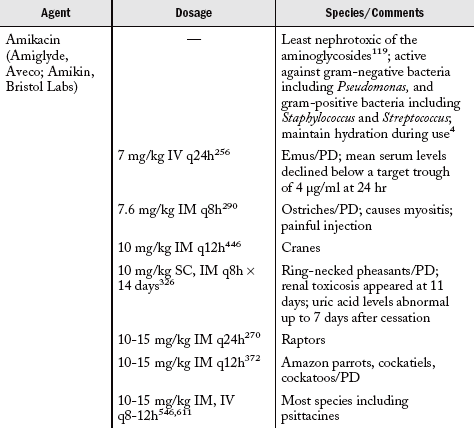
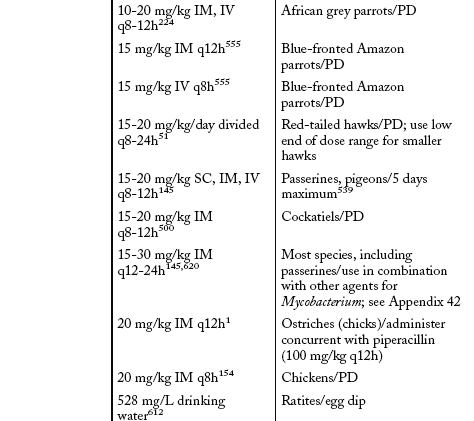
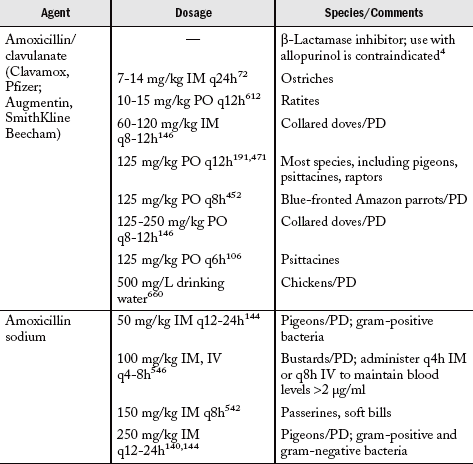
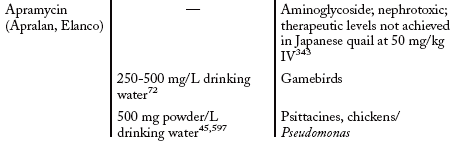
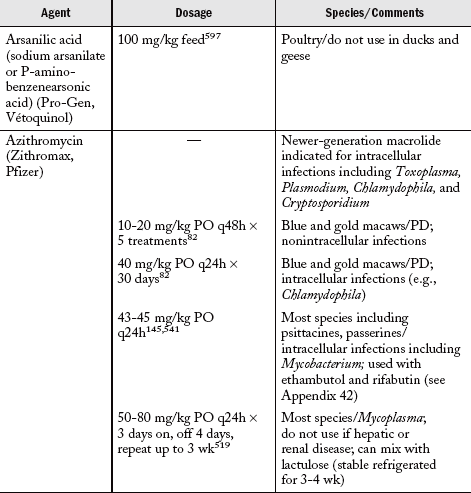
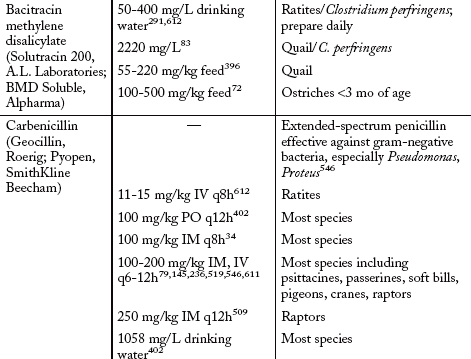
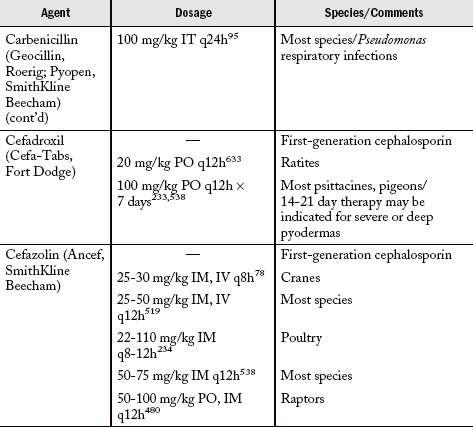
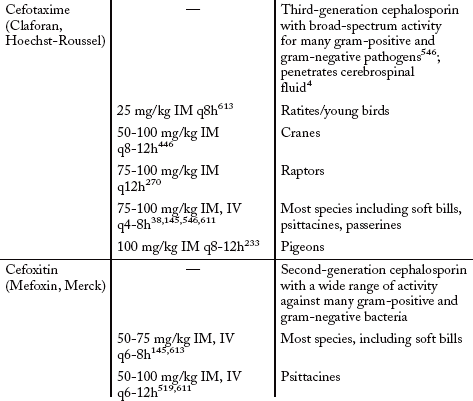
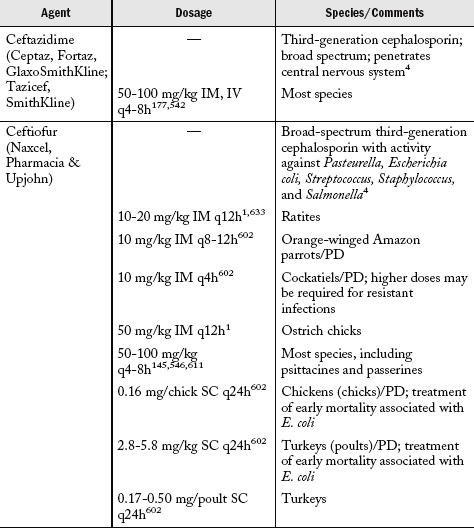
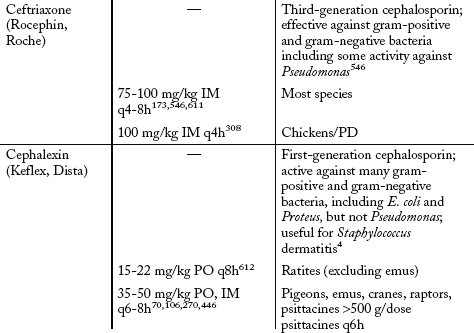
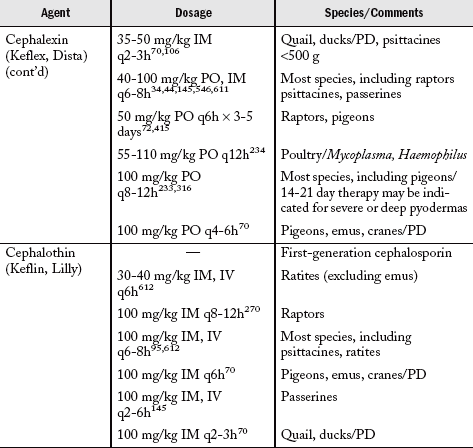
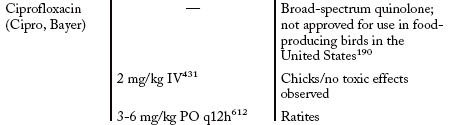
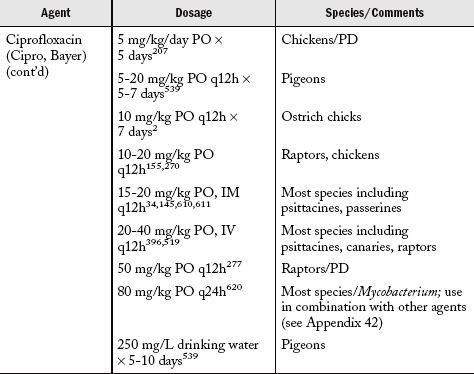
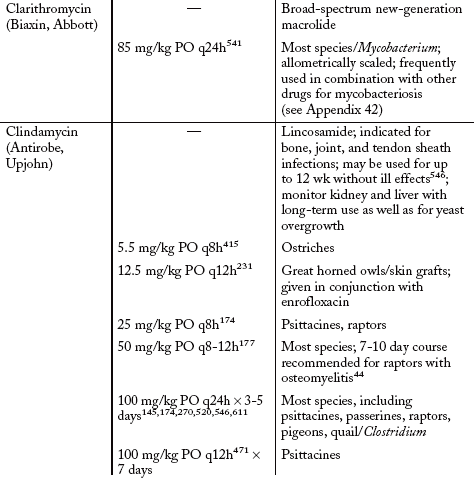
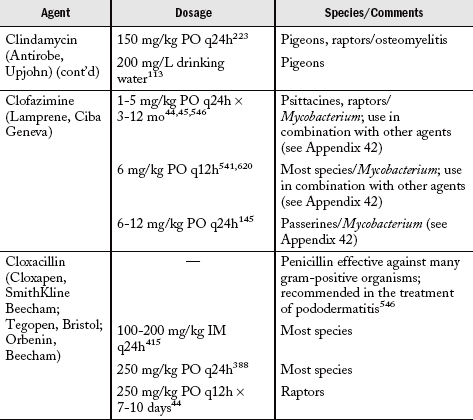
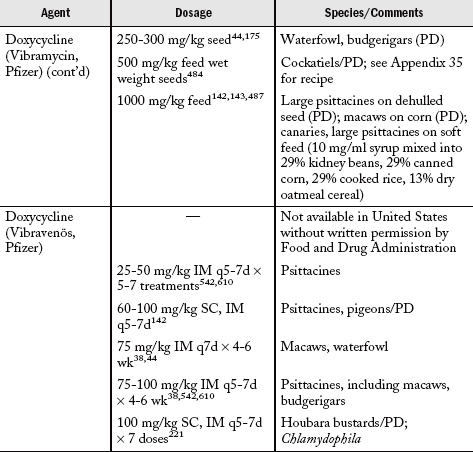
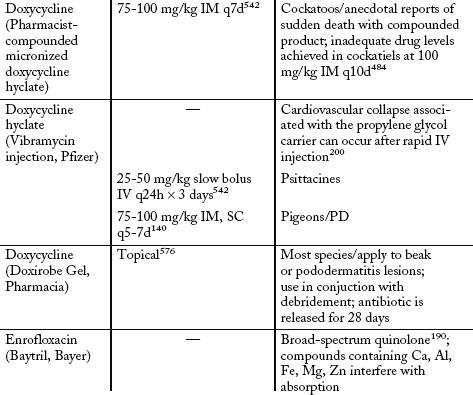
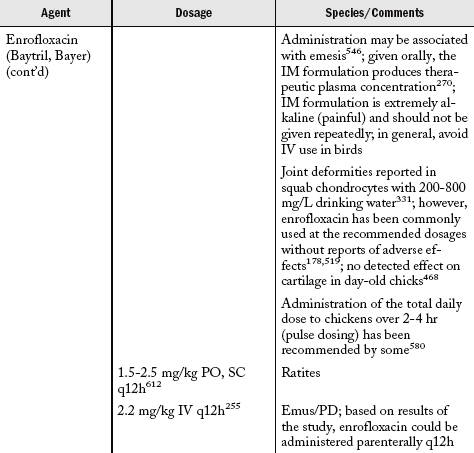
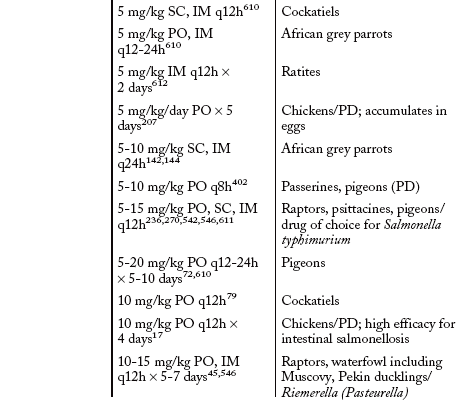
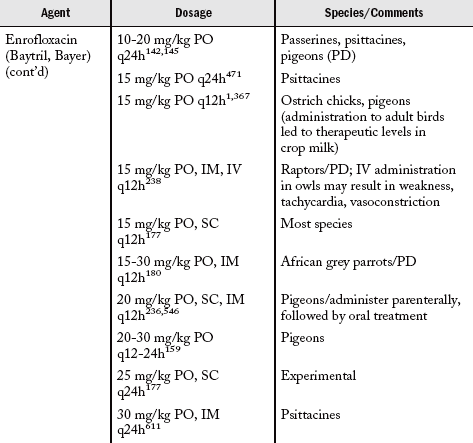
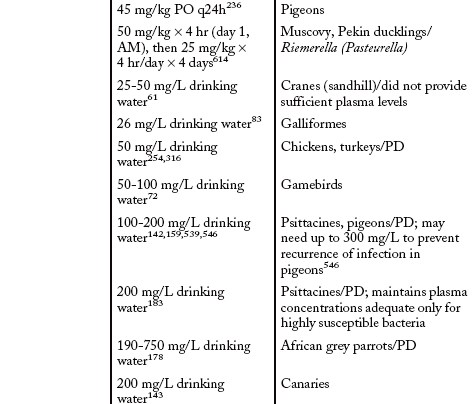
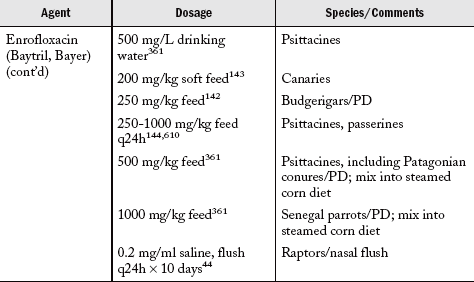
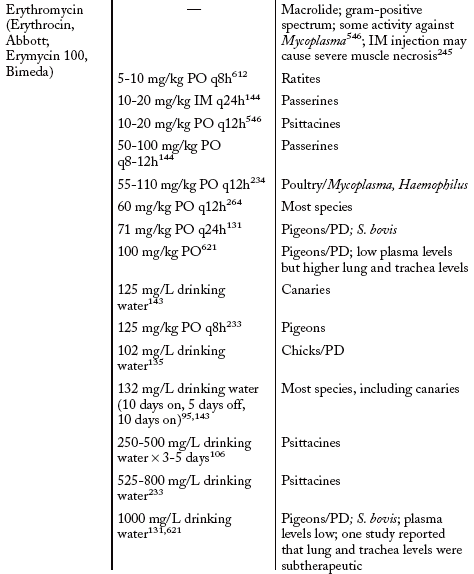
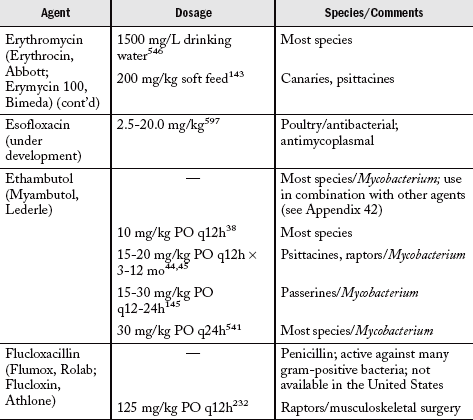
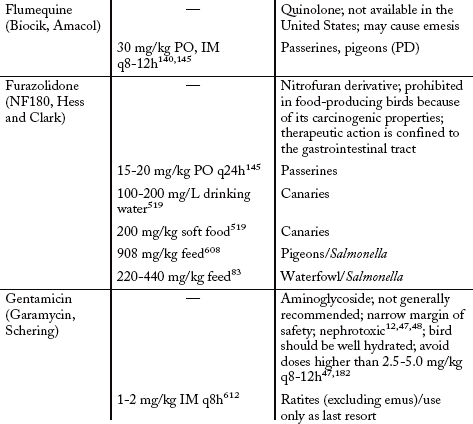
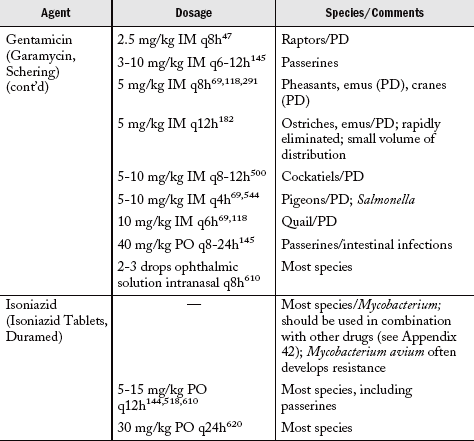
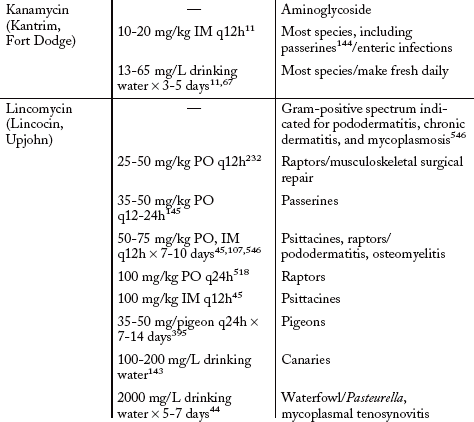
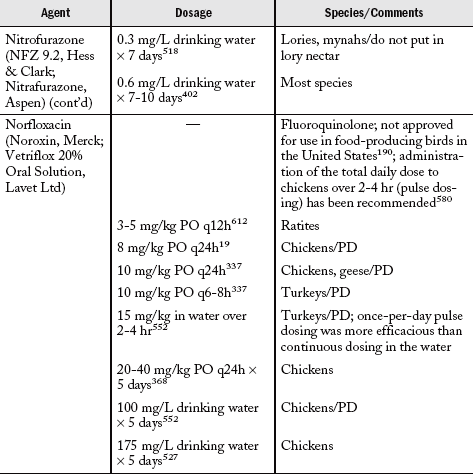
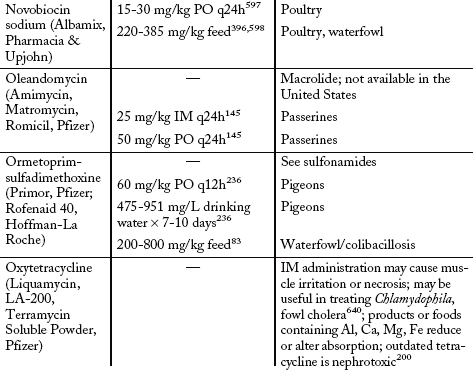
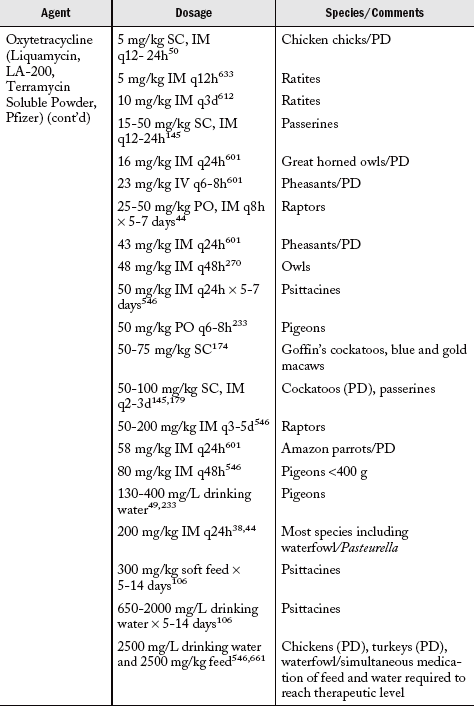
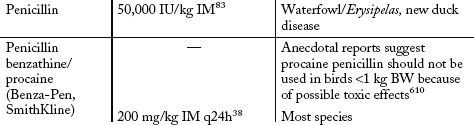
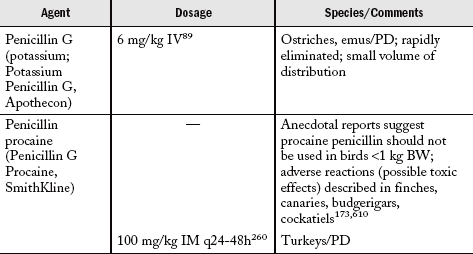
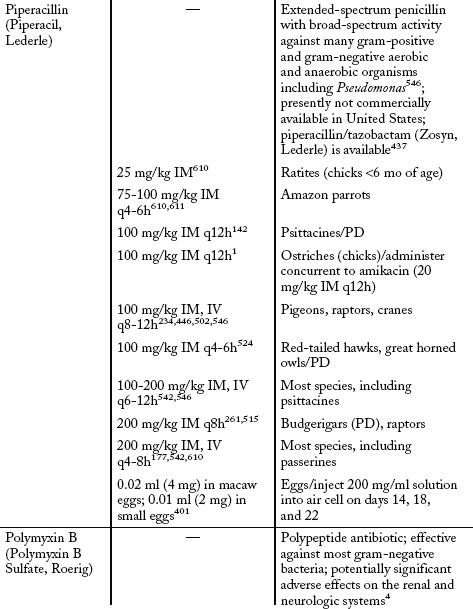
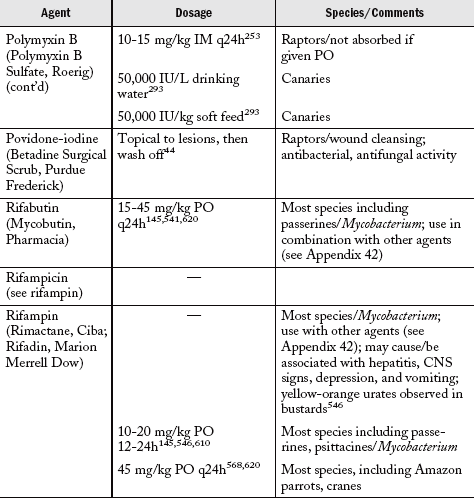
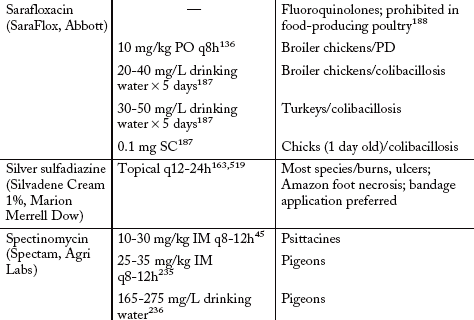
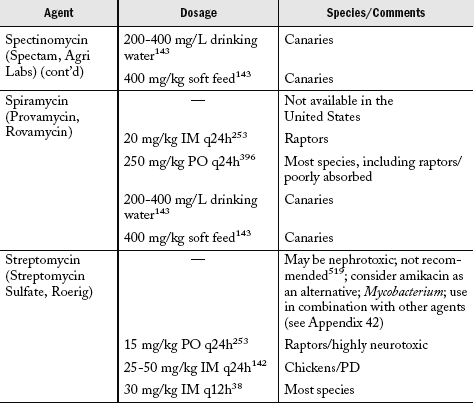
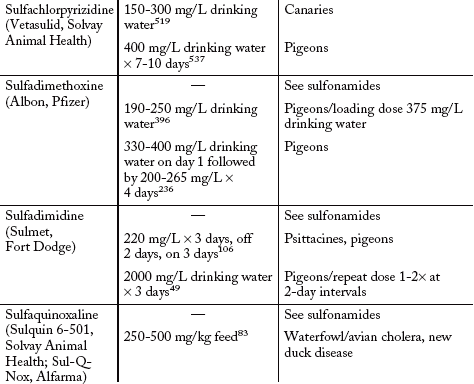
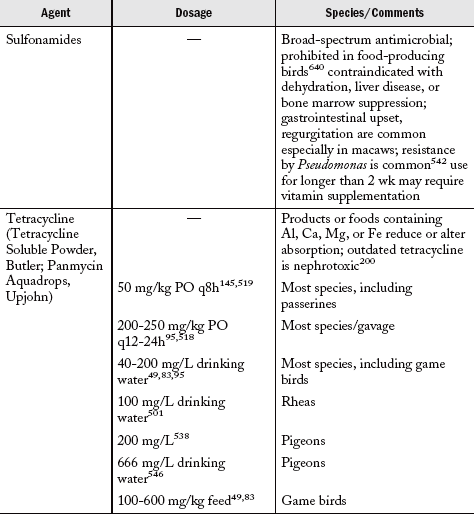
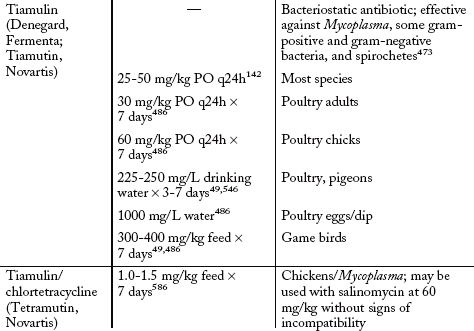
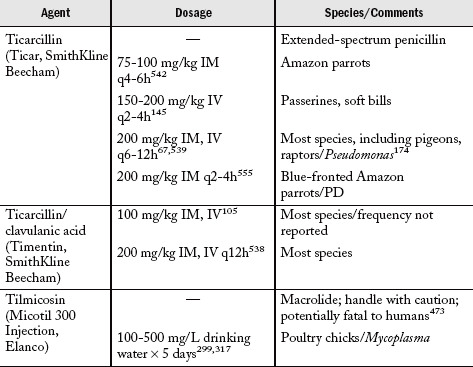
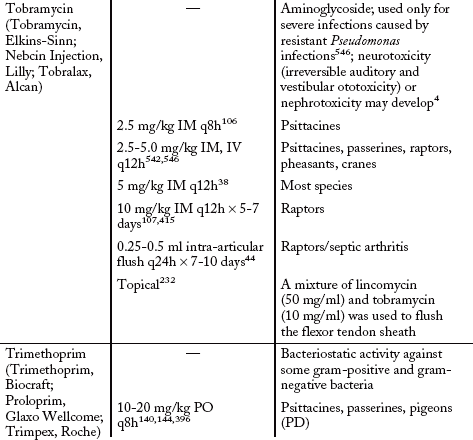
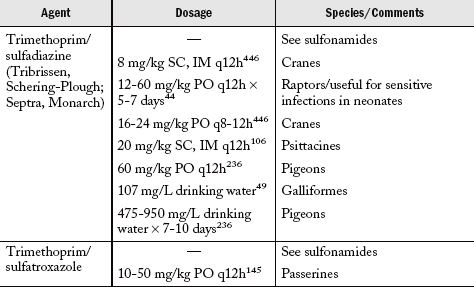
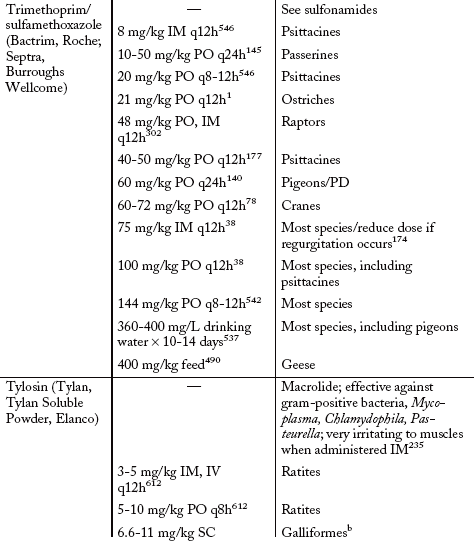
aMost drug doses used in birds should be considered experimental. Patients should be monitored for adverse effects and treatment failure.177
bLey D. Personal communication. 1997.
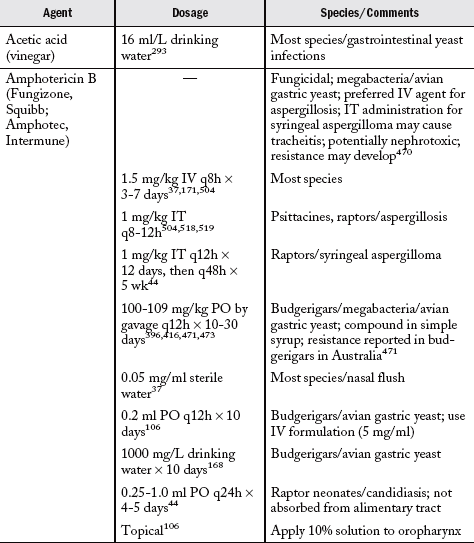
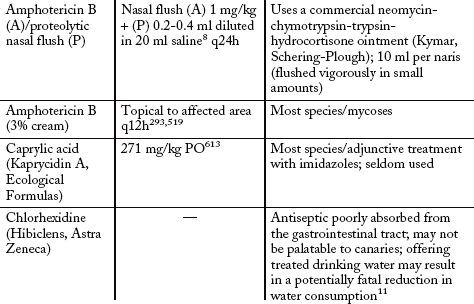
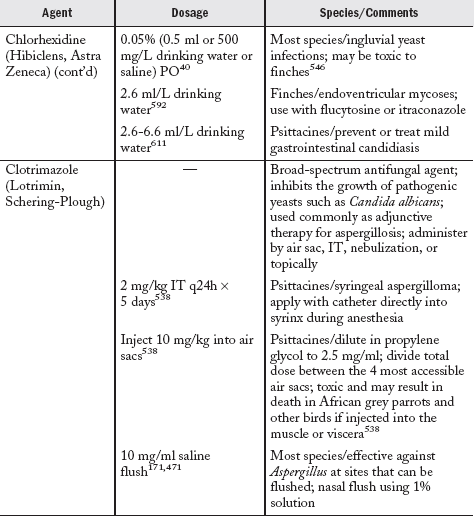
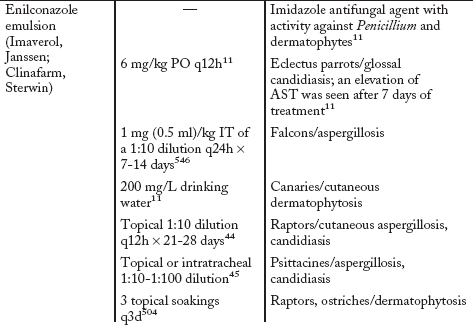
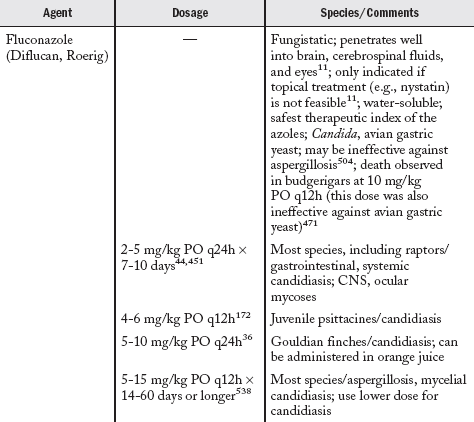
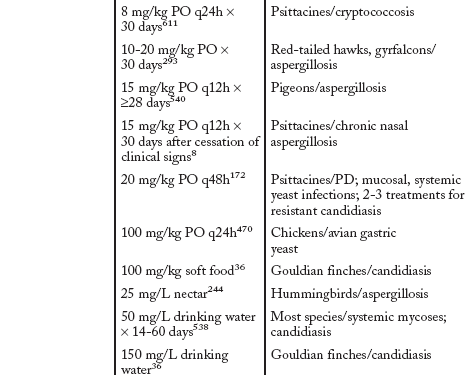
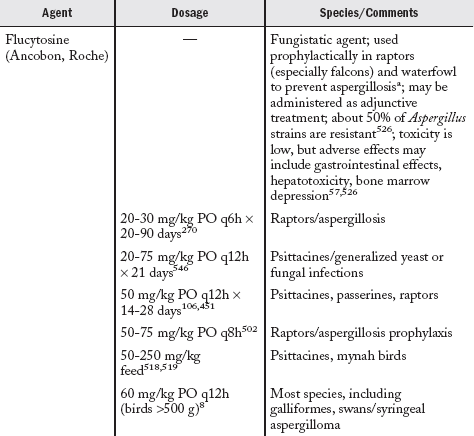
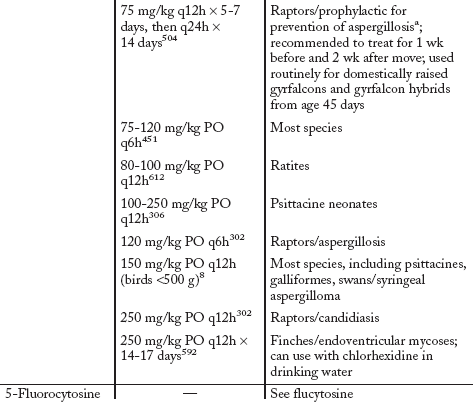
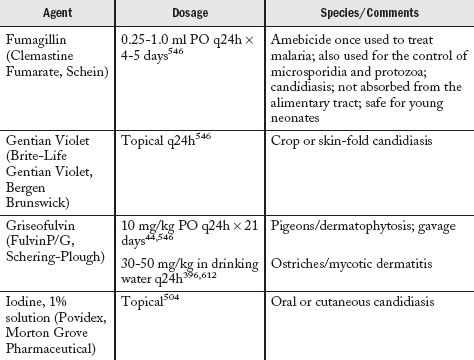
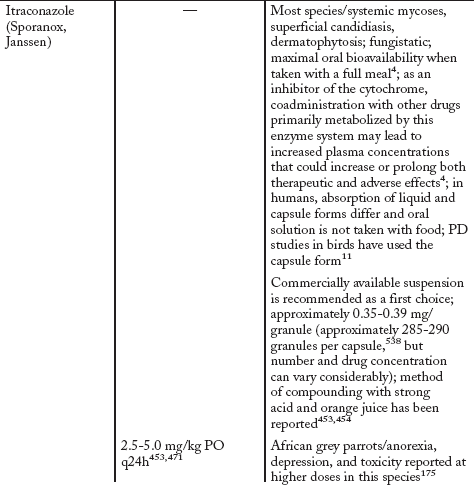
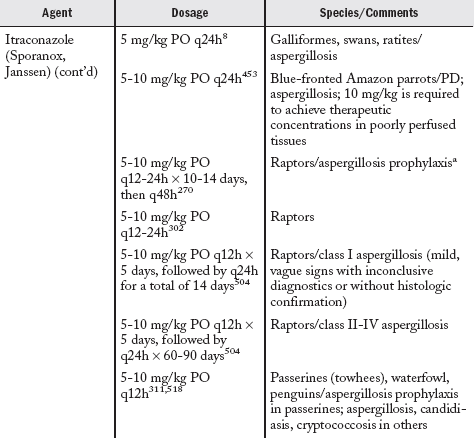
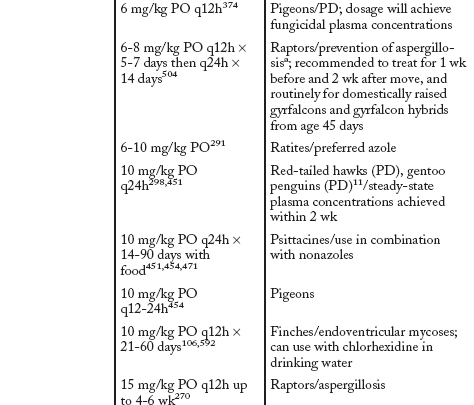
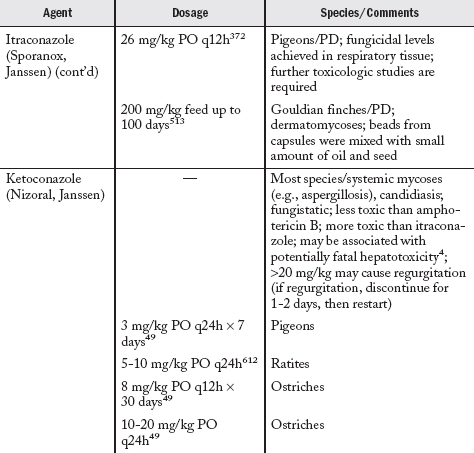
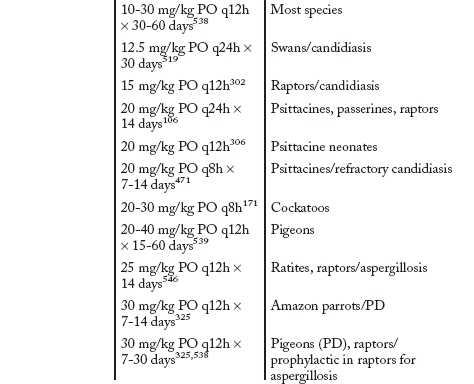
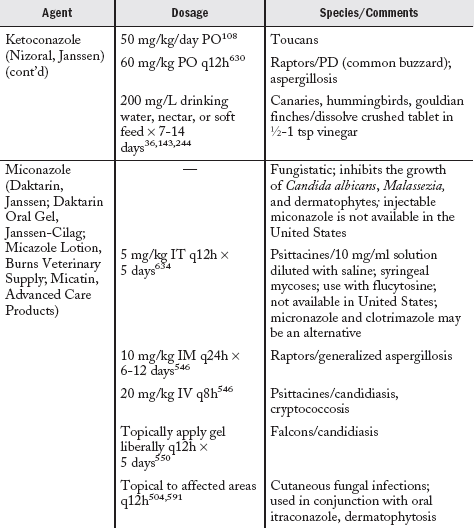
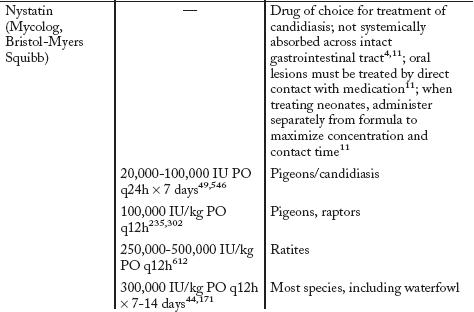
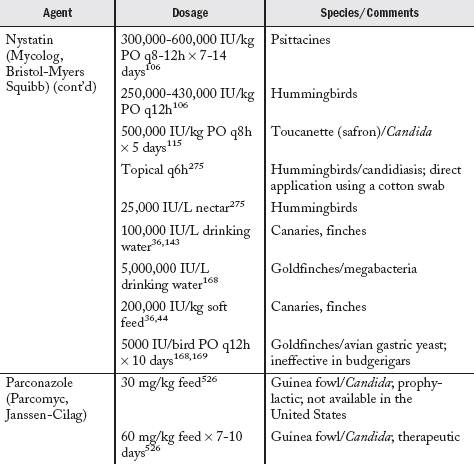
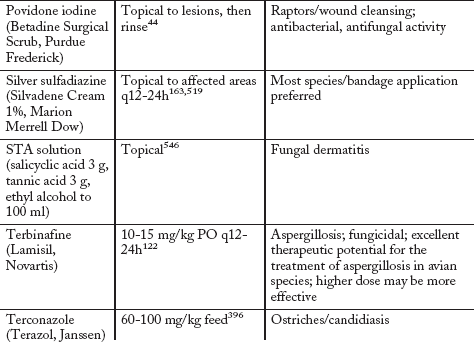
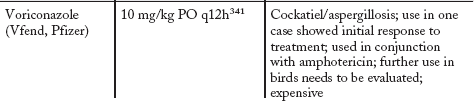
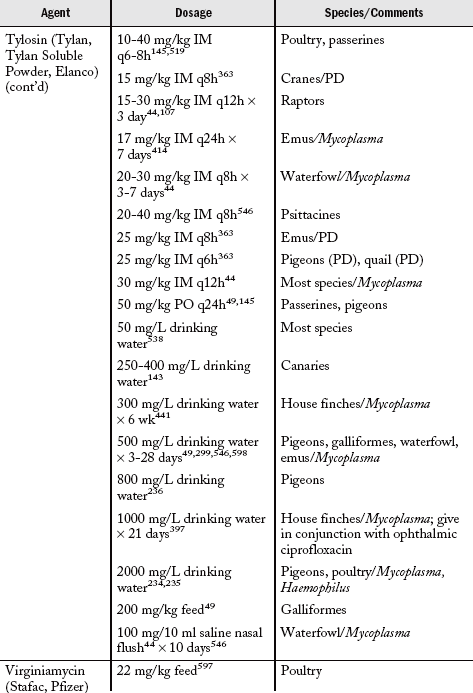
| Agent | Dosage | Species/Comments |
| Voriconazole (Vfend, Pfizer) | 10 mg/kg PO q12h341 | Cockatiel/aspergillosis; use in one case showed initial response to treatment; used in conjunction with amphotericin; further use in birds needs to be evaluated; expensive |
aProphylactic use of antifungal agents may be indicated in newly captured or admitted birds of susceptible species and in birds undergoing change of management or transfer of enclosure.504
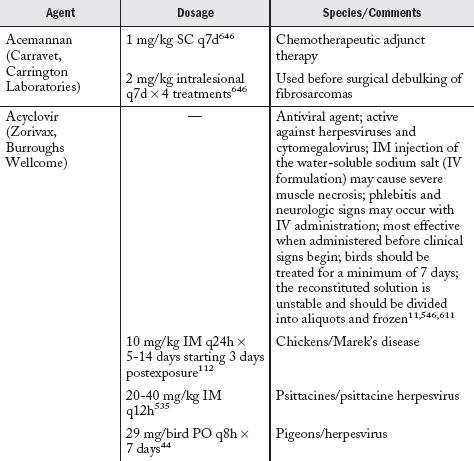
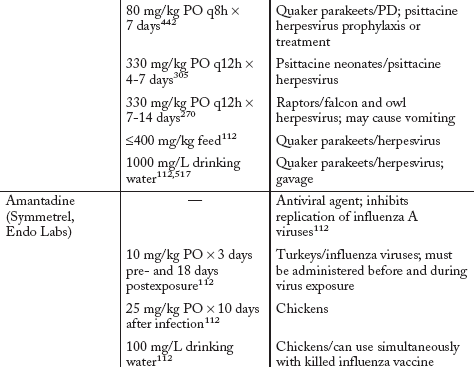
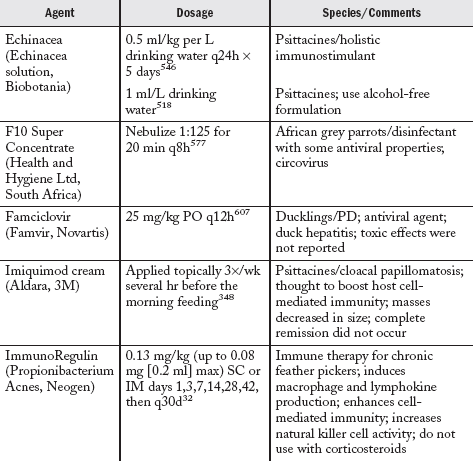
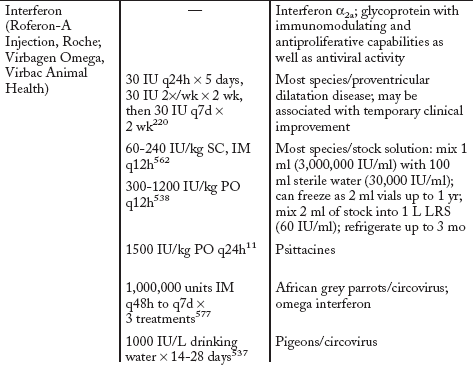
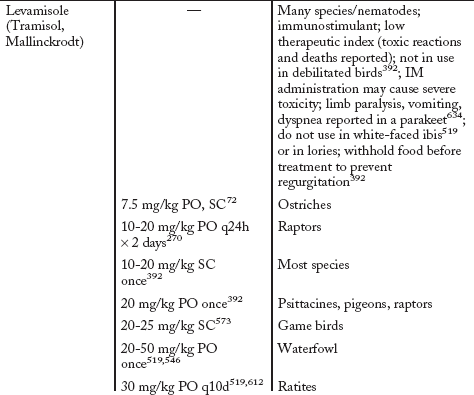
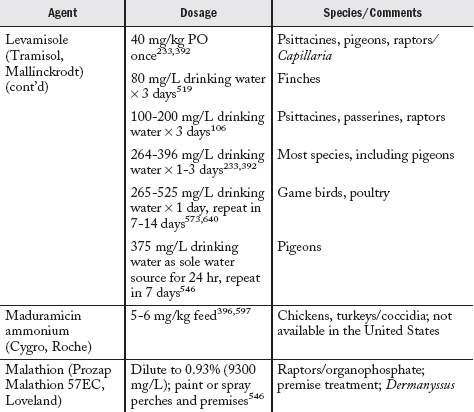
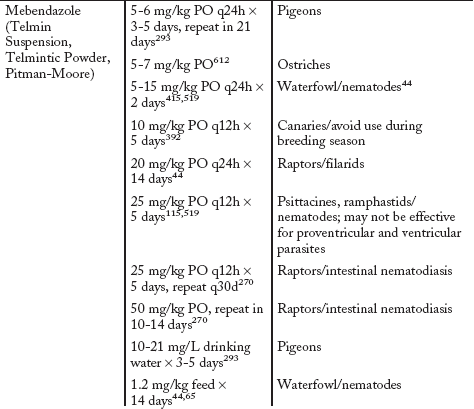
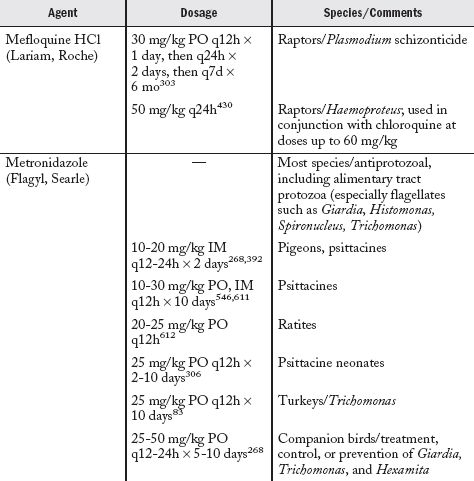
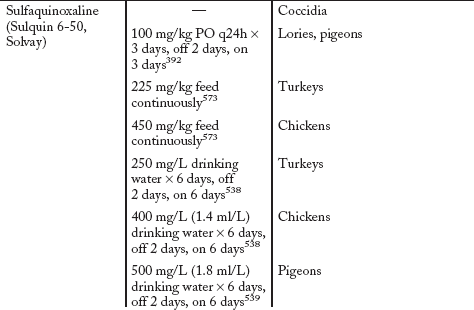
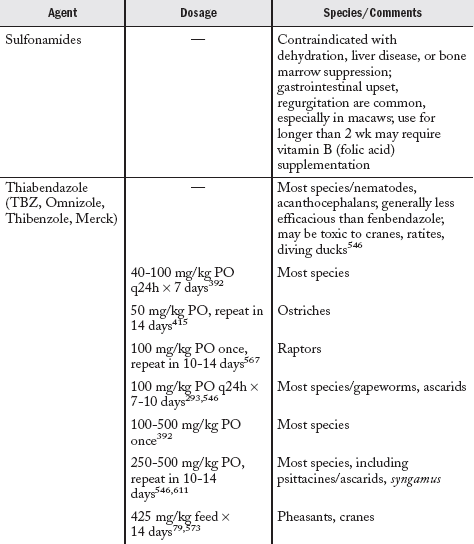
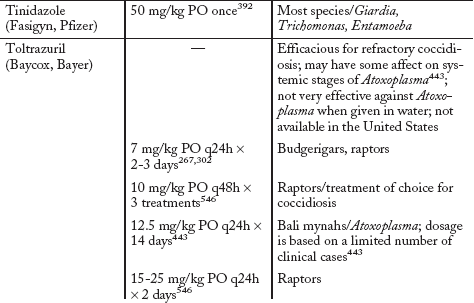
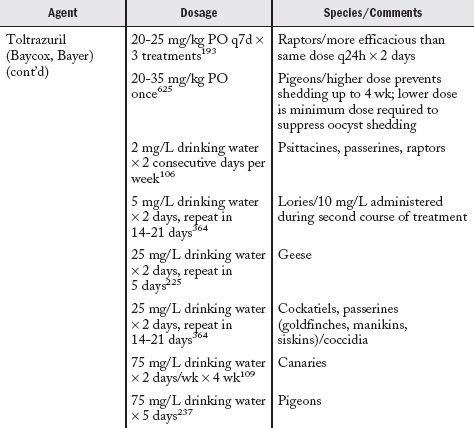
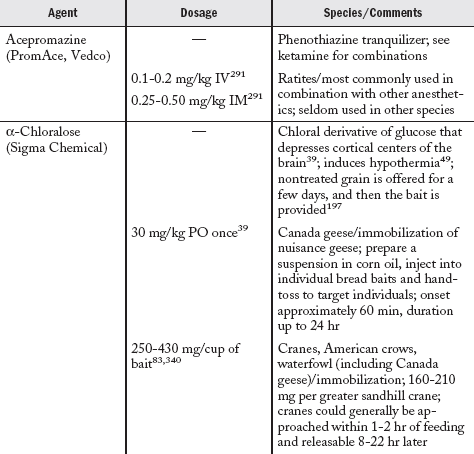
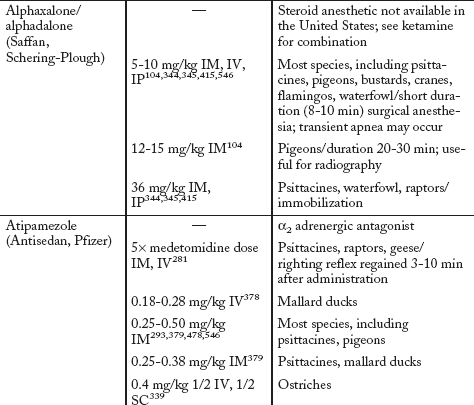
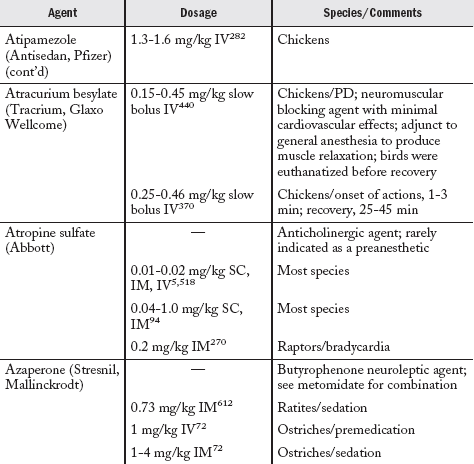
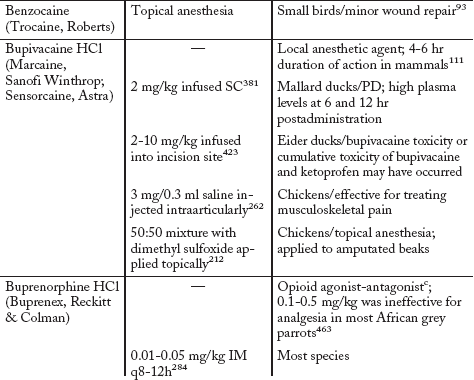
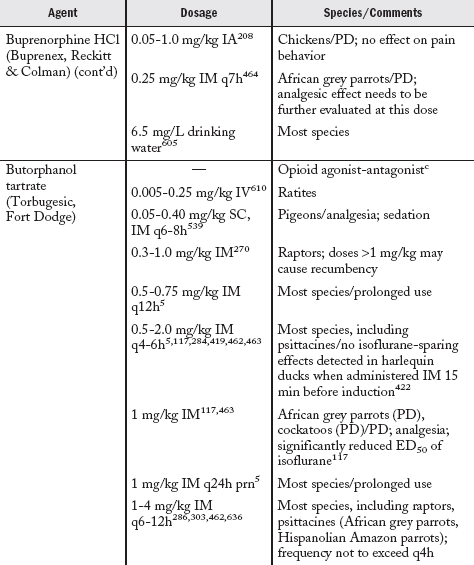
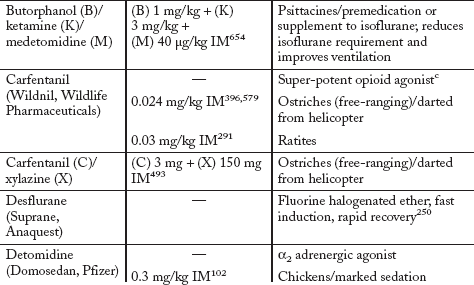
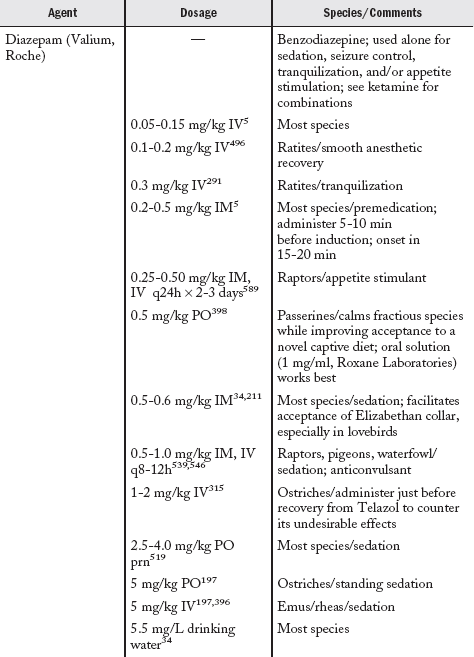
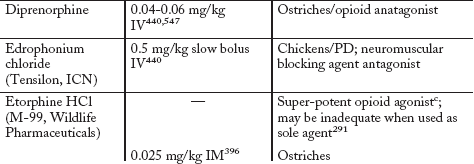
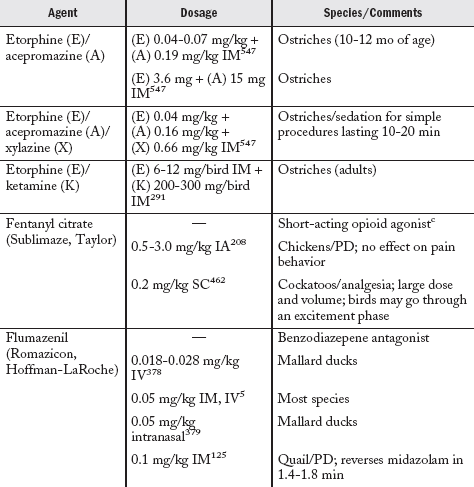
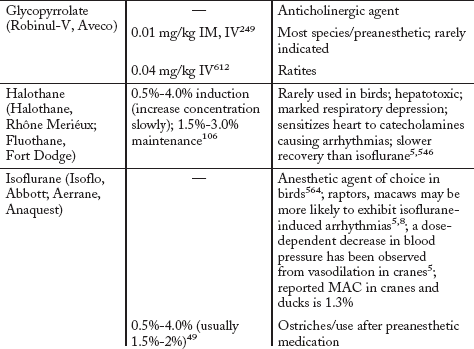
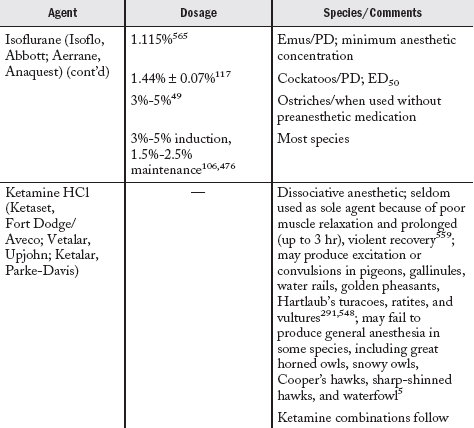
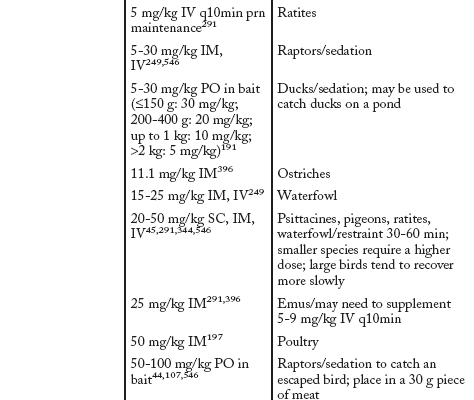
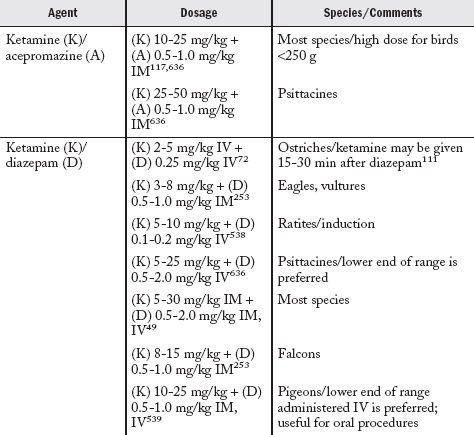
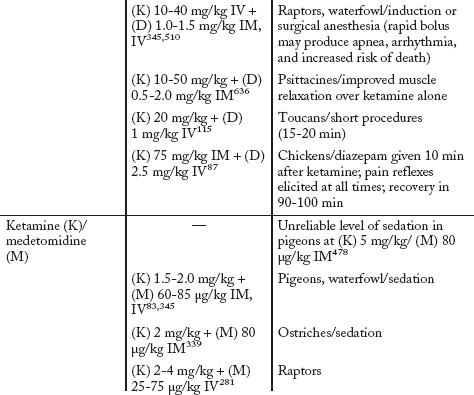
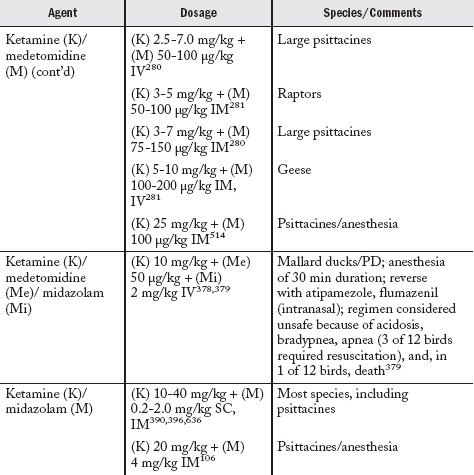
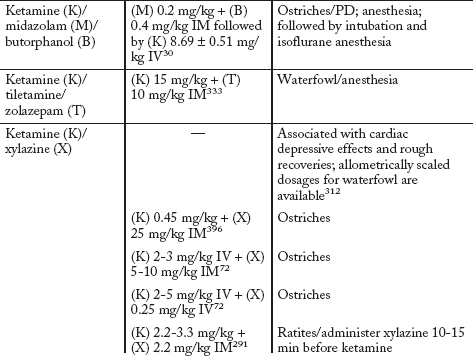
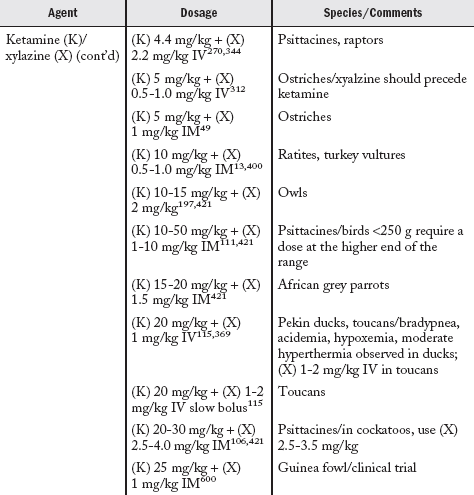
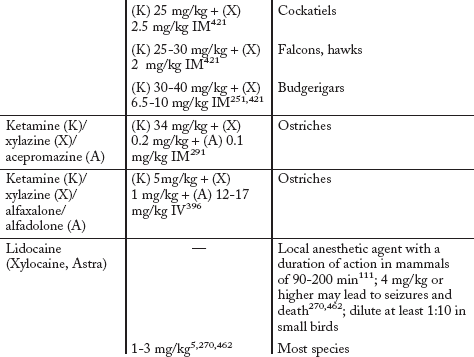
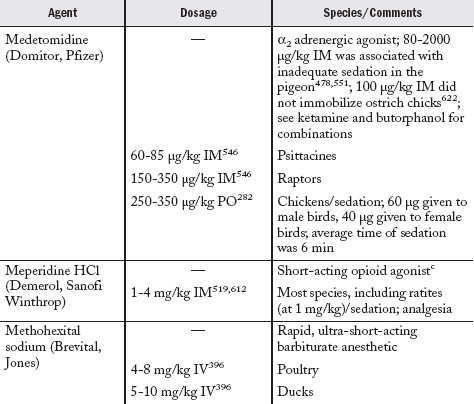
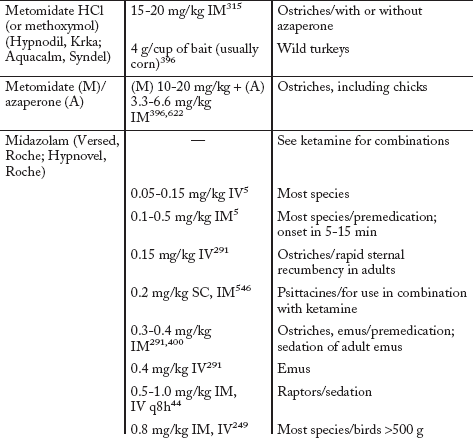
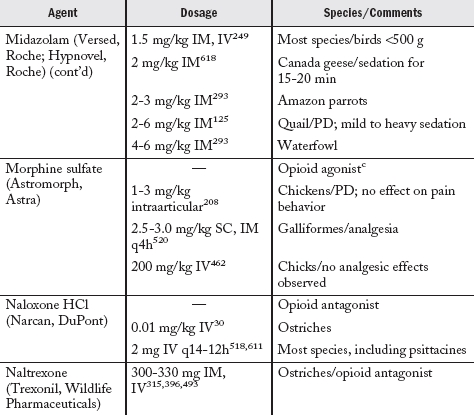
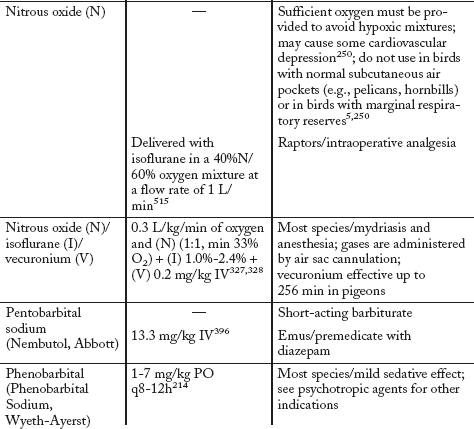
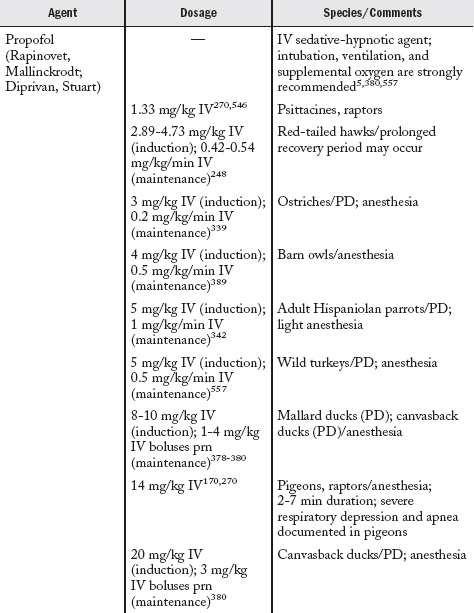
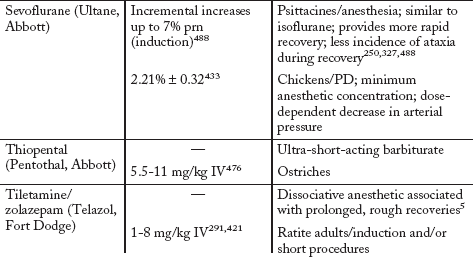
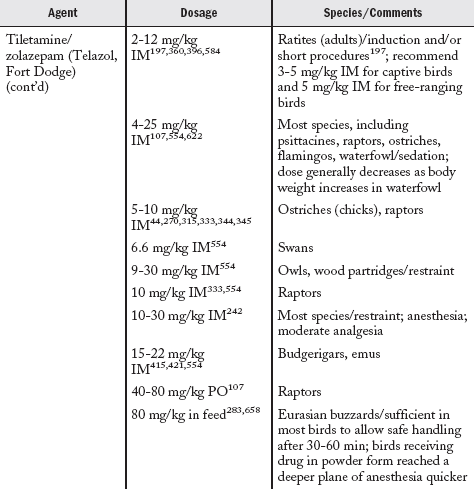
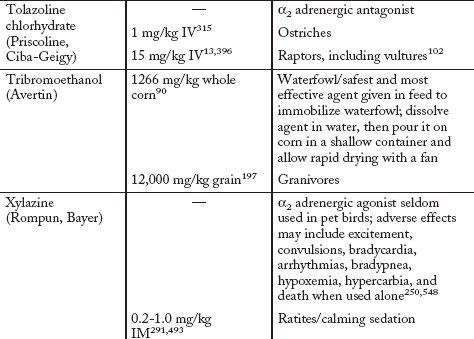
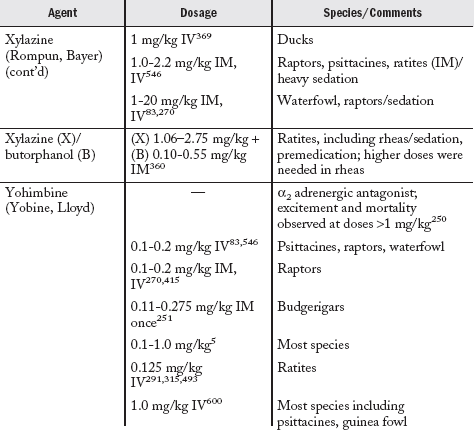
aFor other analgesic recommendations, refer to Tables 24 (hormones and steroids) and 25 (nonsteroidal antiinflammatory agents).
bThe anesthetic agents of choice in most avian species are the inhalent agents, isoflurane and sevoflurane.
cAll opioid agonists and agonist-antagonists may cause respiratory depression; profound bradypnea may occur with potent opioid agonists.
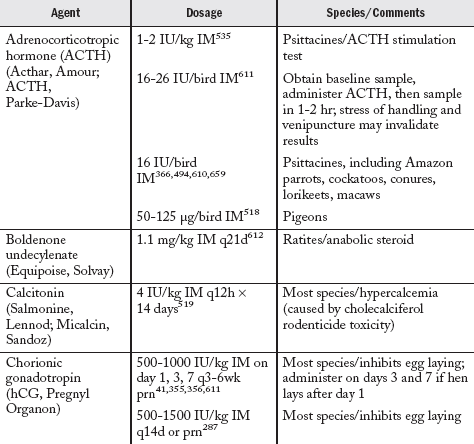
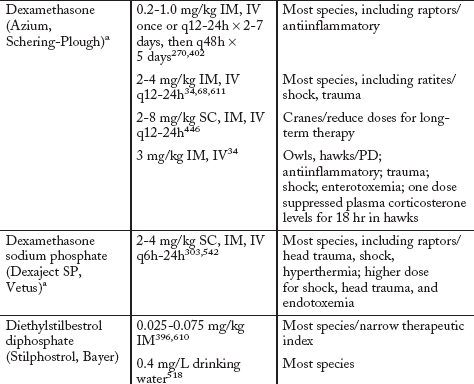
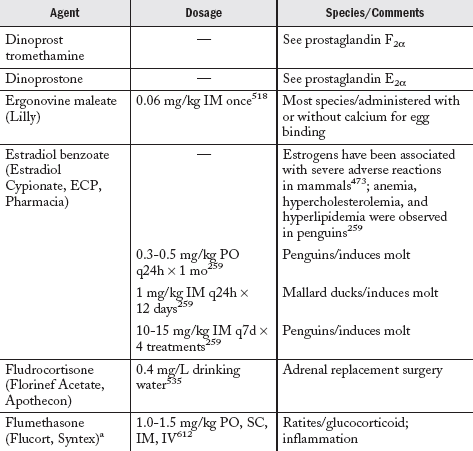
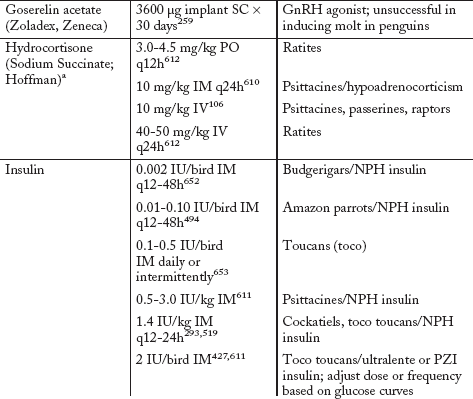
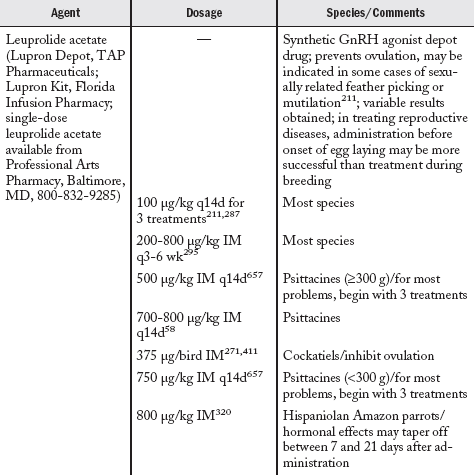
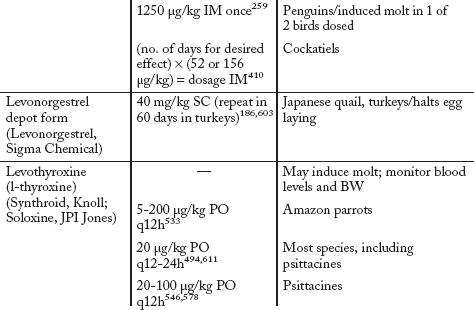
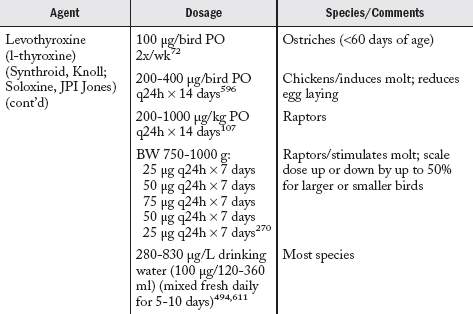
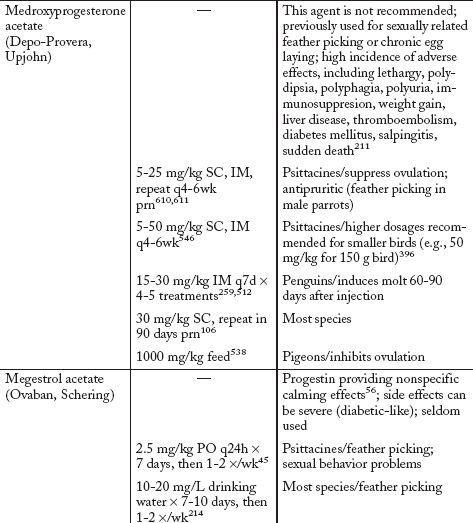
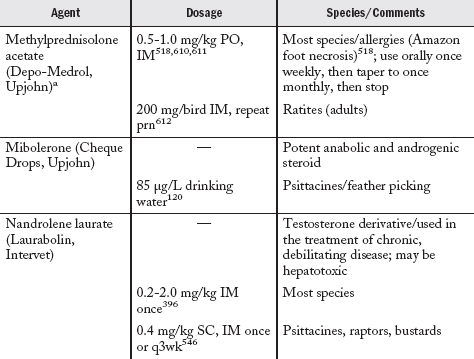
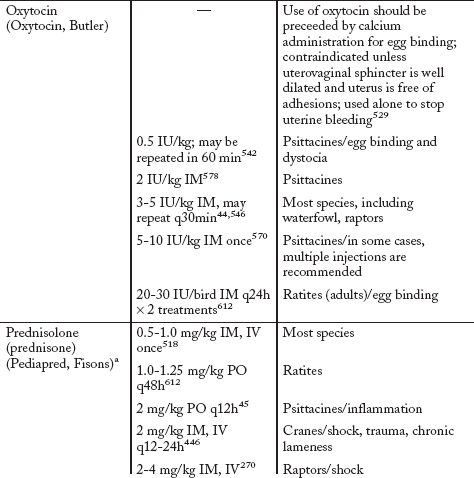
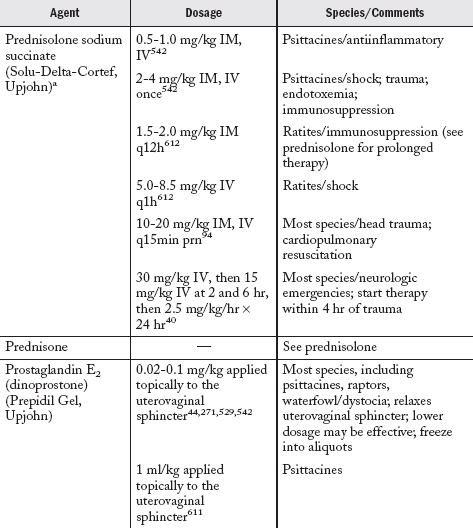
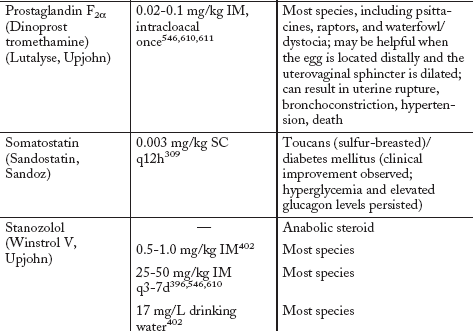
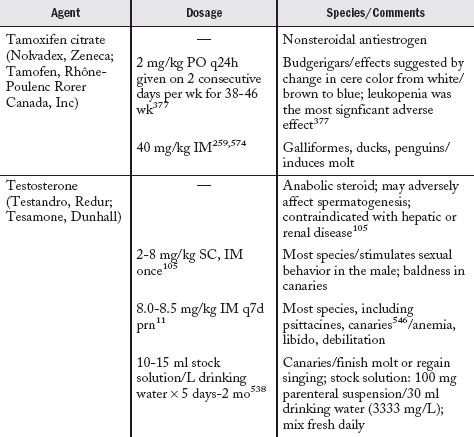
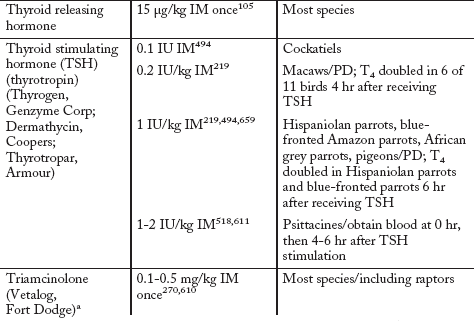
Administration may also be associated with the development of polyuria/polydypsia/polyphagia, increased protein catabolism, glucosuria, and diabetes mellitus.
Toxic levels may be attained even with topical application.257 Administration should ideally not exceed 5 days. Alternate-day application of topical corticosteroids at double the daily dose is recommended if the drugs must be given long term. Rapid onset, shorter-acting drugs are generally less likely to cause serious adverse effects.258
aSteroid administration may predispose birds to aspergillosis and other mycoses.270
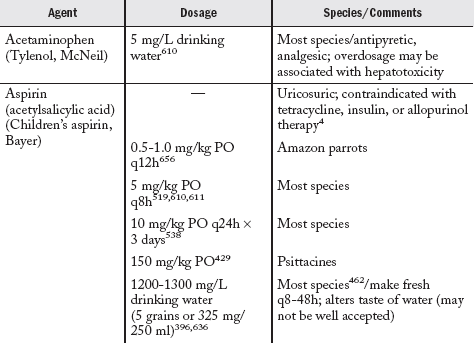
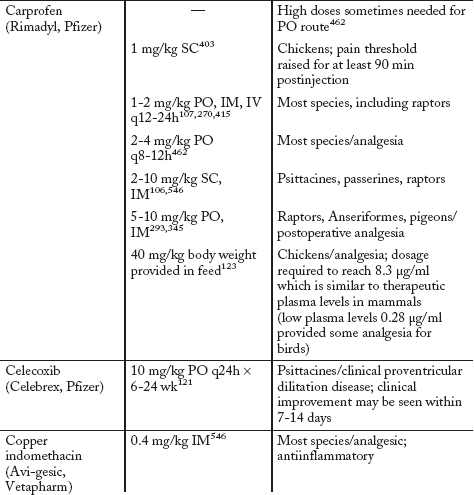
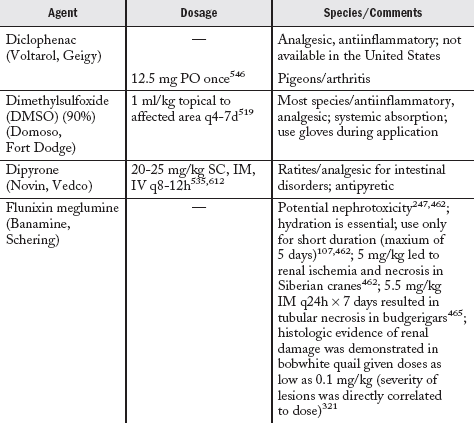
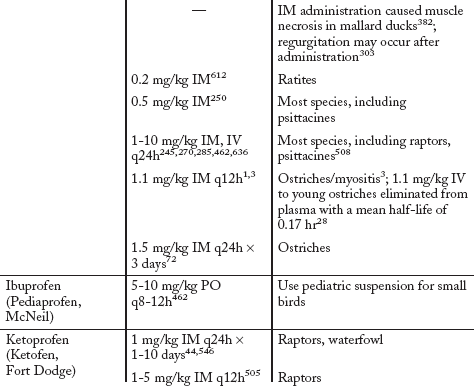
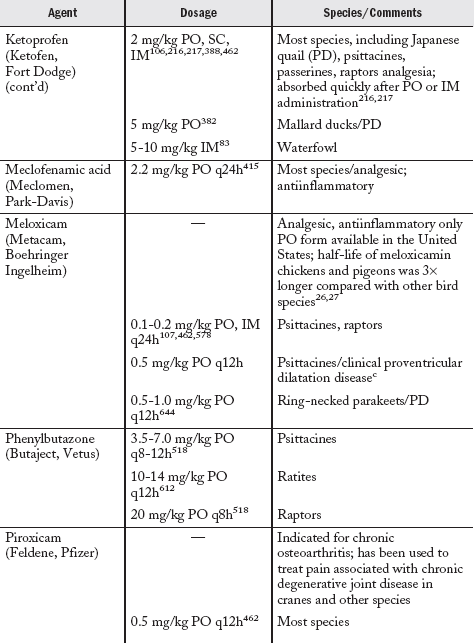
aUnless otherwise noted, drugs provide analgesic, antipyretic, and antiinflammatory effects.
bNonsteroidal antiinflammatory agents may potentially cause gastrointestinal upset and hemorrhage as well as adverse renal effects ranging from fluid retention to renal failure.
cRosenthal K. Personal communication. 2004.
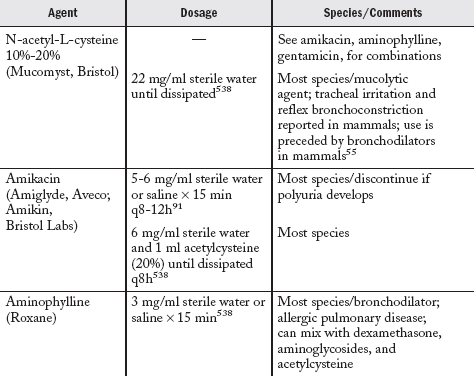
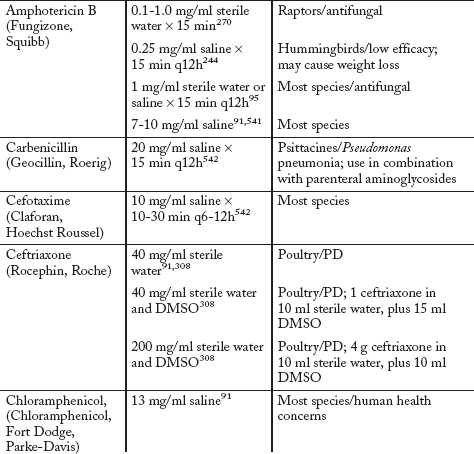
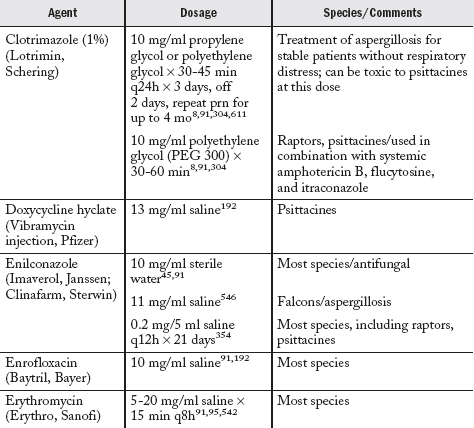
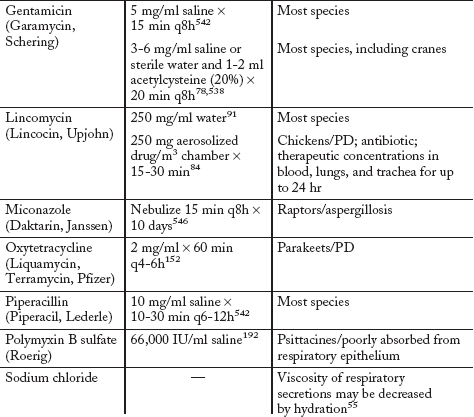
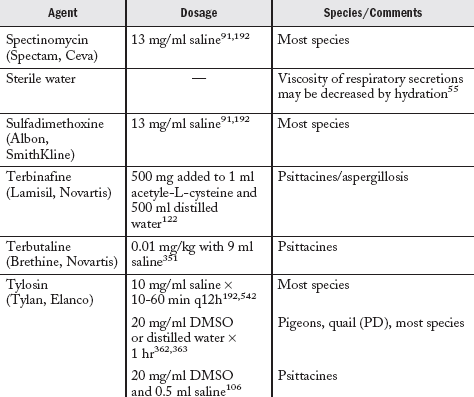
aNebulization is an adjunctive therapy indicated for rhinitis, sinusitis, tracheitis, pneumonia, airsacculitis, and syringeal aspergilloma. Optimal particle size for deposition in the trachea is 2–10 μm. Optimal particle size for peripheral airways is 0.5–5.0 μm. Treatments of 30–45 min repeated every 4–12 hr are recommended. Caution: do not overhydrate airways and flood the respiratory tract.55
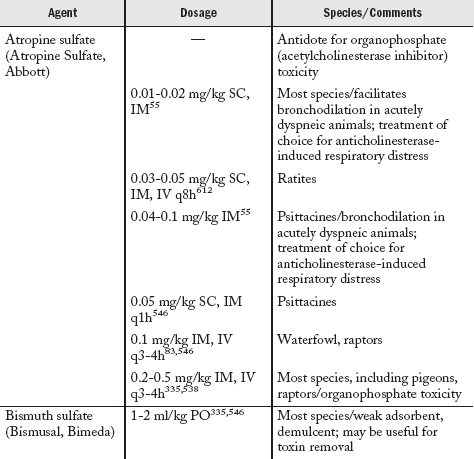
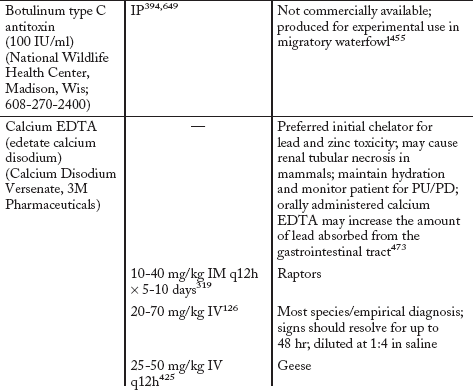
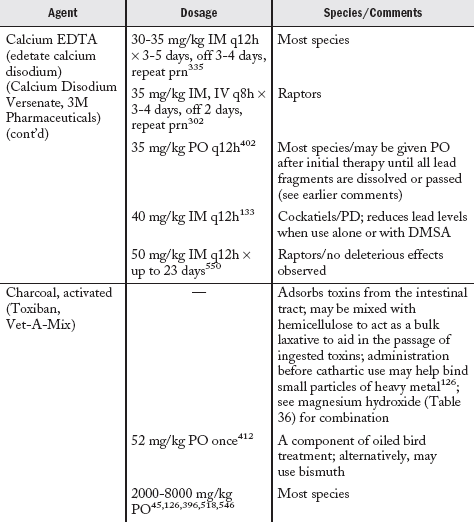
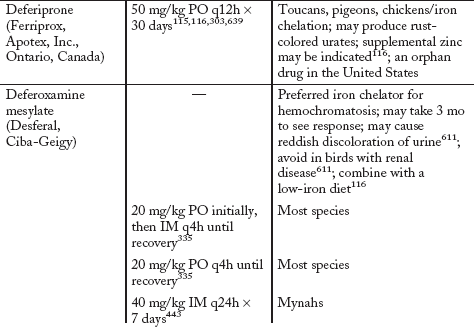
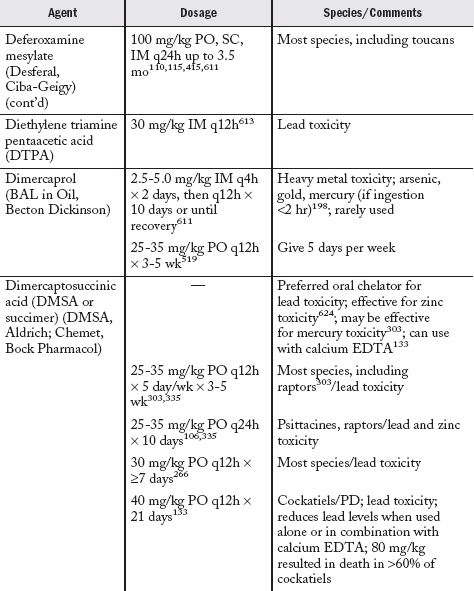
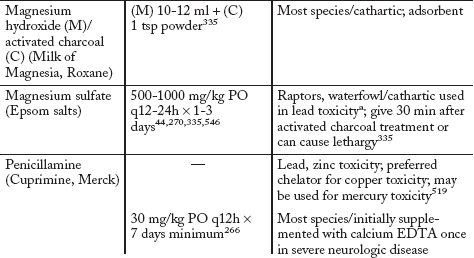
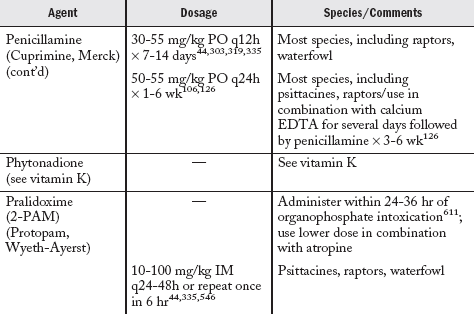
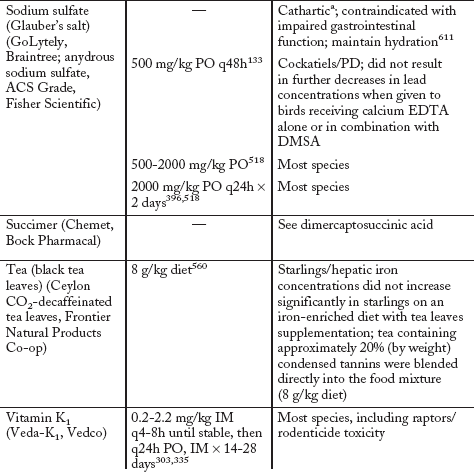
aCathartics increase gastrointestinal motility and are used to evacuate the gut and prevent absorption of toxins.
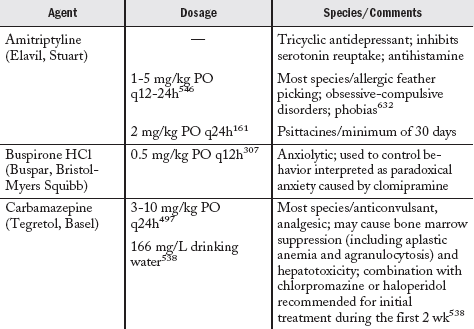
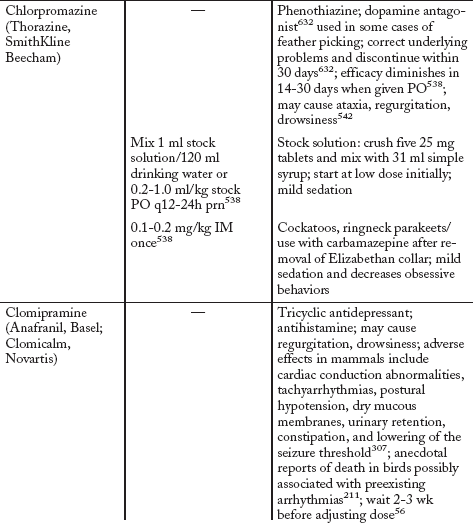
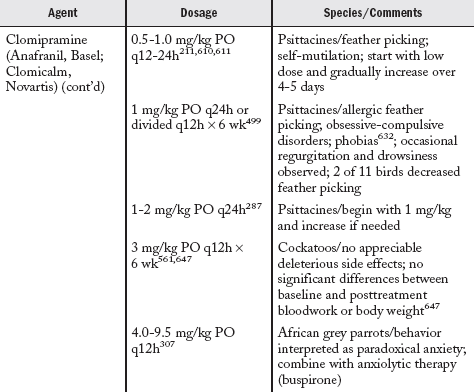
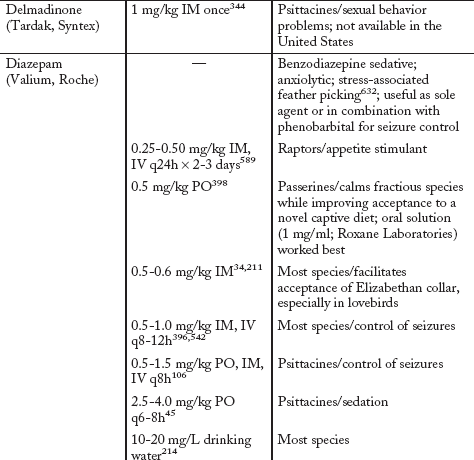
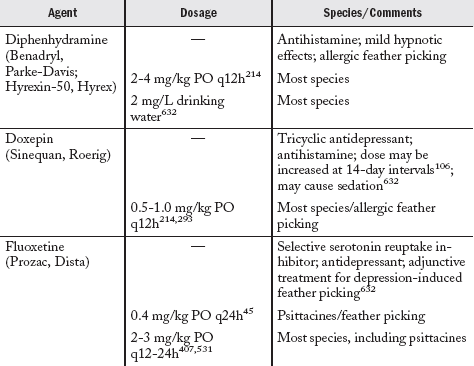
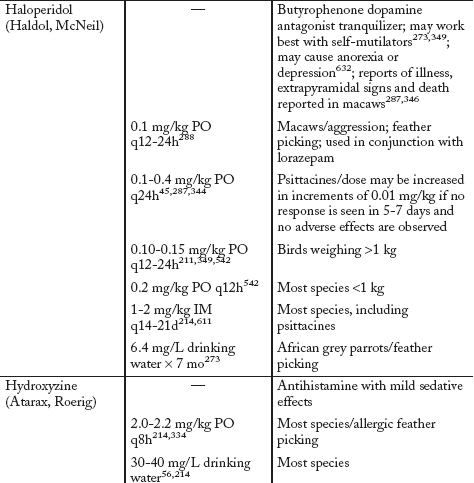
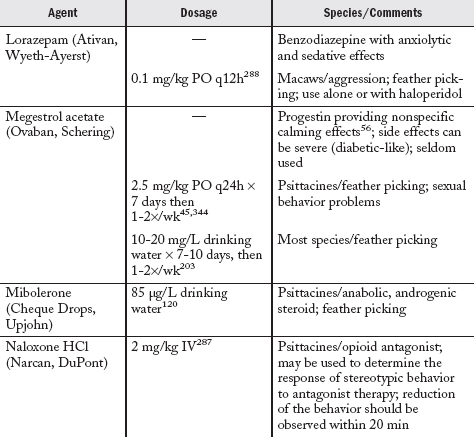
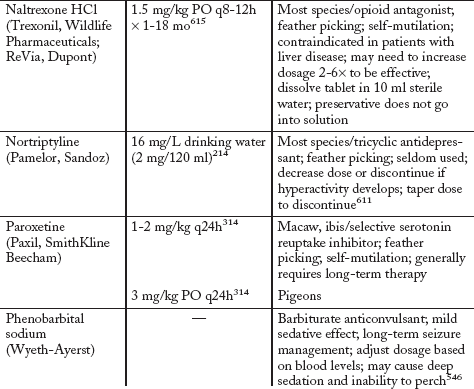
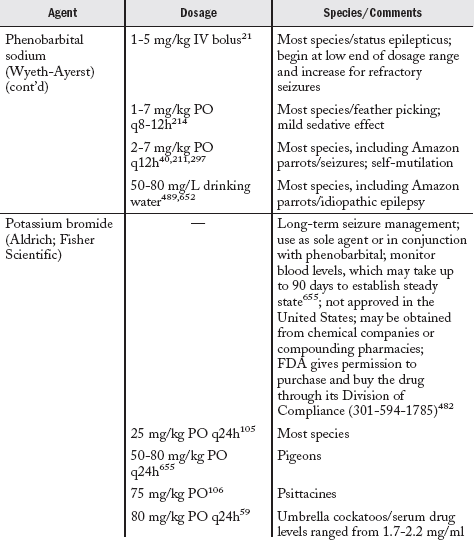
aThe use of psychotropic agents in birds is controversial because safety, efficacy, and pharmacologic effects are poorly documented. Anxiolytics or tricyclic antidepressants may be useful for stereotypic behaviors or mutilation. Selective serotonin reuptake inhibitors may prove helpful for explosive behaviors.457 Consider metabolic scaling when calculating dosages. Treatment should always include behavioral and environmental modification.
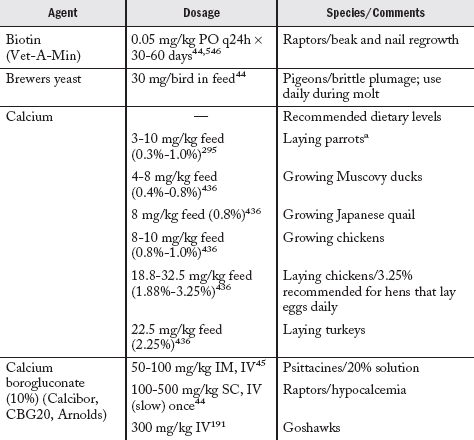
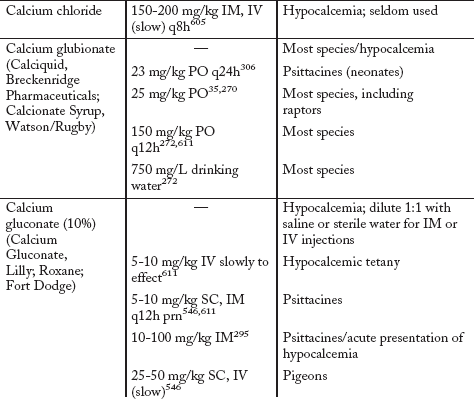
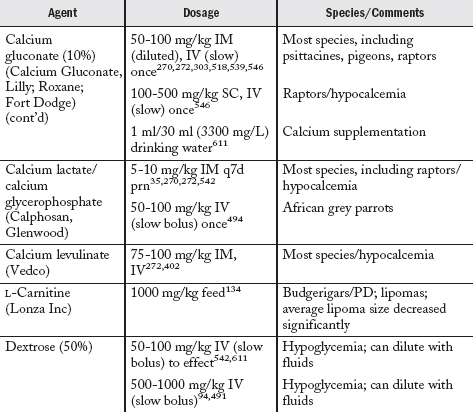
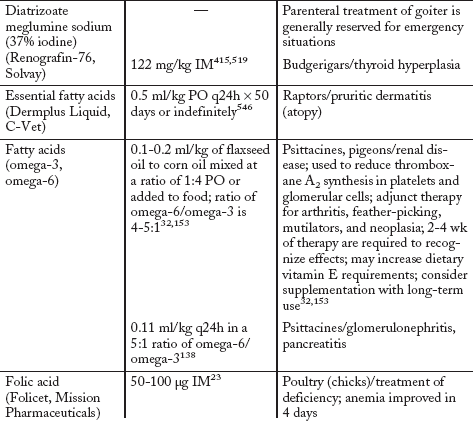
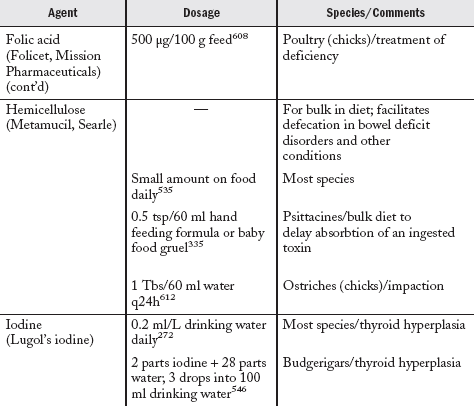
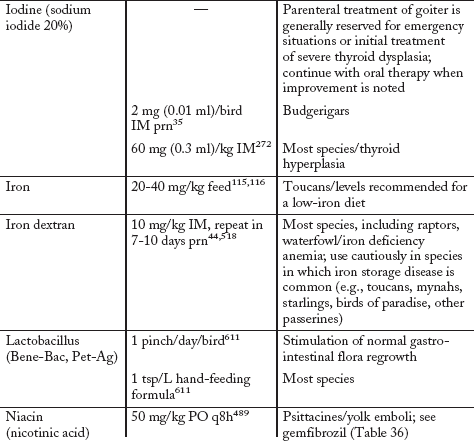
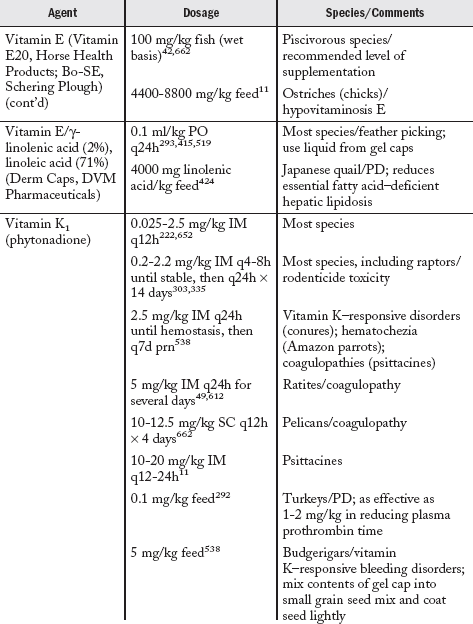
aGrains and seeds commonly fed to parrots contain calcium levels of approximately 0.02%-0.1% DM.
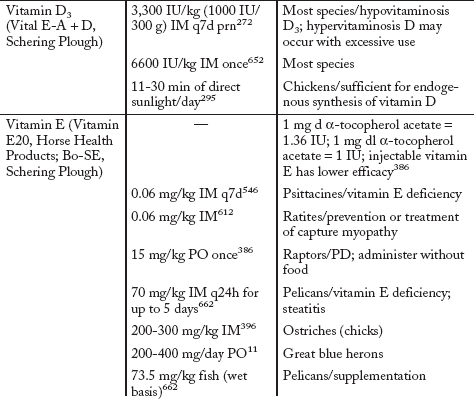
bFood items known to contain appreciable amounts of thiaminase include clams, herring, smelt, and mackerel.42
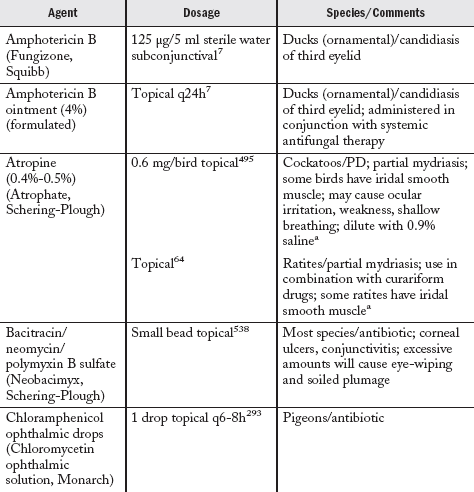
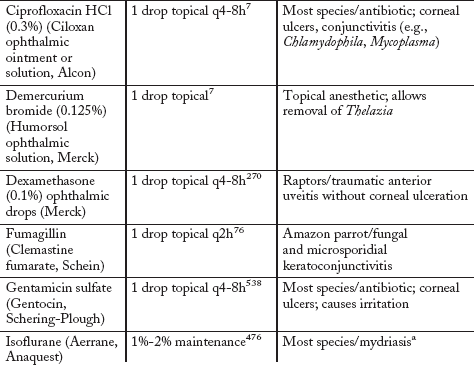
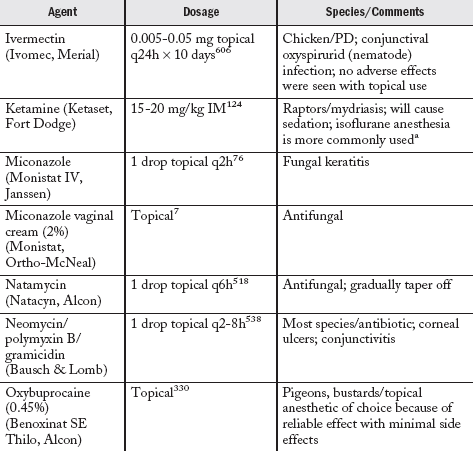
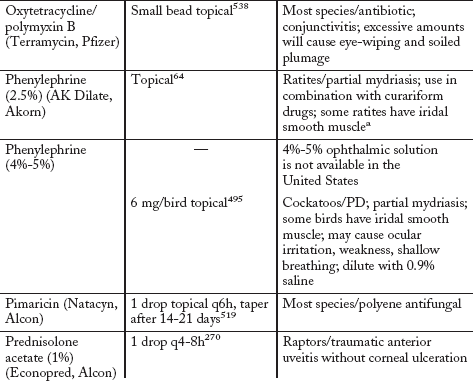
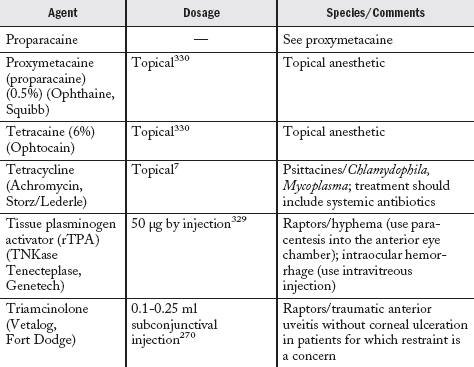
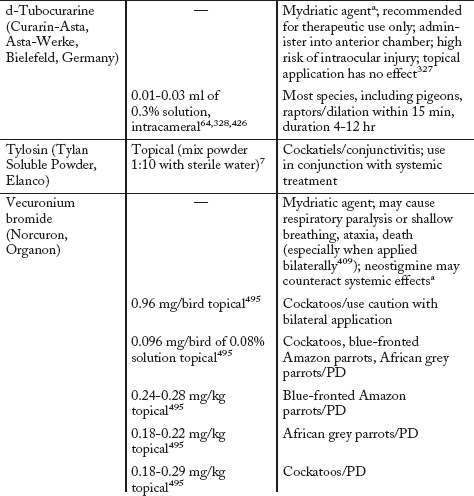
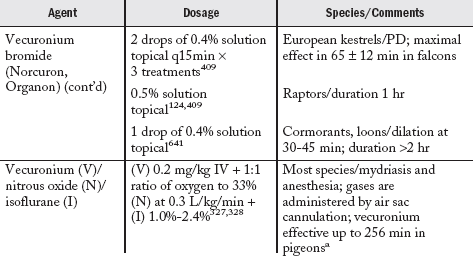
aVariable amounts of skeletal muscle are present in the avian iris, giving birds voluntary control over pupil dilation. In many avian patients, the pupils are best dilated by restraining the animal in a dark room.
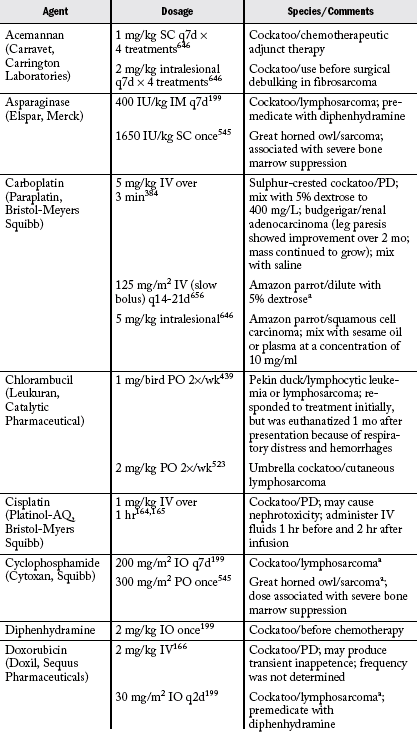
aBody weight (kg) = surface area (m2)
TABLE 32
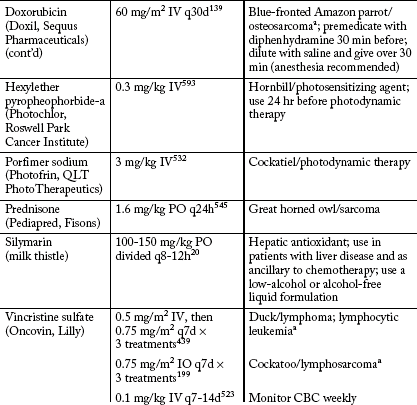
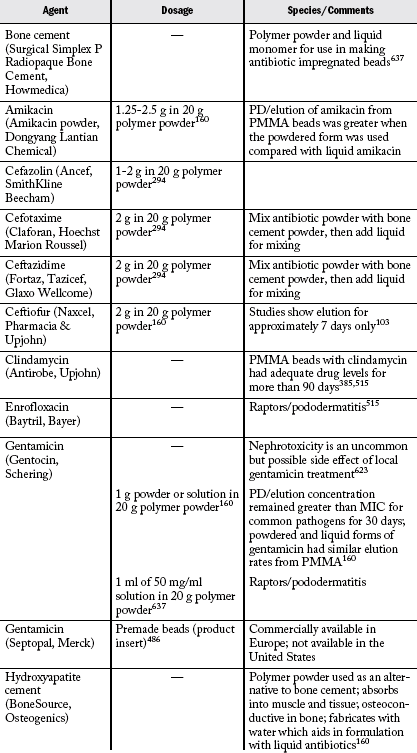
Antimicrobial-impregnated polymethylmethacrylate (PMMA) agents used in birds.a,160,385,595,637
| Agent | Dosage | Species/Comments |
| Itraconazole (Sporanox, Janssen) | 16% intraconazole-impregnated PMMA fed as grit stones583 | Indian peafowl/PD; antifungal agent; when used as grit, therapeutic levels achieved in 2 days and decreased over 7 days; beads from capsules mix into PMMA uniformly before hardening; PMMA cut into 1-g size pieces (grit stone size) after hardening |
| Oxytetracycline (Liquamycin, Rogar/STC) | 4.5 ml of 200 mg/ml solution in 20 g polymer powder637 | Raptors/pododermatitis |
| Rifampicin (R) (Rimactane, Ciba)/pefloxacin (P) (Pelwin, 5% soluble powder, Wockhardt) | 1 part (R) + 1 part (P) finely ground in equal volumes in a mortar and pestle; thoroughly mix with 5 parts PMMA powder515 | Rifampicin powder taken from oral capsules; pefloxacin powder obtained from the preparation intended for oral use in poultry |
| Rifampicin (R) (Rimactane, Ciba)/piperacillin (P) (Piperacil, Lederle) | 1 part (R) +1 part (P) combined and finely ground in a mortar and pestle; thoroughly mix with 5 parts PMMA powder515 | Rifampicin powder taken from oral capsules; piperacillin powder taken from parenteral preparation before reconstitution |
• Choose antibiotic based on culture and sensitivity.
• Mix 1–2 g of sterile antibiotic powder with 40–60 g of PMMA powder. Add approximately 2 Tbs to antibiotic at a time. The use of liquid antibiotic reduces the mechanical strength of the bead.
• Shake mixture well (for at least 2 min) to make it homogeneous.
• Add liquid monomer as usual.
• The dough is placed in a catheter tip syringe and extruded, rolled into beads, and placed onto steel surgical wire. Dough may also be injected into a red rubber catheter that may be cut into variable sizes. The smaller the bead, the greater the elution of antibiotic.
• Gas sterilization is recommended; beads are aerated for at least 24 hr at room temperature.
• The wound is aggressively debrided and beads are placed within it; the wound is then closed and the beads are left within the site until the wound is no longer infected.595,637
• In human medicine, beads are removed after 2–6 wk. Despite their antibiotic release, beads act as a surface to which bacteria preferentially adhere, grow and potentially develop antibiotic resistance.438 Beads are difficult to remove if left in place for more than 14 days.460
• Discard unused beads after 2 mo.515
aAntimicrobial-impregnated polymethylmethacrylate is used to elute antimicrobial agents for long-term treatment of infected lesions. Following are guidelines for its use and preparation:
TABLE 33
Agents used in the treatment of oiled birds.412
| Agent | Dosage | Species/Comments |
| Bismuth subsalicylate | 2–5 mg/kg PO once | Adsorbent; gavage; alternatively, can use activated charcoal |
| Charcoal, activated (Toxiban, Vet-A-Mix) | 52 mg/kg PO once | Adsorbent; gavage; alternatively, can use bismuth subsalicylate |
| Detergent (Dawn, Procter & Gamble) | 1%-5% bath | Submerse bird up to mid-neck region; rinse with water; use water at 103° F–105° F (39° C–41° C) and 40–60 psi |
| Fluid therapy | — | See Appendixes 33 and 34 for guidelines |
| Iron dextran | 10 mg/kg IM q5–7d | If PCV < 25% |
| Vitamin B1 (thiamine) | 25–30 mg/kg feed fish | Piscivores |
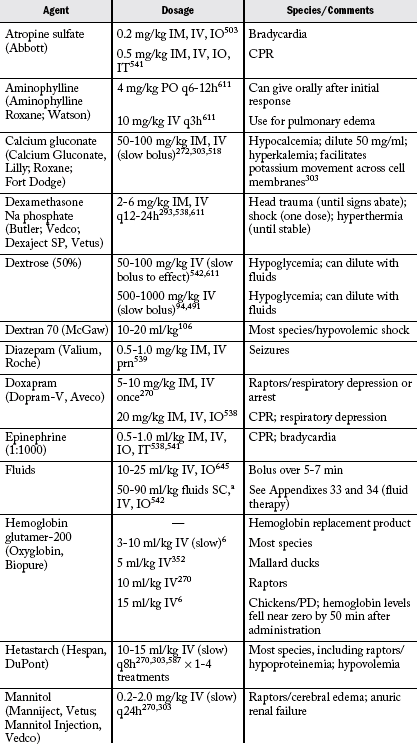
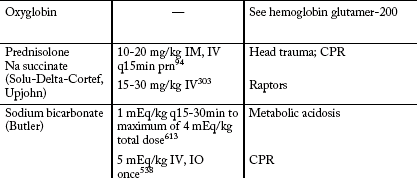
aBecause of the presence of peripheral vasoconstriction, subcutaneous administration is not adequate for patients in shock.
TABLE 35
Euthanasia agents used in birds.a
| Agent | Dosage | Species/Comments |
| Carbon dioxide (CO2) | 70%553 | Most species/danger to person administering gas; compressed gas is the only recommended source15 |
| Carbon monoxide (CO) | Minimum 6% concentration in a closed container553 | Most species/unconsciousness occurs rapidly; inexpensive421; danger to person administering gas; compressed gas recommended |
| Halothane (Halothane, Rhône Meriéux; Fluothane, Fort Dodge) | Saturated cotton ball in closed container or face mask481,553 | Most species/very rapid induction; wing flapping and vocalizing may occur |
| Isoflurane (Aerrane, Anaquest) | Saturated cotton ball in closed container or face mask481,553 | Most species/very rapid induction; wing flapping and vocalizing may occur |
| Methoxyflurane (Metofane, Schering) | Saturated cotton ball in closed container or face mask481,553 | Most species/induction may be slower than with halothane or isoflurane |
| Pentobarbital sodium (Beuthanasia-D solution, Schering) | 0.2–1.0 ml/kg IV, ICe476,538 | Most species/birds may react unpredictably with IV administration; ICe administration is smooth, quiet |
| Potassium chloride | 1–2 mmol/kg15 | Must be provided in conjunction with prior general anesthesia |
aThe American Veterinary Medical Association accepts inhalant anesthetic overdose, carbon monoxide, carbon dioxide, and barbiturate overdose as humane euthanasia methods.553 Cervical dislocation and decapitation are conditionally acceptable for research and poultry. Pithing should be used as an adjunctive procedure to ensure death in an animal already rendered unconscious by another method.15
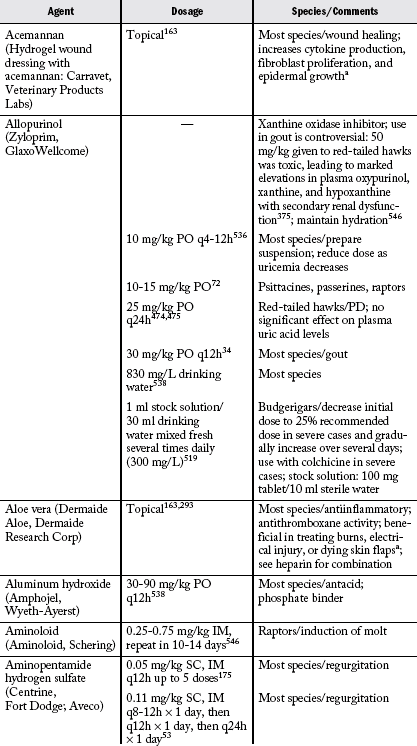
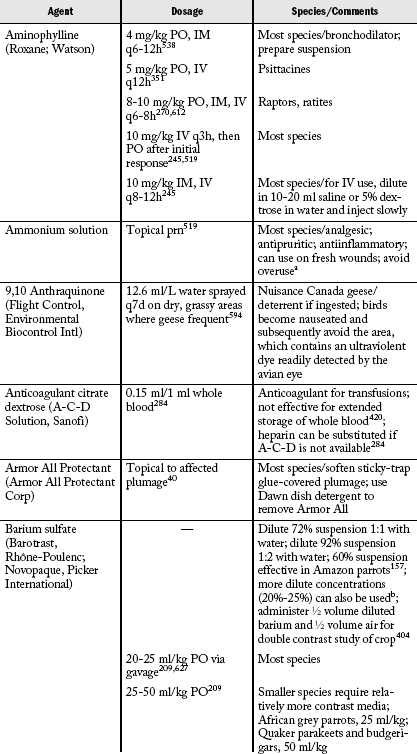
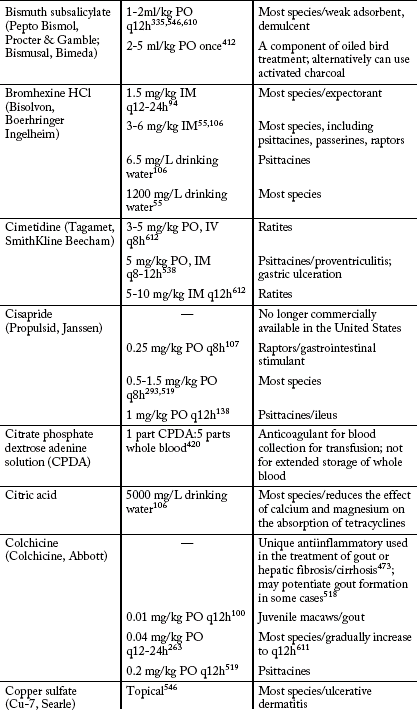
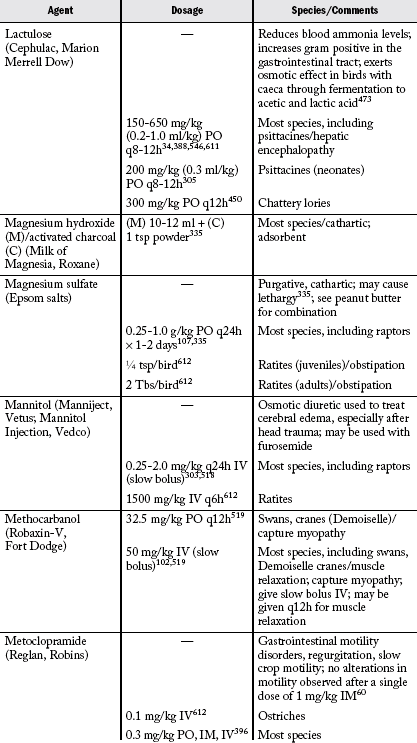
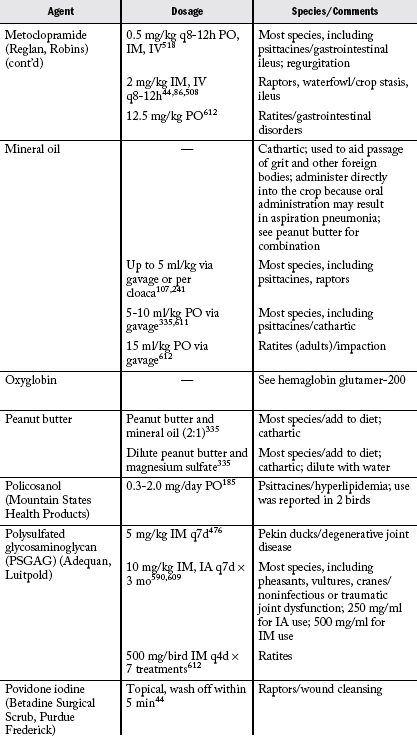
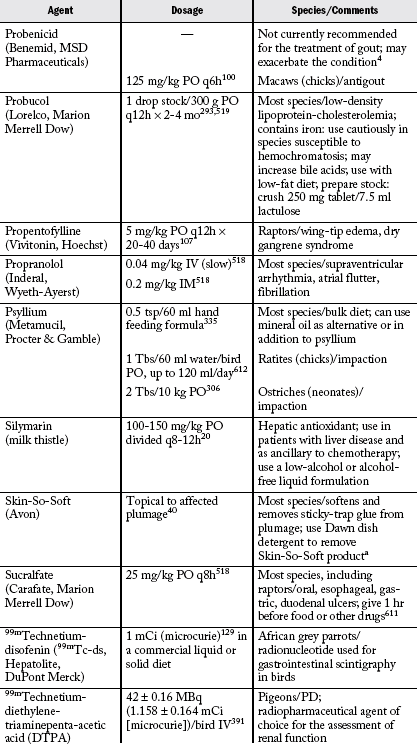
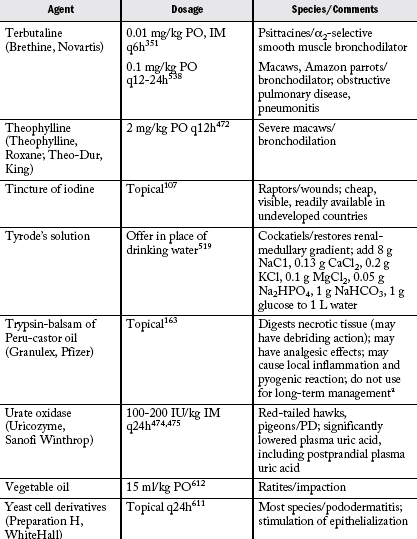
aMany topical agents contain oils that adhere to plumage. These agents should be used sparingly and generally in nonfeathered regions to prevent losing the insulative properties of the plumage.
bSander JE. Personal communication. 1996.
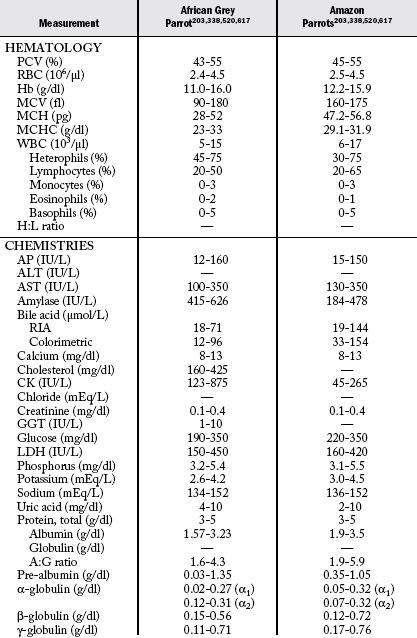
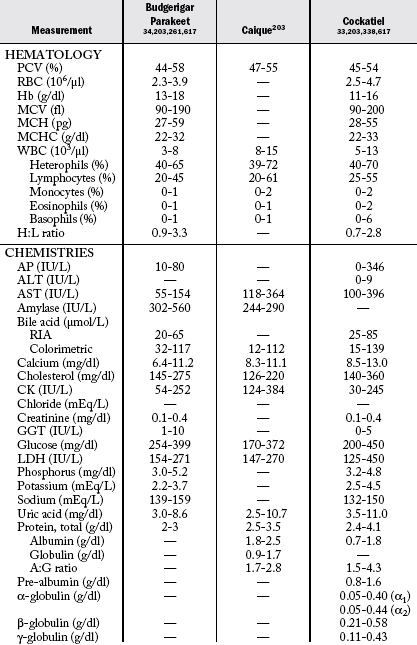
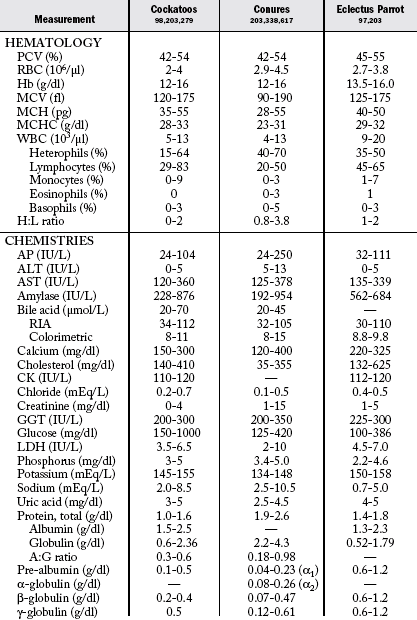
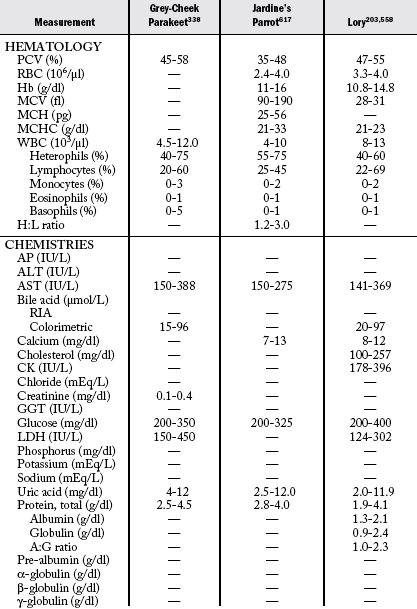
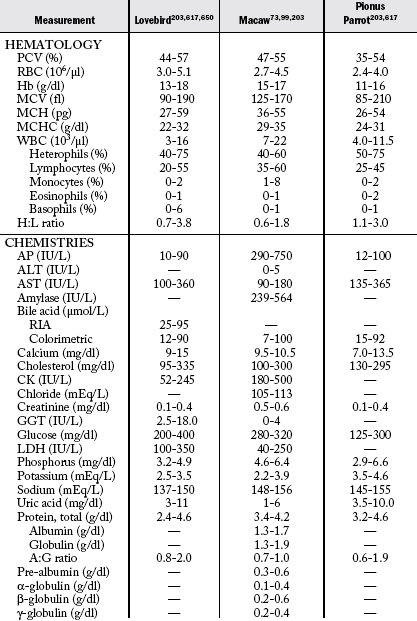
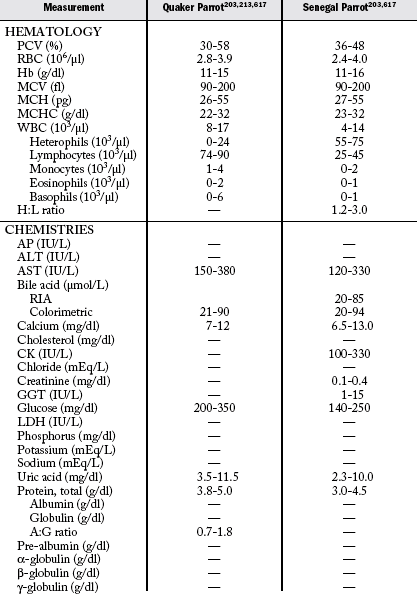
aHematologically, the psittacines are a very homogenous group, only small differences are appreciated between species.479
APPENDIX 17
Hematologic and serum biochemical values for juveniles of selected psittacines.
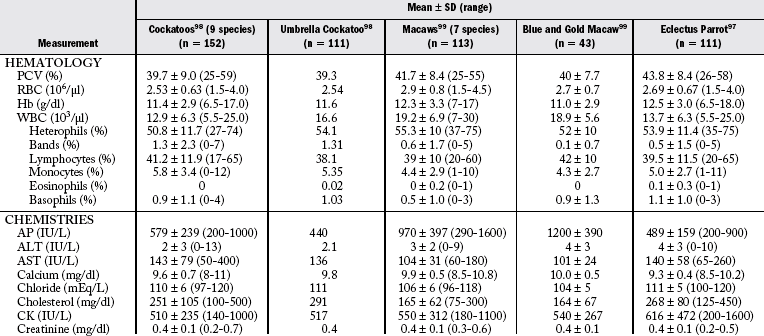
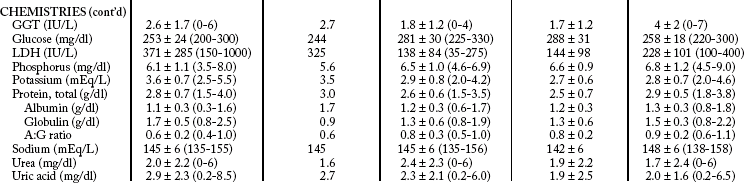
n, Number of blood samples (multiple blood samples were obtained from some individuals over time).
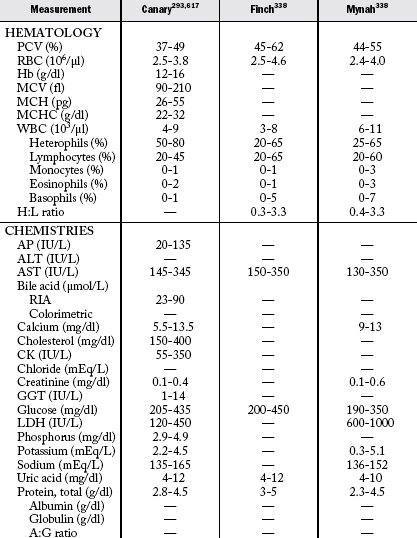
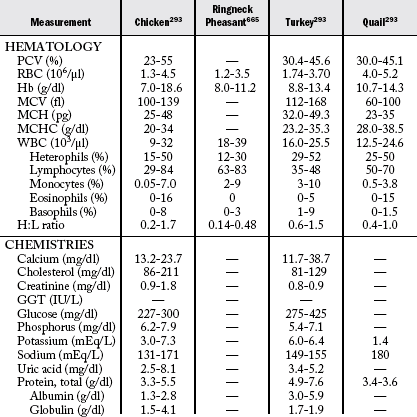
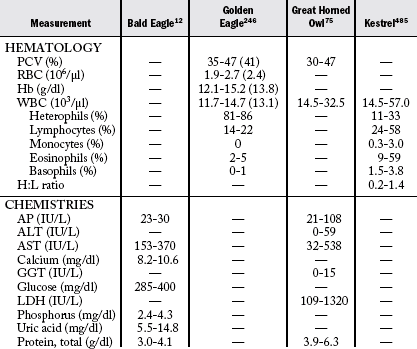
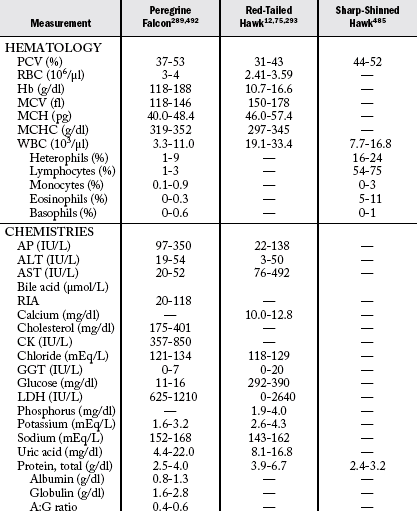
APPENDIX 20
Hematologic and serum biochemical values of selected Anseriformes (waterfowl) and Columbiformes.
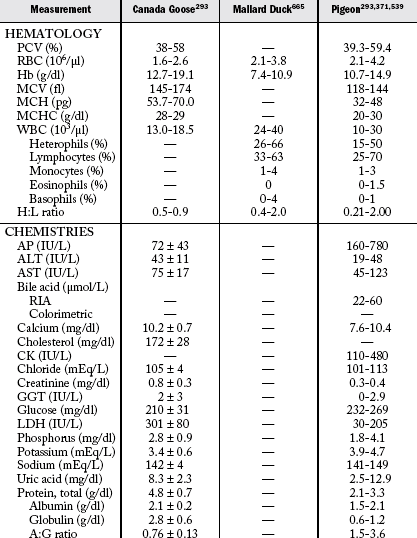
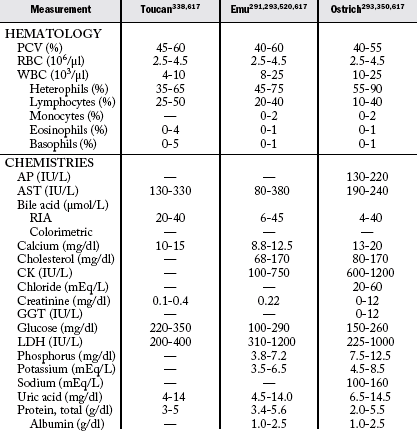
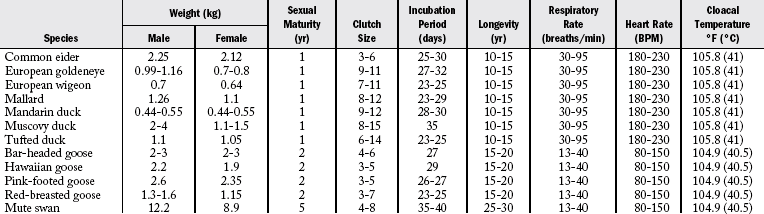
APPENDIX 23
Biologic and physiologic values of selected avian species.a,10,24,98,99,137,194,195,241,243,293,323,432,525,588,629
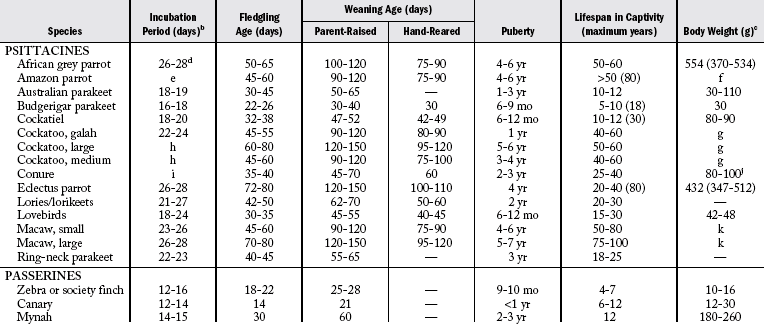

aGuidelines only. Data vary between references.
bBrotogeris parakeets, 22; Psittacula parakeets, 23–26; Quaker parakeet, 23; Pionus parrot, 25–26; Senegal parrot, 24–25.
cPrincess of Wales parakeet, 108 (102–129); kakariki parakeet, 56 (35–43); red-rumped parakeet, 65 (62–69); Bourke’s parakeet, 40 (35–43).
dCongo, 28; Timneh, 26.
eYellow-naped, yellow-fronted, yellow-crowned, double yellow-headed, 28–29; green-cheeked, blue-fronted, 26; spectacled (white-fronted), 24.
fBlue-crowned, 740 (618–998); blue-fronted, 432 (361–485); Mexican red-headed, 360 (343–377); yellow-naped, 596 (476–795); double yellow-headed, 568 (463–694).
gBare-eyed, 331; greater sulphur-crested, 806; Leadbeater’s (Major Mitchell’s), 423 (381–474); lesser sulphur-crested, 303; Moluccan, 808; rose-breasted, 299; triton, 559; umbrella, 552.
hBare-eyed, 23–24; citron-crested, 25–26; greater sulphur-crested, 27–28; Leadbeater’s, 26; lesser sulphur-crested, 24–25; Moluccan, 28–29; palm, 28–30; triton, 27–28; umbrella, 28.
iNanday, 21–23 (25); Patagonian, 24–25; sun, 27–28; blue-crowned, 23–24; orange-fronted, 30.
jQueen of Bavaria, 262 (252–276).
kScarlet, 1103; blue and gold, 1021; green-winged, 1179; military, 788; hyacinth, 1355 (1197–1466); red-fronted, 458.
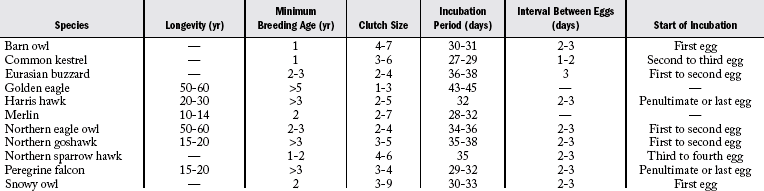
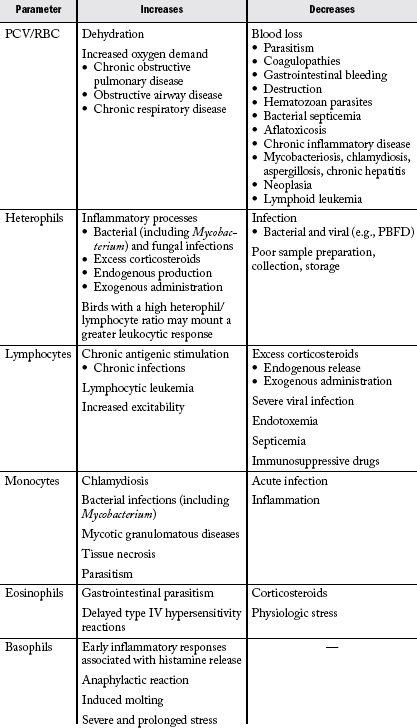
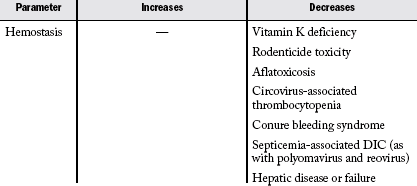
APPENDIX 27
Quick reference to abnormalities of the standard avian biochemical profile.a,202,241,301,373
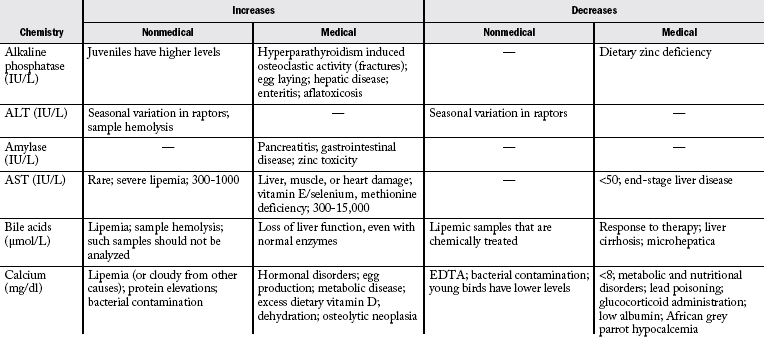
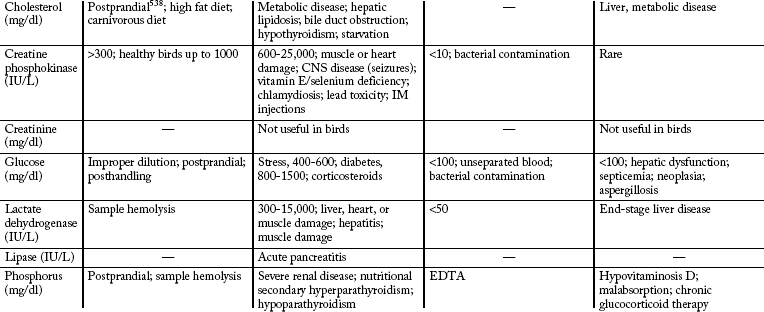
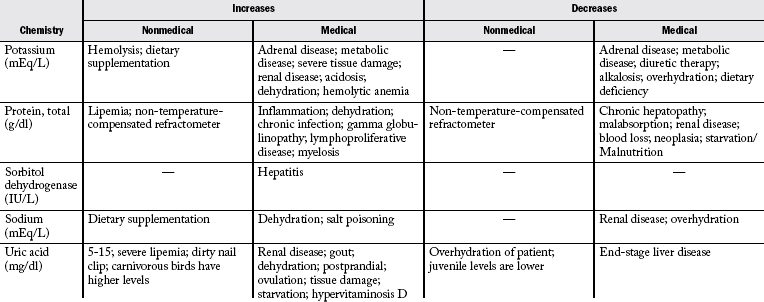
aThe ranges given are not absolute and are to be used as a guide for interpretation of a wide range of avian species.
APPENDIX 28
Approximate resting respiratory rates of selected avian species and by weight.107,194,541
| Species | Respiratory Rate (breaths/min)a |
| Finch | 90–110 |
| Canary | 60–80 |
| Budgerigar | 60–75 |
| Lovebird | 50–60 |
| Cockatiel | 40–50 |
| Small conure | 40–50 |
| Large conure | 30–45 |
| Toucan | 15–45 |
| Amazon parrot | 15–45 |
| Cockatoo | 15–40 |
| Macaw | 20–25 |
| Raptor | 10–20 |
| Weight (g) | Respiratory Rate (breaths/min)a |
| 100 | 40–52 |
| 200 | 35–50 |
| 300 | 30–45 |
| 400 | 25–30 |
| 500 | 20–30 |
| 1000 | 15–20 |
aRestraint can increase respiratory rate 1.5–2× resting rate.
APPENDIX 29
T4 values of selected avian species.a,293,365,371,617,659
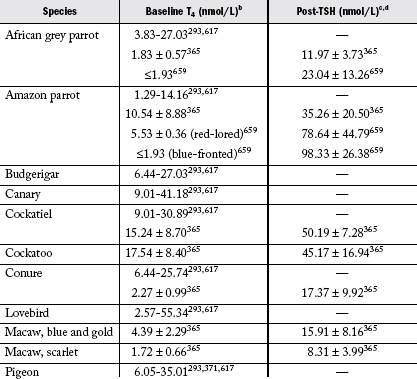
a0.5 μg/dl = 6.5 nmol/L = 5.0 ng/ml219 To convert thyroxine from μg/dl to nmol/L multiply by 12.87.371
bT4 levels will vary with the time of day and year with higher levels measured in the winter. Physiologic states such as molting or reproductive activity may also alter the ratio of T4 to T3 released. The half-life of thyroid hormones is much shorter in birds than in mammals, therefore it is difficult to accurately measure single hormone levels.406
cThe canine radioimmunoassay kit does not accurately measure total T4 below 6.5 nmol/L.219 Results of high sensitivity total T4 testing in parrots ranged from 2.0–6.0 nmol/L. This high sensitivity test is available through the University of Tennessee Clinical Endocrinology Laboratory (865–974–5638).218
dLow-dose TSH (0.2 IU/kg).
APPENDIX 30
Urinalysis values in psittacines.62,206,469
| Measurement | Normal Values | Comments |
| Specific gravity (g/ml) | 1.005–1.020 | — |
| pH | 6.5–8.0 | Laying hens and carnivorous birds may have more acidic urine; cloacal contents may alter urine pH |
| Protein | Negative to trace | — |
| Glucose | Negative to trace | — |
| Ketones | Negative | Ketonuria is sometimes present in migratory birds |
| Bilirubin | Negative | — |
| Urobilinogen | Negative | — |
APPENDIX 31
Applanation tonometry data for selected raptors.585
| Species (n) | Intraocular Pressure (mm Hg) |
| Red-tailed hawk (10) | 20.6 (±3.4) |
| Swainson’s hawk (6) | 20.8 (±2.3) |
| Golden eagle (7) | 21.5 (±3.0) |
| Bald eagle (3) | 20.6 (±2.0) |
| Great horned owl (6) | 10.8 (±3.6) |
APPENDIX 34
Routes of administration and maximum suggested volumes of fluids that can be administered to psittacines.240,506,581
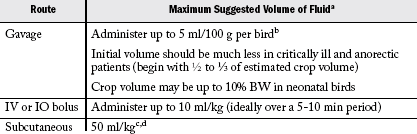
aCombinations of routes (PO, SC, and IO/IV) are recommended if large fluid volumes are administered.
bCrop volume may be estimated at 5% BW.
cVolumes of 10–15 ml/kg may be comfortably given per subcutaneous injection site, although up to 25 ml/kg per site may be given. Overdistension of the area may compromise blood supply to the area and reduce absorption.581
dHyaluronidase (Wydase, Wyeth-Ayerst) (1 ml [150 IU]/L fluids) may be used in most species to increase the absorption rate of fluids.303
APPENDIX 35
Suggested initial to maximum volumes and frequency of gavage feeding in anorectic birds.491,541
| Species | Volume (ml)a,b | Frequencya |
| Finch | 0.1–0.5 | q4h |
| Budgerigar | 0.5–3.0 | q6h |
| Lovebird | 1–3 | q6h |
| Cockatiel | 1–8 | q6h |
| Small conure | 3–12 | q6h |
| Large conure | 7–24 | q6–8h |
| Amazon parrot | 5–35 | q8h |
| Cockatoo | 10–40 | q8–12h |
| Macaw | 20–60 | q8–12h |
aAdjust volume and frequency as crop accommodates larger volumes.
bGenerally 3%-5% of body weight.239
APPENDIX 36
Suggested feeding requirements of a bird in relation to its body weight.508
| Body Weight (g) | Percentage of Body Weight Required Daily |
| 100–200 | 18–25 |
| 201–800 | 11–19 |
| 801–1200 | 7–11 |
| 4,000–10,000 | 3.5–6.0 |
APPENDIX 37 Calculation of enteral feeding requirements for birds.
Please see Appendix 107 regarding calculation of basal metabolic rate (BMR) and maintenance energy requirement (MER). Caloric values for the three food types are:
| Protein | 4.29 kcal/g |
| Carbohydrate | 4.09 kcal/g |
| Fat | 9.29 kcal/g |
Animals are unable to fully use all the calories in these nutrients, but efficiency is estimated between 80%-90% depending on the type of nutrition. Commercial enteral solutions are estimated to have a digestibility of 95%. Some commercially available enteral products are listed below. Each product has varying levels of protein, carbohydrate, fat, and water. Other food sources can be used as long as nutrient levels and digestibility can be determined. Following is an example of a calculation of nutrient requirements based on BMR.
Example: A 250-g lilac-crowned Amazon parrot is debilitated and not eating because of a bacterial infection.
(nonpasserines, 78; passerines, 129)
• An adjustment for sepsis is made by multiplying by 1.5 (see Appendix 107):
• Isocal HCN (2 kcal/ml) is selected as the nutrient source:
• The average Amazon parrot can be gavaged 2.5% of its body weight:
• Therefore, 31 ml/day of Isocal HCN can be administered by gavage feedings of 6.25 ml q5h. However, this volume may need to be reduced initially depending on the bird’s degree of debilitation.
• Refer to Appendixes 34–36 for suggested volumes and frequency of gavage feeding in anorectic birds.
• Nutrient values for selected nutritional products324,486
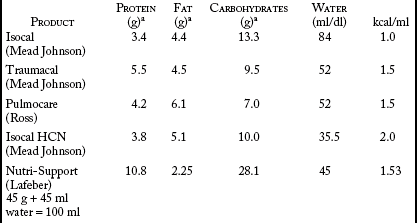
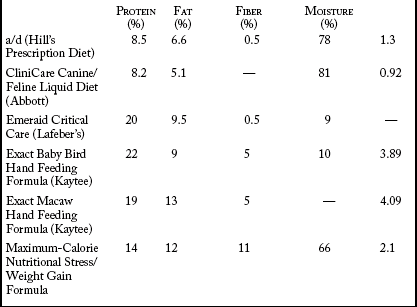
aNutrients per 100 kcal energy.
APPENDIX 40 Selected nutritional recommendations for waterfowl, raptors, and hummingbirds.
Geese are browsers; domestic ducks feed on mixed grains and forage. Avoid grains in goslings for the first 4 wk of life. Grit and oyster should be fed ad libitum. Piscivorous birds require higher protein and can be offered trout chow and fish.
RAPTORS (FOR DEBILITATED BIRDS)301
• Rehydrate: see Appendixes 33 and 34 (fluid therapy)
• Oral supplementation (Ultracal, Meade Johnson) (55 ml/kg/day)
• Ground whole quail (less feet, feathers, gastrointestinal tract)
• Small amounts of quail breast meat soaked with oral electrolytes
• Whole prey after establishing normal gastrointestinal time
• Stomach capacity is approximately 40 ml/kg508
HUMMINGBIRD DIET638
 tsp Superpreen vitamins (RHB Laboratories)
In captivity, sugar water alone is not sufficient to sustain hummingbirds:
• Insects (e.g., Drosophila fruit fly) may be released into the enclosure.456
• Human protein dietary supplement may also be provided (1 envelope of Gevral Protein [Ledderly Labs]/5 L sugar solution) or ensure that commercial products contain adequate protein.
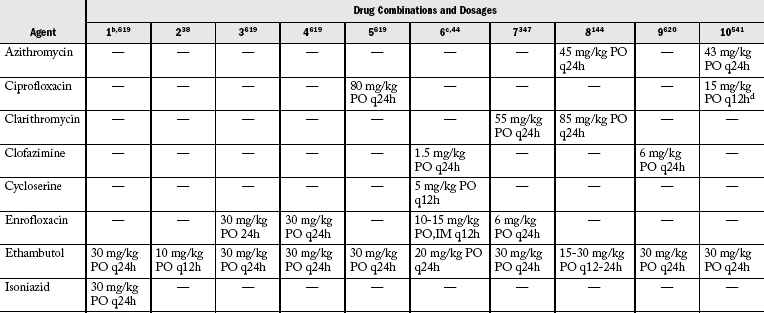

aBecause of its zoonotic potential, controversy exists on whether to treat pet and aviary birds for Mycobacterium avium. Because M. avium isolates from birds differ from human isolates in antibiotic susceptibility, serovars, and genetic sequencing, pet birds are an unlikely source of M. avium in people (except immunosuppressed individuals). Nevertheless, veterinarians who treat birds with this disease do so at their own risk. The veterinarian should be aware that treatment is often lifelong for the bird, and that treatment does not necessarily prevent shedding.38,44,144,347,541,619
bMix into dextrose powder, mixed with a small amount of food.
cRecommended for use in raptors.
dEnrofloxacin (15 mg/kg PO q12), clofazimine (6 mg/kg PO q12h), or amikacin IM, IV can be used in lieu of ciprofloxacin with ethambutol, rifabutin, and azithromycin.
APPENDIX 44
Cardiopulmonary resuscitation in birds.a
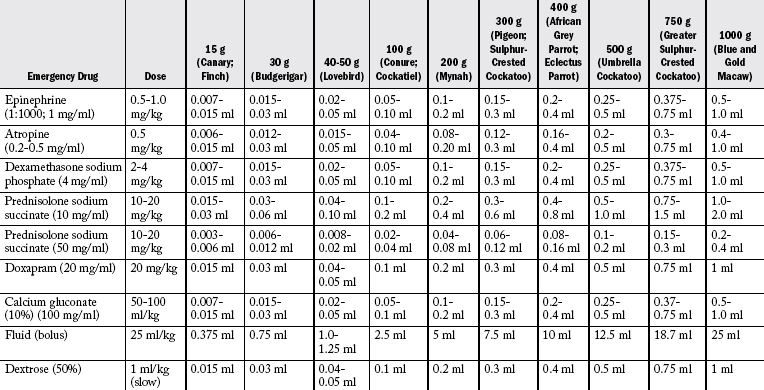

aDose in ml/kg body weight, IV, IO, or IM. If weight is not available, base CPR on approximate weight of species closest in size.
APPENDIX 45
Disinfectants and antiseptics.a–d,85,434,543
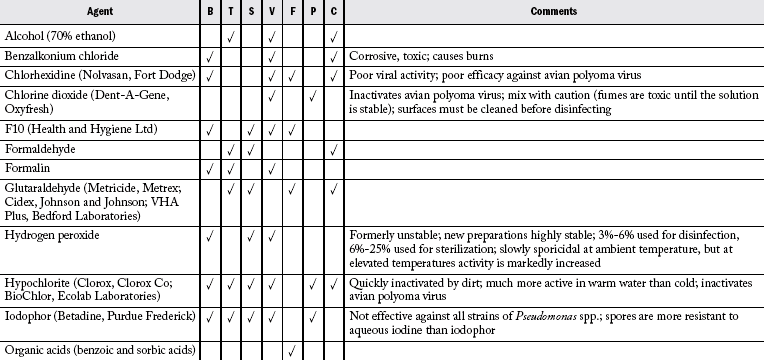
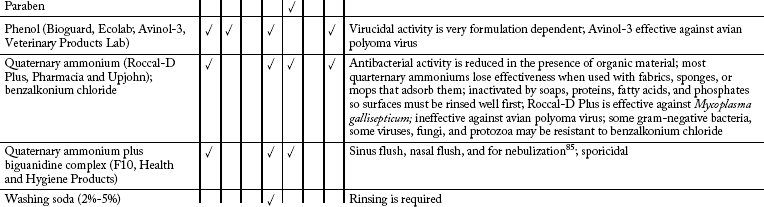
B, Bactericidal; T, tuberculocidal; S, sporicidal; V, virucidal; F, fungicidal; P, protozoa; C, chlamydophilocidal.
aMany of the disinfectants are inactivated by organic material such as dirt or droppings.
bFungi are more resistant than non spore-forming bacteria (except mycobacteria); fungi are more susceptible than bacterial spores.
cFactors contributing to failure of disinfection programs include (1) disinfectant-related (selection ineffective, disinfectant too dilute, insufficient contact time, temperature too low, relative humidity too low for gaseous disinfectants)543 and (2) environmental factors (presence of organic matter, inactivation of quarternary ammonium compounds and biguanides by residual soaps and detergents, incorrect application, inadequate penetration and coverage, interference with quarternary ammonium compounds and biguanides by synthetic materials and plastics).
dDo not forget the importance of using hot water when disinfecting.
APPENDIX 46
Vaccines used in birds (nonpoultry).74,83,236,296,315,377,394,417,448,516,522,530,611,651
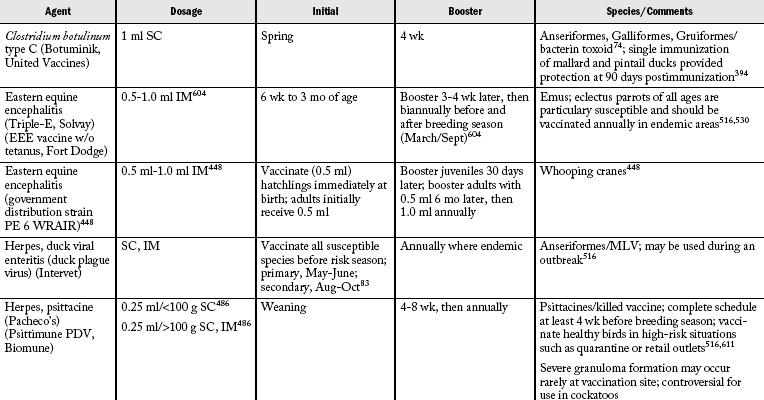
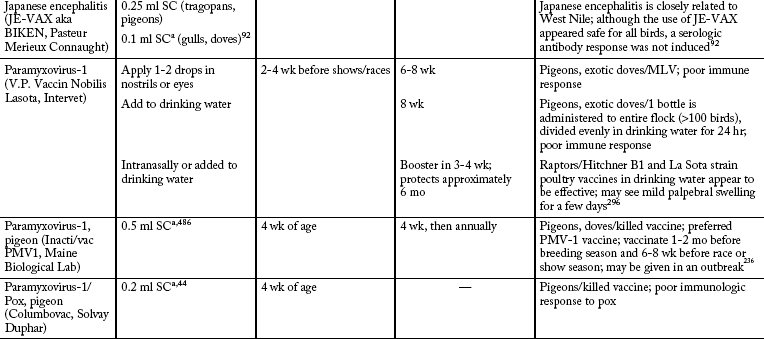
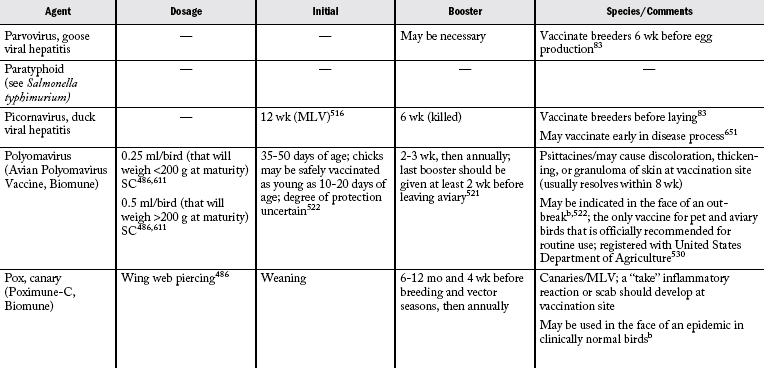
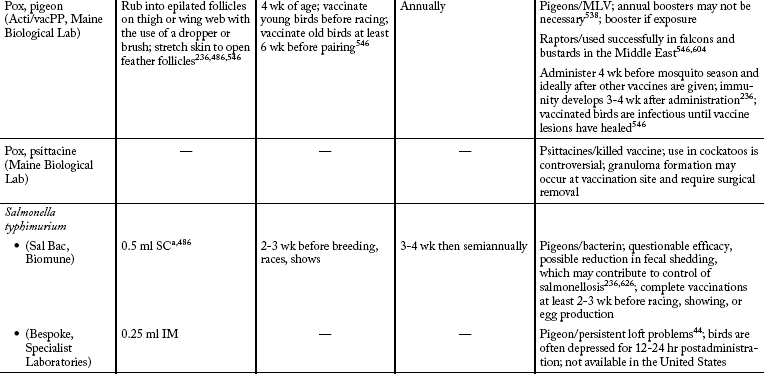
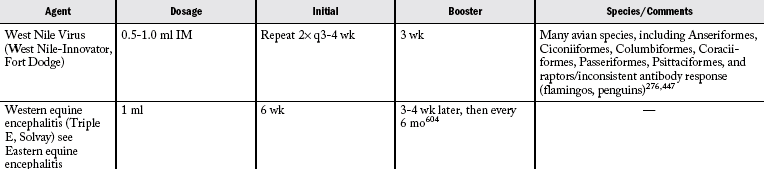
aChoose subcutaneous injection site carefully in pigeons to avoid bleeding; cranial to thigh or lower third of neck on dorsal midline.236,628
bVaccinating birds during an outbreak may allow humans to theoretically serve as mechanical vectors.516
APPENDIX 47 Literature cited—birds.
1. Aarons, J. First aid and wound management in the ostrich. Proc Annu Conf Assoc Avian Vet. 1995:201–208.
2. Aarons, JE. Adverse effects of high environmental temperature on ostrich chicks. Proc Annu Conf Assoc Avian Vet. 1996:153–158.
3. Aarons, JE. Assessing the down bird. Proc Annu Conf Assoc Avian Vet. 1997:175–179.
4. Abernathy DR, Arnold GJ, Azarnoff DL, et al, eds. Mosby’s Drug Consult. St. Louis: Mosby, 2003.
5. Abou-Madi, N. Avian anesthesia. Vet Clin North Am: Exotic Animal Pract. 2001;4:147–167.
6. Abou-Madi, N, Garner, M, Kollias, GV, et al. The use of Oxyglobin® in birds: preliminary pharmacokinetics and effects on selected blood parameters and tissues. Proc Annu Conf Am Assoc Zoo Vet, Am Assoc Wildl Vet, Assoc Rept Amph Vet, Nat Assoc Zoo Wildl Vet. 2001:77–79.
7. Abrams, GA, Paul-Murphy, J, Murphy, CJ. Conjunctivitis in birds. Vet Clin North Am: Exotic Anim Pract. 2002;5:287–309.
8. Aguilar, RF, Redig, PT. Diagnosis and treatment of avian aspergillosis. In: Bonagura JD, ed. Kirk’s Current Veterinary Therapy XII: Small Animal Practice. Philadelphia: WB Saunders; 1995:1294–1299.
9. Aiello SE, Mays A, eds. The Merck Veterinary Manual, ed 8, Whitehouse Station, NJ: Merck, 1998.
10. Alderton, D. A Birdkeeper’s Guide to Pet Birds. Morris Plains, NJ: Tetra Press, 1987.
11. Allen DG, Pringle JK, Smith DA, et al, eds. Handbook of Veterinary Drugs. ed 2. Philadelphia: JB Lippincott; 1998:749–842.
12. Allen, J. Avian clinical chemistries. In: Jacobson ER, Kollias GV, Jr., eds. Exotic Animals. New York: Churchill Livingstone; 1988:143–157.
13. Allen, JL, Oosterhuis, JE. Effect of tolazoline on xylazine-ketamine-induced anesthesia in turkey vultures. J Am Vet Med Assoc. 1986;189:1011–1012.
14. Alvarez Maldonado, MVZ, Reporte Preeliminar: Digitalizacion en pollos de engorda como metodo preventivo en el sindrome ascitico. Proc 35th Western Poultry Disease Conf. 1986:4–6.
15. American Veterinary Medical Association Panel on Euthanasia. Report of the AVMA Panel on Euthanasia. J Am Vet Med Assoc. 2001;218:669–696.
16. Anadón, A, Bringas, P, Martinez-Larrañaga, MR, et al. Bioavailability, pharmacokinetics and residues of chloramphenicol in the chicken. J Vet Pharmacol Ther. 1994;17:52–58.
17. Anadón, A, Martinez-Larrañaga, MR, Diaz, MJ, et al. Pharmacokinetics and residues of enrofloxacin in chickens. Am J Vet Res. 1995;56:501–506.
18. Anadón, A, Martínez-Larrañaga, MR, Díaz, MJ, et al. Pharmacokinetic characteristics and tissue residues for marbofloxacin and its metabolite N-desmethyl-marbofloxacin in broiler chickens. Am J Vet Res. 2002;63:927–933.
19. Anadón, A, Martinez-Larrañaga, MR, Velez, C, et al. Pharmacokinetics and residues of enrofloxacin in chickens. Am J Vet Res. 1992;53:2084–2089.
20. Antinoff, N. Improving oncologic diagnostics and therapeutics. Proc Annu Conf Assoc Avian Vet. 2001:369–381.
21. Antinoff N. Personal communication. 2004.
22. Ashworth, CD, Nelson, DR. Antimicrobial potentiation of irrigation solutions containing tris-[hydroxymethyl] aminomethane-EDTA. J Am Vet Med Assoc. 1990;197:1513–1514.
23. Austic, RE, Scott, ML. Nutritional diseases. In: Calnek BW, ed. Diseases of Poultry. ed 10. Ames, IA: Iowa State University; 1997:47–73.
24. Axelson, RD. Caring for Your Pet Bird. Toronto: Canaviax, 1981.
25. Axelson, RD. Avian dermatology. In: Hoefer HL, ed. Practical Avian Medicine: The Compendium Collection. Trenton, NJ: Veterinary Learning Systems; 1997:186–195.
26. Baert, K, de Backer, P. Disposition of sodium salicylate, flunixin, and meloxicam after intravenous administration in broiler chickens. J Vet Pharmacol Ther. 2002;25:449–453.
27. Baert, K, de Backer, P. Comparative pharmacokinetics of three non-steroidal anti-inflammatory drugs in five bird species. Comp Biochem Physiol C Toxicol Pharmacol. 2003;134:25–33.
28. Baert, K, Nackaerts, J, de Backer, P. Disposition of sodium salicylate, flunixin, and meloxicam after intravenous administration in ostriches (Struthio camelus). J Avian Med Surg. 2002;16:123–128.
29. Baert, L, Van Poucke, S, Vermeersch, H, et al. Pharmacokinetics and anthelmintic efficacy of febantel in the racing pigeon (Columba livia). J Vet Pharmacol Ther. 1993;16:223–231.
30. Bailey, J, Heard, D, Schumacher, J, et al. Midazolam, butorphanol, ketamine, and the clinically effective dose of isoflurane anesthesia in ostriches (Struthio camelus). 25th Annu Meet Am Coll Vet Anesthesiol. 2000:38.
31. Bailey, TA, Sheen, RS, Samour, JH, et al. Pharmacokinetics of enrofloxacin after intravenous, intramuscular and oral administration to houbara bustards (Chlamydotis undulata macqueenii). J Vet Pharmacol Ther. 1997;20(suppl 1):204–205.
32. Baillie, JW. Alternative therapy ideas for feather picking. Proc Annu Conf Assoc Avian Vet. 2001:191–196.
33. Battison, AL, Buckzowski, S, Archer, FJ. Plasma bile acid concentration in the cockatiel. Can Vet J. 1996;37:233–234.
34. Bauck, L. A Practitioner’s Guide to Avian Medicine. Lakewood, CO: American Animal Hospital Association, 1993.
35. Bauck, L. Nutritional problems in pet birds. Semin Avian Exotic Pet Med. 1995;4:3–8.
36. Bauck, L, Brash, M. Survey of diseases of the Lady Gouldian finch. Proc Annu Conf Assoc Avian Vet. 1999:204–212.
37. Bauck, L, Hillyer, E, Hoefer, H. Rhinitis: case reports. Proc Annu Conf Assoc Avian Vet. 1992:134–139.
38. Bauck, L, Hoefer, HL. Avian antimicrobial therapy. Semin Avian Exotic Pet Med. 1993;2:17–22.
39. Belant, JL, Seamans, TW. Comparison of three formulations of alpha-chloralose for immobilization of Canada geese. J Wildl Dis. 1997;33:606–610.
40. Bennett, RA, Common avian emergencies. Proc 5th Annu Internat Vet Emer Critical Care Symp. 1996:698–703.
41. Bennett, RA. Medical and surgical management of avian reproductive disorders. Proc Mid-Atlantic States Assoc Avian Vet Conf. 1997:40–44.
42. Bernard, JB, Allen, ME. Feeding captive piscivorous animals: nutritional aspects of fish as food. In: Nutritional Advisory Group Handbook. MD: Silver Springs; 1997:1–11.
43. Best, R. Breeding problems. In: Beynon PH, Forbes NA, Lawton MPC, eds. BSAVA Manual of Raptors, Pigeons and Waterfowl. Ames, IA: IA State University; 1996:202–215.
44. Beynon, PH, Forbes, NA, Harcourt-Brown, NH. Manual of Raptors, Pigeons and Waterfowl. Ames, IA: Iowa State University, 1996.
45. Beynon, PH, Forbes, NA, Lawton, MPC. Manual of Psittacine Birds. Ames, IA: Iowa State University, 1996.
46. Bicknese, EJ. Review of avian sarcocystis. Proc Annu Conf Assoc Avian Vet. 1993:52–58.
47. Bird, JE, Miller, KW, Larson, AA, et al. Pharmacokinetics of gentamicin in birds of prey. Am J Vet Res. 1983;44:1245–1247.
48. Bird, JE, Walser, MM, Duke, GE. Toxicity of gentamicin in red-tailed hawks (Buteo jamaicensis). Am J Vet Res. 1983;44:1289–1293.
49. Bishop Y, ed. The Veterinary Formulary, ed 5, London: Pharmaceutical Press, 2001.
50. Black, WD. A study of the pharmacodynamics of oxytetracycline in the chicken. Poult Sci. 1977;56:1430–1434.
51. Bloomfield, RB, Brooks, D, Vulliet, R. The pharmacokinetics of a single intramuscular dose of amikacin in red-tailed hawks (Buteo jamaicensis). J Zoo Wildl Med. 1997;28:55–61.
52. Bonar, CJ, Lewandowski, AH, Schaul, J. Suspected fenbendazole toxicosis in 2 vulture species (Gyps africanus, Torgos tracheliotus) and Marabou storks (Leptoptilos crumeniferus). J Avian Med Surg. 2003;17:16–19.
53. Bond, MW. IME-Medication for vomiting psittacines. J Assoc Avian Vet. 1993;7:102.
54. Booth, NH. Toxicology of drug and chemical residues. In: Booth NH, McDonald LE, eds. Veterinary Pharmacology and Therapeutics. ed 6. Ames, IA: Iowa State University; 1988:1167–1179.
55. Boothe, DM. Drugs affecting the respiratory system. Vet Clin North Am: Exotic Anim Pract. 2000;3:371–394.
56. Boothe, DM. Drugs that modify animal behavior. In: Boothe DM, ed. Small Animal Clinical Pharmacology and Therapeutics. Philadelphia: WB Saunders; 2001:457–472.
57. Bossche, HV, Engelen, M, Rochette, F. Antifungal agents of use in animal health—chemical, biochemical and pharmacological aspects. J Vet Pharmacol Ther. 2003;26:5–29.
58. Bowles, HL. Diagnosis and management of female avian reproductive diseases. Proc Annu Conf Assoc Avian Vet. 2001:349–357.
59. Bowles, HL. Management with potassium bromide of seizures of undetermined origin in an Umbrella Cockatoo. Exotic DVM. 2003;5:7–8.
60. Bowman, MR, Paré, JA, Ziegler, LE, et al. Effects of metoclopramide on the gastrointestinal tract motility of Hispaniolan parrots (Amazona ventralis). Proc Annu Conf Am Assoc Zoo Vet. 2002:117–118.
61. Bowman, MR, Waldoch, J, Pittman, JM, et al. Enrofloxacin plasma concentrations in sandhill cranes (Grus canadensis) after administration in drinking water: a preliminary study. Proc Annu Conf Am Assoc Zoo Vet. 2002:389–390.
62. Braun, EJ. Comparative renal function in reptiles, birds, and mammals. Semin Avian Exotic Pet Med. 1998;7:62–71.
63. Breadner, S. Chronic Nocardia infection in a hyacinth macaw. Proc Annu Conf Assoc Avian Vet. 1994:283–285.
64. Brooks, DE. Avian cataracts. Semin Avian Exotic Pet Med. 1997;6:131–137.
65. Brown, MJ, Cromie, RL. Weight loss and enteritis. In: Beynon PH, Forbes NA, Harcourt-Brown NH, eds. Manual of Raptors, Pigeons and Waterfowl. Ames, IA: Iowa State University; 1996:322–329.
66. von Bruch, J, Aufinger, P, Jakoby, JR. Untersuchungen zur pharmakokinetik und wirkung von intramuskulár, oral und über das trinkwasser verabreichtem sulfadimethoxine an gesunden und kokzidien-infizierten, adulten tauben (Columba livia Gmel., 1789, var. dom.). (Pharmacokinetics and efficacy of sulfadimethoxine in healthy and coccidia-infected adult pigeons). Vet Bull. 1986;56:7830.
67. Burke, TJ. Antibiotic therapy in pet birds and reptiles. In Weber AJ, Grey S, Townsend K, et al, eds.: Veterinary Pharmaceuticals and Biologicals, ed 5, Lenexa, KS: Veterinary Medicine, 1986.
68. Burns, RB, Birrenkott, GP. Half-life of dexamethasone and its effect on plasma corticosterone in raptors. Proc Am Assoc Zoo Vet. 1988:12–13.
69. Bush, M, Locke, D, Neal, LA, et al. Gentamicin tissue concentration in various avian species following recommended dosage therapy. Am J Vet Res. 1981;42:2114–2116.
70. Bush, M, Locke, D, Neal, LA, et al. Pharmacokinetics of cephalothin and cephalexin in selected avian species. Am J Vet Res. 1981;42:1014–1017.
71. Bush, M, Neal, LA, Custer, RS. Preliminary pharmacokinetic studies of selected antibiotics in birds. Proc Annu Conf Assoc Avian Vet. 1979:5–47.
72. Byrne, RF, Davis, C, Lister, SA, et al. Prescribing for birds. In: Bishop Y, ed. The Veterinary Formulary. ed 5. London: Pharmaceutical Press; 2001:43–56.
73. Calle, PP, Stewart, CA. Hematologic and serum chemistry values of captive hyacinth macaws (Anodorhynchus hyacinthinus). J Zoo Anim Med. 1987;18:98–99.
74. Cambre, RC, Kenny, D. Vaccination of zoo birds against avian botulism with mink botulism vaccine. Proc Annu Conf Am Assoc Zoo Vet. 1993:383–385.
75. Campbell, TW. Biochemical evaluation of blood for the detection of hepatic disease in birds. Manhattan, KS: Kansas State University, 1987. [PhD dissertation].
76. Canny, CJ, Ward, DA, Patton, S, et al. Microsporidian keratoconjunctivitis in a double yellow-headed Amazon parrot (Amazona ochrocephala oratrix). J Avian Med Surg. 1999;13:279–286.
77. Carpenter, JW. Cranes (order Gruiformes). In: Fowler ME, ed. Zoo & Wild Animal Medicine. ed 2. Philadelphia: WB Saunders; 1986:315–326.
78. Carpenter, JW. Infectious and parasitic diseases of cranes. In: Fowler ME, ed. Zoo & Wild Animal Medicine: Current Therapy 3. Philadelphia: WB Saunders; 1993:229–237.
79. Carpenter JW. Personal observation. 2004.
80. Carpenter, JW, Novilla, MN, Hatfield, JS. The safety and physiological effects of the anticoccidial drugs monensin and clazuril in sandhill cranes (Grus canadensis). J Zoo Wildl Med. 1992;23:214–221.
81. Carpenter, JW, Olsen, JH, Henry, H, et al. Pharmacokinetics of marbofloxacin in the blue and gold macaw (Ara ararauna). Proc Annu Conf Am Assoc Zoo Vet. 2003:79.
82. Carpenter, JW, Olsen, JH, Hunter, RP, et al. Pharmacokinetics of azithromycin in the blue and gold macaw. Proc Annu Conf Assoc Avian Vet. 2002:15–16.
83. Carpenter, NA. Anseriform and galliform therapeutics. Vet Clin North Am: Exotic Anim Pract. 2000;3:1–17.
84. Chaleva, EI, Vasileva, IV, Savova, MD. Absorption of lincomycin through the respiratory pathways and its influence on alveolar macrophages after aerosol administration to chickens. Res Vet Sci. 1994;57:245–247.
85. Chitty, J. A novel disinfectant in psittacine respiratory disease. Proc Annu Conf Assoc Avian Vet. 2002:25–27.
86. Chitty, J. Birds of prey. In: Meredith A, Redrobe S, eds. BSAVA Manual of Exotic Pets. Gloucester, England: British Small Animal Veterinary Association; 2002:179–192.
87. Christensen, J, Fosse, RT, Halvorsen, OJ, et al. Comparison of various anesthetic regimens in the domestic fowl. Am J Vet Res. 1987;48:1649–1657.
88. Clark, CH, Thomas, JE, Milton, JL, et al. Plasma concentrations of chloramphenicol in birds. Am J Vet Res. 1982;43:1949.
89. Clarke, CR, Kocan, AA, Webb, AI, et al. Intravenous pharmacokinetics of penicillin G and antipyrine in ostriches and emus. J Zoo Wildl Med. 2001;32:74–77.
90. Cline, DR, Greenwood, RJ. Effect of certain anesthetic agents on mallard ducks. J Am Vet Med Assoc. 1972;161:624–633.
91. Clippinger, TL. Diseases of the lower respiratory tract of companion birds. Semin Avian Exotic Pet Med. 1997;6:201–208.
92. Clippinger, TL, Raphael, BL, Calle, PP, et al. Study of the safety and serologic response of Japanese encephalitis virus vaccine for protection against West Nile virus in avian model species. Proc Annu Conf Am Assoc Zoo Vet, Am Assoc Wildl Vet, Assoc Rept Amph Vet. 2001:48–50.
93. Clubb, SL. Round table discussion: pain management in clinical practice. J Avian Med Surg. 1998;12:276–278.
94. Clubb, SL. Therapeutics. In: Harrison GJ, Harrison LR, eds. Clinical Avian Medicine and Surgery. Philadelphia: WB Saunders; 1986:327–355.
95. Clubb, SL. Birds. In: Johnston DE, ed. The Bristol Veterinary Handbook of Antimicrobial Therapy. ed 2. Trenton, NJ: Veterinary Learning Systems; 1987:188–199.
96. Clubb, SL, Cray, C, Greiner, E, et al. Cryptosporidiosis in a psittacine nursery. Proc Annu Conf Assoc Avian Vet. 1996:177–185.
97. Clubb, SL, Schubot, RM, Joyner, K, et al. Hematologic and serum biochemical reference intervals in juvenile eclectus parrots (Eclectus roratus). J Assoc Avian Vet. 1990;4:218–225.
98. Clubb, SL, Schubot, RM, Joyner, K, et al. Hematologic and serum biochemical reference intervals in juvenile cockatoos. J Assoc Avian Vet. 1991;5:16–26.
99. Clubb, SL, Schubot, RM, Joyner, K, et al. Hematologic and serum biochemical reference intervals in juvenile macaws (Ara sp. sic]). J Assoc Avian Vet. 1991;5:154–162.
100. Clyde, V, Kollias, G. Diet-associated gout in juvenile macaws. Annu Conf Am Assoc Zoo Vet. 1989:90.
101. Clyde, VL, Patton, S. Diagnosis, treatment and control of common parasites in companion and aviary birds. Semin Avian Exotic Pet Med. 1996;5:75–84.
102. Clyde, VL, Paul-Murphy, J. Avian analgesia. In: Fowler ME, Miller RE, eds. Zoo & Wild Animal Medicine: Current Therapy 4. Philadelphia: WB Saunders; 1999:309–314.
103. Cockcroft, PD, Jones, AC, Harris, JM. Antibacterial activity of ceftiofur-impregnated polymethylmethacrylate beads following manufacture, storage and sterilisation. Vet Rec. 2003;152:21–22.
104. Coles, BH. Cage and aviary birds. In: Beynon PH, Cooper JE, eds. Manual of Exotic Pets. Worthing, England: British Small Animal Veterinary Association; 1991:150–179.
105. Coles, BH. Appendix 1: An avian formulary. In Avian Medicine and Surgery, ed 2, Osney Mead, Oxford: Blackwell Science; 1997:240–278.
106. Coles, BH. Prescribing for exotic birds. In: Bishop Y, ed. The Veterinary Formulary. ed 5. London: Pharmaceutical Press; 2001:99–105.
107. Cooper, JE. Appendix IX. Medicines and other agents used in treatment, including emergency anaesthesia kit and avian resuscitation prototcol. In: Cooper JE, ed. Birds of Prey: Health and Disease. ed 3. Iowa State, Ames, IA: Blackwell Publishing; 2002:271–277.
108. Cornelissen, H. Behavior, anatomy, feeding and medical problems of toucans in captivity. Proc Euro Conf Avian Med Surg. 1993:446–453.
109. Cornelissen, H. IME—treatment of common passerine conditions. J Assoc Avian Vet. 1993;7:103.
110. Cornelissen, H, Ducatelle, R, Roels, S. Successful treatment of a channel-billed toucan (Ramphastos vitellinus) with iron storage disease by chelation therapy: sequential monitoring of the iron content of the liver during the treatment period by quantitative chemical and image analyses. J Avian Med Surg. 1995;9:131–137.
111. Cornick, JL. Veterinary Anesthesia. Woburn, MA: Butterworth-Heinemann, 2001;196–198.
112. Cross, G. Antiviral therapy. Semin Avian Exotic Pet Med. 1995;4:96–102.
113. Crosta, L, Delli Carri, AP. Oral treatment with clindamycin in racing pigeons. Proc First Conf Euro Comm Assoc Avian Vet. 1991:293–296.
114. Csikó, GY, Banhidi, GY, Semjén, G, et al. Metabolism and pharmacokinetics of albendazole after oral administration to chickens. J Vet Pharmacol Ther. 1996;19:322–325.
115. Cubas, ZS. Medicine: family Rhamphastidae (toucans). In: Fowler ME, Cubas ZS, eds. Biology, Medicine, and Surgery of South American Wild Animals. Ames, IA: Iowa State University; 2001:188–199.
116. Cubas, ZS, Godoy, SN. Hemochromatosis in toucans. Exotic DVM. 2002;4:27–28.
117. Curro, TG, Brunson, DB, Paul-Murphy, J. Determination of the ED50 of isoflurane and evaluation of the isoflurane-sparing effect of butorphanol in cockatoos (Cacatua spp.). Vet Surg. 1994;23:429–433.
118. Custer, RS, Bush, M, Carpenter, JW. Pharmacokinetics of gentamicin in blood plasma of quail, pheasants, and cranes. Am J Vet Res. 1979;40:892–895.
119. Cybulski, W, Larsson, P, Tjälve, H, et al. Disposition of metronidazole in hens (Gallus gallus) and quails (Coturnix coturnix japonica): pharmacokinetics and whole-body autoradiography. J Vet Pharmacol Ther. 1996;19:352–358.
120. Dahlhausen, B. Featherpicking in pet birds. Proc Conf Mid-Atlantic States Assoc Avian Vet. 1997:1–5.
121. Dahlhausen, B, Aldred, S, Colaizzi, E. Resolution of clinical proventricular dilatation disease by cyclooxygenase 2 inhibition. Proc Annu Conf Assoc Avian Vet. 2002:9–12.
122. Dahlhausen, B, Lindstrom, JG, Radabaugh, CS. The use of terbinafine hydrochloride in the treatment of avian fungal disease. Proc Annu Assoc Avian Vet. 2000:35–39.
123. Danbury, TC, Weeks, CA, Chambers, JP, et al. Self-selection of the analgesic drug carprofen by lame broiler chickens. Vet Rec. 2000;146:307–311.
124. Davidson, M. Ocular consequences of trauma in raptors. Semin Avian Exotic Pet Med. 1997;6:121–130.
125. Day, TK, Roge, CK. Evaluation of sedation in quail induced by use of midazolam and reversed by use of flumazenil. J Am Vet Med Assoc. 1996;209:969–971.
126. De Francisco, N, Ruiz Troya, JD, Agüera, EI. Lead and lead toxicity in domestic and free living birds. Avian Pathol. 2003;32:3–13.
127. Degernes, LA. Topics in emergency medicine: fluid therapy and parenteral nutrition. Proc Avian Specialty Advanced Prog Small Mam and Rept Med Surg (Annu Conf Assoc Avian Vet). 1998:55–60.
128. Degernes, L, Davidson, G, Flammer, K, et al. Administration of total parenteral nutrition in pigeons. Am J Vet Res. 1994;55:660–665.
129. Degernes, LA, Fisher, PE, Trogdon, M, et al. Gastrointestinal scintigraphy in psittacines. Proc Annu Conf Assoc Avian Vet. 1999:93–94.
130. Degernes, LA, Harrison, LD, Smith, DW, et al. Autologous, homologous and heterologous red blood cell transfusions in conures of the genus Aratinga. J Avian Med Surg. 1999;13:10–14.
131. De Herdt, P, Devriese, LA, De Groote, B, et al. Antibiotic treatment of Streptococcus bovis infections in pigeons. Proc Euro Conf Avian Med Surg. 1993:297–304.
132. Dein, FJ, Monard, DF, Kowalczyk, DF. Pharmacokinetics of chloramphenicol in Chinese spot-billed ducks. J Vet Pharmacol Ther. 1980;3:161–168.
133. Denver, MC, Tell, LA, Galey, FD. Comparison of two heavy metal chelators for treatment of lead toxicosis in cockatiels. Am J Vet Res. 2000;61:935–940.
134. De Voe, RS, Trogdon, M, Flammer, K. Diet modification and L-carnitine supplementation in lipomatous budgerigars. Proc Annu Conf Assoc Avian Vet. 2003:161–163.
135. Devriese, L, Dutta, G. Effects of erythromycin inactivating Lactobacillus crop flora on blood levels. J Vet Pharmacol Ther. 1984;7:49–53.
136. Ding, HZ, Zeng, ZL, Fung, KF, et al. Pharmacokinetics of sarafloxacin in pigs and broilers following intravenous, intramuscular, and oral single-dose applications. J Vet Pharmacol. 2001;24:303–308.
137. Dodwell, GT. The Complete Book of Canaries. London: Merehurst Press, 1986.
138. Doneley, B. Acute pancreatitis in parrots. Exotic DVM. 2003;4:13–16.
139. Doolen, M. Adriamycin® chemotherapy in a blue-front Amazon with osteosarcoma. Proc Annu Conf Assoc Avian Vet. 1994:89–91.
140. Dorrestein GM. Studies on pharmacokinetics of some antibacterial agents in homing pigeons (Columba livia). Thesis, Utrecht University, 1986.
141. Dorrestein, GM. Formulation and (bio)availability problems of drug formulations in birds. J Vet Pharmacol Ther. 1992;15:143–150.
142. Dorrestein, GM. Antimicrobial drug use in companion birds. In: Prescott JF, Baggot JD, eds. Antimicrobial Therapy in Veterinary Medicine. ed 2. Ames, IA: Iowa State University; 1993:491–506.
143. Dorrestein, GM. Infectious diseases and their therapy in Passeriformes. In: Antimicrobial Therapy in Caged Birds and Exotic Pets. Trenton, NJ: Veterinary Learning Systems; 1995:11–27.
144. Dorrestein, GM. Antimicrobial drug use in companion birds. In: Prescott JF, Baggot JD, Walker RD, eds. Antimicrobial Therapy in Veterinary Medicine. ed 3. Ames, IA: Iowa State University; 2000:617–636.
145. Dorrestein, GM. Passerine and softbill therapeutics. Vet Clin North Am: Exotic Anim Pract. 2000;3:35–57.
146. Dorrestein, GM, Kazemi, SM, Eksik, N, et al. Comparative study of Synulox® and Augmentin® after intravenous, intramuscular and oral administration in collared doves (Streptopelia decaocto). In: Kösters J, ed. X. Tagung der Fachgruppe “Geflügelkrankheiten.”. Giessen, Germany: Deutschen Veterinärmedizinischen Gesellschaft e.V.; 1996:42–54.
147. Dorrestein, GM, van der Hage, M, Kik, M, et al. Syngamus trachea: an unusual infection in Vinaceous Amazons (Amazona vinacea). Proc Annu Conf Assoc Avian Vet. 2001:59–65.
148. Dorrestein, GM, Van Der Horst, HHA, Cremers, HJWM, et al. Quill mite (Dermoglyphus passerinus) infestation of canaries (Serinus canaria): diagnosis and treatment. Avian Pathol. 1997;26:195–199.
149. Dorrestein, GM, van Gogh, H, Rinzema, JD. Pharmacokinetic aspects of penicillins, aminoglycosides and chloramphenicol in birds compared to mammals. A review. Vet Quart. 1984;6:216–224.
150. Dorrestein, GM, Van Gogh, H, Rinzema, JD, et al. Comparative study of ampicillin and amoxicillin after intravenous, intramuscular and oral administration in homing pigeons (Columba livia). Res Vet Sci. 1987;42:343–348.
151. Drug Facts and Comparisons. Drug Facts and Comparisons 2003. Philadelphia: Lippincott Williams and Wilkins, 2002.
152. Dyer, DC, Van Alstine, WG. Antibiotic aerosolization: tissue and plasma oxytetracycline concentrations in parakeets. Avian Dis. 1987;31:677–679.
153. Echols, S, Speer, B. Omega-3 fatty acid supplementation: potential uses and limitations. Proc Annu Conf Assoc Avian Vet. 2000:13–16.
154. El-Gammal, AA, Ravis, WR, Krista, LM, et al. Pharmacokinetics and intramuscular bioavailability of amikacin in chickens following single and multiple dosing. J Vet Pharmacol Ther. 1992;15:133–142.
155. El-Gendi, AY, el-Banna, HA, Abo Norag, M, et al. Disposition kinetics of danofloxacin and ciprofloxacin in broiler chickens. Dtsch Tierarztl Wochenschr. 2001:429–434.
156. Ensley, PK, Janssen, DL. A preliminary study comparing the pharmacokinetics of ampicillin given orally and intramuscularly to psittacines: Amazon parrots (Amazona spp.) and blue-naped parrots (Tanygnathus lucionensis). J Zoo Anim Med. 1981;12:42–47.
157. Ernst, S, Goggin, JM, Biller, DS, et al. Comparison of iohexol and barium sulfate as gastrointestinal contrast media in mid-sized psittacine birds. J Avian Med Surg. 1998;12:16–20.
158. Espigol, C, Artigas, C, Palmada, J, et al. Serum levels of doxycycline during water treatment in poultry. J Vet Pharmacol Ther. 1997;20:192–193.
159. Esposito, JF. Respiratory medicine. Vet Clin North Am: Exotic Anim Pract. 2000;3:395–402.
160. Ethell, MT, Bennett, RA, Brown, MP, et al. In vitro elution of gentamicin, amikacin and ceftiofur from polymethylmethacrylate and hydroxyapatite cement. Vet Surg. 2000;29:375–382.
161. Eugenio, CT. Amitriptyline HCl: clinical study for treatment of feather picking. Proc Annu Conf Assoc Avian Vet. 2003:133–135.
162. Farca, AM, Piromalli, G, Maffei, F, et al. Potentiating effect of EDTA-Tris on the activity of antibiotics against resistant bacteria associated with otitis, dermatitis and cystitis. J Small Anim Pract. 1997;38:243–245.
163. Ferrell, ST, Graham, JE, Swaim, SF. Avian wound healing and management. Proc Annu Conf Assoc Avian Vet. 2002:337–347.
164. Filippich, LJ, Bucher, AM, Charles, BG. Platinum pharmacokinetics in sulphur-crested cockatoos (Cacatua galerita) following single-dose cisplatin infusion. Aust Vet J. 2000;78:406–411.
165. Filippich, LJ, Bucher, AM, Charles, BG, et al. Intravenous cisplatin administration in sulphur-crested cockatoos (Cacatua galerita): clinical and pathologic observations. J Avian Med Surg. 2001;15:23–30.
166. Filippich, LJ, Gilbert, CM, Chartes, BG. Pharmacokinetics of doxorubicin in cockatoos (Cacatua galerita). Proc Annu Conf Assoc Avian Vet. 2004:25–27.
167. Filippich, LJ, O’Donoghue, PJ. Cochlosoma infections in finches. Aust Vet J. 1997;75:561–563.
168. Filippich, LJ, Parker, MG. Megabacteria and proventricular/ventricular disease in psittacines and passerines. Proc Annu Conf Assoc Avian Vet. 1994:287–293.
169. Filippich, LJ, Perry, RA. Drug trials against megabacteria in budgerigars (Melopsittacus undulatus). Aust Vet Pract. 1993;23:184–189.
170. Fitzgerald, G, Cooper, JE. Preliminary studies on the use of propofol in the domestic pigeon (Columba livia). Vet Sci. 1990;49:334–338.
171. Flammer, K. An overview of antifungal therapy in birds. Proc Annu Conf Assoc Avian Vet. 1993:1–4.
172. Flammer, K. Fluconazole in psittacine birds. Proc Annu Conf Assoc Avian Vet. 1996:203–204.
173. Flammer, K. A review of the pharmacology of antimicrobial drugs in birds. Proc Avian/Exotic Anim Med Symp. 1994:65–78.
174. Flammer, K. Common bacterial infections and antibiotic use in companion birds. Comp Cont Edu Pract Vet. 1998;20(suppl 3A):34–48.
175. Flammer, K. Approach to the vomiting bird. Proc 21st Annu Waltham®/OSU Symp. 1997:19–21.
176. Flammer, K. Doxycycline-medicated seed for treatment of chlamydiosis. Proc Annu Conf Assoc Avian Vet. 2002:7–8.
177. Flammer, K. Treatment of bacterial and mycotic diseases of the avian gastrointestinal tract. Proc North Am Vet Conf. 2002:851–852.
178. Flammer, K, Aucoin, DP, Whitt, DA, et al. Plasma concentrations of enrofloxacin in African grey parrots treated with medicated water. Avian Dis. 1990;34:228–234.
179. Flammer, K, Aucoin, DP, Whitt, DA, et al. Potential use of long-acting injectable oxytetracycline for treatment of chlamydiosis in Goffin’s cockatoos. Avian Dis. 1990;34:1017–1022.
180. Flammer, K, Aucoin, DP, Whitt, DA. Intramuscular and oral disposition of enrofloxacin in African grey parrots following single and multiple doses. J Vet Pharmacol Ther. 1991;41:359–366.
181. Flammer, K, Cassidy, DR, Landgraf, WW, et al. Blood concentrations of chlortetracycline in macaws fed a medicated pelleted feed. Avian Dis. 1989;33:199–203.
182. Flammer, K, Clark, CH, Drewes, LA, et al. Adverse effects of gentamicin in scarlet macaws and galahs. Am J Vet Res. 1990;51:404–407.
183. Flammer, K, Whitt-Smith, D. Plasma concentrations of enrofloxacin psittacine birds offered water medicated with 200 mg/L of the injectable formulation of enrofloxacin. J Avian Med Surg. 2002;16:286–290.
184. Flammer, K, Whitt-Smith, D, Papich, M. Plasma concentrations of doxycycline in selected psittacine birds when administered in water for potential treatment of Chlamydophila psittaci infection. J Avian Med Surg. 2001;15:276–282.
185. Flinchum, GB. Potential use of policosanol in the treatment of hyperlipidemia in pet birds. Exotic DVM. 2003;5:51–55.
186. Fontenot, DK, Terrell, SP, Neiffer, DL, et al. Clinical trial of a depot form of levonorgestrel in domestic turkeys. Proc Annu Conf Assoc Avian Vet. 2002:43.
187. Food and Drug Administration. Freedom of information summary NADA 141-018. http//www.fda.gov/cvm/efoi/section2/141018s012197.html, 1997.
188. Food and Drug Administration. Sarafloxacin for poultry; approval withdrawn. Federal Register. 2001;66:01–10069.
189. Food and Drug Administration. FDA prohibits nitrofuran drug used in food-producing animals. http//www.fda.gov/cvm/index/updates/nitroup.htm, 2002.
190. Food and Drug Administration. Reminder—extra-label use of fluoroquinolones prohibited. http//www.fda.gov/cvm/index/updates/noeluflq.htm, 2002.
191. Forbes, NA. Birds of prey. In: Beynon PH, Cooper JE, eds. BSAVA Manual of Exotic Pets. Ames, IA: Iowa State University; 1991:212–220.
192. Forbes, NA. Respiratory problems. In: Beynon PH, Forbes NA, Lawton MPC, eds. BSAVA Manual of Psittacine Birds. Ames, IA: Iowa State University; 1996:147–157.
193. Forbes, NA, Fox, MT. Control of endemic Caryospora-species infestation of captive raptors. Proc Annu Conf Assoc Avian Vet. 2000:173–179.
194. Forbes, NA, Richardson, T. Husbandry and nutrition. In: Beynon PH, Forbes NA, Harcourt-Brown NH, eds. BSAVA Manual of Raptors, Pigeons and Waterfowl. Ames, IA: Iowa State University; 1996:289–298.
195. Forshaw, JM, Cooper, WT. Parrots of the World, ed 3. Melbourne: Lansdowne Editions, 1989.
196. Fowler, GS, Fowler, ME. Order sphenisciforme (penguins). In: Fowler ME, Cubas ZS, eds. Biology, Medicine, and Surgery of South American Wild Animals. Ames, IA: Iowa State University; 2001:53–64.
197. Fowler, ME. Restraint and Handling of Wild and Domestic Animals, ed 2. Ames, IA: Iowa State University, 1995.
198. Fowler, ME. Captive management and medicine. In: Fowler ME, Cubas ZS, eds. Biology, Medicine, and Surgery of South American Wild Animals. Ames, IA: Iowa State University; 2001:105–114.
199. France, M. Chemotherapy treatment of lymphosarcoma in a Moluccan cockatoo. Proc Annu Conf Assoc Avian Vet. 1993:15–19.
200. Frazier, DL. Avian toxicology. In: Olsen GH, Orosz SE, eds. Manual of Avian Medicine. St. Louis: Mosby; 2000:228–263.
201. Friffin, C, Snelling, LR. Use of hyaluronidase in avian subcutaneous fluids. Proc Annu Conf Assoc Avian Vet. 1998:239–240.
202. Fudge, AM. Blood testing artifacts: interpretation and prevention. Semin Avian Exotic Pet Med. 1994;3:2–4.
203. Fudge, AM. Laboratory reference ranges for selected avian, mammalian, and reptilian species. In: Fudge AM, ed. Laboratory Medicine: Avian and Exotic Pets. Philadelphia: WB Saunders; 2000:375–400.
204. Fudge, AM, Joseph, V. Disorders of avian leukocytes. In: Fudge AM, ed. Laboratory Medicine: Avian and Exotic Pets. Philadelphia: WB Saunders; 2000:19–25.
205. Fudge, AM, Reavill, DR, Rosskopf, WJ, Jr. Diagnosis and management of avian dyspnea: a review. Proc Annu Conf Assoc Avian Vet. 1993:187–195.
206. Galvin, C. Laboratory diagnostic aids in pet bird practice. Proc Annu Conf Am Anim Hosp Assoc. 1980:41–52.
207. García-Ovando, H, Chiostri, E, Ugnia, L, et al. HPLC residues of enrofloxacin and ciprofloxacin in eggs of laying hens. J Vet Pharmacol Ther. 1997;20:204.
208. Gentle, MJ, Hocking, PM, Bernard, R, et al. Evaluation of intraarticular opioid analgesia for the relief of articular pain in the domestic fowl. Pharmacol Biochem Behav. 1999;63:339–343.
209. Gentz, EJ, Dykes, NL, Kollias, GV, et al. Comparison of barium and iohexol as gastrointestinal contrast media in avian radiography. Proc Annu Conf Am Assoc Zoo Vet. 1999:197.
210. Giddings, RF. Treatment of flukes in a toucan. J Am Vet Med Assoc. 1988;193:1555–1556.
211. Gill, JH. Avian skin diseases. Vet Clin North Am: Exotic Anim Pract. 2001;4:486.
212. Glatz, PC, Murphy, BL, Preston, AP. Analgesia therapy of beak-trimmed chickens. Aust Vet J. 1992;69:18.
213. Goodwin, JS, Jacobson, ER, Gaskin, JM. Effects of Pacheco’s parrot disease virus on hematologic and blood chemistry values of Quaker parrots (Myopsitta monachus). J Zoo Anim Med. 1982;13:127–132.
214. Gould, WJ. Caring for birds’ skin and feathers. Vet Med. 1995;Jan:53–63.
215. Graczyk, T, Shaw, M, Cranfield, MR, et al. Hematological characteristics of avian malaria cases in African black foot penguins. J Parasitol. 1994;80:302–308.
216. Graham, JE, Tell, LA, Kollias-Baker, C, et al. Pharmacokinetics of ketoprofen in adult Japanese quail (Coturnix japonica). Proc Annu Conf Assoc Avian Vet. 2001:19–21.
217. Graham, JE, Tell, LA, Kollias-Baker, C, et al. Preliminary investigation into the pharmacodynamics of ketoprofen in quail. Proc Annu Conf Assoc Avian Vet. 2002:75–76.
218. Greenacre, CB. Assessing thyroid function in birds and updates on other avian diagnostic tests. Proc Annu Conf Mid-Atlantic States Assoc Avian Vet. 2002:46–47.
219. Greenacre, CB, Olsen, J, Wilson, GH, et al. The use of synthetic TSH to evaluate the thyroid gland. Proc Annu Conf Assoc Avian Vet. 2002:13.
220. Gregory, CR. Proventricular dilatation disease. In: Ritchie BW, ed. Avian Viruses: Function and Control. Lake Worth, FL: Wingers Publishing; 1995:439–448.
221. Greth, A, Gerlach, H, Gerbermann, H, et al. Pharmacokinetics of doxycycline after parenteral administration in the Houbara bustard (Chlamydotis undulata). Avian Dis. 1993;37:31–36.
222. Griminger, P. Vitamin K anatagonists. J Nutr. 1987;117:1325–1329.
223. Grimm, F, Serbest, E. The therapy of osteomyelitis with clindamycin in patients suffering from fractures. Proc VIII Tagung üuber Vogelkrankheiten. 1992:252–254.
224. Gronwall, R, Brown, MP, Clubb, S. Pharmacokinetics of amikacin in African gray parrots. Am J Vet Res. 1989;50:250–252.
225. Haberkorn, A, Greuel, E, Mundt, HC. The use of Bay VI 9142 (Baycox®), a new coccidiocide, in waterfowl, particularly in the goose. Proc Conf Avian Dis. 1988.
226. Hamamoto, K, Koike, R, Machida, Y. Bioavailability of amprolium in fasting and nonfasting chickens after intravenous and oral administration. J Vet Pharmacol Ther. 2000;23:9–14.
227. Hamdy, AH, Kratzer, DD, Paxton, LM, et al. Effect of a single injection of lincomycin, spectinomycin, and linco-spectin on early chick mortality caused by E. coli and S. aureus. Avian Dis. 1979;24:164–173.
228. Hamdy, AH, Saif, YM, Kasson, CW. Efficacy of lincomycin-spectinomycin water medication on Mycoplasma meleagridis air sacculitis in commercially raised turkey poults. Avian Dis. 1981;26:227–233.
229. Hamlin, RL, Stalnaker, PS. Basis for use of digoxin in small birds. J Vet Pharmacol Ther. 1987;10:354–356.
230. Haneveld-v Laarhoven, MA, Dorrestein, GM. IME—sudden high mortality in canaries. J Assoc Avian Vet. 1990;4:82.
231. Hannon, DE, Swaim, SF, Milton, JL, et al. Full thickness mesh skin grafts in two great horned owls. J Zoo Wildl Med. 1993;24:539–542.
232. Harcourt-Brown, NH. Tendon repair in the pelvic limb of birds of prey. Part II. Surgical techniques. In: Raptor Biomedicine III. Lake Worth, FL: Zoological Education Network; 2002:217–231.
233. Harlin, RW. Pigeons. Vet Clin North Am: Small Anim Pract. 1994;24:157–173.
234. Harlin, RW. Backyard poultry. Proc Mid-Atlantic States Assoc Avian Vet Conf. 1995:65–68.
235. Harlin, RW. Pigeons. Proc Annu Conf Assoc Avian Vet. 1995:361–373.
236. Harlin, RW. Pigeon therapeutics. Vet Clin North Am: Exotic Anim Pract. 2000;3:19–34.
237. Harper, FDW. Poor performance and weight loss. In: Beynon PH, Forbes NA, Harcourt-Brown NH, eds. BSAVA Manual of Raptors, Pigeons and Waterfowl. Ames, IA: Iowa State University; 1996:272–278.
238. Harrenstien, LA, Tell, LA, Vulliet, R, et al. Disposition of enrofloxacin in red-tailed hawks (Buteo jamaicensis) and great horned owls (Bubo virginianus) after a single oral, intramuscular, or intravenous dose. J Avian Med Surg. 2000;14:228–236.
239. Harris, D. Therapeutic avian techniques. Semin Avian Exotic Pet Med. 1997;6:55–62.
240. Harrison, GJ. What to do until a diagnosis is made. In: Harrison GJ, Harrison LR, eds. Clinical Avian Medicine and Surgery. Philadelphia: WB Saunders; 1986:356–361.
241. Harrison GJ, Harrison LR, eds. Clinical Avian Medicine and Surgery. WB Saunders: Philadelphia, 1986:662–663.
242. Hartup, BK, Miller, EA. Willowbrook Wildlife Haven Pharmaceutical Index. Glen Ellyn, IL: Friends of the Furred and Feathered, 1992.
243. Harvey, R. Practical Incubation. Sudbury, Suffolk, England: Payn Essex Printers Ltd, 1990.
244. Harvey-Clark, C, Gass, CL. IME—treating aspergillosis in hummingbirds. J Assoc Avian Vet. 1993;7:216.
245. Hawk, CT, Leary, SL. Formulary for Laboratory Animals, ed 2. Ames, IA: Iowa State University, 1999.
246. Hawkey, CM, Samour, HJ. The value of clinical hematology in exotic birds. In: Jacobson ER, Kollias GV, Jr., eds. Exotic Animals. New York: Churchill Livingstone; 1988:109–141.
247. Hawkins, MG, Machin, KL. Avian pain and analgesia. Proc Annu Conf Assoc Avian Vet. 2004:165–174.
248. Hawkins, MG, Wright, BD, Tell, LA, et al. Cardiopulmonary and anesthetic effects of propofol in red-tailed hawks (Buteo jamaicensis). Proc Annu Conf Am Assoc Zoo Vet/Internat Assoc Aquat Anim Med. 2000:508–509.
249. Heard, DJ. IME—overview of avian anesthesia. AAV Today. 1988;2:92–94.
250. Heard, D. Anesthesia and analgesia. In: Altman RB, Clubb SL, Dorrestein GM, et al, eds. Avian Medicine and Surgery. Philadelphia: WB Saunders; 1997:807–827.
251. Heaton, JT, Brauth, SE. Effects of yohimbine as a reversing agent for ketamine-xylazine anesthesia in budgerigars. Lab Anim Sci. 1992;42:54–56.
252. Hedberg, GE, Bennett, RA. Preliminary studies on the use of milbemycin oxime in galliformes. Proc Annu Conf Assoc Avian Vet. 1994:261–264.
253. Heidenreich, M. Birds of Prey, Medicine and Management. Malden, MA: Blackwell Science, 1997.
254. Heinen, E, DeJong, A, Scheer, M. Antimicrobial activity of fluoroquinolones in serum and tissues in turkeys. J Vet Pharmacol Ther. 1997;20(suppl 1):196–197.
255. Helmick, KE, Boothe, DM, Jensen, JM. Disposition of single-dose intravenously administered enrofloxacin in emus. J Zoo Wildl Med. 1997;28:43–48.
256. Helmick, KE, Boothe, DM, Jensen, JM. Disposition of single-dose intravenously administered amikacin in emus. J Zoo Wildl Med. 1997;28:49–54.
257. Hess, L. Possible complications associated with topical corticosteroid use in birds. Proc Annu Conf Assoc Avian Vet. 2001:29–32.
258. Hess, L. Corticosteroid synthesis and metabolism in birds. Semin Avian Exotic Pet Med. 2002;11:65–70.
259. Hines, R, Kolattukuty, PE, Sharkey, P. Pharmacological induction of molt and gonadal involution in birds. Proc Annu Conf Assoc Avian Vet. 1993:127–134.
260. Hirsch, DC, Knox, SJ, Couzelman, GM, Jr., et al. Pharmacokinetics of penicillin-G in the turkey. Am J Vet Res. 1978;39:1219–1221.
261. Hochleithner, M. Reference values for selected psittacine species using a dry chemistry system. J Assoc Avian Vet. 1989;3:207–209.
262. Hocking, PM, Gentle, MJ, Bernard, R, et al. Evaluation of a protocol for determining the effectiveness of pretreatment with local analgesics for reducing experimentally induced articular pain in domestic fowl. Res Vet Sci Lond. 1997;63:263–267.
263. Hoefer, H. IME—hepatic fibrosis and colchicine therapy. J Assoc Avian Vet. 1991;5:193.
264. Hoefer, HL. Antimicrobials in pet birds. In: Bonagura JD, ed. Kirk’s Current Veterinary Therapy XII: Small Animal Practice. Philadelphia: WB Saunders; 1995:1278–1283.
265. Hogan, HL, Joseph, B, Henrickson, R, et al. Efficacy and safety of ivermectin treatment for scaley leg mite infestation in parakeets. Proc Am Assoc Zoo Vet. 1984:156.
266. Hoogesteijn, AL, Raphael, BL, Calle, P, et al. Oral treatment of avian lead intoxication with meso-2,3-dimercaptosuccinic acid. J Zoo Wildl Med. 2003;34:82–87.
267. Hooimeijer, J. Coccidiosis in lorikeets infectious for budgerigar. Proc Annu Conf Assoc Avian Vet. 1993:59–61.
268. Hoppes, S. Common parasites in companion birds. Proc Annu Conf Assoc Avian Vet. 1998:213–216.
269. Howard, LL, Papendick, R, Stalis, IH, et al. Fenbendazole and albendazole toxicity in pigeons and doves. J Avian Med Surg. 2002;16:203–210.
270. Huckabee, JR. Raptor therapeutics. Vet Clin North Am: Exotic Anim Pract. 2000;3:91–116.
271. Hudelson, KS. A review of the mechanisms of avian reproduction and their clinical applications. Semin Avian Exotic Pet Med. 1996;5:189–198.
272. Huff, DG. Avian fluid therapy and nutritional therapeutics. Semin Avian Exotic Pet Med. 1993;2:13–16.
273. Iglauer, F, Rasim, R. Treatment of psychogenic feather picking in psittacine birds with a dopamine antagonist. J Small Anim Pract. 1993;34:564–566.
274. Inghelbrecht, S, Vermeersch, H, Ronsmans, S, et al. Pharmacokinetics and anti-trichomonal efficacy of a dimetridazole tablet and water-soluble powder in homing pigeons (Columba livia). J Vet Pharmacol Ther. 1996;19:62–67.
275. Ingram, K. Hummingbirds and miscellaneous orders. In: Fowler ME, ed. Zoo and Wild Animal Medicine. ed 2. Philadelphia: WB Saunders; 1986:447–456.
276. International Species Information System (ISIS) Discussion Forum. http://forums.isis.org/forums, 2003.
277. Isaza, R, Budsberg, SC, Sundlof, SF, et al. Disposition of ciprofloxacin in red-tailed hawks following a single oral dose. J Zoo Wildl Med. 1993;24:498–502.
278. Itoh, N, Okada, H. Pharmacokinetics and tolerability of chloramphenicol in budgerigars (Melopsittacus undulatus). J Vet Med Sci. 1993;55:439–442.
279. Jaensch, SM, Cullen, L, Raidal, SR. Assessment of liver function in galahs after partial hepatectomy: a comparison of plasma enzyme concentrations, serum bile acid levels, and galactose clearance tests. J Avian Med Surg. 2000;14:164–171.
280. Jalanka, H. New alpha two adrenoceptor agonists and antagonists. In: Fowler ME, ed. Zoo and Wild Animal Medicine: Current Therapy. ed 3. Philadelphia: WB Saunders; 1993:475–476.
281. Jalanka, HH. Medetomidine-ketamine and atipamezole: a reversible method for chemical restraint of birds. Proc First Annu Conf Euro Comm Assoc Avian Vet. 1991:102–104.
282. James, SB, Sheppard, C, Arland, M, et al. The use of medetomidine as an oral sedative in galliformes. Proc Annu Conf Am Assoc Zoo Vet. 1999:293–294.
283. Janovsky, M, Ruf, T, Wolfgang, Z. Oral administration of tiletamine/zolazepam for the immobilization of the common buzzard (Buteo buteo). J Raptor Res. 2002;36:188–193.
284. Jenkins, JR. Postoperative care of the avian patient. Semin Avian Exotic Pet Med. 1993;2:97–102.
285. Jenkins, JR. Avian critical care and emergency medicine. In: Altman RB, Clubb SL, Dorrestein GM, et al, eds. Avian Medicine and Surgery. Philadelphia: WB Saunders; 1997:839–863.
286. Jenkins, JR. Surgery of the avian reproductive and gastrointestinal systems. Vet Clin North Am: Exotic Anim Pract. 2000;3:679.
287. Jenkins, JR. Feather picking and self-mutilation in psittacine birds. Vet Clin North Am: Exotic Anim Pract. 2001;4:663–667.
288. Jenkins JR. Personal communication. 2003.
289. Jennings, IB. Haematology. In: Beynon PH, Forbes NA, Harcourt-Brown NH, eds. BSAVA Manual of Raptors, Pigeons and Waterfowl. Ames, IA: Iowa State University; 1996:68–78.
290. Jensen, J, Westerman, E. Amikacin pharmacokinetics in ostrich (Struthio camelus). Proc Am Assoc Zoo Vet. 1990:238–242.
291. Jensen, JM, Johnson, JH, Weiner, ST. Husbandry & Medical Management of Ostriches, Emus & Rheas. College Station, TX: Wildlife and Exotic Animal TeleConsultants, 1992.
292. Jin, S, Sell, JL. Dietary vitamin K1 requirements and comparison of biopotency of different vitamin K sources for young turkeys. Poult Sci. 2001;80:615–620.
293. Johnson-Delaney CA, Harrison LR, eds. Exotic Companion Medicine Handbook for Veterinarians. Lake Worth, FL: Wingers Publishing, 1996.
294. Johnston M. Personal communication. 2003.
295. Johnston, MS, Ivey, ES. Parathyroid and ultimobranchial glands: calcium metabolism in birds. Semin Avian Exotic Pet Med. 2002;11:84–93.
296. Jones, MP. Selected diseases of birds of prey. Proc Annu Meet Am Board Vet Pract. 2001:31–39.
297. Jones, MP, Orosz, SE. Overview of avian neurology and neurological diseases. Semin Avian Exotic Pet Med. 1996;5:150–164.
298. Jones, MP, Orosz, SE, Cox, SK, et al. Pharmacokinetic disposition of itraconazole in red-tailed hawks (Buteo jamaicensis). J Avian Med Surg. 2000;14:15–22.
299. Jordan, FTW, Horrocks, BK. The minimum inhibitory concentration of tilmicosin and tylosin for Mycoplasma gallisepticum and Mycoplasma synoviae and a comparison of their efficacy in the control of Mycoplasma gallisepticum infection in chickens. Avian Dis. 1997;41:802–807.
300. Joseph, V. Raptor pediatrics. Semin Avian Exotic Pet Med. 1993;2:142–151.
301. Joseph, V. Selected medical topics for birds of prey. Proc Annu Conf Assoc Avian Vet. 1996:261–266.
302. Joseph, V. Preventive health programs for falconry birds. Proc Annu Conf Assoc Avian Vet. 1995:171–178.
303. Joseph, V. Emergency care of raptors. Vet Clin North Am: Exotic Anim Pract. 1998;1:77–98.
304. Joseph, V, Pappagianis, D, Reavill, DR. Clotrimazole nebulization for the treatment of respiratory aspergillosis. Proc Annu Conf Assoc Avian Vet. 1994:301–306.
305. Joyner, K. Psittacine incubation and pediatrics. In: Fowler ME, ed. Zoo and Wild Animal Medicine: Current Therapy. ed 3. Philadelphia: WB Saunders; 1993:247–260.
306. Joyner, KL. Pediatric therapeutics. Proc Annu Conf Assoc Avian Vet. 1991:188–199.
307. Juarbe-Diaz, SJ. Animal behavior case of the month. J Am Vet Med Assoc. 2000;216:1562–1564.
308. Junge, RE, Naeger, LL, LeBeau, MA, et al. Pharmacokinetics of intramuscular and nebulized ceftriaxone in chickens. J Zoo Wildl Med. 1994;25:224–228.
309. Kahler, J. Somatostatin treatment for diabetes mellitus in a sulfur breasted toucan. Proc Annu Conf Assoc Avian Vet. 1994:269–273.
310. Kahler, J. The use of gallium scanning in psittacine birds. Proc Annu Conf Assoc Avian Vet. 2001:91–93.
311. Kasper, A. Rehabilitation of California towhees. Proc Annu Conf Assoc Avian Vet. 1997:83–90.
312. Kaufman, E, Pokras, M, Sedgwick, C. IME—anesthesia in waterfowl. AAV Today. 1988;2:98.
313. Kaufman, GE. Avian emergencies. In: Murtaugh RJ, Kaplan PM, eds. Veterinary Emergency and Critical Care Medicine. St Louis: Mosby Year Book; 1992:453–463.
314. Kearns, KS. Paroxetine therapy for feather picking and self-mutilation in the waldrapp ibis (Genonticus eremita). Proc Joint Conf Am Assoc Zoo Vet, Am Assoc Wildl Vet, Wildl Dis Assoc. 2004:254–255.
315. Keffen, R. The ostrich: capture, care, accommodation, and transportation. In: McKenzie A, ed. Capture and Care Manual. Pretoria, South Africa: Wildlife Decision Services; 1993:634–652.
316. Keitzmann, M, Knoll, U, Glünder, G. Pharmacokinetics of enrofloxacin and danofloxacin in broiler chickens. J Vet Pharmacol Ther. 1997;20(suppl 1):202.
317. Kempf, I, Reeve-Johnson, L, Gesbert, F, et al. Efficacy of tilmicosin in the control of experimental Mycoplasma gallisepticum infection in chickens. Avian Dis. 1997;41:802–807.
318. Keymer, I. Pigeons. In: Beynon P, Cooper J, eds. BSAVA Manual of Exotic Pets. Ames, IA: Iowa State University; 1991:180–202.
319. Kirkwood, J. Management-related diseases. In: Samour J, ed. Avian Medicine. London: Harcourt Publishers Limited; 2000:170–218.
320. Klaphake, E, Greenacre, C, Fecteau, K, et al. Hormonal effects of leuprolide in Hispaniolan Amazon parrots. Proc Annu Conf Assoc Avian Vet. 2004:353–355.
321. Klein, PN, Charmatz, K, Langenberg, J. The effect of flunixin meglumine (Banamine®) on the renal function in northern bobwhite (Colinus virginianus): an avian model. Proc Annu Conf Am Assoc Zoo Vet. 1994:128–131.
322. Knoll, U, Glunder, G, Kietzmann, M. Comparative study of the plasma pharmacokinetics and tissue concentrations of danofloxacin and enrofloxacin in broiler chickens. J Vet Pharmacol Ther. 1999;22:239–246.
323. Koepff, C. The New Finch Handbook. Woodbury, NY: Barron’s Educational Series, 1983.
324. Kollias, GV. Nutritional support for captive wild birds. Proc Annu Conf Am Assoc Zoo Vet. 1993:23–24.
325. Kollias, GV, Jr., Palgut, J, Rossi, J, et al. The use of ketoconazole in birds: preliminary pharmacokinetics and clinical applications. Proc Annu Conf Assoc Avian Vet. 1986:103.
326. Kollias, GV, Zgola, MM, Weinkle, TK, et al. Amikacin sulfate pharmacokinetics in ring-necked pheasants (Phasianus colchicus): age and route dependent effects. Proc Am Assoc Zoo Vet. 1996:178–180.
327. Korbel, R. Inhalation anaesthesia with isoflurane (Forene®) and sevoflurane (SEVOrane®) in domestic pigeons (Columba livia, Gmel., 1789, var. domestica). Ger Vet Med Soc. 1998:209–217.
328. Korbel, RT. Avian ophthalmology—principles and application. Proc Annu Conf Assoc Avian Vet. 1997:305–315.
329. Korbel, RT. Investigations into intraocular injection of recombinant tissue plasminogen activator (rTPA) for the treatment of trauma-induced intraocular hemorrhages in birds. Proc Annu Conf Assoc Avian Vet. 2003:97.
330. Korbel, RT, Goetz, B. Investigations on topical anesthesia of the eye in racing pigeons (Columba livia) and common buzzards (Buteo buteo). Proc Annu Conf Assoc Avian Vet. 2001:51–53.
331. Krautwald, ME, Pieper, K, Rullof, R, et al. Further experiences with the use of Baytril in pet birds. Proc Annu Conf Assoc Avian Vet. 1990:226–236.
332. Krautwald-Junghanns, ME, Straub, J. Avian Cardiology: Part I. Proc Annu Conf Assoc Avian Vet. 2001:323–330.
333. Kreeger, TJ, Degernes, LA, Kreeger, JS, et al. Immobilization of raptors with tiletamine and zolazepam (Telazol). In: Redig PT, Cooper JE, Remple DJ, et al, eds. Raptor Biomedicine. Minneapolis, MN: University of Minnesota; 1993:141–144.
334. Krinsley, M. IME—use of DermCaps Liquid and hydroxyzine HCl for the treatment of feather picking. J Assoc Avian Vet. 1993;7:221.
335. LaBonde, J. Toxicity in pet avian patients. Semin Avian Exotic Pet Med. 1995;4:23–31.
336. LaBonde, J. Private collections of waterfowl. Proc Annu Conf Assoc Avian Vet. 1996:215–224.
337. Laczay, P, Semjén, G, Nagy, G, et al. Comparative studies on the pharmacokinetics of norfloxacin in chickens, turkeys, and geese after a single oral administration. J Vet Pharmacol Ther. 1998;21:161–164.
338. Lane, R. Basic techniques in pet avian clinical pathology. Vet Clin North Am:Small Anim Pract. 1991;21:1157–1179.
339. Langan, JN, Ramsay, EC, Blackford, JT, et al. Cardiopulmonary and sedative effects of intramuscular medetomidine-ketamine and intravenous propofol in ostriches (Struthio camelus). J Avian Med Surg. 2000;14:2–7.
340. Langenberg, JA, Businga, NK, Nevill, HE. Capture of wild sandhill cranes with alpha-chloralose: techniques and physiologic effects. Proc Joint Conf Am Assoc Zoo Vet/Am Assoc Wildl Vet. 1998:50–53.
341. Langhofer, B. Emerging antifungals and the use of voriconazole with amphotericin to treat aspergillus. Proc Annu Conf Assoc Avian Vet. 2004:21–24.
342. Langlois, I, Harvey, RC, Jones, MP, et al. Cardiopulmonary and anesthetic effects of isoflurane and propofol in Hispaniolan Amazon parrots. J Avian Med Surg. 2003;17:4–10.
343. Lashev, LD, Mihailov, R. Pharmacokinetics of apramycin in Japanese quail. J Vet Pharmacol Ther. 1994;17:394–395.
344. Lawton, MPC. Anaesthesia. In: Beynon PH, Forbes NA, Lawton MPC, eds. BSAVA Manual of Psittacine Birds. Ames, IA: Iowa State University; 1996:49–55.
345. Lawton, MPC. Anaesthesia. In: Beynon PH, Forbes NA, Harcourt-Brown NH, eds. BSAVA Manual of Raptors, Pigeons and Waterfowl. Ames, IA: Iowa State University; 1996:79–88.
346. Lennox, AM. Long-term use of haloperidol in two parrots. Proc Annu Conf Assoc Avian Vet. 1999:133–137.
347. Lennox, AM. Successful treatment of mycobacteriosis in three psittacine birds. Proc Annu Conf Assoc Avian Vet. 2002:111–113.
348. Lennox, AM. The use of Aldara (imiquimod) for the treatment of cloacal papillomatosis in psittacines. Exotic DVM. 2002;4:34–35.
349. Lennox, AM, VanDerHeyden, N. Haloperidol for use in treatment of psittacine self-mutilation and feather plucking. Proc Annu Conf Assoc Avian Vet. 1993:119–120.
350. Levy, A, Perelman, B, Waner, T, et al. Reference blood chemical values in ostriches (Struthio camelus). Am J Vet Res. 1989;50:1548–1550.
351. Lichtenberger, M. Treatment of respiratory inhalant toxins in 4 psittacine birds. Proc Annu Conf Assoc Avian Vet. 2003:39–43.
352. Lichtenberger, M, Chavez, W, Cray, C, et al. Mortality and response to fluid resuscitation after acute blood loss in mallard ducks. Proc Annu Conf Assoc Avian Vet. 2003:7–10.
353. Lichtenberger, M, Rosenthal, K, Brue, R, et al. Administration of Oxyglobin and 6% hetastarch after acute blood loss in psittacine birds. Proc Annu Conf Assoc Avian Vet. 2001:15–18.
354. Lierz, M. Use of inhalation chamber for aspergillosis therapy. Exotic DVM. 2000;2:79–80.
355. Lightfoot, TL. Clinical use and preliminary data of chorionic gonadotropin administration in psittacines. Proc Annu Conf Assoc Avian Vet. 1996:303–306.
356. Lightfoot, TL. How I approach chronic egg laying. Proc North Am Vet Conf. 1998:757–760.
357. Lightfoot, TL. Hyaluronidase: therapeutic applications including egg-yolk disease. Proc Annu Conf Assoc Avian Vet. 2000:17–21.
358. Limoges, M-J, Semple, HA, Wheler, CL, et al. Plasma pharmacokinetics of an orally administered azithromycin in mealy Amazons (Amazona farinosa). Proc Annu Conf Assoc Avian Vet. 1998:41–43.
359. Lin, E, Luscombe, C, Colledge, G, et al. Long-term therapy with the guanine nucleoside analog penciclovir controls chronic duck hepatitis B virus infection in vivo. Antimicrob Agents Chemother. 1998;42:2132–2137.
360. Lin, HC, Todhunter, PG, Power, TA, et al. Use of xylazine, butorphanol, tiletamine-zolazepam, and isoflurane for induction and maintenance of anesthesia in ratites. J Am Vet Med Assoc. 1997;210:244–248.
361. Lindenstruth, H, Frost, JW. Enrofloxacin (Baytril)—an alternative for psittacosis prevention and therapy in imported psittacines. DTW Dtsch Tierarztl Wochenschr. 1993;100:364–368.
362. Locke, D, Bush, M. Tylosin aerosol therapy in quail and pigeons. J Zoo Anim Med. 1984;15:67–72.
363. Locke, D, Bush, M, Carpenter, JW. Pharmacokinetics and tissue concentrations of tylosin in selected avian species. Am J Vet Res. 1982;43:1807–1810.
364. Lohr, JE, Haberkorn, A. Efficacy of toltrazuril against natural infections with intestinal coccidia in aviary birds. Praktische-Tierarzt. 1998;79:419–422.
365. Lothrop, CD, Loomis, MR, Olsen, JH. Thyrotropin stimulation test for evaluation of thyroid function in psittacine birds. J Am Vet Med Assoc. 1985;186:47–48.
366. Lothrop, CD, Olsen, JH, Loomis, MR, et al. Evaluation of adrenal function in psittacine birds using ACTH. J Am Vet Med Assoc. 1985;187:1113–1115.
367. Lublin, A, Raz, C, Weisman, Y. Excretion of Baytril (enrofloxacin) in pigeon milk as an approach to treat squabs. Israel J Vet Med. 1996;51:125–128.
368. Lublin, Z, Mechani, S, Malkinson, M, et al. Efficacy of norfloxacin nicotinate treatment of broiler breeders against Haemophilus paragallinarum. Avian Dis. 1993;37:673–679.
369. Ludders, JW, Rode, J, Mitchell, GS, et al. Effects of ketamine, xylazine, and a combination of ketamine and xylazine in Pekin ducks. Am J Vet Res. 1989;50:245.
370. Lukasik, VM. Neuromuscular blocking drugs and the critical care patient. J Vet Emerg Crit Care. 1995;5:99–113.
371. Lumeij, JT. Appendix: hematology and biochemistry—Columbiformes. In: Ritchie BW, Harrison GJ, Harrison LR, eds. Avian Medicine: Principles and Application. Lake Worth, FL: Wingers; 1994:1339–1340.
372. Lumeij, JT. Psittacine antimicrobial therapy. In: Antimicrobial Therapy in Caged Birds and Exotic Pets. Trenton, NJ: Veterinary Learning Systems; 1995:38–48.
373. Lumeij, JT. Avian clinical biochemistry. In: Kaneko JJ, Harvey JW, Bruss ML, eds. Clinical Biochemistry of Domestic Animals. San Diego, CA: Academic Press; 1997:857–884.
374. Lumeij, JT, Gorgevska, D, Woestenborghs, R. Plasma and tissue concentrations of itraconazole in racing pigeons (Columba livia domestica). J Avian Med Surg. 1995;9:32–35.
375. Lumeij, JT, Redig, PT, Sprang, EPM. Further studies on allopurinol induced hyperuricaemia and visceral gout in red-tailed hawks. Avian Path 2. 1998;7:390–393.
376. Lung, NP, Romagnano, A. Current approaches to feather picking. In: Bonagura JD, ed. Kirk’s Current Veterinary Therapy XII: Small Animal Practice. Philadelphia: WB Saunders; 1995:1303–1307.
377. Lupu, CA. Evaluation of side effects of tamoxifen in budgerigars. J Avian Med Surg. 2000;14:237–242.
378. Machin, KL, Caulkett, NA. Cardiopulmonary effects of propofol and a medetomidine-midazolam-ketamine combination in mallard ducks. Am J Vet Res. 1998;59:598–602.
379. Machin, KL, Caulkett, NA. Investigation of injectable anesthetic agents in mallard ducks (Anas platyrhyncos): a descriptive study. J Avian Med Surg. 1998;12:255–262.
380. Machin, KL, Caulkett, NA. Evaluation of isoflurane and propofol anesthesia for intraabdominal transmitter placement in nesting female canvasback ducks. J Wildl Dis. 2000;36:324–334.
381. Machin, KL, Livingston, A. Plasma bupivacaine levels in mallard ducks (Anas platyrhynchos) following a single subcutaneous dose. Proc Annu Conf Am Assoc Zoo Vet, Am Assoc Wildl Vet, Assoc Rept Amph Vet, Nat Assoc Zoo Wildl Vet. 2001:159–163.
382. Machin, KL, Tellier, LA, Lair, S, et al. Pharmacodynamics of flunixin and ketoprofen in mallard ducks (Anas platyrhynchos). J Zoo Wildl Med. 2001;32:222–229.
383. Macwhirter, P. Passeriformes. In: Ritchie RW, Harrison GJ, Harrison LR, eds. Avian Medicine: Principles and Application. Lake Worth, FL: Wingers; 1994:1172–1199.
384. Macwhirter, P, Pyke, D, Wayne, J. Use of carboplatin in the treatment of renal adenocarcinoma in a budgerigar. Exotic DVM. 2002;4:11–12.
385. Mader, JT, Calhoun, J, Cobos, J. In vitro evaluation of antibiotic diffusion from antibiotic-impregnated biodegradable beads and polymethylmethacrylate beads. Antimicrob Agents Chemother. 1997;41:415–418.
386. Mainka, SA, Dierenfeld, ES, Cooper, RM, et al. Circulating α-tocopherol following intramuscular or oral vitamin E administration in Swainson’s hawks (Buteo swainsonii). J Zoo Wildl Med. 1994;25:229–232.
387. Malkinson, M, Banet, C, Khinich, Y, et al. Use of live and inactivated vaccines in the control of West Nile fever in domestic geese. Ann NY Acad Sci. 2001;951:255–261.
388. Malley, AD. Practical therapeutics for cage and aviary birds. In: Raw ME, Parkinson TJ, eds. The Veterinary Annual. London: Blackwell Scientific; 1994:235–246.
389. Mama, KR, Phillips, LG, Pascoe, PJ. Use of propofol for induction and maintenance of anesthesia in a barn owl (Tyto alba) undergoing tracheal resection. J Zoo Wildl Med. 1996;27:397–401.
390. Mandelker, L. Avian anesthesia, part II: injectable agents. Compan Anim Pract. 1988;2:21.
391. Marshall, KL, Craig, LE, Jones, MP, et al. Quantitative renal scintigraphy in domestic pigeons (Columba livia domestica) exposed to toxic doses of gentamicin. Am J Vet Res. 2003;64:453–462.
392. Marshall, R. Avian anthelmintics and antiprotozoals. Semin Avian Exotic Pet Med. 1993;2:33–41.
393. Martin, HD, Kollias, GV. Evaluation of water deprivation and fluid therapy in pigeons. J Zoo Wildl Med. 1989;20:173–177.
394. Martinez, R, Wobeser, G. Immunization of ducks for type C botulism. J Wildl Dis. 1999;35:710–715.
395. Marx, D. Preventive health care with diagnostics. AAV Today. 1988;2:92–94.
396. Marx, KL, Roston, MA. The Exotic Animal Drug Compendium: An International Formulary. Trenton, NJ: Veterinary Learning Systems, 1996.
397. Mashima, TY, Ley, DH, Stoskopf, MK, et al. Evaluation of treatment of Mycoplasma gallisepticum associated conjunctivitis in house finches. J Avian Med Surg. 1997;11:20–24.
398. Massey, JG. Diseases and medical management of wild passeriformes. Semin Avian Exotic Pet Med. 2003;12:29–36.
399. Massey, JG, Work, TM. Diclazuril therapy for clinical toxoplasmosis. Proc Annu Conf Assoc Avian Vet. 2000:29–39.
400. Matthews, NS. Anesthesia for big birds (ostriches and emus). Proc North Am Vet Conf. 1993:705.
401. McDonald, SE. IME—injecting eggs with antibiotics. J Assoc Avian Vet. 1989;1:9.
402. McDonald, SE. IME—summary of medications for use in psittacine birds. J Assoc Avian Vet. 1989;3:120–127.
403. McGeown, D, Danbury, TC, Waterman-Pearson, AE, et al. Effect of carprofen on lameness in broiler chickens. Vet Rec. 1999;144:668–671.
404. McMillan, MC. Avian gastrointestinal radiography. In: Hoefer HL, ed. Practical Avian Medicine: The Compendium Collection. Trenton, NJ: Veterinary Learning Systems Co; 1997:24–29.
405. Menao, MC, Bottino, JA, Biasia, I, et al. Salmonella typhimurium infection in hyacinth macaw (Anodorhynchus hyacinthinus). Arquivos-do-Instituto-Biologico-Sao-Paulo. 2000;67:43–47.
406. Merryman, JI, Buckles, EL. The avian thyroid gland. J Avian Med Surg. 1998;12:234–242.
407. Mertens, PA. Pharmacological treatment of feather picking in pet birds. Euro Soc Vet Clin Ethol Newsl 3, (4/5), Internet version 1.1. http//www.esvce.org/newsletter/esvce-97-1.html, 1997.
408. Migaki, TT, Avakian, AP, Barnes, HJ, et al. Efficacy of danofloxacin and tylosin in the control of mycoplasmosis in chicks infected with tylosin-susceptible or tylosin-resistant field isolates of Mycoplasma gallisepticum. Avian Dis. 1993;37:508–514.
409. Mikaelian, I, Paillet, I, Williams, D. Comparative use of various mydriatic drugs in kestrels (Falco tinnunculus). Am J Vet Res. 1994;55:270–272.
410. Millam, JR. Leuprolide acetate can reversibly prevent egg laying in cockatiels. Proc Annu Conf Assoc Avian Vet. 1993:46.
411. Millam, JR, Finney, HL. Leuprolide acetate can reversibly prevent egg laying in cockatiels (Nymphicus hollandicus). Zoo Biol. 1994;13:149–155.
412. Miller, EA, Welte, SC. Caring for oiled birds. In: Fowler ME, Miller RE, eds. Zoo & Wild Animal Medicine: Current Therapy 4. Philadelphia: WB Saunders; 1998:300–309.
413. Miller, MS. Electrocardiography. In: Harrison GJ, Harrison LR, eds. Clinical Avian Medicine and Surgery. Philadelphia: WB Saunders; 1986:286–292.
414. Mohan, R. Mycoplasma in ratites. Proc Annu Conf Assoc Avian Vet. 1993:294–296.
415. Moore, DM, Rice, RL. Exotic aimal formulary. In: Holt KM, Boothe DM, Gaumnitz J, et al, eds. Veterinary Values. ed 5. Lenexa, KS: Veterinary Medicine Publishing Group; 1998:159–245.
416. Moore, RP, Snowden, KF, Phalen, DN, et al. Diagnosis, treatment, and prevention of megabacteriosis in the budgerigar (Melopsittacus undulatus). Proc Annu Conf Assoc Avian Vet. 2001:161–163.
417. Morishita, TY. Clinical assessment of gallinaceous birds and waterfowl in backyard flocks. Vet Clin North Am: Exotic Anim Pract. 1999;2:383–404.
418. Morrisey, JK. Avian emergency medicine and critical care. In: Hoefer HL, ed. Practical Avian Medicine: The Compendium Collection. Trenton, NJ: Veterinary Learning Systems Co; 1997:53–57.
419. Morrisey, JK. Avian anesthesia. Proc Annu Conf Am Coll Vet Surg. 1998:320–322.
420. Morrisey, JK, Hohenhaus, AE, Rosenthal, K, et al. Comparison of three media for the storage of avian whole blood. Proc Annu Assoc Zoo Vet. 1998:149–150.
421. Muir, W, Hubbel, J. Handbook of Veterinary Anesthesia, ed 2, St. Louis: Mosby; 1995:341–371.
422. Mulcahy, DM, Stoskopf, MK, Esler, D. Lack of isoflurane-sparing effect of butorphanol in field anesthesia of harlequin ducks (Histrionicus histrionicus). Proc Annu Conf Am Assoc Zoo Vet/Internat Assoc Aquatic Anim Med. 2000:532–533.
423. Mulcahy, DM, Tuomi, P, Larsen, RS. Mortality of male spectacled eiders (Somateria fisheri) and king eiders (Somateria spectabilis) given propofol, bupivicaine, and ketoprofen. Proc Annu Conf Am Assoc Zoo Vet, Am Assoc Wildl Vet, Assoc Rept Amph Vet, Nat Assoc Zoo Wildl Vet. 2001:164.
424. Murai, A, Furuse, M, Okumura, J-I. Involvement of (n-6) essential fatty acids and prostaglandins in liver lipid accumulation in Japanese quail. Am J Vet Res. 1996;57:342–345.
425. Murase, T, Ikeda, T, Goto, I, et al. Treatment of lead poisoning in wild geese. J Am Vet Med Assoc. 1992;200:1726–1729.
426. Murphy, CJ. Raptor ophthalmology. Comp Contin Educ Pract Vet. 1987;9:241–260.
427. Murphy, J. Diabetes in toucans. Proc Annu Conf Assoc Avian Vet. 1992:165–170.
428. Murphy, J. Psittacine trichomoniasis. Proc Annu Conf Assoc Avian Vet. 1992:21–24.
429. Murray MJ. Management of the avian trauma case. In: Fudge AM, Jenkins J (eds). Semin Avian Exotic Pet Med 200-209, 1994.
430. Mutlow, A, Forbes, N. Haemoproteus in raptors: pathogenicity, treatment, and control. Proc Annu Conf Assoc Avian Vet. 2000:157–163.
431. Naccari, F, Salpietro, DC, DeSarro, A, et al. Tolerance and pharmacokinetics of ciprofloxacin in the chick. Preliminary experience in subjects of pediatric age with urinary tract infections. Res Commun Mol Pathol Pharmacol. 1998;99:187–192.
432. Naether, CA. Raising Pigeons and Doves. New York: David McKay, 1979.
433. Naganobu, K, Fujisawa, Y, Ohde, H, et al. Determination of the minimum anesthetic concentration and cardiovascular dose response for sevoflurane in chickens during controlled ventilation. Vet Surg. 2000;29:102–105.
434. National Association of State Public Health Veterinarians. Compendium of measures to control Chlamydophila psittaci infection among humans and pet birds, 2002: recommendations and requirements. Compend Contin Educ Pract Vet. 2002;24:374–379.
435. National Registration Authority for Agricultural and Veterinary Chemicals (2002). Dimetridazole Scope Document. Canberra, Australia. http://www.apvma.gov.au/chemrev/dimetridazole_scope.pdf.
436. National Research Council. Nutrient Requirements of Poultry. Washington, DC: National Academy Press, 1994.
437. Nemetz, LP, Lennox, AM. Zosyn: a replacement for pipracil in the avian patient. Proc Annu Conf Assoc Avian Vet. 2004:11–13.
438. Neut, D, van de Belt, H, van Horn, JR, et al. Residual gentamicin-release from antibiotic-loaded polymethylmethacrylate beads after 5 years of implantation. Biomaterials. 2003;24:1829–1831.
439. Newell, SM. Diagnosis and treatment of lymphocytic leukemia and malignant lymphoma in a Pekin duck (Anas platyrhyncos domesticus). J Assoc Avian Vet. 1991;5:83–86.
440. Nicholson, A, Ilkiw, JE. Neuromuscular and cardiovascular effects of atracurium in isoflurane-anesthetized chickens. Am J Vet Res. 1992;53:2337–2342.
441. Nolan, PM, Duckworth, RA, Hill, GE, et al. Maintenance of a captive flock of house finches free of infection by Mycoplasma gallisepticum. Avian Dis. 2000;44:948–952.
442. Norton, TM, Gaskin, J, Kollias, GV, et al. Efficacy of acyclovir against herpesvirus infection in Quaker parakeets. Am J Vet Res. 1991;52:2007–2009.
443. Norton, TM, Greiner, E, Latimer, K, et al. Medical Protocols Recommended by the U.S. Bali Mynah SSP. http://www.riverbanks.org/subsite/aig/new.htm, 2001.
444. Oglesbee, BL. Avian cardiology. Proc North Am Vet Conf. 1996:730–731.
445. Oglesbee, BL, McDonald, S, Warthen, K. Avian digestive system disorders. In: Birchard SJ, Sherding RG, eds. Saunders Manual of Small Animal Practice. Philadelphia: WB Saunders; 1994:1290–1301.
446. Olsen, GH, Carpenter, JW, Langenberg, JA. Medicine and surgery. In: Ellis DH, Gee GF, Mirande CM, eds. Cranes: Their Biology, Husbandry, and Conservation. Washington, DC: National Biological Service/International Crane Foundation; 1996:142–143.
447. Olsen GH, Miller KJ, Docherty D, et al. West Nile virus vaccination and challenge in sandhill cranes. Proc Annu Conf Assoc Avian Vet 123-124.
448. Olsen, GH, Turell, MJ, Pagac, BB. Efficacy of eastern equine encephalitis immunization in whooping cranes. J Wildl Dis. 1997;33:312–315.
449. Onderka, D, Doornenbal, E. Mycotic dermatitis in ostriches. Can Vet J. 1992;33:72–76.
450. Orcutt, CJ, Bartick, TE. Mucormycotic meningoencephalitis and pneumonia in a chattering lory (Lorius garrulus). J Assoc Avian Vet. 1994;8:85–89.
451. Orosz, SE, Frazier, DL. Antifungal agents: a review of their pharmacology and therapeutic indications. J Avian Med Surg. 1995;9:8–18.
452. Orosz, SE, Jones, MP, Cox, SK, et al. Pharmacokinetics of amoxicillin plus clavulanic acid in blue-fronted amazon parrots (Amazona aestiva aestiva). J Avian Med Surg. 2000;14:107–112.
453. Orosz, SE, Schroeder, EC, Frazier, DL. Pharmacokinetic properties of itraconazole in blue-fronted Amazon parrots (Amazona aestiva aestiva). J Avian Med Surg. 1996;10:168–173.
454. Orosz, SE, Schroeder, EC, Frazier, DL. Itraconazole: a new antifungal drug for birds. Proc Annu Conf Assoc Avian Vet. 1994:13–19.
455. Orr, K. Botulism in a California condor (Gymnogyps californianus). Proc Annu Conf Am Assoc Zoo Vet. 2002:101–104.
456. Orr, KA, Fowler, ME. Order Trochiliiformes (hummingbirds). In: Fowler ME, Cubas ZS, eds. Biology, Medicine, and Surgery of South American Wild Animals. Ames, IA: Iowa State University; 2001:174–179.
457. Overall K. Personal communication. 2003.
458. Padilla, LR, Miller, RE, Flammer, K. Doxycycline in drinking water for treatment of Chlamydophila psittaci in fruit doves. Proc Annu Conf Am Assoc Zoo Vet. 2003:267–268.
459. Page, DC, Schmidt, RE, English, JH, et al. Antemortem diagnosis and treatment of sarcocystosis in two species of psittacines. J Zoo Wildl Med. 1992;23:77–85.
460. Paley, D, Herzenberg, JE. Intramedullary infections treated with antibiotic cement rods: preliminary results in nine cases. J Orthoped Trauma. 2002;16:723–729.
461. Papendick, R, Stalis, I, Harvey, C, et al. Suspected fenbendazole toxicity in birds. Proc Annu Conf Am Assoc Zoo Vet/Am Assoc Wildl Vet. 1998:144–146.
462. Paul-Murphy, J, Ludders, JW. Avian analgesia. Vet Clin North Am Exot Anim Pract. 2001;4:35–45.
463. Paul-Murphy, JR, Brunson, DB, Miletic, V. Analgesic effects of butorphanol and buprenorphine in conscious African grey parrots. Am J Vet Res. 1999;60:1218–1221.
464. Paul-Murphy J, Hess JC, Fialkowski JP. Pharmacokinetic properties of a single intramuscular dose of buprenorphine in grey parrots (Psittacus erithacus erithacus). J Avian Med Surg. In press.
465. Pereira, ME, Werther, K. Comparative evaluation of the renal effects of a seven-day therapy with flunixin meglumine, ketoprofen and meloxicam in budgerigar (melopsittacus). Proc Joint Conf Am Assoc Zoo Vet, Am Assoc Wildl Vet, Wildl Dis Assoc. 2004:614–616.
466. Péricard, JM, Andral, B. Thiamine deficiency as a possible cause for the “staggers” syndrome of the Griffon vulture (Gyps fulvus). Proc Euro Conf Avian Med Surg. 1993:191–198.
467. Perpinan, D, Melero, R. Suspected ivermectin toxicity in a Nanday parakeet (Nandayus nenday). Proc Annu Conf Am Assoc Zoo Vet. 2003:298–299.
468. Peters, TL, Fulton, RM, Roberson, KD, et al. Effect of antibiotics on in vitro and in vivo avian cartilage degradation. Avian Dis. 2002;46:75–86.
469. Phalen, DN. Avian renal disorders. In: Fudge AM, ed. Laboratory Medicine: Avian and Exotic Pets. Philadelphia: WB Saunders; 2000:61–68.
470. Phalen, DN. Diagnosis and treatment of megabacteriosis in birds. Vet Quart Rev. 2001;17:7–8.
471. Phalen, DN. Common bacterial and fungal infectious diseases in pet birds. Suppl Compend Contin Educ Pract Vet. 2003;25:43–48.
472. Phalen, DN, Hays, HB, Filippich, LJ, et al. Heart failure in a macaw with atherosclerosis of the aorta and brachiocephalic arteries. J Am Vet Med Assoc. 1996;209:1435–1440.
473. Plumb, DC. Veterinary Drug Handbook, ed 4. Ames, IA: Iowa State University, 2002.
474. Poffers, J, Lumeij, JT, Timmermans-Sprang, EPM, et al. Further studies on the use of allopurinol to reduce plasma uric acid concentrations in the red-tailed hawk (Buteo jamaicensis) hyperuricaemic model. Avian Pathol. 2002;31:567–572.
475. Poffers, J, Lumeij, JT, Redig, PT. Investigations into the uricolytic properties of urate oxidase in a granivorous (Columba livia domestica) and in a carnivorous (Buteo jamaicensis) avian species. Avian Pathol. 2002;31:573–579.
476. Pollock C. Personal communication. 2004.
477. Pollock, CG, Pledger, T, Renner, M. Diabetes mellitus in avian species. Proc Annu Conf Assoc Avian Vet. 2001:151–155.
478. Pollock, CG, Schumacher, J, Orosz, SE, et al. Sedative effects of medetomidine in pigeons. J Avian Med Surg. 2001;15:95–100.
479. Polo, FJ, Peinado, VI, Viscor, G, et al. Hematologic and plasma chemistry values in captive psittacine birds. Avian Dis. 1998;42:523–535.
480. Porter, SL. Vehicular trauma in owls. Proc Annu Conf Assoc Avian Vet. 1990:164–170.
481. Porter, SL. Euthanasia techniques for wildlife. Proc North Am Vet Conf. 1994:925.
482. Potassium bromide handout. http://www.cvm.tamu.edu/vcpl/publications/Kbr_handout.htm. [Accessed November 18, 2003].
483. Powers, LV. Interpretation of avian hematologic abnormalities. Proc Mid-Atlantic States Assoc Avian Vet. 1997:36–39.
484. Powers, LV, Flammer, K, Papich, M. Preliminary investigation of doxycycline plasma concentrations in cockatiels (Nymphicus hollandicus) after administration by injection or in water or feed. J Avian Med Surg. 2000;14:23–30.
485. Powers, LV, Pokras, M, Rio, K, et al. Hematology and occurrence of hemoparasites in migrating sharp-shinned hawks (Accipiter striatus) during fall migration. J Raptor Res. 1994;28:178–185.
487. Prus, SE, Clubb, SL, Flammer, K. Doxycycline plasma concentrations in macaws fed a medicated corn diet. Avian Dis. 1992;36:480–483.
488. Quandt, JE, Greenacre, CB. Sevoflurane anesthesia in psittacines. J Zoo Wildl Med. 1999;30:308–309.
489. Quesenberry, K. Avian neurologic disorders. In: Birchard SJ, Sherding RG, eds. Saunders Manual of Small Animal Practice. ed 2. Philadelphia: WB Saunders; 2000:1459–1463.
490. Quesenberry, KE. Avian antimicrobial therapeutics. In: Jacobson ER, Kollias GV, Jr., eds. Exotic Animals. New York: Churchill Livingstone; 1988:177–207.
491. Quesenberry, KE, Hillyer, EV. Supportive care and emergency therapy. In: Ritchie BW, Harrison GJ, Harrison LR, eds. Avian Medicine: Principles and Application. Lake Worth, FL: Wingers; 1994:382–416.
492. Quintavalla, F, Zucca, P. Birds of prey: blood chemistry profile for peregrine falcons (Falco peregrinus) and eagle owls (Bubo bubo) in a raptor centre in north Italy. Proc Euro Conf Assoc Avian Vet. 1993:544–551.
493. Raath, JP, Quandt, SKF, Malan, JH. Ostrich (Struthio camelus) immobilization using carfentanil and xylazine and reversal with yohimbine and naltrexone. J South Afr Vet Assoc. 1992;63:138–140.
494. Rae, M. Endocrine disease in pet birds. Semin Avian Exotic Pet Med. 1995;4:32–38.
495. Ramer, JC, Paul-Murphy, J, Brunson, D, et al. Effects of mydriatic agents in cockatoos, African gray parrots, and blue-fronted Amazon parrots. J Am Vet Med Assoc. 1996;208:227–230.
496. Ramsay, E. Ratite restraint, immobilization, and anesthesia. Proc Avian Exotic Anim Med Symp. 1991:176–179.
497. Ramsay E. Personal communication. 2003.
498. Ramsay, EC, Drew, ML, Johnson, B. Trichomoniasis in a flock of budgerigars. Proc Annu Conf Assoc Avian Vet. 1990:309–311.
499. Ramsay, EC, Grindlinger, H. Use of clomipramine in the treatment of obsessive behavior in psittacine birds. J Assoc Avian Vet. 1994;8:9.
500. Ramsay, EC, Vulliet, R. Pharmacokinetic properties of gentamicin and amikacin in the cockatiel. Avian Dis. 1993;37:628–634.
501. Randolph, K. Equine encephalitis virus in ratites. Proc Annu Conf Assoc Avian Vet. 1995:249–252.
502. Redig, P. Medical Management of Birds of Prey: A Collection of Notes on Selected Topics. St. Paul, MN: The Raptor Center, 1993.
503. Redig, P. Recommendations for anesthesia in raptors with comments on trumpeter swans. Semin Avian Exotic Pet Med. 1998;7:22–29.
504. Redig, P. Infectious diseases; fungal diseases. In: Samour J, ed. Avian Medicine. London: Harcourt; 2000:275–291.
505. Redig, PT. Avian emergencies. In: Beynon PH, Forbes NA, Harcourt-Brown NH, eds. BSAVA Manual of Raptors, Pigeons and Waterfowl. Ames, IA: Iowa State University; 1996:40–41.
506. Redig, PT. Fluid therapy and acid-base balance in the critically ill avian patient. Proc Annu Conf Assoc Avian Vet. 1984:59–73.
507. Redig, PT. Health management of raptors trained for falconry. Proc Annu Conf Assoc Avian Vet. 1992:258–264.
508. Redig, PT. Nursing avian patients. In: Beynon PH, Forbes NA, Harcourt-Brown NH, eds. Manual of Raptors, Pigeons and Waterfowl. Ames, IA: Iowa State University; 1996:30–41.
509. Redig, PT. Treatment protocol for bumblefoot types 1 and 2. AAV Today. 1987;1:207–208.
510. Redig, PT, Duke, GE. Intravenously administered ketamine HCl and diazepam for anesthesia of raptors. J Am Vet Med Assoc. 1976;169:886–888.
511. Redig, PT, Talbot, B, Guarnera, T. Avian malaria. Proc Annu Conf Assoc Avian Vet. 1993:173–181.
512. Reidarson, TH, McBain, JF, Denton, D. The use of medroxyprogesterone acetate to induce molting in chinstrap penguins. J Zoo Wildl Med. 1999;30:278–280.
513. Reiss, AE, Badcock, NR. Itraconazole levels in serum, skin and feathers of Gouldian finches (Chloebia gouldiae) following in-seed medication. Proc Joint Conf Am Assoc Zoo Vet/Am Assoc Wildl Vet. 1998:142–143.
514. Reither, NP. Medetomidine and atipamezole in avian practice. Proc Euro Conf Avian Med Surg. 1993:43–48.
515. Remple, JD, Forbes, NA. Antibiotic-impregnated polymethyl methacrylate beads in the treatment of bumblefoot in raptors. In: Raptor Biomedicine III. Lake Worth, FL: Zoological Education Network; 2002:255–263.
516. Ritchie, BW. Avian Viruses: Function and Control. Lake Worth, FL: Wingers, 1995.
517. Ritchie, BW, Diagnosing and preventing common viral infections in companion birds. Proc 21st Annu Waltham/OSU Symp. 1997:7–13.
518. Ritchie, BW, Harrison, GJ. Formulary. In: Ritchie BW, Harrison GJ, Harrison LR, eds. Avian Medicine: Principles and Application. Lake Worth, FL: Wingers; 1994:457–478.
519. Ritchie, BW, Harrison, GJ. Formulary. In: Ritchie BW, Harrison GJ, Harrison LR, eds. Avian Medicine: Principles and Application, Abridged Edition. Lake Worth, FL: Wingers; 1997:227–253.
520. Ritchie BW, Harrison GJ, Harrison LR, eds. Avian Medicine: Principles and Application. Wingers: Lake Worth, FL, 1994:1331–1347.
521. Ritchie, BW, Latimer, KS, Leonard, J, et al. Safety, immunogenicity and efficacy of an inactivated avian polyomavirus vaccine. Am J Vet Res. 1998;59:143–148.
522. Ritchie, BW, Vaughn, SB, St. Leger, J, et al. Use of an inactivated virus vaccine to control polyomavirus outbreaks in nine flocks of psittacine birds. J Am Vet Med Assoc. 1998;212:685–690.
523. Rivera, S, Reavill, DR, McClearen, JR. Treatment of cutaneous lymphosarcoma in an umbrella cockatoo (Cacatua alba). Proc Annu Conf Assoc Avian Vet. 2002:99–100.
524. Robbins, PK, Tell, LA, Needham, ML, et al. Pharmacokinetics of piperacillin after intramuscular injection in red-tailed hawks and great horned owls. J Zoo Wildl Med. 2000;31:47–51.
525. Roberts, MF. Pigeons. Jersey City, NJ: TFH, 1962.
526. Rochette, F, Engelen, M, Bossche, HV. Antifungal agents of use in animals health—practical applications. J Vet Pharmacol. 2003;26:31–53.
527. Rolinski, Z, Kowalski, C, Wlaz, P. Distribution and elimination of norfloxacin from broiler chicken tissues and eggs. J Vet Pharmacol Ther. 1997;20:200–201.
528. Romagnano, A. Magnetic resonance imaging of the avian brain and abdominal cavity. Proc Annu Conf Assoc Avian Vet. 1995:307–309.
529. Romagnano, A. Avian obstetrics. Semin Avian Exotic Pet Med. 1996;5:180–188.
530. Romagnano, A. Examination and preventive medicine protocols in psittacines. Vet Clin North Am: Exotic Anim Pract. 1999;2:352–355. [333].
531. Rosenthal, K. Psychotrophic agents in pet birds. Proc Annu Conf North Am Vet. 2000:920–921.
532. Rosenthal, K, Duda, L, Ivey, ES, et al. A report of photodynamic therapy for squamous cell carcinoma in a cockatiel. Proc Annu Conf Assoc Avian Vet. 2001:175–176.
533. Rosenthal, KL, Johnston, M. Hypothyroidism in a red-lored Amazon (Amazona autumnalis). Proc Annu Conf Assoc Avian Vet. 2003:33–36.
534. Rosenthal, K, Stamoulis, M. Diagnosis of congestive heart failure in an Indian Hill mynah bird (Gracula religiosa). J Assoc Avian Vet. 1993;7:27–30.
535. Rosskopf, WJ, Woerpel, RW. Practical avian therapeutics with dosages of commonly used medications. Proc Basics Avian Med. 1996:75–81.
536. Rupiper, DJ. IME—allopurinol in simple syrup for gout. J Assoc Avian Vet. 1993;7:219.
537. Rupiper, DJ. Diseases that affect race performance of homing pigeons. Part 1: Husbandry, diagnostic strategies, and viral diseases. J Avian Med Surg. 1998;12:70–77.
538. Rupiper DJ. Personal communication. 2004.
539. Rupiper, DJ, Ehrenberg, M. Introduction to pigeon practice. Proc Annu Conf Assoc Avian Vet. 1994:203–211.
540. Rupiper, DJ, Ehrenberg, M. Practical pigeon medicine. Proc Annu Conf Assoc Avian Vet. 1997:479–497.
541. Rupley, AE. Respiratory bacterial, fungal and parasitic diseases. Proc Avian Specialty Advanced Prog Small Mam Rept Med Surg (Annu Conf Assoc Avian Vet). 1997:23–44.
542. Rupley, AE. Critical care of pet birds. Vet Clin North Am: Exotic Anim Pract. 1998;1:11–41.
543. Russell AD, Hugo WB, Ayliffe GAJ, eds. Principles and Practice of Disinfection, Preservation and Sterilization, ed 3, Malden, MA: Blackwell Science, 1999.
544. Sabrautzki, S. The course of gentamicin concentrations in serum and tissues of pigeons. Inaugural dissertation. Tierarztliche Fakultat der Ludwig-Maximilians-Universitat Munchen. Vet Bull. 1983;54:5915.
545. Sacre, B, Oppenheim, Y, Steinberg, H, et al. Presumptive histiocytic sarcoma in a great horned owl. J Zoo Wildl Med. 1992;23:113–121.
546. Samour, J. Pharmaceutics commonly used in avian medicine. In: Samour J, ed. Avian Medicine. Philadelphia: Mosby; 2000:388–418.
547. Samour, JH, Irwin-Davies, J, Faraj, E. Chemical immobilisation in ostriches (Struthio camelus) using etorphine hydrochloride. Vet Rec. 1990;127:575–576.
548. Samour, JH, Jones, DM, Knight, JA, et al. Comparative studies of the use of some injectable anesthetic agents in birds. Vet Rec. 1984;115:6–11.
549. Samour, JH, Naldo, J. Serratospiculiasis in captive falcons in the Middle East: a review. J Avian Med Surg. 2001;15:2–9.
550. Samour, JH, Naldo, J. Diagnosis and therapeutic management of lead toxicosis in falcons in Saudi Arabia. J Avian Med Surg. 2002;16:16–20.
551. Sandmeier, P. Evaluation of medetomidine for short-term immobilization of domestic pigeons (Columba livia) and Amazon parrots (Amazona species). J Avian Med Surg. 2000;14:8–14.
552. Sarkozy, G, Semjen, G, Laczay, P, et al. Treatment of experimentally induced Pasteurella multocida in broilers and turkeys: comparative studies of different oral treatment regimens. J Vet Med B Infect Dis Vet Public Health. 2002;49:130–134.
553. Schaeffer, DO. Avian euthanasia. Proc Annu Conf Assoc Avian Vet. 1996:287–288.
554. Schobert, E. Telazol use in wild and exotic animals. Vet Med. 1987;Oct:1080–1088.
555. Schroeder, EC, Frazier, DL, Morris, PJ, et al. Pharmacokinetics of ticarcillin and amikacin in blue-fronted Amazon parrots (Amazona aestiva aestiva). J Avian Med Surg. 1997;11:260–267.
556. Schuetz, S, Krautwald-Junghanns, ME, Lutz, F, et al. Pharmacokinetic and clinical studies of the carbapenem antibiotic, meropenem, in birds. Proc Annu Conf Assoc Avian Vet. 2001:183–190.
557. Schumacher, J, Citino, SB, Hernandez, K, et al. Cardiopulmonary and anesthetic effects of propofol in wild turkeys. Am J Vet Res. 1997;58:1014–1017.
558. Scope, A, Schwendenwein, I, Enders, F, et al. Hematologic and clinical chemistry reference values in red lories. Avian Dis. 2000;44:885–890.
559. Sedgwick, CJ. Anesthesia of caged birds. In: Kirk RW, ed. Current Veterinary Therapy VII: Small Animal Practice. Philadelphia: WB Saunders; 1980:653–656.
560. Seibels, B, Lamberski, N, Gregory, CR, et al. Effective use of tea to limit dietary iron available to starlings (Sturnus vulgaris). J Zoo Wildl Med. 2003;34:314–316.
561. Seibert, L, Wilson, H, Crowell-Davis, SL. Clomipramine trial in feather picking cockatoos: Part II. Proc Annu Conf Assoc Avian Vet. 2002:39–41.
562. Sellers C. Personal communication. 2003.
563. Silveira, LF, Hofling, E, Moro, MEG, et al. Order Tinamiformes (tinamous). In: Fowler ME, Cubas ZS, eds. Biology, Medicine, and Surgery of South American Wild Animals. Ames, IA: Iowa State University; 2001:72–80.
564. Sinn, LC. Anesthesiology. In: Ritchie BW, Harrison GJ, Harrison LR, eds. Avian Medicine: Principles and Application. Lake Worth, FL: Wingers; 1994:1066–1080.
565. Smith, JA, Tully, TN, Cornick, JL. Determination of isoflurane minimum anesthetic concentration in emus. Proc Annu Conf Assoc Avian Vet. 1997:181–182.
566. Smith, SA. Diagnosis and treatment of helminths in birds of prey. In: Redig PT, Cooper JE, Remple JD, et al, eds. Raptor Biomedicine. Minneapolis, MN: University of Minnesota; 1993:21–27.
567. Smith, SA. Parasites of birds of prey: their diagnosis and treatment. Semin Avian Exotic Pet Med. 1996;5:97–105.
568. Snyder, SB, Richard, MJ. Treatment of avian tuberculosis in a whooping crane (Grus americana). Proc Am Assoc Zoo Vet. 1994:167–170.
569. Soenens, J, Vermeersch, H, Baert, K, et al. Pharmacokinetics and efficacy of amoxycillin in the treatment of an experimental Streptococcus bovis infection in racing pigeons (Columba livia). Vet J. 1998;156:59–65.
570. Speer, BL. Laying problems in caged birds. In: Bongaura JD, ed. Kirk’s Current Veterinary Therapy XIII. Philadelphia: WB Saunders; 2000:1110–1113.
571. Sreter, T, Szell, Z, Varga, I. Anticryptosporidial prophylactic efficacy of enrofloxacin and paromomycin in chickens. J Parasitol. 2002;88:209–211.
572. St. Leger, J, Read, DH, Shivaprasad, HL. Passerine protozoal sinusitis: an infection you should know about. Proc Annu Assoc Avian Vet. 1998:157–160.
573. Stadler, C, Carpenter, JW. Parasites of backyard game birds. Semin Avian Exotic Pet Med. 1996;5:85–96.
574. Stake, PE. Taxomifen induced forced-rest/molt in laying hens. Poult Sci. 1979;58:1111.
575. Stalis, IH, Rideout, BA, Allen, JL, et al. Possible albendazole toxicity in birds. Proc Joint Conf Am Assoc Zoo Vet, Wildl Dis Assoc, Am Assoc Wildl Vet. 1995:190–191.
576. Stanford, M. Use of Doxirobe Gel®. Exotic DVM. 2002;4:11.
577. Stanford, M. Recombinant omega interferon in combination with F10 nebulization for the treatment and prevention of circovirus infection in African grey parrots. Exotic DVM. 2003;5:43–46.
578. Stanford, M. Cage and aviary birds. In: Meredith A, Redrobe S, eds. BSAVA Manual of Exotic Pets. ed 4. Gloucester, England: British Small Animal Veterinary Association; 2002:157–167.
579. Stanley, T. New developments in opioid drug research for alleviation of animal pain. J Am Vet Med Assoc. 1987;191:1252–1253.
580. Stegemann, M. Comparative pharmacokinetic studies of pulse and continuous dosing. Euro Poult Symp. 1995:37–41.
581. Steinhort, LA. Avian fluid therapy. J Avian Med Surg. 1999;13:83–91.
582. Steinhort, LA. Diagnosis and treatment of common diseases of finches. In: Bongaura JD, ed. Kirk’s Current Veterinary Therapy XIII. Philadelphia: WB Saunders; 2000:1119–1123.
583. Stetter, MD, Sheppard, C, Cook, RA. Itraconazole-impregnated synthetic grit for sustained release dosing in avian species. Proc Am Assoc Zoo Vet. 1996:181–185.
584. Stewart, JS. IME—restraint and anesthesia of ratites. J Assoc Avian Vet. 1990;4:90.
585. Stiles, J, Buyukmihci, NC, Farver, TB. Tonometry of normal eyes in raptors. Am J Vet Res. 1994;55:477–479.
586. Stipkovits, L, Burch, DGS, Salyi, G, et al. Study to test the compatibility of Tetramutin® given in feed at different levels with salinomycin (60 ppm) in chickens. J Vet Pharmacol Ther. 1997;20:191–192.
587. Stone, EG. Preliminary evaluation of hetastarch for the management of hypoproteinemia and hypovolemia. Proc Annu Conf Assoc Avian Vet. 1994:197–199.
588. Stunkard, JA. Diagnostics, Treatment and Husbandry of Pet Birds. Edgewater, MD: Stunkard Publ, 1984.
589. Suarez, DL. Appetite stimulation in raptors. In: Redig PT, Cooper JE, Remple DJ, et al, eds. Raptor Biomedicine. Minneapolis, MN: University of Minnesota; 1993:225–228.
590. Suedmeyer, WK. IME—Use of Adequan in articular diseases of avian species. J Assoc Avian Vet. 1993;7:105.
591. Suedmeyer, WK, Bermudez, A, Fales, W. Treatment of epidermal cysts associated with Aspergillus fumigatus and an Alternaria sp. in a silky bantam chicken (Gallus gallus). Proc Joint Conf Am Assoc Zoo Vet/Internat Assoc Aquatic Anim Med. 2000:307–309.
592. Suedmeyer, WK, Haynes, N, Roberts, D. Clinical management of endoventricular mycoses in a group of African finches. Proc Annu Conf Assoc Avian Vet. 1997:225–227.
593. Suedmeyer, WK, McCaw, D, Turnquist, S. Use of photodynamic therapy against squamous cell carcinoma in the casque of a great Indian hornbill (Buceros bicornis). Proc Annu Conf Am Assoc Zoo Vet. 1999:283–285.
594. Suedmeyer, WK, McMurtry, D. Use of 9,10 anthraquinone, flight control, to deter Canada geese (Branta canadensis) from zoo grounds. Proc Joint Conf Am Assoc Zoo Vet/Internat Assoc Aquatic Anim Med. 2000:369–370.
595. Swalec-Tobias, KM, Schneider, RK, Besser, TE. Use of antimicrobial-impregnated polymethyl methacrylate. J Am Vet Med Assoc. 1996;208:841–845.
596. Szelenyi, Z, Peczely, P. Thyroxine induced moult in domestic hen. Acta Physiol Hung. 1988;72:143–149.
597. Tanner, AC. Antimicrobial drug use in poultry. In: Prescott J, Baggot J, eds. Antimicrobial Therapy in Veterinary Medicine. ed 3. Ames, IA: Iowa State University; 2000:637–655.
598. Tanner, AC, Avakian, AP, Barnes, HJ, et al. A comparison of danofloxacin and tylosin in the control of induced Mycoplasma gallisepticum infection in broiler chicks. Avian Dis. 1993;37:515–522.
599. Taylor, SM, Kenny, J, Houston, A, et al. Efficacy, pharmacokinetics and effect on egg-laying and hatchability of two dose rates of in-feed fenbendazole for the treatment of Capillaria species infections in chickens. Vet Rec. 1993;133:519–521.
600. Teare, JA. Antagonism of xylazine hydrochloride-ketamine hydrochloride immobilization in guineafowl (Numidia melaeagris) by yohimbine hydrochloride. J Wildl Dis. 1987;23:301–305.
601. Teare, JA, Schwark, WS, Shin, SJ, et al. Pharmacokinetics of a long-acting oxytetracycline preparation in ring-necked pheasants, great horned owls and Amazon parrots. Am J Vet Res. 1985;46:2639–2643.
602. Tell, L, Harrenstien, L, Wetzlich, S, et al. Pharmacokinetics of ceftiofur sodium in exotic and domestic avian species. J Vet Pharmacol Ther. 1998;21:85–91.
603. Tell, L, Shukla, A, Munson, L, et al. A comparison of the effects of slow release, injectable levonorgestrel and depot medroxyprogesterone acetate on egg production in Japanese quail (Coturnix coturnix japonica). J Avian Med Surg. 1999;13:23–31.
604. Tengelsen, LA, Bowen, RA, Royals, MA, et al. Response to and efficacy of vaccination against eastern equine encephalomyelitis virus in emus. J Am Vet Med Assoc. 2001;218:1469–1473.
605. Tennant, B. Small Animal Formulary. Mid Glamorgan, Wales: Stephens & George Ltd, 1994.
606. Thomas-Baker, B, Dew, RD, Patton, S. Ivermectin treatment of ocular nematodiasis in birds. J Am Vet Med Assoc. 1986;189:1113.
607. Tsiquaye, KN, Slomka, MJ, Maung, M. Oral famciclovir against duck hepatitis B virus replication in hepatic and nonhepatic tissues of ducklings infected in ovo. J Med Virol. 1994;42:306–310.
608. Tudor, DC. Pigeon Health and Disease. Ames, IA: Iowa State University, 1991.
609. Tully, TN. A treatment protocol for non-responsive arthritis in companion birds. Proc Annu Conf Assoc Avian Vet. 1994:45–49.
610. Tully, TN. Formulary. In: Altman RB, Clubb SL, Dorrestein GM, et al, eds. Avian Medicine and Surgery. Philadelphia: WB Saunders; 1997:671–688.
611. Tully, TN. Psittacine therapeutics. Vet Clin North Am: Exotic Anim Pract. 2000;3:59–90.
612. Tully, TN. Therapeutics. In: Tully TN, Shane SM, eds. Ratite Management, Medicine, and Surgery. Malabar, FL: Krieger; 1996:155–163.
613. Tully TN. Personal communication. 2003.
614. Turbahn, A, De Jäckel, SC, Greuel, E, et al. Dose response study of enrofloxacin against Riemerella anatipestifer septicaemia in Muscovy and Pekin ducklings. Avian Pathol. 1997;26:791–802.
615. Turner, R. Trexan (naltrexone hydrochloride) use in feather picking in avian species. Proc Annu Conf Assoc Avian Vet. 1993:116–118.
616. Ueblacker, SN. Trichomoniasis in American kestrels (Falco sparverius) and Eastern screech-owls (Otus asio). In: Lumeij JT, Remple JD, Redig PT, et al, eds. Raptor Biomedicine III. Lake Worth, FL: Zoological Education Network; 2000:59–63.
617. University of Miami School of Medicine, Comparative Pathology Laboratory, Miami, FL.
618. Valverde, A, Honeyman, VL, Dyson, DH, et al. Determination of a sedative dose and influence of midazolam on cardiopulmonary function in Canada geese. Am J Vet Res. 1990;51:1071–1074.
619. VanDerHeyden, N. Update on avian mycobacteriosis. Proc Annu Conf Assoc Avian Vet. 1994:53–61.
620. VanDerHeyden, N. New strategies in the treatment of avian mycobacteriosis. Semin Avian Exotic Pet Med. 1997;6:25–33.
621. Vanhaecke, E, De Backer, P, Remon, JP, et al. Pharmacokinetics and bioavailability of erythromycin in pigeons (Columba livia). J Vet Pharmacol Ther. 1990;13:356–360.
622. Van Heerden, J, Keffen, R. Preliminary investigation into the immobilizing of ostriches. J South Afr Vet Assoc. 1991;62:114–117.
623. van Raaij, TM, Visser, LE, Vulto, AG, et al. Acute renal failure after local gentamicin treatment in an infected total knee arthroplasty. J Arthroplasty. 2002;17:948–950.
624. Van Sant, F. Zinc and clinical disease in parrots. Proc Annu Conf Assoc Avian Vet. 1997:387–391.
625. Vercruysse, J. Efficacy of toltrazuril and clazuril against experimental infections with Eimeria labbeana and E. columbarum in racing pigeons. Avian Dis. 1990;34:73–79.
626. Vereecken, M, DeHerdt, P, Ducatelle, R, et al. The effect of vaccination on the course of an experimental Salmonella typhimurium infection in racing pigeons. Avian Pathol. 2000;29:465–471.
627. Vink-Nooteboom, M, Lumeij, JT, Wolvekamp, WT. Radiography and image-intensified fluoroscopy of barium passage through the gastrointestinal tract in six healthy Amazon parrots (Amazona aestiva). Vet Radiol Ultrasound. 2003;44:43–48.
628. Vogel, L, Gerlach, H, Loffler, M. Columbiformes. In: Ritchie BW, Harrison GJ, Harrison LR, eds. Avian Medicine: Principles and Application. Lake Worth, FL: Wingers; 1994:1200–1217.
629. Vriends, MM. Simon & Schuster’s Guide to Pet Birds. New York: Simon & Schuster, 1984.
630. Wagner, CH, Hochleitner, M, Rausch, W-D. Ketoconazole plasma levels in buzzards. Proc First Conf Euro Comm Assoc Avian Vet. 1991:333–340.
631. Weber, MA, Terrell, SP, Neiffer, DL, et al. Bone marrow hypoplasia and intestinal crypt cell necrosis associated with fenbendazole administration in five painted storks. J Am Vet Med Assoc. 2002;221:417–419.
632. Welle, KR. A review of psychotropic drug therapy. Proc Annu Conf Assoc Avian Vet. 1998:121–124.
633. Welsh, RD, Nieman, RW, Vanhooser, SL, et al. Bacterial infections in ratites. Vet Med. 1997;92:992–998.
634. Westerhof, I. Ocular filariasis in a parakeet, a tropical surprise. Tijdschrift voor Diergeneeskunde. 1992;117(suppl 1):38S.
635. Weston, HS. The successful treatment of sarcocystosis in two keas (Nestor nobilis) at the Franklin Park Zoo. Proc Am Assoc Zoo Vet. 1996:186–191.
636. Wheler, C. Avian anesthetics, analgesics, tranquilizers. Semin Avian Exotic Pet Med. 1993;2:7–12.
637. Wheler, CL, Machin, KL, Lew, LJ. Use of antibiotic-impregnated polymethylmethacrylate beads in the treatment of chronic osteomyelitis and cellulitis in a juvenile bald eagle (Haliaeetus leucocephalus). Proc Annu Conf Assoc Avian Vet. 1996:187–194.
638. White, J. Neotropical songbirds and veterinary medicine: are we giving them the attention they deserve? Proc Annu Conf Assoc Avian Vet. 1997:77–82.
639. Whiteside, DP, Barker, IK, Mehren, KG, et al. Evaluation of the oral iron chelator deferiprone for the treatment of iron overload in avian species. Proc Annu Conf Am Assoc Zoo Vet, Am Assoc Wildl Vet, Assoc Rept Amph Vet, Nat Assoc Zoo Wildl Vet. 2001:215–219.
640. Wigle, WL. Respiratory diseases of gallinaceous birds. Vet Clin North Am: Exotic Anim Pract. 2000;3:403–421.
641. Williams, M, Smith, PJ, Loerzel, SM, et al. Evaluation of the efficacy of vecuronium bromide as a mydriatic in several different species of aquatic birds. Proc Annu Conf Assoc Avian Vet. 1996:113–117.
642. Williams, SM, Fulton, RM, Render, JA, et al. Ocular and encephalic toxoplasmosis in canaries. Avian Dis. 2001;45:262–267.
643. Wilson, GH, Greenacre, CB, Howerth, EW, et al. Ascaridosis in a group of psittacine birds. J Avian Med Surg. 1999;13:32–39.
644. Wilson, GH, Hernandez-Divers, S, Budsberg, SC, et al. Pharmacokinetics and use of meloxicam in psittacine birds. Proc Annu Conf Assoc Avian Vet. 2004:7–9.
645. Wilson, H. Avian emergency and critical care. Proc Annu Conf Assoc Avian Vet. 2003:261–267.
646. Wilson, H, Graham, J, Roberts, R, et al. Integumentary neoplasms in psittacine birds: treatment strategies. Proc Annu Conf Assoc Avian Vet. 2000:211–214.
647. Wilson, H, Seibert, L, Ritchie, BW. Clomipramine trial in feather picking cockatoos: Part I. Proc Annu Conf Assoc Avian Vet. 2002:35–37.
648. Wilson, RC, Zenoble, RD, Horton, CR, Jr., et al. Single dose digoxin pharmacokinetics in the quaker conure (Myiopsitta monachus). J Zoo Wildl Med. 1989;20:432–434.
649. Wobeser, GA. Diseases of Wild Waterfowl. New York, NY: Plenum Press, 1997.
650. Woerpel, RW, Rosskopf, WJ, Jr. Clinical experience with avian laboratory diagnostics. Vet Clin North Am: Small Anim Pract. 1984;14:249–286.
651. Woolcock, PR. Duck hepatitis virus type I: studies with inactivated vaccines in breeder ducks. Avian Pathol. 1991;20:509–522.
652. Worell, AB. Therapy of noninfectious avian disorders. Semin Avian Exotic Pet Med. 1993;2:42–47.
653. Worell, AB. Toucans and mynahs. In: Altman RB, Clubb SL, Dorrestein GM, et al, eds. Avian Medicine and Surgery. Philadelphia: WB Saunders; 1997:910–917.
654. Zantop, D. Medetomidine in birds. Exotic DVM. 1999;1:34.
655. Zantop D. Personal communication. 2002.
656. Zantop, DW. Treatment of bile duct carcinoma in birds with carboplatin. Exotic DVM. 2000;2:76–78.
657. Zantop, DW. Using leuprolide acetate to manage common avian reproductive problems. Exotic DVM. 2000;2:70.
658. Zenker, W, Janovsky, M, Kurzwell, J, et al. Immobilisation of the Eurasian buzzard (Buteo buteo) with oral tiletamine/zolazepam. In: Lumeij JT, Remple JD, Redig PT, et al, eds. Raptor Biomedicine III. Lake Worth, FL: Zoological Education Network; 2002:295–300.
659. Zenoble, RD, Kempppainen, RJ, Young, DW, et al. Endocrine responses of healthy parrots to ACTH and thyroid stimulating hormone. J Am Vet Med Assoc. 1985;187:1116–1118.
660. Ziv, G, Shem-Tov, M, Glickman, A, et al. Concentrations of amoxycillin and clavulanic acid in the serum of broilers during continuous and pulse-dosing of the drinking water. J Vet Pharmacol Ther. 1997;20(suppl 1):183–184.
661. Ziv, G, Shem-Tov, M, Glickman, A, et al. Serum oxytetracycline and chlortetracycline concentrations in broilers and turkeys treated with high doses of the drugs via the feed and water. J Vet Pharmacol Ther. 1997;20(suppl 1):190–191.
662. Zollinger, TJ, Gamble, KC, Alvarado, TP, et al. Rhabdomyolysis, steatitis, and coagulopathy in East African white pelicans (Pelecanus onocrotalus) and pink-backed pelicans (Pelecanus rufescens). Proc Annu Conf Am Assoc Zoo Vet. 2002:111–113.
663. Zuba, JR, Singleton, C, Papendick, R. Avian chlamydiosis and doxycycline toxicity in a flock of free-contact rainbow lorikeets (Trichoglossus haematodus haematodus): considerations, concerns, and quandaries. Proc Annu Conf Am Assoc Zoo Vet. 2002:105–107.
664. Zucca, P. Infectious diseases; arthropods. In: Samour J, ed. Avian Medicine. London: Harcourt; 2000:219–245.
665. Zuchowska, E. Some blood parameters in zoo birds. Proc Euro Conf Avian Med Surg. 1993:493–506.
666. Zwijnenberg, RJG, Vulto, AG, Van Miert, AS, et al. Evaluation of antibiotics for racing pigeons (Columba livia var. domestica) available in the Netherlands. J Vet Pharmacol Therap. 1992;15:364–378.