The Interview

The interview is a meeting between you and your patient. The meeting’s goal is to record a complete health history. The health history is important in beginning to identify the person’s health strengths and problems and as a bridge to the next step in data collection, the physical examination.
The interview is the first and really the most important part of data collection. It collects subjective data—what the person says about himself or herself. The interview is the first and the best chance a person has to tell you what he or she perceives the health state to be. Once people enter the health care system, they relinquish some control. At the interview, however, the patient is still in charge. The individual knows everything about his or her own health state, and you know nothing. Your skill in interviewing will glean all the necessary information as well as build rapport for a successful working relationship. When you have a successful interview, you:
1. Gather complete and accurate data about the person’s health state, including the description and chronology of any symptoms of illness.
2. Establish rapport and trust so the person feels accepted and thus free to share all relevant data.
3. Teach the person about the health state so that the person can participate in identifying problems.
4. Build rapport for a continuing therapeutic relationship; this rapport facilitates future diagnoses, planning, and treatment.
5. Begin teaching for health promotion and disease prevention.
Consider the interview as being similar to forming a contract between you and your patient. A contract consists of spoken or unspoken rules for behavior. In this case, the contract concerns what the person needs and expects from health care and what you, the health professional, have to offer. Your mutual goal is optimal health for the patient. The contract’s terms include:
• Time and place of the interview and succeeding physical examination
• Introduction of yourself and a brief explanation of your role
• The purpose of the interview
• Expectation of participation for each person
• Presence of any other people (e.g., patient’s family, other health professionals, students)
Although the patient already may know some of this information through telephone contact with receptionists or the admitting office, the remaining points need to be stated clearly at the outset. Any confusion could produce resentment and anger, rather than the openness and trust you need to facilitate the interview.
The Process of Communication
The vehicle that carries you and your patient through the interview is communication. Communication is exchanging information so that each person clearly understands the other. If you do not understand each other, if you have not conveyed meaning, no communication has occurred.
It is challenging to teach the skill of interviewing because initially most students think little needs to be learned. They assume that if they can talk and hear, they can communicate. But much more than talking and hearing is necessary. Communication is all behavior, conscious and unconscious, verbal and nonverbal. All behavior has meaning.
Sending
Likely, you are most aware of verbal communication—the words you speak, vocalizations, the tone of voice. Nonverbal communication also occurs. This is your body language—posture, gestures, facial expression, eye contact, foot tapping, touch, even where you place your chair. Because nonverbal communication is under less conscious control than verbal communication, nonverbal communication probably is more reflective of your true feelings.
Receiving
Being aware of the messages you send is only part of the process. Your words and gestures must be interpreted in a specific context to have meaning. You have a specific context in mind when you send your words. The receiver puts his or her own interpretation on them. The receiver attaches meaning determined by his or her past experiences, culture, and self-concept, as well as current physical and emotional state. Sometimes these contexts do not coincide. Remember how frustrating it may have been to try to communicate something to a friend, only to have your message totally misunderstood? Your message can be sabotaged by the listener’s bias. It takes mutual understanding by the sender and receiver to have successful communication.
Even greater risk for misunderstanding exists in the health care setting than in a social setting. The patient’s frame of reference is narrowed and focused on illness. The patient usually has a health problem, and this factor emotionally charges your professional relationship. It intensifies the communication because the person feels dependent on you to get better.
Communication is a basic skill that can be learned and polished when you are a beginning practitioner. It is a tool, as basic to quality health care as the tools of inspection or palpation. To maximize your communicating skill, first you need to be aware of internal and external factors and their influence.
Internal Factors
Internal factors are those particular to the examiner, what you bring into the interview. Cultivate the three inner factors of liking others, empathy, and the ability to listen.
Liking Others
One essential factor for an examiner’s “goodness of fit” into a helping profession is a genuine liking of other people. This means a generally optimistic view of people—an assumption of their strengths and a tolerance for their weaknesses. An atmosphere of warmth and caring is necessary. The patient must feel that he or she is accepted unconditionally.
The respect for other people extends to respect for their own control over their health. Your goal is not to make your patients dependent on you, but to help them to be increasingly responsible for themselves. You wish to promote their growth. You have the health care resources to offer. Patients must choose how to apply those resources to their own lives.
Empathy
Empathy means viewing the world from the other person’s inner frame of reference while remaining yourself. Empathy means recognizing and accepting the other person’s feelings without criticism. It is described as “feeling with the person rather than feeling like the person.” It does not mean you become lost in the other person at the expense of your own self. If this occurred, you would cease to be helpful. Rather, it is to understand with the person how he or she perceives his or her world.
The Ability to Listen
Listening is not a passive role in the communication process; it is active and demanding. Listening requires your complete attention. You cannot be preoccupied with your own needs or the needs of other patients, or you will miss something important with this one. For the time of this interview, no one is more important than this person. This person’s needs are your sole concern.
Active listening is the route to understanding. You cannot be thinking of what you are going to say as soon as the person stops for breath. Listen to what the person says. The story may not come out in the order you would ask it or will record it later. Let the person talk from his or her own outline; nearly everything that is said will be relevant. Listen to the way a person tells the story, such as difficulty with language, impaired memory, the tone of the person’s voice, and even to what the person is leaving out (see the Clinical Illustration below.)
External Factors
Prepare the physical setting. The setting may be in a hospital room, an examination room in an office or clinic, or the person’s home (where you have less control). In any location, optimal conditions are important to have a smooth interview.
Ensure Privacy
Aim for geographic privacy—a private room in the hospital, clinic, office, or home. This may involve asking an ambulatory roommate to step out for a while or finding an unoccupied room or an empty lounge. If geographic privacy is not available, “psychological privacy” by curtained partitions may suffice as long as the person feels sure no one can overhear the conversation or interrupt.
Refuse Interruptions
Most people resent interruptions except in cases of an emergency. Inform any support staff of your interview, and ask that they not interrupt you during this time. Discourage other health professionals from interrupting you with their need for access to the patient. You need to concentrate and to establish rapport. An interruption can destroy in seconds what you have spent many minutes building up.
Physical Environment
• Set the room temperature at a comfortable level.
• Provide sufficient lighting so that you can see each other clearly. Avoid facing the patient directly toward a strong light where the patient must squint as if on stage.
• Reduce noise. Multiple stimuli are confusing. Turn off the television, radio, and any unnecessary equipment.
• Remove distracting objects or equipment. It is appropriate to leave some professional equipment (oto/ophthalmoscope, blood pressure manometer) in view. However, clutter, stacks of mail, files of other patients, or your lunch should not be seen. The room should advertise the professional nature of the interviewer.
• Place the distance between you and the patient at 4 to 5 feet (twice arm’s length). If you place the patient any closer, you may invade his or her private space and you may create anxiety. If you place the patient farther away, you seem distant and aloof. (See the section on Culture and Genetics for more information.)
• Arrange equal-status seating (Fig. 3-1). Both you and the patient should be comfortably seated, at eye level. Avoid facing a patient across a desk or table because that feels like a barrier. Placing the chairs at 90 degrees is good because it allows the person either to face you or to look straight ahead from time to time. Most important, avoid standing. Standing does two things: (1) it communicates your haste, and (2) it assumes superiority. Standing makes you loom over the patient as an authority figure. When you are sitting, the person feels some control in the setting.
• Arrange a face-to-face position when interviewing the hospitalized bedridden person. The person should not have to stare at the ceiling, because this causes him or her to lose the visual message of your communication.

Note-Taking
Some use of history forms and note-taking may be unavoidable (Fig. 3-2). When you sit down later to record the interview, you cannot rely completely on memory to furnish details of previous hospitalizations or the review of body systems, for example. But be aware that note-taking during the interview has disadvantages:
• It breaks eye contact too often.
• It shifts your attention away from the person, diminishing his or her sense of importance.
• It can interrupt the patient’s narrative flow. You may say, “Please slow down; I’m not getting it all.” Or, the patient may see you recording furiously, and in an effort to please you, adjust his or her tempo to your writing. Either way, the patient’s natural mode of expression is lost.
• It impedes your observation of the patient’s nonverbal behavior.
• It is threatening to the patient during the discussion of sensitive issues (e.g., amount of alcohol and drug use, number of sexual partners, or incidence of physical abuse).

3-2
So keep note-taking to a minimum, and try to focus your attention on the person. Any recording you do should be secondary to the dialogue and should not interfere with the person’s spontaneity. With experience, you will not rely on note-taking as much.
Tape and Video Recording
An audio tape documents a complete record of what was said during the interview. You cannot refer to it as easily as you can to your notes, but the tape is an excellent teaching tool to study objectively your performance as an interviewer. After listening, other students have commented:
“I never realized how much I talked. I really dominated the patient.”
“I have to watch my interrupting. I cut her off that time.”
“There. That response really worked. She opened up. I want to be that effective more often.”
Tapes demonstrate how you can improve your communication. And, as you gain experience, the tapes also document your advancing skills. This process is very rewarding.
A video recording takes the teaching-learning tool one step further because you can study both verbal and nonverbal communication at the same time. Initial anxiety is common among students who feel self-conscious and fear “making a fool” of themselves on camera, but the video can detect richer detail in nonverbal behavior.
“I must have crossed and uncrossed my legs 20 times! I never realized I did that. My fidgeting sure made Mr. J. look distracted.”
“It was good that I leaned toward her when she paused that time. I think it helped her continue.”
“I talked for five minutes nonstop about how to perform a breast self-examination, without ever letting Mrs. S. ask a question!”
If you use any tape recording, some ethical considerations are necessary. Explain to the person the purpose of the recording (whether for teaching, supervision, research), exactly who will hear it (you, your supervisor), and that it will then be destroyed. Obtain consent before you start. Be thoroughly familiar with the equipment; fumbling with the controls is distracting. Arrange the microphone between you and the patient, and place the rest of the recording equipment out of sight. It is likely that after a few moments, neither of you will be aware of the recording.
Electronic Health Recording (EHR)
Direct computer recording of the patient health record has moved into many outpatient offices and hospital rooms in the twenty-first century. This eliminates handwritten clinical data as well as provides access to patient education materials and Internet searches. Although computer entry facilitates data retrieval from numerous locations, this new technology poses problems for the provider-patient relationship. In the worst case scenario, the patient sits idly by while the examiner interacts silently with the computer.29
If this technology is used in your setting, do not let the computer screen become a barrier between you and the patient. Begin the interview as you usually would by greeting the person, establishing rapport, and collecting the person’s narrative story in a direct face-to-face manner. Only after the narrative is fully explored should you type data into the computer. Ask the person if you may now type some notes into the computer, and position the monitor so the patient can see it. Typing directly into the computer may ease entry of some sections of history such as past health occurrences, family history, and review of systems (seeChapter 4). However, be aware that the patient narrative, emotional issues, and complex health problems can only be addressed by the reciprocal communication techniques and patient-centered interviewing presented in this chapter.
Techniques of Communication
Introducing the Interview
The patient is here, and you are ready for the interview. If you are nervous about how to begin, remember to keep the beginning short. Probably the patient is nervous, too, and is anxious to start. Address the person using his or her surname, and shake hands if that seems comfortable. Except for a child or adolescent, avoid using the first name in this interview; automatic use of the first name is too familiar for most adults and lessens their dignity.
Introduce yourself, and state your role in the agency (if you are a student, say so). If you are gathering a complete history, give the reason for this interview:
“Mrs. Sanchez, I would like to talk about your illness that caused you to come to the hospital.”
“Ms. Taft, I want to ask you some questions about your health so that we can identify what is keeping you healthy and explore any problems.”
“Mr. Craig, I want to ask you some questions about your health and your usual daily activities so that we can plan your care here in the hospital.”
If the person is in the hospital, more than one health team member may be collecting a history. Patients are apt to feel exasperated because they believe they are repeating the same thing unless you give a reason for this interview.
After this brief introduction, ask an open-ended question (see the following section) and then let the person proceed. You do not need much friendly small talk to build rapport. This is not a social visit; the person has some concern to talk about and wants to get on with it. You will build rapport best by letting him or her discuss the concern early.
The Working Phase
The working phase is the data-gathering phase. Verbal skills for this phase include your questions to the patient and your responses to what the patient has said. Two types of questions exist: open-ended and closed. Each type has a different place and function in the interview.
Open-Ended Questions
The open-ended question asks for narrative information. It states the topic to be discussed but only in general terms. Use it to begin the interview and to introduce a new section of questions; use it also whenever the person introduces a new topic.
“What brings you to the hospital?”
“Tell me why you have come here today.”
“How have you been getting along?”
“You mentioned shortness of breath. Tell me more about that.”
The open-ended question is unbiased; it leaves the person free to answer in any way. This question encourages the person to respond in paragraphs and to give a spontaneous account in any order chosen. It lets the person express himself or herself fully.
As the person answers, stop and listen. What usually happens is that the patient answers with a short phrase or sentence, pauses, and then looks at you expecting some direction of how to go on. What you do next is the key to the interview. If you pose new questions on other topics, you may lose much of the initial story. Instead, respond to the first statement with “Tell me about it” or “Anything else?” or merely look acutely interested. Lean forward slightly toward the patient, and make eye contact. The person then will tell the story.
Closed or Direct Questions
Closed or direct questions ask for specific information. They elicit a short, one- or two-word answer, a “yes” or “no,” or a forced choice. Whereas the open-ended question allows the patient to have free rein, the direct question limits his or her answer (Table 3-1).
TABLE 3-1
Comparison of Open-Ended and Closed Questions
| Open-Ended | Direct, Closed |
| Use for narrative information | Use for specific information |
| Calls for long paragraph answers | Calls for short one- to two-word answers |
| Elicits feelings, opinions, ideas | Elicits cold facts |
| Builds and enhances rapport | Limits rapport and leaves interaction neutral |
| Tell me all about your headaches. | Are your headaches on one side or both? |
Use the direct questions after the person’s opening narrative to fill in any details he or she left out. Also use direct questions when you need many specific facts, such as when asking about past health problems or during the review of systems. You need direct questions to speed up the interview. Asking all open-ended questions would be unwieldy and may take hours. But be careful not to overuse closed questions. Follow these guidelines:
1. Ask only one direct question at a time. Avoid bombarding the person with long lists: “Have you ever had pain, double vision, watering, or redness in the eyes?” Avoid double-barreled questions, such as “Do you exercise and follow a diet for your weight?” The person will not know which question to answer. And if the person answers “yes,” you will not know which question the person has answered.
2. Choose language the person understands. You may need to use regional phrases or colloquial expressions. For example, “running off” means running away in standard English, but it means diarrhea to Appalachian mountain people.
Responses—Assisting the Narrative
You have asked the first open-ended question, and the patient answers. As the person talks, your role is to encourage free expression but not let the person wander off course. Your responses help the teller amplify the story.
Some people seek health care for short-term or relatively simple needs. Their history is direct and uncomplicated; for these people, two responses (facilitation and silence) may be all you need to get a complete picture. Other people have a complex story, a long history of a chronic condition, or accompanying emotions. Additional responses help you gather data without cutting them off.
There are nine types of verbal responses in all. The first five responses (facilitation, silence, reflection, empathy, clarification) involve your reactions to the facts or feelings the person has communicated. Your response focuses on the patient’s frame of reference. Your own frame of reference does not enter into the response. In the last four responses (confrontation, interpretation, explanation, summary), you start to express your own thoughts and feelings. The frame of reference shifts from the patient’s perspective to yours. In the first five responses, the patient leads; in the last four responses, you lead.
Facilitation
These responses encourage the patient to say more, to continue with the story (“mm-hmm, go on, continue, uh-huh”). Also called general leads, these responses show the person you are interested and will listen further. Simply maintaining eye contact, shifting forward in your seat with increased attention, nodding “Yes,” or using your hand to gesture, “Yes, go on, I’m with you,” encourage the person to continue talking.
Silence
Silence is golden after open-ended questions. Your silent attentiveness communicates that the patient has time to think, to organize what he or she wishes to say without interruption from you. This “thinking silence” is the one health professionals interrupt most often. The interruption destroys the person’s train of thought. The patient is often interrupted because silence is uncomfortable to beginning examiners. They feel responsible for keeping the dialogue going and feel at fault if it stops. But silence has advantages. One advantage is letting the person collect his or her thoughts. Also, silence gives you a chance to observe the person unobtrusively and to note nonverbal cues. Finally, silence gives you time to plan your next approach.
Reflection
This response echoes the patient’s words. Reflection is repeating part of what the person has just said. In this example, it focuses further attention on a specific phrase and helps the person continue in his own way:
Patient: I’m here because of my water. It was cutting off.
Patient: Yes, yesterday it took me 30 minutes to pass my water. Finally I got a tiny stream, but then it just closed off.
Reflection also can help express feeling behind a person’s words. The feeling is already in the statement. You focus on it and encourage the person to elaborate:
Patient: It’s so hard having to stay flat on my back in the hospital with this pregnancy. I have two more little ones at home. I’m so worried they are not getting the care they need.
Think of yourself as a mirror reflecting the person’s words or feelings. This helps the person elaborate on the problem.
Empathy
A physical symptom, condition, or illness often has accompanying emotions. Many people have trouble expressing these feelings, perhaps because of confusion or embarrassment. In the reflecting example above, the person already had stated her feeling and you echoed it. But in the following example, he has not said it yet. An empathic response recognizes a feeling and puts it into words. It names the feeling and allows the expression of it. When the empathic response is used, the patient feels accepted and can deal with the feeling openly.
Patient (sarcastically): This is just great. I have my own business, I direct 20 employees every day, and now here I am having to call on you for every little thing.
Response: It must be hard—one day having so much control, and now feeling dependent on someone else.
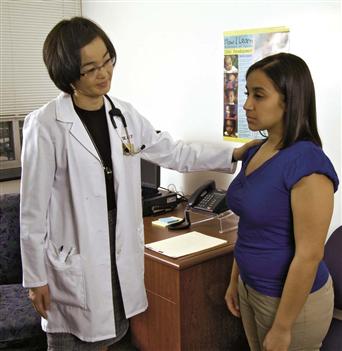
Your response does not cut off further communication as would happen by giving false reassurance (“Oh, you’ll be back to work in no time”). Also, it does not deny the feeling and indicate that it is not justified (“Now I don’t do everything for you. Why, you are feeding yourself.”). An empathic response recognizes the feeling, accepts it, and allows the person to express it without embarrassment. It strengthens rapport. The patient feels understood, which by itself is therapeutic because it opens the isolation of illness. Other empathic responses are “This must be very hard for you” or “I understand” or just placing your hand on the person’s arm (Fig. 3-3).
Clarification
Use this when the person’s word choice is ambiguous or confusing (e.g., “Tell me what you mean by ‘tired blood.’ ”). Clarification also is used to summarize the person’s words, simplify the words to make them clearer, and then ask if you are on the right track. You are asking for agreement, and the person can then confirm or deny your understanding.
Confrontation
Recall that in these last four responses, (confrontation, interpretation, explanation, summary), the frame of reference shifts from the patient’s perspective to yours. These responses now include your own thoughts and feelings. Use the last four responses only when merited by the situation. If you use them too often, you take over at the patient’s expense. In the case of confrontation, you have observed a certain action, feeling, or statement and you now focus the person’s attention on it. You give your honest feedback about what you see or feel. This may focus on a discrepancy: “You say it doesn’t hurt, but when I touch you here, you grimace.” Or, it may focus on the person’s affect: “You look sad” or “You sound angry.” Or, you may confront the person when you notice parts of the story are inconsistent: “Earlier you said you were laying off alcohol and just now you said you had a few drinks after work.”
Interpretation
This statement is not based on direct observation as with confrontation, but it is based on your inference or conclusion. It links events, makes associations, or implies cause: “It seems that every time you feel the stomach pain, you have had some kind of stress in your life.” Interpretation also ascribes feelings and helps the person understand his or her own feelings in relation to the verbal message.
Patient: I have decided I don’t want to take any more treatments. But I can’t seem to tell my doctor that. Every time she comes in, I tighten up and can’t say anything.
You do run a risk of making the wrong inference. If this is the case, the person will correct it. But even if the inference is corrected, interpretation helps prompt further discussion of the topic.
Explanation
With these statements, you inform the person. You share factual and objective information. This may be for orientation to the agency setting: “Your dinner comes at 5:30 PM.” Or, it may be to explain cause: “The reason you cannot eat or drink before your blood test is that the food will change the test results.”
Summary
This is a final review of what you understand the person has said. It condenses the facts and presents a survey of how you perceive the health problem or need. It is a type of validation in that the person can agree with it or correct it. Both you and the patient should participate. When the summary occurs at the end of the interview, it signals that termination of the interview is imminent.
Ten Traps of Interviewing
The verbal skills just discussed are productive and enhance the interview. Now take time to consider nonproductive, defeating verbal messages, or traps. It is easy to fall into these traps because you are anxious to help. The danger is that they restrict the patient’s response. The following traps are obstacles to obtaining complete data and to establishing rapport.
1 Providing False Assurance or Reassurance
A woman says, “Oh I just know this lump is going to turn out to be cancer.” What happens inside you? The automatic response of many clinicians is to say, “Now don’t worry; I’m sure you will be all right.” This “courage builder” relieves your anxiety and gives you the false sense of having provided comfort. But for the woman, it actually closes off communication. It trivializes her anxiety and effectively denies any further talk of it. (Also, it promises something that may not happen—that is, she may not be all right.) Consider instead these responses:
These responses acknowledge the feeling and open the door for more communication.
A genuine, valid form of reassurance does exist. You can reassure patients that you are listening to them, that you understand them, that you have hope for them, and that you will take good care of them.
Patient: I feel so lost here since they transferred me to the medical center. No one comes to see me. No one here cares what happens to me.
Response: I care what happens to you. I am here today, and I want you to know that I’ll be here all week.
This type of reassurance makes a commitment to the patient, and it can have a powerful impact.
2 Giving Unwanted Advice
Know when to give advice and when to avoid giving it. Often, people seek health care because they do want your professional advice and information on the management of a health problem: “My child has chickenpox; how should I take care of him?” This is a straightforward request for information that you have that the parent needs. You respond by giving a health prescription, a therapeutic plan based on your knowledge and experience.
In other situations, advice is different; it is based on a hunch or feeling. It is your personal opinion. Consider the woman who has just left a meeting with her consultant physician: “Dr. Kline just told me my only chance of getting pregnant is to have an operation. I just don’t know. What would you do?” Does the woman really want your advice? If you answer, “If I were you, I’d …,” then you would be making a mistake. You are not her. If you give your answer, you have shifted the accountability for decision making from her to you. She has not worked out her own solution. She has learned nothing about herself.
Does the woman really want to know what you would do? Probably not. Instead, a better response is reflection:
Now you know her real concern and can help her deal with it. She will have grown in the process and may be better equipped to make her next decision.
When asked for advice, other preferred responses are:
Although it is quicker just to give advice, take the time to involve the patient in a problem-solving process. When a patient participates, he or she is more likely to learn and to change behavior.
3 Using Authority
“Your doctor/nurse knows best” is a response that promotes dependency and inferiority. The communication pathway looks something like this:
Interviewer: 
Patient: 
with your talk coming “down” and little from the patient going back “up.” A better approach is to avoid using authority. Although you and the patient cannot have equality of professional skill and experience, you do have equally worthy roles in the health process, with each respecting the other.
4 Using Avoidance Language
People use euphemisms such as “passed on” to avoid reality or to hide their feelings. They think if they just say the word “death,” it might really happen. So to protect themselves, they evade the issue. Although it seems this will make comfortable potentially fearful topics, it does not. Not talking about the fear does not make it go away; it just suppresses the fear and makes it even more frightening. Using direct language is the best way to deal with frightening topics.
5 Engaging in Distancing
Distancing is the use of impersonal speech to put space between a threat and the self: “My friend has a problem; she is afraid she.…” or “There is a lump in the left breast.” By using “the” instead of “my,” the woman can deny any association with her diseased breast and protect herself from it. Health professionals use distancing, too, to soften reality. This does not work because it communicates to the other person that you also are afraid of the procedure. The use of blunt specific terms actually is preferable to defuse anxiety.
6 Using Professional Jargon
What is called a myocardial infarction in the health profession is called a heart attack by most laypeople. Use of jargon sounds exclusionary and paternalistic. You need to adjust your vocabulary to the person, but avoid sounding condescending.
If a patient uses medical jargon, do not assume he or she always knows the correct meaning. For example, some people think “hypertensive” means that they are very tense. As a result, they take their medication only when feeling stressed and not when they feel relaxed. This misinformation must be corrected. They need to understand that hypertension is a chronic condition that needs consistent medication to avoid side effects. On the other hand, you do not need to feel that it is a moral imperative to correct all misstatements (e.g., when a patient says “prostrate” for prostate gland).
7 Using Leading or Biased Questions
Asking a man, “You don’t smoke, do you?” implies that one answer is “better” than another. If the person wants to please you, either he is forced to answer in a way corresponding to your values or he feels guilty when he must admit the other answer. He risks your disapproval. And if he feels dependent on you for care, the last thing he wants to do is alienate you.
8 Talking Too Much
Some examiners positively associate helpfulness with verbal productivity. If the air has been thick with their oratory and advice, these examiners leave thinking they have met the patient’s needs. Just the opposite is true. Anxious to please the examiner, the patient lets the professional talk at the expense of his or her need to express himself or herself. A good rule for every interviewer is to listen more than you talk.
9 Interrupting
Often, when you think you know what the person will say, you interrupt and cut the person off. This does not show that you are clever. Rather, it signals that you are impatient or bored with the interview.
A related trap is preoccupation with yourself by thinking of your next remark while the person is talking. The communication pathway looks like this:
Patient: → Interviewer: →
As the patient speaks, you are thinking about what to say next. Thus you cannot fully understand what the person says. You are so preoccupied with your own role as the interviewer that you are not really listening. Aim for a second of silence between the person’s statement and your next response. Ideally, your communication pathway should look like this:
↔ ↔
with two people talking, and two people listening.
10 Using “Why” Questions
A young child asks, “Why does the moon look like the end of my fingernail?” The motive behind this question is an innocent search for information. This is quite different from that of an adult’s “why” question, such as “Why were you so late for your appointment?” The adult’s use of “why” questions usually implies blame and condemnation; it puts the person on the defensive.
Consider your use of “why” questions in the health care setting. “Why did you take so much medication?” Or, let’s say you ask a man who has just come to the emergency department, “Why did you wait so long before coming to the hospital?” The only possible answer to a “why” question is “because …” and the man may not know the answer. He may not have worked it out. You sound whining, accusatory, and judgmental. And the man now must produce an excuse to rationalize his own behavior. To avoid this trap, say, “I see you started to have chest pains early in the day. What was happening between the time the pains started and the time you came to the emergency department?”
Nonverbal Skills
Learn to listen with your eyes as well as with your ears. Nonverbal modes of communication include physical appearance, posture, gestures, facial expression, eye contact, voice, and touch. Nonverbal messages are very important in establishing rapport and in conveying information, especially about feelings. Nonverbal messages provide clues to understanding feelings. When nonverbal and verbal messages are congruent, the verbal is reinforced. When they are incongruent, the nonverbal message tends to be the true one, because it is under less conscious control.
Physical Appearance
In his classic work The Stress of Life, Hans Selye23 reports his interest in the body’s total response to stress began as a student. Unbiased as yet by medical knowledge, he noted that some patients just “looked sick,” even though they did not exhibit the specific characteristic signs that would lead to a precise medical diagnosis. Such people simply felt and looked ill or feverish. The same view can work for you. Inattention to dressing or grooming suggests the person is too sick to maintain self-care or has an emotional dysfunction such as depression. Choice of clothing also sends a message, projecting such varied images as role (student, worker, or professional) or attitude (casual, suggestive, or rebellious).
Your own appearance sends a message to the patient. Professional dress varies among agencies and settings. Depending on the setting, the use of a professional uniform may create a positive stereotype (comfort, expertise, or ease of identification) or a negative stereotype (distance, authority, or formality). Whatever your personal choice in clothing or grooming, the aim should be to convey a competent, professional image.
Posture
Note the patient’s position. An open position with extension of large muscle groups shows relaxation, physical comfort, and a willingness to share information. A closed position with arms and legs crossed looks defensive and anxious. Note any change in posture. If a person in a relaxed position suddenly tenses, it suggests discomfort with the new topic.
Your own calm, relaxed posture creates a feeling of warmth and trust and conveys an interest in the person. Standing and hastily filling out a history form with periodic peeks at your watch communicates that you are busy with many more important things than interviewing this person. Even when your time is limited, appear calm and unhurried. Sit down, even if it is only for a few minutes, and look as if nothing else mattered except this person.
Gestures
Gestures send messages. For example, nodding or an open turning out of the hand shows acceptance, attention, or agreement. A wringing of the hands often indicates anxiety. Pointing a finger occurs with anger and vehemence. Also, hand gestures can reinforce a person’s description of pain. When a crushing substernal chest pain is described, the person often holds the hand twisted into a fist in front of the sternum. Or, pain that is bright and sharply localized may be shown by pointing one finger to the exact spot: “It hurts right here.”
Facial Expression
The face reflects a wide variety of relevant emotions and conditions. The expression may look alert, relaxed, and interested, or it may look anxious, angry, and suspicious. Physical conditions such as pain or shortness of breath also show in the expression.
Your own expression should reflect a professional who is attentive, sincere, and interested in the patient. Any expression of boredom, distraction, disgust, criticism, or disbelief is picked up by the other person, and rapport will dissolve.
Eye Contact
Lack of eye contact suggests that the person is shy, withdrawn, confused, bored, intimidated, apathetic, or depressed. This applies to examiners, too. You should aim to maintain eye contact, but do not “stare down” the person. Do not have a fixed, penetrating look but, rather, an easy gaze toward the person’s eyes, with occasional glances away. One exception to this is when you are interviewing someone from a culture that avoids direct eye contact (see the section on Culture and Genetics).
Voice
Besides the spoken words, meaning comes through the tone of voice, the intensity and rate of speech, the pitch, and any pauses. These are just as important as words in conveying meaning. For example, the tone of a person’s voice may show sarcasm, disbelief, sympathy, or hostility. An anxious person often speaks in a loud, fast voice. A whining voice is similar; it has a high-pitched, wavering quality and long, drawn-out syllables. A soft voice may indicate shyness or fear. A hearing-impaired person may use a loud voice.
Even the use of pauses conveys meaning. When your question is easy and straightforward, a patient’s long, unexpected pause indicates the person is taking time to think of an answer. This raises some doubt as to the honesty of the answer. Unusually frequent and long pauses, when combined with speech that is slow and monotonous and a weak, breathy voice, indicate depression.
Touch
The meaning of physical touch is influenced by the person’s age, gender, cultural background, past experience, and current setting. The meaning of touch is easily misinterpreted. In most Western cultures, physical touch is reserved for expressions of love and affection or for rigidly defined acts of greeting (see the section on Culture and Genetics). Do not use touch during the interview unless you know the person well and are sure how it will be interpreted. When appropriate, touch communicates effectively, such as a touch of the hand or arm to signal empathy.
In sum, an examiner’s nonverbal messages that are productive and enhancing to the relationship are those that show attentiveness and unconditional acceptance. Defeating, nonproductive nonverbal behaviors are those of inattentiveness, authority, and superiority (Table 3-2).
TABLE 3-2
Nonverbal Behaviors of the Interviewer
| Positive | Negative |
| Appropriate professional appearance | Appearance objectionable to patient |
| Equal-status seating | Standing |
| Close proximity to patient | Sitting behind desk, far away, turned away |
| Relaxed, open posture | Tense posture |
| Leaning slightly toward person | Slouched back |
| Occasional facilitating gestures | Critical or distracting gestures: pointing finger, clenched fist, finger-tapping, foot-swinging, looking at watch |
| Facial animation, interest | Bland expression, yawning, tight mouth |
| Appropriate smiling | Frowning, lip biting |
| Appropriate eye contact | Shifty, avoiding eye contact, focusing on notes |
| Moderate tone of voice | Strident, high-pitched tone |
| Moderate rate of speech | Rate too slow or too fast |
| Appropriate touch | Too frequent or inappropriate touch |
Closing the Interview
The session should end gracefully. An abrupt or awkward closing can destroy rapport and leave the person with a negative impression of the whole interview. To ease into the closing, ask the person:
“Is there anything else you would like to mention?”
“Are there any questions you would like to ask?”
“Are there any other areas I should have asked about?”
“We have covered a number of concerns today. What would you most like to accomplish?”
This gives the person the final opportunity for self-expression. Then, to indicate that closing is imminent, say something like “Our interview is just about over.” No new topic should be introduced now. This is a good time to give your summary or a recapitulation of what you have learned during the interview. The summary is a final statement of what you and the patient agree the health state to be. It should include positive health aspects, any health problems that have been identified, any plans for action, and an explanation of the following physical examination. As you part from patients, thank them for the time spent and for their cooperation.
 Developmental Competence
Interviewing the Parent
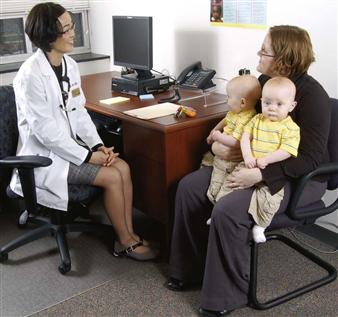
When your patient is a child, you must build rapport with two people—the child and the accompanying parent. Greet both by name, but with a younger child (1 to 6 years old), focus more on the parent. By ignoring the child temporarily, you allow the child to size you up from a safe distance. The child can observe your interaction with the parent, see that the parent accepts and likes you, and relax (Fig. 3-4).
3-4
Begin by interviewing the parent and child together. If any sensitive topics arise (e.g., the parents’ troubled relationship or the child’s problems at school or with peers), explore them later when the parent is alone. Provide toys to occupy the child as you and the parent talk. This frees the parent to concentrate on the history. Also, it indicates the child’s level of attention span or independent play. Through the interview, be alert to ways the parent and child interact.
For younger children, the parent will provide all or most of the history. Thus you are collecting the child’s health data from the parent’s frame of reference. Usually, this viewpoint is reliable because most parents have the child’s well-being as a priority and see cooperation with you as a way to enhance this well-being. But the possibilities exist for parental bias. Bias can occur when parents are asked to describe the child’s achievements or when their own parenting ability seems called into question. For example, if you say “His fever was 103 and you did not bring him in?” you are implying a lack of parenting skill. This puts the parent on the defensive and increases anxiety. Instead, use open-ended questions that increase description and defuse threat, such as “What happened when the fever went up?”
A parent with more than one child has more than one set of data to remember. Be patient as the parent sorts through his or her memory to pull out facts of developmental milestones or past history. A comprehensive history may be lacking if the child is accompanied by a family friend or daycare provider instead of the parent.
In collecting developmental data, avoid being judgmental about the age of achievement of certain milestones. Parents are understandably proud of their child’s achievements and are sensitive to inferences that these milestones may occur late.
Refer to the child by name—not as “the baby.” Refer to the parent by name—not the demeaning “Mother” or “Dad.” Also, be clear when identifying the parents. The mother’s present husband may not necessarily be the child’s father. Instead of asking about “your husband’s” health, ask “Is Joan’s father in good health?”
Although most of your communication is with the parent, do not ignore the child completely. You need to make contact to ease into the physical examination later. Begin by asking about the toys the child is playing with or about a special doll or teddy bear brought from home: “Does your doll have a name?” or “What can your truck do?” Stoop down to meet the child at his or her eye level. Adult size can be overwhelming to young children and can emphasize their smallness.
Nonverbal communication is even more important to children than it is to adults. Children are quick to pick up feelings, anxiety, or comfort from nonverbal cues. Keep your physical appearance neat and clean, and avoid formal uniforms that distance you. Keep your gestures slow, deliberate, and close to your body. Children are frightened by quick or grandiose gestures. Do not try to maintain constant eye contact; this feels threatening to a small child. Use a quiet, measured voice, and choose simple words in your speech. Considering the child’s level of language development is valuable in planning your communication.
The Infant
Nonverbal communication is the primary method of communicating with infants. Most infants look calm and relaxed when all their needs are met, and they cry when they are frightened, hungry, tired, or uncomfortable. They respond best to firm, gentle handling and a quiet, calm voice. Your voice is comforting, even though they do not understand the words. Older infants have anxiety toward strangers. They are more cooperative when the parent is kept in view.
The Preschooler
A 2- to 6-year-old is egocentric. He or she sees the world mostly from his or her own point of view. Everything revolves around him or her. It may not work to cite the example of another child’s behavior to get the child to cooperate. It has no meaning. Only the child’s own experience is relevant.
Language progresses from a vocabulary of about two words at 1 year to a spurt of about 200 words by 2 years. Then the 2-year-old combines words into simple two-word phrases—”all gone,” “me up,” “baby crying.” This is telegraphic speech, which is usually a combination of a noun and a verb and includes only words that have concrete meaning. Interest in language is high during the second year, and a 2-year-old seems to understand all that is said to him or her. A 3-year-old uses more complex sentences with more parts of speech. Between 3 and 4 years of age, the child uses three- to four-word telegraphic sentences containing only essential words. By 5 to 6 years, the sentences are six to eight words long and grammar is well developed.
Preschoolers’ communication is direct, concrete, literal, and set in the present. Avoid expressions such as “climbing the walls,” because they are easily misinterpreted by young children. Use short, simple sentences with a concrete explanation. Take time to give a short, simple explanation for any unfamiliar equipment that will be used on the child. Preschoolers can have animistic thinking about unfamiliar objects. They may imagine that unfamiliar inanimate objects can come alive and have human characteristics (e.g., that a blood pressure cuff can wake up and bite or pinch).
The School-Age Child
A child 7 to 12 years old can tolerate and understand others’ viewpoints. This child is more objective and realistic. He or she wants to know functional aspects—how things work and why things are done.
The school-age child can read. By using printed symbols (words) for objects and events, the child can process a significant amount of information. At this age, thinking is more stable and logical. The school-age child can decenter and consider all sides of a situation to form a conclusion. The school-age child is able to reason, but this reasoning capacity still is limited because he or she cannot yet deal with abstract ideas.
Children of this age-group have the verbal ability to add important data to the history. Interview the parent and child together, but when a presenting symptom or sign exists, ask the child about it first and then gather data from the parent. For the well child seeking a checkup, pose questions about school, friends, or activities directly to the child.
The Adolescent
Adolescence begins with puberty. Puberty is a time of dramatic physiologic change. It includes the growth spurt—rapid growth in height, weight, and muscular development; development of primary and secondary sex characteristics; and maturation of the reproductive organs. A changing body affects a person’s self-concept.
Adolescents want to be adults, but they do not have the cognitive ability yet to achieve their goal. They are between two stages. Sometimes they are capable of mature actions, and other times they fall back on childhood response patterns, especially in times of stress. You cannot treat adolescents as children, yet you cannot overcompensate and assume that their communication style, learning ability, and motivation are consistently at an adult level.
Adolescents value their peers. They crave acceptance and sameness with their peers. Adolescents think no adult can understand them. Because of this, some act with aloof contempt, answering only in monosyllables. Others make eye contact and tell you what they think you want to hear, but inside they are thinking “You’ll never know the full story about me.”
This knowledge about adolescents is apt to paralyze you in communicating with them. However, successful communication is possible and rewarding. The guidelines are simple.
The first consideration is your attitude, which must be one of respect. Respect is the most important thing you can communicate to the adolescent. The adolescent needs to feel validated as a human being, accepted, and worthy.
Second, your communication must be totally honest. The adolescent’s intuition is highly tuned and can detect phoniness or when information is withheld. Always give them the truth. Play it straight or you will lose them. They will cooperate if they understand your rationale.
Stay in character. Avoid using language that is absurd for your age or professional role. It is helpful to understand some of the jargon used by adolescents, but you cannot use those words yourself simply to try to bond with the adolescent. Do not try to be his or her peer. You are not, and the adolescent will not accept you as such.
Use icebreakers. Focus first on the adolescent, not on the problem. Although an adult just wants to get on with it and talk about the health concern immediately, the adolescent responds best when the focus is on him or her as a person. Show an interest in the adolescent. Ask open, friendly questions about school, activities, hobbies, friends. “How are things at school?” “Are you in any sports? Any activities?” “Do you have any pets at home?” Refrain from asking questions about parents and family for now—these topics can be emotionally charged during adolescence.
Do not assume adolescents know anything about a health interview or a physical examination. Explain every step, and give the rationale. They need direction. They will cooperate when they know the reason for the questions or actions. Encourage their questions. Adolescents are afraid they will sound “dumb” if they ask a question to which they assume everybody else knows the answer.
Keep your questions short and simple. “Why are you here?” sounds brazen to you, but it is effective with the adolescent. Be prepared for the adolescent who does not know why he or she is there. Some adolescents are pushed into coming to the examination by a parent.
The communication responses described for the adult need to be reconsidered when talking with the adolescent. Silent periods usually are best avoided. Giving adolescents a little time to collect their thoughts is acceptable, but a silence for other reasons is threatening. Also, avoid reflection. If you use reflection, the adolescent is likely to answer, “What?” They just do not have the cognitive skills to respond to that indirect mode of questioning. Also, adolescents are more sensitive to nonverbal communication than are adults. Be aware of your expressions and gestures. They are also more sensitive to any comment they take to mean criticism from you and will withdraw.
Later in the interview, after you have developed rapport with the adolescent, you can address the topics that are emotionally charged, including smoking, alcohol and drug use, sexual behaviors, suicidal thoughts, and depression. Adolescents undertake risky behaviors that may yield serious consequences. Many of these behaviors are carried forward to adulthood.
Adolescents will assume that health professionals have similar values and standards of behavior as most of the other authority figures in their lives, and they may be reluctant to share this information. You can assure them that your questions are not intended to be curious or intrusive, but cover topics that are important for most teens and on which you have relevant health information to share.
If confidential material is uncovered during the interview, consider what can remain confidential and what you feel you must share for the well-being of the adolescent. State laws vary about confidentiality with minors, and in some states, parents are not notified about, for example, birth control prescriptions or treatment for sexually transmitted infections (STIs). However, if the adolescent talks about an abusive home situation or risk of imminent physical harm, state that you must share this information with other health professionals for his or her own protection. Ask the adolescent, “Do you have a problem with that?” and then talk it through. Tell the adolescent, “You will have to trust that I will handle this information professionally and in your best interest.”
Finally, take every opportunity for positive reinforcement. Praise every action regarding healthy lifestyle choices: “That’s great that you don’t smoke. You get lots of gold stars in my book for staying off the cigarettes. It will save you lots of money that you can use on other things, makes you smell good, and your skin won’t be so wrinkled when you get older.”
For those lifestyle choices that are risky, this is a premium opportunity for discussion and early intervention. “Have you ever tried to quit smoking?” “I am concerned about your extra weight for someone so young. What kind of exercise you do like?” “What do you like to drink when you are at a party with your friends?” “Did you use a condom the last time you had sex?” Providing information alone is not enough. Listen to their stories in an open, nonjudgmental way. Give them a small, achievable goal, and encourage another visit in a few weeks for follow-up on the behaviors of concern.
The Older Adult
The aging adult has the developmental task of finding the meaning of life and the purpose of his or her own existence, and adjusting to the inevitability of death. Some people have developed comfortable and satisfying answers and greet you with a calm demeanor and self-assurance. Be alert for the occasional person who sounds hopeless and despairing about life at present and in the future. Symptoms of illness and worries over finances are even more frightening when they mean physical limitation or threaten independence.
Always address the person by the last name (e.g., “Hello, Mr. Choi;” “Good morning, Mrs. Smith”). Some older adults resent being called by their first name by younger persons and almost all cringe at the ignominious “Grandma” or “Pop.” Above all, avoid “elderspeak,”30 which consists of (1) diminutives (honey, sweetie, dearie); (2) inappropriate plural pronouns (“Are we ready for our interview?”); (3) tag questions (“You would rather sit in this nice soft chair, wouldn’t you?”); and (4) shortened sentences, slow speech rate, and simple vocabulary that sounds like baby talk.
The interview usually takes longer with older adults because they have a longer story to tell. You may need to break up the interview into more than one visit, collecting the most important historical data first. Or certain portions of the data, such as past history or the review of systems, can be provided on a form that is filled out at home, as long as the person’s vision and handwriting are adequate. Take time to review these parts with the person during the interview.
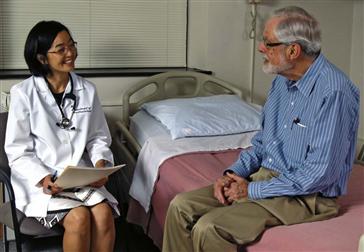
It is important to adjust the pace of the interview to the aging person (Fig. 3-5). The older person has a great amount of background material to sort through, and this takes some time. Also, some aging persons need a greater amount of response time to interpret the question and process their answer. Avoid trying to hurry them along. This approach only affirms their stereotype of younger persons in general and health care providers in particular—that is, people who are interested merely in numbers of patients and filling out forms. Any urge from you to get on with it will surely make them retreat. You will lose valuable data, and their needs will not be met.
3-5
Consider physical limitations when planning the interview. An aging person may fatigue earlier and may require that the interview be broken up into shorter segments. For the person with impaired hearing, face directly so that your mouth and face are fully visible. Do not shout; it does not help and actually distorts speech.
Touch is a nonverbal skill that is very important to older persons. Their other senses may be diminished, and touch grounds you in reality. Also, a hand on the arm or shoulder is an empathic message that communicates you empathize with the person and want to understand his or her problem (see the Culture and Genetics section for exceptions).
Interviewing People with Special Needs
Hearing-Impaired People
As the population ages, you will encounter more people who are deaf or hard of hearing. They see themselves as a linguistic minority, not as disabled.8 Many feel marginalized by professionals and that their intelligence is questioned. How should you provide high-quality care to these individuals? Although many will tell you in advance that they have a hearing deficit, others must be recognized by clues, such as staring at your mouth and face, not attending unless looking at you, or speaking in a voice unusually loud or with guttural or garbled sounds. The deaf person may be familiar with some equipment in the hospital or office setting or may have had previous experience with health care settings. But without full communication, the hearing-impaired person is sure to feel isolated and anxious. Ask his or her preferred way to communicate—by signing, lip reading, or writing, “How can I best communicate with you?”
A complete health history requires a sign language interpreter. Because most health care professionals are not proficient in signing, try to find an interpreter through a social service agency or the person’s own social network. You may use family members, but be aware that they sometimes edit for the person. Use the same guidelines as for the bilingual interpreter (see p. 46).
If the person prefers lip reading, be sure to face him or her squarely and have good lighting on your face. Examiners with a beard, mustache, or foreign accents are less effective. Do not exaggerate your lip movements because this distorts your words. Similarly, shouting distorts the reception of a hearing aid the person may wear. Speak slowly, and supplement your voice with appropriate hand gestures or pantomime. Nonverbal cues are important adjuncts because the lip reader understands at best only 50% of your speech when relying solely on vision. Be sure the person understands your questions. Many hearing-impaired people nod “yes” just to be friendly and cooperative but really do not understand.
Written communication is efficient in sections such as past health history or review of systems. For the present history of illness, writing is very time consuming and laborious. The syntax of the person’s written words will read like English if the hearing impairment occurred after speech patterns developed. If the deafness occurred before speech patterns developed, the grammar and written syntax follow that of sign language, which is different from that of English.
Acutely Ill People
An emergency demands your prompt action. You must combine interviewing with physical examination skills to determine lifesaving actions. Although life-support measures may be paramount, still try to interview the person as much as possible. Subjective data are crucial to determine the cause and course of the emergency. Abbreviate your questioning. Identify the main area of distress, and inquire about that. Family or friends often can provide important data.
A hospitalized person with a critical or severe illness is usually too weak, too short of breath, or in too much pain to talk. First attend to the comfort of the person. Then establish a priority; find out immediately what parts of the history are the most relevant. Explore the first concern the person mentions. Begin to use closed, direct questions earlier. Finally, watch that your statements are very clear. When a person is very sick, even the simplest sentence can be misconstrued. The person will react according to preconceived ideas about what a serious illness means, so anything you say should be direct and precise.
People Under the Influence of Street Drugs or Alcohol
It is common for persons under the influence of alcohol or other mood-altering drugs to be admitted to a hospital; all of these drugs affect the central nervous system, increasing the risk for overdose, accidents, and injuries. Also, chronic use creates complex medical problems that require increasing care.
Many substance abusers are poly-drug abusers. You may be faced with a wide range of patient behaviors due to current influence. Alcohol, benzodiazepines, and the opioids (heroin, meperidine, morphine, oxycodone, Vicodin) are central nervous system depressants. Stimulants of the central nervous system (cocaine, amphetamine) can cause an intense high, agitation, and paranoid behavior. Hallucinogens cause bizarre, inappropriate, sometimes even violent behavior accompanied by superhuman strength and insensitivity to pain.
When interviewing a person currently under the influence of alcohol or illicit drugs, ask simple and direct questions. Take care to make your manner and questions nonthreatening. Avoid confrontation at this point. Furthermore, avoid any display of scolding or disgust, because this person may become belligerent.
The top priority is to find out the time of the person’s last drink or drug and how much he or she drank at this episode, as well as the name and amount of other drugs taken. This information will help assess any withdrawal patterns. For your own protection, be aware of hospital security or other personnel who could be called on for assistance.
Once he or she has been detoxified and is sober, the hospitalized substance abuser should be assessed for the extent of the problem and the meaning of the problem for the person and family. Initially you will encounter denial and increased defensiveness; special interview techniques are needed (see Chapter 6).
Personal Questions
Occasionally, people will ask you questions about your personal life or opinions, such as “Are you married?” “Do you have children?” or “Do you smoke?” You do not need to answer every question. You may supply brief information when you feel it is appropriate, but be sensitive to the possibility that there may be a motive behind the personal questions such as loneliness or anxiety. Try directing your response back to the person’s frame of reference. You might say something like “No, I don’t have children; I wonder if your question is related to how I can help you care for little Jamie?”
Sexually Aggressive People
On some occasions, personal questions extend to flirtatious compliments, seductive innuendo, or advances. Some people experience serious or chronic illness as a threat to their self-esteem and sexual adequacy. This creates anxiety that makes them act out in sexually aggressive ways.
Your response must make it clear that you are a health professional who can best care for the person by maintaining a professional relationship. At the same time, you should communicate that you accept the person and you understand the person’s need to be self-assertive but that you cannot tolerate sexual advances. This may be difficult, considering that the person’s words or gestures may have left you shocked, embarrassed, or angry. Your feelings are normal. You need to set appropriate verbal boundaries by saying, “I am uncomfortable when you talk to me that way; please don’t.” A further response that would open communication is “I wonder if the way you’re feeling now relates to your illness or to being in the hospital?”
Crying
A beginning examiner usually feels horrified when the patient starts crying. But crying actually is a big relief to a person. Health problems come with powerful emotions. Worries about illness, death, or loss take a great amount of energy to keep bottled up inside. When you say something that “makes the person cry,” do not think you have hurt the person. You have just hit on a topic that is important. Do not go on to a new topic. Just let the person cry and express his or her feelings fully. You can offer a tissue and wait until the crying subsides to talk. The person will regain control soon.
Sometimes your patient looks as if he or she is on the verge of tears but is trying hard to suppress them. Again, instead of moving on to something new, acknowledge the expression by saying, “You look sad.” Do not worry that you will open an uncontrollable floodgate. The person may cry but will be relieved, and you will have gained insight to a serious concern (see the Clinical Illustration below).
Anger
Occasionally you will try to interview a person who is already angry. Try not to personalize this anger; usually it does not relate to you. The person is showing aggression as a response to his or her own feelings of anxiety or helplessness. Do ask about the anger and hear the person out. Deal with the angry feelings before you ask anything else. An angry person cannot be an effective participant in a health interview.
Maybe because of an unrelated incident, you are angry when you come into the interview. When you are angry, say so and tell the patient that you are angry at something or someone else. Otherwise the patient, unusually vulnerable and dependent on you, thinks you are angry at him or her.
Threat of Violence
The health care setting is not immune to violent behavior. An individual may act with such angry gestures that you feel a threat to your personal safety. Other red-flag behaviors of a potentially disruptive person include fist clenching, pacing back and forth, a vacant stare, confusion, statements out of touch with reality, statements that do not make sense, a history of recent drug use (alcohol, hallucinogen, methamphetamine, cocaine), or perhaps even a recent history of intense bereavement (loss of spouse, loss of job). Trust your instincts. If you sense any suspicious or threatening behavior, act immediately to defuse the situation. Leave the examining room door open, and position yourself between the person and the door. Many departments have a prearranged sign or signal so that a co-worker can call 911 and the security department to send help to the setting. Do not raise your own voice or try to argue with the threatening person. Act quite calm, and talk to the person in a soft voice. Act interested in what the person is saying, and behave in an unhurried way. Your most important goal is safety; avoid taking any risks.
Anxiety
Finally, take it for granted that nearly all sick people have some anxiety. This is a normal response to being sick. It makes some people aggressive and others dependent. Remember that the person is not reacting as typically as when he or she is healthy.
 Culture and Genetics
Cross-Cultural Communication
When two people come from different cultural backgrounds, the probability of miscommunication increases. Verbal and nonverbal communications are influenced by the cultural background of both the health care professional and the patient. Cross-cultural communication refers to the process occurring between a health care professional and a patient, each with different cultural backgrounds, in which both attempt to understand the other’s point of view (Fig. 3-6).

3-6
As was discussed in Chapter 2, people who have limited English proficiency (LEP) should have an interpreter who is not a family member or friend. Carefully document that the patient and family fully understand what is happening to them; what their diagnosis and the implications of this diagnosis are; what procedures, diagnostic and therapeutic, are going to be done, how the procedures will be done, and what they mean; how medications are to be taken and when; and the prognosis derived from the given problem(s).
Cultural Perspectives on Professional Interactions
Your professional interaction depends on the patient’s cultural perception of health care providers and the degree of formality/informality that is considered appropriate. For example, some Southeast Asians expect those in authority, such as health care providers, to be authoritarian, directive, and detached. In seeking health care, some Asian Americans may expect the health care provider to intuitively know what is wrong with them, and you may actually lose some credibility by asking a fairly standard interview question such as, “What brings you here?” The Asian person may be thinking, “Don’t you know why I’m here? You’re supposed to be the one with all the answers.”
The emphasis on social harmony among Asians and American Indians may prevent the full expression of concerns or feelings during the interview. Such reserved behavior suggests that the person agrees with or understands your explanation. Nodding or smiling by Asians may only reflect their cultural value for interpersonal harmony, not agreement with you. It may also be done to “save face,” for when the patient is expected to understand something and does not understand, it is a “loss of face” to admit this. You may distinguish between socially compliant patient responses and genuine concurrence by validating your assumptions. Invite the person to respond frankly to your suggestions, or give the person “permission” to disagree.
In contrast, Appalachians traditionally have close family interaction patterns, which often lead them to expect close personal relationships with health care providers. The Appalachian may evaluate your effectiveness by your interpersonal skills rather than professional competencies. Appalachians may dislike the impersonal, bureaucratic orientation of most health care institutions. People of Latin-American or Mediterranean origin often expect an even higher degree of intimacy and may attempt to involve you in their family system by expecting you to participate in personal activities and social functions. Some individuals might expect personal favors that extend beyond the scope of your professional practice and feel it is their privilege to contact you at home during any time of the day or night for care.
Etiquette
Etiquette refers to the conventional code of good manners that governs behavior and varies cross-culturally. Consider the cultural perceptions of some people from American Indian, Hispanic, Middle Eastern, and African cultures who expect personal or social conversation before they feel comfortable entering into the more intimate aspects of the health history and physical examination. For these people, there is a high value placed on developing interpersonal relationships and getting to know about a person’s family, personal concerns, and interests before they allow you to interact therapeutically. Recognizing that time constraints affect the social interchange expected, you should strive to incorporate the person’s cultural needs with the health history data categories. For example, using a conversational tone of voice, you might begin the health history by inquiring about the patient’s family members and their health.
You should be prepared for the converse; that is, individuals from some cultures may want to interview you. They may ask questions about your family, marital status, salary, home address, telephone number, and so forth. Remember that you are not obligated to answer questions that you deem too personal and always have a right to protect your personal safety. For example, you are never to provide your home address, e-mail, or telephone number. Rather, you should provide the patient with the hospital, clinic, or agency’s business number. If you want the patient to be able to contact you while you are at home, you should ask a secretary or other third party at the health care facility to call your home number. Consider in advance which categories of questions you are willing to discuss and which ones you will politely avoid. If you refuse to answer certain questions about yourself, remember that the person may perceive your behavior as aloof and uncaring. Thus the manner in which you reply to personal inquiries should be carefully worded, sensitive to the cultural needs of the patient, and congruent with your own cultural beliefs.
When meeting a patient for the first time, it is best to be formal, respectful, and polite. Unless a physical disability or handicap prevents, you should be standing when you first greet the person and those accompanying him or her. To establish a mutually respectful relationship, introduce yourself and indicate how you prefer to be called—that is, by first name, last name, and/or title. Elicit the same information from the patient because this enables you to address the person in a manner that is culturally appropriate and could actually spare you considerable embarrassment. Everyone likes to be called by his or her correct name.
Among Chinese, Vietnamese, and many other Asian groups, the family or surname is written and spoken first, followed by the first or given name. This is the opposite of most European-American cultures. Because politeness and formality frequently are valued by those from Asian cultures, you should address the person using the correct title followed by the family or surname. Be aware that some Asians, particularly those who are members of Christian religions, also may have English names. Most Asian women do not use their husband’s last name after marriage. Be mindful of this when examining children in the presence of both parents. In most Asian cultures, the child is given the father’s last name. Depending on the degree of acculturation, some Asian Americans switch the order of their names in order to be consistent with the European-American custom.
In traditional Chinese, Japanese, and other Asian cultures, when people are introduced, they show each other respect by bowing. The more profound the bow is, the deeper the respect. For example, it would be appropriate to bow very low to an older adult whose wisdom is highly regarded and to bow less profoundly to an adolescent or a young adult. With Westernization, handshakes are now customary throughout most parts of Asia and among Asian Americans, but shaking someone’s hand too firmly or vigorously is considered rude or intrusive.
Because of the importance of family for people from Central and South America, two surnames are used, representing their father’s and mother’s last names. The paternal name is first, then the maternal name. For example, if the patient’s name is Juan Diaz Hernandez, his father’s last name is Diaz and his mother’s last name is Hernandez. With immigration to the United States or Canada, some people with Spanish surnames drop their mother’s name for the sake of brevity.
Although there are dozens of Arab cultures and subcultures, customs pertaining to names are similar. Both males and females are given a first name as infants. The father’s first name is used as the middle name and the last name is the family name. Some may prefer to be addressed as father (abu) or mother (um) of their oldest son (e.g., abu Walid or father of Walid). Because formality is emphasized in most Arab cultures, you should call patients Mr., Mrs., Ms., Miss, or Dr. followed by their last name unless invited to use more familiar first names or the abu/um form of the name. In most Arab cultures, etiquette requires either a gentle kiss on the cheeks or a handshake on arrival and departure for people of the same gender. When an Arab man is introduced to a woman, he will prefer to not be touched by her; that is, no handshaking. This is respectful of the traditional beliefs about modesty in male-female relationships. Women may back off from strange men and not touch at all. When a handshake is not exchanged, the Muslim woman usually faces the man while bowing her head slightly and crossing her arms across her chest.
With more than 510 federal and/or state-recognized American Indian tribes, there is wide variation in the customs pertaining to names, titles, and etiquette. The majority tend to follow the European-American cultural norms. In the Navajo culture, a health care provider may call an older adult “grandfather” or “grandmother” as a sign of respect after getting to know him or her but should be more formal during the initial introduction. Some American Indians and Alaska natives have anglicized traditional names into surnames such as Running Deer, Flying Eagle, or Swift Bear, often reflecting the clan to which the person belongs. You should extend a gentle, nonaggressive handshake when introduced to an American Indian patient.
Space and Distance
Spatial distance is significant throughout the interview and physical examination, with culturally appropriate distance zones varying widely. Some cultural groups value close physical proximity and may perceive a health care provider who is distancing as being aloof and unfriendly. Summarized in Table 3-3 are the four distance zones identified for the functional use of space that are embraced by the dominant cultural group, including that of most health care professionals.
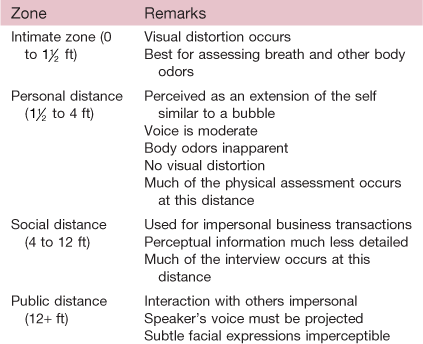
Cultural Considerations on Gender
Violating cultural norms related to appropriate male-female relationships may jeopardize a professional relationship. Among some Arab Americans, an adult male is never alone with a female (except his wife) and is generally accompanied by one or more other males when interacting with females. This behavior is culturally very significant; a lone male could be accused of sexual impropriety. Ask the person about culturally relevant aspects of male-female relationships at the beginning of the interview. When gender differences are important to the patient, try strategies such as offering to have a third person present. If a family member or friend has accompanied the patient, inquire whether the patient would like that person to be in the examination room during the history and/or physical examination. It is not unusual for a female to refuse to be examined by a male and vice-versa. Modesty is another issue. It is imperative to ensure that the patient is carefully draped at all times, that curtains are closed, and, when possible, doors should also be closed. Do not enter a room without knocking first and announcing yourself.
Cultural Considerations on Sexual Orientation
Lesbian, gay, and bisexual individuals are always aware of heterosexist biases and the communication of these biases during the interview and physical examination. Heterosexism refers to the institutionalized belief that heterosexuality is the only natural choice and assumes it is the norm. For example, most health histories include a question concerning marital status. Although many same-sex couples are in committed, long-term, monogamous relationships, seldom is there a category on the standard form that acknowledges this type of relationship. Although technically and legally the person may be single, this trivializes the relationship with his or her significant other. It also may have health-related implications if the person is diagnosed, for example, with a communicable disease, which may range in severity from a minor sore throat to a life-threatening condition such as HIV/AIDS. In extreme cases, lesbians have been subjected to unnecessary diagnostic procedures when the heterosexual assumption was made.
Overcoming Communication Barriers
Health care providers tend to have stereotypical expectations of the patient’s behavior during the interview and physical examination: undemanding compliance, an attitude of respect for the health care provider, and cooperation with requested behavior throughout the examination. Although patients may ask a few questions for the purpose of clarification, slight deference to recognized authority figures (i.e., health care providers) is expected. Individuals from culturally diverse backgrounds, however, may have significantly different perceptions about the appropriate role of the individual and his or her family when seeking health care.
During illness, culturally acceptable sick-role behavior may range from aggressive, demanding behavior to silent passivity. Complaining, demanding behavior during illness is often rewarded with attention among American Jewish and Italian groups, whereas Asians and American Indians are likely to be quiet and compliant during illness. During the interview, Asians may provide the answers they think are expected, behavior consistent with the dominant cultural value for harmonious relationships with others. Appalachian people may reject an interviewer whom they perceive as prying or nosey as a result of a cultural ethic of neutrality that mandates minding one’s own business and avoiding assertive or argumentative behavior.
Working With (and Without) an Interpreter
Nearly 52 million people in the United States speak a language other than English at home.26 Many also can read and write other languages. One of the greatest challenges in cross-cultural communication occurs when you and the patient speak different languages (Fig. 3-7). After assessing the language skills of non–English-speaking people, you may find yourself in one of two situations: trying to communicate effectively through an interpreter or trying to communicate effectively when there is no interpreter.
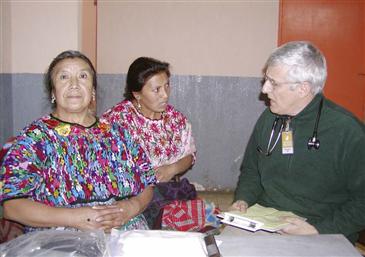
3-7
Interviewing the non–English-speaking person requires a bilingual interpreter for full communication. Even the person from another culture or country who has a basic command of English (those for whom English is a second language) may need an interpreter when faced with the anxiety-provoking situation of entering a hospital, describing a strange symptom, or discussing sensitive topics such as those related to reproductive or urologic concerns.
It is tempting to ask an “ad hoc” interpreter—a relative, friend, or even another patient—to interpret because this person is readily available and probably would like to help. This is disadvantageous because it violates confidentiality for the patient, who may not want personal information shared with another. Furthermore, the friend or relative, although fluent in ordinary language usage, is likely to be unfamiliar with medical terminology, hospital or clinic procedures, and medical ethics. Having a relative interpret adds stress to an already stressful situation and may disrupt family relationships. In some cultures, talk about death or cancer is taboo and a family interpreter may edit out this language.7
Whenever possible, work with a bilingual team member or a trained medical interpreter. This person knows interpreting techniques, has a health care background, and understands patients’ rights. The trained interpreter also is knowledgeable about cultural beliefs and health practices. This “cultural broker” can help you bridge the cultural gap and can advise you concerning the cultural appropriateness of your recommendations.
Many patients with limited English proficiency do not have access to interpreters. It is your responsibility to ensure that the provisions of Title VI as discussed in Chapter 2 are met. It is well known that few clinicians are receiving the necessary preparation to practice with interpreters; only 23% of teaching hospitals in the United States provide this training.4 As a first preference, language services should include the availability of a bilingual staff that can communicate directly with patients in their preferred language and dialect. Also, become familiar with telephone translation services such as the AT&T Language Line (www.languageline.com) that are available 24 hours a day.
Although interpreters are trained to remain neutral, they can influence both the content of information exchanged and the nature of the interaction. Many trained medical interpreters are members of the linguistic community they serve. Although this is largely beneficial, it has limitations. For example, interpreters often know patients and details of their circumstances before the interview begins. Although acceptance of a code of ethics governing confidentiality and conflicts of interest is part of the training interpreters receive, discord may arise when they relate information that the patient has not volunteered to the examiner.
Note that being bilingual does not always mean the interpreter is culturally aware. The Hispanic culture, for example, is so diverse that a Spanish-speaking interpreter from one country, class, race, and gender does not necessarily understand the cultural background of a Spanish-speaking person from another country and different circumstances. Even trained interpreters, who are often from urban areas and represent a higher socioeconomic class than the patients for whom they interpret, may be unaware of or embarrassed by rural attitudes and practices.
Although you will be in charge of the focus and flow of the interview, view yourself and the interpreters as a team. Ask the interpreter to meet the patient beforehand to establish rapport and to determine the patient’s age, occupation, educational level, and attitude toward health care. This enables the interpreter to communicate on the patient’s level. Place the interpreter next to the patient, and make eye contact mostly with the patient. Do not address your questions to the interpreter; that is, do not say, “Ask him if he has pain,” but, rather, ask the patient directly, “Do you have pain?”
Allow more time for this interview. With the third person repeating everything, it can take considerably longer than interviewing English-speaking people. You need to focus on priority data.
There are two styles of interpreting—line-by-line and summarizing. Translating line-by-line takes more time, but it ensures accuracy. Use this style for most of the interview. Both you and the patient should speak only a sentence or two, and then allow the interpreter some time. Use simple language yourself, not medical jargon that the interpreter must simplify before it can be translated. Summary translation progresses faster and is useful for teaching relatively simple health techniques with which the interpreter is already familiar. Be alert for nonverbal cues as the patient talks. These cues can give valuable data. A good interpreter also notes nonverbal messages and passes them on to you. Summarized in Table 3-4 are suggestions for the selection and use of an interpreter.
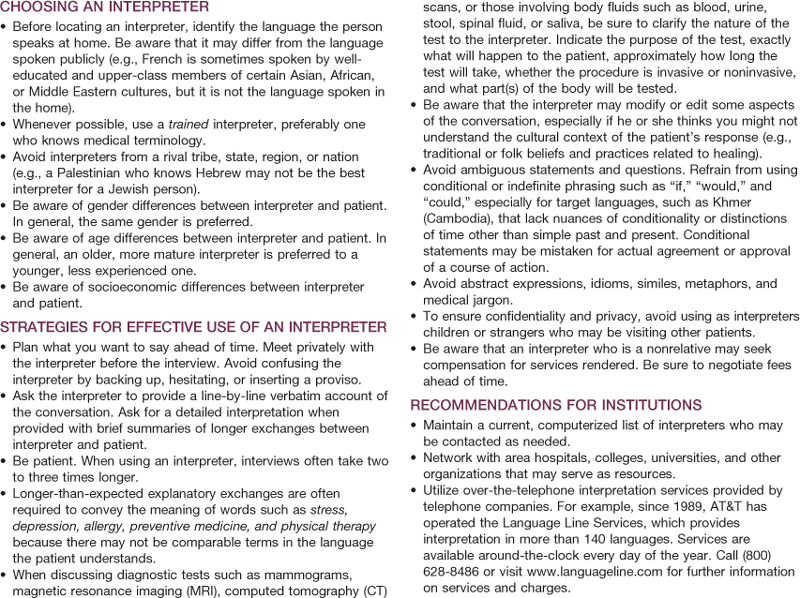
Although use of an interpreter is the ideal, you may find yourself in a situation with a non–English-speaking patient when no interpreter is available. Table 3-5 summarizes some suggestions for overcoming language barriers when no interpreter is present. Communicating with these patients may require that you combine verbal and nonverbal communication.
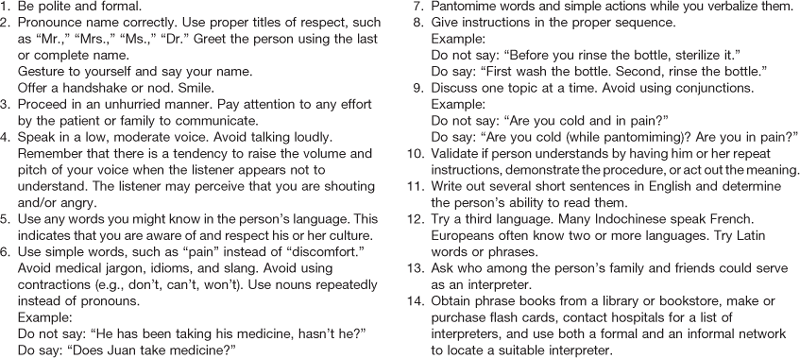
Nonverbal Cross-Cultural Communication
There are five types of nonverbal behaviors that convey information about the person: (1) vocal cues, such as pitch, tone, and quality of voice, including moaning, crying, and groaning; (2) action cues, such as posture, facial expression, and gestures; (3) object cues, such as clothes, jewelry, and hair styles; (4) use of personal and territorial space in interpersonal transactions and care of belongings; and (5) touch, which involves the use of personal space and action.12
Unless you make an effort to understand the patient’s nonverbal behavior, you may overlook important information such as facial expressions, silence, eye contact, touch, and other body language. Communication patterns vary widely transculturally, even for such conventional social behaviors as smiling and handshaking. Among many Hispanic people, for example, smiling and handshaking are considered an integral part of sincere interactions and essential to establishing trust, whereas a Russian person might perceive the same behavior as insolent and frivolous.
Wide cultural variation exists when interpreting silence. Some individuals find silence extremely uncomfortable and make every effort to fill conversational lags with words. Conversely, many American Indians consider silence essential to understanding and respecting the other person. A pause following your question signifies that what has been asked is important enough to be given thoughtful consideration. In traditional Chinese and Japanese cultures, silence may mean that the speaker wishes the listener to consider the content of what has been said before continuing. The English and Arabs may use silence out of respect for another’s privacy, whereas the French, Spanish, and Russians may interpret it as a sign of agreement. Asian cultures often use silence to demonstrate respect for older adults.
Eye contact is perhaps among the most culturally variable nonverbal behaviors. People from European cultures are taught to maintain eye contact when speaking with others. Asian, American Indian, Indochinese, Arab, and Appalachian people may consider direct eye contact impolite or aggressive, and they may avert their eyes when talking with you. American Indians often stare at the floor during conversations, a culturally appropriate behavior indicating that the listener is paying close attention to the speaker. Among Hispanics, respect dictates appropriate deferential behavior in the form of downcast eyes toward others on the basis of age, gender, social position, economic status, and position of authority. Older adults expect respect from younger individuals, adults from children, men from women, teachers from students, and employers from employees.
In some cultures—including Arab, Latino, and Black groups—modesty for both women and men is interrelated with eye contact. For Muslim-Arab women, modesty is achieved in part by avoiding eye contact with males (except for one’s husband in private settings) and keeping the eyes downcast when encountering members of the opposite gender in public situations. Hasidic Jewish males also have culturally based norms concerning eye contact with females. You may observe the male avoiding direct eye contact and turning his head in the opposite direction when walking past or speaking to a woman.
Touch
Without doubt, touching the patient is a necessary component of a comprehensive assessment. While recognizing the benefits reported by many in establishing rapport with patients through touch, physical contact with patients conveys various meanings cross-culturally. In many cultures, such as Arab and Latino societies, male health care providers may be prohibited from touching or examining either all or certain parts of the female body. In many cultures, adolescent girls may prefer female health care providers or refuse to be examined by a male. The patient’s significant others also may exert pressure on nurses by enforcing these culturally meaningful norms in the health care setting.
Touching children also may have associated meaning transculturally. For example, many of the world’s people believe in mal ojo, which literally translated means “evil of the eye.” In this culture-bound syndrome, a child’s illness may be attributed to excessive admiration by another person. Mal ojo is especially prevalent in Latino cultures. Many Asians believe that one’s strength resides in the head and that touching the head is a sign of disrespect. The clinical significance of this is that you need to be aware that patting the child on the head or examining the fontanel of a Southeast Asian infant, for example, should be avoided or done only with parental permission.
Bibliography
1. Aboul-Enein FH, Ahmed F. How language barriers impact patient care: A commentary. Journal of Cultural Diversity. 2006;13(3):169.
2. Arnold E, Boggs K. Interpersonal relationships: Professional communication skills for nurses. 5th ed. Philadelphia: Saunders; 2007.
3. Berry JA. Pilot study: Nurse practitioner communication and the use of recommended clinical preventive services. Journal of the American Academy of Nurse Practitioners. 2006;18:277–283.
4. Flores G. Language barriers to health care in the United States. New England Journal of Medicine. 2006;355(3):229–231.
5. Gerrish K, Chau R, Sobowale A, et al. Bridging the language barrier: the use of interpreters in primary care nursing. Health and Social Care in the Community. 2004;12(5):407–413.
6. Goldenring JM, Rosen DS. Getting into adolescent heads: An essential update. Contemporary Pediatrics. 2004;21(1):64–74.
7. Ho A. Using family members as interpreters in the clinical setting. Journal of Clinical Ethics. 2008;19(3):223–233.
8. Iezzoni LI, O’Day BL, Killeen M, et al. Communicating about health care: observations from persons who are deaf or hard of hearing. Annals of Internal Medicine. 2004;140(5):356–362.
9. Jacobs EA, Sadowski LS, Rathouz RJ. The impact of an enhanced interpreter service intervention on hospital costs and patient satisfaction. Journal of General Internal Medicine. 2007;22(Suppl 2):306–311 2007.
10. Jolly K, Weiss JA, Liehr P. Understanding adolescent voice as a guide for nursing practice and research. Issues in Comprehensive Pediatric Nursing. 2007;30(1-2):3–13.
11. Lange N, Tigges BB. Influence positive change with motivational interviewing. Nurse Practitioner. 2005;30(3):44–53.
12. Lapierre ED, Padgett J. How can we become more aware of culturally specific body language and use this awareness therapeutically? Journal of Psychosocial Nursing & Mental Health Services. 1991;29(11):38–41.
13. Levensky ER, Forcehimes A, O’Donohue WT, et al. Motivational interviewing. American Journal of Nursing. 2007;107(10):50–59.
14. Nordby H. Nurse-patient communication: Language mastery and concept possession. Nursing Inquiry. 2006;13(1):64–72.
15. Oliva NL. When language intervenes: Improving care for patients with limited English proficiency. American Journal of Nursing. 2008;108(3):73–75.
16. Pullen RL. Tips for communicating with a patient from another culture. Nursing. 2007;37(10):48–49.
17. Purtilo R, Haddad A. Health professional and patient interaction. 7th ed. Philadelphia: Saunders; 2007.
18. Rhodes KV, Frankel RM, Levinthal N, et al. “You’re not a victim of domestic violence, are you?”: provider-patient communication about domestic violence. Annals of Internal Medicine. 2007;147(9):620–627.
19. Roche M, Diers D, Duffield C, et al. Violence toward nurses, the work environment and patient outcomes. Journal of Nursing Scholarship. 2010;42(1):13–22.
20. Rosenzweig M, Hravnak M, Magdic K, et al. Patient communication simulation laboratory for students in an acute care nurse practitioner program. American Journal of Critical Care. 2008;17(4):364–371.
21. Rudy SF. Working effectively with live language interpreters. ORL Head and Neck Nursing. 2007;25(4):17–21.
22. Schwartzberg JG, Cowett A, Van Geest J, et al. Communication techniques for patients with low health literacy: A survey of physicians, nurses, and pharmacists. American Journal of Health Behavior. 2007;31(Suppl 1):S96–S104.
23. Selye H. The stress of life. New York: McGraw-Hill; 1956.
24. Sheldon LK, Barrett R, Ellington L. Difficult communication in nursing. Journal of Nursing Scholarship. 2006;38(2):141–147.
25. Taylor JL. Workplace violence. American Journal of Nursing. 2010;110(3):11.
26. U.S. Bureau of the Census. 2005 American community survey. Accessed November 27, 2006, from www.factfinder.census.gov.
27. U.S. Department of Health and Human Services. The Health Insurance Portability and Accountability Act of 1996 (HIPAA) Privacy Rule. Website www.hhs.gov/ocr/privacy/index.html.
28. U.S. Preventive Services Task Force (USPSTF). Screening for family and intimate partner violence. Agency for Healthcare Research and Quality. Website www.ahrq.gov/clinic/3rduspstf/famviolence/famviolrs.htm.
29. Ventres W, Kooienga S, Vuckovic N, et al. Physicians, patients, and the electronic health record: An ethnographic analysis. Annals of Family Medicine. 2006;4(2):124–131.
30. Williams K, Kemper S, Vockevic N. Enhancing communication with older adults: Overcoming elderspeak. Journal of Psychosocial Nursing. 2005;43(5):12–16.
31. Wu HW, Nishimi RY, Paige-Lopez CM, et al. Improving patient safety through informed consent for patients with limited health literacy: an implementation report. Washington, DC: National Quality Forum 2005. Website www.qualityforum.org/publications/reports/informed_consent.asp.
Websites of Interest
Health History and Assessment Skills
1. Diversity Rx website www.diversityrx.org.
2. Deaf Library website www.deaflibrary.org.
3. HSTAT: National Library of Medicine website www.ncbi.nlm.nih.gov/books/bv.fcgi?rid=hstat.
4. I Love Languages website www.ilovelanguages.com/index.php.
5. Interactive Patient website http://healthweb.org.