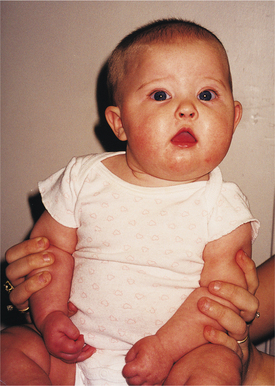
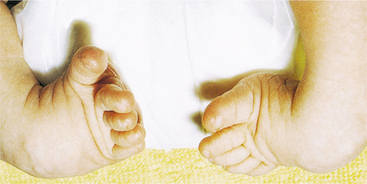
Myotonic Dystrophy.: The clinical presentation of myotonic dystrophy represents a spectrum of disease severity that is based on the size of the genetic triple repeat. Three phenotypes have been identified. The most severe is congenital myotonic dystrophy with weakness and myotonia at birth. The classic form is characterized by weakness and some degree of disability, with mild myotonia and cataracts.

The clinical symptomatology of myotonic dystrophy includes muscle weakness and wasting with a delayed relaxation of the muscle and increased excitability. Ocular cataracts are also a defining factor; cardiac conduction defects represent a serious comorbidity. A wide variety of other symptoms, including sensorineural hearing loss, hypersomnia, testicular atrophy (and sterility), and endocrine dysfunction, are also found in myotonic dystrophy.10

MEDICAL MANAGEMENT

DIAGNOSIS.

Researchers continue to develop noninvasive imaging procedures for evaluating the localization, extent, subtype, and mechanisms of skeletal muscle damage in MD. Diagnosis is currently based on clinical presentation, family history, and diagnostic testing such as muscle ultrasound, genetic testing, electromyography (EMG), muscle biopsy, and serum enzymes. The use of these five diagnostic tests with each of the major types of MD is presented briefly in this section.

Duchenne’s and Becker’s Dystrophy.

Chorionic villi sampling and amniocentesis are prenatal diagnostic techniques in which deoxyribonucleic acid (DNA) is removed during gestation to determine the presence or absence of the defective gene. Currently, standard laboratory genetic testing can detect large deletions of the dystrophin gene in approximately 65% and large duplications in about 5% of fetuses and aid in identification of carriers; the accuracy partially depends on the genetic heterogeneity of the particular disease.

Most of the remaining 35% of cases represent point mutations and are more difficult to identify but can be found by sequencing the gene. New mutations cause 30% of cases of DMD. Mothers who are carriers of a dystrophin gene mutation will pass on the mutated gene to 50% of their daughters (making them carriers) and 50% of the sons who will be affected by DMD.

EMG studies in DMD/BMD demonstrate the presence of fibrillation potentials, positive sharp waves (more in DMD), and long-duration polyphasic motor unit action potentials (MUAPs) (more in BMD) with full recruitment at low force. Nerve conduction velocities are normal in both DMD and BMD.42 A muscle biopsy specimen shows variation in the size of muscle fibers; central nuclei, inflammatory cells, and fat and connective tissue deposits are prominent characteristics of the biopsy specimen. In DMD the muscle stains negative for dystrophin antibodies, whereas in BMD levels of dystrophin vary.

Serum enzyme levels are a final diagnostic test used to identify the presence of active muscle damage. Approximately 50% to 60% of female carriers of DMD/BMD have elevated creatinine kinase (CK). Males affected by DMD/BMD present with CK levels that are approximately 2 to 10 times normal, reflecting active muscle damage (see the section on Serum Enzymes in Chapter 40; see Table 40-15).

Levels are extremely high in the first years of life before the onset of clinical weakness and persist as symptoms develop. Eventually, after replacement of muscle substance has become chronic and extensive, the CK level may be either normal or only mildly elevated (less than five times normal). The CK isoenzyme may be increased in DMD, especially in the earlier phase of the illness.

Limb-Girdle Muscular Dystrophy.

LGMD presents with markedly increased levels of CK, however, often not to the same magnitude seen in DMD. EMG and muscle biopsy results demonstrate myopathic changes. EMG findings reveal positive sharp waves, and fibrillation potentials are absent in some individuals and increased in others. Short-duration, small-amplitude MUAPs and an increased number of MUAPs are characteristic of LGMD.42

Muscle biopsy specimens present with variable fiber size and atrophy alternating with hypertrophy; in the later stages connective tissue is increased. Muscle in LGMD can be stained for a variety of components of the sarcoglycan complex as well as many other known protein defects. However, often this does not provide a specific diagnosis, because defects in one sarcoglycan can affect incorporation of the others and some protein stains are not available; clues can lead to appropriate genetic testing to confirm the diagnosis.176

Congenital Muscular Dystrophy.

A good clinical examination will provide insight into the basis of an infant’s hypotonia and determine if it is thought to be central in origin (based on soft neurologic signs) or peripheral. Initial CK will be increased, and a muscle biopsy specimen will present as an active dystrophic process. MUAPs will be diminished, and in merison-deficient MDC, a mixed picture may be noted, including demyelination.

Facioscapulohumeral Dystrophy.

In FSHD serum CK is elevated in 75% of affected individuals. Electrodiagnostic testing demonstrates a myopathic pattern, with positive sharp waves and fibrillation potentials often noted; however, these are less prominent than in DMD. The most striking characteristic in FSHD is short-duration, small-amplitude, polyphasic MUAPs.42

Muscle biopsy findings are somewhat dependent on which muscle is biopsied with variable fiber size and necrotic and regenerating fibers being common; central nuclei inflammatory infiltrates can also be noted. Analysis for the underlying genetic defect 4q35 can be used to confirm the diagnosis.

Myotonic Dystrophy.

In myotonic dystrophy microscopic evaluation of muscle and nerve demonstrates alterations. In the muscle selective atrophy of the type I fibers is noted, with central nuclei and hypertrophic fibers and increased connective tissue present. Nerve biopsy results show a variable degree of demyelination, particularly in large fibers, in addition to regenerating fibers characteristic of axonal neuropathy.186 EMG is extremely important in documenting myotonia, with the unmistakable “dive bomber” sound produced by a myotonic discharge.

TREATMENT.

At present no known treatment halts the progression of MD. Despite recent advances in our understanding of the MDs, current therapy for these disorders remains primarily supportive. Research in the area of molecular biology that has brought specific information about the molecular pathogenesis involved may one day lead to effective treatment.

Presently, treatment intervention is directed toward maintaining function in unaffected muscle groups for as long as possible, utilizing supportive measures such as physical and occupational therapy, orthopedic appliances, orthopedic surgery, and pharmaceuticals. Children who remain active as long as possible avoid complications (e.g., contractures, pressure ulcers, infections) and deconditioning that are common once they are wheelchair bound.

It is important to remember that there is an active muscle degeneration underlying the MDs. Strengthening, especially eccentric exercise, is not helpful and may cause increased weakness, particularly in DMD. Contracture management is the focus of treatment for the therapist and is important in maintaining function in clients with MD. Splinting, stretching, and serial casting are mainstays of treatment in this group and should be considered when approaching these clients.

The effective use of glucocorticoid therapy (e.g., prednisone and deflazacort) to slow the progression of DMD and BMD has been reported. The use of glucocorticoids has become the mainstay of treatment for many individuals with these forms of dystrophy. It has been demonstrated to increase myogenic differentiation, myoblast fusion, and laminin expression in animal models2 and has been shown to improve muscle force and function in children with DMD. The functional advantage of this medical treatment is the child’s ability to maintain independent ambulation, respiratory function, and spinal alignment for longer periods of time.

Stem cell and gene therapy for MD is currently under investigation, exploring a variety of ways to exogenously deliver healthy copies of the dystrophin gene to dystrophic muscles97,117 or pharmacologically treat the effects of this disease.28 Experiments in the MDX mouse have investigated the use of viruses to implant a miniversion of the dystrophin gene into dystrophin-deficient muscles to delay or stop muscle degeneration. The main obstacle has been immunologic; however, human trials are on the horizon.

In other research models, attempts have been made to inject skeletal muscles with donor cells, a gene transfer method referred to as myoblast transfer therapy (MTT). These myoblasts fuse with diseased muscle fibers and provide the missing gene to replace dystrophin. To date, there have been no reports of improved strength in people with DMD with this procedure.128,165,184

There are also treatments on the horizon for specific genetic defects. DMD is the end result of a variety of different genetic mutations. Most people with DMD have large mutations; others have point mutations, duplications, or early stop codon mutations. There is the potential that some of these may be amenable to drug treatments, either to reestablish the reading frame or to facilitate read through in the case of a premature stop codon.

In a small portion of people (up to 15%) with DMD and other genetic disorders, the underlying genetic defect is a premature stop codon or nonsense mutation (a stop codon normally directs the mRNA sequences for coding polypeptide chains to stop at the appropriate time).

The inability to read the genetic material and produce dystrophin in these individuals potentially can be suppressed by the use of the antibiotic gentamicin. This has been investigated in animal models and in cell culture with the production and incorporation of dystrophin noted in the muscle membrane.8 There are also drugs under development that bind to the ribosome and can induce the read through of the premature stop codon by the ribosome in individuals with premature stop codon mutations.

People with point mutations might be amenable to a treatment with antisense oligonucleotides designed to induce exon skipping. Genes are read in sets of three base pairs. When someone has a point mutation, if it is an out-of-frame mutation, everything after the mutation is shifted and the groups of three base pairs do not make sense. These drugs cause RNA to skip over the exon (a full set of three base pairs) where the point mutation is present during the transcription process when the introns are removed and the mRNA is formed.

In this way, the gene is allowed to continue reading in sets of three base pairs. If these drugs are effective in clinical trials, the hope is that this strategy could induce production of increased levels of dystrophin and result in an effective treatment for people with DMD.

PROGNOSIS.

Prognosis varies with the type of MD present. As a general rule, the earlier the clinical signs appear the more rapid, progressive, and disabling the dystrophy. DMD generally occurs during early childhood with rapid progression of symptoms and results in death in the third decade of life.

Pulmonary complications resulting from respiratory muscle dysfunction or cardiac dysfunction in the form of conduction defects or myopathy are the common sources of morbidity and mortality. People with BMD usually live into the fifth decade (their forties) or beyond; death occurs secondary to respiratory dysfunction or heart failure. Those with FSHD involvement may appear almost stable over a period of years; variable progression occurs among those with LGMD. People with both FSHD and LGMD have a relatively normal lifespan.

23-6   SPECIAL IMPLICATIONS FOR THE THERAPIST

Muscular Dystrophy

PREFERRED PRACTICE PATTERNS

4C:

Impaired Muscle Performance

5A:

Primary Prevention/Risk Reduction for Loss of Balance and Falling

5B:

Impaired Neuromotor Development

6B:

Impaired Aerobic Capacity/Endurance Associated with Deconditioning

6E:

Impaired Ventilation and Respiration/Gas Exchange Associated with Ventilatory Pump Dysfunction or Failure

Precautions

When people with MD become ill or injured and are on bed rest (at home or in the hospital) even for a few days, they may lose many of their functional abilities. For example, a child who falls and breaks a leg and is on bed rest or otherwise immobilized may never regain the ability to ambulate. These children should be encouraged to be as mobile as possible, and if possible, ambulate for even a few minutes during the course of any illness.

Although activity helps the client maintain functional abilities, strenuous exercise may facilitate the breakdown of muscle fibers, so that exercise must be approached cautiously. Low-repetition maximum weightlifting, especially eccentric strengthening, is not recommended. Exercise is best done in the pool, where exercise is concentric. Any exercise program should produce only minimal fatigue with no postexercise soreness, because the amount of damage to the muscle membrane with exercise is related directly to the magnitude of the stress placed on it during contraction.136

Respiratory involvement requires careful monitoring of breathing techniques, respiratory movements, and oxygen saturation levels. Monitoring oxygen during exercise and activity is recommended. See Appendix B. The client should be instructed in diaphragmatic, deep-breathing exercises. Airway clearance techniques, including the use of percussion and postural drainage and mechanical insufflator-exsufflator for assisted cough, are especially useful during illness.5

Investigators have shown that the inspiratory muscles can be trained for both force and endurance in this population. These training-related improvements in inspiratory muscle performance are more likely to occur in those who are less severely affected by the disease. In those clients who have disease to the extent that they are already retaining carbon dioxide, little change occurs in respiratory muscle force or endurance with training.116

In the later stages of respiratory compromise nighttime mechanical ventilation (e.g., continuous positive airway pressure [CPAP] or bilevel positive airway pressure [BiPAP] delivered by face mask) is an intervention used to rest the respiratory muscles. A major priority for these children is to avoid or delay the need for intubation and full-time mechanical ventilation; these noninvasive methods can aid in this goal.35

Therapy Interventions

For individuals with the more disabling forms of MD such as DMD, the therapist can provide anticipatory guidance about the course of the disease and valuable information regarding the use of various types of adaptive equipment. Initially, grab bars provide for safety, but eventually a rolling commode or combination commode and bath chair is needed. As DMD progresses, a power wheelchair provides functional mobility once ambulation is no longer possible.

Eventually, adapted controls (minijoystick, touch pad, or fiberoptic switches) may be required for the power chair to accommodate the severe weakness and contracture that develop in the later stages of DMD. Power tilt-in-space wheelchair systems allow for pressure relief where air or gel cushions are no longer sufficient.

In the individual who no longer has access to a computer for school or work secondary to severe weakness, environmental control systems allow computer access by inferred link and mouse emulation to allow control of the mouse from the wheelchair control or completely hands-free control through the use of voice recognition software.

Overhead slings and mobile arm supports are helpful with feeding and other upper extremity activities, especially after spinal surgery, when axial flexibility is removed and greater active ROM is required for these functional tasks.

Splinting and night positioning in addition to active and passive ROM exercises will aid in delaying the onset of contractures and reducing the associated morbidity. Home environmental assessment and careful family and client interviews are important in planning out the appropriate adaptive equipment and home modifications.

Both children and adults can benefit from ambulation and pool therapy programs aimed at improving endurance. For a more in-depth discussion of the direct intervention protocols for this condition, the reader is referred to other resources.26,36,143

Congenital Myopathy

Definition and Overview

Congenital myopathy describes a group of disorders with somewhat similar phenotypic course, including central core disease, nemaline myopathy, multicore-minicore disease, and myotubular myopathy/centronuclear myopathy. A full appreciation of the specifics of each disease is necessary for treatment planning. As a group they are characterized by weakness at birth or shortly thereafter, with a course that is relatively stable or slowly progressive.

Often there are developmental gains made early in the course of the disease while the natural developmental progression of the child is in full force. Later the child might lose skills, as muscle strength does not keep up with the gain in body size or contractures interfere with function.

Incidence

Nemaline myopathy is the most common of these diseases and occurs at a rate of 2 per 100,000.22 The remaining types each account for a smaller incidence but greater total number of cases (prevalence).

Pathogenesis

Nemaline myopathy is a heterogeneous disease with a number of genetic loci identified. The genes, loci, and protein products responsible for the resulting pathology include α-tropomyosinslow (1q22-23, TPM3), β-tropomyosin (p13.2, TPM2), troponin 1 (19q13.4, TNNT1), nebulin (2q21-22, NEB), and α-actin (1q42.1, ACTA1). These genes can have either autosomal dominant or recessive inheritance.

Central core disease is the result of a mutation in the RYR1 gene on chromosome band 19q13.1 with a defect in the ryanodine receptor and can be inherited both as a recessive or dominant gene. The RYR1 encodes the ryanodine receptor protein, which functions as part of a calcium release channel. It sits between the T-tubule and the sarcoplasmic reticulum and is integral to the process of excitation-contraction coupling through its regulation of cytosolic calcium homeostasis.

Multicore-minicore disease can be the result of a mutation in SEPN1 gene on chromosome band 1p36, which is inherited recessively, or it can have the same mutation as central core disease (RYR1). Both central core and multicore-minicore disease are named because of the characteristics of the muscle biopsy findings.

In multicore-minicore disease there are several intracellular collections within the muscle cell. In central core there is one larger collection. These cores occur in type I fibers and lack oxidative enzyme activity. Early in the course of a ryanodine receptor defect, the muscle biopsy specimen can present with multiple intracellular cores. As the disease progresses these cores coalesce and form one central core, which accounts for the overlap in the genetics of these two diseases.

Myotubular (centronuclear) myopathy is X-linked and caused by a mutation in the myotubularin gene (MTM1) located on Xq28.22

Clinical Manifestations

Nemaline Myopathy.: Nemaline myopathy presents in a phenotypically heterogeneous way with more than five different types identified. Type 1 is the severe congenital form, type 2 the intermediate form, type 3 the most typical, and types 4 and 5 present in childhood or adulthood, respectively.

The typical form presents in infancy and is characterized by hypotonia throughout the body, including the face. Feeding difficulties, including aspiration and respiratory insufficiency, initially present at night and are common comorbidities. Contractures and spinal rigidity are also common; there is both weakness of the extremities and a lack of flexibility of the trunk, especially in flexion. Rigid spine presentation is typical in individuals who have selenoprotein defects.

Central Core Disease.: Central core disease typically presents in infancy but can also present later. CK levels are usually normal or only mildly elevated. Common comorbidities include congenital hip dislocation, scoliosis, and talipes equinovarus. Because there is often variable penetrance, members of the same family can have varied phenotypic presentations. Anyone with central core disease is at risk for malignant hyperthermia, a severe and life-threatening reaction to certain anesthetics.

Multicore-Minicore Disease.: Four groups of multicore-minicore disease have been identified. The classic form is characterized by proximal weakness and scoliosis as well as pulmonary insufficiency. Distal joint laxity is a common finding. Myopia is a common visual finding. Individuals with group II have ophthalmoplegia and severe facial weakness in addition to more global weakness. Individuals classified as having group III disease also have arthrogryposis and early onset.

Myotubular (Centronuclear) Myopathy.: Myotubular myopathy is very phenotypically variable, with a range of presentations possible. The severe neonatal form is the most common type and can lead to death in the first year of life. Despite the fact that many have life-threatening pulmonary involvement, those who receive intensive ventilatory support can survive past the first year, gain strength, and show improvement in their respiratory status as they progress past the first year. Even so, upper respiratory infections remain significant challenges for many affected individuals. A less common form presents with a milder course and survival into adulthood.22,169

MEDICAL MANAGEMENT

DIAGNOSIS.

Diagnosis of congenital myopathy is made first by clinical examination. The differentiation of central versus peripheral causes of the hypotonia will help guide the physician’s workup. These factors include deep tendon reflexes, upper motor neuron signs, and cognitive status.

If a peripheral process is suspected, an EMG can differentiate a neurogenic versus myogenic process and then a muscle biopsy can be performed to evaluate the pathologic characteristics. Special stains or electron microscopy can be ordered to further narrow the possible diagnoses. Finally, genetic testing can be ordered to confirm the diagnosis.

TREATMENT.

Treatment is primarily symptomatic. Management of contractures is important in maintaining function, and supportive pulmonary care is important, especially in those clients who develop nocturnal hypoventilation. Cardiac monitoring is important for those with a propensity toward cardiac symptoms.

Spinal Muscular Atrophy

Overview and Incidence

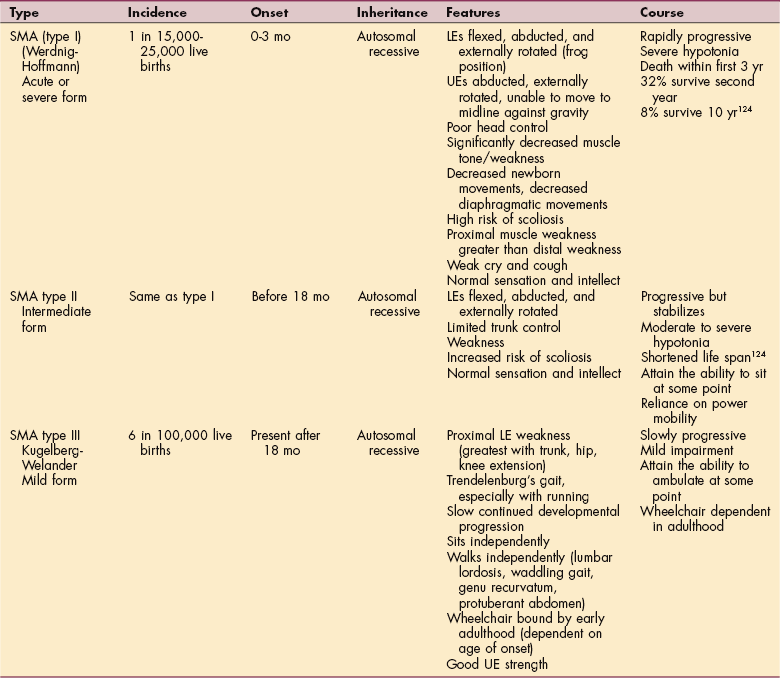
Spinal muscular atrophy (SMA) is a neuromuscular disease characterized by progressive weakness and wasting of skeletal muscles resulting from anterior horn cell degeneration. SMA is the second most common fatal autosomal recessive disorder after cystic fibrosis. The overall prevalence is 1 in 20,000 live births, and 1 in 50 individuals carry the genetic defect (Table 23-6).

Table 23-6

Spinal Muscular Atrophy

image

Childhood SMA is divided into severe (type I), intermediate (type II), and mild (type III). Type I, the more severe or acute form, is referred to as Werdnig-Hoffmann disease and causes respiratory failure and early death in the first few years of life if respiratory support is not provided.

Kugelberg-Welander disease, or type III SMA, is the mildest form. These individuals learn to walk without assistance; a relatively slow progression is noted in type III. Type II represents an intermediate form; affected individuals demonstrate the ability to sit independently at some point, but significant functional impairment and reliance on power mobility is typical (see Table 23-6). Despite the classification system into three types, SMA really represents a continuous spectrum of severity.

Etiologic Factors and Pathogenesis

The basis of this inherited pathologic condition (autosomal recessive trait) is gene deletions in the SMA critical region of the long arm of chromosome 5 (5q13.1).60 The SMN1 gene is defective in 99% of all cases of SMA and is the cause of SMA.

The NAIP gene is defective in 45% of the more severely involved type I individuals; however, no direct evidence has been presented that an NAIP deletion can cause SMA or modulate its severity.126 The SMN1 gene has a homologous gene, SMN2, that can compensate for the absence of SMN1 by producing some survival motor neuron (SMN) protein. SMN2 can be present in multiple copies; the more copies of SMN2 present, the more SMN protein is produced, and the milder the phenotype becomes.

Progressive degeneration of anterior horn cells of the spinal cord is noted in SMA, with selected motor nuclei of the brainstem being variably affected. In the remaining axons, sprouting occurs, resulting in enlarged motor units. The underlying pathogenesis of anterior horn cell loss appears to be the persistence of programmed cell death in the anterior horn cells.161

The SMN1 gene mutation decreases intracellular levels of SMN protein60 present in the cytoplasm and nucleus of all cells. The SMN protein is not fully understood but it is involved in prevention of neuronal cell death.90 The variability of phenotype in SMA is related to the presence of multiple copies of the SMN2 gene, which is less effective at producing the gene product SMN, resulting in various intracellular levels of SMN.

Other modifying genes (discussed earlier) and the presence of a protein called bcl-2 also may affect the modulation of SMN’s control of neuronal cell death.156

Clinical Manifestations

Progressive atrophy of skeletal muscles is noted, with a variable degree of hypotonia, weakness, and fatigue reported. Often fatal restrictive lung disease is present. Studies indicate initial weakness but no progressive loss in muscle strength. There is a slowly progressive loss of motor function. Explanations for this loss of function remain undetermined, but decrease in motor function could be caused by factors such as increased body size.82

Other factors that may contribute to weakness and fatigue include chronic respiratory insufficiency with hypoventilation and carbon dioxide retention and chronic malnutrition.83

Children with SMA type I present features of this disorder within the first 3 to 4 months of life. The child has marked hypotonia, severe generalized weakness, and is unable to sit unsupported. Children with type II present before 18 months with chronic weakness and attain sitting but never walk without assistance.

By definition, individuals with type III SMA are able to ambulate at some point in their lives, although they often require the use of a wheelchair by midadulthood. Clinical problems associated with the muscle weakness seen in SMA include feeding and nutrition, respiratory, cardiac, and orthopedic problems.

MEDICAL MANAGEMENT

DIAGNOSIS.

The diagnosis is suspected on the basis of clinical manifestations but is established from muscle biopsy and EMG in which a neuropathic pattern is found. Nerve conduction velocities can be normal (slowing may be noted later in the course); motor action potentials are decreased in magnitude.

On needle EMG fibrillations and sharp waves are usually present and action potentials are high amplitude, long duration, and show polyphasic morphology with an increased firing rate.167 Muscle biopsy specimens show groups of small atrophic fibers with large hypertrophic fibers, representing those without anterior horn cells and those with anterior horn cells, respectively. Genetic testing for SMA also confirms the diagnosis.

TREATMENT.

Treatment is symptomatic and preventive, primarily preventing pulmonary infection and treating or preventing orthopedic problems, the most serious of which is scoliosis. Feeding problems are common, especially in cases with bulbar muscle weakness; gastrostomy tube feedings are often necessary to optimally manage nutrition.

Respiratory problems (involvement of the intercostals) are common, and percussion and postural drainage and treatments with an in-exsufflator (also known as coughalator, a machine that helps in the removal of bronchial secretions from the respiratory tract) can aid in airway clearance, especially during intercurrent illness. Positive pressure ventilatory support, typically by BiPAP (initially at night), can extend the lifespan in these clients. Cardiac involvement is often secondary to the chronic respiratory insufficiency typical of this disease.

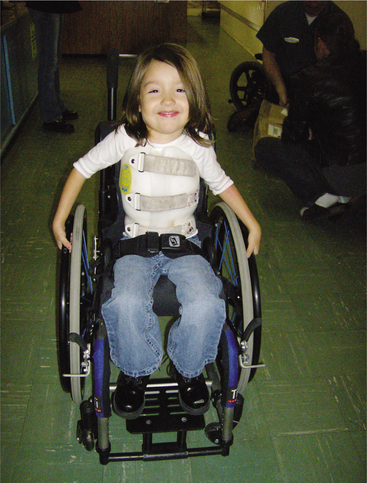
The majority of people with SMA type I or II develop some type of scoliosis; individuals with type III who become nonambulatory are also likely to develop scoliosis. Bracing has not been found to delay the progression of scoliosis but might help with sitting balance (Fig. 23-21). Care should be taken to allow good diaphragmatic movement and not create increased respiratory effort if a soft spinal orthosis is chosen to manage sitting posture.

image

Figure 23-21 Spinal muscular atrophy (SMA). This 4-year-old child with SMA type II is fitted with a one-piece body jacket or thoracolumbosacral orthosis (TLSO). The TLSO offers support and control of the trunk and lower spine for improved sitting posture, balance, and greater stability. Full body jackets of this type may increase the work of breathing; an abdominal cutout to allow diaphragmatic excursion is typically provided for individuals with SMA who rely on diaphragmatic respiration due to the pattern of muscular weakness. The chair is a titanium ultralight wheelchair, which this child can propel for independent mobility. (Courtesy Tamara Kittelson-Aldred, Access Therapy Services, Missoula, MT. Used with permission.)

Spinal fusion is the primary means of management for scoliosis. Although fusion is often necessary, there is some consequence to function. Many will not return completely to their prior functional level.58 Individuals with type II SMA can develop hip subluxation or dislocation, but this is not typically painful and the literature on surgical correction is not supportive.

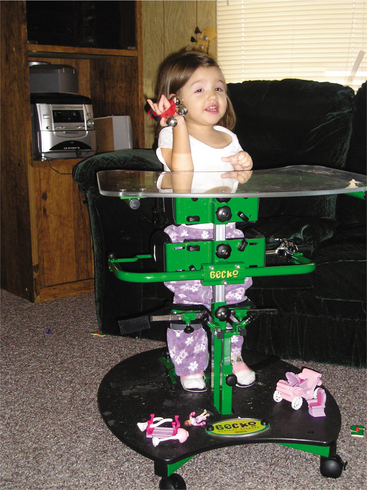
Individuals with type II SMA should participate in a standing program (Fig. 23-22). Knee-ankle-foot-orthoses (KAFOs) with ischial weight bearing are ideal for this in the younger age group. However, as contractures develop, standing will become more difficult despite the most aggressive splinting, ROM, and serial casting program.

image

Figure 23-22 Static vertical standing frame provides support and stability in the upright position for the child with spinal muscular atrophy. Ankle-foot orthoses provide support for weight bearing through the lower extremities. (Courtesy Tamara Kittelson-Aldred, Access Therapy Services, Missoula, MT. Used with permission.)

SMA type III clients are most likely to ambulate, although about half of this group loses ambulatory skills in childhood or adolescence. Fractures are common and a significant source of morbidity and loss of functional skills.

PROGNOSIS.

Prognosis varies according to age of onset or type of SMA (see Table 23-6). The earlier the disease occurs, the faster the progression of muscle weakness and the poorer the prognosis. The presence of respiratory distress also contributes to a poorer prognosis.

SMA type I is the most severe and has a very poor prognosis, with death likely in the first 2 years of life as a result of respiratory failure or respiratory infection. Most children with this form of SMA do not survive past 3 years without the aid of mechanical ventilation. Clients with type III (with onset after 2 years of age) remain independently ambulatory throughout adult life; onset before 2 years results in loss of ambulatory ability at an average age of 12 years.151

23-7   SPECIAL IMPLICATIONS FOR THE THERAPIST

Spinal Muscular Atrophy

PREFERRED PRACTICE PATTERNS

4A:

Primary Prevention/Risk Reduction for Skeletal Demineralization

4B:

Impaired Posture (scoliosis)

5E:

Impaired Motor Function and Sensory Integrity Associated with Progressive Disorders of the Central Nervous System

6C:

Impaired Ventilation, Respiration/Gas Exchange, and Aerobic Capacity/Endurance Associated with Airway Clearance Dysfunction

7A:

Primary Prevention/Risk Reduction for Integumentary Disorders

A variety of opinions exist regarding the usefulness or effectiveness of an active developmental program for children with SMA. However, often children with SMA type I or II outlive predictions, and therapy intervention is helpful in improving function and preventing musculoskeletal problems.

Precautions

The infant or child with SMA who is immobile requires frequent changes of position to prevent skin problems and other complications, especially pneumonia. The pharynx may require suctioning to remove secretions in the more severe cases, and feeding must be carried out slowly and carefully with good positioning to prevent aspiration in those individuals with oral motor involvement.

The involvement of a therapist with specialization in feeding (usually an occupational therapist or speech-language pathologist) is essential for these children. These children are intellectually normal and require verbal, tactile, and auditory stimulation and various types of assistive technology.

Respiratory weakness or diminished head control may prevent the child from benefiting from prone positioning. This is especially problematic when the child cannot lift the head to clear the airway. The use of prone positioning must be evaluated and monitored carefully by the therapist; vertical positions (sitting and standing) tend to be the most functional.

Monitoring oxygen saturation levels may be necessary in evaluating programming effectiveness. Observe how much work is required to breathe, and whenever possible use a pulse oximeter (see Fig. B-1, Appendix B) to measure oxygen saturation noninvasively. Pulse oximetry can provide an outcome measure for documentation (see Appendix B).

Therapy Intervention

Specific treatment protocols for this condition are beyond the scope of this book. The therapist is referred to a more appropriate resource.26,171 An overall management program should include positioning to encourage head and trunk control and to promote functional strengthening, in addition to splinting to maintain ROM. Assistive technology can provide the maximum possible independence for children with SMA.

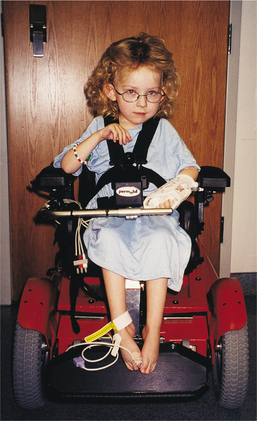
Power mobility for the child with SMA who has no independent mobility is essential and should be considered in the child as young as 2 years of age172 (Fig. 23-23). Low-technology solutions such as “slings and springs” also may be very liberating for the child who has limited antigravity upper extremity movement by providing a wide variety of exploratory opportunities.

image

Figure 23-23 Spinal muscular atrophy (SMA). Three-year-old with SMA in her power wheelchair, which allows her to adjust the seat height so that she can be on the floor to aid with transfers or at eye level with her peers. The adjustable seat allows the child to participate in activities at elevated surfaces (e.g., counter or table heights), retrieve objects from a shelf, or help decorate the tree at Christmas. (Courtesy Allan Glanzman, Children’s Seashore House of the Children’s Hospital of Philadelphia, PA.)

Facilitation and active assistive work toward standing and ambulation have been found to be effective in increasing forced vital capacity and in reducing the incidence of hip dislocation and contracture. More severely involved clients may benefit from positioning in a standing frame or instruction in standing to assist with or perform transfers independently.168

Elastic abdominal binders similar to those used in spinal cord injury can be used to provide increased trunk, abdominal, and diaphragmatic stability, especially if there is evidence of decreased oxygen saturation in sitting.168 Inspiratory muscle training also has been found to be effective in neuromuscular disorders in improving maximal voluntary ventilation, maximal inspiratory mouth pressure, as well as respiratory load perception63,191 and should be considered in this population.

Aquatic therapy can be a valuable adjunct to traditional intervention strategies for people at all levels of the SMA continuum. By using the physical properties of water such as buoyancy, hydrostatic pressure, viscosity, and turbulence, the therapist provides additional tools for intervention, especially in the case of extreme weakness characteristic of this disorder.51

TORTICOLLIS

Definition and Overview

Torticollis (congenital muscular torticollis or CMT; wry neck) means twisted neck and is a contracted state of the sternocleidomastoid muscle (SCM), producing head tilt to the affected side with rotation of the chin to the opposite side (Fig. 23-24). Four types of muscle abnormalities have been identified on ultrasonography: 15% had a fibrotic mass in the SCM (type 1), 77% had diffuse fibrosis mixed with normal muscle (type II), 5% had fibrotic tissue without normal muscle (type III), and the last group (type IV) presented with a fibrotic cord and represented only 3% of the population.

image

Figure 23-24 Torticollis. Five-month-old with torticollis (head tilt toward the involved side and rotation away from the involved side). (Courtesy Allan Glanzman, Children’s Seashore House of the Children’s Hospital of Philadelphia, PA.)

Torticollis often is confused with a separate disorder known as cervical dystonia (also referred to as acquired torticollis or spasmodic torticollis). These are two separate entities and are presented separately in this text. CMT as it is presented in this section is a musculoskeletal phenomenon, whereas cervical dystonia is a movement disorder with an underlying CNS pathology (see the section on Dystonia in Chapter 31).

Incidence and Etiologic Factors

Reports of the overall incidence of CMT vary significantly from 0.6 to 400 per 100,000 live births, but this condition is not considered uncommon.79 A variety of possible causes of CMT exist, but the etiology remains unknown.

Initially it was thought that the fibrosis was related to birth trauma, because incidence is increased in breech (19%) and forceps (6%) delivery, vacuum extraction (30.5%), and cesarean section (17.9%).31 Predisposing factors can include restrictive intrauterine environment, poor muscle tone, or cervical-vertebral abnormalities. A genetic contribution also has been proposed in a portion of cases of CMT.48

Pathogenesis

The possible pathogenesis of the muscular fibrosis seen in CMT has been explored experimentally in animal models and has been produced through venous occlusion, and this, in addition to arterial occlusion, has been proposed as the possible pathogenesis.79

One theory postulates that the malposition of the head potentially leads to a compartment syndrome. In this scenario, the SCM is not stretched or torn but rather kinked or compressed. With the head and neck in a position of forward flexion, lateral bend, and rotation, the ipsilateral SCM kinks, causing an ischemic injury and subsequent edema at the site of the kink.34

Clinical Manifestations

The first sign of CMT identified in a portion of affected children is a firm, nontender, palpable enlargement of the SCM often referred to as a sternocleidomastoid tumor of infancy. A portion of cases demonstrate bulbous fibrotic tissue at the base or midportion of the involved SCM. This local lesion usually reaches its maximal size by 1 month and then slowly regresses within 4 to 8 months and does not always result in torticollis.177

The typical position observed of lateral head tilt and rotation to the opposite side predominates regardless of whether a fibrotic mass is present (estimated in 15% to 66% of cases79,81) or no mass is palpated and the muscle is uniformly fibrotic and shortened.

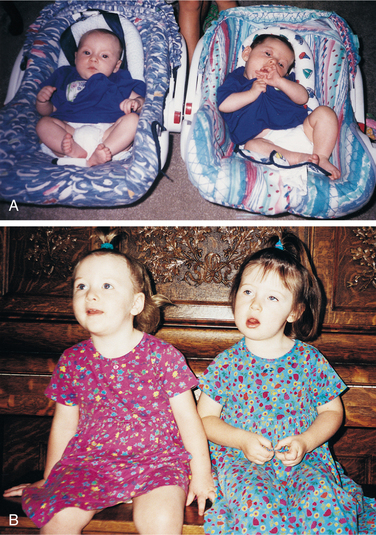
If the deformity is severe, the infant’s face, ear, and head flatten from resting on the affected side, a condition referred to as plagiocephaly (“oblique head”); this cranial asymmetry gradually worsens. The infant’s chin turns away from the side of the shortened muscle, the head tilts to the shortened side, and the shoulder is elevated on the affected side, further limiting cervical movement.

The side of the plagiocephaly (best observed by looking down on the head from above) is usually defined by the side of the flattened forehead. When torticollis and plagiocephaly occur together, this condition is referred to as plagiocephaly-torticollis deformation sequence (Fig. 23-25).

image

Figure 23-25 Plagiocephaly-torticollis deformation. A, Four-month-old fraternal twins: the child on the right has marked untreated congenital muscular torticollis (CMT) with plagiocephaly. Note the positional pelvic asymmetry from placement in a car seat. B, The same twins (2 years old) after physical therapy (PT) intervention at age 6 months for the child on the right. PT intervention over a 3-month period of time included passive range of motion, facilitated active range of motion, positioning, and a cervical collar. A home exercise program was prescribed with periodic rechecks. Eventually the use of a helmet was instituted to remodel craniofacial asymmetry (see Fig. 23-27). Some craniofacial asymmetry persists, although full active and passive range of motion are present. (Courtesy Laurie Matteson, Great Falls, MT. Used with permission.)

The incidence of other deformities such as hip dislocation and positional clubfoot is elevated in cases of CMT.31,64 Subluxation of the cervical spine can also be associated with CMT and should be ruled out by cervical spine radiographs.79,162

MEDICAL MANAGEMENT

DIAGNOSIS.

Clinical observation combined with the history forms the basis of the initial diagnostic process. Medical evaluation including radiographic studies of the spine is always indicated to rule out congenital deformities of the cervical spine, ocular anomalies, and less frequently tumors or other CNS pathology in children with presumed torticollis.

TREATMENT.

Initial management involves a period of active observation for spontaneous resolution. During this time physical therapy to correct the positional/deformational effects is the mainstay of treatment for CMT. Interventions include twice daily passive ROM to stretch the shortened muscle preceded by warm compresses, massage, and slight traction to relax the muscle before stretching; stabilization of the proximal attachment of the SCM and trapezius is important during ROM.

Positioning is also important to encourage erect and midline head posture. Strengthening activities should include both active and active assistive exercises in addition to the incorporation of postural reactions in treatment when these reactions begin to develop.88

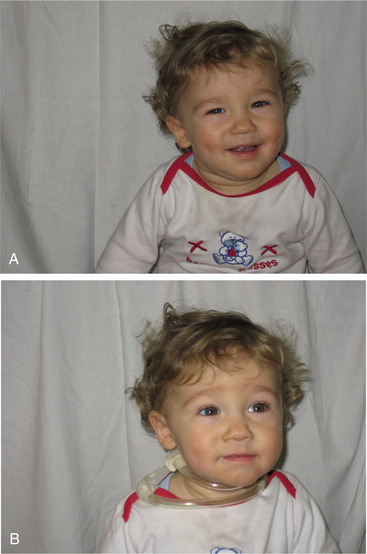
Splinting has been advocated by some for older children (older than 4 months) who continue to demon- strate head tilt.84 A cervical collar or tubular orthosis for torticollis (TOT) can be helpful in providing tactile cueing for movement in the direction opposite the lateral tilt. Usually these collars are the most effective at a time that is compatible with active head control (Fig. 23-26).

image

Figure 23-26 Congenital torticollis. A, Note the head tilt in this toddler with right-sided congenital torticollis. Despite his full range of motion, he has an occasional residual head tilt to the right and turn to the left. B, The same child wearing a TOT Collar (tubular orthosis for torticollis) to encourage a more vertical head position. (Courtesy Allan Glanzman, Children’s Seashore House of the Children’s Hospital of Philadelphia, PA.)

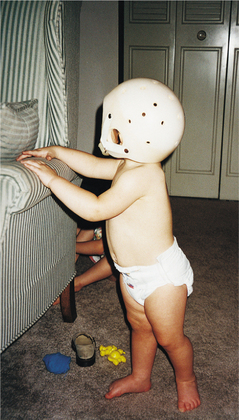
In cases of delayed treatment or where craniofacial asymmetry persists, nonsurgical remodeling of the skull using externally applied pressure can be used (Fig. 23-27). With advances in computer software and technology (e.g., pressure scanners), researchers are determining the pressure per square inch (PSI) that applies the appropriate force needed to achieve the remodeling process for each individual head diameter, volume, and topography.181,182

image

Figure 23-27 Fourteen-month-old girl wearing a polypropylene helmet lined with durometer foam. This helmet placed remodeling pressure on the cranium to reshape unresolved craniofacial asymmetry that persisted as a result of delayed medical intervention and inconsistent use of a cervical collar. The helmet was accepted readily by the child and worn at all times (except for bathing) for approximately 4 months. Pressure was applied to the right posterior occiput to bring the head and neck into midline alignment while space was created where the skull was flattened in the left posterior occipital area to allow for bony growth in that area. See Fig. 23-25, B for intervention outcome. (Courtesy Laurie Matteson, Great Falls, MT. Used with permission.)

Surgical intervention is rare (e.g., SCM tenotomy, plastic surgery for craniofacial asymmetry) and is considered only if the individual continues to demonstrate significant motion restrictions of 30 degrees after 6 months of age or the deformity persists past 12 months of age. Increased thickening of the SCM or increased deformity are also indications to consider surgical intervention.88

PROGNOSIS.

CMT usually resolves with conservative treatment. Complete recovery, including full passive ROM, can be expected to take approximately 3 to 12 months, with fewer than 16% of children presenting in the first year requiring surgery.45 Left untreated or poorly managed, chronic, unresolved torticollis can result in persistent deformity and asymmetry of the head shape and position.

23-8   SPECIAL IMPLICATIONS FOR THE THERAPIST

Torticollis

PREFERRED PRACTICE PATTERNS

4B:

Impaired Posture

4C:

Impaired Muscle Performance

4D:

Impaired Joint Mobility, Motor Function, Muscle Performance, and Range of Motion Associated with Connective Tissue Dysfunction (cervical subluxation)

7A:

Primary Prevention/Risk Reduction for Integumentary Disorders (orthosis, bracing)

The prognostic information provided makes it possible for therapists to better predict treatment duration at the time of initial assessment. When parents are provided with more precise information about the length of treatment, parents may be more willing to adhere to the exercise program.46

The therapist must remain alert to recognize cervical subluxation in cases of CMT. This may be observed as residual head-neck posturing problems, even after successful neck muscle therapy; usually no neurologic deficits are present.162

Likewise, torticollis that does not respond to physical therapy may have a nonorthopedic cause such as ocular torticollis, requiring further medical evaluation. Do not hesitate to ask for reevaluation if and when a child does not respond to therapy.

Postoperative

After surgery for this condition postoperative bracing to position the lengthened muscle on stretch has been advocated to allow the muscle to heal in the lengthened position.84 Standard postoperative monitoring of vital signs and skin condition is recommended.

ERB’S PALSY

Definition and Overview

Erb’s palsy is a paralysis of the upper limb typically resulting from a traction injury to the brachial plexus at birth. Erb’s palsy actually comprises three distinct types of brachial plexus palsies: (1) Erb-Duchenne palsy affecting the C5 to C6 nerve roots (95% to 99% of all cases), (2) whole-arm palsy affecting C5 to T1, and (3) Klumpke’s palsy affecting the C8 and T1 (lower plexus) nerve roots.

Incidence

The incidence of brachial plexus injuries has decreased secondary to improved obstetric management of difficult labors. Traction injuries are most common in newborns, occurring in 0.1% of spontaneous, 1.2% of breech, and 1.3% of forceps deliveries. Overall, the incidence of birth-related traction injuries is between 0.5 and 2 per 1000 births.

Etiologic and Risk Factors

The major contributing factor to these injuries has been attributed to forced stretching of the brachial plexus, that is, a pulling away of the shoulder from the head secondary to a traction maneuver during the birth process.

The lower plexus injury resulting in Klumpke’s palsy usually is caused by manipulation during delivery resulting from hyperabduction of the arm at the shoulder, that is, the head and trunk remain relatively immobile in the pelvis while the upper extremity is stretched severely. However, some question remains about the role of the obstetrician as compared with the position of the infant and the forces encountered in the canal before birth.

Evidence suggests that the propulsive nature of the birth process when stretching of the involved nerves occurs is something over which the birth attendant has no control.155

Obstetric history associated with Erb’s palsy is characterized by high birth weight or vertex delivery with shoulder dystocia (i.e., during delivery the baby’s shoulder impinges on the mother’s symphysis pubis). Klumpke’s palsy more commonly is associated with heavy sedation, difficult breech delivery, and brow or face presentation. Brow or face presentation makes vaginal delivery impossible. Brow presentation rarely persists; in face presentation, the head is hyperextended and the chin presents.

Rarely, neoplasm present at birth results in brachial plexus palsy. The absence of signs of a traumatic injury accompanied by the onset of weakness and progressive course in the first few days of life must be investigated by MRI.1

Pathogenesis

Plexus injury during birth is usually the result of a stretch or avulsion of the plexus. A mild lesion is characterized by stretching of the nerve fibers, whereas a moderate injury involves some nerve fibers being stretched and others actually torn.

A more severe injury is characterized by a complete rupture of the plexus trunks with avulsion of the roots from the spinal cord. The degree of disability depends on the site and severity of injury. Diaphragmatic and serratus anterior paralysis suggests an avulsion injury as indicated by the location of the nerves with respect to the plexus.

Persisting disability in neonatal brachial plexus palsy is due in part to impaired motor unit activation. This impairment may be a form of developmental apraxia caused by defective motor programming in early infancy.18

Clinical Manifestations

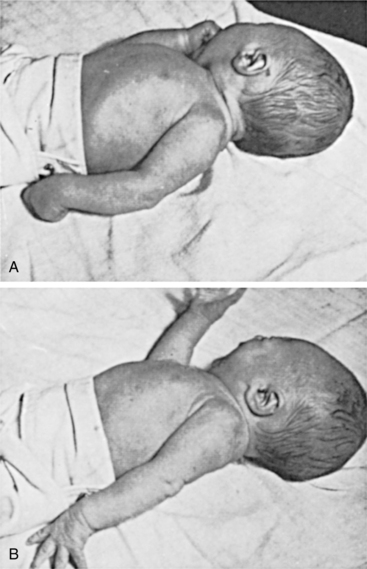
Children with brachial plexus injuries are unlikely to demonstrate postural or placing responses with the involved upper extremity when tested. In Erb’s palsy the arm is maintained in adduction and internal rotation at the shoulder with the lower arm pronated and fingers flexed, assuming the waiter’s tip position (Fig. 23-28). Children with this type have difficulty with activities such as hand-to-mouth, hand-to-head, and hand–to–back of neck movements but usually have control of the wrist and fingers.

image

Figure 23-28 Erb’s palsy. A, In this infant with Erb’s palsy, the arm is maintained in a position of adduction and internal rotation at the shoulder with the lower arm pronated and fingers flexed. B, Same infant demonstrating an asymmetric Moro reflex with opening of the left hand but still in the “waiter’s tip” position. (From Behrman RE, Kliegman RM, Jenson HB: Nelson textbook of pediatrics, ed 17, Philadelphia, 2004, Saunders.)

In Klumpke’s palsy, paralysis of the small muscles of the hand and wrist flexors causes a claw hand appearance. Proximal shoulder control is good, but voluntary wrist and hand control is difficult. In severe forms of brachial palsy (whole-arm palsy), the whole plexus can be affected but to a varying degree (Fig. 23-29). In this case careful examination is necessary to identify affected muscles. In all three cases (Erb’s, Klumpke’s, and whole-arm palsy) normal sensation is diminished; however, gross pain sensation may not be decreased to the same degree as movement.

image

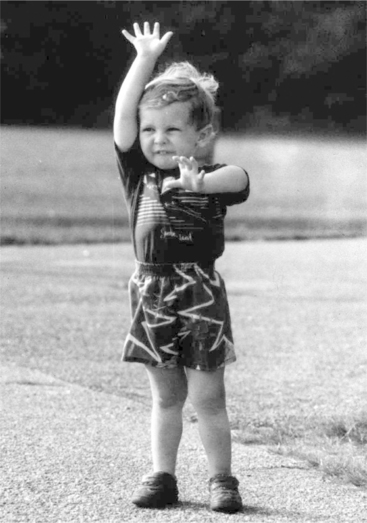
Figure 23-29 Brachial plexus palsy. Child with limited shoulder external rotation and abduction of the left arm associated with whole-arm palsy. Full motion of the upper extremity is demonstrated on the right side. (From Green DP, Hotchkiss RN, Pederson WC: Green’s operative hand surgery, ed 5, London, 2005, Churchill Livingstone.)

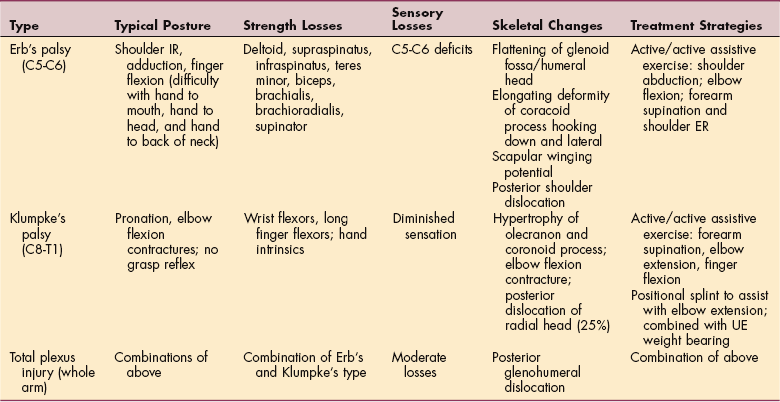
The clinical characteristics of brachial plexus injury are summarized in Table 23-7.

Table 23-7

Brachial Plexus Injury: Clinical Characteristics

image

IR, Internal rotation; ER, external rotation; UE, upper extremity.

MEDICAL MANAGEMENT

DIAGNOSIS.

Some injuries are recognizable readily at or soon after birth. Radiographs may be taken to rule out associated fractures of the clavicle. Imaging of the brachial plexus using MRI is not invasive and can demonstrate proximal and distal lesions.

MRI can be used to detect nerve root avulsions, nerve ruptures, brachial plexus scarring, posttraumatic neuroma, brachial plexus edema, spinal cord damage, abnormalities of the shoulder joint, trauma, neoplasms, and infection. This type of imaging allows diagnosis and careful preoperative evaluation of children with brachial plexus injuries.11

EMG can be used to delineate the extent of injury and aid in the prognosis and assist the surgeon in identifying appropriate surgical procedures. EMG usually is delayed until 4 to 6 weeks after birth and may be followed serially over time to track recovery. Conduction studies can aid in separating actual axonal loss from conduction block. Needle EMG can help determine the portion of the plexus damaged as well as the severity of the damage.42

TREATMENT.

Although medical intervention may include the use of botulinum toxin (Botox) to address contractures that may develop over time150 or surgery, treatment is primarily with a therapist following the strategies outlined in Table 23-7. Surgery has found renewed favor as evidence is increasing that microneurosurgical intervention at an early stage can improve the outcome in some cases. For example, some children have no chance of recovery unless they undergo early aggressive surgical reconstruction of the injured brachial plexus. In children with global or total paralysis, surgery is performed by 3 to 4 months to maximize ultimate extremity function and minimize disability.66,173

Options for surgical care include tendon transfers considered after a plateau in recovery has occurred or microneurosurgery (e.g., nerve decompression, neurolysis, nerve repair, and nerve reconstruction with grafts or tubes). The latter procedure is best considered between the ages of 6 and 12 months for optimal functional results.152 Unfortunately, skepticism exists about the role of surgery, and many cases are referred too late for primary nerve surgery. Secondary reconstructive procedures at a later date can still improve the outcome in many cases.89

PROGNOSIS.

In most instances full recovery can be expected; however, some children do have long-term disability as an outcome and require careful follow-up to prevent the development of contractures and facilitate active motor control.

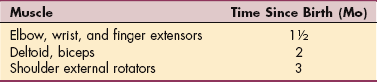
The first muscles to return are the elbow, wrist, and finger extensors followed by the deltoid and biceps and later the external rotators. The timely recovery of these muscles (beginning at 6 weeks and continuing through 3 months) is prognostic of good functional recovery.42

The long-term prognosis for recovery of motor control is poor beyond 18 months (Table 23-8), and probably 15% of infants experience significant disability, with reports showing a wide range of long-term impairments.152 Recovery of shoulder external rotation is highly indicative of a good long-term outcome and is a key movement for performing a variety of functional tasks. Almost half of those with the Erb-Duchenne type of injuries do not recover shoulder external rotation, and contractures of the shoulder and elbow joint with atrophy of the affected muscles can occur.

Table 23-8

Key Indicators of Recovery of Motor Control*

image

*Good functional recovery is expected if the child achieves a strength grade of 3 or better within the listed time frames.

23-9   SPECIAL IMPLICATIONS FOR THE THERAPIST

Erb’s Palsy

PREFERRED PRACTICE PATTERN

5F:

Impaired Peripheral Nerve Integrity and Muscle Performance Associated with Peripheral Nerve Injury

An integrated team approach to congenital brachial plexus injuries is imperative. Each child must be carefully evaluated, therapy interventions maximized, and the surgical approach (when required) individualized to obtain the best outcome.

An aggressive and integrated physical and occupational therapy program is essential in the treatment of these injuries. The therapist uses a problem-solving approach and continually adjusts the interventions based on each child’s unique needs. The maintenance of full passive mobility during the period of neurologic recovery is essential for normal joint development.

Early surgical correction of shoulder contractures and subluxations reduces permanent disability. Postoperative rehabilitative therapy can preserve and build on gains made possible by medical or surgical interventions.144,147

Treatment should focus on activities that encourage active and active assistive movement and that maintain the normal joint kinematics. The shoulder requires particular attention to maintain the normal scapulohumeral and scapulothoracic relationships in addition to maintaining the normal “roll and glide” of the glenohumeral joint and preventing subluxation.

Some strategies used to maintain functional upper extremity ROM, prevent subluxation, and improve active movement include neuromuscular electrical stimulation, biofeedback, myofascial release techniques (sometimes referred to as soft tissue mobilization), joint mobilization, and positioning using splints. Carefully applied neurodynamic techniques to physically challenge the nervous system in Erb’s palsy may contribute to the physical health of the nervous system leading to optimum physiology. Scapulothoracic stabilization for winging of the scapula using taping may be helpful, but no reported outcomes have been published for these last two interventions.

Passive ROM exercises should be performed three times a day in the direction of limited movement to help prevent the development of contractures, and a well-thought-out home program is an integral part of the therapy program. When splints are used, careful follow-up and family education by the therapist is necessary, especially if sensory impairment is present.

OSTEOGENESIS IMPERFECTA

Overview and Incidence

Osteogenesis imperfecta (OI), sometimes referred to as brittle bones, is a rare congenital disorder of collagen synthesis affecting bones and connective tissue. Four primary types of OI exist, with varying degrees of severity and clinical presentation (Table 23-9). Clinical features vary widely between types, within types, and even within the same family. Experts estimate that between 30,000 and 50,000 people have OI in the United States (prevalence), or about 1 in 20,000 (incidence).134

Table 23-9

Sillence Classification of Osteogenesis Imperfecta (OI)

image

Etiologic Factors and Pathogenesis

Most children with OI inherit the disorder from a parent (autosomal dominant inheritance). Genetic counseling requires recognition that the parent can be a carrier of the dominant gene by parental mosaicism (i.e., the parent carries the mutation in a portion of his or her germ cells).

Approximately 25% of children with OI, however, are born into a family with no history of the disorder. In these cases, the genetic defect occurred as a spontaneous mutation. Because the genetic defect is usually dominant (whether inherited from a parent or resulting from a spontaneous mutation), affected people have a 50% chance of passing on the disorder to each of their children.134

More than 150 mutations have been identified as causative in OI, all affecting the genes (COL1A1 and COL1A2) that code for type I collagen. Type I collagen (see the section on Collagen in Chapter 6 and Fig. 6-7) is found in the extracellular matrix of bone, skin, and tendon and is the major structural protein (scaffolding) of these tissues.

When the defective gene instructs the body to make too little type I collagen or abnormal polypeptide chains that cannot form the triple helix of type I collagen, the symptomatology of OI becomes apparent. In type I, the least severe form of OI and more often the result of acquired rather than hereditary mutation, collagen production is reduced by 50%. The remaining collagen is produced normally, creating a relatively mild clinical picture.

In the most severe form (type II) only 20% of collagen is produced and the phenotypic result is devastating. However, relating the amount of collagen produced to the ultimate phenotype grossly oversimplifies this complex disorder, and the exact mechanism by which severity is modulated remains an area of active research.

In endochondral and intramembranous bone formation the final structure of bone is similar, despite different mechanics of formation. Collagen is produced by osteoblasts that, in normal bone, become surrounded by a collagen matrix. Once the matrix is formed, calcium is laid down, trabeculae develop, and cancellous bone is formed. As the trabeculae become thicker and the density increases, a cortex of compact bone is formed.

Bone modeling in OI appears to be defective, with a smaller cross-sectional area observed and thinner cortex noted in the long bones, leading to diminished strength. The overall mass of cancellous bone also is decreased in OI as a result of a smaller number of trabeculae, possibly resulting from decreased production in endochondral ossification.

In individuals with OI cancellous bone volume does not increase with age as it does in children who do not have OI. This is related primarily to decreased rates of trabecular thickening in people with OI. In type I OI the annual rate of trabecular thickening is decreased, and in type III and type IV no trabecular thickening is noted over time.

The rate at which matrix is laid down in these three types of OI is slowed when compared with the normal rate. Because this slowing is uniform across types I, III, and IV of OI, severity probably is not related to the decreased rate of matrix production.148

The underlying causes of the bony abnormalities seen in people with OI are not entirely understood but probably result from one or a combination of factors. These factors have a potential role in the ultimate phenotypic expression in OI and include the unique structural characteristics of the abnormal collagen created by the mutation; the absence of other connective tissue proteins that impact the assembly of the extracellular matrix; and the degree to which the collagen is incorporated into that matrix.43,113

Clinical Manifestations

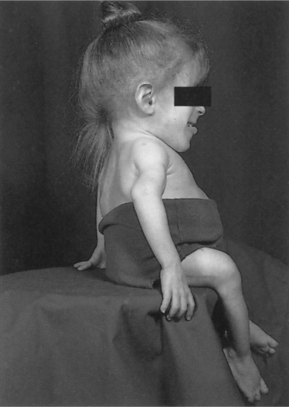
This disease has a wide range of clinical presentations ranging from a normal appearance with occasional fractures to severe involvement with growth retardation and long bone and spinal deformities (Fig. 23-30; see Table 23-9). In its severe forms, OI is evident at birth because of the fractures and deformity that have occurred in utero.

image

Figure 23-30 Child with osteogenesis imperfecta type III. This shows defect of all four limbs and increased anteroposterior diameter of the chest. Note the spinal deformity. (From Bullough PG: Bullough and Vigorita’s orthopaedic pathology, ed 3, St Louis, 1997, Mosby, p 133.)

The less severe forms may not become evident until the child begins to walk and fractures develop. The tendency to fracture declines after puberty when cortical bone density increases despite trabecular density remaining low. The fracture rate in women increases after menopause. Some children with osteogenesis imperfecta can be mistaken for abused children until the diagnosis is made.

Shortened stature is common in children with OI. This is due, at least in part, to the abnormal development of epiphyseal growth plates, deformity after fractures, osteoporosis, and vertebral collapse, which contribute to loss of height with increasing age. Lower extremities tend to be more involved than upper extremities. These children often bruise easily, and ligaments tend to show increased laxity.

Additional clinical features may include thin skin, joint hypermobility, deformity of bony auditory structures with subsequent hearing impairment, scoliosis, pectus deformity, deformed teeth, a tendency toward recurrent epistaxis, excess diaphoresis, cardiovascular complications (e.g., aortic and mitral valve insufficiency, aortic dissection), and metabolic defects (e.g., elevated serum pyrophosphate, decreased platelet aggregation). Children with type III or IV OI are born with a triangular face, a feature that makes them easily identifiable.

Blue or tinted (purple, grey) sclerae are present. The sclerae are blue or tinted because they are abnormally translucent like thin skin, and consequently they filter the red color of the underlying choroid plexus of blood vessels, just as a bruise or a subcutaneous hematoma appears blue through thin translucent skin.154

Developmental motor skills often are delayed because of poorly developed muscles (atrophy), hypermobility of joints, and multiple fractures requiring immobilization. The majority of children with type I OI ambulate either as functional or household ambulators, and approximately 50% walk without any type of assistive device as community ambulators.

Almost half of children with type III OI are dependent on power mobility, with only 27% becoming household ambulators. Of those children with type IV disease, 26% are community ambulators and 57% household ambulators. The best predictors of ambulatory status are disease type and the ability to sit by 9 or 10 months of age.32,47

MEDICAL MANAGEMENT

DIAGNOSIS.

Diagnosis of OI is based on clinical manifestations and skin biopsy that looks at collagen. The collagen defect is used to determine what type of OI the person has according to the Sillence classification. Bone scans and x-ray films show evidence of multiple old fractures and skeletal deformities. Skull radiographs show wide sutures with small, irregularly shaped islands of bone called wormian bones.

TREATMENT.

Orthopedic management is central to the overall care of symptomatic OI. Fracture prevention and control are the primary focus; careful positioning and handling are required to prevent fractures in the neonate. Lightweight HKAFOs and splints also may be used to help support the limbs, prevent fractures, and aid in ambulation. HKAFOs are used more often than KAFOs because KAFOs have a longer lever arm for rotational force, resulting in greater risk for proximal femur fractures.61

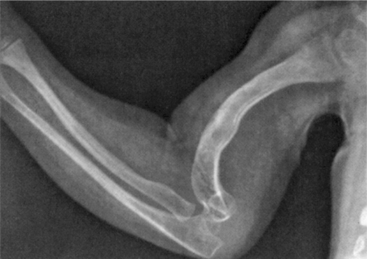
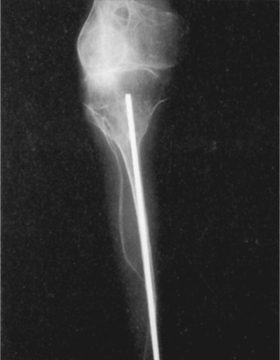
Fracture immobilization is as minimal as possible to prevent disuse atrophy. A repeated cycle of fractures-immobilization of the same bone can inhibit progress in mobility and the development of strength (Fig. 23-31). The use of intramedullary rods is one way of managing recurring fractures (Fig. 23-32). Indications for this procedure include more than two fractures in the same long bone within a 6-month period, lower extremity bone angles greater than 40 degrees, or very unstable lower extremities in a child who appears ready to walk. Telescoping intramedullary rods are used to stabilize the bones, elongating as the bone grows, although this procedure is not without risk.

image

Figure 23-31 Radiograph of upper extremity in a person with osteogenesis imperfecta. This radiograph shows severe osteoporosis, slender bones, and multiple healed fractures. (From Bullough PG: Bullough and Vigorita’s orthopaedic pathology, ed 3, St Louis, 1997, Mosby, p 134.)

image

Figure 23-32 Radiograph of the leg of an individual with severe clinical osteogenesis imperfecta that has been treated by rodding of the tibia. The extreme ribbonlike quality of the bones is apparent in the fibula. (From Bullough PG: Bullough and Vigorita’s orthopaedic pathology, ed 3, St Louis, 1997, Mosby, p 135.)

The reoperation rate is significant, with complications related to osteopenia that occurs around the rods (greater around thicker rods), rod migration, and bony growth even beyond the available expansion. Osteotomies also are performed to help control rotational deformities, with appropriate bracing to prolong the time period between potential surgeries.

Medical management has included the use of bisphosphonates, a class of medications (including pamidronate) that inhibit osteoclast function, improve bone mineral density, and decrease the incidence of fractures. Some data exist on the use of growth hormone in OI, but reports of an increased rate of fractures have prevented the use of growth hormone as a first-line drug in the treatment of OI.193

Initial reports of allogeneic bone marrow transplantation of mesenchymal cells (progenitors of osteoblasts) have been promising, with increased bone mineral content and histologic evidence of new bone formation 3 months after engraftment.80 Studies in cell cultures and in mice have raised the possibility that several additional strategies may be developed to treat OI through the use of gene therapy; a review of current gene therapy strategies under investigation is available.53 At present, no effective treatment exists for type II (perinatal lethal) OI.

PROGNOSIS.

People with OI types I and IV have a milder course and live a relatively normal lifespan. In type III OI mortality can be related to cardiorespiratory failure stemming from kyphoscoliotic deformity. A significant risk also exists of basilar invagination of the skull and intracranial bleeding.115

Incomplete and relatively painless fractures after birth that receive no treatment can produce deformities from bones healing in poor alignment. Short stature and deformities give some individuals with OI the appearance of having achondroplasia. Milder forms of this condition have fewer clinical problems, and these children survive into adulthood.

23-10   SPECIAL IMPLICATIONS FOR THE THERAPIST

Osteogenesis Imperfecta

PREFERRED PRACTICE PATTERNS

4A:

Primary Prevention/Risk Reduction for Skeletal Demineralization

4B:

Impaired Posture

5B:

Impaired Neuromotor Development

6E:

Impaired Ventilation and Respiration/Gas Exchange Associated with Ventilatory Pump Dysfunction or Failure (kyphoscoliosis)

Precautions

Infants and children with this disorder require careful handling to prevent fractures. They must be supported when they are being turned, positioned, moved, burped, and cuddled or held. Diaper changing must be carried out gently, never lifting the legs by the ankles but rather by gently lifting the buttocks.

With the older child, passive ROM exercises (especially to obtain hip extension) can be used with caution and are considered safe if used in moderation. Rotational forces are contraindicated, but gentle stretching in straight planes and myofascial stretching are acceptable if done carefully and with the client’s participation.

The child must be encouraged to use full active ROM without force. Strengthening activities should avoid placing weight near joint lines, and if manual resistance is applied, long lever arms should be avoided.

Family Education

Educational material and information can be obtained from the Osteogenesis Imperfecta Foundation (www.oif.org). The family must be instructed in handling and positioning techniques. Precautions should be given to avoid lifting the child under the arms or by the hands. The young child should not be tossed into the air or be involved in roughhouse play.

At the same time, families should be encouraged to hold and play with their child appropriately and to help the child develop interests that do not require strenuous physical activity. Fine motor skills are encouraged, and ADL modifications for personal hygiene may be necessary.

Swimming frequently is recommended, but the child must be monitored carefully to avoid falls in the shower and pool area. Nonskid aquatic shoes can be worn (by the child or by the caregiver carrying a nonambulatory child in the aquatic area) to assist with this precaution.

Family members must also be instructed to assess for fractures daily. The child may bruise easily, but it is common for a child to have no bruises around the fracture site. Symptoms to look for include limited use of an extremity, malposition of an extremity, focal swelling or tenderness, or crying when a body part is moved or when the child attempts to move.

In the case of diagnosed OI involving child abuse allegations, the parents are encouraged to carry a letter from the primary care physician documenting the diagnosis. Even so, any suspicion of actual abuse in the case of a child with OI requires careful documentation and appropriate referral.

Therapy Intervention

Therapy helps to prevent disuse weakness or loss of bone stock and strengthens muscles and builds bone density. Light resistance to exercise or movement can be used; aquatic programs are especially helpful in allowing exercise with light resistance.

Strengthening programs emphasize hip extension, hip abduction, trunk extension, and abdominal muscles. A hip extension, hip abduction, and spinal muscular strengthening program complemented by a swimming program two times per week has been found to correlate with an increased ability to assume and maintain an upright position and subsequent ambulation.13

Positioning is a significant part of the overall management program for these children. Positioning emphasizes a neutral position of the head, trunk, and lower extremities; neutral hip rotation; and hip extension. In fragile cases, the prone position should be avoided except when fully supported or while being supported in the swimming pool.

The ability to stand is important and should be implemented at approximately 10 to 14 months’ chronologic age. Standing can be initiated in a standing frame for 30 minutes twice daily. Special care must be taken to avoid fractures when placing and securing the child in the stander. Aquatic therapy also can be used as a medium for initiating standing activities in more severe cases. Throughout any standing activity the therapist must continue to monitor for lower extremity bowing secondary to bone instability.

Mobility

The therapist may have to use a significant amount of creativity to adapt ambulating devices and to accommodate for various musculoskeletal deficiencies while fostering the skills necessary for independent mobility. If ambulation is unlikely, the therapist should not hesitate to move quickly toward a wheelchair as the child’s primary means of mobility.

When upper extremities are not involved (or minimally affected) manual propulsion chairs offer a functional means of strengthening. Wheelchair fit is extremely important, since bones can bow around supporting surfaces such as armrests. Although children as young as 2 years old cognitively can use and benefit from powered mobility,172 whenever possible, powered mobility is delayed in this population until the child is older (e.g., 5 or 6 years).

ARTHROGRYPOSIS MULTIPLEX CONGENITA

Definition and Overview

Arthrogryposis multiplex congenita (AMC) is the presence at birth of multiple congenital contractures resulting from decreased fetal movement in an intact skeleton. Contracture can result from any number of underlying pathologies. Contractures may occur either in flexion or extension, and the muscles may be nothing more than fibrous bands.

Three different types of AMC exist: (1) contracture syndromes, (2) amyoplasia (lack of muscle formation or development), and (3) distal arthrogryposis, primarily affecting the hands and feet. Occasionally the child presents with associated abnormalities such as cleft palate, cardiac lesions, urinary tract malformations, and cryptorchidism (failure of testes to descend into the scrotum); however, their presence or absence depends on the underlying cause of the arthrogryposis.

Incidence and Etiologic Factors

AMC affects 1 in 5000 to 10,000 births. AMC can result from any condition that limits fetal movement. Various investigations have attributed the basic defect to an abnormality of muscle, CNS, lower motor neuron, or fetal environment. Hereditary factors have been identified in a number of isolated cases of AMC, with autosomal dominant, recessive, X-linked recessive, and mitochondrial inheritance patterns being identified.62

Many other factors also have been identified as associated with some cases of AMC. Failed terminations of pregnancy resulting in AMC have been reported. These cases involved incomplete spontaneous miscarriage followed by dilation and curettage and subsequent ongoing pregnancy or medical abortion to end the pregnancy with continued fetal development. Vascular compromise during the attempted termination with secondary loss of functional neurons leading to fetal akinesia and subsequent contractures is suspected.70

Other possible causes are prenatal viral infection, drugs, maternal hyperthermia, vascular compromise between mother and fetus, and decreased amniotic fluid in utero (oligohydramnios) limiting fetal movement. The joint deformities present in AMC appear to be secondary to the lack of active motion during intrauterine development and the presence of joint contractures and abnormal weight bearing across the joint.

In rare cases, maternal myasthenia gravis (MG) is a possible cause. MG is an autoimmune disorder caused by antibodies to the nicotinic acetylcholine receptor (AChR) and has been linked to the development of AMC. Maternal antibodies cross the placenta and block the function of the fetal isoform of the AChR, leading to fetal paralysis. This condition is potentially treatable and can be diagnosed by a routine antibody test in any pregnant woman who has MG.141 However, asymptomatic cases of MG causing AMC have been reported.19

Pathogenesis

The underlying cause of AMC is unknown; however, an underlying condition in all cases causes decreased fetal movement. Specifically, a disturbance may occur in the development of the anterior horn cells of motor neurons leading to an association with SMA.23

AMC also has been associated with a variety of CNS disorders, including migrational brain disorders and neurodegenerative disorders. MDC also is associated with a smaller percentage of cases of AMC.

Clinical Manifestations

The dominant features of AMC include joint contracture, articular rigidity, muscle weakness, and in some cases replacement of the muscle with fibrous and fatty tissue. Arthrogryposis can affect all joints of the body but tends to have a preference for the feet, hips, wrists, knees, elbows, and shoulders (in order of decreasing frequency). A typical clinical picture of a child with arthrogryposis is outlined in Box 23-6.

Box 23-6   ARTHROGRYPOSIS: CLINICAL PICTURE

• Speech, cognition usually within average limits

• Facial asymmetry

• Oral-motor: hypotonia, congenitally absent muscles, jaw stiffness contribute to oral-motor difficulties

• Trunk: thoracolumbar scoliosis (20%), rigid movement, slow responses, minimal rotation, all affecting equilibrium and balance

• Lower extremity jackknife posture (55%)

• Flexed dislocated hips with extended knees

• Clubfeet (talipes equinovarus)

• Lower extremity frog posture (45%)

• Abducted, externally rotated hips

• Knee flexion

• Clubfeet (talipes equinovarus)

• Upper extremity posture

• Shoulder adduction and internal rotation

• Extended elbow, wrist ulnar deviation

• Flexed wrists with stiff straight fingers; poor thumb control

• Functional reach impaired, requiring multiple muscle substitution, co-contraction of flexors and extensors, use of opposite arm or hand to assist

• Delayed motor development

• Sitting independently: approximately 15 months

• Ambulation: approximately 2 to 3 years if musculoskeletal limitations allow

Because many of these children demonstrate average or above-average intelligence, they are able to accommodate for loss of motion with a variety of alternative mobility patterns such as seat-scooting or rolling. They usually do not choose (or are unable to assume or maintain) quadruped.

The jackknife or frog posture also affects the child’s ability to accommodate for movement. Those children with knee flexion (frogleg posture) are typically slower to roll but quicker to sit and scoot. Many of the children are unable to make the transition from sitting to standing but can maintain a standing position once placed upright.

As adults, these people commonly develop arthritis in a variety of different joints as a result of overuse. Many benefit from some type of wheeled or powered mobility for long distances, either because of the wear and tear on malaligned joints and the amount of energy required to move in a malaligned position or to improve functional mobility (often considered as an option at an early age).

MEDICAL MANAGEMENT

DIAGNOSIS.

Prenatal diagnosis may be made by ultrasonic examination based on diminished fetal movement and detection of joint contractures. These findings usually do not become evident until 16 to 18 weeks’ gestation.158 A definitive diagnosis is made by neonatal examination and, if needed, radiographs. However, congenital joint contractures may be secondary to many conditions, requiring differential diagnosis.

TREATMENT AND PROGNOSIS.

Physical therapy and occupational therapy are the mainstays of early treatment, with passive mobilization of the joints, positioning, strengthening, and enhancement of functional adaptation skills (e.g., prevention of falls, mobility training, movement up and down stairs or on uneven terrain).

Orthopedic surgery often is used to address the many musculoskeletal limitations associated with AMC and often is combined with serial casting. Some of the more common surgical procedures include posterior spinal fusion for thoracolumbar scoliosis; quadriceps lengthening to increase knee flexion for functional movement; and posterior capsulotomies, hamstring lengthening, and wedge osteotomies to allow for increased functional knee extension.

Clubfoot deformity (Fig. 23-33) often is treated with a heel cord lengthening and capsulotomy in addition to a talar procedure if needed to achieve a good correction. Hip procedures are associated with a fairly high risk of avascular necrosis and failed reduction.

image

Figure 23-33 Clubfoot deformity, talipes equinovarus (bilateral deviation). This 4-month-old child was diagnosed with spina bifida, hemivertebrae, and clubfoot. Early intervention can include serial casting to provide stretch to the contracted structures and to provide a more normal plantigrade foot position. Clubfoot is a common morbidity found in children with spina bifida. The casts are typically changed every 1 to 2 weeks and followed by the use of a molded ankle-foot orthosis (MAFO) to maintain the corrected position. Often, as the child grows, surgical releases and osteotomies also are required to provide an optimal correction. (From Zitelli BJ, Davis HW: Atlas of pediatric physical diagnosis, ed 4, St Louis, 2002, Mosby.)

Other less common procedures are being attempted, such as the successful use of the latissimus dorsi muscle to restore elbow flexion.59 A variety of opinions exist regarding the place for the various soft tissue and bony procedures available, with some advocating nontreatment.

The long-term prognosis depends on the underlying cause of joint contractures. The contractures found in this condition are nonprogressive and not life-threatening; however, the underlying cause can be both.

23-11   SPECIAL IMPLICATIONS FOR THE THERAPIST

Arthrogryposis Multiplex Congenita

PREFERRED PRACTICE PATTERNS

4A:

Primary Prevention/Risk Reduction for Skeletal Demineralization

4B:

Impaired Posture

4C:

Impaired Muscle Performance

4D:

Impaired Joint Mobility, Motor Function, Muscle Performance, and Range of Motion Associated with Connective Tissue Dysfunction

4I:

Impaired Joint Mobility, Motor Function, Muscle Performance, and Range of Motion Associated with Bony or Soft Tissue Surgery

Therapeutic Intervention

The child benefits maximally from therapy from 0 to 2 years of age and during periodic growth spurts, with functional goals related to optimal functional mobility and ADLs. Strengthening programs focus on weak muscles or movement in opposition to typical resting postures.

Removable splints such as ankle-foot orthoses (AFOs) are recommended for positioning and stretching. These must be worn a minimum of 6 to 8 hr/day and preferably up to 22 hr/day. In children who are nonambulatory, power mobility should be considered as early as 2 years of age. A variety of adaptive equipment (including powered feeding devices)77 are available to aid in the completion of ADLs.

References

1. Alfonso, I, Papazian, O, Prieto, G. Neoplasm as a cause of brachial plexus palsy in neonates. Pediatr Neurol. 2000;22(4):309–311.

2. Anderson, JE, Weber, M, Vargus. Deflazacort increases laminin expression and myogenic repair, and induces early persistent functional gain in mdx mouse muscular dystrophy. Cell Transplant. 2000;9:551–564.

3. Asher, M. Factors affecting the ambulatory status of patients with spina bifida cystica. J Bone Joint Surg Am. 1983;65:350–356.

4. Aylward, SH, Li, Q, Honeycutt, NA, et al. MRI volumes of the hippocampus and amygdala in adults with Down’s syndrome with and without dementia. Am J Psychiatry. 1999;156:564–568.

5. Bach, JR, Ishikawa, Y, Kim, H. Prevention of pulmonary morbidity for patients with Duchenne muscular dystrophy. Chest. 1997;112:1024–1028.

6. Bannister, CM. The case for and against intrauterine surgery for myelomeningoceles. Eur J Obstet Gynecol Reprod Biol. 2000;92:109–113.

7. Baron, EM, Lavene, HB, Heller, JE, et al. Neuroendoscopy for spinal disorders: a brief review. Neurosurg Focus. 2005;19:E5.

8. Barton-Davis, ER, Cordier, L, et al. Aminoglycoside antibiotics restore dystrophin function to skeletal muscles of mdx mice. J Clin Invest. 1999;104:375–381.

9. Baxter, LL, Moran, TH, Richtsmeier, JT, et al. Discovery and genetic localization of Down syndrome cerebellar phenotypes using the Ts65Dn mouse. Hum Mol Genet. 2000;9(2):195–202.

10. Benders, AGM, Groenen, P, Oerlemans, F, et al. Myotonic dystrophy protein kinase is involved in the modulation of the Ca2+ homeostasis in skeletal muscle cells. J Clin Invest. 1997;100(6):1440–1447.

11. Birchansky, S, Altman, N. Imaging the brachial plexus and peripheral nerves in infants and children. Semin Pediatr Neurol. 2000;7(1):15–25.

12. T Bird GeneTests is an excellent National Institutes of Health-sponsored website that has reviews and references on current clinical and research testing. Dr. Thomas Bird is the head of neurogenetics at University of Washington and is well respected in this area. Information can be accessed at http://geneclinics.org/ Click on “Gene Reviews” and type in “myotonic” for more specific information. Accessed November 9, 2006.

13. Bleck, EE. A non-operative treatment of osteogenesis imperfecta: orthotic and mobility management. Clin Orthop. 1981;159:111–122.

14. Boito, CA, Melachini, P, Vianello, A, et al. Clinical and molecular characterization of patients with limb-girdle muscular dystrophy type 2I. Arch Neurol. 2005;62:1894–1899.

15. Botelho, RV, Bittencourt, LR, Rotta, JM, et al. Polysomnographic respiratory findings in patients with Arnold-Chiari type I malformation and basilar invagination, with or without syringomyelia. Neurosurg Rev. 2000;23(3):151–155.

16. Bradford, DS, Tay, BK-B, Hu, S. Adult scoliosis: surgical indications, operative management, complications, and outcomes. Spine. 1999;24(24):2617–2629.

17. Brooke, MH. A clinician’s view of neuromuscular diseases, ed 2. Baltimore: Williams & Wilkins, 1994.

18. Brown, T, Cupido, C, Scarfone, H, et al. Developmental apraxia arising from neonatal brachial plexus palsy. Neurology. 2000;55(1):24–30.

19. Brueton, LA, Huson, SM, Cox, PM, et al. Asymptomatic maternal myasthenia gravis as a cause of fetal akinesia/hypokinesia. Am J Med Genet. 2000;92(1):1–6.

20. Bruner, JP, Tulippan, N, et al. Fetal surgery for myelomeningocele and the incidence of shunt-dependent hydrocephalus. JAMA. 1999;282:1819–1825.

21. Bruni, M. Fine motor skills in Down syndrome: a guide for parents and professionals. Bethesda, MD: Woodbine House, 1998.

22. Bruno, C, Minetti, C. Congenital myopathies. Curr Neurol Neurosci Rep. 2004;4(1):68–73.

23. Burglen, L, Aniel, J, et al. Survival motor neuron gene deletion in the arthrogryposis multiplex congenita-spinal muscular atrophy association. J Clin Invest. 1996;98:1130–1132.

24. Busse, K, Kohler, J, et al. An inherited 4q35-EcoRI-DMA-fragment of 35 kb in a family with a sporadic case of facioscapulohumeral muscular dystrophy (FSHD). Neuromuscul Disord. 2000;10:178–181.

25. Cagliani, R, Magri, F, Toscano, A, et al. Mutation finding in patients with dysferlin deficiency and role of the dysferlin interacting proteins annexin A1 and A2 in muscular dystrophies. Hum Mutat. 2005;26:238.

26. Campbell SK, ed. Physical therapy for children, ed 3, Philadelphia: Saunders, 2006.

27. Centers for Disease Control and Prevention. Racial disparities in median age at death of persons with Down Syndrome-United States, 1968-1997. MMWR Morb Mortal Wkly Rep. 2001;54:1301–1305.

28. Chakkalakal, JV. Molecular, cellular, and pharmacological therapies for Duchenne/Becker muscular dystrophies. FASEB J. 2005;19(8):880–891.

29. Charles, YP, Daures, JP, de Rosa, V, et al. Progression risk of idiopathic juvenile scoliosis during pubertal growth. Spine. 2006;31(17):1933–1942.

30. Cheng, JC, Guo, X, Sher, AH. Persistent osteopenia in adolescent idiopathic scoliosis: a longitudinal follow-up study. Spine. 24(12), 1999. [1218-1111].

31. Cheng, JC, Tang, SP, Tracy, MK. Sternocleidomastoid pseudotumor and congenital muscular torticollis in infants: a prospective study of 510 cases. J Pediatr. 1999;134:712–716.

32. Daly, K, Wisbeach, A, Sanpera, I, Jr., et al. The prognosis for walking in osteogenesis imperfecta. J Bone Joint Surg Br. 1996;78:477–480.

33. D’Amico, A, Tessa, A, Bruno, C, et al. Expanding the clinical spectrum of POMT1 phenotype. Neurology. 2006;23:1564–1567.

34. Davids, J. Congenital muscular torticollis: sequelae of intrauterine or perinatal compartment syndrome. J Pediatr Orthop. 1993;13:141–147.

35. Dean, E. Oxygen transport deficits in systemic disease and implications for physical therapy. Phys Ther. 1997;77(2):187–202.

36. MB Deerling Physical therapy management of muscular dystrophy Middletown, OH, 2001, The Parent Project for MD Research. Text is available by calling (800) 714-KIDS or by contacting the Parent Project, 125 Marymount Court, Middletown, OH 45042.

37. DePeppo, F, Iacobelli, BD, DeGennaro, M, et al. Percutaneous endoscopic cecostomy for antegrade colonic irrigation in fecally incontinent children. Endoscopy. 1999;31(6):501–503.

38. Detrait, ER, George, TM, Etchevers, HC, et al. Human neural tube defects: developmental biology, epidemiology, and genetics. Neurotoxicol Teratol. 2005;27:515–524.

39. Doyle, SM, Bowen, RJ. Types of persistent dysplasia in congenital dislocation of the hip. Acta Orthop Belg. 1999;65(3):266–276.

40. Dryer, JW Scoliosis. New York: NYU Medical Center; 2001. Available on-line at http://www.jdryerscoliosis.com. Accessed May 20, 2008.

41. Dudgeon, D. Variations in mid-lumbar myelodysplasia: implications for ambulation. Pediatr Phys Ther. 1991;3:57–62.

42. Dumitru, D. Electrodiagnostic medicine, ed 2. Philadelphia: Lippincott Williams & Wilkins, 2001.

43. Dyne, KM, Valli, M, Forlino, A, et al. Deficient expression of the small proteoglycan decorin in a case of severe lethal osteogenesis imperfecta. Am J Med Genet. 1996;63:161–166.

44. Ebara, S, Kamimura, M, Itoh, H, et al. A new system for the anterior restoration and fixation of thoracic spinal deformities using an endoscopic approach. Spine. 2000;25(7):876–883.

45. Emery, C. Conservative management of congenital muscular torticollis: a literature review. In: Karmel-Ross K, ed. Torticollis: differential diagnosis, assessment and treatment, surgical management and bracing. New York: Haworth Press; 1997:13–21.

46. Emery, C. The determinants of treatment duration for congenital muscular torticollis. Phys Ther. 1994;74:921–929.

47. Engelbert, RHH, Uiterwaal, CS, et al. Osteogenesis imperfecta in childhood: prognosis for walking. J Pediatr. 2000;137:397–402.

48. Engin, C, Yavux, SS, et al. Congenital muscular torticollis: is heredity a possible factor in a family with five torticollis patients in three generations. Plast Reconstr Surg. 1997;99:1147–1150.

49. Eyman, RK, Call, TL. Life expectancy of persons with Down syndrome. Am J Ment Retard. 1991;95:603–612.

50. Fernhall, B, Millar, AL, Tymeson, GT, et al. Maximal exercise testing of mentally retarded adolescents and adults: reliability study. Arch Phys Med Rehabil. 1990;71(13):1065–1068.

51. Figuers, CC. Aquatic therapy intervention for a child diagnosed with spinal muscular atrophy. Phys Ther Case Rep. 1999;2(3):109–112.

52. Findley, T. Ambulation in adolescents with myelodysplasia: early childhood predictors. Arch Phys Med Rehabil. 1987;68:518–522.

53. Forlino, A, Marini, JC. Osteogenesis imperfecta: prospects for molecular therapeutics. Mol Genet Metab. 2000;71:225–232.

54. Franks, CA, Palisano, RJ, Darbee, JC. The effect of walking with an assistive device and using a wheelchair on school performance in students with myelomeningocele. Phys Ther. 1991;71:570–579.

55. Fraser, RK, Bourke, HM. Unilateral dislocation of the hip in spina bifida: a long-term follow-up. J Bone Joint Surg Br. 1995;77-B:615–619.

56. Freeze, HH. Genetic defects in the human glycome. Nat Rev Genet. 2006;7:537–551.

57. Frid, C, Drott, P, Lundell, B, et al. Mortality in Down’s syndrome in relation to congenital malformations. J Intellect Disabil Res. 1999;43(pt 3):234–241.

58. Furumasu, J, Swank, AM, Brown, JC, et al. Functional activities in spinal muscular atrophy patients after spinal fusion. Spine. 1989;14:771–775.

59. Gagnon, E, Fogelson, N, Seyfer, AE. Use of the latissimus dorsi muscle to restore elbow flexion in arthrogryposis. Plast Reconstr Surg. 2000;106(7):1582–1585.

60. Gendron, MH, MacKenzie, AE. Spinal muscular atrophy: molecular pathophysiology. Curr Opin Neurol. 1999;12:137–142.

61. Gerber, LH, Binder, H. Effects of withdrawal of bracing in matched pairs of children with osteogenesis imperfecta. Arch Phys Med Rehabil. 1998;79:46–51.

62. Gordon, N. Arthrogryposis multiplex congenital. Brain Dev. 1998;20:507–511.

63. Gozal, D, Thiriet, P. Respiratory muscle training in neuromuscular disease: long-term effects on strength and load perception. Med Sci Sports Exer. 1999;31:1522–1527.

64. Graham, JM CSMC pediatrics/medical genetics: Management of plagiocephaly and torticollis. Los Angeles: Cedars-Sinai Medical Center; 2001. Available on-line at http://www.csmc.edu/pediatrics Accessed May 20, 2008.

65. Grissom, LE, Harcke, TH. Ultrasonography and developmental dysplasia of the infant hip. Curr Opin Pediatr. 1999;11:66–69.

66. Grossman, JA. Early operative intervention for birth injuries to the brachial plexus. Semin Pediatr Neurol. 2000;7(1):36–43.

67. Guglieri, M, Magri, F, Comi, GP. Molecular etiopathogenesis of limb girdle muscular and congenital muscular dystrophies: boundaries and contiguities. Clin Chim Acta. 2005;361:54–97.

68. Gunther, KP, Nelitz, M, Parsch, K, et al. Allergic reactions to latex in myelodysplasia: a review of the literature. J Pediatr Orthop B. 2000;9(3):180–184.

69. Hack, AA, Lam, MY, Cordier, L, et al. Differential requirement for individual sarcoglycans and dystrophin in the assembly and function of the dystrophin-glycoprotein complex. J Cell Sci. 2000;113(pt 14):2535–2544.

70. Hall, JG. Arthrogryposis associated with unsuccessful attempts at termination of pregnancy. Am J Med Genet. 1996;63:293–300.

71. Hall, JG, Solehdin, F. Genetics of neural tube defects. Ment Retard Dev Disabil Res Rev. 1998;4:269–281.

72. Hasle, H, Clemmensen, IH, Mikkelsen, M. Risks of leukaemia and solid tumors in individuals with Down’s syndrome. Lancet. 2000;355(9199):165–169.

73. Hassold TJ, Patterson D, eds. Down syndrome: a promising future, together. New York: John Wiley & Sons, 1999.

74. Hawes, M. The use of exercises in the treatment of scoliosis: an evidence-based critical review of the literature. Pediatr Rehabil. 2003;6:171–182.

75. Head, E, Lott, IT. Down syndrome and beta-amyloid deposition. Curr Opin Neurol. 2004;17:95–100.

76. Heeg, M, Broughton, NS, Menelaus, MB. Bilateral dislocation of the hip in spina bifida: a long-term follow-up study. J Pediatr Orthop. 1998;18(4):434–436.

77. Hermann, RP, Phalangas, AC, Mahoney, RM, et al. Powered feeding devices: an evaluation of three models. Arch Phys Med Rehabil. 2000;80(10):1237–1242.

78. Hinderer, KA, Hinderer, SR, Shurtleff, DB. Myelodysplasia. In: Campbell SK, ed. Physical therapy for children. ed 2. Philadelphia: Saunders; 2000:621–671.

79. Hollier, L, Kim, J, et al. Congenital muscular torticollis and the associated craniofacial changes. Plast Reconstr Surg. 2000;105:827–835.

80. Horwitz, EM, Prockop, DJ, Fitzpatrick, LA, et al. Transplantability and therapeutic effects of bone marrow-derived mesenchymal cells in children with osteogenesis imperfecta. Nat Med. 1999;5(3):309–313.

81. Hsu, TC, Wang, CL, et al. Correlation of clinical and ultrasonographic features in congenital muscular torticollis. Arch Phys Med Rehabil. 1999;80:637–641.

82. Iannaccone, ST, Russman, BS, Browne, RH, et al. Prospective analysis of strength in spinal muscular atrophy, DCN/SMA Group. J Child Neurol. 2000;15(2):97–101.

83. Iannaccone, ST, White, M, Browne, R, et al. Muscle fatigue in spinal muscular atrophy. J Child Neurol. 1997;12(5):321–326.

84. Jacques, C, Karmel-Ross, K. The use of splinting in conservative and post-operative treatment of congenital muscular torticollis. In: Karmel-Ross K, ed. Torticollis: differential diagnosis, assessment and treatment, surgical management and bracing. New York: Haworth Press; 1997:81–91.

85. Jeelani, ON, Jaspan, T, Punt, JAG. Tethered cord syndrome after myelomeningocele repair. BMJ. 1999;318:516–517.

86. Johnston, C.E., II., Welch, RD, Baker, KJ, et al. Effect of spinal construct stiffness on short segment fusion mass incorporation. Spine. 1995;20(22):2400–2407.

87. Kaplan, WE. Intravesical electrical stimulation of the bladder: pro. Urology. 2000;56:2–4.

88. Karmel-Ross, K, Lepp, M. Assessment and treatment of children with congenital muscular torticollis. In: Karmel-Ross K, ed. Torticollis: differential diagnosis, assessment and treatment, surgical management and bracing. New York: Haworth Press; 1997:21–69.

89. Kay, SP. Obstetrical brachial palsy. Br J Plast Surg. 1998;51(1):43–50.

90. Kerr, DA, Nery, JP, et al. Survival motor neuron protein modulates neuron-specific apoptosis. Proc Natl Acad Sci U S A. 2000;97:13312–13317.

91. Kirpalani, HM, Parkin, PC, Willan, AR, et al. Quality of life in spina bifida: importance of parental hope. Arch Dis Child. 2000;83(4):293–297.

92. Kirschner, J, Bonnemann, CG. The congenital and limb-girdle muscular dystrophies. Arch Neurol. 2004;61:189–199.

93. Korovessis, P, Piperos, G, Sidiropoulos, P, et al. Adult idiopathic lumbar scoliosis: a formula for prediction of progression and review of the literature. Spine. 1994;19:1926–1932.

94. Kramer, P, Hinojosa, J. Frames of reference for pediatric occupational therapy, ed 2. Philadelphia: Lippincott Williams & Wilkins, 1999.

95. Kudryasova, E, Kudryashova, D, Kramerova, I, et al. Trim 32 is a ubiquitin ligase mutated in limb girdle muscular dystrophy type 2H that binds to skeletal muscle myosin and ubiquitinates actin. J Mol Biol. 2005;254:413–424.

96. Lazarus, A, Barin, J, Ounnoughene, Z, et al. Relationships among electrophysiological findings and clinical status, heart function, and extent of DNA mutation in myotonic dystrophy. Circulation. 1999;99(8):1041–1046.

97. Lee-Pullen, TF, Grounds, MD. Muscle-derived stem cells: implications for effective myoblast transfer therapy. IUBMB Life. 2005;57(11):731–736.

98. Lehmann, HP, Hinton, R, Morello, P, et al. Developmental dysplasia of the hip practice guideline: technical report. Pediatrics. 2000;105(4):e57.

99. Lehnert-Schroth, C. Introduction to the three-dimensional scoliosis treatment according to Schroth. Physiotherapy. 1992;7811:810–815.

100. Lenssinck, MB, Friflink, AC, Berger, MY, et al. Effect of bracing and other conservative interventions in the treatment of idiopathic scoliosis in adolescents: a systematic review of clinical trials. Phys Ther. 2005;85:1329–1339.

101. Leonard, S, Bower, C, Petterson, B, et al. Survival of infants born with Down’s syndrome: 1980-1996. Paediatr Perinat Epidemiol. 2000;14(2):163–171.

102. Lewis, CL. Promoting fitness in children with Down syndrome. ADVANCE Phys Ther PT Assist. 2000;11(14):36–37.

103. Lou, J, Balkin, N, Stewart, JF, et al. Neural tube defects and the 13q deletion syndrome: evidence for a critical region in 13q33-34. Am J Med Genet. 2000;91:227–230.

104. Lowe, TG. Scheuermann’s disease. Orthop Clin North Am. 1999;30(3):475–487.

105. Lowe, TG, Edgar, M, Margulies, JY, et al. Etiology of idiopathic scoliosis: current trends in research. J Bone Joint Surg Am. 2000;82-A(8):1157–1168.

106. Lutkenhoff, M. Children with spina bifida: a parent’s guide. Bethesda, MD: Woodbine House, 1999.

107. Ma, K, Forbes, JG, Gutierrez-Cruz, G, et al. Titin as a giant scaffold for integrating stress and SH3-mediated signaling pathways: the clustering of novel overlap ligand motifs in the elastic PEVK segment. J Biol Chem. 2006;281(37):27539–27556. [[Epub June 8, 2006.]].

108. Machida, M. Cause of idiopathic scoliosis. Spine. 1999;24(24):2576–2583.

109. Malone, FD, D’Alton, for the Society for Maternal-Fetal Medicine. First-trimester sonographic screening for Down syndrome. Obstet Gynecol. 2003;102:1066–1079.

110. Malvitz, TA, Weinstein, SL. Closed reduction for congenital dysplasia of the hip: functional and radiographic results after an average of thirty years. J Bone Joint Surg Am. 1994;76:1777–1792.

111. Mangels, KJ, Tulipan, N, Tsao, LY, et al. Fetal MRI in the evaluation of intrauterine myelomeningocele. Pediatr Neurosurg. 2000;32(3):124–131.

112. Manning, SM, Jennings, R. Pathophysiology, prevention, and potential treatment of neural rube defects. Ment Retard Dev Disabil Res Rev. 2000;6:6–14.

113. Marini, JC, Gerber, NL. Osteogenesis imperfecta: rehabilitation and prospects for gene therapy. JAMA. 1997;277:746–750.

114. Mazur, JM, Shurtleff, D, et al. Orthopaedic management of high-level spina bifida: early walking compared with early use of a wheelchair. J Bone Joint Surg Am. 1989;71:56–61.

115. McAllion, SJ, Paterson, CR. Causes of death in osteogenesis imperfecta. J Clin Pathol. 1996;49:627–630.

116. McCool, FD, Tzelepis, GE. Inspiratory muscle training in the patient with neuromuscular disease. Phys Ther. 1995;75:1006–1014.

117. Mendell, JR, Clark, KR. Challenges for gene therapy for muscular dystrophy. Curr Neurol Neurosci Rep. 2006;6(1):47–56.

118. Meola, G. Clinical and genetic heterogeneity in myotonic dystrophies. Muscle Nerve. 2000;23(12):1789–1799.

119. Mercuri, E, Longman, C. Congenital muscular dystrophy. Pediatr Ann. 2005;34:560–568.

120. Mills, JL. Fortification of foods with folic acid-how much is enough? N Engl J Med. 2000;342(19):1442–1445.

121. Mitchell, LE, Adzik, SN, Melchionne, J, et al. Spina bifida. Lancet. 2004;364:1885–1895.

122. MMWR Morbidity Mortality Weekly Report. Folate status in women of childbearing age-United States, 1999. MMWR Morb Mortal Wkly Rep. 2000;49(42):962–965.

123. Moen, KY, Nachemson, AL. Treatment of scoliosis: an historical perspective. Spine. 1999;24(24):2570–2575.

124. Molloy, AM, Mills, JL, et al. Folate status and neural tube defects. Biofactors. 1999;10(2-3):291–294.

124a. Mooney, V. Exercise for managing adolescent scoliosis. J Musculoskelet Med. 2007;24(3):107–115.

125. Moreira, ES, Wiltshire, TJ, Faulkner, G, et al. Limb-girdle muscular dystrophy type 2G is caused by mutations in the gene encoding the sarcomeric protein telethonin. Nat Genet. 2000;24:163–166.

126. Morris, GE. Nuclear proteins and cell death in inherited neuromuscular disease. Neuromuscul Disord. 2000;10:217–227.

127. Mostacciuolo, ML, Miorin, M, Martinello, F, et al. Genetic epidemiology of congenital muscular dystrophy in a sample from north-east Italy. Hum Genet. 1996;97:277–279.

128. Mouly, V, Aamiri, A, Perie, S, et al. Myoblast transfer therapy. Acta Myol. 2005;24(2):128–133.

129. Mrak, RE, Griffin, ST. Trisomy 21 and the brain. J Neuropathol Exp Neurol. 2004;63:679–685.

130. Muntoni, F, Voit, T. The congenital muscular dystrophies in 2004: a century of exciting progress. Neuromuscul Disord. 2004;14(10):635–649.

131. Nachemson, AL, Peterson, L. Effectiveness of treatment with a brace in girls who have adolescent idiopathic scoliosis. J Bone Joint Surg Am. 1995;77:815–822.

132. Olney, R, Mulinare, J. Epidemiology of neural tube defects. Ment Retard Dev Disabil Res Rev. 1998;4:241–246.

133. Ono, Y, Sorimachi, H, Suzuki, K. New aspect of the research on limb-girdle muscular dystrophy 2A. Trends Cardiovasc Med. 1999;9:114–118.

134. Osteogenesis Imperfecta Foundation What is osteogenesis imperfecta? 2006. Available on-line at http://www.oif.org. Accessed May 20, 2008.

135. Peterson, LE, Nachemson, AL. Prediction of progression of the curve in girls who have adolescent idiopathic scoliosis of moderate severity. J Bone Joint Surg Am. 1995;77:823–827.

136. Petrof, BJ, Shrager, JB, et al. Dystrophin protects the sarcolemma from stresses developed during muscle contraction. Proc Natl Acad Sci U S A. 1993;90:3710–3714.

137. Petrou, SP, Elliott, DS, Barrett, DM. Artificial urethral sphincter for incontinence. Urology. 2000;56:353–359.

138. Picetti, G, Blackman, RG, O’Neal, K, et al. Anterior endoscopic correction and fusion of scoliosis. Orthopedics. 1998;21(12):1285–1287.

139. Piluso, G, Ploitano, L, Aurino, S, et al. Extensive scanning of the calpain-3 gene groadens the spectrum of LGMD2A phenotypes. J Med Genet. 2005;42:686–693.

140. Pizzutillo, PD, Herman, MJ. Cervical spine issues in Down syndrome. J Pediatr Orthop. 2005;25:253–259.

141. Polizzi, A, Huson, SM, Vincent, A. Teratogen update: maternal myasthenia gravis as a cause of congenital arthrogryposis. Teratology. 2000;62(5):332–341.

142. Porr, S, Rainville, E. Pediatric therapy: a systems approach, ed 2. Philadelphia: FA Davis, 1999. [Pediatric occupational therapy, Series 1].

143. Pourmand, R, eds. Neuromuscular diseases, expert clinicians’ views. Woburn, MA: Butterworth-Heinemann; 2001.

144. Price, A, Tidwell, M, Grossman, JA. Improving shoulder and elbow function in children with Erb’s palsy. Semin Pediatr Neurol. 2000;7(1):44–51.

145. Pueschel, SM. Should children with Down syndrome be screened for atlantoaxial instability? Arch Pediatr Adolesc. 1998;152(2):123–125.

146. Ramirez, N, Johnston, CE, II., Browne, RH, et al. Back pain during orthotic treatment of idiopathic scoliosis. J Pediatr Orthop. 1999;19(2):198–201.

147. Ramos, LE, Zell, JP. Rehabilitation program for children with brachial plexus and peripheral nerve injury. Semin Pediatr Neurol. 2000;7:52–57.

148. Rauch, F, Travers, R, et al. Static and dynamic bone histomorphometry in children with osteogenesis imperfecta. Bone. 2000;26:581–589.

149. Roach, JW. Adolescent idiopathic scoliosis. Orthop Clin North Am. 1999;30(03):353–365.

150. Rollnik, JD, Hierner, R, Schubert, M, et al. Botulinum toxin treatment of cocontractions after birth-related brachial plexus lesions. Neurology. 2000;55(1):112–114.

151. Russman, BS, Buncher, CR, White, M, et al. Function changes in spinal muscular atrophy II and III, The DCN/SMA group. Neurology. 1996;47(4):973–976.

152. Rust, RS. Congenital brachial plexus palsy: where have we been and where are we now? Semin Pediatr Neurol. 2000;7:58–63.

153. Salmikangas, P, van der Ven, PFM, Lalowski, M, et al. Myotilin, the limb-girdle muscular dystrophy 1A (LGMD1A) protein, cross-links actin filaments and controls sarcomere assembly. Hum Mol Genet. 2003;12:189–203.

154. Salter, RB. Textbook of disorders and injuries of the musculoskeletal system, ed 3. Baltimore: Williams & Wilkins, 1999.

155. Sandmire, HF, DeMott, RK. Erb’s palsy: concepts of causation. Obstet Gynecol. 2000;95(6 pt 1):941–942.

156. Sato, K, Eguchi, Y, et al. Regions essential for the interaction between Bcl-2 and SMN, the spinal muscular atrophy disease gene product. Cell Death Differ. 2000;7:374–383.

157. Savage, AR, Petersen, MB, Pettay, D, et al. Elucidating the mechanisms of paternal non-disjunction of chromosome 21 in humans. Hum Mol Genet. 1998;8:1221–1227.

158. Scott, H, Hunter, A, Bedard, B. Non-lethal arthrogryposis multiplex congenita presenting with cystic hygroma at 13 weeks gestational age. Prenat Diagn. 1999;19(10):966–971.

159. Sells, CJ. Overview: neural tube defects. Ment Retard Dev Disabil Res Rev. 1998;4:239–240.

160. Shipman, SA, Helfand, M, Moyer, VA, et al. Screening for developmental dysplasia of the hip: a systematic literature review for the US preventive services task force. Pediatrics. 2006;117:557–576.

161. Simic, G, Seso-Simic, D, et al. Ultrastructural analysis and TUNEL demonstrate motor neuron apoptosis in Werdnig-Hoffmann disease. J Neuropathol Exp Neurol. 2000;59:398–407.

162. Slate, RK, Posnick, JC, Armstrong, DC, et al. Cervical spine subluxation associated with congenital muscular torticollis and craniofacial asymmetry. Plast Reconstr Surg. 1993;91:1187–1195.

163. Smith, J. Occupational therapy for children, ed 5. St Louis: Harcourt Health Sciences, 2005.

164. Smith, R. Early development of boys with Duchenne’s muscular dystrophy. Dev Med Child Neurol. 1990;32:519–527.

165. Smythe, GM, Hodgetts, SI, Grounds, MD. Immunobiology and the future of myoblast transfer therapy. Mol Ther. 2000;1(4):304–313.

166. Stehbens, WE. Pathogenesis of idiopathic scoliosis revisited. Exp Mol Pathol. 2003;74:49–60.

167. Strober, JB, Tennekoon, GI. Progressive spinal muscular atrophies. J Child Neurol. 1999;14:691–695.

168. Stuberg, W. Muscular dystrophy and spinal muscular therapy. In: Campbell SK, ed. Physical therapy for children. ed 2. Philadelphia: Saunders; 2000:339–369.

169. Taratuto, LA. Congenital myopathies and related disorders. Curr Opin Neurol. 2002;15:553–561.

170. Tawil, R, Van Der Maarel, SM. Facioscapulohumeral muscular dystrophy. Muscle Nerve. 2006;34(1):1–15.

171. Tecklin, JS. Pediatric physical therapy, ed 4. Philadelphia: Lippincott Williams & Wilkins, 2007.

172. Tefft, D, Guerette, P, Furumasu, J. Cognitive predictors of young children’s readiness for powered mobility. Dev Med Child Neurol. 1999;41:665–670.

173. Terzis, JK, Papakonstantinou, KC. Management of obstetric brachial plexus palsy. Hand Clin. 1999;15(4):717–736.

174. Torelli, S, Brown, SC, Brockington, M, et al. Sub-cellular localisation of fukutin related protein in different cell lines and in the muscle of patients with MDC1C and LGMD2I. Neuromuscul Disord. 2005;15:836–843.

175. Tribus, CB. Scheuermann’s kyphosis in adolescents and adults: diagnosis and management. J Am Acad Orthop Surg. 1998;6(1):36–43.

176. Tsao, CY, Mendell, JR. The childhood muscular dystrophies: making order out of chaos. Semin Neurol. 1999;19:9–23.

177. Tufano, RP, Tom, LWC, Austin, MB. Bilateral sternocleidomastoid tumors of infancy. Int J Pediatr Otorhinolaryngol. 1999;51:41–45.

178. Tulipan, N, Bruner, JP, Hernanz-Shulman, M, et al. Effect of intrauterine myelomeningocele repair on central nervous system structure and function. Pediatr Neurosurg. 1999;31(4):183–188.

179. Tulipan, N, Hernanz-Schulman, M, Lowe, LH, et al. Intrauterine myelomeningocele repair reverses preexisting hindbrain herniation. Pediatr Neurosurg. 1999;31(3):137–142.

180. Udd, B, Vihola, A, Sarparanta, VJ, et al. Titinopathies and extension of the M-line mutation phenotype beyond distal myopathy and LGMD 2J. Neurology. 2005;64:636–642.

181. University of Texas Health Science Center, Rehabilitation Engineering Laboratory, San Antonio, T.X., 2001

182. University of Washington The Prosthetic Research Study, Seattle, 2001

183. Van der Maarel, SM, Frants, RR, Padberg, GW. Facioscapulohumeral muscular dystrophy. Biochim Biophys Acta. 2007;1772(2):186–194.

184. Vilquin, JT. Myoblast transplantation: clinical trials and perspectives: mini-review. Acta Myol. 2005;24(2):119–127.

185. von Heideken, J, Green, DW, Burke, SW. The relationship between developmental dysplasia of the hip an congenital muscular torticollis. J Pediatr Orthop. 2006;26(6):805–808.

186. Wang, FJ, Schroder, MJ. Comparative morphometric evaluation of peripheral nerves and muscle fibers in myotonic dystrophy. Acta Neuropathol. 2000;99:39–47.

187. Weiler, T, Bashir, R, Anderson, LVB, et al. Identical mutation in patients with limb girdle muscular dystrophy type 2B or Mioshi myopathy suggests a role for modifier gene(s). Hum Mol Genet. 8, 1999. [971-877].

188. Weinstein, SL. Natural history (scoliosis). Spine. 1999;24(24):2592–2600.

189. Willers, U. Long term results of Boston brace treatment on vertebral rotation. Spine. 1993;18:472–475.

190. Winders, PC. Gross motor skills in children with Down syndrome: a guide for parents and professionals. Bethesda, MD: Woodbine House, 1997.

191. Winkler, G, Zifko, U, et al. Dose-dependent effects of inspiratory muscle training in neuromuscular disorders. Muscle Nerve. 2000;23:1257–1260.

192. Wise, CA, Barnes, R, Gillum, J, et al. Localization of susceptibility to familial idiopathic scoliosis. Spine. 2000;25(18):2372–2380.

193. Wright, NM. Just taller or more bone? The impact of growth hormone on osteogenesis imperfecta and idiopathic juvenile osteoporosis. J Pediatr Endocrinol Metab. 2000;13(suppl 2):999–1002.

194. Yen, IH, Khoury, MJ, Erickson, JD, et al. The changing epidemiology of neural tube defects; United States 1968-1989. Am J Dis Child. 1992;146(7):857–861.

195. Yoon, PW, Freeman, SB, Sherman, SL. Advanced maternal age and the risk of Down syndrome characterized by the meiotic stage of chromosomal error: a population-based study. Am J Hum Genet. 1996;58:628–633.

196. Yotova, V, Labuda, D, Zietkiewicz, E, et al. Anatomy of a founder effect: myotonic dystrophy in northeastern Quebec. Hum Genet. 2005;117:177–187.

197. Zadeh, HG, Catterall, A, et al. Test of stability as an aid to decide the need for osteotomy in association with open reduction in developmental dysplasia of the hip: a long term review. J Bone Joint Surg Br. 2000;82-B:17–27.