Advanced history taking
Most complaints about doctors relate to the failure of adequate communication.1,2 Encouraging patients to discuss their major concerns without interruption enhances satisfaction and yet takes little time (on average only 90 seconds).3,4 Giving premature advice or reassurance, or inappropriate use of closed questions, badly affects the interview.
Giving a patient the impression that you disapprove of some aspect of his or her life can put up a major barrier to the success of the interview. Avoid what might be seen as a judgemental attitude to anything you hear. This should not prevent you from giving sensible advice about activities that are dangerous to the patient’s health. Expressing sympathy about the patient’s problems (medical or otherwise) should be a normal human reaction on the part of the clinician.
Taking a good history
Communication and history-taking skills can be learnt but require constant practice. Watch for signs that the patient is uncomfortable. For example, if the patient suddenly breaks off eye contact or crosses his or her arms or legs, this body language suggests that he or she is not comfortable with the questioning and you need to redirect or change course.5 Factors that improve communication include using appropriate open-ended questions, giving frequent summaries, and using clarification and negotiation.3,4,6 See List 2.1.
The differential diagnosis
As the interview proceeds, you will need to begin to consider the possible diagnosis or diagnoses—the differential diagnosis. This usually starts as a long and ill-defined mental list in your mind. As more detail of the symptoms emerges, the list becomes more defined. This mental list must be used as a guide to further questioning in the latter part of the interview. Specific questions should then be used to help confirm or eliminate various possibilities. The physical examination and investigations may then be directed to help further narrow the differential. At the end of the history and examination, a likely diagnosis and list of differential diagnoses should be drawn up. This will often be modified as results of tests emerge.
This method of history taking is called, rather grandly, the hyopthetico-deductive approach. It is in fact used by most experienced clinicians. History taking does not mean asking a series of set questions of every patient, but rather knowing what questions to ask as the differential diagnosis begins to become clearer.
Fundamental considerations when taking the history
As the medical interview proceeds, keep in mind four underlying principles:
1. What is the probable diagnosis so far? This is a basic differential diagnosis. As you complete the history of the presenting illness, ask yourself: ‘For this patient based on these symptoms and what I know so far, what are the most likely diagnoses?’ Think about the anatomical location, then the likely pathology or pathophysiology, then the possible causes. Then direct additional questions accordingly.
2. Could any of these symptoms represent an urgent or dangerous diagnosis—red-flag (alarm) symptoms? Such diagnoses may have to be considered and acted upon even though they are not the most likely diagnosis for this patient. For example, the sudden occurrence of breathlessness in an asthmatic who has had surgery this week is more likely to be due to a worsening of asthma than to a pulmonary embolism, but an embolism must be considered because of its urgent seriousness. Ask yourself: ‘What diagnoses must not be missed?’
3. Could these symptoms be due to one of the mimicking diseases that can present with a great variety of symptoms in different parts of the body? Tuberculosis used to be the great example of this, but HIV infection, syphilis and sarcoidosis are also important disease ‘mimickers’. Anxiety and depression commonly present with many bodily (somatic) symptoms.
4. Is the patient trying to tell me about something more than these symptoms alone? Apparently trivial symptoms may be worrying to the patient because of an underlying anxiety about something else. Asking ‘What is it that has made you concerned about these problems now?’ or ‘Is there anything else you want to talk about?’ may help clarify this aspect. Ask the patient ‘What else?’ as natural breaks occur in the conversation.
Personal history taking
Certain aspects of history taking go beyond routine questioning about symptoms. This part of the art needs to be learnt by taking a lot of histories; practice is absolutely essential. With time you will gain confidence in dealing with patients whose medical, psychiatric or cultural situations make standard questioning difficult or impossible.7,8
Most illnesses are upsetting and can induce feelings of anxiety or depression. On the other hand, patients with primary psychiatric illnesses often present with physical rather than psychological symptoms. This brain–body interaction is bidirectional, and this must be understood as you obtain the story.
Discussion of sensitive matters may actually be therapeutic in some cases. Sympathetic confrontation can be helpful in some situations. For example, if the patient appears sad, angry or frightened, referring to this in a tactful way may lead to the patient volunteering appropriate information.
If you obtain an emotional response, use emotion-handling skills (NURS) to deal with this during the interview (see Text box 2.1).
The patient may be reluctant or initially unable to discuss sensitive problems with a stranger. Here, gaining the patient’s confidence is critical. Although this type of history taking can be difficult, it can also be the most satisfying of all interviews, since interviewing can be directly therapeutic for the patient.
It is important for the history taker to maintain an objective demeanour, particularly when asking about delicate subjects such as sexual problems, grief reactions or abuse. It is not the clinician’s role to appear judgemental about patients or their lives.
Any medical illness may affect the psychological status of a patient. Moreover, pre-existing psychological factors may influence the way a medical problem presents. Psychiatric disease can also present with medical symptoms. Therefore, an essential part of the history-taking process is to obtain information about psychological distress and the patient’s mental state. A sympathetic, unhurried approach using open-ended questions will provide much information that can then be systematically recorded after the interview. If depression is a concern, it is safe to ask about suicidal ideation.9
The formal psychological or psychiatric interview differs from general medical history taking. It takes considerable time for patients to develop rapport with, and confidence in, the interviewer. There are certain standard questions that may give valuable insights into the patient’s state of mind (see Questions boxes 2.1–2.3). It may be important to obtain much more detailed information about each of these problems, depending on the clinical circumstances (see Chapter 37).
SEXUAL HISTORY
The sexual history is important, but these questions are not appropriate for all patients, at least not at the first visit when the patient has not yet had time to develop confidence and trust. The patient’s permission should be sought before questions of this sort are asked. This request should include some explanation as to why the questions are necessary.10
A sexual history is most relevant if the patient presents with a urethral discharge, painful urination (dysuria), vaginal discharge, a genital ulcer or rash, abdominal pain, pain on intercourse (dyspareunia) or anorectal symptoms, or if human immunodeficiency virus (HIV) or hepatitis are suspected.11 Ask about the last date of intercourse, number of contacts, homosexual or bisexual partners, and contacts with sex workers. The type of sexual practice may also be important: for example, oro-anal contact may predispose to colonic infection, and rectal contact may predispose to hepatitis B or C or HIV.
It is also often relevant to ask diplomatic and matter-of-fact questions about a history of sexual abuse. One way to start is: ‘You may have heard that some people have been sexually or physically victimised, and this can affect their illness. Has this ever happened to you?’ Such events may have important and long-lasting physical and psychological effects.12
Accurate answers to some of these questions may not be obtained until the patient has had a number of consultations and has developed trust in the treating doctor. If an answer seems unconvincing, it may be reasonable to ask the question again at a later stage.
Cross-cultural history taking
If the patient’s first language is not the same as yours, he or she may find the medical interview very difficult. Maintain eye contact (unless this is considered rude in the cultural context) and be attentive as you ask questions.13
If language is an issue, an interpreter who is not a relative should be used to assist these patients. Some patients may be embarrassed to discuss medical problems in front of a relative, and relatives are often tempted to explain (or change) the patient’s answers instead of just translating them. Professional translators are trained to avoid this and can often provide simultaneous and accurate translation, but not all patients feel comfortable with a third person present.
It is important to continue to make eye contact with the patient while asking questions, even though it will be the interpreter who responds; otherwise the patient may feel left out of the discussion. Questions should be directed as if going straight to the patient: ‘Have you had any problems with shortness of breath?’ rather than ‘Has he had any breathlessness?’ It always takes longer to interview a patient using an interpreter, and more time should be allowed for the consultation.
It is alarmingly common for relatives who accompany patients to interrupt and contradict the patient’s version of events even when they are not acting as translators. The interposition of a relative between the clinician and the patient always makes the history taking less direct and the patient’s symptoms more subject to ‘filtering’ or interpretation before the information reaches the clinician. Try tactfully to direct relatives to allow the patient to answer in his or her own words.
Attitudes to illness and disease vary in different cultures. Problems considered shameful by the patient may be very difficult for him or her to discuss. In some cultures, women may object to being questioned or examined by male doctors or students. Male students may need to be accompanied by a female chaperone for the interview with sensitive female patients, and certainly should have one during the physical examination of the patient. It is most important that cultural sensitivities on either side are not allowed to prevent a thorough medical assessment.
Patients from an Indigenous background may have a large extended family. These relatives may be able to provide invaluable support to the patient, but their own medical or social problems may interfere with the patient’s ability to manage his or her own health. Commitments to family members may make it difficult for the patient to attend medical appointments or to travel for specialist treatment. Detailed questioning about family contacts and responsibilities may help with the planning of the patient’s treatment.
Recent concepts in Indigenous healthcare include the notions of cultural awareness, cultural sensitivity and cultural safety.14 Cultural awareness can be thought of as the first step towards understanding the rituals, beliefs, customs and practices of a culture. Cultural sensitivity means accepting the importance and roles of these differences. Cultural safety means using this knowledge to protect patients and communities from danger, and making sure that there is a genuine partnership between health workers and their Indigenous patients. These skills have general application for all cultural groups but vary in detail from one to another.
All of these matters require an especially sensitive approach. You as a clinician need to be impartial and objective.
The ‘uncooperative’ or ‘difficult’ patient
Most clinical encounters involve a cooperative effort on the part of the patient and the clinician. The patient wants help to find out what is wrong and to get better. This should make the meeting satisfying and friendly for both parties. However, interviews do not always run smoothly.15
Resentment may occur on both sides if the patient seems not to be taking the doctor’s advice seriously, or will not cooperate with attempts at history taking or examination. Unless there is a serious psychiatric or neurological problem that impairs the patient’s judgement, taking or not taking advice remains the patient’s prerogative. The clinician’s role is to give advice and explanation, not to dictate. Indeed, it must be realised that the advice may not always be correct. Keeping this in mind will help prevent that most unsatisfactory and unprofessional of outcomes—becoming angry with the patient. In all cases you should provide a proper, sympathetic and thorough explanation of the problem and the consequences of ignoring medical advice, to the extent that the patient will allow. A clinician whose advice is rarely accepted should begin to wonder about his or her clinical acumen.
Patients who are aggressive and uncooperative may have a medical reason for their behaviour. The possibilities to be considered include alcohol or drug withdrawal, an intracranial lesion such as a tumour or subdural haematoma, or a psychiatric disease such as paranoid schizophrenia. In other cases, resentment at the occurrence of illness may be the problem.
Some patients may seem difficult because they are too cooperative. The patient concerned about his blood pressure may have brought printouts of his own blood pressure measurements at half-hour intervals for several weeks. It is important to show restrained interest in these recordings, without encouraging excessive enthusiasm in the patient. Other patients may bring with them information about their symptoms or a diagnosis obtained from the internet. It is important to remember, and perhaps to point out, that information obtained in this way may not have been subjected to any form of peer review.
People with a chronic illness or rare disease, on the other hand, may know more about their condition than their medical attendants and they may seem difficult because they are knowledgeable. The best approach is to say that this is an unusual condition and you will need to find out more about the latest aspects of its management and get back to the patient. Accept gratefully material offered by the patient about the condition. Saying ‘This is a complicated problem and we may need the help of a specialist in this area’ is a very reasonable approach.
Sometimes the interests of the patient and the doctor are not the same. This is especially so in cases where there is the possibility of compensation for an illness or injury. These patients may, consciously or unconsciously, attempt to manipulate the encounter. This is a very difficult situation and can be approached only by rigorous application of clinical methods.
Occasionally, attempted manipulation takes the form of flattery or inappropriate personal interest directed at the clinician. This should be dealt with by carefully maintaining professional detachment. The clinician and the patient must be conscious that their meeting is a professional and not a social one. Sometimes patients offer inappropriate gifts.16 This may be seen as a way of obtaining more attention or becoming more important. Valuable gifts should not be accepted and the patient should be told that it is not ethical to accept something of this sort. The danger of medical students finding themselves in this position is small.
Self-harming and Münchhausen’s syndrome
When patients give a history of contact with numerous doctors and of many investigations and procedures without definite diagnoses, you should think, ‘Could this be a fictitious disorder?’a The assumption that patients who come to the doctor want help and do not deliberately try to deceive tends to delay the diagnosis in these cases. Careful history taking and consultation with colleagues previously involved in the patient’s care may help avoid further unnecessary investigations and treatment.
History taking for the maintenance of good health
There has never been more public awareness of the influence the way people live has on their health. Most people have some understanding of the dangers of smoking, excessive alcohol consumption and obesity. People have more varied views on what constitutes a healthy diet and exercise regimen, and many are ignorant of what constitutes risky sexual activity.
The first interview with a patient is an opportunity to make an assessment of the patient’s knowledge of risk factors for a number of important medical conditions. Even when the patient has come about an unconnected problem, there is often the opportunity for a quick review. Constant matter-of-fact reminding about these can make a great difference to the way people protect themselves from ill-health.
Part of the thorough assessment of patients includes obtaining and conveying some idea of what measures may help them maintain good health (see Questions box 2.4). This includes a comprehensive approach to the combination of risk factors for various diseases, which is much more important than each individual risk factor. For example, advising a patient about the risk of premature cardiovascular disease will involve knowing about the patient’s family history, smoking history, previous and current blood pressure, current and historical cholesterol levels, dietary history and assessment for diabetes mellitus and how much exercise the patient undertakes.
Depending on the patient’s age, ask about screening tests being done for any serious illnesses, such as mammograms for breast cancer, Pap smears for cervical cancer or colonoscopy for colon cancer.17
The patient’s awareness and understanding of basic measures for maintaining good health can be assessed throughout the interview. Even when they are unrelated to the presenting problem, serious examples of risky behaviour should be pointed out. This should not be done in an aggressive way. For example, you might say: ‘This might be a good time to make a big effort to give up smoking, because it’s especially unwise for someone like you with a family history of heart disease.’
Certain questions can be helpful in making a diagnosis of alcoholism (see Chapter 1). Another approach is to ask, ‘Have you ever had a drinking problem?’ and ‘Did you have your last drink within the last 24 hours?’ The patient who answers ‘yes’ to both questions is likely to be a high-risk drinker.
The patient’s vaccination record should be reviewed regularly and brought up to date when indicated. The dead virus vaccines include influenza and polio (injectable); hepatitis A and B vaccines are recombinant vaccines. Dead bacteria vaccines include the pneumococcal, meningococcal and H. influenzae vaccines; tetanus, diphtheria and pertussis are bacterial toxins modified to be nontoxic. The attenuated live-virus vaccines include measles-mumps-rubella (MMR), herpes zoster and influenza (nasal); an attenuated live-bacteria vaccine is bacille Calmette-Guérin (BCG—for tuberculosis). Pregnant women and immunosuppressed people should not be given attenuated live vaccines. Travel to rural Asia and other exotic places may be an indication for additional vaccinations (e.g. Japanese encephalitis, typhoid).
The elderly patient
Patients who are in their seventies or older present with similar illnesses to younger patients but certain problems are more likely in older patients. History taking should address these potential problems as part of the ‘maintenance of good health’ aspect of history taking. The risk of complications of infections is increased, and most elderly people should have routine influenza vaccinations—ask if vaccinations are up to date. See Chapter 42 for more details.
ACTIVITIES OF DAILY LIVING
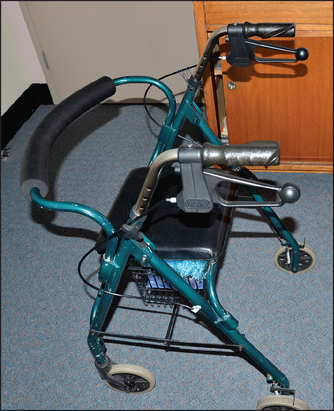
For elderly patients and those with a chronic illness, ask some basic screening questions about functional activity. The appearance of the patient in the consulting room using a walking frame (see Figure 2.1) or other aid should prompt detailed questions regarding activities of daily living (ADL). Ask specific questions about the patient’s ability to bathe, walk, use the toilet, eat and dress. Find out whether the patient needs help to perform these tasks and who provides it. It may be necessary to ask, ‘How do you manage?’ or ‘What do you do about that problem?’ Help may come from relatives, neighbours, friends, the health service or charitable organisations. The proximity and availability of these services vary, and more details should be sought. Try to find out whether the patient is happy to accept help or not.
You should also ask questions about the instrumental activities of daily living (IADL), such as shopping, cooking and cleaning, the use of transport, and managing money and medications.
Establish whether the patient has ever been assessed by an occupational therapist or whether there has been a ‘home visit’. Ask whether alterations have been made to the house (e.g. installation of ramps, railings in the bathroom, emergency call buttons).
Find out who lives with the patient and how they seem to be coping with the patient’s illness. Obviously, the amount of detail required depends on the severity and chronicity of the patient’s illness.
POLYPHARMACY
Up to 40% of people over the age of 60 take five or more different medications a day—by definition, polypharmacy. The risks of side effects and complications of drugs increase with age. Careful history taking will enable a comprehensive assessment of a patient’s drugs and their potential effects. It may lead to a trial of ceasing drugs no longer needed. Good clinicians regularly review and stop drugs that are not beneficial.
Try to find out what drugs the patient is taking, how long each drug has been used and what it is for. It is surprising how many people take medications apparently without knowing what they are for. (Other patients look up their prescribed drugs on the internet and then become too frightened to take them.) Drugs with particularly high risk in elderly people are shown inTable 2.1. In many cases, one drug may have been given to treat a side effect of another.
TABLE 2.1
Common drug side effects in elderly people
| Class of drug | Common side effects |
| Psychotropics | Sedation and falls, fractures etc |
| Diuretics | Hypokalaemia, renal dysfunction gout |
| NSAIDs | Exacerbation of hypertension, heart failure, chronic kidney disease |
| Antihypertensives | Postural hypotension and falls |
ADHERENCE
There is evidence that up to 50% of patients do not take their medications as prescribed.18 Poor adherence (formerly known as compliance) is more likely when drug regimens are complicated (e.g. three-times-a-day medications), the disease is not associated with symptoms (e.g. hypertension), the drugs are expensive, the patient is young or old, or the treatment is for a psychiatric condition. When treatment seems ineffective, the problem may be adherence. Although elaborate ways of determining adherence have been developed (e.g. electronic pill dispensing, tracking of pharmacy dispensing) these are intrusive and expensive.
Careful questioning may be a helpful way of determining adherence with medications. Begin with a neutral remark and questions, such as: ‘Yours is quite a complicated combination of tablets. Do you think you ever miss any of them? How often? Do you use a pill-dispensing device (like a Webster packet)?’ (see Figure 1.2(b), page 8).
In some cases the absence of predictable drug effects may be a clue. For example, a normal heart rate for a patient prescribed beta-blockers (drugs that reduce heart rate) or lack of dark bowel motions for a patient prescribed iron supplements suggests non-adherence to these drugs. It is possible to measure the blood concentrations of many drugs. For example, the level of anticonvulsants can be measured when a patient continues to have seizures despite treatment.
Assessing adherence, at least by careful questioning, is important before more treatment is added for patients who are apparently not responding to medications.
MENTAL STATE
Ask questions that may help to assess cognitive function. Is there a family history of dementia? Has the patient noticed problems with memory or with aspects of life, such as paying bills?
Ask about depression. Severe depression can affect cognitive function.
Delirium refers to confusion and altered consciousness. Do not confuse this with dementia, where consciousness is not altered but there is progressive loss of long-term memory and other cognitive functions. If indicated, perform a formal mental state examination (refer to Chapter 37).
SPECIFIC PROBLEMS IN THE ELDERLY
Falls and loss of balance are common and dangerous for elderly patients. Hip fractures and head injuries are life-threatening events. Ask about falls and near-falls. Does the patient use a stick or a frame? Are there hazards in the house that increase the risk (e.g. steep and narrow stairs)? The use of sedatives like sleeping tablets or anti-anxiety (anxiolytic) drugs and some antihypertensive drugs increases the risk of falls and must be assessed.
Screening for osteoporosis is recommended for all women over the age of 65 and all men aged 70 and older. Risk factors for osteoporosis include being underweight, heavy alcohol use, use of corticosteroids, early menopause and a history of previous fractures.
General questions about mobility should also include asking about reasons for immobility. These may include arthritis, obesity, general muscle weakness and proximal muscle weakness (sometimes due to corticosteroid use).
Elder abuse (emotional, physical and sexual) does occur; to detect it, it is important to understand the patient’s social circumstances. Useful screening questions to ask (without the carer present) include:
ADVANCED CARE PLANNING AND LIVING WILLS (ADVANCED HEALTH DIRECTIVES)
Elderly patients may have strong feelings about the extent of treatment they want if their condition deteriorates. These should be recorded before a deteriorating medical illness makes the patient incapable of expressing his or her wishes. In a living will, patients record their decisions about consenting to medical interventions and this legal document comes into effect when they can no longer make their own decisions. Encourage patients to discuss the plan with their doctor, appoint someone to make decisions on their behalf and provide copies of the legal documentation to the people who care for them at home and their doctors.
This can be a difficult area. If a patient expresses a wish not to have certain treatments, the clinician must make very sure that patient understands the nature and likely success of these treatments. For example, a patient who expresses a wish not to be revived if her heart stops after a myocardial infarct may not understand that early ventricular fibrillation is almost always successfully treated by cardioversion without long-term sequelae. Patients’ decisions must be informed decisions.
Evidence-based history taking and differential diagnosis
The principles of evidence-based clinical examination are discussed in Chapter 3 in more detail, but they also have an application to history taking. The starting point of the differential diagnosis of a certain symptom is the likelihood (or probability) that a certain condition will occur in this patient. Most clinicians still rely on their own experience when making this assessment, although some information of disease prevalence in different populations is becoming available. Unfortunately, one person’s experience is a relatively small sample, and past experience may bias the clinician in favour of or against a certain diagnosis.
Some diagnoses may largely be excluded from the differential diagnosis list at once. This may be based, for example, on the patient’s age, sex or race or the extreme rarity of the disease in a particular country. For example, chronic obstructive pulmonary disease would be very unlikely in a 20-year-old non-smoker who presents with breathlessness.
The differential diagnosis is gradually narrowed as more information about the patient’s symptoms comes from the patient directly, and as a result of specific questioning about features of the symptoms that will help to refine the list.
The clinical assessment
After the physical examination, the interview with the patient concludes with your assessment of what the diagnosis or possible diagnoses are, in order of probability. Note that the history is the most powerful tool in your toolbox for identifying the likely diagnosis in the majority of cases!21 Diagnostic errors in clinical practice are usually related to a breakdown in the success of the clinical encounter.22 Your assessment is, not unreasonably, the most important part of the whole process from the patient’s point of view.
The explanation must relate to the patient’s symptoms or perception of the problem. You should explain how the symptoms and any examination findings relate to the diagnosis. For example, if a patient presents with dyspnoea, you should begin by saying, ‘I believe your shortness of breath is probably the result of pneumonia, but there are a few other possibilities’. The complexity of the explanation will depend on your understanding of the patient’s ability to follow any technical aspects of the diagnosis. The patient’s desire for a detailed explanation is also variable, and this must be taken into account.
If the diagnosis is fairly definite, then the prognosis and the implications of this must be outlined. A serious diagnosis must be discussed frankly but always in the context of the variability of outcome for most medical conditions and the benefits of correct treatment. When a patient seems unwilling to accept a serious diagnosis and seems likely to decline treatment, you must attempt to find out the reason for the patient’s decision. Has the patient had previous bad experiences with medical treatment, or has a friend or relative had a similar diagnosis and a difficult time with treatment or complications?
Sometimes blunt language may be justified—for example, ‘It is important for you to realise that this is a life-threatening illness that needs urgent treatment.’ Patients who seem unable to accept advice of this sort should be offered a chance to discuss the matter with another doctor or with their family. This must be done sympathetically: ‘This is obviously a difficult time for you. Would you like me to arrange for you to see someone else for another opinion about it? Or would you like to come back with some of your family to talk about it again?’ The patient’s response should be carefully documented in the notes.
Patients may need to be cautioned about certain activities until the condition is treated. For example, a patient with a possible first epileptic seizure must be told that he or she cannot legally drive a motor vehicle.
Concluding the consultation
After talking to the patient about the assessment and prognosis, the need for investigations and any urgency involved should be discussed. Admission to hospital may be recommended if the problem is a serious one. This may involve major inconvenience to the patient; the clinician must be ready to justify the recommendation and attempt to predict the likely length of stay. If the investigations are onerous or involve risk, this must also be explained and alternatives discussed, if they are available.
If drug treatment is being prescribed, the patient is entitled to know why this is necessary, what it is likely to achieve and what possible important adverse effects might occur. This is a complex topic. On the clinician’s part, it requires a comprehensive understanding of drug interactions and adverse effects, as well as an assessment of what it is reasonable to tell a patient without causing alarm or symptoms by suggestion. Patients must at least know what dangerous symptoms should lead to immediate cessation of the drug. Pharmacies often provide patients with long and unedited lists of possible adverse effects when they dispense drugs. Patients may be too frightened to take the prescription unless these are explained at the time of the consultation. Dealing with this difficult area takes time and experience.
There is no shame in telling a patient you will look up possible side effects and interactions of a drug before you prescribe it or if a patient expresses concern about it. You could say: ‘I haven’t heard of that problem with this drug but let me look it up and check.’
The patient must be given the opportunity to ask questions.23 Few people, given a new diagnosis, can absorb everything that has been said to them. The patient should be reminded that there will be an opportunity to ask further questions at the next consultation, when the results of tests or the effects of treatment can be assessed.
Finally, you may find that the patient introduces a brand new problem, sometimes serious, at the end of the consultation. (Studies suggest that this happens in up to one in five consultations in primary care.24) Here is a real example: as one patient was walking towards the door, he said: ‘Thank you. I feel much better now that I know my back pain is nothing to worry about. Oh, by the way, I’ve noticed a bit of yellow discharge from my penis this week. I’m sure it’s nothing, isn’t it?’ The patient had gonorrhoea. Any new issues must not be dismissed and require you to obtain all the relevant details.
References
1. Nardone, DA, Johnson, GK, Faryna, A, Coulehan, JL, Parrino, TA. A model for the diagnostic medical interview: nonverbal, verbal, and cognitive assessments. J Gen Intern Med. 1992; 7:437–442.
2. Balint, J. Brief encounters: speaking with patients. Ann Intern Med. 1999; 131:231–234.
3. Simpson, M, Buchman, R, Stewart, M, et al. Doctor–patient communication: the Toronto consensus statement. BMJ. 1991; 303:1385–1387.
4. Stewart, MA. Effective physician–patient communication and health outcomes in review. Can Med Assoc J. 1995; 152:1423–1433. [The outcome of an illness can be affected by the first part of the medical intervention, the doctor’s history taking.].
5. Beck, RS, Daughtridge, R, Sloane, PD. Physician-patient communication in the primary care office: a systematic review. J Am Board Fam Pract. 2002; 15(1):25–38. [Useful nonverbal behaviours may include head-nodding when appropriate, leaning forwards, facing the patient at his or her level and having uncrossed arms and legs.].
6. Teutsch, C. Patient–doctor communication. Med Clin North Am. 2003; 87(5):1115–1145. [Patient fears and concerns can be very broad: read this review to learn more.].
7. Smith, RC, Hoppe, RB. The patient’s story: integrating the patient- and physician-centered approaches to interviewing. Ann Intern Med. 1991; 115:470–477. Patients tell stories of their illness, integrating both the medical and the psychosocial aspects. Both need to be obtained, and this article reviews ways to do this and to interpret the information.
8. Ness, DE, Ende, J. Denial in the medical interview: recognition and management. JAMA. 1994; 272:1777–1781. [Denial is not always maladaptive, but can be addressed using appropriate techniques. This is a good guide to the problem and the process.].
9. Mathias, CW, Michael Furr, R, Sheftall, AH, Hill-Kapturczak, N, Crum, P, Dougherty, DM. What’s the harm in asking about suicidal ideation. Suicide Life Threat Behav. 2012; 42(3):341–351. [There is no identified harm in asking about this issue.].
10. Ende, J, Rockwell, S, Glasgow, M. The sexual history in general medicine practice. Arch Intern Med. 1984; 144:558–561. [This study emphasises the importance of obtaining the sexual history as a routine.].
11. Furner, V, Ross, M. Lifestyle clues in the recognition of HIV infection. How to take a sexual history. Med J Aust. 1993; 158:40–41. [This review guides the shy medical student through this difficult task.].
12. Drossman, DA, Talley, NJ, Leserman, J, et al. Sexual and physical abuse and gastrointestinal illness. Ann Intern Med. 1995; 123:782–794. [Abuse is common, occurs more often in women, causes a poorer adjustment to illness and usually remains a fact not discussed with the doctor.].
13. Qureshi, B. How to avoid pitfalls in ethnic medical history, examination, and diagnosis. J R Soc Med. 1992; 85:65–66. [This article provides information on transcultural issues, including taboos on anogenital examinations.].
14. Nguyen, T. Patient centered care. Cultural safety in indigenous health. Aust Fam Physician. 2008; 37(12):900–904. [Cultural awareness and competence are important issues discussed in this review.].
15. Groves, JE. Taking care of the hateful patient. N Engl J Med. 1978; 298:833–837. [This article describes groups of patients who induce negative feelings and provides important management insights.].
16. Breen, KJ, Greenberg, PB. Difficult patient encounters. Internal Med J. 2010; 40:682–688. [Read this review! It provides advice on how to prevent and manage such encounters.].
17. Heidelbaugh, JJ, Tortorello, M. The adult well male examination. Am Fam Phys. 2012; 85(10):964–971. [Ask routinely about depression, exercise and diet, substance abuse and risk factors for sexually transmitted infections in men and women. Look for obesity and hypertension.].
18. Haynes, RB, McKibbon, KA, et al. Systematic review of randomised trials of interventions to assist patients to follow prescriptions for medications. Lancet. 1996; 348(9024):383–386. [Counselling and written information may help prescription adherence, but this is a complex area and most interventions do not help.].
19. Lachs, MS, Pillemer, K. Abuse and neglect of elderly persons. N Engl J Med. 1995; 332(7):437–443. [All older adults should be asked about family violence.].
20. Fox, AW. Elder abuse. Med Sci Law. 2012; 52(3):128–136. [Physical, psychological, sexual, neglect and financial abuse all occur in the elderly.].
21. Hampton, JR, Harrison, MJG, Mitchell, JAR, Pritchard, JS, Seymour, C. Relative contributions of history-taking, physical examination, and the laboratory to the diagnosis and management of medical outpatients. BMJ. 1975; 2:486–489. [In this study, in 66 out of 80 new patients the diagnosis based on the history was correct; physical examination was useful in only seven patients and laboratory tests in another seven. Take a good history: it’s the key to success!].
22. Singh, H, Giardina, TD, Meyer, AN, Forjuoh, SN, Reis, MD, Thomas, EJ. Types and origins of diagnostic errors in primary care settings. JAMA Intern Med. 2013; 173(6):418–425.
23. Judson, TJ, Detsky, AS, Press, MJ. Encouraging patients to ask questions, How to overcome ‘white-coat silence’. JAMA. 2013; 309:2325–2326.
24. White, J, Levinson, W, Roter, D. ‘Oh, by the way …’: the closing moments of the medical visit. J Gen Intern Med. 1994; 9(1):24–28. [In up to one in five consultations in primary care, a new problem is raised by the patient at the very end of the consultation.].
aNamed after Baron von Münchhausen (Karl Friedrich Hieronymus Freiherr von Münchhausen, 1720–1797). Baron von Münchhausen’s improbable stories about himself were published by Rudolf Raspe as The Surprising Adventures of Baron Münchhausen.