DIAGNOSIS.

Physical examination should be directed at determining the presence of and distribution of body fat by measuring height, weight, body circumference (extremity and waist), and nutritional status. In addition, the presence of associated causes of obesity should be investigated.

Abdominal (visceral) fat is metabolically active. Measurement of circumference is needed to identify the distribution of body fat and to determine the risks associated with increased waist circumference. Waist circumferences that are above 40 inches for men and above 35 inches for women increase the risk for premature death and disability as a consequence of overweight or obesity. Waist circumference is the best predictor of visceral (intraabdominal) fat and total fat. The most clinically telling physical sign of serious underlying disease is increased waist circumference, which is linked to insulin resistance, hypertension, dyslipidemia, type 2 diabetes, coronary heart disease, sleep apnea, and gallbladder disease.108

Waist circumference measurements have a high correlation with BMI.129 Measurement of extremity circumference may also be useful in the adult population for the physician to rule out lipedema, a symmetrical “swelling” of both legs, extending from the hips to the ankles, caused by deposits of subcutaneous adipose tissue.

Although BMI and waist circumference measurements are the most clinically feasible methods to identify clients who are overweight or obese, additional methods may be used to measure subcutaneous fat or body composition.70 Methods that are known for accuracy but often only used in research settings include hydrostatic weighing and dual-energy x-ray absorptiometry (DEXA).37,144

Additional methods that require less expensive equipment include the use of skinfold measurement calipers and the measurement of bioelectrical impedance. Skinfold measurements using calipers (the pinch test) are performed in several locations on the body (e.g., midbiceps, midtriceps, and subscapular areas). Measurements greater than 1 inch are thought to indicate excessive body fat. Skinfold measurement has been questioned in relationship to accuracy because interobserver variability may be high.159 Skinfold measurement should be taken into consideration along with body type and height.

Bioelectrical impedance analysis (BIA) measures the impedance or resistance to an electrical signal that is circulated through the body. A person who has more fat mass will have larger impedance because there will be more resistance to the electrical signal traveling through the body since fat mass contains less water. BIA measures have been shown to be reliable and valid; however, variability among individuals can be high, and inaccuracy can occur in situations of altered hydration status and extreme obesity in those being measured.24,122 Additionally, BIA has not been shown superior to BMI as a predictor of overall adiposity in a general population.263

All of these examples of measures can provide a baseline measurement for relative fat mass and can be used to monitor progress of body composition as people advance through a weight loss program.

TREATMENT.

Both physical activity and nutrition are important in addressing obesity. Physical activity and nutrition are modifiable factors that respond similarly to the same interventions. To maintain a healthy weight, it is important to keep energy expenditure at or above energy intake. This can be accomplished by decreasing caloric intake, increasing exercise energy expenditure, or both.

Weight loss is regarded as a major aspect of treatment for the person who is obese. Although the amount of weight loss necessary is arguable, 10% loss in body weight is regarded as a standard that improves health.

The National Weight Control Registry (www.nwcr.ws/) reports that weight loss and maintenance of the weight loss are best accomplished if individuals participate in regular intensive exercise, attend support groups, restrict the amount and kinds of food eaten, and weigh themselves often.

A multidisciplinary approach with emphasis on weight loss maintenance should be directed toward anyone with a BMI of 30 and above and for those people with a BMI in the 25 to 29 range who have associated health problems. Such a treatment program includes moderate calorie intake, behavior modification, exercise, and social support.

Medications for obesity are widely available over the counter and by prescription. The use of pharmacologic agents to inhibit appetite, reduce fat absorption, and increase metabolic rate is highly controversial and provides at best only a short-term benefit. Drug therapy is thought to work best when it is part of an overall program aimed at lifestyle change involving dietary changes, exercise, and behavior modification.255,260 To be effective, drug treatment for obesity should be continued indefinitely much like treatment for any chronic condition.5,74,260 Researchers continue to look for drugs that can prevent or alter the physiology of obesity.

Surgical treatment, referred to as bariatric surgery, may be considered for some obese people if serious attempts to lose weight have failed, if BMI is greater than 40 kg/m2 with or without comorbidities, or if there is a BMI of 35 kg/m2 with significant health-related comorbidities5,74,194,239,260 and complications of obesity that are life-threatening. Surgical approaches rely on reconfiguring or redirecting the gastrointestinal system through gastric restriction called vertical gastric banding (VGB) or gastric bypass procedures (e.g., Roux-En-Y gastric bypass [RYGB]). Bariatric surgery has been shown to provide the greatest degree of sustained weight loss in people with morbid obesity.157 Other benefits and complications of bariatric surgery are listed in Table 2-4.

Table 2-4

Potential Benefits and Complications of Bariatric Surgery

Potential Benefits Potential Complications
Weight loss Nephrolithiasis
Improved serum lipids Hepatic failure
Decreased blood pressure Cholelithiasis
Improved or resolved diabetes mellitus Malnutrition
  Reflux
Improved or resolved sleep apnea Small bowel obstruction (SBO)
  Hemorrhage
Reduced venous stasis Iron deficiency anemia
Decreased joint pain Vitamin B12 malabsorption
Improved quality of life Gastric prolapse
Overall improved function  

Courtesy Tamara L. Burlis, PT, DPT, CCS, Washington University Program in Physical Therapy, St Louis, MO. Used with permission, 2006. Data compiled from a variety of published studies.

Laparoscopic RYGB has been referred to as the “gold standard” operation for surgical control of obesity. It is effective in achieving weight loss, improving comorbidities and quality of life, and reducing recovery time and perioperative complications.224 This procedure is safe, effective, and decreases overall costs.194

Evidence supports this shift in surgical approach for individuals having laparoscopic surgery based on studies demonstrating improved SF-36 scores,93,193,194,239 decreased recovery times,193,224 earlier return to work,193 less postoperative pain,193,224 and comparable amounts of weight loss.61,193

The relationship(s) between biologic and behavioral factors influencing obesity is not yet completely understood. However, regardless of the medical and surgical treatments available to treat obesity, behavioral change in the frequency and type of eating and exercise habits remains the foundation of both prevention and intervention.256

Behavior in both prevention and treatment is influenced by what options are available (e.g., vending machines, safe parks in which to walk), how and to whom health information is portrayed (e.g., media versus health practitioner), and what type of support is given to individuals who seek and/or need to make a change.135

Practitioners require knowledge of what motivates change, how behavioral change occurs, what resources are needed to make change, and strategies useful for promoting change. Across the theoretic foundations guiding this knowledge, the combined merits of providing accurate information, understanding barriers preventing change, anticipating personal readiness for change, and providing structure and support over extended periods to enable sustained new behaviors have been recognized as helpful.20

Although lifestyle programs have been shown to be the most successful in creating durable change, regulation of body weight (to either prevent gain or maintain loss) is still affected by a myriad of intrapersonal and environmental factors that interact to make obesity control difficult. Tailoring all interventions to the “personal environment” of each individual is critical in overcoming the intrinsic and extrinsic pressures in the American culture that affect the current epidemic of obesity.161

PROGNOSIS.

The management of obesity continues to be challenging, particularly because its effect on the whole person is so broad and the causes/influences are so numerous that prognosis relies on significant and sustained lifestyle changes that must last a lifetime. When therapy is confined to dietary measures alone, treatment of obesity is less likely to be successful. Because the risk of mortality and morbidity from obesity rises in proportion to the degree of obesity and the presence of complications, treatment is essential. For example, among the cardiovascular problems associated with obesity, hypertension in combination with obesity increases the risk for development of cerebrovascular disease, specifically cerebral thrombosis.

Weight loss alters conditions associated with obesity and even moderate weight loss in an obese person (i.e., 10 to 20 lbs) provides substantial changes in risk factors. Following weight loss in the obese, a decrease in blood pressure usually occurs with a regression of left ventricular hypertrophy, total and HDL cholesterol are favorably changed, and glucose tolerance improves in those people with type 2 diabetes mellitus.

The addition of exercise to a comprehensive program of caloric reduction and behavior modification can improve results. Regular exercise can maximize body composition change and increase the probability of maintaining weight loss.

Patterns of fat distribution are important in determining the risks associated with obesity. Visceral fat within the abdominal cavity is more hazardous to health than subcutaneous fat around the abdomen. Upper body obesity around the waist and flank is a greater health hazard than lower body obesity marked by fat in the thighs and buttocks.

People who are obese with high waist-to-hip ratios (greater than 1.0 in men and 0.8 in women) have a significantly greater risk of diabetes mellitus, stroke, coronary heart disease, and early death than equally obese people with lower ratios. Waist circumference alone has also been designated as an independent predictor of health risks and may replace the waist-to-hip measurement as a predictor of increased risk. For women, weight-related health risks increase when the waist measurement is 35 inches or more; for men, this figure is 40 inches or more.

Although the connection between obesity (BMI greater than 30) and coronary heart disease is well established, it remains unknown whether a similar link exists for those who are mildly overweight. Research has shown that people whose BMI at midlife (30 to 55 years of age) was between 23 and 24.9 had a 50% higher risk of heart attack compared with those whose BMI was under 20. Women whose BMI was greater than 29 had a 3.6 times greater risk of heart attack compared with the leanest group.264 Moderately higher adiposity at younger ages (18 years) is associated with increased premature death in younger and middle-aged women.252

2-3   SPECIAL IMPLICATIONS FOR THE THERAPIST

Obesity

PREFERRED PRACTICE PATTERNS

Integument:

7A, 7B, and 7C: Primary Prevention/Risk Factor Reduction of Integumentary Disorders; Impaired Integument Secondary to Superficial or Partial-Thickness Skin Involvement (pressure ulcer prevention)

Various musculoskeletal patterns may be observed depending on clinical presentation

Cardiopulmonary:

6A and 6B: Primary Prevention/Risk Factor Reduction for Cardiopulmonary Disorders; Impaired Aerobic Capacity and Endurance Secondary to Deconditioning

Obesity has negative effects on overall health; emerging evidence indicates that obesity has effects on physical function, beyond those outcomes of chronic disease. Obesity has negative effects on overall physical function,66 although the contributions of obesity to overall musculoskeletal function are not well understood.

Problems associated with obesity commonly seen in a therapy program include back pain; arthritis; biomechanical dysfunction affecting the hips, knees, and ankle/foot; skin breakdown; and cardiopulmonary compromise. Obesity is a known risk factor in the development of type 2 diabetes mellitus often accompanied by diabetic neuropathy, foot ulcerations, and neuropathic fractures (see discussion on Diabetes Mellitus in Chapter 11).

For the therapist, working with the obese person poses a definite risk to good health. Using proper body mechanics, careful planning for transfers, and obtaining adequate help are essential during any lifting, transfers, and hands-on therapy.

Obesity and Back Pain

A relationship between obesity and low back pain has not been definitively established. Studies show mixed results, with only severe obesity (BMI greater than 40) being consistently linked with back pain.92,204 The link between obesity and the incidence of symptomatic lumbar disease manifested by low back pain is a weak one at best. Whereas some studies demonstrate a high incidence, others report no correlation between the conditions.170,204

Obesity and Joint Pain

Obesity contributes to increases in musculoskeletal pain, demonstrated by increased odd-ratios of 1.7 to 9.9 of work-restricting pain in obese subjects as compared to the general population.207 There is an association between obesity and knee OA but not hip OA or general OA.238

There is also some relationship between BMI and the frequency of hip and knee replacement surgery261 and poorer outcomes after total knee arthroplasty (TKA),85 but no association is demonstrated between BMI and needing total hip or knee revision surgery.

Obese individuals should have greater joint loading forces; however, at least one study demonstrated that obese individuals appear to have gait loading forces in the knee that are less than normal weight individuals, adjusting gait by adopting a slower self-preferred speed.65 In adolescents, this slower speed was also associated with difficulty increasing cadence, affecting the ability to adjust walking speeds to environmental conditions.118

Obesity and Physical Activity

Obesity might have a negative effect on performance of activities that require muscular strength or power, in that the muscle would have to apply a greater force to move a larger mass. This was demonstrated in one study of children where obesity limited the ability to perform lower extremity activities such as vertical jump and standing long jump.117

Another activity of daily living that requires significant lower extremity strength is rising from a chair. One study demonstrated that in 8-and 9-year-old obese children, 69% needed assistance in rising from a chair.117 This difficulty may accelerate the cycle of obesity and encourage sedentary behavior as a result of the difficulty in getting up to perform physical activity.

Obesity and Operative Complications

There are technical challenges in preparing and operating on an obese individual. Imaging equipment may not be large enough to accommodate the very obese individual and the quality of the image may be poor. Motion studies using flexion and extension radiographs may not assess range of motion adequately. Additional considerations include maintaining an open airway and accessing venous or arterial blood vessels because of adipose tissue getting in the way.204

There is no strong correlation between obesity and perioperative complications,136,182 but there are many reports of operative complications in obese individuals after many different kinds of procedures (e.g., gynecologic, orthopedic, cardiovascular, transplantation, urologic). There are reports of positional neuropathies after surgery in morbidly obese individuals (BMI greater than 40). Positional palsies are attributed to increased weight causing traction or compression on peripheral neurovascular bundles, especially when the individual is placed in the prone position without adequate support and padding.204

Prevention

Prevention and screening programs for adults and children are advocated by Healthy People 2010 toward the goal of promoting health and reducing chronic disease associated with diet and weight. The physical therapist’s role in prevention and wellness, including screening programs and health promotion, is discussed in Chapter 1 and presented in detail in the APTA Guide to Physical Therapist Practice.

Therapists can be involved in hypertension and obesity screening as suggested by the Surgeon General because regular exercise is an important component toward physical and mental well-being and prevention of the comorbidities associated with obesity. Since obesity is often associated with an increased prevalence of cardiovascular risk factors, graded exercise testing may be indicated before prescribing an exercise program. Even morbidly obese people can be evaluated on the treadmill with some modification in the testing protocol such as beginning with slow walking without treadmill elevation, followed by gradual increases in speed to achieve maximal exertion. Submaximal exercise testing overcomes many of the limitations of maximal exercise testing and may be applicable to this population.3,68

Exercise

Prescribing exercise for obese people follows the principles used with healthy people (see Box 2-3), including modifications for mechanical limitations, awareness of potential hazards during exercise (Box 2-6), and awareness of the greater heat intolerance of the obese. Some equipment modifications may be necessary if the client is too large to use a stationary bicycle or exceeds the manufacturer’s recommended weight capacity. For example, the client can pedal some stationary bikes while seated in a chair behind the bike.

Box 2-6   POTENTIAL COMPLICATIONS OF OBESITY DURING EXERCISE

• Precipitation of angina pectoris or myocardial infarction

• Excessive rise in blood pressure

• Aggravation of degenerative arthritis and other joint problems

• Ligamentous injuries

• Injury from falling

• Excessive sweating

• Skin disorders, chafing

• Hypohydration and reduced circulating blood volume

• Heat stroke or heat exhaustion

From Skinner JS: Exercise testing and exercise prescription for special cases: theoretical basis and clinical application, ed 2, Philadelphia, 1993, Lea & Febiger.

A higher incidence of exercise-related injury exists among the obese that requires extra caution in the first few weeks. Recommendations include adequate warm-up and stretching and progressive increases in intensity, frequency, and duration. Severe obesity contributes to back pain and back injury and affects foot mechanics, which can lead to foot and ankle problems. Selection of appropriate footwear with possible orthotic devices that provide heel support or compensatory foot pronation is recommended to make exercise safer and more comfortable.

Aerobic exercise with a frequency of four times a week to produce significant weight loss is recommended because it provides the greatest caloric expenditure per minute of training. However, the frequency required is the reason most exercise programs fail for obese people, so compliance and caloric expenditure are the early goals toward achieving a habit of regular exercise rather than an immediate increase in aerobic endurance.

Developing an exercise program the person likes and can complete over time is the initial focus. Finding the right match may take some time and several unsuccessful attempts. Moreover, studies indicate that improved fitness through regular physical activity reduces cardiovascular morbidity and mortality for overweight individuals even if they remain overweight. The ultimate goal for the exercising obese person is to make a life-long commitment to achieving reasonable energy expenditure through routine physical activity.228 The American College of Sports Medicine (ACSM)3,4 presents the benefits of low-intensity, short-duration regular exercise.

The influence of body weight on exertion and lower-extremity trauma may support an initial program of stationary cycling. Aquatic exercise programs can be an important part of reducing strain on joints by providing non–weight-bearing exercise for the obese person. Resistive exercises and weightlifting can be structured to produce aerobic gains by using a circuit style with low resistance, multiple repetitions, and short rests between sets. For most individuals, caloric expenditure with traditional strength-training techniques is not as great as with circuit lifting or aerobic conditioning, but strength training does use calories and can increase lean body mass.

Behavior modification focusing on routine daily activities that require no special equipment and involve only simple lifestyle changes may be the only type of physical activity that is continued for any length of time. For example, less reliance on vehicular transportation, parking a distance from the destination, avoiding elevators and using stairs, delivering messages within the work structure rather than telephoning, and walking 10 minutes during lunch are useful and easily accommodated suggestions for increasing energy expenditure.

Smoking and Tobacco Use

Smoking and the use of tobacco products are associated with a number of chronic diseases, including chronic pulmonary diseases and cardiovascular conditions, as well as many types of cancers. Smoking also decreases the health of individuals who smoke. Some of the significant links between smoking and disease are reported in the Surgeon General’s report.220

Beside the obvious health risks associated with tobacco use as a lifestyle choice, it can become a psychologic problem because of the addictive qualities of this substance. For this reason, we have chosen to include tobacco use as part of a discussion of Substance Abuse in Chapter 3.

Alcohol and Other Drugs

Whether to consider substance use/abuse a behavioral condition or a psychologic problem remains uncertain. Many psychologists and addiction counselors say it is a condition, illness, or problem with multiple factors, including physical, psychologic, social, economic, and spiritual. Others place it on a continuum from behavior to disorder, depending on the individual’s relationship to the substance(s) and how that individual’s friends, family, colleagues, or coworkers are affected. Substance use is considered by some a “choice,” whereas addictions may be diagnosed as a disorder and then categorized as a pathologic psychologic disorder.

Addiction specialists and drug educators want to make it clear that alcohol is a drug. The commonly used phrase today when discussing substance use and abuse is “alcohol and other drugs.”

Culturally and socially, we live in a world that advertises and encourages the use of alcohol and other drugs as part of the American lifestyle. Addictions may be considered unique disorders that have their start in personal or lifestyle behaviors and choices but later become addictions with diagnosable pathology. Someone who drinks or uses drugs recreationally may not be an alcoholic or addicted, but when the use of substances has consequences in other areas of their life, then a problem is identified. There can be a fine line between lifestyle choices and behaviors and addictions and psychologic disorders. For now, we have chosen to place alcohol and other drug use in Chapter 3 but mention it here as a possible lifestyle, behavior, or choice that can impact the health of the individual and/or family members.

Domestic Violence

Domestic violence (DV) can be classified under categories of child abuse, intimate partner violence (IPV), and elder abuse. Because of the wide variety of practice settings in which they work, physical therapists are likely to encounter individuals of all ages who have been victims or survivors of DV.

DV is the physical, emotional/psychological, or sexual abuse; financial exploitation; neglect; or stalking of an individual by a person with whom they have a marital, familial, social, or dependency relationship. DV occurs in all socioeconomic and racial/ethnic groups. In all forms of DV, the incidence of abuse of individuals with disabilities is greater than in the nondisabled population.211,240,251,279

Physical abuse involves nonaccidental physical injury, which can range from superficial bruises and welts to broken bones, burns, serious internal injuries, and death. Emotional and psychologic abuse can result from acts or omissions that cause or could cause serious behavioral, cognitive, emotional, or mental disorders as a result of actions such as confinement or the constant use of verbally abusive language and criticism.

Sexual abuse ranges from nontouching offenses, such as exhibitionism, to fondling, rape, molestation, or the forced use of a child or an adult in the production of pornographic materials.

Neglect can involve the withholding of or failure to provide adequate food, shelter, clothing, hygiene, medical care, and/or supervision needed for optimal health and well-being. Neglect also includes refusal or delay in seeking health care, abandonment, inadequate supervision, and expulsion from home. Emotional neglect in children includes allowing a child to witness chronic or extreme spousal abuse or permitting truancy or drug/alcohol use. Stalking, another form of DV, is defined by the National Criminal Justice Association as “a course of conduct directed at a specific person that involves repeated visual or physical proximity, nonconsensual communication, or verbal, written or implied threats, or a combination thereof, that would cause a reasonable person fear.”189

Child Abuse

Child abuse involves the physical or emotional abuse or neglect or sexual abuse of a child under the age of 18 years, unless a state’s protection law specifies a different age limit. It is estimated that 12 out of every 1000 children in the United States are victims of physical or sexual abuse or neglect and that many more cases are never reported.251 Almost 1500 children die each year as the result of abuse; the majority of these children are less than 3 years of age.251

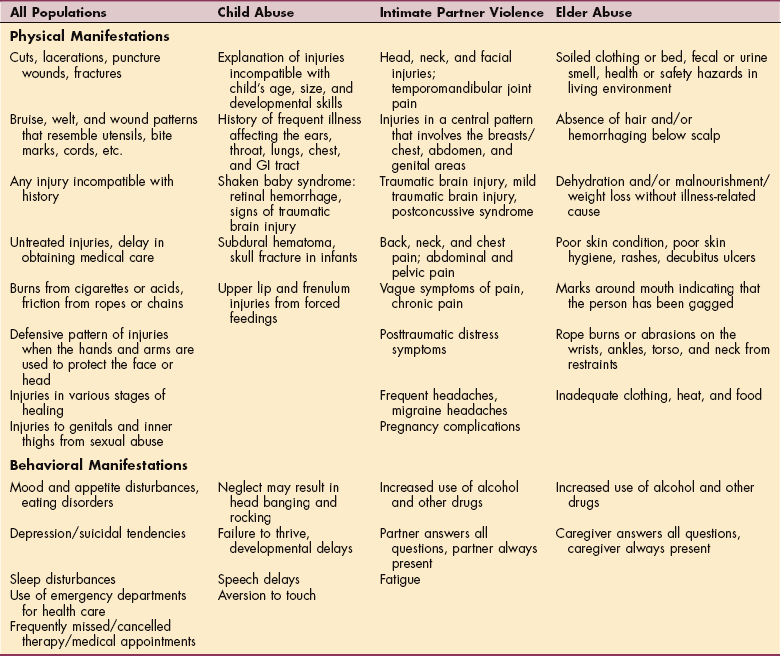
Because children are prone to accidents, it is important for clinicians to distinguish between the signs of accidental versus inflicted injuries and to determine if there is a reasonable suspicion of child abuse or neglect. The clinical manifestations often associated with child abuse are listed in Table 2-5.

Table 2-5

Clinical Manifestations of Domestic Violence
image

GI, Gastrointestinal.

Courtesy Claudia B. Fenderson, PT, EdD, PCS, Mercy College, Dobbs Ferry, New York, 2007.

Generally, accidental bruising, fractures, and burns are rarely found in infants who are not yet crawling or walking. In older children, accidental injuries, such as those occurring from falls, usually result in contusions over bony prominences. Bruises on the buttocks or other areas of the body are suspicious for abuse.

Sexual abuse should be suspected if bruising is found on the inner thighs. Contusions around the mouth of infants and young children often are the result of force-feeding. Other indicators of abuse include marks resembling finger imprints, which may occur when a child is forcibly held, shaken, or slapped. Injuries that resemble straps, cords, bites, or utensils should be reported to appropriate child abuse agencies.

Many types of burns are associated with child abuse, and these injuries account for 10% of child abuse cases.206 Most occur in children under 10 years of age, with the majority of inflicted burns occurring in children less than 2 years old.206

Immersion burns can be identified by sharply delineated water lines. These are often seen as glove or stocking distribution patterns that result from holding the hands or feet in very hot water. A doughnut pattern may result if a child is held in a tub of scalding water. This pattern occurs when the buttocks are spared from burns because they make contact with the bottom of the tub instead of the hot water that burns the legs and lower trunk. “Sparing” may also occur in the creases of the body and palms of the hands when, as a defensive mechanism, a child will flex the body or hands when held in very hot water.

Contact burns resulting from having hot liquid thrown at a child differ from those resulting when young children pull pots of hot liquid off a stove. In the latter case, the first point of contact occurs on the face, chin, neck, and axilla (because they look up as they reach for the handle) and the flow pattern lessens along the torso. When hot liquids are thrown at a child, the burns are usually not present on the neck and axillary area.

Contact burns that are accidental burns often can be distinguished from intentional burns. Accidental burns tend to be superficial because of the tendency to pull away when something hot is encountered. Brushing against a hot object, such as a cigarette, causes a burn pattern that is shallow and irregular, not the symmetric and deep pattern that occurs when a cigarette is used to intentionally burn a child. These burns are often found inside the palm of the hand or on the back or buttocks. Irons and curling irons may be used to intentionally inflict injury; the therapist must judge whether the explanation of the injury is reasonable and accounts for the child’s age, height, and motor abilities.

Shaken baby syndrome (SBS) generally occurs when a frustrated caregiver shakes an infant vigorously, usually in an attempt to stop crying or other unwanted behaviors. In most cases, there is an unawareness of the dangers of shaking. Shaken baby syndrome usually occurs in infants under 3 years of age and can result in serious, sometimes fatal, injury and disability.

Because of the weakness of an infant’s neck muscles and the size of the head, shaking results in multiple forces of the fragile brain against the skull. This impact can result in direct trauma to the brain, swelling, subdural hematoma, and subarachnoid hemorrhaging. This in turn can lead to traumatic brain injury, seizures, cerebral palsy, brain damage, and death. SBS is the most common cause of mortality in infants,213 and one of four infants dies as the result of being shaken.209

Other sequelae of SBS include retinal hemorrhage, blindness, spinal paralysis, mental retardation, and learning disabilities. Symptoms of SBS include irritability, seizures, vomiting, diminished eating, decreased responsiveness, and changes in breathing. Fractures of the ribs and long bones often accompany SBS. These symptoms of SBS warrant emergency attention. The injuries associated with SBS are not attributable to accidental falls.

The medical history of children should be carefully reviewed since many medical disorders can mimic signs of child abuse. Osteogenesis imperfecta is a collagen defect in which fractures can occur with minimal or even no apparent force. Hemophilia, a clotting factor disorder, often causes persistent bleeding with little or no injury. Illness and medical treatment involving platelet irregularities can also result in excessive bleeding/bruising. Allergies can result in “allergic shiners” that resemble the contusions associated with a “black eye.”

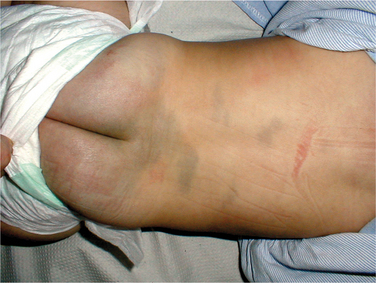
Mongolian spots are darkly pigmented areas caused by entrapment of melanocytes; they are often found on the sacrum or lower back of many African-American and Hispanic infants (Fig. 2-2). Although these spots resem- ble bruises, they do not change in size and fade over a period of years. Another cultural consideration is that contusions may be difficult to perceive in darkly pigmented children. On autopsy, significant bleeding may be found when external injury was not detected.
image

Figure 2-2 Mongolian spots (congenital dermal melanocytosis). The therapist must be aware of Mongolian spots, which can be mistaken for bruising from child abuse in certain population groups (e.g., Asian, East Indian, Native American, Inuit, African, and Latino or Hispanic heritage). They are also present in about 1 in 10 fair-skinned infants. Mongolian spots are bluish gray to deep brown to black skin markings that often appear on the base of the spine, on the buttocks and back, and even sometimes on the shoulders, ankles, or wrists. Mongolian spots may cover a large area of the back. When the melanocytes are close to the surface, they look deep brown. The deeper they are in the skin, the more bluish they look, often mistaken for signs of child abuse. These spots “fade” with age as the child grows and usually disappear by age 5. (From Goodman CC, Snyder TE: Differential diagnosis for the physical therapist: screening for referral, ed 4, Philadelphia, 2007, WB Saunders. Courtesy Dr. Dubin Pavel.)

Intimate Partner Violence

Although often used synonymously with DV, IPV occurs between current or former partners in both heterosexual and homosexual relationships. Individuals involved may, or may not be, cohabiting or involved in sexual activity. IPV is usually considered to be a recurrent pattern of abuse that often worsens with time. It is responsible for a wide range of injuries and accounts for approximately 33% of homicides of women in the United States.214 Although approximately 92% to 95% of IPV victims are women, men are also victims of abuse.49

Two of the most vulnerable groups at risk for IPV include individuals with disabilities and pregnant women. Women with disabilities have indicated that their primary health concern is abuse,109 which is not surprising when considering that they are twice as likely to be abused as nondisabled women.211

Pregnancy and the postpartum period represent a time of significantly higher risk for IPV. The reported incidence of abuse of pregnant women varies from 0.9% to 24%.94,96,133 These rates indicate that violence during pregnancy is more common than placenta previa, preeclampsia, or gestational diabetes.94 Ferris79 reported that previous abuse is the strongest indicator that abuse will occur during pregnancy. Additionally, if abuse occurs during the first trimester, it will most likely continue in the postpartum period. Often the abuse and injuries worsen throughout the course of the pregnancy.

Physical injury may occur to any area of the body, although there are three frequently occurring patterns associated with IPV. Head, neck, and facial injuries are commonly seen, and this pattern is suggestive of battering. Perciaccante208 found that women involved in IPV were 7.5 times more likely to have sustained head, neck, and facial injuries than women with other forms of trauma. Second, injuries resulting from IPV occur in a central pattern, involving the breasts/chest, abdomen, and genital areas. A third common pattern of injury is suggestive of a defensive posture in which there are bruises, cuts, and/or fractures to the hands or arms, consistent with raising them to protect the head and face. The pattern of injuries resulting from IPV differs from those associated with household and sports-related accidents.

Medical problems frequently encountered as the result of IPV include chronic neck, back, and pelvic pain; headaches; temporomandibular joint dysfunction; and a history of bone fractures and musculoskeletal pain. IPV survivors also have a higher rate of central nervous system symptoms; individuals with traumatic brain injury, mild traumatic brain injury, and postconcussive syndrome should be screened for IPV.

Elder Abuse

Elder abuse is any intentional or negligent act by a caregiver or other person that causes harm, or a serious risk of harm, to an older person. Legislation regarding elder abuse varies widely from state to state and in some states only involves elderly individuals living in their own residence; other states also include those living in long-term care facilities. Generally, elder abuse is defined as occurring in anyone over 60 or 65 years of age.

It is estimated that more than 1.8 million seniors in the United States are victims of abuse.205 The true incidence is difficult to ascertain because many cases of abuse are never reported. The definitions of types of abuse of older adults are similar to those of IPV, although there are some indicators of abuse that are specific to the older adult population.

Physical abuse is more likely to involve the use of physical restraints and over-medication. Emotional/psychologic abuse can involve isolating the elderly from acquaintances and threatening abandonment and placement in a long-term care facility. Financial exploitation, the illegal or improper use of funds or assets, is more common in this age group. Self-neglect occurs when an older person fails to provide for his or her own welfare and medical care. Passive neglect is the nonwillful failure to provide care and often occurs when an elderly person is unable to take care of his or her spouse.

Indicators of elder abuse include being fearful, withdrawn, or hesitant to talk and/or demonstrating signs of depression and extreme changes in mood. Issues in detecting abuse are hampered by the victim’s shame, reluctance to report abuse because of reliance on the perpetrator for financial support, fear that the abuse will worsen, and concern about victimization of other family members or pets. Detection of abuse of older adults is also difficult because so many live in isolation and see few outsiders. Perpetrators of elder abuse may attribute an older person’s complaints of abuse to dementia.

Whenever possible, therapists should attempt to interview seniors in private. Therapists should be alert for explanations that are not compatible with the nature of the injury and delays in seeking prompt medical attention. In the aging adult, additional signs of abuse may include dehydration or malnourishment in the absence of illness, poor skin condition and hygiene, and the presence of sores and pressure ulcers.
2-4   SPECIAL IMPLICATIONS FOR THE THERAPIST

Domestic Violence

Therapists are in a position to recognize abusive situations for several reasons. They generally see clients for multiple visits and have an opportunity to develop trusting relationships in which they are able to discuss causes of injuries. Therapists may view parts of the person’s body that are usually covered and accordingly may observe contusions, welts, burns, and other injuries. Over the course of several visits, they might observe frequent injuries in different stages of healing. Such injuries should be documented, preferably on a body map. A detailed description should include the size, shape, color, and anatomic location of injuries, as well as the type of wound. If written permission can be obtained, photographs should be taken of bruises and injuries, with care to include the person’s face in some of the pictures in case they are needed for evidence at criminal trials.

Documentation should also include any agencies that are contacted. Reports of abuse should include the client’s own description of how the injuries occurred. If a person fears for his or her immediate safety, local law enforcement should be contacted and the therapist should stay with the victim until they arrive. One of the most important services therapists can provide to victims of DV is appropriate referral for medical care and counseling. Most states have free materials on child abuse, IPV, and elder abuse, and these resources should be readily available to share with clients.

There are several reasons why therapists do not inquire about domestic violence. These include lack of knowledge, feelings of helplessness about the situation, fear of offending others, and holding the false belief that the victims can readily remove themselves from the situation. However, the APTA, as well as many other health care organizations, advocates screening of all clients for domestic violence. Evidence demonstrates that most women in abusive relationships favor being asked about abuse34 and would discuss the abuse if health care workers raise the issue.40

The APTA recommends that all therapists routinely ask their clients about abuse. It is suggested that asking direct, nonjudgmental questions about abuse will open the door, allowing clients to disclose abuse and possibly seek help. To avoid offending clients, therapists should explain that they routinely ask all clients about domestic violence because it is so common. By doing so, they demonstrate that the problem is not uncommon and that the therapist is knowledgeable about the situation.

Health care professionals should recognize that both perpetrators and victims of abuse come from all racial/ethnic, socioeconomic, sexual orientation, educational, religious, and occupational groups. Suspicion of abuse should not be based on a belief that a person is “too nice” or “too respectable” to be either abused or an abuser.

Child Abuse

All states have legislation regarding the reporting of child abuse. It is essential that therapists are knowledgeable about the reporting regulations of states in which they work. Health care professionals do not have to have evidence of abuse but instead are legally obligated to report “suspected” child abuse, since this will prompt an investigation of the matter.

In addition to the ethical reasons that abuse must be reported, there are legal implications for health care professionals who do not report child abuse. Therapists may be charged with a Class A misdemeanor and be subject to criminal penalties. They also risk suspension or revocation of their license to practice and can be sued in civil court for monetary damages for any injuries that occur that are attributed to the failure to report the abuse. All states have a 24-hour child abuse hotline. The National Child Abuse Hotline (1-800-4-A-CHILD or 1-800-635-1522) provides information and services for parents and professionals in 140 languages.

Health care professionals should be alert to indicators of abuse involving parent-child interaction. Examples of such indicators include parents who do not respond to a child’s distress or who believe that a child does things, such as soiling themselves, to annoy the parents. Such information should be documented. Therapists are in an excellent position to model appropriate interactions with children and to teach about age-appropriate expectations, such as an infant’s need for attention, and the importance of positive reinforcement.

Intimate Partner Violence

The U.S. Department of Justice estimates that each year there are more than 8.5 million physical assault and rape victimizations by intimate partners. They also estimate victims of physical assault and rape account for more than 2.3 million visits to physical therapy annually.246 This demonstrates the abundance of opportunities that therapists have to raise the question of abuse.

Reporting suspected IPV is controversial, since it may put the victim in more danger, especially if they are not willing to press charges. Additionally, victims of IPV have multiple issues that may prevent them from leaving an abusive situation, including lack of housing options and financial resources and children and their educational needs, as well as religious and cultural beliefs. If an issue of safety exists, therapists should call 911. Resources should be provided for clients and should include the National Domestic Violence Hotline at 1-800-799-SAFE (7233).

Elder Abuse

Whenever possible, therapists should attempt to interview their elderly clients in private. In some states, health care workers are not obligated to report cases of IPV and elder abuse, whereas in other states, failure to report elder abuse can result in misdemeanor charges. Regardless of legal implications, therapists have an ethical responsibility to inquire and offer assistance if abuse is suspected in these populations. All states have hotlines and established systems for reporting abuse. This is generally done through Adult Protective Service agencies that receive and investigate reports of suspected elder abuse. Information about state agencies can be obtained through Eldercare Locator, a public service of the U.S. Administration on Aging at 1-800-677-1116. If the safety and welfare of an elderly person are at risk, 911 should be called.

It is recommended that all settings in which therapists work have established protocols and policies regarding DV. These should include ongoing training about the recognition of abuse (including abuse or violence in the work place), state reporting laws, and referrals to local and state agencies, as well as routine screening for DV. Appropriate handling of DV situations can protect clients and save lives.

BEHAVIORAL INFLUENCES ON HEALTH

Individual behaviors as they relate to lifestyle significantly influence health, including morbidity/disability and mortality. Specific individual behaviors that are important in health and disease include coping with stressful situations. Because of the importance of lifestyle choices in health and wellness, it is also important to understand the process by which individuals are effective at changing behaviors. These models, broadly described as health behavior models, assist health professionals in developing effective strategies to improve lifestyle choices and thus to improve health. In the following section, we will be discussing how stress, coping, and self-efficacy affect health and then describe models of behavior change.

Stress, Coping, and Self-Efficacy

People react to a stressful event using coping mechanisms, also called relief behaviors. Behavioral or cognitive coping mechanisms are used to resolve, reduce, or replace the level of stress, depression, and anxiety. When the stress is resolved, accepted, or changed, adaptation occurs, implying that a sense of equilibrium is restored to the person disordered by stress.

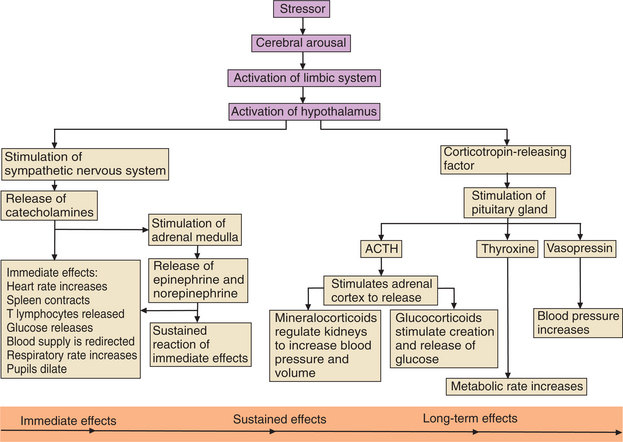
The body also has physiologic coping mechanisms, referred to as the generalized adaptation response, to stressors with multiple physiologic events (see Fig. 2-4). The human stress response has been characterized, both physiologically and behaviorally, as the “fight, flight, or freeze” response. The autonomic nervous system activates the body’s involuntary responses such as hormone secretions, metabolism, and fluid regulation.

image

Figure 2-4 The general adaption syndrome. See text discussion. (From Ignatavicius DD, Workman M, Mishler MA: Medical-surgical nursing, ed 2, Philadelphia, 1995, WB Saunders.)

Once the body recognizes a continued threat, physiologic forces are mobilized to maintain an increased resistance to stressors and return to a state of homeostasis. Chronic resistance eventually causes damage to the involved systems as the body enters a stage of exhaustion, possibly resulting in diseases of adaptation or stress-related responses or conditions.

A landmark UCLA study suggests that women may physiologically respond to stress with a cascade of chemicals that causes them to make and maintain friendships with other women. This response is referred to as “tend-and-befriend.” When the hormone oxytocin is released as part of the stress response in a woman, it buffers the fight-or-flight response. She is more likely to tend to children and gather with other women instead.244 When the woman engages in tending or befriending, more oxytocin is released along with endogenous opioids, which further counters stress and produces a calming effect. This calming response does not occur in men because testosterone, which is produced in high levels when the male is under stress, reduces the effects of oxytocin.181

The fact that women respond differently to stress than men has significant implications for their health. It may take time for new studies to reveal all the ways oxytocin helps women manage stress physiologically.244 The concept of tend-and-befriend may also help explain sex-based differences in behavioral manifestations of some psychiatric illnesses.139

The idea that stress can cause premature aging and death is not new. For example, chronic depression has been linked with heart disease and immune system dysfunction. Heightened levels of stress hormones (i.e., glucocorticoids) and the increased activity of the sympathetic nervous system also increase the rate of oxidative damage, formation of free radicals, and shortening of telomeres. The end-result is acceleration in the aging of leukocytes.72

Life stressors do not necessarily cause shortened chromosomes. Some research suggests it could be the other way around: people with intact telomeres are better able to resist psychologic and emotional stress.222 Researchers are now focused on individual genetic differences in the vulnerability of telomeres to stress.

The process of coping with chronic pain, trauma, or illness is ongoing. Each change in the downward course of the illness requires new and painful acceptance of the disease and its limitations. Behavioral or cognitive coping may be adaptive (e.g., talking or reading about the problem, prayer, or seeking God) or maladaptive (e.g., denial and distancing or the use of alcohol or other drugs). When a person is unable to mobilize the necessary resources to manage stress, death from disease may result or suicide may be the final step to conflict resolution.

Stress

Definition and Overview.: Alterations in an individual’s personal health or social situation can create significant stress for that individual. The term stress can be used to describe many social (e.g., change in job, residence, or marital status); psychologic (e.g., anxiety, fear of the unknown); and physiologic (e.g., blood loss, anesthesia, pain, immobility, infection) factors that cause neurochemical changes within the body.

Stress and other emotional responses are components of complex interactions of genetic, physiologic, behavioral, and environmental factors that affect the body’s ability to remain or become healthy or to resist or overcome disease. Regulated by nervous, endocrine, and immune systems, stress exerts a powerful influence on other bodily systems with important implications for the initiation or progression of cancer, cardiovascular disease, HIV, autoimmune diseases, and other illnesses.23

Holmes and Rahe96 first developed the notion that personal or work-related life changes as a source of stress can eventually lead to disease. Their findings rank-ordered major life change events, giving each event an assigned number to represent units of stress that could be totaled and scored.

At that time, it was thought that a direct link could be established between stress events and illness or between personality type and illness. It was not uncommon to hear professionals speak of a colitis-, ulcer-, or stroke-personality. Research supports a strong correlation between chronic stress response and the manifestation of various disorders, but a direct link has not been established; only personality (angry, hostile type A behavior) has been directly linked with heart disease.

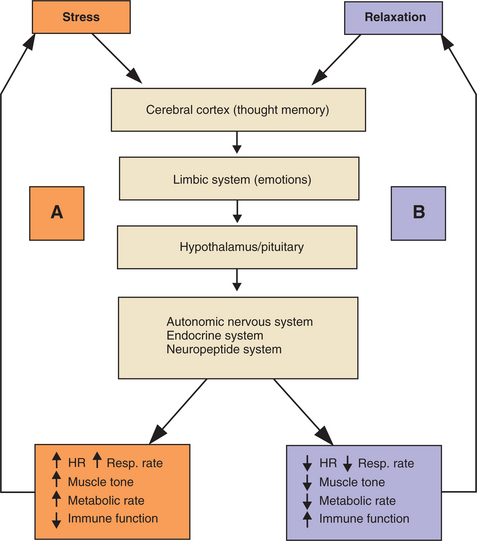
Type A behavior pattern associated with the development of coronary heart disease is characterized by excessive competitiveness and aggression and a fast-paced lifestyle. Persons exhibiting type A behavior are constantly struggling to accomplish ill-defined or broadly encompassing goals in the shortest time possible. This type of behavior has been shown to be as significant as other risk factors in the development of coronary artery disease and myocardial infarction when accompanied by hostility associated with anger.87 The opposite type of behavior, exhibited by people who are relaxed, unhurried, and less aggressive, is sometimes called type B.

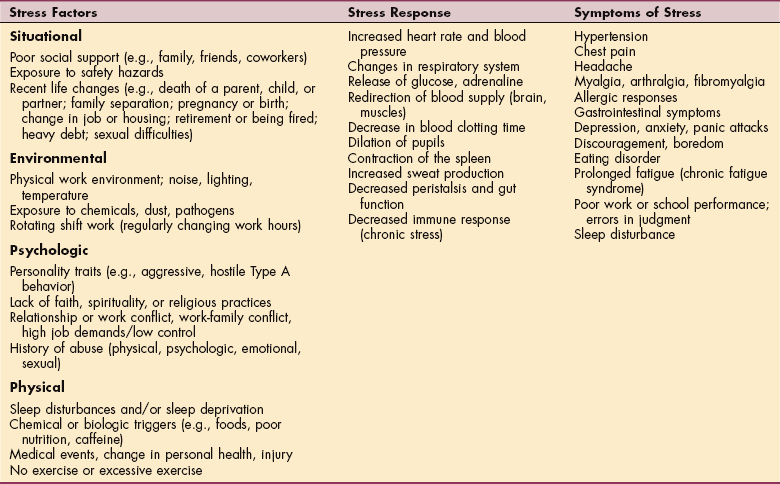
The body’s response to any stress, whether caused by events perceived as positive or negative, is to mobilize its defenses to maintain homeostasis (Fig. 2-3 and Table 2-6). The success of the stress response in maintaining homeostatic balance is determined by biobehavioral factors such as a person’s age, gender, physical condition, coping mechanisms, health-enhancing or-impairing behaviors (e.g., diet, exercise, tobacco use, exposure to sunlight), and the duration of the stress.201

Table 2-6

Stress and Stress-Related Components

image

image

Figure 2-3 A simplified model of the cyclic mind-body and body-mind influences of stress (A) and relaxation (B) on health. As our body experiences the physical responses to stress or relaxation, the central nervous system remembers each event, causing a continuation of the cycle and resulting in long-term positive or negative physiologic responses and consequences. (Modified from Rakel D: Integrative medicine, ed 2, Philadelphia, 2007, WB Saunders.)

Research suggests a possible role of early life factors (e.g., adverse or traumatic life events) in altering the stress response. Stressful experiences that occur very early in life can alter the responsiveness of the nervous and immune systems.97 Individuals may become more vulnerable to future adverse events after early stressors have affected cortisol secretion, diurnal rhythm, and HPA axis function.232 Combined together, psychologic stress and aging can impact the immune system and the effects are interactive. Psychologic stress can mimic and exacerbate the effects of aging. Older adults often show greater immunologic impairment to stress than younger adults.97

Risk Factors.: A growing consensus among stress researchers is to understand the relationship between stress and illness outcomes, so the factors that modify or mediate the relationship must be identified. Although stressors may produce temporary physiologic and psychologic changes, most stressors are not followed by long-term illness.

A stressor may produce an extreme reaction in one person but no reaction in another, or the same stressor may produce variable reactions in the same individual at different times. This suggests that factors exist that alter the responses to stressors. Age has been mentioned as one risk factor. Another factor that can alter a stress response is the environment, such as social support, which tends to buffer individuals from the potentially negative effects of stressors. Those people with strong social supports live longer and have a lower incidence of physical illness.

Several large studies have established that women feel stress more than men do at comparable life stages and in similar circumstances. Women’s catecholamines and blood pressures tend to remain elevated long after the end of the workday, whereas men’s blood pressures start to decline as soon as they leave work.86,106 Other potential factors are listed in Table 2-6.

In addition to early stressful life events, negative life events in adults, especially work-related, are associated with adverse physiologic responses. Depressed mood and mental strain have been reported as a result of chronic stress. Depressed mood and mental strain are also directly linked with increased tobacco consumption in labor workers and increased alcohol consumption in professional workers.216 Although many factors causing stress have been studied, the ability to predict a stress response in any given individual remains poor.

Even transient physical and psychologic stressors can cause immune dysregulation and delay healing. For example, acute pain, academic examinations, and other anxiety and perceived stress have been reported as risk factors for health problems.97

Pathogenesis.: Over the past century, many theories to describe the biologic response of the body to acute and chronic stress have been proposed. Today there is evidence that stress is a neurophysiologic, hormonal, and behavioral event. The body’s response to stress is a complex combination of biologic and behavioral mechanisms that are regulated by the neurohormonal axis. According to Selye, who introduced the theory of the general adaptation syndrome (GAS) (Fig. 2-4), the three phases that occur in response to prolonged stress are alarm, resistance, and exhaustion.

In the alarm phase, the body releases adrenaline and a variety of other chemicals to combat the stress and to stay in control. This is called the fight, flight, or freeze response. The muscles tense, the heart beats faster, breathing and perspiration increase, and the eyes dilate. All of these autonomic nervous system responses are protective in nature and critical to survival. Once the cause of the stress is removed, the body will return to a state of homeostasis.

If the stressor is not removed, GAS goes to its second stage called resistance or adaptation. The body is responding now to the need for long-term protection. It secretes further hormones that increase blood sugar levels to sustain energy and raise blood pressure. The adrenal cortex produces corticosteroids for this resistance reaction.

Overuse by the body’s defense mechanism in this phase can lead to disease. If this adaptation phase continues for a prolonged period of time without relaxation or rest to counterbalance the stress response, sufferers become prone to fatigue, concentration lapses, irritability, and lethargy as the effort to sustain arousal slides into negative stress.

The third stage of GAS is called exhaustion. In this stage, the body has run out of its reserves of body energy and immunity. Mental, physical, and emotional resources are depleted. The body experiences “adrenal exhaustion.” The blood sugar levels decrease, leading to decreased stress tolerance, progressive mental and physical exhaustion, illness, and possible collapse. Immune, metabolic, and neuronal responses so necessary in the early defenses to abnormal stress now lead to specific organ damage.

How stress produces disease is frequently debated, and the exact pathophysiologic mechanism remains unknown. The stress response has been associated with a variety of physiologic changes that may be postulated as mediators in the development of disease. The HPA axis, the autonomic nervous system, and the catecholamine response are often cited as stress-sensitive systems. These and other neurologic and endocrine systems may be important factors in the chain of events leading to cardiovascular, gastrointestinal, endocrine, and other stress-related disorders.

Recently, significant amounts of information have become available on how the stress response systems interact in combination with a proposed neuroendocrine-neuroimmune stress response to affect autoimmunoregulation. Findings that link immune and neuroendocrine function may provide explanations of how the emotional state or response to stress can modify a person’s capacity to cope with infection, inflammation, or cancer and influence the course of autoimmune disease. For example, in response to a stress impulse, the amygdala in the brain signals the hypothalamus to release adrenocorticotropic hormone–releasing factor (ACTH–RF). This stimulating hormone causes ACTH (corticotropin) to be released from the pituitary gland.

ACTH is the major hormone regulator of the body’s adaptive response to stress and the physiologic stimulus for the release of stress hormones (e.g., adrenaline, noradrenaline, cortisol) from the adrenal glands (target organ). These powerful hormones and glucocorticoids (cortisol) create within the body the fight, flight, or freeze response. This cascade of events can lead to hypercortisolism and inappropriately elevated catecholamines, resulting in immunosuppression (i.e., decreased numbers of lymphocytes [white blood cells]) and antibodies and thus increasing vulnerability to infectious diseases, including viral-induced cancers and other diseases.

Studies of the HPA axis as a potential psychobiologic mediator of these effects are underway.22 Understanding the biochemical mechanisms underlying stress may permit the development of more effective strategies to treat chronic stress and possibly prevent the development of stress-related disorders.

In 1995, researchers identified a peptide known as prepro-TRH178-199 that had been shown to reduce the secretion of corticotropin, or ACTH, by 50%. Administration of this corticotropin release–inhibiting factor (CR–IF) in animal studies before exposure to stress revealed significantly reduced levels of ACTH and other hormones elevated in response to stress. This peptide also decreased fear and anxiety-related behaviors.71 Ongoing studies continue to look for ways to use this peptide for therapeutic purposes.

Another theory holds that certain kinds of stress are consistently likely to produce given physiologic responses and consequently, specific pathologic states. The impact of stress on cells directly or indirectly causes protein denaturation and elicits a stress response. A cell with normal antistress mechanisms may be able to withstand stress if the intensity is not beyond that which will cause irreversible protein damage. Age-related degenerative disorders with protein deposits in various tissues may be an example of the physiologic result of this type of stress.162

Still another viewpoint is that stress is nonspecific and that personal factors, such as conditioning and heredity, determine which organ system if any will be affected by a variety of stressors. A given individual may have a specific susceptible organ that will be the target of a variety of stresses; thus some people are gastrointestinal reactors and others are cardiac or muscle-tension reactors.

Familial patterns may account for the hereditary factor determining which organ system is affected. Low back pain, abdominal pain, and migraine headaches affecting adults often also occurred in the parents. Finally, stress may be viewed as a nonspecific force that exacerbates existing disease states.

Stress can play a key role in psychogenic pain (i.e., pain believed to be caused by emotional factors rather than the result of physiologic dysfunction). Although psychogenic pain begins without a physical basis, repeated severe stress most likely alters the complex physiology of pain transmission, modulation, and perception.

The psychogenic effect of stress, anxiety, fear, and anger that produces painful alterations in physiology is referred to as psychophysiologic pain. For example, stress can produce chronic excessive muscle contraction with resultant ischemia and pain with eventual functional impairment.

Clinical Manifestations.: Therapists often treat people with neuromusculoskeletal dysfunction, especially head, neck, and back pain, without an identified point of injury or cause. Stress, reaction to stress, and posttraumatic stress disorder are common causes of physical manifestations treated by the therapist. Muscle tension and pain, restlessness, irritability, fatigue, increased startle reaction, breath holding, hyperventilation, tachycardia, palpitations, and sleep disturbances are some of the more common symptoms reported to the therapist (see Table 2-6). Clients often self-medicate using chemical (alcohol, nicotine, drugs) or food substances; the alert therapist may help assist the client by facilitating treatment intervention for this aspect of the person’s stress response.

Recent studies provide clear and convincing evidence that chronic psychosocial stress contributes significantly to the pathogenesis and exacerbation of coronary artery atherosclerosis, whereas acute stress induces ovarian dysfunction, hypercortisolism, and accelerated atherosclerosis. Acute stress triggers myocardial ischemia, stimulates platelet function, increases blood viscosity, and causes coronary vasoconstriction in the presence of underlying atherosclerosis (coronary heart disease).218

Some individuals also experience exaggerated heart rate and blood pressure responses to psychologic stress. Emotionally responsive individuals report less satisfaction with social support and higher levels of perceived daily stress, anxiety, and depressive symptoms. Psychosocial traits that have been linked to cardiovascular disease may be associated with more marked cardiovascular activation occurring in response to negative emotions experienced throughout the day.41

Researchers hypothesize the exaggerated systemic vascular resistance responses during stress may be caused by endothelial dysfunction. This association may help explain the growing evidence of a relationship between stress hemodynamics and cardiovascular disease risk. It is postulated that the interplay between the sympathetic nervous system and the endothelium accounts for the regulation or dysfunction of vascular tone.227

Coping and Self-Efficacy

Coping strategies refer to the tools individuals use to manage, tolerate, or control stressful events. Whether an individual has effective or maladaptive coping strategies can significantly influence both physical health and the level of disability associated with a particular medical condition. It is important for physical therapists to support effective coping strategies. Generally, there are two main ways of coping: an active problem-solving strategy and an emotion-based strategy.158 Active coping strategies appear to be more effective in dealing with stressful events.121 For example, cognitive restructuring guides the client to focus on active coping behaviors and improving function instead of focusing on physical symptoms and pain. Reinforcing positive active behaviors and ignoring pain-related behaviors is called operant conditioning (see Box 3-15).

Measuring Coping.: Several tools are frequently used to measure coping strategies. The Ways of Coping tool developed by Folkman and Lazarus84 identifies specific strategies such as seeking social support, planned problem solving, self-control, distancing, or escape/avoidance. The COPE measure asks participants to identify specific traits that typify their response to stressful events. These trait scales include topics that are similar to the ways of coping, such as active coping, planning, seeking social support, religion, or acceptance.43

Using the Ways of Coping and COPE measures, it appears that active coping strategies have a positive influence on physical health. Active coping was better than avoidance for improving immune status of HIV-positive men.95 Active coping was associated with fewer recurrences of melanoma.77 Physical therapists may want to familiarize themselves with these coping tools or work with team psychologists to support active coping strategies for their clients.

Although coping is a mechanism used by individuals to manage stressful events, greater improvements in health can be observed if certain lifestyle behaviors are changed. Changing individual behaviors is a complex and dynamic process affected by many factors. Several models of health behavior have been examined to assist health professionals in understanding the process of behavior change and developing effective strategies to improve lifestyle choices and thus to improve health.

Changing Health Behaviors.: Helping people change behavior has become more important in the plan of care for all individuals in the health care setting. Addressing lifestyle modification for disease prevention, long-term disease management, addictions, chronic pain, and many other areas of health care is increasing in importance and a necessary component of whole-person care.280 Understanding readiness to make changes, recognizing barriers to change, and helping clients anticipate relapse can improve patient/client satisfaction, and lower frustration on the part of the provider during the change process.

Much has been written about the success and failure in helping people change behaviors. People clearly understand the need to change and often make efforts to make lifestyle modifications, but consistent, life-long behavior changes are difficult and relapse is common. Repeated suggestions, record-keeping, a “just do it” attitude, and other behavior modification approaches do not always work. Individuals are often labeled as “noncompliant” or “unmotivated” when behavior change does not take place.280

The behavioral change approach to disease prevention and health promotion focuses on the modification of individual health-related behaviors. Research into smoking cessation and alcohol abuse has advanced our understanding of the change process, including what works and what is not effective. Clearly, there is not a “one-size-fits-all” approach.280 Four models and theories often cited in the literature using a health behavior change approach are presented here.

Models of Health Behavior Change.: The Health Belief Model (HBM) was initially developed in the 1950s by the U.S. Public Health Service in order to help explain why there was limited success of early screening programs such as free mobile x-ray screening for tuberculosis.132 Its foundation was based on the social psychology literature of the time, which included the confluence of two learning theories: Stimulus Response Theory and Cognitive Theory.

The HBM is a value-expectancy model in which the desire to avoid illness or get well is considered the value and the belief that a certain action will prevent or limit illness is the expectation. This model embraces the cognitive theorists’ and behaviorists’ understanding of learning versus the traditional stimulus response or operant conditioning theories popular at the time. The HBM proposes that in order for persons to change their behaviors they must first believe they are susceptible to a particular condition and that the severity of that condition is serious.132 Changes in behavior are based on six key components: perceived susceptibility, perceived severity, perceived benefits, perceived barriers, cues to action, and self-efficacy.

The HBM model assumes individuals act on the basis of their rational appraisal of a given situation. The model is not designed to account for social pressures that might persuade the individual to partake in the unhealthy behavior.53,91 This is a limiting factor when one considers that a problem like obesity often has stigma and social pressure attached to it; therefore the intervention must acknowledge this.

Rating the severity, susceptibility, benefits, barriers, and self-efficacy associated with a health behavior is just the first of many steps to understanding why (or why not) individuals adopt a specific health behavior. Prospective studies performed on the HBM in the early 1980s provided support of earlier research, demonstrating that perceived barriers were the most powerful predictor of the HBM concepts.132 Any attempt to change behavior, such as eating habits or physical activity, must address the perceived barriers, which are often at the family or community level rather than the individual level.

The Theory of Reasoned Action (TRA) and the Theory of Planned Behavior (TPB) are also based on a value-expectancy theory similar to the HBM,175 which was originally designed in order to understand the relationship between attitudes and behavior.80 A key aspect is the difference between the attitudes toward the object of health (in this case breast cancer) versus the attitude toward the behavior of health with respect to that object (specifically a mammogram).81

The TRA assumes that the most important determinant of behavior is the individual’s intent to change behavior. The person’s attitude toward the behavior is determined by his or her belief about the outcomes of performing the behavior. If a positive outcome is the expected result, then there will be a positive attitude toward that behavior. These intentions are measured on a bipolar scale, such as agree/disagree or likely/unlikely, although the behavior itself is not usually measured. One limitation to the TRA is that individuals usually have only incomplete volitional control of behavioral choices.

The TPB builds on the TRA to help predict behaviors over which people have incomplete volitional control.1 The TPB includes some understanding of environmental factors that may prevent the individual with high motivation from performing that behavior. This has been the case in fighting obesity since the individual may not have access to facilities to perform physical activity or the availability to obtain healthy food choices.

Perceived behavioral control indirectly measured by control beliefs and perceived power were components added to the TPB. By including normative belief and norms, which impact intentions, this model shows that the individual can be affected by external influences that can mix with the social environment.

The Transtheoretical Model (TTM), also known as the Stages of Change Model, utilizes a stage construct to represent change over time. The stages of change were used to attempt to systematically integrate various theories of intervention, hence the TTM.212 Six stages are used to demonstrate that behavior change is a process rather than a finite event or single activity. The stages include precontemplation (uninterested, unaware, or unwilling to change), contemplation (considering a change), preparation (getting ready to change), action (taking actual steps to effect change), maintenance, and termination.

This model looks beyond the intention aspect of a decision and includes an observable action of behavior change. It takes into account the fact that most people will relapse or even fail, but they can reengage with the stages and may even do so several times before a change becomes genuinely established.280 This is essential with physical activity in that the individual must demonstrate the behavior and then even continue into the maintenance stage with less temptation to relapse into the previous behavior pattern. As self-efficacy improves in this model, an individual is able to move into maintenance and eventually into termination, although very few people (<20%) attain this final stage.212

Changing an overt behavior for more than 6 months constitutes the maintenance stage. Success using the TTM involves the delivery of “tailored” interventions versus targeted or one-size-fits-all programs. This would seem to match the clinical model in which an individually tailored program can be designed, providing the provider is willing and capable of recognizing the stage the person is in and then developing a tailored intervention. These stage-matched interventions take additional time and effort, and more research is needed using modern tools of communication, such as the Internet, that would improve the efficiency and ability to reach more diverse populations.212

Social Cognitive Theory (SCT) is a health behavior model that is more dynamic in nature than the HBM. Bandura initially felt that children can learn through observational learning and therefore the behavior is modeled and the reward is gained through vicarious reinforcement versus direct reward.21 These became two important constructs of the SCT.

The SCT is similar to ecologic models in the sense that it shares the perspective that environmental factors can be influential in shaping health-promoting behaviors.18 SCT not only incorporates factors associated with the environment but also personal and behavior-specific factors. These three components are constantly influencing each other and became the concept known as reciprocal determinism.21

Behavior under SCT is not focused independently on factors external to the individual or the environment. The situation is the person’s perception of that environment. The combination of these two constructs provides an ecologic framework for the understanding of the behavior.

This model also includes a significant acknowledgment of the sociologic concept of agency and that personal efficacy constitutes a key factor of human agency. Human agency operates within the structure of these three determinants and acts reciprocally at various strengths, times, and circumstances.17,19

Finally, outcome expectations are also constructs within the overall theory. Self-efficacy (the ability or confidence of a person to implement an effective behavior) is considered the most important construct and necessary prerequisite for behavior change.18 Self-efficacy is based on the combination of the attitudes, cognition, and expectations of an individual and can be improved through successful attainment of tasks, skills, or behaviors. Self-efficacy has been used in previous studies of healthy eating behaviors and food choices among third and fourth grade students. It was the primary predictor of the intention to engage in these healthy food choices.

Although SCT encompasses the environment more so than other behavioral models or theories, there is still limited ability to measure long-term sustainability and in some cases even action beyond the person’s stated intention. Other limitations of SCT include the criticism that the theory is too comprehensive with too many constructs that allow researchers to explain almost any phenomena observed.21

Winters and colleagues266 used the SCT to explain the variance in predictor variables for moderate and vigorous exercise in high school students. They determined that although educational methods can be effective, the specific psychosocial variables relating to self-regulation, self-efficacy perception, and outcome expectation within the SCT should be the focus.

These theories have been utilized in other large studies and programs, such as the Multiple Risk Factor Intervention Trials and the Minnesota Heart Health Program, in an attempt to reduce cardiovascular disease, although the modest impact of these interventions demonstrates a limitation in focusing on the individual behavior change models for health promotion.274

2-5   SPECIAL IMPLICATIONS FOR THE THERAPIST

Stress, Coping, and Self-Efficacy

PREFERRED PRACTICE PATTERNS

Other patterns associated with additional variables (e.g., substance use/abuse, posttraumatic stress disorder, side effects of medications) may be observed.

Musculoskeletal 4B:

Impaired posture; 4C: Impaired muscle performance

Health Behavior Change

It is not easy for people to make necessary changes (or they would have done so long ago), and denial often obscures the picture. The therapist has a key role in bringing multiple dimensions of wellness into the plan of care. A higher level of wellness includes more than just the physical. It embraces the emotional, social, intellectual, and spiritual dimensions of health and well-being.128 Toward this end, the therapist can do the following:

• Assess readiness to change before prescribing lifestyle changes, including exercise.

• Provide opportunities for improving self-efficacy. For example, observe and monitor the client performing the recommended intensity of exercise (on the treadmill) and provide feedback.

• Allow opportunities for self-regulation, self-efficacy perception, and outcome expectations described by the participant.

• Promote wellness and select strategies appropriate for ability to change and perception of selfefficacy.

The therapist may need to develop his or her own personal coping mechanisms when working with clients who have chronic illnesses, major stress, or psychologic disturbances. Preexisting character issues or the presence of psychologic problems in a client or for the provider (e.g., anxiety, panic disorder, depression) can create obstacles to rehabilitation or prevent progress.

True behavior change rarely has a starting and ending point but exists on a continuum of time and effort. The client moves from being uninterested, unaware, or unwilling to make a change, to thinking about making a change, to deciding to do so, and getting on with it. It is easy to encourage and support someone in the change process until discouragement and relapse occur.

Understanding the processes required to make behavior change will enable the therapist to recognize which stage the patient/client may be in and identify the next step of action needed to help the individual move to the next state. Patience is needed if the individual is still in the precontemplation or contemplation stage. The client may seem in denial or argumentative. The therapist’s efforts to convince them usually results in increased client resistance.

The therapist may need to shift back to find ways of engaging the client in contemplating change by asking thought-provoking questions and personalize risk factors while maintaining a positive, nonjudgmental attitude. For example, to help the individual think about change, the therapist can ask, “What would have to happen for you to know that this is a problem?” To help the individual examine barriers to change, ask, “What is keeping you from changing?” or “What has helped you change in the past?” or “What are your reasons for not changing?” Additional tools and techniques to help facilitate behavior change are available.280

Stress

The therapist may be called on to assist the client in reducing the physical impact of stress on the body as well as providing a means of physical or emotional control. Progressive muscle relaxation (PMR), breathing exercises, physical activity and exercise, and biofeedback are the primary tools used in therapy to teach the client effective stress-reducing techniques.

Since stress commonly causes muscle tension, producing somatic symptoms such as headaches and neck and back pain, control of muscle tension appears to help reduce the physical effects of such tension as well. PMR involves the alternate tensing and relaxing of all major muscle groups, usually in sequential steps. It is easy to teach and inexpensive.

Breathing exercises can be helpful in restoring normal respiration by providing moments of deep breathing because the person in a stressful situation tends to breathe shallowly or even unconsciously hold his or her breath. Teaching diaphragmatic breathing skills and suggesting ways clients can remember to check their breathing (e.g., whenever the telephone rings, setting their watches to beep on the hour, at every stop sign when in an automobile) can aid in reducing the chest and upper body muscle tension and diaphragmatic tension and dysfunction that accompany altered breathing patterns.

Physical activity and exercise is only one of the behavioral and psychologic therapies recommended for the treatment of selected clients such as those with coronary disease. Exercise, particularly when combined with a weight loss program, can lower both resting and stress-induced blood pressure levels and produce a favorable hemodynamic pattern for the treatment of hypertension.

Exercise training, along with type A behavior modification, psychologic counseling, smoking cessation, and dietary modification, are all considered important in the overall holistic treatment approach to many people. For example, aerobic exercise has been found to consistently attenuate (weaken or reduce) the psychophysiologic responses to stress, particularly in type A personalities.

Type A behavior pattern associated with the development of coronary heart disease is characterized by excessive competitiveness and aggression and a fast-paced lifestyle. Persons exhibiting type A behavior are constantly struggling to accomplish ill-defined or broadly encompassing goals in the shortest time possible. This type of behavior has been shown to be as significant as other risk factors in the development of coronary artery disease and myocardial infarction when accompanied by hostility associated with anger.87 The opposite type of behavior, exhibited by people who are relaxed, unhurried, and less aggressive, is sometimes referred to as a type B personality.

Type A beliefs may predispose individuals to health problems through impaired interactions with their interpersonal environment, as will mechanisms that increase cardiovascular and neuroendocrine responses.259 In this particular population, aerobic training blunts their cardiovascular and adrenal response to stress.

Although physical exercise may be considered a stressor itself, significant differences are apparent in the way the body responds to exercise versus the way the body responds to a mental stressor. A key difference is between the diastolic and systolic blood pressure responses.

Exercise results in a rise in the systolic pressure and possibly a small increase in diastolic pressure, whereas mental stress produces a significant increase in both diastolic and systolic blood pressures. Blood vessels dilate during physical exercise to increase the blood supply to the muscles.

During this vasodilation the diastolic blood pressure tends to stabilize or increase mildly, whereas during mental stress the muscles may isometrically contract (muscle tension), but no substantial movement of the body by the muscles and no metabolic reason for vasodilation occur. Decreased vagal activity may contribute to the exaggerated diastolic blood pressure reactivity to mental stress.

Biofeedback can be an effective means of training people to reverse the subtle changes in blood pressure, muscle tension, and heart rate that accompany a stress-induced somatic response. Biofeedback involves using electronic instrumentation to signal selected somatic changes. Surface electrodes are sensitive to small changes in the electrical activity of the muscles, signaling to the client by way of sound or sight the need to practice Physiologic Quieting techniques (e.g., visualization, imagery, deep breathing).

Social Support, Networks, and Roles That Influence the Effects of Illness

There are several key terms that describe the role of social relationships and the effect it has on health. Social network refers to the web of social relationships that encompass an individual.112 They are the linkages between people. Network analysis focuses on the characteristic patterns of social ties between individuals.

Previous work has demonstrated the strength of weak ties (acquaintances) between people are as important if not more as the strength of strong ties (close friends).98 Unfortunately, these weak ties have been measured indirectly, such as membership in religious or voluntary civic organizations. Social networks are not always positive influences. For instance, cigarette smoking by peers is among the best predictors of smoking for adolescents.148 Social support is the functional content of relationships, the aid and assistance exchanged through interpersonal relationships. Social support is always intended to be helpful and is consciously provided by the sender.112

There is a two-way directional pathway between social networks and social support and health outcomes or disease. A person’s health status is affected by social support, whereas the ability to maintain a social network is in turn affected by the person’s health status.

Data collected over the last 20 years connect social support and social networks to physical and mental health, including studies that looked at all-cause mortality28; cardiovascular disease147,199; stroke26,137; infectious disease,179 including the common cold56; and HIV/AIDS.151

Berkman and Glass27 describe the impact on health by social networks as being along a continuum of factors (e.g., cultural, socioeconomic, political, religious, geographic, psychologic). More specifically, poverty, discrimination, and conflict are social-structural conditions that can exert a negative influence on health, whereas factors such as access to resources and material goods, close family ties, and help-seeking behaviors provide positive social support.

This comprehensive model addresses the social structural conditions at all levels and helps connect the psychosocial and behavioral pathways to the concept of social networks to health, bridging the work of social scientists and social epidemiologists to the health psychology models described earlier.67

2-6   SPECIAL IMPLICATIONS FOR THE THERAPIST

Social Support

Whereas the medical model focuses on factors internal to the individual that directly affect an individual’s health status, a considerable body of knowledge indicates that factors external to an individual also play a significant role in a person’s health status. Not only does pathology impact the level of disability, but personal characteristics, social networks, and the environment also affect an individual’s daily function.

This shift in emphasis encourages the development of new treatments or interventions that impact an individual’s health. Physical therapists need information not only about the impact of pathology on individual health, but also on the role of social and environmental factors that can lead to improved outcomes in our clients.

• Assess social support in the initial intake.

• Ask about social support components, including family, partners, peers, organizations such as church or synagogue, work, and culture.

• Social support may have an impact on the prognosis of individuals suffering from acute or chronic conditions and may differ between conditions.

ENVIRONMENTAL BARRIERS TO HEALTH CARE

Although there are environmental exposures that lead to disease, the nature of the physical environment has an impact on health and disease outcomes. The environmental influences on eating, physical activity, and subsequent obesity have been reviewed in detail.90

Eating behavior is affected by food supply trends, nutritional content of foods, larger portion sizes, and eating away from home regularly. Individuals are subjected to television advertising and media campaigns, and are affected by pricing. Grocery store chains in high-income markets offer fewer energy-dense foods than in low-income markets, which further affects the income disparity in obesity.90

Present trends in the reduction of physical activity because of increased screen time, increased automobile use, change in types of occupational activities, the increase in availability of labor saving devices, and the reduction of accessibility to parks and recreational space have caused the obesity epidemic to spread in all populations and demonstrate the need to intervene at the environmental level.

Simple environmental interventions, such as placing music and artwork in stairwells, have led to a 39% increase in stair use.90 Further architectural changes such as designing buildings with stairwells that are easier to access than elevators can make differences that would surpass the 100 kcal/day recommendation for daily activity.116

In an effort to combat reluctance to prepare healthy meals at home because of lack of time, cooking utensils, ingredients, and expertise, companies around the country are opening and marketing state-of-the art kitchens that will allow individuals or groups to come in and prepare 10 to 14 healthy meals. Such meals can be eaten at home without further preparation time.

At the same time, grocery stores offer a wide variety of high-sodium, high-fat microwaveable meals that appeal to busy people on the go. Teenagers who do not want to take the time and older adults who can no longer prepare meals are likely targets for this type of low-nutrition food.

Pilot projects at some universities have been instigated to increase walking on campus. Signs and campus-wide competition encouraging increased walking, as well as structural environmental changes, such as changing the locations of various parking lots, are strategies employed in this effort. These activities and programs are all consistent with the recommendations of the 2002 Task Force on Community Preventive Services.241

2-7   SPECIAL IMPLICATIONS FOR THE THERAPIST

Environmental Barriers

Over 50 million Americans (18% of the total U.S. population) have a disability.234 Recent data suggest that substantial disparities in health behaviors and overall health status exist between persons with and without disabilities.44 The WHO’s International Classification of Functioning, Disability, and Health (ICF) stresses the importance of environment, including physical environment, attitudes of others, or policies enforced as barrier or facilitator in the daily activities of persons with disabilities.273 The extent to which environment affects the lives of people with disabilities may depend on the person’s demographic characteristics (e.g., level of income, level of education, urban versus rural setting) and severity of disability.16

Disabilities can be physical, sensory, mental, or learning. Environmental barriers related to disability can include restricted social activity, not knowing where or how to obtain disability resource information, needing home modifications but having no way to obtain them, having difficulty accessing a health care provider’s office because of physical layout or location, and being treated unfairly at a health care provider’s office.16

There remains a need for environmental improvements to reduce social isolation and facilitate ADLs among persons with disabilities. Physical therapists can take an active and proactive role in educating the public and removing barriers. Therapists can help community leaders ensure that public places, such as restaurants, stores, and movie theaters, comply with the Americans with Disabilities Act (ADA).16

Within our own clinical practice, we can modify our actions to meet the needs of the disabled. For example, therapists should sit down when speaking with a person in a wheelchair and speak directly to the client rather than to the person with them. If needed, schedule extra time for people who have trouble undressing or difficulty getting on and off the table.

When talking with someone who is hearing impaired, say their name first and get their attention before speaking. This can help avoid repeating everything you say. You may or may not have to speak louder, but clearly enunciate your words when speaking to a person with a hearing loss.

References

1. Ajzen, I. The theory of planned behavior. Organ Behav Hum Dec Proc. 1991;50:179–211.

2. American Cancer Society (ACS) Cancer facts. Available on-line at http://www.cancer.org Accessed April 24, 2007.

3. American College of Sports Medicine (ACSM). Guidelines for exercise testing and prescription, ed 6. Philadelphia: Lippincott, Williams & Wilkins, 2005.

4. American College of Sports Medicine (ACSM). Position stand: the recommended quantity and quality of exercise for developing and maintaining cardiorespiratory and muscular fitness, and flexibility in healthy adults. Med Sci Sports Exerc. 1998;30(6):975–991.

5. American Gastroenterological Association. American Gastroenterological Association medical position statement on obesity. Gastroenterology. 2002;123(3):879–881.

6. American Obesity AssociationPrevention, 2002. Available on-line at http://www.obesity.org/prevention/ Accessed April 7, 2007.

7. American Physical Therapy Association (APTA) Education strategic plan. Available on-line at http://www.apta.org (click on: Education). Accessed August 7, 2006.

8. Anda, RF, Croft, JB, Felitti, VJ, et al. Adverse childhood experiences and smoking during adolescence and adulthood. JAMA. 1999;282(17):1652–1658.

9. Andersen, RE, Crespo, CJ, Bartlett, SJ, et al. Relationship between body weight gain and significant knee, hip and back pain in older Americans. Obes Res. 2003;11(10):1159–1162.

10. Astin, JA, Harkness, E, Ernst, E. The efficacy of distant healing: a systematic review of randomized trials. Ann Intern Med. 2000;132(11):903–910.

11. Astin, JA, Shapiro, SL, Lee, RA, et al. The construct of control in mind-body medicine: implications for healthcare. Altern Ther Health Med. 1999;5(2):42–47.

12. Avers, D. Challenges 2000: Geriatrics. PT Magazine. 2000;8(1):43–46.

13. Bach, PB, Cramer, LD, Warren, JL, et al. Racial differences in the treatment of early-stage lung cancer. N Engl J Med. 1999;341(16):1198–1205.

14. Backhed, F, Ding, H, Wang, T, et al. The gut microbiota as an environmental factor that regulates fat storage. Proc Natl Acad Sci USA. 2004;101(44):15718–15723.

15. Baker, P. Sex and gender matter. From boys to men: the future of men’s health. Medscape Primary Care. 2001.

16. Bancroft, E. Environmental barriers to health care among persons with disabilities. MMWR. 2006;55(48):1300–1303.

17. Bandura, A. Social cognitive theory: an agentic perspective. Annu Rev Psychol. 2001;52:1–26.

18. Bandura, A. Social learning theory. Englewood Cliffs, NJ: Prentice Hall, 1977.

19. Bandura, A. Theoretical perspectives: self efficacy: the exercise of control. New York: W.H. Freeman and Company, 1997.

20. Baranowski, T, Cullen, KW, Nicklas, T, et al. Are current health behavior change models helpful in guiding prevention of weight gain efforts? Obes Res. 2003;119:235–435. [(suppl)].

21. Baranowski, T, Perry, C, Parcel, G. How individuals, environments, and health behavior interact: social cognitive theory. In: Glanz K, Rimer BK, Lewis FM, eds. Health behavior and health education. San Francisco: Jossey-Bass, 2002.

22. Bauer, ME, Vedhara, K, Perks, P, et al. Chronic stress in caregivers of dementia patients is associated with reduced lymphocyte sensitivity to glucocorticoids. J Neuroimmunol. 2000;103(1):84–92.

23. Baum, A, Posluszny, DM. Health psychology: mapping biobehavioral contributions to health and illness. Annu Rev Psychol. 1999;50:137–163.

24. Baumgartner, RN, Ross, R, Heymsfield, SB. Does adipose tissue influence bioelectric impedance in obese men and women? J Appl Physiol. 1998;84:257–262.

25. Benoit, S, Schwartz, M, Baskin, D, et al. CNS melanocortin system involvement in the regulation of food intake. Horm Behav. 2000;37(4):299–305.

26. Berkman, L, Breslow, L. Health and ways of living: the Alameda County Study. New York: Oxford University Press, 1983.

27. Berkman, L, Glass, T. Social integration, social networks, social support and health. In: Berkman L, Kawachi I, eds. Social epidemiology. New York: Oxford University Press, 2000.

28. Berkman, LF, Syme, SL. Social networks, host resistance, and mortality: a nine-year follow-up study of Alameda County residents. Am J Epidemiol. 1979;109(2):186–204.

29. Bernstein, N. Record immigration is changing the face of New York’s neighborhoods. New York Times. 2005:16.

30. Birkmeyer, JD, Sharp, SM, Finlayson, SR, et al. Variation profiles of common surgical procedures. Surgery. 1998;124(5):917–923.

31. Bjorntorp, P, Rosmond, R. Neuroendocrine abnormalities in visceral obesity. Int J Obes Relat Metab Disord. 2000;24(suppl 2):S80–85.

32. Blain, H, Vuillemin, A, Blain, A, et al. The preventive effects of physical activity in the elderly. Presse Med. 2000;29(22):1240–1248.

33. Blanck, HM, Dietz, WH, Galuska, DA, et al. State-specific prevalence of obesity among adults United States, 2005. MMWR. 2006;55(36):985–988.

34. Bradley, F, et al. Reported frequency of domestic violence; cross sectional survey of women attending general practice. BM J. 2002;324(7332):271–274.

35. Bronfenbrenner, U. The ecology of human development. Cambridge: Harvard University Press, 1979.

36. Brown, SA, Tapert, SF, Granholm, E, et al. Neurocognitive functioning of adolescents: effects of protracted alcohol use. Alcohol Clin Exp Res. 2000;24(2):164–171.

37. Brozek, J, Grande, F, Anderson, JT, et al. Densitometric analysis of body composition: revision of some quantitative assumptions. Ann NY Acad Sci. 1963;110:113–140.

38. Bruckner, J, Trenouth, J. The story of physical therapy at Boston’s Barbara M. McInnis House. PT Magazine. 2000;8(1):50–53.

39. Campisi, J, Kim, SH, Lim, CS, et al. Cellular senescence, cancer and aging: the telomere connection. Exp Gerontol. 2001;36(10):1619–1637.

40. Caralis, PV, Musialowski, R. Women’s experience with domestic violence and their attitudes and expectations regarding medical care of abuse victims. South Med J. 1997;9:1075–1080.

41. Carels, RA, Blumenthal, JA, Sherwood, A. Emotional responsivity during daily life: relationship to psychosocial functioning and ambulatory blood pressure. Int J Psychophysiol. 2000;36(1):25–33.

42. Carnes, M. Health care in the U.S.: is there evidence for systematic gender bias? WMJ. 1999;98(8):15. [17-19, 25].

43. Carver, C. You want to measure coping but your protocol’s too long: consider the brief COPE. Int J Behavioral Med. 1997;4:91–100.

44. Centers for Disease Control and Prevention (CDC). 2006 disability and health state chartbook: profiles of health for adults with disabilities. Atlanta: U.S. Department of Health and Human Services, 2006.

45. Centers for Disease Control and Prevention (CDC). Behavioral risk factor surveillance system survey data. Atlanta: U.S. Department of Health and Human Services, CDC, 2004.

46. Centers for Disease Control and Prevention (CDC) Health Statistics 2000. Available on-line at http://www.cdc.gov Accessed April 24, 2007.

47. Centers for Disease Control and Prevention (CDC). Health, United States, 1998, socioeconomic status and health chart-book. Hyattsville, MD: U.S. Department of Health and Human Services, National Center for Health Statistics, 1998.

48. Centers for Disease Control and Prevention (CDC). National Center for Health Statistics. Effectiveness in disease and injury prevention-estimated national spending on prevention-United States. MMWR. 1992;41:529–531.

49. Chan-Tack, KM, Lam, JC. Domestic violence. Mo Med. 2000;97(7):242–246.

50. Chaudhri, O, Small, C, Bloom, S. Gastrointestinal hormones regulating appetite. Philos Trans R Soc Lond B Biol Sci. 2006;361(1471):1187–1209.

51. Chen, Y, Dales, R, et al. Obesity may increase the incidence of asthma in women but not in men: longitudinal observations from the Canadian National Population Health Surveys. Am J Epid. 2002;155(3):191–197.

52. Chirico, ASA. Physical activity and human obesity. N Engl J Med. 1960;263:935–940.

53. Clarke, VA, Lovegrove, H, Williams, A, et al. Unrealistic optimism and the health belief model. J Behav Med. 2000;23(4):367–376.

54. CNN MoneyBest places to live. Available on-line at http://money.cnn.com/magazines/moneymag/bplive/2006/index.html. Accessed April 24, 2007.

55. Coakley, EH, Kawachi, I, Manson, JE, et al. Lower levels of physical functioning are associated with higher body weight among middle-aged and older women. Int J Obesity. 1998;22:958–965.

56. Cohen, S, Doyle, WJ, Skoner, DP, et al. Social ties and susceptibility to the common cold. JAMA. 1997;277(24):1940–1944.

57. Collins, G. New gene linked to obesity. Presentation at the Conference Of The European Society For The Study Of Diabetes, Jerusalem, Israel, September 2000.

58. Cooper, RA, Quatrano, LA, Axelson, PW, et al. Research on physical activity and health among people with disabilities: a consensus statement. J Rehabil Res Dev. 1999;36(2):142–154.

59. Corbeil, P, Simoneau, M, Rancourt, D, et al. N. Increased risk for falling associated with obesity: Mathematical modeling of postural control. IEEE Trans Neur Sys Rehabil Engin. 2001;9(2):126–136.

60. Davis, SN, Galassetti, P, Wasserman, DH, et al. Effects of gender on neuroendocrine and metabolic counterregulatory responses to exercise in normal man. J Clin Endocrinol Metab. 2000;85(1):224–230.

61. DeMaria, EJ, Sugerman, HJ, Kellum, JM, et al. Results of 281 consecutive total laparoscopic Roux-en-Y gastric bypasses to treat morbid obesity. Ann Surg. 2002;235(5):640–645.

62. Department of Health and Human ServicesPhysical activity and health: a report of the Surgeon General Atlanta 1996.

63. Department of Health and Human Services (DHHS) Publication No. (PHS) 85-1321. National Center for Health Statistics, Hyattsville, M.D., September 1985.

64. Desai, HD, Jann, MW. Major depression in women: a review of the literature. J Am Pharm Assoc (Wash). 2000;40(4):525–537.

65. DeVita, P, Hortobagyi, T. Obesity is not associated with increased knee joint torque and power during level walking. J Biomech. 2003;36(9):1355–1362.

66. Dunbar-Jacob, J. Contributions to patient adherence: is it time to share the blame? Health Psychol. 1993;12:91–93.

67. Duncan, TE, McAuley, E. Social support and efficacy cognitions in exercise adherence: a latent growth curve analysis. J Behav Med. 1993;16(2):199–218.

68. Durstine, JL, Moore, GE. ACSM’s Exercise management for persons with chronic diseases and disabilities, ed 2. Philadelphia: Lippincott, Williams & Wilkins, 2002.

69. Ekelund, LGHW, Johnson, JL, Whaley, FS, et al. Physical fitness as a predictor of cardiovascular mortality in asymptomatic North American men: The lipid research clinics mortality follow-up study. N Engl J Med. 1988;319:1379–1384.

70. Ellis, KJ. Selected body composition methods can be used in field studies. J Nutr. 2001;131:1589S–1595S.

71. Engler, D, Redei, E, Kola, I. The corticotropin-release inhibitory factor hypothesis: a review of the evidence for the existence of inhibitory as well as stimulatory hypophysiotropic regulation of adrenocorticotropin secretion and biosynthesis. Endocr Rev. 1999;20(4):460–500.

72. Epel, ES. Accelerated telomere shortening in response to life stress. Proc Natl Acad Sci USA. 2004;101(49):17312–17315.

73. Erlichman, J, Kerbey, AL, James, WP. Physical activity and its impact on health outcomes. Paper 1: the impact of physical activity on cardiovascular disease and all-cause mortality: an historical perspective. Obes Rev. 2002;3:257–271.

74. Expert Panel on the Identification Evaluation and Treatment of Overweight in Adults. Clinical guidelines on the identification, evaluation, and treatment of overweight and obesity in adults executive summary. Am J Clin Nutr. 1998;68:899–917.

75. Fang, J, Madhavan, S, Alderman, MH. The association between birthplace and mortality from cardiovascular causes among black and white residents of New York City. N Engl J Med. 1996;335(21):1545–1551.

76. Fang, J, Madhavan, S, Bosworth, W, et al. Residential segregation and mortality in New York City. Soc Sci Med. 1998;47(4):469–476.

77. Fawzy, FIFN, Hyn, CS, Elashoff, R, et al. Malignant melanoma: Effects of an early structured psychiatric intervention, coping and affective state on recurrence and survival six years later. Arch Gen Psychiatry. 1993;50:681–689.

78. Felitti, VJ, Anda, RF, Nordenberg, D, et al. Relationship of childhood abuse and household dysfunction to many of the leading causes of death in adults. The adverse childhood experiences (ACE) Study. Am J Prev Med. 1998;14(4):245–258.

79. Ferris, LE, McMain-Klein, M, Silver, L. Documenting wife abuse: a guide for physicians. Can Med Assoc J. 1997;156(7):1015–1022.

80. Fishbein, M. Readings in attitude theory and measurement. New York: Wiley, 1967.

81. Fishbein, M, Ajzen, I. Belief, attitude, intention, and behavior: an introduction to theory and research. Reading, MA: Addison-Wesley, 1975.

82. Flegal, KM, Carroll, MD, Ogden, CL, et al. Prevalence and trends in obesity among US adults, 1999-2000 (comment). JAMA. 2002;288(14):1723–1727.

83. Fleury, K. Profile of the Native American. Washington, DC: Bureau of Indian Affairs, 1994.

84. Folkman, SLR, Dunkel-Shetter, C, Delongis, A, et al. An analysis of coping in a middle aged community sample. J Health Soc Behav. 1980;21:219–239.

85. Foran, JR, Mont, MA, Etienne, G, et al. The outcome of total knee arthroplasty in obese patients. J Bone Joint Surg. 2004;86A(8):1609–1615.

86. Fox, ML, Dwyer, DJ, Ganster, DC. Effects of stressful job demands and control on physiological and attitudinal outcomes in a hospital setting. Acad Manage J. 1993;36(2):289–318.

87. Fredrikson, M, Blumenthal, JA. Serum lipids, neuroendocrine, and cardiovascular responses to stress in healthy Type A men. Biol Psychol. 1992;34:45–58.

88. Freedman, DS, Khan, LK, Serdula, MK, et al. Trends and correlates of class 3 obesity in the United States from 1990 through 2000 (comment). JAMA. 2002;288(14):1758–1761.

89. French, SA, Jeffery, RW, Forster, JL, et al. Predictors of weight change over two years among a population of working adults: the Healthy Worker Project. Int J Obes Relat Metab Disord. 1994;18(3):145–154.

90. French, SA, Story, M, Jeffery, RW. Environmental influences on eating and physical activity. Annu Rev Public Health. 2001;22:309–335.

91. Gallagher, EB, A Typology of health rationality applied to third world health. Albrecht, GL, eds. Advances in medical sociology, 4. Greenwich, CT: JAI Press, 1994.

92. Garzillo, MJ, Garzillo, TA. Does obesity cause low back pain? J Manip Physio Ther. 1994;17:601–604.

93. Gastrointestinal surgery for severe obesity. National institutes of health consensus development conference statement. Am J Clin Nutr. 1992;55:615S–619S. [(suppl)].

94. Gazmararian, JA, et al. Prevalence of violence against pregnant women: review article. JAMA. 1996;275:1915–1920.

95. Goodkin, KFI, Feasster, D, Leeka, MA, et al. Life stressors and coping style are associated with immune measures in HIV-1 infection-a preliminary report. Int J Psychiatry Med. 1992;22:155–172.

96. Goodwin, MM, Gazmararian, JA, Johnson, CH, et al. Pregnancy intendedness and physical abuse around the time of pregnancy. Matern Child Health J. 2000;4(2):85–92.

97. Graham, JE. Stress, age, and immune function: toward a lifespan approach. J Behav Med. 2006;29(4):389–400.

98. Granovetter, M. The strength of weak ties. Am J Sociology. 1973;78(6):1360–1380.

99. Greenberger, P, The women’s health research coalition: a new advocacy network. J Women’s Health Gend Based Med. 1999;8(4):441–442. The Society for the Advancement of Women’s Health Research is a nonprofit, nonpartisan organization committed to improving the health of women through research. Available on-line at http://www.womens-health.org/

100. Grunbaum, JA, Kann, L, Kinchen, S, et al. Youth risk behavior surveillance-United States, 2003. MMWR Surveill Summ. 2004;53(2):1–96.

101. Guralnik, JM, Ferrucci, L, Pieper, CF, et al. Lower extremity function and subsequent disability: consistency across studies, predictive models, and value of gait speed alone compared with the short physical performance battery. J Gerontol A Biol Sci Med Sci. 2000;55(4):M221–231.

102. Hahn RA, TS, Rothenberg, RB. Excess deaths from nine chronic diseases in the United States, 1986. JAMA. 1998;264(20):2554–2559.

103. Halbert, CH, Armstrong, K, Gandy, OH, et al. Racial differences in trust in health care providers. Arch Intern Med. 2006;166(8):896–901.

104. Hambrecht, RNJ, Marburger, C. Various intensities of leisure time physical activity in patients with coronary artery disease: effects on cardiorespiratory fitness and progression coronary atherosclerotic lesions. J Am Coll Cardiol. 1993;22:468–477.

105. Harada, ND, Chun, A, Chui, V, et al. Patterns of rehabilitation utilization after hip fracture in acute hospitals and skilled nursing facilities. Medical Care. 2000;38(11):1119–1130.

106. Harvard Women’s Health Watch (HWHW). Gender and stress. 1999;7(2):1.

107. Harvard Women’s Health Watch (HWHW). Gender differences in disease. 1999;6(5):5.

108. Haslam, D. ABC of obesity. Obesity-time to wake up. BMJ. 2006;333(7569):640–642.

109. Hassouneh-Phillips, D. Understanding abuse of women with physical disabilities: an overview of the abuse pathways model. Adv Nurs Sci. 2005;28(1):70.

110. Healthy People 2010 Understanding and improving health. Bethesda, MD: U.S. Department of Health and Human Services; 2000. Available at http://web.health.gov/healthypeople/

111. Healthy People 2010. U.S. Department of Health and Human Services. McLean, VA: International Medical Publishing, 2000.

112. Heaney, CA, Israel, BA. Social networks and social support. In Glanz K, Rimer BK, Lewis FM, eds.: Health behavior and health education, ed 3, San Francisco: Jossey-Bass, 2002.

113. Helmrich, SPRD, Leung, RW. Physical activity and reduced occurrence of non-insulin dependent diabetes mellitus. N Engl J Med. 1991;325:147–152.

114. Helmrich, SPRD, Pafferbarger, RS, Jr. Prevention of non-insulin dependent diabetes mellitus with physical activity. Med Sci Sports Exerc. 1994;26:824–830.

115. Hildebrandt, VHBP, Dul, J, van Dijk, FJ, et al. The relationship between leisure time, physical activities and musculoskeletal symptoms and disability in worker populations. Int Arch Occup Environ Health. 2000;73(8):507–518.

116. Hill, JO, Wyatt, HR, Reed, GW, et al. Obesity and the environment: where do we go from here? Science. 2003;299(5608):853–855.

117. Hills, AP, Hennig, EM, Byrne, NM, et al. The biomechanics of adiposity-structural and functional limitations of obesity and implications for movement. Obes Rev. 2002;3(1):35–43.

118. Hills, AP, Parker, AW. Gait characteristics of obese children. Arch Phys Med Rehabil. 1991;72(6):403–407.

119. Hillsdon, M, Thorogood, M. A systematic review of physical activity promotion strategies. Br J Sports Med. 1996;30(2):84–89.

120. Hoenig, H, Rubenstein, LV, Kahn, KL. Rehabilitation and hip fracture-equal opportunity for all? Arch Phys Med Rehab. 1996;77:58–63.

121. Holahan, CJMR. Risk, resistance, and psychological distress: a longitudinal analysis with adults and children. J Abnormal Psych. 1987;96:3–13.

122. Holt, TL, Cui, C, Thomas, BJ, et al. Clinical applicability o bioelectrical impedance to measure body composition in health and disease. Nutrition. 1994;10:221–224.

123. Holtzman, D. Behavioral and social sciences and public health at CDC. MMWR. 2006;55(sup 02):14–16.

124. Horner, RD, Hoenig, H, Sloane, R, et al. Racial differences in the utilization of inpatient rehabilitation services among elderly stroke patients. Stroke. 1997;28(1):19–25.

125. Howze, EH. Environmental health promotion: bridging traditional environmental health and health promotion. Health Educ Behav. 2004;31:429–440.

126. Hu, FBWW, Li, T. Adiposity as compared with physical activity in predicting mortality among women. N Engl J Med. 2004;351:2694–2703.

127. Hudson, J, Hiripi, E, Pope, HG, Jr., et al. The prevalence and correlates of eating disorders in the National Comorbidity Survey Replication. Biol Psychiatry. 2007;61(3):348–358.

128. Huhn, R. Improving the health of society, one individual at a time. Linda Crane lecture. Boston, MA, American Physical Therapy Association, Combined Sections Meeting, February 15, 2007.

129. Iwao, S, Iwao, N, Muller, DC, et al. Does waist circumference add to the predictive power of body mass index for coronary risk? Obes Res. 2001;9:685–695.

130. Jain, A. Treating obesity in individuals and populations. BMJ. 2005;331:1387–1390.

131. Jakicic, JM, Winters, C, Lang, W, et al. Effects of intermittent exercise and use of home exercise equipment on adherence, weight loss and fitness in overweight women: a randomized trial. JAMA. 1999;282:1554–1560.

132. Janz, N, Champion, V, Strecher, V. The health belief model. In Glanz K, Rimer BK, Lewis FM, eds.: Health behavior and health education, ed 3, San Francisco: Jossey-Bass, 2002.

133. Jasinski, JL. Pregnancy and domestic violence: A review of the literature. Trauma, Violence & Abuse. 2004;5(1):47–64.

134. Jeff, RW, Wing, RR, Sherwood, NE, et al. Physical activity and weight loss: does prescribing higher physical activity goals improve outcome. Am J Cur Nutr. 2003;78:684–689.

135. Jeffrey, RW, Utter, J. The changing environment and population obesity in the United States. Obes Res. 2003;11:125–225.

136. Jiganti, J. A comparison of the perioperative morbidity in total joint arthroplasty in the obese and nonobese patient. Clin Orthop Related Res. 1993;289:175–179.

137. Kawachi, I, Colditz, GA, Ascherio, A, et al. A prospective study of social networks in relation to total mortality and cardiovascular disease in men in the USA. J Epidemiol Community Health. 1996;50(3):245–251.

138. Klantz, RM. LEXCORE now underway: a model for the implementation of longevity diagnostic elements in the anti-aging medical practice. Chicago: Anti-aging Medical News, American Academy of Anti-aging Medicine, 2000.

139. Klein, LC, Corwin, EJ. Seeing the unexpected: how sex differences in stress responses may provide a new perspective on the manifestation of psychiatric disorders. Curr Psychiatry Rep. 2002;4(6):441–448.

140. Knowler, WCB-CE, Fowler, SE. Reduction in the incidence of type 2 diabetes with lifestyle intervention or metformin. N Engl J Med. 2002;346:393–403.

141. Koehn, PH. Globalization, migration health, and educational preparation for transnational medical encounters. Global Health. 2006;2(2):1–43.

142. Koehn, PH, Swick, HM. Medical education for a changing world: moving beyond cultural competence into transnational competence. Acad Med. 2006;81(6):548–556.

143. Koenig, HG, Larson, DB. Use of hospital services, religious attendance, and religious affiliation. South Med J. 1998;91(10):925–932.

144. Kohrt, WM. Preliminary evidence that DEXA provides an accurate assessment of body composition. J Appl Physiol. 1998;84:372–377.

145. Kopelman, PG. Obesity as a medical problem. Nature. 2000;404(6778):635–643.

146. Kruger, J. Prevalence of fruit and vegetable consumption and physical activity by Race/Ethnicity-United States, 2005. MMWR. 2007;56(13):301–304.

147. Krumholz, HM, Butler, J, Miller, J, et al. Prognostic importance of emotional support for elderly patients hospitalized with heart failure. Circulation. 1998;97(10):958–964.

148. Landrine, H, Richardson, JL, Klonoff, EA, et al. Cultural diversity in the predictors of adolescent cigarette smoking: the relative influence of peers. J Behav Med. 1994;17(3):331–346.

149. Larsson, UE, Mattsson, E. Functional limitations linked to high body mass index, age and current pain in obese women. Int J Obes. 2001;25:893–899.

150. Larsson, UE, Mattsson, E. Perceived disability and observed functional limitations in obese women. Int J Obes. 2001;25:1705–1712.

151. Latkin, C, Mandell, W, Oziemkowska, M, et al. Using social network analysis to study patterns of drug use among urban drug users at high risk for HIV/AIDS. Drug Alcohol Depend. 1995;38(1):1–9.

152. Lee, IM. Physical activity and cancer prevention-data from epidemiologic studies. Med Sci Sports Exerc. 2003;35:1823–1827.

153. Lee, IM, Paffenbarger, RS, Jr. Associations of light, moderate and vigorous intensity physical activity with longevity: the Harvard Alumni Health Study. Am J Epidemiol. 2000;151:293–299.

154. Leino-Arjas, PSS, Riihimaki, H, Kirjonen, J, et al. Leisure time physical activity and strenuousness of work as predictors of physical functioning: a 28 year follow up of a cohort of industrial employees. Occup Environ Med. 2004;61(12):1032–1038.

155. Ley, RE, Backhed, F, Turnbaugh, P, et al. Obesity alters gut microbial ecology. Proc Natl Acad Sci USA. 2005;102(31):11070–11075.

156. Li, J, Takaishi, K, Cook, W, et al. Insig-1 “brakes” lipogenesis in adipocytes and inhibits differential preadipocytes. Proc Natl Acad Sci USA. 2003;100(16):9476–9481.

157. Livingston, EH. Obesity and its surgical management (review). Am J Surg. 2002;184(2):103–113.

158. Livneh, H, Livneh, CL, Maron, S, et al. A multidimensional approach to the study of the structure of coping with stress. J Psychol. 1996;130(5):501–512.

159. Lohman, TG, Roche, AF, Martorell, R. Anthropometric standardization reference manual. Champaign, IL: Human Kinetics Books, 1988.

160. Lombard, DN, Lombard, TN, Winett, RA. Walking to meet health guidelines: the effect of prompting frequency and prompt structure. Health Psychol. 1995;14(2):164–170.

161. Lowe, MR. Self-regulation of energy intake in the prevention and treatment of obesity: Is it feasible? Obes Res. 2003;11:445–595.

162. Macario, AJ, Conway de Macario, E. Stress and molecular chaperones in disease. Int J Clin Lab Res. 2000;30(2):49–66.

163. Macera, CAHJ, Sniezek, JE. Major public health benefits of physical activity. Arthritis Rheum. 2003;49:122–128.

164. Macera, CA, Powell, KE. Population attributable risk: implications of physical activity dose (discussion 640-1). Med Sci Sports Exerc. 2001;33:S635–639.

165. Martinez, D, Mawlawi, O, Hwang, D, et al. Positron emission tomography study of pindolol occupancy of 5-HT(1A) receptors in humans: preliminary analyses. Nucl Med Biol. 2000;27(5):523–527.

166. Mattsson, E, Larsson, UE, Rossner, S. Is walking for exercise too exhausting for obese women? Int J Obes Relat Metab Disord. 1997;21(5):380–386.

167. McGinnis, JM, Foege, WH. Actual causes of death in the United States. JAMA. 1993;270(18):2207–2212.

168. McLeroy, KR, Bibeau, D, Steckler, A, et al. An ecological perspective on health promotion programs. Health Educ Q. 1988;15(4):351–377.

169. McNeil, JM, Binette, J. Prevalence of disabilities and associated health conditions among adults-United States. MMWR. 2001;50(07):120–125.

170. Mellin, G. Correlations of spinal mobility with degree of chronic low back pain after correction for age and anthropometric factors. Spine. 1987;12:464–468.

171. Miller, GD, Nicklas, BJ, Davis, C, et al. Intensive weight loss program improves physical function in older obese adults with knee osteoarthritis. Obesity. 2006;14(7):1219–1230.

172. Minino, AM, Arias, E, Kochanek, KD. Deaths: final data for 2000. Natl Vital Stat Rep. 2002;50(15):1–100.

173. Mokdad, AH, Marks, JS, Stroup, DF, et al. Actual causes of death in the United States, 2000. JAMA. 2004;291(10):1238–1245.

174. Mokdad, AH, Stroup, DF, Giles, WH. Public health surveillance for behavioral risk factors in changing environment recommendations from the Behavioral Risk Factor Surveillance team. MMWR. 2003;52(RR09):1–12.

175. Montano, D, Kasprzyk, D. The theory of reasoned action and the theory of planned behavior. In Glanz K, Rimer BK, Lewis FM, eds.: Health behavior and health education, ed 5, San Francisco: Jossey-Bass, 2002.

176. Moos, RH. Social-ecological perspective on health. In: Stone GC, Cohen F, Adler NE, eds. Health psychology: a handbook. San Francisco: Jossey-Bass, 1980.

177. Morey, M, Pieper, C, Cornoni-Huntley, J. Physical fitness and functional limitations in community-swelling older adults. Med Sci Sports Exerc. 1998;30(5):715–723.

178. Morris, JNHJ, Raffle, PAB, Roberts, CG, et al. Coronary heart disease and physical activity of work. Lancet. 1953;2:1053–1057.

179. Morris, M. Data driven network models for the spread of infectious disease. In: Mollison D, ed. Epidemic models: their structure and relation to data. Cambridge: Cambridge University Press, 1995.

180. Mortensen, LH, Siefler, IC, Barefoot, JC, et al. Prospective associations between sedentary lifestyle and BMI in midlife. Obesity. 2006;14(8):1462–1471.

181. Motzer, SA, Hertig, V. Stress, stress response, and health. Nurs Clin North Am. 2004;39(1):1–17.

182. Moulton, MJ. Obesity is not a risk factor for significant adverse outcomes after cardiac surgery. Circulation. 1996;94(9 Suppl):II87–II92.

183. National Cancer Institute (NCI) Center for Bioinformatics. caBIG/NCI Data Standards. Available on-line at http://ncicb.nci.nih.gov/NCICB/infrastructure/cacore_overview/cadsr/curation/data_standards Accessed August 7, 2006.

184. National Cancer Institute (NCI) Center for Bioinformatics. CaBIG/Data Standards Process. March 2006. Available on-line at http://www.cabig.nci.nih.gov/workspaces/VCDE/Data_Standards/index_html/ Accessed August 7, 2006.

185. National Center for Health Statistics (NCHS) Centers for Disease Control and Prevention. Available on-line at http://www.cdc.gov/nchs/ Accessed April 9, 2007.

186. National Center for Health Statistics (NCHS), Health, United States, 2005. Chartbook on trends in the health of Americans. Hyattsville, MD: U.S. Department of Health and Human Services, 2005.

187. National Center for Health StatisticsHispanic Health and Nutrition Examination Survey (HHANES) Public-Use Data Files, 2007. Available on-line at http://www.cdc.gov/nchs/products/elec_prods/subject/hhanes.htm Accessed April 4, 2007.

188. National Center for Health StatisticsNational Health and Nutrition Examination Survey, 2007. Available on-line at http://www.cdc.gov/nchs/nhanes.htm Accessed on April 7, 2007.

188a. National Coalition for the HomelessFact Sheets, June 2006. Available on-line at http://www.nationalhomeless.org/publications/facts.html Accessed April 24, 2007.

189. National Criminal Justice Association. Project to develop a model anti-stalking code for states. Washington, DC: U.S. Department of Justice, National Institute of Justice, 1993.

190. National Healthcare Disparities Report (NHDR 2003)Executive summary (p 13). Available on-line at http://www.qualitytools.ahrq.gov/disparitiesreport/2003/documents/0.Execsumm7.doc Accessed on August 5, 2006.

191. National Institutes of Health. Clinical guidelines on the identification, evaluation and treatment of overweight and obesity in adults. Bethesda, MD: NIH, 1998.

192. Nelson, DE, Bland, S, Powell-Griner, E, et al. State trends in health risk factors and receipt of clinical preventive services among US adults during the 1990s. JAMA. 2002;287:2659–2667.

193. Nguyen, NT. Laparoscopic versus open gastric bypass: A randomized study of outcomes, quality of life and costs. Ann Surg. 2001;234(3):279–291.

194. Nguyen, NT, Ho, HS, Palmer, LS, et al. A comparison study of laparoscopic versus open gastric bypass for morbid obesity. J Am Coll Surg. 2000;191(2):149–155.

195. O’Connor, GT, Quinton, HB, Traven, ND, et al. Geographic variation in the treatment of acute myocardial infarction: the Cooperative cardiovascular project. JAMA. 1999;281(7):627–633.

196. Office of Management and Budget (OMB). Federal Register Notice: Revisions to the Standards for the Classification of Federal Data on Race and Ethnicity October 30, 1997. Available on-line at http://www.whitehouse.gov/omb/fedreg/ombdir15.html Accessed August 7, 2006.

197. Ogden, C, Carroll, M, Curtin, L, et al. Prevalence of OW and Obesity in the US, 1999-2004. JAMA. 2006;295:1549–1555.

198. Olshansky, SJ, Passaro, DJ, Hershow, RC. A potential decline in life expectancy in the United States in the 21st century. N Engl J Med. 2005;352(11):1138–1145.

199. Orth-Gomer, K, Unden, AL, Edwards, ME. Social isolation and mortality in ischemic heart disease. A 10-year follow-up study of 150 middle-aged men. Acta Med Scand. 1988;224(3):205–215.

200. Paffenbarger, RS, Jr., Lee, IM. Physical activity and fitness for health and longevity. Res Q Exerc Sport. 1996;67:S11–S28. [(suppl)].

201. Paluska, SA, Schwenk, TL. Physical activity and mental health: current concepts. Sports Med. 2000;29(3):167–180.

202. Pan American Health Organization (PAHO). Health in the Americas. Washington, DC: PAHO, 2002.

203. Parkes, KR. Physical activity and self-rated health: interactive effects of activity in work and leisure domains. Br J Health Psychol. 2006;11(3):533–550.

204. Patel, N. Obesity and spine surgery: relation to perioperative complications. J Neurosurg Spine. 2007;6(4):291–297.

205. Pavlik, VN, et al. Quantifying the problem of abuse and neglect in adults-analysis of a statewide database. J Am Geriatr Soc. 2001;49:45–48.

206. Peltier, PJ, Purdue, G, Shepherd, JR. Burn injuries in child abuse: Portable guides to investigating child abuse. Washington, DC: U.S. Department of Justice, Office of Juvenile Justice and Delinquency Prevention, 2001.

207. Peltonen, M, Lindroos, AK, Torgerson, JS. Musculoskeletal pain in the obese: a comparison with a general population and long-term changes after conventional and surgical obesity treatment. Pain. 2003;104(3):549–557.

208. Perciaccante, VJ, Ochs, HA, Dodson, TB. Head, neck, and facial injuries as markers of domestic violence in women. Am J Oral Maxillofac Surg. 1999;57:762–763.

209. Poissaint, A. & Linn, S. Fragile: Handle with care, Newsweek Special Edition, Spring/Summer, 33, 1997.

210. Polidori, MC, Mecocci, P, Cherubini, A, et al. Physical activity and oxidative stress during aging. Int J Sports Med. 2000;21(3):154–157.

211. Powers, L, Curry, MA, Oschwald, M, et al. Barriers and strategies in addressing abuse: A survey of disabled women’s experiences. J Rehabil. 2002;68(1):4–13.

212. Prochaska, JO, Redding, CA, Evers, KE. The transtheoretical model and stages of change. In Glanz K, Rimer BK, Lewis FM, eds.: Health behavior and health education: theory, research, and practice, ed 3, San Francisco: Jossey-Bass, 2002.

213. Reece, R, Kirschner, R. Shaken baby syndrome/shaken impact syndrome, National information, support and referral service on shaken baby syndrome. SBS Quarterly. 1998.

214. Rennison, CM, Welchans, S. Intimate partner violence. Washington, DC: U.S. Department of Justice, Bureau of Justice Statistics, 2002.

215. Rodriguez, MB, Silveira, R, Casieri, CR. New approaches in obesity treatment: the gastrointestinal tract as an endocrine organ. Med Clin (Barc). 2006;127(8):300–305.

216. Rose, G, Bengtsson, C, Dimberg, L, et al. Life events, mood, mental strain and cardiovascular risk factors in Swedish middle-aged men. Data from the Swedish part of the Renault/Volvo Coeur Study. 1998;48(5):329–336.

217. Roth, J, Quiang, X, Marban, SL, et al. The obesity pandemic: where have we been and we going? Obes Res. 2004;12:88S–101S. [(S)].

218. Rozanski, A, Blumenthal, JA, Kaplan, J. Impact of psychological factors on the pathogenesis of cardiovascular disease and implications for therapy. Circulation. 1999;99(16):2192–2197.

219. Sallis, JF, Owen, N. Ecological models of health behavior. In Glanz K, Rimer BK, Lewis FM, eds.: Health behavior and health education: theory, research, and practice, ed 3, San Francisco: Jossey-Bass, 2002.

220. Samet, JM. The 1990 Report of the Surgeon General: the health benefits of smoking cessation. Am Rev Respir Dis. 1990;142(5):993–994.

221. Santillan, A, Camargo, C. Body mass index and asthma among Mexican adults: The effects of using self-reported vs measured height and weight. Int J Obesity. 2003;27:1430–1433.

222. Sapolsky, SM. Organismal stress and telomere aging: an unexpected connection. Proc Nat Acad Sci. 2004;101(50):17323–17324.

223. Sarkisian, CA, Liu, H, Gutierrez, PR, et al. Modifiable risk factors predict functional decline among older women: a prospectively validated clinical prediction tool. The study of osteoporotic fractures research group. J Am Geriatr Soc. 2000;48(2):170–178.

224. Schauer, PR, Ikramuddin, S, Gourash, W, et al. Outcomes after laparoscopic Roux-en-Y gastric bypass for morbid obesity. Ann Surg. 2000;232(4):515–529.

225. Schwartz, MW, Seeley, RJ. The new biology of body weight regulation. J Am Diet Assoc. 1997;97:54–58.

226. Schwartz, MW, Woods, SC, Porte, D, et al. Central nervous system control of food intake. Nature. 2000;404(6778):661–671.

227. Sherwood, A, Johnson, K, Blumenthal, JA, et al. Endothelial function and hemodynamic responses during mental stress. Psychosom Med. 1999;61(3):365–370.

228. Skinner, JS. Exercise testing and exercise prescription for special cases: theoretical basis and clinical application, ed 3. Philadelphia: Lippincott, Williams & Wilkins, 2005.

229. Sloan, RP, Bagiella, E, VandeCreek, L, et al. Should physicians prescribe religious activities? N Engl J Med. 2000;342(25):1913–1916.

230. Small, CJ, Bloom, SR. Gut hormones as peripheral anti obesity targets. Curr Drug Targets CNS Neurol Disord. 2004;3(5):379–388.

231. Smedley, BD. Unequal treatment: confronting racial and ethnic disparities in health care. Washington, DC: National Academies Press, 2003.

232. Smith, BH. Epidemiology of chronic pain, from the laboratory to the bus stop: time to add understanding biological mechanisms to the risk factors in population-based research? Pain. 2007;127(1-2):5–10.

233. Stedman’s medical dictionary. ed 28. Philadelphia: Lippincott, Williams & Wilkins; 2005.

234. Steinmetz, E Americans with disabilities: 2002. Current population reports. Washington, DC: U.S. Census Bureau; 2006. Available on-line at http://www.census.gov/prod/2006pubs/p70-107.pdf Accessed April 28, 2008.

235. Stokols, D. Establishing and maintaining healthy environments. Toward a social ecology of health promotion. Am Psychol. 1992;47(1):6–22.

236. Stokols, D. Translating social ecological theory into guidelines for health promotion. Am J Health Prom. 1996;10:282–298.

237. Sturm, R, Ringel, JS, Andreyeva, T. Increasing obesity rates and disability trends. Health Affairs. 2004;23(2):199–205.

238. Sturmer, T, Gunther, KP, Brenner, H. Obesity, overweight and patterns of osteoarthritis: the Ulm Osteoarthritis Study. J Clin Epidemiol. 2000;53(3):307–313.

239. Sugerman, HJ. The epidemic of severe obesity: the value of surgical treatment (comment). Mayo Clinic Proceedings. 2000;75(7):669–672.

240. Sullivan, PM, Knutson, JF. Maltreatment and disabilities: a population-based epidemiological study. Child Abuse & Neglect. 2000;24(10):1257–1273.

241. Task force on community preventive services. Recommendations to increase physical activity in communities. Am J Prev Med. 2002;22(4S):67–72.

242. Taylor, AH, Cable, NT, Faulkner, G, et al. Physical activity and older adults: a review of health benefits and the effectiveness of interventions. J Sports Sci. 2004;22(8):703–725.

243. Taylor, RS, Brown, A, Ebrahim, S, et al. Exercise-based rehabilitation for patients with coronary heart disease: systematic review and meta-analysis of randomized controlled trials. Am J Med. 2004;116(10):682–692.

244. Taylor, SE, Klein, LC, Lewis, BP, et al. Biobehavioral responses to stress in females: tend-and-befriend, not fight-or-flight. Psychol Rev. 2000;107(3):411–429.

245. Thorpe, KE. Factors accounting for the rise in health-care spending in the United States: the role of rising disease prevalence and treatment intensity. Public Health. 2006;120(11):1002–1007.

246. Tjaden, P, Thoennes, N Full report of the prevalence, incidence, and consequences of violence against women: findings from the National Violence Against Women Survey. Washington, DC: U.S. Department of Justice; 2000. Publication No. NCJ183781. Available on-line at http://www.ncjrs.org/txtfiles1/nij/183781.txt Accessed April 28, 2008.

247. Tsuritani, I, Honda, R, Noborisaka, Y, et al. Impact of obesity on musculoskeletal pain and difficulty of daily movements in Japanese middle-aged women. Maturitas. 2002;42(1):23–30.

248. U.S. Census BureauFacts for features: Americans with Disabilities, 2006 Available on-line at http://www.census.gov/ Accessed April 7, 2007.

249. U.S. Census BureauStatistical brief: sixty-five plus in the United States, Economics and Statistics Administration, U.S. Department of Commerce, May 1995.

250. U.S. Census BureauU.S. Demographics, 2000 Available on-line at http://www.census.gov/ Accessed April 24, 2007.

251. U.S. Department of Health and Human Services, Administration on Children, Youth and Families. Child Maltreatment 2004. Washington, DC: U.S. Government Printing Office, 2006.

252. Van Dam, RM, Willett, WC, Manson, JE, et al. The relationship between overweight in adolescence and premature death in women. Ann Intern Med. 2006;145(2):91–97.

253. Vidaver, RM, Lafleur, B, Tong, C, et al. Women subjects in NIH-funded clinical research literature: lack of progress in both representation and analysis by sex. J Womens Health Gend Based Med. 2000;9(5):495–504.

254. Waddell, G. The back pain revolution, ed 2. Edinburgh: Churchill Livingstone, 2004.

255. Wadden, TA, Berkowitz, RI, Womble, LG, et al. Randomized trial of lifestyle modification and pharmacotherapy for obesity. N Engl J Med. 2005;353:2111–2120.

256. Wadden, TA, Butryn, ML, Byrne, KJ. Efficacy of lifestyle modification for long-term weight control. Obes Res. 2004;12:151S–162S. [(Suppl)].

257. Warburton, DE, Gledhill, N, Quinney, A. Musculoskeletal fitness and health. Can J Appl Physiol. 2001;26:217–237.

258. Warburton, DE, Nicol, CW, Bredin, SS. Health benefits of physical activity: the evidence. Can Med Assoc J. 2006;174(6):801–809.

259. Watkins, PL, Ward, CH, Southard, DR, et al. The Type A belief system: relationships to hostility, social support, and life stress. Behav Med. 1992;18:27–32.

260. Weiss, D. How to help your patients lose weight: current therapy for obesity. Cleveland Clin J Med. 2000;67(10):739–754.

261. Wendelboe, AM, Hegmann, KT, Biggs, JJ, et al. Relationships between body mass indices and surgical replacements of knee and hip joints. Am J Prev Med. 2003;25(4):290–295.

262. Willett, EV, Roman, E. Obesity and the risk of Hodgkin lymphoma. Cancer Causes Control. 2006;17(8):1103–1106.

263. Willett, K, Jiang, R, Lenart, E, et al. Comparison of bioelectrical impedance and BMI in predicting obesity-related medical conditions. Obesity. 2006;14(3):480–490.

264. Willett, WC, Manson, JE, Stampfer, MJ, et al. Weight, weight change, and coronary heart disease in women: risk within the “normal” weight range. JAMA. 1995;273:461–465.

265. Williamson, DF, Madans, J, Anda, RF, et al. T. Recreational physical activity and ten-year weight change in a US national cohort. Int J Obes Relat Metab Disord. 1993;17(5):279–286.

266. Winters, ER, Petosa, RL, Charlton, TE. Using social cognitive theory to explain discretionary, leisure-time physical exercise among high school students. J Adolesc Health. 2003;32(6):436–442.

267. Wise, LA, Adams-Campbell, LL, Palmer, JR, et al. Leisure time physical activity in relation to depressive symptoms in the Black Women’s Health Study. Ann Behav Med. 2006;32(1):68–76.

268. Wolff, I, van Kroonenborg, JJ, Kemper, HC. The effect of exercise training programs on bone mass: a meta-analysis of published controlled trials in pre-and postmenopausal women. Osteoporos Int. 1999;9:1–12.

269. Wolfrum, C, Shih, DQ, Kuwajima, S, et al. Role of Foxa-2 in adipocyte metabolism and differentiation. J Clin Invest. 2003;112(3):345–356.

270. Woods, SC, Schwartz, MW, Baskin, DG, et al. Food intake and the regulation of body weight. Annu Rev Psychol. 2000;51:255–277.

271. World Congress on Men’s Health & Gender (WCMH) Men’s health in transition. Available on-line at http://www.ismh.org Accessed January 4, 2007.

272. World Health Organization (WHO). Diet, nutrition and the prevention of chronic diseases. Report of a WHO Study Group. Geneva: WHO, 1990.

273. World Health Organization (WHO). Food and agriculture organization expert consultation on diet, nutrition and the prevention of chronic diseases. Geneva: WHO, 2002.

274. World Health Organization (WHO) International classification of functioning, disability and health (ICF). Available on-line at http://www.who.int/classification/icf Accessed April 7, 2007.

275. World Health Organization (WHO). Obesity: preventing and managing the global epidemic-report of a WHO consultation on obesity. Geneva: WHO, 1998.

276. Wright, S. Understanding men’s health in gay men. Program and abstracts of the First World Congress on Men’s Health, Vienna, Austria, November 2-4, 2001.

277. Writing group for the activity counseling trial research. Effects of physical activity counseling in primary care: the activity counseling trial: a randomized controlled trial. JAMA. 2000;286(6):677–687.

278. Yates, JW. Comorbidity considerations in geriatric oncology research. Cancer J Clin. 2001;51(6):329–336.

279. Young, E, Nosek, M, Howland, C, et al. Prevalence of abuse of women with physical disabilities. Arch Phys Med Rehabil Spec Issue. 1997;78:S34–S38.

280. Zimmerman, GL. A “stages of change” approach to helping patients change behavior. Am Fam Phys. 2000;61(5):1409–1416.