The prognosis for bulimia nervosa is much better than for individuals with anorexia. Full recovery is possible for those individuals who seek treatment.103
Definition.: Bingeing, sometimes referred to as compulsive overeating, has been defined as eating an unusual amount of food in a discrete period (e.g., within any 2-hour period) while feeling out of control (i.e., being unable to stop eating or control what or how much is eaten). It occurs as a normal consequence of restrictive eating or dieting.
Usually, the binge eater is waiting too long between meals and snacks, avoiding certain types of food (usually considered high in calories and/or fat), or is not obtaining the necessary caloric or nutrient needs. A fear of weight gain underlies this eating disorder, but purging by the use of laxatives or induced vomiting is not typical.
Binge eating is considered a core feature of bulimia but differs in that the person binge eating does not engage in compensatory behaviors (e.g., vomiting, diuretics, laxatives, fasting). Binge eating is also frequently observed in obesity.
It differs from overeating by normal individuals in that during binge eating, the food is eaten more rapidly than normal, the person eats until uncomfortably full, eats large amounts when not feeling physically hungry, and experiences feelings of embarrassment by how much is being eaten or disgust with oneself. Guilt and depression are often part of the behavioral characteristics.193
Etiology and Risk Factors.: BED, a syndrome often seen in obese individuals, may be a familial disorder caused in part by factors distinct from other familial factors for obesity. BED-specific familial factors may independently increase the risk of obesity, especially severe obesity. In other words, BED may be a distinct behavioral pattern with a familial etiology.109 This emerging disorder is designated in the DSM-IV-TR as a condition requiring further study.
Clinical Manifestations.: Binge eating results in abdominal distention and pain until relieved by fasting, vomiting, or laxative use. Obesity is more commonly associated with BED than with purging or nonpurging bulimia nervosa.193 Persons with BED do not routinely engage in the compensatory behaviors found in bulimia nervosa (purging, exercise, fasting) and represent a substantial number of people in weight loss programs.54,55
Other symptoms may include mood changes, secretiveness, impulsive behaviors, sleep difficulties, and obsession with food and exercise (see Box 3-8). An increasing number of reports of seasonal mood fluctuations (e.g., seasonal affective disorder [SAD], discussed later in this chapter) are associated with bulimia nervosa. This connection is likely a result of a common neurobiologic abnormality in the serotonergic dysfunction common to both disorders.83
Nighttime eating often accompanies BED but is still considered by many experts as a separate eating disorder. Nighttime eating disorder (NED) may be an eating, sleep, and mood disorder with distinctive behavioral characteristics.224
The DSM-IV-TR provides diagnostic criteria for this condition. Surveys for eating disorders, such as The Eating Disorder Inventory (EDI),79 Binge Eating Scale (BES),92 or Eating Disorder Examination (EDE),65 may be used to confirm the diagnosis.
Treatment is also similar to the intervention recommended for anorexia, including psychotherapy, family therapy, and self-help groups. Pharmacotherapy may include selective serotonin reuptake inhibitors (SSRIs) such as Prozac, Zoloft, Luvox, and Paxil. Treating bulimia with antidepressant drugs to increase serotonin levels may decrease the number of binge episodes and eases the depression associated with bulimia.
BED is possible to overcome with cognitive-behavioral therapy (CBT) in a self-help format. This method of treatment has been shown to be the most effective for this disorder, including individuals who are obese and who have BED.256 Goals of treatment include cessation of binge eating and improvement of eating-related psychopathology (e.g., concerns about weight and shape), weight loss or prevention of further weight gain, and improvement of physical health.55
Medications, such as SSRIs and at least one antiepileptic drug (topiramate), may also be used in the management of BED.193 Remission rates are as high as 50% in the treatment of BED, but the overall prognosis is better than for individuals with bulimia nervosa.55
Anxiety is defined as a generalized emotional state of fear and apprehension usually associated with a heightened state of physiologic arousal such as elevation in heart rate and sweat gland activity. The most common anxiety disorders encountered in the therapy practice include adjustment disorder with anxious mood, general anxiety disorder, PTSD, panic disorder, and obsessive-compulsive disorder (OCD).
Somatic symptoms referable to the autonomic nervous system or to a specific organ system (e.g., chest pain; pelvic pain; digestive, bowel, or bladder disorders; dyspnea; palpitations; paresthesias) often occur. Anxiety can become self-generating because the symptoms reinforce the reaction, causing a spiral effect. Stimulants, such as caffeine, cocaine, or other stimulant drugs; medications containing caffeine; or stimulants used in treating asthma, can also trigger anxiety disorders and contribute to this spiral effect.
The adjustment disorder is usually a temporary phenomenon in response to a stressor such as a traumatic injury (e.g., SCI, cerebrovascular accident, total body burns); change in family system due to debilitation of the wage earner; or a known organic condition such as a pulmonary embolus with a life-threatening status.
During the adjustment phase, the person gathers resources to maintain self-worth, acceptance, and ability to cope. For some people, the adjustment stage becomes more of a maladjustment stage, in which case the person remains unable to come to terms with fear, disbelief, anger, guilt, or depression and remains hampered by the disease’s real or perceived impairment.
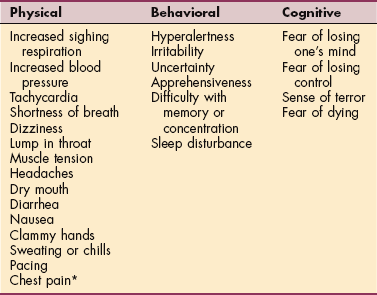
When viewed by the client as an unpredictable, variable, and disabling condition, chronic illnesses, such as chronic obstructive pulmonary disease (COPD) or multiple sclerosis, are often associated with such an adjustment disorder. General anxiety disorders are marked by a focus on physical and/or emotional pain; the person either notices pain more or interprets pain as being more significant than a nonanxious person would. Disability; pain behavior, such as limping and grimacing; and medication-seeking may develop. Symptoms may present as physical, behavioral, cognitive, or psychologic (Table 3-6).
Table 3-6
Symptoms of Anxiety and Panic Attacks

*Chest pain associated with anxiety accounts for more than half of all emergency room admissions for chest pain. The pain is substernal, a dull ache that does not radiate, and is not aggravated by respiratory movements, but is associated with hyperventilation and claustrophobia.
Overview.: PTSD is a chronic anxiety disorder once thought to be limited to combat veterans as a result of situations that were considered outside the range of usual human experience. The term shell shock was first used during World War I to describe this anxiety disorder. PTSD is now recognized as a stress disorder that can occur at any age, including childhood. During our more modern history, wars overseas, military combat, natural disasters, acts of terrorism (local and global), sexual and criminal assaults, and domestic violence have contributed to a rise in the prevalence of this condition. Characteristic symptoms usually begin within the first 3 months after exposure to an extreme traumatic stressor. In the first 3 months, symptoms are more likely to be labeled as acute stress disorder.
Risk Factors.: PTSD may occur as a result of direct or indirect, overwhelming personal experience of an actual or threatened death or serious injury; threat to one’s physical integrity; or witnessing of an event that involves death, injury, or threat to someone else. The person’s response to the event involves intense fear, helplessness, or horror (or in children, disorganized, fearful, withdrawn, or agitated behavior).
Traumatic events may include military combat; violent personal assault (sexual assault, physical attack, robbery, mugging); being kidnapped or taken hostage; terrorist attack; torture; incarceration as a prisoner of war or in a concentration camp; natural or man-made disasters; experiencing a significant medical event (e.g., cardiac arrest and resuscitation); or being diagnosed with a life-threatening illness (e.g., cancer).
The traumatic event does not have to be experienced directly. Health care workers dealing with the aftermath of violence or natural disaster have developed PTSD. Individuals far from the World Trade Center or Pentagon attacks of September 11, 2001, were later diagnosed with delayed-onset PTSD attributed to the terrorist attacks.
Researchers are now examining the long-term health status of those people in dangerous occupations such as firefighters and police officers. For children, emotionally, mentally, spiritually, and physically/sexually traumatic events may include developmentally inappropriate experiences with or without threatened or actual violence or injury.
Other risk factors include mental illness or other psychologic problems and acute episodes of personal grief or loss. From a social cognitive perspective, the level of self-efficacy may play a role in the prevention of PTSD and recovery from PTSD when it does occur. The importance of enabling and protective function of belief in one’s own ability to exercise some measure of control over traumatic adversity has been suggested.19
Clinical Manifestations.: A delay of months, or even years, may occur before symptoms appear. The person with PTSD experiences persistent symptoms of anxiety, unwanted and distressing thoughts and nightmares, increased arousal, or hypervigilance not present before the trauma. Symptoms also may include difficulty falling or staying asleep, exaggerated startle response, or difficulty concentrating on or completing tasks. Children may also exhibit various physical symptoms such as headaches and stomachaches. Emotional numbing symptoms leave affected individuals unresponsive and unattached emotionally to self and to other people.232
Symptoms of PTSD can be divided into three types: intrusion, avoidance, or arousal. Intrusion refers to reexperiencing the trauma in nightmares; daytime flashbacks; or unwanted memories, thoughts, images, or sensations. Certain cues associated with the traumatic event trigger these thoughts or memories. In young children, distressing dreams of the traumatic event may evolve into generalized nightmares of monsters, of rescuing others, or of threats to self or others.
Avoidance is represented by social withdrawal and becoming numb to feelings of any kind (positive or negative emotions). The affected individual avoids any stimuli that might trigger memories or experiences similar to the trauma. People who suffer from PTSD frequently say they cannot feel emotions, especially toward those to whom they are closest. As the avoidance continues, the person seems to be bored, cold, or preoccupied. Family members often feel rebuffed by the person because he or she lacks affection and acts mechanically.9
Others (e.g., combat or military veterans) avoid accepting responsibility for others because they think they failed in ensuring the safety of people who did not survive the trauma. Some people also feel guilty because they survived a disaster while others (particularly friends or family) did not.9
In combat veterans or survivors of civilian disasters, this guilt may be worse if they witnessed or participated in behavior that was necessary to survival but unacceptable to society. Such guilt can deepen depression as the person begins to look on himself or herself as unworthy, a failure, or a person who violated his or her predisaster values.9
Arousal, sometimes referred to as hyperarousal, puts the person on guard and may lead to panic attacks. The persistence of a biologic alarm reaction is expressed in exaggerated startle reactions. They may feel sweaty, have trouble breathing, and may notice their heart rate increasing. They may feel dizzy or nauseated.
Difficulty with relationships, insomnia, irritability, difficulty concentrating, and being easily startled are hallmark symptoms of this type of PTSD. War veterans may revert to their war behavior, diving for cover when they hear a car backfire or a string of firecrackers exploding. Many traumatized children and adults may have physical symptoms, such as stomachaches and headaches, in addition to symptoms of increased arousal.246
Other associated conditions can exist, such as agoraphobia, OCD, social phobia, specific phobia, major depressive disorder, somatization disorder, and substance abuse disorders. Recent studies show a link between combat-related PTSD and heart attack in military veterans even when accounting for known cardiac risk factors. Therapists should remain alert to military history in clients with somatic symptoms.106,139
After a traumatic event, people often report using substances to relieve their symptoms of anxiety, irritability, and depression. Alcohol may relieve these symptoms temporarily because drinking compensates for deficiencies in endorphin activity after a traumatic experience. Long-term success is unlikely unless the underlying PTSD is addressed.
Pathogenesis.: Modern imaging technology has mapped the brain under the influence of PTSD.216 Changes in neural activation patterns may be related to altered pain processing in individuals with PTSD.82 Symptoms implicate dysfunction of emotional memory circuits and possible damage to the amygdala.189
The body responds to traumatic events immediately by releasing adrenaline, a stress hormone that prepares the body to flee, fight, or freeze. Within minutes of exposure to a traumatic event, an increase occurs in the level of endorphins in the brain, which remain elevated and help numb the emotional and physical pain of the trauma. Law enforcement and defense agencies have termed this response the tachy-psyche effect, which affects coordination, memory, ability to make critical decisions, vision, hearing, time-space distortion, and neuromuscular activity.
Adrenaline and norepinephrine in the brain stimulate the amygdala, which is the seat of emotional memories associated with threat. The result is a self-protective response to prevent similar episodes in the future. In PTSD, the amygdala becomes overactive, putting the person on high alert with out-of-proportion fear responses to ordinary circumstances that interfere with normal fear-memory function. The lateral nucleus of the amygdala (LA) plays a key role in fear circuitry; abnormalities in amygdala pathways can affect the acquisition and expression of fear conditioning.78
After the trauma is over, endorphin levels gradually decrease, and this may lead to a period of endorphin withdrawal that can last from hours to days, producing emotional distress and contributing to the symptoms of PTSD. Areas of the brain that normally balance the amygdala (e.g., hippocampus, anterior cingulate cortex) are smaller in size and do not function as well in people with PTSD.195
Because alcohol use increases endorphin activity, drinking after trauma may be used to compensate for this endorphin withdrawal and thus avoid the associated emotional distress.164,247
Research suggests that preventive measures may be more harmful than helpful in circumventing PTSD. A model called critical incident stress debriefing has been tried in many settings. The idea is that by providing early treatment encouraging affected individuals to talk about the traumatic event might help prevent this stress reaction.
However, a Cochrane review concluded that it may interfere with the natural recovery from trauma.199 For now, experts do not advocate prevention programs that require graphic recall of the traumatic event. Studies of preventive medication using adrenaline-reducing pharmacologic agents, such as β-adrenergic drugs (e.g., propranolol, pindolol), to help block traumatic memory formation and prevent PTSD are underway.
Diagnosis is based on clinical presentation and psychologic evaluation. Although it can be normal to feel anxious or distressed after a significant event, nightmares and persistent thoughts about the event can signal PTSD. Avoiding situations, thoughts, or feelings that remind the person of the stress or trauma is another indication of a potential problem. Being easily startled, feelings of detachment, or any of the other clinical manifestations listed signal the need for medical evaluation.
General principles of treatment include the immediate management of PTSD symptoms and management of any trauma-related comorbid conditions. Pharmacologic interventions may include antidepressants (SSRIs most commonly), antianxiety medications, mood-stabilizing drugs, and antipsychotics when appropriate.114 The long-term effects on the neural bases of memory with the use of β-adrenergic antagonists to prevent or erase pathologic emotional memories in the amygdala remain unknown at this time.90
Nonpharmacologic treatment also includes cognitive-behavioral therapy23 and exercise. Lifestyle and psychologic changes, such as decreased anger levels, increased mental awareness, and increased energy levels, have been reported after an exercise program for individuals with PTSD.147,185
Eye movement desensitization and reprocessing (EMDR), a variation on behavioral treatment for PTSD and panic disorder, is becoming a recognized form of psychotherapy for PTSD. Once the client learns to relax and feel safe in a behavioral counseling setting, the person is exposed to distressing memories and images. At the same time, specific hand motions that elicit rapid eye movements are used to stimulate information-processing areas of the brain. The exact mechanism and benefit of this kinesthetic stimulation remains under investigation.212,213
It is valuable to remember that nonpharmaceutical approaches to resolving trauma can be very effective, especially in light of modifying provider approach to client care. The experience of safe, respectful, sensitive care and attending to unresolved neural programming can result in remarkable healing at the deepest levels. As people live what they believe, additional research is needed to support the impact and lasting benefit of experiential brain healing versus pharmacologic therapy or placebos.266
Panic disorder is characterized by periods of sudden, unprovoked, intense anxiety with associated physical symptoms lasting a few minutes to less than 2 hours. Initial panic attacks may develop during a period of extreme stress or after surgery, a serious accident, illness, or childbirth. The premenstrual period is one of heightened vulnerability. Panic disorder may be a result of an inherently unstable autonomic nervous system, coupled with cognitive distress.
Worrisome signs and symptoms, such as marked dyspnea; tachycardia; palpitations; headaches; dizziness; paresthesias (nose, cheeks, lips, fingers, toes); choking; smothering feelings; nausea; and bloating, are associated with feelings of alarm and a sense of impending doom. Recurrent sleep panic attacks (not nightmares) occur in about 30% of panic disorders. Residual sore muscles are a consistent finding after the panic attack; the person with sleep panic attacks awakens feeling fatigued, stiff, and sore.
OCD is characterized by obsessions (constantly recurring thoughts, such as fear of exposure to germs) and compulsions (repetitive actions, such as washing the hands hundreds of times a day). The motivating force behind such behaviors was thought to be the need to maintain control, but the fact that some people with OCD respond well to specific medications suggests the disorder may have a neurobiologic basis.
Most clients do not mention the symptoms or the disorder (if diagnosed) and must be asked about their presence and effect on the person’s life and rehabilitation. Major depression is present in two-thirds of cases of OCD. A person is not considered to have OCD unless the obsessive and compulsive behaviors are extreme enough to interfere with daily activities.
People with OCD should not be confused with a much larger group of individuals who are sometimes considered compulsive because they hold themselves to a high standard of performance in their work and even in their recreational (or rehabilitation) activities.
Psychophysiologic disorders, also referred to as psychosomatic disorders, are any disorders in which the physical symptoms may be caused or exacerbated by psychologic factors. Common examples include migraine headaches, low back pain, gastric ulcer, restless legs syndrome, or irritable bowel syndrome. Previously, it was believed that psychologic factors caused these conditions. More recently, the existing lack of certainty about the actual role of psychologic factors in causing these conditions has led researchers to suggest that psychologic factors may contribute to and exacerbate physical conditions but may not be the primary cause.
Psychophysiologic disorders are frequently associated with comorbid diagnoses and are generally characterized by subjective complaints that exceed objective findings, symptom development in the presence of psychosocial stresses, and physical symptoms involving one or more organ systems. This category includes somatoform disorder, malingering, psychogenic pain disorder, and factitious disorder. Although malingering is not a true psychiatric disorder, it is included in this section, since it can occur across many domains.
Somatoform disorder is the presence of physical symptoms that suggest a medical condition causing significant impairment in social, occupational, or other areas of functioning. The physical symptoms associated with somatoform disorders are not intentional or under voluntary control, which differentiates it from factitious disorder and malingering. Somatoform disorders are characterized more by symptoms, suffering, and disability than by consistently demonstrable tissue abnormality. It has been suggested that the somatoform disorders all involve the same pathophysiologic dysregulation and blunting of the CNS’s response to stress, but the exact mechanism remains unknown.47
Although discrete pathophysiologic causes may ultimately be found in these disorders, these people’s experiences are exacerbated by a self-perpetuating, self-validating cycle in which the symptoms are incorrectly attributed to serious abnormality. Four psychosocial factors propel this cycle of symptom amplification: (1) the belief that one has a serious disease; (2) the expectation that the condition is likely to get worse; (3) the sick role, including the effects of litigation and potential compensation; and (4) the portrayal of the condition as catastrophic and disabling.16
Somatic distress and medically unexplained symptoms have always been endemic to daily life, but the social and cultural characteristics in each era have shaped the expression, interpretation, and attribution of these symptoms. Similar constellations of symptoms acquire different diagnostic labels and are attributed to different causes in different time periods.
Although the somatic syndromes are not new, people who have these syndromes today differ from those several decades ago by being less relieved by negative findings on medical examination and less responsive to explanation, reassurance, and palliative treatment.
Variables that may account for this change include deficits of professional insight and proficiency in recognizing and addressing client condition in an experiential, process-oriented approach,52,102,206,266 the decline in the authority of physicians and public certainty of or agreement with medical opinion, mass media reporting that these conditions are epidemics with sensational portrayal of individual sufferers, strong advocacy groups that mobilize public opinion and shape public policy, and the increasingly litigious society in which we live, with class actions seeking to attribute liability and fault for these conditions.16
People who are unable to cope with emotional problems or conflicts may develop physical symptoms as sequelae to persistent adrenaline dump and hypervigilance. Structural pain or problems may also develop as a means of coping because it may be easier to accept physical symptoms as a cause of unhappiness or conflict than to admit to an underlying emotional or psychologic cause. The disorder is characterized by comorbidity and vague, multiple recurring physical complaints that have no biologic or physiologic cause. This disorder was previ- ously included in the group of psychologic conditions called hysterical neurosis (conversion type).
The term somatoform disorder is often used interchangeably with somatization disorder, but in fact, somatoform disorder includes six distinct conditions, namely somatization disorder, undifferentiated somatoform disorder, conversion disorder, pain disorder, hypochondriasis, and body dysmorphic disorder.
Specific symptoms of somatization disorder (Briquet’s syndrome) (Box 3-10) may include double or blurred vision, food sensitivity, abdominal pain or bloating, bowel problems, vomiting, fainting, headaches, back pain, chest pain or palpitations, nonexertional dyspnea, painful menstruation, muscle aches or joint pain, and/or sexual pain or indifference.
These symptoms are often presented in a dramatic and exaggerated way, but the person is vague about the exact nature of the symptoms. Depression and anxiety are often key components of this disorder, but it is often difficult to determine which condition is the cause and which is the effect. The person will consult with multiple physicians and receive a variety of treatment approaches, often including multiple surgeries and other medical treatments, with apparent unsuccessful outcome.
The term functional somatic syndrome refers to several related somatization disorders that have developed more recently and have acquired major sociocultural and political dimensions. These include multiple chemical sensitivity, the sick building syndrome, repetition stress injury, chronic whiplash, chronic Lyme disease, the side effects of silicone breast implants, candidiasis hypersensitivity, the Gulf War syndrome, food and environmental allergies, MVP, and hypoglycemia.16 More recently, it has been proposed that chronic fatigue syndrome, fibromyalgia, irritable bowel syndrome, premenstrual dysphoria, and postcombat ailments can be grouped as functional somatic syndromes.150
These individuals often have a strong sense of assertiveness and embattled advocacy with respect to their condition, whereas at the same time, the medical world may devalue and dismiss them because of lacking epidemiologic or pathophysiologic support for these syndromes. Some experts argue that functional somatic syndromes are reflective of personality traits, family history, sexual and physical abuse, and catastrophic coping style.150
Undifferentiated somatoform disorder is characterized by unexplained physical complaints lasting at least 6 months that are below the threshold for a diagnosis of somatization disorder. The most common complaints are persistent fatigue, loss of appetite, sleep disturbance, chronic musculoskeletal or abdominal pain, or other gastrointestinal or genitourinary symptoms that cannot be fully explained by any known general medical condition. Physical symptoms or impairment are beyond what would be expected from the history, physical examination, or laboratory findings.
Hypochondriasis is marked by a preoccupation with one’s health and exaggeration of normal sensations and minor complaints into a serious illness. Hypochondriasis is focused on a single illness, unlike somatization, which is accompanied by multiple complaints. With hypochondriasis, symptoms are amplified and the client is hyperresponsive to the treatment administered, especially in the therapy setting. No amount of reassurance can convince the person that he or she is healthy; hypochondriasis is often common in panic disorders.
Somatoform pain disorder is another type of somatization disorder frequently encountered in the therapy setting. Pain disorder is characterized by pain as the predominant focus of clinical attention, but psychologic factors have an important role in the onset, severity, exacerbation, or maintenance of this disorder.
This condition may be viewed as (1) pain disorder associated with psychologic factors, (2) pain disorder associated with a general medical condition, and (3) pain disorder associated with both psychologic factors and a medical condition. Both acute and chronic forms of somatoform pain disorder can occur. Chronic pain associated with a known medical condition (e.g., neoplasm, diabetic polyneuropathy, postoperative pain) is discussed in the next section on Chronic Pain Disorders.
Body dysmorphic disorder is a particular type of somatization disorder often encountered in people who have undergone amputation or extensive surgery or have had burns with significant scarring, and those with weight control problems.258 A preoccupation with the imagined or exaggerated defect in personal appearance often occurs.
Conversion is a psychodynamic phenomenon rather than a behavioral response to illness or injury and is quite rare in the chronically disabled population. Conversion is defined as a transformation of an emotion into a physical manifestation. It can occur at any age and has many possible causes, but the underlying basis is an unresolved psychologic conflict. The person is unable to verbally express an emotion (considered threatening or unacceptable) and expresses a physical symptom instead. Conversion symptoms are peripheral and anesthetic, most commonly presenting as paralysis of the limbs or loss of vision without physical explanation or findings.
Psychophysiologic symptoms associated with conversion occur when anxiety activates the autonomic nervous system (an unconscious, unintentional process), resulting in tachycardia, hyperventilation, and vasoconstriction.
Other symptoms may include hysterical pain response (excessive pain without organic cause) and symptoms related to voluntary motor or sensory functioning, referred to as pseudoneurologic. Motor symptoms or deficits include localized weakness or paralysis, impaired coordination or balance, aphonia (loss of voice), difficulty swallowing or a sensation of a lump in the throat, and urinary retention.
Sensory changes include loss of touch or pain sensation, double vision, blindness, deafness, and hallucinations. Seizure or convulsions may also occur. No cause or disease can explain the distribution of such symptoms; the physician must carefully differentiate conversion symptoms from physical disorders with unusual presentations such as multiple sclerosis.
Psychogenic pain is often ill-defined, and its anatomic distribution depends more on the person’s concepts of disease and dysfunction than on the actual course of the clinical disease. The client presents with multiple unrelated symptoms, and the fluctuations in the course of symptoms are determined more by crises in the person’s psychosocial life than by physical changes.
Factitious disorder is characterized by signs and symptoms that are predominantly psychologic or physical for the purpose of gaining primary or secondary gain. Primary gain describes the attention received from health care personnel, and secondary gain refers to undeserved financial gain or other external benefits from the deception.6 Disease simulation represents a spectrum of behavior that ranges from relatively common and benign (e.g., pleading illness to avoid an unwanted social obligation) to rare and malignant forms (e.g., Munchausen syndrome).
When an individual presents with a medical condition in an attempt to get admitted to (or to stay in) a hospital, the disorder is referred to as Munchausen syndrome. Munchausen syndrome is a psychiatric disorder in which the individual assumes the role of a person with a physical illness, usually with remarkable accuracy and realism.
A parent may fabricate an illness in a child so that treatment can be given to satisfy a somatoform disorder in the parent. If the adult is inducing an illness in a child (or children) or feigning a disorder, the condition is referred to as Munchausen syndrome by proxy (MSBP). The person’s motivation is often unclear; often the client is already involved in some way with the health care profession (e.g., works in a physician’s office). This disorder is considered a form of child abuse.188 Adolescents often feign illness or injury to receive attention they feel they lack at home.
Today, a condition referred to as Munchausen by Internet exists, whereby “virtual” factitious disorders are presented over the Internet through formats such as chat rooms and newsgroups. In any form of this disorder, the symptoms are determined by the person’s medical knowledge, sophistication, and imagination and result in mortality in 10% of MSBP victims.68 This condition is currently considered a form of child abuse and not a mental disorder.69
Symptoms intentionally produced do not count toward a diagnosis of somatoform disorder, but factitious or malingering symptoms are often mixed with other nonintentional symptoms, resulting in a diagnosis of somatoform disorder and a factitious disorder or malingering. In factitious disorder, the motivation is to assume the sick role and to obtain medical evaluation and treatment, whereas in malingering, more external incentives are apparent such as financial compensation, avoidance of duty, evasion of criminal prosecution, or obtaining drugs.
Malingering is a psychosocial variable defined as a conscious or willful and deliberate feigning or exaggeration of the symptoms of an illness or injury to obtain a consciously desired end. It is included in the DSM-IV-TR,6 but as a V-code since it is not a true psychiatric disorder. It must be differentiated from factitious disorder, since the latter is the purposeful creation or exaggeration of symptoms for the purpose of primary gain (e.g., emotional needs as in assuming the sick role for the nurturing benefits derived).
Malingering must be differentiated from the psychiatric somatoform disorders, since the person in both situations can appear to produce nonphysiologic and/or inconsistent responses. Again, the somatoform disorders are unconsciously driven and have no external stimuli, whereas malingering is consciously created for some external gain.
The base rate for medicolegal contexts (e.g., personal injury, malpractice, disability claims, and worker’s compensation) varies from 24% to 48% in the literature depending on the client populations under review.89 Individuals who are identified as conscious symptom magnifiers are malingering if a chance for external gain exists.
Unconscious symptom magnifiers (i.e., no external gain) may be depressed, need to find some other means of expressing a need for help, or have some other psychiatric diagnosis (e.g., illness behavior or somatization disorder). In some cultures (e.g., Middle Eastern, Latin), acting out one’s illness is sanctioned and can appear as hysteria or malingering.
Clinical manifestations of malingering vary depending on the client. Physical malingering may take the form of trying to look like less range of motion or less strength is available than is actually present; sensory malingering may present as heightened pain (more than is apparently present, but pain is very subjective and difficult to quantify, so it is best to rely on easily measurable determinants); cognitive malingering may appear as though more damage from TBI occurred than is identified. PTSD is a common complaint after mild TBI in those individuals who are considered malingerers. Emotional malingerers act more depressed from the injury than seems reasonable. A person can demonstrate malingering in any of these categories, singly or in combination.
It is very important to remember that past trauma can present in a broad array of common symptoms. Nonphysical pathology can be better identified and attended to as attention is given to the presenting complaint(s), the client is accepted and heard, and trust and a caring relationship are built through insightful, sensitive care of deeper needs. The entry-point health care provider or therapist recognizing deeper emotional, psychologic, or mental needs must be careful to avoid careless use of diagnostic terms in notes or health care records. Inappropriate or misused psychologic or physical diagnoses can result in labels and limitations that can impact a client for life.
A personality disorder is a fixed and maladaptive interpersonal style that often causes social and/or occupational impairment. Personality disorders are distinct and separate from personality types. Some personality types may not blend well together and therefore create conflicts, but personality disorders do not blend with anything. Though they may begin to emerge in late adolescence, they may also present in the late 30s to 50s. They may appear to diminish or become less obvious with age because people learn with experience how to adapt to social situations but will often reappear when the sustained adrenaline dump takes a toll and survival coping mechanisms begin to fail.
Individuals with personality disorders are unable to respond to various people and situations according to the demands of the moment but rather tend to respond in the same way, lacking the social, interpersonal, and life problem-solving tools that allow optimal flexibility in hectic or changing situations.
The DSM-IV-TR lists 12 personality disorders, but not all are seen in a physical or occupational therapy setting. The therapist is most likely to find it difficult working with borderline, narcissistic, and passive-aggressive personality types. All three personality traits are common to individuals who have experienced childhood abuse or trauma, whether they do or do not remember the abuse.266
Borderline personality disorder (BPD) is known for a pervasive instability of identity, interpersonal relationships, and mood. They can be supportive and inviting one minute and vicious and attacking the next. More discussion on this topic can be found in the next section.
Narcissistic personality disorder is known for grandiose behavior, being critical in the evaluation of others, and a lack of empathy. This person may have an exaggerated sense of self-importance, demanding special treatment with a sense of entitlement.
Passive-aggressive personality disorder has been renamed negativistic personality disorder and involves passive resistance to social expectations and demands for performance. This is the person who arrives late or does not show up for the next appointment, loses the independent program sheet, agrees to do something and then “forgets,” or writes down the wrong appointment time to avoid complying with the authority of the therapist.
It is not necessary to dredge up, relive, or focus on the type A or B trauma but rather to attend to the deficit that the person is feeling. Labeling the specific pathology is not as important as serving the client through attentive verbal and nonverbal communication; creating a safe, respectful environment and relationship; and empowering the individual by identifying options, making healthy choices, and equipping the client to take the initiative to follow through.266
With all psychophysiologic disorders, the physician must rule out general medical conditions characterized by vague, multiple, and confusing somatic symptoms such as hyperparathyroidism, acute intermittent porphyria, multiple sclerosis, or systemic lupus erythematosus. The onset of multiple physical symptoms late in life is almost always a result of a general medical condition, but psychiatric disorders must be considered as well, since the physical, emotional, mental, and spiritual factors are intricately interdependent in human beings.
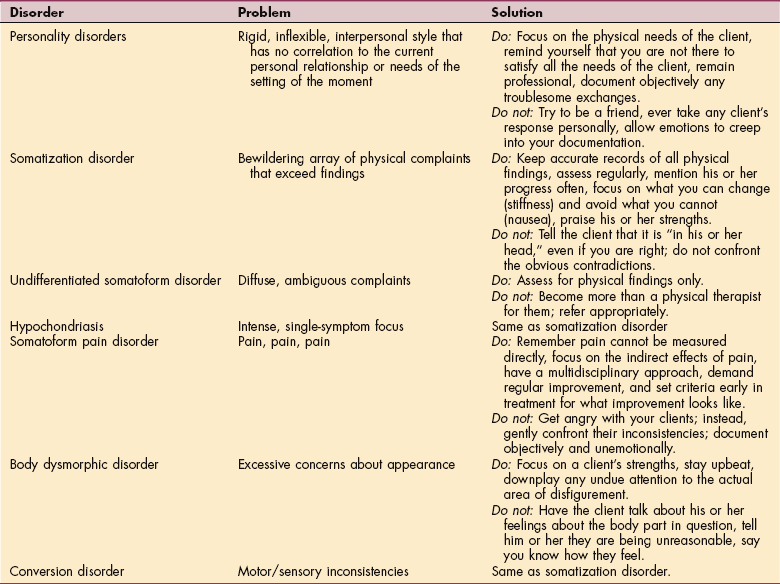
Several criteria must be met before a somatoform disorder can be established (Table 3-7; see Box 3-10). For all psychophysiologic disorders (somatoform disorders, psychogenic pain disorder, factitious disorder), a remarkable absence of findings in laboratory test results accompanies the subjective report of symptoms. Likewise, the physical examination is remarkable for the absence of objective findings to fully explain the many subjective symptoms. Extensive medical testing carries the risk for iatrogenesis and reinforces the belief that a biomedical basis exists for the condition. The use of evidence-based guidelines is recommended in determining the appropriate extent of medical evaluation and the frequency with which medical tests are repeated.
Table 3-7
| Disorder | Presentation | Criteria |
| Somatization disorder (Briquet’s syndrome) | Multiple focal symptom focus | Begins before age 30, extends over a period of years, characterized by a combination of pain, gastrointestinal, sexual, or pseudoneurologic symptoms. |
| Undifferentiated somatoform disorder | Diffuse symptom focus | Unexplained physical complaints that are below the threshold for the diagnosis of somatization disorder; complaints must be present for at least 6 months. |
| Hypochondriasis | Single symptom focus | Preoccupation with the fear of having, or the idea that one has, a serious disease based on the person’s misinterpretation of body symptoms. |
| Somatoform pain disorder | Pain is the predominant focus | Pain the prime complaint with psychologic factors having an important role in the onset, worsening, or maintenance of the disorder. |
| Body dysmorphic disorder | Body part distortion | Preoccupation with an imagined or exaggerated defect in physical appearance. |
| Conversion disorder | Motor/sensory symptoms | Involves unexplained symptoms affecting voluntary motor or sensory functions that mimic a general medical or neurologic condition; psychologic factors are associated with the presentation of the symptoms. |
Modified from Woltersdorf MA: Hidden disorders: psychological barriers to treatment success, Phys Ther 3:58-66, 1995.
Detecting exaggeration does not automatically indicate that the individual is malingering,116 and the differential diagnosis of malingering includes factitious disorder, the somatoform disorders, the dissociative disorders, and specific medical conditions without somatoform disorder.144
Factitious disorders are differentiated from malingering by the goal that motivates the individual’s behavior. The only apparent goal in factitious illness is to gain the sick role; the goal in malingering is to gain rewards, such as compensation, or to avoid the unwanted, such as military service or jail.257
Medical management of psychophysiologic disorders requires a collaborative alliance between the health care provider and the client making restoration of function (rather than elimination of symptoms) the goal of treatment. Accordingly, the treatment approach may vary depending on the clinical presentation and client profile. Medical management currently comprises palliative treatment (often including physical therapy), CBT, antidepressants, or other pharmacologic treatment. The individual may seek alternative therapies, which may benefit them, but empirical data on these interventions are not yet available.
The course of psychophysiologic disorders varies with each type of disorder. Within the somatoform disorders, somatization disorder and undifferentiated somatoform disorder are chronic and unpredictable and rarely remit with current, common treatment approaches. Additional research is needed to confirm the benefits and potential of more process-oriented treatment and right brain communication in medical care.266
Conversion is often of short duration, and hospitalized individuals have remission within 2 weeks in most cases. A good prognosis for conversion is associated with acute onset; presence of clearly identifiable stress at the time of onset; a short interval between onset and the initiation of treatment; above-average intelligence; and symptoms of paralysis, aphonia, and blindness. Poor prognostic indicators include symptoms of tremors and seizures.
Pain disorders resolve relatively quickly when associated with an acute episode, but a wide range of variability exists in the course of chronic pain (see the section Chronic Pain Disorders in this chapter). Hypochondriasis is usually chronic but can remit completely, especially in the absence of a personality disorder and secondary gain. Body dysmorphic disorder often has a continuous course once it is diagnosed. Symptoms are almost always present, although the intensity may vary over time.
The course of psychogenic pain disorder or factitious disorder may be limited to one or more brief episodes, but it is more often of a chronic nature with a lifelong pattern of hospitalization. In the case of malingering, painful symptoms and movement dysfunction resolve completely when the court case involved has been completed or the possibility of financial gain has been eliminated.
Overview and Incidence.: BPD is a chronic psychiatric disorder, which can complicate medical care. BPD disorder affects more women than men and is estimated to affect from 1% to 14% of the adult population.207 Identifying this diagnosis is important to treatment planning to recognize somatic sequelae, as well as suicidal and other psychologic implications.
BPD is the focus here without an equally thorough discussion of narcissism or passive-aggressive personality disorders because BPD exhibits so many of the pathologic behaviors that impact medical care. If the provider can identify and deal with this diagnosis, the counselors can refine the diagnosis and treatment plan when the individual is referred. Identifying and managing a broad-scope, prevalent diagnosis, such as BPD, is the first and most important step for the therapist. Specialists can sort out the deeper specifics.
Etiology and Risk Factors.: BPD is the result of type A and type B traumas, especially when occurring in childhood; 80% of physically and sexually abused victims demonstrate borderline personality symptoms. BPD usually manifests in adolescence or early adulthood and causes problems with most or all necessary skills for functional relationships.
Clinical Manifestations.: People with BPD have stormy and unpredictable ways of relating to other people. This behavior covers up poor self-esteem and feelings of anger and of not deserving anything good (shame). BPD impacts the person’s ways of thinking, feeling, and behaving, which causes many problems, socially and medically.
BPD has broad-scope characteristics; it can be mild-to-severe, short-or long-term, potentially resolving with extensive or minimal intervention. BPD can impact medical care in the following ways:
• Passive-aggressive behaviors (the clinician is great/awful)
• Playing one caregiver against another and manipulating to prevent accountability
• Poor compliance in self-care and appointment times
• As people reconnect with feelings, expect to see an increased urgency to regress in cognitive, emotional, and behavioral areas
• Misunderstanding of instructions, relationships, boundaries
• Prolonged treatment time required because of nonphysical triggering and the development of extensive, subtle physical symptoms
• Self-persecution and egocentric perspective (“I caused it, it’s my fault”)
• Insurance challenges as a result of complexity of diagnoses/failed care
People who have this disorder may see the world in terms of extremes, black versus white, good versus bad, love versus hate, “your fault” versus “my fault.” There is no middle ground. Other symptoms are listed in Box 3-11.
There are no blood tests, physical examinations, or imaging studies that can diagnose BPD. The psychiatrist, other physicians, psychologists, or trained counselors/licensed social workers can make the diagnosis. They rely on history and clinical presentation and watch for red flags, such as unstable personal relationships, that switch back and forth between hate and love.207
BPD is a difficult disorder to treat. Because symptoms create difficulties in relationship and may bring up unresolved hurts and issues in the caregiver, caregivers and affected individuals may feel frustration through the healing process. Clinicians can become even more overwhelmed by the diagnosis than the client and feed into a sense of helplessness in dealing with clients exhibiting BPD symptoms.
Healing is accomplished as the healthy clinician works with the individual diagnosed with BPD in the same way as with any other person suffering from brain injury. As the caregiver practices sensitive care, within individual client tolerances, and remains true to self through whatever the client presents, the individual with BPD benefits from consistent right and left hemisphere messages from the healthy provider.209,254,255
Progressively, the client learns from the clinician’s ability to appropriately respond to emotional changes while upholding healthy boundaries. The client learns necessary skills for functioning as a cohesive personality and to function in relationships, replacing destructive patterns with healthy ones, as regenerative areas of the brain experience increasing joy and strength of identity.254,255
Dialectic behavior therapy is now being used to treat BPD. This type of therapy helps the individual learn to regulate emotions, tolerate distress, self-manage, and be more effective with other people. The following can help reduce symptoms such as impulsive behavior and unstable relationships207:
• Therapy that helps the person feel cared about and understood
• Learning healthy ways to cope when under stress (e.g., what to do besides self-mutilating)
• Day treatment programs, including structured activities and group therapy every day
• Short-term, structured time in the hospital for self-inflicting injuries, such as self-cutting, self-burning, or suicide attempts
• Medication, especially for symptoms of anxiety, panic, depression, or mood swings
Chronic pain has been recognized as pain that persists past the normal time of healing.26 This pain may last more than 1 month, but more often is reported as being present for more than 6 months. The International Association for the Study of Pain has settled on 3 months as the dividing line between acute and chronic pain.167
Chronic pain appears to be often associated with depressive disorders, whereas acute pain appears to be more commonly associated with anxiety disorders. The associated mental disorders may precede the pain disorder (and possibly predispose the individual to it), co-occur with it, or result from it.6
The International Association for the Study of Pain has proposed a five-axis system for categorizing chronic pain (Box 3-12). This disease-based (etiologic) classification approaches pain according to (1) anatomic region, (2) organ system, (3) temporal characteristics of pain and pattern of occurrence, (4) person’s statement of intensity and time since onset of pain, and (5) etiologic factors. This five-axis system focuses primarily on the physical manifestations of pain but provides for comments on the psychologic factors on both the second axis where the involvement of a mental disorder can be coded and on the fifth axis where possible etiologic factors include psychophysiologic and psychologic ones.
An alternate classification scheme has been proposed based on the possible mechanisms of pain and the accompanying physiologic characteristics (e.g., transient pain such as a pinprick, tissue injury pain, nervous system injury pain). This mechanism-based classification model is the result of the dramatic growth in the understanding of the molecular, cellular, and system’s mechanisms responsible for nociception and pain.264
A mechanism-based classification could provide the basis for more reliable and valid tools for treatment and clinical investigation. Such an approach may lead to specific pharmacologic, surgical, or physical therapy interventions for each identified mechanism involved in a particular syndrome.
For example, groups of people with the same symptom but not necessarily the same disease (e.g., herpetic neuralgia versus diabetic neuropathy) could possibly be treated with a single drug effective across a variety of etiologies.263 This approach to the assessment and treatment of chronic pain has not been validated yet, and further testing is under way.
Chronic pain disorders can occur at any age and are relatively common. For example, it is estimated that in any given year, 10% to 15% of adults in the United States have some form of work disability as a result of back pain alone and up to 80% of all adults will experience back pain. Females appear to experience certain chronic pain conditions such as headaches and musculoskeletal pain more often than do males.6
Chronic pain disorders can be psychologically based (somatoform pain disorder); the result of a general medical condition; or a mixture of both. Among the most common general medical conditions associated with chronic pain are various musculoskeletal conditions (e.g., disk herniation, osteoporosis, osteoarthritis or rheumatoid arthritis, myofascial syndromes), neuropathies (e.g., diabetic neuropathies, postherpetic neuralgia), and malignancies (e.g., metastatic lesions in bone, tumor infiltration of nerves).6 An increasing number of studies now support the idea that most of back pain is triggered by biopsychosocial factors.
The most common chronic pain conditions encountered by the therapist are listed in Box 3-13. Chronic pain may be a form of self-defense as a result of domestic violence or abuse. (See the section on Somatoform Disorder in this chapter and Domestic Violence in Chapter 2.)
Chronic postoperative pain occurs in a small percentage of people after some procedures such as tumor resection and subsequent regrowth or invasion of the chest wall, mastectomy with pain from interruption of the intercostobrachial nerve (branches from the brachial plexus to the thoracic region), surgical amputation followed by phantom limb pain, and chemotherapy when associated with neuropathies producing painful dysesthesias (abnormal sensations) of the feet and hands.
Physiologic responses to chronic pain depend in part on the persistent (e.g., low back pain) or intermittent (e.g., migraine headache) nature of the pain. Intermittent pain produces a physiologic response similar to that of acute pain, whereas persistent pain allows for physiologic adaptation (e.g., normal heart rate, blood pressure, and respiratory rate) but can result in the detrimental sequelae of chronic cortisol dump.205 The traditional view conceptualizes pain as being directly associated with the extent of physical pathology, which has been found to be questionable (see earlier discussion in this chapter on Perceptions of Pain). However, since people report pain in the absence of physical pathology and individuals demonstrate objective physical pathology without symptoms, along with cases of low association between impairments and disability, it is suggested that factors other than physical pathology contribute to reports of pain.
Behavioral, cognitive, and affective factors have direct effects on the report of pain, adaptation to the pain, and response to treatment, as well as indirect effects by influencing sympathetic nervous system and neurochemical factors associated with nociception.239
Researchers have demonstrated that people with chronic pain may overemphasize their pain by reporting high levels of physical symptoms. They are less able to discriminate muscle tension levels compared with control subjects without pain. Biologic factors may initiate and maintain physical symptoms, whereas psychosocial factors influence pain perception.86
At the same time, the presence of chronic pain can be associated with significant behavioral and psychologic changes. A constellation of life changes that produces altered behavior in the individual and that persists even after the cause of the pain has been eradicated make up the chronic pain syndrome. Painful symptoms out of proportion to the injury or that are not consistent with the objective findings may be a red flag indicative of systemic disease or a psychogenic pain disorder. This can be differentiated from a chronic pain syndrome in that the syndrome is characterized by multiple complaints, excessive preoccupation with pain or physical symptoms, and often, excessive drug use.
The person exhibiting symptoms of a chronic pain syndrome may isolate himself or herself socially from other people and be fatigued, tense, fearful, and depressed. There are cases in which chronic pain occurs and a diagnosis is finally made (e.g., spinal stenosis or thyroiditis). In those cases, treatment is specific to the identified underlying cause and not simply a program of pain management.
Two polarizing stereotypes about how men and women cope differently with pain have been put forth over the years: (1) women are more likely to seek medical help and (2) men are more stoic about their pain and will avoid consulting a physician.
Researchers studying all types of chronic pain are currently collecting data on how men and women approach pain. Does it matter if the pain is the result of a chronic condition like fibromyalgia syndrome versus the pain associated with a life-threatening disease such as metastatic cancer?
Are men and women treated differently by the medical profession when their major symptom is pain? How do men and women respond to postsurgical pain? Thus far, numerous studies have found that the role of gender in chronic pain may be less important than psychologic and behavioral responses. In other words, gender does not appear to factor into how well people adapt to their chronic pain condition as much as coping mechanisms and strategies.240
People with chronic pain often are depressed, have sleep disturbances, and may become preoccupied with the pain. People with chronic pain often attempt to maintain their former lifestyle to appear as normal as possible, even denying pain and engaging in activities that exacerbate their painful symptoms. They may not report the full extent of their pain, for fear of being labeled a complainer, mentally ill, or a hypochondriac. The need to hide the pain may conflict with the need to have someone understand the pain. The result is emotional and psychologic conflicts.
Symptom magnification syndrome (SMS) is defined as a self-destructive, socially reinforced behavioral response pattern consisting of reports or displays of symptoms that function to control the life of the sufferer.155,157 At the present time, SMS is not listed in the DSM-IV-TR. It is likely that in the future, SMS will be categorized as a somatoform disorder, possibly a variant of somatoform pain disorder of a chronic nature.
Leonard N. Matheson first coined the term SMS in 1977 to describe people whose symptoms have reinforced their self-destructive behavior—that is, the symptoms have become the predominant force in the client’s function, rather than the physiologic phenomenon of the injury determining outcome (unless physiologic changes occur leading to deconditioning or further disability). Conscious symptom magnification is referred to as malingering, whereas unconscious symptom magnification is labeled illness behavior or somatoform disorder.
SMS can fall into several categories and the reader is referred to Matheson156 for an in-depth understanding of this syndrome. The following three signs indicate that a client may be exhibiting symptom magnification:
• Ineffective strategy for balancing symptoms against activities.
• Client acts as if the future cannot be controlled because of the presence of symptoms; limitation is blamed on symptoms: “My (back) pain won’t let me…”
• Client may exaggerate limitations beyond those that are reasonable in relation to the injury; client applies minimal effort on maximum performance tasks and overreacts to loading during objective examination.
Updated research on the identification of SMS has focused on screening for less than full effort performance during a functional capacity evaluation. Most methods of identification are not significant predictors of the syndrome and even the best methods frequently lead to misclassification.158 Again, these symptoms can easily be associated with unresolved trauma and the related psychologic needs.
Considering recent research discussing the impact of perception on pain and psychosocial impact on medical care, it may seem overwhelming to ferret out and attend to all of your client’s physical and psychologic contributing factors. Remember that medical management and healing is a process wherein the client and provider(s) need to take one small step at a time—together. Addressing the client’s basic developmental needs (through sensitive care habits) while treating the presenting physical complaints is a very effective and consistent way of caring for the whole person.266
The clinical evaluation of pain currently involves identification or diagnosis of the primary disease/etiologic factors considered responsible for producing/initiating the pain; placing the individual within a broad pain category, typically nociceptive, inflammatory, or neuropathic pain; and then identifying the anatomic distribution, quality, and intensity of pain. In conjunction with the proposed five-axis system for categorizing chronic pain (see Box 3-12), the physician may use the diagnostic criteria outlined in DSM-IV-TR (Box 3-14).
A newer approach to the problem of chronic pain is being evaluated in which the pain itself is considered the disease, and instead of emphasizing or categorizing the client on the basis of diagnosing the primary disease, an attempt is made to identify the mechanisms responsible for the pain.
Although identifying the disease is essential, especially when disease-modifying treatment is possible (e.g., acute herpes zoster, diabetes, tumor), the vast majority of people with persistent or chronic pain cannot be treated for the disease or pathology and/or the injury is not reversible (e.g., peripheral/segmental nerve lesions, brachial avulsion, spinal cord injury, poststroke central pain).264
Valid criteria for assessing malingering and symptom embellishment do not exist, thereby requiring careful clinical judgment on the part of the physician and all other health care professionals.231
A wide range of variability exists in the course of chronic pain. In most cases, symptoms persist for many years, but function can improve when the individual follows a self-management program (usually prescribed by a therapist in conjunction with other health care professionals). Participation in regularly scheduled physical activity, exercise, and outside activities such as volunteer or paid work should be a part of the program whenever possible.
Major mood disorders are generally divided into unipolar depression and bipolar (manic-depressive) disorders. Mood disorders are often but not always episodic. Symptoms may come and go in cycles, with a normal state in between. Schizophrenia, a form of mood disorder, is sometimes characterized by periods when the symptoms are less severe, but people with schizophrenia rarely recover completely. Symptoms include apathy, emotional unresponsiveness, social withdrawal, limited or odd patterns of speech, and confused thinking with periodic outbreaks of psychotic symptoms such as hallucinations and delusions.
Many of the earlier models of mental disorders, their causes, and their neural substrates have been disproved. The concept that abnormal levels of one or more neurotransmitters could explain the pathogenesis of depression or schizophrenia appears to be a model that is too simple. The notion that a single gene can cause mental disorders or behavioral variations has been replaced by a complex genetic picture in which multiple genes act in concert with nongenetic factors to produce a risk of mental disorder. Current investigations are seeking a model that can explain the complex patterns of disease transmission within families and explain the expression of risk genes during brain development and of their function.111
Psychoneuroimmunology (PNI) studies are attempting to determine and define the links among neural activity, the endocrine system, and altered immune responses in people with depressive disorders. Although the literature indicates some type of relationship exists between these systems, the exact mechanisms remain unknown.115,128
Definition and Overview.: Depression, also referred to as depression illness, is a morbid sadness, dejection, or a sense of melancholy, distinguished from grief, which is a normal response to a personal loss.6 Mild, sporadic depression is a relatively common phenomenon experienced by almost everyone at some time, referred to as the common cold of emotions.
Depression is the most commonly seen mood disorder within a therapy practice, often associated with other physical illnesses (Box 3-16) and psychologic conditions. Depression is a normal response to (not a cause of) pain and may decrease the client’s ability to cope with the pain. Although anxiety is more apparent in acute pain episodes, depression occurs more often in clients with chronic pain. When the pain is relieved, the depression usually abates.
Mood disorders can be classified into three broad types: major depressive disorder, organic mood disorder, and bipolar illness (manic depression). The most common type of depression observed is major depressive disorder encompassing several conditions, including depression, dysthymia, and SAD.
Major depressive disorder can occur as a single isolated episode lasting weeks to months or intermittently throughout a person’s life. This type of depression may be seen as an adjustment disorder with depressive mood and occurs as a result of external circumstances (e.g., environmental stress, loss, or trauma). Profound depression may be an illness itself, considered as an affective or anxiety disorder, or it may be symptomatic of another psychiatric disorder such as schizophrenia.
Organic mood disorder is also biologically based; structural changes in the brain associated with disease (e.g., multiple sclerosis) or brain trauma (e.g., left-sided cerebrovascular accident, TBI) can cause depressive reactions, either on a short-term or recurring basis. Anticonvulsant medications, such as valproic acid (Depakote) and carbamazepine (Tegretol), are often effective, especially in the TBI population.
Bipolar disorder or manic depressive disorder is one of the most complex disorders in psychiatry, with multiple phases and varied presentations in each phase, making diagnosis and treatment difficult and challenging. Several epidemiologic studies have indicated that it is a much more prevalent disorder than has been previously thought.45,104
Bipolar disorder is characterized by cyclical mood swings that often include intense outbursts of high energy and activity, elevated mood, a decreased need for sleep, and a flight of ideas (mania) followed by extreme depression (Box 3-17); each may last from days to months, switching back and forth quickly or with normal periods in between.
Bipolar disorder manifests itself as a manic episode with or without depression. Bipolar I is marked by severe manic episodes, grandiose thoughts, irritability, and decreased need for sleep, with depression often preceding or following the episode. Bipolar II is characterized by distinct periods of depression and a less severe form of mania called hypomania. The affected individual cycles through brief periods of heightened mood and irritability lasting several days. Frequent alterations of mood extremes (rapid cycling) called cyclothymic disorder affect some individuals. The cycles may only last a single day. Heightened creativity and creative talent are sometimes associated with all phases of bipolar disorder.
Many studies suggest that bipolar disorder is frequently accompanied by alcoholism and/or other drug abuse. The comorbidity of alcohol abuse with bipolar mood disorder often delays early diagnosis of bipolar disorder, especially when the alcohol abuse has been the primary focus of intervention.46 Other comorbidities may also exist (e.g., migraine headaches, asthma, anxiety and panic attacks, allergies, eating disorders).35
SAD is a mood disorder with a consistent pattern of depressive symptoms that occurs with colder weather and shorter hours of daylight. It is characterized by feelings of fatigue, inability to maintain a regular lifestyle schedule, and lack of interest in social interactions or activities of enjoyment. Women are affected three times more often than men.
Some people report irritability, overeating and weight gain, and feelings of sluggishness, apathy, or “the blahs.” It is more difficult to get up in the morning, and the level of activity goes down. The symptoms go away in the spring and summer months and recur in the fall to winter months. With shorter days and less exposure to sunlight the body produces more melatonin, a hormone secreted by the pineal gland that is made almost exclusively at night to help us sleep and may help to synchronize other circadian rhythms.251 It is possible that some people with SAD do not produce more melatonin but are hypersensitive to the hormone.
SAD is most prevalent in geographic areas north of 40-degrees latitude. Although Native Alaskans are affected, they are less likely to have SAD than people who move there.
Incidence and Prevalence.: Major depressive disorder is the most common adult psychiatric disorder, beginning at any age with an average onset in the mid-20s, although it appears to be occurring at earlier ages for those born in the last decade. In the United States, an estimated 15 million people are diagnosed with mild-to-severe depression. Epidemiologic data from diverse cultures indicate the lifetime prevalence of major depression is twice as high in women as in men.53a Rates in men and women are highest in the 25-to 44-year-old age group, although rates increase again in older adults. Bipolar disorder can occur at any age, but fully half of all cases begin before age 20, affecting men and women equally.
Etiologic and Risk Factors.: Predisposing factors for the development of depression may be genetic, familial, biologic, or psychosocial (e.g., childhood history of sexual abuse, battery and rape during adulthood, other recent stressful life events, socioeconomic status, raising children without support). Given the fact that bipolar disorder occurs in families, research is focused on identifying a genetic basis. Linkage studies have implicated chromosome 18 or 21, but this has not yet been proved.178,198
Depression may occur in association with past abuse or trauma, medical or chronic illness, or surgical procedures. Medical illness is the most consistently identified factor associated with the presence of late-life depression (see Box 3-16). A newly described condition called vascular depression accounts for 30% to 40% of all depression in people over the age of 65 and in people with a history of diabetes, hypertension, atherosclerosis, and angioplasty or bypass surgery. It appears to be a biologic alteration rather than a chemical one with black holes (lacunes) observed in the basal ganglia representing cerebral ischemia or silent strokes.138 Major depression is considered a risk factor for cardiac morbidity and mortality; treating depression to reduce cardiac disease is under investigation.38
Depression may occur as a result of medications, especially sedatives, hypnotics, cardiac drugs, antihypertensives, and steroids (Box 3-18); alcohol or drug abuse, especially cocaine dependence; or exposure to heavy metals or toxins (e.g., gasoline, paint, organophosphate insecticides, nerve gas, carbon monoxide, carbon dioxide); this type of depression may be labeled substance-induced mood disorder.10 Other causes of depression among the general population include prenatal and postpartum depression occurring in approximately 20% of all pregnancies and SAD, a dysfunction of circadian rhythms that occurs more commonly in the winter as a result of decreased exposure to sunlight.
Pathogenesis.: Researchers have examined several theories of pathogenesis based on etiologic factors. These include biochemical mechanisms, neuroendocrine mechanisms, sleep abnormalities, genetics, and psychosocial factors. Recent study of the biochemical basis of depression has centered on two primary neurotransmitters: norepinephrine and serotonin. Depression is associated with levels of norepinephrine, dopamine, and serotonin that are either produced in inadequate amounts or the receptor sites are not functioning properly; mania results from excessive levels of norepinephrine and dopamine.
As demonstrated in animal models, antidepressant drugs decrease the sensitivity of postsynaptic receptors by blocking the reuptake of the neurotransmitters into nerve endings. This change occurs 1 to 3 weeks after treatment, correlating with the delay seen clinically in the effectiveness of antidepressants. Neuroendocrine abnormalities, such as in the limbic hypothalamic-pituitary-adrenal (HPA) axis, have been implicated in the cause of depression, prompting a search for a reliable serum abnormality that could be used as a depression test. This abnormality is common in survivors of repeated abuse and the sequelae related to chronic sympathetic system stimulation.
Some examples of possible abnormalities include oversecretion of cortisol, suppressed nocturnal secretion of melatonin, and decreased prolactin production in response to tryptophan administration. A known association exists between hormonal variations, such as low testosterone levels in men and basal levels of follicle-stimulating hormone (FSH) and luteinizing hormone (LH) in women, and some depressions.
Sleep abnormalities are consistently associated with depression, including decreased REM latency (the time between falling asleep and the first REM period), longer first REM period, less continuous sleep, and early morning awakenings. Animal studies have shown that many antidepressants can reset the internal clock. Whether these sleep abnormalities represent causes or effects of depression remains unknown.
Genetic-based pathogenesis is suspected for bipolar depression based on a clear familial pattern and chromosomal linkage studies. Evidence exists that the key gene involved in the transmission of bipolar disease is X-linked. A familial pattern in the development of major depressive disorder is also evident, since this type of depression occurs up to three times more often in first-degree biologic relatives of people with this disorder.
Psychosocial factors, such as life events and perceived stress, are clearly associated with depression, but it is difficult to establish whether they cause depression or merely determine when a susceptible person will experience depression. Episodes of major depressive disorder often follow a severe psychosocial stressor such as the death of a loved one or divorce.
Psychosocial events as stressors may play a more significant role in the precipitation of the first or second episodes of major depressive disorder but less of a role in the onset of subsequent episodes. People hospitalized for any reason are particularly susceptible to feelings of depression and a sense of loss and despair.
Clinical Manifestations.: Depressed mood and loss of interest in usually pleasurable activities are the hallmarks of depression (see Box 3-17). More than 95% of depressed people report decreased energy, even for minor daily tasks. The inability to accomplish new or challenging activities often results in occupational or school dysfunction; 90% report having problems with concentration and memory. Difficulty concentrating and marked forgetfulness is particularly common in depressed older adults and is called pseudodementia.
People with mood disorders, particularly depressive disorders, may present with somatic complaints, most commonly headache, gastrointestinal disturbances, or unexplained pain (Box 3-19) (see earlier discussion in the section on Somatoform Disorder). Depression is also associated with elevated heart rate and reduced heart rate variability, which are known risk factors for cardiac disease.38,222 Family members who live with individuals with depressive illness report additional behavior symptoms previously unknown and unreported in the literature.214a
Other mental disorders often co-occur with major depressive disorder such as anxiety, substance-related disorders, panic disorder, obsessive-compulsive disorder, anorexia nervosa, bulimia nervosa, and borderline personality disorder.
Almost 80% of depressed people report problems with sleep, including early morning and frequent nocturnal awakenings. Among older adults, depression is often the cause of sleep disturbances, but it may only be the first symptom of systemic illness. Often depression by itself or linked with acute confusion, falling, incontinence, or syncope signifies underlying disease requiring medical referral.
Bipolar disorder may be characterized by elation (mania), but mania is often accompanied by anxiety, intense irritability, or an uncomfortable feeling of being too energized. People with bipolar disorder may have bursts of creativity and productivity when they are manic, but they are more likely to be impulsive and make reckless decisions.
Depression is often underrecognized and undertreated; primary care physicians detect only 33% to 50% of depressed outpatients. More than 50% of people with depression present with somatic complaints or masked depression. Instead of telling the physician or health care worker, “I am sad and depressed,” they are more likely to report physical symptoms, such as abdominal pain, headaches, joint pain, fatigue, or sleep disturbance, or any of the somatic symptoms listed in Box 3-19. The application criteria based on the DSM-IV-TR6 remain problematic, with as many as 50% of people with depressive symptoms being unclassified using these diagnostic criteria.
The diagnosis of manic episodes associated with bipolar disorder has been difficult, relying on reports of the person’s behavior during a manic episode as described in Box 3-17. Driven behaviors, such as late-night telephone calls, impulsive sexual liaisons, pathologic gambling, and excessively flamboyant dress and behavior, are also characteristic. New neuroimaging studies available in some areas are making it possible to identify those people with biochemical changes associated with depression.
The physician will use the history, laboratory findings, and physical examination to determine whether the depression is a mood disorder caused by a general medical condition (i.e., the direct physiologic consequence of a medical condition such as multiple sclerosis, stroke, or hypothyroidism) or if the depression is considered to be the psychologic consequence of having the general medical condition (e.g., myocardial infarct).
No etiologic relationship between the depression and the medical condition may be evident. The medical management of general medical conditions with accompanying major depressive disorder is more complex, with a less favorable prognosis than just the medical condition alone.
Treatment for major depression includes psychosocial therapy (including process-oriented, right brain communication during sensitive care that empowers the individual), pharmacotherapy, and electroconvulsive therapy (ECT).
Shock therapy, or ECT, remains a viable treatment tool for depression. ECT uses an electrical stimulus to provoke a controlled seizure inside the brain to affect the brain in the same ways as antidepressants. It is a painless and safe procedure used for depressed people with dementia who do not improve with antidepressant therapy194 or who are severely suicidal, self-mutilating, catatonic, or unable to eat or function.
National trials are under way to study the use of a vagal nerve stimulator, originally used to control epilepsy, with severe depression that is resistant to medications. The device, implanted under the clavicle with direct attachment to the vagus nerve, sends electrical pulses to the brain and improves mood.
In the case of SAD, light therapy using 10,000 lux is indicated along with lifestyle changes such as attention to nutrition and exercise. Lux is a measurement of light intensity equal to early morning sunlight; a bright summer day is equivalent to 100,000 lux. The light system uses white fluorescent light with a diffusing screen that filters out ultraviolet rays that can cause eye damage and skin cancer.
For the best results, light therapy should begin in the fall season several weeks before the start of daylight savings time. The lights must be set up or tilted at a 45-degree angle 18 to 24 (up to 3 feet away) inches from the eyes. The light must reach the retina or it will not produce any results; light therapy of this type is not absorbed by the skin. Brighter incandescent light bulbs brighten the room to as much as 1000 lux but do not provide enough intensity to treat SAD.
An alternate system called a dawn simulator uses a bedside timer to gradually increase the bedroom light in the morning to create an artificial early dawn.13 Whatever method is used, experts agree that light therapy is best done in the early morning for 20 to 30 minutes. Some people use a standing unit while riding a stationary bike or walking on a treadmill at home. A smaller unit can be used while eating breakfast, reading the newspaper, or working at a desk. Light therapy should be avoided 3 to 4 hours before bed as the light suppresses melatonin, a natural sleep agent.
Light therapy alone helps but does not usually “cure” SAD. Antidepressant medication may be needed by some people with SAD. A program of self-care including exercise, stress reduction, social contact, and positive self-talk is advocated. Outdoor activities are encouraged. Exercise of any kind that increases the heart rate even mildly is advised by most experts in this field. Cardiovascular (aerobic) exercise 5 to 6 times a week for at least 30 minutes may be optimal. Benefits are derived even when working at the lower end of the target heart rate.
Bipolar disorders are treated with various medications (psychopharmacology), including antipsychotics (e.g., risperidone [Risperdal], olanzapine [Zyprexa]); anticonvulsants (seizure medication such as divalproex [Depakote]); and antidepressants (SSRIs), which are often combined with a mood stabilizer such as lithium carbonate. Some people choose to suffer the extremes of this disorder to avoid losing the creative edge that can occur when the medication balances the mood swings. Some programs advocate a predetermined plan of action to put in place if and when warning signs (called prodromes) of mania or depression develop. This may help delay or prevent the onset of acute mania.
Complementary therapies have gained increasing popularity as people seek out alternative strategies to cope with depression. Research is limited, but some evidence exists to support the beneficial effects of process-oriented treatment and right brain communication in medical care, trauma-sensitive body work266; exercise; herbal therapy (Hypericum perforatum [St. John’s wort], S-adenosyl-L-methionine [SAM-e]); and to a lesser extent, acupuncture and relaxation therapies.64
Depression is a chronic relapsing disorder associated with high morbidity and mortality; the severity of the initial depressive episode appears to predict persistence.220 Adolescent-onset depressive disorder may carry an increased risk for poor outcome.253
Chronic general medical conditions are also a risk factor for more persistent episodes. Up to 15% of people diagnosed with this mood disorder die by suicide. Epidemiologic evidence also suggests a fourfold increase in death rates in people with major depressive disorder who are over age 55 years; from 1980 to 1992 the suicide rate among individuals age 65 and older increased by 9%.
In the same time span, the suicide rate for men and women age 80 to 84 increased 35%.179 People with this condition admitted to nursing homes may have a markedly increased likelihood of death in the first year. Finally, considerable research investigates whether treating depression will improve medical prognosis in people who have a depressive disorder and a history of coronary artery disease or who have suffered an acute myocardial infarction.39
Suicide is by far the most devastating outcome of depression; however, people do commit suicide who are not clinically depressed. In addition, there are people with significant mood disorders who do not end their lives.
At least 500,000 people attempt suicide annually; approximately 30,000 are successful, making suicide the fourth leading cause of adult deaths, second or third among youths ages 15 to 24 years old in the United States, and second among college students.126
Between 25% and 50% of people with manic-depressive illness attempt suicide at least once. Most people who kill themselves have a treatable mental disorder but do not seek medical care because of social stigma or financial limitations. Many who do see a physician are misdiagnosed. New research in the area of the biologic basis for depression and suicide may result in better care and fewer deaths in the future.
Great progress has been made in identifying the clinical, genetic, social, and biochemical factors that contribute to suicidal behavior. Positron emission tomography (PET) is now being used to pinpoint biologic markers commonly found in people who are at greatest risk of attempting or completing suicide.149,152 These imaging studies show impaired metabolic activity in the prefrontal cortex of the brains of people who have attempted suicide, compared with depressed individuals who have not attempted suicide. The prefrontal cortex is the area of the brain involved in mood regulation. An important factor in setting an individual’s threshold for acting on suicidal impulses is brain serotonergic function; serotonin is the neurotransmitter that keeps impulsive and aggressive behaviors in balance.
People who are both impulsive or aggressive and depressed have a much higher likelihood of attempting suicide. Studies continue to examine the relationship of these (and other) variables. Indicators of suicide risk are listed in Box 3-21. Half of all successful suicide victims were described by family or friends as being depressed or suffering some other mental health problem just before their death.187
Alcohol and other drug abuse is implicated in half of all cases tested.126 In addition to these risk factors, males are five times more likely to take their own lives, and suicide rates are highest for young people under age 25 and white men over age 80. Chronic medical illness in older adults has been linked with increased rates of suicide. The risk is greatly increased in individuals with multiple illnesses.123
Older adults do not necessarily attempt suicide more often than younger people. Instead they are more likely to succeed when they make an attempt. They are more likely to use a lethal method (e.g., gun) and less likely to tell anyone their intentions compared to younger people. Older adults living alone are less likely to be found in time to be saved.
Although the signaling and functional roles of serotonin have been implicated in the psychopathology of suicide, the exact physiologic phenomenon remains unknown. Fewer serotonin transporter sites with local reduction of serotonin binding may be associated with the predisposition to act on suicidal thoughts.148,149
Warning signs of suicide, such as mood changes (e.g., irritability, sadness, difficulty getting along with others); loss of interest in family, work, or social activities; and significant changes in sleep pattern or appetite, are common signs of depression serious enough to lead to suicide (see Box 3-17). Suicide threats or previous suicide attempts and even statements revealing a desire to die are other warning signs of suicide. Making final arrangements, giving away prized possessions, saying goodbye to friends and family, and purchasing a gun or collecting prescription drugs are red flag signs of suicide. There may be subtle or overt signs of acute distress, expressions of hopelessness about the future, or a desire to “end it all.”
Focus on suicide prevention has increased in the last 10 years. Age-appropriate tools to screen for depression are available. For example, the Center for the Advancement of Children’s Mental Health at Columbia University has developed a Youth Depression Screening test.49 The Geriatric Depression Scale can be used with older adults.
The National Institute of Mental Health183 and the American Foundation for Suicide Prevention3 have a major focus on education, research, and health information related to depression and suicide. Other organizations with a focus on suicide prevention target specific groups.119
It should be noted that for now the accuracy of methods to screen for high risk of suicide is unknown. Likewise, few studies have shown that screening reduces suicide attempts or mortality rates from suicide. More research is needed in this area.242
New diagnostic neuroimaging now offers an opportunity to visualize serotonin function in a more direct way than has previously been available. Although this technology may provide the possibility of timely therapeutic intervention in people at high risk for suicide, it is not available everywhere.
Major depression can be treated via counseling and trauma/stress resolution and/or pharmacologically, although it is often undertreated, even in the presence of a history of suicide attempt. Some suicide attempts may be preventable if diagnosed early and treated adequately. The need for psychoeducation for health professionals and the public is evident.260
Treatment with SSRIs brings complete resolution of depressive symptoms for up to half of the people taking these agents. In addition, there is a lower risk of fatal overdose or serious heart arrhythmia reported with SSRIs compared with other antidepressants. Despite earlier concerns, there is no convincing evidence that SSRIs are linked with higher rates of suicide; however, tricyclic antidepressants are the leading cause of death by overdose after illicit drugs.84,121
1. Al-Obaidi, SM, Anthony, J, Al-Shuwai, N, et al. Differences in back extensor strength between smokers and nonsmokers with and without low back pain. J Orthop Sports Phys Ther. 2004;34:254–260.
2. Ameling, A. An ancient healing practice becomes new again. Holist Nurs Pract. 2000;14(3):40–48.
3. The American Foundation for Suicide Prevention (AFSP) Available on-line at http://www.afsp.org (1-888-333-AFSP). Accessed January 4, 2007.
4. American Physical Therapy Association (APTA). New position on family violence outlines physical therapy role. Alexandria, VA: The Association, 2005.
5. American Physical Therapy Association (APTA)Substance abuse House of Delegates (HOD) 06-03-22-19 [Initial HOD 06-93-25-49] (Program 17: Judicial/Legal Issues), Alexandria, VA, 2007, The Association.
6. American Psychiatric Association (APA). Diagnostic and statistical manual-text revised (DSM-IV-TR). Washington, DC: The Association, 2000.
7. American Psychiatric Association (APA)DSM-V timeline. Available on-line at http://www.dsm5.org/timeline.cfm Accessed December 5, 2006.
8. American Psychiatric Association (APA) Work group. Practice guidelines for the treatment of patients with eating disorders (revision). Am J Psychiatry. 2000;157(suppl 1):1–39.
9. American Rescue Team International (ARTI) Post-traumatic stress disorder (PTSD). San Francisco, 2005. Available on-line at http://www.amerrescue.org/ptsd.htm Accessed April 14, 2007.
10. Anderson, AE, Bowers, W, Evans, K. Inpatient treatment for anorexia nervosa. In: Garner DM, Garfinkel PE, eds. Handbook for treatment for eating disorders. New York: Guilford, 1997.
11. Anderson, KN, Anderson, LE, Glanze, WD. Mosby’s medical, nursing, & allied health dictionary, ed 5. St Louis: Mosby, 1998.
12. Astin, J. The efficacy of distant healing: a systematic review of randomized trials. Ann Intern Med. 2000;132:903–910.
13. Avery, DH. Dawn simulation and bright light in the treatment of SAD: a controlled study. Biol Psychiatry. 2001;50(3):205–216.
14. Babyak, M, Blumenthal, JA, Herman, S, et al. Exercise treatment for major depression: maintenance of therapeutic benefit at 10 months. Psychosom Med. 2000;62(5):633–638.
15. Bacanu, SA. Linkage analysis of anorexia and bulimia nervosa cohorts using selected behavioral phenotypes as quantitative traits or covariates. Am J Med Genet B Neuropsychiat Genet. 2005;139(1):61–68.
16. Barsky, AJ, Borus, JF. Functional somatic syndromes. Ann Intern Med. 1999;130(11):910–921.
17. Beals, KA. Disordered eating among athletes: a comprehensive guide for health professionals. Champaign, IL: Human Kinetics Inc., 2004.
18. Beck, AT, Ward, CH, Mendelson, M, et al. An inventory for measuring depression. Arch Gen Psychiatry. 1961;4:561–571.
19. Benight, CC, Bandura, A. Social cognitive theory of posttraumatic recover: the role of perceived self-efficacy. Behav Res Ther. 2004;42(10):1129–1148.
20. Benor, D. Healing research. Munich: Heliz Herlag, 1993.
21. Benson, H. Study of the therapeutic effects of intercessory prayer (STEP) in cardiac bypass patients: a multicenter randomized trial of uncertainty and certainty of receiving intercessory prayer. Am Heart J. 2006;151(4):934–942.
22. Bergen, AW, Caporaso, N. Cigarette smoking. J Natl Cancer Inst. 1999;91(16):1365–1375.
23. Bisson, J, Andrew, M. Psychologic treatment of post-traumatic stress disorder (PTSD). Cochrane Database Syst Rev. 18(2), 2005. [CD003388].
24. Blake, T. Understanding antipsychotic medications. Nursing2006. 2006;36(1):64hn1–64hn3.
25. Blanco, C, Olfson, M, Stein, DJ, et al. Treatment of obsessive-compulsive disorder by U.S. psychiatrists. J Clin Psychiatry. 2006;67(6):946–951.
26. Bonica, JJ. The management of pain. Philadelphia: Lea & Febiger, 1953.
27. Borkan, J. Advances in the field of low back pain in primary care. A report from the Fourth International Forum. Spine. 2002;27(5):E128–E132.
28. Breslau, N. Smoking and the risk of suicidal behavior: a prospective study of a community sample. Arch Gen Psychiatry. 2005;62(3):328–334.
29. Brown, CW. The rate of pseudarthrosis (surgical nonunion) in patients who are smokers and patients who are nonsmokers: a comparison study. Spine. 1986;11(9):942–943.
30. Bruera, E. The frequency of alcoholism among patients with pain due to terminal cancer. J Pain Symptom Manage. 1995;10(8):599–603.
31. Bruni, V, Dei, M, Vicini, I, et al. Estrogen replacement therapy in the management of osteopenia related to eating disorders. Ann NY Acad Sci. 2000;900:416–421.
32. Bulik, CM. Selection of eating-disorder phenotypes for linkage analysis. Am J Med Genet B Neuropsychiatr Genet. 2005;139(1):81–87.
33. Byrd, R. Positive effects of intercessory prayer in a coronary care unit population. J Med. 1988;81(7):826–829.
34. Byrd, R. The therapeutic effects of intercessory prayer. J Christ Nurs. 1995;12(1):21–23.
35. Calabrese, JR. Impact of bipolar disorder on a U.S. community sample. J Clin Psychiatry. 2003;64:425–432.
36. Carmona, RH. The health consequences of involuntary exposure to tobacco smoke: a report of the Surgeon General. Atlanta: US Department of Health and Human Services (DHHS), 2006.
37. Carmona, R.H. The health consequences of smoking: a report of the Surgeon General, US Department of Health & Human Services (DHHS), Atlanta, 2004. Available on-line at http://www.surgeongeneral.gov/library/smokingconsequences/ Accessed April 10, 2007.
38. Carney, RM, Freedland, KE, Stein, PK, et al. Change in heart rate and heart rate variability during treatment for depression in patients with coronary heart disease. Psychosom Med. 2000;62(5):639–647.
39. Carney, RM, Freedland, KE, Veith, RC, et al. Can treating depression reduce mortality after an acute myocardial infarction? Psychosom Med. 1999;61(5):666–675.
40. Centers for Disease Control and Prevention (CDC) Annual smoking attributable mortality, years of potential life lost, and economic costs-United States 2006. Available on-line at http://www.cdc.gov/ Accessed April 10, 2007.
41. Centers for Disease Control and Prevention (CDC). Cigarette smoking among adults-United States, 1998. MMWR. 2000;49(39):881–884.
42. Centers for Disease Control and Prevention (CDC). National Center for Injury Prevention and Control (NCIPC) Facts about intimate partner violence, 2007. Available on-line at http://www.cdc.gov/ncipc/dvp/dvam.htm Accessed March 16, 2007.
43. Centers for Disease Control and Prevention (CDC). Trends in cigarette smoking among high school students-United States. MMWR. 2002;51(19):409–412.
44. Centers for Disease Control and Prevention (CDC). Use of FDA-approved pharmacologic treatments for Tobacco Dependence-United States, 1984-1998. MMWR. 2000;49(20):665–668.
45. Chen, YW, Dilsaver, SC, Comorbidity of panic disorder in bipolar illness: evidence from the Epidemiologic catchment area survey. Am J Psychiatry 1995;152:280–282. http://intapp.medscape.com/px/medlineapp/getdoc?pmi=7840367&cid=med
46. Chengappa, KNR, Toasting mania: when alcohol abuse accompanies bipolar disorder. Medscape 2005. Available on-line at http://www.medscape.com/viewprogram/4271
47. Clauw, DJ, Chrousos, GP. Chronic pain and fatigue syndrome: overlapping clinical and neuroendocrine features and potential pathogenic mechanisms. Neuroimmunomodulation. 1997;4:134–153.
48. Cobb, KL. Disordered eating, menstrual irregularity, and bone mineral density in female runners. Med Sci Sports Exerc. 2003;35:711–719.
49. Columbia UniversityCenter for the Advancement of Children’s Mental Health. Available on-line at http://www.kidsmentalhealth.org/index.html Accessed January 4, 2007.
50. Court, J. An innovative treatment programme for anorexia nervosa. J Paediatr Child Health. 2005;41(5-6):305–306.
51. Crawford, DD. A systematic review of the quality of research on hands-on and distance healing: clinical and laboratory studies. Altern Ther Health Med. 2003;9(3 suppl):A96–104.
52. Dalton, A. Family violence: Recognizing the signs, offering help. PT Magazine. 2005;13(1):34–40.
53. Dann, NJ. Taking a “leap of faith.” Acceptance and value of a cancer program-sponsored spiritual event. Cancer Nurs. 2004;27(2):134–142.
53a. Desai, HD, Jann, MW. Major depression in women: a review of the literature. J Am Pharm Assoc (Wash). 2000;40(4):525–537.
54. de Zwaan, M. Binge eating disorder: clinical features and treatment of a new diagnosis. Harv Rev Psychiatry. 1994;1(6):310–325.
55. de Zwaan, M, Friederich, HC. Binge eating disorder. Ther Umsch. 2006;63(8):529–533.
56. Domestic Violence HotlineHotline Reports 15 percent increase (2005). Available on-line at http://www.ndvh.org/press/index.php Accessed March 16, 2007.
57. Dossey, L. Healing beyond the body. Boston: Shambhala, 2001.
58. Dossey, L. Healing words: the power of prayer and the practice of medicine. New York: Harper, 1993.
59. Dresler, CM. Reversal of risk upon quitting smoking. Lancet. 2006;368(9533):348–349.
60. Dusek, JA. Study of the therapeutic effects of intercessory prayer (STEP): study design and research methods. Am Heart J. 2002;143(4):577–584.
61. Eckhardt-Henn, A, Dieterich, M. Psychiatric disorders in otoneurology patients;. Neurol Clin. 2005;23(3):731–749.
62. Elgelid, S. The importance of breath retraining and breath awareness for the acute care patient. Acute Care Perspectives. 2001;10(4):6–18.
63. Eriksen, W, Natvig, B, Bruusgaard, D. Smoking, heavy physical work and low back pain: a four-year prospective study. Occup Med (London). 1999;49(3):155–160.
64. Ernst, E, Rand, JI, Stevinson, C. Complementary therapies for depression: an overview. Arch Gen Psychiatry. 1998;55(11):1026–1032.
65. Fairburn, CG, Cooper, Z. The eating disorder examination. In Fairburn C, Wilson GT, eds.: Binge eating: nature, assessment, and treatment, ed 12, New York: Guilford Press, 1993.
66. Fang, J, Madhavan, S, Bosworth, W, et al. Residential segregation and mortality in New York City. Soc Sci Med. 1998;47(4):469–476.
67. Fehring, RJ. Spiritual well-being, religiosity, hope, depression, and other mood states in elderly people coping with cancer. Oncol Nurs Forum. 1997;24:663–671.
68. Feldman, MD. Munchausen by Internet: detecting factitious illness and crisis on the Internet. South Med J. 2000;93(7):669–672.
69. Feldman, MD, Eisendrath, SJ, eds. The spectrum of factitious disorders. Washington, DC: American Psychiatric Publishing Inc.; 1996.
70. Foy, CG. Smoking and incidence of diabetes among U.S. adults: findings from the Insulin Resistance Atherosclerosis Study. Diabetes Care. 2005;28(10):2501–2507.
71. Freestone, S, Ramsay, LE. Effect of coffee and cigarette smoking on the blood pressure of untreated and diuretic-treated hypertensive patients. Am J Med. 1982;73:348–353.
72. Friedland, G. HIV disease in substance abusers: treatment issues. In: Sande MA, Volberding PA, eds. The medical management of AIDS. Philadelphia: WB Saunders, 1999.
73. Frieling, H. Cognitive impairment and its association with homocysteine plasma levels in females with eating disorders-findings from the HEaD-study. J Neural Transm. 2005;112(11):1591–1598.
74. Frieling, H, Romer, KD, Beyer, S, et al. Depressive symptoms may explain elevated plasma levels of homocysteine in females with eating disorders. J Psychiatr Res e pub ahead of print. 2006.
75. Fritz, JM, George, SZ. Identifying psychosocial variables in patients with acute work-related low back pain. The importance of fear-avoidance beliefs. Phys Ther. 2002;82(10):973–983.
76. Gallup, GL, Jr. Religion in America. Princeton: Princeton Religion and Research Center, 1990.
77. Gallup, G, Jr. Surveying the religious landscape. Chicago: University of Chicago Press, 1999.
78. Garakani, A. Neurobiology of anxiety disorders and implications for treatment. Mt Sinai J Med. 2006;73(7):941–949.
79. Garner, DM. Development and validation of a multidimensional eating disorder inventory for anorexia nervosa and bulimia. Int J Eat Disord. 1983;2:15–34.
80. Garner, DM, Garfinkel, PE. Handbook of treatment for eating disorders, ed 2. New York: Guilford Press, 1997.
81. George, SZ, Bialosky, JE, Fritz, JM. Physical therapist management of a patient with acute low back pain and elevated fear-avoidance beliefs. Phys Ther. 2004;84(6):538–549.
82. Geuze, E. Altered pain processing in veterans with posttraumatic stress disorder. Arch Gen Psychiatry. 2007;64(1):76–85.
83. Ghadirian, AM, Marini, N, Jabalpurwala, S. Seasonal mood patterns in eating disorders. Gen Hosp Psychiatry. 1999;21(5):354–359.
84. Gibbons, RD. The relationship between antidepressant medication use and rate of suicide. Arch Gen Psychiatry. 2005;62(2):165–172.
85. Gibson, JNA, Waddell, G. Surgical interventions for lumbar disc prolapsed. Cochrane Database Syst Rev. 2007;18:CD001350.
86. Giesbrecht, RJS. A comparison of pressure pain detection thresholds in people with chronic low back pain and volunteers without pain. Phys Ther. 2005;85(10):1085–1092.
87. Giesecke, T. Subgrouping of fibromyalgia patients on the basis of pressure-pain thresholds and psychologic factors. Arthritis Rheum. 2003;48(10):2916–2922.
88. Gilbert, DG. Brain indices of nicotine’s effects on attentional bias to smoking and emotional pictures and to task-relevant targets. Nicotine Tob Res. 2007;9(3):351–363.
89. Giuliano, A, Barth, J, Hawk, G, et al. McCaffrey R, Williams A, Fisher J, eds. The practice of neuropsychology: meeting challenges in the courtroom. New York: Plenum Press, 1997.
90. Glannon, W. Psychopharmacology and memory. J Med Ethics. 2006;32(2):74–78.
91. Goodman, CC, Snyder, TE. Differential diagnosis for the physical therapist: screening for referral, ed 4. Philadelphia: W.B. Saunders, 2007.
92. Gormally, J. The assessment of binge eating severity among obese persons. Addict Behav. 1982;7:47–55.
93. Graham, JE. Stress, age, and immune function: toward a lifespan approach. J Behav Med. 2006;29(4):389–400.
94. Grinspoon, S, Miller, K, Coyle, C, et al. Severity of osteopenia in estrogen-deficient women with anorexia and hypothalamic amenorrhea. J Clin Endocrin Metab. 1999;84(6):2049–2055.
95. Gronbaek, M, Becker, U, Johansen, D, et al. Type of alcohol consumed and mortality from all causes, coronary heart disease, and cancer. Ann Intern Med. 2000;133(6):411–419.
96. Grucza, RA, Bierut, LJ. Co-occurring risk factors for alcohol dependence and habitual smoking: update on findings from the Collaborative Study on the Genetics of Alcoholism. Alcohol Res Health. 2006;29(3):172–178.
97. Guisinger, S. Adapted to flee famine: adding an evolutionary perspective on anorexia nervosa. Psychol Rev. 2003;110(4):745–761.
98. Halmi, KA. The relation among perfectionism, obsessive-compulsive personality disorder and obsessive-compulsive disorder in individuals with eating disorders. Int J Eat Disord. 2005;38(4):371–374.
99. Hartley, TR, Sung, BH, Pincomb, GA, et al. Hypertension risk status and effect of caffeine on blood pressure. Hypertension. 2000;36(1):137–141.
100. Harvard Eating Disorders CenterInformation about eating disorders. Available at http://www.hedc.org, 2000.
101. Harvey, EJ. Deleterious effect of smoking on healing of open tibia-shaft fractures. Am J Orthop. 2002;31(9):518–521.
102. Herring, S, Fairbank, J, Loeser, J. Concepts of pain. Symposium on low back pain. Seattle: University of Washington, 2005.
103. Herzog, DB. Recovery and relapse in anorexia and bulimia nervosa: a 7.5 year follow-up study. Am Acad Child Adolesc Psychiatry. 1999;38(7):829–837.
104. Hirschfeld, RM. Screening for bipolar disorder in the community. J Clin Psychiatry. 2003;64:53–59.
105. Hodge, CW, Mehmert, KK, Kelley, SP, et al. Supersensitivity to allosteric GABA(A) receptor modulators and alcohol in mice lacking PKC epsilon. Nat Neurosci. 1999;2(11):997–1002.
106. Hoge, CW. Association of posttraumatic stress disorder with somatic symptoms, health care visits, and absenteeism among Iraq war veterans. Am J Psychiatry. 2007;164:150–153.
107. Hoogendoorn, WE. Systematic review of psychosocial factors at work and private life as risk factors for back pain. Spine. 2000;25:2114–2125.
108. Hudson, JI. Binge-eating disorder as a distinct familial phenotype in obese individuals. Arch Gen Psychiatry. 2006;63(3):313–319.
109. Hudson, JI. The prevalence and correlates of eating disorders in the National Comborbidity Survey Replication. Biol Psychiatry. 2007;61(3):348–358.
110. Hultgren, C. Personal communication, 2006.
111. Hyman, SE. The genetics of mental illness: implications for practice. Bull World Health Organ. 2000;78(4):455–463.
112. Ikonomidou, C. Ethanol-induced apoptotic neurodegeneration and fetal alcohol syndrome. Science. 2000;287(5455):1056–1060.
113. Illich, I. Medical nemesis. New York: Pantheon Press, 1982.
114. Ipser, J. Pharmacotherapy for post-traumatic stress disorder-a systematic review and meta-analysis. S Afr Med J. 2006;96(10):1088–1096.
115. Irwin, M. Immune correlates of depression. Adv Exp Med Biol. 1999;461:1–24.
116. Iverson, GL, Binder, LM. Detecting exaggeration and malingering in neuropsychologic assessment. J Head Trauma Rehabil. 2000;15(2):829–858.
117. Izumi, M. In self defense-the legal, ethical and tactical use of deadly force. Concord, NH: Police Bookshelf, 1993.
118. Jacobson, JL. Psychiatric secrets, ed 2. St. Louis: Hanley and Belfus, 2001.
119. The Jed FoundationMental Health Safety for College Students. Available on-line at http://www.jedfoundation.org/ Accessed on January 4, 2007.
120. Jenkins, R. Religion and spirituality as resources for coping with cancer. J Psychosoc Oncol. 1995;13:5–74.
121. Johns Hopkins Health After 50. SSRIs and suicide: how real is the risk? The Johns Hopkins Medical Letter. 2004;17(7):6–7.
122. Jonas, WB, Crawford, CC. The healing presence: can it be reliably measured? J Altern Complement Med. 2004;10(5):751–756.
123. Juurlink, DN. Medical illness and the risk of suicide in the elderly. Arch Intern Med. 2004;164(11):1179–1184.
124. Kaminski, PL, Chapman, BP, Haynes, SD, et al. Body image, eating behaviors, and attitudes toward exercise among gay and straight men. Eat Behav. 2005;6(3):179–187.
125. Kaplan, J. Alcohol and other drug use among victims of motor-vehicle crashes. MMWR. 2006;55(48):1293–1296.
126. Karch, D. Toxicology testing and results for suicide victims in the United States. MMWR. 2006;55(46):1245–1248.
127. Karlsson, MK, Weigall, SJ, Duan, Y, et al. Bone size and volumetric density in women with anorexia nervosa receiving estrogen replacement therapy and in women recovered from anorexia nervosa. J Clin Endocrinol Metab. 2000;85(9):3177–3182.
128. Kaye, J, Morton, J, Bowcutt, M, et al. Stress, depression, and psychoneuroimmunology. J Neurosci. 2000;32(2):93–100.
129. Kendall, NAS. Guide to assessing psychologic yellow flags in acute low back pain: risk factors for long-term disability and work loss. Wellington, New Zealand: Accident Rehabilitation & Compensation Insurance Corporation of New Zealand and the National Health Committee, 1997.
130. Kimmel, D. Association of physical abuse and chronic pain explored. ADVANCE for Physical Therapists. 1997.
131. King, DE. Beliefs and attitudes of hospital inpatients about faith, healing, and prayer. J Fam Pract. 1994;39:349–352.
132. Kinnunen, T. Depression and smoking across 25 years of the Normative Aging Study. Int J Psychiatry. 2006;36(4):413–426.
133. Klebanoff, MA, Levine, RJ, DerSimonian, R, et al. Maternal serum paraxanthine, a caffeine metabolite, and the risk of spontaneous abortion. N Engl J Med. 1999;341(22):1639–1644.
134. Klibanski, A, Biller, BM, Schoenfeld, DA, et al. The effects of estrogen administration on trabecular bone loss in young women with anorexia nervosa. J Clin Endocrin Metab. 1995;80(3):898–904.
135. Koenig, HG. Religion and depression in older medical inpatients. Am J Geriatr Psychiatry. 2007;15(4):282–291.
136. Koenig, HG. The relationship between religious activities and blood pressure in older adults. Int J Psychiatry Med. 1998;28(2):189–213.
137. Kondo, DG, Sokol, MS, Eating disorders in primary care. A guide to identification and treatment, Postgrad Med 119(3), 59-65
138. Krishnan, KR. Depression as a contributing factor in cerebrovascular disease. Am Heart J. 2000;140(4[2]):70–76.
139. Kubzansky, LD. Prospective study of posttraumatic stress disorder symptoms and coronary heart disease in normative aging study. Arch Gen Psychiatry. 2007;64:109–116.
140. Kuper, H, Ye, W, Weiderpass, E, et al. Alcohol and breast cancer risk: the alcoholism paradox. Br J Cancer. 2000;83(7):949–951.
141. Lenny, L. Law Enforcement Guide to Satanic Cults; 73 minutes, Magill Productions, 1994. Available at 1-800-942-8273, item #E0015.
142. Lethem, J. Outline of a fear-avoidance model of exaggerated pain perception I. Behav Res Ther. 1983;21(4):401–408.
143. Looser, L. Patients on meth, under the big sky. Montana Chapter APTA Newsletter. 2006;28(3):10.
144. LoPiccolo, CJ, Goodkin, K, Baldewicz, TT. Current issues in the diagnosis and management of malingering. Ann Med. 1999;31(3):166–174.
145. Los Angeles County Commission for WomenRitual Abuse-Definitions, Glossary, Use of Mind Control; Report of the Ritual Abuse Task Force, September 1994. Available from the Los Angeles County Commission for Women 383 Hall of Administration, 500 W. Temple St., Los Angeles, CA 90012; 213-974-1455.
146. Maestri, A. PT for patients with psychiatric disorders. PT Magazine. 1996;4(7):54–57.
147. Manger, TA, Motta, RW. The impact of an exercise program on posttraumatic stress disorder, anxiety, and depression. Int J Emerg Ment Health. 2005;7(1):49–57.
148. Mann, JJ, Huang, YY, Underwood, MD, et al. A serotonin transporter gene promoter polymorphism (5-HTTLPR) and prefrontal cortical binding in major depression and suicide. Arch Gen Psychiatry. 2000;57(8):739–740.
149. Mann, JJ, Oquendo, M, Underwood, MD, et al. The neurobiology of suicide risk: a review for the clinician. J Clin Psychiatry. 1999;2(suppl 60):7–11. [18-20, 113-116].
150. Manu, P. The psychopathology of functional somatic syndromes: neurobiology and illness behavior in chronic fatigue syndrome, fibromyalgia, Gulf War illness, irritable bowel, and premenstrual dysphoria. Binghamton, NY: Haworth Medical Press, 2004.
151. Marras, WS. The influence of psychosocial stress, gender, and personality on mechanical loading of the lumbar spine. Spine. 2000;25(23):3045–3054.
152. Martinez, JA. Body-weight regulation: causes of obesity. Proc Nutr Soc. 2000;59(3):337–345.
153. Mason, PT, Kreger, R. Stop walking on eggshells-taking your life back when someone you care about has borderline personality disorder. Oakland CA: New Harbinger Publications, 1998.
154. Massey, LK. Caffeine and the elderly. Drugs Aging. 1998;13(1):43–50.
155. Matheson, LN. Symptom magnification casebook. Anaheim Ca: Employment and Rehabilitation Institute of California, 1987.
156. Matheson, LN. Symptom magnification syndrome structured interview: rationale and procedure. J Occup Rehabil. 1991;1:43–56.
157. Matheson, LN. Work capacity evaluation: systematic approach to industrial rehabilitation. Anaheim, CA: Employment and Rehabilitation Institute of California, 1986.
158. Matheson, LN, Bohr, P, Hart, D. Use of maximum voluntary effort grip strength testing to identify symptom magnification syndrome in persons with low back pain. J Back Musculoskel Rehab. 1998;10:125–135.
159. Matsakis, A. Back from the Front: combat trauma, love, and the family. Baltimore: Sidran Institute: Traumatic Stress Education and Advocacy, 2007.
160. Maurice, E. Cigarette smoking among adults-United States. MMWR. 2005;54(44):1122–1123.
161. May-Hayes, G. Effective defense-the woman, the plan, the gun. Kirkland, WA: Firearms Academy of Seattle, 1994.
162. McCaffrey, AM. Prayer for health concerns: results of a national survey on prevalence and patterns of use. Arch Intern Med. 2004;164(8):858–862.
163. McDowell, J, Hostetler, B. The new tolerance. Wheaton, IL: Tyndale House, 1998.
164. McFarlane, AC. Posttraumatic stress disorder: a model of the longitudinal course and the role of risk factors. J Clin Psychiatry. 2000;5(suppl 61):15–20.
165. McLoughlin, DM. Metabolic abnormalities associated with skeletal myopathy in severe anorexia nervosa. Nutrition. 2000;16(3):192–196.
166. Melzack, R. The McGill pain questionnaire: major properties and scoring methods. Pain. 1975;1:277–299.
167. Merskey, H, Classification of chronic pain: descriptions of chronic pain syndromes and definitions of pain terms. Pain. 1986(suppl 3):S5.
168. Merskey, H, Bogduk, N. Classification of chronic pain, ed 2. Seattle: International Association for the Study of Pain, 1994.
169. Milton, MH. Youth tobacco cessation: a guide for making informed decisions. Atlanta: U.S. Department of Health and Human Services, Centers for Disease Control and Prevention, 2004.
170. Mittleman, MA, Mintzer, D, Maclure, M, et al. Triggering of myocardial infarction by cocaine. Circulation. 1999;99(21):2737–2741.
171. Mond, JM. An update on the definition of “excessive exercise” in eating disorders research. Int J Eat Disord. 2006;39(2):147–153.
172. Moore, D. Personal communication: substance abuse resources and disability issues (SARDI), Dayton, OH, 2000, Wright State University School of Medicine.
173. Morbidity and Mortality Weekly Report (MMWR). Receipt of advice to quit smoking in Medicare managed care-United States 1998. MMWR. 2000;49(35):797–801.
174. Moreira-Almeida, A. Religiousness and mental health: a review. South Med J. 2006;99(10):1189–1196.
175. Morrison, J DSM-IV made easy. New York: Guilford Press; 2000. See also the author’s web site for more information: http://mysite.verizon.net/res7oqx1/index.html
176. Mort, M. Psychosocial effects of the 2001 UK foot and mouth disease epidemic in a rural population: qualitative diary based study. BMJ. 2005;26(331):1234. [(7527), Epub 2005 Oct 7].
177. Nakamura, YRD, Tate, L. Cigarette smoke inhibits lung fibroblast proliferation and chemotaxis. Am J Resp Crit Care Med. 1995;151(5):1497–1503.
178. Nancarrow, DJ, Levinson, DF, Taylor, JM, et al. No support for linkage to the bipolar regions on chromosomes 4p, 18p, or 18q in 43 schizophrenic pedigrees. Am J Med Genet. 2000;96(2):224–227.
179. National Alliance for the Mentally Ill (NAMI). Available at http://www.nami.org Arlington, V.A., 2000.
180. National Eating Disorders Association (NEDA) Enhancing body image. Available on-line at http://www.nationaleatingdisorders.org/p.asp?WebPage_ID=286&Profile_ID=41161 Accessed on January 23, 2007.
181. National Highway Traffic Safety Administration. Traffic safety facts, 2005 dataalcohol. Washington, DC: National Highway Traffic Safety Administration, 2006. DOT HS 810 616. Available on-line at http://www-nrd.nhtsa.dot.gov/pdf/nrd-30/ncsa/tsf2005/2005tsf/810_616/images/alcohol.pdf
182. National Institute for Occupational Safety and Health. Division of safety research. Violence in the workplacerisk factors and prevention strategies. Cincinnati, OH, 1996, Department of Health and Human Services DHHS (NIOSH) Pub. No. 96-100.
183. National Institute of Mental HealthHealth information. Available on-line at http://www.nimh.nih.gov/ Accessed on January 4, 2007.
184. Nemours FoundationTeens health. Compulsive exercise. Available on-line at http://kidshealth.org/teen/food_fitness/exercise/compulsive_exercise.html. Accessed on January 27, 2007. Nemours Foundation owns and operates the Alfred I. duPont Hospital for Children in Wilmington, DE, as well as four major children’s specialty centers in Wilmington, Jacksonville, Orlando, and Pensacola.
185. Otter, L, Currie, J. A long-time getting home: Vietnam veterans’ experiences in a community exercise rehabilitation programme. Disabil Rehab. 2004;26(1):27–34.
186. Pargament, KI. God help me: religious coping efforts as predictors of the outcomes of significant negative life events. Am J Community Psychol. 1990;18:793–824.
187. Patel, N. Homicides and suicides-National Violent Death Reporting System, United States. MMWR. 2006;55(26):721–724.
188. Paulk, D. Munchausen syndrome by proxy: tall tales and real hurts. Clin Rev. 2001;11(8):51–56.
189. Pavlisa, G. Bilateral MR volumetry of the amygdala in chronic PTSD patients. Coll Anthropol. 2006;30(3):565–568.
190. Potts, RG. Spirituality and the experience of cancer in an African-American community: implications for psychosocial oncology. J Psychosoc Oncol. 1996;14:1–19.
191. Prip, K. Physiotherapy for torture survivors-a basic introduction. Copenhagen: International Rehabilitation Council for Torture Victims (IRCT), 1995.
192. Puchalski, C. Spirituality in health: the role of spirituality in critical care. Crit Care Clin. 20(3), 2004.
193. Pull, CB. Binge eating disorder. Curr Opin Psychiatry. 2004;17(1):43–48.
194. Rao, V, Lyketsos, CG. The benefits and risks of ECT for patients with primary dementia who also suffer from depression. Int J Geriatr Psychiatry. 2000;15(8):729–735.
195. Rauch, SL. Neurocircuitry models of posttraumatic stress disorder and extinction: human neuroimaging research-past, present, and future. Biol Psychiatry. 2006;60(4):376–382.
196. Rew, L. Intentionality in holistic nursing. J Holistic Nurs. 2000;18(2):91–93.
197. Robinson, E, Bachrach, LK, Katzman, DK. Use of hormone replacement therapy to reduce the risk of osteopenia in adolescent girls with anorexia nervosa. J Adolesc Health. 2000;26(5):343–348.
198. Rojas, K, Liang, L, Johnson, EL, et al. Identification of candidate genes for psychiatric disorders on 18p11. Mol Psychiatry. 2000;5(4):389–395.
199. Rose, S. A systematic review of single-session psychologic interventions (“debriefing”) following trauma. PsychotherPsychosom. 2003;72(4):176–184.
200. Rosenblum, J, Forman, SF. Management of anorexia nervosa with exercise and selective serotonergic reuptake inhibitors. Curr Opin Pediatr. 2003;15(3):346–347.
201. Ross, C. Denver Comorbidity Conference, Denver, March 2000.
202. Ross, GW, Abbott, RD, Petrovitch, H, et al. Association of coffee and caffeine intake with the risk of Parkinson disease. JAMA. 2000;283(20):2674–2679.
203. Rothstein, J. The sensitive practitioner. Phys Ther. 1999;79(3):246–247.
204. Sanborn, CF, Horea, M, Siemers, BJ, et al. Disordered eating and the female athlete triad. Clin Sports Med. 2000;19(2):199–213.
205. Scaer, RC. The body bears the burden-trauma, dissociation and disease. Binghamton, NY: Hawthorn Medical Press, 2001.
206. Schachter, C. Toward sensitive practice: issues for physical therapists working with survivors of childhood sexual abuse. PhysTher. 1999;79(3):248–261.
207. Scheingold, L. Borderline personality disorder. San Francisco: McKesson Clinical Reference Systems, McKesson Information Technology, HBOC, Inc., 2006.
208. Schoene, M. A tribute to Alf Nachemson: the spine interview. The BACK Letter. 2007;22(2):13–21.
209. Schore, AN. Affect regulation-and the repair of the self. New York: Norton & Co., 2003.
210. Schore, AN. Attachment, affect, regulation, and the developing right brain: linking developmental neuroscience to pediatrics. Pediatr Rev. 2005;26(6):204–217.
211. Schore, AN. Back to basics: attachment, affect regulation, and the developing right brain: linking developmental neuroscience to pediatrics. Pediatr Rev. 2005;36(6):204–217.
212. Seidler, GH, Wagner, FE. Comparing the efficacy of EMDR and trauma-focused cognitive-behavioral therapy in the treatment of meta-analytic study. Psychol Med. 2006;36(11):1515–1522.
213. Servan-Schreiber, D. Eye movement desensitization and reprocessing for posttraumatic stress disorder: a pilot blinded, randomized study of stimulation type. Psychother Psychosom. 2006;75(5):290–297.
214. Shearer, S, Gordon, L. The patient with excessive worry. Am Fam Physician. 2006;73(6):1049–1056.
214a. Sheffield, A Depression fallout. New York: Quill (Harper Collins Publisher); 2003. (See also www.depressionfallout.com).
215. Shiltz, T. Suggestions for improving body image handout 7.1, in eating concerns support group curriculum. Greenfield, WI: Community Recovery Press, 1997.
216. Shin, LM. Amygdala, medial prefrontal cortex, and hippocampal function in PTSD. Ann N Y Acad Sci. 2006;1071:67–79.
217. Shroff, H. Features associated with excessive exercise in women with eating disorders. Int J Eat Disord. 2006;39(6):454–461.
218. Slade, PD. The fear-avoidance model of exaggerated pain perception. II. Behav Res Ther. 1983;21(4):409–416.
219. Slof-Op ’t. Eating disorders: from twin studies to candidate genes and beyond. Twin Res Hum Genet. 2005;8(5):467–482.
220. Solomon, DA, Keller, MB, Leon, AC, et al. Multiple recurrences of major depressive disorder. Am J Psychiatry. 2000;157(2):229–233.
221. Stamm, BH. Secondary traumatic stress: self-care Issues for clinicians, researchers, and educators, ed 2. Baltimore: Sidran Institute, 1999.
222. Stein, PK, Carney, RM, Freedland, KE, et al. Severe depression is associated with markedly reduced heart rate variability in patients with stable coronary heart disease. J Psychosom Res. 2000;48(4-5):493–500.
223. Stone, D. Eating disorders in athletes: spotting early hallmarks. J Musculoskel Med. 1999;16(8):443–444.
224. Stunkard, AJ, Allison, KC. Two forms of disordered eating in obesity: binge eating and night eating. Int J Obesity. 2002;27:1–12.
225. Tarter, R, Vanyukov, M, Giancola, P, et al. Etiology of early age onset substance use disorder: a maturational perspective. Dev Psychopathol. 1999;11(4):657–683.
226. Taylor, CB. Prevention of eating disorders in at-risk college-age women. Arch Gen Psychiatry. 2006;63(8):881–888.
227. Taylor, DH. Benefits of smoking cessation for longevity. Am J Public Health. 2002;92(6):990–996.
228. Terr, L. Childhood traumas: an outline and overview. Am J Psychiatry. 1991;148(1):10–20.
229. Terry, MB. Alcohol metabolism, alcohol intake, and breast cancer risk: a sister-set analysis using the breast cancer family registry. Breast Cancer Res Treat. 2007;106(2):281–288.
230. Thieme, K. Predictors of pain behaviors in fibromyalgia syndrome. Arthritis Rheum. 2005;53(3):343–350.
231. Thimineur, M, Kaliszewski, T, Sood, P. Malingering and symptom magnification: a case report illustrating the limitations of clinical judgment. Conn Med. 2000;64(7):399–401.
232. Thompson, KE. Early symptom predictors of chronic distress in Gulf War Veterans. J Nerve Ment Dis. 2004;192(2):146–152.
233. Thorbjornsson, CO. Physical and psychosocial factors related to low back pain during a 24-year period. Occup Environ Med. 1998;55(2):84–90.
234. Tokumura, M. Prescribed exercise training improves exercise capacity of convalescent children and adolescents with anorexia nervosa. Eur J Pediatr. 2003;162(6):430–431.
235. Touyz, SW, Beumont, PJV. Neuropsychologic assessment of patients with anorexic and bulimia nervosa. In: Touyz SW, Bryne D, Gilandas A, eds. Neuropsychology in clinical practice. New York: Academic Press, 1994.
236. Town, M. Health care access among U.S. adults who drink alcohol excessively: missed opportunities for prevention. Prev Chronic Dis. 2006;3(2):A53.
237. Treasure, J. The essential handbook of eating disorders. Chichester, West Sussex, England: Wiley, 2005.
238. Trimble, CL. Active and passive cigarette smoking and the risk of cervical neoplasia. Obstet Gynecol. 2005;105(1):174–181.
239. Turk, DC. The role of psychologic factors in chronic pain. Acta Anaesthesiol Scand. 1999;43(9):885–888.
240. Turk, DC, Okifuji, A. Does sex make a difference in the prescription of treatments and the adaptation to chronic pain by cancer and non-cancer patients? Pain. 1999;82(2):139–148.
241. U.S. Department of Homeland Security Newsletter. Fear of terrorist attack could trigger mass psychogenic illness. Washington, DC: Department of Homeland Security, 2006.
242. U.S. Preventive Services Task Force (USPSTF). Screening for suicide risk: recommendation and rationale. Ann Intern Med. 2004;140(10):820–821.
243. van Almen, W. 500 drugs the alcoholic should avoid. Center City, MN: Hazelden Foundation, 1983.
244. Vandenbergh, DJ. Dopamine receptor genes and gene-gene interactions associated with smoking-related behaviors. Addict Biol. 2007;12(1):106–116.
245. van der Kolk, BA. Traumatic stress the effects of overwhelming experience on mind, body and society. New York: Guilford Press, 2006.
246. Vieweg, WV. Posttraumatic stress disorder: clinical features, pathophysiology, and treatment. Am J Med. 2006;119(5):383–390.
247. Volpicelli, J, Balaraman, G, Hahn, J, et al. The role of uncontrollable trauma in the development of PTSD and alcohol addiction. Alcohol Res Health. 1999;23(4):256–262.
248. Waddell, G. A fear avoidance beliefs questionnaire (FABQ) and the role of fear avoidance beliefs in chronic low back pain and disability. Pain. 1993;52:157–168.
249. Waldrop, J. Early identification and interventions for female athlete triad. J Pediatr Health Care. 2005;19(4):213–220.
250. Wechsler, H, Lee, JE, Kuo, M, et al. College binge drinking in the 1990s: a continuing problem. Results of the Harvard School of Public Health 1999 College alcohol study. J Am Coll Health. 2000;48(5):199–210.
251. Wehr, TA. A circadian signal of change of season in patients with seasonal affective disorder. Arch Gen Psychiatry. 2001;58(12):1108–1114.
252. Weinstein, JN. Surgical vs. nonoperative treatment for lumbar disc herniation. The spine patient outcomes research trial (SPORT): a randomized trial. JAMA. 2006;296:2441–2450.
253. Weissman, MM, Wolk, S, Goldstein, RB, et al. Depressed adolescents grown up. JAMA. 1999;281(18):1707–1713.
254. Wilder, EJ. The life model-living from the heart jesus gave you. Pasadena, CA: Shepherd’s House Inc., 2004.
255. Wilder, E.J.Joy bonds (conference and video). Sioux City, IA, 2004, 1-877-467-4222.
256. Wilson, GT, Fairburn, CG. Binge-eating: nature, assessment, and treatment. New York: Guilford Press, 1996.
257. Wise, MG, Ford, CV. Factitious disorders. Prim Care. 1999;26(2):315–326.
258. Woltersdorf, MA. Beyond the sensorimotor strip. Clin Manage. 1992;12:63–69.
259. Woltersdorf, MA. Hidden disorders: psychologic barriers to treatment success. PT Magazine. 1995;3(12):58–66.
260. Woltersdorf, MA. Personal communication. Wichita: Wesley Rehabilitation Hospital, Midwest Brain Function Clinic, 2000.
261. Woltersdorf, MA. Transference: whistling in the dark. PT Magazine. 1994;2(1):60–65.
262. Wong, LS. Firsthand cigarette smoke alters fibroblast migration and survival: implications for impaired healing. Wound Repair Regen. 2004;12:471–484.
263. Woolf, CJ, Bennett, GJ, Doherty, M, et al. Towards a mechanism-based classification of pain? Pain. 1998;77:227–229.
264. Woolf, CJ, Decosterd, I, Implications of recent advances in the understanding of pain pathophysiology for the assessment of pain in patients. Pain. 1999(suppl 6):S141–S147.
265. Yesavage, JA. The geriatric depression scale. J Psychiatr Res. 1983;17(1):37–49.
266. Yost, B. The heart of healing-attending seen and unseen wounds. 2008. [In press].
267. Zhang, SM. Alcohol consumption and breast cancer risk in the Women’s health study. Am J Epidemiol. 2007;165(6):667–676.