Diet and lifestyle
Introduction
In this chapter, we will consider the effect of diet and lifestyle on fertility. Here we combine Chinese medicine advice which has evolved over many hundreds of years with that which medical research has uncovered in just the last few years. The infertility patients who consult a Chinese medicine doctor are often well educated and may have a lot of questions. In the interests of trying to cover all the relevant areas related to infertility and preparing to conceive, I have included information in this chapter that is not part of traditional Chinese medicine, but should help the clinical specialist be as informed as possible.
There is a dizzying amount of information and misinformation handed out to prospective parents: what they should eat – what they shouldn’t eat – which pills they should swallow – which they should not – what activities they should do – and not do. Attempts to follow all of this advice is enough to make any couple trying to conceive tense and miserable! However, being sensible and responsible about one’s diet and lifestyle not only safeguards health but can pay large dividends in gamete and embryo quality. Additionally, it is now recognized that mother’s nutritional status at the time of conception can have significant implications on the health of the future baby and the adult it will grow into.1
A Chinese Medicine Perspective
Jing is considered to be very precious; it is the life spring sourced in our deepest origins, a substance or energy inherited from our parents. In that sense, it is a finite bundle which must be conserved because it is not so easy to replenish it once spent. Healthy Kidney Jing is vitally important for fertility.
Previous generations of Chinese people were very aware of conserving their energy reserves. They were taught early in life to pace themselves, to move gently through life, not rush at it all at once, as we tend to do in the West. For Chinese people a long life is a desired goal and something they actively foster. This means they must look after their Jing and use it sensibly like a steady drip feed, which gets topped up on a regular basis. In so many parts of modern Western culture we adopt the philosophy of ‘live hard and die young,’ rather than thinking and planning, while we are still in our 20s, to be well and healthy in our 80s or 90s. Observing patients in the clinic of a well-known, elderly and wise Chinese doctor in New York in the 1980s, I had the opportunity to see these differing approaches to life. Every day, New Yorkers, driven by ambition and circumstance, would come to the clinic complaining of myriad different disorders. They were often young people who were working 70 or 80 h a week just to keep their feet on the bottom rung of the Big Apple ladder. The old Chinese doctor would look at their faces carefully, take their pulses and say ‘can’t you rest a little more?’ Usually, he was met with squawks of protest or looks of blank incomprehension. Slowing down or resting was just not part of the script for success. But if such a lifestyle persists, then the price is paid – in Jing and Yin currency.
It is the balanced path through life which helps to conserve Jing. Life doesn’t have to be quiet externally if our internal environment is quiet, i.e. if the mind can remain stable and still, but for most of us this is difficult when living in the midst of so much stimulation and stress. Likewise, rushing all the time doesn’t just make us stressed, it exhausts us. And if we keep going on an empty tank, the Jing is consumed.
Jing can also be depleted in a more sudden and dramatic way if there is a major crisis, e.g., recovery from an accident or serious illness draws deeply on life reserves. People in terrifying and dangerous situations like war and famine may also need to drain Jing supplies rapidly just to survive.
There are many ways that Jing is used up in the normal course of living and this is, of course, the nature of life. Jing is intimately related to reproductive processes and one of the more obvious expenditures of Jing is the semen and sperm spent with every ejaculation. The Chinese were strong believers in conserving the Jing by practicing semen conservation techniques, i.e. having sex without ejaculation. However, this book is about achieving pregnancy, so further discussion of semen conservation techniques will have to be sought elsewhere. In a man with poor Jing and low Kidney energy, however, it is always wise to limit sexual activity (including masturbation) and focus on spending Jing reserves only at the fertile time of his partner.
The sexual secretions of women are not considered to be so depleting to the Jing as is the loss of semen. Since these secretions do not contain gametes, they do not have such a direct connection to the Jing. Rather, they reflect Kidney Yin reserves; these too can be drained somewhat by excessive sexual activity. However, every menstrual cycle in which an ovulation occurs requires contribution from the Jing. It is when no more Jing contributions can be made (i.e., there are no more viable eggs) that menstrual cycles cease and menopause has arrived. Thus, women spend their Jing too in the normal processes of the menstrual cycle during the reproductive years. Celibacy in a woman cannot preserve Jing in the same way it can for a man. Stopping ovulation altogether, as happens, e.g., in women taking the oral contraceptive pill, may preserve some aspects of Jing, although it does so at a price.
The production of a whole new baby human during pregnancy draws heavily on the Qi, Blood and Jing resources of the mother. Anything which damages the DNA in the chromosomes (such as X-rays and mutagenic chemicals) is said to be damaging to the Jing. Some of the epigenetic effects of assisted reproduction technology (see Ch. 10) could also be of concern as far as Jing is concerned.
There are some ways Jing can be nourished, although clearly even the most careful lifestyle and nourishing diet cannot replace the Jing that must necessarily be spent in living. Some Taoist and Qi Gong practices can protect and nurture the Jing; similarly, there are Ayurvedic and Buddhist practices that aim to do the same.
Jing and food
Food substances which are designed by nature to nourish offspring can enhance many different levels of energy, including the Jing. Substances, e.g. royal jelly, which is produced by bees to nourish their larvae, offer this type of nourishment.
Eggs of birds, such as chickens or ducks, are one of nature’s most complete protein food packages and represent a type of Jing themselves, containing as they do the gametes of the female of the species. Similarly, fish eggs or roe are a form of Jing themselves and provide useful food if we wish to nourish our own Jing. Caviar may be precious not just because it is so rare and expensive but also because it is such a marvelous Jing tonic.
Seeds and nuts contain not only fertilized germ cells but also supplies for the immediate nutritional requirements of the potential new plant; hence, they are useful sources of Jing nourishment. In fact eating a handful of walnuts a day for 3 months has been shown to improve all sperm parameters. Pollen, which is made up of plant germ cells, is also a form of Jing and therefore a potentially useful supplement for Jing deficiency.
Some animal organs and tissues nourish the Jing. For example, bone marrow (especially that from pig spine) can be used to make a particularly good Jing-strengthening soup. Brains fall into a similar category to bone marrow. Animal organs such as kidneys also provide the sort of nourishment which can support the Jing. Oysters, with their aphrodisiac reputation, bolster Jing by delivering essential minerals like zinc to the sperm-manufacturing cells.
Other plant products which nourish Jing are seaweeds and algae. These plants provide trace elements which are necessary for many processes in the body, including the production of the gametes and the hormones which control their development.
Additional foods reported to have a special effect on the Jing are: artichoke leaf, nettles, oats, and raw milk.2
Yin
Yin cannot exist or be described except with reference to Yang, its opposite force. The Yin energy of the body is the internal, quiescent, restorative, and moistening force to balance Yang’s more outward, active, stimulating, and warming force. When we try and make parallels with our understanding of physiology from the Western point of view, it is sometimes said that Yin reflects anabolic activities (synthesizing and storing) and Yang reflects catabolic (energy-producing) activities. Or that Yin reflects the function of the parasympathetic nervous system that controls internal homeostasis, whereas Yang reflects the activity of the sympathetic nervous system that controls our responses to stimuli.
Yin is essentially an internal and quiet energy. An overly stimulating and rushed lifestyle damages it by not allowing time for rest and regeneration. It is such a lifestyle which turns up our slow drip feed of Jing, draining it more rapidly than is healthy and at the same time creating an imbalance between Yin and Yang by indulging in more Yang active times than Yin ‘resting’ times. Such a lifestyle depletes both Jing and Yin, which spells doom for fertility. Those fortunate people born with plentiful and strong Jing energy may sustain quite some Yin deficiency without the Jing being depleted but eventually a frantic life catches up with everyone – lucky are those for whom it doesn’t happen until old age, when fertility is no longer an issue! Yin deficiency in the absence of Jing deficiency can still compromise fertility. Restoring damaged Yin energy, although not quite so difficult as dealing with deficient Jing, is still not an easy clinical task. Yin-deficient women, especially older ones (speaking from the ovary’s perspective) find getting and staying pregnant a challenge. Their juices are dried up, i.e., they have little fertile mucus to carry the sperm safely into the uterus, and the lining of the uterus can be thin. The development of the egg too is compromised if the Yin is inadequate. And men are not immune from the damaging effects of the Yin-hungry lifestyle; internal Heat which develops as a result of Yin deficiency can have very dire repercussions for the development and maturation of sperm.
Yin can be nourished and rebuilt by attention to inner calm. Meditation, Tai Chi, and regular walks in serene natural environments recharge Yin. Modifying those habits or behavior patterns which increase mental stimulation excessively and heat or dry the body will also help Yin. For example, trying to fit too much into one day and skimping on sleep and meal times undermines the Yin and should be avoided or limited in those with a tendency to be Yin-deficient or in those wishing to preserve their Yin.
Modern work places may be hazardous for the Yin. Long hours in front of computer screens, or around other electrical machinery such as photocopiers, drains and dries the body, as does the stale air in the air conditioning of large sealed office blocks. Antidotes to such influences need to be sought out on a regular basis in areas of naturally high negative ions such as rainforests, river banks, and the ocean.
Toxic fumes associated with some trades and professions (e.g. manufacturers of glues, paints and solvents, photographers who develop their own photos in darkrooms, cleaners and dry cleaners) appear to have a damaging effect on the Jing and Yin. Under these conditions, the developing eggs or sperm become less able to create viable embryos (see Environmental pollutants, below, and Ch. 8).
Severe or recurrent febrile illnesses or the loss of large quantities of blood can deplete and damage Yin.
Yin and food
Attention to lifestyle habits and avoiding stimulating drinks and foods has more impact on conserving or recovering the Yin than does making specific additions to the diet. In general, diets composed of foods which are rich in nutrients and not overly stimulating are those which nourish the Yin. A diet of fruits and vegetables and adequate protein (especially tofu, fish, and milk) is one which fortifies the Yin. On the other hand, drinking too much coffee and eating very spicy food can consume Yin. Some texts recommend the following specific foods: barley and millet; string beans; asparagus; all dark-colored beans; dark fruits like blackberry, mulberry, and blueberry; seaweeds; and animal products, including fish eggs, dairy produce, duck, and pork.3
One word about soy before recommending it as a good addition to the diet of Yin-deficient men with poor sperm counts – it has been found that men who eat even moderate quantities of soy-based foods regularly produce a third less sperm per milliliter than men who consume no soy-based foods.4 One cup of soy milk or one serving of tofu, tempeh, or soy burgers every other day provides enough isoflavone content to affect the sperm. It is thought that the phytoestrogens may interfere with hormonal signals that govern sperm production.
Including soy-based foods in the diet won’t affect most men, but if there is also obesity (fat also produces estrogens) and if a man’s sperm count is low, or even low-to-normal, soy foods could tip the estrogen/testosterone balance in the wrong direction and reduce sperm count further.
Ensuring that the body is well hydrated is also important. Yin-deficient people are often thirsty and dry. Drinking a lot, however, will not necessarily hydrate the tissues if the fluid passes straight through the body and is excreted (see Fluid intake, below).
Yin can be damaged by chronic dieting (to the point where the body is malnourished) and by the use of recreational drugs.
Yang
Yang deficiency often develops out of a Yin deficiency, but can also be provoked by certain environments, behavior, and diet. Living and working in icy climates or even damp cold ones can damage the Yang. The external Cold can enter the body, through specific channels or organs and inhibit or weaken the inner Fire of Yang. If the Yang of the body (and therefore its Wei Qi or natural defences) is weakened, Cold can enter even more easily. For example, in the first days of a woman’s period, her body is slightly Yang deficient (because she is losing body heat with the blood loss) and is more vulnerable to direct attack of Cold to the Uterus because the Chong channel is open. It is for this reason that Chinese women (and Asian women in general) are advised not to swim in cold water during their periods. If the Cold restricts or inhibits the rapid and easy flow of the blood it can ‘stagnate’, setting the stage for many gynecological problems later, including infertility.
When Kidney Yang is damaged, so is fertility in both men and women. Libido will be poor in both sexes, and in women, the function of the corpus luteum and the processes of implantation of a newly fertilized embryo into the uterine lining will be compromised. Kidney Yang deficiency in men can lead to impotence and/or low sperm counts and motility.
A Yang-deficient body is one without enough driving or warming energy, so that metabolism and mental processes become sluggish. The body and limbs easily feel cold and lethargic, and motivation and assertiveness diminish. As much as Yin needs rest and a quiet mind to regenerate itself, Yang needs movement and stimulation to feed it. Providing there is a good Yin base, and activity and stimulation are appropriate for the circumstances, Yang will benefit from activity and physical exercise. When the Yang is already weak and motivation is very low, the first few steps are difficult. In cases like this, the use of strong Yang tonics (like deerhorn and ginseng capsules) and the appropriate diet will help to motivate a Yang-deficient person into initiating the appropriate changes in their life. This may be as simple as beginning a gentle exercise program, or it may be as challenging as being assertive in an unfavorable work situation.
Yang and food
Yang benefits from a diet that is warming. This means eating foods which are nutrient or calorie-rich such as protein or carbohydrate and eating foods which have been cooked. It also means avoiding ice-cold drinks and foods like ice cream. Methods of cooking such as long slow baking or simmering will increase the Yang Qi in foods. Cooking foods like fruits can reduce their cooling nature and addition of some spices like ginger, shallots, or cinnamon can increase Yang Qi in foods. Very hot spices like cayenne and chilli certainly add Heat to food and in moderation can be helpful in raising a sluggish metabolism. When very pungent spices are eaten a lot (as they are in some very hot and tropical climates), they can have the opposite effect, i.e. become cooling, because they provoke sweating. Stimulants like coffee are favored by Yang-deficient people because the adrenaline (epinephrine) they provoke creates an impression of internal Heat and activity. However, it is false Yang, and eventually consumes reserves rather than stimulating them.
The organs most commonly affected by Yang deficiency are the Spleen and the Kidney. For the person with weak Yang Qi, a diet of raw and Cold foods can quickly douse the inner Fire, creating problems of Spleen and Kidney Yang deficiency. This will manifest first, as digestive symptoms such as bloating and loose stools. If this situation continues, it can start to mimic a chronic food allergy picture, where many foods become difficult to digest and stamina and mental concentration are affected. Fluid is not metabolized efficiently and edema or puffiness may occur in some parts of the body.
Texts of Chinese dietetics recommend the following additions to the diet: garlic, onion, chicken, lamb, trout, salmon, lobster, shrimp, prawn, mussel, black beans, walnuts, chestnut, pistachio, raspberry, and quinoa.5
Qi and Blood
The vitality and actions of the internal organs can be described not only in terms of Jing, Yin, and Yang but also in terms of their Qi and Blood. While Qi is an immaterial substance which we translate as energy, the TCM concept of Blood includes the material substance we can see (the red stuff in our veins) and many aspects of nourishment of the body. Plentiful Blood and Qi makes us more substantial and resilient in both physical and emotional ways. When the Blood and Qi is adequate and moves well, all the tissues are well nourished and the complexion appears to be a good color. A pale tongue is a sure sign that the Blood reserves are low.
Healthy Qi requires rest, movement and flexibility. Exercise builds Qi and the capacity for producing Qi, providing it is done in an appropriate way. For some people this means aerobic workouts or athletic training. For people at the other end of the spectrum, this means gently stretching the limbs or walking slowly around the block. For most of us, an exercise program somewhere in the middle is appropriate. As the lungs work more, so does the Qi. The nature of work in the city, often sedentary, often stressful, combined with eating too much or in a rush does not help the Qi move smoothly; rather, a regular routine plus a sensible exercise program will help the Qi build and move.
Spleen Qi is important for the absorption and metabolism of food and the production of Blood. Just as important is the patency of the Liver and Heart Qi (see also Stress, below).
Qi and food
A diet of varied fresh and tasty food eaten in an unhurried and regular daily routine will benefit the Spleen Qi and ensure its capacity to transform the nutrients in food into the myriad molecules that are required for all the thousands of biochemical processes which occur every moment in every organ and tissue.
When Qi (especially Spleen Qi) is weak or is obstructed, there will be bloating after eating, and other digestive symptoms. The judicious use of herbs and spices in cooking can be helpful, as can foods which specifically help to maintain circulation of Liver Qi. Drinking warm water with a little lemon or lime juice to add a sour flavor is a useful Liver Qi invigorating start to the day. To support the Spleen Qi, foods should be lightly cooked and balanced in flavor and nature. The diet should include some with sweet, some with bitter, and some with pungent flavors. The sweet flavor is found in root vegetables and grains and these usually form the base of a meal. If eaten in excess, however, they can create stagnation. Bitter leaves like arugula (rocket) or watercress help digestion and pungent foods like onions, garlic, coriander or chives (even small amounts of chilli) also help digestion and Qi movement.
Chinese people sip green teas during meals to facilitate digestion (especially of fats) and the custom of French and Mediterranean people of drinking wine during the meal has now become an international habit. In careful moderation, wine can be a useful tool in regulating Qi and helping digestion. Spirits, likewise, can move the Qi. Because spirits add a lot of Heat to the system, however, they must be taken sparingly.
There are many aspects of the menstrual cycle which depend on plentiful Blood. Liver Blood is an important component of menstruation and is one way we can describe the Blood-storing function of the Uterus in TCM terms. When periods become very scanty, it is said that Liver Blood is deficient. This means the uterine lining is thin and lacks nourishment. Blood deficiency can contribute to poor semen quality.
Blood and food
Diet and the way we digest foods is very important if we are trying to build up the Blood. In Western medicine, a severely Blood-deficient person might be called anemic, and iron would be prescribed so that more hemoglobin could be manufactured. The way TCM doctors see it, is that although iron is very important, equally important are the cofactors and the process itself which makes hemoglobin from iron. Adequate cofactors are ensured by using whole foods as the source of iron and the process of making hemoglobin happens efficiently if the Spleen Qi is strong.

Foods which build Blood best are meats and poultry, and especially stocks and soups made from bones. Such stocks provide Blood-fortifying bone marrow and also calcium from the bones (if a little vinegar is added to leach it out). Small amounts of meats which have been marinated before cooking, or stewed in casseroles for a long time, will provide rapid nourishment to the Blood. Egg yolk and legumes also help to nourish the Blood, as do grains, green leafy vegetables, beetroots, red wine, and stout. Substances which build the Blood after menstruation are an important component of diet and herbal prescriptions. With this in mind, Chinese and other Asian women commonly eat special soups made with chicken and herbs after the period. For example, post-menstrual soup is made by boiling a whole chicken with a selection of herbs and vegetables. These include carrots, mushrooms, shallots, and sweet potato. Herbs which are often added include Shan Yao (yam), Gou Qi Zi (Lycium berries), Long Yan Rou (Longan fruit), and Sheng Jiang (ginger). The resulting stock makes a nutritious post-menstrual soup – some chicken meat can be added if desired.
Heat in the Blood is a condition which develops from internal imbalance or from external factors like excess consumption of Heating foods. Foods which are obviously heating and stimulating, like chilli, pepper, and coffee, can contribute to Heat in the Blood, as can alcohol, especially spirits. If Heat in the Blood is manifesting in the form of heavy periods or skin rashes, then such foods should be avoided. In general, Heat is not conducive to the development of good-quality sperm or eggs or a thick endometrium.
To allow the Blood to flow freely during the period, sour, astringent foods should be avoided. If consumed in excess, such foods can inhibit or temporarily stop the flow. For example, during the period, vinegar and pickles, some sour fruits like grapefruits and gooseberries and sour yogurt should be limited or avoided. In general, very fatty foods are not advisable because they slow the blood and make it thicker and easier to stagnate.
Phlegm-Damp
When we discussed the various TCM patterns of infertility, we mentioned three categories other than Kidney weakness, these were: Liver and Heart Qi stagnation, Blood stagnation, and Phlegm-Damp accumulation. Of these three, it is Phlegm-Damp accumulation which is most related to diet.
Phlegm-Damp creates an internal environment of congested and stagnant fluids. Excess mucus forms in the gastrointestinal tract and bowel movements become sluggish and unformed. The lungs and other parts of the respiratory tract can also become congested with fluid or mucus. The urine becomes cloudy if the bladder is affected. Obesity, diabetes, and heart disease can develop. In terms of fertility, we are concerned mostly with congested or stagnant fluids blocking the cervix (pathologic vaginal discharges or inflammation), or the tubes (mucus and inflammation), or affecting the ovaries (cysts), or the uterine lining (excess secretions). Damp in men can contribute to impotence, prostatitis, discharges from the penis or thick congealed semen – all of which have an affect on sperm. Phlegm-Damp in both men and women can manifest as fatty deposits around the abdominal organs. If a person has a tendency to Damp or already manifests pathologic manifestations of it, then Damp-clearing herbs will be prescribed. Such therapy must be supported by the appropriate diet.
Phlegm-Damp and food
Poor eating habits or poor digestive function allows accumulation of Phlegm-Damp. A diet which is unlikely to create Damp is one which has few fatty rich foods and includes foods which help to mobilize fluids and break up congestion. Herbal digestives are often taken by Chinese people after a meal to help to avoid Damp accumulating, e.g., hawthorn flakes after eating heavy meats. Where there is already evidence of internal Phlegm-Damp (weight gain), reducing intake of fatty meats, dairy products, sweets (especially chocolate and ice cream), bread, and fried foods is important. Dairy products are one of the main dietary culprits for many Westerners, milk and cheese being such a popular part of the diet in countries like Australia, New Zealand, UK, France, and America. It is well known by nutritionists that adult Caucasians often lose the capacity to digest the components of dairy (specifically lactose) as they mature, and in the case of many Asians, that capacity was not there even in childhood. Some studies relate the inability to digest dairy products (or galactose, a sugar found only in milk) or overconsumption of dairy products, to impaired ovarian function.6 High levels of galactose appear to be toxic to ovarian germ cells and trials have been done to examine its association with premature ovarian failure.7
However, for women who can digest lactose and galactose and who do not have a tendency to Phlegm-Damp, then milk or dairy products can be an important source of protein and calcium.
In a case where infertility is related to Phlegm-Damp in the lower Jiao, a diet based on aromatic rice (and some millet and barley) with the addition of broad beans, chick peas and, especially, adzuki beans, will support the Spleen and drain Damp.8
The Clinical Handbook of Internal Medicine, Vol. 2, Chapter 26, provides more in depth discussion of diets for different constitutions with appropriate food inclusions or exclusions.9
Fluid Intake
Drinking enough fluid is an important part of a good diet. Water is the major component of the human body. Every system in the body depends on water. Blood is 83% water; muscles are 75% water; the brain is 74% water, and even bone is 22% water. Water lubricates every joint in the body. Water is used in the digestion and absorption of food and nutrients and the elimination of digestive wastes.
Not everyone, however, is able to make effective use of the fluid they drink. People with Yin deficiency tend to have tissues which are less well hydrated and lubricated. They often feel dry and thirsty and may have dry skin and hair, especially if their condition is complicated with Yin-deficient Heat. But no matter how much they drink, the tissues remain somewhat dehydrated and liquid tends to pass straight through them. From the point of view of the nourishing fluid around the egg in the follicle, the fluid in the fallopian tubes and the fluid levels in the endometrium as it prepares to sustain a fetus, keeping moisture levels up is obviously very important. This is why such emphasis is placed on clearing Heat and reinforcing Yin in the follicular phase of the menstrual cycle. In men, the quality and quantity of the semen which nourishes the sperm is dependent on healthy Yin and moisture levels. TCM doctors use Yin tonic herbs (such as Mai Dong and Tian Dong) to encourage tissues in the body to hold more fluid. A daily fluid intake of eight or more glasses of liquid which does not contain sugar, salt, or caffeine should be advised.
Interestingly, people with Damp constitutions also make poor use of the fluid they imbibe. Unlike the Yin-deficient types who can’t hold liquid in their tissues, Damp people hold too much fluid in their tissues, which become boggy and congested. The lack of easy fluid movement in and out of the cells means that as a vehicle for nutritional factors and wastes, it is most inefficient. In the case of constitutional Damp, herbs are given which help to alter the osmotic balance between the intra- and extracellular fluids such that liquid moves out of the tissues and into the bloodstream, from where it can be drained from the body via the kidneys and bladder. Damp people should not drink large quantities of water until this process is happening efficiently.
One last reason why adequate water intake is important, is to keep the blood circulating well. You will know by now that Blood stagnation is a pathology that crops up frequently in infertility and other gynecological disorders. While Blood stagnation is a TCM term which covers a lot of complex pathologic changes in different tissues, it is a process which actually starts at the level of the circulation of blood in the capillary. When the body is dehydrated (even mildly and even before much thirst is registered), the blood becomes thicker and circulation in the far reaches of the tiniest capillaries is retarded. If this situation is repeated over and over, day after day, month after month, then Blood stagnation develops.
Preconception Diets
So what does in fact constitute a healthy diet for those preparing to conceive (who don’t need to lose or gain weight), one that will maximize their nutritional status and their fertility? This will vary enormously depending on the country, the culture, urban or rural environs, economic status, and individual constitutions and preferences. In the USA, one large study tried to define some of the parameters of a diet which promoted fertility.10
The Nurses Health Study followed nearly 20 000 women over several years and correlated pregnancy attempts with diet and lifestyle factors. They recorded higher pregnancy rates when women had what they defined as a ‘fertility diet.’ Their findings were summarized with this advice:11
Choose whole grains and other unrefined carbohydrates rather than highly refined carbohydrates that quickly boost blood sugar and insulin.
Avoid trans-fats, found in many commercial products and fast foods. Use more unsaturated vegetable oils, such as olive oil, and cut back on saturated fat from red meat and other sources.
If you are overweight, lose 5 to 10 percent of your body weight. Start a daily exercise plan (if you are already quite lean, don’t overdo it).
We could summarize general diet advice even further with the words of esteemed author Michael Pollan, who writes extensively about our modern food production and eating habits.12 His mantra is Eat food. Not too much. Mostly plants.
To this we would add, Enjoy! And we would add an artful TCM touch emphasizing balance, taste, flavor, appeal and ease of digestion, alongside an awareness of the season and an individual’s constitution.9
We know that nutritional status at the time of conception can be critical in determining the health of the baby and future adult (particularly in terms of cardiovascular disease and diabetes),13–15 hence it is important that women take steps to ensure their diet includes sufficient nutrients. In general, a diet that includes plenty of fresh fruit and vegetables and sufficient protein, will provide the nutrition needed to create a healthy environment for the new embryo. However, it may be wise to add supplements to ensure intake of certain essential vitamins (such as folate) particularly where the diet is not ideal.
Nutritional Supplements
The British Association for the Promotion of Preconception Care, called Foresight, has for many years dispensed information about diet and lifestyle to prospective parents. They have sponsored research which supports the notion that healthy, well-nourished parents have healthy pregnancies and make healthy babies.16 Their advice includes a sound, well-balanced, and ‘clean’ (i.e., no junk food or added chemicals) diet and the optimum intake of many vitamins and minerals, namely: zinc, selenium, manganese, potassium, magnesium, iron, iodine, calcium, chromium, boron, vitamins A, B complex, C, D, E, folic acid, and essential fatty acids.17
It has long been recognized that nutrients such as calcium and iron are important for the health of the pregnant woman and her baby. We now know that lack of folic acid can have dire consequences on the early development of the nervous system of the fetus, causing neural tube defects such as spina bifida. As more research is carried out on different nutrients, their role in fetal development will be elucidated. The above-mentioned nurses study found that women who took supplemental vitamins had a better chance of conceiving.18
Finding a good prenatal supplement which incorporates essential vitamins and minerals is important and consultation with a local naturopath or nutritionist for guidance may be advisable. A full discussion of the roles and dosage requirements of all these supplemental nutrients is outside the scope of this text, however it is worth noting that there are some nutrients that modern diets seem to be lacking, and which may be the cause of some disturbances in fetal development. Consumption of iodine has dropped in many countries (except those where a lot of seaweed is eaten), to levels that have caused concern for infant brain development. Iodine deficiency in the mothers’ diet can lead to miscarriage, premature birth and significant developmental delays in affected children.19 Hence, it is important that women take a vitamin preparation containing 150 μg iodine daily, in preparation for and during pregnancy and lactation to supplement iodine intake from the diet;20,21 the total daily intake should be 250 μg.22 Dietary sources are seafood, dairy and eggs, and some vegetables. In some countries, foods like bread are fortified with iodine to prevent a public health problem. However, the amount of iodine in dietary sources is inadequate for pregnant and breast-feeding women.
Similarly, vitamin D levels are inadequate in a large number of women who are pregnant or preparing to conceive. Very few foods (other than some fatty fish) have significant amounts of vitamin D in them and the primary source, the action of sunshine on the skin, is limited in the lives of many modern women who work inside and seldom see the sun. Vitamin D deficiency adversely affects bone health and brain development of the baby, but also increases risk of heart disease, type 1 diabetes and cancer as the baby grows into an adult.23
In summary, women preparing to conceive should take a prenatal multivitamin supplement and should check this for inclusion of adequate folate (500–1000 μg), Vitamin D and iodine. Women are often recommended to add Fish oil and CoQ10 capsules to a preconception vitamin preparation if it is not included.
Many patients who have had a poor response to IVF or who have been diagnosed with poor ovarian reserve are recommended by their specialist to take DHEA (dehydroepiandrosterone). This is a hormone that is produced by the ovaries and the adrenal glands and is an essential prerequisite for ovarian follicular steroidogenesis, specifically follicular testosterone.24 However, DHEA levels decline with age. Some clinical studies on small numbers of IVF patients classified as poor responders, have shown promising effects of DHEA supplementation (75 mg/day for 6–12 weeks) on outcomes such as number of mature oocytes, embryos, pregnancies, and live births.25,26
Other supplements sometimes suggested by clinics to their IVF patients who have not responded well include:
Arginine – supplementation with this amino acid has been examined in several small studies which show conflicting results, arginine supplementation being associated with both better IVF outcomes in earlier trials but worse outcomes in more recent studies.27–29
Melatonin (N-acetyl-5-methoxytryptamine) – this hormone is secreted during the night by the pineal gland to regulate a variety of pathways related to circadian rhythms and reproduction. It has been shown in one study to reduce intra-follicular oxidative damage, and increase fertilization and pregnancy rates in IVF poor responders at a dose of 3 mg per night for 5–6 weeks leading up to egg retrieval.30,31
Inositol – a naturally occurring carbohydrate that is found in phospholipids which function as cellular mediators of signal transduction in metabolic regulation and growth. One recent trial claimed that using Inositol 4 g/day, and Melatonin 3 mg/day together, improved oocyte quality and pregnancy rates.32
Men who are preparing to have a child and who do not have an ideal diet are recommended to take a general vitamin supplement and fish oils. A high intake of omega-3 fats such as those found in fish oils is associated with better sperm morphology.33
Men whose sperm have a high degree of DNA fragmentation are recommended to take antioxidants, such as Vitamins C and E.34
Drinking Rooibos tea or green tea also benefits men with a high degree of DNA fragmentation.35
Weight
Does weight matter? Body weight that varies from a defined norm in either direction can affect fertility. Restriction of calorie intake has an immediate effect on the pituitary hormones acting on the ovary36 and a loss of even 10% of body weight below the standard can cause ovulatory problems and reduced fertility. More extreme weight loss (as in anorexia nervosa) can inhibit ovulation altogether. Even in women with regular weight, low body fat can negatively affect ovulation. This is observed in women who train seriously for athletic and sporting events and stop ovulating until such time as their exercise regimen is reduced and their body fat builds up again. If infertility is the result of the body deciding it cannot support the huge caloric requirements of pregnancy and breast-feeding because it does not have enough adipose tissue, the remedy may be as simple as consuming more calories. For some women who have very low appetites or who have difficulty eating enough or digesting larger quantities of food, some work may need to be done to invigorate Spleen Qi. For women who cannot put on weight no matter what they eat, then treatment to build the Yin, cool internal Heat and calm the Shen must accompany a good diet. Both herbal tonics and acupuncture can invigorate the Spleen Qi, supplement the Yin, or clear internal Heat and thus encourage less sympathetic nervous system activity and more weight gain.
We do not have any evidence to indicate that low BMI affects men’s fertility in the same way. Very thin men with poor sperm counts will likely be Yin deficient and will need to be treated for this and any internal Heat over some time.
On the other side of the coin, it is well known that overweight women can have difficulty conceiving. This difficulty is sometimes related to polycystic ovary syndrome (PCOS), sufferers of which often experience weight gain. (We have discussed the relationship between polycystic ovaries and the condition called Phlegm-Damp accumulation and impaired fertility in Ch. 5.) With an excess of Damp accumulation (with or without PCOS), ovulation frequency and egg quality may be reduced. The follicular fluid surrounding the eggs of obese women is different to that of moderate weight women and maturation within this environment is detrimental to the eggs.37,38 It has been shown that overweight women do less well with IVF39 and suffer more risks during pregnancy.
Researchers who have examined the effect of obesity on placental function in animal models advise women that in order to make a good functioning placenta they should lose weight well before conceiving and not just switch to a good diet once they are pregnant. They describe fat deposit patterns in placentas of the obese rats in their trial, such that the nutrient supply region is just half the size of that of a normal-weight mother, even when both were eating the same healthy diet. As a result, obese mothers gave birth to babies that were 17% smaller than they should have been, risking lifelong consequences.40
But it is not only excess weight in women that we must concern us. Although not all reports agree, there is growing evidence that excess weight in men also has a negative effect on ability to reproduce; sperm counts reduce significantly as BMI and abdominal fat increase41 and men who are overweight are more likely to suffer erectile dysfunction.42
When the embryos of overweight men doing IVF are examined at Day 4 or 5 (when paternal genetic influence comes into play) there is evidence of impaired development. Overall studies show there is decreased blastocyst development, and fewer conceptions when the male partner is overweight.43
There is certainly enough compelling evidence to persuade both partners in a couple to try and reach a reasonable BMI before trying to conceive or do IVF.
It is not only the increased chance of achieving a healthy pregnancy but the health of the child may also be affected by the weight of the parents.
Mice studies have shown that obese fathers can have offspring (especially daughters) that are prone to obesity and insulin resistance. Obesity can actually change the microRNA of the sperm revealing that a man’s diet can affect the epigenome of his sperm, a non-genetic mechanism to inform the next generation of environmental change. Another compelling reason to lose weight before conception.44
Losing weight
A Damp condition often causes weight gain or even obesity because the body’s metabolism is severely hampered by the congestion of stagnant fluids. Treatment consists of clearing Damp generally, so that metabolism improves and specifically so that ovulation proceeds. The weight loss that follows is usually accompanied by a return of fertility.
It is encouraging for your overweight patients to know that a little bit of weight loss goes a long way to improving fertility. Losing just 5 kg is a manageable target for most and once the Damp starts to mobilize reproductive health quickly responds. Just moving the metabolism a little bit in the direction of burning off fat stores can stimulate ovarian activity, improve egg and sperm quality, and increase fertility.
Chinese herbs are often prescribed to help weight loss. They regulate bowel transit time, reduce fluid retention, encourage efficient metabolism and increase energy levels. Herbs which specifically boost the function of the Spleen in transforming and transporting foods and clearing Damp are a good support to metabolism.
Formulas such as Xiang Sha Liu Jun Zi tang whose function is to Harmonize the Digestion, are a good basis from which to start.
Xiang Sha Liu Jun Zi tang (Six-Gentleman decoction with Aucklandia and Amomum)
| Chao Bai Zhu | 12 g | Rhizoma Atractylodis Macrocephalae |
| Fu Ling | 12 g | Sclerotium Poriae Cocos |
| Dang Shen | 15 g | Radix Codonopsis Pilulosae |
| Ban Xia | 9 g | Rhizoma Pinelliae |
| Sha Ren | 6 g | Fructus seu Semen Amomi |
| Chen Pi | 6 g | Pericarpium Citri Reticulate |
| Gan Cao (Zhi) | 6 g | Radix Glycyrrhizae Uralensis |
| Mu Xiang | 6 g | Radix Saussureae seu Vladimiriae |
| Suan Zao Ren | 9 g | Semen Ziziphi Spinosae |
For poor digestion from overeating or food stagnation add:
| Chao Mai Ya | 12 g | Fructus Hordei |
| Ze Xie | 9 g | Rhizoma Alismatis |
For constipation or sluggish bowels add:
| Rou Cong Rong | 9 g | Herba Cistanches |
There are some further additions that can be made, in the short term, to stimulate digestion and movement in the digestive tract, i.e., remove food stagnation and phlegm.
These include the following seeds and fruits:
• Lai Fu Zi – Radish seed – especially for digestion of carbohydrate
• Shan Zha – Hawthorn berry – especially for digestion of meat
• Bing Lang – Areca seed – to clear food and Phlegm-Damp stagnation in the digestive tract
• Da Fu Pi – Areca peel – to clear food and Phlegm-Damp stagnation in the digestive tract
• Jue Ming Zi – Cassia seeds – for constipation (but only if Spleen Qi is not too weak)
• Bai Jie Zi – Mustard seeds – to help remove Phlegm-Damp stagnation in digestive tract
• Zhi Ke – Citrus peel – to move the Qi and prevent stagnation in the intestines.
(Other citrus peels such as Chen Pi, Qing Pi, Ju Pi and Fo Shou can also be used for this).
Adding herbs such as those below, when cooking a pot of porridge, provides a nourishing meal with the recommended fiber to help control insulin resistance and also helps to clear Phlegm-Damp
| Yi Yi Ren | 30 g | Semen Coicis Lachryma-Jobi |
| Shan Zha | 15 g | Fructus Crataegi |
| Yi Mu Cao | 30 g | Herba Leonuri Heterophylli |
| Bai Bian Dou | 20 g | Stir baked Dolichos Lablab |
Acupuncture for weight loss
Acupuncture can be used effectively to stimulate the action of the Spleen Qi in regulating metabolism and clearing Damp. Many studies have examined the effect of acupuncture on weight loss, generally with positive outcome.45 Additionally, acupuncture appears to increase insulin sensitivity, which makes weight loss easier in those patients who have insulin resistance.46
Using acupuncture points on the ear helps some patients control their appetites by stimulating the auricular branch of the vagal nerve and raising serotonin levels, both of which increase tone in the smooth muscle of the stomach and suppress food cravings.47
Other points on the body are used to stimulate the body’s metabolism and encourage more efficient breakdown of stored energy (fat, in other words), reduce food cravings, and improve circulation. And there are other points that are used to improve sleep and mood. It is well documented that tired sleep-deprived people do not lose weight so easily, and that depression and anxiety do not encourage good food choices or diet control.48
Electroacupuncture applied to points on the abdomen and limbs body can promote lipolytic activity (destruction of fat cells) to reduce fat accumulation.49
Choose from the following points (and see Table 12.1):
Table 12.1
Acupuncture pointsa used to promote weight loss
| Treatment goal | Acupuncture points |
| To promote Stomach and Spleen function | ST-36, SP-6, Ren-12, Ren-6, Ear point; Stomach |
| To clear Phlegm-Damp | ST-40, SP-3, SP-9, GB-41, TH-5, GB-27/28 |
| To promote regulate bowel movements | ST-25, TH-6, Ren-6, DU-20 |
| To clear Heat to reduce appetite | ST-44, CO-11, CO-4, Ear point; Hunger |
| To reduce stress and indigestion | LIV-3, GB-34 |
| To improve sleep and mood | YT, DU-20, Ear point; Shen Men |
| To regulate metabolism of fluids in the San Jiao | TH-6, TH-10, Ren-9 |
| For food addiction or compulsive eating | Ear point; Mouth, Lung |
| To treat insulin resistanceb | ST-28, SP-6, SP-9 |
aReinforcing or reducing technique is used; electroacupuncture can be applied to abdomen, Ear or Large Intestine or Stomach points 2–10 Hertz, 20 min.
bElectroacupuncture to treat insulin resistance uses abdomen points linked to Spleen points on the inner leg.

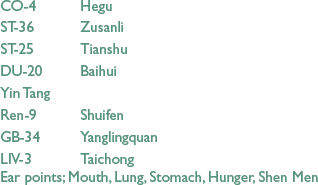
Acupuncture as a strategy to encourage weight loss and reduce insulin resistance needs to be repeated frequently, preferably 3 times a week. Frequent acupuncture can help reduce the appetite making portion size reduction easier. It also provides regular support both physically and mentally.
Despite these useful clinical strategies, it is important to realize that weight gain and loss are complex issues often tangled up with emotional coping patterns learned in childhood. Treatment to help a patient lose weight is not quite as easy as I have made it sound. This text is not the place to explore the many issues involved in weight loss, gain or obesity but awareness of some of the difficulties coupled with plenty of optimistic encouragement will help you to help your patient stick with treatment. It is worth reiterating that weight loss just needs to start – once the Damp is mobilizing, many positive changes will be seen in mood, energy, and ovary and testicle function.
Weight loss diets
The scope and focus of this book does not allow an in depth look at different diets employed for weight loss, besides which it is a complex and for many an emotional minefield fraught with obsessions and unhealthy behavior. We shall briefly look at some general and widely held as sensible dietary plans for weight loss and include a Chinese medicine perspective.
We spoke briefly about a ‘good’ diet to promote health and fertility above. Here, we shall refine that basic advice to formulate a diet that not only provides good prenatal nutrition but helps weight loss. Some general pointers apply which can be summarized thus for your overweight patient trying to conceive:
• Choose delicious fresh food, vegetables and fruits in season, mix colors and make flavors interesting with herbs and spices. Enjoy your food. Sit down to eat it, away from the work desk, away from the television.
• Chew slowly, savor each mouthful. When you eat too fast, you don’t give the stomach time to tell the brain that it’s had enough – so you keep on eating. It takes 20 minutes for brain-signaling hormones to signal the brain that it no longer needs food.
• Be a little bit French in your eating patterns – choose excellent quality food, even if it is a bit more expensive. Just eat less of it. Spoil yourself.
• Have three meals a day, with small healthy snacks in between. Do not skip meals. Have your meals on smaller plates so you reduce your quantities. Only one plate per meal. No second helpings.
• Have protein at least once a day; this can be lean meat, chicken, fish, tofu, eggs, lentils, or legumes.
• Use home-made vegetable soups to replace one meal per day (the evening meal is best); these are nutritious, low calorie and satisfying because they stay in the stomach longer than solid meals.
• Do not have iced water with your meals. Have a few sips of wine (but no more than a few sips) or have a digestive tea like Oolong or Pu Erh if you want to drink with your meals.
• Stop all drinks that contain sugar or artificial sweeteners.
• Stop all processed foods like cakes, biscuits, and white breads.
• Limit carbohydrates – only one or two small slices of bread a day, and very modest servings of rice, noodles, or pasta rather than large ones.
• Cut out fatty and fried foods, although small amounts of good oils (e.g., olive oil, avocado), should be included.
Patients with weight problems will almost always have some degree of Spleen dysfunction. We discussed some ideas about supporting Spleen function in our discussion of Qi and Damp above. When we want to boost the Spleen function of our patients and encourage good metabolism, we need to encourage good eating patterns. Patients with Spleen issues may on the one hand, crave and indulge in inappropriate amounts of starchy and sweet foods, or on the other hand, become obsessed with unhealthy unbalanced diets. We need to steer them down the middle path and encourage a holistic context to healthy eating based on regular routines, choosing the right foods for the right time and season, and their personal constitution combined with enough movement.
The TCM practitioner will help the overweight patient to find the appropriate food choices and design a weight loss diet specific to his or her needs. That is one that is easy to digest and light. Cooked foods (rather than the raw foods commonly recommended), aromatic spices, and fragrant herbs make digestion easy. Frequent intake of small portions of warming foods containing protein and avoidance of sweet foods are conducive to healthy Spleen function. In the case of Phlegm-Damp accumulation that is giving rise to Heat, some more cooling foods might be incorporated, or at least the more heating foods may need to be avoided. We can also encourage the addition of some specific foods which have been shown to inhibit weight gain and promote weight loss. The polyphenols present in green tea, grape seeds, orange, grapefruit, and blueberries can help move the Damp. They have been shown to combat adipogenesis at the molecular level and in some cases, also induce lipolysis or reduce insulin resistance.50,51 Drinking green tea before doing exercise can support the break down of visceral adipose tissue. An alternative to green tea, oolong tea, has also been found to have good weight loss properties.52
For more discussion of specific foods to be included in or excluded from a diet to support Spleen Qi and reduce Damp and Phlegm, see Vol. 2 of the Clinical Handbook of Internal Medicine.9
For discussion of the role that exercise and sleep play in weight loss, see below.
Exercise
In general, exercise is an essential component of maintaining good health. Exercise can greatly enhance fertility as it manages weight, promotes blood flow and hormone balance, and counteracts stress.
As part of a weight loss program, it is essential, especially where there is insulin resistance. Exercise builds muscle tissue and increases skeletal muscle insulin sensitivity. This means that pancreatic production of insulin drops and blood levels are lower. With less insulin in the blood, less sugar is converted to fat.
Where insulin resistance is making weight loss difficult, very short bursts of high intensity training appears to be helpful. The time investment in this sort of training is small and manageable by even the busiest of patients.53
Exercise also lowers levels of the stress hormone, cortisol. Not only does this improve mood and allow for better stress management but it also reduces the deposition of visceral fat, which is seen in some women with PCOS.
From the Chinese medicine perspective exercise is an important support for weight loss – not only for the burning up of calories but also for the improved circulation of blood and fluids which helps disperse the Damp. Programs that support PCOS sufferers to lose weight have found that exercise in a group context adds an important psychological component to recovery. Since Damp is an internal environment which can cause sluggishness, low motivation, and depression, this sort of encouragement is important.
However, exercise can be overdone. One study found that women who exercised daily were three times more likely to have fertility problems than women who were not so active.54
Another study indicated that vigorous exercise did not give women doing IVF any advantage, rather the opposite. Women who were used to exercising vigorously for more than 4 h a week had a lower rate of pregnancy than those who exercised less. The data showed that, in particular, intense cardiovascular exercise such as running, cycling, and stair climbing was detrimental to IVF outcomes.55
The Chinese medicine practitioner is well placed to assess the appropriateness or otherwise of vigorous exercise. Exercise is advised to our patients because it promotes Lung function and moves the Qi and Blood, thus building the capacity of the body to manufacture more Qi and Blood and use fuel efficiently. However, women who do intense cardiovascular exercise for several hours a week, on top of a busy work schedule, may be depleting their Blood and Yin reserves somewhat, even though their Qi may still be healthy. Thus for keen exercisers who are not finding it easy to conceive, the advice is to reduce exercise sessions to three a week (1 h max. each time) and to exercise at moderate levels only. For those women who suffer from fatigue due to very low reserves of Qi, gentle exercise which gathers energy rather than spends it, is more useful. Exercise such as Tai Chi or yoga or gentle walking helps to build internal energy and calm the nervous system rather than working the heart and muscles.
Sperm of men who engage in moderate exercise appear to have better motility than that of sedentary men.56 However, some sports are thought not to be so good for sperm production and quality. These include sports which overheat the body, such as long distance or grueling athletics, and those which put sustained pressure on the testicles like cycling. On the other hand, anecdotally, swimming or surfing (i.e., chilling the testicles) appears to be good for sperm health.
In summary, some words of advice for your patient about exercise in general and for losing weight:
• You need to move. And make moving enjoyable.
• If you are highly motivated, go to the gym three times a week to do aerobic classes
• or walk daily and briskly for 30 min in a pleasant green environment
• or engage regularly in some other strenuous activity you enjoy.
• For men, choose swimming rather than cycling or long distance running.
• If you are less enthusiastic about exercise, get a personal trainer who will tailor exercise to your needs and provide the motivation to keep going. Or join a boot camp exercise group which meets several times a week, or set one up with your friends.
• A small time investment of high intensity training helps reduce insulin resistance (a personal trainer is useful for this sort of exercise program).
• For those people for whom this level of activity is not possible or advisable, then gentle movement like Tai Chi or yoga is appropriate. These forms of movement can still help weight loss, albeit more slowly – Tai Chi, e.g., burns as many calories as downhill skiing! And as the Qi recovers, the capacity to metabolize more efficiently increases.
Stress
No matter how stressful life can be, it is more stressful if there is difficulty in achieving a pregnancy. Why? We all arrive in this world assuming the ‘God-given’ right to reproduce ourselves. Even if we haven’t given it much conscious thought, because it is written in our genes, it is a very strong biologic imperative. At the bottom line, reproducing is our genes’ main agenda! And to have that most fundamental of drives put in question or thwarted outright is undermining and distressing at a profound level to so many aspects of ourselves – both conscious and unconscious. If the molecular screaming from the DNA in the tissues is not enough, added to that are all the expectations society has, especially of women, to do their bit in perpetuating the race, the family, and the family name. This pressure is felt very acutely by women in developing nations where a woman’s worth is measured in terms of offspring, usually male offspring. Such is still the case in much of China.
In addition, so many of the current generation of women in the West have been brought up on the notion that they can have it all – career, income, wealth, and then children. But society at large didn’t get the same message. The circumstances which most women face in the work and public arena strongly disadvantage child-bearing in the ideal fertile years; those between 25 and 35 years of age. The added frustration so many women experience when they discover that getting pregnant when you are 40 isn’t just like putting another item on the day’s agenda, accelerates stress levels markedly. These are women who have become used to writing their own scripts and then successfully actualizing them, and it is a cruel blow to discover that biology is not always quite so cooperative.
Once a couple embarks on a modern technological treatment program for infertility, a whole new set of stresses arrives. The demands of frequent clinic visits, intrusive procedures, drug side-effects and financial pressures can take their toll on all but the most optimistic of people. For couples who do not achieve pregnancy after many attempts, keeping a positive frame of mind becomes increasingly difficult. The fraught question of when to stop trying must be faced, but when new developments in assisted reproduction technology (ART) are constantly announced, the couple who thought they had tried everything are suddenly thrown back into the arena with the hope of success this time.
How does stress affect fertility? Western specialists will usually say that stress has little or no effect on fertility, except to perhaps reduce the frequency of intercourse if either partner, especially the male, is feeling extremely stressed.57
Not everybody agrees. Some specialists at the Harvard Medical School58 point out that stress has been implicated, along with depression, in ovulation irregularities, and in men attending IVF clinics, emotional stress can be associated with abnormal sperm development.59
Depression among infertile women is found to be just as severe as the depression experienced by those with life-threatening diseases such as cancer, heart disease, and AIDS. The cruel irony is that this depression can then contribute further to the infertility.
Studies of women undergoing IVF show that those who exhibit lower levels of measurable physiological stress have a higher chance of success,60 while those with more stressful lives do less well.61 Feeling relaxed and unstressed favors natural (non-IVF) conception, according to studies which measure mood states on standard psychometric tests,62 while raised levels of physiologic stress markers correlate with reduced conception rates.63
The positive effect of feeling relaxed on conception rates in these studies was not thought to be due to increased frequency of intercourse.
Doctors of Chinese medicine look at some of the more subtle manifestations or ramifications of stress and recognize the impact of these on fertility. Feeling content and relaxed usually indicates, in our TCM frame of reference, healthy and unobstructed Heart and Liver Qi (among other things). (We have already discussed the impact that Heart Qi stagnation can have on ovulation in Ch. 4.) According to Chinese medicine, the Heart is the emotional center of the body and houses the spirit. When the Qi in the Heart becomes obstructed (the cause is always emotional), the messages which the Heart should send to the ovaries via the Bao vessel do not arrive and eggs are not stimulated to ripen. Mental stress which affects the Heart therefore can frequently upset the rhythm of the menstrual cycle. If the effect of the stress on the Heart is severe, then periods may stop altogether, i.e., there may be no messages from the Heart to the ovaries for a long time. When ovulation is disrupted for a very long time (years), it can be harder to re-establish the Bao vessel function. The emotions that affect the Heart are anxiety and mental anguish. Difficulty in becoming pregnant can certainly cause these sorts of feelings, as can relationship difficulties. Addressing the Heart Qi is recognized as a very important part of TCM infertility treatment.
The Liver Qi is also easily obstructed by stress. The sorts of stress we are talking about here are those day-to-day frustrations which can make us feel irritable, such as finding the milk has gone off after you’ve poured it into your morning cup of tea; the car breaking down; conflict at work. The Liver Qi which is responsible for overseeing the smooth running of many cycles in our bodies can also be upset if daily routines are not regular. An extreme example of this is the difficulty experienced by flight attendants on international flights in maintaining regular routines, which means their Liver Qi easily becomes obstructed.
The Liver not only has influence over cycles in the body but also over the movement of Qi in the pelvis and chest. Stress-related Liver Qi stagnation can be responsible for tension in the fallopian tubes, preventing the passage of the egg, sperm, or embryo. Liver Qi stagnation can also manifest later in the cycle in the premenstrual week, with breast tenderness and swelling, abdomen bloating and perhaps cramping. While these are clear clinical signs that Liver Qi is obstructed, there doesn’t appear to be direct impediment to fertility at this point, unless the Liver Qi stagnation has led to Blood stagnation and the endometrium is therefore not favorable for implantation.
Acupuncture is well known for its ability to reduce the effects of stress and as such, has an important place in treatment of infertility patients, particularly those undergoing IVF. A number of studies have been done which look at the effect of acupuncture on perceived stress levels of women undergoing IVF.64–68
Acupuncture, which calms the Shen and promotes smooth movement of Liver Qi will nearly always have a rapid and positive effect on stress levels.
Exercise is a useful strategy for moving the Qi and disengaging the mind. Massage can do the same. A regular rhythm of life is important in mitigating the effects of stress and stagnation of Qi. One of the most effective means to prevent Qi stagnation is meditation, completely emptying the mind of all its chatter and allowing the body and mind to be completely untrammeled. If this can be achieved (and it is by no means as simple as it sounds), then Qi and Blood have no place to become stagnant.
Sleep
The connection between sleep and fertility is not always self-evident, although getting to bed early with your partner may for some couples have obvious benefits.
It is often not recognized that the quality and quantity of your sleep influences sex hormones, sperm production, ovulation, immune factors, weight gain, mood, stress levels, and longevity, as well as the more obvious stamina. Getting enough good quality sleep is an essential part of preparing for conception for all of these reasons.
From our point of view as TCM practitioners, sleep is of paramount importance in nourishing Blood and building Qi, nurturing Kidney Yin and Kidney Yang. You may remember from our earlier discussions on the preservation of Yin (and Jing), that times when the body and mind are at complete rest are crucial for restoring and recuperating stores of essential energy.
It is increasingly recognized that sleep deprivation is not only very common (it is estimated by the US National Sleep foundation that 70% of us in the developed world don’t get enough sleep) but that it can also damage many aspects of health. Studies in the past have indicated that the average adult benefits from 8 or 9 h of sleep every night, but the typical American or Australian city worker may only get 7, and many get considerably less without ever catching up (for some reason Europeans seem to have a healthier attitude to sleep and, in general, are less sleep deprived).
Sleep and sex hormones
Lack of sleep affects ovulation, causing menstrual irregularity and delaying conception. A large proportion (50%) of women who work in notoriously sleep-deprived professions, e.g., flight attendants, nurses, and other night-shift workers experience irregular and erratic periods and in some cases, infertility.69,70
In many cases, these women stop having periods altogether. Sleep disrupted by night-shifts at the time of ovulation and conception may also increase the odds of miscarriage. In general, getting <8 h a night sleep is considered a risk factor for 1st trimester miscarriage.71 In an ideal world, men and women trying to conceive should avoid shift work, or skimping on sleep, or if this is impossible, they should make a concerted effort to catch up on sleep when they can.
Lack of sleep can also cause a slump in sperm production. Testosterone production in men occurs during the night, normally increasing by 20–30% and cutting back on sleep drastically reduces testosterone levels.72 This may be one of the reasons for the observed decline in male fertility in modern times.
One of the main functions of sleep in TCM physiology is to allow the Liver Blood to gather and build. This is important for normal Liver Qi movement and in maintaining sufficient Heart Blood. Lack of sleep and insufficient Liver and Heart Blood resources create a vicious cycle where maintaining sleep becomes more and more difficult. When Heart Blood is deficient, the Shen becomes unsettled and deep sleep is illusive. This creates the stage for Bao Mai dysfunction, menstrual irregularities, and risk of miscarriage. Additionally, chronic lack of sleep draws on Kidney reserves, depleting Kidney Yin, Yang and Jing and compromising potential fertility.
Conversely, levels of sex hormones have a profound effect on sleep patterns, especially in women, which in turn has an effect on neuroendocrine functioning. Since the same part of the brain that regulates sleep–wake hormones also stimulates daily pulses of reproductive hormones for men and women, some feedback between these systems is likely. Women who suffer from premenstrual symptoms have been shown to get less of the deep slow brain wave stages of sleep than asymptomatic women.73 Here we see the connections between Liver Qi stagnation, Liver Blood deficiency and sleep.
Sleep and metabolism
Sleep scientists at the University of Chicago have found that those who suffer from an accumulated sleep debt may develop serious ongoing health problems. Sleep deprivation causes alterations in metabolic and endocrine function that show all the hallmarks of aging. The odds of becoming obese and developing metabolic syndrome (including diabetes, heart disease, high blood pressure) are nearly doubled in men and women who sleep <6 h, compared with those who sleep between 7 and 8 h/night.74–77
Being overweight or obese has significant deleterious effects on fertility in men and women (as we saw above). Weight loss is an important part of improving fertility but it is hard to lose weight if sleep is inadequate. In fact, weight loss programs are 50% less effective if they are not accompanied by adequate sleep. Less sleep results in increased hunger but lower resting metabolic rate; a sure recipe for weight gain, not weight loss. Lack of sleep also raises levels of ghrelin. This hormone not only reduces energy expenditure but promotes the retention of fat.78
Over and over, overweight, overworked women, or overweight mothers of young families have demonstrated that being chronically tired (failing Spleen Qi) can make you fat, and now the clinical research confirms it!
So important is the role of sleep in weight loss that the Stanford Sleep Medicine Center in California has suggested that sleep needs to be included in weight loss packages that have traditionally focused on just diet and exercise. Skipping sleep does not just consume Kidney energy, it risks damaging the Spleen.
We spend Qi all day, every day, some of us more than others. The only way to replenish this essential resource is to take in fuel, keep breathing, and to rest. We are all familiar with the role of the Spleen in maintaining good metabolism, the efficient movement, absorption and use of nutrients, and removal of waste products. When the Spleen Qi weakens and any of these steps are compromised, then fat deposits occur, boggy congested tissue starts to appear and weight is gained. Alongside eating the right foods in the right quantity, and breathing, sleep is essential to safeguard optimal Spleen function.
Sleep and stress
Anxiety levels increase incrementally, the longer sleep loss continues. Sleep restriction affects biologic mechanisms involved in the stress response. The two major neurobiologic transmitters of the stress response (cortisol regulation and sympathovagal balance) show significant changes after just a few days of sleep restriction.79 However, emotional and physiologic stress caused by lack of sleep is reversible once sleep loss is recovered.80
Levels of stress hormones are higher and thyroid hormones are also disrupted when sleep is cut short. Mental sharpness and the ability to concentrate effectively and remember, have been shown to be affected by inadequate sleep.
Lack of sleep and the resulting compromised stores of Liver Blood creates the conditions for Heart Blood deficiency and a disturbed Shen and mental agitation, and also Liver Qi stagnation and enhanced stress reactions. Lack of Blood and Qi feeding the brain will also contribute to memory problems.
Sleep and the immune system
The complex and intimate interactions between sleep and the immune system have been the focus of study for several years. The equally complex and intimate interactions of immune factors and fertility are also currently the object of intense research.
We know that certain immune factors (cytokines) regulate sleep and in turn are altered by sleep and sleep deprivation. People with chronic insomnia tend to have higher levels of some cytokines, notably interleukin-6 and tumor necrosis factor.81 These immune factors can impact on certain parts of the reproductive system, particularly implantation of the embryo and placental development. Some researchers have proposed that a suboptimal cytokine environment can contribute to miscarriage.82
Certain cytokines can lead to clotting of the placental vessels in cases of early or late pregnancy loss, or interference of angiogenesis in cases of occult pregnancy loss. Disturbed sleep also increases inflammatory processes in the body.83 Thus, regulating the immune system, particularly in its autoimmune aspects, is another reason for encouraging sufficient and sound sleep.
Ensuring smooth movement of Blood and Qi and adequate Kidney Yin levels will help prevent the scenarios we often see in autoimmune conditions, i.e., Heat and inflammation from Yin deficiency and Blood stasis from insufficient Blood or poor Qi movement.
Although not so related to reproductive issues directly, other immune issues, i.e., inadequate defenses against infection, are seen more often in sleep-deprived people. Here we see a consequence of reduced Wei Qi from compromised Kidney Yang function.
A good night’s sleep
What, then, does sufficient and sound sleep actually mean?
It means allowing the body to build resources like the Blood, the Qi, the Yin and the Yang, all of which fit into our picture of optimal fertility in the many different ways we have outlined above. This takes a lot of hours of maintaining a deeply quiescent state of the mind and body.
It may be the case that those hours before midnight, which our grandmothers always told us were the most important, are the time that the Kidney Yang in particular is recuperated. Certainly, it is in those first few hours of sleep when we experience slow brain wave sleep, the deepest type of sleep, that growth hormone is secreted, and the first stage of learning and memory is carried out as newly acquired information is sent from the hippocampus to the cortex. The early morning hours of sleep seem to be the time when the mind gets its rejuvenation and when the second stage of learning is carried out as memory is solidified in the cortex during the replays of REM (rapid eye movement) sleep.84
With the clarifying and steadying action on the mind which early morning dream sleep (REM) brings, the deep levels of Yin have the chance to recuperate too. In summary, it is the early bedtime and the early morning hours of sleep that are important for regenerating Kidney Yin and Yang.
Attention to sleep is especially important after the age of 30, when both capacity for deep sleep and the production of growth hormone start to decline quite rapidly,85 paralleling the decline in Kidney Yin and Yang which begins at this time.
In summary, sleep is clearly important for many reasons: preserving the Spleen Qi and Liver Blood, regulating the Heart Qi, and regenerating Kidney Yin and Yang. For couples trying to get pregnant, long and deep sleep is very important even if it no longer comes quite so easily once they are past their mid-30s. Acupuncture and herbal remedies are quite effective at helping to achieve healthy sleep patterns as we all know. (For representative herbal formulae and acupuncture point prescriptions for various types of sleep disturbance, refer to the Clinical Handbook of Internal Medicine, Vol. 1.)86
Our Daily Drugs
Could those constant habits of imbibing, inhaling, or swallowing our daily props be affecting fertility? It seems that coffee, alcohol, cigarettes, and marijuana are not such a good idea for someone who is having difficulty falling pregnant. Sure we all know of people who smoke like chimneys, drink like fish, and down cups of coffee like Italians or Brazilians, and who still manage to have broods of children – but that’s not the point. The point is that if fertility is compromised for some reason, then all the factors which reduce it further must be addressed.
Caffeine
A large study carried out by the Yale Medical School found that the risk of infertility (which they defined as not being able to conceive after 12 months) was 55% higher for women drinking just 1 cup of coffee per day; 100% higher for women drinking 1.5–3 cups per day; and 176% higher for >3 cups per day,87 and this was backed up 5 years later by a study in Europe, which found that high caffeine intake in women slowed rates of conception.88 The effect of caffeine on the fertility of men has not been examined to the same extent but one study did find a delay in conception related to caffeine intake though the dose was not significant.89 Additionally, there is evidence that coffee drinking in men and women increases miscarriage rates and that caffeine intake during pregnancy has a negative influence on fetal growth.90,91
Most studies indicate that it is the consumption of ≥300 mg of caffeine daily that can lead to fertility problems. It is estimated that >20% of Australians and Americans drink more than 350 mg/day. So, coffee drinkers having difficulty falling pregnant may well be advised to reduce their intake significantly, switch to low-caffeine varieties of tea, or to find alternatives for their morning and afternoon cuppas.
Alcohol
Many couples are told that they should stop drinking alcohol altogether in preparation for conception. But the evidence for such prohibition is not clear cut. Exploring the literature on the effect of alcohol on fertility, it would appear that alcohol has little effect on fertility in some countries and a dramatic effect in others. For example, the Italians are quite sure that alcohol intake has no negative effect on their ability to fall pregnant.92 Similarly, other large studies carried out in a number of countries in Europe have been able to demonstrate no relationship between moderate alcohol intake of men and women and ability to get pregnant,93 although heavier consumption (defined as >8 drinks a week) did have a negative effect.
A study in Denmark94 showed that women who drank moderately (2 glasses a week to 2 glasses a day) conceived more quickly than those who didn’t drink at all. However, before advising all prospective parents to raid their cellars, it should be noted that these results do not mean that consuming alcohol is better for fertility than not drinking alcohol at all. Non-drinkers differ from moderate drinkers in many other aspects; for instance, they may have a weaker constitution or other health problems that can influence fertility, directly or indirectly. In addition, alcohol drinkers may have a higher frequency of sexual intercourse.
Women do metabolize alcohol much less efficiently than men and there is certainly evidence to suggest that alcohol can increase incidence of some gynecological and other disorders which might contribute to infertility. Alcohol consumption is associated with altered estrogen and progesterone levels as well as menstrual irregularities and increased incidence of endometriosis, abnormalities in the ovaries, impaired implantation and blastocyst development and the early onset of menopause.95
Some studies have found evidence that moderate drinking by women (5–10 drinks per week) is linked to lower fertility and increased miscarriage.96 And others have found a definite relationship between even modest alcohol consumption in women (<5 drinks/week) and delay in conception.97,98
Alcohol consumption by men in many of these studies seemed to have little effect on fertility of the couple. However, very heavy drinking on the part of the male partner significantly negatively impacts the time it takes for a couple to conceive.99 Excessive alcohol consumption can induce testicular atrophy, impotence, reduced libido, and cause a deterioration in sperm count.100
It therefore seems that evidence can be found to support either camp on this issue, but most professionals working in the field of fertility will advise against too much alcohol consumption on the part of either partner for both general health reasons and consideration of health of the gametes. Completely restricting all alcohol intake in couples (with no history of, or reasons for infertility) planning to become pregnant is not justified.
There is however some good evidence to suggest that couples should abstain from alcohol in the lead up to starting an IVF cycle. Consumption of as few as four alcoholic drinks per week (either partner) is associated with a decrease in IVF live birth rate.101 Other researchers have found that alcohol consumption by the woman in the month before IVF meant reduced numbers of eggs collected and by the male partner meant reduced live birth rates.102 The European Society of Human Reproduction and Embryology has issued guidelines for ART specialists, saying that: ‘Fertility treatment should not be provided to women whose alcohol consumption is more than moderate levels, and to those unwilling or unable to reduce their consumption.’103
From a TCM point of view, excessive or chronic use of alcohol can increase internal Heat or Damp-Heat. Thus, a patient with a tendency to a Hot or Damp-Heat constitution (especially the larger or ruddy type), who is trying to conceive will be advised to limit alcohol severely. On the other hand, colder or Qi-deficient patients trying to conceive may positively benefit from small amounts of red wine taken with food. The doctor of Chinese medicine should be able to give discerning and educated advice to individual patients about the consumption of alcohol.
Once pregnancy is confirmed, then all or nearly all alcohol consumption by the mother should be avoided for the duration of the pregnancy and breast-feeding. Alcohol has been shown to have effects on the child both before and after birth.
Nicotine
The effect of smoking has been examined by many researchers and the general consensus here is the same. Most studies have shown negative effects of smoking on reproduction, and in couples where either partner smokes, it takes longer for them to conceive.104
Female smokers also experience the menopause earlier than usual. Additionally, smoking has been strongly associated with tubal factor infertility, and it has been linked to increased rates of miscarriage. The effects of smoking are also felt at the level of the uterine lining, affecting its receptivity to the embryo.105
Smoking has also been shown to have a deleterious effect on sperm counts. On average, smoker’s sperm counts are nearly 20% lower than non-smokers. And when smokers stop smoking, their sperm counts were seen to rise between 50% and 800%, indicating that toxic chemicals in the tobacco have a very deleterious effect on sperm production but that these effects can be reversed.106
Marijuana
Women trying to conceive are generally advised to avoid marijuana. This is on the strength of animal studies which showed that THC (the active ingredient in marijuana) is toxic to the developing egg and at certain levels, could delay ovulation markedly.107
There is also ample evidence demonstrating a damaging effect by THC on sperm production and function. Sperm production and motility have been shown to be drastically reduced in heavy marijuana smokers and new research indicates that the THC might also interfere with the binding of the sperm to an egg and its ability to fertilize it.108
Junk food
A junk food diet is one which is high in fat and sugar and low in nutrients. Fat and sugar are not actually drugs, however many of us are addicted to them.
A diet high in fat, especially trans-fat, such as that found in many processed and take away foods, is associated with lower sperm counts, whereas higher intake of omega-3 fats (in fish and some vegetable oils) improves sperm quality.32
Men who eat a lot of processed foods (and meat) have poorer sperm quality (in particular motility) than men who eat more fresh foods and fish.109 Men who drink 1.2 litres (a quart) or more of cola daily have sperm counts almost 30% lower than men who drink no cola.110 This finding could be related to the caffeine or the sugar content of such a high consumption of cola. The excessive amount of sugar would certainly contribute to insulin resistance and excess weight (which we saw above had a negative impact on fertility).
Assessing the effect of junk food on egg quality is more difficult than it is for sperm, however the diet that appeared to promote fertility in the Nurses study quoted above was based on whole foods and avoided junk foods.9,10
Eating more whole foods appears to have a good effect on reducing C Reactive protein (CRP) levels which are correlated with fertility in women.111
Other drugs
There is some evidence that taking non-steroidal anti-inflammatory drugs (NSAIDs) for arthritic or painful conditions may interfere with the chemical signals which allow release of the egg at ovulation time, producing a well-characterized syndrome known as LUFS or luteinized unruptured follicle syndrome. This phenomenon was noticed in women taking either the standard class of NSAIDs112 or the new generation of anti-inflammatory drugs, called COX-2 inhibitors (trade names Celebrex and Vioxx). Stopping the medication reversed the effect, and ovulation was no longer delayed.113,114 In animal studies, even aspirin could inhibit ovulation.115
Antidepressants
We know there are negative effects on pregnancy outcome and fetal health when women take antidepressants, however less is known about their effect on fertility.
Taking SSRIs (selective serotonin reuptake inhibitors) during pregnancy is associated with increased risk of miscarriage,116 and twice as many pre-term births and delayed head growth117 (although it should be noted that untreated depression is also associated with slower fetal growth). Some SSRIs (fluoxetine or paroxetine) are suspected of increasing the risk of cardiovascular malformations in the fetus118 and others of disrupting sleep patterns of the fetus in utero.119 Research is continuing to assess the impact of manipulating serotonin levels with SSRI drugs in utero on the fetal brain growth and other organs. In the meantime, the fact that acupuncture has proved effective at treating depression during pregnancy gives women an alternative.120
Should we advise women to stop SSRI medication while trying to conceive? Probably not until such time as there is evidence that they impair fertility more than depression does. However, addressing the causes of the depression will be a main aim of the TCM practitioner as part of the treatment to enhance fertility and prepare for a healthy pregnancy. One small study has indicated that acupuncture is as effective as the conventional pharmaceutical approaches in treating major depression.121
SSRIs in some reports have shown an adverse effect on sperm count (which was reversible once the medication was stopped) and impairment of sexual function.122–124
Environmental Pollutants
Many years ago, the Pregnancy and Lifestyle Study (PALS) carried out in Australia looked at the effects of toxic chemicals in the environment on the fertility and miscarriage rates of some thousands of couples. The results125 revealed that lifestyle, life circumstances, and environment had a major impact on fertility and miscarriage rates. Unfortunately, exposure to environmental pollutants has increased markedly over the ensuing years since this study and it is difficult for most couples to avoid the chemicals that are in our air, water, food, houses, and workplaces. We don’t yet know all the ramifications for reproductive health but many pesticides and plastics have been shown to have hormone disrupting abilities.
We mentioned the effects of such endocrine disruptors on sperm manufacture in Chapter 7. But it is not just the sperm that are vulnerable. Mammalian females are born with a finite number of primordial follicles, the majority of which remain in a quiescent state for many years. Because they cannot be regenerated, these ‘resting’ oocytes are particularly vulnerable to damage by synthetic chemical compounds which trigger abnormal rates of atresia with disastrous effects on female fertility as oocyte quality is compromised and ovarian reserve is depleted.126–128
This has already been shown to be the case with some known toxic chemicals such as those in cigarette smoke, which are associated with early menopause.
There is some suggestion that exposure of baby girls to pesticides in utero can increase the risk of PCOS.129
Air pollution in general is correlated with reduced fertility. When many thousands of women attending an IVF clinic were assessed for exposure to local air pollution (at home and at the IVF clinic), there was a clear and disturbing link between higher exposure, particularly to nitrogen dioxide and fine air-borne particulate matter, reduced numbers of pregnancies and live births.130
Once a woman is pregnant, even relatively low ambient air pollution exposure can affect birth weight.131 (To read more about the effect of environmental toxins on miscarriage rates, please see Chs 7 and 8.)
Some chemicals commonly used in the workplace and the home affect the fertility of both men and women.132 For example, commonly encountered fumes such as dry cleaning liquid, petrol, ammonia, and nail polish remover can interfere with fertility in susceptible people. Hand cleansing gels (containing triclosan) used in hospitals and more generally, are also under scrutiny by the Food and Drug Administration in the USA, in this regard.
Likewise many chemicals used in industry and agriculture are now the subject of scrutiny. These include polychlorinated biphenyls (PCBs) used in solvents, paints, and many industrial products; phthalates used in plastics and nail polish; dioxins found in pesticides; polybrominated diphenyl ethers (PBDEs) used as flame retardants in polyurethane foam, electronics, carpets and textiles; bisphenol A (BPA) found in hard clear plastics, food and drink cans and cartons, water pipes, dentistry sealants, and thermal cash register receipts; perfluorinated compounds (PFCs) used for grease resistant coatings; 4-vinylcyclohexene diepoxide (VCD), a by-product of the manufacture of many products including rubber tires and insecticides; trichloroethylene (TCE) a solvent and degreaser; alkylphenol ethoxylates (APEs) surfactants in laundry detergents, stain removers, and all-purpose cleaners and glycol ethers; organic solvents used in many household cleaning products – and there are many others. Some of these chemicals are now banned but are nevertheless extremely persistent in the environment and in living organisms.
Polychlorinated biphenyls or PCBs
This family of chemicals, which includes DDT, concentrates through the food chain, accumulates in fat tissue, and comprises the bulk of organochlorine residues in human tissues. They can be detected in follicular fluid of infertile women doing IVF.133 Human reproductive toxicity of PCBs has been examined in studies of fishing communities, fish eaters and the general population.134,135 The level of PCBs (and phthalates) are higher in the semen of infertile men than that of men with normal fertility. The highest concentrations were found in fish eaters.136 More Y chromosome bearing sperm are manufactured in men who are exposed to higher levels of PCBs, and sperm motility overall is reduced.137,138
Polybrominated diphenyl ethers (PBDEs)
We are exposed to PBDEs which can leach out into the environment and accumulate in human fat cells mostly through food and house dust. These chemicals are endocrine disruptors which have a damaging effect on male reproductive hormones and fertility.139,140 Additionally, PBDE levels are associated with increased odds of subclinical hyperthyroidism in pregnant women (and therefore increased risks of adverse pregnancy outcomes)141 and can compromise fetal health resulting in low birth weight babies.142
Phthalates
The general population is exposed to phthalates through consumer products, as well as diet and medical treatments. Phthalates are thought to have damaging effects on fertility, particularly on sperm.143
Bisphenol A (BPA)
BPA is another ubiquitous chemical in the industrial world, which has the potential to interfere with biological processes because its structure resembles estrogen. More than 90% of the US population have detectable levels of urinary BPA.
Research has shown that BPA disrupts normal development of oocytes and increases DNA fragmentation in sperm.144,145
Women with higher serum or urinary levels of BPA not only have poorer quality oocytes, but also reduced fertilization rates and higher implantation failure rates in IVF cycles.146,147
It is not only in fertility stakes that this common environmental pollutant causes damage. BPA also appears to affect in utero development, particularly of baby girls. Those girls who are exposed in utero show impaired behavioral and emotional regulation when they are toddlers.148
Perfluorinated compounds (PFCs)
Grease-resistant products are often coated with this compound, including stick-resistant cookware, dental floss, and carpets. Exposure to PFCs risks lower conception rates, i.e., it takes longer to become pregnant.149
4-vinylcyclohexene diepoxide (VCD)
VCD is a metabolite of a product released during the manufacture of rubber tires, flame retardants, insecticides, plasticizers, and antioxidants. It is well known as an ovarian toxicant and has been shown to quickly destroy oocytes in animal studies.150
Trichloroethylene (TCE)
TCE is used as a solvent and degreaser. Mechanics and others who work with engines are frequently exposed to this chemical and the seminal fluid of mechanics contains discernible levels of TCE.151 Others are exposed to TCE through contaminated drinking water; seepage of this compound into groundwater has raised health concerns in many locations.
Exposure of mice to TCE affects the ability of sperm to fertilize eggs, even at levels that have no discernible effect on the testes or the count or motility of the sperm. Similarly, maturing oocytes are susceptible to even very short in vivo exposures to TCE which reduces their ability to be fertilized and form embryos.152
Alkylphenol ethoxylates (APEs)
APEs are commonly used in cleaning products like laundry powder and cleaning products used in the kitchen. The breakdown products of these detergents are found throughout the natural environment now, especially in the waterways, where they are wreaking havoc with the reproductive systems of some aquatic organisms such as turtles, fish, and frogs. APEs are also found in house dust and food153,154 and have been shown to have damaging effects on the reproductive system in laboratory studies.155
Glycol ethers
Glycol ethers are a large group of organic solvents used in industry and the home as glass cleaners, carpet cleaners, floor cleaners and oven cleaners. They are absorbed as volatile fumes from the air by the skin as well as inhalation. Animal studies have reported testicular damage, reduced fertility, early embryonic death, birth defects, and delayed development from inhalation and oral exposure to the glycol ethers.156 Occupational exposure to glycol ethers has also been shown to result in reproductive and developmental impacts in humans. Studies of exposed male workers show that glycol ethers can reduce sperm counts and pregnant women exposed to glycol ethers in their work environments are significantly more likely to have children with birth defects such as neural tube defects and cleft lip.157,158
Heavy metals
Exposure to heavy metals has also been implicated in reproductive disorders and fetal mal-development. Mercury – which is present in fish at the top of the feeding chain (e.g. tuna or shark), in some industrial chemicals used in printing processes and in leaking dental amalgams – is antagonistic to zinc, a mineral thought to be very important in many body functions, including gamete manufacture. Some populations with high blood mercury levels are less fertile than those with lower levels.159
Lead, which is found in all city dust, contaminated soil and water, and in painted finishes in older houses (pre-1960), can affect sperm manufacture and can cause miscarriages. High blood levels of lead in men are associated with delayed conception.160 Lead also interferes with the metabolism of iron, an important mineral in reproductive health.
Cadmium is another heavy metal which, when present at high blood levels in women, has been associated with pregnancy loss and delayed conception.160 It is used in the manufacturing process of plastics, ceramics, metals, rubber, pesticides, some refined foods, and cigarettes. Air-borne particles of Cadmium (e.g., from cigarette smoke) can travel over long distances and may be accumulated in animals, fish, and plants. Like mercury, it is antagonistic to zinc.
Electromagnetic fields
There is growing evidence in both animals and humans that chronic exposures to cell phone radiation, far below existing standards, can impair sperm function and count. There is a concern that the mobile phone kept in the trouser pocket may lead to significant exposure of the testicles. One human study found a 59% decline in sperm count in men who used cell phones for ≥4 h/day as compared with those who did not use cell phones.161 This and other studies have described deleterious effects on sperm viability, motility, and morphology related to mobile phone use.162,163
While keeping in mind that there may be other lifestyle factors which accompany a lot of mobile phone use, it is probably a good idea to recommend that men do not keep their phone in their jeans pocket.
To date, no studies have examined the effect of mobile phone radiation on egg quality, however it has been noted that thyroid function in rats is reduced after exposure to such radiation after only 30 min a day for 4 weeks. If the same effect is seen in future studies in humans, then women will be well advised to limit mobile phone use, since optimal thyroid function is important for fertility and during pregnancy.164
Other animal studies have linked exposure to cell phone radio frequencies during pregnancy with increased levels of ADHD in offspring. These studies have not as yet been done in humans, but a warning to limit excessive use of mobiles while trying to conceive and when pregnant is one that some doctors give.165
Laptops
Laptops employing Wi-Fi appear to affect sperms’ motility and damage the DNA.166 The effect is compounded if the laptop is in fact kept on the lap! Scrotal temperature increases significantly after just 1 h of use like this and it is well established that heating the testicles reduces sperm manufacture.167
Conclusions
The question is then: ‘Is it possible to avoid air pollution, PCBs, BPAs. PFCs, APEs, PBDEs, etc., heavy metal contamination and electromagnetic fields, without leaving the planet or becoming completely neurotic?’ When we start to look closely at what is in our environment today it is hard to avoid the conclusion that what we are exposed to and what we are consuming may not be very good for our gametes.
Of course, the fact is we cannot avoid all these chemicals and EMFs and Chinese medicine does not have a magic formula to protect from the exposure we face to these on a daily basis. The fact is also that the majority of people living in urban and rural environments do manage to have children and healthy ones at that.
Nevertheless, for couples having difficulty conceiving (especially if it is ‘unexplained’) and for couples who want to maximize their health and that of their offspring, then limiting exposure where possible to chemicals and EMFs is a good idea.
Eating a diet based on organic produce will limit exposure to pesticides. Organic in this context means food which has been grown or raised without exposure to artificial fertilizers, pesticides, antibiotics, or hormones. While Western-trained specialists generally attach little importance to eating organic food, specialists in IVF clinics are aware of just how important it is that embryos are not exposed to toxic chemicals of any sort, at any level. Much of the dramatic improvement in IVF success rates is due to steady improvement of the quality of items and reagents used in the laboratory procedures. Thus, the water used to make the culture medium is now purified to a very great degree, so that not even miniscule amounts of chemicals contaminate it and dishes and other items that hold embryos are made of special plastics, which do not leak any contaminants. Purification of the air of general volatile organic contaminants in IVF surgeries and laboratories protects embryos further, and to this end, anyone handling or working with eggs and embryos does not wear perfumed skin or hair products. Laboratories in several locations have found higher embryo survival rates and fewer miscarriages when the air is purified.168,169
Therefore, the advice given to couples trying to conceive and those newly pregnant to avoid pesticides and other chemicals and fumes, appears to have a sound basis in terms of safeguarding the well-being of the embryo.
In addition to trying to load the diet with plenty of fresh fruits and vegetables of organic origin, protein sources also need to be carefully chosen. Finding certified organic sources of meat and poultry will reduce exposure to contaminants and hormones and is advisable for everyone, but especially for those couples who have difficulty conceiving.
Fish is an extremely important food source, however in order to reduce consumption of PCBs and phthalates, large fish near the top of the aquatic food chain should be avoided. Deep sea, short-lived fish such as salmon, cod, herring, perch, and mackerel should be eaten, while fish from lakes or rivers, which can be high in pollutants, should be avoided unless they come from a known pristine environment. Wild sources of fish are preferable to farmed sources in terms of nutrients and pollutants. It is important to find good sources of fish, both when trying to conceive and also once pregnant. The omega-3s that come from regular dietary fish intake prevent the development of a pro-inflammatory state (related to an excess of omega-6) that contributes to a number of complications including preterm birth, hypertension and postpartum depression. In addition, fetal deficiency of omega-3 fats may place infants at risk for allergic disease and suboptimum neuropsychiatric development.170
To limit exposure to BPA, it is best not to heat or microwave food in plastic containers or to cover it with plastic wrap. In general, avoidance of foods packaged in plastic or cans is a good idea and storing foods and liquids in glass is preferable to plastic.
To avoid PFCs, it is advisable to be wary of non-stick cookware, however before the dental floss is discarded, it is worth noting that there may be benefits to flossing that outweigh any increase in exposure to PFCs from floss. Researchers have found in retrospective studies that women with gum disease take longer to conceive than women without. Gum disease however does not prevent conception outright and may be associated with other lifestyle factors that reduce fertility.171
To avoid the chemicals found in commercial cleaning products, sourcing non-toxic ones or making your own is advisable. Recipes using vinegar, baking or washing sodas, natural soaps, lemon, or cornstarch can be found easily on the internet, and many companies now sell such products.
Many preconception programs recommend avoidance of gadgets that emit electromagnetic radiation as much as possible, and suggest removal of all such devices (phones, TVs, clock radios, computers, electric blankets, etc.) from the bedroom. Electromagnetic radiation can disturb sleep patterns, so this is probably a good idea.
Using the laptop in battery mode reduces radiation compared with when it is plugged into the mains, and it should never be used on a lap which has testicles! Mobile phones are best kept away from testicles too, until we have a more definitive understanding of how EMFs affect sperm.
Let us now reduce all this information into bite sized, digestible pieces for your patient:
• Exercise regularly but not too much. Make it fun.
• Eat organic foods where possible and enjoy a good wholesome tasty diet.
• Take a preconception vitamin formula.
• Drink plenty of fluids – but not of the alcoholic or caffeinated variety.
• Have plenty of sex but not at the cost of adequate sleep.
• Avoid fumes where ever possible.
• Don’t worry too much or get stressed about trying to follow all of the above advice.
References
1. Barker, D.J., Eriksson, J.G., Forsén, T., et al. Fetal origins of adult disease: Strength of effects and biological basis. Int J Epidemiol. 2002;31:1235–1239.
2. Leggett, D. Recipes for self healing. Totnes: Meridian Press; 1999. [96, 139].
3. Leggett, D. Recipes for self healing. Totnes: Meridian Press; 1999. [108].
4. Chavarro, J.E., Toth, T.L., Sadio, S.M., et al. Soy food and isoflavone intake in relation to semen quality parameters among men from an infertility clinic. Hum Reprod. 2008;23(11):2584–2590.
5. Leggett, D. Recipes for self healing. Totnes: Meridian Press; 1999. [103].
6. Cramer, D.W., Xu, H., Sahi, T. Adult hypolactasia, milk consumption and age-specific fertility. Am J Epidemiol. 1994;139(3):282–289.
7. Bandyopadhyay, S.J., Chakrabarti, S., Banerjee, S., et al. Galactose toxicity in the rat as a model for premature ovarian failure: an experimental approach readdressed. Hum Reprod. 2003;18(10):2031–2038.
8. Leggett, D. Recipes for self healing. Totnes: Meridian Press; 1999. [120].
9. Maclean, W., Lyttleton, J., Stomach and spleen. Clinical handbook of internal medicine, Sydney, University of Western Sydney, 2002;Vol. 2. [Ch. 26:862].
10. Chavarro, J.E., Rich-Edwards, J.W., Rosner, B.A., et al. Diet and lifestyle in the prevention of ovulatory disorder infertility. Obstet Gynecol. 2007;110:1050–1058.
11. Chavarro, J.E. The fertility diet. London: McGraw-Hill; 2007.
12. Pollan, M. In defense of food: An eater’s manifesto. London: Penguin Books; 2008.
13. Barker, D.J. Developmental origins of adult health and disease. J Epidemiol Comm Health. 2004;58:114–115.
14. Le Clair, C., Abbi, T., Sandhu, H., et al. Impact of maternal undernutrition on diabetes and cardiovascular disease risk in adult offspring. Can J Physiol Pharmacol. 2009;87(3):161–179.
15. Tappia, P.S., Gabriel, C.A. Role of nutrition in the development of the fetal cardiovascular system. Exp Rev Cardiovasc Ther. 2006;4(2):211–225.
16. Roberts, J. The foresight program. J Austr Coll Nutr Environ Med. 1995;14(2):16.
17. Naish, F., Roberts, J. The natural way to better babies. Sydney: Random House; 1996. [57].
18. Chavarro, J.E., Rich-Edwards, J.W., Rosner, B.A., et al. Use of multivitamins, intake of B vitamins, and risk of ovulatory fertility. Fertil Steril. 2008;89:668–676.
19. Renner, R. Dietary iodine: why are so many mothers not getting enough? Environ Health Perspect. 2010;118(10):A438–A442.
20. The Public Health Committee of the American Thyroid Association. Iodine supplementation for pregnancy and lactation–United States and Canada: recommendations of the American Thyroid Association. Thyroid. 2006;16(10):949–951.
21. NHMRC Public Statement, Iodine supplementation for pregnant and breastfeeding women, January 2010, www.nhmrc.gov.au/_files_nhmrc/publications/attachments/new45_statement.pdf.
22. World Health Organization Secretariat. World Health Organization technical consultation on the prevention and control of iodine deficiency. Public Health Nutrition. 2007;10:1606–1611.
23. Kaludjerovic, J., Vieth, R. Relationship between vitamin D during perinatal development and health. J Midwifery Womens Health. 2010;55(6):550–560.
24. Haning, R.V., Hackett, R.J., Flood, C.A., et al. Plasma dehydroepiandrosterone sulfate serves as a prehormone for 48% of follicular fluid testosterone during treatment with menotropins. J Clin Endocrinol Metab. 1993;76:1301–1307.
25. Barad, D., Gleicher, N. Effect of dehydroepiandrosterone on oocyte and embryo yields, embryo grade and cell number in IVF. Hum Reprod. 2006;21(11):2845–2849.
26. Wiser, A., Gonen, O., Ghetler, Y., et al. Addition of dehydroepiandrosterone (DHEA) for poor-responder patients before and during IVF treatment improves the pregnancy rate: A randomized prospective study. Hum Reprod. 2010;25(10):2496–2500.
27. Bódis, J., Várnagy, A., Sulyok, E., et al. Negative association of l-arginine methylation products with oocyte numbers. Hum Reprod. 2010;25(12):3095–3100.
28. Battaglia, C., Regnani, G., Marsella, T., et al. Adjuvant l-arginine treatment in controlled ovarian hyperstimulation: a double-blind, randomized study. Hum Reprod. 2002;17(3):659–665.
29. Battaglia, C., Salvatori, M., Maxia, N., et al. Adjuvant L-arginine treatment for in-vitro fertilization in poor responder patients. Hum Reprod. 1999;14(7):1690–1697.
30. Tamura, H., Takasaki, A., Taketani, T., et al. The role of melatonin as an antioxidant in the Follicle. J Ovarian Res. 2012;5:5.
31. Tamura, H., Takasaki, A., Miwa, I., et al. Oxidative stress impairs oocyte quality and melatonin protects oocytes from free radical damage and improves fertilization rate. J Pineal Res. 2008;44(3):280–287.
32. Unfer, V., Raffone, E., Rizzo, P., et al. Effect of a supplementation with myo-inositol plus melatonin on oocyte quality in women who failed to conceive in previous in vitro fertilization cycles for poor oocyte quality: a prospective, longitudinal, cohort study. Gynecol Endocrinol. 2011;27(11):857–861.
33. Attaman, J., Toth, T., Furtado, J., et al. Dietary fat and semen quality among men attending a fertility clinic. Hum Reprod. 2012;27(5):1466–1474.
34. Greco, E., Iacobelli, M., Rienzi, L., et al. Reduction of the incidence of sperm DNA fragmentation by oral antioxidant treatment. J Androl. 2005;26(3):349–353.
35. Awoniyi, D.O., Aboua, Y.G., Marnewick, J., et al. Protective effects of rooibos (Aspalathus linearis), green tea (Camellia sinensis) and commercial supplements on testicular tissue of oxidative stress-induced rats. Phytother Res. 2012;26(8):1231–1239.
36. Loucks, A.B., Heath, E.M. Dietary restriction reduces luteinizing hormone (LH) pulse frequency during waking hours and increases LH pulse amplitude during sleep in young menstruating women. J Clin Endocrinol Metab. 1994;78(4):910–915.
37. Norman, R.J., Robker, R., Xing, Y., et al. Eshre abstracts O-188. Components of follicular fluid from obese women induce adverse metabolic defects in cumulus-oocyte complexes. Hum Reprod. 2011;26(Suppl 1):1–353.
38. Robker, R.L., Akison, L.K., Bennett, B.D., et al. Obese women exhibit differences in ovarian metabolites, hormones, and gene expression compared with moderate-weight women. J Clin Endocrinol Metab. 2009;94(5):1533–1540.
39. Luke, B., Brown, M.B., Missmer, S.A., et al. The effect of increasing obesity on the response to and outcome of assisted reproductive technology: a national study. Fertil Steril. 2011;96:820–825.
40. Strakovsky, R.S., Yuan-Xiang, P.A. Decrease in DKK1, a WNT inhibitor, contributes to placental lipid accumulation in an obesity-prone rat model. Biol Reprod. 2012;86(3):81.
41. Paasch, U., Grunewald, S., Kratzsch, J., et al. Obesity and age affect male fertility potential. Fertil Steril. 2010;94(7):2898–2901.
42. Esposito, K., Giugliano, F., Di Palo, C., et al. Effect of lifestyle changes on erectile dysfunction in obese men. JAMA. 2004;291(24):2978–2984.
43. Bakos, H.W., Henshaw, R.C., Mitchell, M., et al. Paternal body mass index is associated with decreased blastocyst development and reduced live birth rates following assisted reproductive technology. Fertil Steril. 2011;95(5):1700–1704.
44. Ohlsson Teague EMC, Fullston T, Palmer NO,. Sperm microRNAs are differentially expressed in obese fathers – novel candidate paternal dietary signals to offspring. Oral presentation at the 14th World Congress on Human Reproduction. Melbourne: 2011; 30 Nov–3 Dec.
45. Rerksuppaphol, L. Acupuncture: A novel remedial contrivance for obesity. J Med Health Sci (Thai). 2010;17:1.
46. Liang, F., Koya, D. Acupuncture: is it effective for treatment of insulin resistance? Diab Obes Metab. 2010;12:555–569.
47. Shen, E.Y., Hsieh, C.L., Chang, Y.H., et al. Observation of sympathomimetic effect of ear acupuncture stimulation for body weight reduction. Am J Chin Med. 2009;37(6):1023–1030.
48. Cabioglu, M.T., Ergene, N., Tan, U. Electroacupuncture treatment of obesity with psychological symptoms. Int J Neurosci. 2007;117:579–590.
49. Zhang, H., Peng, Y., Liu, Z., et al. Effects of acupuncture therapy on abdominal fat and hepatic fat content in obese children: a magnetic resonance imaging and proton magnetic resonance spectroscopy study. J Alt Comp Med. 2011;17(5):413–420.
50. Moghe, S.S., Juma, S., Imrhan, V., et al. Effect of blueberry polyphenols on 3T3-F442A preadipocyte differentiation. J Med Food. 2012;15(5):448–452.
51. Seymour, E.M., Tanone, II., Urcuyo-Llanes, D.E., et al. Blueberry intake alters skeletal muscle and adipose tissue peroxisome proliferator-activated receptor activity and reduces insulin resistance in obese rats. J Med Food. 2011;14(12):1511–1518.
52. He, R.R., Chen, L., Lin, B.H., et al. Beneficial effects of oolong tea consumption on diet-induced overweight and obese subjects. Chin J Integr Med. 2009;15(1):34–41.
53. Little, J.P., Gillen, J.B., Percival, M.E., et al. Low-volume high-intensity interval training reduces hyperglycemia and increases muscle mitochondrial capacity in patients with type 2 diabetes. J Appl Physiol. 2011;111(6):1554–1560.
54. Gudmundsdottir, S.L., Flanders, W.D., Augestad, L.B. Physical activity and fertility in women. Hum Reprod. 2009;24(12):3196–3204.
55. Morris, S.N., Missmer, S.A., Cramer, D.W., et al. Effects of lifetime exercise on the outcome of in vitro fertilization. Obstet Gynecol. 2006;108(4):938–945.
56. Murakami, M., et al. Leisure-time exercise behavior influences semen parameters in men attending an infertility clinic. Fertil Steril. 2011;96(3):S71.
57. Jansen, R. Getting pregnant. Sydney: Allen and Unwin; 1997. [10].
58. Barbieri, R.L., Domar, A.D., Loughlin, K.R. 6 Steps to increased fertility. New York: Simon and Schuster; 2000.
59. Clarke, R.N., Klock, S.C., Geoghegan, A., et al. Relationship between psychological stress and semen quality among in-vitro fertilization patients. Hum Reprod. 1999;14(3):753–758.
60. Facchinetti, F., Matteo, M.L., Artini, G.P., et al. An increased vulnerability to stress is associated with a poor outcome of in vitro fertilization-embryo transfer treatment. Fertil Steril. 1997;67(2):309–314.
61. Ebbesen, S.M., Zachariae, R., Mehlsen, M.Y., et al. Stressful life events are associated with a poor in-vitro fertilization (IVF) outcome: a prospective study. Hum Reprod. 2009;24(9):2173–2182.
62. Sanders, K.A., Bruce, N.W. A prospective study of psychosocial stress and fertility in women. Hum Reprod. 1997;12(10):2324–2329.
63. Louis, G.M., Lum, K.J., Sundaram, R., et al. Stress reduces conception probabilities across the fertile window: evidence in support of relaxation. Fertil Steril. 2011;95(7):2184–2189.
64. Balk, J., Catov, J., Horn, B., et al. The relationship between perceived stress, acupuncture, and pregnancy rates among IVF patients: A pilot study. Comp Ther Clin Pract. 2010;16(3):154–157.
65. So, E.W., Ng, E.H., Wong, Y.Y., et al. A randomized double blind comparison of real and placebo acupuncture in IVF treatment. Hum Reprod. 2009;24(2):341–348.
66. De Lacey, S., Smith, C., Paterson, C. Building resilience: An exploration of women’s perceptions of the use of acupuncture as an adjunct to IVF. BMC Complement Alt Med. 2009;9:50.
67. Domar, A.D., Meshay, I., Kelliher, J., et al. The impact of acupuncture on in vitro fertilization outcome. Fertil Steril. 2009;91(3):723–726.
68. Hinks, J., Coulson, C. An assessment of the demand and importance of acupuncture to patients of a fertility clinic during investigations and treatment. Hum Fertil. 2010;13(S1):3–21.
69. Lawson, C.C., Whelan, E.A., Lividoti Hibert, E.N., et al. Rotating shift work and menstrual cycle characteristics. Epidemiology. 2011;22:305–312.
70. Nurminen, T. Shift work and reproductive health. Scand J Work Environ Health. 1998;24(Suppl 3):28–34.
71. Samaraweera, Y., Abeysena, C. Maternal sleep deprivation, sedentary lifestyle and cooking smoke: Risk factors for miscarriage: A case control study. Aust N Z J Obst and Gyn. 2010;50:352–357.
72. Leproult, R., Van Cauter, E. Effect of 1 week of sleep restriction on testosterone levels in young healthy men. JAMA. 2011;305(21):2173–2174.
73. Lee, K.A., Shaver, J.F., Giblin, E.C., et al. Sleep patterns related to menstrual cycle phase and premenstrual affective symptoms. Sleep. 1990;13(5):403–409.
74. Spiegal, K., Leproult, R., Van Cauter, E. Impact of sleep debt on metabolic and endocrine function. Lancet. 1999;354(9188):1435–1439.
75. Hublin, C., Partinen, M., Koskenvuo, M., et al. Sleep and mortality: a population-based 22-year follow-up study. Sleep. 2007;30(10):1245–1253.
76. Buxton, O.M., Cain, S.W., O’Connor, S.P., et al. Adverse metabolic consequences in humans of prolonged sleep restriction combined with circadian disruption. Sci Transl Med. 2012;4(129):129–143.
77. Van Cauter, E., Leproult, R., Plat, L. Age-related changes in slow wave sleep and REM sleep and relationship with growth hormone and cortisol levels in healthy men. J Am Med Assoc. 2000;284(7):861–868.
78. Nedeltcheva, A.V., Kessler, L., Imperial, J., et al. Exposure to recurrent sleep restriction in the setting of high caloric intake and physical inactivity results in increased insulin resistance and reduced glucose tolerance. J Clin Endocrinol Metab. 2009;94(9):3242–3250.
79. Huang, W., Kutner, N., Bliwise, D.L. A systematic review of the effects of acupuncture in treating insomnia. Sleep Med Rev. 2009;13:73–104.
80. Wu, H., Zhao, Z., Stone, W.S., et al. Effects of sleep restriction periods on serum cortisol levels in healthy men. Brain Res Bull. 2008;77(5):241–245.
81. Rogers, N.L., Szuba, M.P., Staab, J.P., et al. Neuroimmunologic aspects of sleep and sleep loss. Semin Clin Neuropsychiatry. 2001;6(4):295–307.
82. King, K., Smith, S., Chapman, M., et al. Detailed analysis of peripheral blood natural killer (NK) cells in women with recurrent miscarriage. Hum Reprod. 2010;25(1):52–58.
83. Vgontzas, A.N., Zoumakis, E., Bixler, E.O., et al. Adverse effects of modest sleep restriction on sleepiness, performance, and inflammatory cytokines. J Clin Endocrinol Metab. 2004;89:2119–2126.
84. Stickgold, R., Hobson, J.A., Fosse, R., et al. Sleep, learning, and dreams: off-line memory reprocessing. Science. 2001;294(5544):1052–1057.
85. Van Cauter, E., Plat, L. Physiology of growth hormone secretion during sleep. J Pediatr. 1996;128(5 Pt 2):S32–S37.
86. Maclean, W., Lyttleton, J. Clinical handbook of internal medicine. Sydney: University of Western Sydney; 2000. [826].
87. Dulgosz, L., Brachs, M.B. Coffee reduces fertility. Epidemiol Rev. 1992;14:83.
88. Bolumar, F., Olsen, J., Rebagliato, M., et al. Caffeine intake and delayed conception: a European multicenter study on infertility and subfecundity. European Study Group on Infertility and Subfecundity. Am J Epidemiol. 1997;145(4):324–334.
89. Curtis, K.M., Savitz, D.A., Arbuckle, T.E. Effects of cigarette smoking, caffeine consumption, and alcohol intake on fecundability. Am J Epidemiol. 1997;146(1):32–41.
90. Infante-Rivard, C., Fernandez, A., Gauthier, R., et al. Fetal loss associated with caffeine intake before and during pregnancy. J Am Med Assoc. 1993;270(24):2940–2943.
91. Ford, J.H., MacCormack, L., Hiller, J. Pregnancy and lifestyle study. Mut Res. 1994;313:153–164.
92. Parazzini, F., Chatenoud, L., Di Cintio, E., et al. Alcohol consumption is not related to fertility in Italian women. BMJ. 1999;318(7180):397.
93. Olsen, J., Bolumar, F., Boldsen, J., et al. Does moderate alcohol intake reduce fecundability? A European multicenter study on infertility and subfecundity. European Study Group on Infertility and Subfecundity. Alcohol Clin Exp Res. 1997;21(2):206–212.
94. Juhl, M., Nyboe Andersen, A.-M., Grønbæk, M., et al. Moderate alcohol consumption and waiting time to pregnancy. Hum Reprod. 2001;2001(16):2705–2709.
95. Gill, J. The effects of moderate alcohol consumption on female hormone levels and reproductive function. Alcohol. 2000;35:417–423.
96. Bradley, K.A., Badrinath, S., Bush, K., et al. Medical risks for women who drink alcohol. J Gen Int Med. 1998;13(9):627–639.
97. Jensen, T.K., Hjollund, N.H., Henriksen, T.B., et al. Does moderate alcohol consumption affect fertility? Follow up study among couples planning first pregnancy. BMJ. 1998;317(7157):505–510.
98. Grodstein, F., Goldman, M.B., Cramer, D.W. Infertility in women and moderate alcohol use. Am J Public Health. 1994;84(9):1429–1432.
99. Hassan, M.A., Killick, S.R. Negative lifestyle is associated with a significant reduction in fecundity. Fertil Steril. 2004;81(2):384–392.
100. Muthusami, K.R., Chinnaswamy, P. Effect of chronic alcoholism on male fertility hormones and semen quality. Fertil Steril. 2005;84:919–924.
101. Rossi, B.V., Berry, K.F., Hornstein, M.D., et al. Effect of alcohol consumption on in vitro fertilization. Obstet Gynecol. 2011;117(1):136–142.
102. Klonoff-Cohen, H., Lam-Kruglick, P., Gonzalez, C. Effects of maternal and paternal alcohol consumption on the success rates of in vitro fertilization and gamete intrafallopian transfer. Fertil Steril. 2003;79:330–339.
103. Dondorp, W., de Wert, G., Pennings, G., et al. ESHRE Task Force on Ethics and Law. Lifestyle-related factors and access to medically assisted reproduction. Hum Reprod. 2010;25(3):578–583.
104. Hassan, M.A., Killick, S.R. Negative lifestyle is associated with a significant reduction in fecundity. Fertil Steril. 2004;81(2):384–392.
105. Soares, S.R., et al. Cigarette smoking affects uterine receptiveness. Hum Reprod. 2007;22(2):543–547.
106. Vine, M. The effect of smoking on sperm counts. Fertil Steril. 1994;6(1):35–43.
107. Smith, C.G. Marijuana and the reproductive cycle. Science News. 123(13), 1983. [March 26].
108. Schuel, H., Chang, M.C., Burkman, L.J., et al. Cannabinoid receptors in sperm. In: Nahas G., Sutin K.M., Harvey D., et al, eds. Marihuana and medicine. New Jersey: Humana Press; 1999:335–345.
109. Gaskins, A.J., Colaci, D., Mendiola, J., et al. Dietary patterns and semen quality in young men. Fertil Steril. 2011;96(3):S8.
110. Jensen, T.K., Swan, S.H., Skakkebæk, N.E., et al. Caffeine intake and semen quality in a population of 2,554 young Danish men. Am J Epidemiol. 2010;171(8):883–891.
111. Gaskins, A.J., Mumford, S., Rovner, A.J., et al. Whole grains are associated with concentrations of high sensitivity c-reactive protein among premenopausal women. J Nutr. 2010;140(9):1669–1676.
112. Smith, G., Roberts, R., Hall, C., et al. Reversible ovulatory failure associated with the development of luteinized unruptured follicles in women with inflammatory arthritis taking non-steroidal anti-inflammatory drugs. Br J Rheumatol. 1996;35(5):458–462.
113. Norman, R.J. Reproductive consequences of COX-2 inhibition. Lancet. 2001;358(290):1287–1288.
114. Pall, M., Fridén, B.E., Brännström, M. Induction of delayed follicular rupture in the human by the selective COX-2 inhibitor rofecoxib: a randomized double-blind study. Hum Reprod. 2001;16:1323–1328.
115. Zanagnolo, V., Dharmarajan, A.M., Endo, K., et al. Effects of acetylsalicylic acid (aspirin) and naproxen sodium (naproxen) on ovulation, prostaglandin, and progesterone production in the rabbit. Fertil Steril. 1996;65(5):1036–1043.
116. Nakhai-Pour, H.R., Broy, P., Bérard, A. Use of antidepressants during pregnancy and the risk of spontaneous abortion. Can Med Assoc J. 2010;182(10):1031–1037.
117. El Marroun, H., Jaddoe, V.W., Hudziak, J.J., et al. Maternal use of selective serotonin reuptake inhibitors, fetal growth, and risk of adverse birth outcomes. Arch Gen Psychiatry. 2012;69(7):706–714.
118. Malm, H., Artama, M., Gissler, M., et al. Selective serotonin reuptake inhibitors and risk for major congenital anomalies. Obstet Gynecol. 2011;118:111–120.
119. Mulder, E.J., Ververs, F.F., de Heus, R., et al. Selective serotonin reuptake inhibitors affect neurobehavioral development in the human fetus. Neuropsychopharmacology. 2011;36:1961–1971.
120. Manber, R., Schnyer, R.N., Lyell, D., et al. Acupuncture for depression during pregnancy: a randomized controlled trial. Obstet Gynecol. 2010;115(3):511–520.
121. Allen, J.J.B., et al. The efficacy of acupuncture in the treatment of major depression in women. Psychol Sci. 1998;9(5):397.
122. Tanrikut, C., Schlegel, P.N. Antidepressant-associated changes in semen parameters. Urology. 2007;69(1):185.e5–185.e7.
123. Safarinejad, M.R. Sperm DNA damage and semen quality impairment after treatment with selective serotonin reuptake inhibitors detected using semen analysis and sperm chromatin structure assay. J Urol. 2008;180(5):2124–2128.
124. Relwani, R., Berger, D., Santoro, N., et al. Semen parameters are unrelated to BMI but vary with SSRI use and prior urological surgery. Reprod Sci. 2011;18(4):391–397.
125. Ford, J.H., MacCormack, L., Hiller, J. Pregnancy and lifestyle study. Mut Res. 1994;313:153–164.
126. Hoyer, P.B., Sipes, I.G. Assessment of follicle destruction in chemical-induced ovarian toxicity. Annu Rev Pharmacol Toxicol. 1996;36:307–331.
127. Sobinoff, A., Pye, V., Nixon, B., et al. Adding insult to injury: effects of xenobiotic-induced preantral ovotoxicity on ovarian development and oocyte fusibility. Toxicol Sci. 2010;118(2):653–666.
128. Sobinoff, A.P., Mahony, M., Nixon, B., et al. Understanding the villain: DMBA-induced preantral ovotoxicity involves selective follicular destruction and primordial follicle activation through PI3K/Akt and mTOR signaling. Toxicol Sci. 2011;123(2):563–575.
129. Wohlfahrt-Veje, C., Andersen, H.R., Schmidt, I.M., et al. Early breast development in girls after prenatal exposure to non-persistent pesticides. Int J Androl. 2012;35(3):273–282.
130. Legro, R.S., Sauer, M.V., Mottla, G.L., et al. Effect of air quality on assisted human reproduction. Hum Reprod. 2010;25(5):1317–1324.
131. Brauer, M., Lencar, C., Tamburic, L., et al. A cohort study of traffic-related air pollution impacts on birth outcomes. Environ Health Perspect. 2008;116:680–686.
132. Huel, G., Mergler, D., Bowler, R. Spontaneous abortion after chemical exposure. Br J Ind Med. 1990;47:400–404.
133. Drbohlav, P., Jirsová, S., Masata, J., et al. Relationship between the levels of toxic polychlorinated biphenyls in blood and follicular fluid of sterile women. Ceska Gynekol. 2005;70(5):377–383.
134. Toft, G., Hagmar, L., Giwercman, A., et al. Epidemiological evidence on reproductive effects of persistent organochlorines in humans. Reprod Toxicol. 2004;19:526.
135. Longnecker, M.P., Korrick, S.A., Moysich, K.B. Human health effects of polychlorinated biphenyls. In: Schecter A., Gasiewicz T.A., eds. Dioxins and health. 2nd edn. Hoboken, NJ: John Wiley; 2003:679–728.
136. Rozati, R., Reddy, P.P., Reddanna, P., et al. Role of environmental estrogens in the deterioration of male factor fertility. Fertil Steril. 2002;78(6):1187–1194.
137. Tiido, T., Rignell-Hydbom, A., Jönsson, B., et al. Exposure to persistent organochlorine pollutants associates with human sperm Y: X chromosome ratio. Hum Reprod. 2005;20(7):1903–1909.
138. Toft, G., Jönsson, B.A.G., Lindh, C.H., et al. Semen quality and exposure to persistent organochlorine pollutants. Epidemiology. 2006;17(4):450–458.
139. Meeker, J.D., Stapleton, H.M. House dust concentrations of organophosphate flame retardants in relation to hormone levels and semen quality parameters. Environ Health Perspect. 2010;118:318–323.
140. Akutsu, K., Takatori, S., Nozawa, S., et al. Polybrominated diphenyl ethers in human serum and sperm quality. Bull Environ Contam Toxicol. 2008;80:345–350.
141. Chevrier, J., Harley, K.G., Bradman, A., et al. Polybrominated diphenyl ether (PBDE) flame retardants and thyroid hormone during pregnancy. Environ Health Perspect. 2010;118:1444–1449.
142. Chao, H.R., Wang, S.L., Lee, W.J., et al. Levels of polybrominated diphenyl ethers (PBDEs) in breast milk from central Taiwan and their relation to infant birth outcome and maternal menstruation effects. Environ Int. 2007;33:239–245.
143. Hauser, R., Meeker, J.D., Duty, S., et al. Altered semen quality in relation to urinary concentrations of phthalate monoester and oxidative metabolites. Epidemiology. 2006;17:682–691.
144. Machtinger, R., Hauser, C., Combelles, C., et al. The impact of bisphenol A (BPA) on human oocyte meiotic maturation. Fertil Steril. 2011;96(3):S7.
145. Wu, D.H., Leung, Y.-K., Thomas, M.A., et al. Bisphenol A (BPA) confers direct genotoxicity to sperm with increased sperm DNA fragmentation. Fertil Steril. 2011;96(3):S5.
146. Ehrlich, S., Williams, P.L., Missmer, S.A., et al. Urinary bisphenol A and implantation failure among women undergoing in vitro fertilization. Fertil Steril. 2011;96(3):S6.
147. Fujimoto, V.Y., Kim, D., vom Saal, F.S., et al. Serum unconjugated bisphenol A concentrations in women may adversely influence oocyte quality during in vitro fertilization. Fertil Steril. 2011;95(5):1816–1819.
148. Braun, J., Kalkbrenner, A.E., Calafat, A.M., et al. Impact of early-life bisphenol a exposure on behavior and executive function in children. Pediatrics. 2011;128:873–882.
149. Fei, C., McLaughlin, J.K., Lipworth, L., Olsen, J. Maternal levels of perfluorinated chemicals and subfecundity. Hum Reprod. 2009;24(5):1200–1205.
150. Hoyer, P.B., Devine, P.J., Hu, X., et al. Ovarian toxicity of 4-vinylcyclohexene diepoxide: a mechanistic model. Toxicol Pathol. 2001;29(1):91–99.
151. Forkert, P.G., Lash, L., Tardif, R., et al. Identification of trichloroethylene and its metabolites in human seminal fluid of workers exposed to trichloroethylene. Drug Metab Dispos. 2003;31(3):306–311.
152. DuTeaux, S.B., Berger, T., Hess, R.A., et al. Male reproductive toxicity of trichloroethylene: sperm protein oxidation and decreased fertilizing ability. Biol Reprod. 2004;70(5):1518–1526.
153. Guenther, K., Heinke, V., Thiele, B., et al. Endocrine disrupting nonylphenols are ubiquitous in food. Environ Sci Technol. 2002;36:1676–1680.
154. Calafat, A., Kuklenyik, Z., Reidy, J.A., et al. Urinary concentrations of bisphenol A and 4-nonylphenol in a human reference population. Environ Health Perspect. 2005;113:391–395.
155. Hossaini, A. In utero reproductive study in rats exposed to nonylphenol. Reprod Toxicol. 2001;15(5):537–543.
156. U.S. EPA Glycol Ethers Hazard Summary. U.S. EPA, Air Toxics Division, January 2000, www.epa.gov/ttn/atw/hlthef/glycolet.html.
157. Lamb, J.C., Gulati, D.K., Hommel, L.M., et al. Ethylene glycol monobutyl ether. Environ Health Perspect Suppl. 105(Suppl 1), 1997.
158. Hardin, B.D., Goad, P.T., Burg, J.R. Developmental toxicity of diethylene glycol monomethyl ether (diEGME). Fundam Appl Toxicol. 1986;6:430–439.
159. Choy, C.M., Lam, C.W., Cheung, L.T., et al. Infertility, blood mercury concentrations and dietary seafood consumption: a case-control study. BJOG. 2002;109(10):1121–1125.
160. Bock, R., McGrath, J. NIH study links high levels of cadmium and lead in blood to pregnancy delay. US Dept Health and Human Services, NIH News; Feb. 8, 2012.
161. Agarwal, A., Deepinder, F., Sharma, R.K., et al. Effect of cell phone usage on semen analysis in men attending infertility clinic: an observational study. Fertil Steril. 2008;89(1):124–128.
162. De Iuliis, G.N., Newey, R.J., King, B.V., et al. Mobile phone radiation induces reactive oxygen species production and DNA damage in human spermatozoa in vitro. PLoS One. 2009;4(7):e6446.
163. Falzone, N., Huyser, C., Becker, P., et al. The effect of pulsed 900-MHz GSM mobile phone radiation on the acrosome reaction, head morphometry and zona binding of human spermatozoa. Int J Androl. 2011;34(1):20–26.
164. Koyu, A., Cesur, G., Ozguner, F., et al. Effects of 900 MHz electromagnetic field on TSH and thyroid hormones in rats. Toxicol Lett. 2005;157(3):257–262.
165. Aldad, T.S., Gan, G., Gao, X.B., et al. Fetal radiofrequency radiation exposure from 800–1900 Mhz-rated cellular telephones affects neurodevelopment and behavior in mice. Sci Rep. 2012;2:312.
166. Avendaño, C., Mata, A., Sarmiento, S., et al. Use of laptop computers connected to internet through Wi-Fi decreases human sperm motility and increases sperm DNA. fragmentation Fertil Steril. 2012;97(1):39–45.
167. Sheynkin, Y., Welliver, R., Winer, A., et al. Protection from scrotal hyperthermia in laptop computer users. Fertil Steril. 2011;95(2):647–651.
168. Matson, P. Access National Newsletter. Sydney: Access Infertility Network; 2000.
169. Talwar, P. Manual of assisted reproductive technologies and clinical embryology. New Delhi: JP Medical; 2012.
170. Mozurkewich, E., Berman, D.R., Chilimigras, J. Role of omega-3 fatty acids in maternal, fetal, infant and child wellbeing. Expert Rev of Obstet Gynecol. 2010;5(1):125–138.
171. Hart, R., Doherty, D.A., Newnham, I.A., et al. Periodontal disease – a further potentially modifiable risk factor limiting conception – a case for a pre-pregnancy dental check-up? Hum Reprod. 2011;26(Suppl 1):1–353.