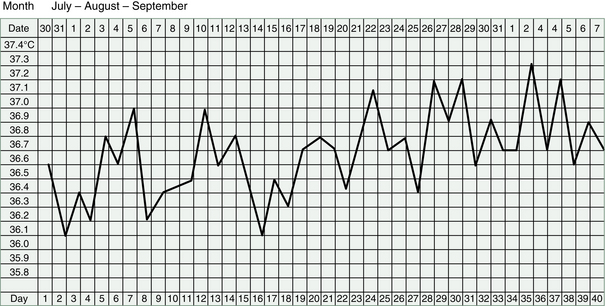
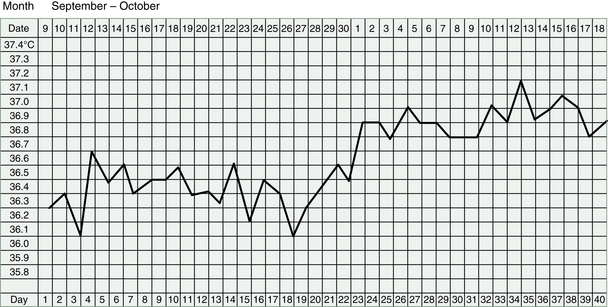
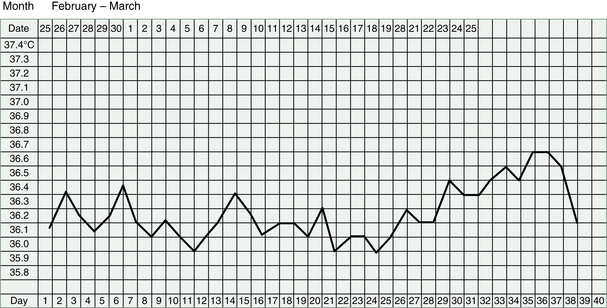
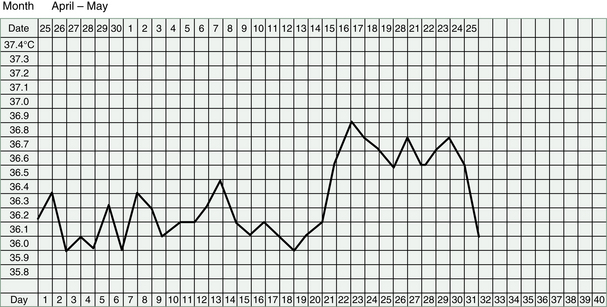
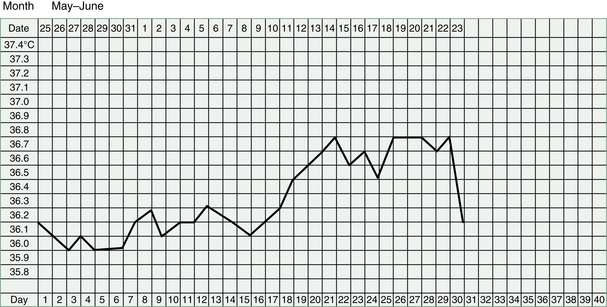
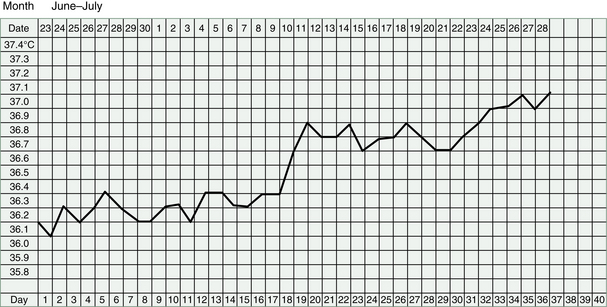
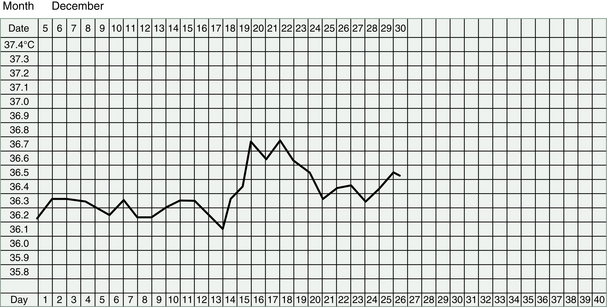
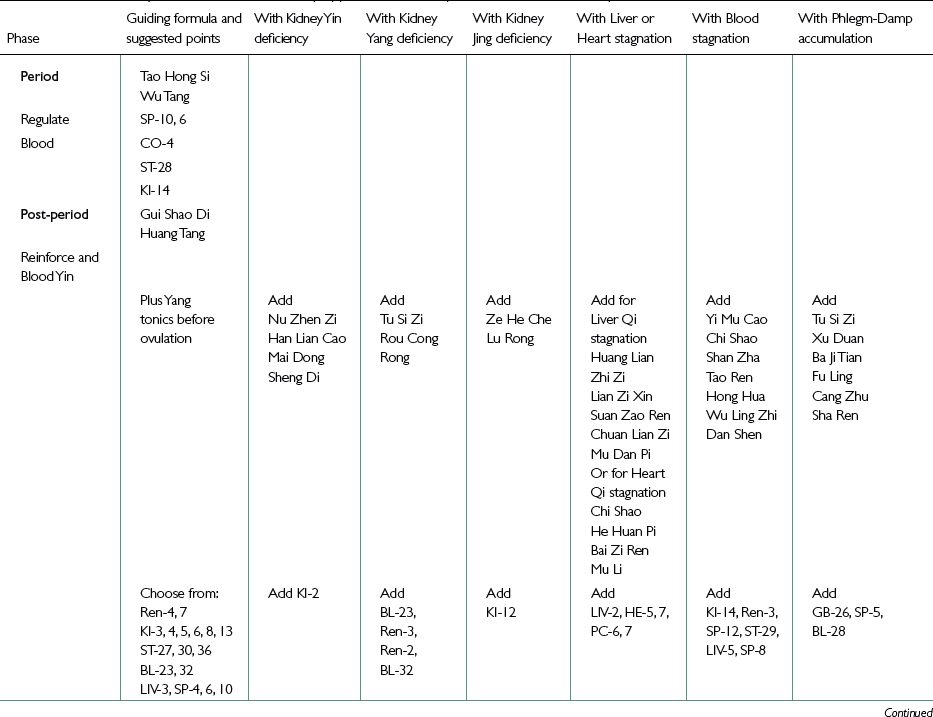
Herbal Formula: If the woman is not so young (>35 years) or there is Kidney Yin deficiency, some extra herbs need to be added to the basic ovulation formula, Cu Pai Luan Tang. This then becomes Bu Shen Cu Pai Luan Tang and is useful if the Yin levels have not been quite brought up to ideal levels before ovulation or if there is weak Qi and Blood movement.
Bu Shen Cu Pai Luan Tang (Reinforce Kidney Ovulation Formula)
| Dang Gui | 9 g | Radix Angelicae Sinensis |
| Chi Shao | 9 g | Radix Paeoniae Rubra |
| Bai Shao | 9 g | Radix Paeoniae Lactiflorae |
| Shan Yao | 9 g | Dioscorea Oppositae |
| Shu Di | 12 g | Radix Rehmanniae Glutinosae Conquitae |
| Nu Zhen Zi | 9 g | Fructus Ligustri Lucidi |
| Mu Dan Pi | 9 g | Cortex Moutan Radicis |
| Fu Ling | 12 g | Sclerotium Poriae Cocos |
| Bu Gu Zhi | 9 g | Fructus Psoraleae |
| Tu Si Zi | 9 g | Semen Cuscatae |
| Wu Ling Zhi | 9 g | Excrementum Trogopterori |
| Hong Hua | 6 g | Flos Carthami Tinctorii |
In comparison to Cu Pai Luan Tang, the first priority of this formula is supporting the Kidneys (Shu Di, Nu Zhen Zi, Bu Gu Zhi, Tu Si Zi), Spleen (Shan Yao) and Liver (Bai Shao). Moving the Blood (Wu Ling Zhi, Hong Hua, Dang Gui, Chi Shao, Mu Dan Pi) is secondary. Kidney Yin tonics support ovary function, Kidney Yang tonics promote maturation of the egg and reinforce its energy making capacity and Blood moving herbs promote development of the endometrium and ensure no obstruction to ovulation.
This formula is used for 3–5 days and, if successful, ovulation will occur and the basal body temperature pushed to its high level quickly and efficiently.
Herbal Formula: In cases where there are generalized Kidney Yang deficient or Cold signs and symptoms we use warming and moving herbs to encourage effective ovulation. A formula like Wen Yang Hua Yu Fang can be used as the guiding formula here.
Wen Yang Hua Yu Fang (Warm Yang and transform stasis formula)
| Gui Zhi | 9 g | Ramulus Cinnamomi Cassiae |
| Hong Hua | 6 g | Flos Carthami Tinctorii |
| Dang Gui | 9 g | Radix Angelicae Sinensis |
| Chuan Xiong | 6 g | Radix Ligustici Wallichii |
| (Huai) Niu Xi | 9 g | Radix Achyranthis Bidentatae |
| Ji Xue Teng | 15 g | Radix et Caulis Jixueteng |
| Yin Yang Huo | 9 g | Herba Epimedii |
| Shu Di | 9 g | Radix Rehmanniae Glutinosae Conquitae |
| Zhi Fu Zi∗ | 6 g | Radix Aconiti Charmichaeli Praeparata |
This formula introduces quite a lot of Heat with herbs such as Zhi Fu Zi and Gui Zhi, and movement of Blood with herbs such as Hong Hua, Chuan Xiong, Ji Xue Teng and Dang Gui. Huai Niu Xi, Shu Di and Yin Yang Huo support the Kidney Yin and Yang.
These herbs are taken for around 3 days at midcycle or from the day of supposed ovulation. If they are used too early they will dry the fertile mucus and the protective mucus lining of the tubes. Because they are very heating it is important to ensure there is no Liver- or Heart-Fire or Yin-deficient Heat present.
Where there is ovulation pain, which is relieved by warmth, add:
| Xiao Hui Xiang | 6 g | Fructus Foeniculi Vulgaris |
Acupuncture Points: Add to points chosen from Table 4.5:
| Ren-6 | Qihai |
| Ren-4 | Guanyuan |
| ST-29 | Guilai |
| BL-32 | Ciliao |
Herbal Formula: A lack of Kidney Jing really needs to be addressed from the beginning of the cycle and there is little more that can be done now we are at midcycle if the Jing Qi is not sufficient, i.e., there will be no eggs ripe and ready for ovulation. However, if the Jing tonic herbs applied early in the cycle seem to be having results, i.e., more fertile mucus is appearing (or blood tests show that estrogen levels are rising adequately), then the guiding formula Bu Shen Cu Pai Luan Tang can be given around midcycle, with the addition of:
| Lu Jiao Pian | 9 g | Cornu Cervi Parvum |
| Zi He Che∗∗ | 3 g | Placenta Hominis |
Acupuncture Points: Add to the choice of points in Table 4.5:
| Ren-4 | Guanyuan |
| KI-12 | Dahe |
| ST-27 | Daju |
Any rise in the BBT after this treatment must be seen as very encouraging progress, because it indicates that an ovulation has occurred. However, the temperature may drop again quite soon or it may not reach a very high level and it may take many months of treatment before a good ovulation can be produced.
In fertility clinics in China, women are usually advised to establish reliable cycles and good ovulations (i.e., convincing BBT charts) before attempting pregnancy. However, in the case of women with Jing deficiency and a very erratic menstrual history, they will quite understandably want to take advantage of any ovulation at all since they are so few and far between. The risk, of course, is miscarriage, so I do try to persuade these women to wait a few months after commencing treatment before trying to conceive.
Herbal Formula: It is critical that Liver and Heart Qi remain unobstructed for ovulation to occur, so we must always pay great attention to these at this time of the cycle. Ovulation pain and breast or nipple tenderness alert us to stagnation of Liver Qi at this time. The liver (physiological organ) can be assisted by the following treatments to break down hormones without compromising estrogen production by the ovaries. This will usually be enough to stop symptoms of breast soreness.
In most cases, adding a few herbs to the base formula Cu Pai Luan Tang is enough to facilitate movement of Liver Qi and Heart Blood. For example:
| Chai Hu | 9 g | Radix Bupleuri |
| Bai Shao | 9 g | Radix Paeoniae Lactiflorae |
| Dan Shen | 9 g | Radix Salviae Miltiorrhizae |
| Suan Zao Ren | 15 g | Semen Ziziphi Spinosae |
However, if there is marked Heart or Liver Qi stagnation causing emotional disturbance, a stronger approach is necessary. A useful guiding formula is the following:
Yuan Zhi Chang Pu Yin (Polygala Acorus pill)
| Yuan Zhi | 6 g | Radix Polygalae Tenuifoliae |
| Shi Chang Pu | 9 g | Rhizoma Acori Graminei |
| Dang Gui | 9 g | Radix Angelicae Sinensis |
| Chi Shao | 9 g | Radix Paeoniae Rubra |
| Bai Shao | 9 g | Radix Paeoniae Lactiflorae |
| Shan Zha | 9 g | Fructus Crataegi |
| Fu Ling | 9 g | Sclerotium Poriae Cocos |
| Chai Hu | 6 g | Radix Bupleuri |
| Yu Jin | 9 g | Tuber Curcumae |
| Dan Shen | 9 g | Radix Salviae Miltiorrhizae |
| He Huan Pi | 12 g | Cortex Albizziae Julibrissin |
Yuan Zhi and Shi Chang Pu are combined here to quieten the mind during the ovulation phase. Yu Jin, Dan Shen, Chai Hu and He Huan Pi will support this action by removing Heart or Liver Qi stagnation. Liver and Heart Blood are reinforced with Dang Gui and Bai Shao. Chi Shao ensures that Liver-Heat is cleared and Fu Ling supports the Spleen function in the face of Liver Qi stagnation.
If such emotional instability is occurring in a woman with Kidney weakness (or she is over 35 years old) we should continue Kidney tonic herbs as well. The herbs listed above already include four of the herbs from our Kidney Yin deficiency ovulation formula (Bu Shen Cu Pai Luan Tang) and we could add several more. For example:
| Shu Di | 9 g | Radix Rehmanniae Glutinosae Conquitae |
| Shan Yao | 9 g | Dioscorea Oppositae |
| Xu Duan | 9 g | Radix Dipsaci |
| Tu Si Zi | 9 g | Semen Cuscatae |
If the high levels of hormones, which can occur at ovulation (especially where there is Liver Qi stagnation) cause a sensation of fullness or aching in the vulva, then adding herbs to strengthen Spleen Qi is appropriate. Add to the appropriate base formula (Yuan Zhi Chang Pu Yin modified or Cu Pai Luan Tang modified):
| Huang Qi | 12 g | Radix Astragali |
Acupuncture Points: Acupuncture is undoubtedly useful at ovulation time and it is worth the patient making an effort to book visits to the acupuncturist’s clinic to coincide with this particular time.
Choose points from Table 4.5 which emphasize the movement of Qi in the fallopian tubes and ensure there is no tension or constriction in these fine muscles, i.e., choose local abdomen points and Liver channel points. Additionally, choose points which calm the mind and clear the Bao vessel, i.e., Heart and Pericardium channel points and Yintang and KI-4.
Herbal Formula: The sorts of formulas we use at midcycle already contain Blood-moving herbs. In some cases we might want to add stronger herbs or increase the doses of ones already chosen.
Blood stagnation of the type that will seriously disrupt ovulation might include cysts or endometriomas on the ovary – these are likely to cause pain and therefore demand attention at midcycle. Some forms of tube blockage are caused by Blood stagnation – these are covered in Chapter 6. In the case of substantial obstructions, we usually use Blood-breaking herbs like E Zhu or San Leng although in cycles where conception is attempted these herbs may be too harsh. However in robust young women with significant masses that are obstructing the ovaries or the tubes these herbs may be added for just a couple of days and in small doses.
In the case of cysts or masses in a strong and young woman, Cu Pai Luan Tang can be modified by adding:
| Shan Zha (Sheng) | 9 g | Fructus Crataegi |
| E. Zhu | 6 g | Rhizoma Curcumae Zedoariae |
and increasing the dose of Wu Ling Zhi to 12 g, and Hong Hua to 9 g.
In the case of endometriomas (and if there is a component of Kidney deficiency) you can modify Bu Shen Cu Pai Luan Tang in exactly the same way.
Acupuncture Points: Consider including among the points chosen from Table 4.5:
| ST-28 | Shuidao |
| KI-14 | Siman |
| KI-5 | Shuiquan |
| SP-8 | Diji |
| ST-29 | Guilai |
| SP-10 | Xuehai |
| LIV-8 | Ququan |
| BL-17 | Geshu |
Use with reducing method.
Herbal Formula: In most women and in most cycles, herbs which strongly move Qi and Blood to facilitate ovulation are applied only when we get to the point where the Yin is well established and the egg is ready to be launched, i.e., around Day 13 or 14 in a 28-day cycle. However, when Phlegm-Damp is seriously gluing up the works, we need to apply such treatment well before ovulation, otherwise the egg may never be released or, if it is, it will not get very far before being obstructed by excess or pathological mucus secretions in the fallopian tubes.
In women diagnosed with Phlegm-Damp we added to our base formula Yang tonics and Damp-clearing herbs in the early part of the cycle. Once we have some evidence that we have established a good enough basis of Yin (there is fertile mucus or blood tests show rising estrogen levels) we use a more strongly activating formula, even if it is only I week past the period. For example, the formula Wen Yang Hua Tan Fang will transform Damp and Phlegm, warm Yang and activate Qi and Blood.
Wen Yang Hua Tan Fang (Warm Yang and Transform Phlegm Formula)
| Zhi Fu Zi∗ | 6 g | Radix Aconiti Charmichaeli Praeparata |
| Xu Duan | 9 g | Radix Dipsaci |
| Yin Yang Huo | 9 g | Herba Epimedii |
| Cang Zhu | 9 g | Rhizoma Atractylodes |
| Chen Pi | 5 g | Pericarpium Citri Reticulate |
| Fu Ling | 9 g | Sclerotium Poriae Cocos |
| Zhi Ke | 9 g | Fructus Citri seu Ponciri |
| Shan Zha | 9 g | Fructus Crataegi |
| Hong Hua | 6 g | Flos Carthami Tinctorii |
| Dan Nan Xing | 9 g | Rhizoma Arisaematis |
This formula combines a strong heating element (Zhi Fu Zi) with Yang tonics (Xu Duan and Yin Yang Huo) and herbs which encourage elimination of Damp (Cang Zhu, Fu Ling, Chen Pi, Zhi Ke and Dan Nan Xing). Because it is an ovulation formula, Blood-regulating agents (Shan Zha and Hong Hua) are added. Dan Nan Xing is added here for its ability to dissipate lumps (in this case, obstructions in the tubes).
If the release of the egg from the ovary appears to be obstructed by Phlegm-Damp add:
| Zao Jiao Zi | 6 g | Fructus Gleditsiae Sinensis |
Acupuncture Points: From the points chosen from Table 4.5, emphasize the Spleen channel and Dai vessel points and add:
| BL-22 | Sanjiaoshu |
| BL-28 | Pangguanshu |
| GB-27 | Wushu |
| GB-28 | Weidao |
| SP-9 | Yinlingquan |
| KI-7 | Fuliu |
| ST-29 | Guilai (with moxa) |
Use with even or reducing method.
The dramatic peaks and falls of hormone levels (especially estrogen) at midcycle can sometimes provoke some bleeding from the endometrium. This is more likely to occur if the growth and structure of the endometrium has not been established soundly earlier in the follicular phase. In TCM terms, we say the Chong vessel is not consolidated. This can occur in cases of Yin and Blood deficiency or if there is Heat.
Herbal Formula: Rather than simply adding styptic herbs to our midcycle formula, chronic midcycle bleeding must be addressed by treating the imbalance at the early stages of the cycle so the uterine lining can be built after the period. For Yin deficiency with midcycle bleeding add:
| Han Lian Cao | 15 g | Herba Ecliptae Prostratae |
and increase Shan Yao and Nu Zhen Zi to 15 g each in post-menstrual and midcycle formulas.
| Jing Jie Tan | 6 g | Herba seu Flos Shizonepetae tenuifoliae (charred) |
| Zhi Zi | 9 g | Fructus Gardeniae Jasminoidis |
Post-Ovulation Phase – Maintaining Kidney Yang
We now come to that aspect of female functional infertility which concerns problems not with ovulation but with implantation of a fertilized egg. At this time in the cycle we are assuming that ovulation has occurred and that the egg has successfully negotiated the upper reaches of the fallopian tube, has had a productive encounter with a good-looking sperm, and the resulting embryo has arrived in the uterus.
The success of implantation has much to do with the quality of the embryo; thus, treatment focussing on creating healthy gametes and helping them get together should take priority. However, we do know that it is also important to have a healthy and permissive endometrium and that active interaction occurs between the endometrium and the embryo before implantation can occur.
The success of the post-ovulation phase requires implantation in the firm clutches of a receptive uterine lining – in the old Chinese medicine texts they would describe this as a ‘warm womb’. To maintain this warmth, the influence of Kidney Yang is important. In Western terms, to maintain a good-quality, receptive, secretory endometrium the progesterone levels produced by the corpus luteum must be high. Blood tests taken in the middle of this phase (mid-luteal phase) give us a good indication of progesterone levels – inadequate progesterone production supports a diagnosis of Kidney Yang deficiency.
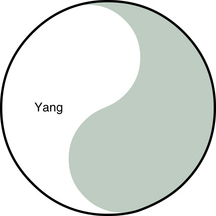
The role of Kidney Yang (Fig. 4.13), however, includes more than just maintaining good levels of progesterone. It also includes the active role played by the walls of the uterus as they press inwards, holding the embryo firmly as it burrows in.
We might suspect Kidney Yang deficiency if the menstrual period is accompanied with lower back pain, loose stools, sensation of cold and discomfort in the abdomen and pieces of tissue in the menstrual flow.
Treatment of the fundamental and underlying imbalance is of paramount importance in treating infertility at all stages (called the Ben in TCM). Except in the case of some simple mechanical obstructions in the uterus or tubes, the Ben will always be Kidney Yang deficiency if there is a functional problem in the luteal phase. This applies even when there are other manifestations like Liver Qi stagnation or Damp-Phlegm accumulation (which are called the ‘Biao’).
Administration of progesterone is one way to approach treatment of Kidney Yang deficiency characterized by low progesterone levels. Generally, however, most specialists consider administration of progestogens (as the drugs are called) not very effective clinically. Although Chinese medicine treatment can be lengthy it gets its result by encouraging the body to do the job itself rather than rely on an external supply of what is missing.
Blood-regulating herbs are used in quite big doses around ovulation time but they are usually withdrawn during the luteal phase. However, keeping in mind the continued growth and tortuous development of the endometrial blood vessels, it makes sense to add small doses of Blood-regulating herbs in the early luteal phase. Their judicious use is even advised during implantation in some infertility clinics in China. Small doses of Dan Shen may be added in the early luteal phase to any of the formulas that follow to encourage microcirculation in the endometrium during implantation. Fertility clinics in the West have recently taken advantage of this idea and recommend women on their programs to take aspirin to thin the blood and improve circulation in the endometrium.
However, once the embryo has burrowed its way into its new home, it is best to let it lie still and avoid the use of herbs (or acupuncture points), which increase movement of Blood.
Timing of Treatment: Back in the clinic, we must adjust our treatment according to the stage of the cycle and to the individual patient’s pattern much as we did with treatment applied in the follicular phase. The fundamental approach now is to maintain the high levels of Yang built on the good Yin foundation already established in the previous 2 weeks of the cycle.
Because the menstrual cycle makes such dramatic and fluctuating demands on the Qi and Blood status, and the Yin and Yang balance, approaches to treatment must change all the time. So we will find that our prescriptions may well be quite different now compared to those we were giving just a couple of days earlier. Herein lies the elegance and success of treatment for female infertility.
Herbal Formula: Ai Fu Nuan Gong Wan is the formula recommended in most classics to boost Kidney Yang and warm the uterus in the luteal phase. However, when it comes to raising progesterone levels, other approaches have in more recent times been found to be more effective.1 One of three basic approaches can be taken, depending upon the tendency to Yin, Qi or Blood deficiency. Often it is the shape of the BBT chart that will help determine which approach should be taken to support Yang in the luteal phase.
We choose a guiding formula which can:
Boosting Yang by supplementing Yin is the most important method clinically for promoting implantation and the survival and nourishment of the embryo. It is an often-used clinical method which acknowledges the interdependence and interconsuming of Yin and Yang that was discussed in Chapter 2.
Herbal Formula: Some of the famous classical Yin or Yang tonic formulas demonstrate the interdependence of Yin and Yang well, e.g., You Gui Wan, which is a well-known Yang tonic formula, contains not only the herbs for building Yang but also three Yin tonics. Therefore, to boost Yang by supplementing Yin, this formula is chosen as the guiding formula. It can be applied in the luteal phase to assist implantation and early fetal development even when there is no marked Kidney deficiency.
You Gui Wan (Restoring the Right pill)
| Shu Di | 9 g | Radix Rehmanniae Glutinosae Conquitae |
| Shan Yao | 9 g | Dioscorea Oppositae |
| Shan Zhu Yu | 9 g | Fructus Corni Officinalis |
| Tu Si Zi | 9 g | Semen Cuscatae |
| Ba Ji Tian | 9 g | Radix Morindae Officinalis |
| Lu Jiao Pian | 9 g | Cornu Cervi Parvum |
This formula includes the first three herbs of Liu Wei Di Huang Tang – Shu Di, Shan Yao and Shan Zhu Yu – which supplement, respectively, the Kidney, Spleen and Liver Yin. Tu Si Zi, Ba Ji Tian and Lu Jiao Pian reinforce Kidney Yang.
Acupuncture Points: In terms of channel activity the emphasis is now moving from the Chong to the Ren vessel. Ren vessel points can be chosen in the days after ovulation to encourage implantation. But once implantation is completed, i.e., in the week before the period, lower abdomen points are used with great caution (or avoided altogether by the less experienced practitioner). The use of Kidney points at this time maintains Kidney Yin and Yang. Choose points from (and see Table 4.6):
Table 4.6
Acupuncture pointsa used in the treatment of infertility: luteal phase – boost Kidney Yang by supplementing Yin
| Treatment goal | Acupuncture point |
| To reinforce Kidney Yang | Ren-2 |
| To reinforce Kidney Yin and Yang | Ren-4 |
| To regulate Qi in the uterus and maintain good flexibility in the uterine walls (use only in the first week after ovulation) | Ren-5 |
| To regulate the activity of the Chong and Ren vessels and facilitate the change in their activity at the outset of this time (use just after ovulation) | Ren-7 |
| To calm the mind if there is agitation (shallow needling only) | Ren-15 (the Luo point of the Ren vessel) |
| To encourage development of Kidney Yang by invigorating Kidney Yin | KI-3, KI-6 and BL-23 |
aUse reinforcing method. Lower abdomen points are avoided (or used with great caution) in the week before the period is due.
| Ren-2 | Qugu |
| Ren-4 | Guanyuan |
| Ren-5 | Shimen |
| Ren-7 | Yinjiao |
| Ren-15 | Jiuwei |
| KI-3 | Taixi |
| KI-6 | Zhaohai |
| BL-23 | Shenshu |
Doctors trained in Chinese medicine all recognize the close and dependent relationship between the Yin and the Blood on the one hand, and the Qi and the Yang on the other. Blood nourishes Yin and Yin provides the material basis for Blood. Qi and Yang have a similar relationship, i.e., it is said that Qi is a part of Yang and Kidney Yang is the root of Qi in the body.
When Qi and Kidney Yang are both weak, we see in the clinic a mixture of Spleen Qi deficiency and Kidney Yang deficiency symptoms – some fluid retention, difficult urination, loose stools, abnormal uterine bleeding, etc.
Herbal Formula: Traditionally, this syndrome has been treated with the formula Zhen Wu Tang, which strongly warms Kidney Yang and invigorates Spleen Qi. In gynecology departments, however, the preferred guiding formula is a modified version of Jian Gu Tang.
Jian Gu Tang modified (Strengthen and Consolidate decoction)
| Dang Shen | 9 g | Radix Codonopsis Pilulosae |
| Bai Zhu | 9 g | Rhizoma Atractylodis Macrocephalae |
| Shan Yao | 9 g | Radix Dioscorea Oppositae |
| Yi Yi Ren | 15 g | Semen Coicis Lachryma-jobi |
| Tu Si Zi | 9 g | Semen Cuscatae |
| Ba Ji Tian | 9 g | Radix Morindae Officinalis |
| Lu Jiao Pian | 9 g | Cornu Cervi Parvum |
In this version of Jian Gu Tang, the primary herbs Dang Shen, Bai Zhu and Shan Yao are employed to invigorate the Spleen Qi. Yi Yi Ren reinforces this action and has the added affect of clearing any Damp that might have accumulated as a result of the Spleen weakness. Tu Si Zi, Ba Ji Tian and Lu Jiao Pian fortify Kidney Yang.
Acupuncture Points: Acupuncture treatment to promote Qi is useful in the 1st week after ovulation to ensure mobility and free passage of the embryo in the proximal part of the fallopian tube.
The process of implantation is a dynamic one which requires vigorous Qi as the embryo binds to the endometrium and then burrows into it. In addition, the uterine walls must be mobile enough to press together and hold the embryo securely as it undergoes implantation.
Choose points from the following (and see Table 4.7):
Table 4.7
Acupuncture pointsa used in the treatment of infertility: luteal phase – boost Kidney Yang by promoting Qi
| Treatment goal | Acupuncture point |
| To invigorate the Spleen and Stomach Qi | Choose from: Ren-12, Ren-6, ST-36, ST-25, BL-20, SP-6 |
| To support the development of Kidney Yang | Ren-4, KI-3, BL-23 |
| To regulate Qi in the Ren channel and abdomen (use only in 1st week after ovulation) | Ren-5 |
aUse reinforcing method. Points on the abdomen must be avoided or used with great caution in the week before the period is due.
| Ren-4 | Guanyuan |
| Ren-5 | Shimen |
| Ren-6 | Qihai |
| Ren-12 | Zhongwan |
| ST-25 | Tianshu |
| ST-36 | Zusanli |
| SP-6 | Sanyinjiao |
| KI-3 | Taixi |
| BL-20 | Pishu |
| BL-23 | Shenshu |
The relationship between Kidney Yang and Blood status is not quite as obvious as its relationship with Kidney Yin or the Qi. It has been noticed in the clinic that Kidney deficiency and Blood deficiency often occur simultaneously in women. Because Blood nourishes Yin and vice versa, it is easy to see how Kidney Yin deficiency develops from Blood deficiency but the connection to Kidney Yang is less direct. Either Kidney Yang is not supported when Kidney Yin is weakened from lack of Blood or it is affected when the Sea of Blood (the Chong channel), with which it has a close relationship, is deficient. There are also some references to the role of the Kidneys in the formation of Blood in the classics. Whichever bit of theory we like to try and make fit the clinical observations, the fact remains that building Blood seems to boost Kidney Yang and vice versa. Certainly, the addition of Blood tonics is important when the endometrial lining is not thick enough or sufficiently secretory.
Herbal Formula: When both Kidney Yang and Blood must be fortified, we use Blood and Qi tonics in combination with Kidney Yang tonics.
| Dang Shen | 12 g | Radix Codonopsis Pilulosae |
| Bai Zhu | 9 g | Rhizoma Atractylodis Macrocephalae |
| Fu Ling | 9 g | Sclerotium Poriae Cocos |
| Gan Cao | 6 g | Radix Glycyrrhizae Uralensis |
| Dang Gui | 9 g | Radix Angelicae Sinensis |
| Bai Shao | 9 g | Radix Paeoniae Lactiflorae |
| Chuan Xiong | 6 g | Radix Ligustici Wallichii |
| Shu Di | 9 g | Radix Rehmanniae Glutinosae Conquitae |
| Tu Si Zi | 9 g | Semen Cuscatae |
| Du Zhong | 9 g | Cortex Eucommiae Ulmoidis |
| Lu Jiao Pian | 9 g | Cornu Cervi Parvum |
This formula combines the Qi tonics of Si Jun Zi Tang (Dang Shen, Bai Zhu, Fu Ling and Gan Cao) and the Blood tonics of Si Wu Tang (Dang Gui, Bai Shao, Chuan Xiong and Shu Di) with Kidney Yang tonic herbs (Tu Si Zi, Du Zhong and Lu Jiao Pian).
Acupuncture Points: For successful implantation the endometrium must be both receptive and nourishing (i.e., have good blood circulation). The flow of blood to the endometrium has been shown to be increased by acupuncture.4 To encourage implantation we choose points which support Kidney function and increase production of Blood and which stimulate blood flow to the uterus (see Table 4.8), such as:
Table 4.8
Acupuncture pointsa used in the treatment of infertility: luteal phase – boost Kidney Yang by nourishing Blood
| Treatment goal | Acupuncture point |
| To directly influence Blood formation | BL-17, SP-10 |
| To enhance Blood formation via the Kidney Yang | KI-5 |
| To support the role of the Stomach and Spleen in making and distributing Blood | ST-36, Ren-12 and SP-6 |
| To support the Kidney Yin and Yang and invigorate the Qi and Blood of all the Zang | Ren-4 |
aUse reinforcing method. The lower abdomen and Spleen channel points are generally not used in the week immediately before the period.
| Ren-4 | Guanyuan |
| Ren-12 | Zhongwan |
| ST-36 | Zusanli |
| SP-6 | Sanyinjiao |
| SP-10 | Xuehai |
| KI-5 | Shuiquan |
| BL-17 | Geshu |
In general, one of these three approaches will adequately cover what is required for most patients at this time of the cycle. However there are times when the chosen formula will need modification to take into account other traits or symptoms. If there is marked Kidney deficiency, or stagnation of Qi, Blood or Phlegm-Damp, then the following modifications to the guiding formulas just described may be made.
Herbal Formula: As you know, women with Kidney Yin deficiency often have problems with ovulation. It may be that they ovulate late or irregularly or that the egg released is of poor quality. However, it may also be that they ovulate ‘inadequately’. What this means is that the corpus luteum, created after the egg is released, functions poorly, i.e., it secretes inadequate levels of progesterone so that implantation will be unsuccessful. In Chinese medicine terms we say that deficient Kidney Yin cannot produce Kidney Yang.
To address this problem the preferred formula in most gynecology departments in China is a version of You Gui Wan (see method A above). To this can be added further Yin tonics if Kidney Yin deficiency is pronounced. For example, add:
| Nu Zhen Zi | 9 g | Fructus Ligustri Lucidi |
| Han Lian Cao | 9 g | Herba Ecliptae Prostratae |
Acupuncture Points: Choose points from Table 4.6 and emphasize the points which enhance Kidney Yin and clear Heat. For example:
| KI-6 | Zhaohai |
and add:
| KI-2 | Rangu |
Herbal Formula: Sometimes we can be completely reassured that Kidney Yin is adequate and yet the Kidney Yang is still showing signs of deficiency. This is demonstrated by BBT charts which rise convincingly from a good Yin foundation to a high temperature straight after ovulation but which fall rapidly thereafter, dwindling to a temperature not much more elevated than those of the first 2 weeks of the cycle. These low temperatures will continue to be recorded throughout the entire luteal phase until the period comes in 2 weeks (see Ch. 3).
A variant on this type of Kidney Yang deficiency is shown in the BBT chart in which the temperature rises minimally after ovulation (also seen in Kidney Yin-deficient pattern) and maintains this low reading until the period (see Ch. 3).
In this case it is a failure of Qi to promote Kidney Yang, specifically Spleen and Stomach Qi. Clinically, it is common to see Spleen Qi deficiency with Kidney Yang deficiency. The formula Jian Gu Tang (above) is used as the guiding formula in such cases with the addition of more Kidney Yang tonic herbs:
| Yin Yang Huo | 9 g | Herba Epimedii |
Acupuncture Points: Choose points from Table 4.6 and apply moxa, especially on Ren-4.
Herbal Formula: In most cases of Kidney Jing deficiency the focus of our treatment will be on the post-menstrual phase leading up to ovulation and then during the ovulation event itself. If treatment has been successful and an egg has been sufficiently ripened and then released, it will usually be enough to just maintain the momentum by using a formula like You Gui Wan with the addition of Jing nourishing herbs. For example:
| Huang Jing | 9 g | Rhizoma Polygonati |
Acupuncture Points: Choose points from Table 4.6; moxa can be applied to Ren-4.
As with ovulation, stability of the Heart and Liver are important for implantation. Although instability of the mind usually reveals itself more dramatically on the BBT chart in the follicular phase, it can also produce some swings in the temperature or a sawtooth or saddle pattern in the high or luteal phase (see Ch. 3).
Addition of Blood tonics to strengthen Liver Blood will temper any tendency to Liver Qi stagnation, and building Heart Blood helps to calm the mind. Even more importantly at this time it will help to maintain Kidney Yang levels.
Herbal Formula: The guiding formula to strengthen Kidney Yang and nourish Blood is Yu Lin Zhu (formula given above). For women who are prone to Liver Qi stagnation premenstrually (PMS or premenstrual syndrome), it is advisable to add to this formula herbs to regulate Liver Qi. For example:
| Chai Hu | 9 g | Radix Bupleuri |
| Chuan Lian Zi | 9 g | Fructus Meliae Toosendan |
| Xiang Fu | 9 g | Rhizoma Cyperi Rotundi |
In the case where Liver Qi stagnation gives rise to Liver-Fire, Heat-clearing herbs must be added. The use of strong doses of Kidney Yang tonics for more than I week also brings with it the risk of feeding Liver-Fire and exacerbating premenstrual symptoms. If this occurs, the patent medicine Dan Zhi Xiao Yao San is given or some cooling herbs are added to the formula Yu Lin Zhu, such as
| Mu Dan Pi | 9 g | Cortex Moutan Radicis |
| Zhi Mu | 9 g | Radix Anemarrhena |
The BBT chart is scrutinized closely to see that these herbs do not lower the temperature too much and jeopardize the luteal phase.
The use of Qi- and Blood-regulating herbs is controversial in the luteal phase if the woman is trying to fall pregnant, and some practitioners will avoid such herbs completely. However, as was mentioned earlier, some others find that the inclusion of Qi-regulating and mild Blood-regulating herbs can be useful in facilitating implantation and at the same time can calm the mind. For example:
| Dan Shen | 6 g | Radix Salviae Miltiorrhizae |
| Yu Jin | 6 g | Tuber Curcumae |
| Xiang Fu | 9 g | Rhizoma Cyperi Rotundi |
Once the period is delayed and pregnancy suspected or confirmed, such herbs should be discontinued unless there is significant Blood stagnation.
Acupuncture Points: In addition to considering points in Table 4.8, that encourage Liver and Heart Blood formation, choose some points that regulate Liver and Heart Qi (see Table 4.9). For example:
Table 4.9
Acupuncture pointsa used in the treatment of infertility: luteal phase with Heart and Liver Qi stagnation
| Treatment goal | Acupuncture point |
| To regulate Liver Qi | Choose from all the above Liver channel points |
| To address Liver Blood deficiency | LIV-3 and LIV-8 |
| To regulate Liver-Fire | LIV-2 |
| To regulate Qi in the uterus | Choose from: LIV-4, LIV-5, LIV-9, LIV-11 |
| To relieve emotional stress | LIV-5 |
| To calm the mind and regulate Liver Qi in the upper body | PC-6, PC-7 and PC-5 |
| To pacify the spirit | HE-5 and HE-7 |
| To regulate Qi in the Ren and Liver channels | Ren-3 |
| LIV-2 | Xingjian |
| LIV-3 | Taichong |
| LIV-4 | Zhongfeng |
| LIV-5 | Ligou |
| LIV-8 | Ququan |
| LIV-9 | Yinbao |
| LIV-11 | Yinlian |
| PC-5 | Jianshi |
| PC-6 | Neiguan |
| PC-7 | Laogong |
| HE-5 | Tongli |
| HE-7 | Shenmen |
| Ren-3 | Zhongji |
Herbal Formula: Blood stagnation impacts on ovulation or implantation. When we are considering the effect of Blood stagnation on implantation it is the nature and quality of the endometrium and any disturbances therein which concerns us.
The most obvious impediment to implantation by Blood stagnation is the presence of large fibroids that protrude significantly into the endometrial layer and uterine cavity. If much of the endometrial surface is affected by large or numerous fibroids, then there are limited sites for implantation and development of the placenta. Also, bodies such as polyps inside the uterus can have the effect of an intrauterine device (IUD) and interfere with endometrial development and implantation. Uterine polyps and fibroids can also interfere with implantation if they stick so far out into the uterine cavity to prevent the front and back walls of the inside of the uterus pressing together to help the embryo get a foothold while implanting. Poor circulation, sluggish movement of blood and metabolites, and incomplete development of the spiral blood vessels of the endometrium are all more subtle ways that Blood stagnation might hinder implantation and development of an embryo.
Although Kidney Yang is not implicated so directly here, it is nevertheless important in moving Blood in the lower Jiao. Treatments applied to clear Blood stasis to enhance fertility should also include herbs to boost Yang. Thus, we can use the guiding formula Yu Lin Zhu (see method C above) but modify it to include more Blood-regulating herbs. This formula should be taken in the luteal phase for several menstrual cycles during which time pregnancy attempts must be avoided. Of course, in situations of substantial Blood stagnation, such as large fibroids or polyps, it makes good sense to remove them with surgery (or with strong herbal treatment) and only attempt pregnancy after they are resolved.
Yu Lin Zhu (Fertility Pearls) modified
| Dang Shen | 12 g | Radix Codonopsis Pilulosae |
| Bai Zhu | 9 g | Rhizoma Atractylodis Macrocephalae |
| Fu Ling | 9 g | Sclerotium Poriae Cocos |
| Gan Cao | 6 g | Radix Glycyrrhizae Uralensis |
| Dang Gui | 9 g | Radix Angelicae Sinensis |
| Bai Shao | 9 g | Radix Paeoniae Lactiflorae |
| Chuan Xiong | 6 g | Radix Ligustici Wallichii |
| Shu Di | 9 g | Radix Rehmanniae Glutinosae Conquitae |
| Tu Si Zi | 9 g | Semen Cuscatae |
| Du Zhong | 9 g | Cortex Eucommiae Ulmoidis |
| Lu Jiao Pian | 9 g | Cornu Cervi Parvum |
| San Leng | 9 g | Rhizoma Sparganii |
| E Zhu | 9 g | Rhizoma Curcumae Zedoariae |
| Pu Huang | 9 g | Pollen Typhae |
| Chi Shao | 9 g | Radix Paeoniae Rubra |
| Ru Xiang | 6 g | Gummi Olibanum |
| Mo Yao | 6 g | Myrrha |
Yu Lin Zhu was described earlier. Additions include San Leng and E Zhu, which strongly break up stagnant Blood.
If a patient is determined to continue attempts to conceive, then Yu Lin Zhu is used with the addition of Blood-moving herbs which are milder. San Leng, E Zhu, Mo Yao, Ru Xiang and Chi Shao will be replaced with:
| Dan Shen | 12 g | Radix Salviae Miltiorrhizae |
| Yu Jin | 9 g | Tuber Curcumae |
| Ji Xue Teng | 15 g | Radix et Caulis Jixueteng |
However, these herbs are unlikely to be effective in reducing large mechanical obstructions.
Acupuncture Points: Choose points from Table 4.8 and add some regulating points (see Table 4.10). For example:
Table 4.10
Acupuncture pointsa used in the treatment of infertility: luteal phase with Blood stagnation
| Treatment goal | Acupuncture point |
| To regulate Qi and Blood. | ST-28 and ST-29, Ah Shi points |
| To help the passage of the embryo down the last part of the fallopian tube. | |
| To facilitate implantation where this may be obstructed by Blood stagnation | |
| To regulate Blood in the Uterus | LIV-8, LIV-5, KI-14, SP-6 and SP-8 |
| To regulate Blood in the Kidney and Ren channels | KI-5 |
| To help resolve Blood stagnation by strongly regulating Qi in the local area | Baliao |
aUse even or reducing method. The abdomen and lower back points are used with caution. In the absence of marked Blood stagnation, do not use them at all.
| ST-28 | Shuidao |
| ST-29 | Guilai |
| LIV-8 | Ququan |
| SP-6 | Sanyinjiao |
| SP-8 | Diji |
| LIV-5 | Ligou |
| KI-14 | Siman |
| KI-5 | Shuiquan |
| Baliao | |
| Ah Shi points |
Treatment of severe Blood stagnation in infertility does not always stop when pregnancy is achieved: often the stagnation must be addressed throughout the pregnancy too.
Herbal Formula: If Kidney Yang is deficient it is much easier for fluid to accumulate and eventually Phlegm-Damp forms. Whereas the manifestations of Phlegm-Damp can interfere significantly with the processes necessary for a successful pregnancy, they are the Biao and not the Ben, i.e., they are not the fundamental underlying disorder causing the infertility. Treatment will therefore concentrate on building Yang while at the same time clearing Phlegm-Damp.
Most interference by Phlegm-Damp happens on the ovaries (e.g., polycystic ovaries) or in the tubes (tubes obstructed by mucus or fluid). An excessively mucusy or slippery surface on the endometrium may also hamper implantation. For this reason, it is important to maintain some Phlegm-Damp clearing treatment in a woman with a Damp constitution as implantation is being attempted. And it is even more crucial if there is fluid trapped in the tube (a hydrosalpinx), which may flood the uterus just at the time implantation is attempted (see Ch. 5).
To maintain Kidney Yang and clear Phlegm-Damp in the luteal phase, use method B, the Jian Gu Tang method, with the addition of Damp-clearing herbs and replacing Lu Jiao Pian with Yin Yang Huo. Because Phlegm-Damp can cause pronounced obstructions, this formula includes herbs which unblock channels and clear Blood stasis in addition to those which remove Phlegm-Damp.
Jian Gu Tang modified (Strengthen and Consolidate decoction)
| Dang Shen | 9 g | Radix Codonopsis Pilulosae |
| Bai Zhu | 9 g | Rhizoma Atractylodis Macrocephalae |
| Shan Yao | 9 g | Dioscorea Oppositae |
| Yi Yi Ren | 15 g | Semen Coicis Lachryma-jobi |
| Tu Si Zi | 9 g | Semen Cuscatae |
| Ba Ji Tian | 9 g | Radix Morindae Officinalis |
| Yin Yang Huo | 9 g | Herba Epimedii |
| Shi Chang Pu | 9 g | Rhizoma Acori Graminei |
| Dan Nan Xing | 9 g | Rhizoma Arisaematis |
| Lu Lu Tong | 9 g | Fructus Liquidambaris Taiwaniae |
| Di Long | 9 g | Lumbricus |
| Wang Bu Liu Xing | 9 g | Semen Vaccariae |
Jian Gu Tang was used previously in the treatment of Kidney Yang and Spleen Qi deficiency in the luteal phase. This modified version adds herbs which are drying (Yin Yang Huo and Shi Chang Pu) and herbs which can break through Phlegm-Damp obstructions and free the channels (Dan Nan Xing, Di Long and Lu Lu Tong). Wang Bu Liu Xing supports this action by clearing Blood stasis.
Acupuncture Points: Choose points from Table 4.7 which boost Qi and Yang. In addition consider the following points (and see Table 4.11):
Table 4.11
Acupuncture pointsa used in the treatment of infertility: luteal phase with Phlegm-Damp
| Treatment goal | Acupuncture point |
| To transform and distribute accumulation of fluid in the abdomen and specifically the uterus | Ren-9 |
| To resolve Damp by strengthening the Kidney Yang | Ren-3 and Ren-6 |
| To resolve Phlegm-Damp accumulations and help keep fallopian tubes unobstructed for the passage of the embryo | GB-26, GB-27 and GB-28 (Dai vessel points) |
| To regulate Damp in the pelvic cavity by promoting removal of fluids via the bladder | BL-22 and BL-28 |
| To move fluids by moving Qi in the uterus | BL-32 |
| To support the Spleen in its action of transforming fluids and Damp | SP-9 and SP-6 |
aUse even or reducing method. Care with abdomen and lower back points in the week before the period is due.
| Ren-9 | Shuifen |
| Ren-6 | Qihai |
| Ren-3 | Zhongji |
| GB-26 | Daimai |
| GB-27 | Wushu |
| GB-28 | Weidao |
| BL-22 | Sanjiaoshu |
| BL-28 | Pangguanshu |
| BL-32 | Cilaio |
| SP-9 | Yinlingquan |
| SP-6 | Sanyinjiao |
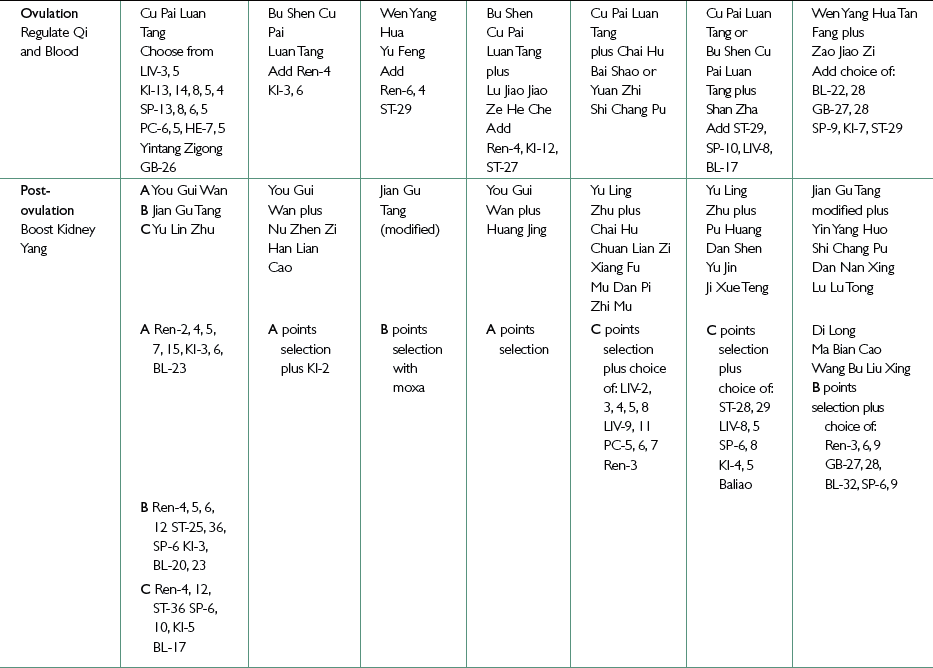
A summary of treatments for infertility applied at different phases of the menstrual cycle is given in Table 4.12. These protocols, as they are practised in a fertility clinic in China, describe a high level of precise care to maximize chances of conception. As you can see this approach requires frequent clinic visits, frequent adjustments to herbal formulas and detailed understanding of all the processes involved from a western and a Chinese medicine point of view. In this scenario the meeting of a committed patient with a dedicated intelligent practitioner can provide the best possible care and outcomes.
But there are some situations where prescribing treatment by following the menstrual cycle with the sort of minute attention to detail that I have described in this chapter does not suit the patient or the practitioner. In fact, the increasing pace and complexity of life in the West means that this level of intense monitoring and treatment modification is often not possible. There are ways to cut corners.
The diagnosis must still be made with great care and accuracy, and of course this means that examining all aspects of the menstrual cycle, the medical history and the constitution cannot be sidestepped. Once this is done, however, one or two general prescriptions might be given which can be taken for half or all of the cycle with certain additions made at key times. The additions might be a Blood-moving formula to be taken during the period, or a Damp-clearing formula or Blood-moving formula before ovulation, or a Shen-calming formula during the follicular phase for example. To simplify treatment, these additions may be patent medicines in pill form, although these are generally not as strong in action as herbs which are decocted or taken as teas made from granules.
In Chapter 11, we discuss ways to simplify treatment protocols even further for patients who need to do IVF and want to prepare in the weeks or months beforehand. For the women with Kidney weakness (and this, once we exclude male factor or tubal infertility, is a majority of women doing IVF) we will focus largely on the post-menstrual formulas which reinforce Kidney Yin and Blood to optimize ovarian function and responsiveness. If the formula is to be taken all month then we shall add some Kidney Yang herbs and for good measure some shen calming herbs. If there is some Blood stasis another formula will be given during the period. Thus we can construct a simple but complete approach that will prepare the woman and her ovaries for the IVF drugs and for pregnancy.
Once a positive pregnancy test is announced the patient and practitioner must decide whether treatment should be continued. Pregnant patients must be very cautious of taking medicines of any kind, including herbal medicines. Early pregnancy is a most vulnerable time for the rapidly growing fetus and many pregnant women instinctively reject many foods and flavors. In fact, it is thought that morning sickness evolved from exactly this need to be very cautious of eating plant materials which contain small amounts of toxic chemicals designed to repel insects and animals. The body will therefore be wary of herbal substances and, where morning sickness is pronounced, will reject them outright.
Where there is a history of infertility or previous miscarriage, it is often recommended to take herbs for the first few weeks of pregnancy to help it establish. Chinese herbalists are very careful to use only herbs which are known to be safe for the fetus. They know this not from scientific trials (such trials could never be authorized by an ethics committee) but from the experience of herbalists in China over many hundreds of years. There are a number of Chinese herbs which are forbidden for use in pregnancy (see Appendix 2).
The use of pesticides on cultivated herbs is another issue which causes concern. The main bulk of herbs in our dispensaries in the West come from China where it is sometimes difficult to monitor growing and processing methods. However, now that so many of the herbs grown in China are exported for overseas use, herb suppliers are more open to scrutiny. Some countries like Australia have a requirement that manufactured herbal preparations meet certain standards and conform to the Australian Code of Good Manufacturing Practice (GMP). Thus, the source, quality and consistency of different batches of herbs are examined and required to reach certain standards before the product can be sold in Australia. Herbs are analyzed before and after processing for heavy metals and other contaminants. While these procedures currently apply to Chinese herbs made into pills or powders rather than those sold in large herbal dispensaries for decoction, more and more the original sources and methods of cultivation will be coming under scrutiny of companies wishing to use the herbs for preparations for foreign markets which impose controls.
So we can say that some Chinese herbs can be used safely in early pregnancy and may help to save a pregnancy at risk. For pregnancies not at risk it seems better to let nature do what it does so well when left to its own devices.
A formula commonly given to women who have become pregnant after experiencing a period of infertility is one which boosts Kidney and Spleen function and nourishes Qi and Blood.
Yishen Gutai Tang (Nourish Kidney and Protect Fetus) modified
| Tu Si Zi | 20 g | Semen Cuscatae |
| Du Zhong | 15 g | Cortex Eucommiae Ulmoidis |
| Xu Duan | 15 g | Radix Dipsaci |
| Sang Ji Sheng | 15 g | Ramulus Sangjisheng |
| Dang Shen | 15 g | Radix Codonopsis Pilulosae |
| Bai Zhu | 15 g | Rhizoma Atractylodis Macrocephalae |
| Huang Qin | 9 g | Radix Scutellariae Baicalensis |
| Gou Qi Zi | 12 g | Fructus Lycii Chinensis |
| Dang Shen | 12 g | Radix Codonopsis Pilulosae |
| Da Zao | 3 pieces | Fructus Zizyphi Jujuba |
| He Shou Wu | 12 g | Radix Polygoni Multiflori |
| Sha Ren | 6 g | Fructus seu Semen Amomi |
It can be modified if there is any bleeding, with the addition of:
| E. Jiao | 15 g | Gelatinum Corii Asini |
| Zhu Ma Gen | 9 g | Radix Boehmeriae |
However, it cannot prevent the miscarriage of a pregnancy which is not viable.
A formula like this has been used to good effect with IVF patients in trials in China. Women who took Chinese herbs had a significantly lower miscarriage rate than those who did not take it.5
Debilitating morning sickness is another clinical situation in which Chinese medicine is sometimes recommended. TCM describes morning sickness as the rising of the Qi up the Chong vessel once the Uterus has closed. It affects the Stomach, making its Qi rise also, causing nausea and vomiting. If the woman is still able to eat adequately, then the nausea of pregnancy is not considered pathological. However, if vomiting becomes extreme or the Qi rises along the Chong vessel further to affect the Heart, then treatment is required or the pregnancy may be endangered.
Acupuncture Points: Acupuncture is the treatment of choice for morning sickness and is often very effective, although it may need to be repeated frequently (even daily) in more severe cases. Medical researchers have experimented with applying pressure to the point Neiguan PC-6 on women experiencing morning sickness.6 Significant and continued reduction of nausea compared to use of a placebo point was reported.
In the acupuncture clinic, we use the following points (and see Table 4.13), which regulate the rising Qi of the Chong channel and encourage Stomach Qi to descend:
Table 4.13
Acupuncture pointsa used to treat nausea of pregnancy
| Treatment goal | Acupuncture point |
| To strengthen and regulate the Stomach and Spleen, to regulate the Chong channel and to encourage Stomach Qi to descend | ST-36, PC-6, KI-21, ST-19, K-27, K-6 |
| If symptoms are worse with stress | GB-34, LIV-2, LIV-3, LIV-14 |
| If Stomach Qi is weak | Ren-12, Ren-13 |
| If there is vomiting of mucus | ST-40 |
aUse reducing or reinforcing method depending on the action of the point.
| ST-36 | Zusanli |
| PC-6 | Neiguan |
| KI-21 | Youmen |
| ST-19 | Burong |
| K-27 | Shufu |
| K-6 | Zhaohai |
Use with reinforcing or even method.
If there are emotional or stress-related components add:
| GB-34 | Yanglingquan |
| LIV-2 | Xingjian |
| LIV-3 | Taichong |
| LIV-14 | Qimen |
Use with even or reducing method.
If the Stomach Qi is weak, add:
| Ren-12 | Zhongwan |
| Ren-13 | Shangwan |
If there is vomiting of mucus, add:
| ST-40 | Fenglong |
Herbal Formula: Herbal remedies for morning sickness are described in Chinese medicine texts but it takes a very strong-minded patient to swallow herbal decoctions when her stomach is rejecting most foods. Even the smell of many Chinese herbal decoctions provokes nausea. Hence, I have included here only one of the many text-listed morning sickness formulas. The following formula addresses most of the causes of severe morning sickness – namely, rising Stomach Qi, accumulation of Phlegm and Liver Qi stagnation. If nausea and vomiting are severe and the fetus is at risk, give this formula in small amounts, in combination with cupping or Gua Sha described below. A granulated form of the herbs can be put in capsules if the smell and taste are too repugnant.
Yi Gan He Wei Yin (Restrain Liver and Harmonize the Stomach decoction)
| Zi Su Ye | 3 g | Folium Perillae Frutescentis |
| Huang Lian | 6 g | Rhizoma Coptidis |
| Ban Xia | 6 g | Rhizoma Pinelliae |
| Zhu Ru | 6 g | Caulis Bambusae in Taeniis |
| Chen Pi | 6 g | Pericarpium Citri Reticulate |
| Gou Teng | 15 g | Ramulus Uncariae Cum Uncis |
| Huang Qin | 9 g | Radix Scutellariae Baicalensis |
| Sheng Jiang | 3 g | Rhizoma Zingiberis Officinalis Recens |
This formula is a variation of Su Ye Huang Lian Tang, a popular morning sickness formula, which harmonizes Liver and Stomach. Zi Su Ye, Ban Xia, Sheng Jiang and Chen Pi all harmonize the center to suppress vomiting. Huang Lian clears Heat, calms the Stomach and prevents vomiting. Gou Teng pacifies the Liver and Huang Qin settles the fetus.
If severe vomiting persists, add:
| Wu Mei | 3 g | Fructus Pruni Mume |
| Lu Gen | 15 g | Rhizoma Phragmites Communis |
| (Zhi) Pi Pa Ye | 9 g | Folium Eriobotryae |
Cupping the point Ren-12 Zhongwan strongly for 15 min will sometimes pacify the rising Stomach Qi long enough to drink and absorb some herbs.
Rubbing the skin, a technique known as Gua Sha, on the points
| BL-20 | Pishu |
| BL-21 | Weishu |
| BL-17 | Geshu, |
each day or every 2nd day can also relieve severe vomiting long enough to ingest small amounts of herbs to resolve morning sickness.
Ginger on its own is a recognized and effective remedy for morning sickness. Even at doses as low as 1 g/day symptoms can be relieved, but the ginger has to be taken a minimum of 48 h up to 4 days before it becomes effective.
There are many pregnancy conditions which respond well to acupuncture and these are covered thoroughly in texts dedicated to obstetric acupuncture.7,8
Acupuncture Points: Acupuncture may be of benefit if the position of the baby is not good for delivery. Seeing very pregnant women at the acupuncture departments of Chinese hospitals is not at all rare. They come any time after 34 weeks if their baby has not turned into a head-down position. Moxa treatment is applied for 15 min each day to just one point:
| BL-67 | Zhiyin |
The treatment may need to be repeated five or more times before the baby turns and adopts a cephalic position. It is most common for the pregnant woman to report increased activity in the womb and sometimes to actually feel the baby turn during the night when she is resting. If there is some physical impediment to its moving (e.g., fibroids or placement of placenta and umbilical cord) then the moxibustion will have no effect. This time-honored technique has recently been assessed favorably in clinical trials.9,10 The simplicity of the treatment and easy diagnosis of the condition and its outcome without the necessity of a TCM analysis makes this one of the few conditions which is easy to analyze according to the criteria of Western science.
Midwives often recommend their patients have acupuncture in the month before the due date since this approach appears to significantly reduce the number of medical inductions, epidurals and emergency cesareans.11 Acupuncture frequency may be increased if the patient is past her due date and is facing medical induction of labor. It has also been shown that electro-acupuncture is just as effective as the use of prostaglandin gel in ripening the cervix. This study also found that there were fewer cesarean deliveries and obstetric complications when acupuncture was used to induce labor.12
The main points are (and see Table 4.14):
Table 4.14
Acupuncture pointsa used in induction of labor
| Treatment goal | Acupuncture point |
| To open the cervix, increase contractions and encourage descent of the baby | SP-6 and CO-4 |
| To help the baby descend into the pelvic rim and engage either before labor (for first borns) or during labor (for second and later births) | GB-21 |
| To help move Liver Qi where there is stress or tension contributing to failure to start labor | LIV-3 |
| To relieve back pain and stimulate the muscles of the uterus | BL-32 |
aUse reducing method, except with GB-21 which should be needled gently and shallowly.
| SP-6 | Sanyinjiao |
| CO-4 | Hegu |
A gentle electric current is often applied to these points, especially SP-6.
| GB-21 | Jianjing |
| LIV-3 | Taichong |
| BL-32 | Ciliao |
And here with, the birth of a red squirming baby, ends this chapter!
1. Xia, G.C. Zhong Yi Lin Chuang Fu Ke Xue, 2nd edn. PRC: Chinese People’s Health Publishing; 1996.
2. Odeblad, E., Hoglund, A. The dynamic mosaic of the human ovulatory cervical mucus. Proc Nordic Fertil Soc. 1978. [January].
3. Stener-Victorin, E., Waldenstrom, U., Andersson, S.A., et al. Reduction of blood flow impedance in the uterine arteries of infertile women with electro-acupuncture. Hum Reprod. 1996;11:1314–1317.
4. Ko, K.M., Leon, T.Y., Mak, D.H., et al. A characteristic pharmacological action of ‘Yang-invigorating’ Chinese tonifying herbs: enhancement of myocardial ATP-generation capacity. Phytomedicine. 2006;13(9–10):636–642.
5. Ying, Liu, Jing-zhi, Wu. Effect of Gutai decoction on the abortion rate of in vitro fertilization and embryo transfer. Chin J Integr Med. 2006;12(3):189–193.
6. Werntoft, E., Dykes, A. Effect of acupressure on nausea and vomiting during pregnancy. A randomized, placebo-controlled, pilot study. J Reprod Med. 2001;46:835–839.
7. Betts, D. Essential guide to acupuncture in pregnancy childbirth. Hove: Journal of Chinese Medicine Ltd.; 2006.
8. West, Z. Acupuncture in pregnancy and childbirth. London: Elsevier; 2001.
9. Cardini, F., Weixin, H. Moxibustion for correction of breach presentation: a randomized controlled trial. J Am Med Acad. 1998;280:1580–1584.
10. van den Berg, I., Kaandorp, G.C., Bosch, J.L., et al. Cost-effectiveness of breech version by acupuncture-type interventions on BL 67, including moxibustion, for women with a breech foetus at 33 weeks gestation: a modelling approach. Complement Ther Med. 2010;18(2):67–77.
11. Betts, D., Lennox, S. Acupuncture for prebirth treatment: An observational study of its use in midwifery practice. Med Acupunct. 2006;17(3):16–19.
12. Gribel, G., Coca-Velarde, L.G., Moreira de Sá, R.A. Electroacupuncture for cervical ripening prior to labor induction: a randomized clinical trial. Arch Gynecol Obstet. 2011;283(6):1233–1238.
∗Zi He Che is used in Chinese infertility clinics but is restricted in many other countries. Many practitioners prefer not to use human or animal substances in which case this and Lu Jiao Jiao can be replaced with plant substitutes such as Huang Jing (Rhizoma Polygonati).
∗Zhi Fu Zi is a restricted herb in some countries.
∗∗Zi He Che is used in Chinese infertility clinics but is restricted in many other countries. Many practitioners prefer not to use human or animal substances in which case this and Lu Jiao Jiao can be replaced with plant substitutes such as Huang Jing (Rhizoma Polygonati).
∗Zhi Fu Zi is a restricted herb in some countries.