The menstrual cycle
Becoming a Specialist in Female Infertility
There is an oft quoted saying in Chinese medical texts, ‘the treatment of women is ten times more complicated than that of men’ (Fig. 2.1). By the time we have examined all the different parts of the menstrual cycle you may feel this is an understatement!
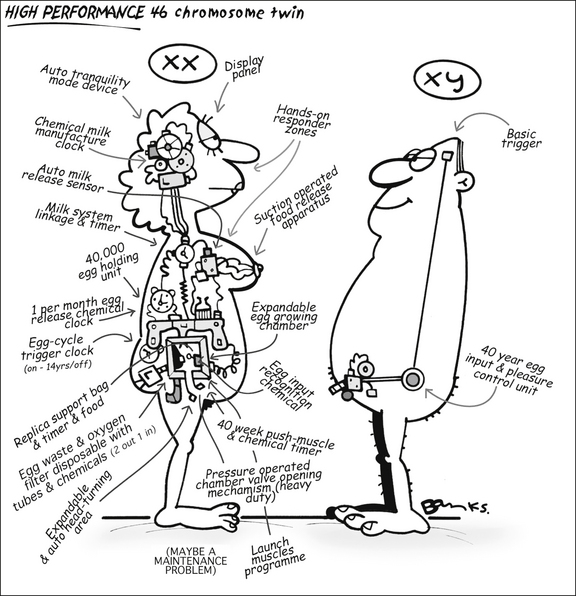
Figure 2.1 Women are 10 times more complicated than men. (Reproduced with permission of Bruce Petty.)
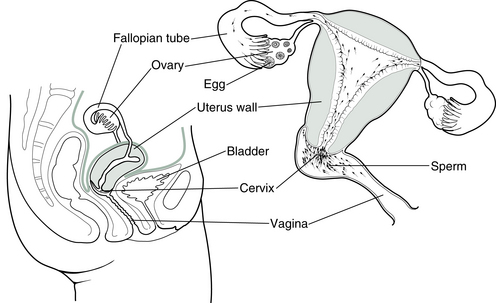
To be a specialist in any field, we have to know our chosen material intimately. In this chapter, I set out what we need to know about the pathways, the fluids, the cells, the tissues, the chemical messages and the changes that happen in every menstrual cycle. We will examine in detail all the complex events that happen in a woman’s body when the glands in the brain communicate with the reproductive glands and induce a myriad of different effects in different tissues – an incredible orchestration of events, which require correct timing and constant feedback. The result is a woman’s body full of fertile potential (Fig. 2.2).
The theories of both traditional Chinese medicine (TCM) and the Western medical model contribute to our understanding of the physiological processes of the menstrual cycle. When a TCM practitioner is treating a woman for infertility it is very helpful to have a good grasp of the hormonal and anatomical reality of the reproductive processes. At the same time he or she needs to have a deep understanding of the same processes in terms of the Qi and Blood, Yin and Yang.
In this chapter, I consider the roles of the Yin and the Yang, the Qi and the Blood, the Chong and the Ren vessels, the Jing and the Shen, and more. And I also consider estrogen and progesterone, the pituitary and hypothalamus glands, the follicle in the ovary containing the egg, the fallopian tubes and the endometrium lining the uterus.
The Chinese and Western Medicine Approach
Chinese medicine describes processes inside and outside the body in energetic terms: i.e., the tendency to change or develop in a certain direction. Western medicine describes physiologic processes of the body in terms of the biochemical changes that occur and how they influence the actions of organs – this action is also described in terms of the resultant biochemical changes.
Historically, of course, Chinese medicine was practised with very little understanding of the biochemistry of internal physiological processes. All treatments were determined by subtle diagnostic techniques based on careful and detailed observation of external signs. This ability to make a diagnosis based on expert observation of symptoms and signs is one of the very great strengths of TCM (another being the mildness of its treatments and consequent lack of side-effects).
The knowledge we now have available, thanks to recent scientific research in reproductive medicine, adds to this strength. Skilled TCM doctors will still apply their well-tested theoretical framework and treatments but will add another level of sophistication to their clinical approach by using their knowledge of internal reproductive physiology. They will be able to communicate with patients and their gynecologists in a language they understand. Such bridge building, in the end, benefits everyone.
Although it is not appropriate to make exact equivalences between traditional Chinese medicine concepts and modern scientific medical descriptions (representing two profoundly different paradigms) we can make parallels – identical processes viewed from different perspectives. These will be summarized once we are familiar with all the terms (see Table 2.2).
Table 2.2
Summary of parallels between traditional Chinese medicine (TCM) and Western medicine terms
| Western physiology | TCM |
| The gametes | Jing |
| The influence of the sex hormones | Kidney Yin and Yang |
| The influence of the hypothalamus and the pituitary | Heart |
| Ovaries, tubes, endometrium and cervix | Uterus |
The following sections provide a brief explanation of terms used to describe organ systems, channels and substances relevant in TCM gynecology. For further explanation of such TCM concepts, the reader is referred to TCM texts on internal medicine.1
The Organs
The Kidney, the Heart and the Uterus
TCM describes all the aspects of female reproduction – the organs, the glands and their secretions, and the psyche – in terms of Kidney function, Heart function and the Uterus. TCM texts say, ‘the Uterus, the Heart and Kidney form the core of reproductive activity.’
In broad terms, what the doctors in China 2000 years ago were referring to when they described the Kidney Jing is what modern Western medical science refers to as the gametes or eggs and sperm themselves. Kidney Yin and Yang include the influence of the hormones which regulate the different parts of the cycle.
The Heart encompasses the mind and the activity of the hypothalamus and pituitary, which controls the whole cycle.
The Uterus describes the arena where all of this happens. When we use the term ‘Uterus’ in a Chinese medicine context, it is a translation of the term Bao Gong, which includes all the reproductive organs: uterus, ovaries, fallopian tubes and cervix.
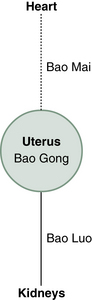
The pathways or channels, called the Bao Mai (Uterus vessel) and Bao Luo (Uterus channel), provide the means of communication between the Heart, Uterus and Kidneys (Fig. 2.3).
It is interesting to note that old Chinese medicine texts describe the Heart as the master controller (the Emperor) of the other organs. In the same way, Western medicine often refers to the hypothalamus and the pituitary as the master controllers of other glands in the body.
The other organs
While the kidneys and the heart control the processes necessary for female fertility, they are not the only organs or systems necessary for the effective functioning of the menstrual cycle. Figure 2.4 shows the relationship between all the body’s Yin organs and the Uterus.
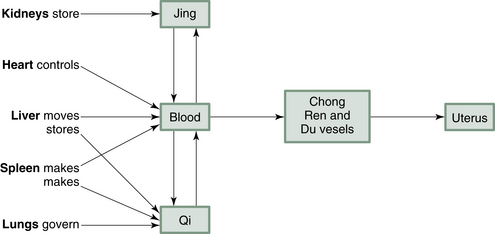
It is said in TCM that the Kidneys ‘dominate reproduction’ and are the store of reproductive essence, or Jing, which is discussed below. The Kidney Jing plays a key role in female physiology at all its stages – puberty, pregnancy and menopause. Aspects of Kidney also influence libido and sexual function. The Heart houses the mind or spirit – ‘Shen’ in TCM terms – and, as such, exerts a subtle but powerful influence over many aspects of the menstrual cycle. The Spleen and Liver also contribute in a less direct way to aspects of reproduction and fertility. The Spleen produces the Blood and the Liver stores and moves it; therefore both can have an effect on the nourishment of the Uterus. The Spleen also controls circulation of Blood in its vessels. The Liver is responsible for smooth movement of Qi and therefore plays a critical role during events surrounding ovulation and menstruation, both of which involve movement and change. The Lungs are less directly involved, but also influence Qi. More detailed explanations of Yin organ function can be found in TCM texts on internal medicine.1
The Substances
Jing is translated as ‘reproductive essence’. In Western medical terms, Kidney Jing encompasses the function of the ovaries and some aspects of pituitary function. Plentiful Jing increases fertility and contributes to longevity. It has been observed that women who are successful in having babies in their 40s (i.e. have strong Kidney Jing) often live longer than average.
Kidney Jing is said to be inherited from our parents and stored in the Kidneys. The quality of our Jing determines our genetic predisposition and also reflects how we developed in the womb (this latter, of course, is influenced by our mother’s health during the pregnancy). Parents with strong and vital Jing will, barring any unexpected traumas in the womb, pass on strong Jing to their offspring. Less than ideal Jing may be inherited if the parents are older than 40, of poor constitution or if the mother has had many pregnancies close together.
Jing is not only an important first determinant of our basic constitution, but it is also directly related to our ability to produce children of our own. If a girl is born with very deficient Jing, then it is likely that the ovaries or uterus may not develop properly and there will be complete sterility. Puberty, if it comes at all, will be very late, as will development of secondary sexual signs. In women, Jing deficiency (Table 2.1) manifests as primary amenorrhea, resistant ovary syndrome or sporadic and intermittent cycles (oligomenorrhea) or premature menopause (see Ch. 5). Or there may be less severe levels of Jing deficiency, which may manifest as delayed puberty, or very intermittent ovulation or the production of poor quality eggs which do not easily fertilize and make strong embryos. In men, we may see very low sperm counts or even no sperm (see Ch. 7). All degrees of Kidney Jing deficiency spell problems with fertility.
Table 2.1
| Severe Jing deficiency | Moderate Jing deficiency | Mild Jing deficiency |
| No puberty, late puberty Primary amenorrhea Small uterus and ovaries Underdeveloped secondary sexual characteristics Weak constitution Sterility No response to fertility drugs |
Delayed puberty Oligomenorrhea Premature menopause Resistant ovary syndrome Poor or no response to fertility drugs Possibly poor constitution or small stature Relative infertility |
Normal puberty and menstrual cycle Poor or no response to fertility drugs Relative infertility |
TCM texts say that Kidney Jing is the source of Tian Gui. Tian Gui, which translates as ‘heavenly water,’ is an aspect of Jing which ripens as a young girl reaches puberty. The ripening of the Tian Gui heralds the filling of the Chong vessel with Blood and the Ren vessel with Qi and the periods begin. The quality of the Tian Gui (and hence the Kidney Jing) is important in all the menstrual cycles that follow, and in conception and pregnancy.
According to TCM theory, strong Jing is the basis of healthy Shen or spirit. Human worth can be evaluated in many ways, not just by physical strength and ability to reproduce. Such human attributes as altruism, artistic endeavor and scientific genius make great (non-biological) contributions to human society. Many of these attributes stem from aspects of our spirit or the Shen. Inheritance of good Jing is necessary, therefore, not only for a healthy physical constitution and the ability to reproduce but also for the development of other human attributes which contribute to humanity in ways other than continuing its genetic lines.
What causes decline in Kidney Jing?
Kidney Jing gets used up with the hundreds of menstrual cycles a woman experiences. Life itself also exhausts our stores of Jing, sometimes more rapidly than others, depending on the nature of the lifestyle and life circumstance.
The mother’s Jing (and Blood and Yin) is consumed somewhat during the pregnancy by the rapidly forming fetus and Chinese families were traditionally advised to space out their children (ideally by 5 years) so that the mother’s Jing could be replenished before the next baby consumed it again.
The decline of Kidney Jing as we age, is the reason fertility declines in women after more than two decades of producing eggs. It is also the reason that more miscarriages occur and that more babies with genetic disorders like Down syndrome are born to older women. Of course, women in their 20s and 30s can also have miscarriages, or babies with genetic disorders. However, in this case, it is less likely to be Kidney Jing quality which is responsible but other factors, such as sperm quality or external mutagens. By the middle 40s, the Kidney Jing has declined to such a degree that pregnancy is rare. We have all heard stories about miraculous pregnancies to ‘mature’ women, from Sarah in biblical times, to cover stories in glossy magazines. These stories gain legend status simply because they are extraordinary – and rare.
In my 20 years in the clinic, I have come across just two women who have had babies after 45 (and who have not received donor eggs). In both cases, there had been a long period of amenorrhea, where eggs that might have been spent were conserved.
Kidney Jing can be consumed more rapidly by some types of lifestyle or circumstance than others (see Ch. 12). Epigenetic effects of assisted reproduction technology may also be of concern as far as Jing is concerned (see Chs 9–11).
How is Kidney Jing deficiency treated?
To address inadequacy or decline of Tian Gui, the TCM doctor will treat the Kidney Jing. This is usually done with herbs and sometimes with animal products. As the deficiency is deep, treatment needs to be strong, persistent and lengthy.
When someone is born with very poor Jing and experiences primary amenorrhea, resistant ovary syndrome or sporadic and intermittent cycles, drastic measures are sometimes required to increase the chances of reproducing. It is here that assisted reproduction technology (ART) has produced some startling results. For example, in women who do not ovulate but do have ovaries, drugs can be used to induce ripening of the dormant eggs. If Kidney Jing is not too severe, then sufficient eggs will ripen to be collected for in vitro fertilization (IVF).
In some men with no or very few sperm, testicle biopsies can be taken and immature sperm cells cultured. These can then be used for in vitro fertilization by injecting them directly into the egg (see Ch. 9).
From a TCM perspective, the implications of such techniques can be worrying. If a man or woman has such low Jing energy that they are unable to produce gametes, then it is better from a biological and community point of view that they do not reproduce. This is because, theoretically, the low Jing will be passed onto their offspring born with the aid of ART because the natural brakes to such a possibility have been circumnavigated. One extreme example of this (and a strange paradox), is a congenital form of male infertility (carried on the Y chromosome), which can be passed onto male offspring if certain ART techniques are employed to enable the sperm to fertilize the egg. Thus, a form of Jing deficiency is perpetuated from one generation to the next.
Babies born to parents with congenital gonadal dysfunction or with unexplained infertility with the aid of ART seem to be, in the current broad view, as healthy as other babies. However, research reveals that babies born as a result of these procedures are more at risk of major birth defects2 and will tend to have lower birth weights.3 This may reflect the original cause of the infertility as much as the effects of the procedures (for more discussion of these effects, please see Ch. 10).
The majority of IVF children have not yet reached reproductive age, so the quality of some aspects of their Jing is as yet untested in the early twenty-first century.
Yin
Yin is the term used in TCM to describe the cooling, nourishing and moistening, the substantive and internal aspect of body function, and structure. We might say that Yin represents the elixir of youth, which is consumed throughout life, more rapidly by some lifestyles than others.
In the context of the menstrual cycle, Kidney Yin relates to the hormonal triggers which stimulate follicles to develop, as well as to the factors which support the follicle’s growth and maturation. The concept of Kidney Yin embraces aspects of pituitary function as well as ovary structure and function. The lining of the uterus and its secretions also reflect the quality of Yin. The function of the glands in the cervix gives us a particularly useful indication of Yin function, as they produce one of the most easily observed of its manifestations, the fertile mucus.
People who have insufficient Yin energy tend to be more dry or hot internally. Often this translates into quantifiable signs like scanty production of vaginal and cervical mucus, or in men, scanty ejaculate. Women who are Yin deficient may have thinner uterine linings which are not secreting adequate nourishment to maintain a pregnancy. TCM texts call this a ‘hot dry Uterus’. These women often have scanty periods.
Clinical observations in fertility clinics in China have made a clear connection between ovarian function and Kidney Yin quality. If the Yin energy is inadequate, the follicle in the ovary grows poorly and ovulation may be late (i.e., long cycles) or early if Yin deficiency has given rise to Heat (short cycles) or may happen on a very sporadic basis (intermittent and irregular cycles). A certain threshold quality and quantity of Yin is required before the egg is responsive to hormonal stimulation and can grow to the stage where it is ready to be released and fertilized.
In personality, Yin-deficient people are more restless or anxious; they can be alert and bright-eyed and quick. Often, they are thin and wiry and their skin ages more quickly than others.
What causes Kidney Yin deficiency?
Kidney Yin deficiency may be caused by a constitutional tendency or the Yin may have been damaged by overwork. This is not at all an unusual scenario for women today, particularly those working long hours in stressful conditions. Paid work, for many women, is done before and after the unpaid work of running a household. Add to such conditions poor diet or rushed eating, polluted environment, inadequate sleep and exercise and you have the typical Yin-consuming lifestyle of so many of the women we see in our clinics. Trying to become strong and healthy, let alone pregnant, in such conditions is a challenge.
Kidney Yin may also be damaged by drug abuse and by excess sexual activity or many pregnancies (even if these are terminated). Loss of large quantities of blood (such as prolonged or very heavy periods) or body fluids can damage Yin. Long-term disease in any organ system will eventually damage Kidney Yin.
Yin declines with age, especially from the late 30s. Age-related Yin deficiency is one of the most common reasons for inability to fall pregnant that we see in our clinics in the West.
How is Kidney Yin deficiency treated?
In the clinic, large doses of herbs are prescribed to a Yin-deficient woman to increase the Kidney and Liver Yin so that the ovaries are nourished sufficiently to produce healthy eggs. Such an approach is emphasized in the weeks of the menstrual cycle leading up to ovulation; this treatment also encourages the retention of blood in the uterine lining along with its secretory function. Equally important in the treatment of the Yin is appropriate lifestyle changes. There is usually so little space in our lives these days for stillness and calling a halt to relentless busyness. Even when we say we are resting, we are watching television or movies, and our mind and body, while they may be more relaxed, have not stopped to the point where deep and nourishing rest can replenish reserves. A regular routine and enough sleep are two key first steps in reducing stress and relieving the mind. The capacity to still the mind is an important aim for the Yin-deficient person who is restless and nervous.
A particular challenge of our times, and one which is rarely heeded, is the need to become strong and healthy before conceiving. The rush to fit everything in at the last minute often means that pregnancy is embarked upon with little thought to the constitution of the sought-after child. Pregnancy at any cost is often the prevalent attitude of a society used to getting what it wants and now. A TCM doctor will advise a woman who is very Yin-deficient to make adjustments to her lifestyle and build her Yin before attempting to conceive. There is important ground to be laid. This is sometimes a difficult idea for a Western woman to swallow, particularly if she is in her late 30s and the biological clock is ticking loudly.
Fertility drugs and ART programs will often be tried by women in this category (usually in their late 30s or early 40s). However, when the Yin is very low, using strong ovarian-stimulating drugs is a bit like whipping an exhausted horse which has nothing left to give. Seldom are viable eggs produced.
Yang
Yang energy is the counterpart to Yin. Compared with Yin’s still, cool, moist, and nourishing nature, it is dynamic, active, and warming. The effect of Yang begins to be felt in the menstrual cycle at ovulation. Dispersing obstructions and aiding unfettered movement are important Yang functions at this time. At the moment of ovulation, there is much dynamic activity – the egg is launched out of its follicle and the fimbrial fingers embrace and guide the egg into the fallopian tube.
The journey of the egg down the tube is also a dynamic one, with both the egg and the tube needing to be able to move smoothly and flexibly. It is the action of Yang which ensures that mucus obstructions in the tube are dissolved to allow free passage to the uterus.
The moment of fertilization also relies on sufficient Yang. Yang is the motivating force for all transformations in the body. The moment a sperm’s head finally breaks through the egg’s coating, and its DNA fuses with that of the egg, is the greatest transformation of them all – the beginning of a potential human life.
Kidney Yang performs a very important function after ovulation, when a fertilized egg reaches the uterus and implants and develops. The Chinese have for thousands of years ascribed the inability of some women to fall pregnant as ‘a Cold womb’. In other words, not enough Kidney Yang energy. Nowadays we know that the Cold womb is one supplied with insufficient progesterone, which means that implantation and early development of the embryo will not be supported. When there is insufficient progesterone produced, the body is demonstrably colder – about 0.4°C colder than when the progesterone levels are high.
What causes Kidney Yang deficiency?
Lack of Kidney Yang may be a constitutional trait or it may result from damage, most commonly by an invasion of external Cold. This initially obstructs the flow of Qi and, eventually, if it is not expelled, affects the body’s Yang. Our Western lifestyle provides many opportunities for this so-called Cold invasion, most notably our predilection for icy foods and drinks and the habit many women have of swimming during menstruation. Cold as an external pathogen can enter the body easily via:
• the Stomach (cold foods like ice cream)
• the Uterus (swimming or getting very chilled during the period when the Chong vessel is open)
• the channels on the legs (scanty leg coverings during the period).
The Chinese, and in fact many Asian cultures, strongly advise against behavior which can chill the body during the period. Being chronically exposed to cold, such as living or working in a cold damp environment, can also damage the Yang.
Kidney Yin and Yang depend upon one another and depletion of Kidney Yin will eventually deplete Kidney Yang. This is a commonly seen phenomenon in the infertility clinic, especially in women after their mid-30s. Similarly, when there is prolonged stagnation of Liver or Heart Qi (i.e., emotional disturbances) the Yang of the Kidney can suffer too. The nature of Yang is to move and be active, but in an environment of emotional constraint it cannot move and becomes damaged.
Kidney Yang is consumed by miscarriages, abortions and overtaxing the body physically. Inadequate sleep, specifically going to bed too late, can also be a contributing factor to Kidney Yang deficiency. Certain diseases (e.g. thyroid disease) can compromise the function of Kidney Yang, and prolonged disease of any organ will finally affect the Kidneys, damaging Yin or Yang or both.
How is Kidney Yang deficiency treated?
Herbs, acupuncture and moxa are applied in the treatment of Kidney Yang deficiency. Such treatment has particular relevance in the post-ovulation phase of the menstrual cycle. Women with Kidney Yang deficiency are sometimes prescribed progesterone by specialists in this post-ovulation phase but it is generally recognized that such treatment has limited usefulness. However, herbs which boost Kidney Yang can increase progesterone production and fertility in such women. Treatments to replenish Kidney Yang will never be successful if the patient does not get enough sleep, in the same way that treatments for Kidney Yin will never succeed if the mind is not able to be quietened.
Blood
The Blood, or Xue, as it is called in Chinese, embraces the Western notion of blood (the red fluid in our arteries and veins) but goes further to include aspects of tissue nutrition. The Heart is said to govern the Blood (via the circulatory system) and, with the Spleen, plays a role in the production of Blood and therefore contributes to nourishment of the endometrium and thereby the embryo. The Spleen’s role is to manufacture Blood from the nutrients it can extract from food. Someone who is Blood deficient will not only be pale but may also be weak and malnourished.
Blood plays an important role in fertility by nourishing the endometrium (the uterine lining), making it a moist, juicy and nutritious place for an embryo to settle in. Shortly before ovulation, peaks of estrogen (released by the developing egg) prime the lining of the uterus – this means the endometrial tissue is provoked by this hormone into proliferating and growing in size, actually producing more blood vessels and laying down more tissue. Without adequate Blood, this process may be retarded or, in fact, stymied completely. Thus, TCM recognizes that it is not only lack of Yin which can lengthen the first half of the cycle and hold up ovulation but also Blood deficiency.
Blood is stored by the Liver, especially when the body is at rest. Some of this store must be passed onto the Uterus before preparation for pregnancy or menstruation can occur. So if the Liver Blood is deficient, then menstruation may be scanty or there may be infrequent or no periods.
The body loses some of its blood stores during the period and so must quickly make good the loss if the newly forming endometrium is to be adequately supplied. In China, it is very common for women across the entire social and professional spectrum to take Blood tonic foods and herbs after periods to ensure this. The Spleen’s function in digestion and manufacture of Blood is therefore important at this time.
What causes Blood deficiency?
Inadequate protein in the diet is a frequent cause of Blood deficiency, and it often falls to the TCM doctor to persuade a pale and wan vegetarian patient to try and consume more protein. If a woman experiences very heavy periods over a significant length of time, then she will easily become Blood deficient. Past illness and a constitutional tendency to anemia will also be contributors to Blood deficiency.
How is Blood deficiency treated?
Blood deficiency responds rapidly and well to treatment with Blood tonic herbs and a diet with adequate protein and iron. Of course, causes of heavy menstrual bleeding must be addressed too if the problem is not to reoccur. In the clinic, an emphasis on building Blood occurs in the weeks immediately after the period.
Shen
Shen translates as ‘spirit’ and encompasses both higher spiritual levels as well as some more mundane aspects of the brain and nervous system. The Shen is related to (and controlled by) the Heart. According to TCM theory, the Heart and the Shen play an integral role (with the Kidneys) in controlling fertility.
A healthy Shen and Heart will create mental stability and contentment. Ovulation relies on the Heart housing the mind (or Shen). When the Heart and the Shen are stable, then the cues for the different stages of the menstrual cycle can proceed smoothly.
What causes Shen instability?
In fertility clinics both in China and the West, the role of the mind is recognized not only in psychological well-being but also in many of the physiological processes leading to successful conception. Emotional stress can play havoc with the menstrual cycle. It can affect the function of the hypothalamus (master control gland in the brain), causing pituitary gland dysfunction, and ovulation may be delayed or completely switched off.
One of the prime requirements for fertility is a balance between Kidney Yin and Kidney Yang. The TCM classics say, ‘to maintain balance between Kidney Yin and Kidney Yang, healthy Heart Qi is indispensable.’ This refers to the fact that if Kidney Yin does not transform into Kidney Yang at midcycle because of obstructed Heart Qi (i.e. a disturbed Shen), then ovulation will not occur. The Heart and Shen are also involved in ovulation in that they help to catalyze the formation of Tian Gui from Kidney Jing, wherein Kidney energy promotes the development of sperm and eggs.
How is Shen instability treated?
Treatment of the Shen is treatment of the mind. The first step is to regulate sleep patterns, using sedative herbs if necessary. Removal of mental stressors is important too, and, where this cannot be achieved, mind-calming techniques such as yoga, tai chi and meditation become especially important. While treatment of the Shen can be applied at any time, it has particular relevance in the days leading up to ovulation.
Qi
The name the Chinese have given to the energy which circulates in the meridians or channels is Qi. It facilitates communication between organ systems and between interior and exterior parts of the body. In the menstrual cycle we are particularly concerned with the movement of Qi in facilitating the movement of the egg from the ovary through the fallopian tube to the uterus at ovulation time. It is also important for the expulsion of menstrual blood from the body.
In clinical terms, it is the Liver Qi, and its unimpeded movement, that becomes a focus of our attention at two pivotal moments in the menstrual cycle – ovulation and menstruation.
What causes Liver Qi stagnation?
Liver Qi is easily impeded by emotional stress. The Liver channel runs through left and right sides of the pelvic cavity, through the ovaries. Obstruction of Qi in these channels can affect the release of the egg from the ovaries and the flexible movement of the fallopian tubes. It is a tenet of Chinese medicine that the Qi leads the Blood and if the Qi of the Liver is obstructed, then the Qi cannot lead the Blood smoothly. Dysmenorrhea results, or the period may flow in a stop-start sort of way. Because movement of Liver Qi is also important in preparing the body for menstruation, Liver Qi stagnation will cause premenstrual symptoms.
How is Liver Qi stagnation treated?
Acupuncture and techniques to relieve stress (such as meditation, yoga, tai chi or exercise) are the treatments of choice to regulate Liver Qi stagnation. Because of the importance of unobstructed Qi flow at the time of ovulation, clinic visits for acupuncture will often be scheduled for this time.
It is also important to pay attention to the Liver Qi towards the end of the menstrual cycle, when Qi stagnation can lead to distressing symptoms such as breast soreness and cramping in the abdomen.
The Channels
There are 12 main meridians or channels traversing the body, each one related to an organ system. It is on these channels that an acupuncturist finds the many hundreds of points used to treat myriad different disorders. The pathways and points of these channels are described in acupuncture texts.4
In addition, TCM texts describe a number of ‘extra’ channels, some of which play a key role in the functioning of the menstrual cycle and are described here.
The Chong and the Ren vessels
The Chong and the Ren vessels are of primary importance in controlling the menstrual cycle and play an important role in conception and pregnancy. The Chong vessel is sometimes translated as the Penetrating vessel and the Ren vessel as the Conception or Directing vessel. The Chong vessel is known as the ‘Sea of Blood’ and sometimes as the ‘Sea of all 12 Channels’. The Ren vessel is known as the ‘Sea of all Yin’.
Both vessels arise from the area between the Kidneys and pass through the uterus to the perineum, exerting strong influence on the abdomen and the organs therein (Figs 2.5, 2.6). Although they also exist in men, their involvement in male reproductive function is not so critical.
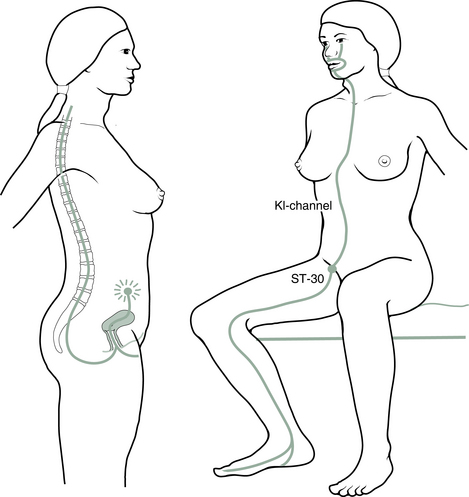
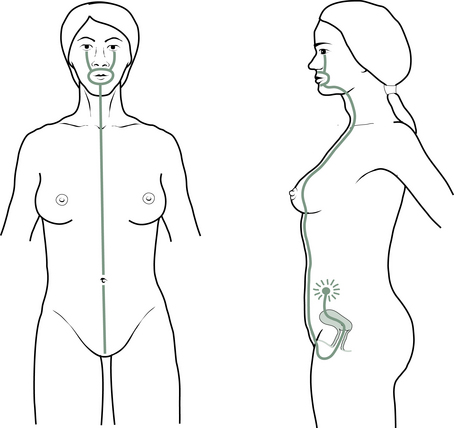
The Bao vessel and the Bao channel
The Heart, Kidneys and Uterus are linked by the Bao vessel and the Bao channel (see Fig. 2.3). Traditional Chinese texts describe a channel which runs from the Heart to the Uterus (the Bao vessel or Bao Mai) and from the Kidneys to the Uterus (the Bao channel or Bao Luo). It is via these channels that the Heart Qi and the Kidney Qi exert their influence on the reproductive organs. This influence is described as ‘opening’ and ‘closing’ the Uterus. The Uterus is said to open at ovulation time (and thus allows sperm entry) and also at period time (to allow discharge of menses).
After menstruation and after ovulation, the Uterus must close again, as it must after conception (to store the fetus). Such uterine activity relies on the influence of the Heart and the Kidney via the Bao vessel and Bao channel. The closing of the Uterus, especially, relies on the Kidney. When the Kidneys are weak and fail in this function, miscarriages occur or there may be spotting during the menstrual cycle. Miscarriages or bleeding due to Kidney weakness can be the result of insufficient hormone support.
On the other hand, the opening of the Uterus relies especially on the Heart. For example, because the Heart plays a crucial role in triggering ovulation, if the Heart Qi is stagnant or obstructed and cannot carry out its function of opening the Uterus, there will be no ovulation. Or, in other words, if the right triggers do not come from the hypothalamus to the pituitary and then to the ovary, the levels of estrogen necessary to provoke the glands in the cervix into making fertile mucus will not be reached. The Uterus will not open to allow entry to the sperm. If there has been no ovulation, then there will be no opening of the Uterus for menstruation either.
Heart Fire (which might occur if the Heart Qi is severely obstructed) may force the opening of the Uterus at inappropriate times or in an undiscriminating way. This may be seen, e.g., if a miscarriage or unregulated bleeding occurs after a woman receives a shock or is under great stress.
The activity of the three extra channels: the Chong, Ren and Bao vessels, is emphasized at different times of the menstrual cycle. The period flow effectively empties the Chong vessel, the Sea of Blood, and it is one of the prime requirements of the post-menstrual phase to make good this Blood loss.
The Bao vessel and Bao channel are active at ovulation time, bringing Jing and Tian Gui from the Kidneys, and Blood from the Heart to the Uterus. The Ren vessel plays a more active role after ovulation, whether in conception and pregnancy or in providing the motive force for menstruation.
The Du and the Dai vessels
The Du vessel and the Dai vessel are two other extra channels that figure in gynecology theory and practice. Points along their pathways are useful in certain situations but their application in the treatment of functional infertility is not central. We shall however revisit them when discussing disorders such as polycystic ovarian syndrome in Chapter 5.
How It All Begins
In girls who have not yet reached puberty, the ovaries are constantly developing follicles (since follicle-stimulating hormone (FSH) is produced by the pituitary gland even before puberty) which then die; i.e., we could say this demonstrates reproductive potential or a good basis of Kidney energy. However, normal puberty brings with it much greater quantities of pituitary hormones, especially luteinizing hormone (LH), which heralds the beginning of the menstrual cycle. In TCM, we describe this event as the arrival of the ‘Tian Gui’ and the initiation of the activity of the Chong and Ren vessels. Despite the fact there are sufficient hormones to mature follicles, ovulation seldom occurs in the early months and up to 2 years after puberty. The full expression of Kidney function, especially Kidney Yang, develops more slowly and it takes up to 5 years after the first menstrual period before the luteal phase of the menstrual cycle is fully functional.5
The Menstrual Cycle
Key events
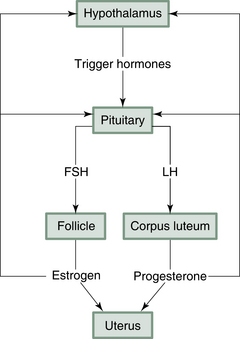
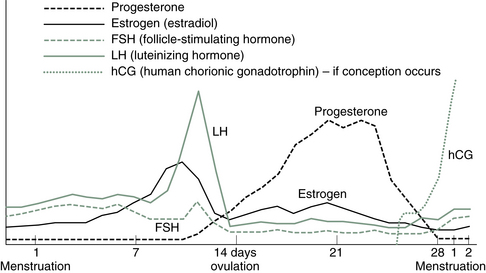
Modern physiologists describe the menstrual cycle in terms of the hormones made by the ovaries (estrogen and progesterone) and the pituitary gland (FSH and LH) and their actions on the follicles, the tubes and the endometrium or lining of the uterus. The events, starting from the beginning of a cycle, the first day of a menstrual period, can be summarized as shown in Box 2.1.
We can summarize the various hormone interactions and feedback loops (Fig. 2.7) and chart the ups and downs of the various hormones during the menstrual cycle (Fig. 2.8).
Just as Western physiology describes the menstrual cycle in terms of hormones which influence the ovaries and the uterus, TCM describes it in terms of the effect of Qi and Blood and Yin and Yang on the Uterus. In the broadest terms, the period cycle is seen as just one of many physical manifestations or reflections of the ebb and flow of Yin and Yang energy, like so many aspects of our body functions and lives.
In Chinese medicine, the cycle depends on and reflects the mutual dependence of Yin and Yang: i.e., Yin depends upon the function of Yang and Yang depends upon Yin as its material base. One cannot exist without the other and they complement each other in their functions or roles. As one expands to full expression, the other is consumed, but at its nadir, or point of extinction, gives rise to the other – a dance so elegantly portrayed in the classic Yin/Yang diagram (Fig. 2.9).
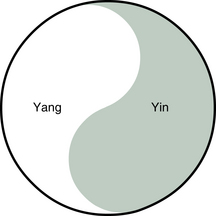
This dance creates, in the energetic terms of TCM, the basis of the menstrual cycle: the Yin growing for 14 days, then giving way to the Yang, which depends upon and consumes Yin as it then grows to its maximum after 14 days; then the rise of Yin can begin again. For a woman to be fertile, the Yin and Yang must constantly maintain this balance.
The 28-day cycle (which, by long-held convention, I am using for diagrams and descriptions in this chapter) has been the yardstick for the ‘typical’ cycle length, habituated as we are to a weekly rhythm. Actually a more correct ‘typical’ cycle length is 29.5 days – the length of the lunar month. For many women, however, the information that a normal cycle should be 28 or 29 days is meaningless, simply because their cycle is, and always has been, different from the norm. Many women have 24 or 36 day cycles and for them, this represents no problem. In fact, most medical texts usually describe anything from 25 to 35 days as normal. However, from the point of view of Chinese medicine, the closer the cycle is to 28 or 29 days the better; this is something the TCM doctor addresses before anything else and is called ‘regulating the cycle.’
Phases of the TCM menstrual cycle
When it comes to studying the menstrual cycle, TCM gynecologists break it up into four phases (Fig. 2.10).
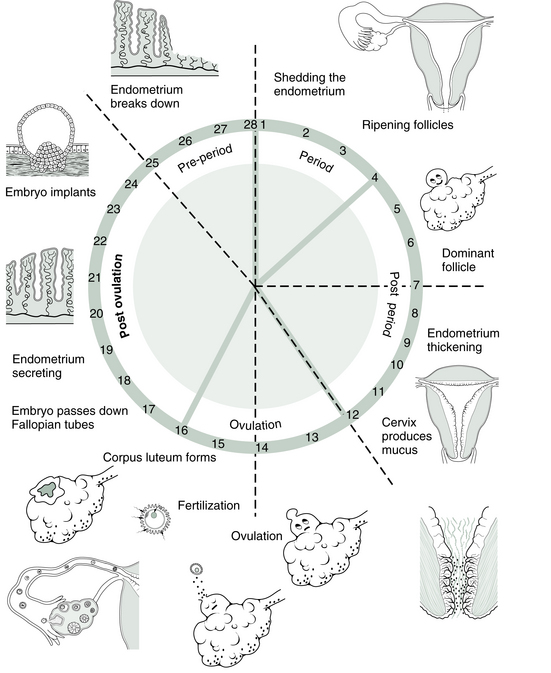
The period, post-period and ovulation phases all fall into the follicular phase but have quite precise and unique treatment requirements. When we are considering fertility, the pre-period phase is included in the post-ovulation phase and has no separate treatment principle.
Let us now look at each phase in the menstrual cycle in detail and examine exactly what is required for each phase to be carried out effectively and what evolves from this. The way we apply such knowledge to the treatment of infertility is described in detail in Chapter 4 but as I emphasize there, it is understanding and encouraging the normal movements of Yin and Yang and Qi and Blood during the menstrual cycle that is the foundation of all successful treatment for female infertility.
The Yin Part of the Cycle
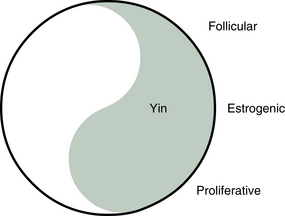
Follicular phase (proliferative or estrogenic phase)
The follicular phase begins on the first day (Day 1) of the period. It is called the follicular phase because it is this part of the cycle in which one or more follicles (and the eggs inside them) in the ovary will grow large enough for ovulation to occur. It is also called the proliferative phase because the lining of the uterus (the endometrium) grows from almost nothing after the period to a thick and receptive padding ready to receive a newly fertilized egg. And from the point of view of hormones, it is the part of the cycle where more estrogen than progesterone is produced (Fig. 2.11).
Shedding of the endometrium
While the follicles in the ovary start their new cycle right from Day 1, in the clinic, we are actually more concerned with what Day 1 means for the endometrium. Treatment applied at this time needs to consider the mechanics of the removal of the uterine lining separately before attention is paid to the follicles in the ovary or the proliferation of the endometrium.
The first day of the cycle is usually defined as the first day there is menstrual bleeding. Some fertility clinics define Day 1 as the first day a woman wakes up in the morning with bleeding; however, women usually experience the first day there is significant blood loss as Day 1 of the period, whether the bleeding starts at 6 a.m. or 2 p.m. If the period begins in the evening or during the night, however, the next day is called Day 1 of the cycle. Research from the University of Sydney showed that a large majority (>70%) of menstrual cycles do in fact start during the night or within the first 4 h of waking, so in most cases, there is very little room for confusion. The only time when it becomes an issue is when a particular drug protocol requires very precise timing.
Day 1 represents a pivotal and dramatic day, not only from the point of view of the uterine lining, which suddenly begins to disintegrate, but also from the point of view of the Yin and Yang cycle. It is this point on the Yin-Yang cycle that the previous cycle reaches its conclusion, as Yang reaches its zenith, and Yin is born. On this day, one cycle concludes with the discarding of the unused lining and another begins with the signals sent to the ovary to start ripening more eggs.
On Day 1, the Chong vessel (the Sea of Blood) begins to empty. The Qi of the Ren vessel drives the flow of blood downwards through the cervix. The onset of menstrual bleeding reflects the breaking down of the lining in the uterus when the levels of estrogen and progesterone fall. How this actually happens is an extraordinary and intricate dance performed by the spiralling blood vessels of the endometrium. In the 4–24 h preceding menstruation, these coiled blood vessels tighten up and constrict blood flow, effectively starving the endometrium of blood. Consequently, the tissues in the upper portion of the endometrium die. Then these tightly coiled blood vessels relax and expand again, causing the upper layer to become detached from the basal layer (leaving most of the stroma and embedded immune cells intact) and blood to leak from the weakened capillary walls. Tissue, cells, fluid, blood, and blood vessels are shed, resulting in several days of menstrual flow.
The degree of shedding of the endometrium varies from woman to woman. There is no clearly described medical reason why this should be so; however, TCM places great importance in variance of quantity and quality of blood flow during the period and believes it reflects quite accurately key factors in a woman’s constitution. If the period flow is problematic in any way, then a clear understanding of this tendency allows for accurate diagnosis and treatment.
The main menstrual flow tends to happen in the first 24 h of the period. The average blood loss per period is 30 or 40 ml but if more than 60 ml are lost each period, there may be a risk of anemia. However, there is more to menstrual flow than just blood. About 50% of the liquid is tissue fluid and serous oozing. The clots that some women experience during a period are not true blood clots but aggregations of glycoproteins and mucin. The clots form when enzymes from the cervix act on the blood proteins to make glycoprotein meshes. Sometimes, small pieces of tissue are seen in the menstrual flow.
The nature of the menstrual flow and symptoms accompanying it are all significant in pinpointing any glitches in the Qi and Blood movement. Any obstructions to the menstrual flow can have implications for infertility. For example, the presence of tissue or clots alerts the TCM doctor to the fact that the flow of the Qi and the Blood is not smooth (known as Qi and Blood stagnation) and may signal a problem in the uterine lining.
In TCM terms, we describe the stretching of the endometrial blood vessels, the breaking down and shedding of the endometrial tissue, the remodeling of what’s left and the discharge of menstrual flow as ‘movement of the Qi and Blood.’ Treatment applied at this time must encourage movement and unobstructed flow to encourage discharge of menstrual flow.
Over the next 2–3 days of the period, the Chong vessel empties and then the building of Yin and Blood begins again until the Chong vessel is completely refilled. After the first few days of the period, clinical focus moves from enabling and encouraging the breakdown of the endometrium and the discharge of the menstrual flow, to building the Yin and the Blood. This is done with herbs and by regulating Chong vessel activity with acupuncture. Diet at this time is especially focussed on nourishing Blood.
Some evolutionary biologists have questioned the role of menstruation in the human.
Menstrual shedding of a uterine lining that has been prepared to receive an embryo (decidualized) occurs in very few species – only humans, monkeys and some bats – and compared with our primate relatives, menstrual blood flow in humans is very heavy. The human placenta implants much more deeply than that of any other species too and this may be related.
Human reproduction has evolved in ways that limit the likelihood of pregnancy while maximizing the frequency of menstruation. Women have a limited and variable fertile window, obscure ovulation signs, a very high incidence of preimplantation embryo loss and low monthly pregnancy rates and on top of this many women experience uncomfortable or heavy periods.
From an evolutionary point of view, the purpose of such frequent and often inconvenient menstrual periods is not obvious but some researchers think that this repeated menstrual priming and preconditioning of the uterine lining and its vasculature during non-conception cycles could be important for ensuring successful implantation and placentation in the latter stages of a menstrual cycle in which a conception has occurred.6
This concept underpins the importance we as Chinese medicine doctors attach to substantial and smooth movement of Blood during the menstrual phase.
All Chinese medicine Fu Ke texts emphasize the regularity and the quality of this menstrual shedding, something that most western gynecologists pay scant regard. What should be recognized is that healthy menstrual periods play an important role in fertility. The above mentioned researchers feel that the period has evolved to protect the uterine tissues from inflammation – oxidative stress inflammatory cells and proinflammatory cytokines and dead cells are found in the menstrual flow.7
Extrapolating to TCM concepts, we might say that a good menstrual flow clears Heat and prevents Blood stasis. The tissue remodeling that happens during the period is crucial in providing the correct environment for implantation and deep placentation later in the cycle and this is why we afford it proper clinical attention.
The endometrium in the proliferative phase
During this phase of the menstrual cycle, the uterine lining grows and thickens. The different stages can be described (Fig. 2.12) as:
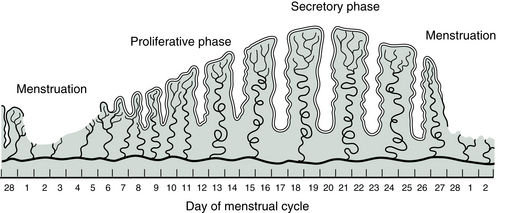
The protocol for prescribing herbs and applying acupuncture at different times of the proliferative phase takes into account these different stages of endometrial development.
Although menstrual bleeding may continue for several days, endometrial regeneration generally begins within 2 days after the onset of menstruation. Initially, the mechanism of this repair process is the same as for normal tissue healing, but by Day 3, estrogen and progesterone receptors form in the glandular epithelium and hormones control it. In other words, rebuilding the endometrium is a specifically Chong/Ren-driven initiative.
By Day 5 the remodeling of the endometrium is complete. At Day 5 or 6, when the period is usually finished, the endometrium is 1–2 mm thick. As estrogen levels rise, more tissue develops, especially in the surface layer.
During the early to mid-proliferative phase, the glands are initially tubular and straight but become more twisted as estrogen levels increase. From about Day 7 or 8 of the cycle, the numbers of ciliated and microvillous cells in the endometrium increase. By the time the proliferation phase is completed and ovulation is imminent a healthy endometrium is at least 8 mm thick.
The proliferation of the endometrium, increasing in thickness and density of blood vessels and glandular cells, reflects the filling of the Chong vessel. To encourage this rebuilding of the uterine lining we use mainly Blood tonics, often with the addition of small amounts of Blood- and Qi-regulating herbs to encourage circulation through all the new blood vessels and tissue being formed. At the same time, acupuncture points on the Chong vessel are often used.
According to our Yin-Yang cycle diagram, the growth of Yin begins right from Day 1 of the cycle. We have referred to the growth of the follicle following stimulation by the pituitary hormones as the Yin aspect of ovarian activity. The new follicles start growing from Day 1 of the cycle or even from the moment that the progesterone and estrogen fall at the end of the previous cycle. However, in the clinic, we usually delay the application of Yin tonics until the menstrual discharge is complete or nearly complete.
The first couple of days of the cycle are characterized by having very little of the two main hormones in circulation. There are some exceptions to the rule of delaying the tonification aspect of treatment in this part of the cycle, e.g., in women who are very Yin deficient, Yin tonics may be used throughout the cycle, even when the endometrium is being discharged.
The ovary in the follicular phase
When we are talking about the events in the ovary, the first half of the cycle is referred to as the follicular phase (Box 2.2).
As the Yin and the Blood grow, so do a number of follicles in response to stimulation from the pituitary hormone FSH. This process is called follicular recruitment. Anti-Mullerian hormone (AMH) produced by the granulosa cells of the ovary inhibits excessive follicular recruitment by FSH and is a useful marker for assessing ovarian reserve.
At the beginning of a cycle, the follicles are less than 4 mm in diameter. Even before a follicle can join the starting line at the outset of a new menstrual cycle, certain growth factors are needed. These factors are necessary to get the follicles to a point where the pituitary hormone FSH takes over their stimulation. In TCM, we might relate these factors to the Kidney Jing, i.e., they represent the potential for gamete development. Then FSH (or the growth of Yin) will strongly stimulate the follicle, so that it grows over a period of 2 weeks to 50 times its original size (Fig. 2.13).
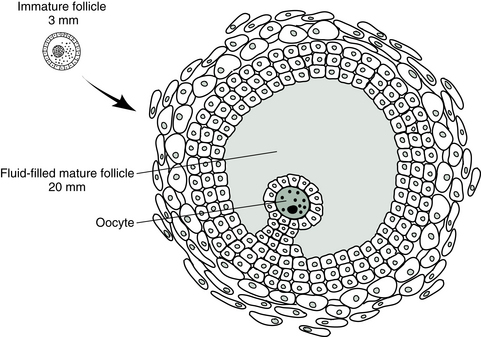
The use of Yin tonic herbs appears to help this growth and development process. The quality of Yin, as we have said before, has a bearing on both the quality of the egg itself and the growth of the follicle around it. While the application of Yin tonics is seen quite clearly in the clinic to enhance follicular development, there is little it can do to change the DNA of the egg itself. Since a woman’s eggs are formed when she is still an embryo in the womb of her mother and never manufactured again thereafter, the DNA die is well and truly cast. In other words, the DNA in the chromosomes and the mitochondria (the small organelles which are responsible for energy production) of the egg cell are as old as the woman herself and may well be showing the irreversible signs of aging.
In the clinic this can lead to some frustration for older women (over 40 years) trying to conceive. After taking Chinese herbs, these women see many symptoms and signs, which indicate improved fertility, such as regular periods with plentiful fresh red blood, copious fertile mucus, textbook basal body temperature (BBT) charts, improved libido and lubrication, etc. All of this indicates that their Yin and Blood are flourishing and their hormone levels are good but their eggs are still 40-plus years old and are either not easy to fertilize or not good at making viable fetuses.
We know that ovaries and their eggs show the effects of aging much more rapidly than do other parts of the female reproductive system. The uterus and its lining remain quite functional and responsive to hormone stimulation well after the ovaries have retired, as has been demonstrated by successful pregnancies in older post-menopausal women using IVF technology and eggs donated by younger women.
While Kidney Yin declines rapidly with age, especially after 40, some aspects of Kidney Yang endure with vigor, such as the functioning of the endometrium. However, the functioning of the corpus luteum gland (another aspect of Kidney Yang) is affected by age.
In the mid-follicular phase, one follicle becomes dominant (probably due to it having more FSH receptors and a better blood supply). This dominant follicle is the first one to produce estrogen, a certain concentration of which causes the pituitary to produce less FSH, ensuring the demise (atresia) of all other follicles except itself. In cases of multiple ovulations there are two or more follicles exhibiting dominance.
By Day 9, the number of blood vessels in the dominant follicle is twice that of other follicles. It is this growth of extra blood vessels (both here and to a greater extent in the endometrium) which dictates the use of Blood-building and Blood-regulating medicinals around this time. The length of time from selection of the dominant follicle to ovulation is variable. In a ‘typical’ 28-day cycle, it will take around 5 days, i.e. from about Day 10 to Day 14 (Fig. 2.14).
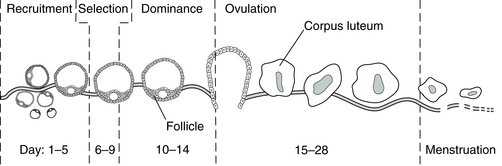
When concentrations of estrogen secreted by the dominant follicle reach a certain level and are then maintained for about 48 h, a surge of FSH and LH from the pituitary is initiated. This midcycle LH surge triggers events leading to ovulation sometime within the next 36–40 h and increases the ability of the ripe follicle to manufacture progesterone. The LH surge and the beginnings of progesterone production coincide with the approach of the Yang part of the cycle.
Sometimes there is no follicular recruitment at all in this first phase of the menstrual cycle, i.e., there is no response by the follicles in the ovary to FSH or, due to hypothalamus or pituitary gland dysfunction, not enough FSH is produced. These cases are often diagnosed in TCM as Jing deficiency or sometimes as Yin or Blood deficiency and will require special treatment (see Chs 4 and 5). These women experience no periods (amenorrhea) or long erratic cycles (oligomenorrhea).
Releasing an egg late – long follicular phase
In women who are Blood or Yin deficient, however, it may take longer for the follicle to get sufficient sustenance to reach maturity. Ovulation will be delayed and menstrual cycles will typically be long. From the TCM doctor’s perspective, these patients have diminished fertility due to their Yin or Blood deficiency. In Western physiological terms, we would attribute such slow development of the chosen follicle to sluggish estrogen production, or reduced sensitivity to stimulation by FSH, or perhaps inhibited FSH production by the pituitary.
In some instances, it appears that the egg may mature normally, but ovulation may still be delayed. In this case, the egg is over-ripe by the time it is released and should it be fertilized, there is an increased risk of chromosomal abnormality and miscarriage.8 Such a delay in ovulation tends to occur as a discrete one-off incident rather than a repeated pattern and may come about for a variety of reasons, such as illness or emotional disturbances, which upset the balance and timing of the hormonal control of ovulation. TCM describes this situation as stagnation of the Heart or Liver Qi, which in some cases then compromises the Kidney Yang and predisposes to miscarriage.
Releasing an egg early – short follicular phase
In some women, ovulation may have occurred earlier than Day 14. If an unusually short cycle occurred out of the blue, the ovulating follicle reached its required size quickly because it had a head start. That is, it had started growth in the previous cycle but did not become the dominant follicle which ovulated that month. It also escaped the usual atresia.
If early cycles happen on a very regular basis (e.g. the cycle is always around 21 days), we need to consider other mechanisms for early ovulation. Where it is early ovulation that shortens the cycle, there are several possibilities. The pituitary may habitually produce an excess of FSH and the follicles are therefore recruited and matured too rapidly. This sometimes happens in women approaching menopause, although it is not restricted to that group.
Alternatively, some women might have follicles genetically programmed to make more FSH receptors than usual, so they will grow rapidly with less stimulation than usual. Sometimes ovulation is early because an egg is released before it is mature enough – if it is fertilized the fetus often has extra chromosomes and little chance of survival. This may occur more often in situations where there is hormonal imbalance, e.g. polycystic ovary syndrome9 (see Ch. 5).
In TCM terms early ovulation usually reflects Heat, most often Heat arising as a result of insufficient Yin.
Short menstrual cycles can also be attributed to a shortened luteal phase – this will be covered later when we discuss the luteal phase.
Midcycle phase (ovulation)
Eventually, the follicle reaches its optimum size – up to 2 cm across (see Fig. 2.13) and the endometrium is thick and blood-laden. In TCM, we would say the Yin is at the peak of its cycle, the Chong vessel is full of Blood and the Yang is just starting to exert its influence.
In the days leading up to ovulation, the growing follicle secretes more and more estrogen – or we may say the Yin grows and grows. In the immediate lead up to ovulation (36 h), and just before Yang arises, the pituitary sends signals (in the form of LH) to the follicle, preparing it to release the egg and stimulating it to produce more progesterone. A small protrusion on the follicle secretes mucus and softens. At the same time, the follicle swells, which weakens the follicle wall, especially at the location of the damp protrusion, and the egg inside is loosened. During the next few hours the follicle ruptures at this weakened site and the egg, which is surrounded with a sticky cloud of 5 million nurse cells, collectively called the cumulus mass, is released into the waiting grasp of the fallopian tube’s fingers, the fimbriae (Fig. 2.15).
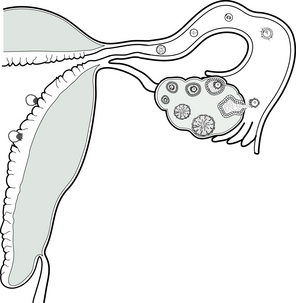
These events reflect the arrival of the Yang part of the Yin-Yang cycle and it is at this point we start to see Yang tonic herbs appearing in prescriptions. The release of the egg is usually accompanied by a little bleeding from the ovary into the abdomen and this is one of the reasons it is advisable to add Blood-regulating herbs to herbal formulas at ovulation. In TCM, any blood not in its normal place (i.e. in a blood vessel) has the potential to become ‘stagnant’.
In TCM theory, the Heart controls the collaterals of the uterus, especially the Bao vessel or Bao Mai. If the Heart Qi is obstructed due to emotional stress, the function of the Uterus will be affected and the processes of ovulation will be derailed. It is the action of the Heart via the Bao Mai that keeps the Uterus ‘open’ at this time of the month, i.e., the egg can be released and the sperm can be granted passage into the uterus. The Heart is also said to control the Kidney Yin and Kidney Yang. If the switch from Kidney Yin to Kidney Yang at this midcycle point of the menstrual cycle is not orchestrated correctly by the Heart (perhaps as a result of emotional disturbance) ovulation does not occur.
The cervix at midcycle
The cervix responds to increased estrogen levels by opening, and the glands in the endocervix (the canal leading through the cervix to the uterine cavity) respond by producing fertile mucus (Fig. 2.16).
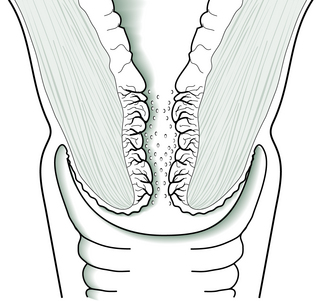
The purpose of the fertile mucus is to aid the survival of sperm and their movement from the vagina through the cervix. In ideal conditions (plenty of estrogen and flourishing Yin), a cascade of mucus pours from the cervical glands to the vagina. The chemical and physical nature of this mucus is such that all its mucoprotein strands line up, creating unimpeded passageways along which the sperm can pass.
The alignment of the mucin strands makes the mucus very elastic and it is this quality that is easily checked subjectively by women who are charting their cycles to determine fertile and non-fertile times (see Ch. 3). The secretions also provide a more hospitable pH than the acidic vagina does for the sperm and they contain nutrients which help to activate the sperm and make them swim vigorously.
The arrival of fertile mucus signifies the fertile time of the month. The mucus may be evident for a few hours or several days. For a woman trying to fall pregnant, it is more useful to produce plentiful fertile mucus over several days. This increases the chances of sex occurring at a time when the sperm can survive the acidity of the vagina and can be actively aided in breaching the cervix and traversing the uterus. It is the nature of Yin and Blood herbal tonics to increase the quantity and quality of fertile mucus (presumably via increased estrogen levels) and indeed this is often one of the first changes noticed by women who start taking such herbs.
The estrogen peak, which occurs before ovulation, drops sharply and the cervix responds equally quickly. The cervical secretions dry up over night (so rapidly that they may have disappeared by the very day that the egg is actually released) to be replaced by a thick, dry or pasty discharge. This rapid switch from wet to dry presents a dramatic demonstration of the switch from Yin (moistening) to Yang (warming). Just as sudden is the relocation of the cervix from high in the vagina to a low position. The os (opening) of the cervix closes at the same time. In TCM terms this change of position of the uterus is a reflection of the shift of predominance of activity of the Chong vessel to the Ren vessel.
The fallopian tube at midcycle
It is not only the follicle and the egg that have very active roles to play in the ovulation event – the fallopian tube does not just stand by passively or stiffly. The fingers (fimbriae) of the fallopian tube move to catch the sticky mass and steer it into the head (ampulla) of the tube. And the journey in the tube is not just a blind roll downwards to the uterus. The ciliated and mucusy lining of the tube must carefully usher the egg along its interior, initially to about the half-way point (the isthmus) where the tube becomes much narrower and the mucus is thicker. It is at this junction that the egg is held up to await a passing sperm.
The slowly rising levels of progesterone (Kidney yang) have another important role to play in this fallopian tube arena. The sperm that have made it thus far rely on the action of this progesterone to activate a calcium ion channel in the tail which not only helps the sperm to find the egg but also to penetrate its hard outer coating.10 The rising Kidney yang of the female cycle feeds and boosts the Kidney yang activity of the sperm.
The zygote or pre-embryo (as the egg will be called after there has been a successful encounter with a sperm) will wait here for 2 or 3 days until the isthmus muscles relax and the secretions are thin enough to allow the zygote’s journey to continue to the uterus. The secretions in the tube provide crucial nourishment for the egg and the zygote (Fig. 2.17).
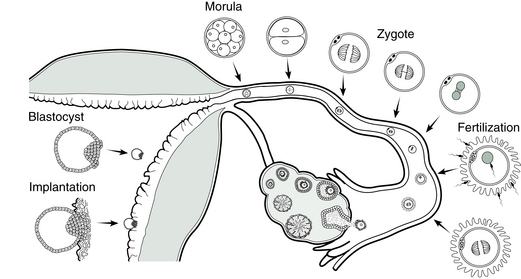
The estrogen produced by the developing follicle is what stimulates the production of this mucus in the fallopian tube in an attempt to protect the fallopian walls from the burrowing instincts of the new embryo and the advent of an ectopic pregnancy. When progesterone starts to be produced by the corpus luteum, this mucus becomes thinner, allowing free and unobstructed passage to the uterus but increasing the risk of the embryo being able to implant in the wall of the tube if for some reason the journey to the uterus is held up (see also Ch. 8).
This is why TCM treatments applied at this stage encourage the removal of obstruction and unfettered, rapid movement. Providing there is a good solid basis of Yin (i.e., the mucus secretions are adequate to hold the egg at the isthmus), there is little risk of the egg traveling too rapidly down the tube, even with enthusiastic acupuncture treatment.
In TCM terms, the release of the egg and its smooth passage down the fallopian tube is said to require free and unobstructed movement of Qi. Therefore at midcycle, Qi-regulating herbs are used, as are acupuncture points which help the Qi to move freely in the abdomen and especially around and through the tubes. Herbs may also be employed at midcycle to help dissolve thick mucusy secretions which have been built up in the follicular phase but now need to be dispelled for free passage from the isthmus of the tube to the uterus. If there is a problem like scarring or kinking, or adhesions in or around the tubes which hinder their free movement or obstruct their internal passage, then Blood-regulating herbs, which have more effect on substantial blockages, will be added (see Ch. 6).
The Yang tonics applied from about the time the LH starts to be released also aid in flexibility of the tube and movement of the egg. In particular, they might be supposed to help the muscles in the isthmus relax and its secretions to be dispelled.
As ovulation approaches, we first bear in mind the readiness of the egg to be launched and fertilized, i.e., the quality and quantity of the Yin and the Jing is emphasized. If the Yin or the Jing is deficient and the egg is therefore not optimum quality, there is little in the way of effective treatment to be applied at this stage of the cycle when it is about to be released. Preparatory work for future cycles and future eggs can begin, however, at any point. Blood status is important as ovulation draws near, because the lining of the uterus must be ready to receive the fertilized egg, i.e., the Chong vessel must be full of Blood.
At the culmination of Yin, not only is the egg completely ripe and ready for ovulation but also there is plentiful mucus secretion from the cervix, in the fallopian tube and on the section of the follicle wall, which softens enough to allow the escape of the egg. All these secretions reflect the moistening action of Yin, and can be promoted by the use of Yin tonic herbs.
As the LH surge heralds the imminent release of the egg, the Yang aspect of the cycle is encouraged with the introduction of herbs with Yang activity. These help to moderate somewhat the sticky and potentially obstructive nature of the mucus secretions (called Damp in TCM if they are excessive or lingering), which occur when Yin is at its peak.
The Yang Part of the Cycle
Luteal phase (progestogenic or secretory phase)
Unlike the rather fickle and changeable nature of the follicular phase, the luteal phase – that period of time between ovulation and the beginning of menstruation – is the most constant and predictable part of the cycle in terms of its length and other measurable parameters. It is in this phase that progesterone is produced by the ovary and nutrients are secreted by the uterine lining (Fig. 2.18).
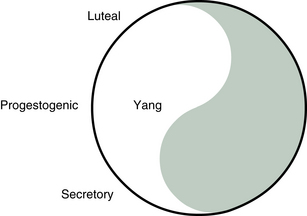
The ovary in the luteal phase
The empty follicle collapses and forms a gland called the corpus luteum (which is Latin for ‘yellow body’) inside the ovarian wall. The LH keeps stimulating it to produce progesterone, the most important hormone of this part of the cycle.
Progesterone has three important actions:
• It causes the endometrium to start secreting nutrients in case there is a conception
• It switches off the hormones which would otherwise keep ripening up more eggs
• It provokes changes in the main fertility signs by which women are monitoring their cycle – namely, BBT rises, cervical secretions become thick and pasty and the cervix moves lower in the vagina.
The progesterone produced by the corpus luteum has several actions on the body which are useful if we are monitoring hormonal activities in an attempt to pinpoint ovulation. It acts on the temperature-regulating centers in the hypothalamus in the brain.
Doctors of Chinese medicine first described the importance of a warm womb hundreds of years ago; however, physiologists are not sure why it is beneficial for the embryo or fetus to be in a slightly warmer environment. Chinese medicine describes a ‘Cold’ uterus as a common cause of infertility. Although this concept of increased ‘warmth’ in the luteal phase has been borne out by the observations that the body temperature is slightly raised after ovulation, Heat as a physiological parameter in TCM is a broader concept than just temperature. In TCM, the warmth of the uterus refers to its metabolic activity, actively manufacturing and secreting nutrients, and maintaining a highly nurturing home for a fetus.
The corpus luteum, which is responsible for maintaining the endometrium, continues to grow under the initial influence of the LH surge, but peaks in size at around 1.5 cm, about a week after ovulation. Without LH to sustain it, the corpus luteum begins to degenerate and by about Day 26 of a 28-day cycle, its secretory function finishes and the endometrium starts to break down. The life span of the corpus luteum in a normal menstrual cycle usually stays constant for any given woman, varying maybe just 1 or 2 days at the outside.
The corpus luteum seems to be well insulated from the vicissitudes of life’s ups and downs in its cosy nook inside the ovarian wall (well away from the brain and all its mental activity) and rarely wavers in its job of producing adequate levels of progesterone for enough time to ensure the implantation and survival of an embryo. The exception to this rule (there always is one, and it is here that the doctor steps in) is the ‘inadequate luteal phase’ or ‘luteal phase defect,’ a diagnosis which refers to a short luteal phase because the corpus luteum suffers an early demise. Of course, this means there may not be enough time for an embryo to implant successfully and can be a cause of infertility. Such a failure of Kidney Yang function is easily remedied by TCM treatment.
If a conception occurs and implantation of the embryo is successful, the hormone it produces (human chorionic gonadotrophin, hCG) tells the corpus luteum to remain active for a couple more months until the placenta itself is ready to take over.
The endometrium in the secretory phase
After ovulation, and in response to the hormones produced by the corpus luteum, there is a change in the activity of the endometrium. There is no more proliferation of glandular cells and the lining stops growing thicker. The arterioles continue to grow but because the endometrium does not get any thicker they become more and more compressed and twisted into spiral shapes.
The sequence of changes as the endometrium becomes more secretory are very precise. Four days after ovulation, at about the time the embryo is due to arrive in the uterus, the secretions are enough to fill the cells and appear in the glands. By 10 days after ovulation, the cells of the endometrial tissue are so plumped up with fluid they appear like one smooth surface.
This differentiation process is further characterized by a massive influx of specialized immune cells, especially uterine natural killer (uNK) cells, which are a rich source of growth and angiogenic factors essential for vascular remodeling. The process of decidualization allows simultaneous protection of the embryo against environmental or immunological insults and ensures hemostasis and tissue integrity during deep trophoblast invasion. These functions are highly dependent on good progesterone levels.
The stage of development of the endometrium must match the development of the embryo if implantation is to be effective. It can be viewed as a gatekeeper, allowing embryos to attach only under the right conditions. The so-called Window of Implantation (WOI) occupies a 4–5-day interval in the cycle, at the time when progesterone reaches peak serum concentrations. In a 28-day cycle, this window begins around Day 19 or 20.
If the endometrium has gone past the appropriate stage when the embryo arrives to take up residence, implantation will fail and the embryo will not survive. If the endometrium is lagging a little, or the passage of the pre-embryo down the fallopian tube is too rapid, successful implantation cannot be expected.
Sometimes, even if the timing is right and the embryo is as far as we know ‘perfect’, the endometrium will not be permissive. Certainly if it is not thick enough this is the case, but even in cases where the thickness is adequate, if an ultrasound shows a homogeneous or ‘whited out’ look (rather than a trilaminar appearance) it will not be hospitable for the new embryo. A uterine lining, which is not permissive to implantation may have developed in a disorderly way. This is another reason why we place so much emphasis on treatment during the menstrual and postmenstrual phase when the endometrium is being rebuilt.
Obstructions like polyps, fibroids or scarring may interfere with the way in which the endometrium grows. If such impediments to implantation are large or numerous, they will usually be dealt with before attempts at pregnancy.
During the luteal or Yang phase, the main emphasis of prescriptions is on herbs with Yang or warming attributes. One of the observed actions of these Yang herbs is to maintain the progesterone levels at a satisfactory level and thus the uterine lining is kept in a thick, juicy and receptive state in readiness for the possible arrival of the embryo.
Implantation
The most crucial aspect of this part of the cycle, if a conception has occurred, is implantation of the embryo within this cushion-like lining of the uterus. The embryo (in the form of a blastocyst) arrives in the uterus 4–6 days after ovulation and surveys the terrain for a suitable burrowing spot, probably targeting special attachment sites on the epithelial surface. In most successful cases, implantation is completed 8–10 days after ovulation and the majority of implantations that occur more than 11 days after ovulation will not last. On the other hand, a large majority of embryos which implant 9 days after ovulation will develop into healthy fetuses and the pregnancy will be secure.11 Scientists doing this sort of research think that there is communication between the blastocyst and the prospective mother (via messenger proteins) about where and when to implant. Immune regulating factors are important in creating the right environment and although the mechanism is not understood it appears that an inflammatory reaction in the endometrial cells promotes implantation.12
Embryos with strong and abundant Kidney Jing are those most likely to implant and develop quickly (Fig. 2.19).
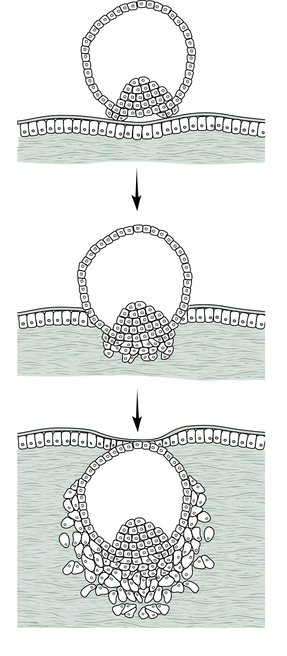
The process of implantation is aided by the uterus, which presses its front and back walls together, like a closed fist, holding the embryo firmly in place, until it is safely tucked into its endometrial bed. To achieve this snug pressure, all the fluid must be removed from the uterine cavity first. Physiologically, this is achieved very efficiently by the endometrial cells, which ‘drink’ the endometrial fluid (secretions) – the electron microscopists who take pictures of these gulps call them pinocytosis. If this function is inadequately performed, as may be the case in Kidney and Spleen Yang-deficient individuals, wherein fluids are not dealt with properly, then the surface of the endometrium may be too slippery or Damp for the fetus to get a foothold.
Back to the Drawing Board
When there is no conception, or if implantation fails, the endometrium will disintegrate and the period will arrive. We are back at Day 1 of another cycle and once again regulating the Blood and Qi will be our primary aim.
Parallels Between Tcm and Western Parameters
Having said at the outset of the chapter that making equivalences between descriptions of physiologic activity in the Western and Chinese medical framework is difficult because of the very different paradigms they are based upon, we can make some associations between terms that we are now familiar with applied to the menstrual cycle (Table 2.2).
Many of the actions or manifestations of Yin are what modern Western clinicians call the action of estrogen (Table 2.3). And perhaps we could go a little further and say the action of the pituitary hormones (FSH and LH) represent an aspect of Jing. Likewise, the Yang characteristics of the second part of the cycle are largely attributable to the action of progesterone.
Table 2.3
Action of estrogen and progesterone in traditional Chinese medicine (TCM) terms
| Western physiology | TCM |
| Estrogen promotes the growth of the follicle and egg (by its positive feedback on the pituitary) | Yin supports action of Jing |
| Estrogen stimulates the cervical glands to produce fertile mucus | Yin creates Fluids |
| Estrogen stimulates the cells of the fallopian tubes to produce nutrients and mucus along their linings | Yin creates Fluids |
| Progesterone lifts the body temperature | Yang warms the Uterus |
| Progesterone thins out the mucus secretions in the fallopian tube, thereby allowing the embryo passage | Yang transforms Fluids, clears Damp |
| Progesterone halts the production of fertile mucus from the cervix | Yang dries Fluids |
References
1. Macioca, G. The foundation of Chinese medicine. Edinburgh: Churchill Livingstone; 1989.
2. Hansen, M., Kurinczuk, J.J., Bower, C., et al. The risk of major birth defects after intracytoplasmic sperm injection and in vitro fertilization. N Engl J Med. 2002;346(10):725–730.
3. Laura, A., Schieve, P.D., Meikle, M.D., et al. Low and very low birth weight in infants conceived with use of assisted reproductive technology. N Engl J Med. 2002;346(10):731–737.
4. Deadman, P., Al-Khafaji, M., Baker, K. A manual of acupuncture. Hove: Journal of Chinese Medicine Publications Ltd; 1998.
5. Apter, D. Development of the hypothalamic-pituitary-ovarian axis. Ann NY Acad Sci. 1997;816:9–21.
6. Brosens, J.J., Parker, M.G., McIndoe, A., et al. A role for menstruation in preconditioning the uterus for successful pregnancy. Am J Obstet Gynecol. 2009;200(6):e1–e6. [615].
7. Brosens, J.J., Gellersen, B. Death or survival – progesterone-dependent cell fate decisions in the human endometrial stroma. J Mol Endocrinol. 2006;36(3):389–398.
8. Ford, J.H. It takes two. Adelaide: Environmental and Genetic Solutions; 1997. [178].
9. Ford, J.H. It takes two. Adelaide: Environmental and Genetic Solutions; 1997. [182].
10. Lishko, P.V., Botchkina, I.L., Kirichok, Y. Progesterone activates the principal Ca2+ channel of human sperm. Nature. 2011;471(7338):387–391.
11. Wilcox, A.J., Baird, D., Weinberg, C.R. Implantation of the conceptus and loss of pregnancy. N Engl J Med. 1999;340(23):1796–1799.
12. Gnainsky, Y., Granot, I., Paulomi, B., et al. Local injury of the endometrium induces an inflammatory response that promotes successful implantation. Fertil Steril. 2010;94(6):2030–2036.