Herbal Formula: The doctor will prescribe Blood-nourishing formulas, e.g., the famous tonic Ba Zhen Tang, to which herbs are often added to strengthen the Kidneys and calm the mind.
Ba Zhen Tang (Eight Precious decoction) modified
| Dang Gui | 9 g | Radix Angelicae Sinensis |
| Shu Di | 9 g | Radix Rehmanniae Glutinosae Conquitae |
| Bai Shao | 9 g | Radix Paeoniae Lactiflorae |
| Chuan Xiong | 6 g | Radix Ligustici Wallichii |
| Dang Shen | 12 g | Radix Codonopsis Pilulosae |
| Dan Shen | 9 g | Radix Salviae Miltiorrhizae |
| Bai Zi Ren | 9 g | Semen Biotae Orientalis |
| Bai Zhu | 9 g | Rhizoma Atractylodis Macrocephalae |
| Fu Ling | 9 g | Sclerotium Poriae Cocos |
| Tu Si Zi | 12 g | Semen Cuscatae |
| Sang Ji Sheng | 12 g | Ramulus Sangjisheng |
| Xiang Fu | 9 g | Rhizoma Cyperi Rotundi |
| Gan Cao (zhi) | 3 g | Radix Glycyrrhizae Uralensis |
The first four herbs constitute the Blood tonic portion of Ba Zhen Tang and to these we add Sang Ji Sheng, because not only does it further nourish the Blood but it also supplements Liver and Kidney Yin. The Kidney Yin supplementing function of Sang Ji Sheng combined with the Kidney Yang boosting function of Tu Si Zi will promote ovulation once Blood levels are sufficient. Dan Shen and Bai Zi Ren are included in the modifications to this formula because the integrity of the Heart Blood is of paramount importance for ovulation. Dang Shen, Bai Zhu, Fu Ling and Gan Cao (zhi) are the Qi tonic portion of Ba Zhen Tang. Xiang Fu is added to encourage movement of the Qi, which is especially important as the ovaries and tubes become functional again. Depending on the severity of the Blood deficiency, treatment may need to continue for 6 months or more. As signs of a menstrual cycle return, the skilful doctor will immediately start subtly altering the formulas to address Kidney Yin and Yang according to the appropriate stage of follicle and endometrium development. The patient will be advised to wait until a regular cycle is well established before attempting pregnancy. However, for a woman who has had long-term amenorrhea an opportunity to conceive is very hard to resist.
Acupuncture Points: As was the case with treating amenorrhea due to Kidney Yin deficiency, acupuncture to treat Blood deficiency plays a secondary role to herbal and dietary therapy. Points which regulate the Chong and Ren vessels are useful but only when there are already sufficient Blood resources to fill the Chong vessel. Acupuncture to encourage fertility in these cases is best employed to strengthen Spleen function and calm the mind, e.g. (and see Table 5.13):
Table 5.13
Acupuncture pointsa used in the treatment of amenorrhea due to Blood deficiency
| Treatment goal | Acupuncture points |
| To reinforce Spleen function to produce Blood | Ren-12, ST-36, BL-20 and SP-6 |
| To activate Qi in the Chong vessel | KI-13 and ST-30 |
| To supplement Heart Blood and calm the mind | HE-7 |
| Ren-12 | Zhongwan |
| ST-36 | Zusanli |
| SP-6 | Sanyinjiao |
| BL-20 | Pishu |
| KI-13 | Qixue |
| ST-30 | Qichong |
| HE-7 | Shenmen |
Amenorrhea from obstruction is a result of stagnation of Heart or Liver Qi, Phlegm-Damp accumulation and Blood stasis.
Periods that cease because they are blocked or obstructed in some way tend to stop quite suddenly compared with periods which stop because of deficiency. In this latter case, the periods may become irregular, infrequent or scanty before stopping.
Chinese medicine treatment of obstruction or stagnation affords rapid results if the stagnation is not too long term and hasn’t created other pathologies. However, the stagnation which causes amenorrhea often presents what appears to be a complex clinical picture.
Heart Qi becomes stagnant if there is undue or prolonged mental stress or anguish. Apart from disturbance of ovulation, symptoms such as insomnia and much dreaming, palpitations, anxiety, fear or sadness and restlessness may manifest. The role of Heart Qi in ovulation was discussed briefly in Chapter 2 and is revisited here in more detail. There are two ways that the Heart is considered of great importance for ovulation.
The first is the fact that the Heart, with the Kidney, is considered to play an important role in maintaining the balance of Yin and Yang. Here we are concerned specifically with Kidney Yin and Kidney Yang. If the Heart maintains a harmonious relationship with the Kidney, then it is said that Fire and Water are balanced and therefore the Yin and Yang are balanced. It is only in such circumstances that the menstrual cycle, with its constant growth and ebb of Yin to Yang and Yang to Yin operates effectively. If the Heart Qi does not flow freely, then this important regulation of Yin and Yang can be affected. In terms of the menstrual cycle, the transformation of Yin to Yang may be disrupted and ovulation will fail.
The second way that the Heart is thought to influence ovulation is via the Bao vessel, which was discussed earlier (Ch. 2). The Heart Qi must travel to the Uterus to control its opening. If Heart Qi is stagnant, the Uterus will not open – in other words, ovulation does not occur.
Both these aspects of Heart function therefore represent the hypothalamic and pituitary control of the ovarian cycle. Amenorrhea caused by Heart Qi stagnation falls specifically into the Western medical category of hypothalamic anovulation.
Most of the amenorrhea that has an emotional basis will fall into the Heart Qi stagnation category but there are some special cases which are related more to Liver Qi stagnation and some which are related to both Liver and Heart Qi stagnation.
Herbal Formula: To treat and disperse Heart Qi stagnation, calm the mind and regulate menstruation use Bai Zi Ren Wan with extra sedative herbs.
Bai Zi Ren Wan (Biota pill) modified
| Bai Zi Ren | 9 g | Semen Biotae Orientalis |
| Dan Shen | 9 g | Radix Salviae Miltiorrhizae |
| Xu Duan | 9 g | Radix Dipsaci |
| Shu Di | 9 g | Radix Rehmanniae Glutinosae Conquitae |
| Chuan Niu Xi | 9 g | Radix Cyathulae |
| Ze Lan | 9 g | Herba Lycopi Lucidi |
| Yu Jin | 9 g | Tuber Curcumae |
| He Huan Pi | 9 g | Cortex Albizziae Julibrissin |
| Yuan Zhi | 6 g | Radix Polygalae Tenuifoliae |
| Fu Ling | 9 g | Sclerotium Poriae Cocos |
In this formula, the herbs Bai Zi Ren, He Huan Pi and Yuan Zhi calm the spirit. Dan Shen, Yu Jin, Chuan Niu Xi, and Ze Lan, keep Heart Blood moving, Shu Di reinforces the Yin and the Blood while Fu Ling supports the Spleen Qi. Xu Duan boosts Kidney Yang, which will help to promote ovulation.
Acupuncture Points: The following points are used (and see Table 5.14):
Table 5.14
Acupuncture pointsa used in the treatment of amenorrhea due to stagnation of Heart Qi
| Treatment goal | Acupuncture points |
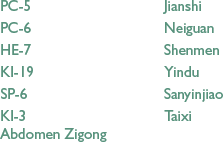
| To calm the spirit, open the Bao vessel and regulate Qi in the chest | PC-5 |
| To calm the spirit and soothe the Heart | PC-6 |
| To regulate Qi around the ovaries | Abdomen Zigong |
| To calm the spirit and treat dream disturbed sleep | HE-7 |
| To supplement Kidney Yin (Water) to maintain balance between Heart-Fire and Kidney Water | KI-3 and SP-6 |
| To regulate Heart Qi and the Chong vessel | KI-19 |

Qi Gong, yoga, meditation or stress-reducing techniques are an important adjunct to the treatment. If the Heart stagnation has not caused damage to the Kidney Yin and Yang, then resolution of the stagnation will be enough to re-establish a regular menstrual cycle. In some cases, however, treatment to reinforce Kidney Yin and promote Kidney Yang (see Ch. 4) will be necessary to ensure that the cycle continues in a regular fashion and that fertility is optimal.
Liver Qi can become stagnant and lead to amenorrhea if there is prolonged frustration, irritability or depression. High levels of stress or life changes such as moving countries or a lot of traveling can cause periods to disappear in prone individuals. Amenorrhea related to Liver Qi stagnation can also occur after long-term breast-feeding (more than 1 year is considered long term if the mother’s constitution is not strong). The use of certain drugs, including antipsychotic agents such as chlorpromazine (Largactil) and the oral contraceptive pill, can also precipitate amenorrhea. When the Liver Qi is obstructed, it can give rise to Liver-Fire, weaken the Spleen and Stomach function and exacerbate any underlying Kidney Yin deficiency. If the Liver-Fire invades the Stomach channel, it can force the menstrual Blood upwards, which then appears as milk secretion from the nipples. If the Stomach and Spleen are affected, there may also be anorexia.
The diagnosis of amenorrhea caused by Liver Qi stagnation is indicated if the patient’s history includes drug taking or oral contraceptive pill use (see also section on PCOS, below) or if there are abnormal breast secretions and pathology test results indicate high prolactin levels in the blood. The diagnosis of Liver Qi stagnation should be confirmed by the presence of symptoms such as chest stuffiness (sometimes with breast soreness), agitation and irritability and a wiry pulse.
Liver Qi stagnation can contribute to infertility in a number of ways other than disturbing ovulation (see Blockage of the fallopian tubes, Ch. 6). Amenorrhea of the Liver Qi stagnation type includes those in the hyper-prolactinemia category, post-pill amenorrhea and that caused by some tumors.
Herbal Formula: The best results in treating Liver Qi stagnation amenorrhea are achieved with a formula which will regulate the Liver Qi, clear Liver-Fire and nourish Liver Yin. The well-known formula, Dan Zhi Xiao Yao San, can be used with the addition of herbs which nourish the Liver.
Dan Zhi Xiao Yao San (Moutan Gardenia Free and Easy powder) modified
| Dang Gui | 9 g | Radix Angelicae Sinensis |
| Bai Shao | 12 g | Radix Paeoniae Lactiflorae |
| Fu Ling | 12 g | Sclerotium Poriae Cocos |
| Bai Zhu | 9 g | Rhizoma Atractylodis Macrocephalae |
| Chai Hu | 9 g | Radix Bupleuri |
| Mu Dan Pi | 9 g | Cortex Moutan Radicis |
| Zhi Zi | 6 g | Fructus Gardeniae Jasminoidis |
| Gan Cao | 6 g | Radix Glycyrrhizae Uralensis |
| Shan Zhu Yu | 9 g | Fructus Corni Officinalis |
| Bo He | 3 g | Herba Menthae |
| Sheng Jiang | 3 g | Rhizoma Zingiberis Officinalis Recens |
Shan Zhu Yu is sour in flavor and therefore is nourishing to the Liver. Bai Shao and Gan Cao also nourish the Liver. Mu Dan Pi and Zhi Zi clear Liver-Fire, Chai Hu regulates Liver Qi. Bai Zhu and Fu Ling support the Spleen and Dang Gui nourishes the Blood. Sheng Jiang and Bo He are envoy herbs which help to prevent Qi rising or being obstructed.
A stronger treatment for Liver Qi stagnation and one which is preferred by specialists in the gynecology department in the Jiangsu Province Hospital is Yi Ru San. This formula is more effective than the above if there is hyper-prolactinemia causing lactation.
Yi Ru San (Benefiting the Breast powder)
| Chuan Bei Mu | 6 g | Bulbus Fritillariae Cirrhosae |
| Bai Shao | 9 g | Radix Paeoniae Lactiflorae |
| Qing Pi | 6 g | Pericarpium Citri Reticulatae Viride |
| Gou Teng | 9 g | Ramulus Uncariae Cum Uncis |
| Chuan Niu Xi | 9 g | Radix Cyathulae |
| Mu Li | 15 g | Concha Ostreae |
| Mai Ya | 30 g | Fructus Hordei |
| Chuan Lian Zi | 9 g | Fructus Meliae Toosendan |
This formula, which is based on Hua Gan Jian (Transforming Liver decoction), regulates the Liver Qi and restricts lactation. Chuan Bei Mu has a specific action of relieving Liver Qi constriction affecting the chest and the breasts. Bai Shao nourishes Blood and soothes the Liver. Qing Pi and Chuan Lian Zi help to remove Liver Qi stagnation while Gou Teng pacifies any rising Liver Qi. Mu Li also restrains rising Liver Yang. Mai Ya is used in large doses to suppress lactation and relieve breast distension. Chuan Niu Xi regulates and prevents Blood stagnation and encourages downward movement to help counteract rising Liver Yang.
Acupuncture Points: Acupuncture can be very effective in treating this sort of ovulatory disorder. Choose from the following points (and see Table 5.15):
Table 5.15
Acupuncture pointsa used in the treatment of amenorrhea (including hyperprolactinemia) caused by Liver Qi stagnation
| Treatment goal | Acupuncture points |
| To regulate Liver Qi and drain Liver-Fire | LIV-2 and LIV-8 |
| To move Liver Qi in the upper body and relieve pent up emotions and irritability | PC-7 and PC-5 |
| To remove stagnation of Qi in the breasts and promote normal breast function (if there is inappropriate lactation) | LIV-14 and ST-18 |
| To support Spleen and Stomach function | ST-36 |
| To regulate Qi around the ovaries | Abdomen Zigong |
| To activate the Chong vessel | SP-4 |
| LIV-2 | Xingjian |
| LIV-8 | Ququan |
| PC-7 | Daling |
| PC-5 | Jianshi |
| LIV-14 | Qimen |
| ST-18 | Rugen |
| ST-36 | Zusanli |
| SP-4 | Gongsun |
| Abdomen Zigong |
Hyperprolactinemia-related anovulation: In the experience of infertility specialists in China, hyperprolactinemia is mainly related to Liver Qi stagnation and rarely to Kidney deficiency. This is one of the few types of infertility where treatment will be directed simply and only at clearing stagnation. Once stagnation is cleared, then it is expected the Kidney Yin and Yang and the Chong and Ren vessels will function to produce a cycle. This is certainly the experience of Western specialists who find drug treatment of hyperprolactinemia anovulation quickly re-establishes a cycle and fertility.
However, for the TCM doctor to really succeed, s/he needs to address not only the prolactin in the blood but also its source. If the source is a substantial tumor in the pituitary gland, then treatment with Chinese herbs and acupuncture may not produce such rapid and effective results as will giving bromocriptine. If it is pregnancy which is the desired outcome, then there is good reason to consider this drug treatment; the ovulation thus achieved is not likely to produce inferior eggs because in most uncomplicated cases of hyperprolactinemia there is no Kidney deficiency. On the other hand, if there is no pituitary tumor or pregnancy is not desired immediately, then trying to establish a cycle by removing the Liver Qi obstruction with formulas and acupuncture points just mentioned may be preferable to administration of bromocriptine.
Better results can be expected in the treatment of Liver Qi stagnation amenorrhea with herbs and acupuncture when there is no Liver-Fire and prolactin levels are not high.
Post-pill amenorrhea: Post-pill amenorrhea is defined as the failure of a menstrual cycle to return within 6 months of discontinuing the oral contraceptive pill (OCP). The pill interrupts natural body cycles so it is easy to see why the Liver Qi (which is fundamental to regular body rhythms) is affected. In some women, this effect lasts after the pill has been stopped, i.e., the cycles do not easily re-establish themselves. In certain individuals, long term use of the oral contraceptive pill may interfere with some metabolic pathways and contribute to the development of PCOS which only becomes evident after the pill is stopped. We shall discuss this and the effect the OCP has on carbohydrate metabolism and Spleen function when we discuss PCOS below.
Dan Zhi Xiao Yao San modified (see above) is applicable in many cases of simple post-pill amenorrhea with the correct presentation. Additionally, a number of women develop Liver Blood deficiency as a result of the inhibition of natural Liver function. This is another reason that periods do not return for some time.
Herbal Formula: In this case, more Blood tonics could be added to Dan Zhi Xiao Yao San modified, e.g.
| Ji Xue Teng | 15 g | Radix et Caulis Jixueteng |
| Shu Di | 9 g | Radix Rehmanniae Glutinosae Conquitae |
In Chapter 3, we discussed the effect that the pill has on the production of fertile mucus even after it has been discontinued. The Liver channel’s pathway passes through the cervix and stagnation of the Qi can contribute to the disruption of the function of the glands responsible for fertile mucus production.
Acupuncture Points: Acupuncture to move the Qi in the Liver channel is useful in helping re-establish cervical gland function. Choose from the following points (and see Table 5.16):
Table 5.16
Acupuncture pointsa used in the treatment of post-pill amenorrhea related to Liver Qi stagnation
| Treatment goal | Acupuncture points |
| To regulate Qi in the reproductive tract, especially the cervix | LIV-1, LIV-5 and LIV-8 |
| To regulate Qi in the Uterus | LIV-11 |
| To encourage Qi movement and regulate function of glands in the cervix | Ren-3 |
| To reinforce the movement of Qi in the lower abdomen and genital area | ST-30 and Ren-1 |
| LIV-1 | Dadun |
| LIV-5 | Ligou |
| LIV-8 | Ququan |
| LIV-11 | Yinlian |
| Ren-3 | Zhongji |
| Ren-1 | Huiyin |
| ST-30 | Qichong |
The pathology and etiology of amenorrhea that results from Phlegm-Damp is complex and will be discussed more in the section on PCOS, below. Phlegm-Damp can arise through poor eating habits, especially of rich and sweet foods, or from an inherited weakness of internal organs or disruption in their function by Qi or Blood stagnation.
Amenorrhea associated with weight gain is always indicative of Phlegm-Damp accumulation. However, determining the origin of the Phlegm-Damp requires diagnostic skill and not all such accumulations will manifest as obvious weight gain. There are three pathologic patterns that are most often associated with Phlegm-Damp-type amenorrhea. The first two of these correspond with patterns seen in polycystic ovary syndrome (PCOS) and will be discussed in detail in the next section.
• Kidney and Spleen deficiency: most commonly it is a combination of weak Kidney and Spleen function which allows Damp to accumulate, leading to pathogenic obstruction by Phlegm-Damp. Weight gain often accompanies this pattern.
• Liver Qi stagnation: Phlegm-Damp can also accumulate if Liver Qi stagnation leads to obstruction of Qi and Blood flow in the Liver, Chong, Ren or Dai vessels creating the conditions for accumulation of Damp obstructions. Liver Qi stagnation will often compromise Spleen and Stomach function and metabolism becomes inefficient as a result.
Minor weight gain may be noticed or the deposition of Phlegm-Damp may be less obvious if it is just layered around the abdominal organs or the ovaries but does not cause marked increase in waist measurement.
• Blood stagnation: this stagnation takes the form of tumors, fibroids or cysts, which can obstruct the normal circulation of Qi and fluids, giving rise to Phlegm-Damp.
For Phlegm-Damp accumulation with Spleen/Kidney deficiency and Phlegm-Damp accumulation with Liver Qi stagnation, see PCOS section below.
Phlegm-Damp accumulation with Blood stagnation: Amenorrhea in this category can usually be traced to a tumor. In the case that tumors are contributing to (or are the result of) Phlegm-Damp, then surgery is often an efficient solution. Once the tumor is removed, then Phlegm-Damp is addressed with the type of Damp-clearing formulas covered earlier.
Herbal Formula: If surgery is not appropriate, then a formula which combines herbs to move stagnant Blood and Phlegm-Damp can be used.
Cang Fu Dao Tan Tang (Atractylodes Cyperus Phlegm decoction) modified
| Cang Zhu | 15 g | Rhizoma Atractylodes |
| Xiang Fu | 9 g | Rhizoma Cyperi Rotundi |
| Ban Xia | 9 g | Rhizoma Pinelliae |
| Fu Ling | 15 g | Sclerotium Poriae Cocos |
| Chen Pi | 6 g | Pericarpium Citri Reticulate |
| Dan Nan Xing | 6 g | Rhizoma Arisaematis |
| Zhi Ke | 6 g | Fructus Citri seu Ponciri |
| Gan Cao | 3 g | Radix Glycyrrhizae Uralensis |
| Sheng Jiang | 3 slices | Rhizoma Zingiberis Officinalis Recens |
| Shen Qu | 6 g | Massa Fermenta |
| Chuan Xiong | 6 g | Radix Ligustici Wallichii |
| Chuan Niu Xi | 9 g | Radix Cyathulae |
| San Leng | 6 g | Rhizoma Sparganii |
| E Zhu | 6 g | Rhizoma Curcumae Zedoariae |
| Ze Lan | 6 g | Herba Lycopi Lucidi |
This formula clears Phlegm-Damp and with the additional Blood-invigorating herbs, San Leng, E Zhu and Ze Lan, will also break up accumulations of stagnant Blood.
Acupuncture Points: Points (Table 5.17) are chosen from:
Table 5.17
Acupuncture pointsa used in the treatment of amenorrhea due to Phlegm-Damp accumulation with Blood stagnation
| Treatment goal | Acupuncture points |
| To clear local stagnation of Blood in the abdomen | ST-28, ST-29 and SP-12 |
| To remove stagnation of Blood in the Chong vessel | KI-14, KI-18 and KI-19 |
| To clear both Blood stagnation and Phlegm-Damp accumulation in the lower Jiao | LIV-8 |
| To facilitate movement of Blood | SP-10 |
| To clear Damp from the lower Jiao | SP-9 and SP-5, Ren-3 |
| To promote ovulation, which is delayed or disrupted due to Blood stagnation | KI-5 |
| LIV-8 | Ququan |
| SP-10 | Xuehai |
| KI-14 | Siman |
| KI-18 | Shiguan |
| KI-19 | Yindu |
| SP-12 | Chongmen |
| ST-29 | Guilai |
| ST-28 | Shuidao |
| Ren-3 | Zhongji |
| SP-9 | Yinlingquan |
| SP-5 | Shangqui |
| KI-5 | Shuiquan |
If evidence remains of Qi stagnation or Kidney weakness after the removal of Blood and Phlegm-Damp stagnation, then this must be addressed using the relevant formulas described above.
Blood stasis of the type related to tumors in the ovaries or other glands is not common and is best treated with surgery.
Iatrogenic causes of this type of amenorrhea are less rare, particularly those that result after repeated or over enthusiastic D&Cs, which cause adhesions affecting the lining of the uterus and block menstrual flow (Asherman syndrome). Surgery may be required to remove these obstructions, but Chinese herbs are helpful in recovering the integrity of the endometrium.
Herbal Formula: If there are signs of persistent Blood stagnation type pain (and this is often the case after surgery) then well-known formulas like Xue Fu Zhu Yu Tang or Shao Fu Zhu Yu Tang are used.
Xue Fu Zhu Yu Tang (Decoction for Removing Blood Stasis in the Chest) modified
| Tao Ren | 12 g | Semen Persicae |
| Hong Hua | 9 g | Flos Carthami Tinctorii |
| Dang Gui | 9 g | Radix Angelicae Sinensis |
| Chuan Xiong | 6 g | Radix Ligustici Wallichii |
| Chi Shao | 9 g | Radix Paeoniae Rubra |
| Chuan Niu Xi | 9 g | Radix Cyathulae |
| Chai Hu | 6 g | Radix Bupleuri |
| Yi Mu Cao | 9 g | Herba Leonuri Heterophylli |
| Xiang Fu | 9 g | Rhizoma Cyperi Rotundi |
| Zhi Ke | 9 g | Fructus Citri seu Ponciri |
| Sheng Di | 9 g | Radix Rehmanniae Glutinosae |
| Gan Cao | 3 g | Radix Glycyrrhizae Uralensis |
This formula invigorates Blood circulation, removes stasis and alleviates pain. The first six herbs regulate Blood, while Chai Hu and Zhi Ke ensure there is no Qi obstruction. Sheng Di will clear any Heat in the Blood which might develop as a result of stagnation. By replacing Jie Geng in the original formula with Yi Mu Cao and Xiang Fu, Blood and Qi stasis in the abdomen will be targeted.
Shao Fu Zhu Yu Tang (Lower Abdomen Eliminating Stasis decoction)
| Dang Gui | 9 g | Radix Angelicae Sinensis |
| Chuan Xiong | 9 g | Radix Ligustici Wallichii |
| Chi Shao | 9 g | Radix Paeoniae Rubra |
| Xiao Hui Xiang | 6 g | Fructus Foeniculi Vulgaris |
| Yan Hu Suo | 6 g | Rhizoma Corydalis Yanhusuo |
| Wu Ling Zhi | 6 g | Excrementum Trogopterori |
| Mo Yao | 6 g | Myrrha |
| Rou Gui | 6 g | Cortex Cinnamomi Cassiae |
| Gan Jiang | 6 g | Rhizoma Zingiberis Officinalis |
| Pu Huang | 9 g | Pollen Typhae |
This formula also invigorates Blood circulation and alleviates pain, especially that caused by Cold. Dang Gui, Chuan Xiong, Chi Shao, Yan Hu Suo, Wu Ling Zhi, Mo Yao and Pu Huang all have an action on Blood stasis, whereas Rou Gui, Xiao Hui Xiang and Gan Jiang will resolve any Cold contributing to the stasis.
In the case of Asherman syndrome or damage to the uterine lining, then 3 g Ru Xiang (Resina Olibani) will be added.
Acupuncture Points: Points (Table 5.18) are chosen from:
Table 5.18
Acupuncture pointsa used in the treatment of amenorrhea from Blood stasis
| Treatment goal | Acupuncture points |
| To regulate Qi and Blood in the lower abdomen and specifically the uterus | ST-29 |
| To clear Blood stagnation in the Chong vessel | KI-14 and KI-19 |
| To regulate Blood in the uterus | SP-10 and SP-6 |
| Useful in the treatment of all Blood disorders | BL-17 |
| ST-29 | Guilai |
| KI-14 | Siman |
| KI-19 | Yindu |
| SP-10 | Xuehai |
| SP-6 | Sanyinjiao |
| BL-17 | Geshu |
Table 5.19 summarizes and correlates TCM amenorrhea categories and Western medical diseases or conditions.
Table 5.19
Correlation of TCM amenorrhea categories and Western medical diseases or conditions
| TCM category | Disease or condition |
| Kidney Jing deficiency | Resistant ovary disease |
| Primary ovarian failure | |
| Polycystic ovary syndrome | |
| Kidney Yin deficiency | Premature menopause |
| Long-term illness | |
| Weight loss | |
| Severe hemorrhage | |
| Polycystic ovary syndrome | |
| Blood deficiency | Malnutrition or undernutrition |
| Excessive exercise | |
| Hemorrhage after miscarriage, abortion or childbirth | |
| Heart or Liver Qi stagnation | Shock or extreme stress |
| Hyperprolactinemia | |
| Post-pill amenorrhea | |
| Drug use | |
| Polycystic ovary syndrome | |
| Phlegm-Damp accumulation | Polycystic ovary syndrome |
| Ovarian cysts | |
| Blood stasis | Asherman syndrome |
| Pituitary, ovarian or adrenal tumor |
Polycystic ovarian syndrome is one of the most common disorders of ovulation that we see in our clinics today. It is a multifaceted disorder affecting endocrine, nervous and cardiovascular systems and has many metabolic repercussions and clinical manifestations. Our understanding of the primary etiology for this disorder is incomplete, however its clinical manifestations and signs are well described. We shall spend some time examining the clinical presentations of PCOS, and what we currently know about its endocrinologic and metabolic basis, so that we can begin to construct a TCM analysis that will give us a framework from which we can design appropriate treatment.
On the one hand, we can approach the treatment of PCOS with the sole aim of trying to increase ovulation frequency (and thus increase opportunities for conception) and on the other hand, with a more thorough analysis, we can attempt a broader approach to treatment that takes into account all the ramifications of this syndrome, including ovary dysfunction. This latter approach may also have a more far reaching impact on the function of the ovaries and the quality of the eggs therein, other than just increasing frequency of ovulation.
Polycystic ovary syndrome (PCOS) is the name given to the syndrome in which the ovaries appear to be covered with many small cysts on ultrasound (and likened poetically to a string of pearls), the menstrual cycles are long or irregular with infrequent ovulations and there are signs, such as more than usual body hair or acne, of excess circulating androgens. The syndrome is also linked with an increased incidence of diabetes and other metabolic disorders and pregnancy complications such as pre-eclampsia. Not all women with polycystic ovary syndrome will present the same way or have the same symptoms or laboratory findings.
This syndrome is the commonest endocrinopathy and the most common cause of anovulatory female infertility in Australia and other developed nations with a prevalence of approximately 9% of Australian women and 21% of Australian indigenous women of reproductive age.31 Some 9–15% of women in living in Europe have PCOS and an estimated 6–7 million women living in America have PCOS. As these figures attest, PCOS is a common disorder, and the frequency with which it is turning up in fertility clinics appears to be increasing.
Until the etiology of PCOS is clarified, diagnosis is made according to clinical manifestations. To receive a diagnosis of PCOS a woman must have two of the following symptoms or signs (according to the Rotterdam consensus 2003 criteria):
• Polycystic ovary morphology on ultrasound (defined as more than 12 follicles, size 2–9 mm on each or one ovary and/or swollen ovaries measuring more than 9 mL in volume
• Infrequent, irregular or no ovulation – cycles longer than 35 days or fewer than nine periods a year
• Hirsutism (unwanted hair growth), acne, male pattern hair loss, or evidence of elevated androgens on blood test.
Blood tests may reveal elevated levels of insulin, testosterone, dehydroepiandrosterone sulfate (DHEAS), estrogen, luteinizing hormone (LH), inhibin, anti-Mullerian hormone (AMH), fibrinogen and adipokines and reduced levels of sex hormone binding globulin (SHBG) and adiponectin.
The phenotype (expression of the disease) varies from mild to severe. For example, menstrual patterns can vary depending on the severity of the hormone disturbance, from no ovulations at all (amenorrhea or erratic anovulatory bleeding) to slightly irregular ovulations (long cycles or oligomenorrhea).
Some women show polycystic ovaries (PCO) or polycystic appearing ovaries (PAO) on ultrasound but do not manifest the full-blown syndrome described above. Up to 60% of teenage girls have polycystic ovaries on ultrasound and many of their early menstrual cycles are anovulatory. As many as 20–25% of women of reproductive age will have polycystic ovaries on ultrasound, but no symptoms other than slightly irregular menstrual cycles. These women usually have no problem conceiving, although it may take a little longer than usual.
For women having no or very infrequent ovulations however, fertility is seriously diminished and most of our discussion in this chapter will focus on these women diagnosed with the full syndrome.
• Genetics, epigenetics and uterine factors
• Androgens and folliculogenesis
Although we know that PCOS is associated with morbid metabolic, endocrine and cardiovascular features, we do not yet fully understand its etiology. The two most consistent endocrine findings are elevated androgens and insulin. We shall discuss these and inherited and lifestyle factors below.
The heterogeneity of clinical and biochemical features in PCOS is likely explained by the interaction of a small number of (as yet unknown) genes with certain environmental factors. Likely candidates include genes that regulate ovarian hormone production or influence body mass index, adiposity or insulin sensitivity.
We see that PCOS tends to run in families and is possibly passed on by the father’s genes. It is more likely to occur if there is a family history of type 2 diabetes or if there is early baldness (hyperandrogenism) in the men in the family.32 In addition to the influence of inherited genes, there may also be predisposing factors operating in the womb during pregnancy (i.e., an epigenetic influence).
Diet during pregnancy may have a profound influence on future health of the adult and this is an area being researched extensively. We know little about dietary triggers in utero for the development of PCOS although some researchers have observed that Vit D deficiency in utero can predispose to the development of PCOS.33
In animal studies, offspring of sheep and monkeys exposed to testosterone have more PCOS characteristics and this observation is supported by data from human studies.
This has led some investigators to propose that genetically determined hypersecretion of androgens by the fetal ovary may result in many of the observed clinical and pathologic features of PCOS, and may program the pituitary to favor excess luteinizing hormone (LH) secretion, encouraging the abdominal adiposity that predisposes to insulin resistance.34,35 Other researchers and clinicians feel that the primary genetic predisposition is to insulin resistance rather than androgen overproduction.36
Many women with PCOS were small babies. Such intrauterine growth retardation is in some cases associated with premature puberty in girls with PCOS37 and may be linked with inherited defects in the theca cells of the ovary, which predisposes them to overproduce androgens.38 Another factor which increases prenatal androgen levels and premature puberty is exposure in utero to commonly used pesticides.39 This risk is unfortunately an escalating one in modern and developing nations, and is discussed further in Chapter 9.
Early life exposure to phytoestrogens in the form of soy-based infant formulas, has also been examined as a possible endocrine disruptor acting on ovaries at a very sensitive stage of development. Animal studies would indicate that avoidance of soy formulas and drinks is to be recommended, however human studies are limited and results are as yet not clear cut.40
Little is known about the regulation of pre-antral folliculogenesis in the normal ovary, let alone in the polycystic ovary, however there is emerging evidence of an intrinsic abnormality of folliculogenesis in the ovaries of women with PCOS that affects the very earliest, gonadotrophin independent, stages of follicle development.41
The result is lots of immature follicles (primary and early pre-antral follicles); a result of accelerated progression of primordial to primary and early antral follicles and/or a reduced rate of atresia of early antral follicles. Excess androgens are the probable cause of both these phenomena.35
As discussed above, there appears to be genetically determined increased levels of androgens which exert their influence in utero (or prepuberty) and predispose to PCOS and possibly also a genetically determined predisposition to decreased insulin sensitivity. But genetics alone rarely dictates the course of a disease. Environment and lifestyle can also contribute to the development of this syndrome, as we will see when we discuss obesity below. In particular the development of insulin resistance has a major impact.
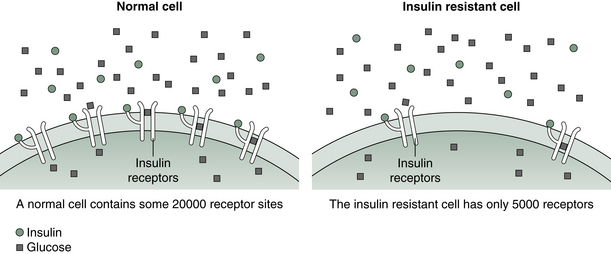
Humans are still genetically ‘wired’ to thrive on the habits of our ancestors, who consumed nutrient-rich foods, a diet low in carbohydrates and who sustained greater levels of movement and exercise than we do today. In many ways, our environment and lifestyles have evolved too rapidly for our bodies to keep pace. Unhealthy lifestyles and diet and genetic predisposition can cause the pancreas to overproduce insulin in an attempt to maintain normal blood glucose levels. The muscle cells (and others) are overwhelmed by this excess insulin and protect themselves by reducing the number of insulin receptor sites on their surface. The average healthy person has some 20 000 receptor sites per cell, while the average overweight woman with PCOS can have as few as 6000 on the cells of many of their tissues (Fig. 5.6).
Women with PCOS are thought to possess a selective resistance to insulin (within the liver or muscle tissue), whereas other organs, such as the ovaries, maintain normal sensitivity to insulin. The high levels of insulin in the blood stimulate the theca cells that surround the follicles in the ovary to enlarge and produce more than the usual amount of testosterone which interferes with ovary function and the menstrual cycle. Some researchers believe that hyperinsulinemia and abnormal carbohydrate metabolism not only contributes to ovarian dysfunction but also contributes to poor oocyte quality in those PCOS patients who do ovulate.
As long ago as 1996, the oral contraceptive pill was observed to contribute to deterioration in glucose tolerance and recent studies have confirmed an increased risk of developing insulin resistance in women with or without PCOS after taking the OCP.
For this reason and because of concerns over the metabolic effects of PCOS, it is recommended by many specialists that use of contraceptive pills be limited or avoided if possible. Transdermal and vaginal contraceptives have the same effect and Depo-Provera has a negative effect on weight, often causing up to 10 kg weight gain, which brings its own problems for fertility as discussed below.42,43
Insulin resistance and weight gain – apples and pears: The severity of the expression of PCOS can be affected by the percentage of body fat. Specialists in Australia report that at least half of their patients with PCOS are obese. (Obesity in women is defined as a waist measurement of 80 cm.) In Europe, 40–60% of PCOS patients are reported to be obese. In Asia, this percentage is lower and in the USA, the percentage is higher.
There is no doubt that obesity worsens the presentation of PCOS but it is also thought that PCOS itself confers a predisposition to obesity. However, it does not have to be extreme weight or obesity that causes a problem in women predisposed to PCOS. Sometimes it is the weight gain itself (even just 10% of body weight) can be enough to affect the ovaries. Excess weight around the abdomen is the pattern typical of PCOS patients and is the pattern associated with insulin resistance and other metabolic disorders. Waist-to-hip ratios are consistently higher (indicating increased abdominal fat mass) in both over weight or normal weight PCOS patients compared with women without this condition. Overweight women without PCOS tend rather to be heavier in the thighs and buttocks than the abdomen,44 hence, the apple and pear analogy. Central obesity is an android pattern and likened to an apple shape, while the lower body weight gain is a gynoid fat distribution and likened to a pear shape. So we might ask why should a big stomach be more worrying than a big bottom? Many researchers think the culprit is visceral fat, i.e., deposits of fat around the abdominal organs, as opposed to subcutaneous fat, under the skin. Visceral fat is more metabolically active than subcutaneous fat. Visceral fat has been measured by computed tomography X-ray (CT) scans or by dual energy X-ray absorptiometry (DEXA) scans, and shown to be linked to insulin resistance in both overweight and lean women with PCOS in most (but not all) studies.45–47
Whether there is abdominal obesity or not, we do know that the fat cells in PCOS patients are significantly larger than in women without PCOS. Also that adipose tissue behaves differently in PCOS, i.e., adiponectin, which is a circulating protein produced by adipocytes is reduced. This appears to be the case in both overweight and lean PCOS patients. These swollen adipocytes are more insulin resistant than regular sized ones, demonstrating how lean women with PCOS are at risk of developing the metabolic effects of the disorder.48 Losing weight (which we will discuss further below) is a strategy that can bring great benefit to PCOS sufferers.
Finally, it is worth noting that the effects of insulin resistance can be felt well before puberty. In young girls suffering childhood obesity with deposits of visceral abdominal fat, production of excess insulin affects the development of the ovaries. Again this is likely due to raised androgen levels. There is some evidence to show that if this can be prevented early enough (with insulin lowering treatment between 8 and 12 years), then PCOS is less likely to develop compared with other girls with the same risk factors (i.e., obesity and low birth weight), who are not treated before puberty.49
In terms of fertility, obesity in PCOS women not only exacerbates ovarian dysfunction but may also negatively affect implantation of an embryo, should a conception occur – these women show significantly altered proteins in the endometrium that are not seen in lean women who do not have PCOS.50 Additionally we know that obesity markedly changes the follicular environment in a way that is detrimental to the development of the eggs, likely reducing conception rates.51
Clinicians have observed that stress is a contributing factor in the development of PCOS in some of their patients, notably those who worked 9–14 h a day in professions such as law or finance.36 And animal studies (both in vivo, and with tissue culture laboratory studies) show that increased stress and sympathetic nervous system activity causes development of PCOS like characteristics and infertility.52
In conclusion we can say that there is likely a genetic predisposition in those girls or women who develop PCOS, probably involving genes related to the production of androgens, and possibly those predisposing to insulin resistance. On top of this, events in the womb (including epigenetic changes) and lifestyle factors, during early and middle life can influence the development of the disease. The consequences – including deposits of abdominal or visceral fat – can have deleterious effects on ovary function, follicular environment and the integrity of the endometrium.
While lack of regular and predictable release of eggs makes it harder to fall pregnant, the good news is that women with PCOS seem to retain their fertile potential for longer than other women. It appears that the process of ovarian aging may be delayed in women with PCOS and the typical ultrasound features of PCOS appear to diminish with increasing age.
Anti-Mullerian hormone (AMH) is secreted by the primary and preantral follicles and is an indicator of ovarian reserve. It is generally higher and declines more slowly in women with PCOS and it may be the case that their biological clock is not ticking as fast as that of other women. Thus, a greater ovarian reserve is retained in women in their 40s with PCOS and it is possible that they may actually be endowed with a larger ovarian reserve at birth. However, none of this is helpful if the ovaries are not prepared to ripen and release the reserved eggs!
So far we have spoken mostly about the effects of PCOS on the ovaries but there are more systemic effects too. Women with polycystic ovary syndrome have a high prevalence of hyperlipidemia, hypertension and progression to type 2 diabetes mellitus. This is similar to the features of the so-called ‘metabolic syndrome’ or ‘syndrome X’. By the age of 40 years, up to 40% of women with PCOS will have type 2 diabetes or impaired glucose tolerance.
The insulin resistance and hyperinsulinemia typical of PCOS stimulates lipid storage, altered lipoprotein and cholesterol metabolism and (possibly) altered steroid hormone metabolism. Women with the syndrome have at least seven times the risk of myocardial infarction and ischemic heart disease of other women.
Women with PCOS may suffer increased risks during pregnancy, including higher miscarriage rates, abnormal fetal size for gestational age, pre-term deliveries, gestational diabetes, hypertension and pre-eclampsia.
It is thought that excess androgens, and the related impaired insulin sensitivity, could alter the initial processes of trophoblastic invasion and placentation, leading to some of the above mentioned risks.
However, a high BMI and different PCOS phenotypes may account for some of these obstetric complications, and not all studies have found that PCOS patients have a higher risk of miscarriage.53,54
Women with polycystic ovary syndrome (PCOS) have poorer health-related quality of life (especially psychological) than women in the general population and than patients with other medical conditions such as asthma, epilepsy, diabetes, back pain, arthritis and coronary heart disease. Depression in this group of women is often related to obesity and infertility.55
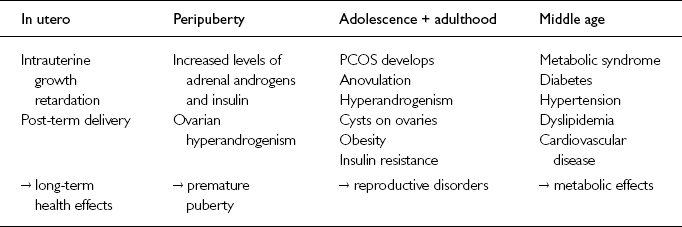
The effects of PCOS at different stages of life is summarized in Table 5.20.56
The type of treatment offered for patients with PCOS depends on the symptoms and the specific needs at different stages of life.
In young women, this may be reduction of acne, unwanted body hair growth or a desire for regular menstrual cycles. Or management of the health risks associated with PCOS. However, in this text we shall place most emphasis on discussion of treatments that promote fertility.
There is ample evidence that weight loss is beneficial in PCOS. There is also good evidence that weight loss improves fertility in all women whether they have PCOS or not, both in terms of spontaneous conception and IVF pregnancies.57 Not only does reducing obesity increase ovulation frequency but it improves the very follicular environment in which the eggs themselves mature.51,58
However, for women with PCOS, weight loss is not such an easy thing to achieve despite the best of intentions. These women may have an increased susceptibility to weight gain and/or find it harder to lose weight than women who don’t have PCOS. High levels of insulin encourage the body to increase fat storage. In a cruel vicious cycle this creates more insulin resistance, which increases blood insulin more and thus there will be even more weight gain.
There is also some evidence that the appetite signals in women with PCOS are disordered – these women produce too much ghrelin which increases appetite and leptin resistance in the brain so that the brain doesn’t get the appetite suppression messages. This means there is a higher satiety level and PCOS patients need to eat more to feel satisfied. Elevated androgen levels are linked with increased cravings for carbohydrates.
The good news is that it is a relatively small weight loss and body fat redistribution that is needed to start the ovaries working again. Just 5–10% of initial body weight (or even just 5 kg), enough to change the waist-to-height ratio, will improve metabolic, reproductive and psychological features of PCOS, including hyperandrogenism, insulin resistance, dyslipidemia, glucose tolerance, menstrual function, ovulation, pregnancy, and quality of life. It is the loss of a small volume of critical intra-abdominal fat, which may be only a small percentage of the total body fat, which confers these benefits.
Which diet should be recommended for weight loss in PCOS? This is a large and fascinating topic but we do not have room for detailed discussions of different diets here. Suffice it to say that there is insufficient evidence to date to confidently recommend one specific diet to all women with PCOS. Although some diet types may be more beneficial for metabolic status, individual constitutions and preferences are important so that the diet will be effective and will be maintained. It is important that changes in diet and exercise routine be amenable to the person involved, as a lifetime commitment to these changes will reap the most benefit. Chapter 9 discusses diet in more detail.
In general, high protein, low glycemic index meals are recommended because they are relatively low calorie, they do not raise blood sugar and do not produce as much insulin, and they manage hunger well. The high leucine content of protein contributes to regulation of protein synthesis and insulin signaling pathways. But a variety of approaches, including calorie counting and meal replacements, can be successful for achieving and sustaining a reduced weight.
The inclusion of dietary fiber at each meal (e.g., from whole grains including oats and barley or pulses) or supplemental fiber such as psyllium, also appears to be helpful in controlling insulin levels. The fiber is fermented by microbes in the large intestine creating short chain fatty acids which reduce insulin resistance by mechanisms acting in adipose, liver, and muscle tissue.
Although there is no clear clinical data from human studies, women and girls with PCOS are often advised to avoid soy products so that an extra load of phytoestrogens does not further disrupt the hormonal milieu.
As important as the diet itself, is the ongoing support given as part of a weight loss program. Goal setting, weight monitoring and individualization of the program, follow-up and monitoring by a healthcare practitioner and support from family or friends are crucial in the ongoing success of weight loss programs. Additionally, stress, patterns of eating (including emotional triggers), and self-esteem need to be addressed.
Exercise does not on its own help significantly with weight loss but it is an important part of a program for PCOS patients because it can improve insulin resistance (even without loss of weight). Exercise increases skeletal muscle insulin sensitivity, so that there is less insulin present in the blood, hence less glucose is converted to fat. High intensity interval training has been shown to reduce insulin resistance effectively with a very small time commitment.59
Additionally, exercise has been seen to specifically help shrink abdominal fat cells. And another reason that exercise may be important is the associated reduction in the stress hormone cortisol. This hormone specifically promotes visceral fat deposits.
The Oral Contraceptive Pill: Teenagers and young women with PCOS usually present first to their doctors with acne, which often disturbs them more than the fact that their periods are irregular. Or they may be bothered by increasing hairiness (hirsutism). Western specialists usually respond by prescribing the oral contraceptive pill (OCP) to these young women, thus masking the disease for many years. Missing the diagnosis at this point means an opportunity is lost whereby young women could be advised that lifestyle and weight management is crucial. It is only when a woman stops the OCP when she wants to conceive that the problem is uncovered and properly diagnosed. Even young women who have not been diagnosed with PCOS, who take the OCP for some years, are showing signs of this disorder when they stop the pill. It is an increasingly common observation that these women’s periods do not return regularly and the investigations that follow then reveal signs of PCOS.
As we saw above, administration of combined contraceptives appear to increase insulin resistance, increase triglyceride levels and promote inflammation and hence, it is advisable for young women with a predisposition to PCOS to avoid this form of contraception.
Clomifene Citrate (Clomid, Serophene): For PCOS sufferers with irregular cycles who wish to conceive, the first step is usually a prescription for drugs that induce ovulation. Clomifene citrate is given as 50 mg dose for 5–7 days just after a menstrual period (the period may first need to be induced with progesterone in a woman who is not having any cycles). The dose can be increased up to 200 mg if necessary. However, as we saw above, this drug has a negative effect on the cervical mucus and the lining of the endometrium, and is usually not continued past 3 cycles or attempts.
Women with PCOS do not respond to clomifene citrate with the same success as other patients with different ovulation disorders. Such failure to respond is correlated with BMI and androgen index. This has been called clomifene resistance and often calls for the addition of insulin lowering medications.
Metformin (Glucophage, Diaformin): Metformin is an insulin lowering drug which reduces blood sugar levels, may help weight loss and may increase ovulation frequency. It is prescribed at doses between 1000 and 2500 mg/day and is also used in type 2 diabetes. Common side-effects are diarrhea, nausea, vomiting, abdomen bloating, and flatulence but many of these side-effects diminish with time. Metformin is classed as a Category C drug; it can cause neonatal hypoglycemia at term but is not teratogenic (i.e., it does not cause birth defects). It is usually stopped once pregnancy is confirmed. Other insulin lowering drugs, such as the Glitazones have also been shown to induce ovulation. There is greater concern about the effects on the fetus of these drugs compared with metformin, and they should not be used by women actively trying to become pregnant.
PCOS patients who are reluctant to take pharmaceutical drugs like these can take heart from studies which have shown that exercise and diet can be equally effective in terms of weight loss, increased ovulation and pregnancy rate – and that adding metformin to such a regimen is not necessary since it confers no advantage in terms of pregnancy rates.60
Gonadotrophins: If ovulation cannot be induced by clomifene and/or metformin, then gonadotrophins may be given in small doses. This may be within the context of an artificial insemination (AI) cycle, or an IVF cycle.
Women with polycystic ovary syndrome (PCOS) usually respond to these injectable fertility medications with a degree of success. However, these women are more prone to the problems associated with the use of gonadotropins such as ovarian hyperstimulation syndrome (OHSS) and multiple pregnancy (discussed in Ch. 9).
Ovulation problems in women with PCOS can also be treated by destroying or removing portions of the ovaries. Ovulation often resumes more regularly after this, possibly due to the reduced number of theca cells producing testosterone, and reduced number of resting follicles producing AMH and inhibin.
There have been several surgical methods described for doing this including:
The benefits of surgery include the avoidance of drug side-effects, and these procedures are sometimes offered to those for whom clomifene citrate has not been successful. Skillful drilling with laser or diathermy appears to be as effective in inducing ovulations as clomifene citrate or gonadotrophins. The risks are those associated with any surgery and include damage to ovaries and the formation of adhesions.61
To understand the origins of ovarian dysfunction in PCOS, the Chinese medicine practitioner needs to consider the effects of both congenital Jing and acquired Jing (also known as Pre-heaven or prenatal Qi and Post-heaven or postnatal Qi).
In terms of congenital Jing, we recognize that there is a genetic or inherited component in PCOS. Other factors (not inherited) operating in the womb can also exert critical influence. This tells us that a deficiency of the prenatal Qi or congenital Jing may set the stage for the development of PCOS long before the function of ovaries is tested in the 2nd 7-year cycle when the Chong and the Ren vessels become active at puberty. The primary influence here is the Kidney Qi or Kidney Jing and reinforcing the Kidney Jing is often the way we address conditions that have their origins in the Pre-heaven Qi. However, PCOS is a complex disorder and the interactions of factors operating postnatally have a large impact and warrant our close attention. This Post-heaven Qi (acquired Jing) is the realm of influence of the Spleen and the Stomach.
Any treatment strategies we devise for the PCOS patient thus needs to take into consideration both Pre- and Post-heaven Qi.
At puberty, the Chong and Ren vessels and the ovaries become active. In some young women, PCOS will manifest at this point, with erratic lengthy menstrual cycles, which do not ever become regular or sometimes may cease altogether. During the process of folliculogenesis in the ovary, whereby egg cells are systematically and repeatedly ripened, there is a spanner in the works; as discussed above, it appears there is an intrinsic fault in folliculogenesis itself. In an ideal world, we would already have identified these at-risk girls and begun treatment before puberty – as we noted above, if some of the manifestations of PCOS like high insulin are addressed early on (from age 8) then the ovaries and folliculogenesis are less likely to be compromised, i.e., the Kidneys, Chong and Ren vessels will be more likely to function normally once puberty arrives.
It is at puberty that part of the Kidney Jing transforms into Tian Gui, which is responsible for initiating and maintaining reproductive function.
Initial recruitment from the pool of resting follicles (the primordial follicles which can be dormant for up to 50 years) to become primary follicles occurs normally in the ovaries of PCOS patients. The function of the Tian Gui, awakening of the follicles, is normal at this stage but then there is a hold up at the next stage of development when primary follicles should develop into secondary follicles and beyond. Hence, large numbers of primary follicles stockpile. This arrest of follicle development, at its root, can be seen as a failure of Kidney Jing, and specifically the Tian Gui, to drive or maintain all the essential steps of folliculogenesis. There may also be some obstruction of the Qi in the Chong and Ren vessels that contributes to this stalling in follicle development. Both these vessels have their roots in the Kidneys.
In many women diagnosed with PCOS, the symptoms do not manifest until some years after puberty (and sometimes after some years on the oral contraceptive pill or other forms of hormonal contraception). In such cases, some other factors have, perhaps in concert with a predisposing Kidney Jing deficiency, caused interruptions in the Chong and Ren vessels. We shall discuss these in detail below.
A consistent clinical symptom in women with PCOS is the irregular or infrequent nature of their ovulation. This may be mild, i.e., a tendency for menstrual cycles to be 5 weeks or more, or more severe with long periods of amenorrhea. Either way, the Chong and Ren vessels are not functioning optimally.
If amenorrhea (or severe oligomenorrhea) dates from puberty, then we would usually consider this a Kidney Jing deficiency or failure of some aspect of Tian Gui. In the case of more regular but slightly long or irregular cycles, we would look at the relationship between the Liver Qi and the Chong and Ren channels.
There is a clear case to be made for a diagnosis of Phlegm-Damp accumulation in the PCOS patients who present with obesity or a recent weight gain that has affected the menstrual cycle. Even a modest weight gain of 5 kg or so can influence ovarian activity, even though overall physical appearance may be fairly normal. As described above, the sort of weight gain typical of PCOS patients is that around the waist. Dai vessel dysfunction may allow a build-up of Damp and eventually Phlegm-Damp, in this area.
Loss of weight has been seen to improve ovulation frequency. Thus it appears that mobilization of Phlegm-Damp may be all that is required to unblock or to improve the function of the Chong and Ren channels.
The insulin resistance that we discussed above is especially common in PCOS patients who have poor diets and do little exercise. Junk food or rich diets and lack of exercise are associated with sluggish movement of Qi (especially Spleen Qi) and accumulation of Damp. Additionally, those women who are having very infrequent periods are missing the opportunity to expel turbid Damp from the lower Jiao with their menstrual flow and thus it accumulates. As mentioned above, it has been observed that obese women have an altered uterine environment, which is disadvantageous to embryo implantation.50
This may be one manifestation of the accumulation of this turbid Damp in the lower Jiao.
Some of the typical androgenic signs and symptoms of PCOS can be interpreted as Damp or Blood stagnation. For example, acne of the type seen in PCOS will usually be diagnosed as Damp-Heat manifesting in the skin. Both hair loss on the head and hirsutism on the body are deemed to be a sign of Phlegm-Damp in modern Chinese medicine texts.62 Many aspects of cardiovascular disease are diagnosed as Blood stagnation.
Precocious puberty usually occurs when a young girl is overweight, i.e., there is an excess of Phlegm-Damp. Large size at birth predisposes to excess weight during childhood and beyond. However, a small birth size (also linked to premature puberty and PCOS) is more likely to make us think of Kidney Jing deficiency.
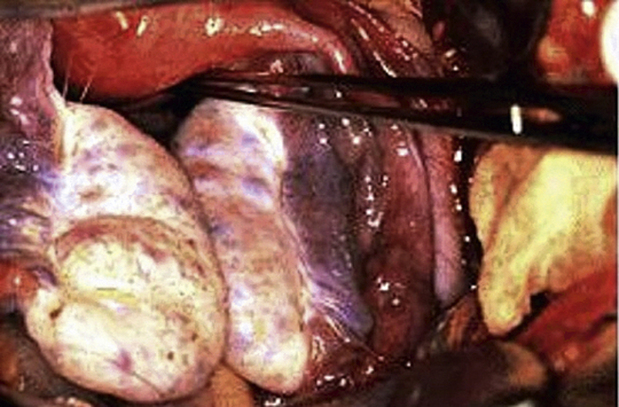
TCM diagnosis relies on analysis of clinical symptoms and some signs that are easily evaluated such as pulse and tongue. In some cases, laboratory and surgical investigations can broaden or enhance our diagnostic repertoire. For example, laparoscopic investigations on women with PCOS usually reveal swollen ovaries; the polycystic ovaries themselves look shiny and swollen when viewed during laparoscopy, i.e., they look Damp (Fig. 5.7).
Scans (CT and DEXA) may reveal fat deposits around the central internal organs of women with PCOS even where there is no obesity or weight gain. Similarly, enlarged adipocytes (fat cells) are found in women with PCOS whether they are overweight or not. We would relate these findings to abnormal accumulations of Phlegm-Damp. The pattern of fat deposits or Damp accumulation follows the Dai vessel pathway. The swollen cystic ovaries also lie in the path of the Dai vessel. Even in women where there is no obvious truncal obesity or weight gain, the swelling of the ovaries could indicate smaller localized accumulations in the Dai channel or the Liver channel.
Blood tests that show high levels of clotting factor (fibrinogen) in PCOS patients confirm the increased risk of Blood stagnation in these patients.63 See Table 5.21 for a summary of this analysis of PCOS signs and symptoms.
Table 5.21
Summary of TCM analysis of PCOS symptom and signs
| Symptoms, signs and etiologic factors | TCM analysis |
| Irregular periods | Chong and Ren channel dysfunction |
| Swollen shiny ovaries | Phlegm-Damp accumulation |
| Weight gain around the middle | Phlegm-Damp accumulation |
| Dai Channel dysfunction | |
| Visceral fat deposits, enlarged fat cells | Phlegm-Damp accumulation |
| Losing weight improves ovarian activity | Mobilizing Damp unblocks Chong and Ren channels |
| Acne | Damp-Heat |
| Hairiness | Damp? |
| Prone to cardiovascular disease | Blood stagnation |
| Increased coagulation factors | Blood stagnation |
| Precocious puberty | Phlegm-Damp accumulation |
| Genetic and intrauterine factors | Kidney Jing deficiency |
| Small birth size | Kidney Jing deficiency |
Having looked at the PCOS patient’s history and analyzed the ways in which she presents in the clinic (and other associated findings), we can now formulate our diagnosis. Irregular or absent periods is the feature that infertile PCOS patients most commonly share. In TCM terms, these women suffer a disturbance of the Chong and Ren vessels.
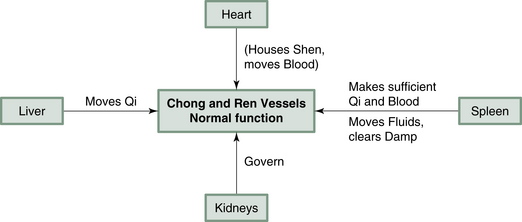
We know that the foundation of the Chong and Ren vessels is the Kidneys and that the Chong and Ren vessels require nourishment by Qi and Blood and can be obstructed by Phlegm-Damp and stagnation of Qi and Blood (Fig. 5.8).

Figure 5.8 Chong and Ren vessels – normal physiology. The Chong and the Ren vessels originate in the Kidneys and are governed by them. The Spleen supplies the Blood and nourishment for them, and clears Fluids and Damp. The Liver moves the Qi and the Heart moves the Blood and houses the Shen.
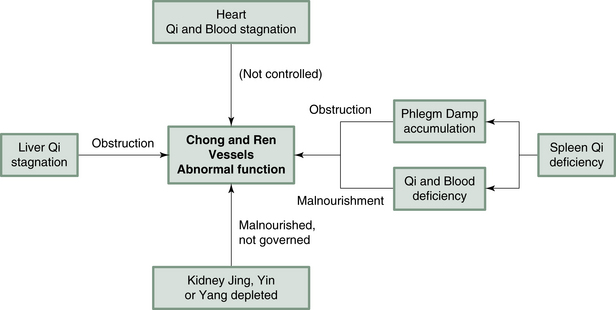
If we now put the dysfunction of the Chong and Ren vessels at the center of our analysis of women with PCOS who are not ovulating regularly, we come up with this diagrammatic analysis (Fig. 5.9).

Figure 5.9 Chong and Ren vessels – abnormal physiology in PCOS. When Kidney Jing, Yin or Yang is deficient, the Chong and Ren vessels lose their foundation, are malnourished and no longer properly managed. When Spleen Qi is deficient, Damp and Phlegm-Damp can collect and obstruct the channels, and lack of Qi and Blood can results in a lack of nourishment. If the Liver Qi is stagnant, Qi in the Chong and Ren vessels can become obstructed.
Heart Qi stagnation (and Shen disturbance) may be a reflection or manifestation of long-term Chong and Ren disturbance, but it is less likely to be a causative factor in PCOS. On the face of it, PCOS being an ovulation disorder, we might assume involvement of the Heart and the Bao vessel, as we did in our earlier discussion of amenorrhea, but here the problem lies with the ovary and not with the hypothalamus or pituitary gland, as it did in other instances of ovulation disorder.
While the Chong and Ren vessels are at the center of the problem causing failure to ovulate regularly in PCOS, another extra channel, the Dai vessel is also of interest because of its function of controlling circulation of fluids in the lower Jiao. The Dai vessel is situated around and through the abdomen from the level of the 2nd lumbar vertebrae and extending downwards. Not only is this the precise area where the waist expands in PCOS patients with abdominal weight gain but also includes the part of the body containing fat deposits around the central organs and the swollen ovaries typical of PCOS. Any accumulation in this area is likely to obstruct Dai vessel function. Conversely, Dai vessel dysfunction will allow a build up of Damp and eventually Phlegm-Damp in this area.
The Dai vessel also intersects Ming men and passes through the Kidneys, hence malfunction of the Dai vessel may well be a contributing factor to impaired folliculogenesis and ovary function at a very fundamental stage. Its other important role is to bind the channels running perpendicularly on the abdomen. This includes not only the primary meridians but also the Chong and the Ren, thus Dai vessel disturbances may be reflected here too. Spleen and Liver channels may also be affected.
In addition to the Chong, Ren and Dai vessels, we should mention the Bao vessel and Bao channel (see Ch. 2), which are important in transporting Jing and Tian Gui from the Kidneys, and Blood from the Heart to the Uterus. There are no points on the Bao mai that we use directly, however Heart and Kidney points can indirectly influence its activity.
Our working model for diagnosing PCOS is summarized in Tables 5.22 and 5.23.
Table 5.22
Diagnosis of PCOS (weight gain)
| Organs | Kidneys, Spleen |
| Pathogen | Phlegm-Damp accumulation |
| Channels | Chong Ren obstruction |
| Dai vessel accumulations |
Table 5.23
Diagnosis of PCOS (no obvious weight gain)
| Organs | Kidneys, Liver |
| Pathogen | Qi and Blood stasis (± Phlegm-Damp accumulation) |
| Channels | Chong Ren obstruction |
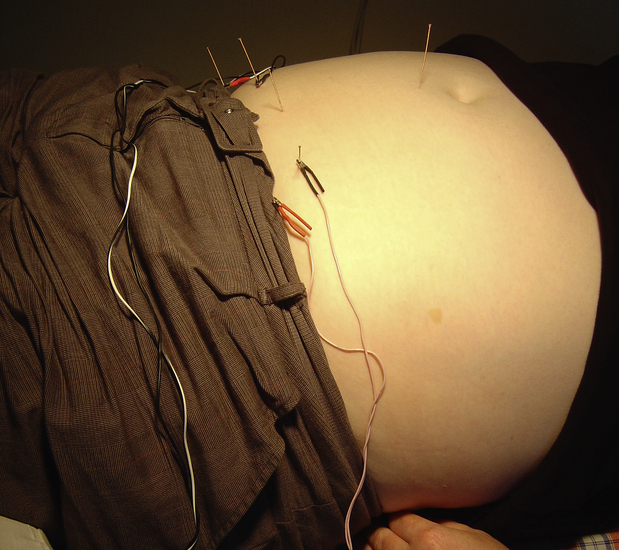
A genetic predisposition to PCOS implicating the Kidneys plus a Spleen Qi weakness contributing to weight and blood sugar problems together become the ‘Ben’ of our diagnosis, combined with an accumulation of Phlegm-Damp, the ‘Biao’ causing obstruction in the Chong and Ren vessels (Fig. 5.10).

Figure 5.10 This PCOS patient had amenorrhea and weighed 87 kilos – most of her weight was around her stomach.
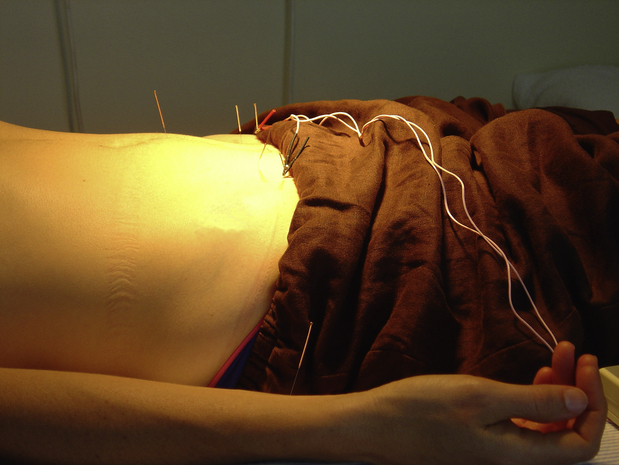
Where weight gain is not a factor, we attribute the obstruction in the Chong and Ren vessels to Qi, Blood, and possible local Phlegm-Damp stasis. The Ben of our diagnosis is the Kidneys (a predisposing factor) but the Biao is the Liver Qi stagnation leading to stagnation of Qi and Blood. Accumulation of Damp is not always apparent, except for the presence of cysts on the ovaries and sometimes deposits of fat around the abdominal organs. Liver Qi stasis can create Phlegm-Damp by disrupting Gall Bladder function. When bile is not produced properly, then fat metabolism is affected, provoking the formation of Phlegm-Damp which may manifest as fat deposits in the abdomen but no apparent weight gain (Fig. 5.11).
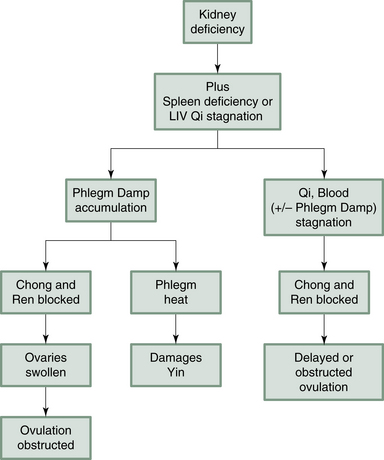
Figure 5.12 summarizes some of the ways that different pathologic states can lead to ovulation disorders of the type seen in PCOS. There is a third pattern, Qi and Blood deficiency, which can also affect the Chong and Ren leading to dysfunction due to lack of nourishment; however this is more often a different sort of amenorrhea pattern (not PCOS) and was discussed in an earlier section. This chart also does not include the Blood stasis that sometimes complicates PCOS, particularly long-term disease. It is at its later stages that Blood stasis signs such as cardiovascular disease develop, and the amenorrhea of PCOS is not usually related to Blood stasis alone.
Let us now examine how different aspects of the PCOS pathomechanism play out at different times. Specifically, we are interested in how the predisposing Kidney factors interact with Spleen deficiency and Liver Qi stagnation to create the pathology and clinical picture typical of PCOS.
Kidney deficiency meets Spleen Qi deficiency or Liver Qi stagnation
At Time of Conception: When there is both Kidney Jing deficiency and compromised Spleen function in the mother (e.g., poor nourishment or inappropriate food) at the time of conception of a baby girl, then that baby may be predisposed to PCOS or blood sugar disturbances. Also intrauterine growth retardation will predispose to PCOS.
At Time of Puberty: At time of puberty, interaction of Kidneys and Spleen are important to establish the function of the Chong and the Ren cycle. At puberty, or in the second of the 7-year cycles, not only must the Tian Gui flourish but there must also be adequate nourishment and Blood – or the menstrual cycle cannot become well established. Anorexia and bulimia can have very dire consequences at this stage of a girl’s development. On the other hand, when nourishment is overdone, and the girl becomes overweight, the 7-year cycle may be advanced and the periods come prematurely, but not regularly. Liver Qi plays a part at this stage too – there are many stresses on young teenage girls, not only academic stresses but social stresses. Early sexual activity can disrupt the Chong vessel activity, as can the use of hormonal contraceptives and the ‘morning after’ pill.
In Reproductive Years: The interaction of the Kidney and Spleen later in reproductive years, e.g. 20s and 30s can also lead to disruptions in the Chong and the Ren vessels leading to PCOS. If Spleen function is poor, or the diet is bad and body weight increases, then in susceptible women, Chong and Ren vessels are obstructed and what was a regular cycle may become long or eventually stop. Use of the oral contraceptive pill or other hormonal contraceptives may impair Spleen function, affecting blood sugar metabolism. Hormonal contraception also interrupts the Liver in its function of overseeing cycles in the body and the resulting stagnation can disrupt Chong and Ren function. If stress impacts the Liver Qi sufficiently, this can contribute also to disruption of the Chong and Ren vessels.
In Later Years: As often happens with long-term disease of any nature, Blood stagnation develops. In the PCOS sufferer this may manifest in cardiovascular disease. Long-term Kidney and Spleen imbalance can lead to diabetes and other manifestations of metabolic syndrome such as hypertension. These are serious disorders which require correct treatment, however in this text we shall keep our focus on the aspects of PCOS which affect fertility.
TCM analyzes pathologic conditions according to how they present in the clinic and as such, we can approach the treatment of PCOS-related infertility as we have been doing all along, gathering information about the menstrual cycle, etc. – however, as we saw with endometriosis, there is a special pathology we need to address in these diseases – in this case, it is the factor inhibiting the growth of the follicles in the ovary and preventing a regular menstrual cycle.
Practically speaking, treatment of PCOS can take two different approaches: one with a single focus on facilitating the release of eggs and conception, and one more complex addressing all the issues inherent in this disease, both Ben and Biao. However, these two approaches are not mutually exclusive.
The PCOS patient who is trying to conceive will generally be more interested in what you can do to help her ovulate regularly than in how you can help her lose weight or prevent heart disease or diabetes in the future. Focussing on ovarian activity and ripening and release of eggs, we use treatments that are aimed primarily at re-establishing function of the Chong and the Ren vessels, with secondary focus on the function of the organs. Acupuncture is particularly useful in this regard but while it may stimulate some ovulations, restoration of a regular menstrual cycle will only be achieved with attention to the underlying organ dysfunction. For a simplified approach to induce ovulation, see the Research section below, where standardized (or largely standardized) point prescriptions were used on PCOS patients in trial settings. The information we have gleaned from these trials has been incorporated into the acupuncture protocols suggested below for treatment of different types of PCOS.
When it comes to treating this condition in the larger context (looking further than ovulation induction), we need to consider several layers of treatment: Kidney or Spleen Qi deficiency or Liver Qi stagnation, with the consequent Phlegm-Damp accumulation or Qi or blood stagnation blocking the Chong and Ren channels. Chinese herbal medicine and acupuncture have a lot to offer in this regard. Lifestyle modification is an important component of any type of treatment a PCOS patient chooses to use.
Resolving Phlegm-Damp to regulate/unblock Chong and Ren Channels
For PCOS patients with weight gain, and Phlegm-Damp accumulation, we can take either of two clinical approaches. First, we can focus on primarily mobilizing the Phlegm-Damp and second, we can focus on supporting Kidneys (or focus on primarily supporting Kidneys and secondarily clearing Damp and Phlegm).
This approach might be chosen for large PCOS patients with stubborn weight gain and who are having few, if any, menstrual cycles per year. The Chong and Ren vessels in this case are seriously obstructed.
Herbal Formula: The combination of a well known formula such as Cang Fu Dao Tan Tang with a more modern formula Bu Shen Hua Tan Tang meets our requirements for these patients. By promoting Spleen function to resolve Damp, expelling Phlegm-Damp accumulation and benefiting Kidneys, we aim to clear Chong Ren obstruction and re-establish ovarian function.
Cang Fu Dao Tan Tang (Atractylodes and Cyperus Guide out Phlegm decoction) with Bu Shen Hua Tan Tang (Decoction for Restoring the Kidney and Removing Phlegm) modified
| Cang Zhu | 12 g | Rhizoma Atractylodis |
| Fu Ling | 15 g | Sclerotium Poriae Cocos |
| Ban Xia | 9 g | Rhizoma Pinelliae |
| Sha Ren | 6 g | Fructus seu Semen Amomi |
| Fo Shou | 3 g | Fructus Citri Sarcodactylis |
| Chen Pi | 9 g | Pericarpium Citri Reticulate |
| Dan Nan Xing | 6 g | Rhizoma Arisaematis |
| Zhe Bei Mu | 6 g | Fritillariae thunbergii Bulbus |
| Zao Jiao Ci | 9 g | Spina Gleditsiae Sinensis |
| Shan Yao | 9 g | Radix Dioscorea Oppositae |
| Shu Di | 6 g | Radix Rehmanniae Glutinosae Conquitae |
| Bu Gu Zhi | 9 g | Fructus Psoraleae |
| Yin Yang Huo | 9 g | Herba Epimedii |
| Ji Xue Teng | 12 g | Radix et Caulis Jixueteng |
| Zhi Zi | 3 g | Fructus Gardeniae Jasminoidis |
Cang Zhu, Fu Ling, Chen Pi and Sha Ren are the main herbs used to clear Damp in this formula. Cang Zhu and Fu Ling strengthen the Spleen to clear dampness. Sha ren augments their action by warming the Middle Jiao, and with Chen Pi and Fo Shou moves the Qi to facilitate the movement of Damp.
Stronger phlegm mobilizing herbs in the form of Fa Ban Xia, Zhe Bei Mu, Zao Jiao Ci and Dan Nan Xing are needed to break up the accumulation of Phlegm – in other words, the shiny swollen theca cells of the ovary and the multiple cysts therein.
To promote ovarian function, we next add Kidney herbs. Shu Di enriches the Kidney Yin and Jing to provide the essential basis for the growth and development of mature eggs in the follicles. It is supported by Shan Yao, which reinforces the Yin of the Spleen and the Kidneys.
Bu Gu Zhi strengthens Spleen and Kidney function and also supports the previous group of herbs by drying Damp. Yin Yang Huo we add to promote maturation of ovarian follicles by boosting Kidney yang function and stoking the fire of Ming Men.
It is hoped that by antagonizing androgens with the action of these herbs, it may be possible to reduce the follicular atresia. Ji Xue Teng is added to promote movement of Blood in the Chong vessel.
Zhi Zi clears Heat arising from accumulated Phlegm-Damp. In some women, this dose will need to be increased. And in the case that Heat has damaged Yin, another herb such as Di Gu Pi would be substituted.
This formula is quite drying, which means we need to carefully monitor the Yin during treatment.
Acupuncture Points: We know that certain acupuncture protocols can help to stimulate ovary function in PCOS patients (see Research section, below), and using these plus points chosen according to our TCM diagnosis, provides the basis for treatments applied in the clinic. In the case of the patient with significant Phlegm-Damp, we use Spleen and Stomach points to strengthen the Spleen, Spleen and Dai vessel points to promote clearing Damp and Kidney points to support ovary function.
Acupuncture points (Table 5.24) for the treatment of PCOS with weight gain – Phlegm-Damp accumulation predominant are as follows:
Table 5.24
Acupuncture pointsa used in the treatment of PCOS with weight gain – Phlegm-Damp accumulation predominant
| Treatment goal | Acupuncture points |
| To invigorate Kidney Yin and Yang | Ren-6, KI-3, SP-6 and BL-23 |
| To promote Spleen function in clearing Damp | SP-5, SP-9, BL-20, ST-40, SP-3, SP-15 |
| To activate the Chong vessel | Ren-3, KI-13 and SP-4 |
| To encourage removal of Damp via the Bladder | BL-28 |
| To encourage removal of Phlegm-Damp obstructing the Dai vessel | GB-26, GB-27/28, GB-41, TH-5 |
| To activate local Qi circulation (around the ovaries) | Abdomen Zigong, K-14, ST-28 |
| To regulate metabolism of fluids in the San jiao | TH-6, TH-9 |
| To clear Heat arising from Phlegm-Damp blockage | CO-11 |
aReinforcing or reducing technique is used; electro acupuncture can be used on the abdomen or back points and connected to Spleen points on the leg at 10 Hertz 3–5 Amps for 20 min.
| Ren-3 | Zhongji |
| Ren-6 | Qihai |
| SP-6 | Sanyinjiao |
| Sp-9 | Yinlingquan |
| SP-4 | Gongsun |
| SP-5 | Shangqiu |
| KI-13 | Qixue |
| Abdomen Zigong | |
| BL-23 | Shenshu |
| BL-20 | Pishu |
| BL-28 | Pangguanshu |
| GB-26 | Daimai |
| GB-27 | Wushu |
| GB-28 | Weidao |
| GB-41 | Zu Linqi |
| TH-5 | Waiguan |
| SP-15 | Daheng |
| ST-28 | Shuidao |
| ST-40 | Fenglong |
| SP-3 | Taibai |
| TH-6 | Zhigou |
| TH-9 | Tianjing |
| Co-11 | Quchi |
This approach is more likely to be chosen for a PCOS patient with infertility who is not too overweight and who is having some cycles, albeit irregularly indicating that the Chong and Ren, while not functioning well are not as obstructed as in the previous case. Her history of menstrual irregularity may go back as far as puberty.
Herbal Formula: To achieve this, we go back to our primary infertility formula Gui Shao Di Huang Tang that supports Kidneys and the Blood, modifying it with Kidney Yang herbs and Damp clearing herbs.
Gui Shao Di Huang Tang (Angelica Peonia Rehmannia decoction) modified
| Dang Gui | 9 g | Radix Angelicae Sinensis |
| Bai Shao | 9 g | Radix Paeoniae Lactiflorae |
| Shu Di | 9 g | Radix Rehmanniae Glutinosae Conquitae |
| Shan Zhu Yu | 9 g | Fructus Corni Officinalis |
| Shan Yao | 9 g | Radix Dioscorea Oppositae |
| Fu Ling | 15 g | Sclerotium Poriae Cocos |
| Mu Dan Pi | 9 g | Cortex Moutan Radicis |
| Ze Xie | 15 g | Rhizoma Alismatis |
| Tu Si Zi | 9 g | Semen Cuscatae |
| Du Zhong | 6 g | Cortex Eucommiae Ulmoidis |
| Sha Ren | 9 g | Fructus seu Semen Amomi |
| Zhe Bei Mu | 6 g | Fritillariae thunbergii Bulbus |
| Zao Jiao Ci | 6 g | Gleditsiae Spina |
Gui Shao Di Huang Tang, which reinforces Kidney Yin and Blood (described in Ch. 4) is modified here to include herbs (Tu Si Zi and Du Zhong) which supplement Kidney Yang. Sha Ren is added to help the Spleen Qi mobilize Damp. The doses of Fu Ling and Ze Xie are increased to further mobilize Damp.
Alternatively, Gui Shao di Huang tang can be combined with pills to strengthen Spleen Qi and clear the Phlegm-Damp using one of the patent medicines described below.
When the patient starts to notice some stretchy cervical secretions (as distinct from other forms of vaginal discharge which may be present due to the Damp), which indicate the Yin base is being established, then more Kidney Yang tonics can be added to the above formula or to Gui Shao Di Huang Tang:
| Ba Ji Tian | 6 g | Radix Morindae Officinalis |
| Bu Gu Zhi | 6 g | Fructus Psoraleae |
| Yin Yang Huo | 6 g | Herba Epimedii |
These Kidney Yang tonics also provide some support for Spleen Yang and will aid in drying some Damp.
If BBT readings taken at this point indicate that ovulation has been successfully induced, then herbs for the post-ovulatory phase can be given according to the principles outlined in Chapter 4. If ovulation does not occur but secretions from the cervix continue, the doses of the Yang tonics above will be increased: namely,
| Ba Ji Tian | 9 g | Radix Morindae Officinalis |
| Bu Gu Zhi | 9 g | Fructus Psoraleae |
| Yin Yang Huo | 9 g | Herba Epimedii |
Acupuncture Points: Points (Table 5.25) are chosen from:
Table 5.25
Acupuncture pointsa used in the treatment of PCOS with weight gain – Kidney deficiency predominant
| Treatment goal | Acupuncture points |
| To invigorate Kidney Yin and Yang and Jing | Ren-4, Ren-6, KI-3, SP-6, KI-6, and BL-23 |
| To promote Spleen function in clearing Damp | SP-5 and BL-20 |
| To activate the Chong vessel/to regulate the Chong and Ren vessels | KI-13 and SP-4 Ren-3, Ren-7, KI-14, K-6, LU-7, PC-6 and KI-5 |
| To regulate Qi in the Dai vessel | GB-27 |
| To activate local Qi circulation (around the ovaries) | Abdomen Zigong and LIV-5 |
aReinforcing technique is used; moxa is useful on Ren-4. In the case of insulin resistance or elevated testosterone, etc. use electro-acupuncture connecting abdomen points to inner leg points on the same side 10 Hertz, 3–5 Amps, 20 min.
| K-6 | Zhaohai |
| Lu-7 | Lieque |
| SP-4 | Gongsun |
| PC-6 | Neiguan |
| K-13 | Qixue |
| K-14 | Simen |
| Ren-3 | Zhongji |
| Ren-7 | Yinjiao |
| Ren-4 | Guanyuan |
| SP-6 | Sanyinjiao |
| K-5 | Shuiquan |
| BL-23 | Shenshu |
| BL-20 | Pishu |
| GB-27 | Wushu |
| LIV-5 | Ligou |
To promote weight loss, reduce insulin resistance and encourage ovulation with acupuncture, treatments need to be frequent and regular – preferably 3 times a week. Monitoring of possible ovulation is recommended (with BBT, or in the case of women with reasonably predictable cycles, a urinary LH predictor kit). Once an ovulation has occurred and if the patient has attempted to conceive, the use of electroacupuncture on abdomen and Spleen points should be discontinued for the remainder of that menstrual cycle.
Patent medicines, which can be used concurrently to strengthen Spleen Qi and clear the Damp are:
Yue Ju Er Chen Wan (Gardenia Ligusticum pill)
| Cang Zhu | Rhizoma Atractylodes |
| Shen Qu | Massa Fermenta |
| Chen Pi | Pericarpium Citri Reticulate |
| Fu Ling | Sclerotium Poriae Cocos |
| Ban Xia | Rhizoma Pinelliae |
| Xiang Fu | Rhizoma Cyperi Rotundi |
| Zhi Zi | Fructus Gardeniae Jasminoidis |
| Chuan Xiong | Radix Ligustici Wallichii |
This well-known formula eliminates all types of stagnation, including Phlegm-Damp (Cang Zhu, Ban Xia, Chen Pi, Fu Ling), food (Shen Qu), Qi (Xiang Fu) and Blood (Chuan Xiong) and is especially indicated if there is Heat associated with the stagnation (Zhi Zi).
Cang Fu Dao Tan Wan (Atractylodes Cyperus Phlegm pill)
| Cang Zhu | Rhizoma Atractylodes |
| Xiang Fu | Rhizoma Cyperi Rotundi |
| Ban Xia | Rhizoma Pinelliae |
| Fu Ling | Sclerotium Poriae Cocos |
| Chen Pi | Pericarpium Citri Reticulate |
| Dan Nan Xing | Rhizoma Arisaematis |
| Zhi Ke | Fructus Citri seu Ponciri |
| Gan Cao | Radix Glycyrrhizae Uralensis |
| Sheng Jiang | Rhizoma Zingiberis Officinalis Recens |
| Shen Qu | Massa Fermenta |
This formula (also described above) includes many of the herbs and actions of Yue Ju Er Chen Wan but also includes Dan Nan Xing, which eliminates obstructions caused by Phlegm-Heat. In addition to addressing Phlegm-Damp accumulation in PCOS, this formula can be useful for treating fallopian tubes blocked by Phlegm-Damp.
Xiong Gui Ping Wei San (Ligusticum Angelica Balancing the Stomach powder)
| Cang Zhu | Rhizoma Atractylodes |
| Chen Pi | Pericarpium Citri Reticulate |
| Hou Po | Cortex Magnoliae Officinalis |
| Zhi Gan Cao | Radix Glycyrrhizae Uralensis |
| Sheng Jiang | Rhizoma Zingiberis Officinalis Recens |
| Da Zao | Fructus Zizyphi Jujuba |
| Dang Gui | Radix Angelicae Sinensis |
| Chuan Xiong | Radix Ligustici Wallichii |
This formula attempts to clear Damp by combining herbs that support Stomach and Spleen function with Damp-clearing herbs and Blood tonic herbs. It is more appropriate for women who have a weak constitution.
Treatment of PCOS in women who are overweight must always include some evaluation of diet and lifestyle. Anything we can do to encourage weight loss in these women will enhance ovarian function and fertility. We discussed weight loss and some strategies to achieve this in the previous section.
From a Chinese medicine perspective, one size does not fit all when it comes to diet. (We discuss this in more detail in Ch. 12). When it comes to weight loss most of us look at strategies to boost the action of Spleen Qi in clearing Damp and optimizing metabolism. The typical overweight Damp and Spleen Qi deficient woman is the pear shape we discussed above, i.e., large thighs and bottom, or a low waist-to-height ratio (WHR). While no-one claims to have an easy fix for losing weight, this TCM pattern is at least straight forward to diagnose and treat. And if compliance is good, weight loss will be steady. However, the pattern of obesity that we see in PCOS is a different type, it is more like a male pattern obesity – the large abdomen, or truncal obesity. There may also be fatty deposits around the viscera. The WHR is high. In this case, Damp arising from dietary or lifestyle factors or a genetic propensity is congealed into Phlegm-Damp in particular sites or regions, i.e., the ovaries and the abdominal area. This pattern of obesity can be associated with Heat (e.g., high blood pressure and florid face) and the treatment we apply must take all of this into account not just relying on reinforcing Spleen function.
As mentioned above, it is the first 5–10% of body weight that needs to come off and it is this mobilizing of Damp that appears to make the difference to reproductive function. It is not necessary that a certain number of kilos are lost or that a certain BMI is attained before ovarian function starts to improve. Patients will be heartened to hear that they just have to start the process of mobilization of Phlegm-Damp accumulation. Programs that support PCOS sufferers to lose weight have found that exercise in a group context adds an important psychological component to recovery. Since Damp is an internal environment which can cause sluggishness, low motivation and depression, this sort of encouragement is important.
Exercise, touched on above and also discussed in Chapter 12, is an essential component of a weight loss program, especially where there is insulin resistance. Interestingly, exercise helps weight loss specifically around the abdomen (and reduces visceral fat), whereas calorie restricting diets without exercise tend to encourage more weight loss around the thighs. This tells us that the fat or Damp accumulation around the waist is more stagnant, i.e., more like Phlegm-Damp than just Damp, and targeting this with exercise is particularly important for overweight women with PCOS.
Regulating Liver Qi to Regulate Chong and Ren Vessel Activity
You will find that there are two main approaches we can take in the clinic for this type of PCOS as well – and I should hasten to say these are very likely not the last word either. As our understanding of this disease grows and clarifies so will the treatment we offer be expanded and finessed.
This is a relatively severe clinical picture where ovarian activity is significantly compromised and there are few if any periods. Localized accumulation of Phlegm-Damp manifests as cysts in the ovary and visceral fat deposits.
Where there is significant blockage caused by Liver Qi stagnation, a strong approach incorporating purgatives may be required to eradicate the Phlegm-Damp and any Heat built up with the obstruction. After a short course of our guiding formula (Fang Feng Tong Sheng San), another formula more geared toward maintaining good movement of the Liver Qi can be used.
Fang Feng Tong Sheng San (Ledebouriella pills with Magical Effect)
| Fang Feng | 9 g | Radix Ledebouriellae Sesloidis |
| Jing Jie | 9 g | Herba seu Flos Shizonepetae Tenuifolia |
| Ma Huang | 6 g | Herba Ephedra |
| Jie Geng | 9 g | Radix Platycodi Grandiflori |
| Bo He | 6 g | Herba Menthae |
| Lian Qiao | 9 g | Fructus Forsythiae Suspensae |
| Huang Qin | 6 g | Radix Scutellariae Baicalensis |
| Zhi Zi | 6 g | Fructus Gardeniae Jasminoidis |
| (Jiu) Da Huang | 6 g | Rhizoma Rhei (wine fried) |
| Shi Gao | 9 g | Gypsum |
| Mang Xiao | 6 g | Mirabilitum |
| Hua Shi | 9 g | Talcum |
| Dang Gui | 9 g | Radix Angelicae Sinensis |
| Chuan Xiong | 6 g | Radix Ligustici Wallichii |
| Bai Zhu | 9 g | Rhizoma Atractylodis Macrocephalae |
| Bai Shao | 9 g | Radix Paeoniae Lactiflorae |
| Gan Cao | 6 g | Radix Glycyrrhizae Uralensis |
| Sheng Jiang | 6 g | Rhizoma Zingiberis Officinalis Recens |
This formula is not a commonly encountered one in gynecology but it serves our purpose here in clearing Heat and Phlegm-Damp (Lian Qiao, Shi Gao, Huang Qin, Jie Geng) via the bowels (Da Huang and Mang Xiao) and urine (Zhi Zi, Hua Shi). The mild dispersing action (Ma Huang, Fang Feng, Jing Jie, Bo He) it has on the exterior disperses Liver Qi stagnation. Fang Feng has the special attribute of removing Damp blockages by transforming Damp into Yang Qi and lifting the Yang. To protect the Spleen Qi are added Bai Zhu, Gan Cao and Sheng Jiang. To harmonize the Blood are added Dang Gui, Bai Shao and Chuan Xiong.
This formula represents a fairly drastic approach to kick-starting the ovaries again by purging Heat and stagnation. We saw a similar approach when Heat from Liver and Heart Qi stagnation had damaged the Yin, causing amenorrhea, and purgatives were used cautiously to drain Heat and thus recover the Yin. In this case we are dealing with an excess pattern, however, not a deficiency pattern, and can use stronger herbs for longer. Nevertheless, the patient must always be watched carefully to see the response and the formula is used for a limited period of time. Follow-up treatments include formulas such as that mentioned below, which circulate Liver Qi but also reinforce Kidney function.
Acupuncture Points: Points for Liver Qi stagnation leading to localized Phlegm-Damp accumulation (Table 5.26) are chosen from:
| LIV-3 | Taichong |
| LIV-5 | Ligou |
| LIV-8 | Ququan |
| LIV-13 | Zhangmen |
| LIV-11 | Yinlian |
| Ren-1 | Huiyin |
| Ren-3 | Zhongji |
| GB-41 | Zulinqi |
| TH-5 | Waiguan |
| GB-26 | Daimai |
| ST-29 | Guilai |
| ST-28 | Shuidao |
| GB-27 | Wushu |
| GB-28 | Weidao |
| BL-18 | Ganshu |
| BL-19 | Danshu |
| SP-6 | Sanyinqiao |
| SP-9 | Yinlingquan |
| PC-5 | Jianshi |
Where less drastic measures are called for, or after a course of the above formula, we shall use a formula that promotes movement of Qi and Blood in the Chong and the Ren, at the same time as resolving any local deposits of Phlegm-Damp and reinforcing the Kidneys.
Table 5.26
Acupuncture pointsa used in the treatment of PCOS from Liver Qi stagnation leading to localized Phlegm-Damp accumulation
| Treatment goal | Acupuncture points |
| To regulate the Liver Qi | LIV-3, LIV-5, LIV-8, LIV-11, LIV-13, BL-18, BL-19 |
| To clear Damp and promote menstruation | SP-6, SP-9, Ren-1, Ren-3, |
| To open and regulate the Dai vessel which is a conduit for Damp in the lower body | GB-41 and TH-5. GB-27/28, GB-26. |
| To promote Qi and Blood movement around the ovaries | ST-29, ST-28 |
| To facilitate unblocking the Bao Mai and regulate menstruation | PC-5 |
aUse even or reducing technique. Electroacupuncture can be used, connecting abdomen and Inner leg points 10 Hertz, 3–5 Amps, 20 min.
Herbal Formula: Using Xiao Yao San in combination with Bu Shen Hua Tang tang will achieve our aims.
Xiao Yao San (Free and Easy powder) with Bu Shen Hua Tan Tang (decoction for restoring the Kidney and removing phlegm) modified
| Dang Gui | 9 g | Radix Angelicae Sinensis |
| Bai Shao | 12 g | Radix Paeoniae Lactiflorae |
| Chuan Xiong | 6 g | Radix Ligustici Wallichii |
| Chuan Niu Xi | 9 g | Radix Cyathula |
| Gou Qi Zi | 9 g | Fructus Lycii Chinensis |
| Chai Hu | 9 g | Radix Bupleuri |
| Xiang Fu | 12 g | Rhizoma Cyperi Rotundi |
| Li Zhi He | 9 g | Semen Litchi |
| Xia Ku Cao | 9 g | Spica Prunellae Vulgaris |
| He Huan Pi | 9 g | Cortex Albizziae Julibrissin |
| Tu Si Zi | 12 g | Semen Cuscatae |
| Yin Yang Huo | 9 g | Herba Epimedii |
| Shu Di | 9 g | Radix Rehmanniae Glutinosae Conquitae |
| Shan Zhu Yu | 9 g | Fructus Corni Officinalis |
A variation of Xiao Yao San (the well known Free and Easy powder), combined with elements of the formula Bu Shen Hua Tan tang will move Qi and Blood in the Chong and Ren vessels and aim to restore menstrual regularity.
This formula contains herbs (Bai Shao, Dang Gui, Chuan Xiong, Gou Qi Zi and Chuan Niu Xi) to build the Blood and encourage its movement in the Chong vessel.
These are supported by herbs such as Chai hu, Xiang Fu, Xia Ku Cao and Li Zhe He which move and unblock the Qi in the Liver channel. He Huan Pi is an important addition to relieve constraint in the Liver channel and address emotional stress.
Finally, we add herbs such as Shu Di, Yin Yang Huo, Shan Zhu Yu and Tu Si Zi to tonify Kidneys to encourage normal ovary function.
Acupuncture Points: Points (Table 5.27) are chosen from:
Table 5.27
Acupuncture pointsa used in the treatment of PCOS from Liver Qi stagnation causing obstruction to Qi and Blood flow in the Chong and the Ren channels
| Treatment goal | Acupuncture points |
| To regulate the Liver Qi | LIV-3, LIV-5, LIV-8, LIV-11, BL-18, BL-17 |
| To support Spleen | SP-6, SP-10 |
| To build Liver Blood | SP-10, LIV-8 |
| To promote Qi and Blood movement around the ovaries | ST-29, Abdomen Zigong |
| To pacify mind, relieve stress | LIV-3, LI-4, PC-6 PC-7, Yin Tang. |
aUse even or reducing technique. Electroacupuncture can be applied connecting abdomen and inner leg points 10 Hertz, 3–5 Amps, 20 min.
| LIV-3 | Taichong |
| CO-4 | Hegu |
| LIV-5 | Ligou |
| Yin Tang | |
| PC-6 | Neiguan |
| PC-7 | Daling |
| Abdomen Zigong | |
| ST-29 | Guilai |
| SP-10 | Xuehai |
| SP-4 | Gongsun |
| LIV-8 | Ququan |
| K-13 | Qixue |
| K-14 | Siman |
Researchers in various parts of the world have demonstrated that acupuncture can improve ovary function and increase ovulation frequency. Some of these studies have found that levels of LH and testosterone and insulin in PCOS patients were found to be beneficially reduced by course of acupuncture.64–70 Other studies have specifically looked at the effect of acupuncture in increasing insulin sensitivity.71
And several studies have examined the effect of acupuncture on rats with PCOS demonstrating increased ovulations and reduced insulin resistance.72–75
These studies used standardized treatments using abdomen and limb points according to segmental innervation of the ovaries in some studies and TCM principles in others. Primary points were chosen from the Ren, Stomach, Spleen, Kidney, Bladder, and Liver channels. Points chosen that relate to sympathetic nervous system segmental innervation of the ovaries (the level of vertebrae T9–L2) were abdomen points Ren-4 and 6, Stomach and Kidney channel points on the abdomen and Bladder channel points on the lumbar region. Points relating to parasympathetic nervous system segmental innervation of the ovaries (the level of vertebrae S2–S4) were sacral points such as BL-27, 28 and medial leg points such as SP-6, SP-9, LIV-3, K-3. Points unrelated to segmental innervation included points such as PC-5, PC-6, TH-6, Co-4, Du-20, etc. Points chosen for their TCM properties include Ren-3, Abdomen Zigong, SP-6, LIV-3, ST-36, ST-40, ST-29 and SP-20. These are summarized in Table 5.28.
Abdomen points were needled deeply and where electroacupuncture was used it was applied with mild to moderate intensity (3–5 mAmps) at low frequency (2–10 Hz) for 20–30 min. Leads were attached from abdomen to leg points on the same side.
The frequency of application of the treatments appears to be important. Some investigators have found that 2–5 treatments per week for 4 months is necessary to return ovary function and regular ovulation. Practically, this is challenging for patients in terms of time and cost, however some clinics have set up programs whereby frequent short treatments at low cost have been provided to great benefit. The mechanism of action of the acupuncture is not yet elucidated although some researchers believe that it is mediated via the sympathetic nervous system.
While a lot of the research emphasis has been on acupuncture for PCOS patients, there have been fewer studies on the effect of Chinese herbs, and most of the trials have been small or not well controlled.76
Some trials have compared Chinese herbal preparations with Metformin favorably, e.g., those patients who took the herbs over a 3 months period reported a higher ovulation frequency, greater reduction in testosterone levels and BMI compared with those who took Metformin.77 We shall discuss the evidence for adding Chinese herbal remedies to a regimen of clomifene below.
It is likely that many of your PCOS patients will be seeing reproductive specialists or endocrinologists who will have prescribed medications. As we discussed above, the usual pharmaceutical treatment for PCOS patients wishing to fall pregnant includes Metformin (Diaformin) to help reduce insulin and regulate blood sugar levels and clomifene (Serophene) to help induce ovulation.
Looking at these drugs from a TCM point of view we are aware that Metformin can often compromise Spleen Qi (loose stools and nausea) and that Clomid can compromise the Kidney Yin (reduced endometrial thickness and number of endometrial glands and drying of cervical mucus). When our patient is attempting to conceive healthy Kidney Yin and Yang and Spleen Qi are vital, so combining a TCM approach to support Spleen and Kidneys with these drugs is an important consideration.
A large number of trials in China have examined the combined effect of Chinese herbs and Clomid on women who were not ovulating. When they assessed parameters like endometrium thickness, cervical discharge and ovulation and pregnancy rates, typically they show improvement on all counts when they compare with control groups given Clomid alone.78,79 One trial which compared the ovulation rate induced by acupuncture and herbs compared with that induced by clomifene found they were equally effective, but that a significantly larger number of women conceived using the acupuncture and Chinese herbs.80 Studies that looked specifically at anovulatory PCOS patients found the same thing, i.e., significantly improved ovulation and pregnancy rates compared to controls.81 When patients with PCOS proved to be resistant to the effects of clomifene, pre-treatment with Chinese herbs for 2 months overcame this resistance and ovulation could be induced.82
A recent review also reports that PCOS patients who take Chinese herbs with Clomid can significantly increase the odds of pregnancy.83 Studies in PCOS rats have shown that Chinese herbs can improve ovarian function and reduce testosterone levels.84 Typically the herbs used in the clinical trials are standardized formulas that boost Kidney Yin and Yang, promote Blood and Qi circulation and clear Damp and Phlegm.
Similarly, acupuncture can support the action of Metformin and Clomid in promoting ovulation, while at the same time attempting to ameliorate the undesirable side-effects. If your PCOS patient is not ovulating and is prescribed clomifene (which is appropriate unless they are Yin deficient and dry), then suggesting concurrent treatment with herbs and/or acupuncture has good clinical evidence basis.
In conclusion, we can say that PCOS is one of the most complex and challenging endocrinologic and reproductive disorders that we will see in our clinics. While there is no doubt there are inherited factors in many cases, it is also perhaps caused by what we are doing to our bodies – the OCP, poor diet and too much sugar, adverse influences on female fetuses in utero and the stresses that young girls are subjected to today.
We are well placed with our Chinese medicine sensibilities to find ways to unravel this clinical challenge and find ways to effectively treat it. TCM sits more comfortably with clinical complexity than does Western medicine with its emphasis on analysis and isolation of causative factors.
By gathering all the signs and symptoms (and heeding the information that laboratory and clinical investigations and research have provided us) we can synthesize a known TCM pattern or patterns of disharmony and customize it for each PCOS patient. Thus emerges a clear guiding principle of treatment appropriate for the various presentations of this challenging condition and accordingly, we hope to create effective and holistic ways to help these patients.
1. Xia, G.C. Zhong Yi Lin Chuang Fu Ke Xue, 2nd edn. PRC: Chinese People’s Health Publishing; 1996.
2. Kennedy, S., Hadfield, R., Westbrook, C., et al. Magnetic resonance imaging to assess familial risk in relatives of women with endometriosis. Lancet. 1998;352:1440–1441.
3. Campo, R., Gordts, S., Rombauts, L., et al. Diagnostic accuracy of transvaginal hydrolaparoscopy in infertility. Fertil Steril. 1999;71:1157–1160.
4. Brosens, I.A., Brosens, J.J. Redefining endometriosis: Is deep endometriosis a progressive disease? Hum Reprod. 2000;15(1):1–3.
5. Khan, K.N., Kitajima, M., Hiraki, K., et al. Toll-like receptors in innate immunity: role of bacterial endotoxin and Toll-like receptor 4 in endometrium and endometriosis. Gynecol Obstet Invest. 2009;68:40–52.
6. Khan, K.N., Kitajima, M., Hiraki, K., et al. Immunopathogenesis of pelvic endometriosis: role of hepatocyte growth factor, macrophages and ovarian steroids. Am J Reprod Immunol. 2008;60:383–404.
7. Harlow, C.R., Cahill, D.J., Maile, L.A., et al. Reduced preovulatory granulosa cell steroidogenesis in women with endometriosis. J Clin Endocrinol Metab. 1996;81:426–429.
8. Bergqvist, A., Bruse, C., Carlberg, M., et al. Interleukin 1beta, interleukin-6, and tumor necrosis factor-alpha in endometriotic tissue and in endometrium. Fertil Steril. 2001;75:489–495.
9. Brosens, I.A. Endometriosis – narrow but deep – important. Fertil Steril. 1993;60:201–202.
10. Noble, L.S., Takayama, K., Zeitoun, K.M., et al. Prostaglandin E2 stimulates aromatase expression in endometriosis-derived stromal cells. J Clin Endocrinol Metab. 1997;82:600–606.
11. Tseng, J.F., Ryan, I.P., Milam, T.D., et al. Interleukin-6 secretion in vitro is upregulated in ectopic and eutopic endometrial stromal cells from women with endometriosis. J Clin Endocrinol Metab. 1996;81:1118–1122.
12. Brosens, I., Derwig, I., Brosens, J., et al. The enigmatic uterine junctional zone: the missing link between reproductive disorders and major obstetrical disorders? Hum Reprod. 2010;25(3):569–574.
13. Leyendecker, G., Kunz, G., Wildt, L., et al. Uterine hyperperistalsis and dysperistalsis as dysfunctions of the mechanism of rapid sperm transport in patients with endometriosis and infertility. Hum Reprod. 1996;11:1542–1551.
14. Palial, K., Drury, J., Heathcote, L., et al. Basement membrane integrity is altered in the late secretory phase in women with endometriosis: implications for the pathogenesis of Endometriosis. Hum Reprod. 2011;26(Suppl 1):i202.
15. Arici, A., Oral, E., Bukulmez, O., et al. The effect of endometriosis on implantation: results from the Yale University in vitro fertilization and embryo transfer program. Fertil Steril. 1996;65(3):603–607.
16. Simón, C., Gutiérrez, A., Vidal, A., et al. Outcome of patients with endometriosis in assisted reproduction: results from in-vitro fertilization and oocyte donation. Hum Reprod. 1994;9(4):725–729.
17. Lemos, N.A., Arbo, E., Scalco, R., et al. Decreased anti-Müllerian hormone and altered ovarian follicular cohort in infertile patients with mild/minimal endometriosis. Fertil Steril. 2008;89(5):1064–1068.
18. Hwu, Yuh-Ming, Wu, Frank Shao-Ying, Li, Sheng-Hsiang, et al. The impact of endometrioma and laparoscopic cystectomy on serum anti-Müllerian hormone levels. Reprod Biol Endocrinol. 2011;9:80.
19. Chung, K., Coutifaris, C., Chalian, R., et al. Factors influencing adverse perinatal outcomes in pregnancies achieved through use of in vitro fertilization. Fertil Steril. 2006;86:1634–1641.
20. Stephansson, O., Kieler, H., Granath, F., et al. Endometriosis, assisted reproduction technology, and risk of adverse pregnancy outcome. Hum Reprod. 2009;24(9):2341–2347.
21. Carlberg, M., Nejaty, J., Froysa, B., et al. Elevated expression of tumor necrosis factor alpha in cultured granulosa cells from women with endometriosis. Hum Reprod. 2000;15:1250–1255.
22. Lian, F., Li, X.L., Sun, Z.G., et al. Effect of Quyu Jiedu granule on microenvironment of ova in patients with endometriosis. Chin J Integr Med. 2009;15(1):42–46.
23. Lim, C.E.D. Clinical observation of Chinese medicine treatment on secondary dysmenorrhea associated with endometriosis. Aust J Acupunct Chin Med. 2009;4(2):12–17.
24. Yu, C.-Q., Cai, Z.-L., Liu, Y.-H., et al. Study on therapeutic mechanism of Neiyifang in treating endometriosis. Chin J Integr Med. 2003;9:88–92.
25. Yu, Fu, Tian, Xia. Clinical observation on treatment of endometriosis with acupuncture plus herbs. J Acupunct Tuina Sci. 2005;3(5):48–51.
26. Wieser, F., Cohen, M., Gaeddert, A., et al. Evolution of medical treatment for endometriosis: back to the roots? Hum Reprod Update. 2007;13(5):487–499.
27. Yang, Man-e, Mao, Xiao, Wang, Pi-yun. Clinical observation of combined acupuncture and herbs in treating chronic pelvic inflammation. J Acupunct Tuina Sci. 2009;7(6):339–342.
28. Bi-fang, Peng, Ding, Ding. Clinical observations on the treatment of 60 cases of pelvic congestion syndrome with Fu Ke Qian Jin Jiao Nong combined with Ru He San Jie Pian. Gan Su Zhong Yi (Gansu Chin Med). 2009;1:50–51.
29. Maclean, W., Lyttleton, J., Abdominal masses. Clinical Handbook of Internal Medicine, Sydney, Pangolin Press, 2010;Vol 3. [1].
30. Jin, Yu. Handbook of obstetrics and gynecology in Chinese medicine. Seattle: Eastland Press; 1998. [70].
31. Moran, L.J., Lombard, C.B., Lim, S., et al. Polycystic ovary syndrome and weight management. Women’s Health. 2010;6(2):271–283.
32. Carey, A.H., Chan, K.L., Short, F., et al. Evidence for a single gene effect causing polycystic ovaries and male pattern baldness. Clin Endocrinol. 1993;38:653–658.
33. Segal, T.R., Dicken, C.L., Israel, D., et al. 2011. In-utero and neonatal vitamin D3 deficiency results in a polycystic ovarian syndrome-like phenotype. Fertil Steril. 96(3), 2011. [Supplement ASRM abstracts].
34. Abbott, D.H., Dumesic, D.A., Franks, S. Developmental origin of polycystic ovary syndrome – a hypothesis. J Endocrinol. 2002;174:1–5.
35. Homburg, R. Androgen circle of polycystic ovary syndrome. Hum Reprod. 2009;24(7):1548–1555.
36. Kidson, W. How to treat polycystic ovary syndrome. Aust Doc. 2011:31–36. [June].
37. Ibanez, L., Potau, N., Marcos, M.V., et al. Exaggerated adrenarche and hyperinsulinism in adolescent girls born small for gestational age. J Clin Endocrinol Metab. 1999;84:4739–4741.
38. Gilling-Smith, C., Story, H., Rogers, V., et al. Evidence for a primary abnormality of thecal cell steroidogenesis in the polycystic ovary syndrome. Clin Endocrinol (Oxf). 1997;47:93–99.
39. Wohlfahrt-Veje, C., Andersen, H.R., Schmidt, I.M., et al. Early breast development in girls after prenatal exposure to non-persistent pesticides. Int J Androl. 2012;35(3):273–282.
40. Dinsdale, E.C., Ward, W.E. Early exposure to soy isoflavones and effects on reproductive health: a review of human and animal studies. Nutrients. 2010;2(11):1156–1187.
41. Francks, S. Follicle dynamics and anovulation in polycystic ovary syndrome. Hum Reprod Update. 2008;14(4):367–378.
42. Oelkers, W., Foidart, J.M., Dombrovicz, N., et al. Effects of a new oral contraceptive containing an antimineralocorticoid progestogen, drospirenone, on the renin-aldosterone system, body weight, blood pressure, glucose tolerance, and lipid metabolism. J Clin Endocr Metab. 1995;80:1816–1821.
43. Puurunen, J.M., Piltonen, T.T., Hedberg, P.S., et al. Combined oral, transdermal and vaginal contraceptives worsen insulin resistance and chronic inflammation in young healthy normal weight women, a randomized study. Fertil Steril. 2011;96(3):S37.
44. Dorte, Glintborg, Andersen, M. An update on the pathogenesis, inflammation, and metabolism in hirsutism and polycystic ovary syndrome. Gynecol Endocrinol. 2010;26(4):281–296.
45. Lord, J., Thomas, R., Fox, B., et al. The central issue? Visceral fat mass is a good marker of insulin resistance and metabolic disturbance in women with polycystic ovary syndrome. Br J Obstet Gynaecol. 2006;113(9):1203–1209.
46. Kirchengast, S., Huber, J. Body composition characteristics and body fat distribution in lean women with polycystic ovary syndrome. Hum Reprod. 2001;16(6):1255–1260.
47. Dolfing, J.G., Stassen, C.M., van Haard, P.M., et al. Comparison of MRI-assessed body fat content between lean women with polycystic ovary syndrome (PCOS) and matched controls: less visceral fat with PCOS. Hum Reprod. 2011;26:1495–1500.
48. Mannerås-Holm, L., Leonhardt, H., Kullberg, J., et al. Adipose tissue has aberrant morphology and function in PCOS: enlarged adipocytes and low serum adiponectin, but not circulating sex steroids, are strongly associated with insulin resistance. J Clin Endocrinol Metab 2011. 2011;96(2):E304–E311.
49. Ibáñez, L., López-Bermejo, Abel, Díaz, Marta, et al. Early metformin therapy (age 8–12 years) in girls with precocious pubarche to reduce hirsutism, androgen excess, and oligomenorrhea in adolescence. J Clin Endocrinol Metab. 2011;96(8):E1262–E1267.
50. Navaratnarajah, R., Sinclair, J., Grun, B., et al. Proteome investigation in the PCOS endometrium associated with obesity. Hum Reprod. 2011;26(Suppl 1):i65.
51. Norman, R.J., Robker, R., Xing, Y., et al. Components of follicular fluid from obese women induce adverse metabolic defects in cumulus-oocyte complexes. Hum Reprod. 2011;26(Suppl 1):i75.
52. Paredes, A., Salvetti, N., Diaz, A., et al. Sympathetic nerve activity in normal and cystic follicles from isolated bovine ovary: local effect of beta-adrenergic stimulation on steroid secretion. Reprod Biol Endocrinol. 2011;9:66.
53. Palomba, S., Falbo, A., Russo, T., et al. Pregnancy in women with polycystic ovary syndrome: the effect of different phenotypes and features on obstetric and neonatal outcomes. Fertil Steril. 2010;94(5):1805–1811.
54. Bagegni, N.A., Blaine, J., Van Voorhis, B.J., et al. Risk of early & late obstetric complications in women with polycystic ovary syndrome (PCOS). Proc Obstet Gynecol. 2010;1(2):10.
55. Coffey, S., Bano, G., Mason, H.D. Health-related quality of life in women with PCOS: A comparison with the general population using the polycystic ovary syndrome questionnaire (PCOSQ) and the short form-36 (SF-36). Gynecol Endocrinol. 2006;22:80–86.
56. Norman, R.J., Wu, R., Stankiewicz, M.T. Polycystic ovary syndrome. Med J Aust. 2004;180(3):132–137.
57. Clark, A.M., Thornley, B., Tomlinson, L., et al. Weight loss in obese infertile women results in improvement in reproductive outcome for all forms of fertility treatment. Hum Reprod. 1998;13(6):1502–1505.
58. Robker, R.L., Akison, L.K., Bennett, B.D., et al. Obese women exhibit differences in ovarian metabolites, hormones, and gene expression compared with moderate-weight women. J Clin Endocrinol Metab. 2009;94:1533–1540.
59. Little, J.P., Gillen, J.B., Percival, M.E., et al. Low-volume high-intensity interval training reduces hyperglycemia and increases muscle mitochondrial capacity in patients with type 2 diabetes. J Appl Physiol. 2011;111(6):1554–1560.
60. Tang, T., Glanville, J., Hayden, C.J., et al. Combined lifestyle modification and metformin in obese patients with polycystic ovary syndrome. Hum Reprod. 2006;21:80–89.
61. Lok, F., Ledger, W.L., Li, T.C., et al. Surgical intervention in infertility management. Hum Fertil. 2003;6:S52–S59.
62. Weixin, Jin. Diagnosis of sterility and its traditional Chinese medicine treatment. PRC: Shandong Science and Technology Press; 1999. [142].
63. Mannerås-Holm, L., Baghaei, Fariba, Holm, Göran, et al. Coagulation and fibrinolytic disturbances in women with polycystic ovary syndrome. J Clin Endocrinol Metab. 2011;96:1068–1076.
64. Lim CED. Acupuncture on PCOS: First World RCT. Abstract. Inaugural Chinese Medicine Academic Conference 20–21 August 2011. Sydney: University of Technology.
65. Stener-Victorin, E., Wu, X. Effects of electro-acupuncture on anovulation in women with polycystic ovary syndrome. Acta Obstet Gynecol Scand. 2009;79:180–188.
66. Stener-Victorin, E., Jedel, E., Janson, P.O., et al. Low-frequency electroacupuncture and physical exercise decrease high muscle sympathetic nerve activity in polycystic ovary syndrome. Am J Physiol. 2009;297(2):R387–R395.
67. Pastore, L.M., Williams, C.D., Jenkins, J., et al. True and sham acupuncture produced similar frequency of ovulation and improved LH to FSH ratios in women with polycystic ovary syndrome. Endocr Res. 2011;96:3143–3150.
68. Jedel, E., Labrie, F., Oden, A., et al. Impact of electro-acupuncture and physical exercise on hyperandrogenism and oligo/amenorrhea in women with polycystic ovary syndrome: a randomized controlled trial. Am J Physiol Endocrinol Metab. 2011;300(1):E37–E45.
69. Xiaoming, M.O., Ding, L.I., Yunxing, P.U., et al. Clinical studies on the mechanism for acupuncture stimulation of ovulation. J Trad Chinese Med. 1993;13:115–119.
70. Chen, B.Y., Yu, J. Relationship between blood radioimmunoreactive betaendorphin and hand skin temperature during the electro-acupuncture induction of ovulation. Acupunct Electrother Res. 1991;16:1–5.
71. Liang, F., Koya, D. Acupuncture: is it effective for treatment of insulin resistance? Diabetes Obes Metab. 2010;12:555–569.
72. Feng, Y., Johansson, J., Shao, R., et al. Hypothalamic neuroendocrine functions in rats with dihydrotestosterone-induced polycystic ovary syndrome: effects of low-frequency electro-acupuncture. PLoS One. 2009;4(8):e6638.
73. Yi, Zhang Wei, et al. Influence of acupuncture on infertility in rats with polycystic ovarian syndrome. Chin J Integr Trad Western Med. 2009;11:973.
74. Johansson, J., Feng, Y., Shao, R., et al. Intense electro-acupuncture normalizes insulin sensitivity, increases muscle GLUT4 content, and improves lipid profile in a rat model of polycystic ovary syndrome. Am J Physiol Endocrinol Metab. 2010;299:E551–E559.
75. Manneras, L., Jonsdottir, I.H., Homang, A., et al. Low-frequency electro-acupuncture and physical exercise improve metabolic disturbances and modulate gene expression in adipose tissue in rats with dihydrotestosterone-induced polycystic ovary syndrome. Endocrinology. 2008;149(7):3559–3568.
76. Raja-Khan, N., Stener-Victorin, E., Wu, X., et al. The physiological basis of complementary and alternative medicines for polycystic ovary syndrome. Am J Physiol Endocrinol Metab. 2011;301:E1–E10.
77. Hou, J., Yu, J., Wei, M. Study on treatment of hyperandrogenism and hyperinsulinism in polycystic ovary syndrome with Chinese herbal formula ‘tiangui fang’. Zhongguo Zhong Xi Yi Jie He Za Zhi. 2000;20(8):589–592. [[Article in Chinese]].
78. Jianan, Zhang, et al. Fujian J. TCM. 2005;36(5):9–10. [[Article in Chinese]].
79. Ma, S.X., Yin, D.E., Zhu, Y.L. Yijing Huoxue Cuyun decoction. Zhongguo Zhong Xi Yi Jie He Za Zhi. 2005;25(4):360–362. [[Article in Chinese]].
80. Jiang, D.S., Ding, D. Clinical observation on acupuncture combined with medication for treatment of continuing anovulation infertility. Zhongguo Zhen Jiu. 2009;29(1):21–24. [[Article in Chinese]].
81. Shao, R.Y., Lang, F.J., Cai, J.F. Shen and activating blood circulation herbs. Zhongguo Zhong Xi Yi Jie He Za Zhi. 2004;24(1):41–43. [[Article in Chinese]].
82. Yang, Y.S., Zhang, Y.L. Ganshao capsule. Zhongguo Zhong Xi Yi Jie He Za Zhi. 2005;25(8):704–706. [[Article in Chinese]].
83. Zhang, J., Li, T., Zhou, L., et al, Chinese herbal medicine for subfertile women with polycystic ovarian syndrome. Cochrane Database Syst Rev, 2010;9:CD007535.
84. Ma, H.X., Xie, J., Lai, M.H. Effects of Yangling Zhongyu decoction on the secretion of ovarian granule cells in polycystic ovarian syndrome rat model. Zhongguo Zhong Xi Yi Jie He Za Zhi. 2012;32(1):54–57. [[Article in Chinese]].