TCM diagnosis and treatment of recurrent miscarriage

Once physical uterine and cervical disorders, inherited genetic disorders, sperm and ova defects due to occupational toxic exposure and complications from other diseases or medications are all ruled out, then the Chinese medicine practitioner can apply his diagnostic skills and determine if there is another, perhaps more subtle, reason for recurrent miscarriage.

Acupuncture and Chinese herbs have been used for many centuries in the treatment of recurrent miscarriage. Of course, if pregnancy loss is recurrent, then it is reasonable to think that there is a persistent factor in one or both of the would-be parents. Thus, recurrent miscarriage lends itself a little more to the sort of treatment that TCM offers (i.e., preventative treatment ahead of the fact) than does a miscarriage, which is already threatening and which in many cases is due to a lethal chromosomal defect.

The TCM doctor would traditionally diagnose the nature of the recurrent miscarriage according to the constitution of the female partner. Nowadays, in the light of new knowledge, the male partner will be assessed too.

The categories into which TCM divides recurrent miscarriage are the same as those for threatened miscarriage with subtle differences. The clinical approach, however, is quite distinct in the two cases. In the former, we have an acute situation with little time in which to make a difference. Treatment must be applied to address the disorder and at the same time, calm the fetus. If the disorder is serious, then there may be little chance of saving the pregnancy. However, in the case of recurrent miscarriage, we can allow plenty of time (preferably ≥6 months) to correct the problem before conception is attempted again. Herbs which calm the fetus are not necessary and, more importantly, we do not have to avoid herbs or points which are contraindicated in pregnancy.

Categories of recurrent miscarriage are as follows:

• Kidney deficiency

• Qi and Blood deficiency

• Heat in the Blood

• Blood stagnation.

Kidney deficiency

Kidney deficiency is the most common pathology underlying both infertility and miscarriage. For threatened miscarriage due to Kidney deficiency, Kidney Yang was our prime treatment target. In the case of recurrent miscarriage, we will treat both Kidney Yin and Yang if necessary. Kidney Yin deficiency is a prime cause of infertility and women with Kidney Yin deficiency may have as much difficulty becoming pregnant as they do staying pregnant. Treatment of such women is necessarily quite long term – the Yin must be recovered so that the egg develops well and the endometrium is thick and secretory. This can take time in the case of a woman who is very Yin-deficient and, since this happens more often in older women, we are confronted with a dilemma. Older women (and Yin-deficient women with Yin-deficient Heat) are impatient to conceive and it is often a difficult task for the practitioner to persuade them of the wisdom of preparing their body first. In cases of recurrent miscarriage due to Kidney Yin deficiency, pregnancy attempts should be avoided for at least three or four menstrual cycles to give time to build the Yin. Most women can understand that risking having repeated miscarriages is very damaging, but the pressure of time ticking by is strong once the woman is already in her late 30s or has turned 40.

For most women who miscarry more than once, it is important to build and balance the Kidney Yin and Yang before the next attempt to conceive. This is achieved best by following a simplified version of the protocols described in Chapter 4. Thus, building Kidney Yin is emphasized in the pre-ovulatory or post-menstrual phase and Kidney Yang in the post-ovulatory phase.

Post-menstrual phase

Herbal formula: The formula of choice is:

Gui Shao Di Huang Tang (Angelica Peonia Rehmannia decoction)

Dang Gui 9 g Radix Angelicae Sinensis
Bai Shao 9 g Radix Paeoniae Lactiflorae
Shu Di 9 g Radix Rehmanniae Glutinosae Conquitae
Shan Zhu Yu 9 g Fructus Corni Officinalis
Shan Yao 9 g Radix Dioscorea Oppositae
Fu Ling 12 g Sclerotium Poriae Cocos
Mu Dan Pi 6 g Cortex Moutan Radicis
Ze Xie 9 g Rhizoma Alismatis

This is the well-known formula for strengthening Kidney and Liver Yin, Lui Wei Di Huang Wan, with the addition of two Blood tonics Dang Gui and Bai Shao. (It is explained in Ch. 4.)

To reinforce the Yin further, add:

Nu Zhen Zi 12 g Fructus Ligustri Lucidi
Han Lian Cao 9 g Herba Ecliptae Prostratae

Where Kidney Yang is constitutionally weak (sore lower back, frequent urination), add:

Tu Si Zi 9 g Semen Cuscatae

Acupuncture points: Choose from the following points (and see Table 8.9):

Table 8.9

Acupuncture pointsa used in the treatment of recurrent miscarriage due to Kidney weakness, post-menstrual phase

Treatment goal Acupuncture points
To reinforce Kidney Yin Ren-4 and KI-3
To reinforce Kidney Yin and clear Heat KI-6
To regulate the activity of the Chong and Ren vessels Ren-7, KI-5 and KI-13
To influence Kidney Jing ST-27
To supplement Liver Yin and Blood LIV-8

aReinforcing or even method is used.

Ren-4 Guanyuan
KI-13 Qixue
Ren-7 Yinjiao
ST-27 Daju
KI-3 Taixi
KI-5 Shuiquan
LIV-8 Ququan
KI-6 Zhaohai

Post-ovulation phase

Herbal formula: The formula of choice is:

Bu Shen Gu Chong Tang (Reinforce the Kidneys, Consolidate the Chong Channel decoction) modified

Xu Duan 9 g Radix Dipsaci
Ba Ji Tian 9 g Radix Morindae Officinalis
Du Zhong 9 g Cortex Eucommiae Ulmoidis
Tu Si Zi 9 g Semen Cuscatae
Dang Gui 9 g Radix Angelicae Sinensis
Shu Di 9 g Radix Rehmanniae Glutinosae Conquitae
Gou Qi Zi 12 g Fructus Lycii Chinensis
Dang Shen 12 g Radix Codonopsis Pilulosae
Bai Zhu 12 g Rhizoma Atractylodis Macrocephalae
Da Zao 3 pieces Fructus Zizyphi Jujuba
Sha Ren 3 g Fructus seu Semen Amomi

Xu Duan, Ba Ji Tian, Du Zhong, and Tu Si Zi all support the Kidney Yang, whereas Shu Di and Gou Qi Zi reinforce Kidney and Liver Yin and with Dang Gui, the Blood. Dang Shen, Bai Zhu, Da Zao, and Sha Ren are added to invigorate Spleen Qi. This formula can be continued during the first few weeks of pregnancy.

Acupuncture points: Choose from the following points (and see Table 8.10):

Table 8.10

Acupuncture pointsa used in the treatment of recurrent miscarriage due to Kidney deficiency, post-ovulation phase

Treatment goal Acupuncture points
To supplement Kidney Yang Ren-4b, BL-23 and KI-3
To support the Kidney and stabilize the emotions KI-4
To clear Liver-Heat LIV-2

aPoints are reinforced with the exception of LIV-2, which is reduced.

bRen-4 is used only before and at midcycle in cycles where pregnancy is attempted. In other cycles, it can be used with no restriction.

Ren-4 Guanyuan
BL-23 Shenshu
KI-3 Taixi
KI-4 Dazhong
LIV-2 Xingjian

Watching clinical markers such as the quality of the cervical mucus, the shape of the BBT chart and the nature of the period can help us to assess progress. Of course, the vitality and well-being of the woman will also tell us about improved Kidney energy.

Women with Kidney deficiency tend to miscarry early in the pregnancy. In the case of Kidney Yang failing, this can be so early, as to seem like a slightly late period and the miscarriage may only be detected if BBT charts have been kept.

It may also be the case that there is significant preimplantation loss in women with Kidney deficiency; some of these women may have been told they have a luteal phase defect (see Ch. 4). We prescribe the herbs discussed above to help prepare the endometrium for successful implantation and establishment of a pregnancy. Whether this is by promoting upregulation of implantation factors or modulation of immune factors or increasing progesterone levels, we don’t yet know. Studies of some Kidney tonic formulas have reported significant increases in the expression of growth factors and receptors and suggested that these could promote implantation and reduce risk of pregnancy loss.71

CASE HISTORY – ARIELLA

Ariella (38) said she fell pregnant as soon as she looked at a double bed. But just as soon as she got the positive test result, she would start bleeding. Once she got as far as 7 weeks, but then the bleeding came again. After four miscarriages, she was emotionally wrung out and terrified of becoming pregnant and miscarrying again. All her blood tests showed nothing wrong, and her chromosomes did not seem to be incompatible with her husband’s.

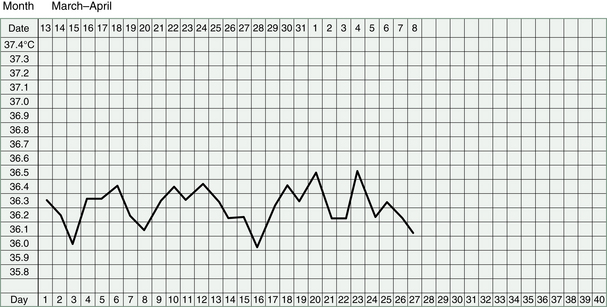
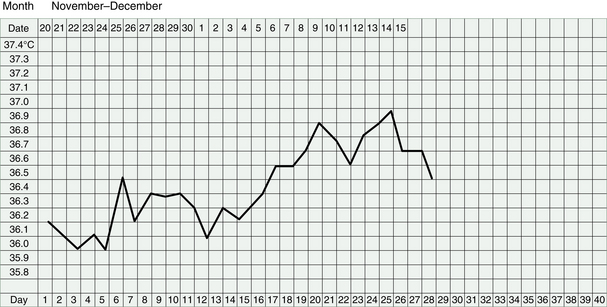
Ariella agreed to not ‘look at a double bed’ for 3 months, while we fortified her Kidney Yang. Her cycle was short and her BBT charts showed a low and short luteal phase. Her health, however, was for the most part, excellent. Occasionally, she felt some period pain but this was mild, and slightly loose stools before her periods was the only clear symptom of Kidney Yang deficiency. In situations like this, the BBT chart (Fig. 8.3) plays an essential role in diagnosis.
image

Figure 8.3 Case history – Ariella. This chart shows a slow rise to a short luteal phase.

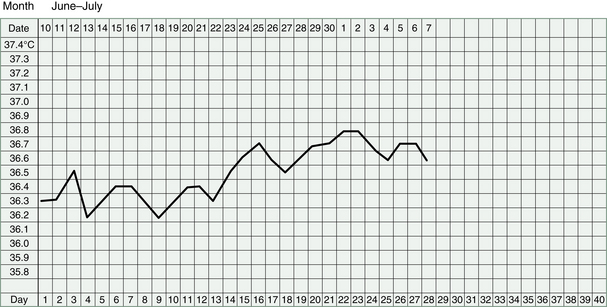
She took herbs to increase her Kidney Yang throughout her menstrual cycle and by the 3rd month, her BBT chart showed a convincing luteal phase (Fig. 8.4). This type of recurrent miscarriage (or infertility) is one of the most rewarding to treat because results usually come quickly, unlike problems with Kidney Yin deficiency.

Dang Gui 9 g Radix Angelicae Sinensis
Bai Shao 9 g Radix Paeoniae Lactiflorae
Shu Di 9 g Radix Rehmanniae Glutinosae Conquitae
Shan Zhu Yu 9 g Fructus Corni Officinalis
Shan Yao 9 g Radix Dioscorea Oppositae
Fu Ling 12 g Sclerotium Poriae Cocos
Mu Dan Pi 6 g Cortex Moutan Radicis
Ze Xie 9 g Rhizoma Alismatis
Ba Ji Tian 6 g Radix Morindae Officinalis
Tu Si Zi 9 g Semen Cuscatae

This formula she took each month before ovulation.
image

Figure 8.4 Case history – Ariella. This chart shows an improved luteal phase after having treatment for 3 cycles.

Dang Gui 9 g Radix Angelicae Sinensis
Shu Di 9 g Radix Rehmanniae Glutinosae Conquitae
Gou Qi Zi 12 g Fructus Lycii Chinensis
Dang Shen 12 g Radix Codonopsis Pilulosae
Bai Zhu 12 g Rhizoma Atractylodis Macrocephalae
Shan Yao 9 g Radix Dioscorea Oppositae
Ba Ji Tian 6 g Radix Morindae Officinalis
Tu Si Zi 15 g Semen Cuscatae
Du Zhong 9 g Cortex Eucommiae Ulmoidis
Xu Duan 9 g Radix Dipsaci
Da Zao 3 pieces Fructus Zizyphi Jujuba
Sha Ren 3 g Fructus seu Semen Amomi

This formula she took each month after ovulation.

Ariella fell pregnant soon after, and took more herbs to prevent miscarriage:

Tu Si Zi 15 g Semen Cuscatae
Sang Ji Sheng 15 g Ramulus Sangjisheng
Du Zhong 9 g Cortex Eucommiae Ulmoidis
Xu Duan 9 g Radix Dipsaci
Bai Zhu 9 g Rhizoma Atractylodis Macrocephalae
E Jiao 6 g Gelatinum Asini

Her pregnancy held firm and she gave birth at 9 months.

Qi deficiency

If Spleen Qi deficiency is seriously compromised, there may be a problem with the uterus dropping and the cervix not staying firmly closed and holding the pregnancy. Cervical incompetence usually causes a problem after about 14 or 15 weeks of pregnancy, when the fetus is starting to grow larger and the Uterus to stretch. Several months of treatment to lift and strengthen the uterus prior to conception may help in future pregnancies. However, the woman with a history of cervical incompetence would always be well advised to get a suture in the cervix as well, once she was 14 weeks into a pregnancy.

Herbal formula: The formula of choice is:

Bu Zhong Yi Qi Tang (Reinforce the Center and Benefit the Qi decoction) modified

Huang Qi 15 g Radix Astragali
Dang Shen 12 g Radix Codonopsis Pilulosae
Bai Zhu 9 g Rhizoma Atractylodis Macrocephalae
Dang Gui 9 g Radix Angelicae Sinensis
Chen Pi 6 g Pericarpium Citri Reticulate
Sheng Ma 6 g Rhizoma Cimicifugae
Chai Hu 6 g Radix Bupleuri
Gan Cao 3 g Radix Glycyrrhizae Uralensis
Wu Zei Gu 9 g Os Sepia seu Sepiellae

Dang Shen, Bai Zhu, and Gan Cao invigorate the Spleen Qi, Huang Qi, Sheng Ma, and Chai Hu lift the Uterus, and Chen Pi keeps the Qi moving. Dang Gui and Bai Zhu are often used together to both nourish the Blood and the Qi to help prevent further miscarriages. Wu Zei Gu provides an astringent action to prevent leakage and opening of the Uterus.

To concurrently reinforce the Kidneys, add:

Tu Si Zi 9 g Semen Cuscatae
Bu Gu Zhi 9 g Fructus Psoraleae
Shan Yao 9 g Dioscorea Oppositae

Tu Si Zi builds Kidney Yin and Yang and the Spleen, Bu Gu Zhi builds both Spleen and Kidney Yang, and Shan Yao reinforces Spleen Qi and Yin and the Kidneys.

Acupuncture points: Choose from the following points (and see Table 8.11):

Table 8.11

Acupuncture pointsa used in the treatment of recurrent miscarriage due to Qi deficiency

Treatment goal Acupuncture points
To lift the Qi and the organs, in this case the Uterus DU-20
To reinforce the Spleen Qi ST-36, Ren-12, Ren-6
To supplement the Kidney Yin and Yang Ren-4b
To regulate the Qi in the Spleen, Liver and Kidney channels SP-6

aReinforcing or even method is used.

bRen-4 and SP-6 are used only before and at midcycle in cycles where pregnancy is attempted. In other cycles, they can be used with no restriction.

DU-20 Baihui
Ren-6 Qihai
Ren-12 Zhongwan
Ren-4 Guanyuan
ST-36 Zusanli
SP-6 Sanyinjiao

CASE HISTORY – JULIANNE

Julianne (36) had a tragic history. Her pregnancies never got past 20 weeks; four times she had lost babies to premature labor when her cervix gave way. Even the suture the surgeon placed in her cervix to keep it closed failed to hold her pregnancies. She could hardly face the thought of going through the trauma again and had started to avoid her husband even though she wanted children more than anything. The treatment she received in my clinic was more related to emotional and physical recovery than to future pregnancies.

Her pulses were thready, her tongue swollen and her digestion weak, indicating a diagnosis of recurrent miscarriage from Qi deficiency. For 4 months she took Bu Zhong Yi Qi Tang with various additions and had regular acupuncture to reinforce her Spleen’s holding function.

Huang Qi 15 g Radix Astragali
Dang Shen 12 g Radix Codonopsis Pilulosae
Bai Zhu 9 g Rhizoma Atractylodis Macrocephalae
Dang Gui 9 g Radix Angelicae Sinensis
Chen Pi 6 g Pericarpium Citri Reticulate
Sheng Ma 6 g Rhizoma Cimicifugae
Chai Hu 6 g Radix Bupleuri
Gan Cao 3 g Radix Glycyrrhizae Uralensis
Wu Zei Gu 9 g Os Sepia seu Sepiellae
Tu Si Zi 9 g Semen Cuscatae
Ye Jiao Teng 6 g Caulis Polygoni Multiflori

Acupuncture points: DU-20, Yin Tang, Ren-6, SP-6, ST-36

Eventually she felt emotionally strong enough to attempt pregnancy again. Julianne conceived the first time she tried and continued to take the herbs for the first 7 months of the pregnancy. She went to bed and stayed there from early in the 2nd trimester until near to term, and she had a suture placed in her cervix. This time she made it – a full-term baby born at 39 weeks.

Blood deficiency

If Yin deficiency leads to Blood deficiency, then the endometrium will be thin and may not be conducive to effective implantation, or may not be able to nourish a fetus adequately if implantation is successful. If Qi deficiency is accompanied by Blood deficiency, then the fetus may fail to grow and thrive and will appear small-for-dates on ultrasound tests.

Herbal formula: Give Gui Shao Di Huang Tang (Angelica Peonia Rehmannia decoction) for Yin and Blood deficiency or give the following guiding formula for Blood deficiency with Qi deficiency:

Ba Zhen Tang (Eight Precious decoction)

Dang Gui 9 g Radix Angelicae Sinensis
Bai Shao 9 g Radix Paeoniae Lactiflorae
Chuan Xiong 6 g Radix Ligustici Wallichii
Shu Di 9 g Radix Rehmanniae Glutinosae Conquitae
Dang Shen 12 g Radix Codonopsis Pilulosae
Bai Zhu 9 g Rhizoma Atractylodis Macrocephalae
Fu Ling 12 g Sclerotium Poriae Cocos
Gan Cao 3 g Radix Glycyrrhizae Uralensis

This formula was mentioned above, where it was prescribed for recovery after miscarriage with an increased dose of Dang Gui.

When treating recurrent miscarriage, it is appropriate to add more Kidney tonics to the formula, e.g.:

Huang Jing 9 g Rhizoma Polygonati
Tu Si Zi 9 g Semen Cuscatae
Sang Ji Sheng 15 g Ramulus Sangjisheng
Shan Zhu Yu 9 g Fructus Corni Officinalis

Huang Jing reinforces Qi and Kidneys; Tu Si Zi reinforces Kidney Yin and Yang; Sang Ji Sheng nourishes the Blood, Kidneys, and Liver; Shan Zhu Yu nourishes Kidney Yin and Jing, and provides an astringing action to prevent leakage from the uterus.

Acupuncture points: Choose from the following points (and see Table 8.12):

Table 8.12

Acupuncture pointsa used in the treatment of recurrent miscarriage due to Blood deficiency

Treatment goal Acupuncture points
To strengthen Spleen and Stomach and encourage Blood production BL-17, BL-20, BL-23, Ren-12, ST-36
To build Blood in the uterus Ren-4b
To regulate Blood in the uterus ST-28b

aReinforcing or even method is used.

bRen-4 and ST-28 are used only before and at midcycle in cycles where pregnancy is attempted. In other cycles, they can be used with no restriction.

BL-17 Geshu
BL-20 Pishu
BL-23 Shenshu
Ren-12 Zhongwan
ST-36 Zusanli
Ren-4 Guanyuan
ST-28 Shuidao

Heat in the Blood

As was the case for threatened miscarriage, the Heat which causes repeated miscarriages mostly arises from Kidney Yin deficiency. In some cases, it comes from severe mental agitation, causing Liver- or Heart-Fire; this latter can interfere with the normal ‘opening and closing’ functions of the uterus. The timing of ovulation and periods may be affected, as well as the ability of the uterus to hold a pregnancy. We can use the same guiding formula here as we used for a pregnancy under threat by Heat in the Blood, but because we are applying preventative treatment, we can expand on the formula and use acupuncture points we may have been hesitant to use on a pregnant woman.

Herbal formula: In the case of long-term endometritis or PID causing the Heat, a combination of herbal medicine, acupuncture and allopathic medicine may be necessary.

Bao Yin Jian (Protecting Yin decoction) modified

Sheng Di 9 g Radix Rehmanniae Glutinosae
Xuan Shen 9 g Radix Scrophulariae
Shan Yao 12 g Radix Dioscorea Oppositae
Bai Shao 9 g Radix Paeoniae Lactiflorae
Huang Qin 6 g Radix Scutellariae Baicalensis
Huang Bai 6 g Cortex Phellodendri
Di Gu Pi 9 g Cortex Lycii Chinensis
Nu Zhen Zi 9 g Fructus Ligustri Lucidi
Han Lian Cao 9 g Herba Ecliptae Prostratae
Suan Zao Ren 15 g Semen Ziziphi Spinosae
Gan Cao 3 g Radix Glycyrrhizae Uralensis

Sheng Di and Xuan Shen cool the Blood; Di Gu Pi clears Yin deficient Heat, while Huang Bai and Huang Qin are used to remove Heat and Damp specifically from the pelvic area. Bai Shao and Suan Zao Ren soothe the Liver; Nu Zhen Zi and Han Lian Cao protect the Yin, and Shan Yao the Spleen.

Acupuncture points: Choose appropriate points from the following (and see Table 8.13):

Table 8.13

Acupuncture pointsa used in the treatment of recurrent miscarriage due to Heat in the Blood

Treatment goal Acupuncture points
To cool the Blood SP-10 and CO-11
To clear Yin-deficient Heat from the Uterus KI-6 and KI-2
To clear Liver-Fire LIV-2
To clear Heart-Fire and Heat in the Blood and safeguard the Bao vessels HE-5
To cool the Blood and calm the spirit PC-3
To harmonize Heart and Kidney KI-3

aReducing or even method is applied except in the case of KI-6, which is reinforced.

SP-10 Xuehai
KI-6 Zhaohai
KI-2 Rangu
LIV-2 Xingjian
HE-5 Tongli
PC-3 Quze
CO-11 Quchi
KI-3 Taixi

If Heat in the Blood is contributed to by diet, then this should be adjusted in the ways suggested in Chapter 9. If Heat in the Blood is contributed to by emotional factors, then steps to reduce stress should be taken. Even where emotional factors are not the initial cause of Heat in the Blood, they should be considered in women who suffer recurrent miscarriages because there will always be a degree of anxiety and fear. Restlessness and anxiety can be particularly marked in this pattern due to the Heat but should respond favorably to acupuncture and herbal treatment.

Blood stagnation

Women with a history of endometriosis, endometritis, fibroids, cysts, and abdominal surgery are likely to have a degree of Blood stagnation. Sometimes, this can impact unfavorably on pregnancy, especially if there is obstruction, scarring or damage to the endometrium which interferes with placental attachment. If large fibroids are deemed to be a risk for implantation, then surgery is often recommended, as is also the case for polyps. In the case of endometriosis, in which Kidney Yang is frequently a contributing factor, pregnancies may be at risk from inadequate corpus luteum function, increased inflammation, immune system disturbance and disordered blood supply to the endometrium, all of which can impede successful implantation and development of the placenta and therefore increase the risk of miscarriage.

Herbal formula: Our guiding formula in this case can be stronger than that employed for threatened miscarriage with Blood stagnation. While the following herbs are being consumed, it is important that pregnancy is avoided.

Shao Fu Zhu Yu Tang (Lower Abdomen Eliminating Stasis decoction)

Dang Gui 9 g Radix Angelicae Sinensis
Chi Shao 6 g Radix Paeoniae Rubra
Chuan Xiong 6 g Radix Ligustici Wallichii
Yan Hu Suo 9 g Rhizoma Corydalis Yanhusuo
Mo Yao 6 g Myrrha
Pu Huang 9 g Pollen Typhae
Wu Ling Zhi 6 g Excrementum Trogopterori
Xiao Hui Xiang 6 g Fructus Foeniculi Vulgaris
Gan Jiang 3 g Rhizoma Zingiberis Officinalis
Rou Gui 3 g Cortex Cinnamomi Cassiae

Dang Gui, Chi Shao, Chuan Xiong, Yan Hu Suo, Mo Yao, Pu Huang, and Wu Ling Zhi all help to invigorate the Blood. Xiao Hui Xiang, Gan Jiang, and Rou Gui warm the uterus and expel Cold: in cases where this formula is too heating for a patient, these last three herbs will be reduced or removed.

This formula should be administered before and during the period to regulate Blood stagnation. If there are symptoms of Blood stagnation (i.e., pain) at other times of the cycle, it may be administered then too. At other times, Kidney tonic formulas should be given (see Kidney deficiency, above) or, alternatively, Kidney tonic herbs can be added to Shao Fu Zhu Yu Tang, namely:

Nu Zhen Zi 9 g Fructus Ligustri Lucidi
Xu Duan 12 g Radix Dipsaci
Tu Si Zi 9 g Semen Cuscatae

In the case of large submucosal fibroids (where surgery is not appropriate or desired), with little complication by Kidney deficiency, consider a variation of Gui Zhi Fu Ling Wan.

Gui Zhi Fu Ling Tang (Ramulus Cinnamomi-Poria decoction) modified

Dang Gui 12 g Radix Angelicae Sinensis
Bai Shao 12 g Radix Paeoniae Lactiflorae
Chuan Xiong 6 g Radix Ligustici Wallichii
Yi Mu Cao 9 g Herba Leonuri Heterophylli
San Leng 12 g Rhizoma Sparganii
E. Zhu 12 g Rhizoma Curcumae Zedoariae
Tao Ren 6 g Semen Persicae
Gui Zhi 6 g Ramulus Cinnamomi Cassiae
Fu Ling 15 g Sclerotium Poriae Cocos
San Qi 9 g Radix Pseudoginseng
Wu Ling Zhi 6 g Excrementum Trogopterori

This is a strong formula for reducing fibroid size and should not be taken at the same time as trying to conceive. Gui Zhi Fu Ling Wan, a well known formula for the treatment of masses, disperses Blood stasis and Phlegm Damp accumulation. Stronger stasis moving herbs in the shape of San Leng and E Zhu are added alongside additional Blood moving herbs San Qi, Yi Mu Cao, and Wu Ling Zhi. This formula can also be considered if other factors such as endometriosis, endometritis, or polyps are contributing to recurrent miscarriage.

See also formulas discussed for endometriosis in Chapter 5.

Acupuncture points: Choose points from the following (and see Table 8.14):

Table 8.14

Acupuncture pointsa used in the treatment of recurrent miscarriage due to Blood stagnation

Treatment goal Acupuncture points
To clear stagnant Blood in the Chong vessel KI-14b and KI-18
To regulate the Blood in the Chong and Ren vessels KI-5
To move Blood stagnation from the Uterus, especially if it is associated with Cold ST-28b and ST-29b
To reinforce Kidney function Ren-4b and Ren-6
To regulate Blood in the Uterus SP-8 and SP-10
To regulate Qi and Blood in the Bao vessel PC-5
To release the menstrual flow if it is obstructed and painful CO-4 with SP-6

aPoints are used with reducing method to clear stagnation and stop pain.

bUsed with caution and no manipulation after ovulation in cycles where conception is attempted.

ST-28 Shuidao
ST-29 Guilai
SP-10 Xuehai
SP-8 Diji
SP-6 Sanyinjiao
KI-14 Siman
KI-18 Shiguan
KI-5 Shuiquan
Ren-4 Guanyuan
Ren-6 Qihai
PC-5 Jianshi
CO-4 Hegu

These acupuncture points are applied just before and during the period or when there is pain. Applying moxa to abdomen points can facilitate the moving of Qi and Blood stagnation, providing there is no Heat (inflammation).

CASE HISTORY – GERALDINE

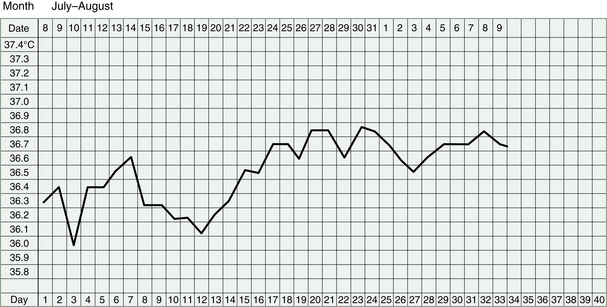
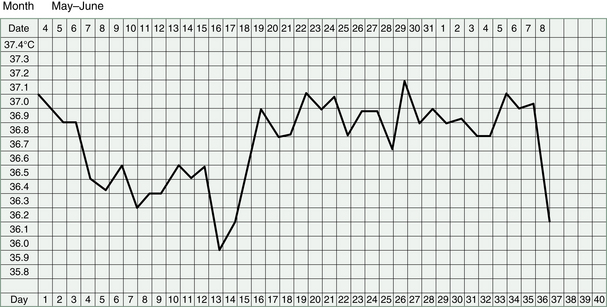
Geraldine (29) had endometriosis, diagnosed on laparoscopy. It was a mild case according to the surgeon who removed some of the lesions and, he explained, it was probably the reason she hadn’t succeeded in becoming pregnant. She had been trying for 2 years: 1 year before and 1 year since the surgery. Her cycle was long and irregular; premenstrually, she experienced breast soreness and abdomen distension; her periods were heavy and clotty and associated with strong pain in the back and abdomen. After the surgery, her periods were less heavy but still somewhat clotty and painful. She had been recording her BBT for the last 9 cycles and a disturbing pattern was evident. In four of the nine charts, her luteal phase was between 19 and 21 days long before a period arrived, indicating early miscarriage (Fig. 8.5). Geraldine didn’t register this possibility because her cycle had always been irregular and her premenstrual symptoms mimicked pregnancy ones.
image

Figure 8.5 Case history – Geraldine. The luteal phase on Geraldine’s BBT charts was sometimes as long as 21 days.

Her pulse was wiry and choppy. Her tongue was normal, except for slight dark discoloration on the right side.

TCM treatment aimed to clear Blood stagnation, regulate Liver Qi, and boost Kidney Yang. She agreed to avoid attempts at pregnancy for 2 cycles, during which time she took strong herbs to remove any endometriosis.

This formula she took for several days before and during the period:

Gou Teng 15 g Ramulus Uncariae cum Uncis
Zi Bei Chi 9 g Mauritiae Concha
Dang Gui 9 g Radix Angelicae Sinensis
Chi Shao 9 g Radix Paeoniae Rubra
Wu Ling Zhi 9 g Excrementum Trogopterori
Yan Hu Suo 9 g Rhizoma Corydalis Yanhusuo
E. Zhu 9 g Rhizoma Curcumae Zedoariae
Rou Gui 3 g Cortex Cinnamomi Cassiae
Quan Xie 1.5 g Buthus Martensi
Wu Gong 1.5 g Scolopendra Subspinipes
Mu Xiang 6 g Radix Saussureae seu Vladimiriae
Xu Duan 9 g Radix Dipsaci

The following formula Geraldine took after her period, until after she ovulated (i.e., her temperature rose on the BBT chart):

Shu Di 12 g Radix Rehmanniae Glutinosae Conquitae
Shan Yao 9 g Radix Dioscorea Oppositae
Shan Zhu Yu 9 g Fructus Corni Officinalis
Fu Ling 9 g Sclerotium Poriae Cocos
Mu Dan Pi 9 g Cortex Moutan Radicis
Ze Xie 12 g Rhizoma Alismatis
Dang Gui 9 g Radix Angelicae Sinensis
Bai Shao 9 g Radix Paeoniae Lactiflorae
Tao Ren 6 g Semen Persicae
Hong Hua 6 g Flos Carthami Tinctorii
Wu Ling Zhi 6 g Excrementum Trogopterori
Tu Si Zi 6 g Semen Cuscatae
Rou Cong Rong 6 g Herba Cistanches
Xu Duan 6 g Radix Dipsaci

The next formula she took for a week after ovulation:

Dang Gui 9 g Radix Angelicae Sinensis
Chi Shao 6 g Radix Paeoniae Rubra
Chuan Xiong 6 g Radix Ligustici Wallichii
Dang Shen 12 g Radix Codonopsis Pilulosae
Tu Si Zi 9 g Semen Cuscatae
Lu Jiao Pian 9 g Cornu Cervi Parvum
Mo Yao 6 g Myrrha
Pu Huang 9 g Pollen Typhae
Wu Ling Zhi 6 g Excrementum Trogopterori
Rou Gui 3 g Cortex Cinnamomi Cassiae

After two cycles, Geraldine once again tried to conceive, so the first formula (above) with the strong Blood-moving herbs was used only when the period arrived. In addition, we added another prescription to be taken for a few days just before and after ovulation:

Dang Gui 9 g Radix Angelicae Sinensis
Chi Shao 9 g Radix Paeoniae Rubra
Bai Shao 9 g Radix Paeoniae Lactiflorae
Shan Yao 9 g Radix Dioscorea Oppositae
Shu Di 9 g Radix Rehmanniae Glutinosae Conquitae
Nu Zhen Zi 9 g Fructus Ligustri Lucidi
Mu Dan Pi 9 g Cortex Moutan Radicis
Fu Ling 9 g Sclerotium Poriae Cocos
Xu Duan 9 g Radix Dipsaci
Tu Si Zi 9 g Semen Cuscatae
Wu Ling Zhi 9 g Excrementum Trogopterori
Hong Hua 6 g Flos Carthami Tinctorii
(Sheng) Shan Zha 9 g Fructus Crataegi
Dan Shen 9 g Radix Salviae Miltiorrhizae

She took these four different formulas at the appropriate time for the next 4 cycles. Her cycle was now a regular 29 days. The 5th month she fell pregnant and stayed pregnant. Her herbs were changed again:

Xu Duan 9 g Radix Dipsaci
Ba Ji Tian 9 g Radix Morindae Officinalis
Du Zhong 9 g Cortex Eucommiae Ulmoidis
Tu Si Zi 9 g Semen Cuscatae
Dang Gui 9 g Radix Angelicae Sinensis
Shu Di 9 g Radix Rehmanniae Glutinosae Conquitae
Gou Qi Zi 12 g Fructus Lycii Chinensis
Dang Shen 12 g Radix Codonopsis Pilulosae
Bai Zhu 12 g Rhizoma Atractylodis Macrocephalae
Da Zao 3 pieces Fructus Zizyphi Jujuba
Sha Ren 3 g Fructus seu Semen Amomi

And a healthy baby was born at term.

Immune-Related Miscarriages

Women who are diagnosed with immune factors that might contribute to recurrent miscarriages, will fall into one or more of the TCM categories described above.

However, that said, clinicians working with autoimmune disorders have tended to focus primarily on clearing Blood stagnation or nourishing Yin and clearing Heat.

If your patient has received a diagnosis of clotting factors called antiphospholipid antibodies (the two main ones are anticardiolipin antibodies and lupus anticoagulant), or of genetic factors predisposing to making blood clots (e.g., factor V Leiden, MTHFR or prothrombin mutations), or of autoimmune conditions that we associate with poor placentation (e.g., systemic lupus erythematosus), you can consider using a formula such as Kang Mian Er Hao below, as a guiding formula.72 This is the sort of formula we could also consider for a patient with a history of recurrent miscarriage who has signs of Blood stagnation from a TCM point of view such as pain, clotty menstrual flow, or a history of endometriosis, whether or not there has been a diagnosis of clotting factors.

Blood stagnation refers to a continuum of states of poor or obstructed blood circulation – from congestion, in which drainage or supply of blood is poor and the blood flow sluggish, to actual stasis, in which the blood circulation at some locale has ceased and a physical obstruction has formed. The sort of impediments we are looking at with clotting factors contributing to miscarriage is at the milder end of the spectrum compared with the substantial Blood stasis of endometriosis and fibroids, etc. At this level of microcirculation, we may not see a lot of obvious clinical symptoms of Blood stasis. The sorts of herbs we will choose will therefore be ones that circulate (and thin) the Blood rather than those that disperse or break up stasis.

Herbal formula: Kang Mian Er Hao is a formula used for autoimmune reproductive issues, which promotes circulation of blood to remove stasis:

Kang Mian Er Hao (Immunity formula for helping pregnancy #2)

Dang Gui 9 g Radix Angelicae Sinensis
Bai Shao 9 g Radix Paeoniae Lactiflorae
Chuan Xiong 9 g Radix Ligustici Wallichii
Tao Ren 9 g Semen Persicae
Hong Hua 9 g Flos Carthami Tinctorii
Yan Hu Suo 9 g Rhizoma Corydalis Yanhusuo
Dan Shen 30 g Radix Salviae Miltiorrhizae
Yi Mu Cao 18 g Herba Leonuri Heterophylli
Gui Zhi 6 g Ramulus Cinnamomi Cassiae
Xu Chang Qing 9 g Radix Cynanchi Paniculati
Yin Yang Huo 15 g Herba Epimedii
Tu Si Zi 9 g Semen Cuscatae
Huang Qi 30 g Radix Astragali
Gan Cao 9 g Radix Glycyrrhizae Uralensis

The majority of the herbs in this formula have an action of clearing stasis. Some do this by thinning the blood, others by cooling the blood and others by simply promoting blood flow. Many of these herbs have been shown to have anti-inflammatory activity in addition to their function of facilitating blood flow.

It is typical of formulas which address autoimmune factors to have large doses of both Dan Shen and Huang Qi. Yi Mu Cao is used in a high dose in this formula too.

Dan Shen is the main herb in this formula for preventing clotting. It is known for its blood thinning and anti-inflammatory effects. This herb is particularly potent at improving microcirculation. It prevents thrombocyte aggregation and clears stasis right down to the tiniest blood vessels and dissolves obstructions at the level we need it most, in the implantation sites of the endometrium and the newly forming placenta.

Patients with a history of miscarriage related to clotting factors will benefit from taking this formula before trying to conceive again. Once pregnant, these patients are often prescribed low molecular weight Heparin and should be cautioned against taking this formula concurrently.

The other approach is a formula Kang Mian Yi Hao, said to restore Kidneys and reinforce Yin and enrich Jing.72 Where inflammation is suspected to play a role (e.g., in SLE, rheumatoid arthritis, Sjögren syndrome, scleroderma, excess NK cells, Grave’s disease, psoriasis), or if there is a diagnosis of Heat (or Damp-Heat), then cooling herbs will be used alongside Yin tonics.

Kang Mian Yi Hao (Immunity formula for helping pregnancy #1)

Sheng Di 12 g Radix Rehmanniae Glutinosae
Shan Zhu Yu 9 g Fructus Corni Officinalis
Mai Dong 9 g Tuber Ophiopogonis
Bai Shao 9 g Radix Paeoniae Lactiflorae
Han Lian Cao 12 g Herba Ecliptae Prostratae
Mu Dan Pi 9 g Cortex Moutan Radicis
Dan Shen 30 g Radix Salviae Miltiorrhizae
Huang Qi 30 g Radix Astragali
Gui Ban 30 g Plastrum Testudinis
Bie Jia 30 g Carapax Amydae Sinensis
Huang Qin 9 g Radix Scutellariae Baicalensis
Huang Bai 9 g Cortex Phellodendri
Yu Zhu 15 g Rhizoma Polygonati Odorati
Xu Chang Qing 9 g Radix Cynanchi Paniculati
Zhi Gan Cao 9 g Radix Glycyrrhizae Uralensis

The Heat clearing action of this formula soothes inflammation and reduces autoimmune effects in Yin-deficient women. This is strongly backed up by large doses of heavy Yin tonics in the form of Gui Ban and Bie Jia. Provided a certified farmed source is verified, you can dispense these substances to quickly and effectively nourish Yin and promote body fluids. At these high doses, this formula should not be continued for too long, and it is recommended that Shu Di replaces Gui Ban and Bie Jia if the formula is used for more than a few weeks.

Women in this category are sometimes recommended to take steroids, but since the use of these are controversial, and there are some undesired side-effects, herbs which reduce Heat and inflammation are a good alternative.

Acupuncture points: Treatments for recurrent miscarriage related to immune factors will follow the above guiding point prescriptions according to the TCM diagnosis.

Early Pregnancy

Once a woman with a history of recurrent miscarriage conceives, it is important that she continues with treatment which safeguards Kidney function and nourishes Qi and Blood. A commonly used guiding formula is Yishen Gutai Tang (below), which can be modified to address the original cause of the recurrent miscarriages.

Herbal formula: The formula of choice is:

Yishen Gutai Tang (Nourish Kidney and Protect Fetus) modified

Tu Si Zi 20 g Semen Cuscatae
Du Zhong 15 g Cortex Eucommiae Ulmoidis
Xu Duan 15 g Radix Dipsaci
Sang Ji Sheng 15 g Ramulus Sangjisheng
Dang Shen 15 g Radix Codonopsis Pilulosae
Bai Zhu 15 g Rhizoma Atractylodis Macrocephalae
Huang Qin 9 g Radix Scutellariae Baicalensis
Gou Qi Zi 12 g Fructus Lycii Chinensis
Da Zao 3 pieces Fructus Zizyphi Jujuba
He Shou Wu 12 g Radix Polygoni Multiflori
Sha Ren 6 g Fructus seu Semen Amomi

This formula is an expanded version of Shou Tai Wan, used above for Kidney deficiency threatened miscarriage. It strongly reinforces the Kidney and Spleen Qi, and nourishes Blood. Huang Qin quietens the fetus. If there is Heat in the Blood, Sheng Di can be added, and Shu Di in the case of Yin deficiency. Sheng Ma will be added in the case of Spleen Qi deficiency, causing a bearing down sensation. For anxiety, add Suan Zao Ren and for nausea, Sheng Jiang, Zhu Ru, or Zi Su Ye. (Ch. 4 discusses the treatment of pregnancy nausea further.)

Acupuncture points: Acupuncture is particularly useful to relieve anxiety and is strongly recommended for the first few weeks of pregnancy in a woman who has a history of miscarriage. The reassurance she receives from hearing that her pulse is strong and gliding and the calming effect of the acupuncture help to maintain integrity of the Bao vessel and the uterus closed.

Choose from the following points (and see Table 8.15):

Table 8.15

Acupuncture pointsa used in the first few weeks of pregnancy

Treatment goal Acupuncture points
To calm the Shen and regulate the Bao vessel HT-7 PC-6
To calm the Shen and the mind Yin Tang, DU-20
To support the Spleen in making Qi and Blood ST-36, REN-12
To support Kidneys KI-6, KI-9
To relieve nausea and regulate Qi in the Chong channel KI-27, KI-21, KI-6, PC-6, LIV-3
To regulate Liver Qi and relieve indigestion GB-34, LIV-3

Points are used with even method. Abdomen and lower back points are avoided.

Yin Tang  
DU-20 Baihui
PC-6 Neiguan
KI-9 Zhubin
KI-6 Zhaohai
ST-36 Zusanli
REN-12 Zhongwan
HT-7 Shenmen
LIV-3 Taichong
GB-34 Yanglingquan
KI-27 Shufu
KI-21 Youmen

Missed Abortion

Finally, there is another type of miscarriage called a missed miscarriage or missed abortion. It occurs if a pregnancy, in which the fetus that is not growing normally or dies, continues. The fetus should have miscarried but hasn’t. Sometimes it is the use of prescribed progesterone which encourages such a situation, making the abnormal pregnancy tissue stay in the uterus longer than it should. In this case, the operation necessary to remove it (D&C) can be more difficult than usual to perform because the tissue becomes hardened.

I am frequently asked if the herbs prescribed to help prevent miscarriage might do the same thing – or worse, allow a pregnancy to go to term when the fetus is developing abnormally and should under normal circumstances miscarry.

It is important to remember that Chinese medicine usually works in a very different way from allopathic medicine, i.e., it tries to address the source of problems rather than their manifestation. However, during treatment for threatened miscarriage, we are – due to the urgent nature of the situation – addressing both the source of the miscarriage and trying to secure the pregnancy with herbs whose sole aim is to stop bleeding and ‘calm the fetus’. In most cases where a pregnancy is already threatened and the woman is experiencing bleeding and pain, a miscarriage will follow and it is very unlikely that the herbs prescribed in this case will lead to a missed abortion. However, the herbs to enhance fertility, which are prescribed during the cycle in which conception is attempted may – in the case of someone who has a history of miscarriage – be continued for some weeks after a successful conception to help the body adjust to and maintain the pregnancy. The action of some of these herbs is supposed to encourage the function of the corpus luteum to continue to make progesterone. This is different from supplying exogenous synthetic progesterone and does not usually make a pregnancy persist when the fetus is abnormal. There have been reported cases, however, where large doses of herbs have been taken in an attempt to make a pregnancy stick and they have masked a fetal death for a couple of weeks. It would take an extremely skilled Chinese doctor to detect such a situation on the pulse (because the classically slippery pregnant pulse reflects the changes in the arterial wall provoked by progesterone), although a master pulse-taker may be able to detect fetal death even when progesterone levels remain elevated. But for most TCM doctors, the diagnosis would depend on an ultrasound. Fetal death that is not followed by expulsion of the fetal tissue is not a desirable situation, whether it is created by exogenously administered progesterone or by the action of herbs prescribed after conception or by other unknown factors. TCM practitioners need to be aware of this risk, and where large doses of herbs are being prescribed to maintain a pregnancy which is at risk of miscarriage, it may be appropriate to monitor it with ultrasound or blood tests for hCG levels.

Chinese medicine treatment for missed abortion follows the same principles as that for clinical miscarriage. A D&C will have been performed and, if this is successful, reinforcing the Qi and Blood and regulating the menstrual cycle will be the aim. Since it is harder to remove products of a pregnancy which stopped progressing some time earlier but have been retained in the uterus, there may be a place for adding herbs which can assist the D&C procedure. The same herbs as those used for retained products after a D&C would be used.

Male Factor Treatment

In no TCM textbooks will you find treatment of male factors for recurrent miscarriage, but we now know that the condition of the sperm is as important as the condition of the egg in creating a viable pregnancy. Most disorders which cause male infertility do so by compromising sperm quality and, as we know, fertilization with faulty sperm can create embryos likely to miscarry.

You may recall from Chapter 7 that the main patterns of male infertility are Kidney Yin or Yang deficiency (as they are for female infertility). These patterns are sometimes complicated with Damp-Heat or Blood stagnation.

It is the Kidney Yin-deficiency pattern that is most often associated with an increased percentage of abnormal sperm. These are abnormalities which we can see under the microscope and which make it hard for sperm to swim to the egg or to fertilize it effectively if it does get there. But there are also other abnormalities in the chromosomes which we don’t see under the regular microscope, because they are deep within the genetic code in the DNA in the chromosomes. Their invisibility, however, does not diminish their potency in contributing to infertility and especially to miscarriage. As mentioned earlier, recent research has shown that exposure to radiation and toxic chemicals increases miscarriage by causing damage to the sperm. Specifically, in TCM terms, radiation dries and damages the Yin, whereas the action of toxic chemicals can manifest in various ways: they can damage Wei Qi and Kidney Yang or Kidney Jing, or create Damp-Heat.

Treatment of the male partner to prevent miscarriage therefore requires exactly the same approach as treatment for infertility and is covered thoroughly in Chapter 7. Clinically, in most cases of recurrent miscarriage due in part or in total to the male partner, tonifying the Yin and clearing Heat is required. Additionally, attention should be paid to lifestyle factors and exposure to fumes in the workplace and at home. Exposure needs to be avoided for several months prior to attempting pregnancy.

Conception Timing and Miscarriage

An interesting study looked at frequency of miscarriage according to how close the day of ovulation was to sexual intercourse and subsequent conception. If women had a history of pregnancy loss, their chances of miscarrying again were much reduced if they attempted conception on the day of ovulation or the day before ovulation compared with pregnancies resulting from attempts at less optimal times. For women who had no history of miscarriage, conception which was not optimally timed produced pregnancies which had no greater risk of miscarrying than those achieved right at midcycle.73

Other studies in both animals and humans have indicated that if conception occurs outside the optimal time, a trisomic conception is more likely.74

Such a chromosomal abnormality greatly increases the likelihood of miscarriage. If an egg survives more than its usual viable lifetime (>24 h) and is fertilized, faulty cell divisions, an abnormal fetus and then a miscarriage, are likely to follow. This is because an aging egg can no longer maintain the same integrity of the cytoplasmic tubular elements. These are the scaffolding elements of the cell which control movement of the chromosomes during cell division. An over-ripe egg also loses some of the integrity of its outer layer and more easily allows entry of more than one sperm at fertilization – a situation which usually creates an unviable fetus.

Eggs will generally be over-ripe and difficult to fertilize if the sperm does not arrive until some time after ovulation. However, there is also the possibility that the egg is released from the ovary late, after it has ripened. This may occur due to illness or hormonal disturbance.

The above research implies that women with a history of even one miscarriage (or a history of infertility) could benefit from charting their cycle and monitoring the exact day of ovulation with cervical mucus observation or by using urine ovulation testing kits. Thus, they can attempt to conceive right at midcycle, at a time when the newly released egg has a firm intracellular structure and the sperm are fresh and vigorous.

Ectopic Pregnancy

Ectopic pregnancies represent a special type of pregnancy loss, one in which the fetus may be completely normal and may have implanted successfully but unfortunately in the wrong place. Implantation can occur in areas such as the outer part of the tube (most common) or the inner narrow part of the tube, or the place where the tube joins the uterus, and occasionally in the ovary or the cervix.

Symptoms include pain in the lower abdomen, usually on one side, accompanied by irregular bleeding, or a long period, or no period. Two blood tests 2 or 3 days apart will indicate whether hCG levels are doubling, as they should in a normal pregnancy, and a transvaginal ultrasound will locate either the pregnancy itself or blood in the abdominal cavity.

Sometimes the doomed embryo is dislodged and expelled out the distal end of the tube (a tubal abortion) and the pregnancy terminates naturally with no intervention. Other ectopic embryos just stop growing and die and the fetal tissue gets absorbed. If the fetus keeps growing, however, the tube can rupture, creating internal bleeding, shock, and a surgical emergency. Ideally, surgery can be performed by laparoscopy, during which the tube is split open and the embryo and surrounding tissues removed. The tube is then left to heal naturally. If there is much internal bleeding, then a laparotomy will be performed during which the ectopic pregnancy is removed or the whole tube is removed. Whether the tube is saved or not depends on its condition and also on whether the other tube is in good enough shape to allow future pregnancies.

If an ectopic pregnancy is diagnosed early and causes few distressing symptoms, it is sometimes left to resolve on its own (under careful observation), or its demise and reabsorption is hurried along by using drugs which are toxic to the embryo and kill it. An example of such a cytotoxic drug is methotrexate.

Chinese medicine takes a similar approach to a diagnosed ectopic pregnancy that does not immediately require surgery. Herbs are used to dislodge the embryo and encourage its absorption by the body. This includes the Blood stagnation clearing herbs which we were very careful to avoid using during fertility treatment at a time when there was a chance the patient might become pregnant.

Herbal formula: The formula of choice is:

Huo Luo Xiao Ling Dan (Remove Channel Obstructions formula)

Mu Dan Pi 9 g Cortex Moutan Radicis
Dan Shen 9 g Radix Salviae Miltiorrhizae
Chi Shao 9 g Radix Paeoniae Rubra
Wu Ling Zhi 9 g Excrementum Trogopterori
Shan Zha 9 g Fructus Crataegi
Chuan Niu Xi 9 g Radix Cyathulae
Yu Jin 6 g Tuber Curcumae
Ru Xiang 3 g Gummi Olibanum
Chen Pi 6 g Pericarpium Citri Reticulate
Gan Cao 6 g Radix Glycyrrhizae Uralensis
Di Long 3 g Lumbricus
Wu Gong 3 g Scolopendra Subspinipes

The action of Wu Gong, Di Long, and Chuan Niu Xi is to kill the fetus. The other Blood-regulating herbs all support this action and, in addition, help expulsion or reabsorption of the pregnancy tissue.

This is a strong formula with a powerful clearing action. The patient should be kept under close observation and the formula taken for no longer than 4 or 5 days.

In a patient with Qi deficiency, add:

Huang Qi 9 g Radix Astragali
Dang Shen 9 g Radix Codonopsis Pilulosae

Since methotrexate is a strong chemotherapeutic agent which can affect kidney, lung, liver and bone marrow function, Chinese herbs offer a sound alternative to this drug. Herbs are not without potential toxicity themselves, particularly in people with liver disease. Nevertheless, all the herbs named here have been used for some thousands of years without ill effect. Diarrhea and flatulence are the most disturbing immediate side-effects and if these occur, then the formula is modified.

If the ectopic pregnancy does not resolve or in cases where there is risk of rupture of the tube and consequent shock, hospitalization and surgery are necessary.

Preventing ectopic pregnancies

To think about ways to prevent tubal pregnancies, we need to ask what makes them happen and can we prevent these factors from operating. Tubal pregnancies are caused by:

• kinks, blockages and obstructions of the tube due to scarring from previous infections

• inadequate protection of the lining of the fallopian tube by secretions, either because not enough protective mucus is produced or because it has been lost by the thinning action of progesterone

• mucus plugs

• tension in the fine muscles of the tube.

The incidence of scarring of the tubes as a result of infection has increased significantly in the last few decades and with that, the incidence of ectopic pregnancy. In Chapter 6, we covered in detail the causes and possible treatments for obstructions in the tubes and, if there is a history of infection and positive evidence from a laparoscopy or HSG of tubal obstruction, this treatment should be applied before conception is attempted.

The inside of the fallopian tube is lined with special secretions which are designed to nourish it and the embryo, to facilitate the movement of its cilia, and hence the passage of the embryo, and to protect it from the invasive burrowing instincts of the embryo seeking a home. In normal circumstances, the mucus coats the tubes adequately until a couple of days after ovulation when the progesterone levels have risen to a level that causes the mucus to thin and disappear (i.e., the tube is progestogenized). By this time, the embryo has nearly completed its journey down the tube and implantation will take place in the uterus. But sometimes there are factors operating which mean that the embryo is still in the tube when the protective lining is thinned and dissipated, placing the now-vulnerable tube at risk of invasion. These factors include scarring or constrictions in the tube such that the passage of the embryo is slowed or blocked, a late release of the egg from the ovary or excess progesterone in the system from an exogenous source.

Blockages or constrictions in the tube (caused by scarring, thick mucus secretions or muscle spasms) are dealt with using microsurgery, physiotherapy, Chinese herbal medicine, acupuncture, or massage, depending on the nature and site of the obstruction. Chapter 6 discusses all these possibilities. A retarded release from the ovary, if it happens on a regular basis, can be readily treated with acupuncture applied at the appropriate time. Also, there are herbs which specifically facilitate release of the egg from the ovary (see Ch. 4). In this scenario, a tardy release from the ovary does not refer to an egg which is slow to ripen but rather to one which does not escape the ovary on cue at midcycle. You will remember from Chapter 2, where we covered the processes of the menstrual cycle in detail, that movement of Qi and Blood is considered of prime importance at the time of ovulation. If the Qi and Blood do not move smoothly at this time, then the egg may not be released from the ovary; clinical symptoms which might indicate Qi and Blood stagnation are abdomen pain, breast soreness, or headaches which occur at midcycle. Thus, ensuring that Qi and Blood stagnation is treated before pregnancy is attempted is one way of preventing ectopic pregnancies. Incidentally, such an approach also treats spasm of the muscles of the fallopian tube caused by emotional factors or stress.

Progestogenized tubes also occur in women taking progestogen-based contraceptives. In the rare case that the contraception fails, there is an increased risk of ectopic pregnancy. Practitioners prescribing Western or Chinese herbs should also be mindful of prescribing at ovulation time those herbs which contain progestogens or which increase progesterone synthesis. For example, Kidney Yang tonics, which promote progesterone production should not be prescribed in large quantities until later in the cycle when the embryo is safely in the uterus. The same caution applies to vigorous use of Damp-clearing herbs before ovulation. The trend these days among naturopaths and doctors to prescribe synthesized progesterone creams should also be considered carefully, especially if there is a history of ectopic pregnancy or reason to be concerned about the state of the fallopian tubes.

CASE HISTORY – HELEN

Helen (28) had been trying to conceive for nearly 4 years when she came to my clinic. In that time, she had become pregnant only once and that was an ectopic pregnancy in the right tube, which required surgery. The tube was able to be repaired, however, and a subsequent HSG indicated it and the left tube were patent.

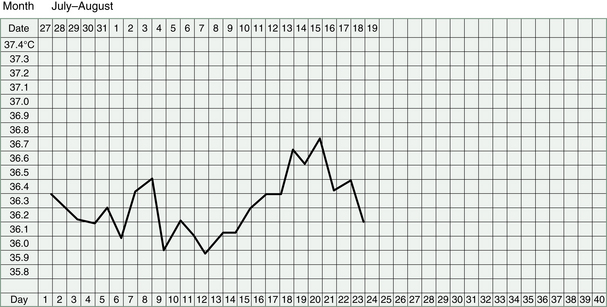
Her cycle was more or less regular (4–5 weekly); however, when she began to keep BBT charts, it became apparent that she did not ovulate every cycle and/or her luteal phase was inadequate (Fig. 8.6).

image

Figure 8.6 Case history – Helen. Some of Helen’s BBT charts indicated that she was not ovulating.

At midcycle, she sometimes experienced a sharp and grabbing pain on the right side where the ectopic pregnancy had occurred and she didn’t see any signs of fertile mucus. During her period, she had only 1 day of menstrual flow, which was of a dark hue and was accompanied by abdomen and lower back pain. Her general health was good but she was overweight and had poor circulation. Her pulse was thready and her tongue was swollen, with fluted sides and had a dull mauve hue.

The lack of regular and effective ovulation indicated Kidney deficiency; this was compounded by Damp accumulation as a result of Qi deficiency. Since the ectopic pregnancy, there were signs of Blood stasis.

The first treatment priority was to reinforce Kidney function and second, to clear Blood stasis. In the post-menstrual phase, building Kidney Yin and Blood was emphasized. Her Spleen Qi was supported at the same time.

Shu Di 9 g Radix Rehmanniae Glutinosae Conquitae
Nu Zhen Zi 9 g Fructus Ligustri Lucidi
Bai Zhu 12 g Rhizoma Atractylodis Macrocephalae
Cang Zhu 15 g Rhizoma Atractylodes
Dang Shen 12 g Radix Codonopsis Pilulosae
Dang Gui 9 g Radix Angelicae Sinensis
Chuan Xiong 6 g Radix Ligustici Wallichii
Ji Xue Teng 9 g Radix et Caulis Jixueteng
Xiang Fu 9 g Rhizoma Cyperi Rotundi

During the ovulation phase, emphasis was placed on Qi and Blood circulation, clearing Damp and supporting Kidney Yang. In addition, she had abdominal massage at this time. To the above formula were added:

Hong Hua 3 g Flos Carthami Tinctorii
Yan Hu Suo 9 g Rhizoma Corydalis Yanhusuo
Xian Mao 6 g Rhizoma Curculiginis Orchioidis
Yin Yang Huo 6 g Herba Epimedii
Yu Jin 6 g Tuber Curcumae

In the post-ovulation phase, building Kidney Yang, clearing Damp and invigorating Qi were emphasized.

Bai Zhu 12 g Rhizoma Atractylodis Macrocephalae
Cang Zhu 15 g Rhizoma Atractylodes
Fu Ling 12 g Sclerotium Poriae Cocos
Yin Yang Huo 9 g Herba Epimedii
Xian Mao 6 g Rhizoma Curculiginis Orchioidis
Xiang Fu 9 g Rhizoma Cyperi Rotundi
Mu Xiang 9 g Radix Saussureae seu Vladimiriae
Bai Shao 9 g Radix Paeoniae Lactiflorae
Shan Yao 9 g Radix Dioscorea Oppositae

As quickly as the 1st month of treatment, the fertile mucus increased and Helen’s period pain and lower back pain disappeared. Her right-sided pain persisted but episodes did not come so often, or last so long. In the next 3 cycles, she ovulated well (Fig. 8.7).

image

Figure 8.7 Case history – Helen. When Helen took Chinese herbs, the BBT pattern improved, indicating she was ovulating more regularly.

On the third of these, she conceived. However, she still had a normal period (this is not unusual in ectopic pregnancies). Her pulses were abnormally full and her BBT remained high (Fig. 8.8).

image

Figure 8.8 Case history – Helen. Helen fell pregnant this cycle; the luteal phase was 21 days when she did the pregnancy test.

The joy of a positive pregnancy test was dashed when she developed left-sided pain and an ultrasound showed a mass in the left tube and nothing in the uterus. The diagnosis was an ectopic pregnancy, which had miscarried. Helen took Sheng Hua Tang, which provoked the discharge of two large clots followed by fresh red blood, which stopped after a couple of days.

Helen was very despondent after this second loss of a pregnancy. I asked her to think seriously about trying IVF because the risk of another ectopic pregnancy was now very high. She was reluctant to pursue that option, so I referred her to a microsurgeon. He performed intricate and expert surgery to mend her scarred tubes and a few months later, she was pregnant again – this time in the right place, the uterus. Her pregnancy was uneventful. She gave birth to a large and healthy baby boy 9 months later.

Other ectopic pregnancies

Other locations of ectopic pregnancies are more rare but can happen, e.g., an egg may be fertilized while still in the ovary and get stuck there. Surgical management usually means removal of the ovary; however, if treatment can be instituted early enough, the same approach as was used for tubal pregnancy can be taken. That is, herbs (or cytotoxic drugs) are used to kill the fetus, and encourage reabsorption of dead tissue. From the Chinese medicine practitioner’s point of view, special attention will need to be paid to the ovary in future cycles, especially at ovulation time. Any scarring from the ectopic might cause Qi stagnation and ovulation pain. Stagnation of the Qi at ovulation time also raises the risk of inhibited release of the egg and another ectopic pregnancy.

Rarely, an embryo will implant in the cervix and is very difficult to excise surgically because of the cervix’s extensive blood supply. Once a diagnosis is sure (usually from a biopsy to distinguish it from malignancy), treatment may be attempted with cytotoxic drugs or Chinese herbs.

Conclusion

In summary, we should attempt to minimize the risk of pregnancy loss well before the pregnancy even starts. Preconception care can make a profound difference in the health and viability of the gametes. If women and men take the time and care to optimize their Kidney Qi (with appropriate lifestyle, diet, supplements, and herbs, etc.), then the gametes likewise will be in good shape. We know from previous discussions that good gametes make good embryos and that good embryos develop into good fetuses which tend not to miscarry. In the case that the mother is weak when she conceives and the pregnancy is thus at risk, even though the fetus is a viable one, Chinese medicine has relevant therapy to offer.

We can summarize an appropriate approach in the clinic when faced with a patient having a threatened miscarriage or suffers recurrent miscarriages. Ask yourself …

• Is the Kidney energy strong enough to hold and grow a pregnancy? It is especially Kidney Yang that is responsible for a warm womb, successful implantation and support of early pregnancy.

• Is the Spleen Qi adequate to hold the fetus in and up, hold the blood in the vessels and provide the essential nourishment in the early part of pregnancy that is crucial for everything that happens later in that child’s life?

• Are there any signs or symptoms of Damp or Heat – this might be associated with autoimmune factors.

• Are there any signs or symptoms of Blood stasis, or a diagnosis of clotting factors associated with autoimmune or genetic factors.

• Finally, and very importantly, how is the Heart and the Shen? – Crucial for the integrity of the Bao vessel and the uterus and inevitably challenged in recurrent or threatened miscarriage.

Careful consideration of these questions will lead you to the best and correct treatment of the patient at risk of miscarriage.

References

1. Tong, S., Kaur, A., Walker, S.P., et al. Miscarriage risk for asymptomatic women after a normal first-trimester prenatal visit. Obstet Gynecol. 2008;111:710–714.

2. Kleinhaus, K., Perrin, M., Friedlander, Y., et al. Paternal age and spontaneous abortion. Obstet Gynecol. 2006;108:369–377.

3. Slama, R., Bouyer, J., Windham, G., et al. Influence of paternal age on the risk of spontaneous abortion. Am J Epidemiol. 2005;161:816–823.

4. Belloc, S., Cohen-Bacrie, P., Benkhalifa, M., et al. Effect of maternal and paternal age on pregnancy and miscarriage rates after intrauterine insemination. Reprod Biomed Online. 2008;17(3):392–397.

5. Ford, J.H., MacCormack, L., Hiller, J. Pregnancy and lifestyle study. Mut Res. 1994;313:153–164.

6. Ford, J.H., MacCormack, L. Pregnancy and lifestyle study: the long-term use of the contraceptive pill and the risk of age-related miscarriage. Hum Reprod. 1995;10:1397–1402.

7. Oakeshott, P., Hay, P., Hay, S., et al. Association between bacterial vaginosis or chlamydial infection and miscarriage before 16 weeks’ gestation: prospective community based cohort study. BMJ. 2002;325(7376):1334.

8. Florack, E.I., Zielhuis, G.A., Pellegrino, J.E., et al. Occupational physical activity and the occurrence of spontaneous abortion. Int J Epidemiol. 1993;22(5):878–884.

9. Nielsen, G.L., Sørensen, H.T., Larsen, H., et al. Risk of adverse birth outcome and miscarriage in pregnant users of non-steroidal anti-inflammatory drugs: population based observational study and case-control study. BMJ. 2001;322:266–270.

10. Li, D.K., Liu, L., Odouli, R. Exposure to non-steroidal anti-inflammatory drugs during pregnancy and risk of miscarriage: population based cohort study. BMJ. 2003;327(7411):368.

11. Li, D.K., Janevic, T., Odouli, R., et al. Hot tub use during pregnancy and the risk of miscarriage. Am J Epidemiol. 2003;158(10):931–937.

12. Farrow, A., Hull, M.G., Northstone, K., et al. Prolonged use of oral contraception before a planned pregnancy is associated with a decreased risk of delayed conception. Hum Reprod. 2002;17(10):2754–2761.

13. Billings, E., Westmore, A. The Billings method. Melbourne: O’Donavan; 1998. [90].

14. García-Enguídanos, A., Martínez, D., Calle, M., et al. Long-term use of oral contraceptives increases the risk of miscarriage. Fertil Steril. 2005;83(6):1864–1866.

15. Cowan B., Seifer D., eds. Clinical reproductive medicine. Lippincott-Raven: Philadelphia, 1997:240.

16. Carp, H.J.A., Toder, V., Torchinsky, A., et aland the Recurrent Miscarriage Immunotherapy Trialists Group. Allogenic leucocyte immunization after five or more miscarriages. Hum Reprod. 1997;12:250–255.

17. Teklenburg, G., Salker, M., Molokhia, M., et al. Natural selection of human embryos: decidualizing endometrial stromal cells serve as sensors of embryo quality upon implantation. PLoS One. 2010;5(4):e10258.

18. Salker, M., Teklenburg, G., Molokhia, M., et al. Natural selection of human embryos: impaired decidualization of endometrium disables embryo-maternal interactions and causes recurrent pregnancy loss. PLoS ONE. 2010;5(4):e10287.

19. Liu, Ying, Wu, Jing-zhi. Effect of Gutai decoction on the abortion rate of in vitro fertilization and embryo transfer. Chin J Integr Med. 2006;12(3):189–193.

20. Li, L., Dou, L.X., Neilson, J.P., et al. Adverse outcomes of Chinese medicines used for threatened miscarriage: a systematic review and meta-analysis. Hum Reprod Update. 2012;18(5):504–524.

21. Cowan B., Seifer D., eds. Clinical reproductive medicine. Lippincott-Raven: Philadelphia, 1997:242.

22. Jansen, R.P.S. Getting pregnant. Sydney: Allen and Unwin; 2003. [Chs 8 and 18].

23. Coulam, C.B., Roussev, R.G. Increasing circulating T-cell activation markers are linked to subsequent implantation failure after transfer of in vitro fertilized embryos. Am J Reprod Immunol. 2003;50(4):340–345.

24. Miko, E., Manfai, Z., Meggyes, M., et al. Possible role of natural killer and natural killer T-like cells in implantation failure after IVF. Reprod BioMed Online. 2010;21:750–756.

25. Kaandorp, S.P., Goddijn, M., van der Post, J.A., et al. Aspirin plus heparin or aspirin alone in women with recurrent miscarriage. N Engl J Med. 2010;362(17):1586–1596.

26. Chen, L., Hu, Renming. Thyroid autoimmunity and miscarriage. Clin Endocrinol. 2011;74(4):513–519.

27. Toulis, K.A., Goulis, D.G., Venetis, C.A., et al. Risk of miscarriage in euthyroid women with thyroid autoimmunity undergoing IVF: a meta-analysis. Eur J Endocrinol. 2010;162:643–652.

28. Song, C., Halbreich, U., Han, C., et al. Imbalance between pro- and anti-inflammatory cytokines, and between Th1 and Th2 cytokines in depressed patients: the effect of electroacupuncture or fluoxetine treatment. Pharmacopsychiatry. 2009;42(5):182–188.

29. Liu, F., Luo, S.P. Effect of Chinese herbal treatment on Th1- and Th2-type cytokines, progesterone and beta-human chorionic gonadotropin in early pregnant women of threatened abortion. Chin J Integr Med. 2009;15(5):353–358.

30. Zijlstra, F.J., van den Berg-de Lange, I., Huygen, F.J., et al. Anti-inflammatory actions of acupuncture. Med Inflamm. 2003;12(2):59–69.

31. Kim, S.K., Bae, H. Acupuncture and immune modulation. Auton Neurosci. 2010;157:38–41.

32. Gallinelli, A., Roncaglia, R., Matteo, M.L. Immunological changes and stress are associated with different implantation rates in patients undergoing in vitro fertilization–embryo transfer. Fertil Steril. 2001;76(1):85–91.

33. Arranz, L., Guayerbas, N., Siboni, L., et al. Effect of acupuncture treatment on the immune function impairment found in anxious women. Am J Chin Med. 2007;35(1):35–51.

34. Cabioglu, M.T., Eren Cetin, B. Acupuncture and immunomodulation. Am J Chin Med. 2008;36:25–36.

35. Sharman, M.J., Volek, J.S. Weight loss leads to reductions in inflammatory biomarkers after a very-low-carbohydrate diet and a low-fat diet in overweight men. Clin Sci (Lond). 2004;107:365–369.

36. Geber, S., Paraschos, T., Atkinson, G., et al. Results of IVF in patients with endometriosis: the severity of the disease does not affect outcome, or the incidence of miscarriage. Hum Reprod. 1995;10:1507–1511.

37. Balen, A.H., Tan, S.L., MacDougall, J., et al. Miscarriage rates following in-vitro fertilization are increased in women with polycystic ovaries and reduced by pituitary desensitization with buserelin. Hum Reprod. 1993;8(6):959–964.

38. Lass, A., Williams, G., Abusheikha, N., et al. The effect of endometrial polyps on outcomes of in vitro fertilization (IVF) cycles. J Assist Reprod Genet. 1999;16:410–415.

39. Moley, K.H., Chil, M.M.-Y., Knudson, C.M., et al. Hyperglycemia induces apoptosis in pre-implantation embryos through cell death effector pathways. Nat Med. 1998;4(12):1421–1424.

40. Ford, J.H. It takes two. Adelaide: Environmental and Genetic Solutions; 1997. [97].

41. Dinulovic, D., Radonic, G. Diabetes mellitus and male infertility. Arch Androl. 1990;25:277–293.

42. Negro, R., Schwartz, A., Gismondi, R., et al. Increased pregnancy loss rate in thyroid antibody negative women with TSH levels between 2. 5 and 5. 0 in the first trimester of pregnancy. J Clin Endocrinol Metab. 2010;95:E44–E48.

43. Anselmo, J., Cao, D., Karrison, T., et al. Fetal loss associated with excess thyroid hormone exposure. JAMA. 2004;292(6):691–695.

44. Cowan B., Seifer D., eds. Clinical reproductive medicine. Lippincott-Raven: Philadelphia, 1997:243.

45. Buitrago, J.M., Diez, L.C. Thyroid disease affects semen quality. Andrologia. 1987;19:37–41.

46. O’Morain, C., Smethurst, P., Dore, C.J., et al. Reversible male infertility due to sulphasalazine: studies in man and rat. Gut. 1984;25(10):1078–1084.

47. Gasbarrini, A., Torre, E.S., Trivellini, C., et al. Recurrent spontaneous abortion and intrauterine fetal growth retardation as symptoms of coeliac disease. Lancet. 2000;356(9227):399–400.

48. Naish, F., Roberts, J. The natural way to better babies. Sydney: Random House; 1996.

49. Hay, P., Czeizel, A.E. Asymptomatic trichomonas and candida colonization and pregnancy outcome. Best Pract Res Clin Obstet Gynaecol. 2007;21(3):403–409.

50. Smith, G., Wood, A.M., Pell, J.P., et al. Recurrent miscarriage is associated with a family history of ischaemic heart disease: a retrospective cohort study. BJOG. 2011;118:557–563.

51. Wang, J.X., Davies, M.J., Norman, R.J. Obesity increases the risk of spontaneous abortion during infertility treatment. Obes Res. 2002;10(6):551.

52. Maconochie, N., Doyle, P., Prior, S., et al. Risk factors for first trimester miscarriage – results from a UK-population-based case–control study. BJOG. 2007;114(2):170–186.

53. Kumar, S. Occupational, environmental and lifestyle factors associated with spontaneous abortion. Reprod Sci. 2011;18(10):915–930.

54. Maconochie, N., Doyle, P., Prior, S., et al. Risk factors for first trimester miscarriage – results from a UK-population-based case–control study. BJOG. 2007;114(2):170–186.

55. Ford, J.H. It takes two. Adelaide: Environmental and Genetic Solutions; 1997. [73].

56. Valanis, B., Vollmer, W.M., Steele, P. Occupational exposure to antineoplastic agents: self-reported miscarriages and stillbirths among nurses and pharmacists. J Occup Environ Med. 1999;41(8):632–638.

57. Lawson, C.C., Rocheleau, C.M., Whelan, E., et al. Occupational exposures among nurses and risk of spontaneous abortion. Am J Obstet Gynecol. 2012;206(4):327.

58. Shirangi, A.L., Fritschi, L., Holman, C.D. Maternal occupational exposures and risk of spontaneous abortion in veterinary practice. Occup Environ Med. 2008;65:719–725.

59. Gardella, J.R., Hill, J.A. Environmental toxins associated with recurrent pregnancy loss. Semin Reprod Med. 2000;18:407–424.

60. Gerhard, I., Waibel, S., Daniel, V., et al. Impact of heavy metals on hormonal and immunological factors in women with repeated miscarriages. Hum Reprod Update. 1998;4(3):301–309.

61. Weng, X., Odouli, R., Li, D.K. Maternal caffeine consumption during pregnancy and the risk of miscarriage: a prospective cohort study. Am J Obstet Gynecol. 2008;198(3):279.

62. Cnattingius, S., Signorello, L., Annerén, G., et al. Caffeine intake and the risk of first-trimester spontaneous abortion. N Engl J Med. 2000;343:1839–1845.

63. Kline, J., Shrout, P., Stein, Z., et al. Drinking during pregnancy and spontaneous abortion. Lancet. 1980;2:176–180.

64. Hughes, E.G., Brennan, B.G. Does cigarette smoking impair natural or assisted fecundity? Fertil Steril. 1996;66:679–689.

65. Aisemberg, J., Vercelli, C., Wolfson, M., et al. Inflammatory agents involved in septic miscarriage. Neuroimmunomodulation. 2010;17:150–152.

66. Zinedine, A., Soriano, J.M., Moltó, J.C., et al. Review on the toxicity, occurrence, metabolism, detoxification, regulations and intake of zearalenone: an oestrogenic mycotoxin. Food Chem Toxicol. 2007;45(1):1–18.

67. Li, D.K., Odouli, R., Wi, S., et al. A population-based prospective cohort study of personal exposure to magnetic fields during pregnancy and the risk of miscarriage. Epidemiology. 2002;13(1):9–20.

68. Webster, J., Chandler, J., Battistutta, D. Pregnancy outcomes and health care use: effects of abuse. Am J Obstet Gynecol. 1996;174:760–767.

69. Huang Zhi, Ying. The relationship between mental work and threatened abortion. J Huaihai Med. (Issue 1):2002.

70. Liddell, H.S., Pattison, N.S., Zanderigo, A. Recurrent miscarriage – outcome after supportive care in early pregnancy. Aust New Zealand J Obstet Gynaecol. 1991;31(4):320–322.

71. Wu, R.J., Zhou, F.Z. Effect of Yangjing Zhongyu decoction on expression of insulin-like growth factor II and its receptor in endometrium of women with unexplained infertility. Zhongguo Zhong Xi Yi Jie He Za Zhi. 2002;22(7):490–493.

72. Weixin, Jin. Diagnosis of sterility and its traditional Chinese medicine treatment. Shandong Science and Technology Press; 1999.

73. Ronald, H., Gray, R.H., Simpson, J.L., et al. Timing of conception and the risk of spontaneous abortion among pregnancies occurring during the use of natural family planning. Am J Obstet Gynecol. 1995;172:1567–1572.

74. Ford, J.H. It takes two. Adelaide: Environmental and Genetic Solutions; 1997. [178].