CHAPTER 16 Equine dental equipment, supplies and instrumentation
Introduction
Practitioners interested in equine dentistry have much to be excited about. New equipment, equipment enhancements, improved techniques in diagnosing and treating equine dental disease, and many avenues for advanced instruction, have encouraged more equine veterinary practitioners to emphasize dental care. The care, safety, and pain control for the patient, as well as the safety and comfort of the caregivers, are ongoing priorities.
Work location and patient restraint
When possible, horses should be handled in a dry, enclosed area protected from weather. Dentistry can be done outside, but proper patient restraint is essential. Outside work areas should be free of obstacles, clutter and other animals. Shading is important for easier visualization of the oral cavity, but if shading is unavailable, position the caregiver with the sun shining from behind. Stocks provide an extra measure of safety whether working indoors or out (Fig. 16.1A&B). Water and electricity should be readily available. Observers should be kept at a safe distance while work is performed, then allowed to view the results up close. Avoid having owners hold their own horses, if possible.
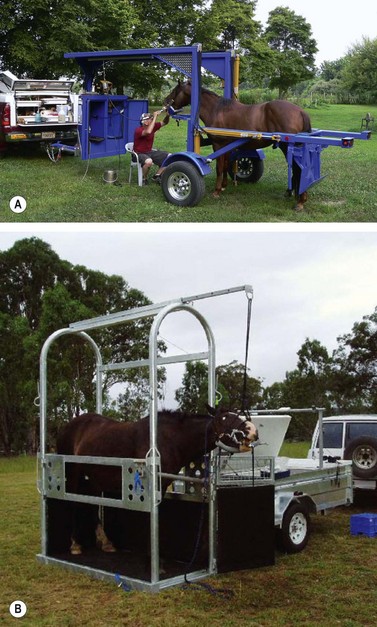
Fig. 16.1 Portable horses’ stocks or crush. (A) This stocks pulls in-line behind a vehicle. The chest and butt bars, head stand, and sides are hydraulically adjustable. (B) This stocks pulls on its side and is rotated off its trailer for setup. The extended overhead bar attached to the suspension halter keeps the head stable with the mouth speculum in place.
Working in a familiar area, such as the horse’s stall, creates less anxiety for the animal. It is preferable for work areas to have three solid sides. Avoid low-ceilinged and narrow spaces in case the horse should rear or go down. Footing should be non-slip when wet, and easy to drain. Buckets and extraneous items should be out of the way. Horses can be attended to inside a stall, either backed into a corner or standing in the stall doorway. When working in a stall, dental equipment and supplies must be transported from stall to stall, so a portable workstation is a handy investment to hold small instruments, mirrors, and other essential equipment (Figs 16.2 & 16.3). However, the preferred approach is to work from one location, such as in the grooming, farrier, or wash area.
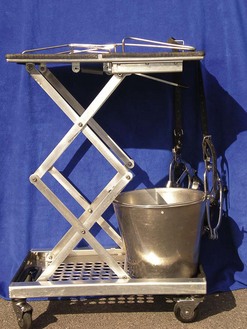
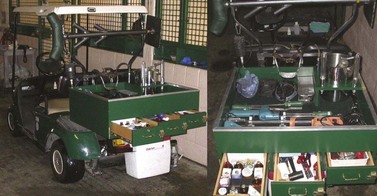
Fig. 16.3 An electric golf cart converted to a mobile equine dental station (T.A. Banner, DVM, Gainesville, FL, USA).
Special mobile dental workstations constructed around stocks or horse trailers have been developed in recent years. Some practitioners have designed fully-contained dental trailers with all equipment close by, including radiography and a computer workstation (Fig. 16.4). A well equipped, climate-controlled dental trailer is ideal for having equipment immediately at hand, but can be expensive. Each new patient has to be moved in and out of the trailer stocks. Nervous horses may have to be lightly sedated prior to entry and alpha-2 agonist reversal agents have to be administered to avoid a long post-dental period waiting for a heavily sedated horse to recover sufficiently to walk safely back to the stall.1 (See Ch. 15.)
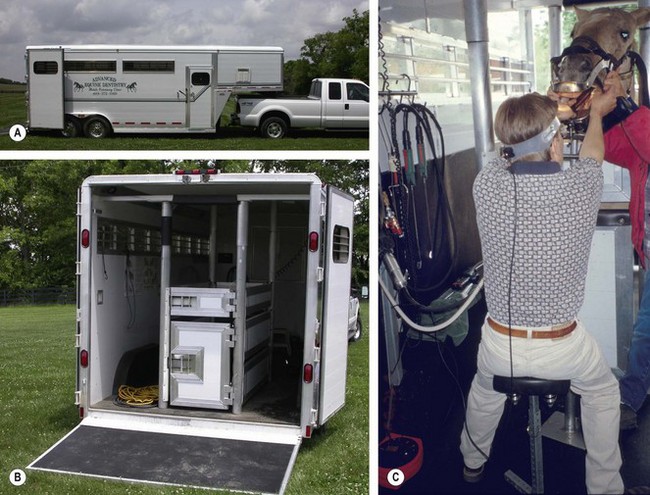
Fig. 16.4 (A) Fully functional equine dental trailer designed to transport equipment and service as a climate controlled workstation with warm water and electricity. (B) Loading end of a dental trailer complete with adjustable stocks. (C) Interior of dental trailer with horse in stocks. The mouth is open and head stabilized on a stand. The operator is seated in a comfortable position to perform dental work.
Several types of portable restraint systems that can be easily towed behind a vehicle are available. Most are hydraulically adjusted and very suitable to perform dental work. When working in stocks, equipment should be modified for safety and ease of use. The front door of the stocks should not be more than 1 m high to allow the relaxed, sedated horse to drop its head without compressing its trachea on the door. A butt rope or adjustable rear gate helps keep the horse positioned in the front of the stocks.2 A head stand or suspended dental halter is required for heavily sedated horses. Having a 10–20-cm overhead extension on the stocks helps keep the suspended dental halter properly positioned in front of the stocks. An elevated step may be placed in the stocks when working on ponies or miniature horses.3 An adjustable rolling stool is preferable when using stocks because it helps maintain proper posture for the caregiver, keeping one’s back straight while allowing the arms to remain lower than the shoulders. If a rolling mechanics stool is not available, knee pads are recommended for working on the floor in front of the stocks.
Head stands and dental suspension halters
Dental head supports and head stands vary in cost and complexity, and come in many styles – from a homemade padded PVC pipe or padded crutch to power-adjustable aluminum stands (Fig. 16.5) (Box 16.1). All require an assistant to stabilize the head on the support. (Note: avoid using someone’s shoulder to prop up the head.)
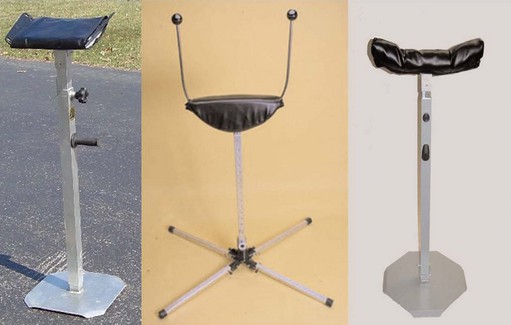
Fig. 16.5 Three types of equine head stands. Left: adjustable floor stand with a flat removable padded chin rest. Middle: support with flexible base and side bars to help keep the chin on the stand. Right: adjustable floor stand with base at an angle to chin support and down-turned corners for added stability.
Box 16.1
Head support and head stand suggestions
• All types should be well padded
• Flat square supports are more stable in holding the head upright because more of the mandible contacts the support
• The head support should not limit or interfere with mouth access
• The speculum must fit inside a suspended support
• The stand should have a stable base
• Suspended supports should have quick adjustment and release mechanisms
• The stand can be modified to hold floats with multiple attachments
Manufactured head stands have several advantages that include rapid adjustment of height, good stability, and often, heavy padding, as well as a washable cover on which the mandible can rest.4 Many stands are designed with attachments for holding equipment and dental instruments.
There are a variety of manufactured, rigid dental halters available. However, practitioners themselves are quite inventive in developing restraint devices and homemade halters, depending on individual preference and need. The full-mouth speculum used may determine the type of rigid halter used, as the larger specula do not fit inside some rigid halters. Some mouth specula have been modified to accommodate suspension devices by incorporating a metal arch over the nose piece of the speculum for rope attachment (Fig. 16.6). Suspending the head with the speculum nose band is convenient, but if the horse moves rearward, the speculum can be pulled off the head and/or the poll can be over-extended. This can damage incisors, especially in geriatric horses. Suspending the head with two ropes provides greater stability, but a practitioner working with few assistants may find a single rope with a quick release device more manageable. For more restraint and handling recommendations, consult Chapters 12, 15, 17, and 18.
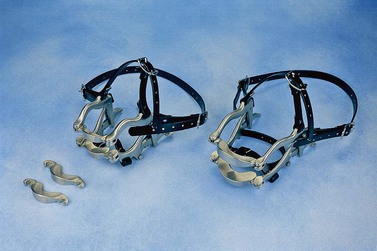
Fig. 16.6 McPherson type speculum.This is the most popular and least expensive type of equine speculum. The stainless steel models are more durable and easier to clean than the nickel-plated cast iron devices. A metal nose bar has been added for attachment to a rope to suspend the head from an overhead support. The ratchet on this type of speculum has limited adjustments and can be difficult to open. The hinge is close to the incisor plates (18–20 cm) and does not allow a comfortable fit for large breed horses (over 800 kg). This speculum comes in a small size for ponies and miniature horses. Various incisor and gum plates are available, which makes it quite versatile for use in horses with incisor damage or malocclusions.
Oral examination equipment (Box 16.2)
Various types of equipment may be used to conduct a thorough dental examination. The horse’s overall health status should be evaluated, and a stethoscope and thermometer should be available. Continuing the examination process, the mouth must be held open to allow a complete visual and digital examination. A halter with an oversized nose band allows the horse to fully open its mouth for inspection and treatment.
Box 16.2
Basic dental equipment
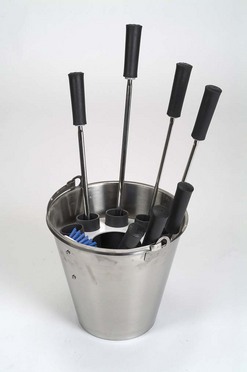
A bucket is needed to hold floats and disinfectant. Stainless steel is the usual veterinary choice, but plastic has its advantages: for example, using a plastic bucket results in less noise when an instrument is dropped into the bucket. Some practitioners place a rubber insert on the bottom of the stainless steel bucket to cushion the instruments. Many instrument companies offer a variety of guards, restrainers, or liners for float blade protection (Fig. 16.7). Using a tray or table, rather than dropping small instruments into a bucket, prevents breakage and dulling sharp edges of expensive and brittle tungsten carbide float blades.
Sanitation
Chlorhexidine gluconate 0.05 % (1–40 dilution of the 2 % concentration) is the antiseptic of choice for oral rinses and has replaced chlorhexidine acetate because it is less likely to irritate mucous membranes. Although it is rare, horses may develop anorexia from chlorhexidine use. Since it may be the taste of chlorhexidine causing the anorexia, a human product such as Periogard (a Colgate rinse) may prevent this adverse effect. Periogard and other flavored chlorhexidine rinses are 0.12 % chlorhexidine. Some practitioners use two buckets, both containing diluted chlorhexidine: one bucket is for instrument immersion and the other is solely for rinsing the patient’s mouth. Instruments should be cleaned between horses and sanitized between groups of animals or farms.
Latex or nitrile gloves should be worn for protection during all oral examinations and treatments. Nitrile is more resistant to puncture, but when it does fail, there is an obvious hole rather than an unnoticed pinhole. Changing gloves between each horse is probably not needed in healthy horses grouped together, but it is recommended after working on any horse with active periodontitis or suspected infectious respiratory disease. Wearing gloves reduces the number and severity of cuts and abrasions caused by sharp enamel projections or the handling of rasping instruments. Practitioners should carry a hand brush, medicated soap or disinfectant, and a towel to clean their hands and finger nails, as well.
Oral irrigation equipment
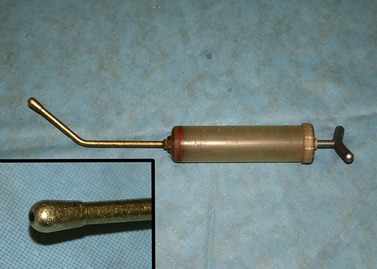
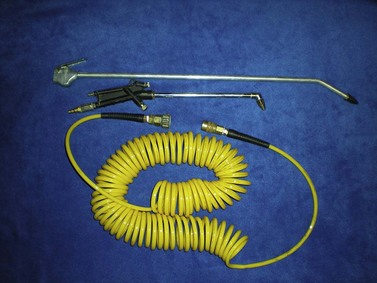
Large dose syringes are widely used to rinse mouths and are available with either a pistol grip or in a plunger style. The patient’s mouth should be rinsed prior to the intra-oral portions of the dental examination in order to facilitate proper visualization of the teeth and associated soft tissues. The rounded blunt end of the nozzle on the large nylon dose syringe helps prevent accidental oral injury during flushing (Fig. 16.8). A 16 oz dose syringe is sufficient for removing food from the mouth, but a powerful spray is needed for rinsing periodontal pockets or an alveolus post extraction. A high-pressure rinse can be administered with instruments like a power dental flush, which attaches directly to a hose. Commercial high-pressure units are available or can be made from parts available in the air compressor section of large home supply stores (Fig. 16.9).
Specula
Several types of gags and specula can be used to visually and manually evaluate the mouth. These instruments work via insertion into the mouth between the incisors, upper and lower bars, or cheek teeth arcades. Two types of specula are needed: 1) a gag for incisor procedures and 2) a full-mouth speculum for cheek teeth examination and equilibration.
The use of gags should be confined to the treatment of the incisor teeth. Gags that sit between the bars are easily made from heavy-duty rubber or plastic tubing available at large home supply stores. Three diameter sizes are needed (3.81 cm, 5.08–5.715 cm, and 7.62 cm) and should be cut to the desired length. An elastic cord is to be attached to each end of the tube. The tube is slipped into the interdental space and the cord over the poll. Most horses tolerate this well when adequately sedated (Fig. 16.10).
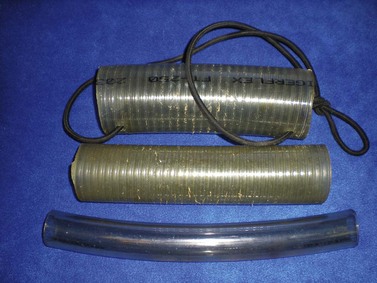
Fig. 16.10 Three diameters of heavy duty plastic tubing. The tube is placed in the interdental space as a gag when working on incisor teeth.
One-sided metal gags inserted between the cheek teeth, especially the round Schouppe coil or spool, are not recommended because they may fracture a tooth. Wedge-shaped gags may be covered with rubber, polyurethane or neoprene, or may simply consist of metal (Fig. 16.11). Such gags are safer than spool or coil gags as they allow several teeth to contact the wedge simultaneously. There are disadvantages with gags – there is limited access to the mouth, the horse continually chews on them, and they are difficult to keep in place.
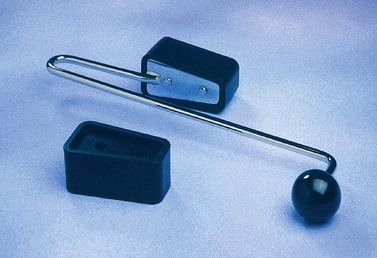
Fig. 16.11 One-sided, wedge-shaped mouth gag made from a block of neoprene. This type of gag is safe for use while working on the incisor teeth.
Full-mouth specula are especially helpful in performing both complete, detailed dental examinations and precise corrective procedures. All full-mouth specula work on the same principle: plates inserted on the incisor occlusal surfaces hold the mouth open by ratchets, screws, locking pins or friction clamps. There are three categories of full-mouth specula: 1) the lightweight, collapsible ratchet speculum (McPherson, Haussmann, and Series 2000); 2) the screw-type speculum (Gunther, Stubbs, and Butler); and 3) the oversized compound-action, hinged-type speculum (Conrad, McAllen, and Alumispec).
The McPherson or Haussmann types are the most widely used and most economical specula, and have been in use for over 100 years.5 Modern specula using ratchets and interchangeable incisor plates still employ this basic design. These specula come in a standard horse size, as well as in a smaller version for use in ponies and miniature horses. A McPherson speculum, with three or four teeth in the ratchet, is difficult to open to the widest setting. This problem has been overcome by using up to 33 teeth, as in the Series 2000 (2020) made by World Wide Equine (Fig. 16.12). Capps Manufacturing makes a larger speculum similar to the Series 2000, but uses a sliding lock rather than a small-teeth ratchet. This unit is infinitely adjustable (Fig. 16.13). All McPherson-type speculum incisor plates can be replaced with palate or bar plates, allowing use on parrot mouth horses, horses with no incisors, or horses with incisors too loose or damaged to support the incisor plates. Offset incisor plates are available for horses with an underbite or overbite. A 6.35-cm diameter plastic pipe (10.16 cm long) can be used to cover the incisor plates, allowing the speculum to be used as a gag in the interdental space, thus exposing the incisor teeth.
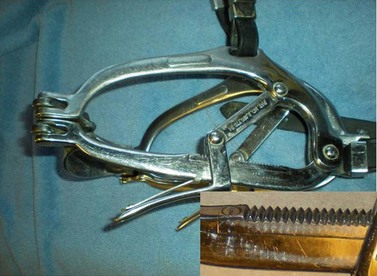
Fig. 16.12 Series 2020 full-mouth speculum with small interchangeable ratchets for easy opening. A wide range of incisor and gum plates are available for this speculum.
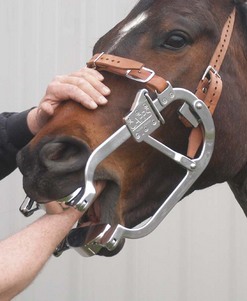
Fig. 16.13 Capps full-mouth speculum with infinite adjustments and interchangeable incisor plates. This speculum works well on large breed horses.
A single-threaded bolt opens the mouth with the Stubbs or Gunther screw-type specula. The Stubbs or Gunther specula are best suited for open-mouth radiographs or oral surgery when the horse is in lateral recumbency, because there is no mechanism next to the cheek (Fig. 16.14). With the Stubbs speculum, a large threaded bolt easily opens the speculum, and the bolt can be positioned conveniently on either side of the mouth. This speculum uses heavy wire beside the cheeks with the bolt centered on the incisor plates by extension arms, and is moved side to side to gain access to each side of the mouth (Fig. 16.15).
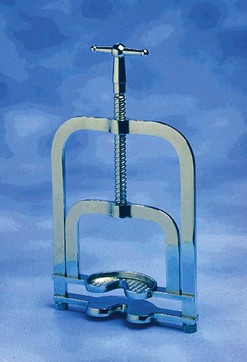
Fig. 16.14 Gunther screw type speculum. This model (with no cheek plates) works well for taking open-mouth radiographs or working in the mouth of a recumbent, anesthetized horse.
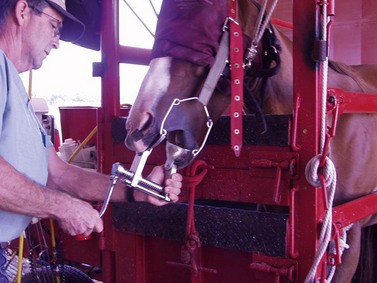
Fig. 16.15 Stubbs screw mechanism, full mouth speculum with elastic pole straps. This speculum is easy to open and has infinite adjustments. The central screw can be rotated from side to side giving good access to all areas of the mouth.
The McAllen design uses a lever to open the speculum. The lightweight AlumiSpec sold by Veterinary Dental Products is based on the McAllen design but uses a heavy nylon tape and a pinch lock instead of a pin aligning in holes to hold it open (Fig. 16.16). Because of their large size and weight, the Conrad, Meister, and McAllen hinged-type specula can be dangerous in horses that are not adequately sedated and/or well restrained. Both the Conrad and the Meister specula are made from stainless steel and copy the brass McAllen design; however, all are out of production.
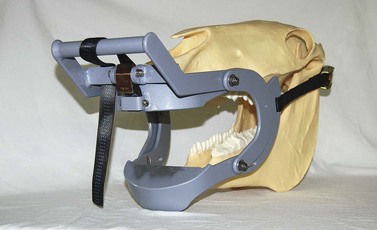
Fig. 16.16 The AlumiSpec, lightweight, leverage-type, full-mouth speculum has a nylon grip tape locking mechanism for easy opening and infinite adjustments.
All specula can deliver serious injury if the horse swings its head unexpectedly. Everyone in the work area must be continuously aware of the horse’s attitude. Owners or any other person not covered by the caregiver’s liability insurance should be a safe distance away.
Illumination
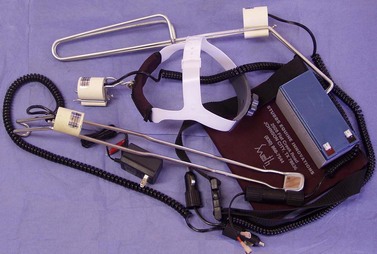
Illumination is especially important for a complete oral examination and performance of corrective procedures with motorized instruments. Head-mounted lights are most useful for oral cavity illumination. Numerous types of head lights are available; some have been adapted especially for equine dentistry, but many are intended for a variety of other activities.
Spelunking and camping head lights are convenient but limited in intensity and are mounted too far up on the forehead to position the light where it is needed. Several magnetized lights attach to the incisor plates of most specula and allow for continuous illumination of the mouth. Another nice feature of these lights is that they minimize the effects of the caregiver’s head movement while keeping the light positioned on the patient’s oral cavity. Stubbs Equine Innovations offers a multipurpose light that can be used as a head light and can also be used to illuminate the Stubbs Arcade Speculum or Stubbs Intraoral Mirror (Fig. 16.17). Hand-held flashlights or lamps mounted on the floor or ceiling can be used as well. All of these lights are not bright enough if the caregiver is working in bright sunlight or if very bright illumination is needed. When using a mirror, probes, periodontal instruments, or when extracting cheek teeth, a halogen light or its equivalent is recommended. All these lights attach to a head harness, but the light is so bright and coverage so broad that light position is not as critical.
Soft tissue retractors
At various points during the dental examination, the practitioner may find it helpful to have an assistant retract the tongue and/or cheeks of the patient. An abdominal retractor or a specially designed equine dental basket or cheek retractor may be used to provide more adequate oral visualization.
Mirrors
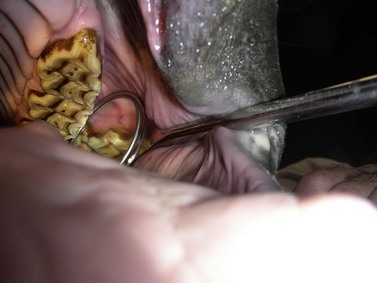
Using a mirror in conjunction with dental picks and/or probes is helpful in allowing the practitioner to identify abnormalities in the mouth. Mirror fogging can be a problem when working in the oral cavity, particularly in cold weather. Warming the mirror or using alcohol, or an antifog wipe or spray designed for reading glasses can be helpful in eliminating this problem. Most mirrors need to be set at a 35°–45° angle to their handles to allow adequate visualization around the cheek teeth. A long, ridged shaft allows the mirror to be used as a soft tissue retractor (Fig. 16.18).
Imaging
Once potential dental abnormalities are identified, imaging modalities, such as radiographs and ultrasound, may be used to gain more information about the problem at hand. A rigid endoscope, digital camera, and/or video recording equipment can be used to identify and record lesions and document the performance of various procedures6 (Fig. 16.19). This documentation is a useful record of care and can be used to educate clients and other veterinarians. (See Ch. 12.)
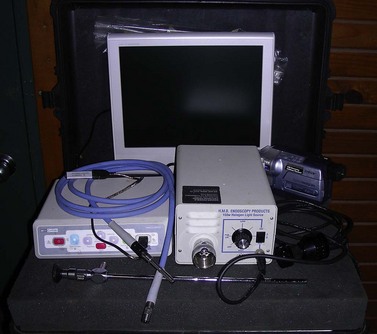
Fig. 16.19 Portable oral endoscopy equipment. This complete system can be used to visualize the oral cavity and document findings with still digital images or video recordings. System contents: 1) rigid (at least 40 cm long) laparoscope with a 35–90° wide angle lens; 2) 150 watt halogen light source and camera receiver unit; 3) single chip video camera with a focusing laparoscope adapter, and 200 cm long coaxial cable; 4) fiberoptic cable 200 cm long; 5) still digital image capture device; 6) digital video recorder, camera; and 7) flat LCD screen for viewing image.
Dental floating equipment
Manual floats
Manual floats continue to be widely used in equine dentistry. The variety of blades, heads, shafts and handles currently available to practitioners is extremely useful in performing prophylactic procedures. The most durable and aggressive float blades are made from solid tungsten carbide.
For many years, float blades with tungsten carbide chips have been used as abrasives. The process for combining tungsten with carbon was discovered in the 1920s. Tungsten carbide is very hard, making it a better cutting agent than the previously used steel files. Carbide chips come in several sizes, with the small to medium grits being the most versatile. Solid carbide float blades, usually a combination of tungsten, carbon, and cobalt, remove tooth material much more easily than carbide grit. These blades are made from a powder that is compressed into the blade shape, and then sharpened. They are smoother because they shave off a layer of tooth. Fine to medium blades are better than coarse blades and are more resistant to chipping. Solid carbide blades produce less vibration than grit blades. Their use may allow the practitioner to decrease the amount of sedation required. These blades historically have been relatively expensive, but they are so effective and efficient that many practitioners now use them. Most blades originally consisted of a tungsten carbide rasp blade bonded to a plate of stainless steel, variably sized to fit the desired float head. More recently, tungsten blades have been directly bonded with adhesive or strong magnets to the float head or shaft, resulting in a slimmer float design. Most carbide blades cut in only one direction, so care must be taken to ensure that they are properly set on the float to cut either on the push or pull, depending on the desired use. For working on the 11s, blades should be set to cut on the pull, because if the blade slips off these teeth on the push, the blade will strike the caudal end of the mouth.
Tungsten carbide blades range in classification from ultrafine to coarse, with each manufacturer having individual scales of aggressiveness. The finer (less aggressive) blades stay sharp longer and can be resharpened more times than the coarser (more aggressive) blades. Most blade manufacturers offer an economical sharpening service to practitioners. In general, the fine and medium blades are best for general floating, while the coarse blades are reserved for reducing large overgrowths. Though these blades are sharp, the teeth of the blades are brittle, so one should handle them with care. Since different parts of the blade act as the cutting area when used in different handles, blades can be switched to different handles as they become dull in order to get additional use before they need to be resharpened. It is, however, important to recognize when a blade is completely spent and needs to be sharpened or replaced.
Solid tungsten carbide is preferred for blades because it reduces by one half, over the carbide grit blades, the average equilibration time. Other blade designs are available in addition to tungsten carbide, including carbide grit blades, steel file (Dick) blades and Jupiter Speedycut float blades (Fig. 16.20). Carbide grit blades come in various sizes of grits or coarseness and cut in both directions, i.e., on the push and the pull. The Dick blades have been discontinued by most companies because the steel blades are inferior to carbide products in durability. The Jupiter blades are made of either stainless steel or tungsten carbide and are also designed to cut in both directions.
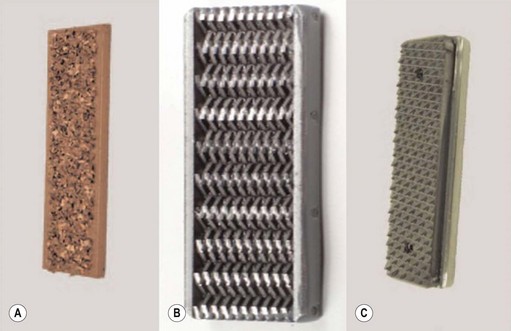
Fig. 16.20 Three types of manual interchangeable float blades: (A) medium grit carbide chip blade; (B) Jupiter speedy cut blade; (C) solid tungsten carbide blade with a stainless steel back.
The standard interchangeable float blade has square corners and is 7.62 cm long by 2.54 cm wide (Fig. 16.21). Changes in the size and shape of blades have recently been introduced by several manufacturers. Capps Manufacturing uses triangle-shaped solid carbide inserts. The inserts are placed in a triangular holder, and after tightening, form a solid cutting surface. The advantage with this type of blade is that singular inserts have three available cutting surfaces and individual inserts are replaceable. Kruuse Veterinary Supply makes a convex shaped blade that makes reducing tall teeth easier.
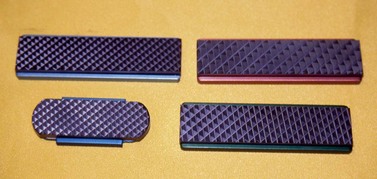
Fig. 16.21 Solid tungsten carbide interchangeable float blades in several shapes ranging from fine to coarse cutting surfaces.
Manual dental floats are constructed in a variety of configurations. Float heads should be made to cover the sharp corners of the blade and fit the area of the mouth to be floated. Float head weight and thickness vary depending on intended use and operator preference. Float shafts may be round, three-quarter round or flat. Round shafts slide through the operator’s fingers more easily than flat shafts. Flat shafts allow the operator to more accurately assess the blade’s angulation in relation to the tooth being floated. Three-quarter round shafts combine the advantages of both the round and flat shafts. Float handles may be constructed of wood, plastic, metal, rubber or molded acrylic and can be padded or unpadded. They may be configured in either a pistol grip or a shaft grip and should be an appropriate size for the hand of the operator.
Hand floats come in a myriad of shapes and sizes (Fig. 16.22). Different shapes and lengths of floats are employed to reduce sharp enamel points on the various teeth, create bit seats, and reduce more major overgrowths (see Ch. 17). A minimal set of floats should consist of: a short, straight float; a long, straight float; an upper back molar (15° angle) float; and a premolar float (15° contra/obtuse angle).
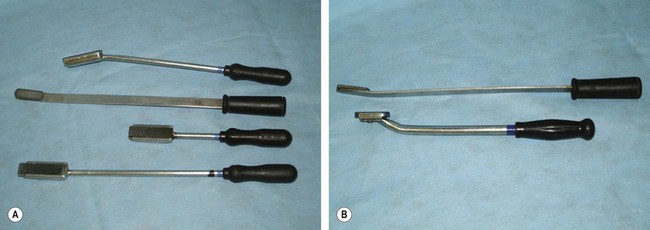
Fig. 16.22 A set of manual equine dental floats with stainless steel, flat shafts, and rounded neoprene handles. Both direct bonded and interchangeable solid tungsten carbide blades are used with this set.
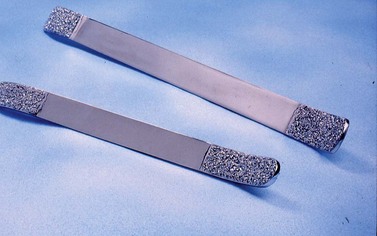
Practitioners may want to consider a variety of specialized floats for their dental equipment selection. A long offset float may be used to float the lower dental arcades. A float, consisting of a 22.86 to 38.1 cm shaft, offset head and short blade box, is used to create and/or ‘polish’ bit seats. Some manufacturers offer smaller floats made specifically for miniature horses, and extra-long handles can be purchased for use in large/draft horses. Carbide chip or diamond S-floats and steel files are often used to polish bit seats, smooth incisors, and reduce canines. A long, wide S-float, also called a table float, can be used to reduce sharp areas in horses with wave mouth or other types of uneven arcades (Fig. 16.23).
• Grips should fit, be nonslip, and feel comfortable when handling.
• Having some floats with a pistol grip, rather than an inline grip, reduces strain on the wrist that occurs when floats are held in the same position on every float.
• Smaller float blades (2.5 cm × 2.5 cm) work best in the caudal end of the arcades. Blades glued to the float are slim and best for 111 and 211 teeth.
• Long, straight floats may have the blade slightly elevated from the handle by the thickness of the blade or raised from the handle by an offset.
• Right angle offsets are difficult to use on the upper molar arcades and are generally used for premolar contouring.
• Flat-shafted handles, three-quarter round handles, and pistol grip handles immediately let the operator know the blade angle on the teeth.
• The blade should have blunt corners to prevent soft tissue injury.
Power instruments
Motorized equine dental instruments were first used in Germany in the 1930s.5 The use of power instruments in equine dentistry has generated controversy, but when used correctly, they allow for precise corrective procedures with minimal soft-tissue trauma. Proper safety precautions for both the operator and the horse should be exercised (Fig. 16.24). Since more tooth can be removed with less physical exertion on the part of the operator, excessive crown removal and even pulpar exposure has occurred in some cases. Operators should be especially observant when these instruments are being used.7–10
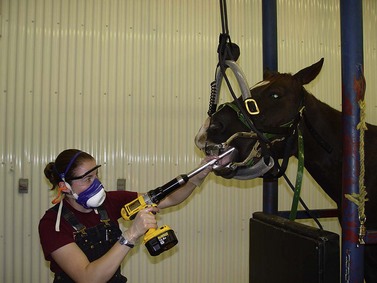
Fig. 16.24 Sedated horse in stocks with head supported in a rigid halter, suspended from a rope with a quick release friction lock, attached to an overhead hook. A McPherson type speculum in place with a Powerlite attached to the upper incisor plate, illuminating the mouth. The battery operated Powerfloat is used to reduce dental elongations. The veterinarian wears examination gloves, goggles for eye protection, a dust filtering mask, and ear plugs.
Motorized floats come in three basic designs: 1) cable-operated, rotating burrs in line with the float shaft (with or without an articulating head); 2) rotating discs turned 90° to the shaft; and 3) reciprocating floats. They can be electric, battery, or pneumatic powered. All AC-powered floats should always be on a stationary Ground Fault Circuit Interrupter or plugged into portable Ground Fault Interrupter to prevent electrical shock. A variable speed regulator with a handle trigger or foot pedal controller is helpful to prevent excessive crown reduction and minimize soft tissue damage.
Rotary cable floats are quite effective in removing sharp enamel points and reducing overgrowths. Some motorized equipment still uses Dremel motors. However, the Dremel, a type of rotary cable grinder, should not be used for equine dental work due to the electric shock hazard of working in a moist environment (i.e., the mouth). (Note: Dremel does not recommend nor offer warranty for the use of any of their tools in equine dentistry.1) Several manufacturers have various lengths of guards and extensions to facilitate good control and minimize soft-tissue damage in all areas of the oral cavity. Some instruments have built-in vacuum systems that reduce the operator’s exposure to dental dust and improve visibility. Other units may have irrigation systems that reduce dust and decrease the risk of thermal damage to the teeth. Some units contain both a light source and an irrigation system. A built-in clutch makes these units safer for the horse, and decreases the incidence of cable breakage. Solid tungsten, rotary-powered burrs are available in a variety of cutting teeth and degrees of coarseness. A fine, cross-cut burr does not tend to jump off the tooth during rasping, as is often the case with spiral-cut burrs. Burrs or grinding drums, coated with fine carbide grit or diamond chips, are available in a variety of shapes (Fig. 16.25).
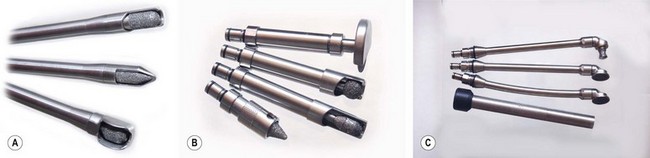
Fig. 16.25 Guarded diamond dust equine dental burrs used with a flexible cable motor. (A) Various inline guarded burr heads for reducing dental overgrowths. (B) Guarded diamond burrs with quick release, medium length shafts. (C) Long shaft, diamond dust, guarded burrs for reducing dental overgrowths in the caudal aspect of the equine oral cavity.
Disk burr instruments have become increasingly popular as they are less apt than rotary burrs to damage the soft tissues inside the oral cavity. Additionally, it appears to be easier for an operator to master the use of disk type motorized instruments. These instruments are manufactured with various lengths of shafts and run from fixed electric or battery-powered drills or flexible shaft motors (Fig. 16.26). Instrument head design and thickness vary between manufacturers. The cutting surface of the disk is made from solid tungsten carbide, fine carbide grit, or diamond dust. Examples of these instruments include the Eisenhut Swissfloat, the PowerFloat, and the Horsepower hand piece. The Eisenhut consists of a hand-held electric drill motor with a 4-cm, circular, stainless steel, carbide or diamond disk that rotates horizontally at the end of a shaft that comes in three difference lengths up to 65 cm (Fig. 16.27). This instrument is useful in reducing caudal mandibular overgrowths even in large horses due in large part to the length of its shaft.10 The PowerFloat comprises a 2.5 cm tungsten carbide chip disk that rotates horizontally at the end of a 45-cm long shaft. This low-profile power instrument can be used for numerous corrective procedures, including caudal 11 overgrowths in small ponies. The Horsepower hand piece is modified to fit the Dremel or Fordon motor with a flexible shaft drive.
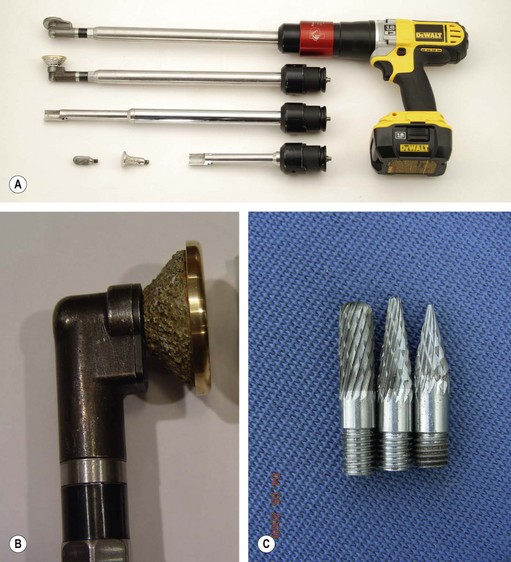
Fig. 16.26 (A) Battery operated Powerfloat with quick release, interchangeable shafts and grinding heads.
(B) Disk carbide grit burr with 45° beveled head. This burr is used to reduce sharp enamel points and prominent cingula from the buccal aspect of the upper cheek teeth and lingual edges of the lowers. (C) Carbide diastema burrs that attach to the right angle head of the Powerfloat. These burrs are used for opening a space between teeth with valve diastema.
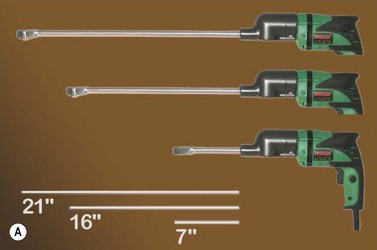
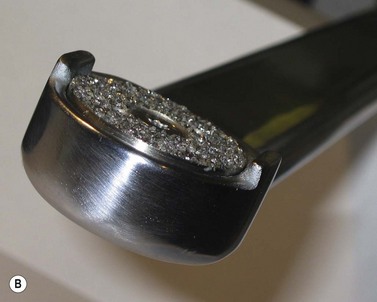
Fig. 16.27 (A) The Swissfloat with right angle disk burr comes with three different length shafts. (B) Close-up of a Swissfloat diamond disk float head.
Many reciprocating floats are electric or battery-powered and are modifications of woodwork power saws, varying in stroke length and strokes per minute. Several manufacturers (Stubbs, Olsen and Silk, and Carbide products) make pneumatic reciprocating floats that make short strokes at high speed. Some operators have developed hand problems caused by the vibration of pneumatic floats, and it is suggested that antivibration gloves be worn when performing corrective procedures with these floats. Most of these instruments have a thin carbide blade bonded to the shaft, similar to those used on some manual floats (Fig. 16.28). Long-stroke reciprocating floats are also available and are used to reduce excess crowns and sharp enamel points. Long-stroke reciprocating floats should not be used on the third molars due to risk of iatrogenic mandibular or soft-tissue trauma. A polymer lubricant used with reciprocating pneumatic instruments reduces heat produced by friction and airborne dust.
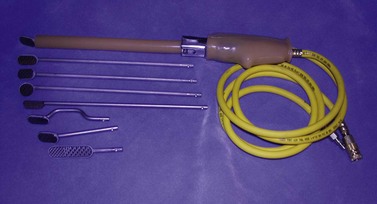
Fig. 16.28 Stubbs pneumatic powered oscillating floats have a short stroke length with variable speeds. This type of instrument comes with quick release, interchangeable floats and a wide variety of attachments.
Factors to consider with motorized equipment:
• If used improperly, all motorized floats can overheat teeth to the point of pulp damage. Lower speeds in the 2000 to 3000 r.p.m. range are preferred because higher speed rotation produces heat faster. (Note: use light pressure on the float, keep it moving.)
• Irrigation eliminates thermal damage, but care has to be taken to prevent electric shock. Irrigation also reduces dust, and suction helps remove both dust and excess water. (Note: irrigation fluid can freeze in colder climates.)
• To prevent inhalation of dental dust, a mask should be worn when using the visual method for floating or when incisors are being leveled.
• Cable grinders should have a clutch to prevent soft tissue damage in case a burr contacts and pulls in either cheek or tongue. A clutch also prevents cable breakage if the horse bites down on the burr.
• Disk tools should have a clutch to prevent motor damage if the horse bites the disk.
Safety of the operator, the assistant(s), and the equine patient during motorized instrument use can be optimized in several ways. Protective eyewear and an air filter mask reduce the chance of debris and tooth dust getting in the eyes and/or being inhaled. Ear protection should be considered if loud electric motors are used close to the operator’s head or noisy air compressors are in operation nearby.
Special equine dental instruments
Deciduous tooth instruments
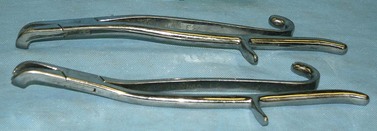
Various forceps, elevators, and dental picks are available to remove retained, displaced, or broken deciduous cheek tooth remnants (caps) (Fig. 16.29). A set of deciduous tooth instruments should consist of short-handled molar forceps and dental elevators or a modified screwdriver (see Chapters 17 and 20).
Picks, probes, and periodontal systems
Ancillary equipment for a thorough oral examination includes picks and probes for identifying and measuring periodontal pocketing, open pulps, infundibula and fractures. Scalers and gingival elevators can be used to remove calculus from cheek teeth, clean out perio pockets, or elevate gingiva prior to extractions (Fig. 16.30). These are in addition to the standard picks used to loosen tooth fragments.
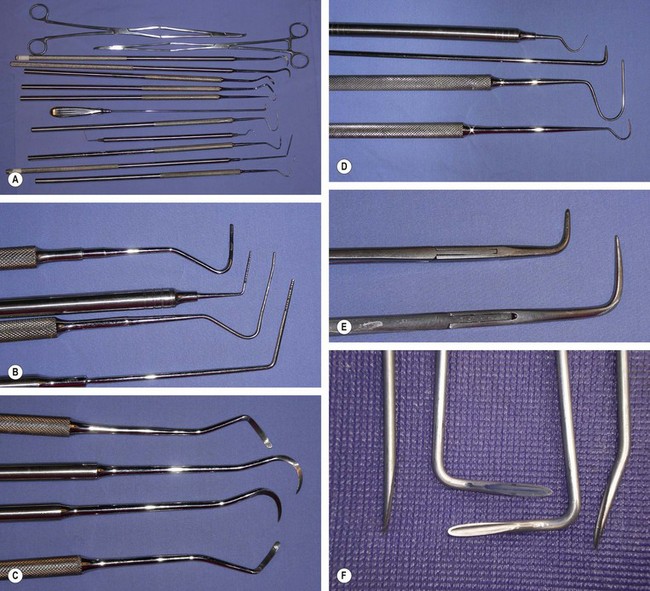
Fig. 16.30 (A) Set of long shaft equine dental picks, probes, scales, and periodontal forceps. (B) Calibrated periodontal probes. (C) Dental scalers. (D) Dental picks. (E) Periodontal forceps. (F) Heavy gauge dental picks.
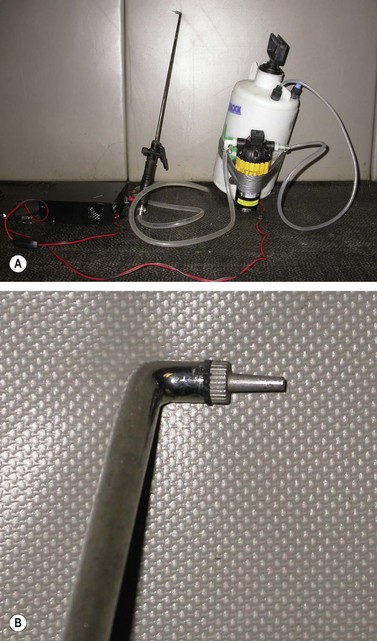
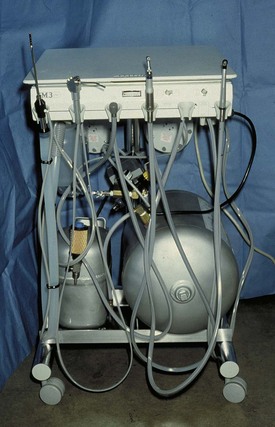
Dental picks are used to clear debris from and to probe diastemata and crown defects. They are also helpful in extracting tooth and root fragments in aged horses. Some practitioners have adapted a wire coat hanger as a useful and inexpensive dental pick or probe. Additionally, an insemination pipette, curved by being held over a flame just long enough to make the plastic bendable, is a useful dental probe and flushing device. Special calibrated human or small animal periodontal probes can be modified on a long handle and used to explore and measure periodontal pockets. Needle probes should be used to access the occlusal surface for patent pulp horns. Large probes are used to evaluate gingival attachment and infundibula. High pressure oral irrigation units can be used to flush food and debris from diastemata and periodontal pockets (Fig. 16.31). Human periodontal systems modified with long handpieces, using compressed nitrogen or air to propel water with sodium bicarbonate, are available for cleaning periodontal pockets. These units also have high-speed drills for tooth restoration (Fig. 16.32).
Canine tooth instruments
Instruments have been developed to reduce the crown of sharp canine teeth as well as to scale and buff older canine teeth with tartar accumulation. A full set of canine tooth instruments consists of: 1) a straight-handled, fine-grit, tungsten carbide dental rasp; 2) a small dental scaler 3) a wire-bristle toothbrush or nylon-bristle nail brush; and 3) Oral Cleansing Gel (Addison Biological Laboratory, Fayette, MS). Nippers and cutters should not be used on canine teeth because these instruments offer minimal to no control during tooth fracturing. Opening the pulp or dentinal tubules can lead to pulpitis and tooth death years after the reduction. To avoid over-reduction of the canines, small files or diamond disc grinders (at low speed) should be used only for smoothening or to blunt the top of the canine.
Wolf tooth instruments
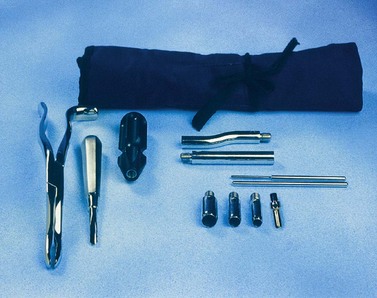
The length and style of wolf tooth elevators depends on a practitioner’s preference (Fig. 16.33). To avoid possible root fracture, one-half or three-quarter circle elevators are preferred because the palatal, rostral and buccal sides can be elevated independent of the caudal side. This allows the entire tooth space to move when elevated on the caudal side. When the elevator is in position, a rubber mallet is used to lightly tap the elevator to loosen the tooth on three sides. Once loosened, the elevator is inserted on the caudal side of the tooth for the final elevation. The rubber mallet absorbs much of the concussion, preventing head motion that can occur in a sedated horse with an anesthetized tooth. (See Chs 17 and 20.)
Molar cutters and chippers
The use of percussion instruments to reduce overgrowths has been practiced since the early 1800s. Yet, with the advent of motorized equipment, the use of molar cutters and chippers has declined. These tools are used to produce a controlled fracture of a tooth or portion of a tooth. Unfortunately, over the years, there was very little control displayed, and since the general recommendation is to avoid tooth reduction greater than 3–5 mm, molar cutters have just one indication – to shorten large tooth overgrowths in geriatric horses (e.g., a long caudal hook that is too long to apply a motorized float).
Molar cutters come in three sizes (A, B, and C head cutters) depending on the space between the jaws, which is 0.635, 0.952, and 1.27 cm, respectively. Cutters are sized so that when applied to a tooth or part of a tooth, the jaws are parallel.
Chisels and mallets, or chisels with sliding captive bolt hammers, have also been used to reduce enamel points, as well as rostral and caudal hooks. The Equi-Chip guarded chisel with a sliding hammer is a refinement of earlier devices. This instrument is no longer widely used since power tools have proven to be more efficient, precise, and safe in removing these types of overgrowths.
Dental extraction equipment
Removal of cheek teeth, wolf teeth, canines and incisors requires special equipment and supplies. Special operating room support is required in certain circumstances. Equipment and techniques for tooth removal are outlined in Chapter 20.
Periodontic, endodontic, and dental restorative materials
Areas of growing interest in equine dentistry include periodontal disease and infundibular decay.6 Specialized equipment, instruments, and medication are available to treat equine periodontal disease. Pacific Equine Dental Institute, Inc. has adapted and modified human and small animal dental equipment for use in the equine patient. The Equine Dental System (Pacific Equine Dental Institute, Inc., El Dorado Hill, CA) is a self-contained, high-pressure (up to 200 p.s.i.) water-delivery spray unit that can be used to evacuate deep periodontal pockets. Additionally, this system contains a Prophy Air Abrasion Unit and a baking soda/chlorhexidine delivery system to clean out periodontal pockets and areas of infundibular decay. With this system, the equine practitioner can now provide the same level of periodontal care that is provided in human dentistry.11,12
As in human dentistry, endodontics, orthodontics, and crown restorative techniques are now being utilized in equine dentistry. The equipment and materials needed for such detailed techniques are outlined in Chapters 21 and 22.
Conclusion
The quality and variety of equine dental instrumentation and instruction have improved greatly in just the last 5 years. New information and techniques emerge regularly, and equine practitioners should avail themselves of these improvements to remain current in the most recent developments. Many dental vendors and manufacturers can provide the equine practitioner with high quality instruments and supplies (see Appendix for supplier information).
Acknowledgments
The following veterinarians supplied photographs seen in this chapter: Mark Miles, Oliver LiLou, Toots Banner, Tom Johnson, Rudy Steiger, Clay Stubbs, Dennis Rach, Leon Scrutchfield, and Travis Henry. Additional thanks to Henrik Petersen of Kruuse Company, Denmark.
1 Allen T, Johnson T, Miller RO. Safety issues and restraint procedures. In: Allen T, ed. Manual of equine dentistry. St Louis: Mosby; 2003:43–48.
2 Scrutchfield WL, Easley KJ, Morton K. Equine dental equipment, supplies and instrumentation. In: Baker GJ, Easley J. Equine dentistry. 2nd edn. Elsevier; 2005:205–292. ch. 15
3 Schultze W, Allen T, Mitz C, Johnson T. Dental tools and equipment. In: Allen T, ed. Manual of equine dentistry. St Louis: Mosby; 2003:17–41.
4 Pence P. Dental equipment in equine dentistry. In: Pence P, ed. Equine dentistry: a practical guide. Lippincott. Philadelphia: Williams and Wilkins; 2002:25–52.
5 Fahrenkrug P. The history and future of equine dental care in: Proceedings North American Veterinary Conference, Orlando, 2005, pp 151–154
6 Easley J. How to perform and interpret an endoscopic examination of the equine oral cavity. Am Assoc Eq Pract Proceedings. 2008;54:383–385.
7 Greene S. Equine dental advances. Equine Practice. 2001;17(2):319–334.
8 Dacre KJP, Dacre IT, Dixon PM. Motorized equine dental equipment. Eq Vet Edu. 2002;4(5):337–340.
9 Baker GJ, Allen ML. The use of power equipment in equine dentistry. In: Proceedings of 48th Annual Convention of American Association of Equine Practitioners, 2002, pp 438–441
10 Kempson SA, Davidson ME, Dacre IT. The effect of three types of rasps on the occlusal surface of equine cheek teeth: a scanning electron study. J Veterinary Dent. 2003:19–27.
11 Pence P, Basile T. Dental infection in equine dentistry. In: Pence P, ed. Equine dentistry: a practical guide. Philadelphia: Lippincott, Williams and Wilkins; 2002:209–229.
12 Allen T. Other procedures. In: Allen T, ed. Manual of equine dentistry. St Louis: Mosby; 2003:157–173.