STRUCTURE AND FUNCTION OF THE DIGESTIVE SYSTEM


The digestive system breaks down ingested food, prepares it for uptake by the body’s cells, provides body water, and eliminates wastes. This system consists of the gastrointestinal tract and accessory organs of digestion: the liver, gallbladder, and exocrine pancreas.
Food breakdown begins in the mouth with chewing and continues in the stomach, where food is churned and mixed with acid, mucus, enzymes, and other secretions. From the stomach, the fluid and partially digested food pass into the small intestine, where biochemicals and enzymes secreted by the liver and exocrine pancreas, and small intestinal epithelium break it down into absorbable components of proteins, carbohydrates, and fats. These nutrients pass through the walls of the small intestine into blood vessels and lymphatics that carry them to the liver via the portal circulation for further processing and storage.
Ingested substances and secretions that are not absorbed in the small intestine pass into the large intestine, where fluid continues to be absorbed. Fluid wastes travel to the kidneys and are eliminated in the urine. Solid wastes pass into the rectum and are eliminated from the body through the anus.
Except for chewing, swallowing, and defecation of solid wastes, the movements of the digestive system (gastrointestinal motility) are controlled by hormones and the autonomic nervous system. As ingested substances move through the gastrointestinal tract, they trigger the release of hormones that stimulate or inhibit (1) the muscular contractions that mix and propel food from the esophagus to the anus and (2) the timely secretion of substances that aid in digestion. The autonomic innervation, sympathetic and parasympathetic, is controlled by centers in the brain and by local stimuli that are mediated by neural plexuses within the gastrointestinal walls.
THE GASTROINTESTINAL TRACT
The gastrointestinal tract (alimentary canal) consists of the mouth, esophagus, stomach, small intestine, large intestine, rectum, and anus (Figure 38-1). It carries out the following digestive processes:
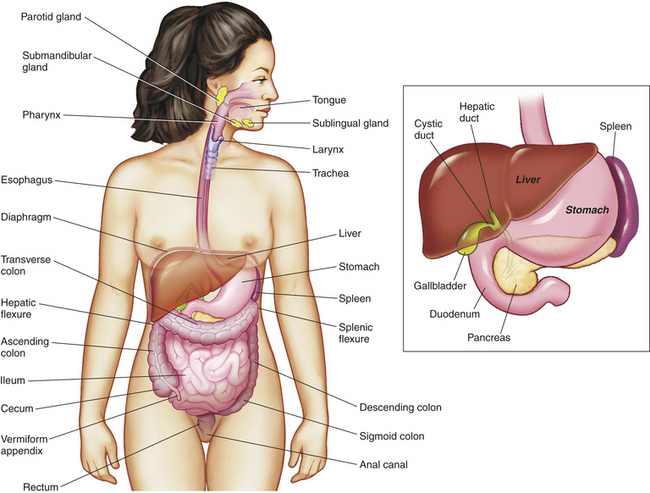
Figure 38-1 Structure and function of the digestive system. Digestion begins in the mouth with chewing, which breaks down food mechanically and mixes it with saliva. Swallowing propels chewed food through the esophagus to the stomach, where acids and stomach motility liquefy it further. Next the liquefied food enters the small intestine, where secretions of the intestinal walls, liver, gallbladder, and pancreas digest it into absorbable nutrients. Nutrients are absorbed through intestinal walls, and unabsorbed wastes enter the large intestine (colon), where fluids are removed. Solid wastes then enter the rectum and leave the body through the anus. (From Patton KT, Thibodeau GA: Anatomy & physiology, ed 7, St Louis, 2010, Mosby.)
2. Propulsion of food and wastes from the mouth to the anus
3. Secretion of mucus, water, and enzymes
4. Mechanical digestion of food particles
5. Chemical digestion of food particles
Histologically the gastrointestinal tract consists of four layers. From the inside out they are the mucosa, submucosa, muscularis, and serosa or adventitia. These concentric layers vary in thickness, and each layer has sublayers (Figure 38-2). Intrinsic nerves are located solely within the gastrointestinal tract and are controlled by local and autonomic nervous system stimuli through the enteric plexus, which comprises three nerve plexuses located in different layers of the gastrointestinal walls. The submucosal plexus (Meissner plexus) is located in the muscularis mucosae, the myenteric plexus (Auerbach plexus) between the inner circular and outer longitudinal muscle layers (tunica muscularis), and the subserosal plexus just beneath the serosa. These enteric nerve circuits regulate motility reflexes, blood flow, absorption, secretions, and immune response.1
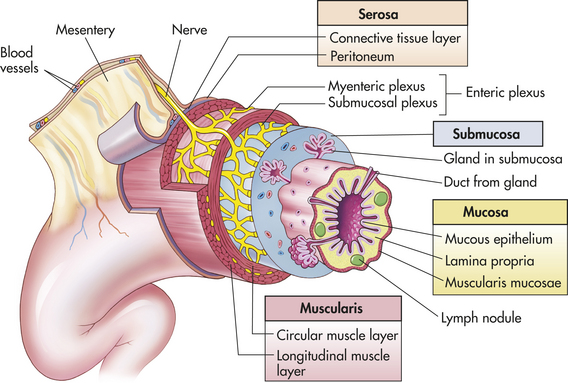
Figure 38-2 Wall of the gastrointestinal (GI) tract. The wall of the GI tract is made up of four layers with a network of nerves between the layers. Shown here is a generalized diagram of a segment of the GI tract. Note that the serosa is continuous with a fold of serous membrane called a mesentery. Note also that digestive glands may empty their products into the lumen of the GI tract by way of ducts. (From Patton KT, Thibodeau GA: Anatomy & physiology, ed 7, St Louis, 2010, Mosby.)
Mouth and Esophagus
The mouth is a reservoir for the chewing and mixing of food with saliva. As food particles become smaller and move around in the mouth, the taste buds and olfactory nerves are continuously stimulated, adding to the satisfaction of eating. The tongue’s surface contains thousands of chemoreceptors, or taste buds, that can distinguish salty, sour, bitter, and sweet tastes. Tastes and food odors help initiate salivation and the secretion of gastric juice in the stomach. There are 32 permanent teeth in the adult mouth, and they are important for speech and mastication.
Salivation
The three pairs of salivary glands (the submandibular, sublingual, and parotid glands) (Figure 38-3) secrete about 1 L of saliva per day. Saliva consists mostly of water that contains varying amounts of mucus; sodium; bicarbonate; chloride; potassium; and salivary α-amylase (ptyalin), an enzyme that initiates carbohydrate digestion in the mouth and stomach.
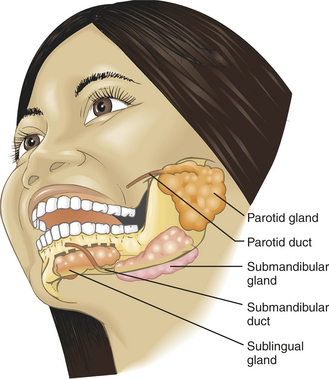
Figure 38-3 Salivary glands. (From Patton KT, Thibodeau GA: Anatomy & physiology, ed 7, St Louis, 2010, Mosby.)
The sympathetic and parasympathetic divisions of the autonomic nervous system control salivation. Because cholinergic parasympathetic fibers stimulate the salivary glands, atropine (an anticholinergic agent) inhibits salivation and makes the mouth dry. β-Adrenergic stimulation from sympathetic fibers also increases salivary secretion. The salivary glands are not regulated by hormones.
The composition of saliva depends on the rate of secretion (Figure 38-4). Aldosterone can increase an exchange of sodium for potassium, increasing sodium conservation and potassium excretion. The bicarbonate concentration of saliva sustains a pH of about 7.4, which neutralizes bacterial acids and prevents tooth decay. Saliva also contains immunoglobulin A (IgA), which helps prevent infection. Exogenous fluoride (e.g., fluoride in drinking water) is absorbed and then secreted in the saliva, providing additional protection against tooth decay.
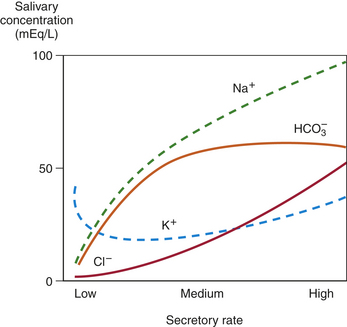
 with increases in flow rate of saliva. Green line, Sodium; orange line, bicarbonate; red line, chloride; blue line, potassium.
Swallowing
The esophagus is a hollow muscular tube approximately 25 cm long that conducts substances from the oropharynx to the stomach (see Figure 38-1). Swallowed food is moved to the stomach by esophageal peristalsis, the coordinated sequential contraction and relaxation of outer longitudinal and inner circular layers of muscles. The upper third of the esophagus contains striated muscle that is directly innervated by motor neurons. The middle third contains a mix of striated and smooth muscle, and the lower third is smooth muscle that is innervated by preganglionic cholinergic fibers from the vagus nerve. The muscles are activated in a downward sequence. Peristalsis is stimulated when afferent fibers distributed along the length of the esophagus sense changes in wall tension caused by stretching as food passes. The greater the tension, the greater the intensity of esophageal contraction. Occasionally, intense contractions cause pain similar to “heartburn” or angina.
Each end of the esophagus is opened and closed by a sphincter. The upper esophageal sphincter (cricopharyngeal muscle) prevents entry of air into the esophagus during respiration.2 The lower esophageal sphincter (cardiac sphincter) prevents regurgitation from the stomach. The lower esophageal sphincter is located near the esophageal hiatus—the opening in the diaphragm where the esophagus ends at the stomach.
Swallowing is a complex event mediated by the swallowing center, which is located in the reticular formation of the brainstem and also involves other brain regions, including the insula/claustrum and cerebellum.3,4 Swallowing occurs in two phases: the oropharyngeal (voluntary) phase and the esophageal (involuntary) phase. During the oral and pharyngeal phases of swallowing, food is segmented into a bolus by the tongue and forced posteriorly toward the pharynx as the tongue pushes upward against the hard palate. The swallowing center and respiratory center provide the coordinating innervation. The superior constrictor muscle of the pharynx contracts, preventing movement of food into the nasopharynx. At the same time, respiration is inhibited and the epiglottis slides downward to prevent the bolus from entering the larynx and trachea. The movements of the tongue and pharyngeal constrictors propel the food into the esophagus in a series of coordinated events, taking less than 1 or 2 seconds.5
The esophageal phase of swallowing begins as the bolus of food enters the esophagus. The bolus is transported by peristalsis—the sequential waves of smooth muscle contractions that travel down the esophagus and are preceded by receptive waves of relaxation.6 The wave of relaxation reduces resistance and allows food to pass, after which the wave of contraction pushes food farther along. The terminal 1 to 2 cm of musculature act as a lower esophageal sphincter and it relaxes just before the arrival of a peristaltic wave. The sphincter muscles return to their resting tone after the bolus of food passes into the stomach. The esophageal phase of swallowing takes 5 to 10 seconds, with the bolus moving 2 to 6 cm/second. Throughout swallowing, the sphincters and esophagus work in concert with the peristaltic wave that moves food from the mouth to the stomach.7
Peristalsis that immediately follows the oropharyngeal phase of swallowing is called primary peristalsis. If a bolus of food becomes stuck in the esophageal lumen, the distention of the esophageal wall stimulates secondary peristalsis, a wave of contraction and relaxation that is independent of voluntary swallowing. This is in response to stretch receptors that are stimulated by increased wall tension, causing an increase in impulses from the swallowing center of the brain.
When it is closed, the lower esophageal sphincter serves as a barrier between the stomach and esophagus. The muscle tone of the lower sphincter changes with neural and hormonal stimulation and relaxes with swallowing. Cholinergic vagal input and the digestive hormone gastrin increase sphincter tone. Nonadrenergic, noncholinergic vagal impulses relax the lower esophageal sphincter, as do the hormones progesterone, secretin, and glucagon. Relaxation during swallowing is mediated by the vagus.8
Stomach
The stomach is a hollow muscular organ that stores food during eating, secretes digestive juices, mixes food with these juices, and propels partially digested food, called chyme, into the duodenum of the small intestine. The anatomy of the stomach is presented in Figure 38-5. Its major anatomic boundaries are the lower esophageal sphincter, where food passes through the cardiac orifice (gastroduodenal junction) into the stomach; the greater and lesser curvatures; and the pyloric sphincter, which relaxes as food is propelled through the pylorus into the duodenum. Functional areas of the stomach are the fundus (upper portion), body (middle portion), and antrum (lower portion).
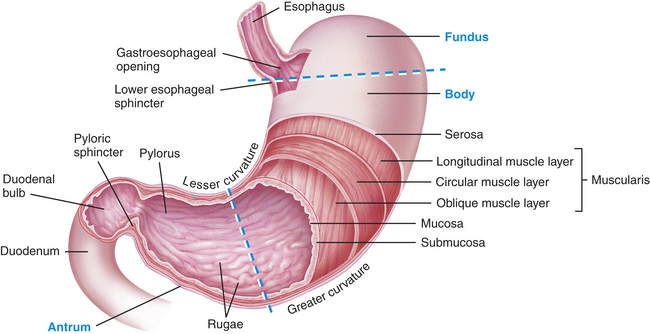
Figure 38-5 Stomach. A portion of the anterior wall has been cut away to reveal the muscle layers of the stomach wall. Note that the mucosa lining the stomach forms folds called rugae. The dotted lines distinguish the fundus, body, and antrum of the stomach. (Modified from Thibodeau GA, Patton KT: Anatomy & physiology, ed 6, St Louis, 2007, Mosby.)
The stomach has three layers of smooth muscle: an outer, longitudinal layer; a middle, circular layer; and an inner, oblique layer (the most prominent) (see Figure 38-5). These layers become progressively thicker in the body and antrum, where food is mixed, churned, and pushed out into the duodenum. The circular layer is most prominent and the oblique layer is the least complete; the longitudinal layer is absent on the anterior and posterior surfaces. The glandular epithelium is discussed in the section about secretory functions of the stomach (see p. 1425).
Blood is supplied to the stomach by a branch of the celiac artery. The blood supply is so abundant that nearly all arterial vessels must be occluded before ischemic changes occur in the stomach wall. The splenic vein drains the right side of the stomach, and the gastric vein drains the left side.
The stomach is innervated by sympathetic and parasympathetic divisions of the autonomic nervous system. Some of the autonomic fibers are extrinsic; that is, they originate outside the stomach and are controlled by nerve centers in the brain: the vagus nerve and branches of the celiac plexus. Others are intrinsic, that is, they originate within the stomach and respond to local stimuli, such as the myenteric plexus, which lies between the longitudinal and circular muscle layer and within the circular layer. Extrinsic sympathetic fibers reach the stomach through the celiac plexus (solar plexus), whereas extrinsic parasympathetic fibers enter through the gastric branch of the vagus nerve.
Few substances are absorbed in the stomach. The stomach mucosa is impermeable to water, but the stomach can absorb alcohol and aspirin.
Gastric Motility
In its resting state the stomach is small and contains about 50 ml of fluid. There is little wall tension, and the muscle layers in the fundus contract very little. Swallowing causes the fundus to relax (receptive relaxation) to receive a bolus of food from the esophagus. Relaxation is coordinated by efferent, nonadrenergic, noncholinergic vagal fibers and is facilitated by gastrin and cholecystokinin, two polypeptide hormones secreted by the gastrointestinal mucosa. (The actions of digestive hormones are summarized in Table 38-1.) Food is stored in vertical or oblique layers as it arrives in the fundus, whereas fluids flow relatively quickly down to the antrum.
Table 38-1
Selected Hormones and Neurotransmitters of the Digestive System
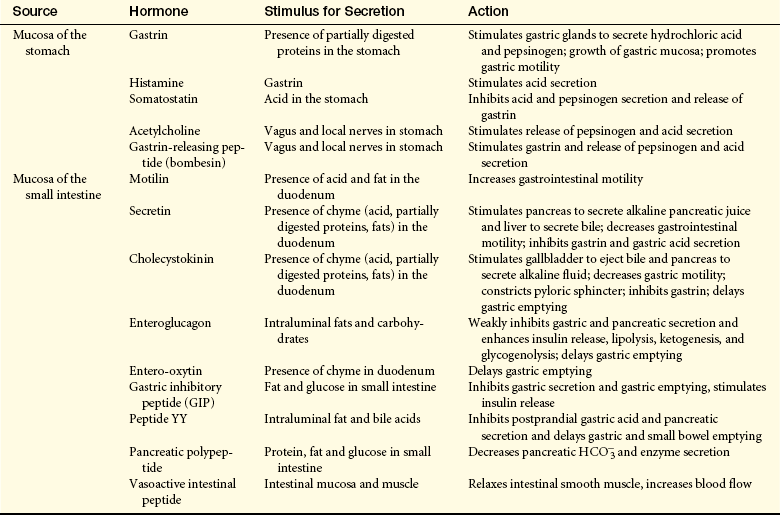
Data from Schubert ML, Peura DA: Gastroenterology 134(7):1842-1860, 2008; Wren AM, Bloom SR: Gastroenterology 132(6):2116-2130, 2007.
NOTE: The digestive hormones are not secreted into the gastrointestinal lumen but rather into the bloodstream, in which they travel to target tissues. There are more than 30 peptide hormone genes expressed in the gastrointestinal tract and more than 100 hormonally active peptides.
Modified from Johnson LR: Gastrointestinal physiology, ed 7, St. Louis, 2007, Mosby.
Gastric (stomach) motility increases with the initiation of peristaltic waves, which sweep over the body of the stomach toward the antrum. The rate of peristaltic contractions is approximately three per minute and is influenced by neural and hormonal activity. Gastrin and motilin (intestinal hormones), and the vagus nerve increase contraction by making the threshold potential of muscle fibers less negative. (The neural and biochemical mechanisms of muscle contraction are described in Chapter 41.) Sympathetic activity and secretin (another intestinal hormone) are inhibitory and make threshold potential more negative. The rate of peristalsis is mediated by pacemaker cells that initiate a wave of depolarization (basic electrical rhythm), which moves from the upper part of the stomach to the pylorus.
The mixing and emptying of food (chyme) from the stomach take several hours. Mixing occurs as food is propelled toward the antrum. As food approaches the pylorus, the velocity of the peristaltic wave increases, forcing the contents back toward the body of the stomach. This retropulsion effectively mixes food with digestive juices, and the oscillating motion breaks down large food particles. With each peristaltic wave a small portion of the gastric contents (chyme) passes through the pylorus and into the duodenum. The pylorus is about 1.5 cm long and is always open about 2 mm. It opens wider during antral contraction. Normally there is no regurgitation from the duodenum into the antrum.
The rate of gastric emptying (movement of gastric contents into the duodenum) depends on the volume, osmotic pressure, and chemical composition of the gastric contents. Larger volumes of food increase gastric pressure, peristalsis, and rate of emptying. Solids, fats, and nonisotonic solutions delay gastric emptying.9 (Osmotic pressure and tonicity are described in Chapters 1 and 3.) Products of fat digestion, which are formed in the duodenum by the action of bile from the liver and enzymes from the pancreas, stimulate the secretion of cholecystokinin. This hormone inhibits gastric motility and decreases gastric emptying so that fats are not emptied into the duodenum at a rate that exceeds the rate of bile and enzyme secretion. Osmoreceptors in the wall of the duodenum are sensitive to the osmotic pressure of duodenal contents. The arrival of hypertonic or hypotonic gastric contents activates the osmoreceptors, which delays gastric emptying to facilitate formation of an isoosmotic duodenal environment. The rate at which acid enters the duodenum also influences gastric emptying. Secretions from the pancreas, liver, and duodenal mucosa neutralize gastric acid in the duodenum. The rate of emptying is adjusted to the duodenum’s ability to neutralize the incoming acidity.10 Peristaltic activity in the stomach is also affected by blood glucose levels. Low blood glucose levels stimulate the vagus nerve and gastric smooth muscles. There is an increase in peristalsis but not gastric emptying, stimulating the sensation of “hunger pains.”11
Gastric Secretion
Stimulated by eating, the stomach secretes large volumes of gastric juices or gastric secretions. Specialized cells located throughout the gastric mucosa produce mucus, acid, enzymes, hormones, intrinsic factor, and gastroferrin. Intrinsic factor is necessary for the intestinal absorption of vitamin B12 and gastroferrin facilitates small intestinal absorption of iron. The hormones are secreted into the blood and travel to target tissues in the bloodstream. The other gastric secretions are released directly into the stomach lumen under neural and hormonal regulation.12 Mucus covering the entire mucosa, intercellular tight junctions, and submucosal acid sensors form a protective barrier against acid and proteolytic enzymes, which otherwise would damage the gastric lining.13
In the fundus and body of the stomach the gastric glands of the mucosa are the primary secretory units (Figure 38-6). Several of these glands (three to seven) empty into a common duct known as the gastric pit. The parietal cells (oxyntic cells) within the glands secrete hydrochloric acid and intrinsic factor. The chief cells within the glands secrete pepsinogen, an enzyme precursor that is readily converted to pepsin (a proteolytic enzyme) in the gastric juice. The pyloric gland mucosa in the antrum synthesizes and releases the hormone gastrin from G cells. Enterochromaffin-like cells secrete histamine, and D cells secrete somatostatin.
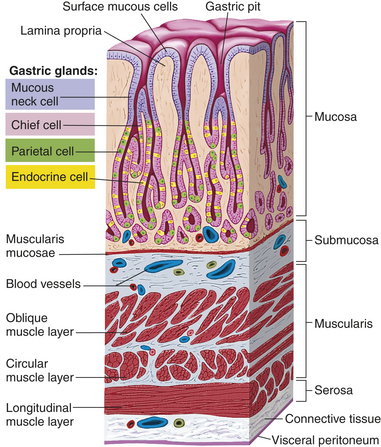
Figure 38-6 Gastric pits and gastric glands. Gastric pits are depressions in the epithelial lining of the stomach. At the bottom of each pit is one or more tubular gastric glands. Chief cells produce the enzymes of gastric juice, and parietal cells produce stomach acid. (From Patton KT, Thibodeau GA: Anatomy & physiology, ed 7, St Louis, 2010, Mosby.)
The composition of gastric juice depends on volume and flow rate (Figure 38-7). Potassium remains relatively constant, but its concentration is greater in gastric juice than in plasma. The rate of secretion varies with the time of day. Generally the rate and volume of secretion are lowest in the morning and highest in the afternoon and evening. Loss of gastric juices through vomiting, drainage, or suction may decrease body stores of sodium and potassium.
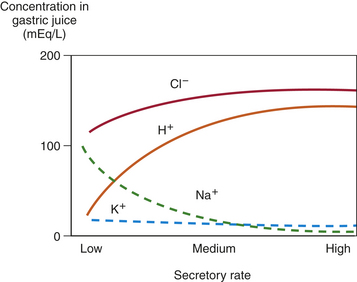
Figure 38-7 Relationship between secretory rate and electrolyte composition of the gastric juice. Sodium (Na+) concentration is lower in the gastric juice than in the plasma, whereas hydrogen (H+), potassium (K+), and chloride (Cl−) concentrations are higher. Red line, Chloride; orange line, hydrogen; green line, sodium; blue line, potassium.
Gastric secretion is inhibited by unpleasant odors and tastes and by rage, fear, or pain. These sensations and emotions cause a discharge of sympathetic impulses and inhibit parasympathetic impulses. Increased secretions may be associated with feelings of aggression or hostility and may contribute to some forms of gastric pathology.
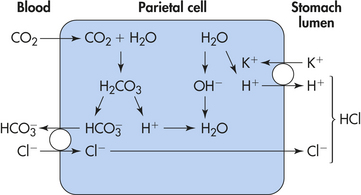
Acid: The major functions of gastric acid are to dissolve food fibers, act as a bactericide against swallowed organisms, and convert pepsinogen to pepsin. The production of acid by the parietal cells requires the transport of hydrogen and chloride from the parietal cells to the stomach lumen. Acid is formed in the parietal cells, primarily through the hydrolysis of water (Figure 38-8). At a high rate of gastric secretion, bicarbonate moves into the plasma, producing an “alkaline tide” in the venous blood, which also may result in a more alkaline urine.14
Acid secretion by parietal cells is stimulated by acetylcholine (a neurotransmitter), gastrin (a hormone), and histamine (a biochemical mediator). The vagus nerve also releases acetylcholine and stimulates the secretion of histamine.12 Histamine secretion is also stimulated by gastrin. Histamine is stored in enterochromaffin cells (mast cells; see Chapter 6) in the gastric mucosa. Histamine receptors in the gastric mucosa are histamine (H2) receptors (unlike those in the bronchial mucosa, which are H1 receptors). Gastric lipase is produced by glands in the fundus of the stomach and is most effective in an acid environment. Prostaglandins, enterogastrones, such as gastric inhibitory peptide, somatostatin, and secretin, inhibit acid secretion.15
Pepsin: Acetylcholine, through vagal stimulation during the cephalic and gastric phases, is the strongest stimulation for pepsin secretion. The precursor pepsinogen is quickly converted to pepsin at a pH of 2. Acid also stimulates a local cholinergic reflex and stimulates chief cells to secrete pepsin. Gastrin and secretin are weaker pepsinogen secretagogues. Pepsin is a proteolytic enzyme that breaks down protein-forming polypeptides in the stomach. Once chyme has entered the duodenum, the alkaline environment of the duodenum inactivates pepsin.
Mucus: The gastric mucosa is protected from the digestive actions of acid and pepsin by a coating of mucus called the mucosal barrier. Gastric mucosal blood flow is important to maintaining mucosal barrier function.13 The quality and quantity of mucus and the tight junctions between epithelial cells make gastric mucosa relatively impermeable to acid. Prostaglandins and nitric oxide protect the mucosal barrier by stimulating the secretion of mucus and bicarbonate and by inhibiting secretion of acid. A break in the protective barrier may occur because of exposure to aspirin or other nonsteroidal anti-inflammatory drugs, Helicobacter pylori, ethanol, regurgitated bile, or ischemia. Breaks cause inflammation and ulceration.
Intrinsic factor (IF), a mucoprotein produced by parietal cells, combines with vitamin B12 in the stomach. It is required for the absorption of vitamin B12 by the ileum. Atrophic gastritis and failure to absorb vitamin B12 result in pernicious anemia (see Chapter 26).
Phases of Gastric Secretion: The secretion of gastric juice is influenced by numerous stimuli that together facilitate the process of digestion. The phases of gastric secretion are the cephalic phase, the gastric phase, and the intestinal phase (Figure 38-9).
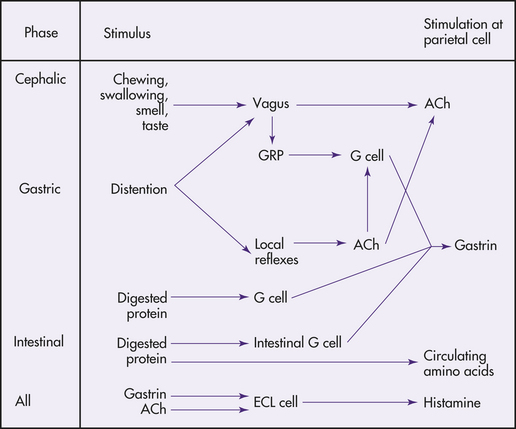
Figure 38-9 Mechanisms for stimulating acid secretion. ACh, Acetylcholine; ECL, enterochromaffin-like cell; GRP, gastrin-releasing peptide. (From Johnson LR: Gastrointestinal physiology, ed 7, St Louis, 2007, Mosby.)
Cephalic Phase: The anticipatory and sensory experiences of smelling, seeing, tasting, chewing, and swallowing food contribute to the cephalic phase of secretion.16 The cephalic phase of gastric secretion is mediated by the vagus nerve through the myenteric plexus. Acetylcholine (ACh) is liberated and stimulates the parietal and chief cells to secrete acid and pepsinogen, respectively. The G cells in the antrum release gastrin into the bloodstream, through which it travels to the gastric glands and stimulates acid and pepsinogen secretion.
Insulin secretion by the endocrine pancreas, stimulated by hyperglycemia, also is a strong stimulus for gastric secretion and is mediated by the vagus nerve through sensors located in the hypothalamus. Maintenance of steady serum glucose levels suppresses the gastric response to insulin.
Gastric Phase: The gastric phase of secretion begins with the arrival of food in the stomach. Two major stimuli have a secretory effect: (1) distention of the stomach and (2) the presence of digested protein. The vagus and enteric nerve plexuses are stimulated by distention and contribute to gastric secretion through a local reflex. Both neural reflexes are mediated by acetylcholine and can be blocked by atropine. As digestion proceeds, products of protein break down, stimulating the release of gastrin from G cells in the antrum. Proteins in the stomach buffer the acid gastric juice and increase the gastric pH. Caffeine stimulates acid secretion, as does calcium.
Intestinal Phase: The movement of chyme from the stomach into the duodenum initiates the intestinal phase of secretion. This phase represents a slowdown of the gastric secretory response and appears to be hormonally mediated by a hormone called entero-oxyntin Gastric inhibitory peptide decreases gastric motility and the secretion of acid and pepsin when chyme enters the duodenum. The intestinal absorption of some amino acids (products of protein breakdown) also stimulates gastric secretion. The intestinal phase of gastric secretion is limited by the fact that acidic chyme in the duodenum tends to inhibit gastric acid secretion and gastric motility. Acid in the duodenum stimulates the release of hormones that inhibit acid secretion while stimulating pepsinogen secretion. One of these hormones, cholecystokinin, inhibits gastrin-stimulated acid production. Other intestinal hormones probably also act synergistically to regulate gastric secretion.
Small Intestine
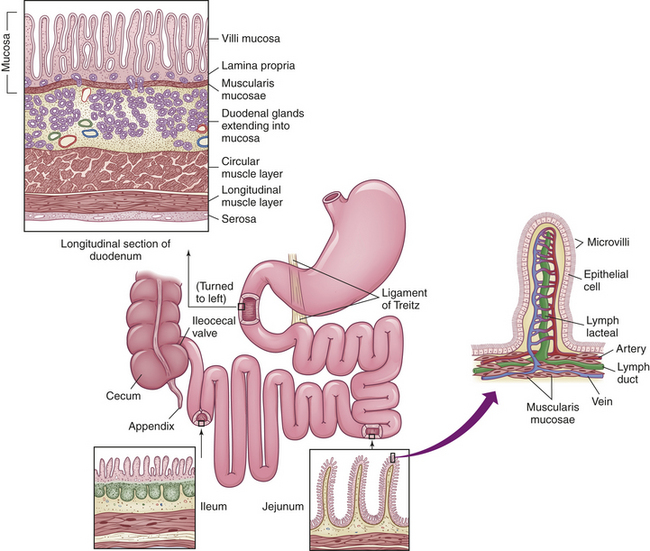
The small intestine is about 5 to 6 m long and is functionally divided into three segments: the duodenum, jejunum, and ileum (Figure 38-10). The duodenum begins at the pylorus and ends where it joins the jejunum at a suspensory ligament called the Treitz ligament. The end of the jejunum and beginning of the ileum are not distinguished by an anatomic marker. These structures are not grossly different, but the jejunum has a slightly larger lumen. The ileocecal valve (sphincter) controls the flow of digested material from the ileum into the large intestine and prevents reflux into the small intestine.17
The peritoneum is the serous membrane surrounding the organs of the abdomen and pelvic cavity. It is analogous to the pericardium and pleura that surround the heart and lungs, respectively. The visceral peritoneum lies over the organs, and the parietal peritoneum lines the wall of the abdominal cavity. The space between these two layers is called the peritoneal cavity. This cavity normally contains just enough fluid to lubricate the two layers and prevent friction during organ movement. Inflammation of the peritoneum, called peritonitis, may occur with perforation of the intestine or after abdominal surgery. As the inflammatory process resolves, adhesions may form and cause colonic obstruction.
The duodenum lies behind the peritoneum, or retroperitoneally, and is attached to the posterior abdominal wall and has an essential role in mixing food with digestive juices from the liver and pancreas. The ileum and jejunum are suspended in loose folds from the posterior abdominal wall by a peritoneal membrane called the mesentery. The mesentery facilitates intestinal motility and supports blood vessels, nerves, and lymphatics.
The arterial supply to the duodenum arises primarily from the gastroduodenal artery. The jejunum and ileum are supplied by branches of the superior mesenteric artery. Blood flow increases significantly during digestion. The superior mesenteric vein joins the splenic vein and empties into the portal circulation to the liver. The regional lymph nodes and lymphatics drain into the thoracic duct. Both divisions of the autonomic nervous system innervate the small intestine. Secretion, motility, pain sensation, and intestinal reflexes (e.g., relaxation of the lower esophageal sphincter) are mediated by parasympathetic nerves. Sympathetic activity inhibits motility and produces vasoconstriction. Intrinsic motor innervation is mediated by the myenteric plexus (Auerbach plexus) and the submucosal plexus (Meissner plexus).
The smooth muscles of the small intestine are arranged in two layers: a longitudinal, outer layer; and a thicker, inner circular layer (see Figure 38-10). Mucosal folds (plica) within the small intestine slow the passage of food, thereby providing more time for digestion and absorption. The folds are most numerous and prominent in the jejunum and upper ileum (see Figure 38-10).
Absorption occurs through villi, which cover the mucosal folds and are the functional units of the intestine (see Figure 38-10). Each villus also secretes some of the enzymes necessary for digestion and absorbs nutrients. A villus is composed of absorptive columnar cells (enterocytes) and mucus-secreting goblet cells of the mucosal epithelium. Near the surface, columnar cells closely adhere to each other at sites called tight junctions. Water and electrolytes are absorbed through these intercellular spaces. The surface of each columnar epithelial cell contains tiny projections called microvilli (see Figure 38-10). Together the microvilli create a mucosal surface known as the brush border. The villi and microvilli greatly increase the surface area available for absorption. Coating the brush border is an “unstirred” layer of fluid that is important for the absorption of substances other than water and electrolytes. The lamina propria (a connective tissue layer of the mucous membrane) lies beneath the epithelial cells of the villi and contains lymphocytes; plasma cells, which produce immunoglobulins; and macrophages.
Central arterioles ascend within each villus and branch into a capillary array that extends around the base of the columnar cells and cascades down to the venules that lead to the portal circulation. The opposing ascending and descending blood flow provides a countercurrent exchange system for absorbed substances and blood gases. A central lacteal, or lymphatic channel, is also contained within each villus and is important for the absorption and transport of fat molecules. Contents of the lacteals flow to regional nodes and channels that eventually drain into the thoracic duct18 (see Figure 38-10).
Between the bases of the villi are the crypts of Lieberkühn, which extend to the submucosal layer. Undifferentiated (stem cells) and secretory cells and Paneth epithelial cells are located here. The stem cells are precursors of columnar epithelial and goblet cells. These premature cells produce alkaline fluids containing electrolytes, mucus, and water. These cells arise from the base of the crypt and move toward the tip of the villus, maturing in shape and function as they progress. After becoming columnar cells and completing their migration to the tip of the villus, they function for a few days and then are sloughed into the intestinal lumen and digested. Sloughed epithelial cells are an important source of endogenous protein. The entire epithelial population is replaced about every 4 to 7 days. Many factors can influence this process of cellular proliferation. Starvation, vitamin B12 deficiency, and cytotoxic drugs or irradiation suppress cell division and shorten the villi. The decreased absorption that results can cause diarrhea and malnutrition. Nutrient intake and intestinal resection stimulate cell production. The Paneth cells produce defensins and other antibiotic peptides and proteins.19 Other secretory cells produce digestive enzymes.20
Intestinal Digestion and Absorption
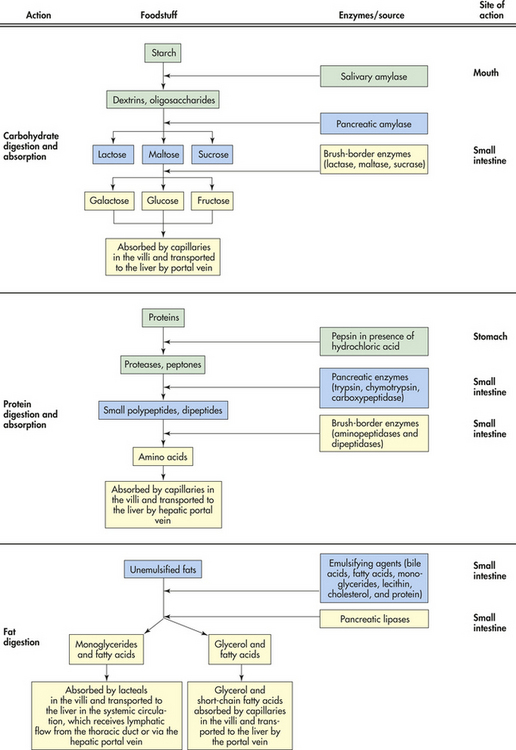
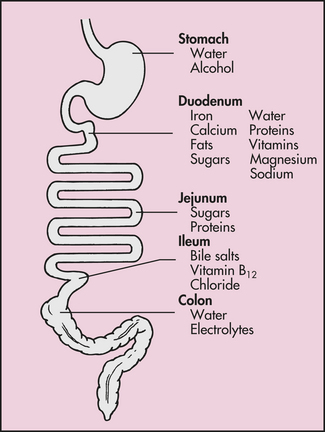
The process of intestinal digestion is initiated in the stomach by the actions of hydrochloric acid and pepsin, which break down food fibers and proteins. The chyme that passes into the duodenum is a liquid that contains small particles of undigested food. Digestion is continued in the proximal portion of the small intestine by the action of pancreatic enzymes, intestinal brush border enzymes, and bile salts (Box 38-1). Here carbohydrates are broken down to monosaccharides and disaccharides; proteins are degraded further to amino acids and peptides; and fats are emulsified and reduced to fatty acids and monoglycerides (Figure 38-11). These nutrients, along with water, vitamins, and electrolytes, are absorbed across the intestinal mucosa and into the blood by active transport, diffusion, or facilitated diffusion. Products of carbohydrate and protein breakdown move into villus capillaries and then to the liver through the portal vein. Digested fats move into the lacteals and eventually reach the liver through the systemic circulation. Intestinal motility exposes nutrients to a large mucosal surface area by mixing chyme and moving it through the lumen. Different segments of the gastrointestinal tract absorb different nutrients. Digestion and absorption of all major nutrients occur in the small intestine. Sites of absorption are shown in Figure 38-12.
Water and Electrolytes: The epithelial cell membranes of the small intestine are formed of lipids and therefore are hydrophobic, or tend to repel water. (The properties of cell membranes are described in Chapter 1.) Therefore, water and electrolytes are transported in both directions (toward the capillary blood or toward the intestinal lumen) through the tight junctions and intercellular spaces rather than across cell membranes. Water diffuses passively according to hydrostatic pressure and in relation to osmotic gradients established by the active transport of sodium and other substances. Approximately 85% to 90% of the water that enters the gastrointestinal tract each day is absorbed in the small intestine. The remaining water and electrolytes are absorbed at a constant rate in the colon.21 Sodium passes through the tight junctions and is actively transported across cell membranes. The proximal part of the small intestine is more permeable to sodium than the distal part. Sodium is transported into the intestinal cells in exchange for hydrogen at the brush border, and chloride actively enters the cell in exchange for bicarbonate to maintain electroneutrality in the ileum. There is also a sodium pump at the basolateral membrane. Sodium and glucose share a common carrier mechanism, so that sodium absorption is enhanced by glucose transport (Figure 38-13). Potassium moves passively across the tight junctions with changes in the electrochemical gradient. Net potassium secretion occurs in the colon. Because of potassium secretion in the colon and the exchange of chloride for bicarbonate, prolonged diarrhea results in hypokalemic metabolic acidosis.
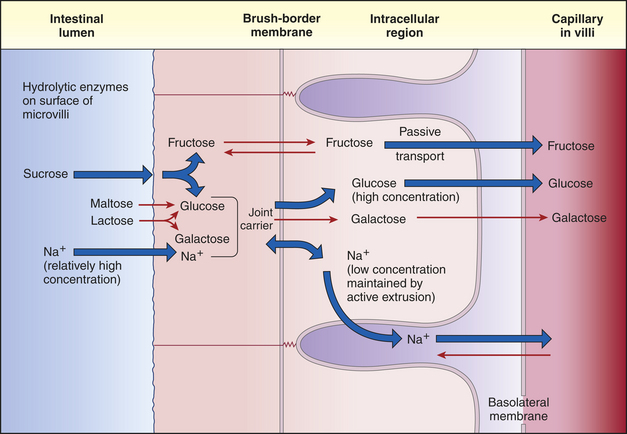
Carbohydrates: Carbohydrate (starch, table sugar—sucrose, milk sugar—lactose, cereal sugar—maltose) accounts for at least 50% of the American diet. Because only monosaccharides (galactose, glucose, fructose) are absorbed by the intestinal mucosa, the complex carbohydrates (polysaccharides and oligosaccharides) must be hydrolyzed to their simplest form (see Figure 38-10). Ribose, a five-carbon sugar that forms part of ribonucleic acid (RNA), adenosine triphosphate (ATP), and deoxyribonucleic acid (DNA), is an important part of the diet. Salivary and pancreatic amylases break down starches to oligosaccharides by splitting α-1,4-glucosidic linkages of long-chain molecules. The major oligosaccharides are sucrose (glucose-fructose), maltose (glucose-glucose), and lactose (glucose-galactose). Approximately half of starch hydrolysis occurs in the stomach and about half in the duodenum. In the small intestine the oligosaccharides are hydrolyzed by brush-border enzymes, mainly sucrase, maltase, and lactase, to their respective monosaccharides (fructose, glucose, galactose). The sugars then pass through the unstirred layer by diffusion. At the cell membrane, glucose and galactose are actively transported with a sodium carrier (sodium-glucose transporter [SGLT-1]) and fructose absorption is facilitated by a glucose transporter (GLUT-5) (Figure 38-13). Consequently, glucose and galactose are absorbed more rapidly than fructose. Transport of all three hexoses from the cytosol of the bloodstream is facilitated by the GLUT-2 carrier.22 Insulin is not required for the intestinal absorption of carbohydrates. The sugars are absorbed primarily in the duodenum and upper jejunum. Cellulose is a glucose polysaccharide found in plants. Humans lack enzymes to digest cellulose, and the undigested fiber contributes to stool volume and stimulates large intestine motility.
Proteins: Protein intake varies among different populations. Adults require 44 to 56 g of protein per day. Approximately 20 to 30 g of protein is derived endogenously from shed epithelial cells and small amounts of plasma proteins. Most protein is absorbed; only 5% to 10% is eliminated in the stool.
Gastric digestion of protein by pepsin and acid is not essential. Major protein hydrolysis is accomplished in the small intestine by the pancreatic enzymes: trypsin, chymotrypsin, and carboxypeptidase (see Figure 38-10). Trypsin and chymotrypsin (endopeptidase) hydrolyze the interior bonds of the large molecules, and carboxypeptidases break away the end amino acids (exopeptidase). Hydrolysis of proteins is also carried out by the brush-border enzymes and enzymes in the epithelial cytosol (intracellular fluid). The brush-border enzymes hydrolyze the large oligopeptides (proteins composed of three to six amino acids) into smaller peptides, which can cross cell membranes. The cytosol then breaks them down to amino acids. Amino acids are actively transported by a carrier at the basal membrane. Protein absorption is directly linked to the active transport of sodium. There are three groups of free amino acids:
1. Neutral amino acids (methionine, glycine, phenylalanine, tryptophan)
Each group enters the circulation through a specific mechanism of transport. A small amount of protein may be taken into the cells by pinocytosis (see Chapter 1).
Like the sugars, proteins are absorbed primarily in the proximal area of the small intestine. Protein absorption is impaired if inadequate amounts of proteolytic enzymes are secreted from the pancreas, as occurs with cystic fibrosis.
Fats: Approximately 90 to 100 g of fat is consumed daily by the average American. Fat is an important source of calories and is a primary structural component of cell membranes and organelles. Sources of dietary fat are reviewed in Box 38-2. Although triglycerides are the major dietary lipids, cholesterol, phospholipids, and fat-soluble vitamins also have nutritional importance. The digestion and absorption of fat occur in four phases: (1) emulsification and lipolysis, (2) micelle formation, (3) fat absorption, and (4) resynthesis of triglycerides and phospholipids.
The mechanical action of the stomach and small intestine disperses the triglyceride droplets into small particles. Emulsification is the process by which emulsifying agents (fatty acids, monoglycerides, lecithin, cholesterol, protein, bile salts) in the intestinal lumen cover the small fat particles and prevent them from re-forming into fat droplets (decrease their surface tension). Emulsified fat is then ready for lipolysis (lipid hydrolysis) by pancreatic lipase, phospholipase, and hydrolase. Lipase breaks down triglycerides to diglycerides, monoglycerides, free fatty acids, and glycerol (see Figure 38-11). The action of lipase requires the presence of colipase, a pancreatic enzyme that allows lipase to penetrate the triglyceride molecule. Phospholipase cleaves fatty acids from phospholipids, and cholesterol esterase breaks cholesterol esters into fatty acids and glycerol.
The products of lipid hydrolysis must be made water soluble if they are to be absorbed efficiently from the intestinal lumen. This is accomplished by the formation of water-soluble molecules known as micelles (Figure 38-14). Micelles are formed of bile salts, the products of fat hydrolysis, fat-soluble vitamins, and cholesterol. The fats form the core of the micelle, and the polar bile salts form an outer shell, with the hydrophobic (“water-hating”) side facing the interior and the hydrophilic (“water-loving”) side facing the aqueous (water-like) content of the intestinal lumen. Because the unstirred layer of the brush border is aqueous, the micelles readily diffuse through it. The micelles maintain the fat molecules in the dissolved or solubilized form, which allows them to move more rapidly from the micelle toward the absorbing surface of the intestinal epithelium. The fat products of the micelle then readily diffuse through the epithelial cell membrane, while the bile salts remain in the lumen and proceed to the ileum, where they are absorbed into the circulation and returned to the liver via the enterohepatic circulation (Figure 38-15 and Figure 38-21, p. 1440). Almost all of the bile salts are recycled in this way.
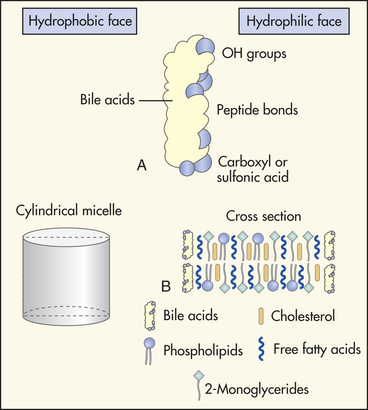
Figure 38-14 Structure of bile acid and micelle. A, A bile acid molecule in solution. The molecule is amphipathic in that it has a hydrophilic face and a hydrophobic face. The amphipathic structure is key in the ability of the bile acids to emulsify lipids and form micelles. B, A model of the structure of a bile acid–lipid mixed micelle, an emulsified fat. (From Berne RM, Levy MN, editors: Principles of physiology, ed 3, St Louis, 2000, Mosby.)
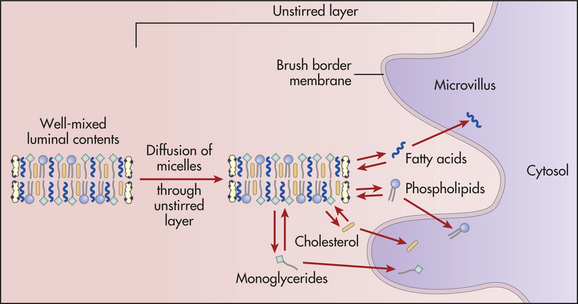
Figure 38-15 Lipid absorption in the small intestine. Micelles of bile salts and products of lipid digestion diffuse through the unstirred layer and among the microvilli. As digestive products are absorbed from free solution by epithelial cells of the villi, more digestive products dissociate from the micelles. (From Berne RM, Levy MN, editors: Principles of physiology, ed 3, St Louis, 2000, Mosby.)
When the fat products reach the inside of the epithelial cell, they are resynthesized into triglycerides and phospholipids. The triglycerides are covered with phospholipids, lipoproteins, and cholesterol to become particles called chylomicrons. The chylomicrons travel to the basolateral membrane of the columnar epithelial cells, where they are extruded into the intercellular spaces of the villus. From here they enter the lacteals and lymphatic channels and, eventually, the systemic circulation.
Minerals and Vitamins: The recommended intake of calcium ranges from 1000 to 1500 mg/day. Between 500 and 600 mg is secreted or shed into the lumen with desquamated epithelial cells. Not all of this calcium is absorbed. Daily absorption of calcium is approximately 600 mg. This amount increases with increased intake. When its concentration in the lumen is greater than 5 mmol/L, calcium is absorbed by passive diffusion. At concentrations less than 5 mmol/L, calcium is transported actively across cell membranes, bound to a carrier protein. The carrier formation requires the presence of the active form of vitamin D3 (1,25-dihydroxyvitamin D). The calcium-protein complex moves into the epithelial cell, where the calcium binds to proteins or other substances. Then these complexes move through the basolateral membrane to the interstitial fluid by diffusion or active transport. Calcium is absorbed throughout the small intestine, but primarily in the ileum. Increased serum calcium inhibits parathyroid hormone, which in turn decreases the formation of vitamin D3 by the kidney, thus regulating calcium absorption.
Increased demand for calcium results in increased uptake, as evidenced by the fact that calcium is absorbed more rapidly in children and pregnant or lactating women. Bile salts enhance calcium absorption indirectly by facilitating the absorption of vitamin D which is fat soluble. In addition, bile salts promote the absorption of free fatty acids that, at high concentrations, bind calcium and form soaps in the intestinal lumen. In older individuals calcium is absorbed less readily because of inadequate amounts of the active form of vitamin D.23
The recommended intake of magnesium for adults is 300 to 350 mg/day. Approximately 50% of it is absorbed by active transport or passive diffusion in the jejunum and ileum. Phosphate is also absorbed in the small intestine by passive diffusion and active transport.
The levels of iron in the body are regulated primarily by intestinal absorption and secretion. The average intake ranges from 15 to 30 mg/day. Of this amount, menstruating women absorb 1 to 1.5 mg and men absorb 0.15 to 1 mg. Generally the amount of iron absorbed is equal to the amount required. Iron is absorbed more rapidly if a deficiency exists. The primary source of iron is heme from animal protein. This iron is rapidly absorbed by the epithelial cells primarily in the duodenum. Inorganic iron (e.g., iron in fruits, cereals, eggs, vegetables) is also readily absorbed. The presence of vitamin C reduces ferric iron to ferrous iron, which is the form more easily absorbed. Calcium phosphate and phosphoproteins (milk and antacids) in the intestinal lumen bind iron and reduce absorption. Tea also binds iron by forming iron tannate complexes.
Iron is bound to intestinal transferrin in the small bowel and is absorbed and bound to the protein ferritin and to amino acid chelates in the cytosol of epithelial cells. Transport of iron across the basolateral membrane is determined by the amount of iron in the circulation. It is transported in the blood by plasma transferrin (a globulin protein) and is carried to body tissues. When there is less need for iron, it remains in the enterocyte as ferritin and is carried into the lumen when the cell is sloughed from the end of the villus. The intestinal cells require 3 days to increase their rate of iron absorption after hemorrhage. This is because the need for iron is perceived by the precursor stem cells in the crypts of Lieberkühn, and they take 3 days to mature and migrate to the tips of the villi, where they absorb more iron. Hepcidin is a protein synthesized by the liver that inhibits apical uptake of iron by enterocytes and modulates iron trafficking.24
The absorption of vitamins is summarized in Table 38-2. Most of the water-soluble vitamins are absorbed passively or by sodium-dependent active transport. Most vitamin B12 (cobalamin) is bound to intrinsic factor (making it resistant to digestion) and absorbed in the terminal ileum, although a small amount of the vitamin is absorbed in its free (unbound) form.
Table 38-2
Intestinal Absorption of Vitamins
| Vitamin | Mechanisms of Absorption | State of Absorption |
| Fat-Soluble Vitamins | ||
| A (retinal) | Micelle formation with bile salts | Upper small intestine |
| D3 (1,25-dihydroxycholecalciferol) | ||
| E (tocopherol) | ||
| K | ||
| Water-Soluble Vitamins | ||
| B1 (thiamine) | Active transport (sodium dependent) | Duodenum and jejunum |
| B2 (riboflavin) | Unknown | Duodenum and jejunum |
| Niacin (nicotinic acid) | Passive diffusion | Jejunum |
| C (ascorbic acid) | Active transport (sodium dependent) | Ileum |
| Folic acid | Active transport (sodium dependent) | Jejunum |
| B12 (cobalamin) | Active transport (intrinsic factor–dependent) | Terminal ileum |
| B6 (pyridoxine, pyridoxamine, pyridoxal phosphate) | Passive diffusion | Jejunum |
| Pantothenic acid | Passive diffusion | Duodenum and jejunum |
| Biotin | Unknown | Unknown |
Intestinal Motility
The movements of the small intestine facilitate digestion and absorption. Chyme coming from the stomach stimulates intestinal movements that mix in secretions from the liver, pancreas, and intestinal glands. A churning motion brings the luminal content into contact with the absorbing cells of the villi. Propulsive movements then advance the chyme toward the large intestine.
Intestinal motility is regulated by the enteric nervous system and humoral substances (see p. 1421 and Table 38-1). Two movements promote motility: segmentation and peristalsis.25 Segmentation consists of localized rhythmic contractions of the circular smooth muscles and occurs more frequently than peristalsis.26 The contraction waves occur at different rates in different parts of the small intestine in segments of 1 to 4 cm. Frequency is greatest (12 per minute) in the upper small intestine and least (8 per minute) in the distal part of the ileum. Segmentation divides and mixes the chyme, bringing it into contact with the absorbent mucosal surface. It also helps to propel the chyme toward the large intestine. The frequency of the segmentation is regulated intrinsically by the frequency of the basic electrical rhythm (BER), which arises in the myenteric plexus of longitudinal smooth muscle. Although the basic rate of contraction is controlled intrinsically, the force of contraction can be enhanced by vagal stimulation (i.e., extrinsically).
Intestinal peristalsis involves short segments (about 10 cm) of longitudinal smooth muscle and propels chime through the intestine. The wave of contraction moves slowly (1 to 2 cm/second) to allow time for digestion and absorption.
Peptide hormones, including motilin, gastrin, secretin, and cholecystokinin, facilitate intestinal motility. Neural reflexes along the length of the small intestine facilitate motility, digestion, and absorption. Through reflex action, receptors in one part of the intestine transmit signals that influence the function of another part. The ileogastric reflex inhibits gastric motility when the ileum becomes distended. This prevents the continued movement of chyme into an already distended intestine. The intestinointestinal reflex inhibits intestinal motility when one part of the intestine is overdistended. Both of these reflexes require extrinsic innervation. The gastroileal reflex, which is activated by an increase in gastric motility and secretion, stimulates an increase in ileal motility and relaxation of the ileocecal sphincter. This empties the ileum and prepares it to receive more chyme. The gastroileal reflex is probably regulated by the hormones gastrin and cholecystokinin or through the autonomic nerves.
During prolonged fasting or between meals, particularly overnight, slow waves sweep along the entire length of the intestinal tract from the stomach to the terminal ileum. This is known as the interdigestive myoelectric complex, and it appears to propel residual gastric and intestinal contents, including bacteria, into the colon.
The intestinal villi move with contractions of the muscularis mucosae, a very thin layer of muscle that separates the mucosa and submucosa. Absorption is promoted by the swaying of villi in the luminal contents. Contractile activity also helps to empty the central lacteals, which contain products of fat digestion.
The ileocecal valve (sphincter) marks the junction between the terminal ileum and the large intestine. This valve is intrinsically regulated and is normally closed. The arrival of peristaltic waves from the last few centimeters of the ileum causes the ileocecal valve to open, allowing a small amount of chyme to pass through. Distention of the upper large intestine causes the sphincter to constrict, preventing further distention or retrograde flow of intestinal contents.
Large Intestine
The large intestine is approximately 1.5 m long and consists of the cecum, appendix, colon, rectum, and anal canal (Figure 38-16). The cecum is a pouch that receives chyme from the ileum. Attached to the cecum is the vermiform appendix, an appendage having little or no physiologic function. From the cecum, chyme enters the colon, a four-part length of intestine that loops upward, traverses the abdominal cavity, and descends to the anal canal. The four parts of the colon are the ascending colon, transverse colon, descending colon, and sigmoid colon. Two sphincters control the flow of intestinal contents through the cecum and colon: the ileocecal valve, which admits chyme from the ileum to the cecum, and the O’Beirne sphincter, which controls the movement of wastes from the sigmoid colon into the rectum. A thick (2.5 to 3 cm) portion of smooth muscle surrounds the anal canal, forming the internal anal sphincter. Overlapping it distally is the striated muscle of the external anal sphincter.
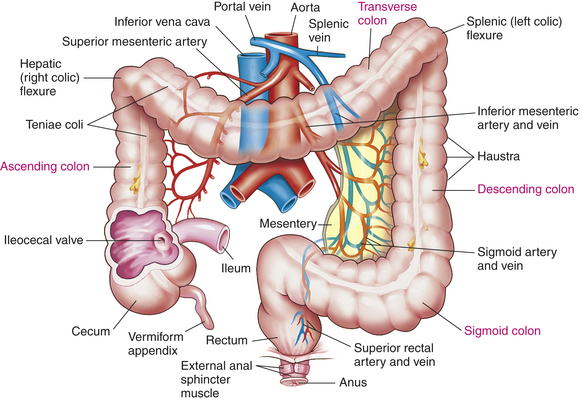
Figure 38-16 Large intestine. (Modified from Patton KT, Thibodeau GA: Anatomy & physiology, ed 7, St Louis, 2010, Mosby.)
In the cecum and colon the longitudinal muscle layer consists of three longitudinal bands called teniae coli (Figure 38-16). The teniae coli are shorter than the colon, giving the colon its “gathered” appearance. The circular muscles of the colon separate the gathers into outpouchings called haustra. The haustra become more or less prominent with the contractions and relaxations of the circular muscles. The mucosal surface of the colon has rugae (folds), particularly between the haustra, and Lieberkühn crypts but no villi. Columnar epithelial cells and mucus-secreting goblet cells form the mucosa throughout the large intestine. The columnar epithelium absorbs fluid and electrolytes, and the mucus-secreting cells lubricate the mucosa.
The myenteric plexus regulates motor and secretory activity independently of the extrinsic system. Extrinsic parasympathetic innervation occurs through the vagus and extends from the cecum up to the first part of the transverse colon. Vagal stimulation increases rhythmic contraction of the proximal colon. Extrinsic parasympathetic fibers reach the distal colon through the pelvic nerves and can increase motility throughout the colon. The internal anal sphincter is usually in a state of contraction, and its reflex response is to relax when the rectum is distended. The intrinsic nerve plexuses provide the major innervation of the internal anal sphincter, which also receives sympathetic innervation to maintain contraction and parasympathetic innervation that facilitates relaxation when the rectum is full. The external anal sphincter is innervated by branches of the sacral division of the spinal cord. Sympathetic innervation of this sphincter arises from the celiac and superior mesenteric ganglia and the sphincter nerve. The external anal sphincter is paralyzed after destruction of the lower spinal cord, but the internal sphincter is not. Sympathetic activity in the entire large intestine modulates intestinal reflexes, conveys somatic sensations of fullness and pain, participates in the defecation reflex, and constricts blood vessels. The blood supply of the large intestine and rectum is derived primarily from branches of the superior and inferior mesenteric artery.27
The primary type of colonic movement is segmental. The circular muscles contract and relax at different sites, shuttling the intestinal contents back and forth between the contracting and relaxing haustra, most commonly during fasting. The movements massage the intestinal contents, then called the fecal mass, and facilitate the absorption of water. Propulsive movement occurs with the proximal-to-distal contraction of several haustral units. Peristaltic movements also occur and promote the emptying of the colon. The gastrocolic reflex initiates propulsion in the entire colon, usually during or immediately after eating, when chyme enters from the ileum. The gastrocolic reflex causes the fecal mass to pass rapidly into the sigmoid colon and rectum, stimulating defecation. Gastrin and cholecystokinin participate in stimulating this reflex. Epinephrine inhibits contractile activity.
Approximately 500 to 700 ml of chyme flows from the ileum to the cecum per day. Most of the water is absorbed in the colon by diffusion and active transport. The electrochemical gradient established by sodium movement enhances the diffusion of serum potassium from the capillaries in the lumen. Aldosterone increases colon membrane permeability to sodium, thereby increasing both the diffusion of sodium into the cell and its active transport across the basolateral membrane to the interstitial fluid. (See Chapters 3, 20, and 35 for a discussion of aldosterone secretion.) This increases the cell-to-lumen diffusion gradient for potassium. Potassium moves outward, and chloride is absorbed with sodium as the complementary anion. Chloride also enters the cell in exchange for bicarbonate.
Absorption and epithelial transport occur in the cecum, ascending colon, transverse colon, and descending colon. By the time the fecal mass enters the sigmoid colon, the mass consists entirely of wastes and is called the feces. Feces, or excrement, consists of food residue, unabsorbed gastrointestinal secretions, shed epithelial cells, and bacteria.
The movement of feces into the sigmoid colon and rectum stimulates the defecation reflex (rectosphincteric reflex). The rectal wall stretches and the tonically constricted internal anal sphincter (smooth muscle with autonomic nervous system control) relaxes, creating the urge to defecate. The defecation reflex can be overridden voluntarily by contraction of the external anal sphincter and muscles of the pelvic floor. The rectal wall gradually relaxes, reducing tension, and the urge to defecate passes. Retrograde contraction of the rectum may displace the feces out of the rectal vault until a more convenient time for evacuation. Pain or fear of pain associated with defecation (e.g., rectal fissures or hemorrhoids) can inhibit the defecation reflex. The defecation reflex is regulated by parasympathetic and cholinergic fibers. Voluntary inhibition or facilitation of defecation is mediated from cortical projections onto the medulla and down to sacral segments of the cord.
Defecation is facilitated by squatting or sitting because these positions straighten the angle between the rectum and anal canal and increase the efficiency of straining (increasing intra-abdominal pressure). Intra-abdominal pressure is increased by initiating the Valsalva maneuver. This maneuver consists of inhaling and forcing the diaphragm and chest muscles against the closed glottis. This increases both intrathoracic and intra-abdominal pressure, which is transmitted to the rectum.
Intestinal Bacteria
The type and number of bacterial flora vary greatly throughout the normal gastrointestinal tract, with an increasing number of bacteria from the stomach to the distal colon. The stomach is relatively sterile because of the secretion of acid that kills ingested pathogens or inhibits bacterial growth. Bile acid secretion, intestinal motility, and antibody production suppress bacterial growth in the duodenum, and in the duodenum and jejunum there is a low concentration of aerobes (10−1 to 10−4/ml), primarily streptococci, lactobacilli, staphylococci, enterobacteria, and Bacteroides.28 There are no anaerobes proximal to the ileum. Anaerobes are found distal to the ileocecal valve. They constitute about 95% of the fecal flora in the colon and contribute one third of the solid bulk of feces. Bacteroides, clostridia, anaerobic lactobacilli, and coliforms are the most common microorganisms from the ileum to the cecum.
The intestinal tract is sterile at birth but becomes colonized with Escherichia coli, Clostridium welchii, and Streptococcus within a few hours. Within 3 to 4 weeks after birth, the normal flora are established. The normal flora do not have the virulence factors associated with pathogenic microorganisms, thus permitting immune tolerances.29 The intestinal mucosal environment also produces a broad spectrum of protective antimicrobial agents.30 The intestinal bacteria do not have major digestive or absorptive functions. They do play a role in the metabolism of bile salts (contributing to the intestinal reabsorption of bile and the elimination of toxic bile metabolites); the metabolism of estrogens, androgens, and lipids and conversion of unabsorbed carbohydrates to absorbable organic acids; the synthesis of vitamin K2; and metabolism of various nitrogenous substances and drugs.31
ACCESSORY ORGANS OF DIGESTION
The liver, gallbladder, and exocrine pancreas all secrete substances necessary for the digestion of chyme. These secretions are delivered to the duodenum through ducts (Figure 38-17). The liver produces bile, which contains salts necessary for fat digestion and absorption. Between meals bile is stored in the gallbladder. The exocrine pancreas produces enzymes needed for the complete digestion of carbohydrates, proteins, and fats. The exocrine pancreas also produces an alkaline fluid that neutralizes chyme, creating a duodenal pH that supports enzymatic action. The liver receives nutrients absorbed by the small intestine and metabolizes or synthesizes these nutrients into forms that can be absorbed by the body’s cells. It then releases the nutrients into the bloodstream or stores them for later use.
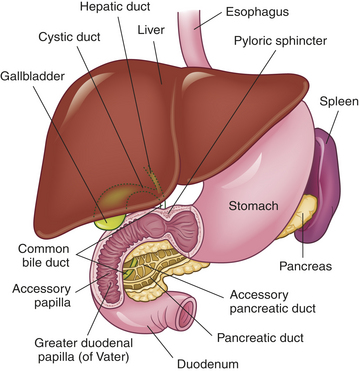
Figure 38-17 Location of the liver, gallbladder, and exocrine pancreas, which are the accessory organs of digestion.
Liver
The liver, which weighs 1200 to 1600 g, is the largest solid organ in the body. It is located under the right diaphragm and is divided into right and left lobes. The larger, right lobe is divided further into the caudate and quadrate lobes (Figure 38-18). The falciform ligament separates the right and left lobes and attaches the liver to the anterior abdominal wall. A fibrous cord called the round ligament (ligamentum teres) extends along the free edge of the falciform ligament. The round ligament is the remnant of the umbilical vein and extends from the umbilicus to the inferior surface of the liver. The coronary ligament branches from the falciform ligament and extends over the superior surface of the right and left lobes, adhering the liver to the inferior surface of the diaphragm. The liver is covered by a fibroelastic capsule called the Glisson capsule. The Glisson capsule contains blood vessels, lymphatics, and nerves. When the liver is diseased or swollen, distention of the capsule causes pain and the lymphatics may ooze fluid into the peritoneal space.
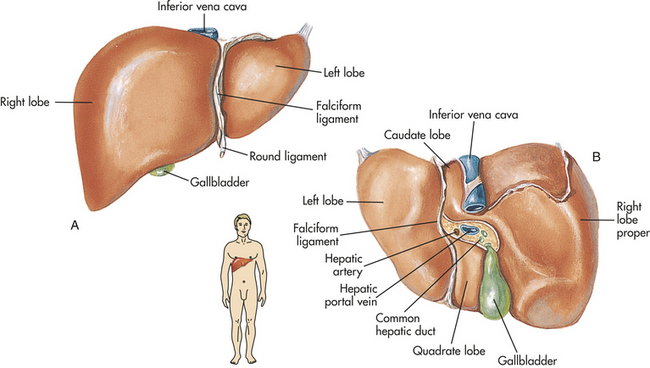
Figure 38-18 Gross structure of the liver. A, Anterior view. B, Inferior view. (From Thibodeau GA, Patton KT: Anatomy & physiology, ed 5, St Louis, 2003, Mosby.)
The metabolic functions of the liver require a large amount of blood. The liver receives blood from both arterial and venous sources. The hepatic artery branches from the abdominal aorta and provides oxygenated blood at the rate of 400 to 500 ml/minute (about 25% of the cardiac output). The hepatic portal vein, which receives deoxygenated blood from the inferior and superior mesenteric veins and the splenic vein, delivers about 1000 to 1200 ml/minute of blood to the liver. The portal vein carries 70% of the blood supply to the liver. This blood carries some oxygen and is rich in nutrients that have been absorbed from the digestive tract and transported through the mesenteric veins to the portal vein (Figure 38-19).
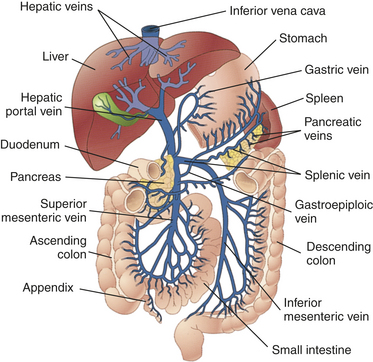
Figure 38-19 Hepatic portal circulation. In this unusual circulatory route, a vein is located between two capillary beds. The hepatic portal vein collects blood from capillaries in visceral structures located in the abdomen and empties into the liver for distribution to the hepatic capillaries. Hepatic veins return blood to the inferior vena cava. (Organs are not drawn to scale.) (From Thibodeau GA, Patton KT: Anatomy & physiology, ed 5, St Louis, 2003, Mosby.)
Within the liver lobes are multiple, smaller anatomic units called liver lobules (Figure 38-20). The lobules are formed of cords or plates of hepatocytes, which are the functional cells of the liver. These cells are capable of regeneration; therefore, damaged or resected liver tissue can regrow. Hepatocytes secrete electrolytes, lipids, lecithin, bile acids, and cholesterol into the canaliculi. Plasma proteins are also synthesized and released into the bloodstream. Lipocytes are star-shaped cells that store lipids, including vitamin A. Small capillaries, or sinusoids, are located between the plates of hepatocytes. The sinusoids receive a mixture of venous and arterial blood from branches of the hepatic artery and portal vein. Blood from the sinusoids drains into to a central vein in the middle of each liver lobule. Venous blood from all the lobules then flows into the hepatic vein, which empties into the inferior vena cava. The sinusoids of the liver lobules are lined with highly permeable endothelium. This permeability enhances the transport of nutrients from the sinusoids into the hepatocytes, where they are metabolized.32 The sinusoids are also lined with phagocytic cells known as Kupffer cells. Kupffer cells are part of the mononuclear phagocyte system (see Chapter 25) and are the largest population of tissue macrophages. They are bactericidal and are important for bilirubin production and lipid metabolism.33 Stellate cells contain retinoids (vitamin A), are contractile in liver injury, regulate sinusoidal blood flow, and may proliferate into myofibroblasts.34 They remove foreign substances from the blood and trap bacteria. Pit cells are natural killer cells found in the sinusoidal lumen; they produce interferon-γ and are important in tumor defense.35 Between the endothelial lining of the sinusoid and the hepatocyte is the Disse space, which drains interstitial fluid into the hepatic lymph system.
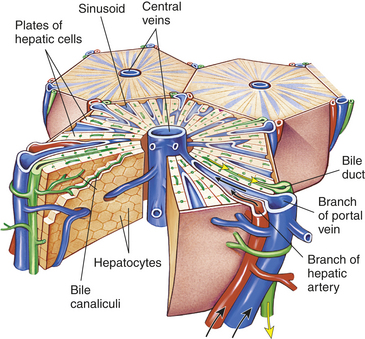
Figure 38-20 Diagrammatic representation of a liver lobule. A central vein is located in the center of the lobule, with plates of hepatocytes disposed radially. Branches of the portal vein and hepatic artery are located on the periphery of the lobule, and blood from both perfuse the sinusoids. Peripherally located bile ducts drain the bile canaliculi that run between the hepatocytes. (Modified from Patton KT, Thibodeau GA: Anatomy & physiology, ed 7, St Louis, 2010, Mosby.)
Secretion of Bile
The liver assists intestinal digestion by secreting 700 to 1200 ml of bile per day. Bile is an alkaline, bitter-tasting yellowish green fluid that contains bile salts (conjugated bile acids), cholesterol, bilirubin (a pigment), electrolytes, and water. It is formed by hepatocytes and secreted into the canaliculi small channels adjacent to hepatocytes. Bile salts, which are conjugated bile acids, are required for the intestinal emulsification and absorption of fats. The bile canaliculi empty into bile ducts and eventually drain into the common bile duct (see Figure 38-20). The union of the common bile duct and pancreatic duct is at the papilla or ampulla of Vater),32 which empties into the duodenum through an opening called the major duodenal papilla (sphincter of Oddi). Having facilitated fat emulsification and absorption in the small intestine, most bile salts are actively absorbed in the terminal ileum and returned to the liver through the portal circulation for resecretion. The recycling of bile salts is termed the enterohepatic circulation (Figure 38-21).36
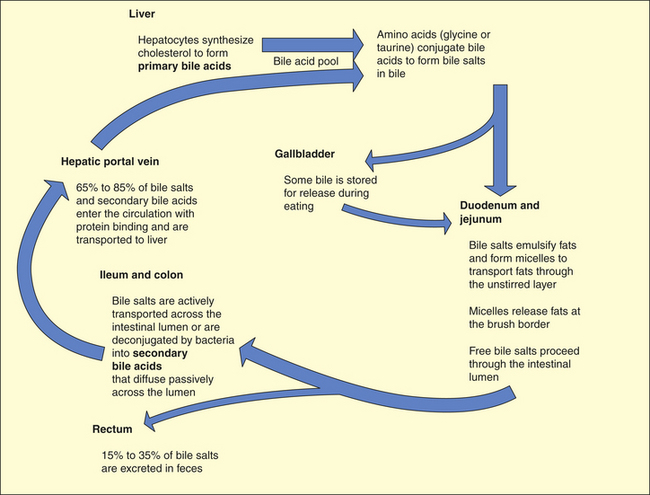
Bile has two fractional components: the acid-dependent fraction and the acid-independent fraction. Hepatocytes secrete the bile acid–dependent fraction of the bile. This fraction consists of bile acids, cholesterol, lecithin (a phospholipid), and bilirubin (a bile pigment). The bile acid–independent fraction of the bile, which is secreted by the hepatocytes and epithelial cells of the bile canaliculi, is a bicarbonate-rich aqueous fluid that gives bile its alkaline pH.
Bile salts are conjugated in the liver from primary and secondary bile acids. The primary bile acids are cholic acid and chenodeoxycholic (chenic acid or chenodiol) acid. These acids are synthesized from cholesterol by the hepatocytes. The secondary bile acids are deoxycholic acid and lithocholic acid. These acids are formed in the small intestine by the action of intestinal bacteria, after which they are absorbed and flow to the liver (see Figure 38-21). Both forms of bile acids are conjugated with amino acids (glycine or taurine) in the liver to form bile salts. Conjugation makes the bile acids more water soluble, thus restricting their diffusion from the duodenum and ileum. The primary and secondary bile acids together form the bile acid pool. Other components of bile include phospholipids and cholesterol.
Bile salts are planar molecules; that is, they are hydrophobic on one end and hydrophilic on the other. When the concentration of bile salts in the intestine is adequate or has reached the critical micelle concentration, the molecules form water-soluble micelles (aggregates) with their hydrophilic side toward the watery chyme of the intestine and their hydrophobic side surrounding fat molecules such as cholesterol, free fatty acids, and phospholipids (see Figure 38-14). Micelle formation facilitates the absorption of fat by the intestinal mucosa by promoting diffusion through the aqueous intestinal layer of the brush border.
Bile secretion is called choleresis. A choleretic agent is a substance that stimulates the liver to secrete bile. One strong stimulus is a high concentration of bile salts. Other choleretics include secretin, which increases the rate of bile flow by promoting the secretion of bicarbonate from canaliculi and other intrahepatic bile ducts; cholecystokinin; and vagal stimulation.
Metabolism of Bilirubin
Bilirubin is a byproduct of destruction of aged red blood cells. It gives bile a greenish black color and produces the yellow tinge of jaundice. Aged red blood cells are taken up and destroyed by macrophages of the mononuclear phagocyte system, primarily in the spleen and liver. (In the liver these macrophages are Kupffer cells.) Within these cells, hemoglobin is separated into its component parts—heme and globin (Figure 38-22). The globin component is further degraded into its constituent amino acids, which are recycled to form new protein. The heme moiety is converted to biliverdin by the enzymatic cleavage of iron. The iron attaches to transferrin in the plasma and can be stored in the liver or used by the bone marrow to make new red blood cells. The biliverdin is enzymatically converted to bilirubin in the macrophage of the mononuclear phagocytic system and then is released into the plasma. In the plasma, bilirubin binds to albumin and is known as unconjugated bilirubin, or free bilirubin, which is lipid soluble. Bilirubin also may have a role as an antioxidant and provide cytoprotection.37,38 Elevated circulating bilirubin levels may protect against cancer and cardiovascular disease.39
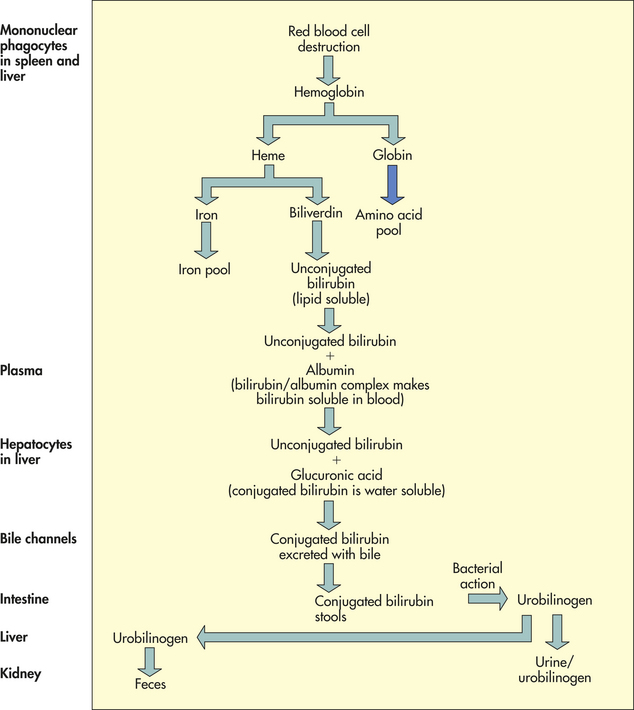
In the liver, unconjugated bilirubin moves from plasma in the sinusoids into the hepatocyte. Within hepatocytes it joins with glucuronic acid to form conjugated bilirubin, which is water soluble. Conjugation transforms bilirubin from a lipid-soluble substance that can cross biologic membranes to a water-soluble substance that can be excreted in the bile. When conjugated bilirubin reaches the distal ileum and colon, it is deconjugated by bacteria and converted to urobilinogen. Urobilinogen is then excreted in the urine as urobilin; a small amount is recirculated back into the liver and eliminated in feces.
Vascular and Hematologic Functions
Because of its extensive vascular network, the liver can store a large volume of blood. The amount stored at any one time depends on pressure relationships in the arteries and veins. The liver also can release blood to maintain systemic circulatory volume in the event of hemorrhage.
Kupffer cells (macrophages) in the sinusoids of the liver remove bacteria and foreign particles from the portal blood. Because the liver receives all of the venous blood from the gut and pancreas, the Kupffer cells play an important role in destroying intestinal bacteria and preventing infections.
The liver also has hemostatic functions. It synthesizes prothrombin; fibrinogen; and factors I, II, VII, IX, and X, all of which are necessary for effective clotting (see Chapter 25). Vitamin K, a fat-soluble vitamin, is essential for the synthesis of other clotting factors. Because bile salts are needed for reabsorption of fats, vitamin K absorption depends on adequate bile production in the liver. Impairment of vitamin K absorption diminishes production of clotting factors and increases risk of bleeding.
Metabolism of Nutrients
Fats: Fat is synthesized from carbohydrate and protein, primarily in the liver. Ingested fat absorbed by lacteals in the intestinal villi enters the liver through the lymphatics, primarily as triglycerides. In the liver the triglycerides can be hydrolyzed to glycerol and free fatty acids and used to produce metabolic energy (ATP), or they can be released into the bloodstream as lipoproteins (lipids bound to proteins). The lipoproteins are carried by the blood to adipose cells for storage. The liver also synthesizes phospholipids and cholesterol, which are needed for the hepatic production of bile salts, steroid hormones, components of plasma membranes, and other special molecules.
Proteins: Protein synthesis requires the presence of all the essential amino acids (obtained only from food), as well as nonessential amino acids. Proteins perform many important roles in the body and are summarized in Table 38-3.
Table 38-3
| Role | Example |
| Contraction | Actin and myosin enable muscle contraction |
| Energy | Proteins can be metabolized for energy |
| Fluid balance | Albumin, a major source of plasma oncotic pressure |
| Protection | Antibodies and complement protect against infection and foreign substances |
| Regulation | Enzymes control chemical reactions; hormones regulate many physiologic processes |
| Structure | Collagen fibers provide structural support to many parts of the body; keratin strengthens skin, hair, and nails |
| Transport | Hemoglobin transports oxygen and carbon dioxide in the blood; plasma proteins serve as transport molecules; proteins in cell membranes control movement of materials into and out of cells |
| Coagulation | Hemostasis is regulated by proteins that balance coagulation and anticoagulation |
Within hepatocytes, amino acids are converted to carbohydrates by the removal of ammonia (NH3), a process known as deamination. The ammonia is converted to urea by the liver and passes into the blood to be excreted by the kidneys. Depending on need, the ketoacids are converted to fatty acids for fat synthesis and storage or are oxidized by the Krebs tricarboxylic acid cycle (see Chapter 1) to provide energy for the liver cells.
The plasma proteins, including albumins and globulins (with the exception of gamma globulin, which is formed in lymph nodes and lymphoid tissue), are synthesized by the liver. The liver also synthesizes several nonessential amino acids and serum enzymes, including aspartate aminotransferase (AST; previously serum glutamate oxaloacetate transaminase [SGOT]), alanine aminotransferase (ALT; previously serum glutamate pyruvate transaminase [SGPT]), lactate dehydrogenase (LDH), and alkaline phosphatase.
Carbohydrates: The liver contributes to the stability of blood glucose levels by releasing glucose during states of hypoglycemia (low blood sugar) and taking up glucose during states of hyperglycemia (high blood sugar) and storing it as glycogen (glyconeogenesis) or converting it to fat. When all glycogen stores have been used, the liver can convert amino acids and glycerol to glucose.
Metabolic Detoxification
The liver alters exogenous and endogenous chemicals (e.g., drugs), foreign molecules, and hormones to make them less toxic or less biologically active. This process, called metabolic detoxification (biotransformation), diminishes intestinal or renal tubular reabsorption of potentially toxic substances and facilitates their intestinal and renal excretion. In this way alcohol, barbiturates, amphetamines, steroids, and hormones (including estrogens, aldosterone, antidiuretic hormone, and testosterone) are metabolized or detoxified, preventing excessive accumulation and adverse effects.
Although metabolic detoxification is usually protective, sometimes the end products of metabolic detoxification become toxins. Those of alcohol metabolism, for example, are acetaldehyde and hydrogen. Excessive intake of alcohol over a prolonged period causes these end products to damage hepatocytes. Acetaldehyde damages cellular mitochondria, and the excess hydrogen promotes fat accumulation. This is how alcohol impairs the liver’s ability to function.
Storage of Minerals and Vitamins
The liver stores certain vitamins and minerals, including iron and copper, in times of excessive intake and releases them in times of need. The liver can store vitamins B12 and D for several months and vitamin A for several years. The liver also stores vitamins E and K. Iron is stored in the liver as ferritin, an iron-protein complex, and is released as needed for red blood cell production.
Gallbladder
The gallbladder is a saclike organ that lies on the inferior surface of the liver (Figures 38-18 and 38-23). The wall of the gallbladder is composed of the mucous membrane, muscularis, and serosa or adventitia. The primary function of the gallbladder is to store and concentrate bile between meals. During the interdigestive period, bile flows from the liver through the right or left hepatic duct into the common hepatic bile duct and meets resistance at the closed sphincter of Oddi, which controls flow into the duodenum and prevents reflux of duodenal contents into the pancreatobiliary system.40 Bile then flows into the gallbladder through the cystic duct where it is concentrated and stored. The mucosa of the gallbladder wall readily absorbs water and electrolytes, leaving a high concentration of bile salts, bile pigments, and cholesterol. The gallbladder holds about 90 ml of bile.
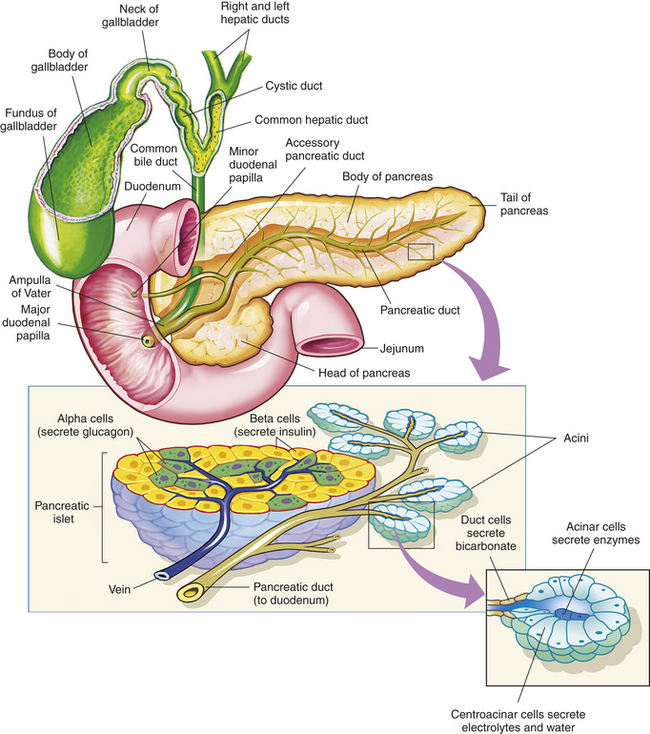
Figure 38-23 Associated structures of the gallbladder, pancreas, and pancreatic acinar cells and duct. (Modified from Thibodeau GA, Patton KT: Anatomy & physiology, ed 6, St Louis, 2007, Mosby.)
Within 30 minutes after eating, the gallbladder begins to contract forcing stored bile through the cystic duct and into the common bile duct. The sphincter of Oddi relaxes, and bile flows into the duodenum through the major duodenal papilla. During the cephalic and gastric phases of digestion, gallbladder contraction is mediated by cholinergic branches of the vagus nerve. Hormonal regulation of gallbladder contraction is derived primarily from the release of cholecystokinin secreted by the duodenal mucosa in the presence of fat. Vasoactive intestinal peptide, pancreatic polypeptide, and sympathetic nerve stimulation relax the gallbladder.
Exocrine Pancreas
The pancreas is approximately 20 cm long, with its head tucked into the curve of the duodenum and its tail touching the spleen. The body of the pancreas lies deep in the abdomen, behind the stomach (see Figure 38-23). The pancreas is unique in that it has endocrine as well as exocrine functions. The endocrine pancreas secretes insulin, glucagon, somatostatin, and pancreatic polypeptide (see Chapter 20).
The exocrine pancreas is composed of acinar cells that secrete enzymes and networks of ducts that secrete alkaline fluids with important digestive functions. The acinar cells are organized into spherical lobules (acini) around small secretory ducts (see Figure 38-23). Secretions drain into a system of ducts that leads to the pancreatic duct (Wirsung duct), which empties into the common bile duct at the ampulla of Vater and then through the duodenal papilla into the duodenum. In some individuals an accessory duct (the duct of Santorini) branches off the pancreatic duct and drains directly into the duodenum at an opening called the minor duodenal papilla (see Figure 38-23).
Arterial blood is supplied to the pancreas by branches of the celiac and superior mesenteric arteries. Venous blood leaves the head of the pancreas through the portal vein, with the body and tail being drained through the splenic vein. All hormonal pancreatic secretions also pass through the portal vein into the liver.
Pancreatic innervation arises from preganglionic parasympathetic fibers of the vagus nerve. These fibers activate postganglionic fibers, which stimulate enzymatic and hormonal secretion. Sympathetic postganglionic fibers from the celiac and superior mesenteric plexuses innervate the blood vessels and cause vasoconstriction and inhibit pancreatic secretion.41
The aqueous secretions of the exocrine pancreas are isotonic and contain potassium, sodium, bicarbonate, magnesium, calcium, and chloride. Sodium and potassium concentrations are about equal to those in the plasma. The concentration of bicarbonate in pancreatic juice varies directly with the secretory flow rate. As bicarbonate secretion increases, chloride secretion decreases to maintain a constant anionic concentration. The highly alkaline pancreatic juice neutralizes the acidic chyme that enters the duodenum from the stomach and provides the alkaline medium needed for the actions of digestive enzymes and the absorption of fat in the intestine.
In the pancreas, transport of water and electrolytes through the ductal epithelium involves active and passive mechanisms. The ductal cells actively transport hydrogen into the blood and bicarbonate into the duct lumen. Potassium and chloride are secreted by diffusion according to changes in electrochemical potential gradients. As the secretion flows down the duct, water is osmotically transported into the juice until it becomes isoosmotic. At low flow rates, bicarbonate is exchanged passively for chloride, but at higher flow rates there is less time for this exchange and bicarbonate concentration increases. Because eating stimulates the flow of pancreatic juice, the juice is most alkaline when it needs to be—during digestion.
The pancreatic enzymes hydrolyze proteins (proteases), carbohydrates (amylases), and fats (lipases). The proteases include trypsin, chymotrypsin, carboxypeptidase, and elastase. These enzymes are secreted in their inactive forms—that is, as trypsinogen, chymotrypsinogen, and procarboxypeptidase—to protect the pancreas from the digestive effects of its own enzymes. For further protection the pancreas produces trypsin inhibitor, which prevents the activation of proteolytic enzymes while they are in the pancreas. Once in the duodenum, the inactive forms (proenzymes) are activated by enterokinase, an enzyme secreted by the duodenal mucosa. Trypsinogen is the first proenzyme to be activated. Its conversion to trypsin stimulates the conversion of chymotrypsinogen to chymotrypsin and procarboxypeptidase to carboxypeptidase. Each of these enzymes cleaves specific peptide bonds to reduce polypeptides to smaller peptides.
Pancreatic α-amylase is secreted in active form and digests carbohydrate by cleaving interior α-1,4-glucosidic bonds at an optimum pH of approximately 6.9. Pancreatic lipases hydrolyze triglycerides, cholesterol, and phospholipids to free fatty acids.
Secretion of the aqueous and enzymatic components of pancreatic juice is controlled by hormonal and vagal stimuli. Secretin stimulates the acinar and duct cells to secrete the bicarbonate-rich fluid that neutralizes chyme and prepares it for enzymatic digestion. As chyme enters the duodenum, its acidity (pH of 4.5 or less) stimulates the S cells (secretin-producing cells) of the duodenum to release secretin, which is absorbed by the intestine and delivered to the pancreas in the bloodstream. In the pancreas, secretin causes ductal and acinar cells to release alkaline fluid. Secretin also inhibits the actions of gastrin, thereby decreasing gastric acid secretion and motility. The overall effect is to neutralize contents of the duodenum.
Enzymatic secretion follows, stimulated by cholecystokinin and acetylcholine (from the parasympathetic vagus nerve). Cholecystokinin is released in the duodenum in response to the essential amino acids and fatty acids already present in chyme. Cholecystokinin and acetylcholine both act on the acinar cells, causing enzyme release. Once in the small intestine, activated pancreatic enzymes inhibit the release of more cholecystokinin and acetylcholine. This feedback mechanism inhibits the secretion of more pancreatic enzymes. Acetylcholine is liberated from pancreatic branches of the vagus nerve during the cephalic phase of digestion. Pancreatic polypeptide is released after eating and inhibits postprandial pancreatic exocrine secretion. (Table 38-1 summarizes hormonal stimulation of pancreatic secretions.)
TESTS OF DIGESTIVE FUNCTION
Although important diagnostic information can be obtained from the patient’s medical history and presenting symptoms, numerous disease-specific tests must be performed to evaluate the structure and function of the gastrointestinal tract. A description of selected studies is presented in Tables 38-4 and 38-5. Radiography and imaging techniques, including ultrasound and radionuclide and computed tomography (CT) scanning, are common procedures for evaluating structure and function. Plain radiographs using contrast media such as barium- or iodine-containing compounds can be used to outline the gastrointestinal lumen, biliary tree and pancreatic ducts, fistulae, and arteriovenous systems. CT scanning is particularly useful for diagnosis of pancreatic or hepatic tumors or cysts. Ultrasonic scanning is a safe, simple, and relatively inexpensive technique used to detect liver-related jaundice and intra-abdominal masses, particularly abscesses.
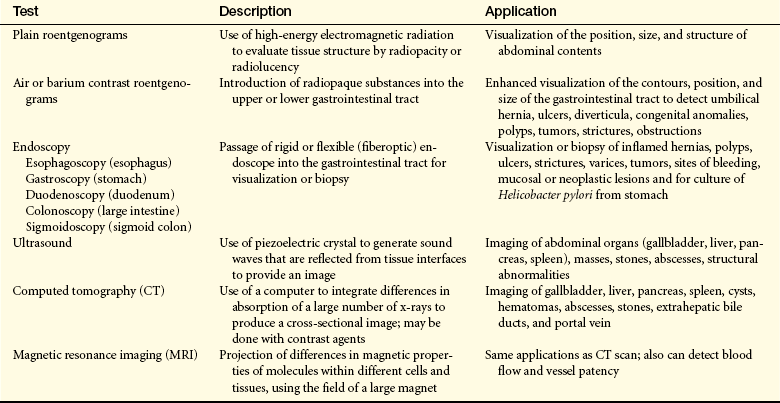
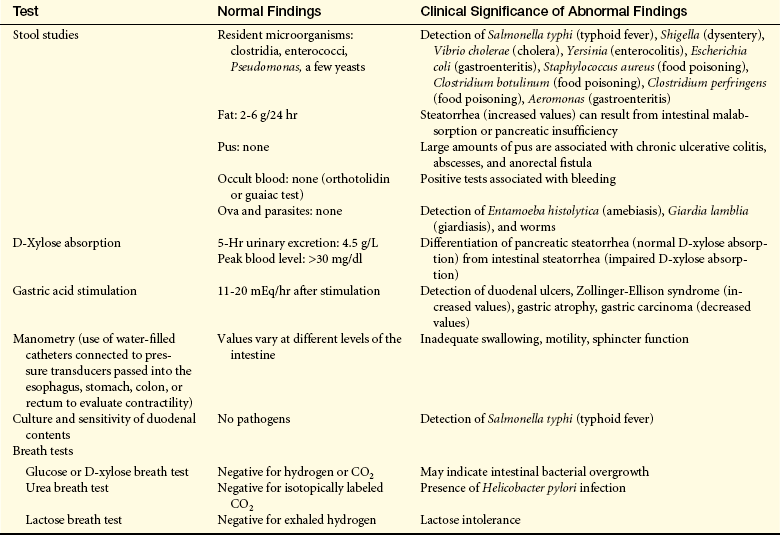
Fiberoptic endoscopy, using flexible endoscopes, allows direct visualization of the gastrointestinal tract. A biopsy channel allows tissue sampling, and suction can be applied to remove gastrointestinal secretions or blood. Analysis of stool, gastric secretions, and plasma provides important clues to infection, malabsorption syndromes, ulcerative lesions, and tumor growth.
Liver
A variety of diagnostic tests can be performed to evaluate liver function42,43 (Table 38-6). Imaging techniques similar to those described for the gastrointestinal tract are also useful for evaluating liver structure and function. Plasma chemistry findings are also altered with many liver diseases because of release of cytoplasmic enzymes into the circulation when there is damage to the hepatocyte. Of particular importance are elevations of aminotransferases and LDH. Obstruction of bile canaliculi or ducts results in regurgitation of bile back into the hepatic sinusoids and into the circulation, with elevation of bilirubin levels. Prothrombin times are often prolonged with both hepatitis and chronic liver disease. In severe disease, other plasma proteins, such as albumin and globulins, may be diminished as a result of hepatocyte damage. Liver biopsies are often performed to evaluate the extent of liver involvement or degeneration with cirrhosis or hepatitis.
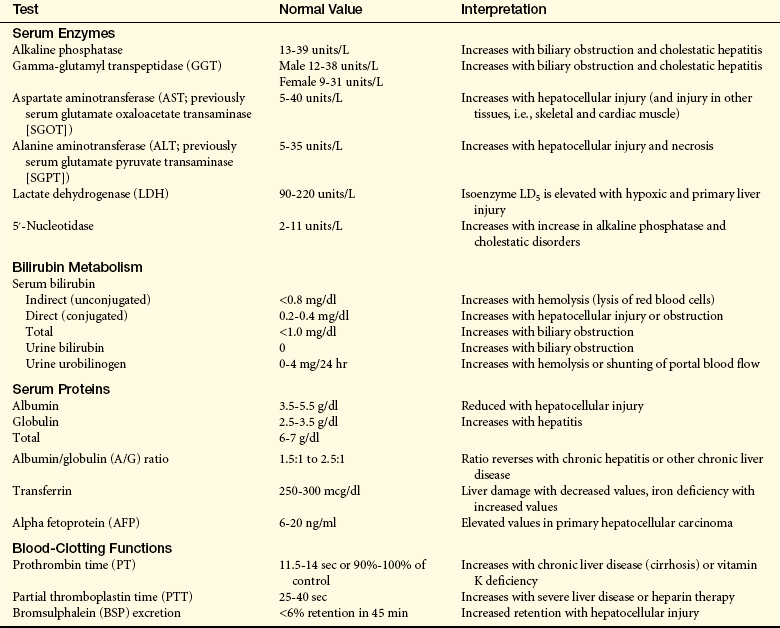
Gallbladder
Evaluation of structural alterations in the gallbladder may be achieved by the use of various imaging techniques. Table 38-7 summarizes these techniques. Obstruction of the common ducts from stones, tumors, or inflammation prevents the flow of bile from the liver and gallbladder from reaching the gastrointestinal tract. Both the conjugated and total serum bilirubin values are elevated, urine urobilinogen is increased, stools are clay colored, and jaundice develops. Fat absorption can be impaired and the prothrombin time prolonged if vitamin K is not absorbed. With inflammation of the gallbladder, the white cell count is elevated.
Table 38-7
Diagnostic Evaluation of the Gallbladder
| Test | Application |
| Plain roentgenogram of the abdomen | Visualization of calcified gallstones |
| Oral cholecystogram (use of an oral contrast medium such as iodopanoic acid, which is excreted with bile and concentrated in the gallbladder for visualization by radiography; may be administered as a double dose) | Visualization of gallstones; evaluation of filling and emptying of gallbladder |
| Intravenous cholangiography (use of intravenous contrast agents for visualization of gallbladder and bile ducts) | Diagnosis of acute gallbladder inflammation (cholecystitis) or disease of bile ducts |
| Cholecystonography (ultrasound imaging of gallbladder and bile ducts) | Preferred method for detecting gallstones; differentiation of hepatic disease from biliary obstruction; diagnosis of chronic cholecystitis |
| Cholescintigraphy (radioisotope imaging of gallbladder) | Diagnosis of cholecystitis in individuals allergic to iodine-containing contrast agents; diagnosis of cystic duct obstruction |
| Endoscopic retrograde cholangiography (instillation of contrast medium through cannulation of ampulla of Vater with a duodenoscope) | Differentiation of intrahepatic or extrahepatic obstructive jaundice |
| Computed tomography (CT) | Diagnosis of biliary obstruction or malignancy when ultrasound is not successful |
Exocrine Pancreas
Tests of pancreatic function are summarized in Table 38-8. Evaluation of plasma and urinary amylase provides particularly significant measures of pancreatic function. Inflammation or obstruction of the pancreas results in an increase in serum amylase levels. Decreased renal absorption of amylase results in increased urine amylase levels. Increased stool fat can reflect pancreatic insufficiency caused by decreased lipase secretion when biliary function is normal.
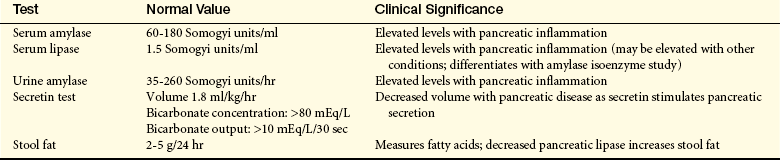
Aging and the Gastrointestinal System
Age-related changes in gastrointestinal function begin to occur before 50 years of age. Tooth enamel and dentin wear down, making the teeth vulnerable to cavities. Teeth are lost, often as a result of periodontal (gum) disease, recession of the gums, osteoporotic bone changes, and more brittle roots that fracture easily. Taste buds decline in number, and the sense of smell diminishes. Together these losses decrease the sense of taste. Salivary secretion decreases and contributes to dry mouth.44 In very old adults these oral and sensory changes make eating less pleasurable and reduce appetite. Food may not be chewed or lubricated sufficiently, making swallowing difficult. The esophagus develops decreased motility, and changes in the upper esophageal sphincter may affect swallowing.45
Age also diminishes gastric motility and volume, including secretion of bicarbonate and gastric mucus.46 Acid content of gastric juice is related to gastric atrophy, which results in hypochlorhydria (insufficient hydrochloric acid) and delayed gastric emptying, best managed with frequent and small meals. Decreased production of intrinsic factor leads to inadequate small intestinal absorption of vitamin B12 and pernicious anemia. Aging also is associated with a change in the composition of the microflora and increased susceptibility to disease. There is greater frequency of H. pylori infection47 and compromise of the gastric mucosal barrier. The villi of the small intestine become broader and shorter, perhaps because of a decrease in cell turnover. Intestinal absorption, motility, and blood flow decrease, impairing nutrient absorption.48 Proteins, fats, minerals (including iron and calcium), and vitamins are absorbed more slowly and in lesser amounts, and absorption of carbohydrates, particularly lactose, is decreased.49,50 Intestinal transit time is delayed. Constipation is often described as a condition of old age, but it is probably caused by lifestyle factors rather than physiologic decline although recent studies demonstrate there can be alterations in intestinal innervation.51 Lifelong bowel habits, current diet, lack of fluid intake, pelvic floor dysfunction, and immobility contribute to constipation in older adults.52
The liver decreases in size and weight with advancing age, cell numbers, and their regeneration decrease, and there is reduced sinusoidal perfusion.53 Alterations in liver function in older individuals are usually a sign of a pathologic condition. Liver blood flow and enzyme activity decreases with age and can influence efficiency of drug and alcohol metabolism. Oxidative metabolism of drugs may be decreased.54 However, liver function test results often remain within relatively normal ranges. The pancreas undergoes structural changes, such as fibrosis, fatty acid deposits, and atrophy. Pancreatic secretion decreases, but there is usually no observable dysfunction.50,55 Aging does not cause apparent changes in the structure and function of the gallbladder and bile ducts, but incidence of gallstones increases.
Antrum of stomach 1424
Ascending colon 1435
Bile 1439
Bile acid–dependent fraction 1439
Bile acid–independent fraction 1439
Bile acid pool 1439
Bile canaliculi 1439
Bile salt 1439
Bilirubin 1440
Biliverdin 1440
Body of stomach 1424
Brush border 1429
Calcium 1433
Carboxypeptidase 1430
Cardiac orifice 1423
Cecum 1435
Cephalic phase of secretion 1427
Chief cell 1426
Cholecystokinin 1425
Choleresis 1440
Choleretic agent 1440
Cholesterol esterase 1433
Chylomicron 1433
Chyme 1423
Chymotrypsin 1430
Colipase 1433
Colon 1435
Common bile duct 1439
Conjugated bilirubin 1440
Critical micelle concentration 1439
Crypts of Lieberkühn 1429
Cystic duct 1442
D cell 1426
Deamination 1442
Defecation reflex (rectosphincteric reflex) 1437
Descending colon 1435
Disse space 1439
Duodenum 1428
Emulsification 1432
Enteric plexus 1421
Enterochromaffin-like cell 1426
Enterohepatic circulation 1439
Enterokinase 1444
Entero-oxyntin 1428
Esophageal phase of swallowing 1423
Esophagus 1423
Exocrine pancreas 1443
External anal sphincter 1436
Fat 1432
Fecal mass 1436
Feces 1437
Fundus of stomach 1424
G cell 1426
Gallbladder 1442
Gastric acid 1426
Gastric emptying 1425
Gastric gland 1426
Gastric inhibitory peptide 1428
Gastric phase of secretion 1427
Gastric pit 1426
Gastrin 1424
Gastrocolic reflex 1436
Gastroileal reflex 1435
Gastrointestinal tract (alimentary canal) 1421
Glisson capsule 1438
Haustrum (pl., haustra) 1436
Hepatic artery 1438
Hepatic portal vein 1438
Hepatic vein 1438
Hepatocyte 1438
Hepcidin 1434
Histamine 1426
Ileocecal valve (sphincter) 1428
Ileogastric reflex 1435
Ileum 1428
Internal anal sphincter 1436
Intestinal peristalsis 1435
Intestinal phase of secretion 1428
Intestinointestinal reflex 1435
Intrinsic factor (IF) 1427
Iron 1434
Jejunum 1428
Kupffer cell 1438
Lacteal 1429
Lamina propria 1429
Large intestine 1435
Lieberkühn crypt 1429
Lipase 1433
Lipocyte 1438
Lipolysis 1433
Liver 1438
Liver lobule 1438
Lower esophageal sphincter (cardiac sphincter) 1423
Magnesium 1434
Major duodenal papilla 1439
Mesentery 1429
Metabolic detoxification (biotransformation) 1442
Micelle 1433
Microvillus (pl., microvilli) 1429
Motilin 1424
Mouth 1421
Mucosal barrier 1427
Myenteric plexus (Auerbach plexus) 1421
O’Beirne sphincter 1435
Oral phase of swallowing 1423
Pancreas 1443
Pancreatic α-amylase 1444
Pancreatic duct (Wirsung duct) 1443
Pancreatic lipase 1444
Paneth cells 1429
Parietal cell (oxyntic cell) 1426
Pepsinogen 1426
Peristalsis 1423
Peristaltic movement 1436
Peritoneal cavity 1429
Peritoneum 1428
Pharyngeal phase of swallowing 1423
Phases of gastric secretion 1427
Phosphate 1434
Phospholipase 1433
Pit cell 1439
Portal vein 1439
Primary bile acid 1439
Primary peristalsis 1423
Pyloric sphincter 1423
Pylorus 1423
Retropulsion 1424
S cell 1444
Saliva 1422
Salivary α-amylase (ptyalin) 1422
Salivary gland 1422
Secondary bile acid 1439
Secondary peristalsis 1423
Secretin 1424
Segmentation 1435
Sigmoid colon 1435
Sinusoid 1438
Small intestine 1428
Somatostatin 1426
Stellate cell 1439
Stem cell 1429
Stomach 1423
Submucosal plexus (Meissner plexus) 1421
Subserosal plexus 1421
Swallowing 1423
Teniae coli 1436
Transverse colon 1435
Trypsin 1430
Trypsin inhibitor 1444
Unconjugated bilirubin 1440
Upper esophageal sphincter (cricopharyngeal muscle) 1423
Urobilinogen 1440
Valsalva maneuver 1437
Vermiform appendix 1435
Villus (pl., villi) 1429
Vitamin 1434
REFERENCES
1. Mazzone, A., Farrugia, G. Evolving concepts in the cellular control of gastrointestinal motility: neurogastroenterology and enteric sciences. Gastroenterol Clin North Am. 2007;36(3):499–513. [vii].
2. Lang, I.M., Shaker, R. An overview of the upper esophageal sphincter. Curr Gastroenterol Rep. 2000;2(3):185–190.
3. Zald, D.H., Pardo, J.V. The functional neuroanatomy of voluntary swallowing,. Ann Neurol. 1999;46(3):281–286.
4. Ertekin, C., Aydogdu, I. Neurophysiology of swallowing. Clin Neurophysiol. 2003;114(2):2226–2244.
5. Logemann, J.A. Swallowing disorders. Best Pract Res Clin Gastroenterol. 2007;21(40):563–573.
6. Ludlow, C.L. Sensorimotor control for voice, speech and swallowing. Curr Opin Otolaryngol Head Neck Surg. 2004;12(3):160–165.
7. Nguyen, H.N., et al. Relationship between bolus transit and LES-relaxation studies with concurrent impedance and manometry. Hepatogastroenterology. 2007;53(68):218–223.
8. Goyal, R.K., Chaudhury, A. Physiology of normal esophageal motility. J Clin Gastroentrol. 2008;42(5):610–619.
9. Hellström, P.M., Grybäck, P., Jacobsson, H. The physiology of gastric emptying,. Best Pract Res Clin Anaesthesiol. 2006;20(3):397–407.
10. Lee, K.J., et al. Influence of duodenal acidification on the sensorimotor function of the proximal stomach in humans. Am J Physiol Gastrointest Liver Physiol. 2004;286(2):G278–G294.
11. Smith, M.E., Morton, D.G. The digestive system. St Louis: Mosby; 2001.
12. Schubert, M.L. Gastric secretion. Curr Opin Gastroenterol. 2007;23(6):595–601.
13. Ham, M., Kaunitz, J.D. Gastroduodenal defense. Curr Opin Gastroenterol. 2007;23(6):607–616.
14. Helander, H.F., Keeling, D.J. Cell biology of gastric acid secretion. Baillieres Clin Gastroenterol. 1993;7(1):1–21.
15. Wolfe, M.M., Soll, A.H. The physiology of gastric acid secretion,. N Engl J Med. 1988;319(26):1707–1715.
16. Zafra, M.A., Molina, F., Puerto, A. The neural/cephalic phase reflexes in the physiology of nutrition,. Neurosci Biobehav Rev. 2006;30(7):1032–1044.
17. Thompson, A.B., et al. Small bowel review: part 1. Can S Gastroentrol. 1998;12(7):487.
18. Kvietys, P.R., Barrowman, J.A., Granger, N.D. Pathophysiology of the splanchnic circulation. Boca Raton, FL: CRC Press; 1987.
19. Salaman, N.L., Undersood, M.A., Bevins, C.L. Paneth cells, defensins, and the commensal microbiota: a hypothesis on intimate interplay at the intestinal mucosa. Semin Immunol. 2007;19(2):70–83.
20. Bevins, C.L. The Paneth cell and the innate immune response,. Curr Opin Gastroenterol. 2004;20(6):572–580.
21. Ashton, K.A., et al. Basal and meal-stimulated colonic absorption. Dis Colon Rectum. 1996;39(8):865–870.
22. Leturque, A., Brot-Laroche, E. Sugar sensing by enterocytes combines polarity, membrane bound detectors and sugar metabolism. J Cell Physiol. 2007;213(3):834–843.
23. Dawson-Hughes, B., Bischoff-Ferrari, H.A. Therapy of osteoporosis with calcium and vitamin D. J Bone Miner Res. 2007;22(Suppl 2):V59–V63.
24. Sharp, P., Srai, S.K. Molecular mechanisms involved in intestinal iron absorption. World J Gastroenterol. 2007;13(35):4716–4724.
25. Bornstein, J.C., Costa, M., Grider, J.R. Enteric motor and interneuronal circuits controlling motility. Neurogastroenterol Motil. 2004;16(Suppl 1):34–38.
26. Husebye, E. The patterns of small bowel motility: physiology and implications in organic disease and functional disorders,. Neurogastroenterol Motil. 1999;11(3):141–161.
27. Jeays, A.D., et al. A framework for the modeling of gut blood flow regulation and postprandial hyperaemia,. World J Gastroenterol. 2007;13(9):1393–1398.
28. Mims, C.A., et al. Medical microbiology, ed 2. St Louis: Mosby; 1998.
29. Kelly, D., Conway, S., Aminov, R. Commensal gut bacteria: mechanisms of immune modulation. Trends Immunol. 2005;26(6):26–33.
30. Magalhaes, J.G., Tattoli, J., Girardin, S.E. The intestinal epithelial barrier: how to distinguish between the microbial flora and pathogens,. Semin Immunol. 2007;19(2):106–115.
31. Ridlon, J.M., Kang, D.J., Hylemon, P.B. Bile salt biotransformations by human intestinal bacteria. J Lipid Res. 2006;47(2):241–259.
32. Johnson, L.R. Gastrointestinal physiology, ed 7. St Louis: Mosby; 2007. [p 102].
33. Bilzer, M., Roggel, F., Gerbes, A.L. Role of Kupffer cells in host defense and liver disease. Liv Int. 2006;26(10):1175–1186.
34. Friedman, S.L. Hepatic stellate cells: protean, multifunctional, and enigmatic cells of the liver. Physiol Rev. 2008;88(1):125–172.
35. Swain, M.G. Hepatic NKT cells: friend or foe? Clin Sci (Lond). 2008;114(7):457–466.
36. Alrefai, W.A., Gill, R.K. Bile acid transporters: structure, function, regulation and pathophysiological implications. Pharm Res. 2007;24(10):1803–1823.
37. Ollinger, R., et al. Therapeutic applications of bilirubin and biliverdin in transplantation. Antioxid Redox Signal. 2007;9(12):2175–2185.
38. Stocker, R. Antioxidant activites of bile pigments. Antioxid Redox Signal. 2004;6(5):841–849.
39. Bulmer, A.C., et al. The anti-mutagenic properties of bile pigment,. Mutat Res. 2008;658(1-2):28–41.
40. Woods, C.M., Saccone, C.T. Neurohomornal regulation of the sphincter of Oddi. Curr Gastroenterol Rep. 2007;9(2):165–170.
41. Love, J.A., Yi, E., Smith, T.G. Autonomic pathways regulating pancreatic exocrine secretion. Auton Neurosci. 2007;133(1):19–34.
42. Johnston, D.E. Special considerations in interpreting liver function tests. Am Fam Physician. 1999;59(8):2223–2230.
43. Aranda-Michel, J., Sherman, K.E. Tests of the liver: use and misuse. Gastroenterologist. 1998;6(1):34–43.
44. Gupta, A., Epstein, J.B., Sroussi, H. Hyposalivation in elderly patients. J Can Dent Assoc. 2006;72(9):841–846.
45. Achem, S.R., Devault, K.R. Dysphagia in aging. J Clin Gastroenterol. 2005;39(5):357–371.
46. Guslandi, M., Pellegrini, A., Sorghi, M. Gastric mucosal defenses in the elderly. Gerontology. 1999;45(4):206–208.
47. Pilotto, A. Aging and upper gastrointestinal disorders. Best Pract Res Clin Gastroenterol. 2004;18(Suppl):73–81.
48. Drozdowski, L., Thomson, A.B. Aging and the intestine. World J Gastroenterol. 2006;12(47):7578–7584.
49. Timiras, P.S. Physiological basis of aging and geriatrics, ed 3. Boca Raton, FL: CRC Press; 2003.
50. Saltzman, J.R., Russell, R.M. The aging gut. Nutritional issues,. Gastroenterol Clin North Am. 1998;27(2):309–324.
51. Phillips, R.J., Rowley, T.L. Innervation of the gastrointestinal tract: patterns of aging. Auton Neurosci. 2007;136(1-2):1–19.
52. McCrea, G.L., et al. Pathophysiology of constipation in the older adult. World J Gastroenterol. 2008;14(17):2631–2638.
53. Le Couteur, D.G., et al. Old age and the hepatic sinusoid. Anat Rec (Hoboken). 2008;291(6):672–683.
54. Kinirons, M.T., O’Mahony, M.S. Drug metabolism and ageing. Br J Clin Pharmacol. 2004 May.;57(5):540–544.
55. Glaser, J., Stienecker, K. Pancreas and aging: a study using ultrasonography. Gerontology. 2000;46(2):93.