Group B Streptococci.: Group B streptococcal infection (S. agalactiae) is the leading cause of neonatal pneumonia, meningitis, and sepsis. The organism is also an infrequent cause of pyogenic infections in adults. Several thousand neonatal infections with group B streptococci occur in the United States each year, and about 3% to 4% of the infants with the infection die.140 Group B streptococci are part of the normal vaginal flora and are found in 30% of women. Most newborns born to colonized women acquire the organism as they pass through the birth canal, but only 1% of these infants develop group B streptococcal infections.
Neonates who develop early infections (birth to 1 week) may present with hypotension, pneumonia (and respiratory distress), bacteremia, or meningitis. Late disease (1 week to 3 months) is acquired either at birth or from contact with the infected mother or other personnel. These babies demonstrate fever, bacteremia, meningitis, and pneumonia.140
Rapid administration of IV antibiotics is essential. The CDC recommends that pregnant women be screened for carriage of group B strep and appropriate antibiotics be given to prevent transmission to the baby.123,139 A vaccine is under development that would reduce the number of women and babies exposed to antibiotics.
Group B streptococci can cause peripartum infections in women, such as endometritis or chorioamnionitis. Resulting bacteremia can lead to endocarditis or meningitis. Appropriate antibiotics are required for treatment.
Etiologic and Risk Factors.: Pneumonia and other infections, such as sepsis, otitis media, and meningitis, can be caused by S. pneumoniae (pneumococcal pneumonia or pneumococcus) (see Box 8-6). This organism colonizes the oropharynx and can be found in 5% to 10% of healthy adults and 20% to 40% of children. Once colonized, the host can develop illness related to S. pneumoniae by spreading to the sinuses or eustachian tubes or inhaling the bacteria into the lungs. Hematogenous spread occurs, creating disease in other organs.
Transmission from person to person is by direct contact or inhalation of droplets of respiratory secretions. S. pneumoniae causes disease particularly in the very young and the old. It is the most common cause of community-acquired pneumonia and the most common cause of death by a vaccine-preventable bacterial disease.124 Pneumococcal pneumonia often follows influenza or viral respiratory infections and is often seen in clients with chronic diseases or immunosuppression and in alcohol abusers. Other risk factors are included in Box 8-8.
S. pneumoniae is the most common cause of meningitis in adults, infants, and toddlers. Head trauma, CSF leaks, otitis media, and sinusitis may precede pneumococcal meningitis, creating an extension of disease or opportunity for direct infection.20 Pneumonia may lead to bacteremia with subsequent seeding of the meninges.
Clinical Manifestations.: Clinical manifestations of pneumonia include acute onset of fever, chills, pleuritis with pleuritic chest pain, and dyspnea with productive cough or purulent sputum that may be blood tinged. Because pneumococcal disease occurs most commonly in the very young and the very old, the presenting features will vary.
Older adults may have only a slight cough or delirium but lack a fever. Complications from pneumococcal pneumonia may include empyema (about 2% of cases), bacteremia, sepsis, or meningitis. Infection of the meninges stimulates a robust inflammation, leading to increased intracranial pressure and brain edema with headache and nausea/vomiting, mental status changes, stiff neck, and fever.
The disease progresses rapidly over 24 to 48 hours and mortality rate is high without treatment. Rare complications of S. pneumoniae include pericarditis, endocarditis, peritonitis, and septic arthritis. Septic arthritis can occur in a natural or prosthetic joint or in damaged joints from rheumatoid arthritis; underlying chronic joint disease may delay diagnosis.
Pneumococcal (septic) arthritis secondary to this pathogen is relatively uncommon and occurs principally in older adults and individuals with underlying diseases (e.g., rheumatoid arthritis).167 The clinical symptoms are similar to other forms of hematogenous pyogenic joint infections. Adjacent osteomyelitis involving the vertebral bones may be detected on radiologic examination.
Diagnosis, Treatment, and Prevention.: Diagnosis of pneumococcal disease is by laboratory examination of sputum (pneumonia), CSF (meningitis), or blood (bacteremia) with Gram stain and culture of the organism. Treatment is with antibiotics that are effective against local pneumococcal strains and take into consideration resistance patterns in the community.
Currently, immunization for pneumococcal disease is available and is recommended in specific circumstances as defined by the CDC (see Box 8-7).124 Adults aged 65 years and older should receive one dose of the vaccine, as should special groups such as Native Alaskans and certain Native American populations. Individuals aged 2 to 64 years with defined conditions such as immunocompromise, HIV, asplenia, chronic liver or renal dysfunction, pulmonary disorders (COPD), and diabetes mellitus should be vaccinated.
In the year 2000 a conjugate vaccine became available for young children and infants. Since its use, there has been a significant decrease in invasive pneumococcal disease in children.74,177 The pneumococcal polysaccharide vaccine available for adults appears to have reduced efficacy in the older adult in preventing pneumonia, although it has protection against bacteremia.74
Overall the rate of antibiotic-resistant invasive pneumococcal infections has decreased in young children. As a bonus, the use of vaccines against pneumococcal bacteria in children has also reduced the rate of pneumococcal disease in adults because fewer bacteria are passed from children to adults.74,84
Definition and Overview.: Gangrene is the death of body tissue, usually associated with loss of vascular (nutritive, arterial circulation) supply and followed by bacterial invasion and putrefaction. The three major types of gangrene are dry, moist, and gas gangrene.
Dry and moist gangrene results from loss of blood circulation due to various causes; gas gangrene occurs in wounds infected by anaerobic bacteria, leading to gas production and tissue breakdown. This is a rare but severe and painful condition that usually follows trauma or surgery in which muscles and subcutaneous tissues become filled with gas and exudate. The disease spreads rapidly to adjacent tissues and can be fatal within hours of onset.
Pathogenesis.: Fortunately, the anaerobic conditions necessary to foster clostridial growth are uncommon in human tissues and are produced only in the presence of extensive devitalized tissue, such as occurs with severe trauma, wartime injuries, and septic abortions.
Contributing factors include hypoxia from injury to blood vessels near the wound site, pressure dressings, tourniquets, local injection of vasoconstrictors, foreign bodies, damaged tissues from earlier injury, and concurrent microbial infections.
Gas gangrene is most often found in deep wounds, especially those in which tissue necrosis further reduces oxygen supply. Such necrosis releases both carbon dioxide and hydrogen subcutaneously, producing interstitial gas bubbles. Gas gangrene (Clostridial myonecrosis) is rare when wounds are promptly and thoroughly cleaned and debrided of traumatized tissue.
Clinical Manifestations.: The incubation period for gas gangrene is less than 3 days after injury. Sudden, severe pain occurring at the site of the wound, which is tender and edematous, is an early sign and symptom of gas gangrene. The skin darkens because of hemorrhage and cutaneous necrosis. The lesion develops a thick discharge with a foul odor and may contain gas bubbles. Crepitation may be felt on palpation of the skin from the gas bubbles in muscles and subcutaneous tissue.
True gas gangrene produces myositis and anaerobic cellulitis, affecting only soft tissue. The skin over the wound may rupture, revealing dark-red or black necrotic muscle tissue accompanied by a foul-smelling watery or frothy discharge. Associated symptoms may include sweating, low-grade fever, and disproportionate tachycardia followed by hemolytic anemia, hypotension, and renal failure.
DIAGNOSIS, TREATMENT, AND PROGNOSIS.
Prevention is the key to avoiding gas gangrene before treatment is required. To prevent gangrene in an open wound, the wound should be kept as clean as possible. Special wound care is particularly important in people with diabetes mellitus, malnutrition, and immunodeficiency.
Early, immediate intervention is necessary with surgical debridement and excision of necrotic tissue. Diagnosis can be established by frozen section of muscle. Gram stain and culture also verify the diagnosis but not as rapidly. Radiographs may show evidence of gas formation, although gas may not be seen in early stages. Antibiotics are administered, but if significant gangrene develops amputation may be necessary. Hyperbaric oxygen therapy is controversial.164
With prompt treatment, 80% of people with gas gangrene of the extremities survive; prognosis is poorer for gas gangrene in other sites such as the abdominal wall, uterus, or bowel.
Overview.: Pseudomonas aeruginosa is a major opportunistic pathogen and one of the most common hospital-(particularly ICU) and nursing home–acquired (nosocomial) pathogens. Pseudomonas is uncommon in community-acquired infections and healthy individuals. The organism infrequently colonizes human beings, but it can cause disease, particularly in the hospital environment, where it is associated with pneumonia, wound infections,143 urinary tract disease, and sepsis in debilitated people.
Burns, urinary catheterization, cystic fibrosis, chronic lung diseases, neutropenia associated with chemotherapy, and diabetes all predispose to infections with P. aeruginosa. It thrives on moist environmental surfaces, making swimming pools, whirlpool tubs, respiratory therapy equipment, flowers, endoscopes, and cleaning solutions prime targets for growth.
This organism produces several virulence factors and is inherently antibiotic resistant. Spread of the organism in a health care setting is by contact, typically from a reservoir as described above. HCWs have been known to pass the organism on their hands or under fingernails.12 Colonization usually precedes infection, although colonization is not indicative of future infection. It is unclear which factors lead from colonization to invasive disease.122
Pathogenesis.: P. aeruginosa produces of an array of proteins, which allow it to attach to, invade, and destroy host tissues while avoiding host inflammatory and immune defenses. Injury to epithelial cells uncovers surface molecules that serve as binding sites for P. aeruginosa.
Many strains of this pathogen produce a proteoglycan that surrounds the bacteria, protecting them from mucociliary action, complement, and phagocytes. The organism releases extracellular enzymes, which facilitate tissue invasion and are partially responsible for the necrotizing lesions associated with Pseudomonas infections. This pathogen can also invade blood vessel walls and produce systemic pathologic effects through endotoxin and several systemically active exotoxins.
Clinical Manifestations.: Signs and symptoms of Pseudomonas infection vary with the site of infection and the state of host defenses.122 If the host has the capacity to respond to the invading bacteria with neutrophils, an acute inflammatory response results.
The Pseudomonas organism often invades small arteries and veins, producing vascular thrombosis and hemorrhagic necrosis, particularly in the lungs and skin. Blood vessel invasion predisposes to bacteremia, dissemination, and sepsis. This bacterium causes infections of the respiratory tract (pneumonia), bloodstream, CNS, skin (see Fig. 8-4) and soft tissues, bone and joints, and other parts of the body.

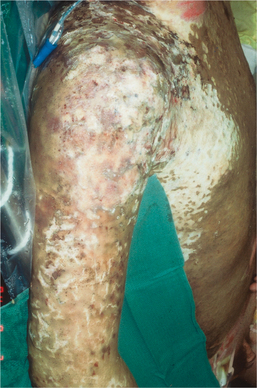
Figure 8-4 Pseudomonas. Blue-green color in a burn wound indicates infection by Pseudomonas aeruginosa. (Reprinted from Gould BE: Pathophysiology for the health professions, ed 3, Philadelphia, 2006, W.B. Saunders, courtesy Judy Knighton, Ross Tilley Burn Center, Sunnybrook and Women’s College Health Center, Toronto, Ontario, Canada.)
Respiratory Tract Infections.: Pneumonia caused by P. aeruginosa is one of the most common causes of nosocomial pneumonia.128 The infection may be primary (contained to the lungs) or cause a bacteremia with metastasis of infection. Primary pneumonia is most often seen in clients with a predisposing history of chronic lung disease, congestive heart failure, or AIDS who are in a hospital setting. These individuals are often intubated and in the intensive care unit.
Signs and symptoms are typical of pneumonias seen with other organisms, such as dyspnea, fever, productive cough, low oxygenation, elevated white cell count, and delirium. Cavitary lesions may be seen on chest radiograph (particularly if the client has AIDS), and pleural effusions are common.
Pneumonia secondary to P. aeruginosa can be severe and life threatening. Bacteremic pneumonia begins as a respiratory tract infection but spreads to the bloodstream and metastasizes to other viscera, causing hemorrhaging and necrosis. This bacteremia is often associated with clients who are neutropenic and unable to control the infection. Symptoms include those of pneumonia with sepsis, which is rapid and severe. The chest radiograph may demonstrate necrotizing pneumonia with cavitary lesions.
Chronic infections with Pseudomonas are noted in children or young adults with cystic fibrosis. Over time there is chronic progression of symptoms with acute exacerbations of disease. Clients typically experience mucous plugging and airway inflammation, which predispose to P. aeruginosa infection. The bacteria then contribute to further mucous plugging and cause a supportive reaction leading to bronchiectasis and atelectasis. Episodes of pneumonia are seen more frequently as more lung is damaged and becomes fibrotic.
Bacteremia.: Bacteremia may occur without prior pneumonia and is an important cause of serious, life-threatening bloodstream infections in clients with neutropenia. P. aeruginosa bacteremia is typically acquired in the hospital and may be primary (no identifiable source) or secondary to a focal infected site (e.g., skin, lungs, intravascular source, indwelling catheters, GI or urinary tracts).
As with other Pseudomonas infections, bacteremia is rapidly progressive without treatment, with high morbidity and mortality rates. Clients experience fever, tachypnea, tachycardia, hypotension, and delirium, which can lead to renal failure, acute respiratory distress syndrome, and death. Rarely characteristic lesions of Pseudomonas bacteremia, ecthyma gangrenosum, develop on the skin. These vesicles are initially hemorrhagic with progressive necrosis and ulceration. They occur as single lesions or in small groups.
Central Nervous System Infections.: Pseudomonas infections of the CNS result from extension from a contiguous structure such as the ear, mastoid, or paranasal sinus; direct inoculation into the subarachnoid space or brain by means of head trauma, surgery, or invasive diagnostic procedures (e.g., lumbar punctures, spinal anesthesia, intraventricular shunts); and bacteremic spread from a distant site of infection such as the urinary tract, lung, or endocardium.
The clinical manifestations of Pseudomonas meningitis are like those of other forms of bacterial meningitis (see Chapter 29) and include fever, headache, stiff neck, nausea, and confusion. The onset of disease may be acute and occur suddenly or may be more gradual and insidious. Rapidly progressive and toxic disease is seen more frequently in clients who are bacteremic, while those without associated bacteremia may have few systemic signs and symptoms (e.g., those whose meningitis is related to neurosurgery or extension from a contiguous site of chronic infection).
Skin and Soft Tissue Infections.: Pseudomonas disease of the skin and mucous membranes can result from primary or metastatic foci of infections. Common predisposing factors for primary skin and soft tissue infections are a breakdown in the integument, especially resulting from surgery, burns, trauma, and pressure ulcers; whirlpool use; and chemotherapy-induced neutropenia.
The wound is hemorrhagic and necrotic and rarely may have a characteristic fruity odor (sweet, grapelike odor) with a blue-green exudate that forms a crust on wounds (Fig. 8-4). Pseudomonas bacteria may produce distinctive skin lesions known as ecthyma gangrenosum, as described above, associated with Pseudomonas bacteremia.
Pseudomonas burn wound sepsis is a dreaded complication of extensive third-degree burns and is characterized by multifocal black or dark-brown discoloration of the burn eschar; degeneration of the underlying granulation tissue with rapid eschar separation and hemorrhage into subcutaneous tissue; edema, hemorrhage, and necrosis of adjacent healthy tissue; and erythematous nodular lesions on unburned skin.
Systemic manifestations may include fever, hypothermia, disorientation, hypotension, oliguria, ileus, or leukopenia. The diagnosis is based on clinical signs and symptoms; biopsy of the burn site, which demonstrates evidence of invading bacteria; and culture positive for Pseudomonas.
Bone and Joint Infections.: Pseudomonas infections of the bones and joints result from hematogenous spread from other sites or extension from contiguous sites of infection. Contiguous infections are usually related to penetrating trauma, surgery, or overlying soft tissue infections. Injection drug users may contaminate drugs or water with Pseudomonas, which often seeds the sternoclavicular or other joints.131
P. aeruginosa is the most common cause of osteochondritis of the foot following a puncture wound.8 Infection involves the cartilage of the small joints and the bones of the foot. Typically, the person experiences early improvement in pain and swelling following a puncture wound only to have the symptoms recur or worsen several days later. The average duration of symptoms before diagnosis is several weeks; fever and other systemic signs are usually absent. An area of superficial cellulitis is evident on the plantar surface of the foot, or there may merely be tenderness to deep palpation.
Bloodborne Pseudomonas, from injection drug use or pelvic surgery, appears to have a predilection for fibrocartilaginous joints such as the symphysis pubis.130 Vertebral osteomyelitis caused by P. aeruginosa is occasionally associated with complicated urinary tract infections and genitourinary surgery or instrumentation.
This disease occurs most often in older adults and involves the lumbosacral spine. Physical signs include local tenderness and decreased range of motion in the spine; fever and other systemic symptoms are relatively uncommon. Mild neurologic deficits may be present (see further discussion in Chapter 27).
Other Pseudomonas Infections.: Pseudomonas is noted to cause disease of the external ear, which may be benign (“swimmer’s ear”) or malignant (invasion of bone, soft tissue, and cartilage). P. aeruginosa infection of the cornea causes bacterial keratitis or corneal ulcers.
Corneal ulcers can progress rapidly with complications such as corneal perforation, anterior chamber involvement, and endophthalmitis. Native heart valves or prosthetic valves can become infected with P. aeruginosa, causing endocarditis. Infection of native valves is seen in injection drug users, and multiple valves may be involved.
Right-sided endocarditis may be complicated by septic pulmonary emboli causing pulmonary disease, while left-sided endocarditis may cause heart failure, brain abscess, or mycotic aneurysms. P. aeruginosa is the most common cause of nosocomial urinary tract infections often arising from urinary catheters, instrumentation, or surgery. The prostate or kidney stones may harbor the bacteria, resulting in recurrent infections.
DIAGNOSIS, TREATMENT, AND PROGNOSIS.
Diagnosis requires isolation of the Pseudomonas organism in blood, spinal fluid, urine, exudate, or sputum culture. Antibiotic therapy is initiated immediately with two antipseudomonal drugs; local Pseudomonas infections or septicemia secondary to wound infection requires debridement or drainage of the infected wound. For older children with cystic fibrosis, intermittent, inhaled tobramycin has been used with some success at reducing hospitalizations and improving lung function, although long-term studies are needed.182
P. aeruginosa infections are among the most aggressive human bacterial infections, often progressing rapidly to sepsis, especially in people with poor immunologic resistance (e.g., premature infants; aging adults; and those with debilitating disease, burns, or wounds).
In local Pseudomonas infections, treatment is usually successful and complications are rare. Immediate medical intervention is necessary; septicemic Pseudomonas infections are associated with a high mortality rate. Medical management is directed according to the site of infection and may include antibiotics, surgery, pulmonary therapy, respiratory assistance if necessary, and other supportive measures dictated by the presence of septic shock and other complications.
The bloodborne viruses that most endanger HCWs are the bloodborne pathogens hepatitis B virus (HBV), hepatitis C virus (HCV), and HIV. In 1991 the U.S. Congress passed the Bloodborne Pathogens Standard, prepared by the Occupational Safety and Health Administration (OSHA) and written to help eliminate or minimize occupational exposure to HBV, HCV, HIV, and other bloodborne pathogens.169
The guidelines are based on the use of standard precautions, including appropriate handwashing and barrier precautions, to reduce contact with body fluids potentially contaminated by these viruses. The use of safety devices and techniques to reduce the handling of sharp instruments can help in the reduction of significant contact with body fluids, particularly blood or blood-containing fluids.179
The term herpes is derived from the Greek word herpein, which means “to creep.” The word refers to the tendency for this type of viral infection to become chronic, latent, and recurrent. The known human herpesviruses (HHVs) are divided by genomic and biologic behavior into eight types (Box 8-9).
All herpesviruses are morphologically similar, but the biologic and epidemiologic features of each are distinct. Subclinical primary infection with the herpesviruses is more common than clinically symptomatic illness, and each type then persists in a latent state for the rest of the life of the host.
With the herpes simplex virus (HSV) and varicella-zoster virus (VZV), the virus remains latent in sensory ganglia and, upon reactivation, lesions appear in the distal sensory nerve distribution. Virus reactivation in immunocompromised hosts may lead to widespread lesions in affected organs such as the viscera or the CNS. Severe or fatal illness may occur in infants and the immunocompromised. Association with malignancies includes EBV with Burkett’s lymphoma and nasopharyngeal carcinoma and HHV-8 with Kaposi’s sarcoma and body cavity lymphoma.33,138
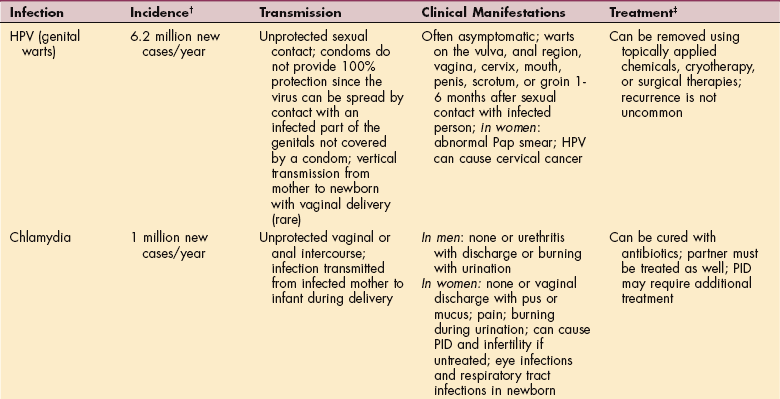
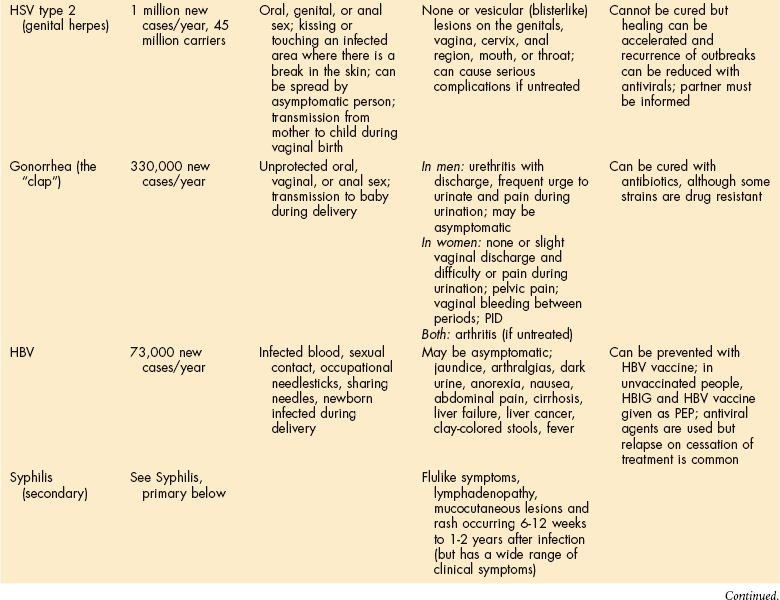
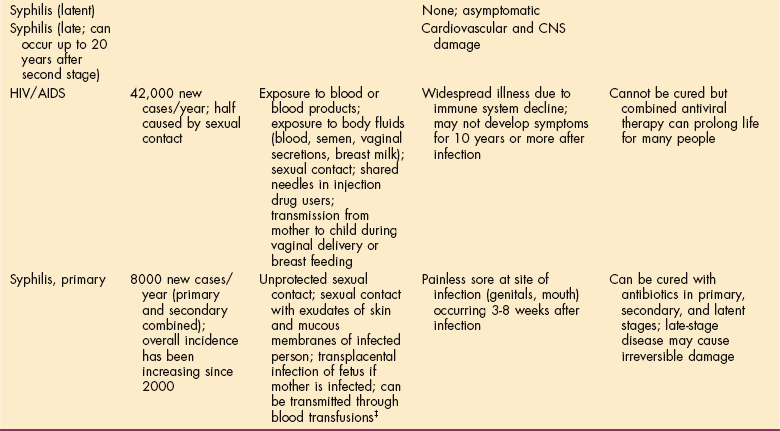
See Table 8-7.
Table 8-7
Most Common STIs*


PEP, Postexposure prophylaxis.
*Listed in descending order by incidence.
†All sexually transmitted diseases can be prevented by sexual abstinence and mutually monogamous sex between two uninfected partners. The CDC has come under criticism by the medical community for not stressing this point in their prevention programs for young people.
‡Centers for Disease Control and Prevention: Control of communicable diseases manual, ed 17, Atlanta, GA, 2000, U.S. Department of Health and Human Services.
Modified from Centers for Disease Control and Prevention: Sexually transmitted disease surveillance, 2004, Atlanta, GA, 2005, U.S. Department of Health and Human Services.
Incidence, Etiologic Factors, and Risk Factors.: Approximately 70% of Americans older than 12 years harbor HSV-1, which is usually responsible for cold sores; 20% older than 12 years have HSV-2, the principal cause of genital herpes.135 Since 1966, the incidence of genital herpes has continued to rise.
Both strains can infect any visceral organ or mucocutaneous site, and HSV-1 can be transmitted to the genital area during oral sex. HSV creates a significant health risk since infection with these viruses increases the risk of infection with HIV and increases production of the HIV virus once infected. Seroprevalence for both agents increases with age and with sexual activity for HSV-2.
Intermittent, asymptomatic shedding is common and is the typical time of transmission, usually during the period immediately preceding appearance of sores. Sexual contact during asymptomatic periods is less likely to result in transmission of the virus than when sores are present. However, since people with genital herpes are more likely to engage in sexual contact when they are free of sores, the rate of asymptomatic transmission is still significant.
Infants born to women with genital herpes can be infected with HSV when they pass through an infected birth canal. The virus can also be passed to other regions of the body by hand contact, particularly in people who are immunosuppressed (e.g., older adults, transplant recipients, people with cancer undergoing chemotherapy, and anyone with HIV or other conditions that weaken the immune system).
Pathogenesis.: Even though HSV-1 and-2 are the two most closely related herpesviruses and share antigenic cross-reactivity, these two agents are genetically and serologically distinct and produce different clinical symptoms. HSV-1 and-2 primarily affect the oral mucocutaneous (cold sores and mouth sores) and genital areas (genital herpes), respectively. Primary infection occurs through a break in the mucous membranes of the mouth, throat, eye, or genitals or via minor abrasions in the skin. Initial infection can be asymptomatic, although minor localized vesicular lesions may be evident.
Local multiplication occurs, followed by viremia and systemic infection with a subsequent lifelong latent infection and periodic reactivation of the virus. During primary infection, the virus enters peripheral sensory nerves and migrates along axons to sensory nerve ganglia in the CNS, allowing the virus to escape immune detection and response.
During latent infection of nerve cells, viral DNA is maintained and not integrated into surrounding cellular structures, thus maintaining true latency. Various disturbances such as physical or psychologic stress can disrupt the delicate balance of latency, and reactivation of the latent virus occurs. The virus travels back down sensory nerves to the surface of the body and replicates, forming new lesions. Although painful, most recurrent infections resolve spontaneously, recurring at a later time.
Clinical Manifestations.: Primary HSV-1 (first episode) typically affects the mouth and oral cavity, causing vesicles in the mouth, throat, and around the lips. Vesicles typically open to form moist ulcers after several days. Systemic symptoms can accompany the lesions such as fever, myalgias, and malaise. Symptoms and lesions resolve within 3 to 14 days.
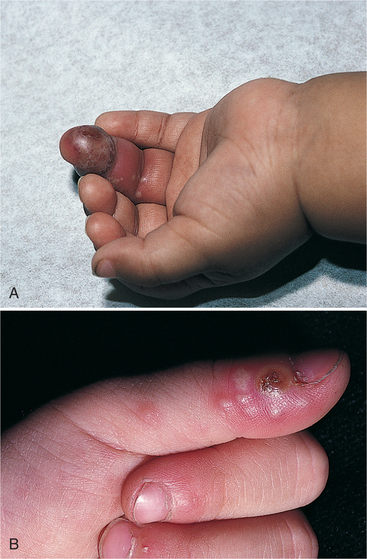
Herpetic whitlows (herpetic infection of the fingers) can result from inoculation of the finger from a herpes lesion (Fig. 8-5). Prior to implementation of standard glove precautions HSV-1 was the most common cause of herpetic whitlow. Now, HSV-2 has been implicated more often than HSV-1. HSV-1 can also infect the genitourinary system, causing signs and symptoms similar to HSV-2.

Figure 8-5 Herpetic whitlow. Herpetic whitlow is an intense, painful infection of the hand involving one or more fingers and typically affecting the terminal phalanx. HSV-1 is the cause in approximately 60% of cases of herpetic whitlow, and HSV-2 is the cause in the remaining 40%. A, Herpes simplex infection of the finger in a child. B, Herpetic whitlow of the thumb in an adult. (Reprinted from Callen JP: Color atlas of dermatology, ed 2, Philadelphia, 2000, W.B. Saunders.)
Primary infection is often asymptomatic. Recurrences are usually milder, involve fewer lesions, are of shorter duration, and in immunocompetent hosts are confined to the lips (herpes labialis). Recurrent genital HSV-1 is milder and less frequent than HSV-2. Recurrences are most commonly induced by stress, fever, sunlight, infection, or other factors.
HSV-2 is most often acquired through sexual contact. Primary HSV-2 causes vesicles to form in the genitourinary tract. Lesions are usually painful, small, grouped, and vesicular, with possible burning and itching. The blisterlike lesions break and weep after a few days, leaving ulcerlike sores that usually crust over and heal in 1 to 3 weeks.
Genital ulcers may occur on the genital area, cervix, buttocks, rectum, urethra, or bladder, causing vaginal and urethral discharge, dysuria, cervicitis, proctitis, and tender inguinal adenopathy. Systemic symptoms occasionally noted include headache, malaise, myalgias, and fever. Primary infection can be asymptomatic. Genital HSV-2 reactivation may be associated with a prodrome such as tingling or pain.
First symptomatic episodes may not be the initial infection. Known as nonprimary infections, individuals may have been previously exposed to HSV-1 and produced antibodies but not developed symptoms until exposed to HSV-2 or vice versa. In these cases, the initial symptomatic nonprimary infection has fewer symptoms and complications as compared to a first episode without previous exposure.80
HSV can be responsible for other infections. Viral meningitis from HSV is caused by inflammation of the meninges surrounding the brain. This occurs more commonly from HSV-2 than HSV-1. Aseptic meningitis may develop 3 to 12 days following the appearance of lesions. Typical symptoms are headache, nausea, stiff neck, and fever. The prognosis is good for immunocompetent hosts.33 An association between HSV-1 and Bell’s palsy has also been established.
Herpes encephalitis (an infection of the brain tissue), although rare, is a more serious infection and accounts for 10% to 20% of all cases of acute, sporadic viral encephalitis in the United States. In children and young adults, primary infection is the main cause. Adults may have reactivation as the principal source. Presenting symptoms include fever, headache, behavioral and speech disturbances, and seizures. Abnormalities caused by HSV can be seen on MRI. Encephalitis carries high morbidity and mortality rates, and permanent neurologic sequelae often result even with treatment.
Herpetic keratitis (ulceration of the cornea due to infection) is the most common cause for corneal blindness in the United States. Onset is acute, accompanied by blurred vision, conjunctivitis, and pain. Despite treatment, recurrences are common and cause scarring, making this a chronic disease. Prophylactic acyclovir may reduce recurrences and long-term scarring.112 Severe scarring is an indication for corneal grafting.
Recurrences of HSV-1 or-2 increase during pregnancy but do not appear to affect the fetus. Primary infection with HSV during pregnancy can occasionally cause visceral dissemination in the mother and possible transmission to the fetus. Neonatal herpes may also occur from unknown shedding in the mother’s genital tract at the time of delivery. If untreated, babies develop visceral dissemination or infection of the CNS, with an 80% mortality rate.17 Cesarean section reduces the risk of neonatal herpes in mothers known to be shedding the virus.
HSV can also disseminate to visceral organs, causing severe consequences such as hepatitis, thrombocytopenia, arthritis, and pneumonitis. Disseminated infection typically occurs in pregnant women (primary genital HSV) or immunocompromised persons (primary or recurrent HSV). HSV esophagitis is seen in immunocompromised hosts but rarely noted in immunocompetent persons.
DIAGNOSIS, TREATMENT, AND PREVENTION.
Clinical diagnosis of herpes is often insensitive. Up to 30% of first-episode genital herpes are caused by HSV-1, which has a low recurrence rate compared to HSV-2,34 making distinction between the two types important.
Viral cultures of vesicular fluid are the standard laboratory test. The sample must be collected during the first few days the lesion is present in order for the results to be accurate. Type-specific serologic tests, enzyme-linked immunosorbent assay (ELISA), or immunofluorescent assay (IFA) provide a more rapid diagnosis while culture results are pending. PCR tests are also available and are the test of choice for detection of HSV in spinal fluid. While PCR is very sensitive, it is expensive and only available in certain laboratories.
An HSV vaccine that showed promise in animals ultimately failed human testing. Although no immunization against HSV infection is available, antiviral drugs can be used to treat initial cases, reduce the frequency and degree of viral shedding, and suppress recurrences.
The CDC has released recommendations and guidelines for the treatment of HSV-2.184 Acyclovir, famciclovir, and valacyclovir are approved for the treatment and suppression of HSV-2. Famciclovir can be used to treat recurrent mucocutaneous HSV in individuals infected with HIV; valacyclovir is approved for the treatment of cold sores. These medications do not eradicate the virus and, once discontinued, there is no change in frequency, duration, or severity of recurrences.
Counseling regarding transmission and education on how to recognize symptoms and defer sex are essential in preventing new cases. Daily suppressive use of valacyclovir along with safe sex can reduce transmission of HSV-2. Proper use of condoms can also reduce the risk of acquiring HSV-2.173 This is particularly helpful for couples where one is seropositive and the other seronegative for HSV.
Incidence.: VZV is HHV-3 and is known as chickenpox or shingles (see the section on Viral Infections: Herpes Zoster, in Chapter 10). Prior to the availability of the varicella vaccine, primary or first-infection VZV accounted for about 3 to 4 million cases of chickenpox per year in the United States.
Approximately 10% to 20% of the population develops the secondary, or reactivation, form of VZV, resulting in herpes zoster or shingles. Approximately 300,000 cases of shingles occur in the United States every year and cause significant pain and disability. Adults older than 50 years and anyone who is immunocompromised (e.g., HIV infection, chemotherapy, corticosteroid therapy, or cancer) are at greatest risk. Young adults such as college students living in dormitories are at increased risk for VZV as either chickenpox (first time) or shingles (recurrence).
Pathogenesis.: Like other herpesviruses, VZV has the capacity to persist in the body (in sensory nerve ganglia) as a latent infection after the primary infection. VZV is acquired from contact with infected airborne droplets (from coughing or sneezing) into the respiratory tract or by direct contact with vesicular fluid to the respiratory tract or eye.
The virus is believed to initially multiply at the site of entry, with subsequent viremia occurring 4 to 6 days after infection. The virus then disseminates to other organs such as the liver, spleen, and sensory ganglia and further replicates in the viscera, followed by a secondary viremia with viral infection of the skin and mucosa (mouth, respiratory tract, or eye). Viral infection of the skin and mucosa produces vesicles filled with high titers of infectious virus, which then shed more viruses. The incubation period is from 14 to 16 days from exposure with a range of 10 to 21 days. This may be prolonged in immunocompromised people. VZV is present in white blood cells up to 5 days before the rash is present, and individuals can be contagious a day or two prior to the appearance of the rash. Individuals remain contagious until the lesions have crusted.7
The exact mechanism for the reactivation of VZV remains unknown, although shingles occurs more often in immunocompromised adults such as older adults, those with hematologic malignancies, especially leukemia and lymphoma, and people with HIV.
Clinical Manifestations.: Disease manifestations are either chickenpox (varicella) or shingles (herpes zoster). (See Chapter 10 for discussion of clinical manifestations of herpes zoster.) Primary VZV is virtually always symptomatic. Second episodes of chickenpox are uncommon unless the child is younger than 1 year at the time of the first episode. A mild prodrome consisting of fever and malaise may precede the onset of the rash in adults, while in children the rash is often the first sign of disease.
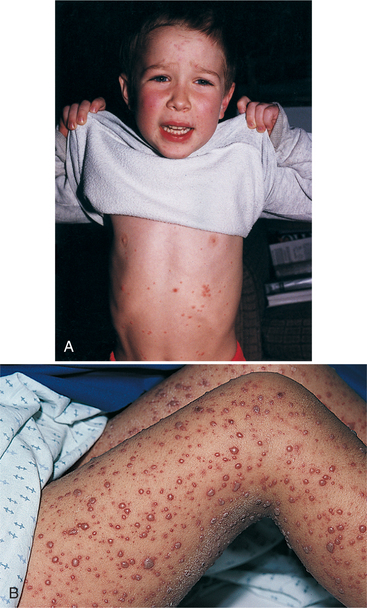
The rash is classically described as a “dewdrop on a rose petal,” with a vesicle on an erythematous base. The lesions begin as macules that quickly progress to papules, vesicles, and then pustules before crusting. VZV usually appears first on the scalp and moves to the trunk and then the extremities. Successive crops appear over several days, with lesions present in several stages of evolution at any one time.7
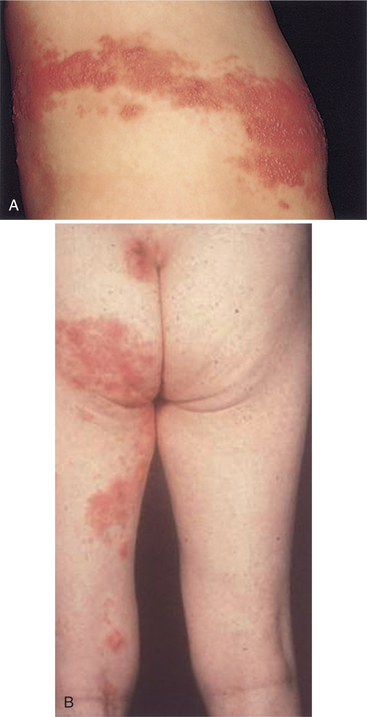
The generalized pattern of eruption without specific dermatome distribution distinguishes varicella from herpes zoster (Fig. 8-6). Shingles in the adult present as blisterlike lesions that erupt along dermatomes, with the highest concentration of lesions on the trunk corresponding with dermatomes from T3 to L3 (Fig. 8-7). Pain and itching are common symptoms during the eruption of the vesicles.

Figure 8-6 A, Early onset of varicella (chickenpox) in a young child. Painful itching can cause severe distress. Note the lesions on face and trunk. B, Varicella (chickenpox) with the more characteristic rash classically described as a “dewdrop on a rose petal,” with a vesicle on an erythematous base. (A, Courtesy Catherine Goodman. B, Reprinted from Callen JP: Color atlas of dermatology, ed 2, Philadelphia, 2000, W.B. Saunders.)

Figure 8-7 Herpes zoster (shingles). Small grouped vesicles occur along the cutaneous sensory nerve, forming pustules that crust over. Reactivation of VZV, the dormant chickenpox virus, is the underlying cause of this condition. A, Commonly seen on the trunk, these outbreaks can occur anywhere along the dermatome of the affected nerve. B, Lesions appear unilaterally and do not cross the midline. Usually external, these lesions can occur internally as well. Pain is often severe and can become chronic, a condition called postherpetic neuralgia. (A, Reprinted from Hurwitz S: Clinical pediatric dermatology: a textbook of skin disorders of childhood and adolescence, ed 2, Philadelphia, 1993, W.B. Saunders. B, Courtesy Mary Lou Galantino, Richard Stockton College of New Jersey, Pomona, NJ.)
Complications of varicella occur more often in adults, infants, and the immunocompromised. Adults are more likely to develop pneumonitis and CNS involvement (cerebellar ataxia and encephalitis) than are healthy children. The immunocompromised, especially those with leukemia or lymphoma who are receiving continuous chemotherapy, can develop disseminated disease with severe visceral involvement, including pneumonitis and encephalitis. The most common complication among persons affected with VZV is secondary bacterial skin infections.176
Shingles also can lead to chronic, often debilitating nerve pain called postherpetic neuralgia (PHN), lasting years or even a lifetime and often resulting in significant morbidity and reduction in quality of life. Pain, hyperalgesia, and allodynia are typical of PHN.50 Examples of allodynia include pain from the touch of clothing (touch allodynia) or pain that occurs from a draft of warm or cold air on the skin (thermal allodynia).
When contracted during the first or second trimesters of pregnancy, varicella carries a low risk of congenital malformations. Yet if a mother develops varicella within 5 days before delivery to 2 days after delivery, the newborn is at risk of serious disseminated disease.
Diagnosis is usually made based on clinical symptoms; however, with the advent of the varicella vaccine, the number of atypical cases has increased, making laboratory diagnosis more relevant. VZV may be cultured from vesicular fluid but requires time.
Real-time PCR for VZV is the test of choice for severe or atypical cases where results are needed quickly, although this is not readily available in most laboratories. The direct fluorescent antibody test is quick and found in most laboratories but requires careful specimen handling. Vesicular fluid from a new lesion on the skin is the best source of specimen. Stained smears from vesicular scrapings may reveal multinucleated giant cells consistent with VZV infection. Serologic testing is not routinely used but may be useful in adult vaccination programs.
Bed rest is important until the fever has gone down, and the person’s skin should be kept clean to avoid secondary bacterial contamination. Itching can be relieved with oral antihistamines, topical calamine lotion, and other skin-soothing lotions and baths.
The antiviral medications acyclovir, valacyclovir, and famciclovir can be used to treat individuals at high risk for complications but are not recommended for children with uncomplicated disease. Valacyclovir and famciclovir are only approved for treatment of adults with varicella. Oral acyclovir is recommended by some experts for pregnant women in their second or third trimesters while children who are immunocompromised should receive IV acyclovir. Persons with chronic lung or skin disease should also be considered for treatment.
Treatment should begin within 24 hours of the appearance of the rash. Antivirals may reduce the number of days new lesions appear and the severity of systemic symptoms, but they have not been shown to reduce transmission risk or reduce complications. Secondary bacterial infections of lesions are treated with antibacterial ointment or oral antibiotics if severe. Recovery from varicella infection usually results in lifetime immunity.
There is no cure for PHN. Treatment is often with nonopioid analgesics, tricyclic antidepressants, anticonvulsants, or topical local anesthetics based on the type of pain experienced (e.g., antidepressants for diffused pain, paroxysmal and local pain treated by anticonvulsants). Acyclovir has been shown to reduce the incidence of PHN; famciclovir reduces the duration of PHN. Evidence is lacking that oral corticosteroids given during the acute phase of the illness reduce the incidence or severity of PHN.70
For individuals who are exposed but are without immunity to varicella, the varicella vaccine can be used up to 3 days postexposure (particularly in outbreaks) to aid in modifying symptoms or preventing the infection. For those individuals at high risk for severe complications and for whom the vaccine is contraindicated (such as immunocompromised persons, pregnant women, or in neonatal situations), there are other methods of PEP.
VZV immune globulin (VZIG) is a product that contains high amounts of the VZV antibody. It should be administered within 96 hours of exposure to the virus to modify or prevent complications. In December 2005 the manufacturer of VZIG discontinued production and availability is limited. If VZIG is not available, IV immune globulin can be used, although data supporting its efficacy are not available. Acyclovir has also been suggested as a postexposure treatment started between day 7 and 10 of exposure and given for a total of 10 days.
The varicella vaccine is recommended for all adults who lack evidence of immunity, especially in those persons who have close contact with individuals at high risk for severe disease and complications.
Adults who are at high risk for exposure and transmission should also receive the vaccine (such as teachers of young children, child care employees, and residents and staff at medical facilities). Children between the ages of 12 and 18 months should routinely receive the vaccine. Currently, the varicella vaccine is available with the measles, mumps, and rubella (MMR) vaccine.
It is also recommended that all children who have not developed immunity by the age of 13 years should be vaccinated (see Table 8-4).7 Because the vaccine is a live attenuated vaccine, it is contraindicated in pregnant women, those who may become pregnant within 4 weeks of receiving the vaccine, and individuals with HIV or other immunosuppressed states.
Since the varicella vaccine became available in 1995, there has been a progressive decline in the incidence of chickenpox and hospitalizations from complications.37,39,48 In 2004, there was an 80% to 90% decrease in acute varicella cases in active surveillance areas compared with 1995. The vaccine provides long-lasting (but not lifelong) immunity, with an 80% to 85% efficacy. Vaccine breakthrough cases are common but mild. Persons present with fewer lesions (usually less than 50) and lack systemic symptoms (such as fever).
The first shingles vaccine (Zostavax; zoster vaccine live) has been approved for adults aged 60 years and older. Zostavax has been shown to reduce the incidence of shingles by 51% and the incidence of PHN by 67% in adults aged 60 years and older. Among people who get shingles despite being vaccinated, it can reduce the disease’s severity. Approval of this drug for use in adults ages 50 to 59 years is pending more evidence to support its safety and effectiveness in this age group.115
Overview.: Infectious mononucleosis is an acute infectious disease caused by EBV, a member of the herpesvirus family. Although it may be seen at any age, it primarily affects young adults and children. In children, it is usually so mild that its presence often goes unnoticed.
Incidence, Etiologic Factors, and Risk Factors.: Infection with EBV is common in the United States, with 95% of people between the ages of 35 and 40 years having been infected. When an adolescent or young adult becomes infected with EBV, 35% to 50% of the time they will develop infectious mononucleosis. Both genders are affected equally. Incidence varies seasonally among college students but not among the general population. The reservoir of EBV is limited to human beings, and transmission is through contact with oral secretions, blood, or transplanted organs infected with the virus. Since about 80% of people carry EBV in the throat during the acute infection and for an indefinite period afterward, it is sometimes called the “kissing disease.”
Pathogenesis and Clinical Manifestations.: EBV causes lymphoid proliferation in the blood, lymph nodes, and spleen. Characteristically, the virus produces fever, sore throat, and tender cervical lymphadenopathy; headache, malaise, and abdominal pain (from splenic enlargement or hepatitis) may also be present. The incubation period is about 4 to 6 weeks.
Temperature fluctuations occur throughout the day, peaking in the evening. There is often an increase in the white blood cell count, with an elevation in atypical lymphocytes. Hepatomegaly (accompanied by elevated liver enzymes), palatal petechiae, and splenomegaly are manifested in more than 10% of cases. The spleen may enlarge to two to three times its normal size, causing left upper quadrant pain with possible referral to the left shoulder and left upper trapezius region. Affected individuals are at risk for splenic rupture, and care should be taken to avoid trauma. Both the peripheral nervous system and CNS can be involved.
Overall, major complications are rare but may include splenic rupture, aseptic meningitis, encephalitis, hemolytic anemia, aplastic anemia, idiopathic thrombocytopenia, myocarditis, and Guillain-Barré syndrome. Symptoms subside about 6 to 10 days after onset of the disease but may persist for weeks. Symptoms from EBV-related infectious mononucleosis rarely last longer than 4 months.
Studies support an association between infectious mononucleosis and the subsequent development of multiple sclerosis for both adults and children.6,40,95 Young people who have had a strong immune response to the EBV are twice as likely to develop multiple sclerosis in adulthood. Scientists suspect this strong immune response could cross-react with brain substances, causing the brain to attack its own myelin in genetically susceptible individuals rather than the idea that the virus actually enters the brain.35,40
DIAGNOSIS, TREATMENT, AND PROGNOSIS.
Diagnosis is based on clinical examination, laboratory tests, and a positive heterophil (Monospot) test. Heterophil antibodies (agglutinins for sheep red blood cells) in serum drawn during the acute illness and at 3-to 4-week intervals rise to four times normal. Rising levels of antibodies to EBV were once thought to be the cause of chronic fatigue syndrome but are now considered a result of chronic fatigue syndrome (see the section on Chronic Fatigue and Immune Dysfunction Syndrome in Chapter 7).
EBV may have a pathogenic role in causation of cancers such as Burkitt’s lymphoma in Africa, nasopharyngeal carcinoma, Hodgkin’s disease, and lymphoproliferative disorders in immunosuppressed and posttransplant clients.138 Oral hairy leukoplakia, lymphoid interstitial pneumonitis, and non-Hodgkin’s lymphoma are diseases that may be linked with EBV in HIV-positive individuals.32
The prognosis is excellent with rest and supportive care. No other specific intervention alters or shortens the disease process. If given ampicillin, clients often develop a maculopapular rash. Since the virus can live indefinitely in B lymphocytes and the oropharynx, reactivation of the virus frequently occurs. The virus is commonly found in the saliva, although most often without symptoms.
Overview and Incidence.: CMV (herpesvirus type 5) is a commonly occurring DNA herpesvirus. It increases in frequency with age. One percent of newborns have it, and four out of five adults older than 35 years have CMV (usually contracted during childhood or early adulthood) and are seropositive. For the majority of people who are infected with the virus after birth, there are few symptoms or complications. However, for unborn babies or the immunocompromised (posttransplant or with HIV disease), the consequences can be severe or life threatening.
Etiologic and Risk Factors.: CMV is transmitted by human contact with infected secretions, such as urine, breast milk, feces, blood, semen, and vaginal and cervical secretions. It may also be transmitted through the placenta. The virus can be acquired from transplanted organs and rarely via blood transfusions. As with other herpesviruses, CMV can remain dormant to evade detection and persists in multiple organs. There is frequent intermittent reactivation with asymptomatic shedding of virus.
Pathogenesis and Clinical Manifestations.: CMV probably spreads through the body via lymphocytes or mononuclear cells to the lungs (CMV pneumonitis), liver (CMV hepatitis), GI tract (CMV gastroenteritis), eyes (CMV retinitis), and CNS, where it produces inflammatory reactions. Complications include diffuse interstitial pneumonitis, leading to respiratory distress syndrome, hepatitis, adrenalitis, intestinal ulcerations, and calcifications around ventricles in neonatal CNS infections.
In normal adolescents or adults, the infection is usually asymptomatic or presents as an infectious mononucleosis–like illness with a self-limiting course.36 Unlike infectious mononucleosis from EBV, CMV rarely causes pharyngitis or adenopathy. In about 1% to 3% of women who have their first or primary infection during pregnancy, 40% of the babies become infected.
The course of the illness for the fetus ranges from mild splenomegaly or hepatitis to disseminated disease. Approximately 10% to 15% of those infected are born with the complications of hearing loss, vision impairment, or varying degrees of mental retardation, and the infection is deadly for 20% to 30% of affected neonates. Even up to 10% of infected babies born without symptoms go on to demonstrate varying degrees of hearing, mental, or coordination problems during the first few years of life.
In immunosuppressed people, particularly transplant recipients and those with HIV, various syndromes develop with CMV infection. Primary CMV infection can be more serious, but reactivation of the virus is more common in this group.132
Fever, splenomegaly, hepatitis, pneumonitis, esophagitis, gastritis, colitis, encephalitis, or retinitis may occur in individuals who are immunocompromised. The specific transplanted organ is particularly susceptible to disease (e.g., hepatitis in liver transplants). Transplant recipients are most at risk the first 100 days following transplantation (see Chapter 21). With improved treatment of HIV using highly active antiretroviral therapy, CMV retinitis has significantly decreased but remains an important cause of blindness in advanced HIV disease.36
DIAGNOSIS, TREATMENT, AND PROGNOSIS.
Diagnosis is made either by culture (blood, sputum [from bronchoalveolar lavage], urine, throat swabs, or tissue samples) or by serologic identification of virus antigens. Positive results from urine or saliva samples do not necessarily indicate an acute infection since the virus may be shed for months to years. Traditional viral culture requires time; however, expedited results can be obtained with a tissue culture method (shell viral assay).
ELISA is the most common serologic test available and is able to distinguish between previous or active infection or, in the case of newborns, to detect passive maternal antibodies. Paired samples must be drawn at least 2 weeks apart to demonstrate increasing titers of antibodies and an active infection. PCR of viral DNA from blood or tissue is rapid but still undergoing refining. In seropositive transplant recipients, studies are underway to determine if prophylaxis or preemptive treatment is most beneficial posttransplant.161
In immunocompromised clients, pharmacologic treatment with ganciclovir and valganciclovir has proven effective. Foscarnet and cidofovir can be used in cases of resistance to ganciclovir but have more significant side effects. The prognosis for people with transplanted organs or who are immunocompromised is poor, as they may have fatal disseminated infections with multiple organ involvement.96 Vaccines are currently in development.137
HHV-6 is a B-cell lymphotropic virus that is the principal cause of exanthema subitum (roseola infantum, or sixth disease).86 Primary HHV-6 is common in children, with 90% infected by the age of 2 years. Although classically described as 3 to 5 days of high fever followed by a macular rash on the neck and trunk (roseola), children more commonly develop a fever, runny nose, and fussiness.89 Its occurrence in adults is more complicated and associated with immunocompromised states such as AIDS and lymphoma. It has been associated with graft rejection and bone marrow suppression in transplant recipients and has been associated with multiple sclerosis.
HHV-7 is a T-cell lymphotropic virus that has also been serologically associated with roseola.86 HHV-8 is associated with Kaposi’s sarcoma in AIDS and other immune-related diseases (e.g., body cavity lymphoma).63,86 (See the section on Kaposi’s Sarcoma in Chapter 10.)
Viral respiratory infections (influenza, respiratory syncytial [RSV] virus) are common problems in health care settings. Many viral pathogens can cause respiratory infections, but influenza and RSV are associated with significant morbidity and mortality rates.
Each year in the United States influenza viruses cause serious illness and even death, especially in young children with chronic diseases; immunocompromised adults; and the frail elderly. Influenza is caused by influenza viruses A or B and occurs in epidemics each winter between December and March. The mode of transmission is from person to person by inhalation of aerosolized virus or direct contact. Nosocomial transmission of influenza has been reported in acute and long-term health care facilities and has occurred from clients to HCWs, from HCWs to clients, and among HCWs. The incubation period is usually 1 to 4 days (average of 2 days).
Since 1997 influenza avian infections have been recognized. In 2005, an avian influenza A virus made the news for its ability to cause severe symptoms with fatal outcomes in humans. The subtype is H5N1 and was originally identified in Asia. Currently transmission is from infected birds to people in close contact with the birds, with rare person-to-person transmission.66
Because of the severity of illness, with nearly 50% mortality, there is significant concern that the virus will undergo a mutation that will more readily allow person-to-person transmission.114 Zanamivir and oseltamivir may be beneficial in the treatment of this virus and studies are underway to develop and test an effective vaccine.
Influenza A and B resemble some other respiratory illnesses such as parainfluenza, RSV, and adenovirus. The onset is usually abrupt, with high fever, chills, malaise, muscular aching, headache, sore throat, nasal congestion, and nonproductive cough. The fever lasts about 1 to 7 days (usually 3 to 5). Children often manifest nausea, vomiting, and otitis media. The infection can progress rapidly in the first few days, causing pneumonia and respiratory failure, particularly in high-risk groups. Secondary bacterial pneumonia may also develop, usually 5 to 10 days after the onset of viral symptoms, particularly in the older adult.
Vaccination is recommended before the beginning of each influenza season for people over age 50; people with chronic heart or lung disease, diabetes, renal dysfunction, or immunosuppression (including from HIV), pregnant women; nursing home residents; employees of medical or long-term care facilities; and HCWs (see Table 8-4).
In April 2000 the Advisory Committee on Immunization Practices (ACIP) lowered the age by 15 years from 65 and older to 50 and older. This policy changed because under the old guidelines, many people at risk for complications from influenza were being missed. About 25% of people between the ages of 50 and 64 have chronic medical conditions that place them at risk for influenza-related hospitalizations and possible death. The new plan recognizes that mass immunization programs based on age have been more successful than those targeting people with chronic diseases.
Vaccination against influenza is associated with reduced hospitalization rates and shorter hospital stays for pneumonia, diabetes, heart disease, and stroke in adults age 65 and older who are immunized. Mortality rates are also lower for all causes during influenza season in older adults who are immunized.108,109 A live attenuated influenza vaccine is also available. It is given intranasally to healthy persons between the ages of 5 and 49 years, who are not in contact with immunosuppressed individuals and do not have chronic medical problems.125
The virus may be isolated from nasal washes, nasopharyngeal swabs or aspirates, or throat swabs. These can be sent for a rapid detection of antigen (ELISA or IFA) and culture. With the advent of improved anti-influenza medications requiring initiation within 48 hours, the antigen detection method is a mainstay in many laboratories. Culture requires 3 to 10 days but should be performed if the rapid detection test is negative. Like other antigen detection methods, culture provides information regarding the subtype of Influenza virus yet provides a definitive diagnosis.
Genetic mutations in the influenza virus create hundreds of variations within the two main types; being immune to one variant does not ensure immunity to another. Trivalent influenza virus vaccine provides partial immunity (about 85% efficacy) for a few months to 1 year. The CDC updates the vaccine annually to include the most current influenza A and B virus strains.
Influenza antiviral agents can be given in conjunction with vaccine during institutional outbreaks of influenza. Amantadine and rimantadine are effective prophylaxis and treatment against influenza A, while oseltamivir can be effective prophylaxis and treatment of influenza A and B. Zanamivir is approved for treatment but not prophylaxis of influenza A and B.181
Antiviral agents used to treat influenza help decrease the duration and severity of signs and symptoms. Treatment must be initiated within the first 2 days of the illness and benefits those at high risk for complications. Resistance to these antivirals does occur and the Centers for Disease Control and Prevention monitors and recommends specific, effective treatment for each season.68
Many people with influenza prefer to rest in bed; analgesics and a cough medicine mixture are often used. Droplet precautions (see Table 8-4) are imperative for all diagnosed and suspected cases of influenza. Antibacterial antibiotics are used only for treatment of bacterial complications.
The duration of the uncomplicated illness is 3 to 7 days, and the prognosis is usually very good in previously healthy people; Reye’s syndrome is a rare (almost eradicated) and severe complication of influenza and other viral diseases, especially in young children (to avoid Reye’s syndrome, acetaminophen should be used for fever instead of aspirin in children).
Most fatalities related to influenza are due to bacterial and viral pneumonia.66 The mortality rate is low except in debilitated individuals. People at greatest risk for influenza-related complications are (1) individuals older than 65 years, (2) residents of chronic health care facilities such as nursing homes, (3) people with chronic pulmonary or cardiovascular disease, and (4) people with diabetes mellitus.169
RSV causes annual outbreaks of pneumonia, bronchiolitis, and tracheobronchitis in infants and very young children and is the main cause of hospitalization for a respiratory illness in this group.64
In adults and older children, reinfection is common and manifests itself as mild upper respiratory tract infection and tracheobronchitis. Serious pulmonary RSV infections have been described in older adults47 and immunocompromised individuals, and there is a high mortality rate in bone marrow and solid organ transplant recipients.53,90 In addition, infants with congenital heart disease, intensive care unit clients, those with cystic fibrosis, and older adults are at high risk for serious and complicated RSV.
Clients with HIV tend to have a less-severe course of the illness than transplant clients and although hospitalization for RSV is high, it rarely causes death. Annual epidemics occur in winter and spring. The incubation period is between 3 and 8 days. Inoculation occurs through the eyes or nose but rarely the mouth.
Nosocomial transmission of RSV occurs among clients, visitors, and HCWs. RSV is present in large numbers in the respiratory secretions of children with symptomatic RSV infections. It can be transmitted through large droplets (although not aerosolized) during close contact with such individuals or indirectly by hands or fomites that are contaminated with RSV. Hands can become contaminated through touching or handling of fomites or respiratory secretions and can transmit RSV by touching the nose or eyes.
Usually people shed the virus for 3 to 8 days, but young infants may shed the virus for as long as 3 to 4 weeks. Signs include low-grade fever, tachypnea, and wheezing. Hyperinflated lungs, decreased gas exchange, and increased work of breathing are also often present, and otitis media is a common complication.
Rapid diagnosis of RSV may be made by viral antigen identification of nasal washings using an ELISA or IFA. Culture of nasopharyngeal secretions is the standard for definitive diagnosis but requires 4 to 15 days. PCR for RNA of the virus is becoming more available but is not currently used in diagnosis except in research and large medical centers. These tests may have a decreased sensitivity in the older adult; therefore it is recommended that more than one be performed.
Treatment consists of hydration, humidification of inspired air, and ventilatory support as needed. Aerosolized ribavirin (an antiviral agent used in chronic HCV therapy) is FDA approved for the treatment of RSV in children, but close monitoring must be provided. Pregnant women should avoid ribavirin exposure since it is associated with fetal malformation or fetal death.
Palivizumab, a humanized monoclonal antibody (IgG), has been approved for prevention of serious lower respiratory tract illness in infants and young children who are at high risk of serious RSV, but it is expensive and must be administered intramuscularly. Growing amounts of data suggest a link with recurrent infections and the development of asthma later in life.
Avoidance of exposure to tobacco smoke, cold air, and air pollutants is also beneficial to long-term recovery from RSV bronchiolitis. A number of vaccines to prevent this infection are currently being studied, but because the immune response is neither durable nor complete it has been a difficult task.64,81
Prostheses and Implant Infections
Any device implanted into the body of any synthetic material (e.g., titanium, cobalt, silicone)142 can give rise to serious life-threatening infections. Bioprostheses, implanted in large numbers in the 1970s and early 1980s, have now gone into the second decade of life since implantation, a time when biodegradation becomes more common. Multiple reoperations carry a higher risk of infection.
Likewise, as the population ages, an increasing number of primary and revision arthroplasties are being done. Early detection of infection or other problems can reduce complications and morbidity associated with these devices. Anyone with implants of any kind with onset of increasing musculoskeletal symptoms (especially in the area of the surgery) must be screened for the possibility of infection.
Normal radiographs and negative needle aspirates can delay medical diagnosis of infection. Knowing the risk factors for developing an antibiotic-resistant infection (e.g., multiple surgical procedures, previous S. aureus infection, multiple antibiotics) and recognizing red flag symptoms of infection can help the therapist recognize the need for persistence in obtaining follow-up medical care.
See Chapter 25 for complete discussion of this topic.
Lyme disease is an infectious multisystemic disorder caused by the tick-borne spirochete Borrelia burgdorferi. It was first recognized in 1976 when a group of children in Lyme, CT, developed an unusual type of arthritis and a bull’s-eye rash.158 Some of these children also had a history of tick bites. Not until 1983 was the organism recovered from affected individuals and tick vectors established the relationship between the spirochete and the infection.19,157
In the United States, the disease is only transmitted to human beings by certain ticks of the Ixodes species: Ixodes scapularis (formerly called I. dammini), known as the deer or black-legged tick in the Northeast (from Massachusetts to Maryland) and North Central United States (Wisconsin and Minnesota), and I. pacificus, the Western black-legged tick found on the western coast of northern California and Oregon. The ticks are extremely small, measuring approximately 1 to 2 mm. Several more genospecies of Borrelia are known to cause the disease in Europe, Asia, and Australia.76
Lyme disease has become the most prevalent vectorborne infectious disease in the United States.71,76 In 1982, when the CDC began national surveillance, only 491 cases were reported,113 while in 2002 a total of 23,763 cases were brought to medical attention.104 This increased frequency is most likely multifactorial, a result of both a heightened awareness of the illness in endemic areas and an increase in the number of infected vectors.104,156
Most cases (more than 90%) have been reported from the mid-Atlantic, Northeastern, and North Central regions of the country. It has been reported in 49 states and the District of Columbia. In the United States, Lyme disease is often seen in the late spring and summer months when the tick nymphs are most active and human outdoor activities are greatest.
I. scapularis exists in larval, nymphal, and adult stages. Larvae contract B. burgdorferi by feeding on infected rodents. The bacteria are then passed to nymphs and then to adults. The host of the adult is the white-tailed deer, which is required for survival of the ticks.
Human beings generally acquire the infection from nymphs when they attach to the skin to feed. The tick becomes engorged with blood and turns a grayish color. After approximately 36 hours, the bacteria from an infected tick are passed into the host when a tick injects spirochete-laden saliva into the host.120 Most commonly, however, the tick falls off or is removed before the bacteria are injected into the host’s bloodstream.
After incubating for 3 to 32 days, the spirochetes cause an inflammatory response, resulting in characteristic skin lesions at the site of the tick bite (see Clinical Manifestations below). The bacteria then disseminate to other organs via the bloodstream or lymphatic system.152
The human host activates an immune response, producing cytokines and antibodies against the bacteria. Despite the host’s response and if untreated, B. burgdorferi can survive for years in certain areas of the body by genetically adapting and inhibiting host immune responses.154
Like syphilis, Lyme disease can be described as an imitator since its signs and symptoms mimic those of many other diseases. Symptoms vary widely and may not develop for as long as 1 month after a bite; in some cases, symptoms do not develop at all. Clinical manifestations of the infection occur in three stages.
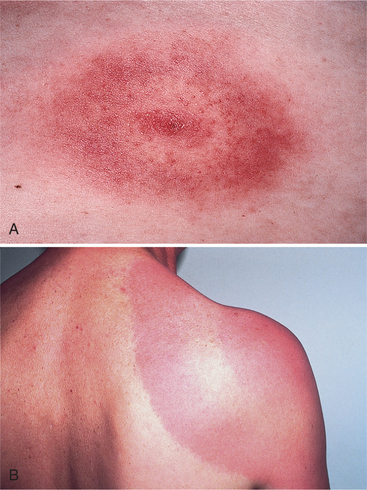
Stage 1, the early, localized stage, usually occurs within days following a tick bite. About 80% of affected individuals will have a red, slowly expanding rash called erythema migrans (Fig. 8-8).153 Not all people with the disease develop the telltale rash, and because early symptoms are often mild, some people may remain undiagnosed and untreated. Erythema migrans resolves spontaneously without treatment within an average of 4 weeks. Flulike symptoms suggestive of early dissemination such as fatigue, chills, fever, headache, lethargy, myalgias, or arthralgias may also develop early in the course of the infection and may be the presenting symptoms for anyone without a rash.

Figure 8-8 Examples of erythema migrans associated with Lyme disease. A, Many sources describe a characteristic bulls-eye rash with Lyme disease. B, However, there is a wide range of skin reactions labeled as erythema migrans possible with Lyme disease, as shown. Some skin rashes may be so minor as to be ignored or go unnoticed by the affected individual. (A, From Swartz MH: Textbook of physical diagnosis: history and examination, ed 4, Philadelphia, 2002, W.B. Saunders. B, Reprinted from Mandel GL: Principles and practice of infectious diseases, ed 6, Edinburgh, 2005, Churchill Livingstone.)
Stage 2, disseminated infection, occurs within days to weeks after the spirochete spreads, particularly to the nervous system, heart, and joints. Neurologic symptoms may be the first to arise and occur in 15% of all cases,153 most commonly manifested as aseptic meningitis with mild headache, stiff neck, and difficulty with mentation; cranial neuropathies, particularly Bell’s palsy; and radiculopathies (Box 8-10). Even in anyone who remains untreated, neurologic symptoms may improve or resolve.154
About half of those diagnosed may go on to develop painful Lyme arthritis characterized by unilateral inflammation and swelling in the large joints, especially the knees.153 Migratory musculoskeletal pain in joints, bursae, tendons, muscle, and bone may occur in one or a few locations at a time, often lasting only hours or days in a given location. Weeks to months later, after the development of a marked cellular and humoral response to the spirochete, untreated people often have intermittent or chronic monarticular (one joint) or oligoarticular (affecting only a few joints) arthritis.
Some people (4% to 10%) experience cardiac signs and symptoms, including myocarditis and various types of heart block and dysrhythmias, which can result in irregular, rapid, or slowed pulses; dizziness; fainting; and shortness of breath. Involvement of the eye is rare but can cause serious damage to the eye.
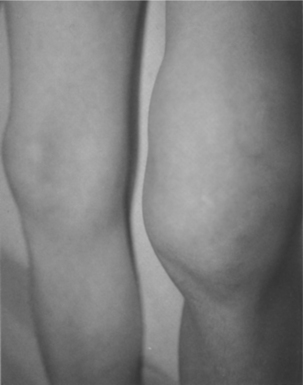
Stage 3, late persistent infection, may become apparent weeks to months after the initial infection. In the United States about 60% of individuals left untreated develop stage 3 symptoms characterized by intermittent arthritis associated with marked pain and swelling, especially in the large joints (Fig. 8-9). Rarely, affected individuals may go on to develop erosions or permanent joint abnormalities.159 In approximately 5% of untreated individuals, chronic neurological symptoms occur, including spinal radicular pain, distal paresthesias, and a mild encephalopathy with subtle cognitive disturbances.154

Figure 8-9 Swollen knee of a youth with Lyme arthritis. (Reprinted from National Institutes of Health: Lyme disease: the facts, the challenge, NIH publication no. 92-3193, Bethesda, MD, 1992, U.S. Department of Health and Human Services, p 12.) U.S. Department of Health and Human Services
Postinfection syndromes. Several syndromes have been reported describing persistent symptoms despite antibiotic treatment. One such syndrome, called the post-Lyme syndrome or chronic Lyme disease, resembles fibromyalgia or chronic fatigue syndrome. Affected individuals describe disabling fatigue, severe headache, diffuse muscle or joint pain, cognitive difficulties, and sleep abnormalities.155 Symptoms may begin with the infection or emerge soon after treatment and persist for months to years. Debate continues as to whether these patients ever had an active infection with B. burgdorferi.145,156 Of those with documented, treated disease it is hypothesized that the bacteria may trigger a neurohormonal or immunologic process that causes symptoms despite eradication of the spirochete.156
About 10% of the people who have Lyme arthritis will continue to have joint symptoms for months to years following treatment. Although evidence of the spirochete exists in the synovial fluid prior to treatment, posttreatment joint fluid is often negative for infection. This again may be immune rather than infection related.156
Prevention is the key to avoiding Lyme disease.65,172 Lyme disease is most common during the late spring and summer months in the United States when nymphal ticks are most active and human populations are frequently outdoors and most exposed. People who live or work in residential areas surrounded by woods or overgrown brush infested by ticks or favored by white-tailed deer and live in the endemic geographic areas are at risk. In addition, people who participate in outdoor recreational activities in tick habitat are also at risk for Lyme disease.
In December 1998 the FDA licensed the vaccine LYMErix to aid in the prevention of Lyme disease. However, in February 2002 the vaccine was withdrawn from the market reportedly for poor sales. Drawbacks surrounding the vaccine included cost and multiple, repeated doses for efficacy. Prophylactic treatment is controversial, but a single dose of doxycycline for ticks attached to the skin between 36 and 72 hours may be helpful.105 Box 8-11 provides specific strategies available for Lyme disease prevention.
The CDC suggests a two-step process in diagnosing Lyme disease. The first step is to test the blood for antibodies to the spirochete. This is done with a sensitive enzyme immunoassay (EIA) or IFA. If this test is positive or equivocal, a Western immunoblot should be performed to confirm the diagnosis.22 Since antibodies are not present for 1 to 2 weeks following infection, these tests may not be positive early in the infection.
If erythema migrans is present, treatment can begin without serologic tests for Lyme disease. For those who present in the summer months with symptoms of Lyme disease without erythema migrans, empiric treatment with doxycycline can be considered. Since EIA may become negative with treatment, acute and convalescent blood samples can be collected for antibody titers to confirm infection. These tests are very sensitive in diagnosing infection in later stages.
The PCR uses gene segment amplification techniques to detect the DNA of the bacterium itself. PCR has detected bacterium DNA in synovial fluid, CSF, skin, blood, and urine. Synovial fluid may be tested to distinguish Lyme arthritis from acute septic arthritis. PCR is not routinely used in the diagnosis of Lyme disease and often is only available at specialized centers or for research purposes.
Early Lyme disease is treated with oral antibiotics, typically doxycycline or amoxicillin for pregnant women or children. Antibiotics are given for 14 to 21 days. If third-degree heart block or neurologic symptoms are present, other than isolated facial palsy, IV antibiotics are required for 14 to 28 days, typically with ceftriaxone. Lyme arthritis can be treated with oral or IV antibiotics, although oral therapy is easier and equally effective.
For anyone with continued arthritis despite recommended treatment, another 4-week oral or 2-week IV treatment may be given. If symptoms persist despite the second treatment, data do not support the continued use of antibiotics. Nonsteroidal medications, disease-modifying antirheumatic drugs, and arthroscopic synovectomy are used for arthritis pain. Guidelines for fibromyalgia or chronic fatigue syndrome are followed in anyone with post-Lyme syndrome who has negative PCR results.156
Early treatment is vital for the prevention of long-term complications, but even so, complications involving the heart, joints, and nervous system occur in about 15% of people who do undergo early treatment. For most people, Lyme disease is curable with standard antibiotic therapy, and the effects of Lyme disease resolve completely within a few weeks or months of treatment. Unfortunately, no natural immunity develops from exposure to Lyme disease, and anyone can be reinfected. Although Lyme disease is rarely fatal, heart complications may cause life-threatening cardiac arrhythmias.
Great concern came about in the past regarding potential fetal infection and teratogenicity from Lyme disease contracted during pregnancy. However, in recent prospective studies no cases of congenital infection have been documented.93,150,183
Each year 19 million Americans contract a sexually transmitted disease (STD) or infection (STI), and it is estimated that at least one out of every four sexually active people (56 million Americans) is carrying an infection other than HIV. It is likely that the incidence of STDs and STIs is underreported for several reasons.
Physicians fail to report STD cases to local health departments despite being mandated to do so. Physicians also rely on patients to notify their sexual partners, who may or may not be tested and/or treated.11 A lack of free screening or reimbursement for screening may be a contributing factor.82
Syphilis, once thought to be trending toward elimination, has steadily increased since 2000, particularly in black men and men who have sex with men.28,104,129 Although the incidence of gonorrhea has reached an all-time low in the United States, chlamydia and human papillomavirus (HPV) remain significant health problems. Chlamydia is the most common reportable STD in the United States, with almost 1 million cases reported to the CDC in 2004.26
HPV, which causes genital warts and can lead to cervical cancer, most likely infects over 6 million men and women per year. Additionally, more than 45 million people have chronic genital herpes, with perhaps 1 million new cases diagnosed every year. There were 73,000 new cases of HBV reported in 2003, with 1.25 million people chronically infected despite the availability of a preventative vaccine. In 2004, an estimated 1 to 1.1 million Americans were living with the HIV/AIDS virus, with an additional 42,000 cases newly reported.
STDs and STIs are spread primarily through sexual contact, but some cases may also be spread by sharing infected needles or by transmission from mother to child during vaginal childbirth. Many STDs and STIs are easily treated and cured, but others remain chronic. More than 50 different STDs and STIs have been described; only the most common ones are included here (Table 8-7).
All groups of people are potentially at risk for STDs and STIs, but women, teens, men who have sex with men, and minorities have been disproportionately affected. Young people under the age of 18 years are considered at greatest risk for getting a sexually transmitted disease but, in fact, the over-50 population is also at risk.
Although 25% of all STDs and STIs occur in people younger than 25 years, numerous surveys of healthy adults have verified that older people are sexually active and less likely to practice safe sex. Risk factors vary but most often include multiple sex partners, a partner with a known risk factor, a history of a blood transfusion between 1977 and 1984, failure to use a condom (or use it properly) during sexual intercourse, and sharing needles during illicit drug use. The presence of STDs and STIs is a risk factor itself for facilitating the transmission of HIV. In fact, persons with an STD are two to five times more likely than a person without an STD of sexually acquiring HIV.174
STDs and STIs are caused by bacteria, viruses and, occasionally, parasites and may have a considerable latency period when the infectious organism lies dormant before triggering symptomatic presentation (Fig. 8-10).

Figure 8-10 Sexually transmitted infections. A, Syphilis mimics so many diseases it is called “the great imitator.” Dark-field microscopy showing several spirochetes in scrapings from the base of a syphilitic chancre. B, Gonorrhea, called the “preventer of life,” can cause sterility. Gram-stained smear of urethral discharge showing intracellular gram-negative diplococci characteristic of gonorrhea. C, HPV, also known as genital herpes, is the most common cause of cervical and other reproductive cancers. D, Chlamydia is the most common STD reported in the United States. (A, Reprinted from Kumar V: Robbins and Cotran: pathologic basis of disease, ed 7, Philadelphia, 2005, W.B. Saunders, courtesy Paul Southern, Department of Pathology, University of Texas Southwestern Medical School, Dallas. B, Reprinted from Mandell GL: Principles and practice of infectious diseases, ed 6, Philadelphia, 2005, Churchill Livingstone. C, Reprinted from Kumar V: Robbins and Cotran: pathologic basis of disease, ed 7, Philadelphia, 2005, W.B. Saunders, courtesy Ian Frazer, Princess Alexandra Hospital, University of Queensland, Australia. D, Reprinted from Mandell GL: Principles and practice of infectious diseases, ed 6, Philadelphia, 2005, Churchill Livingstone, courtesy Robert Suchland, Seattle, WA.)
Clinical manifestations vary according to the STD present (Figs. 8-11 and 8-12; see also Table 8-7). STDs and STIs may be completely asymptomatic and therefore are less likely to be diagnosed until serious problems develop. Complications of STDs and STIs are more severe and more frequent among women than men. Once infected, women are more susceptible to reproductive cancers, infertility, and contracting other STDs and STIs.

Figure 8-11 Clinical manifestations of syphilis. Many STIs present with lesions of the skin and/or genitals. Each one presents differently based on the stage of the disease. A, Chancre in primary syphilis on the penis. B, Palmar lesions of a coppery color in secondary syphilis. C, Mucous patch of the mouth in secondary syphilis. D, Genital lesions called condylomata lata in a female (secondary syphilis). (A, C, and D, Reprinted from Forbes CD, Jackson WF: Color atlas and text of clinical medicine, London, 2003, Mosby. B, Reprinted from Habif TP: Skin disease: diagnosis and treatment, St Louis, 2001, Mosby.)
Prevention is the most important key to managing STDs and STIs. The only prevention that is 100% effective is abstinence and/or a mutually monogamous sexual relationship (single partner) between two uninfected people. For those who are sexually active, condoms, properly used, are able to reduce the transmission of sexually transmitted diseases spread by mucosal fluid (e.g., gonorrhea, chlamydia, and HIV).
However, condoms do not cover all surfaces and only protect the skin they cover, and are therefore less likely to protect against diseases acquired from skin-to-skin contact such as syphilis, HPV, and HSV.184 Genital warts are contagious; avoid touching them. Spermicides with nonoxynol-9 may not be effective against gonorrhea, chlamydia, or HIV infection; the CDC does not recommend the use of nonoxynol-9 with or without condoms for STD or HIV protection.184
Pregnant women should have blood tests for syphilis and HBV. Early syphilis, if untreated in pregnant women, can cause fetal death in 40% of cases. Even if syphilis is acquired up to 4 years before pregnancy, infection of the fetus will occur in 70% of cases.26 A vaccine is available to protect anyone, especially women of childbearing age, against HBV (see Table 8-4).
Pregnant women should also be tested for gonorrhea, chlamydia, HPV, and HIV. Those with recurrent genital herpes and open sores benefit from cesarean section delivery to protect the child. Anyone with a STD or known possibility of infection must inform a physician and all partners to obtain appropriate treatment and prevent spreading the disease to others.
Drug users, especially injection-drug users, can prevent transmission of disease best by discontinuance of drugs. However, in most cases this is not immediately realistic. Programs have been set up to help reduce needle sharing by providing needle exchange centers and street education programs aimed at teaching more sterile practices.
STDs and STIs can often be identified by the clinical manifestations, but various screening tests are also available. Experts recommend that sexually active adolescents and women aged 25 years and younger, pregnant women aged 25 years and younger, and older women at high risk be screened for chlamydia. The interval of screening should take into account changes in partners, but women at high risk with a history of previous infection may benefit from screening every 6 to 12 months.107 With the advent of urine-based testing, more frequent screening has been successful in both women and men.
HPV infection is another prevalent STD that has been found to cause cervical cancer in women. Since HPV slowly creates cellular changes prior to the development of cancer, recommendations for screening have been published (see Table 20-2). Liquid-based cytology is a newer technique that allows the sampled cells to be concentrated and better preserved for visual evaluation. The liquid-based samples can also be used for HPV DNA testing.
Evidence supporting the specific use of liquid-based cytology and HPV DNA testing is not currently available because of their relative newness; however, recommendations by multiple medical societies have been issued as guidelines. Although HPV is most often acquired in younger clients, older women continue to be at risk, so testing should take into consideration risk factors.62 Various immunoassays, serologic techniques, and culture methods are used to diagnose HIV, syphilis, gonorrhea, herpes, hepatitis, and other STDs and STIs.
Antibiotics can cure some STDs and STIs (see Table 8-7), although some may be drug resistant (e.g., gonorrhea resistance to quinolones). Limiting the number of sexual partners, practicing abstinence, and safe sex (proper use of condoms) are recommended to prevent the transmission of disease. Intercourse during an active infection dramatically increases the risk of transmitting STDs and STIs.
When working with clients with active disease, following contact precautions, frequent handwashing, and avoiding touching the affected areas are essential practices. A vaccine is now available for HBV, and vaccines against HPV, HIV, and herpes are under investigation. A new vaccine for HPV may soon be available, and questions are being raised as to the receptiveness of the public (especially adolescents and young adults) and how it may change sexual habits.160
The prognosis varies with each STD, but with treatment symptoms can be minimized and complications prevented. Without treatment, serious complications can occur such as infertility, chronic pelvic pain, ectopic pregnancy and miscarriage, cardiovascular disease, CNS impairment, blindness, cervical cancer, and even death.
Drug use in the United States continues to be a significant health problem, with over 19.5 million people, or 8.2% of the population, found to be using drugs in 2003.168 Serious illnesses such as HIV and hepatitis are transmitted with injection drug use. Drug users as a whole also have a higher incidence of bacterial infections because of the various drugs used, the route and sites of administration, and preparation of the drug. Each of these factors determines risk for infection and the likelihood of specific bacterial infections.61
Drugs themselves may be contaminated or become contaminated when “cut” (diluted) with adulterants (dextrose or dyed paper). Black-tar heroin, produced in Mexico, has been associated with outbreaks of wound botulism. Since clean needles and skin are not protective, the black-tar heroin is most likely the cause of the infection. Contamination with Clostridium tetani or other clostridial spores may occur when adulterants are cut with the heroin.
IV use of black-tar heroin causes sclerosis of the veins and leads to “skin popping,” or injecting the drug subcutaneously. Continued injection into the same site creates a necrotic environment suitable for clostridial germination and toxin production. Necrotizing fasciitis with toxic shock syndrome can result from the spread of a clostridial infection.103
Drug users, particularly IV drug users, vary the site of administration. Local abscess formation or infections from hematogenous seeding are seen in unusual places because of the site of injection (the femoral vein, or “groin hit,” and the neck, or “pocket shot”). Osteomyelitis may develop in the sternoclavicular, sacroiliac, or vertebral spine. Septic arthritis is often seen in the knees.
Environmental factors frequently contribute to infections. Some users may lick the skin or needle prior to injecting, leading to polymicrobial infections. Others crush tablets between their teeth or blow clots out of needles before reusing. Sharing of needles and paraphernalia is also common.61 Because of these habits, drug users are more likely to develop certain types of bacterial infections with specific organisms.
The four types of infections most often seen are of the skin or soft tissue, endovascular infections, respiratory infections, and musculoskeletal infections.61 S. aureus and streptococcal species (flora from the user’s skin) are the most common pathogens in drug-related infections. Drug users are more likely to be colonized with MRSA in the nares and skin than non–drug users; this most likely occurs because of tissue damage from inhaling or injecting drugs.
Abscess formation is common. More serious infections such as endocarditis, septic thrombophlebitis, mycotic aneurysms, and sepsis occur from hematogenous spread of organisms. In injection drug users S. aureus is the most common organism causing endocarditis. Although polymicrobial endocarditis is rare, it is most often seen in injection drug users. Complications of endocarditis include brain, lung, and splenic abscesses.
Drug users are more likely to develop a respiratory tract infection compared with nonusers, and respiratory infections, particularly pneumonia, are the most common infection in drug users. Damage to cells from inhaling drugs and chronic cigarette use (many drug users also smoke) may lead to inability to clear secretions. Aspiration may occur because of decreased mental alertness.
Clients with HIV may present with atypical features and radiographs, so a good history and physical examination are important. Pulmonary tuberculosis (and drug-resistant tuberculosis) is encountered more frequently in drug users who practice “shotgunning” (inhaling cocaine and blowing smoke into the mouth of another person), live in crowded spaces, delay diagnosis, or have HIV.
Musculoskeletal infections may occur in unusual places, as discussed above. Flora from the skin is the most common pathogen, although polymicrobial infections are seen, especially if saliva contaminates the skin, drugs, or needles. The infection may be subtle, with mild fever and pain.61
1. Advisory Committee on Immunization Practices (APIC): APIC brochure, 2000. Available at http://www.apic.org Accessed April 25, 2007.
2. Advisory Committee on Immunization Practices. Prevention and control of influenza. MMWR. 1996;45(5):1–24.
3. Advisory Committee on Immunization Practices. Update, vaccine side effects, adverse reactions, contraindications and precautions. MMWR. 1996;45(12):1–35.
4. Agha, R. Complications of immunizations. Pediatr Rev. 1997;18(2):66–67.
5. al Saif, N, Brazier, JS. The distribution of Clostridium difficile in the environment of South Wales. J Med Microbiol. 1996;45:133–137.
6. Alotaibi, S, Kennedy, J, Tellier, R, et al. Epstein-Barr virus in pediatric multiple sclerosis. JAMA. 2004;291(15):1877–1879.
7. Atkinson W, et al, eds. Epidemiology and prevention of vaccine preventable diseases, ed 9, Washington, DC: Centers for Disease Control and Prevention, 2006.
8. Baldwin, G, Colbourne, M. Puncture wounds. Pediatr Rev. 1999;20(1):21–23.
9. Bartlett, JG, Perl, TM. The new Clostridium difficile-what does it mean? N Engl J Med. 2005;353(23):2503–2505.
10. Baseman, J, Tully, J. Mycoplasmas, sophisticated, reemerging and burdened by their notoriety. Emerg Infect Dis. 1997;3(1):21–32.
11. Beltrami, JF, Weinstock, HS, Berman, SM, et al. Primary and secondary syphilis-United States, 2003-2004. MMWR. 2006;55(10):269–273.
12. Boyce, JM, Pittet, D. Guideline for hand hygiene in health-care settings. Recommendations of the Healthcare Infection Control Practices Advisory Committee and the HICPAC/SHEA/APIC/IDSA Hand Hygiene Task Force. MMWR. 2002;51(RR16):1–44.
13. Boyce, JM, Pittet, D. Guideline for hand hygiene in health-care settings: recommendations of the Healthcare Infection Control Practices Advisory Committee and the HICPAC/SHEA/APIC/IDSA Hand Hygiene Task Force. Infect Control Hosp Epidemiol. 2002;23(12 Suppl):S3–40.
14. Bouckenooghe, A, Shandera, W. Infectious diseases: viral and rickettsial. In Tierney L, McPhee S, Papadakis M, eds.: Current medical diagnosis and treatment, ed 39, New York: Lange Medical Books/McGraw-Hill, 2000.
15. Brause, B. Infections with prostheses in bones and joints. In Mandell G, Bennett J, Dolin R, eds.: Principles and practice of infectious diseases, ed 5, Philadelphia: Churchill Livingstone, 2000.
16. Brouqui, P. Chronic Bartonella quintana bacteremia in homeless patients. N Engl J Med. 1999;340:21–32.
17. Brown, Z, Preventing herpes simplex virus transmission to the neonate. Herpes. 2004(Suppl 3):175A–186A.
18. Brueggmann, A, Doern, G, Wingert, E. Antimicrobial resistance with Streptococcus pneumoniae in the United States, 1997/1998. Emerg Infect Dis. 1999;5(6):757–765.
19. Burgdorfer, W, Barbour, AG, Hayes, SF, et al. Lyme disease-a tick-borne spirochetosis? Science. 1982;216:1317–1319.
20. Cantrell, M, Norman, D. Infections. In Duthrie E, Katz P, eds.: Practice of geriatrics, ed 3, Philadelphia: W.B. Saunders, 1998.
21. Castle, SC, Uyemura, K, Rafi, A, et al. Comorbidity is a better predictor of impaired immunity than chronological age in older adults. J Am Geriatr Soc. 2005;53(9):1565–1569.
22. Centers for Disease Control and Prevention. Notice to readers recommendations for test performance and interpretation from the Second National Conference on Serologic Diagnosis of Lyme Disease. MMWR. 1995;44(31):590–591.
23. Centers for Disease Control and Prevention. Staphylococcus aureus with reduced susceptibility to vancomycin-United States, 1997. MMWR. 1997;46:813–815.
24. Centers for Disease Control and Prevention. Immunization of healthcare workers recommendations of the Advisory Committee on Immunization Practices (ACIP) and the Hospital Infection Control Practices Advisory Committee (HICPAC). MMWR. 1997;46(RR-18):1–41.
25. Centers for Disease Control and Prevention. Recommended adult immunization schedule-United States, 2003-2004. MMWR Morb Mortal Wkly Rep. 52, 2003. [965-918].
26. Centers for Disease Control and Prevention. Sexually transmitted disease surveillance, 2004 supplement, syphilis surveillance report. Atlanta, GA: U.S. Department of Health and Human Services, 2005.
27. Chang, V, Nelson, K. The role of physical proximity in nosocomial diarrhea. Clin Infect Dis. 2002;31:717–722.
28. Chen, SY, Gibson, S, Katz, MH, et al. Continuing increases in sexual risk behavior and sexually transmitted diseases among men who have sex with men: San Francisco, California, 1999-2001 [Letter]. Am J Public Health. 2002;92:1387–1388.
29. Chohfi, M, et al. Pharmacokinetics, uses, and limitations of vancomycin-loaded bone cement. Int Orthop. 1998;22(3):171–177.
30. Clark, P, Davidson, D, Letts, M, et al. Necrotizing fasciitis secondary to chickenpox infection in children. Can J Surg. 2003;46(1):9–14.
31. Cochran, GM, Ewald, PW, Cochran, KD. Infectious causation of disease: an evolutionary perspective. Perspect Biol Med. 2000;43(3):406–408.
32. Cohen, JI. Epstein-Barr virus infection. N Engl J Med. 2000;343(7):481–492.
33. Corey, L. Herpes simplex virus. In Mandell G, Bennett J, Dolin R, eds.: Principles and practice of infectious diseases, ed 6, Philadelphia: Churchill Livingstone, 2005.
34. Corey, L, Adams, HG, Brown, ZA, et al. Genital herpes simplex virus infections. clinical manifestations, course, and complications. Ann Intern Med. 1983;98:958–972.
35. Simon, JH, Li, D, Traboulsee, A, et al. Standardized MR imaging protocol for multiple sclerosis. Am J Neuroradiol. 2006;27(2):455–461.
36. Crumpacker, CS, Wadhwa, S. Cytomegalovirus. In Mandell G, Bennett J, Dolin R, eds.: Principles and practice of infectious diseases, ed 6, Philadelphia: Churchill Livingstone, 2005.
37. Davis, MM, Patel, MS, Gebremariam, A. Decline in varicella-related hospitalizations and expenditures for children and adults after introduction of varicella vaccine in the United States. Pediatrics. 2004;114(3):786–792.
38. DeBraun, BJ. Prevention of infection in the orthopedic surgery patient. Nurs Clin North Am. 1998;33(4):671–684.
39. Decline in annual incidence of varicella-selected states. MMWR. 1990;52(37):884–885. [2001].
40. Delorenze, GN, Munger, KL, Lennette, ET, et al. Epstein-Barr virus and multiple sclerosis: evidence of association from a prospective study with long-term follow-up. Arch Neurol. 2006;63(6):39–44.
41. Devlin, H, Ferguson, MW. Aging and the orofacial tissues. In Tallis RC, Fillit HM, Brocklehurst JC, eds.: Brocklehurst’s textbook of geriatric medicine and gerontology, ed 6, New York: Churchill Livingstone, 2003.
42. Dial, S, Delaney, JA, Barkun, AN. Use of gastric acid-suppressive agents and the risk of community-acquired Clostridium difficile-associated disease. JAMA. 2005;294(23):2989–2995.
43. Dobos, K, Quinn, F, Ashford, D, et al. Emergence of a unique group of necrotizing mycobacterial diseases. Emerg Infect Dis. 1999;5(3):367–378.
44. Donowitz, G. Oxazolidones. In Mandell G, Bennett J, Dolin R, eds.: Principles and practice of infectious diseases, ed 6, Philadelphia: Churchill Livingstone, 2005.
45. Edmond, MB, Wenzel, RP. Organization for infection control. In Mandell G, Bennett J, Dolin R, eds.: Principles and practice of infectious diseases, ed 6, Philadelphia: Churchill Livingstone, 2005.
46. Entenza, J. Y-688, new quinolone active against quinolone-resistant Staphylococcus aureus: lack of in vivo efficacy in experimental endocarditis. Antimicrob Agents Chemother. 1998;42(18):1889–1894.
47. Falsey, AR, Hennessey, PA, Formica, MA, et al. Respiratory syncytial virus infection in elderly and high-risk adults. New Engl J Med. 2005;352(17):1749–1759.
48. Fangjun, Z, Harpaz, R, Jumaan, AO, et al. Impact of varicella vaccination on health care utilization. JAMA. 2005;294(7):797–802.
49. Feldman M, Friedman LS, Sleisenger MH, eds. Sleisenger & Fordtran’s gastrointestinal and liver disease, ed 7, Philadelphia: W.B. Saunders, 2002.
50. Feller, L, Jadwat, Y, Bouckaert, M. Herpes zoster post-herpetic neuralgia. SADJ. 2005;60(10):436–437.
51. Foca, M, Jakob, K, Whittier, S, et al. Endemic Pseudomonas aeruginosa infection in a neonatal intensive care unit. New Engl J Med. 2000;343:695–700.
52. Fordtran, JS. Colitis de to Clostridium difficile toxins: underdiagnosed, highly virulent, and nosocomial. Proc (Bayl Univ Med Cent). 2006;19(1):3–12.
53. Garcia, R, et al. Nosocomial RSV infections: prevention and control in bone marrow transplant patients. Infect Control Hosp Epidemiol. 1997;18(6):412–416.
54. Garner, J. Guidelines for isolation precaution in hospitals. Infect Control Hosp Epidemiol. 1996;17:54–80.
55. Garner, JS. Guideline for isolation precautions in hospitals. The Hospital Infection Control Practices Advisory Committee. Infect Control Hosp Epidemiol. 1996;17:53–80.
56. Garvin, K, McKillip, T. Preventing and managing infection following joint replacement. J Musculoskelet Med. 1997;14(6):9–18.
57. Gerberding, JL. The infected health care provider. N Engl J Med. 1996;334(9):594–595.
58. Gerding, DN, Johnson, S, Peterson, LR, et al. Clostridium difficile-associated diarrhea and colitis. Infect Control Hosp Epidemiol. 1995;16:459–477.
59. Giulieri, SG, Graber, P, Ochsner, PE, et al. Management of infection associated with total hip arthroplasty according to a treatment algorithm. Infection. 2004;32:222–228.
60. Goldman, D, Weinstein, R, Wensel, R. Strategies to prevent and control the emergence and spread of antimicrobial-resistant micro-organisms in hospitals: a challenge to hospital leadership. JAMA. 1996;275:234–240.
61. Gordon, RJ, Lowy, FD. Bacterial infections in drug users. New Engl J Med. 2005;353(18):1945–1954.
62. Grainge, MJ, Seth, R, Guo, L, et al. Cervical human papillomavirus screening among older women. Emerg Infect Dis. 2005;11(11):1680–1685.
63. Hall, C. Human herpesviruses at sixes, sevens, and more. Ann Intern Med. 1997;125(6):481–483.
64. Hall, CB. Respiratory syncytial virus and parainfluenza virus. New Engl J Med. 2001;344(25):1917–1928.
65. Hayes, EB, Piesman, J. How can we prevent Lyme disease? New Engl J Med. 2003;348(24):2424–2430.
66. Heyman DL, ed. Control of communicable diseases manual, ed 18, Washington, DC: American Public Health Association, 2004.
67. High, KP. Infection as a cause of age-related immune dysfunction. Ageing Res Rev. 2004;3:1–14.
68. High levels of adamantine resistance among influenza A (H3N2) viruses and interim guidelines for use of antiviral agents-United States, 2005-06 influenza season. MMWR. 2006;55:1–2. [(Dispatch)].
69. Hoadley, DJ, Mark, EJ. A 35-year-old long-term traveler with a rapidly progressive soft-tissue infection. New Engl J Med. 2002;347(11):831–837.
70. Holten, KB. Treatment of herpes zoster. Am Fam Phys. 2006;73(5):882–884.
71. Hunder, G, Kaye, R, Lane, NE. Osteoporosis, fibromyalgia, Lyme disease, polymyalgia, lupus, and gout. J Musculoskelet Med. 1999;16(1):12–32.
72. Ignativicius, D, Workman, M. Medical-surgical nursing, ed 5. Philadelphia: W.B. Saunders, 2006.
73. Ivancevic, V, Perka, C, Hasart, O, et al. Imaging of low-grade bone infection with a technetium-99m labeled monoclonal anti-NCA-90 Fab? fragment in patients with previous joint surgery. Eur J Nucl Med Mol Imaging. 2002;29:547–551.
74. Jackson, LA, Neuzil, KM, Yu, O, et al. Effectiveness of pneumococcal polysaccharide vaccine in older adults. N Engl J Med. 2003;348:1747–1755.
75. Jacobs, R. Infectious diseases: Spirochetal. In Tierney L, McPhee S, Papadakis M, eds.: Current medical diagnosis and treatment, ed 39, New York: Lange Medical Books/McGraw Hill, 2000.
76. Jacobs, R. General problems in infectious diseases. In Tierney L, McPhee S, Papadakis M, eds.: Current medical diagnosis and treatment, ed 39, New York: Lange Medical Books/McGraw-Hill, 2000.
77. Johns Hopkins University. Lyme disease: is vaccination right for you? Med Lett. 2000;12(2):3.
78. Johnston, N. Novel approach to combating superbugs. Drug Discov Today. 2005;10(3):163–164.
79. Jones, JS, Hoerle, D, Riekse, R. Stethoscopes: a potential vector of infection? Ann Emerg Med. 1995;26:296–299.
80. Kimberlin, DW, Rouse, DJ. Genital herpes. New Engl J Med. 2004;350(19):1970–1977.
81. Kneyber, MC, Moll, HA, de Groot, R. Treatment and prevention of respiratory syncytial virus protection. Eur J Pediatr. 2000;159(6):399–411.
82. Knight, D. Health care screening for men who have sex with men. Am Fam Physician. 2004;69(9):2149–2156.
83. Kraay, MJ, Goldberg, VM, Fitzgerald, SJ, et al. Cementless two-staged total hip arthroplasty for deep periprosthetic infection. Clin Orthop Rel Res. 2005;441:243–249.
84. Kyaw, MH, Lynfield, R, Schaffner, et al. Effect of introduction of the pneumococcal conjugate vaccine on drug-resistant Streptococcus pneumoniae. New Engl J Med. 2006;354(14):1455–1463.
85. Ledgerwood, LG, Ewald, PW, Cochran, GM. Genes, germs, and schizophrenia: an evolutionary perspective. Perspect Biol Med. 2003;46(3):317–348.
86. Levy, J. Three new human herpesviruses (HHV-6, 7 and 8). Lancet. 1997;349(9051):558–563.
87. Linder, JA, Bates, DW, Lee, GM, et al. Antibiotic treatment of children with sore throat. JAMA. 2005;294(18):2315–2322.
88. Loehne H, et al: Aerosolization of microorganisms during pulsatile lavage with suction, Presented at the international conference of Association for Professionals in Infection Control and Epidemiology, Washington, DC, 1999.
89. Loveys, DA, Kulkarnia, S, Atreya, PL. Role of type I IFNs in the in vitro attenuation of live, temperature-sensitive vaccine strains of human respiratory syncytial virus. Virology. 2000;271(2):390–400.
90. Malhotra, A, Krilov, LR. Influenza and respiratory syncytial virus. Update on infection, management, and prevention. Pediatr Clin North Am. 2000;47(2):353–372.
91. Mandell, G. Intro to microbial disease. In Goldman L, Bennett J, eds.: Cecil textbook of medicine, ed 21, Philadelphia: W.B. Saunders, 2000.
92. Mandell GL, Bennett JE, Dolin R, eds. Principles and practice of infectious diseases, ed 5, New York: Churchill Livingstone, 2000.
93. Maraspin, V, et al. Erythema migrans in pregnancy. Wien Clin Wochenschr. 1999;111(22-23):933–940.
94. Marculescu, CE, Berbari, EF, Hanssen, AD, et al. Outcome of prosthetic joint infections treated with debridement and retention of components. Clin Infect Dis. 2006;42(4):471–478.
95. Marrie, RA, et al. Multiple sclerosis and antecedent infections: a case-control study. Neurology. 2000;54(12):2307–2310.
96. Martin, S, Hirsch, MS. Cytomegalovirus and human herpesvirus types 6, 7, and 8. In Kasper DL, Braunwald E, Fauci AS, et al, eds.: Harrison’s principles of internal medicine, ed 16, New York: The McGraw-Hill Companies, Inc, 2005.
97. Mathias, JM. Acrylic nails harbor pathogens. OR Manager. 2000;16(1):10.
98. Maury, E, et al. Availability of an alcohol solution can improve hand disinfection compliance in an intensive care unit. Am J Respir Crit Care Med. 2000;162(1):324–327.
99. McDonald, LC. Trends in antimicrobial resistance in health care-associated pathogens and effect on treatment. Clin Infect Dis. 2006;42(Suppl 2):S65–S671.
100. McDonald, LC, Owings, M, Jemigan, DB. Increasing rates of Clostridium difficile infection among patients discharged from US short-stay hospitals, 1996-2003. Emerg Infect Dis. 2006;12(13):409–415.
101. Methicillin-resistant Staphylococcus aureus skin or soft tissue infections in a state prison-Mississippi, 2000. JAMA. 2002;287:181–182.
102. Meyerhoff J: EMedicine: Lyme disease. Available on-line at: http://www.emedicine.com/med/topic1346.htm. Accessed April 10, 2006.
103. Miller, LF, Perdreau-Remington, F, Rjeg, G, et al. Necrotizing fasciitis caused by community-associated methicillin-resistant Staphylococcus aureus in Los Angeles. New Engl J Med. 2005;352:1445–1453.
104. Lyme disease-United States. MMWR. 2004;53(17):365–369.
105. Nadelman, RB, et al. Prophylaxis with single-dose doxycycline for the prevention of Lyme disease after an Ixodes scapularis tick bite. N Engl J Med. 2001;345:79–84.
106. Nafziger, D. Infection control in ambulatory care. Infect Dis Clin North Am. 1997;11(2):279–296.
107. Nelson, HD, Helfand, M. Screening for chlamydial infection. Am J Prev Med. 2001;1(20 suppl 3):95–107.
108. Nichol, KL. Influenza vaccination in the elderly: impact on hospitalization and mortality. Drugs Aging. 2005;22(6):495–515.
109. Nichol, KL, Nordin, J, Mullooly, J, et al. Influenza vaccination and reduction in hospitalization for cardiac disease and stroke among the elderly. New Engl J Med. 2003;348(14):1322–1332.
110. Nilsson, IM. Protection against Staphylococcus aureus sepsis by vaccination with recombinant staphylococcal enterotoxin A devoid of superantigenicity. J Infect Dis. 1999;180(4):1370–1373.
111. Odland, B, et al. Antimicrobial activity of gatifloxacin and four other fluoroquinolones tested against 2,284 recent clinical strains of Streptococcus pneumoniae from Europe, Latin America, Canada and the United States: the SENTRY Antimicrobial Surveillance Group (Americas and Europe). Diagn Microbiol Infect Dis. 1999;34(4):315–320.
112. Oral acyclovir for herpes simplex virus eye disease effect on prevention of epithelial keratitis and stromal keratitis. Herpetic Eye Disease Study Group. Arch Ophthalmol. 2000;118(8):1030–1036.
113. Orloski, KA, Hayes, EB, Campbell, GL, et al. Surveillance for Lyme disease-United States, 1992-1998. MMWR CDC Surveill Summ. 2000;49(SS-3):1–11.
114. Outbreaks of avian influenza A (H5N1) in Asia and interim recommendations for evaluation and reporting of suspected cases-United States, 2004. MMWR. 2004;53(05):97–100.
115. Oxman, MN. A vaccine to prevent herpes zoster and postherpetic neuralgia. New Engl J Med. 2005;352(22):2271–2284.
116. Pagnano, M, et al. Blood management in two-stage revision knee arthroplasty for deep prosthetic infection. Clin Orthop. 1999;367:238–242.
117. Palmer, L. Management of the patient with a total joint replacement: the primary care practitioner’s role. Lippincott’s Primary Care Practice. 1999;3(4):419–427.
118. Panlilio, AL, Cardo, DM, Grohskopf, LA, et al. Updated U.S. Public Health Service guidelines for the management of occupational exposures to HIV and recommendations for postexposure prophylaxis. MMWR. 2005;54(RR-09):1–17.
119. Pelton, S, Figueria, M, Albut, R, et al. Efficacy of linezolid in experimental otitis media. Antimicrob Agents Chemother. 2000;44(3):654–657.
120. Piesman, J. Dynamics of Borrelia burgdorferi transmission by nymphal Ixodes dammini ticks. J Infect Dis. 1993;167(5):1082–1085.
121. Pittet, D, Mourouga, P, Perneger, TV, et al. Compliance with handwashing in a teaching hospital. Ann Intern Med. 1999;130:126–130.
122. Pollack, M. Pseudomonas aeruginosa. In Mandell G, Bennett J, Dolin R, eds.: Principles and practice of infectious diseases, ed 5, Philadelphia: Churchill Livingstone, 2000.
123. Prevention of perinatal group B streptococcal disease. a public health perspective. MMWR Morb Mortal Wkly Rep. 1996;45:1–24.
124. Prevention of pneumococcal disease. recommendations of the Advisory Committee on Immunization Practices. MMWR. 1997;46(RR-08):1–24.
125. Recommended adult immunization schedule-United States, October 2005-2006. MMWR. 2005;54(40):Q1–Q4.
126. Relman, D, Falkow, S. A molecular perspective of microbial pathogenicity. In Mandell G, Bennett J, Dolin R, eds.: Principles and practice of infectious diseases, ed 5, Philadelphia: Churchill Livingstone, 2000.
127. Resnick, N. Geriatric medicine. In Tierney L, McPhee S, Papadakis M, eds.: Current medical diagnosis and treatment, ed 39, New York: Lange Medical Books/McGraw-Hill, 2000.
128. Richards, MJ, Edwards, JR, Culver, DH, et al. Nosocomial infections in medical intensive care units in the United States. National Nosocomial Infections Surveillance System. Crit Care Med. 1999;27:887–892.
129. Robinson BC, Chiliade PA, Lee C, et al: Redirecting elimination efforts in response to the changing epidemiology of syphilis [Abstract 167]. In Program and abstracts of the 2004 National STD Prevention Conference, Philadelphia, March 8-11, 2004.
130. Ross, JJ, Hu, LT. Septic arthritis of the pubic symphysis: review of 100 cases. Medicine (Baltimore). 2003;82(5):340–345.
131. Ross, JJ, Shamsuddin, H. Sternoclavicular septic arthritis: review of 180 cases. Medicine (Baltimore). 2004;83(3):139–148.
132. Sandherr, M, Einsele, H, Hebart, H, et al. Antiviral prophylaxis in patients with haematological malignancies and solid tumours: guidelines of the Infectious Diseases Working Party (AGIHO) of the German Society for Hematology and Oncology (DGHO). Ann Oncol. 2006;17(7):1051–1059.
133. Schaffer, SD, et al. Infection prevention and safe practice. St Louis: Mosby, 1996.
134. Schafroth, M, Zimmerli, W, Brunazzi, M, et al. Infections. In: Ochsner PE, ed. Total hip replacement. Berlin: Springer-Verlag, 2003.
135. Schillinger, JA, Xu, F, Sternberg, MR, et al. National seroprevalence and trends in herpes simplex virus type 1 in the United States, 1976-1994. Sex Transm Dis. 2004;31(12):753–760.
136. Schimmel, P, Tao, J, Hill, J. Aminoacyl tRNA synthetases as targets for new anti-infectives. FASEB J. 1998;12(15):1599–1609.
137. Schleiss, M. Progress in cytomegalovirus vaccine development. Herpes. 2005;12(3):66–75.
138. Schooley, R. Epstein-Barr virus (Infectious mononucleosis). In Mandell G, Bennett J, Dolin R, eds.: Principles and practice of infectious diseases, ed 5, Philadelphia: Churchill Livingstone, 2000.
139. Schrag, SJ, Phil, D, Zell, ER, et al. A population-based comparison of strategies to prevent early-onset group B streptococcal disease in neonates. New Engl J Med. 2004;347(4):233–239.
140. Schrag, SJ, Phil, D, Zywicki, S, et al. Group B streptococcal disease in the era of intrapartum antibiotic prophylaxis. New Engl J Med. 2000;342(1):15–20.
141. Schurr, M, Englehardt, S, Helgerson, R. Limb salvage for streptococcal gangrene of the extremity. Am J Surg. 1998;175(3):213–217.
142. Shanklin, D, Smalley, D. The immunopathology of siliconosis: history, clinical presentation and relation to silicosis and the chemistry of silicon and silicone. Immunol Res. 1998;18(3):125–173.
143. Shanklin, D, Smalley, D. Dynamics of wound healing after silicone device and implantation. Exp Mol Pathology. 1999;67(1):26–39.
144. Sharkey, C. Infectious disorders. In Black JM, Matassarin-Jacobs E, eds.: Medical-surgical nursing, clinical management for continuity of care, ed 5, Philadelphia: W.B. Saunders, 1997.
145. Sigal, LH. Summary of the first 100 patients seen at a Lyme disease referral center. Am J Med. 1990;88:577–581.
146. Silver, H. Lyme disease during pregnancy. Infec Dis Clin North Am. 1997;11(1):93–97.
147. Simons, DG, Travell, JG, Simons, LS. Travell & Simons’ myofascial pain and dysfunction. The trigger point manual, vol 1: upper half of body, ed 2. Baltimore: Williams & Wilkins, 1999.
148. Siscovick, D, et al. Collaborative multidisciplinary workshop report: the role of epidemiology studies in determining a possible relationship between chlamydia pneumoniae infection and atherothrombotic diseases. J Infect Dis. 2000;181(Suppl 3):S430–S431.
149. Smith, TL, Pearson, ML, Wilcox, KR, et al. Emergence of vancomycin resistance in Staphylococcus aureus. The Glycopeptide-Intermediate Staphylococcus aureus working group. New Engl J Med. 1999;340:493–501.
150. Spangler C: Disease associated with Clostridium difficile: a review. Unpublished report. Missoula, MT, 2005.
151. Spangler CA, Risi GF: Mechanical ventilation increases the risk of Clostridium difficile-associated diarrhea in a high risk group of hospitalized patients. Poster session presented at the annual Interscience Conference on Antimicrobial Agents and Chemotherapy, Washington, DC, 2005.
152. Steere, AC. Borrelia burgdorferi (Lyme disease, Lyme borreliosis). In Mandell G, Bennett J, Dolin R, eds.: Principles and practice of infectious diseases, ed 6, Philadelphia: Churchill Livingstone, 2005.
153. Steere, AC. Lyme disease. N Engl J Med. 1989;321:586–596.
154. Steere, AC. Lyme disease. N Engl J Med. 2001;345(2):115–125.
155. Steere, AC. A 58-year-old man with a diagnosis of chronic Lyme disease. JAMA. 2002;288(8):1002–1010.
156. Steere, AC, Coburn, J, Glickstein, L. The emergence of Lyme disease. J Clin Invest. 2004;113(8):1093–1101.
157. Steere, AC, Grodzicki, RL, Kornblatt, AN, et al. The spirochetal etiology of Lyme disease. N Engl J Med. 1983;308:733–740.
158. Steere, AC, Malawista, SE, Snydman, DR, et al. Lyme arthritis: an epidemic of oligoarticular arthritis in children and adults in three Connecticut communities. Arthritis Rheum. 1977;20:7–17.
159. Steere, AC, Schoen, RT, Taylor, E. The clinical evolution of Lyme arthritis. Ann Intern Med. 1987;107:725–731.
160. Steinbrook, R. The potential of human papillomavirus vaccines. New Engl J Med. 2006;354(11):1109–1112.
161. Strippoli, GF, Hodson, EM, Jones, C, et al. Preemptive treatment for cytomegalovirus viremia to prevent cytomegalovirus disease in solid organ transplant recipients. Transplantation. 2006;81(2):139–1345.
162. Sunenshine, RH, McDonald, LC. Clostridium difficile-associated disease: new challenges from an established pathogen. Cleve Clin J Med. 2006;73(2):187–197.
163. Swartz, M. Myositis. In Mandell G, Bennett J, Dolin R, eds.: Principles and practice of infectious diseases, ed 5, Philadelphia: Churchill Livingstone, 2000.
164. Tibbles, PM, Edelsber, JS. Hyperbaric-oxygen therapy. New Engl J Med. 1996;334:1642–1648.
165. Trampuz, A, Widmer, AF. Hand hygiene: a frequently missed lifesaving opportunity during patient care. Mayo Clin Proc. 2004;79(1):109–116.
166. Trauger, JW, Walsh, CT. Heterologous expression in Escherichia coli of the first module of the nonribosomal peptide synthetase for chloroeremomycin, a vancomycin-type glycopeptide antibiotic, Proc Natl Acad Sci. U S A. 2000;97(7):3112–3117.
167. Trivalle, C, Cremieux, A, Carbon, C. Pneumococcal septic arthritis in HIV infection. Presse Med. 1995;24(33):1566–1568.
168. 2003 National survey on drug use and health. Rockville, MD: Substance Abuse and Mental Health Services Administration, 2004.
169. Updated U.S. Public Health Service guidelines for the management of occupational exposures to HBV, HCV, and HIV and recommendations for postexposure prophylaxis. MMWR. 2001;50(RR-11):1–42.
170. Verdon, M, Sigal, L. Recognition and management of Lyme disease. Am Fam Physician. 1997;56(2):427–436.
171. Volin, SJ, Hinrichs, SH, Garvin, KL. Two-stage reimplantation of total joint infections: a comparison of resistant and non-resistant organisms. Clin Orthop Rel Res. 2004;427:94–100.
172. Wade, C. Keeping Lyme disease at bay: an integrated approach to prevention. Am J Nurs. 2000;100(7):27–32.
173. Wald, A, Langenberg, AG, Krantz, E, et al. The relationship between condom use and herpes simplex virus acquisition. Ann Intern Med. 2005;143(10):707–713.
174. Wasserheit, JN. Epidemiologic synergy: interrelationships between human immunodeficiency virus infection and other sexually transmitted diseases. Sex Transm Dis. 1992;9:61–77.
175. Weinstein, R. Nosocomial infection update. Emerg Infect Dis. 1998;4(3):416–420.
176. Whitley, R. Varicella-zoster virus. In Mandell G, Bennett J, Dolin R, eds.: Principles and practice of infectious diseases, ed 6, Philadelphia: Churchill Livingstone, 2005.
177. Whitney, CG, Farley, MM, Hadler, J, et al. Decline in invasive pneumococcal disease after the introduction of protein-polysaccharide conjugate vaccine. N Engl J Med. 2003;348:1737–1746.
178. Widmer, AF, Wenzel, RP, Trilla, A, et al. Outbreak of Pseudomonas aeruginosa infections in a surgical intensive care unit: probable transmission via hands of a health care worker. Clin Infect Dis. 1993;16:372–376.
179. Wilburn, S. Preventing needlestick injuries in your facility. Am J Nurs. 2000;100(2):96.
180. Williams, G. The biology of handwashing. Discover Mag. 1999:36–38.
181. Winquist, A, et al. Neuraminidase inhibitors for treatment of influenza A and B infections. MMWR. 1999;48(14):1–9.
182. Wood, D, Smyth, A. Antibiotic strategies for eradicating Pseudomonas aeruginosa in people with cystic fibrosis. Cochrane Database Syst Rev. 2006;25(1):CD004197.
183. Woodrum, JE, Oliver, JH. Investigation of venereal, transplacental, and contact transmission of the Lyme disease spirochete, Borrelia burgdorferi, in Syrian hamsters. J Parasitol. 1999;85(3):426–430.
184. Workowski, KA, Berman, SM. Sexually transmitted diseases treatment guidelines. MMWR Recomm Rep. 2006;55(RR-11):1–100.
185. Wright, G. Resisting resistance; new chemical strategies for battling superbugs. Chem Bio. 2000;7(6):127–132.