The decision to perform a transplantation may be determined by how long the procedure will extend the candidate’s life. In general, people with nonmalignant, nonalcoholic liver disease between ages 2 and 60 years are considered most suitable. A definite age cutoff has not been determined; although many transplantation centers do not accept most people as candidates if they are older than 60 years, this limit is being expanded. Older people may be unable to survive the procedure, and clients with considerable damage to other major organs (e.g., heart, lungs) cannot handle the stress of the surgery. For technical reasons, with small birth weight infants surgeons may prefer to wait until significant growth has occurred.
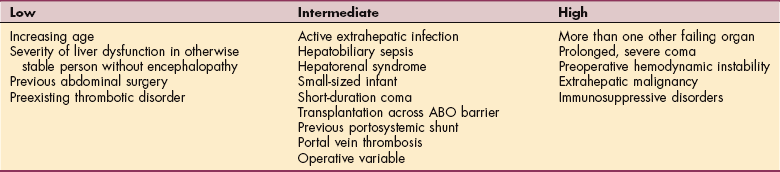
The potential candidate with an end-stage liver disease that is correctable by a liver transplant must also be a good operative candidate. Many potential risk factors have been reported to increase the risk of transplantation (Table 21-6). Clients with alcoholic cirrhosis may be required to remain abstinent 6 months before the transplant, although it has been suggested that liver transplantation itself contributes to recovery from alcoholism.
Table 21-6

Reprinted from Meyers WC, Jones RS: Textbook of liver and biliary surgery, Philadelphia, 1990, Lippincott, p 406.
The recidivism (relapse) rate following liver transplantation varies in reported studies from 4% to 32%, although the majority of studies report a recidivism rate in the 4% to 9% range.229,239 The use of the biologic marker carbohydrate-deficient transferrin to screen for alcoholic relapse has been used for the first time in liver graft candidates but remains controversial.25,269
The liver from the cadaveric donor is removed through a midline incision from the jugular notch to the pubis including a median sternotomy, with particular care to avoid hepatic injury or portal vein transection. The iliac artery and vein are also harvested in the event that vascular reconstruction is required.
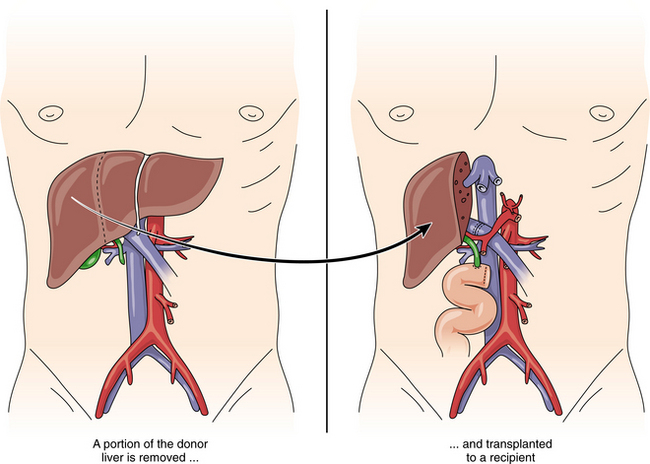
Living related transplantation requires a much less extensive operative opening, and the reduced-size graft is usually taken from the donor’s left lobe (Fig. 21-11). In some situations (e.g., presence of metabolic abnormalities), the autologous graft is placed in an anatomically altered site, thereby preserving the orthotopic position for future use in the case of graft failure; this technique is not possible with disorders leading to portal hypertension.

Figure 21-11 In a minimally invasive live-donor liver transplant, an incision is made just under the donor’s rib cage. A portion of the liver is removed; the donor’s liver will grow back to a normal size within a few weeks. For the recipient, the diseased liver is removed through an incision in the upper abdomen. The donor liver is placed into the abdomen and blood vessels are reattached to the new liver. The bile duct of the donor liver is attached to the recipient’s bile duct or to a segment of intestine so the bile can drain into the small intestine.
Successful engraftment of the donor organ requires a recipient hepatectomy to remove the diseased liver, a procedure that can be difficult when there is severe portal hypertension and excessive collateral formation. In many centers the recipient is placed on heart-lung bypass to avoid congestion of the portal circulation and improve venous return to the heart during implantation, thus improving hemodynamic stability.
The implantation procedure begins with anastomoses, that is, surgical formation of a connection between the donor and the recipient’s suprahepatic and then infrahe patic vena cava. Alternatively, the donor vena cava can be anastomosed side to side with the recipient vena cava if it is left in situ during the recipient hepatectomy (piggyback technique). The operation then proceeds to the portal anastomosis. After all venous connections, the liver is reperfused.
Transplantation of the liver differs from renal, lung, or heart transplantation because there is no intervening assistance from an artificial liver; the technical aspects of liver transplantation require precise connection of the hepatic artery, hepatic and portal veins, and the bile duct. In the case of a living donor, there is a risk of hemorrhage and death if an artery is accidentally severed.
Rejection is the most common cause of liver dysfunction after transplantation, most likely after the first week and during the first 3 postoperative months. As with all organ transplantation procedures, the chance of organ rejection requires the use of immunosuppressants with their associated complications, especially suppression of the body’s natural defenses, making infections a common complication and cause of graft dysfunction.
Each person is also placed on prophylactic medications for a period of time to decrease the risk of opportunistic infection. CMV, a common infectious process, occurs early after liver transplantation. CMV remains a major cause of morbidity but is no longer a major cause of mortality after liver transplantation.
Extrahepatic complications may include renal failure, neurologic disorders, and pulmonary involvement (e.g., pneumonia, atelectasis, respiratory distress syndrome, pleural effusion). Hepatocellular carcinoma, hepatitis B, and Budd-Chiari syndrome may recur in the transplanted liver, but other chronic liver diseases do not recur.
In Budd-Chiari syndrome, occlusion of the hepatic veins impairs blood flow out of the liver, producing massive ascites and hepatomegaly. It is associated with any condition that obstructs the hepatic vein (e.g., abdominal trauma, use of oral contraceptives, polycythemia vera, paroxysmal nocturnal hemoglobinuria, other hypercoagulable states, congenital webs of the vena cava).
Mechanical postoperative complications include biliary strictures; nonfunction of the graft (i.e., the transplanted liver does not function); hemorrhage; and vascular thrombosis of the hepatic artery, portal vein, or hepatic veins. Mononeuropathy of the ulnar nerve occurs in approximately 10% of orthotopic liver transplantation, primarily attributed to intraoperative compression or postoperative trauma. Other upper extremity mononeuropathies may occur as a result of vascular cannulations (flexible tube inserted to deliver medication or drain fluid).55
Other clinically significant neurologic events occur in a substantial percentage of adult liver transplant recipients. Central nervous system complications after liver transplantation may be a consequence of liver disease itself, may be caused by the adrenergic effects of immunosuppressants (e.g., FK506, cyclosporine A), or may result from a wide array of metabolic abnormalities or vascular insults occurring in the early postoperative period.
The most common central nervous system lesions are listed in Box 21-9. The therapist is likely to be familiar with most of these terms, with the possible exception of central pontine myelinosis, which is demyelination of the central pons that causes a locked-in syndrome characterized by paralysis of the limbs and lower cranial nerves with intact consciousness.
Factors determining survival include the underlying cause of liver failure (e.g., poorer prognosis for advanced cirrhosis); the person’s ability to stop the intake of alcohol in the case of alcoholic cirrhosis; and the presence of complications or symptoms of hematemesis, jaundice, and ascites. Continued advances in the use of immunosuppressant-steroid combinations have increased survival rates through effective immunosuppression with minimal toxicity.
In the case of liver transplantation, survival rates correlate with the number of liver transplantation procedures performed in transplantation centers. Overall 1-year survival rates have improved from 70% 10 years ago to more than 85% in many high-volume centers.87 Survival after emergency liver transplantation for acute liver failure is less because such clients are seriously ill at the time of the operation.
The expected 1-year survival rate after a second or subsequent liver transplantation is about 50%. Two groups of people qualify for liver retransplantation: those with serious postoperative complications because of mechanical failure or rejection and those who have a slow, progressive course of chronic hepatic dysfunction, usually caused by rejection or recurrence of primary disease. A model to estimate survival after retransplantation of the liver is being developed to help identify individuals with a poor expected outcome; this information could be useful in further refining candidate criteria selection.199
Current animal research is centered on identifying and harvesting specific stem cells from the bone marrow that, under special conditions, will convert into functioning liver tissue.248 In human research, a new procedure called hepatocyte transplantation is being pioneered. In this procedure billions of donor liver cells are injected by intravenous infusion into the blood with the hope that the cells will correct life-threatening liver problems that would otherwise require a liver transplant.122,264
Other research efforts are working toward the development of bioartificial devices for liver support. An effective temporary extracorporeal liver support system could improve the chance of survival with or without transplantation as the final treatment.107 Bioartificial liver systems have been tested in human beings with acute liver failure but are not available for general use yet. No device has been developed that can perform all the necessary functions of a healthy liver; researchers are trying to develop liver cells that will perform as many of these tasks as possible.61
In 1905, Drs. Carrel and Guthrie began to perform experimental procedures to prove heart transplantation was possible. In 1946, Dr. Demikhov performed the first heterotrophic heart transplantation in a dog. In 1960, Lower and Shumway developed the technique for heart transplantation that remains the basis of standard clinical surgical transplantation technique worldwide. The first human heart procedure was performed in South Africa by Christiaan Barnard (1967), followed shortly by the first U.S. transplant by Norman Shumway at Stanford in 1968.104 To date, over 40,000 individuals have undergone heart transplantation in the United States.316
Heart transplantation has been heterologous (i.e., from a nonhuman primate, a procedure that is no longer performed) or, more commonly, homologous (allograft) (i.e., from another human being). Future trends may develop the heterologous transplantation or xenograft (transplantation from other species, such as the pig); see the previous section on Xenotransplantation in this chapter.
In the past decade there has been a decline in the number of people listed for heart transplantation as well as a decrease in the number of transplantation procedures performed. In 2004 there were just over 2000 heart transplantation procedures done, with approximately 250 of these cases being children. At present there are over 20,000 individuals alive because of a heart transplantation procedure.
The decline in candidates waiting is due to multiple factors, including improvement in the medical and surgical management of coronary artery disease. The waiting list has also declined because there are fewer people who have been classified as a status 2 being activated in the UNOS list. This is partly due to the fact that the data do not support the efficacy of organ allocation to this group of individuals, and the increase in organ sharing allocates the donor organs to sicker recipients who are listed as status 1A and 1B.316
There has been an increase in the number of women awaiting transplantation, number of people waiting with a diagnosis of cardiomyopathy, and the number of individuals waiting for heart transplantation due to congenital defects.316
Potential candidates of cardiac transplantation must have end-stage heart disease with severe or advanced heart failure (New York Heart Association class III or IV end-stage heart disease) to be considered for a donor heart. In the United States, the most common underlying causes of heart failure leading to cardiac transplantation are ischemic coronary heart disease and cardiomyopathy. Cardiomyopathy is a general term that can include ischemic and nonischemic causes for myocardial dysfunction.
Other less common cardiac diseases that may be treated with heart transplantation include sarcoidosis, restrictive cardiomyopathy, hypertrophic cardiomyopathy, congenital heart disease untreatable by surgical correction or medical treatment, and valvular heart disease when the risk of cardiac surgery is prohibitively high.
The selection of candidates for heart transplantation involves the use of multiple prognostic variables (Box 21-10; see also Box 21-5) in conjunction with medical urgency criteria established through UNOS status listings (see Box 21-4). People accepted as candidates for heart transplantation are expected to have a limited survival if they do not have surgery.
Pediatric listings differ slightly. Status 1A characterizes a child less than 6 months of age with pulmonary arterial pressure greater than 50% of systolic pressure and life expectancy less than 14 days. Status 1B indicates growth failure in a child under 6 months of age with a pulmonary arterial pressure less than 50% of systolic pressure. Status 2 and 7 are the same for children and adults.
Risk factors in the adult heart transplant candidate must be assessed to provide guidelines about the timing of placing a person on the UNOS waiting list and when to perform the transplantation. The measure of peak exercise oxygen consumption (peak VO2) has become an indicator of prognosis in advanced heart failure and is currently being used as a major criterion in many centers for the selection of candidates for heart transplantation.
Individuals with peak VO2 less than 14 ml/min/kg have a lower survival rate unless treated successfully with transplantation. However, VO2 can be affected by age, gender, muscle mass, and conditioning status. The multiple factors that affect peak exercise capacity may explain why some people with congestive heart failure and a peak VO2 of less than 14 ml/kg/min have a favorable prognosis even when transplantation is deferred.23,47,257
Ejection fraction and capillary wedge pressure are also used to assess risk. Anyone with an ejection fraction of less than 20% is also considered a potential candidate for transplantation. Ejection fraction is the amount of blood the ventricle ejects; the normal ejection fraction is about 60% to 75%. A decreased ejection fraction is a hallmark finding of ventricular failure.
Other selection criteria are being debated, such as the issue of transplantation in anyone with diabetes. Currently, most centers accept candidates with well-controlled diabetes who have no microvascular disease; some of the larger centers may consider an individual who presents with mild complications of diabetes.
Age cutoff is also controversial; although the upper age limit for transplantation candidates has been 55 to 65 years, some centers are now willing to transplant hearts or combined heart-kidney transplants into older people who are healthy in all other respects. Age limits for combined organ transplantation are more stringent, with a cutoff age at 50 to 55 years.
The average wait (median) for heart transplantation is between 150 to 180 days for a status 1 candidate. During this wait period the candidate may suffer the progression of the heart failure or the onset of new medical issues, which may complicate the transplantation procedure and negatively impact outcomes.
Despite the decline in individuals waiting for a heart transplant, the supply of donor hearts is limited. UNOS reported that the death rate for potential candidates waiting is 156 deaths per every 1000 patient years. Women die more often than men, possibly because of delayed diagnosis and more advanced heart disease at the time of diagnosis.316
To perform a transplantation, the autonomic nervous system is surgically disconnected to remove the diseased native heart. The autonomic nervous system is not reconnected at the time of the donor heart implantation. This leaves the transplant recipients with the loss of the fight-or-flight response. The heart relies on the intrinsic properties of the heart for sufficient contractility and cardiac output.
In general the recipient will have an elevated heart rate at rest due to the loss of the parasympathetic input, a decrease in compliance (the heart’s ability to relax to completely fill), and a blunted heart rate response with exertion due to the loss of the sympathetic nervous system. The heart relies on the release of catecholamines to increase rate and contractility, and there is a delay in recovery. In general, the recipient has an exercise capacity of 65% to 70% of predicted VO2 capacity.134
Almost all heart transplantations done at this time are orthotopic; that is, the diseased heart is removed and the donor heart is grafted into the normal anatomic site. There are three surgical procedures that can be used to implant the heart: biatrial, bicaval, and total procedure. The biatrial procedure involves suturing the new heart on the native atrial wall. This procedure is not used as much anymore due to the increased incidence of arrhythmias and valvular dysfunction when compared with the other two procedures. The bicaval procedure is the most common at this time and involves the anastomoses of the superior and inferior venae cavae. The total procedure includes the bicaval approach plus the anastomosis of the pulmonary veins.116,266
In the heterotopic cardiac transplantation, the recipient’s diseased heart is left intact and the donor heart is placed in parallel with anastomoses between the two right atria, pulmonary arteries, left atria, and aorta. In the heterotopic transplantation, the donor heart assists the diseased heart. This type of procedure accounts for less than 1% of the transplantation population and may be performed in an individual with fixed pulmonary hypertension or someone who is physically very large, requiring a higher cardiac output than a donor heart from an average-size donor.
One of the most common posttransplant complication is rejection. With the increased understanding of the immune system there has been a decrease in hyperacute rejection. This type of rejection occurs within minutes to hours postimplantation and involves a catastrophic immune response from the interaction between the recipient’s circulating antibodies and donor antigens.104,190
An episode of acute rejection can occur at any time after transplantation but is most common within the first 6 months. Acute rejection can be an antibody-mediated response and or T cell–mediated response. The antibody-mediated acute rejection occurs early in the postoperative period and is associated with capillary endothelial changes with macrophage and neutrophil infiltrations and interstitial edema.
T cell–mediated rejection is associated with increased lymphocytes and macrophages, which lead to a complex immune response and the activation of cytotoxic T cells, B cells, and natural killer cells, resulting in the destruction of interstitial and vascular graft tissue.134,190,261 The recipient may present with variable signs and symptoms, including malaise, fever, alteration in heart rate or arrhythmias, decreased exercise tolerance, and heart failure. The recipient may also be totally asymptomatic.134
Transplant Coronary Artery Disease (Allograft Vasculopathy).: The third type of rejection is chronic rejection, which can present as a medical issue months to years posttransplant. In the heart transplant recipient, chronic rejection presents itself as coronary arterial vasculopathy.
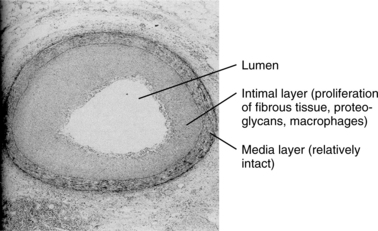
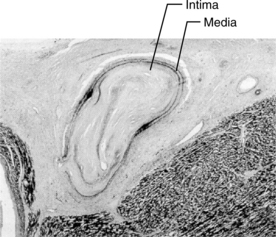
Chronic rejection is associated with both humoral and cellular acute rejection, leading to a diffuse proliferation of smooth muscle cells, concentric intimal narrowing, and accelerated diffuse obliterative atherosclerosis of both intramyocardial and epicardial arteries and veins (Figs. 21-12 and 21-13).

Figure 21-12 Transplant coronary artery disease. Proliferation of the intimal layer of the epicardial coronary artery from a 14-year-old cardiac transplant recipient 1 year after transplant. This condition produces a significant reduction in diameter of the arterial lumen that will compromise blood flow to the myocardium. (Reprinted from Gajarski RJ: Update on pediatric heart transplant: long term complications, Tex Heart Inst J 24[4]:260-8, 1997.)

Figure 21-13 Transplant coronary artery disease resulting in complete occlusion of epicardial coronary artery in an 11-year-old heart transplant recipient 4 years after transplantation. The lumen is obstructed with dense fibrous tissue with thinning and fibrosis of the media layer. (Reprinted from Gajarski RJ: Update on pediatric heart transplant: long term complications, Tex Heart Inst J 24[4]:260-8, 1997.)
Chronic rejection, or coronary arterial vasculopathy, is associated with prolonged ischemia at the time of transplantation, severity and frequency of acute rejection, diabetes, smoking history, and CMV.90,116 Recipients who are suffering from chronic rejection may initially be asymptomatic, but as the disease progresses the recipient will present with signs and symptoms of heart failure.
It is atypical for the patient to experience any angina symptoms despite the atherosclerosis and decreased myocardial perfusion because of the lack of autonomic nervous system innervation. There have been case reports that some recipients present with angina-like symptoms leading to the diagnosis of vasculopathy and the conclusion that, to some degree, there is reinnervation of the sympathetic nervous system.
These reports are supported by the fact that 2 to 4 years posttransplant, the recipient has an increase in heart rate response during exercise and a quicker recovery, which suggest some recovery of the autonomic nervous system. Therefore it is important that transplant recipients undergo routine testing to rule out myocardial ischemia related to vasculopathy.21,134
Infection.: As the transplantation team manages the immunosuppressive medications to minimize the incidence and severity of rejection, the risk of infection increases. Infections account for approximately 20% of deaths within the first year.192
The characteristics of infection in the transplant recipient can be classified in several ways. Infections can be classified in relation to the time of transplant. Infections occurring within the first month may be (1) related to unresolved infection of the recipient prior to transplant and exacerbated by the surgery and the immunosuppressive therapy; (2) transmitted from the donor; and (3) perioperatively related to the medical and surgical procedure, including line, wound, and pulmonary infections (most common).
These infections are most commonly caused by bacteria, hepatitis, and herpes simplex virus. Infections are most common between 1 and 6 months posttransplant, usually related to a prior infection that has not resolved within the first 30 days. There is an increased incidence of viral infections including CMV, tuberculosis, EBV, and opportunistic infections that include Pneumocystitis carinii pneumonia, and fungal infections such as Candida and Aspergillus.
After 6 months, complications related to infections are typically associated with community-acquired infections such as influenza and respiratory syncytial virus. CMV continues to be a concern. CMV is associated with infection, and there is an increase in acute and chronic infection in recipients who are positive for CMV, particularly if there is a mismatch between the recipient and donor. The highest risk of complications from CMV occurs when the recipient is seronegative and the donor is positive.134,201
Acute Graft Failure.: In the early postoperative phase, the donor heart may not sufficiently support the circulatory demand of the body and is associated with early morbidity and mortality. The dysfunction of the graft may be related to an ischemic injury sustained in the procurement process. There may be a reperfusion injury sustained at the time when the circulation is reestablished through the donor heart. Finally, graft dysfunction may be the result of acute right ventricular failure because the right ventricle is not accustomed to contracting against the elevated pulmonary arterial pressures within the recipient’s pulmonary vascular resistance.134
Neuromuscular.: Reports have also been made of generalized polyneuropathy accompanying solid-organ rejection of the heart and kidneys. The neuropathy affects proximal and distal muscles and demonstrates hyporeflexia or areflexia.
Musculoskeletal.: There is a decrease in muscle mass and strength due to the effects of immobility, chronic effects of the inflammatory response, and effects of immunosuppressive medications. Tacrolimus and cyclosporine inhibit and transform myosin heavy chain and oxidative enzymes from fast to slow muscle twitch. There is also a decrease in skeletal muscle perfusion due to the increased sensitivity of peripheral chemoreceptors.64
Osteopenia and osteoporosis are significant complications for transplant recipients of all ages. Osteopenia has been reported to affect 20% to 49% of candidates waiting for transplantation, and 14% have evidence of vertebral compression fractures. Posttransplantation, the risk of bone disease increases with the use of immunosuppressive medications and renal dysfunction. Corticosteroids stimulate an increase in osteoclastic activity and have adverse effects on skeletal muscles that further contribute to decreased bone density.
The effects of calcineurin inhibitors are still unclear, but in animal models it appears that they increase the rate of bone turnover, with the bone reabsorption rate being greater than the rate of bone formation. Tacrolimus and cyclosporine also have adverse effects on skeletal muscles.37,193
Cancer.: The incidence of cancer is proportional to the drug levels of the immunosuppressive medications; in general, average onset is between 2.5 and 4 years posttransplant. Skin cancer is the most common form of cancer (basal cell more often than squamous cell carcinoma).
With heart transplant recipients there is a higher incidence of lymphomas related to high drug levels and the use of OKT3. Posttransplant lymphoproliferative disease (PTLD) is associated with EBV, which causes a proliferation of B cells; more recently, however, there appears to be an association with EBV and T-cell proliferative lymphomas. In the early posttransplant phase PTLD may begin in the donor organ; it is important to differentiate PTLD from rejection. PTLD may also present in extranodal sites such as the lung, gut, or central nervous system as well as a disseminated disease.192,244,256,298
Other.: Other complications occur as a result of long-term use of immunosuppressive medications and their adverse effects (see the section on immunosuppressants in Chapter 5). It has been reported that 50% to 95% of recipients will be treated for hypertension due to medications and renal insufficiency. Sixty to 80% of recipients will have hyperlipidemia, and approximately 35% to 40% will develop diabetes.
One third of recipients will have renal dysfunction, with approximately 5% to 8% progressing to ESRD and requiring hemodialysis or renal transplantation.134,192 Cyclosporine-or tacrolimus (FK506)-induced hyperuricemia, along with renal insufficiency and use of loop diuretics, can lead to an increase in gout.
Gout is characterized by early symptoms, including arthralgias and monoarthritis affecting the first metatarsophalangeal joint, knees, ankles, heels, and insteps. Over time, upper extremity joints become involved, progressing to polyarticular chronic arthritis. Treatment is as for primary gout (see Chapter 27).
Gastrointestinal problems are especially prevalent after lung transplantation and heart-lung transplantation, and less often after heart transplantation. Problems range from major (diverticulitis, perforation, and malignancy) to minor (polyps, pseudo-obstruction, and benign anorectal disease).113
Finally, 25% of recipients will need to be treated for depression. There have been reports that approximately 10% of recipients suffer from PTSD.102,116,192
The International Society of Heart and Lung Transplantation reports over 66,000 heart transplant procedures; there were approximately 19,000 recipients alive in the United States in 2004. In general, people tolerate the transplantation procedure well, and the graft resumes normal function promptly.
Recipients are often extubated and out of bed into a chair 1 to 2 days after surgery. Survival times were short 30 years ago, but new immunosuppressive drugs developed in the mid-1980s and improved in the 1990s, more careful candidate selection, endomyocardial biopsy to allow for early rejection detection, and advanced medical-surgical techniques have contributed greatly to improved longevity.
Only a decade ago, infection and acute and/or chronic rejection were the major causes of death in heart transplant recipients. With improved longevity, chronic graft vasculopathy (accelerated atherosclerosis, transplant coronary artery disease) and malignancies are now the primary causes of death among heart transplant recipients. Infection, rejection, and sequelae of long-term immunosuppression (especially renal insufficiency or renal failure) remain the primary treatment issues.
UNOS reports continued improvement in the survival rates after cardiac transplantation. Survival rates are excellent, with a 3-month survival rate of 92% and 1-year, 3-year, and 5-year survival rates of 87.5%, 78.4%, and 71.5%, respectively.
There are several factors that contribute to survival rates. Individuals who undergo transplantation due to cardiomyopathy have a higher survival rate than patients with ischemic heart disease. Retransplantation still has the lowest survival rate at 57%.316 Caucasians have the highest survival rates, with African-American recipients having an approximately 10% lower 5-year survival rate. Adolescent recipients also have 5-year survival rates below 70%, and women have a 5% lower 5-year survival rate than men.134,316 Although data are limited on the long-term success of heart transplantation, nursing homes are now receiving organ transplant recipients as residents.99
Artificial heart devices (e.g., AbioCor system [ABIOMED, Danvers, Mass.], CardioWest total artificial heart [SynCardia Systems, Inc., Tuscon, Ariz.]) are a possible alternative to VADs. Individuals who have both right-and left-sided heart failure or who have other problems that limit the use of left VADs may benefit from an implantable artificial heart. The artificial heart is designed to sustain the body’s circulatory system and to extend the lives of people who would otherwise die of heart failure.
The first human recipient in 2001 survived 17 months after the artificial heart was implanted. Since then fully implantable artificial heart devices have been approved by the Food and Drug Administration (FDA) under Humanitarian Use Device rules. These devices are intended to benefit patients by treating or diagnosing a disease or condition that affects fewer than 4000 individuals per year in the United States and for whom no comparable device is available.
The FDA approves a Humanitarian Use Device based primarily on evidence that it does not pose an unreasonable or significant risk of illness or injury to the patient and that the probable benefits to health outweigh the risk of injury or illness from its use; however, the effectiveness of the device for the condition has not been demonstrated.
To date the artificial heart has only been approved for use in cases of end-stage heart failure with irreversible left and right ventricular failure and when surgery or medical therapy is inadequate. Individuals with advanced heart failure who are not eligible for heart transplantation or other treatment and who are not expected to live more than 30 days without intervention may receive an implantable replacement heart.
The anatomic heart is removed during the implantation procedure and replaced with a battery-operated mechanical heart. The internal battery can be recharged through tiny wires from the implant to the surface of the skin. The person can be free from external connections for short periods of time. During sleep the system is plugged into an electrical outlet.
Other research centers on the role of stem cells in cardiac regeneration. After myocardial infarction, injured cardiomyocytes are replaced by fibrotic tissue, promoting the development of heart failure. Cell transplantation has emerged as a potential therapy, and stem cells may be an important source of these cells. Embryonic stem cells can differentiate into true cardiomyocytes, making them a potential source of transplantable cells for cardiac repair.284
Cardiac disease is the leading cause of death in the United States, with over 5 million individuals living with heart failure. Cardiac transplantation is a limited option because of the shortage of donor organs, with less than 2500 hearts harvested per year; in addition, not all people with end-stage heart disease are candidates for transplantation.278
As a result, mechanical circulatory support has become an established procedure for bridging people to cardiac transplantation and more recently is under investigation as an alternative to transplantation.314 Mechanical circulatory support can be generally classified into three systems. The intraaortic balloon pump (see discussion in Chapter 12 and Fig. 12-14) is primarily used to stabilize a patient’s cardiac system by improving myocardial perfusion and decreasing the work of the left ventricle during acute distress. Ten to 20 years ago the intraaortic balloon pump was also used to support a person who had decompensated from heart failure and was waiting for transplantation.
Extracorporeal membrane oxygenation (ECMO) is a mechanical circulatory device similar to the cardiopulmonary bypass machine used during open heart surgery. This device will support both gas exchange and circulation for a heart that is poorly functioning. It is typically used when someone has a complication during an open-heart procedure and is placed on ECMO to support the cardiopulmonary system.
Finally, there are several VADs that can be used to support heart function. It is estimated that approximately 50,000 people with heart failure are candidates for VAD support. The term VAD describes any of a variety of mechanical blood pumps used to replace the function of the right or left ventricle or both. Although the first VAD was implanted in 1969, it was not considered a true surgical option for heart failure until 1984, when the first patient was implanted with a VAD as a bridge to transplantation.104,129
Types of VADs.: There are several ways VADs can be classified, including length of time their use is intended, how they operate, and how they support heart function. First, there are devices designed to provide acute and temporary support (10 to 14 days). These devices can support the function of the right or left ventricles or provide biventricular support.
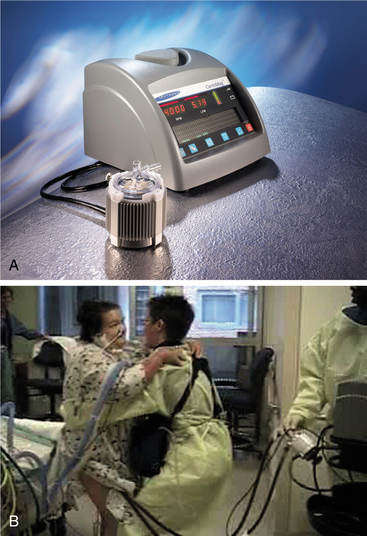
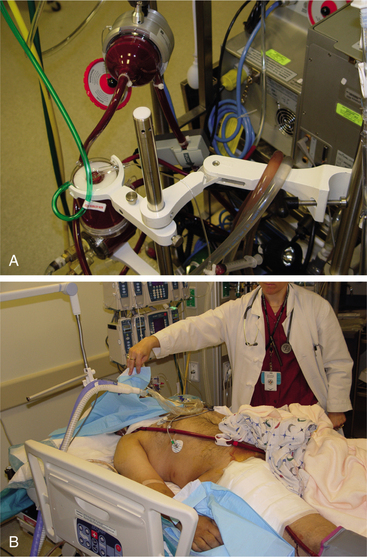
These VADs are implanted in emergent situations or when the medical team believes that if the heart is allowed to “rest” it may recover and resume a sufficient function. Bio-Medicus (right ventricle support; Medtronic, Minneapolis, Minn.), ABIOMED (right, left, and biventricle support), and CentriMag (right ventricle support; Thoratec Corporation, Pleasanton, Calif.; Fig. 21-14) are examples of temporary VADs.

Figure 21-14 A, CentriMag is a VAD that is designed to provide emergent and temporary (up to 14 days) right, left, or biventricular support with the goal to achieve hemodynamic stability. B, A patient is initiating gait training while being supported by a right VAD (CentriMag), another more long-term left VAD (VentrAssist), and mechanical ventilation. (A, Courtesy Levitronix, LLC, Waltham Mass. B, Courtesy Chris L. Wells, University of Maryland Medical Center.)
The ability of the rehabilitation staff to mobilize these patients will depend upon two things: the hemodynamic stability and how well the cannulas (conduits that carry blood between the VAD and the body) are sutured to secure the connections between the cannulas and the cardiovascular system.
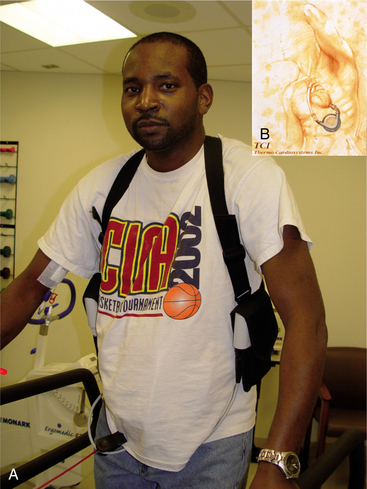
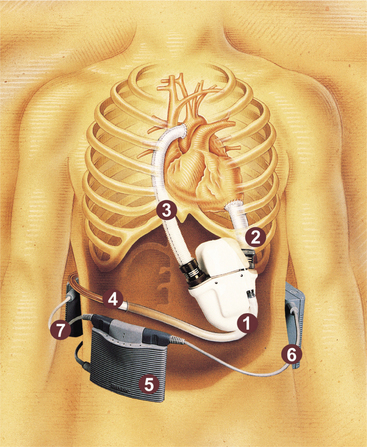
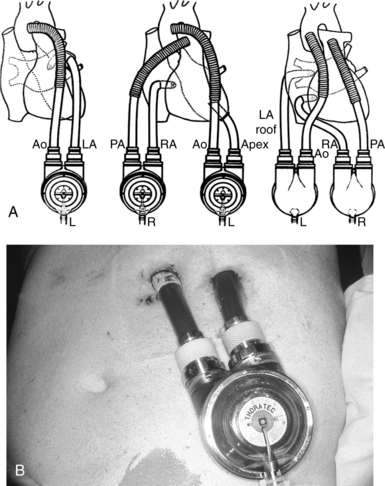
There are several devices that are designed for longer use such as the Thoratec and HeartMate (Thoratec Corporation, Fig. 21-15), Novacor (WorldHeart, Oakland, Calif.; Fig. 21-16), Jarvik (Jarvik Heart, Inc., New York; Fig. 21-17), and VentrAssist (Ventracor Limited, Chatswood, NSW, Australia). (The VentrAssist device has not approved for clinical use in the United States and is still under clinical investigation.) All of these VADs are designed to support the left ventricle except the Thoratec (Fig. 21-18), which can also support the right ventricle or both.

Figure 21-15 A, HeartMate XVE is a vented electrical left VAD that works in parallel with the native heart to support left ventricular function. HeartMate XVE provides sufficient systemic circulation and allows for relatively free mobility so that the person can return home and actively participate in a comprehensive exercise program and other noncontact recreational activities. B, Diagram of placement of device. (A, Courtesy Chris L. Wells, University of Maryland Medical Center; B, Courtesy Thermo Cardiosystems, Inc., Woburn, Mass.)

Figure 21-16 Novacor (an implantable electromagnetically driven left VAD that provides systemic circulation. The components of this device include a (1) pump, (2) inflow conduit, (3) outflow conduit, (4) percutaneous lead (driveline), (5) controller, and (6, 7) power packs. Blood circulates from the left ventricle through the inflow conduit into the pump. Upon filling the pump will eject the blood into the aorta via the outflow conduit. (Courtesy WorldHeart, Inc., Oakland, Calif.)

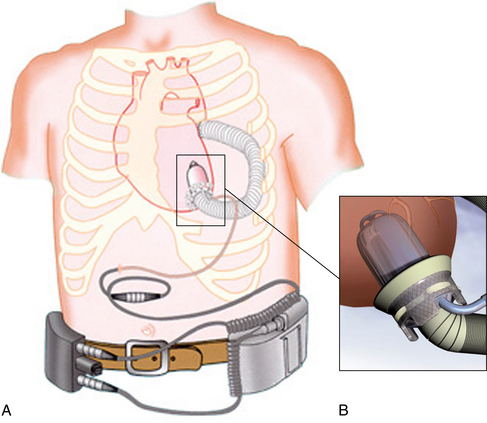
Figure 21-17 Jarvik 2000 is a left VAD that is surgically implanted within the left ventricle and constantly circulates blood by way of a spinning rotor pump. A, Full thoracic view. B, Inset: Close-up view of the nipple-shaped implant into the anatomic heart. (A, Courtesy Texas Heart Institute, St. Luke’s Episcopal Hospital, Houston, Tex., 2000; available at www.texasheartinstitute.org. Used with permission. B, Courtesy Robert Jarvik, MD, used with permission.)

Figure 21-18 A, The Thoratec is a pneumatically driven VAD shown here with various cannulation options. It can support the right, left, or both ventricles. This device is used as a bridge to transplantation or in the case of possible recovery of the native heart function. B, Thoratec left VAD. The actual pump is external to the body, which allows this device is be used for people of smaller stature. Another special feature of this device is its ability to support a patient in biventricular or only right ventricular failure. (A, Courtesy Thoratec Laboratories, Pleasanton, Calif. B, Courtesy Chris L. Wells, University of Maryland Medical Center.)
These devices are implanted when it is determined that (1) the person’s heart can no longer support function despite maximal medical intervention, (2) the person needs support while their medical or functional status is improved to make them a better transplant candidate, or (3) the team is expecting the patient will have to wait a long time for a donor heart to be found. The use of a VAD as a bridge to transplantation has decreased the mortality rate by almost 50% when compared with medical treatment.278
VADs can also be classified by how the pump circulates blood. Many pumps mimic the function of the heart, meaning the pump has a diastolic or filling time and a systolic phase that ejects the blood forward into arterial circulation. These VADs are considered pulsatile. The rate of the VAD and the amount of blood that is ejected from the pump produces the pump output, which is equivalent to the cardiac output.
The function of the VAD will result in a peripheral pulse and blood pressure. It is important that the clinician remember when verifying the accuracy of the recording from a pulse oximeter that the heart rate on the oximeter should match the pump rate, not the intrinsic heart rate. Examples of VADs that are pulsatile include the Novacor, HeartMate I, and Thoratec.
Nonpulsatile pumps circulate blood in a continuous manner, meaning there are no systole and diastole phases. The HeartMate II, Jarvik 2000, and VentrAssist are examples of nonpulsatile VADs. How much blood is circulated through the pump will determine if a peripheral pulse can be palpated. The higher the flow through the VAD, the less likely blood will be ejected across the aortic valve, thus creating a peripheral pulse.
If the VAD is pulling larger volumes of blood through it, then there is less blood in the chamber. When the myocardium contracts it does not have enough blood to open the atrial valve and create a peripheral pulse. This makes it very difficult to obtain standard vitals. For these individuals it is important that the clinician properly instruct patients to use a subjective scale like a perceived exertion or dyspnea scale to monitor themselves. Doppler ultrasound may be used to help the clinician obtain vitals.
For right ventricular assistance, blood is typically withdrawn from the right atrium and returned to the main pulmonary artery. For left ventricular assistance, blood is withdrawn from either the left atrium or the apex of the left ventricle. The blood passes through the left VAD and is returned to the ascending or descending aorta.
In general, the VAD has three primary components. There is the pump itself, which is surgically implanted within the body’s intracardiac (Jarvik) or intraabdominal wall (Novacor, HeartMate, and VentrAssist). The Thoratec is an example of one VAD that has the pump external to the body.
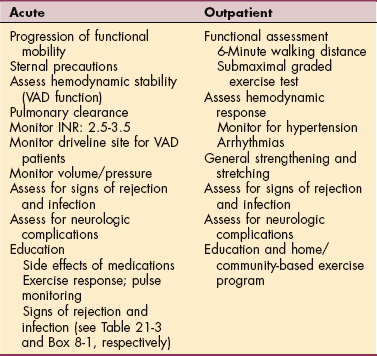
The second component of VADs is a computer or controller, which is responsible for running the pump. Finally, there must be a power source; the majority of VADs have the ability to run from AC power or a portable battery (see Fig. 21-15). It is important that the therapist have an understanding of how the VADs operate, how to change power sources, and how to attend to any alarms or emergency procedures when working with someone who is being supported by a VAD.
One of the exciting factors when working with anyone on VAD support is the marked improvement in rehabilitation potential. Once the person is stable (often within 24 hours after implantation), the physical therapist should be initiating functional mobility and begin to increase strength, anaerobic, and aerobic capacity.
VADs are capable of increasing pump output and therefore able to increase systemic circulation sufficient enough to allow for an excellent rehabilitation potential. The rehabilitation staff plays a critical role in the management of these individuals by restoring functional mobility, improving exercise tolerance, and preparing the patient for transplantation. The majority of these patients can be discharged home 2 to 3 weeks after implantation and should be referred to an outpatient clinic and then to a community health club to continue their exercise program.
Besides the use of VADs as a bridge to transplantation, this technology now allows selected people to receive long-term (permanent) support as a substitute for cardiac transplantation. There are several multicenter clinical trials presently underway. The goal is to study the efficacy of VADs as a destination or permanent implantation for the management of end-stage heart failure for people who are not candidates for transplantation (Novacor, HeartMate I, and HeartMate II).100,124,131,278 More research will be needed to determine optimal modes of support and predictive factors for those individuals likely to recover.
Indications.: VADs are indicated for people with severe heart failure after cardiac surgery, for individuals who have intractable cardiogenic shock after acute myocardial infarction, and in clients who deteriorate while awaiting cardiac transplantation. The use of VADs to salvage individuals with cardiac arrest, severe hemodynamic instability, and multiorgan failure results in a poor outcome at this time; the use of ECMO is a more effective strategy in this group.238
The general criteria for heart transplantation is the same as for VAD implantation, particularly if the person is being considered for transplantation. The person with pulmonary hypertension may undergo VAD implantation to decrease pressure prior to heart transplantation.
The VAD will decrease the level of pressure in the left atrium by improving forward circulation. This decrease in pressure will lower pressure throughout the pulmonary system if there has not been diffuse or permanent pulmonary endothelial damage.124 People considered for VAD as a form of destination therapy may also include older adults, the obese, or people who are seropositive for hepatitis or HIV.
Complications and Prognosis.: Device-related infection remains the single most important postoperative complication associated with extended use of VADs, most often arising from the percutaneous driveline exit site. A specialized Dacron (E.I. DuPont de Nemours, Wilmington, Del.) material at the driveline sites promotes skin growth healing around the driveline to minimize infections.
It is critical that all clinicians and the patient make sure the driveline dressing is intact and that the patient is wearing an abdominal binder to decrease stress at the driveline site and prevent disruption of the tissue growth around the line. Researchers are working to develop an antimicrobial driveline that will prevent early infections and facilitate in-growth of tissue to provide long-term stability and protection against late infection.63 Driveline infections account for 30% of the VAD-associated complications.
Other complications include cerebrovascular accidents, accounting for 10% of deaths. The development of right ventricular failure after left VAD implant is possible. Complications also include bleeding related to prolonged cardiopulmonary bypass, anticoagulopathy, surgical dissection, and liver dysfunction. Pump or mechanical dysfunction or failure is a possibility; there fore it is important that the patient and family are trained in emergency procedures. Finally, multisystem organ failure accounts for 27% of VAD-associated deaths.278
The first lung transplant was performed in 1963 on a 58-year-old man with bronchogenic carcinoma; he survived for 18 days. Other lung transplantations were attempted without success because of lung rejection, anastomotic complications, or infection in the transplant recipients.
Long-term survival was achieved in 1965 with the discovery of chemical immunosuppression, but the real breakthrough came in 1981, when the first successful human heart-lung transplantation was performed for the treatment of pulmonary vascular disease and in 1983 with the first double-lung transplant.266,332 The lung is the most difficult organ to preserve its function to allow for harvesting. Upon the brain death of an individual there is a catecholamine storm that occurs, which leads to the disruption of the pulmonary capillary beds. The consequence is pulmonary edema and difficulty with ventilation and oxygenation.
There is also an increased risk to lung injury due to pulmonary contusion if the death of the donor was traumatic, as well as the risk of aspiration and ventilatory-related trauma and pneumonia.266 Less than 15% of cadaveric donors have lungs suitable for harvest.251 With the shortage of available donor lungs, approximately 15% of people die while waiting on the transplantation list. The shortage has also led surgeons to accept more marginally functioning organs, perform more single-lung transplantation procedures, and even perform living related lung transplantation procedures in order to attempt to save and improve lives.252,266,295
At present there are 63 active lung transplantation centers in the United States. Over the past 25 years there has been an expansion in the number of diseases that can be successfully treated by lung transplantation. Currently, chronic obstructive pulmonary disease (usually smoking-related emphysema but also including emphysema due to alpha1-antitrypsin deficiency) is the most common indication, accounting for approximately 45% of all lung transplantations.68,236
Other common indications include interstitial pulmonary fibrosis, cystic fibrosis, primary pulmonary hypertension, and Eisenmenger syndrome (pulmonary hypertension secondary to congenital heart disease).
Less frequent indications include sarcoidosis, lymphangioleiomyomatosis, eosinophilic granuloma, drug-induced and radiation-induced pulmonary fibrosis, and occupational-induced pulmonary diseases, such as silica farmer’s lung, that lead to pneumonitis and pulmonary fibrosis. Pulmonary disease arising from an underlying collagen vascular disorder such as scleroderma and lupus can also lead to end-stage lung disease.
Although lung cancer has traditionally represented an absolute contraindication to transplantation, successful transplantation for bronchoalveolar carcinoma has been documented.92
The timing for referral to a transplantation center is very complicated and depends on many variables. The general practitioner should make an early referral to the center to allow the center to determine the best timing for transplantation evaluation and possible listing.
It is both science and art to determine the best time to list a person for transplantation based on the disease process and its progression, blood type, other medical conditions, and even the activity level of the center. The important thing is to list a potential candidate for transplantation when the data suggest that the person can survive the expected waiting time for transplantation without developing other contraindications to transplantation. Contraindications may include irreversible damage to other organs, certain types of infection, dependency on mechanical ventilation or poor functional capacity,110,225 or ambulatory but functional disability. The candidate must be free of clinically significant cardiac, renal, or hepatic impairment.
Until 2005 the allocation of donor lungs was primarily decided by the amount of waiting time a potential candidate had registered with UNOS. In 2005 the Lung Allocation System (LAS) was implemented with the goal to better identify candidates and utilize the very limited resources to achieve the best possible outcomes.
The LAS is based on the previous 6 months of medical information to estimate for each candidate the risk of dying before transplantation, which is then mathematically combined with the probability of survival for the recipient after transplantation. Each candidate is assigned an LAS score; the procurement centers then allocate donor organs based on those LAS scores. The scores can be updated as the candidate’s state of heath changes (see Box 21-4).252,318
General categories to cluster diseases have been made to include (1) individuals with an obstructive disease (emphysema, and alpha1-antitrypsin deficiency), (2) pulmonary vascular disease (primary pulmonary hypertension and Eisenmenger syndrome), (3) cystic fibrosis and immunodeficiency disorders, (4) pulmonary restrictive disorders (idiopathetic and nonidiopathic pulmonary fibrosis), and (5) other.
International disease-specific guidelines for candidate selection have been published (Box 21-12). The average waiting time is decreasing, but it is unclear at this point the effectiveness of the LAS in managing the waiting list; allocating organs and outcomes of lung transplantation depend on blood group, type of procedure, and transplantation location.
The median waiting time is 560 days, with time to transplantation in the 25th percentile of approximately 200 days. Candidates waiting for bilateral lung transplantation procedure typically will wait longer due to the difficulty of finding a donor who has two suitable organs. Individuals who require bilateral lung transplantation typically have cystic fibrosis or Eisenmenger syndrome. These clients tend to be small in stature, which also adds to the waiting time because the donor needs to be smaller than average to be suitable.252,316
The last reported death rate while waiting for a lung transplantation was 134 per 1000 patients, with potential candidates who were over age 65 years and children between 1 and 5 years of age having a higher risk of death while waiting. In 2004, there were 211 deaths per 1000 patients in adults over 65 years and 171 deaths in children per 1000 patients.316
Over the years the criteria for listing has become less restrictive at many transplantation centers. As a consequence there has been an increase in people of older ages who have been listed and undergone transplantation. There is an increase in the number of candidates between the ages of 50 and 64 years and in candidates over 65 years of age. Together these two groups account for more that 50% of the candidates.316 In general, the following age limits have been recommended: 55 years for candidates for heart-lung transplantation, 60 years for candidates for double-lung transplantation, and 65 years for candidates for single-lung transplantation.206
Many other considerations are used in the determination of a lung transplantation candidate because of the potential complications associated with these factors (see Box 21-5). Some of these variables include the presence of severe osteoporosis, the degree of systemic and pulmonary hypertension, diabetes mellitus, and coronary artery disease that may worsen after transplantation; mechanical ventilation at the time of transplantation (higher mortality rate); underlying collagen vascular disease; presence of antibiotic-resistant infections, especially Burkholderia cepacia (a multiresistant bacterial respiratory infection associated with severe and often lethal postoperative infections); and previous thoracic surgery.13
The four major surgical approaches to lung transplantation are single-lung transplantation, bilateral sequential transplantation, heart-lung transplantation, and transplantation of lobes from living donors. Single-lung transplantation has been the most commonly used procedure because of the ease with which it can be done and the fact that one donor can be used for two candidates.
Single-lung transplantation requires a posterolateral thoracotomy, whereas double-lung transplantations are typically done through bilateral anterior thoracotomies and a horizontal disruption of the sternum, referred to as a “clam shell.” In this latter procedure, the rib cage and sternum are lifted anteriorly and superiorly as you would lift the hood of your car. This procedure allows good visibility of the mediastinum. The heart-lung procedure is still generally performed through a mediasternotomy.
In general, donor lungs should be the same size or just slightly larger than the recipient so that the donor lobes fill each hemithorax, avoiding persistent pleural space problems in the recipient. However, donor lungs must have a lung volume similar to or less than that of the intended recipient; larger lungs in single-lung transplantation can be placed on the left side, where the diaphragm has the potential to descend because of the absence of the liver under the left hemidiaphragm. In living related donations, a lobe (generally the right or left lower lobe) is removed from each of the two donors and is used to replace the lungs of the recipient.
There is an increased risk of a reperfusion injury to the donor lung. However, for candidates with pulmonary vascular disease, both single-lung transplantation and double-lung transplantation can result in immediate and sustained normalization of pulmonary vascular resistance and pulmonary arterial pressures. This good result is possible if the proper medical care, including accurate size of the donor organ and the use of prostaglandin medications, is provided in the pretransplant, perioperative, and posttransplant periods.103 There is an immediate increase in cardiac output and gradual remodeling of the right ventricle with a decrease in ventricular wall thickness.
Postoperative complications of primary lung transplantation include infection; dysfunction of the bronchial and/or vascular anastomoses, including bronchial stricture or malacia, stenosis, or occlusion of the venous anastomoses; and acute or chronic rejection.
Graft Failure.: Within the first 30 days the primary cause of death is from primary graft failure. This is primarily attributed to an ischemic reperfusion injury sustained in the perioperative or acute postoperative period and occurs in some degree in 30% of all lung transplant recipients.
Graft failure due to ischemic reperfusion injury accounts for 30% of the deaths within the first 30 days and another 30% in the next 60 days. Ischemic reperfusion injury may lead to acute lung injury, previously referred to as adult respiratory distress syndrome associated with an aggressive inflammatory response leading to cell injury, and loss of endothelial barrier function.252
Other causes of death within the first 30 days include non-CMV infections, which account for 23% of the deaths and other complications (20%) such as coagulopathy, disruption of one of the anastomoses, and ventilatory-induced injury.295,316 In the case of acute graft dysfunction, ventilation needs may exceed the parameters of standard mechanical ventilation and ECMO may be required, in which case gas exchange takes place entirely, or in part, outside the body (Fig. 21-19). See further discussion in the section on Future Trends later in the chapter.

Figure 21-19 Extracorporeal Membrane Oxygenation (ECMO). A, ECMO is used to support the cardiopulmonary system by controlling gas exchange and assisting the heart in blood circulation. With ECMO, venous blood is circulated through a CO2 scrubber and membrane oxygenator (white canister) and returned to the body via a centrifuge pump (red and silver machine) as oxygenated blood with a desired PaCO2 and PaO2. B, Depending on how the machine is cannulated to the patient, ECMO can assist or control cardiopulmonary function. The cannulation sites in this individual are the femoral vein and artery. In more critically ill patients the cannulas can be inserted in the inferior vena cava or right atrium and the aorta, primarily bypassing cardiopulmonary function. Work is currently being done to develop an ECMO system that would allow the patient to be mobilized out of bed and allow more aggressive rehabilitation to prevent adverse effects of immobility. (Photos courtesy Chris L. Wells, University of Maryland Medical System.)
The leading causes of death for lung transplant recipients vary based upon the posttransplant time. The leading cause of death within the first year is from non-CMV infections (39%) followed by graft failure and other complications such as bronchial anastomosis dysfunction. After 3 years the primary cause of death is related to chronic rejection, which is referred to as bronchiolitis obliterans, and there is an increasing rise in death associated with renal failure and cancer and complications of diabetes.70,295,331
Bone Density Loss.: Glucocorticoid-induced changes in bone density are a significant medical complication after lung transplantation. In fact, unlike other transplant recipients who develop osteoporosis after surgery from antirejection drugs, lung recipients are more at risk for osteopenia or osteoporosis as a result of pretransplant exposure due to several factors, including decreased muscle mass and weight-bearing activities.
Individuals with lung disease are commonly exposed to corticosteroids (acute, high-dosage, or long-term use) for their positive antiinflammatory effects. Besides the pretransplant exposure to corticosteroids, lung transplant candidates commonly suffer from poor absorption of nutrients associated with the underlying disease process (e.g., cystic fibrosis, collagen vascular diseases). This is especially true for individuals with cystic fibrosis, who often have malabsorption deficits and enzyme deficits to utilize vitamin D that further increase their risk.
Immunosuppressive medications such as cyclosporine, mycophenolate mofetil, and azathioprine may be used in the pretransplant period for the management of autoimmune diseases such as scleroderma and lupus, which further results in osteopenia and osteoporosis. The incidence of osteoporosis of the vertebral spine is 29% in pretransplant lung candidates, and bone loss continues posttransplant, with up to 20% of recipients having a significant progression of their disease.37,193
Lung transplant recipients are more likely to be exposed to higher immunosuppressive levels and longer exposure to corticosteroids than other organ transplant recipients due to the highly vascular and immunogenic nature of the lung, which further compromises the health of bone.331,332 (See the section on Side Effects of Immunosuppressants in this chapter, and see also Chapter 5.)
Gastrointestinal Disorders.: Gastrointestinal problems are a considerable source of morbidity for lung transplant recipients. The most common major complication is diverticulitis, requiring colectomy. Malignancy occurs slightly less often; minor problems such as polyps and benign anorectal disease have also been reported.113
Lung transplant recipients also acquire the problems associated with poor absorption of nutrients associated with the underlying disease process (e.g., cystic fibrosis, collagen vascular diseases) and steroid medications used to treat their lung conditions before transplantation. This is especially true for individuals with diseases such as cystic fibrosis, who often have malabsorption deficits and enzyme deficits to utilize vitamin D that further increase their risk.
Pulmonary Problems.: The absence of the cough reflex and diminished mucociliary function in the denervated lung contribute to the frequency of pulmonary infection (at least three times more common than in heart transplant recipients). The transplanted lung may have deficiencies in lymphatic drainage, especially early after transplantation, and mucociliary function may be depressed for up to 16 weeks.
Recipients frequently develop chronic bronchitis and may lack bronchus-associated lymphatic tissue as a result of chronic rejection. There is a delay in bronchodilation with the onset of exertion due to the denervation nature of the lung. Unlike the partial reinnervation of the autonomic nervous system in heart recipients, there is a long-term persistence of denervation in the donor lung.295
Other pulmonary complications include trauma to the phrenic nerve, anastomosis dysfunction, and native lung hyperinflation. Although phrenic neuropathy is an infrequent complication of lung transplantation, the therapist may see evidence of it with subsequent diaphragmatic dysfunction. Phrenic neuropathy as a complication of surgery is possibly caused by phrenic nerve injury.
Clinical evidence of phrenic nerve damage may include atelectasis, pneumonia, elevated hemidiaphragm, and prolonged ventilatory support. Narrowing of the bronchus can occur from the formation of granulation tissue or fibrosis or narrowing because of malacia. A stent can be placed within the airway to stabilize the lumen and allow for sufficient air flow.6
In individuals with an underlying obstructive disease (most commonly emphysema) who undergo a single-lung transplant, either acutely or chronically, the native lung can develop further hyperinflation due to increased lung compliance and the presence of bullous disease. The lung can displace the mediastinum away from the native lung; lead to the decrease in pulmonary function, dyspnea, tachycardia, and flattening of the diaphragm; and, if severe, can alter the flow of blood flow through the cardiac system.6
Rejection.: The lung transplant recipient needs to be continuously monitored for rejection. Hyperacute rejection is predominantly an antibody-mediated response that results immediately after revascularization and leads to a massive immune response, thrombus formation, and destruction to the donor lung. The patients are critically ill and may require ECMO. There is a high mortality rate for individuals who suffer from hyperacute rejection.230,332
Acute rejection is generally a T cell–mediated response. Class 1 HLA antigens located in all nucleated cells are recognized by CD8 recipient cells that mediate the immune response, whereas class 2 HLA antigens are found in endothelial cells that activate CD4 T lymphocytes. Both T cell–mediated responses lead to the activation and proliferation of the recipient’s immune response.230
Some people in acute rejection will be asymptomatic; but when a person in rejection is symptomatic, clinical manifestations may present as dyspnea, fatigue, fever and chills, oxygen desaturation, decreased exercise tolerance, and changes in x-ray findings (see Table 21-3). The recipient may suffer significant respiratory distress or even failure, requiring mechanical ventilator support. Recipients frequently use a home spirometer to check for expiratory indices (e.g., forced expiratory volume [FEV1]), and monitor exercise tolerance, which will show a decline as a consequence of acute rejection.
Chronic rejection is referred to as bronchiolitis obliterans (BO), which accounts for 30% of deaths in the first-year posttransplant adults and is the leading cause of death in children within the first year.331 BO is the fibrotic occlusion of small airways due to adverse effects of rejection on the donor lung and is diagnosed by biopsy.
Bronchiolitis Obliterans Syndrome (BOS) is a cluster of signs and symptoms of chronic rejection but has not been diagnosed as having cellular changes; BO cannot be confirmed in up to 50% of recipients. BOS is defined as a decrease in FEV1 greater than 20%, which cannot be attributed to acute rejection or infection.252,331 BO or BOS is associated with the following risk factors: frequent and severe episodes of acute rejection, lymphatic bronchitis, viral infection, gastroesophageal reflux disease, CMV, and prolonged ischemic times.331
Infection.: There is an increase incidence of infections in lung transplant recipients because of increased levels of immunosuppressive medication, decrease in ciliary function, insufficient mucus clearance and cough, poor nutritional status, and the fact that the lung is exposed to environmental factors. Signs and symptoms of infection may be very difficult to distinguish from acute rejection (fever, tachycardia, tachypnea, fatigue, malaise, decrease in exercise tolerance, oxygen desaturation, and respiratory failure) except there is an increase in sputum production with a productive cough.
Lung transplant recipients are at risk for other complications, as previously discussed in other transplantation sections of this chapter. These complications include cancer, which accounts for up to 15% of recipient deaths. Renal dysfunction is present in almost 40% of lung transplant recipients. There is a high prevalence of cardiac risk factors as well, with 45% of recipients having been diagnosed with hyperlipidemia; 28% develop diabetes, and almost 90% are diagnosed with systemic hypertension.252,295,316
Survival rates for lung transplantation continue to improve as surgical techniques and postoperative care improve despite the fact that the recipients are older and there has been an expansion of the medical criteria for donor lungs. The 1, 3-, and 5-year survival rates for single and bilateral transplants are 83%, 62%, and 46.5%, respectively. Lower survival rates are found for retransplantation, with a 26.6% survival at 5 years.320
There are few heart-lung transplantations performed annually. The complexity of candidate medical status, the technical surgical issues, and the management of both heart and pulmonary function lead to a decrease in survival when compared with isolated lung transplantation. The 1-, 3-, and 4-year survival rates are approximately 67%, 48.5%, and 38.5%, respectively.320
More than with any other organ transplantation, biopsychosocial considerations impact lung disease. The rise in numbers of adolescents and young adults who are smoking will contribute to the development of lung disease in future years (see the section on Substance Abuse-Tobacco in Chapter 2). Prevention programs must be a major part of our effort to reduce lung disease and the need for lung transplantation.
Transplantation of lobes from living donors is an acceptable procedure although still somewhat controversial, primarily with selected cases of cystic fibrosis, although the indications will be expanded over time. Two lobes obtained from live donors can adequately support an adult with cystic fibrosis.275 Clinical risks to the living donor are minimal, with very low mortality rates.
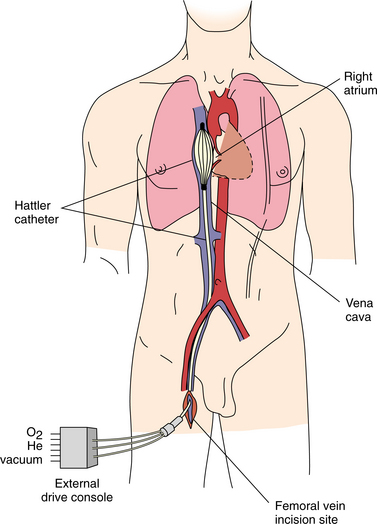
Researchers are also working toward development of a thoracic artificial lung (A-lung, sometimes referred to as an intravenous membrane oxygenator) (Fig. 21-20). This new device is designed to treat respiratory insufficiency, acting as a temporary assist device in acute cases or as a bridge to transplantation in chronic cases.35,96

Figure 21-20 Hattler catheter (artificial lung or intravenous membrane oxygenator). The catheter is made up of hollow fiber membranes, which carry oxygen through the fibers to saturate the blood while carbon dioxide is removed from the blood through other fibers. There is a pulsating central balloon in the center of the catheter, which helps mix the blood with the fibers and increase gas exchange. The empty rectangle represents the external device that connects to the catheter and to the individual controls of the catheter. (Courtesy Brack Hattler and W.J. Federspiel, University of Pittsburgh Medical Center, 2000.)
The concept of the A-lung comes from the function of ECMO, but the focus is to make the intravenous membrane oxygenator more portable and durable so that the individual can be supported for longer periods of time and become ambulatory. Efforts to develop the A-lung remain under investigation and have not been approved for clinical use in the United States. Anyone needing pulmonary support of this type still uses ECMO (see Fig. 21-19).
Others are working on similar devices, including providing partial or complete respiratory support depending on the surgical site of the cannulas for blood circulation. These devices are still in the experimental stages of development at this time.189
Other research to develop ambulatory ECMO as an emergent rescue intervention for pulmonary hypertension and the use of membrane oxygenation as a temporary bridge is undergoing clinical trial. The latter is to support individuals for a brief period as a temporary bridge to lung transplantation in cases of respiratory insufficiency, particularly with pulmonary hypertension. A simpler, safer, and cost-effective alternative to ECMO would allow earlier intervention.
The potential benefits in utilizing either an artificial lung device or ambulatory ECMO device are significant and include a more effective way of oxygenating the indi- vidual while preventing the adverse effects of immobility. It may even provide a means for long-term “respiratory dialysis.”194 Xenotransplantation is also under intense scrutiny, with some encouraging experimental results (see section on Xenotransplantation in this chapter).
Pancreas transplantation has become an accepted therapeutic approach to treat type 1 diabetes, which is caused by the autoimmune destruction of pancreatic islet beta-cells, thereby successfully restoring normoglycemia. Pancreas transplantation is performed only for people with type 1 diabetes mellitus since a new organ will not improve the body’s inability to use insulin, as is the case with type 2 diabetes.
Although pancreas transplantation represents a physiologic approach to reverse diabetes mellitus, a new technique of pancreas islet beta-cell transplantation is now in the experimental phase. Transplanting insulin-secreting cells is a low-invasive procedure with the possibility of modulating graft immune response before transplantation, allowing reduced or minimized immunosuppressive medications.330
In June 2000 the New England Journal of Medicine prereleased the findings of a report (the Edmonton protocol) from researchers injecting pancreas cells near the liver in eight people with type 1 diabetes. The cells took up residence in the liver and began producing insulin.273
Since that time continued advancement has occurred through extensive collaboration between key centers.180 For example, results at nine international sites report islet transplantation from deceased donors within 2 hours after purification has been used to restore long-term endogenous insulin production and glycemic stability in a small number of individuals with type 1 diabetes. Insulin independence has not been sustainable; it is often required again at 2 years.274
There are still limitations with this approach, but newer pharmacotherapies and interventions designed to promote islet survival, prevent apoptosis, promote islet growth, and prevent immunologic injury are approaching clinical trial status.209
Unlike heart, lung, or liver transplantations, pancreas transplantations are not an immediately life-saving procedure. Recipients have to be carefully selected in order to reduce morbidity and mortality; investigation of myocardial and cerebral vascularity is essential.
Even with these guidelines, pancreas transplantation has become a routine treatment for type 1 diabetes with uremia or for those who previously received a kidney transplant. Pancreas transplantation at the same time as a renal transplant is considered more often now, especially if the diabetes has been difficult to control.267
Although the recipient must remain on lifelong immunosuppressive medications, 80% to 90% 1-year survival rates are considered very acceptable given the alternatives of insulin therapy, dietary restrictions, hypoglycemic and hyperglycemic episodes, dialysis, and potential long-term complications associated with diabetes mellitus.65 Research shows that pancreas transplants can provide excellent glucose control in recipients with type 2 diabetes.224
Diabetic nephropathy is the leading cause of kidney failure in people with type 1 diabetes. Successful pancreas transplantation leads to normal glycemic control in people with type 1 diabetes, but historically this type of transplantation has been limited to people with both kidney failure and diabetes. Pancreas transplantation does not reverse the advanced complications (e.g., diabetic retinopathy, vascular sclerosis) present with long-term diabetes. However, the effect of pancreas transplantation on reversing neuropathy (i.e., improved nerve action and potential amplitudes) is possible.9
Despite the difficulty of this surgical procedure and the many potential complications, pancreas transplantation before the development and progression of diabetic nephropathy is being suggested for this population group.140,290 However, this is a controversial subject since others feel that, in the absence of end-stage renal failure, there is no justification for pancreas transplants alone except where diabetes itself poses a greater risk to life than the transplantation procedure.
Individuals with diabetes and renal involvement and individuals with unstable diabetes may be helped with an islet or pancreas transplant, but this approach is still considered experimental. Such transplantation may speed up the need for a kidney replacement. For individuals with well-controlled diabetes and intact function, pancreas or islet transplantation may not be advised given the risks of immunosuppression following transplantation.267
Combined pancreas-kidney transplantation is an accepted treatment for carefully selected candidates with type 1 diabetes and ESRD and in a small group of individuals with uncontrolled severe metabolic problems.272
Many centers consider pancreas transplantation contraindicated in people with cardiovascular disease, especially atherosclerotic vascular disease and congestive heart failure, because of the poor outcome after pancreas transplantation when either of these risk factors is present. Some centers may consider transplantation in cases of atherosclerotic vascular disease if coronary lesions are corrected before transplantation. Other risk factors include age older than 45 years, obesity, and hepatitis C.197
The donor pancreas is most often placed extraperitoneally on the right side using the recipient’s (native) vessels. It is necessary to drain the pancreatic exocrine secretions by channeling them to the urinary bladder or into the stomach. This may be accomplished with a variety of surgical techniques.
In the case of pancreas islet cell transplantation, cells removed from a cadaver are injected into the blood vessel leading to the liver (portal vein). Since development of these procedures is in its infancy, they presently require the cells from two pancreases, matched for blood type, to produce an apparent cure. Better methods for extracting cells from the donated pancreas or a way to grow the cells in the laboratory are being investigated.
Surgical complications remain the primary source of morbidity after pancreas transplantation (especially when combined with a simultaneous kidney transplantation), affecting approximately 35% of studied cases.259 This may change with continued advances in surgical techniques, but data are limited at this time. Specific complications include graft vascular thrombosis, pancreatic hemorrhage, intraabdominal bleeding or infection, allograft failure, and urologic problems associated with the bladder drainage surgical technique.
Other nonsurgical complications may include posttransplant pancreatitis possibly secondary to ischemia reperfusion microvascular injury and the more typical transplantation complications associated with other solid organs, such as infection and side effects of prolonged immunosuppression.
Complications of the pancreatic islet cell transplantation are minimal, but long-term safety and effectiveness of this technique remain to be proven. The recipients must take a combination of three immunosuppressive medications to prevent the body from rejecting the transplanted cells. The increased risk of cancer, infection, and other long-term side effects associated with these medications has been discussed.
Over the past 20 years there has been a progressive improvement in outcomes after pancreas transplant, simultaneous pancreas-kidney, and pancreas after kidney transplantation.121 Vascular disease remains the major cause of both morbidity and mortality after transplantation in recipients who have diabetes and is correlated with the degree of vascular disease before transplantation. Graft and recipient survival rates in diabetic recipients are higher when the recipient receives simultaneous pancreas-kidney transplantation. These survival rates are even higher when the kidney donor is a living related donor.258
Compared with other abdominal transplantations, pancreas transplants have had the highest incidence of surgical complications. This trend may be reversing owing to identification of donor and candidate risk factors, better prophylaxis regimens, refinements in surgical technique, and improved immunosuppressive regimens.168 Steroid withdrawal is possible in up to 70% of pancreas transplant recipients as long as the person is maintained on some form of immunosuppression (usually tacrolimus [FK506]).144,157
Even with surgical complications, pancreas transplant recipients’ survival rates are 94% at 1 year and 80% at 3 years.121 Data on survival rates following islet transplantation are limited given the recent development of this technique and the scarcity of donor islet cells.
Of those people who have received autotransplants worldwide following total or subtotal pancreatectomy, insulin independence has been achieved in 40%. Islet allotransplantations have demonstrated improved metabolic control in more than 50% of cases and insulin independence in approximately 20%.231
More widespread application of pancreas transplantation is expected in the future, with earlier transplantation indicated in the course of diabetic disease.143 Successful trans plantation of human fetal pancreatic tissue into recipients who have type 1 diabetes is under investigation.41 Strategies to reduce the metabolic consequences of hyperglycemia on nerves and to enhance axonal regeneration are being studied.243
As previously mentioned, pancreatic islet beta-cell transplantation may replace whole-organ transplantation or may be used in combination with kidney transplantation or after pancreas transplantation failure.95 Xenogeneic sources of cells, engineered islet cells with genes that induce immunoprotection, some form of beta-cell replacement therapy, and sustaining populations of transplanted beta-cells are all part of current research.88
Four clinical trials of porcine islet transplantation have been reported with verbal reports of larger clinical trials already taking place in China and Russia. The Ethics Committee of the International Xenotransplantation Association is concerned about the need to complete studies in nonhuman primates before clinical trials are started. There is also concern about monitoring the transfer of porcine microorganisms.265
In contrast to renal and liver transplantation, only a limited number of pancreas and intestinal live-donor transplants have been reported. The first intestinal transplantation, a segment of ileum from mother to child, was performed in 1964; the recipient died only 12 hours after surgery. Subsequent transplant recipients lived for days to weeks with continued progress until the 1990s, when long-term survival became possible. Research to develop tissue-engineered intestine that can be grafted to the small bowel is underway using animal models.159,169
Replacement of multiple digestive organs simultaneously, termed cluster operation, was introduced to treat two diseases: locally confined gastrointestinal tumors and short-gut syndrome. Short-gut syndrome (short-bowel syndrome) is the malabsorptive state that often follows extensive resection of the small intestine or, more rarely, congenital shortening of the bowel structures.
Management of clients with irreversible intestinal failure from this or other causes includes total parenteral nutrition (a technique for meeting a person’s nutritional needs by means of intravenous feedings, sometimes referred to as hyperalimentation), which may lead to liver failure and subsequent need for replacement of the liver, pancreas, stomach, duodenum, and jejunum. In children, multivisceral transplantation has been performed with some success for short-gut syndrome resulting from necrotizing enterocolitis or midgut volvulus.
Long-term graft survival exceeds 50% in large series, with better outcome for isolated intestinal grafts than for combined liver and small-bowel transplants. Limiting factors are infections (responsible for 60% of graft losses), technical and management errors (22%), and rejection (14%).306
Human cadaver allograft skin is widely used for covering excised burn wounds when limited available skin donor sites or the overall client condition does not permit immediate grafting with autologous skin. However, recurring problems are associated with human cadaver allograft skin, including limited supply, variable quality, ultimate immune rejection, and the potential for bacterial and viral disease transmission.
Several biotech companies are working on tissue-engineered skin substitutes that could revolutionize the treatment of severe burns as well as pressure ulcers and other serious wounds. Engineers can now mass produce postcard-size sheets of durable, uniform tissue that the body readily accepts. Cells can be grown on biodegradable lattices to produce the functional equivalent of dermis and epidermis.
The FDA has already approved products for use in burn cases requiring immediate closure of wounds but where there is not enough undamaged skin to be used as autografts. These products are also approved in Europe for plastic and reconstructive surgery and for the treatment of excisional wounds.
One type of patch is made up of two layers; the chemicals within the bottom layer help the new cells form a pattern similar to the normal dermis instead of the normally developing pattern of scar tissue. As dermis cells regenerate, blood vessels grow into this microscopic scaffolding over a 7-to 10-day period.
Within 3 weeks, the scaffolding dissolves as the new dermis grows in under the top layer of silicone. Acting as a pseudoepidermis, these patches close the burn injury to invading bacteria much like a normal skin graft would do.46 Later, the top silicone layer can be pulled away easily for skin grafting.
Another type of newly developing artificial skin product is dermal fibroblast cells (connective tissue in the skin that produces collagen and elastic fibers) constructed from the foreskin of newborns and cultured onto a mesh that serves as the scaffolding. During the formation of tissue, the fibroblasts proliferate within the mesh, where they secrete human dermal collagen, matrix proteins, and growth factors.
One foreskin the size of a postage stamp can produce as many as 200,000 grafts. The separation process discards the immune stimulating cells and saves the fibroblasts (stimulate growth and regeneration of the dermis) and keratinocytes (provide protective epidermis). It takes approximately 6 days for the layer of dermis to grow, at which time the keratinocytes are added forming the tough outer layer known as the stratum corneum, which is capable of resisting injury and infection. The complete process takes approximately 20 days.
In both types of artificial skin products, the patches act as a template or scaffolding on which new dermis cells can form, allowing early wound excision and immediate wound closure with control of fluid loss. Reduced cases of rejection and reduced risk of infection and disease transmission potentially allow for early ambulation, earlier rehabilitation, and faster recovery.
Recognizing wound infection after graft application can be challenging because the graft appears white or yellow after hydration with wound fluid. Any change from baseline at the wound site; in the amount or type of edema, erythema, drainage, odor, and warmth; unexplained fever; or pain should be reported to the physician.
Normal skin grafting is still necessary for burns, but the new developing dermis allows surgeons to place over the wound a thinner, smaller skin graft from donor sites that heal within 1 week. Temporary skin replacement for excised burn wounds before autografting has been attached as long as 74 days without rejection and without hypertrophic scarring.
The drawbacks to this procedure are the cost (approximately $1000 for one 4-to 10-inch sheet) and patch fragility, making the grafts difficult to work with and more easily dislodged than skin grafts. Researchers are continuing to explore the concept of an off-the-shelf full-thickness skin product that would be a permanent replacement for skin.
Although there has been one case of ovarian tissue transplantation, this is not an established procedure at the present time. The successful results of numerous studies involving removal of ovarian tissue, deep freezing (cryotherapy) the tissue, and subsequent reimplantation of the thawed tissue using animal models have been reported.172 Cryopreservation of oocytes and the banking of ovarian tissue for women who require conservation of fertility are being investigated.85
These developments hold the hope of restoring fertility to young women who must have their ovaries removed because of noncancerous disorders such as cysts or endometriosis or who face infertility as a side effect of chemotherapy for cancer. The number of potential candidates is growing as long-term survivorship after high-dose chemotherapy and bone marrow transplantation rises.
1. Abadie, A., Gay, S. The impact of presumed consent legislation on cadaveric organ donation: a cross-country study. J Health Econ. 2006;25(4):599–620.
2. Abouna, G.M. The use of marginal-suboptimal donor organs: a practical solution for organ shortage. Ann Transplant. 2004;9(1):62–66.
3. Abouna, G.M., Al-Adnani, M.S. Is diabetic nephropathy reversible? Transplant Proc. 1997;19(suppl 2):82.
4. ACSM’s resource manual for guidelines for exercise testing and prescription. ed 6. Philadelphia: Lippincott Williams & Wilkins; 2000.
5. Agarwal, S., Owen, R. Tendinitis and tendon rupture in successful renal transplant recipients. Clin Orthop. 1990;252:270–275.
6. Ahya, V.N., Kawut, S.M. Noninfectious pulmonary complications after lung transplantation. Clin Chest Med. 2005;26:613–622.
7. Akpek, G. Advances in the pathogenesis and treatment of acute-versus-host disease. Abstr Hematol Oncol. 2004;7(4):20–30.
8. Alexander, J.W., Goodman, H.R., Cardi, M., et al. Simultaneous corticosteroid avoidance and calcineurin inhibitor minimization in renal transplantation. Tranplant Int. 2006;19(4):295–302.
9. Allen, R.D., Al-Harbi, I.S., Morris, J.G., et al. Diabetic neuropathy after pancreas transplanation: determinants of recovery. Transplantation. 1997;63:830–838.
10. Alloway, R.R., Hanaway, M.J., Trofe, J., et al. A prospective, pilot study of early corticosteroid cessation in high-immunologic-risk patients: the Cincinnati experience. Transplant Proc. 2005;37(2):802–803.
11. Amiel, G.E., Komura, M., Shapiro, O., et al. Engineering of blood vessels from acellular collagen matrices coated with human endothelial cells. Tissue Eng. 2006;12(8):2355–2365.
12. Anderson, M. Xenotransplantation: a bioethical evaluation. J Med Ethics. 2006;32(4):205–208.
13. Arcasoy, S.M., Kotloff, R.M. Lung transplantation. N Engl J Med. 1999;340(14):1081–1091.
14. Arena, R., Humphrey, R., McCall, R. Altered exercise pulmonary function after left ventricular assist device implantation. J Cardiopulm Rehabil. 1999;19(6):344–346.
15. Atala, A. Recent developments in tissue engineering and regenerative medicine. Curr Opin Pediatr. 2006;18(2):167–171.
16. Atala, A., Bauer, S.B., Soker, S., et al. Tissue-engineered autologous bladders for patients needing cystoplasty. Lancet. 2006;367(9518):1241–1246.
17. Barshes, N.R., DiBardino, D.J., McKenzie, E.D., et al. Combined lung and liver transplantation: the United States experience. Transplantation. 2005;80(9):1161–1167.
18. Bauer, T.W., Muschler, G.F. Bone graft materials: an overview of the basic science. Clin Orthop. 2000;371:10–27.
19. Bauldoff, G.S., Hoffman, L.A., Zullo, T.G., et al. Exercise maintenance following pulmonary rehabilitation: effect of distractive stimuli. Chest. 2002;122(3):948–954.
20. Belenky, A., Bartal, G., Atar, E., et al. Ovarian varices in healthy female donors: incidence, mortality, and clinical outcome. Am J Roentgenol. 2002;179(3):625–627.
21. Bengal, F.M., Ueberfuhr, P., Karja, J., et al. Sympathetic reinnervation, exercise performance and effects of B-adrenergic blockage in cardiac transplant recipients. Eur Heart J. 2004;25:1726–1733.
22. Ben-Hur, T. Human embryonic stem cells for neuronal repair. Isr Med Assoc J. 2006;8(2):122–126.
23. Beniaminovitz, A., Mancini, D.M. The role of exercise-based prognosticating algorithms in the selection of patients for heart transplantation. Curr Opin Cardiol. 1999;4:114–120.
24. Bergh, J. Where next with stem-cell-supported high-dose therapy for breast cancer? Lancet. 2000;355(9308):944–945.
25. Berlakovich, G.A., Windhager, T., Freundorfer, E., et al. Carbohydrate deficient transferrin for detection of alcohol relapse after orthotopic liver transplantation for alcoholic cirrhosis. Transplantation. 1999;67(9):1231–1235.
26. Bernardi, L., Radaelli, A., Passino, C., et al. Effects of physical training on cardiovascular control after heart transplantation. Int J Cardiol. 2007;118:356–362.
27. Beyer, N., Aadahl, M., Strange, B., et al. Improved physical performance after orthotopic liver transplantation. Liver Transpl Surg. 1999;5(4):301–309.
28. Beyer, N., Strange, B., Aadahl, M., et al. Physical work capacity before, six and twelve months after liver transplantation. Proc Int Congr Transplant Soc. 1996;117:A140.
29. Biesen, V.W., Vanholder, R., Van, L.A., et al. Peritoneal dialysis favorably influences early graft function after renal transplantation compared to hemodialysis. Transplantation. 2000;69(4):508–514.
30. Bloom, R.D., Goldberg, L.R., Wang, A.Y., et al. An overview of solid organ transplantation. Clin Chest Med. 2005;26:529–543.
31. Bond, G.J., Mazariegos, G.V., Sindhi, R., et al. Evolutionary experience with immunosuppression in pediatric intestinal transplantation. J Pediatr Surg. 2005;40(1):274–349.
32. Bonzheim, S.C., Franklin, B.A., DeWitt, C., et al. Physiologic responses to recumbent versus upright cycle ergometry, and implications for exercise prescription in patients with coronary artery disease. Am J Cardiol. 1992;69:40–44.
33. Borg, G.A.V. Psychophysical bases of perceived exertion. Med Sci Sports Exerc. 1982;14:377–387.
34. Boros, P., Bromberg, J.S. New cellular and molecular immune pathways in ischemia/reperfusion injury. Am J Transplant. 2006;6:652–658.
35. Boschetti, F., Perlman, C.E., Cook, K.E., et al. Hemodynamic effects of attachment modes and device design of a thoracic artificial lung. ASAIO J. 2000;46(1):42–48.
36. Braith, R.W. Exercise training in patients with CHF and heart transplant recipients. Med Sci Sports Exerc. 1998;30(10):S367–S378.
37. Braith, R.W., Magyari, P.M., Fulton, M.N., et al. Comparison of calcitonin verses calcitonin+: resistance exercise as prolphylaxis for osteoporosis in heart transplant recipients. Transplantation. 2006;81:1191–1195.
38. Braith, R.W., Mills, R.M., Welsch, M.A., et al. Resistance exercise training restores bone mineral density in heart transplant recipients. J Am Coll Cardiol. 1996;28(6):1471–1477.
39. Braith, R.W., Welsch, M.A., Mills, R.M., et al. Resistance exercise prevents glucocorticoid-induced myopathy in heart transplant recipients. Med Sci Sports Exerc. 1998;30(4):483–489.
40. Brodie, J.C., Humes, H.D. Stem cell approaches for the treatment of renal failure. Pharmacol Rev. 2005;57(3):299–313.
41. Brooks-Worrell, B.M., Peterson, K.P., Peterson, C.M., et al. Reactivation of type 1 diabetes in patients receiving human fetal pancreatic tissue transplants without immunosuppression. Transplantation. 2000;69(1):166–172.
42. Brouard, S., Gagne, K., Blancho, G., et al. T cell response in xenorecognition and xenografts: a review. Hum Immunol. 1999;60(6):455–468.
43. Bunzel, B. Posttraumatic stress disorder after implantation of a mechanical assist device followed by heart transplantation: evaluation of patients and partners. Transplant Proc. 2005;37(2):1365–1368.
44. Busuttil, R.W., Goss, J.A. Split liver transplantation. Ann Surg. 1999;229(3):313–321.
45. Busuttil, R.W., Tanaka, K. The ulitity of marginal donors in liver transplantation. Liver Transplant. 2003;9:651.
46. Butler, C.D., Yannas, I.V., Compton, C.C., et al. Comparison of cultured and uncultured keratinocytes seeded into a collagen-GAG matrix for skin replacements. Br J Plast Surg. 52(2), 1999. [127-123].
47. Butler, J., Khadim, G., Paul, K.M., et al. J Am Coll Cardiol. 2004;43(5):787–793.
48. Button, B., Heine, R., Catto-Smith, A., et al. Chest physiotherapy in infants with cystic fibrosis. To tip or not? Pediatr Pulmon. 2003;35:208–213.
49. Button, B., Heine, R., Catto-Smith, A., et al. Chest physiotherapy, gastro-oesophageal refuls, and arousal in infants with cystic fibrosis. Arch Dis Child. 2004;89:435–439.
50. Byers, B.A., Guldberg, R.E., Hutmacher, D.W., et al. Effects of Runx2 genetic engineering and in vitro maturation of tissue-engineered constructs on the repair of critical size bone defects. J Biomed Mater Res A. 2006;76:646–655.
51. Cahalin, L.P. Exercise training in heart failure: inpatient and outpatient considerations. AACN Clin Issues. 1998;9(2):225–243.
52. Cahalin, L.P. Preoperative and postoperative conditioning for lung transplantation and volume-reduction surgery. Crit Care Nurs Clin North Am. 1996;8(3):305–322.
53. Cahalin, L.P., Buck, L.A. Cardiac transplantation and acute care outcomes. Acute Care Perspect. 2005;14(3):1–8.
54. Cahalin, L.P., Mathier, M.A., Sermigran, M.J., et al. The six-minute walk test predicts peak oxygen uptake and survival in patients with advanced heart failure. Chest. 1996;110:325–332.
55. Campellone, J.V., Lacomis, D., Giulani, M.J., et al. Mononeuropathies associated with liver transplantation. Muscle Nerve. 1998;21(7):896–901.
56. Carella, A.M., Champlin, R., Slavin, S., et al. Mini-allografts: ongoing trials in humans. Bone Marrow Transplant. 2000;25(4):345–350.
57. Carney, R.M., Templeton, B., Hong, B.A., et al. Exercise training reduces depression and increases the performance of pleasant activities in hemodialysis patients. Nephron. 1987;47:194–198.
58. Carter, R., Al-Rawas, O.A., Stevenson, A., et al. Exercise responses following heart transplantation: 5 year follow-up. Scott Med J. 2006;51(3):6–14.
59. Cashion, A.K., Hathaway, D.K., Milstead, E.J., et al. Changes in patterns of 24-hr heart rate variability after kidney and kidney-pancreas transplant. Transplantation. 1999;68(12):1846–1850.
60. Cecka, J.M., Terasaki, P.J., eds. Clinical transplants 1998. Los Angeles: UCLA Tissue Typing Laboratory; 1999.
61. Chamuleau, R.A., Poyck, P.P. Bioartificial liver: its pros and cons. Ther Apher Dial. 2006;10(2):168–174.
62. Chen, W., Bennett, C.F., Wang, M.E. Perfusion of kidneys with unformulated “naked” intercellular adhesion molecule-1 antisense oligodeoxynucleotides prevents ischemic/reperfusion injury. Transplantation. 1999;68(6):880–887.
63. Choi, L., Choudhri, A.F., Pillarisetty, V.G., et al. Development of an infection-resistant LVAD driveline: a novel approach to the prevention of device-related infections. J Heart Lung Transplant. 1999;18(11):1103–1110.
64. Ciarka, A., Cuylitis, N., Vachiery, J.L., et al. Increased peripheral chemoreceptors sensitivity and exercise ventilation in heart transplant recipients. Circulation. 2006;113(2):252–257.
65. Cicalese, L., Giacomoni, A., Rastellini, C., et al. Pancreatic transplantation: a review. Int Surg. 1999;84(4):305–312.
66. Ciccone, C. Pharmacology in rehabilitation, ed 3. Philadelphia: FA Davis, 2005.
67. Coombes, J.M., Trotter, J.F. Development of the allocation system for deceased liver transplantation. Clin Med Res. 2005;3(2):87–92.
68. Costanzo, M.R. Selection and treatment of candidates for heart transplantation. Semin Thorac Cardiovasc Surg. 1996;8(2):113–125.
69. Cupples, S.A., Stilley, C.A. Cognitive function in adult cardiothoracic transplant candidates and recipients. J Cardiovasc Nurs. 2005;20(55):S74–S87.
70. Date, H., Lynch, J.P., Sundaresan, S., et al. The impact of cytolytic therapy on bronchiolitis obliterans syndrome. J Heart Lung Transplant. 1998;17:869–875.
71. Datta, N., Pham, Q.P., Sharma, U., et al. In vitro generated extracellular matrix and fluid shear stress synergistically enhance 3D osteoblastic differentiation. Proc Natl Acad Sci U S A. 2006;103:2488–2493.
72. De Geest, S., Dobbels, F., Fluri, C., et al. Adherence to the therapeutic regimen in heart, lung, and heart lung transplant recipients. J Cardiovasc Nurs. 2005;20(55):S88–S98.
73. Delecrin, J., Takahashi, S., Gouin, F., et al. A synthetic porous ceramic as a bone graft substitute in the surgical management of scoliosis. Spine. 2000;25(5):563–569.
74. Detry, O., Honore, P., Meurisse, M., et al. Cancer in transplant recipients. Transplant Proc. 2000;32(1):127.
75. Dew, M.A., Kormos, R.L., DiMartini, A.F. Prevalence and risk of depression and anxiety-related disorders during the first three years after heart transplantation. Psychosomatics. 2001;42(4):300–313.
76. Dew, M.A., Kormos, R.L., Roth, L.H., et al. Early posttransplant medical compliance and mental health predict physical morbidity and mortality one to three years after heart transplantation. J Heart Lung Transplant. 1999;18(6):549–562.
77. Dew, M.A., Roth, L.H., Schulberg, H.C., et al. Prevalence and predictors of depression and anxiety-related disorders during the year after heart transplantation. Gen Hosp Psychiatry. 1996;18(6 suppl):48S–61S.
78. Dib, N., Michler, R.E., Pagani, F.D., et al. Safety and feasibility of autologous myoblast transplantation in patients with ischemic cardiomyopathy: four-year follow-up. Circulation. 2005;112(12):1748–1755.
79. Dimeo, F., Fetscher, S., Lange, W. Effects of aerobic exercise on the physical performance and incidence of treatment-related complications after high-dose chemotherapy. Blood. 1997;90(9):3390–3394.
80. Dimeo, F., Tilmann, M.H., Bertz, H., et al. Aerobic exercise in the rehabilitation of cancer patients after high dose chemotherapy and autologous peripheral stem cell transplantation. Cancer. 1997;79(9):1717–1722.
81. Ding, H.L., Dong, J.W., Zhu, W.Z., et al. Inducible nitric oxide synthase contributes to intermittent hypoxia against ischemia/reperfusion injury. Acta Pharmacol Scan. 2005;26(3):315–322.
82. Dobbels, F. Growing pains: nonadherence with the immunosuppressive regimen in adolescent transplant recipients. Pediatr Transplant. 2005;9(3):381–390.
83. Dohnalek, L.J. Patients undergoing bone marrow transplant benefit from exercise class. Oncol Nurs Forum. 1997;24:966–973.
84. Dong, J., Pratt, J.R., Smith, R.A. Strategies for targeting complement inhibitors in ischaemia/reperfusion injury. Mol Immunol. 1999;36(12-14):957–963.
85. Donnez, J., Godin, P.A., Qu, J., et al. Gonadal cryopreservation in the young patient with gynaecological malignancy. Curr Opin Obstet Gynecol. 2000;12(1):1–9.
86. Dunn, S.E., Burns, J.L., Michel, R.N. Calcineurin is required for skeletal muscle hypertrophy. J Biol Chem. 1999;274(31):21908–21912.
87. Edwards, E.B., Roberts, J.P., McBride, M.A. The effect of the volume of procedures at tranplantation centers on mortality after liver transplantation. N Engl J Med. 1999;341(27):2049–2053.
88. Efrat, S. Genetically engineered pancreatic beta-cell lines for cell therapy of diabetes. Ann NY Acad Sci. 1999;875:286–293.
89. Eisen, H., Furukawa, S. First ever transplantation of skeletal muscle cells to test whether the cells can repair damaged heart muscle [unpublished data]. Philadelphia: Temple University Heart Transplantation Program, 2000.
90. Eisen, H., Kobashigawa, J., Starling, R.C. Improving outcomes in heart transplantation: the potential of proliferation signal inhibitors. Transplant Proc. 2005;37(suppl 4S):4S–17S.
91. El-Minawi, A.M. Pelvic varicosities and pelvic congestion syndrome. In: Howard FM, et al, eds. Pelvic pain diagnosis and management. Philadelphia: Lippincott, Williams & Wilkins; 2000:171–183.
92. Etienne, B., Bertocchi, M., Gamondes, J.P., et al. Successful double-lung transplantation for bronchioalveolar carcinoma. Chest. 1997;112:1423–1424.
93. Euvard, S., Kanitakis, J., Claudy, A. Cutaneous complications after organ transplant. Presse Med. 1999;28(33):1833–1888.
94. Federal Register. Medicare and Medicaid programs; hospital conditions of participation; identification of potential organ, tissue, and eye donors and transplant hospitals’ provision of transplant-related data-HCFA. Final rule. 63(119), 1998. [33856-33675].
95. Federlin, K., Pozza, G. Indications for clinical islet transplantation today and in the foreseeable future-the diabetologist’s point of view. J Mol Med. 1999;77(1):148–152.
96. Federspiel, W.J., Hewitt, T.J., Hattler, B.G. Experimental evaluation of a model for oxygen exchange in a pulsating intravascular artificial lung. Ann Biomed Eng. 2000;28(2):160–167.
97. Ferrara, J.L., Levy, R., Chao, N.J. Pathophysiologic mechanisms of acute graft-vs.-host disease. Biol Blood Marrow Transplant. 1999;5(6):347–356.
98. Fletcher, G.F., Balady, G.J., Amsterdam, E.A., et al. AHA Scientific Statement. Exercise standards for testing and training. A statement for healthcare professionals for the American Heart Association. Circulation. 2001;104:1694–1740.
99. Fraund, S., Pethig, K., Franke, U., et al. Ten year survival after heart transplantation: palliative procedure or successful long term treatment? Heart. 1999;82(1):47–51.
100. Frazier, O.H., Myers, T.J. Left ventricular assist system as a bridge to myocardial recovery. Ann Thorac Surg. 1999;68(2):734–741.
101. Frownfelter, D., Dean, E. Principles and practice of cardiopulmonary physical therapy, ed 4. St Louis: Mosby, 2006.
102. Fusar-Poli, P., Picchioni, M., Martinelli, V., et al. Anti-depressive therapies after heart transplantation. J Heart Lung Transplant. 2006;25:785–793.
103. Gammie, J.S., Keenan, R.J., Pham, S.M., et al. Single-versus double-lung transplantation for pulmonary hypertension. J Thorac Cardiovasc Surg. 1998;115:397–403.
104. Garry, D.J., Goetsch, S.C., Mcgrath, A.J., et al. Alternative therapist for orthotopic heart transplantation. Am J Med Sci. 2005;330(2):88–101.
105. George, E., Hoffman, L., Bonjonkos, L., et al. The effect of position on oxygenation in single-lung transplants [abstract]. Am J Crit Care. 2000;9(3):211.
106. George, J.F. Xenotransplantation: an ethical dilemma. Curr Opin Cardiol. 2006;21(2):138–141.
107. Gerlach, J.C. Bioreactors for extracorporeal liver support. Cell Transplant. 2006;15(Suppl 1):S91–S103.
108. Gibbons, W.J., Levine, S.M., Bryan, C.L., et al. Cardiopulmonary exercise responses after single-lung transplantation for severe obstructive lung disease. Chest. 1991;100:106–111.
109. Gillis, T.A., Donovan, E.S. Rehabilitation following bone marrow transplantation. Rehab Oncol. 2000;18(1):14–15.
110. Glanville, A.R., Estenne, M. Indications, patient selection and timing of referral for lung transplantation. Eur Respir J. 2003;22:845–852.
111. Goldberg, A.P., Geltman, E.M., Gavin, J.R., et al. Exercise training reduces coronary risk and effectively rehabilitates hemodialysis patients. Nephron. 1986;42:311–316.
112. Goldberg, A.P., Hagberg, J., Delmez, J.A., et al. The metabolic and physiological effects of exercise training in hemodialysis patients. Am J Clin Nutr. 1980;33:1620–1628.
113. Goldberg, H.J., Hertz, M.I., Ricciardi, R., et al. Colon and rectal complications after heart and lung transplantation. J Am Coll Surg. 2005;202(1):55–61.
114. Goldstein, S.A. Tissue engineering solutions for traumatic bone loss. J Am Acad Orthop Surg. 2006;14(10):S152–S156.
115. Gomez-Arnau, J., Novoa, N., Isidro, M.G. Ruptured hemidiaphragm after bilateral lung transplantation. Eur J Anaesthesiol. 1999;16(4):259–262.
116. Goudarzi, B.M., Bonvino, S. Critical care issues in lung and heart transplantation. Crit Care Clin. 2003;19:209–231.
117. Gourishankar, S., McDermid, J.C., Jhangri, G.S. Herpes zoster infection following solid organ transplantation. Am J Transplant. 2004;4(1):108–115.
118. Grady, K.L., Lanuza, D.M. Physical function outcomes after cardiothoracic transplantation. J Cardiovasc Nurs. 2005;20(55):S43–S50.
119. Grandusky, H. Comprehensive physical therapy intervention for patients before and after heart transplantation. Acute Care Perspectives. 2003;12(3-4):13–15.
120. Griffin, P. Exercise and sport after organ transplantation. Br J Sports Med. 1998;32(3):194.
121. Gruessner, A.C. Pancreas transplant outcomes for United States. Clin Transplant. 2005;19(4):433–455.
122. Gupta, S., Malhi, H., Gagandeep, S., et al. Liver repopulation with hepatocyte transplantation: new avenues for gene and cell therapy. J Gene Med. 1999;1(6):386–392.
123. Haberal, M., Dalgic, A. New concepts in organ transplantation. Transplant Proc. 2004;36:1219–1224.
124. Haddad, H., Elabrassi, W., Moustafa, S., et al. Left ventricular asssit devices as bridge to heart tranplantation in congestive heart failure with pulmonary hypertension. ASAIO J. 2005;51:456–460.
125. Haykowsky, M., Riess, K., Figgures, L., et al. Exercise training improves aerobic endurance and musculoskeletal fitness in female cardiac transplant recipients. Curr Control Trials Cardiovasc Med. 2005;6(1):10.
126. Hayry, P., Aavik, E., Sarwal, M., et al. Chronic rejection: prospects for therapeutic intervention in fibroproliferative vascular disease. Exper Clin Transplant. 2003;1:35–38.
127. Health Canada: Assisted human reproduction. Available on-line at http://www.hc-sc.gc.ca/hl-vs/reprod/index_e.html Accessed November 18, 2006.
128. Healy, L., Hunt, C., Young, L., et al. The UK Stem Cell Bank. Adv Drug Deliv Rev. 2005;57(13):1981–1988.
129. Helman, D.N., Addonizio, L.J., Morales, D.L. Implantable left ventricular assist devices can successfully bridge adolescent patients to transplant. J Heart Lung Transplant. 2000;19(2):121–126.
130. Heslop, H.E., Perez, M., Benaim, E., et al. Transfer of EBV-specific CTL to prevent EBV lymphoma post bone marrow transplant. J Clin Apheresis. 1999;14(3):154–156.
131. Hetzer, R., Muller, J., Weng, Y. Cardiac recovery in dilated cardiomyopathy by unloading with a left ventricular device. Ann Thorac Surg. 1999;68(2):742–749.
132. Hillegass, E., Sadowsky, S. Essentials of cardiopulmonary physical therapy, ed 2. Philadelphia: Harcourt Health Sciences, 2001.
133. Hobbs, J.T. Varicose veins arising from the pelvis due to ovarian vein incompetence. Int J Clin Pract. 2005;59(10):1195–1203.
134. Hoffman, F. Outcomes and complications after heart transplantation. J Cardiovasc Nurs. 2005;20(55):S31–S41.
135. Hong, J.C., Kahan, B.D. Immunosuppressive agents in organ transplantation: past, present, and future. Semin Nephrol. 2000;20(2):108–125.
136. Hong, J.C., Kahan, B.D. Use of anti-CD25 monoclonal antibody in combination with rapmycin to eliminate cyclosporine treatment during the induction phase of immunosuppression. Transplantation. 1999;68(5):701–704.
137. Horber, F.F., Scheidegger, J.R., Grunig, B.E., et al. Evidence that prednisone-induced myopathy is reversed by physical training. J Clin Endocrinol Metabol. 1985;61:83–88.
138. Horber, F.F., Scheidegger, J.R., Grunig, B.E., et al. Thigh muscle mass and function in patients treated with glucocorticoids. Eur J Clin Invest. 1985;15:302–307.
139. Hosenpud, J.D., Bennett, L.E., Keck, B.M. The registry of the International Society for Heart and Lung Transplantation: fifteenth official report, 1998. J Heart Transplant. 1998;17:656–668.
140. Hricik, D.E. Kidney-pancreas transplantation for diabetic nephropathy. Semin Nephrol. 2000;20(2):188–198.
141. Hsu, D.T. Biological and psychological differences in the child and adolescent transplant recipient. Pediatr Transplant. 2005;9(3):416–421.
142. Humar, A., Gillingham, K., Payne, W.D. Increased incidence of cardiac complications in kidney transplant recipients with cytomegalovirus. Transplantation. 2000;70(2):310–313.
143. Humar, A., Kandaswamy, R., Granger, D. Decreased surgical risks of pancreas transplantation in the modern era. Ann Surg. 2000;231(2):269–275.
144. Humar, A., Parr, E., Drangstveit, M.B., et al. Steroid withdrawal in pancreas transplant recipients. Clin Transplant. 2000;14(1):75–78.
145. Humes, H.D., Weitzel, W.F., Bartlett, R.H., et al. Initial clinical results of the bioartificial kidney containing human cells in ICU patients with acute renal failure. Kidney Int. 2004;66(4):1578–1588.
146. Humphrey, R. Cardiopulmonary exercise response in a patient with a left ventricular assist device: inability of conventional cardiopulmonary exercise testing to identify functional capabilities. Phys Ther Case Rep. 1998;1(4):172–180.
147. Hunt, J.S., Petroff, M.G., McIntire, R.H., et al. HLA-G and immune tolerance in pregnancy. FASEB J. 2005;19(7):681–693.
148. Ippoloti, G., Rinaldi, M., Pelleggrini, C., et al. Incidence of cancer after immunosuppressive treatments for heart transplantation. Crit Rev Oncol Hematol. 2005;56:101–113.
149. Jain, B., Floreani, A.A., Anderson, J.R., et al. Cardiopulmonary function and autologous bone marrow transplantation: results and predictive value for respiratory failure and mortality. The University of Nebraska Medical Center Bone Marrow Transplantation Pulmonary Study Group. Bone Marrow Transplant. 1996;17:561–568.
150. Jaiswal, R.K., Jaiswal, N., Bruder, S.P., et al. Adult human mesenchymal stem cell differentiation to the osteogenic or adipogenic lineage is regulated by mitogen-activated protein kinase. J Biol Chem. 2000;275(13):9645–9652.
151. Jaski, B.E., Lingle, R.J., Kim, J. Comparison of functional capacity in patients with end-stage heart failure following implantation of a left ventricular assist device versus heart transplantation: results of the experience with left ventricular assist device with exercise trial. J Heart Lung Transplant. 1999;18(11):1031–1040.
152. Jemal, A., Murray, T., Ward, E., et al. Cancer statistics 2005. Cancer J Clinicians. 2005;55(1):10–30.
153. Jenkins, D.H., Reilly, P.M., Schwab, C.W. Improving the approach to organ donation: a review. World J Surg. 1999;23(7):644–649.
154. Johansson, C.B., Momma, S., Clarke, D.L., et al. Identification of a neural stem cell in the adult mammalian central nervous system. Cell. 1999;96(1):25–34.
155. Johansson, C.B., Svensson, M., Wallstedt, L., et al. Neural stem cells in the adult human brain. Exp Cell Res. 1999;253(2):733–736.
156. Johnson, E.M., Anderson, J.K., Jacobs, C. Long-term follow-up of living kidney donors: quality of life after donation. Transplantation. 1999;67(5):717–721.
157. Jordan, M.L., Chakrabarti, P., Luke, P. Results of pancreas transplantation after steroid withdrawal under tacrolimus immunosuppression. Transplantation. 2000;69(2):265–271.
158. Kahan, B.D., Rajagopalan, P.R., Hall, M. Reduction of the occurrence of acute cellular rejection among renal allograft recipients treated with basiliximab, a chimeric anti-interleukin-2-receptor monoclonal antibody. Transplantation. 1999;67(2):276–284.
159. Kaihara, S., Kim, S., Benvenuto, M., et al. End-to-end anastomosis between tissue-engineered intestine and native small bowel. Tissue Eng. 1999;5(4):339–346.
160. Karakayali, H., Moray, G., Demirag, A. Long terms follow up of ABO incompatible renal transplant recipients. Transplant Proc. 1999;31:256.
161. Kasiske, B.L., Snyder, J.J., Gilbertson, D.T. Cancer after kidney transplantation in the United States. Am J Transplant. 2004;4(6):905–913.
162. Kassem, M. Stem cells: potential therapy for age-related diseases. Ann N Y Acad Sci. 2006;1067:436–442.
163. Kavanagh, T. Exercise rehabilitation in cardiac transplantation patients: a comprehensive review. Europa Medicophysica. 2005;41(1):67–75.
164. Kavanagh, T. Exercise training in patients after heart transplantation. Herz. 1991;16:243–250.
165. Keeley, E.C., Toth, Z.K., Goldberg, A.D. Long-term assessment of heart rate variability in cardiac transplant recipients. J Heart Lung Transplant. 2000;19(3):310–312.
166. Keogh, A. Calcineurin inhibitors in heart transplantation. J Heart Lung Transplant. 2004;23:5202–5206.
167. Keogh, A. Improving outcomes in heart transplantation: the potential of proliferation signal inhibitors. Transplant Proc. 2005;37(Suppl 4S):1S–3S.
168. Kikugawa, D., Murakami, T., Endo, K. Evaluation of an implantable motor-driven left ventricular assist device. Artif Organs. 1999;23(3):249–252.
169. Kim, S.S., Kaihara, S., Benvenuto, M.S. Effects of anastomosis of tissue-engineered neointestine to native small bowel. J Surg Res. 1999;87(1):6–13.
170. Kjaer, M., Beyer, N., Secher, N.H. Exercise and organ transplantation. Scand J Med Sci Sports. 1999;9(1):1–14.
171. Klapheke, M.M. Transplantation psychoneuroimmunology: building hypotheses. Med Hypotheses. 2000;54(6):969–978.
172. Klotz, L., Hacker, H.J., Klingmuller, D. Hepatocellular alterations after intraportal transplantation of ovarian tissue in ovariectomized rats. Am J Pathol. 2000;156(5):1613–1626.
173. Knight, R.J., Bodian, C., Rodriguez-Laiz, G., et al. Risk factors for intraabdominal infection after pancreas transplantation. Am J Surg. 2000;179(2):99–102.
174. Kobashigawa, J.A., Leaf, D.A., Lee, N., et al. A controlled trial of exercise rehabilitation after heart transplantation. N Engl J Med. 1999;340(12):976.
175. Koopmans, M., Hovinga, I.C., Baelde, H.J., et al. Endothelial chimerism in transplantation. Transplantation. 2006;82(1 Suppl):S25–29.
176. Kormos, R.L., Murali, S., Dew, M.A., et al. Chronic mechanical circulatory support: rehabilitation, low morbidity, and superior survival. Ann Thorac Surg. 1994;57(1):51–58.
177. Korossis, S., Bolland, F., Ingham, E., et al. Review: tissue engineering of the urinary bladder. Tissue Engin. 2006;12(4):635–644.
178. Koukouvou, G., Kouidi, E., Iacovides, A., et al. Quality of life, psychological and physiological changes following exercise training in patients with chronic heart failure. J Rehabil Med. 2004;36:36–41.
179. Krasnoff, J.B., Vintro, A.Q. A randomized trial of exercise and dietary counseling after liver transplantation. Am J Transplant. 2006;6(8):1896–1905.
180. Lakey, J.R., Mirbolooki, M., Shapiro, A.M. Current status of clinical islet cell transplantation. Methods Mol Biol. 2006;333:47–104.
181. Lands, L.C., Smountas, A.A., Mesiano, G., et al. Maximal exercise capacity and peripheral skeletal muscle function following lung transplantation. J Heart Lung Transplant. 1999;18(2):113–120.
182. Layne, J.E., Nelson, M.E. The effects of progressive resistance training on bone density: a review. Med Sci Sports Exerc. 1999;31(1):25–30.
183. Leach, J.K. Building strong bones through tissue engineering. JAAOS. 2006;14:629–631.
184. Lee, I.W., Vacanti, J.P., Taylor, G.A., et al. The living shunt: a tissue engineering approach in the treatment of hydrocephalus. Neurol Res. 2000;22(1):105–110.
185. Leggett, J.E., Orzol, S.M., Hulbert-Shearon, T.E. Non-compliance in hemodialysis predictors and survival analysis. Am J Kidney Dis. 1998;32:139.
186. Lenoir, N. Europe confronts the embryonic stem cell research challenge. Science. 2000;287(5457):1425–1427.
187. Levy, M.F., Crippin, J., Sutton, S., et al. Liver allotransplantation after extracorporeal hepatic support with transgenic porcine livers: clinical results and lack of pig-to-human transmission of the porcine endogenous retrovirus. Transplantation. 2000;69(2):272–280.
188. Lewis, M.S., Wilson, R.A., Walker, K., et al. Factors in cardiac risk stratification of candidates for renal transplant. J Cardiovasc Risk. 1999;6(4):251–255.
189. Lick, S.D., Zwischenberger, J.B. Artificial lung: bench toward bedside. ASAIO J. 2004;50:2–5.
190. Lindenfeld, J., Miller, G.G., Shakar, S.F., et al. Drug therapy in the heart transplant recipients: part I: cardiac rejection and immunosuppressive drugs. Circulation. 2004;110:3734–3740.
191. Lindenfeld, J., Miller, G.G., Shakar, S.F., et al. Drug therapy in the heart transplant recipients: part II: immunosuppressive drugs. Circulation. 2004;110:3858–3865.
192. Lindenfeld, J., Page, R.L., Zolty, R., et al. Drug therapy in the heart transplant recipients: part III: common medical problems. Circulation. 2005;111:113–117.
193. Maalouf, N.M., Shane, E. Clinical review: osteoporosis after solid organ transplantation. J Endocrinol Metab. 2005;90(4):2456–2465.
194. Macha, M., Federspiel, W.J., Lund, L.W., et al. Acute in vivo studies of the Pittsburgh Intravenous Membrane Oxygenator. ASAIO J. 1996;42:M609–M615.
195. Madhotra, R., Carter, T.D. Reversible flaccid paraplegia after orthotopic liver transplantation. Am J Gastroenterol. 2001;96:1943–1944.
196. Mancini, D., Goldsmith, R., Levin, H. Comparison of exercise performance in patients with chronic severe heart failure versus left ventricular assist devices. Circulation. 1998;98(12):1178–1183.
197. Manske, C.L. Risks and benefits of kidney and pancreas transplantation for diabetic patients. Diabetes Care. 1999;22(suppl 2):B114–B120.
198. Manzetti, J.D., Hoffmann, L.A., Sereika, S.M., et al. Exercise, education, and quality of life in lung transplant candidates. J Heart Lung Transplant. 1994;13:297–305.
199. Markmann, J.F., Gornbein, J., Markowitz, J.S. A simple model to estimate survival after retransplanation of the liver. Transplantation. 1999;67(3):422–430.
200. Marti, H.P., Stoller, R., Frey, F.J. Fluoroquinolones as a cause of tendon disorders in patients with renal failure/renal transplants. Br J Rheumatol. 1998;37:343–344.
201. Marty, F.M., Rubin, R.H. The prevention of infection post transplant: the role of prophylaxis, preemptive, and empiric therapy. Transplant Int. 2006;19:2–11.
202. Massery, M. Facilitating ventilatory and breathing strategies. In: Frownfelter D., Dean E., eds. Principles and practice of cardiopulmonary physical therapy. St Louis: Mosby, 2006.
203. Massery, M.P. Manual breathing and coughing aids. In: Bach JR, Haas F., eds. Physical medicine and rehabilitation clinics of North America: pulmonary rehabilitation. Philadelphia: Saunders, 1996.
204. Massery, M.P. What’s positioning got to do with it? Neurol Rep. 1994;18(3):11–14.
205. Mathur, S., Reid, W.D., Levy, R.D. Exercise limitations in recipients of lung transplants. Phys Ther. 2004;84(12):1178–1187.
206. Maurer, J.R., Frost, A.E., Estenne, M., et al. International guidelines for the selection of lung transplant candidates. J Heart Lung Transplant. 1998;17:703–709.
207. Mayes, G., Organ donation and recovery improvement act of 2004 emphasizes increasing donation rather than systematic change. Medscape Transplantation. 2004;5(1). Available on-line at: http://www.medscape.com/viewarticle/480470. Accessed October 13, 2006.
208. McNeil, C. High-dose chemo for breast cancer: does it still have a chance? J Natl Cancer Inst. 2000;92(12):961–962.
209. Merani, S., Shapiro, A.M. Current status of pancreatic islet transplantation. Clin Sci (Lond). 2006;110(6):611–625.
210. Mehrabi, A. Wound complications following kidney and liver transplantation. Clin Transplant. 2006;20(Suppl 17):97–110.
211. Melhus, A. Fluoroquinolones and tendon disorders. Expert Opin Drug Saf. 2005;4(2):299–309.
212. Mello, M., Tanaka, C., Dulley, F.L. Effects of an exercise program on muscle performance in patients undergoing allogeneic bone marrow transplantation. Bone Marrow Transplant. 2003;32(7):723–728.
213. Mettauer, B. Cardiorespiratory and neurohormonal response to incremental maximal exercise in patients with denervated transplanted hearts. Transplant Proc. 1991;23:1178–1181.
214. Mintzer, L.L. Traumatic stress symptoms in adolescent organ transplant recipients. Pediatrics. 2005;115(6):1640–1644.
215. Miranda, B., Matesanz, R. International issues in transplantation: setting the scene and flagging the most urgent and controversial issues. Ann NY Acad Sci. 1998;862:129–143.
216. Molassiotis, A., Morris, P.J. Suicide and suicidal ideation after marrow transplantation. Bone Marrow Transplant. 1997;19:87–90.
217. Momma, S., Johansson, C.B., Frisen, J. Get to know your stem cells. Curr Opin Neurobiol. 2000;10(1):45–49.
218. Monaco, A.P., Burke, J.F., Ferguson, R.M., et al. Current thinking on chronic renal allograft rejection: issues, concerns and recommendations. Am J Kidney Dis. 1999;33(1):150–160.
219. , Guidelines for preventing opportunistic infections among hematopoietic stem cell transplant recipients. MMWR Morb Mortal Wkly Rep. 2000;49(RR10):1–128. Available on-line at: http://www.cdc.gov/mmwr/preview/mmwrhtml/rr4910a1.htm
220. Mosekilde, L. Age-related changes in bone mass, structure, and strength-effects of loading. J Rheumatol. 2000;59(suppl 1):1–9.
221. Murphey, M.D., Sartoris, D.J., Quale, J.L., et al. Musculoskeletal manifestations of chronic renal insufficiency. Radiographics. 1993;13(2):357–379.
222. Myers, J., Gullestad, L., Bellin, D., et al. Physical activity patterns and exercise performance in cardiac transplant recipients. J Cardiopulm Rehab. 2003;23:100–106.
223. Nankivell, B.J., Lau, S.C., Chapman, J.R., et al. Progression of macrovascular disease after transplantation. Transplantation. 2000;69(4):574–581.
224. Nath, D.S. Outcomes of pancreas transplants for patients with type 2 diabetes mellitus. Clin Transplant. 2005;19(6):792–797.
225. Nathan, S.D. Lung transplantation: disease specific considerations for referral. Chest. 2005;127:1006–1016.
226. National Kidney Foundation: Milestones in organ transplantation. Available on-line at: http://www.kidney.org/news/newsroom/fsitem.cfm?id=37 Accessed October 24, 2006.
227. National Kidney Foundation: Unmet medical needs survey in transplantation. Presented at the 18th Annual Meeting of the American Society of Transplantation, New York, May 2000.
228. News release (via COMTEX). Transplantable cells. Charlestown, MA: Diacrin, Inc., 2006.
229. Newton, S.E. Recidivism and return to work posttransplant: recipients with substance abuse histories. J Subst Abuse Treat. 1999;17(1-2):103–108.
230. Nguyen, B.H., Zwts, E., Schroeder, C., et al. Beyond antibody mediated rejection: hyperacute lung rejection as a paradigm for dysregulated inflammation. Curr Drug Targets Cardiovasc Haematol Disord. 2005;5:255–269.
231. Oberholzer, J., Triponez, F., Lou, J., et al. Clinical islet transplantation: a review. Ann NY Acad Sci. 1999;875:189–199.
232. Olsen, A.L., Stachura, D.L., Weiss, M.J. Designer blood: creating hematopoietic lineages from embryonic stem cells. Blood. 2006;197(4):1265–1275.
233. O’Moore, B. Regular exercise: vitally important for the transplant recipient. Adv Ren Replace Ther. 1999;6(2):187–188.
234. Onaca, N., Levy, M.F., Ueno, T., et al. An outcome comparison between primary liver transplantation and retransplantation based on the pretransplant MELD score. Transpl Int. 2006;19(4):282–287.
235. Opelz, G., Döhler, B. Lymphomas after solid organ transplantation. Am J Transplant. 2004;4(2):222–230.
236. Organ Procurement and Transplantation Network: Data resource. Available on-line at: http://www.optn.org/data Accessed October 5, 2006.
237. Ornish, D. Love and survival: the scientific basis for the healing power of intimacy. New York: Harper Collins, 1998.
238. Pagani, F.D., Lynch, W., Swaniker, F., et al. Extracorporeal life support to left ventricular assist device bridge to heart transplant: a strategy to optimize survival and resource utilization. Circulation. 1999;100(19 suppl):II206–II210.
239. Pageaux, G.P., Michel, J., Coste, V., et al. Alcoholic cirrhosis is a good indication for liver transplantation, even for cases of recidivism. Gut. 1999;45(3):421–426.
240. Painter, P. Exercise after renal transplantation. Adv Ren Replace Ther. 1999;6(2):159–164.
241. Painter, P. Exercise following organ transplantation: a critical part of routine posttransplant care. Ann Transplant. 2005;10(4):28–30.
242. Painter, P.L., Hector, L., Ray, K., et al. Effects of exercise training on coronary heart disease risk factors in renal transplant recipients. Am J Kidney. 2003;42(2):362–369.
243. Parry, G.J. Management of diabetic neuropathy. Am J Med. 1999;107(2B):27S–33S.
244. Paya, C.V., Fung, J.J., Nalesnik, M.A., et al. Epstein-Barr virus-induced posttransplant lymphoproliferative disorders. Transplantation. 1999;68(10):1517–1525.
245. Pearsall, P. The heart’s code: tapping the wisdom and power of our heart energy. New York: Broadway Books, 1998.
246. Pedersen, BK, Saltin, B. Evidence for prescribing exercise as therapy in chronic disease. Scand J Med Sci Sports. 2006;16(suppl 1):3–63.
247. Pert, C. Molecules of emotion: the science behind mind-body medicine. New York: Touchstone Books, 1998.
248. Petersen, B.E., Bowen, W.C., Patrene, K.D., et al. Bone marrow as a potential source of hepatic oval cells. Science. 1999;284(5417):1168–1170.
249. Pham, S.M., Mitruka, S.N., Youm, W., et al. Mixed hematopoietic chimerism induces donor-specific tolerance for lung allografts in rodents. Am J Respir Crit Care Med. 1999;159:199–205.
250. Pieber, K., Crevenna, R., Nuhr, M.J., et al. Aerobic capacity, muscle strength and health-related quality of life before and after orthotopic liver transplantation: preliminary data of an Austrian transplantation centre. J Rehabil Med. 2006;38(5):322–328.
251. Pierre, A.F., Keshavjee, S. Lung transplantation: donor and recipient critical care aspects. Curr Opin Crit Care. 2005;11:339–344.
252. Pierson, R.N. Lung transplantation: current status and challenges. Transplantation. 2006;81:1609–1615.
253. Pittenger, M.F., Mackay, A.M., Beck, S.C., et al. Multilineage potential of adult human mesenchymal stem cells. Science. 1999;284(5411):143–147.
254. Platt, J. Prospects for xenotransplantation. Pediatr Transplant. 1999;3(3):193–200.
255. Pokan, R., von Duvillard, S.P., Ludwig, J., et al. Effects of high volume and intensity endurance training in heart transplant recipients. Clin Invest Med Sci Sports Exerc. 2004;36(12):2011–2015.
256. Preiksaitis, J.K. New developments in the diagnosis and management of posttransplantion lymphoproliferation disorders in solid organ transplant recipients. Clin Infect Dis. 2004;38:1016–1023.
257. Ramos-Barbon, D., Fitchett, D., Gibbons, W.J., et al. Maximal exercise testing for the selection of heart transplantation candidates: limitation of peak oxygen consumption. Chest. 1999;115(2):410–417.
258. Rayhill, S.C., D’Alessandro, A.M., Odorico, J.S. Simultaneous pancreas-kidney transplantation and living related donor renal transplantation in patients with diabetes: is there a difference in survival? Ann Surg. 2000;231(3):417–423.
259. Reddy, K.S., Stratta, R.J., Shokouh-Amiri, M.H., et al. Surgical complications after pancreas transplantation with portal-enteric drainage. J Am Coll Surg. 1999;189(3):305–313.
260. Redmon, J.B., Kubo, S.H., Robertson, R.P. Glucose, insulin, and glucagon levels during exercise in pancreas transplant recipients. Diabetes Care. 1995;18:457–462.
261. Reed, E.F., Demetris, A.J., Hammond, E., et al. Acute antibody mediated rejection of cardiac transplants. J Heart Lung Transplant. 2006;25:153–159.
262. Reid, M.S., Levy, R.D. Exercise limitation in recipients of lung transplantation. Phys Ther. 2004;84:1178–1187.
263. Rianthavorn, P., Ettenger, R.B. Medication non-adherence in the adolescent renal transplant recipient: a clinician’s viewpoint. Pediatr Transplant. 2005;9(3):398–407.
264. Riordan, S.M., Williams, R. Acute liver failure: targeted artificial and hepatocyte-based support of liver regeneration and reversal of multiorgan failure. J Hepatol. 2000;32(1 suppl):63–76.
265. Rood, P.P., Cooper, D.K. Islet xenotransplantation: are we really ready for clinical trials? Am J Transplant. 2006;6(6):1269–1274.
266. Roselli, E.E., Smedira, N.G. Surgical advances in heart and lung transplantation. Anesth Clin North Am. 2004;22:789–807.
267. Ryan, E.A., Bigam, D., Shapiro, A.M. Current indications for pancreas or islet transplant. Diabetes Obes Metab. 2006;8(1):1–7.
268. Saiz, A., Graus, F. Neurological complications of hematopoietic cell transplantation. Semin Neurol. 2004;24(4):427–434.
269. Schmitt, U.M., Stieber, P., Jungst, D., et al. Carbohydrate-deficient transferrin is not a useful marker for the detection of chronic alcohol abuse. Eur J Clin Invest. 1998;28(8):615–621.
270. Schwaiblmair, M., von Scheidt, W., Uberfuhr, P., et al. Lung function and cardiopulmonary exercise performance after heart transplantation: influence of cardiac allograft vasculopathy. Chest. 1999;116(2):332–339.
271. Shafer, T., Ehrle, R.N. Is managed care creating a new category for lost donors? Transpl Chronicles. 2000;7(4):17.
272. Shapira, Z., Yussim, A., Mor, E. Pancreas transplantation. J Pediatr Endocrinol Metab. 1999;12(1):3–15.
273. Shapiro, A.M., Lakey, J.R., Ryan, E.A., et al. Islet transplantation in seven patients with type 1 diabetes mellitus using a glucocorticoid-free immunosuppressive regimen. N Engl J Med. 2000;343(4):230–238.
274. Shapiro, A.M., Ricordi, C., Hering, B.J., et al. International trial of the Edmonton protocol for islet transplantation. N Engl J Med. 2006;355(13):318–330.
275. Shapiro, B.J., Veeraraghavan, S., Barbers, R.G. Lung transplantation for cystic fibrosis: an update and practical considerations for referring candidates. Curr Opin Pulm Med. 1999;5(6):365–370.
276. Shapiro, P.A., Williams, D.L., Foray, A.T., et al. Psychosocial evaluation and prediction of compliance problems: morbidity after heart transplantation. Transplantation. 1995;60(12):1462–1466.
277. Shi, X., Hudson, J.L., Spicer, P.P., et al. Injectable nonocomposites of single-walled carbon nanotubes and biodegradable polymers for bone tissue engineering. Biomacromolecules. 2006;7:2237–2242.
278. Shinn, J.A. Implantable left ventricular assist devices. J Cardiovasc Nurs. 2005;20(55):S22–S30.
279. Simons, D.G., Travell, J.G., Simons, L.S. Travell & Simons’ myofascial pain and dysfunction: the trigger point manual, vol 1. Upper half of body, ed 2. Baltimore: Williams & Wilkins, 1999.
280. Sinacore, D.R. Healing times of pedal ulcers in diabetic immunosuppressed patients after transplantation. Arch Phys Med Rehabil. 1999;80(8):935–939.
281. Sineath L: Unpublished data (personal communication), 2000.
282. Skovgaard, D., Feldt-Rasmussen, B., Nimb, L., et al. Bilateral Achilles tendon rupture in kidney-transplanted individuals. Dan Med Bull. 1997;159:57–58.
283. Smetanka, C., Cooper, D.K. The ethics debate in relation to xenotransplantation. Rev Sci Tech. 2005;24(1):335–342.
284. Smits, A.M., van Vliet, P., Hassink, R.J., et al. The role of stem cells in cardiac regeneration. J Cell Mol Med. 2005;9(1):25–36.
285. Socie, G., Stone, J.V., Wingard, J.R., et al. Long-term survival and late deaths after allogeneic bone marrow transplantation. N Engl J Med. 1999;341(1):14–21.
286. Spira, A., Gutierrez, C., Chaparro, C., et al. Osteoporosis and lung transplantation: a prospective study. Chest. 2000;117(2):476–481.
287. Stadtmauer, E.A., O’Neill, A., Godlstein, L.J., et al. Conventional-dose chemotherapy compared with high-dose chemotherapy plus autologous hematopoietic stem-cell transplantation for metastatic breast cancer: Philadelphia Bone Marrow Transplant Group. N Engl J Med. 2000;342(15):1069–1076.
288. Starzl, T.E., Lakkis, F.G. The unfinished legacy of liver transplantation: emphasis on immunology. Hepatology. 2006;43(2 Suppl 1):S151–163.
289. Statistical Center report of survival statistics for blood and marrow transplants. Milwaukee: International Bone Marrow Transplant Registry/Autologous Blood and Marrow Transplant Registry, 1999.
290. Stegall, M.D., Larson, T.S., Kudva, Y.C., et al. Pancreas transplantation for the prevention of diabetic nephropathy. Mayo Clin Proc. 2000;75(1):49–56.
291. Stewart, K.J., Badenhop, D., Brubaker, P.H., et al. Cardiac rehabilitation following percutaneous revascularization, heart transplant heart valve surgery and for chronic heart failure. Chest. 2003;123:2104–2111.
292. Stiebellehner, L., Quittan, M., End, A., et al. Aerobic endurance training program improves exercise performance in lung transplant recipients. Chest. 1998;113(4):906–912.
293. Unpublished data, Pittsburgh, 2000, University of Pittsburgh Medical Center, Dexter Collection.
294. Stubenitsky, B.M., Booster, M.H., Nederstigt, A.P., et al. Kidney preservation in the next millennium. Transpl Int. 1999;12(2):83–91.
295. Studer, S.M., Levy, R.D., McNeil, K., et al. Lung transplant outcomes: a review of survival, graft function, physiology, health-related quality of life and cost-effectiveness. Eur Respir J. 2004;24:674–685.
296. Stukas, A.A., Dew, M.A., Switzer, G.E., et al. PTSD in heart transplant recipients and their primary family caregivers. Psychosomatics. 1999;40(3):212–221.
297. Sudan, D., Sudan, R., Stratta, R. Long-term outcome of simultaneous kidney-pancreas transplantation: analysis of 61 patients with more than 5 years follow-up. Transplantation. 2000;69(4):550–555.
298. Swerdlow, A.J., Higgins, C.D., Hunt, B.J., et al. Risk of lymphoid neoplasia after cardiothoracic transplantation: a cohort study of the relation to Epstein-Barr virus. Transplantation. 2000;69(5):897–904.
299. Sylvia, C. A change of heart. New York: Warner Books, 1997.
300. Tarazov, P.G., Prozorovskij, K.V., Ryzhkov, V.K. Pelvic pain syndrome caused by ovarian varices. Acta Radiol. 1997;38(6):1023–1025.
301. Tegtbur, U., Busse, M.W., Jung, K., et al. Time course of physical reconditioning during exercise rehabilitation late after heart transplantation. J Heart Lung Transplant. 2005;24:270–274.
302. Terasaki, P. Humoral theory of transplantation. Am Journal Transplant. 2003;3L:665–673.
303. Thomas, C. Living donors receive leave benefits. Transpl Chronicles. 2000;7(4):11.
304. Thomas, E.D. Bone marrow transplantation: a review. Semin Hematol. 1999;36(4 suppl 7):95–103.
305. Thomas, E.D. Does bone marrow transplantation confer a normal life span [editorial]? N Engl J Med. 1999;341(1):50–51.
306. Thompson, J.S. Intestinal transplantation: experience in the United States. Eur J Pediatr Surg. 1999;9(4):271–273.
307. Tiranathanagul, K., Brodie, J., Humes, H.D. Bioartificial kidney in the treatment of acute renal failure associated with sepsis. Nephrology. 2006;11(4):285–291.
308. Tiranathanagul, K., Eiam-Ong, S., Humes, H.D. The future of renal support: high-flux dialysis to bioartificial kidneys. Crit Care Clin. 2005;21(2):379–394.
309. Torbenson, M., Wang, J., Nichols, L., et al. Renal cortical neoplasms in long term survivors of solid organ transplantation. Transplantation. 2000;69(5):864–868.
310. Transplant Resource Center of Maryland: Organ evaluation and donor management 2005, The Center.
311. Trivedi, M.H., Agrawal, S., Muscato, M.S., et al. High grade, synchronous colon cancers after renal transplantation: were immunosuppressive drugs to blame? Am J Gastroenterol. 1999;94(11):3359–3361.
312. Trowsdale, J., Betz, A.G. Mother’s little helpers: mechanisms of maternal-fetal tolerance. Nat Immunol. 2006;7(3):241–246.
313. Uberfuhr, P., Ziegler, S., Schwaiblmair, M., et al. Incomplete sympathetic reinnervation of the orthotopically transplanted heart: observation up to 13 years after heart transplantation. Eur J Cardiothorac Surg. 2000;17(2):161–168.
314. Ueno, T., Bergin, P., Richardson, M. Bridge to recovery with a left ventricular assist device for fulminant acute myocarditis. Ann Thorac Surg. 2000;69(1):284–286.
315. UK Department of Health: UK Stem Cell Initiative (UKSCI). Available on-line at: http://www.advisorybodies.doh.gov.uk/uksci/global/canada.htm Accessed November 18, 2006.
316. United Network for Organ Sharing. 2005 Annual report of the U.S. Scientific Registry for Transplant Recipients and the Organ Procurement and Transplantation Network-transplant data. Richmond, VA: The Network, 2005.
317. United Network for Organ Sharing: How the transplant system works. Available on-line at: www.unos.org Accessed October 5, 2006.
318. United Network for Organ Sharing: Policies and bylaws. Available on-line at: http://www.unos.org/PoliciesandBylaws2/policies/pdfs/policy_9.pdf Accessed October 24, 2006.
319. United Network for Organ Sharing: Transplant fact sheet. Available on-line at: http://www.unos.org/inTheNews/factsheet.asp Accessed October 5, 2006.
320. United Network for Organ Sharing: Who we are (history). Available on-line at: http://www.unos.org/whoWeAre/history.asp Accessed October 24, 2006.
321. United States Renal Data System. Annual data report. Bethesda, MD: National Institutes of Health, 2002.
322. Vacanti, J.P., Langer, R. Tissue engineering: the design and fabrication of living replacement devices for surgical reconstruction and transplantation. Lancet. 1999;354(suppl 1):SI32–SI34.
323. Valentine, A.D., Meyers, C.A., Kling, M.A., et al. Mood and cognitive side effects of interferon-alpha therapy. Semin Oncol. 1998;25(suppl 1):39–47.
324. Valentine, H. Cardiac allograft vasculopathy after heart transplantation: Risk factors and management. J Heart Lung Transplant. 2004;23:S187–S194.
325. Van den Berg-Emons, R., Kazemier, G. Fatigue, level of everyday physical activity and quality of life after liver transplantation. J Rehabil Med. 2006;38(2):124–129.
326. van der Kolk, B.A. The body keeps the score: memory and the evolving psychobiology of post traumatic stress. Harvard Rev Psychiatry. 1994;1(5):253–265.
327. Vanholder, R., Heering, P., Loo, A.V., et al. Reduced incidence of acute renal graft failure in patients treated with peritoneal dialysis compared with hemodialysis. Am J Kidney Dis. 1999;33(5):934–940.
328. Wang, L., Menendez, P., Cerdan, C., et al. Hematopoietic development from human embryonic stem cell lines. Exp Hematol. 2005;33(9):987–996.
329. Warburton, D.E., Sheel, W., Hodges, A.N. Effects of upper extremity exercise training on peak aerobic and anaerobic fitness in patients after transplantation. Am J Cardiol. 2004;93:939–943.
330. Warnock, G.L. Frontiers in transplantation of insulin-secreting tissue for diabetes mellitus. Can J Surg. 1999;42(6):421–426.
331. Webber, S.A., McCurry, K., Zeevi, A. Heart and lung transplantation in children. Lancet. 2006;368:53–59.
332. Whelan, T.P., Hertz, M.I. Allograft rejection after lung transplantation. Clin Chest Med. 2005;26:599–613.
333. Wierzbicki, A.S. The role of lipid lowering in transplantation. Int J Clin Pract. 1999;53(1):54–59.
334. Williams, T.J., Patterson, G.A., McClean, R. Maximal exercise testing in single and double-lung transplant recipients. Am Rev Respir Dis. 1992;145:101–105.
335. Wilson, J.R., Conwit, R.A. Sensorimotor neuropathy resembling CIPD in patients receiving FK506. Muscle Nerve. 1994;17:528–532.
336. Wilson, R.F., Johnson, T.H., Haidet, G.C., et al. Sympathetic reinnervation of the sinus node and exercise hemodynamics after cardiac transplantation. Circulation. 2000;101(23):2727–2733.
337. Wood, R.P. Treating liver cancer with transplants. Transpl Chronicles. 2000;7(4):16.
338. Woodle, E.S., Vincenti, F., Lorber, M.I., et al. A multicenter pilot study of early (4-day) steroid cessation in renal transplant recipients. Am J Transplant. 2005;5(1):157–166.
339. Yu, C., Giuffre, B. Achilles tendinopathy after treatment with fluoroquinolone. Australas Radiol. 2005;49(5):407–410.
340. Zimmerman, T. Organ donation/assistance for living donors. Transplant Chron. 2005;11(4):15.